
Peter Hitchens's Blog, page 166
April 29, 2016
Top Politician Admits it - There *is* de facto decriminalisation of Cannabis
Here is the news.
A major British politicians has finally admitted the truth about the ���War on Drugs��� in this country.
There isn���t one.
Nick Clegg, former Deputy Prime Minister , said on BBC-2���s ���The Daily Politics��� today.
http://www.bbc.co.uk/programmes/b0794ygx
���Peter of course if correct when he is saying that there is sort of de facto decriminalisation of cannabis going on ���it���s not a very remarkable discovery. Everyone knows it���.
���Of course there is de facto decriminalisation ��� let���s have a bit of honesty that decriminalisation is happening de facto���.
He says this roughly 39 minutes into the programme. Has anyone ever heard him say this anywhere before? Please contact me asap if so.
Less than two years ago, in ���the Sun http://bit.ly/1SC7geh
he was claiming that there was a severe war on drug possession:
��� : In an exclusive interview with The Sun, the Deputy PM revealed he wants to end the imprisonment of 1,000 drug users a year who haven't committed any other crime. And he branded the current sentencing rules as "spectacularly self-defeating" and "utterly senseless". Throwing users behind bars only hooks them on harder drugs or turns them into professional criminals, Mr Clegg argued.���
AS I said at the time, this was questionable. ���Not committed a crime other than possession? Really? Can he find half a dozen people of whom this is true, let alone 1,000? No previous convictions? No suspended sentences? No other offences? Just innocent teenagers who have never even ridden a bike without lights? Really? It's incredibly difficult to get jailed for drug possession. Most cannabis users are let off without even being cautioned.
As for the others, more people (10,682) were cautioned in 2013 for possessing a Class A drug (heroin, cocaine) than were prosecuted (10,049). Of the 9,554 found guilty, just 545 went to prison for an average term of about 16 weeks. Most (6,802) got soppy 'community sentences', suspended sentences, or fines averaging ��142.
Another 1,424 were discharged. The story with classes B and C is much the same, except that the fines are even lower and the jail terms even briefer.���
Well, I looked into the question of imprisonment for Cannabis possession.
Here are Ministry of Justice figures for imprisonments for cannabis possession in England and Wales for the years 2005 to 2011.
figures:
Note when you read them that many person arrested for criminal offences, including offences of violence and theft, are carrying cannabis when arrested and are charged with this offence along with others, sometimes many others. As it can be objectively proved and is hard to deny it is a useful holding charge and often survives till the case comes to court. But the figures below do not necessarily mean that *any* of the persons imprisoned were imprisoned solely or even mainly for cannabis possession.
This may have been one of their crimes, but, especially if they were charged with more than two offences, the notional maximum sentence for cannabis possession may well have been greater than the notional maximum for the other offences, and so was listed as the cause of their imprisonment. (This is explained by the following rubric in the statistics: ���The figures given in the table of court proceedings relate to persons for whom these offences were the principal offences for which they were dealt with. When a defendant has been found guilty of two or more offences it is the heaviest penalty imposed. Where the same disposal is imposed for two or more offences, , the offence selected is the penalty for which the maximum penalty is the most severe.)
This almost certainly explains the sharp rise in the numbers from 2009, when Cannabis was regraded as ���Class B���, so theoretically earning a maximum sentence of five years imprisonment. Before that date it was graded ���Class C��� and the maximum was two years. This statistical twiddle may be the only effect of the regrading. Most persons arrested with cannabis are let off, and most of the rest receive minor fines or ���OCDs', out-of-court disposals not involving punishment. If anyone can find me a single case of a person sent to prison for a first offence of simple cannabis possession since 1990, I will be amazed.
Number sent to prison and average sentences :
Per year
2005 136 4 months
2006 141 2.8 months
2007 162 3.8 months
2008 247 2 months
2009 320 2.1 months .
2010 346 1.9 months
2011 411 1.9 months
Note the very short sentences, which even so are misleadingly long. All such sentences are automatically halved, and very possibly even the half sentence is not served in full, so frantic are the authorities to keep the prisons from bursting.
The great majority who actually came before the courts (a diminishing proportion) were fined, many conditionally discharged, third biggest community sentences.
Arrests for cannabis possession fell by almost half between 2010 and 2015
The number of cannabis users arrested by the police has fallen by almost half in the last five years. Police in England and Wales recorded 19,115 arrests for cannabis possession in 2015, compared with a high of 35,367 in 2010 - a fall of 46 per cent.
Police chiefs in four forces last year signalled that cannabis users and growers were no longer a priority, and Sara Thornton, head of the National Police Chiefs' Council, admitted forces had given up investigating small-scale cannabis farms. Keith Vaz, Labour chairman of the Home Affairs Select Committee, said: 'This is a huge drop in the number of prosecutions for cultivation. It seems either the police or the Crown Prosecution Service have decided that this is not a priority.
Meanwhile, (reports the Bristol Post) the Avon and Somerset police force's stance on cannabis has emerged following comments by Lib Dem mayoral candidate Kay Barnard who says she would like to see a "more relaxed approach" by the police towards cannabis if she was elected as Bristol's next mayor.
Dr Barnard wants to foster a "more joined up approach" towards the housing crisis, tackling homelessness and helping the most vulnerable people in the city.
To this end, she wants to "encourage a 'relaxed approach' to the policing of cannabis-related offences".
In response, the police have re-issued a statement which says they have never targeted the personal use of cannabis "unless that use is in itself creating a more harmful situation and endangering vulnerable people (i.e. the smoking of cannabis around children or close to educational premises)."
It goes on: "We do receive information from the public about suspected cannabis cultivation sites on a daily basis, so the growing of cannabis is clearly a concern for many within our communities. As the public would expect that intelligence is researched and when appropriate, a warrant is applied for and executed.
"We do however target organised groups who are responsible for the supply and production of cannabis on a commercial scale and some of the tactics used by these groups can involve small grow sites consistent with 'personal use'.
Although the police have confirmed they do not target the personal use of cannabis, it does not mean that people are never arrested or charged for possessing the drug.
However, the number of arrests for possession fell dramatically last year compared with the previous five years.
There were 776 arrests in 2015 compared with 1,128 in 2014, 1,544 in 2013 and 1,939 in 2012.
The number of people charged with possession has also fallen.
Last year, the total was 361 which compares with 508 in 2014, 730 in 2013 and 881 in 2012.'


April 28, 2016
Two Interviews of PH
The first is an e-mail interview I gave to a Polish website, so conservative it makes me look like a liberal
http://konserwatyzm.pl/artykul/13645/european-union-seen-through-the-lens-of-toryism---an-intervi
And this a filmed interview with the Student Post
More Thoughts on that Very Odd Election Result in May
There is much wisdom to be found in the letters pages of newspapers. Some of you will recall how some months ago I wondered if the election was that much of a Tory victory, or if the majority reflected a real swing:
Now, Mr Kenneth Jarrett, from Bournville in Birmingham, stimulated by recent stories about the Electoral Commission looking into Tory election spending,���.
���.wrote yesterday (Tuesday 26th April 2016) in the Daily Mail���s letters page: ���THE special investigation (Mail) into the Conservative Party's campaign funding is all the more revealing when one notes that the Liberal Democrat Party's seismic collapse to 6.8 per cent occurred between 2010 and 2014 ��� the EU Parliament Election ��� and flat-lined after that until the 2015 UK Parliament Election.
���The returns of the 2015 election reveal that the Conservative Party was rejected by 75 per cent of registered voters, and that of the 26 seats gained by Conservative candidates from Lib Dems, many fell as 'windfall fruit', five of them being so marginal that their combined increase in support from 2010 to 2015 was only 1,794 votes: Eastbourne (+ 289), Lewes (+ 805), Sutton & Cheam (+ 184), Torbay (+ 503) and St Ives (+ 591). So that's the margin of Conservative 'success'.
���If one accepts the view that the absolute majority consisted of windfalls gained by the Conservatives, and discounts them, in the rest of the election the Tories suffered a net loss of two seats from 2010: UKIP retained one and Labour gained one. The Conservatives gained nine seats from Labour, which gained ten from the Conservatives. It's clear that the Liberal Democrat Party candidates entered the election like deflated blow-up dolls. The party paid the price for having entered into a Coalition arrangement with the Conservative Party, while the Conservatives paid the price for misleading eurosceptics in both parties by claiming it could change treaty obligations and reduce migration. Of the 26 seats the Liberal Democrats lost, the swing to UKIP accounted for roughly 43.7 per cent of the party's collapse, to the Green Party 23.4 per cent, to Labour 20.2 per cent, but to the Conservatives only 12.6 per cent. This indicates that the absolute majority achieved by the Conservatives was largely due to the performance of the opposition parties rather than the campaign put together by election 'guru' Lynton Crosby. The majority appears more like a mirage of nil substance than a mandate for���Government.���
I���d say Mr Jarrett was almost right. But what if Mr Crosby and the Tory strategists understood that this was roughly what was going to happen (I think they underestimated its effect, as I am sure they never really meant to get an overall majority) and concentrated on winning a very small number of votes in a few crucial seats?
In any case, the oddness of the result still requires a full-scale academic analysis, and I long to see one. I shall also be watching with interest to see what the Electoral Commission does.
April 26, 2016
The Strike is like a Bee's Sting - a good threat but a poor weapon
I have been on strike twice in my life. Neither was very serious. Once was a pretty frivolous demand for higher wages among temporary workers cleaning the factory at the old Morris Motors works in Cowley, on the eastern edge of Oxford, during the annual August break, perhaps in 1968 or 1969 when the real workers were away on holiday. I think we knew the job was nearly over and did it for a lark, miming the walk-outs and shows of hands which were actually quite common when the factory was working. As I recall they sacked the lot of us and told us not to come back but my memory of this period is a series of intense and probably inaccurate flashes of recall, amid the darkness of oblivion, and I am no longer sure.
The second was a National Union of Journalists demand to be allowed to make local pay agreements. For the life of me I can���t now see what this justified actually walking off the job. Inflation in those days (I���d guess 1974) was bad, our wages were low and Ted Heath has set up a system where pay went up by a set figure in money each time the Retail Price Index went up by a point. This was a bonanza for the low-paid, whose wages rose much faster than inflation, and a blow to the well-paid, which may have been the idea. In any case, it raised my real pay much more than the NUJ was able to do. I mainly remember going down to the gates of one of the big local factories with colleagues and urging the workers not to buy the paper, which our non-union colleagues had managed to bring out without us.
���Don���t worry!��� our proletarian brothers in struggle cheerily replied. ���We never buy it anyway!���
I later became very familiar with other people���s strikes, first as an active Bolshevik seeking to fan the flames of discord, and then as a labour reporter for local and national newspapers.
Two things became clear to me. One was that almost all industries which became strike battlegrounds were terribly damaged by them. Most railwaymen recognised that the rail strikes of the 1950s had been the making of the road haulage industry, and had made the Beeching/Marples cuts more likely. A postal strike in the early 1970s permanently reduced the use of the mails, and got more people into the habit of using the phone, until then, something we tended to hesitate over unless it was urgent. Strikes at home meant more imports from foreign competitors. Newspaper strikes got people out of the habit of buying papers, and so on.
I also formed an absolute conviction that the weapon was sometimes too powerful for any civilised person to use it. We all know about the Merseyside gravediggers��� strike during the ���Winter of Discontent���. But as I have written elsewhere, it was an ambulance drivers��� strike in the late 1970s which persuaded me that anyone doing any job involving mercy should never strike.
I have been quite badly injured in a road accident myself ( a Potts fracture of the ankle). I know from direct experience the comfort that came as I lay, in some pain, by the roadside, from the knowledge than an ambulance was on its way. So when I saw and heard (there was an audible crunch of bone) a woman hit by a car on the Finchley Road in North-West London on a cold late afternoon, I was the first to rush to the phone in the nearby Tube station and call 999.
There was an ambulance drivers��� work-to-rule that week, as I well knew. Now, I had been absolutely assured by union contacts that there would be ���emergency cover��� and that anyone badly hurt would get the same service as normal. But when I reached the operator, she told me there would be a delay of perhaps an hour (this in a busy part of the capital city of a Western nation) before anyone would arrive. This, she said, was the result of ���industrial action���.
I ran back to the scene of the accident and lyingly assured the injured woman that an ambulance was ���on its way��� . I lied because I was certain that this would help her, whereas the truth would not, and was already thinking of a way to circumvent the stupid work-to-rule. Then I ran to the nearby office of my own GP, who was just closing up for the evening, and asked him to go to her aid. Which of course he unhesitatingly did (he was a very fine doctor, one of many provided to the British health system by Adolf Hitler, who regarded his parentage and descent as the most important thing about him).
That did it for me. I would never again believe any promise about emergency cover. And I would never again support any strike by anyone whose job involved mercy to the sick, the injured or the endangered. The strength of the case simply doesn���t matter. The strike weapon is one they cannot use, and remain civilised.
The doctors may well have a good case. I personally suspect that the problem is that a bankrupt and indebted country can no longer support the level of medical services it has come to take for granted, that the NHS as it is now cannot be sustained much longer, that Ministers cannot run health systems and shouldn���t try. Many of the great strikes of the Callaghan-Thatcher era were similarly about clashes between hard reality and the unrealistic desire of the workers to continue as they always had been. IN many cases they made their problems worse by striking. The strike is like the bee���s sting, a good threat but a poor weapon, and the clever negotiator never actually calls his members out .
But where lives may be lost and your strike may be blamed for it, it is suicidal and will do you long-term irreparable damage. I have been asked by Doctors ���what else can we do?���, and my reply is ���Think of something. But don���t strike���. One of the most effective industrial actions of modern times was the Upper Clyde Shipbuilders ���work-in��� in the early 1970s, the opposite of a strike, an insistence on staying at work rather being made redundant. That was real leadership, imaginative, highly disciplined and brilliantly led. Think along those lines, and they might get somewhere. But in the end, the NHS, as it now is, is getting too expensive for this country to maintain.
April 25, 2016
Reposted -'Murder in the Cathedral' explains why you should sign the George Bell Petition
I have decided to repost this long explanation of the George Bell affair, to assist those who are wondering whether to sign the petition 'Justice for Bishop George Bell' to which I link at the foot of the article. I hope that after reading this, all will wish to sign.
'Murder in the cathedral'
We could call this affair ���Murder in the Cathedral���, for it is about the ruthless murder of a great reputation, and it took place in and around the ancient cloisters of Chichester Cathedral in Sussex. The attack was made in broad daylight by respectable Englishmen. It is a detective story, and like all the best such stories it is set in beautiful English surroundings, the lovely Bishop���s Palace, in the serene and tranquil close in that ancient walled Roman city.
A disgusting charge
What we are led to believe is that among these dappled gardens and old stone walls, a seemingly holy, white-haired old man, revered around the world for his moral courage and apparent saintliness, repeatedly did disgusting things to an innocent little girl left in his care.
The charge has been made by one person. Since it was made, in both national and local media, neither the Sussex police nor the NSPCC which advertised a helpline, have heard of any further accusations of the same type against George Bell, though criminals of this type seldom restrict themselves to one victim. The charge remains solitary, ancient and uncorroborated, yet an astonishing number of people and media have chosen to believe it, and treat it as if it were true.
All or nothing
To me, it is all or nothing. If this charge is true, with its horrible selfish, lying exploitation of a defenceless child, with the name of God greasily profaned (in the alleged words allegedly said to the alleged victim ���This is just our little secret, because God loves you���), none of George Bell���s reputation as pastor, statesman, scholar or man survives. Good and evil are ultimately done in minute particulars. I had the impression from some study of his life that George Bell was a man of great personal kindness, loved by all who knew him, and it was this goodness and honesty which impelled him to take the unpopular and difficult stands he did take.
���A millstone hanged about his neck, and he cast into the sea���
If he betrayed a small child while pretending to look after her, a supreme act of selfish dishonesty, then ���It were better for him that a millstone were hanged about his neck, and he cast into the sea, than that he should offend one of these little ones.��� But his goodness is so important to me that I cannot believe this accusation, unless and until it is proven beyond reasonable doubt. And it has not been. And now there is more doubt than before. I seek only permission to disbelieve this charge, and ask that others - who do believe it - recognise that it is legitimate for people like me to disbelieve it, that it is an allegation, not a proven charge, and that they stop trying to wipe George Bell���s name from the record, or to equivocate ludicrously about how he could still have been a great man as well as a revolting, unctuous paedophile. He couldn���t have been. One or the other. Not both.
Happily married
George Kennedy Allen Bell, by the time of these alleged events, was a man of 65, apparently happily married. He was the son of a vicar. He had won scholarships to Westminster School and the Oxford, where he had also won a major poetry prize. Two of his beloved brothers had died in the trenches, in the final months of the First World War. Another became a senior officer in British occupation forces in post-1918 Germany before taking up teaching and becoming head of a Public School, ending his life as a keen spokesman for the Moral Rearmament movement. His sister married a bishop. Their child, Barbara Whitley, is George Bell's niece, now aged 92, his only surviving close relative.
A shy man who stammered
I have heard suggestions, not easily confirmed, that a bout of mumps in adolescence may have made George Bell sterile, hence the childlessness. The marriage appears to have been contented and companionable by all accounts. Choirboys who sang in the Cathedral remember the Bishop with affection as a shy man who stammered, deeply devout and an ���upright, entirely moral figure who meant a great deal to us as children���, as one of them, Tom Sutcliffe, recently recalled. He died ten years later, much-honoured and loved, and at the time no breath of scandal ever came near him.
Blackballed by Churchill, jeered at by Noel Coward
He was renowned for several things. He had persuaded the great poet T.S.Eliot to write the play ���Murder in the Cathedral��� for its first performance in Canterbury (where Bell was once Dean). But he was also an early opponent of the Nazis and a loyal friend to the German resistance to Hitler, much beloved by the refugees he saved and by that great hero of Christian resistance to National Socialist terror, Dietrich Bonhoeffer. He was an unvarying and powerful support to refugees from Hitler���s tyranny, when this was not popular. He is believed to have saved many lives through using his influence to win asylum for them. He was particularly concerned for for the fate of German Jews who had converted to Christianity. His private life was austere and filled with hard work. Despite making a fair amount of money from successful books, he left little in his Will and is believed to have given much of the money away. T.S. Eliot, on first meeting him, was pleased and surprised to find a Prince of the Church who travelled by rail in a third-class carriage. Later, he became known and disliked by some, for having spoken publicly against the RAF bombing of German civilians in their homes ��� a stand that very probably caused Winston Churchill to veto his appointment as Archbishop of Canterbury. It is also said to have inspired Noel Coward���s sarcastic little song ���Don���t let���s be beastly to the Germans��� (which now sounds embarrassingly triumphal given the ultimate outcome of events and our subservience to a revived Germany through membership of the EU). The line ���We might send them out some bishops as a form of lease and lend��� is pretty certainly a reference to George Bell���s unpopular insistence, even in the depths of war, that we should not regard all Germans as Nazis.
A good time to expose him
Had anyone wished to air any private misdeeds by Bishop Bell, and expect a ready audience, this wartime and postwar unpopularity (still in evidence at the time of the alleged offences) would have been a good moment to do so. And in fact this means he was probably rather less protected from exposure (had anything been there to be exposed) than most public figures of his age.
After he died in 1958, reverence superseded controversy and schools and other buildings were named after him. An elegant but modest memorial to him was placed in the Cathedral, not far from the famous Arundel Tomb made famous by the great poet Philip Larkin, where a mediaeval knight and his wife, in effigy, hold each other���s hands - demonstrating, as Larkin wrote, that ���what will survive of us is love���.
���Carol��� won���t speak to me
Not in this case. The little girl in the story, having kept silent for more than 40 years and become a middle-aged woman with children of her own, complained in 1995 that George Bell had sexually abused her. Her identity is a secret, but she uses the name ���Carol���. I have sought to meet her and ask her about her story, but she has declined, though she has given three interviews to other reporters. ���Carol��� said that a member of the Palace staff, a relative of hers, had brought her into the Palace. We know that this person, almost certainly a woman, existed. But she is long dead. The Church authorities refuse to say (there are a lot of such refusals in this story) whether they interviewed her before she died. Carol alleged that the Bishop had repeatedly interfered with her under the pretext of reading her stories while she sat on his knee, between the ages of five and nine, on many occasions.. She said her protests had been ignored in the deferential society of those days.
The Chauffeur investigates
In 1995, when she first made her complaint, child abuse did not attract the attention it now does. She was offered counselling, and refused it. The Bishop of the time, the late Eric Kemp, asked around the older Palace servants, especially Charles Monk, who had been George Bell���s driver, and who had lived (with his wife and daughter) next door to the Palace. Mr and Mrs Monk, like so many people in this story, are now dead. He said he knew of no evidence that any such thing had been going on. Silence descended again until 2012 when Carol complained again, first to Archbishop Rowan Williams, who by then had left office and never received her letter, and then to Archbishop Justin Welby. There was a mix-up about her complaint to Rowan Williams, which seems to have been nobody���s fault. What is certain is that another Archbishop, George Carey, was not involved, and Carol has apologised for claiming wrongly that Lord Carey (as he now is) had ignored a letter from her.
A very clever lawyer
This time the Church acted. We do not know very much about what they did, as Lambeth Palace and the Chichester Diocese mostly refuse to say. We know that they supplied ���Carol��� with a counsellor, of whom more later, and an intermediary who put her in touch with the Bedford law firm Emmott Snell whose senior partner, Tracey Emmott, has been extremely successful in pursuing abuse cases against the Church and achieved a major change in the law, making churches responsible (as they were not before) for the actions of their clergy.
In her interview with the Brighton ���Argus���, ���Carol��� cites the Church���s decision to pay her compensation out of court as evidence in her favour. ���Then why did the Church pay me?���, she asked . ���They must have believed me, I assume���. She may be right. But belief in such matters is a complex thing, understood, alas, by fewer and fewer people. English law does not make an all-or-nothing distinction between believing an allegation and disbelieving it, or witnesses for the losing side in any case would be open to prosecutions for perjury. It asks for proof beyond reasonable doubt.
A short lesson in the Law of England
By rejecting a criminal allegation, it does not classify the accuser as a liar (though some in the Church, involved in this case, seem to think so). It classifies him or her as someone whose claim may (or may not) be true, but is not proven to this standard.
And by paying a plaintiff in a civil claim, a defendant is not necessarily saying that he or she believes or accepts the claim. Going to trial is expensive and unpredictable. Both sides usually seek to avoid it, especially now that lawyers (working on a no-win, no-fee basis, as they usually do) have much more limited rights to extract their fees from the courts.
Who���s going to care about a dead Bishop?
By 2013, a number of court cases had put the Church in a weak position. Many abuse cases had been proven. The Church���s liability for the actions of all clergy was (see above) established. It���s quite possible the Church���s insurers advised that the best thing to do was to settle ��� a rather modest payment of ��15,000 reflected the long time between alleged crime and accusation. You can see the thinking. Chichester had a bad reputation for child abuse, and for not doing enough about it. It was a good moment for a decisive action. The only person who would suffer was a long-dead Bishop, who had nobody present to speak for his interests. Who would object? As far as anyone knew, George Bell had no living relatives, and he was, surely, a forgotten figure.
A statement was issued saying that a payment had been made and an apology (whose full text was never published) was issued. We still don���t know exactly what the apology, in the name of the current Chichester Bishop Martin Warner, was for. It may have been for the failure of his forerunner, Eric Kemp, to handle the case properly in 1995.
An odd thing to say
The Sussex police proclaimed that if George Bell had been alive, they would have arrested him. This was an odd thing to say, since identities of arrested persons aren���t revealed when they���re alive, and, as the Church would repeatedly say, it wasn���t a criminal matter, just a civil case. Also, only about 25 per cent of people arrested in such cases are ever charged, so it is not the indication of guilt it seemed to many people to be. In many conversations I have had about this, discussing the credibility of the charge, the police statement has been cited by almost everyone who has chosen to believe the allegations. They have seen it as strong evidence that they are true. Actually, it is nothing of the sort, but it looks as if it is, and this is what counts in an increasingly uneducated society.
The police���s only lawful duty if the alleged perpetrator is dead (I have checked this) was to record the alleged crime. They refuse to say what enquiries they made beyond interviewing Carol, or indeed if they made any other enquiries at all. But it may well have been that police statement which made many people think there was no doubt about it, and another paedophile priest had been got bang to rights. Whatever it was, though the Church never said Bishop Bell was guilty, local and national media all said he was.
Dead men have no protection. Three major national newspapers, two local ones and the regional BBC all reported the case as if George Bell had been tried and found guilty. ���Revered Bishop was paedophile��� they said. ���Proven Abuse���, they asserted. In fact they had no basis for saying so. The BBC has partly withdrawn some of what it said, though no newspaper yet has. The Church���s statement ��� on which they based these reports ��� did not say he was guilty. The Bishop of Durham told the House of Lords some weeks later on the 28th January ���In fact, if noble Lords read very carefully the statements that have been put out, they will see that there has been no declaration that we are convinced that this (the abuse) took place.���
The Man in Black
It would be hard for anyone to have been sure. ���Carol��� did not make her charge until 37 years after George Bell���s death, and nearly 45 years after the events she alleged. The things she seemed to know about George Bell, how he dressed, that he had a book-lined study, were known by anyone who had ever seen photographs of him. The one thing she knew that was not commonly known, the existence of a staircase behind the private kitchen in the Bishop���s Palace, leading up to a corridor which led eventually to his study, could have been given to her by the relative who had once worked there. Not surprisingly for a lady in her 70s recalling events in her childhood, there were problems of detail. The abuse is supposed to have gone until she was nine, but it is hard to see how a man in his late 60s, or anyone else, could have perched a nine-year-old girl on his lap as Carol says he did. The most fascinating is this: ���Carol��� was taken by a church-supplied ���counsellor��� to revisit the scene of the alleged crime.
The Wrong Kitchen?
She explained, in her interview with the Brighton ���Argus��� ���The lady who was giving me counselling actually took me to the Bishop���s kitchen. The Cathedral had some sort of pottery exhibition on there and she said ���we���ll go, and see how you feel.���
���Well, I got in there and I said ���Can we leave now?���.We had to leave���
The interviewer recorded: ���Carol���s voice only broke once in the course of a three hour interview, when she recalled how it felt to stand back in that room, at the foot of those stairs. Hoarsely, slowly, she said ���It was horrible. You start to feel all jelly inside. It���s not nice; believe me���.
���Perhaps, having bravely chosen to break the silence to which she was entitled, Carol has helped ensure that she will not have to revisit that Cathedral kitchen- in her mind or in person ��� ever again���.
There is one difficulty with this account. The mediaeval Palace kitchen (the scene of a recent pottery exhibition, often open to the public, and so presumably the one described in the interview) is a two-storey historic survival from the past. It is not the kitchen in which the live-in cook (almost certainly the relative who supposedly took ���Carol��� to the Palace) would have worked. This was the private kitchen, in the Bishop���s private quarters. The staircase leading up to the study is from the private kitchen, a wholly different room.
A surprise witness appears
We know this because there is, seemingly unknown to the Church of England authorities, another eyewitness to George Bell���s life and work in the early 1950s, the period of the alleged abuse. Carol has said of those who have defended George Bell���s reputation ���They weren���t there���.
But Canon Adrian Carey was there. For two years from September 1950, he worked and lived and ate and slept in the private part of the Bishop���s Palace at the time, performing his duties as Bishop���s Chaplain. He guarded the door to the private apartments and was constantly in the company of the Bishop, who worked incessantly (generally under the eyes of his secretary, of his wife and of his chaplain) and would have been highly unlikely to have ceased to do so to lessen the burden of work on a cleaner or a cook, let alone to abuse a child. He can recall all the servants who worked in the palace at that time. He washed dishes in the private kitchen, and helped serve meals. He never during his two years in the job (which coincided with the period of Carol���s alleged abuse) once saw a child in the private apartments, except during the annual Christmas party for the children of the clergy (not the children of the Palace staff).
Mr Valiant-for-Truth
Canon Carey to this day loves and admires George Bell ���To me, he was Mr Valiant-for Truth (a heroic figure in John Bunyan���s great story ���the Pilgrim���s Progress���) And he still is!���, he said to me. He says George Bell���s regard for truth, his fierce Christian purpose and austere morals make it extraordinarily unlikely that he could have done such a cruel and dishonest thing. And his closely-observed daily routine, when he was seldom alone and even more seldom unobserved, made it practically nigh-impossible.
Not some gullible parson
Canon Carey is not to be lightly dismissed. Though he is 94, he remains tough-minded and his memory is astonishing. He can quote at will great chunks of Greek and Latin verse, learned at Eton and King���s College Cambridge in the days of much more rigorous education. Nor is he some unworldly, gullible parson, easily fooled.
Mentioned in Despatches
Before joining the priesthood he served in the wartime Navy, firstly as an ordinary seaman, then as a sub-Lieutenant in the Royal Naval Volunteer Reserve (RNVR). He was aboard HMS Liverpool when she was torpedoed in the Mediterranean on a Malta convoy, and in the destroyer HMS Onslaught during many perilous voyages to and from North Russia, on the convoys which Winston Churchill described as ���the worst journey in the world���. He has Russian and British medals for this. In the summer of 1944 he was mentioned in despatches for his part in a skirmish with the Germans off the Channel Islands.
Meeting (and mistrusting) Jimmy Savile
Later, he worked for the BBC religious broadcasting department, where he met and mistrusted Jimmy Savile.
He describes the Church���s treatment of his old friend George Bell as ���nauseating���, and has taken great trouble and much time to ensure that his rebuttal of these charges should be published. I have spent some hours with him and was greatly impressed by his recall and his precision. He was there by day and by night for much of the period of the alleged abuse. And he does not accept the charges.
Yet he was never approached for his version of events by the Church of England, which claims to have conducted ���a thorough pre-litigation process during which further investigations into the claim took place including the commissioning of expert independent reports.��� It also says ���None of those reports found any reason to doubt the veracity of the claim.���
How odd. Any Englishman always has a reason to doubt any charge. It is a principle of liberty. English law requires all involved in investigating alleged crimes to doubt the accusation. The presumption of innocence demands that no man be convicted of anything until a jury of his peers has heard both sides of the case and is convinced beyond reasonable doubt that the accused is guilty.
How come they never looked?
Surely, that would involve searching for witnesses. Is it possible that Chichester Cathedral has no record, anywhere, of who worked for George Bell as his chaplain in the late 1940s and early 1950s? Is it possible that it was incapable of looking up Crockford���s Clerical Directory, now searchable online, which lists all living clergy, and identifies Adrian Carey as such a chaplain, conveniently providing his address.
A ���thorough pre-litigation process��� would surely have found Canon Carey. Since he was not found, or asked, can it really be called thorough? What else did it not do, and what else did it not ask? We don���t know, since the whole thing is hidden by a shield of confidentiality which ���Carol��� herself has not observed all that much. There���s no sign that George Bell���s extensive archive , detailing his many appointments and journeys, was matched against any dates which ���Carol��� came up with . His biographer, Andrew Chandler, wasn���t asked his opinion, even though he lives in Chichester. A priest involved in handling the 1995 allegation, still very much alive, wasn���t asked about that either.
A nasty shock for the Bishop���s niece
The Sussex police, who said they would have arrested the Bishop had he been alive won���t say if they interviewed anyone apart from ���Carol��� before reaching this conclusion. Nobody found or warned Barbara Whitley, the Bishop���s 92-year-old niece. She thinks the charges are preposterous, is much distressed by them and has officially complained to the police about their part in blackening her uncle���s name.
Soviet-style process
Meanwhile, a Soviet-style process goes on, in which George Bell���s name is removed from schools and other places that were once named after him. The world proceeds as if this is proven, defying the ancient principles of English law. In which case, this not just about the reputation of a great Englishman, forever besmirched and diminished by accusations of an especially filthy and callous crime.
It is about a personal example of selfless goodness, rare in our times, reduced without proof or due process to ashes and dirt.
Who is not vulnerable now?
And it is a threat to every one of us. Who is not vulnerable to an accusation, made after his or her death when no defence is possible? Come to that, as Field Marshal Lord Bramall recently found, it is a threat to the living as police officials, with brains seemingly made of wood, treat even the most honoured person as a suspect criminal on the basis of a single uncorroborated accusation.
One place where the accusations are still treated with proper English scepticism is Oxford, where Christ Church Cathedral (also the chapel of George Bell���s old college) stands. There, in a serene part of the ancient building, there is an unedited, uncensored memorial to the late Bishop. A small altar of black oak, out of which a rough but powerful cross has been carved, stands in front of a slab on which the following rather interesting words are incised, along with George Bell���s name, dates and titles:
���No nation, no church, no individual is guiltless without repentance, and without forgiveness there can be no regeneration���.
The words are, of course, George Bell���s own, as he contemplated the post-war world. Certainly, nobody is guiltless. But who now most needs to repent, and who to forgive? I said this was a detective story, but most such stories are in fact based on the belief that a trial, and justice, will follow the investigation and the uncovering of the truth by the sleuth.
Not on this occasion. There is no earthly place where this question can be settled. There can be no trial and no final verdict, just a trial in the hearts of those men and women who have long valued the story of George Bell���s life as a rare example of human goodness, and seek to continue to do so. How do you find the defendant? Guilty, or not guilty?
If you believe this matter needs to be reopened,please sign this petition
(apologies for wrong link previously posted here)
April 24, 2016
And they say crime is falling, and that there is a 'War on Drugs'.
I noticed a couple of statistical announcements last week which received less attention than I think they should. I am, before the Thought Police detect any secret hidden message, saying no more than that they are all interesting, tending to undermine conventional wisdom. I am emphatically not connecting the slackening of law enforcement on cannabis with the rise in homicides.
The first is an extract from a story last Thursday in ���The Times���
��� The number of murders committed in England and Wales has risen for the first time in five years,
There were 573 murders last year, 56 more than in 2014 ��� an increase of 11 per cent. Incidences of gun and knife crime also jumped ��� figures released by the Office for National Statistics yesterday showed. Recorded rapes were up by 30 per cent, to 34,700 David Wilson, professor of criminology at Birmingham City University, said: "It is not just murders that are going up, it is the kind of murders that are happening and the way people are being murdered. They are often much more violent, in ways that are shocking." Incidents of violent crime recorded by police jumped by almost 200,000, a trend which some analysts suggested could be linked to having fewer officers on patrol, and the recovering economy allowing more young men to drink too much.
(By contrast ���.���figures released by the Crime Survey of England and Wales, which bases its estimates on interviews with members of the public about their experience of crime. It reported that, overall, crime fell by 7 per cent in 2015, from 6.9 million incidents to 6.4 million.)���
And the in the Daily Mail of Saturday 23rd April, soon after a story on 5th April showing that arrests for cannabis possession had fallen by almost half between 2010 and 2015 ( ���The number of cannabis users arrested by the police has fallen by almost half in the last five years amid claims the drug is being decriminalised by the back door. Police in England and Wales recorded 19,115 arrests for cannabis possession in 2015, compared with a high of 35,367 in 2010 - a fall of 46 per cent.), more news of the ever-slacker aopproach of police to the possession and now the growth of cannabis:
���PROSECUTIONS for growing cannabis have plummeted - while the number of young people using the drug has rocketed.
Shocking figures reveal that the number of people hauled to court for cultivating marijuana fell by 84 per cent between 2011 and 2014 - from 944 to just 127 - while arrests for possession have almost halved.
But a fifth more 16 to 24-year-olds admitted using cannabis last year than two years before.
Critics said the figures show the authorities are turning a blind eye and that drug possession is being decriminalised 'by the back door'. And medical experts have renewed warnings over the harmful effects of the Class B drug.
A total of 1,025,000 people aged 16 to 24 admitted using cannabis in 2014-15, compared with 849,000 in 2012-13, a rise of 21 per cent. Some 2.2 million adults aged 16 to 59 used the narcotic - up by 7 per cent. (PH asks: How can these figures possibly be arrived at?)
The number arrested for possession fell from 35,367 in 2010 to 19,115 last year.
And the statistics, uncovered in a Parliamentary question from former Lib Dem leader Nick Clegg, showed prosecutions for growing cannabis in England and Wales fell from 944 in 2011 to 319 in 2012, 214 in 2013 and 127 in 2014, the latest figures available.
Despite increasing warnings over health problems linked to cannabis, police chiefs in four forces last year signalled that cannabis users and growers were no longer a priority, and Sara Thornton, head of the National Police Chiefs' Council, admitted forces had given up investigating small-scale cannabis farms. Keith Vaz, Labour chairman of the Home Affairs Select Committee, said: 'This is a huge drop in the number of prosecutions for cultivation. It seems either the police or the Crown Prosecution Service have decided that this is not a priority. Those involved should be hauled before the courts. We will be pursuing this matter with the Home Secretary.' Lucy Dawe, of anti-drugs group Cannabis Skunk Sense, said: '[The police] have decided cannabis is not a big issue for them. But unfortunately a lot of young people who end up in the courts have cannabis somewhere in their stories.
There is increasingly a tacit acceptance of cannabis use but many do not understand the true dangers of it - the risk of mental illness and the strong connections with acquisitive crime and violence.' David Spencer, of the Centre for Crime Prevention think-tank, said: 'This is a worrying development and raises urgent questions for the Government to answer. Is it a result of the police wilfully ignoring the law they are there to enforce, or has the Government authorised such changes, in which case this appears to suggest the creation of legislation by the back door.' Academics warn that cannabis is highly addictive, can cause mental health problems including psychosis, leads to violence and is a gateway to harder drugs. Earlier this month international drugs experts said the risk of mental illness was so serious it warranted a global public health campaign.
The Home Office said the proportion of users aged 16 to 59 has fallen from 9.6 per cent in 2004 to 6.7 per cent last year. (***How can they possibly know, let alone be so precise? PH) Bill Jephson, the National Police Chiefs' Council cannabis spokesman, said: 'We are committed to tackling the criminals at the source of wholesale cannabis cultivation...We will continue to enforce the law in a practical and proportionate way.' Guidelines for sentencing say someone growing nine plants for their own use should be let off with a fine. Those who grow it on a larger scale can be prosecuted for production of cannabis, with a maximum sentence of 14 years.���
America isn't our special friend. It ruined our Navy, Empire and future
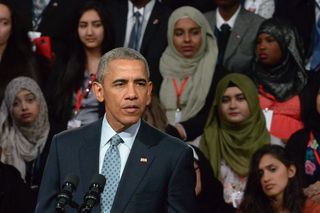 This is Peter Hitchens' Mail on Sunday column
Now will we grasp that the United States is not our friend, but a foreign country whose interests are often different from ours?
President Obama���s blatant intervention in our internal affairs is not a sudden breach of a soppy ���special relationship���. The USA���s only real special relationship is with Saudi Arabia, a 70-year-old hard pact of oil, money and power, welded together with such cynicism it ought to make us gasp.
Barack Obama���s open desire for us to stay inside the EU is by no means the first or worst example of White House meddling here in these islands. Bill Clinton forced us to cave in to the Provisional IRA in 1998 and his successor, George W. Bush, continued the policy by making us do Sinn Fein���s bidding afterwards.
Washington came close to scuppering our recapture of the F
alklands in 1982. And with the current state of our Armed Forces, which can nowadays do nothing without American support, I often wonder how the White House and the Pentagon would behave if Argentina once again seized Port Stanley.
If anyone thinks Hillary Clinton is a great friend of Britain, they���re in for a big surprise.
But surely the Americans fought with us shoulder to shoulder against the Kaiser and Hitler? Not exactly. The USA (quite rightly) fought for its own interest in both great wars, not for us.
When we ran out of money after the First World War, Washington seized the chance to force us to limit our Navy, and so began to overtake us as the world���s major naval power. We had feared Germany would do this. It is one of the great ironies of history that it was the USA that ended British sea power.
In the blackest months of the Second World War, just after the fall of France, the US Congress demanded almost every penny we owned before it would authorise the famous Lend- Lease programme.
Secret convoys of Royal Navy warships carried our reserves of gold bullion (estimated to have been worth ��26���billion in today���s values) across the Atlantic ��� mostly never to return. Billions in negotiable securities went the same way, and British assets in the USA were sold off at absurdly low prices.
I don���t blame the Americans for this. In 1934, Britain had defaulted on her giant First World War debt to the USA. This is now worth up to ��225���billion in today���s money, depending on how you calculate inflation.
We still haven���t paid it off, and never will, though it���s not considered polite to discuss it and it���s one of those facts so grotesque that most people refuse to believe it when first told of it.
During the Hitler war, the USA gave us enough aid to stay in the fight, but not enough to recover our former economic strength. The eventual peace was made on American terms, and Soviet terms, with us as onlookers. And after the war, Marshall Aid came with strings ��� open up the British Empire to outside trade, and then begin to dismantle it.
Not wanting to get embroiled in any more European wars, the USA also put a lot of effort into creating a permanently united Europe. Documents came to light in the 1990s, probably by accident, showing detailed CIA involvement in the European Movement.
I regard America���s behaviour as perfectly reasonable. It���s the sort of thing we used to do when we were top nation, and had more sense than to squander our wealth on idealistic foreign wars.
I like America and Americans, lived there happily for two fascinating years, and wish them well. But I never forget that the USA is another country, not a friend or even a cousin. Nor should you.
BRILLIANT HELEN IN THE FRONT LINE OF AN IMMORAL WAR
Best film of the year so far is Eye In The Sky in which Helen Mirren, in beautifully tailored camouflage, plays a British Army colonel trying to decide whether to launch a deadly drone strike on a terrorist safe house in Africa.
The late and much lamented Alan Rickman, in his last on-screen role, plays a red-tabbed general who has to deal with the politicians and their dithering.
The target house is crammed with front-rank terrorist commanders. But just outside it sits an innocent little girl, selling loaves of bread.
What do you do? 
I won���t tell you what they do, but I am surprised we���re not much more worried about this form of warfare. Victims of ordinary bombing from the air are famously angered and frustrated by being subjected to an attack to which there is no defence. But this is much more alarming.
A woman at a desk in Nevada, by squeezing a trigger, can (without any risk to herself) obliterate or dismember another human being thousands of miles away, tearing them to shreds or dissolving them in a lake of fire.
An older generation than mine would have mumbled in mild tones ���That���s not cricket!��� But today���s ruthless anti-terror macho man will reply: ���We���re dealing with terrorists. The rules have changed. You can���t use chivalry when fighting with such people.���
Bystanders will see these attacks for themselves, or may be scorched or wounded by them. It is more than possible, for it happened to a wedding party in Yemen in December 2013, that entirely innocent people will be vaporised by mistake. Will their relatives be more or less likely to turn against us, once they have witnessed such events?
Precisely because it is so risk-free to us, it is outrageous and infuriating to those who see it on their own streets, who will feel as if we are treating them as insects to be casually swatted.
No doubt it will allow us to kill, by remote control, all kinds of people we don���t like. But is this moral? Would we send someone to walk up to them in the street and shoot them without warning or any kind of judicial process?
And would we accept it if a foreign power launched such attacks on our soil? I find it especially interesting that governments (such as ours) which sniffily refuse to execute convicted murderers, and so defend us from armed violence, are content to support this form of warfare.
How can arbitrary killing from the sky be right, and execution after a fair trial be wrong?
Glad as I am to see the long-delayed decision to support some of what���s left of our steel industry, I grind my teeth in fury that nothing was done to help the honest, hard-working steelmen of Redcar, who now miserably face the loss of their homes as their murdered town sinks into enforced idleness.
Here���s a solution. Most members of our Government seem to regard the industrial areas of Britain as a foreign country. Fine. Then let them admit it openly, and so include Redcar and the rest in the swollen, uncuttable foreign aid budget. Simple, eh?
Graffiti attacking the regime has begun to appear in North Korea. This is the beginning of the end. Nothing so undermines authority, stability and order as the appearance of these hideous scribbles.
While visiting the decrepit, bankrupt Hermit Kingdom a few years ago, I concluded (after observing several citizens prone and unconscious in the street) that its people survived mainly by drinking too much rice wine. Perhaps they have now run out of that, too.
If you want to comment on Peter Hitchens, click on Comments and scroll down
April 23, 2016
Mr 'Paul P' and the Truth
In a comment made today on the 'Cannabis and mental illness...' thread, Mr 'Paul P' wrote (amongst other things):
'The premise of Mr Hitchens' argument is that cannabis is all bad. A molecule of cannabis will lead to mental illness.'
I challenged him to justify this claim with referenced quotation. In a later posting, in which he is clearly aware of this challenge, he did not do so.
I now repeat the challenge. I require an answer.
April 22, 2016
A Petition to Obtain Justice for the Late Bishop George Bell
Mr Richard Symonds has launched an petition, reasonably worded and with attainable aims, in the hope of influencing the Church of England in the direction of justice and truth.
It can he found here
I would urge all those concerned about the unjust staining of George Bell's name, on the basis of an unproven allegation, to support it.
A pence for your thoughts - decimalisation, history, monarchy and a rare BBC correction.
Here is an illustration of the gulf between today and yesterday which makes life increasingly melancholy and odd for people such as me, of whom there are still quite a few.
At 8.24 this morning on the Today programme on BBC Radio 4, the presenter, John Humphrys, did a very rare thing. He made an on-air correction. I assume this followed a stream of stinging complaints from listeners of a certain age.
Why?
One of the Corporation���s Royal correspondents, Peter Hunt, had reminisced on air that the Queen had been born in far-off days when ���a pint of milk cost one pence���.
Now, either this will pass you by or it will infuriate you. To anyone of my generation, it is like hearing someone say . ���There was only one geese on the pond��� or ���My mum gave me a sugar mice���. That is to say, it might be pardonable in a three-year-old, but in an educated adult it is an astonishing failure to grasp the rules of the English language. The words ���one��� and ���pence��� cannot be put in the same phrase without short-circuiting the language , causing a loud bang, a bright flash and clouds of smoke in any sentences nearby. Stretcher-bearers would normally need to be called. But in this case it is worse because it is hopelessly entangled with the rusty barbed wire of national culture.
Proper British people used to use something called money, quite different from the magnetic tokens and unconvincing scraps of paper which now pass for this thing. The coins that clanked in our pockets were mainly things called pennies, large bronze discs a bit more than an inch across, which banks weighed rather than counted (because there was an exact relation between weight and value, three pennies to an ounce, I think), which their scales were calibrated to note. They���re still used to weight the mechanism in the great clock of Big Ben. They had Britannia staring out to sea on one side, one hand resting on a shield bearing the Union Jack, the other holding a trident (the three-pronged fish spear, not the nuclear missile) . On the other side the monarch���s head, or rather *a* monarch���s head. The oldest I ever received in change was dated 1868, polished almost smooth, though many (���Bun Pennies���) still had the beautiful portrait of the young Queen Victoria with her hair in a bun, later replaced by the gloomy old veiled widow. Every handful of change was a history lesson, and a bit of a Latin lesson too, because the penny featured so much more of the royal title (in that language, but abbreviated) than modern coins do. Edward VII was common, George V even more so, George VI and the young Elizabeth not even worth a glance. Farthings had just been abolished when I began to get weekly pocket money, as had the silver threepence, but the half-penny, universally known as a ���ha���penny (pronounced ���haypenny���) was still very much in use
The unBritish-looking decimal ���pennies��� and half-pennies which were introduced in 1971 never achieved familiarity or popularity. The half pennies stuck to your fingertip, slipped into cracks and were more or less useless for anything except as emergency screwdrivers.
And people couldn���t bring themselves to call them pennies or ha'pennies. The transition from one system of money, the old, intelligent, handsome British one to the new dimwit, ugly global one immediately obliterated the penny, ha���penny, threepenny bit and half-crown. But some of our old friends survived ��� the sixpence, the shilling and the florin, re-designated as two and half pence, five pence and ten pence. All these have now been withdrawn and no trace remains of the coinage we once had as a free and independent nation.
But the new penny was an anomalous interloper. I think the problem lay in the fact that the new penny���s value bore no relation to that of the old penny ��� it was supposedly worth more but was smaller and seemed to buy less. And that what was actually a cent was called a ���penny��� because the government knew that calling it a ���cent��� would make people feel (as well they might have done) that they had quietly been occupied by some foreign power and had lost their country. It���s an amusing paradox that Americans call their cents ���pennies��� out of ancient habit. But we couldn���t bring ourselves to call these trivial, unlovely things ���pennies���.
So they were either referred to rather scornfully as ���pee���, ���new pee��� or, strangely as ���pence��� in the singular. I first came across this on Clydeside in the summer of 1971 where I was working as a Trotskyist agitator on the fringes of the Upper Clyde Shipbuilders ���work-in��� protest against the yard closures there. I and others were trying to sell great reams of special issues of the ���Socialist Worker��� to the workers, priced at one new penny. An enterprising urchin offered to take a bundle of them and sell them for us, and I was astonished to hear him brightly calling out to the passing proletarians ���One pence for a paper!���. He did better than we did.
It was the first time I���d heard this odd formula, and it puzzled me then and for some time afterwards. Now I think I understand it. But in fact Mr Hunt had it wrong. A pint of milk in 1926 cost a penny a pint, not 2.4 pennies or one new pee. . Now it costs more than seven shillings and ought to cost a good deal more if the supermarkets weren't squeezing the dairy farmers so hard. And if you know that fact and remember what a shilling once was, you understand what has happened to our national wealth and to our society.
Peter Hitchens's Blog

- Peter Hitchens's profile
- 299 followers

