
Peter Hitchens's Blog, page 163
May 26, 2016
'The Abolition of Britain' is now available as an e-book
17 years after it was first published, and still in print, my first book (to which all the others are, in a way, sequels) 'The Abolition of Britain' has now also become available as an e-book
Most of my books are also available as audio books, and I hope to complete the list before long.


May 24, 2016
A Few Thoughts on Extremism and Interruptions in Debate
On Sunday morning I took part in the BBC programme ���The Big Questions���. The two subjects were the government���s worrying plans to pass laws restricting ���extremism���; and the growing clamour for the removal of all remaining laws against abortion. I made a few fairly brief but (I hope) pithy contributions . My friend and (often) adversary Douglas Murray makes a very interesting point at just after 30 minutes into the programme. After admitting the problem is pretty insoluble, he says: ���This government ��� doesn���t particularly have the confidence to say Britain and British values , British institutions ��� we���re basically trying to make it liberal values, that Britain will be about liberal values, about gay marriage���
I��� think this is a big mistake��� It���s all very well saying make people liberals but doesn���t mean ���that you make them��� British or with any other sense of identity
���.Because the British government has decided that the best thing we can do is to make should make people vaguely liberal then it means that the qualificatiions for extremism are effectively conservative ideas������
I think this is a very smart observation, though I would go further. I think the government intended from the start that liberal, PC ideas would be the ones that were to be reinforced by law and culture. It���s moved from crude multiculturalism to exaggerated neoconservative concern about Islam for precisely that reason.
I���m often criticised by people who watch these programmes for supposedly being rude and interrupting others. In fact a member of the North Oxford audience came up to me afterwards and dealt me a double-edged compliment by praising me for trying to stop my two immediate neighbours from heckling all the time, suggesting that this was in some way uncharacteristic.
Well, I do sometimes interrupt people, but I have two reasons for this. Presenters (and I do not criticise Nicky Campbell here) are under terrific pressure during live programmes, listening to feedback from the director as well as trying to control a room full of voluble people. They can���t be expected to be scrupulously fair about time. If you want to have your say (and if you don���t, why go on at all?) you sometimes have to fight your way in. Likewise I expect to *be* interrupted, and will fight against it when I believe I have not finished my point. It���s normal. If you can���t take a joke you shouldn���t have joined.
I try to time my interventions for point where speakers have made their point and are drifting because they don���t know how to stop (a common problem among those, who, unlike me, don���t get interrupted by other audience members or the presenter) or when they have just said something solid with which I can directly disagree. I tend to think the people who object to this actually just object to me, and would rather I never spoke at all. Which would be the case, if I didn���t look after myself. But I try not to talk over and heckle people in mid-flow, when they have the floor.
The programme can be watched here
http://www.bbc.co.uk/iplayer/episode/b07d3hk9/the-big-questions-series-9-episode-17
The Origins of Political Correctness in the Police Force
After getting the usual wave of silly, resentful attacks from police officers, for daring to criticise their complacent and liberal nationalised industry, I looked out this old article from the Mail on Sunday of 27th July 2004, written nearly 12 years ago. This is before discontent with modern policing was as widespread as it is now, and also before the police had been wholly revolutionised by the post-Macpherson inquisition and many officers from the old tradition were still in positions of responsibility. It explains a lot.
MediaMogul
You may sometimes wonder why modern police officers are so word-perfect in the language of liberal political correctness. You may be puzzled as to how a generally conservative organisation, which once chased thieves and bad people in a fairly straightforward way, has suddenly become so keen on pursuing racism, homophobia and the other thought-crimes that obsess political radicals.
Here is part of the answer. They have been carefully and systematically trained in the Newspeak of the New Left, who know very well just how influential the trusted blue uniform of the British police constable is. I have been shown a document that has for some years been used to train officers in what is called 'Community Awareness'.
It smacks of the re-education camp and the thought police, and about half the people of this country would find it quite disturbing.
The other half, who have grown up since ultra-liberal ideas took over the schools and most of the media, may not be so surprised. The progress of the cultural revolution over the past two decades is so gigantic that the whole idea of what is shocking and what is not has altered.
One part of our country barely understands what the other one thinks any more. But where the two nations clash in any state-controlled body or big company, it is the new thinking that always seems to win.
See what you make of it. The booklet, originally produced by Kent Police in 1999, has been copied by some other forces and, I'm told, is typical of the sort of course officers must undergo. It is currently being revised to take account of - you've guessed it - European Union directives on religion and sexual orientation.
It is clever and subtle. It is what it does not quite say that is most worrying. I believe the assumption behind it is that many police officers - too young to be retired or otherwise easily got rid of - are guilty of crude prejudices and must be made to feel ashamed of them.
If they bridle at a course such as this, then they will wreck their careers because their chief constables have plainly put their authority behind the ideas in it. But if they submit to it, they will ever afterwards be tamed and neutered.
It opens with a 'self-assessment' quiz. The student is invited to agree or disagree with such statements as 'The UK is a multicultural society', 'Everyone has some prejudices', 'I will always challenge inappropriate language or behaviour', and 'We must adapt our policing practices to suit various cultures'. The instructions say: 'Answer as honestly as you can.' At the end of the booklet, the quiz is repeated. There is a suggestion that the student should go back and look at his original answers. You would have to be a prize fool not to realise that you are expected to have shifted from one end of the spectrum to the other as a result of ploughing through the pages in between.
It is courses such as these, I suspect, that have led to the new climate of fear in which officers are afraid of speaking openly even among formerly trusted colleagues in case they are denounced for some incorrect slip-up, and so lose their jobs and even their pensions.
Certainly, I am amazed and distressed by the number of serving police officers who write to me about the state of the force and beg me not to identify them in any way.
Yet it is so hard to pin down the insidious nature of this material. You catch it on the edge of a remark, passing by so fast that - if you are not paying attention - you don't realise the importance of it.
Take, for instance, the section on Britain as a multicultural society. All the facts are correct, but the way they are presented is thoroughly questionable. Yes, Romans, Vikings, Angles, Saxons, Jutes, Normans and Jews all came to or lived on these islands in the previous 2,000 years.
But from 1066 until very recently, there were very few immigrants of any kind to this country, and Britain developed its own distinct national character - to which those immigrants adapted.
But the booklet tries to suggest this has always been a diverse, multicultural country. 'The whole history of Britain's population is one of ebb and flow of different peoples and tribal groups,' it claims.
For the most important 900 years of Britain's history, from 1066 to the Sixties, this simply was not true, and is the reason for our unique language, customs, institutions, religious opinions, laws - and our unique ability to sustain policing by consent, by unarmed officers.
It is only since the Sixties that the reformers have sought to change the country to suit the supposed wishes of migrants, rather than requiring migrants to conform to local customs.
What would happen, I wonder, to an officer who had the nerve to point this out to the 'Community and Race Relations Training Department'?
The booklet then asks, 'Is there any such thing as a "True Brit"?' and replies that 'the historical background and cultural diversity of Britain suggests this is an impossible question to answer'.This quiet demolition of a cherished loyalty to a proud and rather enviable civilisation seems to me to be as cruel as it is untrue, and the very heart of what is wrong with this creepy brainwashing.
Much of the rest of it seems designed to demonstrate that there is almost no way to avoid being racist, however hard you try. The use of the expression 'non-white' is allegedly 'felt to be offensive and racist' by unnamed persons because it 'defines people by what they lack and implies that being white is normal/superior'.
Perhaps for those baffled as to why a Black Police Association is encouraged whereas a White Police Association would be (rightly) denounced, the pamphlet asks: 'Can minorities be racist?' The answer appears to be: 'Not really.' It says: 'Minorities may of course have prejudices relating to the majority group and may sometimes act on these. Whether it is appropriate to refer to this as racism is debatable (remember that Racism = Prejudice + Power). If it is so referred a more appropriate term would be "reactive racism".
'In this sense the minority is reacting to majority power or dominance . . . by possibly using derogatory remarks for whites and promoting the image "black is beautiful", for instance.' The experienced constable or sergeant confronted with this knows one thing for certain - that he can never be sure, for the rest of his time in uniform, that he will not commit some sort of speech crime.
He may also quietly conclude that the really wicked aspect of racism - hate and fear based on skin colour - is not actually being challenged here. Such emotions are excused if they are felt by anyone apart from white English people.
But what can he do, by himself? Inch by inch, piece by piece, the world he grew up in has been dismantled and replaced by another. The same thing is happening to almost everyone he knows.
And so, the very people who would once have complained loudly about 'political correctness gone mad' find themselves enforcing exactly that.
Horace Rumpole, John Mortimer and the Presumption of Innocence
Does a great fictional creation excuse an unloveable life? I suspect so. I think ���Rumpole of the Bailey��� a wonderful thing, both in prose and in its TV version ��� even though my surname is given ( I suspect deliberately) to an unpleasant character, the boon companion of a savage old reactionary judge, in one of the last Rumpole stories.
I didn���t like John Mortimer. I didn���t like the part he played (as a lawyer) in the trials of the Cultural Revolution, defending the horrible ���Last Exit to Brooklyn��� and that forerunner of the dreadful wave of amoral ���harm reduction���, ���The Little Red Schoolbook��� (then revolutionary, now commonplace) . I especially didn���t like his less famous and less well-documented role in making the world safer for pornography in the years after the Chatterley trial allowed practically anything to be published. And I said so, in print, while he was still alive, which is why I think my name was taken in vain in that story (don���t ask me which one. The last Rumpole stories were not the best and I do not think I kept it).
In an admiring obituary in ���The Guardian���, http://www.theguardian.com/culture/2009/jan/16/mortimer-rumpole-dies-obituary
the leftish lawyer Geoffrey Robertson recalled ���John put on his wig and took off his glasses, so he could not see some of the trash he was called upon to defend with a success that drew rage from Mary Whitehouse and an extravagant attack from the Times, which claimed that no jury was immune to his charm.
���The Williams committee on obscenity, reporting in 1980, agreed with Kenneth Tynan in crediting John with achieving a de facto freedom for the written word by his victorious defence of Inside Linda Lovelace (1973), a shabby little book that would have gone unnoticed had the DPP's office not decided to dignify it with a prosecution, after which it sold a million copies.���
I have always disliked that giggly little bit about taking off his glasses. If he wasn���t prepared to look at it with his glasses on, why was he ready to defend it, and presumably be paid pretty well for doing so?
When two rival biographies were published of him, I tended to think the more hostile of the two was closer to the truth. The picture of him ( I think it���s undeniably him) in Penelope Mortimer���s stinging little novel ���the Pumpkin Eater��� is unappealing.
Yet heavens, he could write. His play ���A Voyage Round My Father��� is a greatly moving tribute to his extraordinary parent, which has been performed by some of our greatest actors and will I think survive well into the future. His memoir ���Clinging to the Wreckage��� is also a pleasure to read, and moving into the bargain.
And Rumpole is the nearest thing anyone has come to producing a rival to Sherlock Holmes. The trick is the same ��� a central character whose powers are far greater than the police or the public ever understand (they have plainly never read the stories) . This character has an odd domestic life, an astonishing intellect and recall, an idiosyncratic way of thinking ��� and a lot of the sort of luck that makes a story satisfying to the ordinary reader, who views storytelling as a pleasure to be savoured, not an art to be admired.
Instead of the Baker Street rooms, we have the ancient, cramped barristers��� chambers at Equity Court, with their busy clerks��� room, their aged, unemployed tenants and their wonky wiring ��� and Pommeroy���s wine bar (El Vino to the life) around the corner. Instead of Dr Watson failing to understand Sherlock Holmes, we have Mrs Rumpole ���She Who Must be Obeyed��� , utterly unable to understand Rumpole���s joys or ambitions or methods, and spending his meagre fees on tins of Vim (look it up if you don���t remember it. She once memorably says to him ���You���d miss it if it wasn���t there, Rumpole!) before he can spend them on drink.
Rumpole never becomes respectable. He is always looked down on by the smarter lawyers in his chambers (except for the women, who grasp his genius) , and he is loathed by the series of dyspeptic, merciless and unfair judges whom he teases and rags. As none of his clients read the stories about him, he is quite often hired in the expectation that this shabby, scruffy Old Bailey hack is bound to lose the case ��� and then upsets the plot by winning. And every episode is steeped in the poetry of Sir Arthur Quiller-Couch���s Oxford Book of English Verse (still the best collection ever made) . Tennyson, Wordsworth, Blake and Flecker are ceaselessly called in to aid Rumpole���s thoughts.
These are devices. But thanks to that fine actor Leo McKern ( and to a small group of others who so perfectly understood the point of the stories, and presumably to a brilliant director) Rumpole flew higher and further than his own inventor���s conception. This can be compared to the way John Thaw turned Colin Dexter���s Inspector Morse into an international star, but while John Thaw was hugely different from the original Morse of the pre-TV books, Leo McKern made Rumpole even more like Rumpole than he already was.
I���ve been watching several of the original TV programmes, made by Thames TV starting in 1978, before Mrs Thatcher destroyed the old independent television franchises which allowed the bigger ITV companies to make programmes that rivalled the BBC. They are wonderful in so many ways ��� partly because of their portrayal of the pre-1979 world, and then of the early Thatcher era. It is clear from this that the country has undergone a revolution since then. They use quite a lot of location shooting in the London of the time, shabby, with far less traffic and far fewer people on the streets, inevitably much more English. Female barristers are a novelty. The SDP is a novelty too. Judges still speak a vanished patrician tongue, carry gloves and nosegays and trundle to their lodgings in ancient Rolls Royces - though in one episode, presumably to reassure or beguile American viewers, an anomalous gavel, never used by English judges, appears on one judge���s desk.
The past comes to life. The police are cynics but not politically correct ones, courtrooms are still panelled and furnished in dark wood and the ancient tongue-twisting jury oaths (apparently designed, though nobody admitted this, to catch out the poorly-educated and illiterate so they could be stood down) which I recall from my days, four decades ago, as a court reporter, are still in use.
Every case in court is mirrored by some domestic grapple with She Who Must be Obeyed, or by a row in chambers . But over and over again the viewer, while being entertained, is also educated in English law. The presumption of innocence ��� and its importance - is explained again and again in practice, whether it be in the trial of an alleged bankrobber or of an African politician. I wish they���d repeat them now on a mainstream channel. People would be amazed that something so literate was ever made for primetime TV. .
May 22, 2016
Another Student Interview with PH
And here���s another student interview with me, which some of you may wish to read
http://thetab.com/uk/sussex/2016/05/20/no-platforming-silly-interview-peter-hitchens-9752
BBC Radio 4 to broadcast 'Why I Changed My Mind' -PH interviewed by Dominic Lawson. Wednesday 8.45 p.m.
I am asked rather more often than I like (because it has begun to bore me a bit) about why I stopped being a Bolshevik and become a social and moral conservative. My main answer is that I did what every radical young man in human history had done before me, and that it is not very interesting. What���s interesting, and what I have found gripping and (to begin with) shocking as I have pursued my career in politics and the media, is why so many of my generation have *not* changed, and remain as radical as when they were 20.
But people still keep asking. And this Wednesday evening on BBC Radio 4 at 8.45 p.m.(assuming the schedules don���t change at short notice) I discuss the question of why I changed my mind in a recorded interview with Dominic Lawson, former editor of the Spectator and the Sunday Telegraph, now a columnist for both the Daily Mail and the Sunday Times.
Details are here http://www.bbc.co.uk/programmes/b07c2t62
When the programme is available for you to listen online, I will post a link
What's the point of the police if they're scared of the dark?
 This is Peter Hitchens' Mail on Sunday column
What would happen to an electricity company which failed to supply power? What would happen to a water company whose taps ran dry? What would happen to a phone company whose lines were dead?
They���d all go out of business and be replaced by better competitors. But what happens to a police force that fails to enforce the law? Nothing at all.
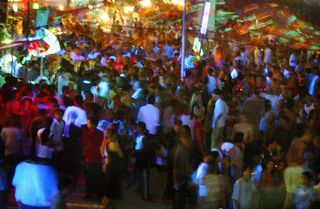
Last weekend the people of the pleasant Somerset market town of Frome were kept awake all night by the selfish thumping and yowling of an illegal rave party. Plenty of people called to complain, an estimated 400.
But they were wasting their time. The Avon and Somerset Police decided it would not be ���safe and proportionate��� to do anything about it. Under the Criminal Justice and Public Order Act 1994, the inconsiderate event was (rightly) illegal and the police had powers to shut it down.
But the paid guardians of the peace only managed to bring it to an end at 9.30 the following morning, by which time even the selfish morons taking part must have been sick of the racket they were making.
A police spokesman whined that they could have acted if they���d known in advance, but ���if it has already started and there are a large number of people on the site, an assessment has to be made whether safe and proportionate action can be taken at that moment.
���There were a large number of people in attendance and we needed to have the right number of resources in place to make sure they could leave without putting themselves or others at risk.���
Another spokesman snivelled later: ���Our decision not to disrupt the rave earlier was based on a number of factors, not least of which was a concern that this was a very large, densely wooded area inside a former quarry with very uneven terrain, that was unknown to us.
���There were more than 200 people at the rave, many of whom were intoxicated. It would not have been possible for officers to enter the site and seize the sound equipment in the darkness without serious risk of injury to those people at the rave and to police officers.
���This decision was not based purely on health and safety grounds but also common sense ��� it was safer and more practical to enter the site during daylight.���
In other words, there were 200 people who were drunk, there were lots of trees, and it was dark. Someone might have got hurt. I am sorry, but my response to this is ���diddums���.
Consider the grim-jawed face which the police now turn towards us, the public. They stand around scowling with sub-machine guns, stomp about in big boots, stab-vests and baseball caps, display their clubs, Tasers, pepper-sprays and handcuffs to let us know who���s boss, and generally act as if the high street is a war-zone, on the rare occasions when they bother to visit it.
They love to dress up like Star Wars stormtroopers in body-armour and big helmets. They even have their own air force, which enjoys flying round in the small hours, blazing its searchlights into people���s gardens from 1,000ft.
But confronted with 200 boozed-up ravers in a West Country wood, they won���t face them in the dark.
We pay for this non-service. Avon and Somerset police���s annual budget for 2016/17 is ��276,075,000. They employ 2,759 officers who cost us ��146,383,000 in pay each year. They spend more than a million a year on their share of the ���National Police Air Service���.
From July 2009 to May 17, 2016, they spent ��51,000 on CS Spray (pepper spray) ��� that���s 5,180 canisters at ��9.86 each. They also spent ��31,000 on batons at ��25 each, and another ��1,249,000 on body armour.
BUT despite all this clobber they won���t go into the woods to enforce the law and keep the peace. I���m honestly not sure what they do do. They always say that if people like me, who criticise them, were in trouble, we���d call on them. But would they come when we did? Or might it be too dark?
They���ve all sworn an oath that they will ���to the best of my power, cause the peace to be kept and preserved���. Do they think they���ve kept it? And if they won���t fulfil their contract with us, why should we continue to pay billions for this unresponsive, arrogant bureaucracy which doesn���t need us, and expects the same in return? The country���s full of decent, dutiful ex-servicemen and women who have proved they don���t mind taking a few risks to serve their country.
Perhaps we should hire them instead.
Another question for dope to answer
Was the terrible killing of 79-year-old Don Lock by the clearly unhinged Matthew Daley avoidable? He was once a gentle, kind young man. What caused his collapse into persecution mania, and hearing voices in his head?
One answer could be cannabis, the potent mind-bending drug which many so wrongly believe to be soft and harmless.
Its use is strongly correlated with mental illness. And a growing number of violent crimes have been committed by known heavy cannabis smokers. It is unofficially decriminalised, and frighteningly easy to obtain in schools and colleges, just when the developing brain is most vulnerable. I have tried to find out if the police even investigated his drug abuse. Their answers are non-committal. His defence lawyers will not even respond to my repeated phone calls and emails.
But if there is a connection between cannabis and this sort of crime, we need to know.
There's no heroism in suicide
Why do BBC bosses love suicide so much? Every hard case of a sick or injured man or woman wanting to end it all gets sympathetic top billing on BBC bulletins. And now the propaganda soap, EastEnders, has treated the fictional suicide of the fictional Peggy Mitchell (played by Dame Barbara Windsor) as a moment of heroism and dignity.
How can I break it to them that this is only one opinion on a contentious subject, and that they are yet again breaching their obligation to be impartial?
Suicide leaves many hard wounds behind, and many people still believe it to be wrong. Much can be done to prevent the dying from suffering, the hospice movement needs all the help it can get, and the BBC could do a lot to promote it.
A risky sales ploy
General Sir Richard Shirreff, until 2014 Nato���s deputy supreme allied commander in Europe, has written a daft pulp thriller claiming that Russia wants war with the West and this might happen next year. He appears to believe this is true.
Well, he���s a red-tabbed general and I���m a middle-aged scribbler who has spent a bit of time in Russia, but I think he���s ludicrously wrong.
Moscow is responding rather cautiously to years of childish, pointless aggression by Nato, which he is encouraging. Should someone with his status really be whipping up war fever like this, especially to promote a novel?
If you want to comment on Peter Hitchens, click on Comments and scroll down.
May 21, 2016
Mr 'William Falconer' - a manhunt begins
Following my response to Mr 'William Falconer's' long posting on drugs, I waited with interest for his reply.
None came.
Then, earlier this week, he posted as follows, accusing me mistakenly of seeking to censor his arguments (I have inserted two comments on this claim in his posting, separated by several hours, whose aim is self-explanatory):
'I have made a total of five attempts to upload my reply to Mr Hitchens, the one that he personally invited me to submit, writing at length, and for which he waived the word, remember. Each time my post would follow the usual format, with the yellow text box beneath informing you that "your comment has been saved, comments are moderated and have a word limit" or whatever it actually says. So it was with quite some annoyance after seeing that attempt three and four did not appear here that I wrote the comment you picked up on. That of course is the comment which made it here almost immediately along with Mr Hitchens's declaration that he "doesn't know what I am talking about". Sorry Peter, I don't believe you.
******PH writes: I don't care whether he believes me or not as I know that I am telling the truth. I think any reader of this blog would know that I have no interest in preventing people from arguing with me, provided they are responsive and don't, having made false accusations, withdraw them. I have seen nothing else from him. I have written to him (more than once) at his e-mail address, so, if it is genuine, he knows mine. He has not replied. If he sends me his reply by e-mail I will ensure that it is posted. *****
*****$$$������&& PH adds(several hours later): At 10.35 a.m.London Time (BST) today (19th May) I sent an e-mail to the address given by Mr 'Falconer'. It read 'Please send your reply to me here, and I will pubish it'. I have , almost six hours later, received no reply of any kind. For reasons too tedious to explain, Mr Falconer has had my e-mail address since last Saturday afternoon (if the e-mail address he provides is genuine) and therefore has had the opportunity to approach me privately about his difficulties. Instead he has publicly accused me of censorship. I repeat my offer. If he e-mails his reply to me, I will post it prominently.***.&&%$����***
Furthermore it's not the first time by a very long way that my responses to Mr Hitchens's comments fail to appear on this blog, which is why I mentioned his love of having the last word. The truth is that when it comes to cannabis, Peter Hitchens is a fanatic, and like all fanatics, when he loses sight of his goals he redoubles his efforts. His arguments against cannabis come from his religious beliefs first and foremost, because he thinks cannabis is contrary to the will of his fightening and vengeful Old Testament god, absolutely anything is justified to counter its spread. I personally feel that his hatred of cannabis is because he sees it as the primary cause of why people drift away from the Christian religion, with its absurd collection of talking snakes, virgin births, miraculous magic tricks, and resurections, for more realistic interpretations of the universe and our place within it found in beliefs like Bhuddism. This is why PH can make these absurd statements about the dangers of cannabis with a straight face, despite his opinion being contrary to the huge body of genuine scientific evidence demonstrating cannabis to be one of the safest substances known to man. None of that matters to PH, when it comes to cannabis he's on a mission from god and couldn't care less what anyone else thinks. So I'm sorry, I don't believe his protestations of innocence in regard to my reply. Things may get lost once or on the net, but not five times. Nope, its being kept off the blog deliberately, because its a complete demolition job on his prohibitionist views. I mean think about it, do you really think half the country supports reform of our drug laws because they merely want easier access to drugs they don't even use, and most definitely don'y want their children using, or because they can see the absolute devastation caused by prohibition and the drug war. Which strikes you as the more likely?'
****PH now adds: I have just checked my e-mail again,(12.30 BST, Friday 20th May) and there is no communication from the e-mail address which Mr 'Falconer' gives as his own and to which I have now written twice (there has been no bounce-back, so I assume the address is valid). He therefore has my private e-mail and is free to get in touch, so bypassing the technical problems which appear to have erased or lost his intended reply. I urge him once again to do so. Where is he? If he is truly anxious to post a reply, what is keeping him from doing so? ***
Found! Mr Falconer's Reply is recovered!
Perhaps because of its great length, Mr Falconer's reply was consigned to the Spam folder, where a normal search will not find it. Aided by experts, I have penetrated deep into the basement of the blog and recovered it.
I have tried to break up the text a bit, and corrected the typographical errors I have spotted. Otherwise it is unchanged.
Here it is:
It seems a trifle surprising that you know nothing about my replies not appearing, yet when I write to complain of as much my comment appears immediately with your very own reply. The benefit of the doubt shall however lie with you Peter, many things seem to go astray in this virtual realm. Perhaps there is some giant computer somewhere which is the Lost Property Server at the End of the Internet, within which all the lost articles, emails, Tweets and downloads reside.
I shall now attempt to post my reply for the fourth time, hoping that this time they will appear, and through them we are able to continue this debate, and if it is not beyond the bounds of possibility, that perhaps we may learn something from each others perspective:- Mr Hitchens, I will gladly the debate, as I believe you to be utterly wrong. I begin with your final point, the request to withdraw the accusation that my reply would not make to the blog. Though it has done this time, garnering an article for itself, I suspect this is entirely due to my challenge, as many times previous my responses to your comments never appear. However, here we are, and I thank you for the chance to continue the conversation.
Yes Peter, I do know your arguments extremely well. Your believe the prohibition laws are sound in every sense, and should be enforced the same as every other criminal law, and were we to adopt such a policy, and prosecute drug users with as much ferocity as sellers, we would see a considerable reduction in drug use. Adjunct to that, you also believe addiction to be pseudoscience, created to allow a relaxation of the drug laws by providing a medical excuse for the drug user, who you regard solely as a criminal malefactor in need of harsh punishment. In your world there would be no help for the drug user, or absolutely minimal at best, and such things as methadone maintenance and needle exchanges would disappear.
What you never seem to consider, is the consequences were we to adopt, or should I say return, to these policies, because they have been tried before, and failed before. Though your readers seem to veer towards authoritarian responses, it must be remembered that in a free society, law and social policy is not a one-way diktat from on high to the mass, but a social contract between the populace and their elected representatives, and the drug policy we supposedly have, [despite the current government doing much to undo the progress of the last twenty five years], arose because people saw the damage caused by the policies you believe in, and acted to mitigate the harm, rather than some woolly desire to provide excuses for drug use.
Allow me to an example to illustrate my point, that of methadone maintenance for heroin addicts, an intervention you have ignorantly described as "mugging the taxpayer to provide drugs to criminals". This life-saving and crime curbing treatment, [death rates among heroin addicts fall by at least 50% for those in methadone treatment, and at least the same drop in acquisitive crime], was pioneered in New York by Dr. Marie Nyswander, a general practitioners in the Harlem ghetto who saw first hand the dreadful flow of misery, disease and death which accompanied heroin use, and wished to alleviate it.
No doubt you would agree with arch prohibitionist Harry Anslinger���s, [the man more to blame for the deplorable situation the world is in with regard to drugs than any other human being alive or dead, more on him later], description of methadone clinics as "feeding stations for dope fiends. The only requirement is the long arm of the law flexing heavy truncheons and a repressive law, firmly administered in equal measure to anyone connected to the drug scene.
But here is the proof that your way doesn't work. New York State, the state with the most heroin addicts in America, had the most repressive laws against heroin in the USA, and as predicted when they were passed, they did nothing to curb heroin, only clogging up the state's courts with low-level drug cases and filling their state's prisons to bursting point, thus beginning mass incarceration as a drug war strategy that has given the "land of the free" the world's largest prison population, an irony seemingly lost on them.
Let���s not forget Russia, which bans methadone, discourages needle exchange, and punishes drug users, yet they are the world���s biggest consumer of heroin, with the worst, [and growing], HiV epidemic outside of sub-Saharan Africa. Against this we should recall how Mrs. Thatcher, [who was first and foremost a scientist], allowed needle exchanges and increased funding for methadone treatment long before other European countries, with the result that, until the present government began reversing treatment strategies, the UK had the lowest rate of HiV infection in Europe. But I digress in order to demonstrate how ignorant a description it is to label a proven life-saving treatment as "mugging the taxpayer", as well as quite simply wrong, since it is proven, time and time again, that where harm reduction initiatives are put in place lives are saved, crime goes down and drug use reduces. Remove them and the opposite happens, which is why today in the UK we have the highest number of drug deaths ever recorded.
I shall return to this later, but firstly a point-by-point rebuttal of your claims. First off, your retort that because Bernie Sanders supposedly funded his campaign with small donations, somehow it is morally wrong for wealthy individuals to support the legalisation initiative in California and other states. Unfortunately its not true. Bernie Sanders scooped up Union and corporate donors like an industrial vacuum cleaner on overdrive. So, really, do you seriously think it reasonable that a high-profile political campaign should be expected to refuse financial assistance from wealthy individuals, or is it because it���s a cannabis legalisation initiative that you object to their sponsorship, and in turn conjure up the Big Dope bogeyman? I think this is more likely the reason, especially since you show no objection to those campaigning against cannabis legalisation accepting corporate financial help, even though there is an extremely convincing argument that the pharmaceutical corporations reason for funding anti-legalisation propaganda is in every sense to do with commercial possibilities, since they are greatly threatened by the growing availability of cannabis and the increase in reliable research demonstrating that far from having no medical uses, cannabis has an incredible number of applications, including a potential cure for cancer, and one which rather than having to buy pills of chemicals entirely alien to our organism, can be grown at home in the garden, and relies on our natural endocannabinoid system for its efficacy.
Obviously you are no lawyer Mr Hitchens. Your conceit that because the UK does not enforce the cannabis possession laws while keeping them on the statutes equates to a substance being both illegal and legal is quite simply ridiculous. What it means is what prima facie is, the substance is illegal but the government chooses not to enforce the law. It does not and can never equate to a legal market until such time as the law is repealed. That we have a statute on the books but do not enforce it is extremely damaging to the rule of law, and is in my view largely responsible for the rise of lawlessness and disorder in the UK today. Not because of cannabis itself, but because the drug is supposedly illegal, but the government don���t bother doing anything about it.
Unfortunately, in the minds of a great many people unschooled in legal principles and lacking in thought for there fellow man, the idea grows that if the government does not enforce this law, they might not enforce the next and the next and the next, until all law is brought into disrepute and society slips into anarchy. I imagine that on this point we probably agree, but unlike you, I do not believe the remedy is to start enforcing the laws against possession of cannabis, rather it is to repeal the section of the Misuse of Drugs Act 1970, and move cannabis into the various laws governing alcohol, or to write an entirely new statute for cannabis alone. This would be extremely easy, and several nations have begun the process towards the legalisation of cannabis, notably Uruguay, Costa Rica, and most recently Jamaica has decriminalised possession and growing of small amounts. Canada announced at the recent UNGASS conference in New York that it plans to legalise cannabis in 2017, which will be the first G7 nation to do so. Thus proving that the usual spineless excuse from Home Office ministers on legalising cannabis is that nothing can be done because of our international treaty obligations is exactly that, an excuse.
The reason why the government does not enforce the cannabis possession law is because a very large number of otherwise normal law abiding people resent being criminalised, for that is exactly what it is when a behaviour is deemed contrary to the criminal law, yet successive government have been too cowardly to stand up to, firstly the paper tiger of the likes of your fulminations in the Sunday Mail, and until recently the real tiger being the United States, who would have taken serious action against any nation legalising cannabis, but have lately indicated they will no longer prevent nations reforming their cannabis laws. The truth is, beginning a ruthless suppression of cannabis in this country, with draconian penalties for possession and a well funded police campaign to root out the weed in every corner of our land, would necessitate extremely authoritarian measures, and would be against the wishes of the vast majority of British subjects, though should the Crown wish to impose its authority against the wishes of the populace it authority is always supreme, though as a result its popularity may no longer be. The actual consequences of a draconian crack down on cannabis in Britain would be horrible. Firstly, as you rightly said, in order to find out who is using cannabis, the police would adopt the American strategy of paid Confidential Informant. This would see, [as it does in America], people using the informant process to settle grudges with neighbours and family, as well as lessen penalties for themselves by snitching on their friends and relatives for similar offences. Then of course there would be the actual raids, up and down the country there would no-knock, armoured men, [and quite possibly armed], men kicking in the doors of family homes at dawn to arrest people for possession of small amounts of cannabis.
Personally I believe one of the reasons police forces in Britain have chosen over time not to enforce all but the most blatant cannabis possession cases is because they know that arresting otherwise law abiding citizens for smoking cannabis does more to alienate the vast majority of people from the police than their prosecution could ever possibly achieve in preventing crime, and since we thankfully live in a society where our police forces police by consent, they do not wish to take actions which alienate the vast majority of people: hence solutions like fixed penalties for cannabis, they know they are duty bound to enforce all laws, but arresting and prosecuting everyone for cannabis possession is not only a waste of resources, but alienating, so they get creative and come up with the ���Cannabis Warning���. The final consequence of a cannabis crackdown of the type you favour would be a growth in the prison population to the levels seen in the USA, for that is what would happen were people to be gaoled for a second offence of cannabis possession.
It would be a bonanza for the corrupt prison corporations, which thankfully most people do not want to see happen, but would it reduce cannabis use? Chances are it wouldn���t. You then present a morality lecture as justification for cannabis remaining illegal, claiming you see no difference between cannabis being a legal, regulated product, than an underground commodity trafficked by organised crime. Come on Mr Hitchens, are you really that blind? You seriously cannot tell the difference between Al Capone and Jack Daniels? Their products can also damage to the user, but the differences are legion. Here���s three of the most obvious. Jack Daniels doesn���t murder his business rivals, Al Capone does. Jack Daniels��� product is quality controlled, Al Capone���s is not, his customers often go blind or are poisoned in some other way, while Jack���s customer base only get drunk, safely or not. Al Capone doesn���t pay any tax, [and ends up a further burden on the Treasury as a result], Jack pays up.
Translate that into the contemporary British cannabis market and what do you have. Vietnamese gangs who traffic virtual slaves into the country to operate illegal grow houses producing high THC skunk, upon which they use each and every fertiliser and pesticide available, without any regulation of their fitness for use on a product intended for human consumption, and then they harvest the crop before it has had time to produce the CBD cannabinoid ���the plants natural anti-psychotic, [which arrives after the THC], because the operation is illegal, so the quicker you harvest it the less chance of detection. Illegal growing operations using stolen electricity, wired up in ways that are grave fire risks, causing an immense amount of property damage up and down the country, but hey, so what, we���re crooks so who cares if we trash someone���s rental property in the process, on and on down to the teenage kid selling ��10 bags of skunk in an estate car park or stairwell. He doesn���t care if your teenager comes to buy, all he cares about is whether he���s got the paper or not. Flash the tenners and the bags are yours, even if your ten years old.
Finally, the dreadful arrival of synthetic cannabinoids like Spice are solely a consequence of the prohibition of organic cannabis, [and since all of them will soon be illegal we will have the chance to see first hand just how prohibition transforms a legal but undesirable market into a criminalised violent one, I predict the first murders over the ���bath salts��� trade will soon occur]. All of these will be undone by a legal market in cannabis, the establishment of which will reduce the availability of cannabis for the section of the market most at risk, those underage. It would also very likely reduce consumption of cannabis in the medium to long term. After all, the Netherlands, which has permitted the sale and possession of small amounts of cannabis for some time, has far lower rates of cannabis use than either of its neighbours, Germany and Holland, both prohibition nations. Your claims that legalisation would allow for the open sale of the drug and advertising, as well as banking to finance its production etc are just scare-mongering. What you mean is that cannabis would move into coffee shop style premises, rather than in the street, advertising will certainly be disallowed, and as for bank financing, do you seriously think the banking system today is not involved in the illegal drugs trade? Quite possibly the biggest hurdle to genuine reform on drugs is because the banks are bloated on cartel drug cash, look at how in 2008, when the global banking system was on in almost total meltdown, the only thing which kept the American banks afloat were cartel drug cash deposits. So in reality legalisation will mean a big haircut for the banks, whether they like it or not, but for the rest of us it will be providential not to have banks like BCCI operating as the financial arm of organised criminality.
Of course today which are the two global centres for laundering drug cash? The City of London and Singapore. What testable calculus have I used to show that people are tired by the likes of you demonising and scare-mongering over cannabis? The rise in numbers of people asked at opinion polls if they favour the legalisation of cannabis, Ipsoss MORI 2013 shows 53% in the UK favour, even 45% of mid-market newspaper readers, including the Mail and Express are in favour, so it seems Peter, that the nation is truly with you on this one. Do you not realise that there are a great many people who neither smoke cannabis or use any other drugs, who can clearly see the immense amount of damage that prohibition policies create in their wake, and consequently would like to see drugs taken back into the control of the government rather than criminals, and regulated accordingly, or are you so short-sighted that you really believe only drug users want legalisation? They also see, unlike yourself making wild and unsubstantiated claims to the contrary, that cannabis, [although obviously not completely safe], is one of the most benign and safest psychoactive substances we have, and has been demonised totally unfairly. As for the studies which claim a correlation between cannabis and mental illness, there are also many more studies which prove the opposite, from the first large scale investigation into cannabis, by British administrators in India who wrote the report of the 1894 Hemp Drugs Commission, which proved that moderate cannabis consumption is harmless, the 1925 report for the US Army in the Panama Canal Zone, which came to the same conclusion, and 1975 study in Jamaica and one in 1980 in Costa Rica which found the same. Most recently for the Harvard Medical School study that concluded cannabis does not by itself cause psychosis. On the other hand, a great many studies purporting to prove the harms of cannabis are either misinterpreted by the prohibitionists, or are fraudulent to begin with. There is also one glaring question in all of this. If cannabis supposedly causes mental illness, and there has been an enormous rise in the consumption of cannabis since the 1960���s, why hasn���t there been a concomitant rise in admissions to mental hospitals?
As for the slowness of governments taking action with regard to smoking, this is largely to do with the historic position of tobacco being totally unregulated just a few decades ago, whereas cannabis legislation will be crafted to allow for a legal regulated market with a great deal of control, and that will extend to things like a ban on advertising, sponsorship or internet sales. As for arguing that allowing cannabis would be at least as damaging as alcohol, this is also untrue. It does not, despite your Reefer Madness claim to the contrary, [interesting to see prohibitionists trying to recycle that one again], cannabis is not linked to violence, and subsequently would be a lot less damaging than alcohol. On the driving issue, both Colorado and Washington state have enacted legal limits for THC and driving, though it is a contentious issue, as a number of studies are proving that people drive more safely on cannabis than not, but this is an area which requires more research, and until then jurisdictions voting to legalise cannabis should enact driving limits in order to err on the side of public safety. No Peter, that is simply not true. You try to make a correlation between violent crime and cannabis which is simply untrue, in the hope that it gets picked up by governments and used as a reason to prevent cannabis being legalised, when in fact there is no connection. You may as well point out the fact that all these people drank coffee and blame that for their violent behaviour, since they are a miniscule proportion of the total population of cannabis users, the vast majority of who commit no violence whatsoever, [in fact are quite the opposite]. Their violence, in almost all cases, results from a combination of poverty, unemployment, lack of opportunity, family breakdown, exclusion from school, first and foremost, with a pernicious and demonic ideology promising them fame in their community and an eternal reward. In short it���s the consequences of allowing mass immigration into the country, only rather than entering a land of opportunity and promise, for many what follows is economic marginalisation. Combine this with our disastrous foreign policy of the last twenty years, whereby we now feel it acceptable to blow people apart by remote control from the safety of a bunker in Lincolnshire.
I know its not generally acceptable to say it, but if it were the other way around, and our weddings and markets were being bombed from on high by drones, wouldn���t you want to hit back eventually, even more so if everyday you could see how you were excluded from the gilded streets through the colour of your skin and religion? It is absolutely not twaddle to state that when cannabis is legal it will be easier for people to get help. At present it is illegal, and though people might not be arrested and thrown in gaol for admitting they use it, it can easily affect such things as employment, credit, as well as any other legal proceedings, like divorce or custody cases, making it a pretty good reason for users to be unwilling to ask for help if needed. It is also not twaddle to talk of quality control in relation to cannabis, and reveals your fundamental lack of knowledge about how black markets operate, [and thus how prohibition not only fails to prohibit, but maximises harm rather than reducing it, a realisation which in most people results in a loss of support for the policy]. The alcohol sold on the high street is a range of different strengths, as you know, but most importantly its not bathtub gin cut with methanol and coloured with industrial pigments or copper sulphate, since its production and distribution is highly regulated, whereas the cannabis on our streets today is not at all, and is the plant equivalent of bathtub gin.
It must also be stated that cannabis is not a poison, there having never once in the history of mankind been a death from cannabis overdose, as you well know. That it may have psychologically disturbing effects in some people, especially older people, it is not and never has been a poison, but these harmful effects are much less likely in a regulated product, as you well know. Your attempt to twist the definition of a crime to include the families of those who smoke cannabis is laughable. They are not crime victims Peter, and well you know it. The vast majority of them aren���t victims at all, of anything more serious than having their fridge raided. The fact is that all drug use is victimless, though undoubtedly some drug users commit crime to buy drugs, the price of which have been pushed above those of precious metals by the wicked prohibition system. Prior to the enactment of these laws, drug users were not regarded as criminals in any sense. If anything they were seen as in need of medical attention. I���m afraid its very far from rhetoric to point out how the origin of the drug laws is racism, [perhaps one of your readers could try actually R.E.A.D.I.N.G in future. I never said the drug laws were racist, rather that their origin was racism, which it clearly was. Undoubtedly though, statistics prove time and again the enforcement of the drug laws, especially in the USA, is used to pursue a racialist agenda.
Let's look at some of the statements made by the originator of cannabis prohibition in the USA, Harry Anslinger: ���Reefer makes darkies think they are the equal of white men���, "There are 100,000 total marijuana smokers in the US, and most are Negroes, Hispanics, Filipinos and entertainers. Their Satanic music, jazz and swing, result from marijuana usage. This marijuana causes white women to seek sexual relations with Negroes, entertainers and any others.", ���Marihuana influences Negroes to look at white people in the eye, step on white men's shadows and look at a white woman twice.���, ���The primary reason to outlaw marijuana is its effect on the degenerate races���, ���Colored students at the University of Minnesota partying with (white) female students, smoking [marijuana] and getting their sympathy with stories of racial persecution. Result: pregnancy.��� As we can see, Harry J Anslinger, as well as being an outright liar, was an ardent racist bigot. His role in the death of Billie Holiday, arresting her in her hospital bed for heroin possession, and as a consequence precipitating her death is well known. He was a ruthless demagogue guided by self-promotion, whose primary motivation was his determination to be seen as the equal of J. Edgar Hoover. While in the Prohibition Bureau Anslinger was questioned about cannabis and declared in not to be a problem which caused little if any harm, and that ���there is no more absurd fallacy that the idea that cannabis causes violence���, yet within ten years, by using the Mexican word for cannabis, he bamboozled Congress into passing a cannabis prohibition law over the objections of the American Medical Association, thus setting the stage for the monumental waste of money and human life which is the war on drugs. Few, if any American bureaucrats have a legacy as far-reaching, or as tarnished and shabby and that of Harry J. Anslinger.
You are wrong again Peter, it was at the Hague Opium Conference in 1912 that the Ottoman representative demanded that hashish be included in the treaty, much to the surprise of the other delegates who had no record of cannabis being a problematic drug. Apparently the Turks were not too keen on its use by their subject population as it led to people ridiculing tax collectors and refusing to pay their taxes. As for Russell Pasha, you have the wrong drug, as I���m sure you know. He described the epidemic of heroin addiction in Egypt among the Fedayeen as being the drug which ���almost killed Egypt���, whereas he regarded hashish as a more or less innocuous habit, which he considered legalising for its potential to raise revenue for Egypt. Its not the first time a prohibitionist has confused hashish and heroin, and I���m sure it won���t be the last, but now you know, ok. So Peter, I know imagine nothing will change your mind on cannabis, [though stranger things have happened and the truth is out there if only you choose to look at it], but I will once again inform you that you are completely incorrect in your opinions on drugs and the value of the prohibition system. Examined as a system of control, prohibition is a system which cannot work successfully so long as any kind of demand exists for the substance in question.
At present we also have prohibitions on the sale and possession of Semtex, Anthrax spores and Uranium isotopes, and these prohibitions work remarkably well, because the overwhelming majority of people have absolutely no desire whatsoever to deal in or own any of the above items, thus it is well within the scope of our police forces to successfully root out and suppress the few who do. On the other hand there is a truly mass market for drugs, most especially cannabis, such that it is beyond the ability of our police forces to deal with it. Thus the drugs prohibition merely serves as an enrichment scheme for the gangsters who specialise in the drugs trade, but perhaps that was what was intended all along. There is also a very real question of the legitimacy of prohibition laws in a liberal democracy. It is not some wild libertarian claim to state that I have ultimate sovereignty over my own body. The idea that the government should dictate what I may put into my body ���effectively deciding my diet for me, is completely contrary to every notion of individual freedom developed since the Enlightenment. Our governments cannot claim the power to decide what substances we may own or ingest, and at the same time pretend we live in a free society. It is one or the other. The fact that armoured, and even armed, men can, and will, kick down my door because I choose to grow a certain plant, or possess certain substances in the privacy of my own home is an absolute anathema to the principles of human liberty which supposedly underpin our society. A drugs raid in contemporary Britain is no different to a KGB raid in the Soviet Union looking for banned Western music or literature, because at heart lies the same principle: the Almighty State dictating to the citizen how he should behave in his own home. The state has no more right to tell me I cannot smoke cannabis or opium than it has the right to tell me I cannot we denim jeans on a Sunday. Our forefathers, who fought and died to depose despotic kings and dictators alike, would turn in their graves at the idea.
These are not idle constructs or fanciful idealisms; rather they are very real questions about individual liberty and the kind of society we live in. People should be aware of such things, and that laws banning drugs are a recent American innovation, which we agreed to in return for their support in World War 1. Mr Hitchens, your support for such laws reveals your authoritarian tendencies. However, more and more people are realising the grave failings of using prohibition to attempt to control a substance that millions of people want to possess and use, that it does not manage to prohibit anything, while it increases the dangers, which do exist from these substances, and creates harms which did not exist previously, both to the individual and community, while at the same time enriching the very worst criminals across the world. Prohibition is dying, and though the it may take some time, its death is assured, especially since its creator, the United States of America, now looks for reform itself. One only need watch the video record from the recent UNGASS on drugs in New York, [available here https://www.facebook.com/drugreporter... ], where reformers efforts were loudly cheered from the audience, the Indonesian representative was booed for declaring his support for the death penalty for drug offences, and many nations openly challenged the status quo and demanded reform, to realise that Harry J. Anslinger's Frankenstein baby, the UN drug conventions are falling apart, since the consensus they rely upon no longer exists. You, Peter, are on the wrong side of history in regard to drugs. One day you will have to face the fact as I have said many times before, that on this issue you are, quite simply, wrong
May 20, 2016
So far so bad -the EU debate up till now (and last night).Plus, bad Limericks
I suppose I should say a few words about the current state of the European Union referendum. I shall try not to use two particular words while doing so, after this. The first is ���Brexit���, an expression which brings unbidden to my mind the repellent, lumpy, khaki image of an unpleasantly laxative breakfast cereal. The second is H****r, the name of a deceased Chancellor of Germany.
These thoughts, are partly prompted by another encounter with Dennis MacShane, one of the EU���s most affable advocates. I have done two of these events, both involving publishers and bookshops, and they have been entertaining and enjoyable, for the speakers at least.
As readers here will know, I regard the referendum with distaste and mistrust and will not vote in it. We cannot get out of the EU unless we elect a government, wholly committed to that aim (and able to explain what it will do with our recovered independence) , with a strong parliamentary majority , and then re-elect it at least once. It would take a minimum of ten years to disentangle ourselves from this web of knots and snags.
My only interest in these events is in the pleasure of debate, and in telling the truth as far as I can. On that point, I was challenged last night, by a German member of the audience, on the subject of referenda under the Third Reich. I made the point that the only major European country which does not hold referenda is Germany, and that this is a consequence of the abuse of referenda during the National Socialist terror regime of 1933-45. He pointed out that Germany has local plebiscites now, but I know of no national plebiscites (least of all on EU questions) since the establishment of the current Federal Republic. I believe that a very restricted provision is made for plebiscites in the modern German basic law.
I have today checked the record of the Third Reich. It held the following national plebiscites (these were permitted in certain circumstances by the Weimar constitution. The post 1949 constitution stipulates national referenda only over a new delimitation of federal territory ��� the creation of new states or Laender. But Article 20 "All state authority is derived from the people. It shall be exercised by the people through elections and other votes [Abstimmungen] and through specific legislative, executive and judicial bodies" is used to justify local plebiscites and is viewed by some as permission for national votes).
12th November 1933 ��� on withdrawal from the League of Nations (92% in favour)
19th August 1934. Retroactive plebiscite to approve the succession, by the leader of the NSDAP and Chancellor, to the office of President, following the death of Paul von Hindenburg (88% in favour).
29th March 1936. Referendum retroactively approving remilitarisation of the Rhineland(combined with ���election��� of a one-party Reichstag) . No figures available, presumably a large majority in each case.
10th April 1938. Combined election and referendum on Anschluss with Austria.
I think I can stick to my point. In fact I shall fear for German stability if I hear of plans for a national plebiscite there. By the way, how odd it is that one is immediately accused of being ���anti-German��� for merely mentioning the blazingly obvious fact that, since 1870, Germany has been bound to dominate the Western European landmass. Its economy and population dictate that this is so, just as Russia is bound to dominate the eastern European landmass, East of the River Bug.
Leaving that aside, I am astonished by the poverty of arguments *on both sides* in the current controversy. I think this may be because neither side is really fighting for what it believes in.
Stuff and nonsense about free movement ��� did these people not travel in Europe before we joined the EU? You might get a French stamp in your passport at Calais, and a cursory customs check before boarding the boat train, but so what? I know at least one British person who worked in Paris before 1972 without any difficulty. I suspect that one A.C.L. Blair, who famously toiled in the Ville Lumiere as a barman in his youth, may have been another.
The ���Leave��� campaign is a mixture of people , similar to me, for whom national sovereignty is a non-negotiable absolute; and of keen globalists, not similar to me, who regard the EU as a protectionist obstacle to the global free trade economy they desire. Many of these are astonishingly relaxed about the subject of mass migration, which greatly exercises the other wing of the ���Leave��� campaign. This is a devil���s alliance, unsustainable and incoherent. No wonder it concentrates on bluster, and on attacking the other side.
The remainers, by contrast, are not anxious to admit that they actively support the end of the nation state. This is an opportunity to revive one of my favourite political quotations, from 2004. Who said, in that Year of Grace ���The nation states have had their day as powers. The world must be more ordered and centralised .������.������. it���s unstoppable and irreversible���? Why, Lord Heseltine, David Cameron���s valued mentor, in the midst of explaining why Britain should have abolished the pound without a vote, because Fleet Street would have ���pandered to the worst and basest instincts of the mass of people���.
So they enunciate their litany of piffle about the supposed economic benefits of EU membership, questionable at best, while their opponents pretend, absurdly, that leaving the EU will mean there is more money to spend on the NHS. This country is not economically healthy, and its future looks pretty thin to me, in or out of the EU. Then there are EU subsidies, which we could pay ourselves, or EU rules on beaches, which we could make for ourselves.
Dennis made quite a good point last night about war (after I���d pointed out that the EU is rather inclined to start them), that the supposedly all-powerful EU had not been responsible for, and had not restrained us from, our mad adventures in Iraq, Libya and Syria. This was rather spoiled when a member of the audience pointed out that Dennis, when an MP, had voted for the Iraq war, which he candidly admitted had been a mistake, and I swiftly nipped into say ���It���s a pity the EU didn���t restrain you, then���.
I suspect we talked more about independence last night than most such debates. But in general I think that it isn���t mentioned because neither side is really interested in it or believes it possible, and because the remainers are either too dim to understand their own cause, or prefer not to mention it. A referendum the government never intended to have and doesn���t know how to conduct, has turned out to be about something else, mainly a split in the Tory Party. Certain persons have taken advantage of that to advance their personal ambitions.
****By the way, why can���t anyone write limericks any more? The ���Spectator��� has this week published a mildly obscene limerick said to have been written in moments by Al Johnson (stage name 'Boris Johnson') , during an interview with a Swiss publication. It begins, dispiritingly, ���There was a young fellow from Ankara���. If you want to read the rest of it, you���ll have to buy the magazine.
The 'Spectator' has declared him the winner (on the grounds of spontaneity) of its ���President Erdogan Offensive Poetry Competition���, and I have to confess I have no competing work of my own to offer. But in my view spontaneity doesn���t excuse the writer from the basic Limerick rules of length and scansion. Mr Johnson is an educated man with a knowledge of verse and a good vocabulary. He could do better, even spontaneously.
Take my word for it that the second line, as well as containing a non-existent word, limps terribly because it is one syllable too short. This could be overcome by using the word ���superlative��� instead of 'terrific', but the non-existent word is still a difficulty. What���s more it is the key word of the entire Limerick, and requires yet another non-existent word to balance it out at the end of the last line.
Most of the Limericks I can recall are at least partly obscene or incorrect, and cannot be reproduced here. The travel plans of the young fellow of Wadham, the opinions of the Argentine Gaucho named Bruno and the terrible secret of the Bishop of Balham will have to remain unrevealed.
But the classic form is here, though it only works if ���Riga��� is made to rhyme with ���Tiger���, which of course it doesn���t, at least not nowadays. But at least the two words have the same number of syllables.
���There was a young lady of Riga
Who smiled as she rode on a tiger.
They returned from the ride
With the lady inside
And the smile on the face of the tiger���
The point is that the second line must echo the first in length and rhythm. The final three lines must conform to the universal arrangement in the ���Young Lady of Riga���. Anything else is a flop. This is not, I beg of you all, an invitation for people to try their luck. Please, please, don���t. Most modern Limericks are woeful misfires which only illustrate that their authors don't understand the idea, and they are best swept up and cleared away before anyone sees them. I reserve the right to refuse to publish all and any such.
Peter Hitchens's Blog

- Peter Hitchens's profile
- 299 followers

