
Peter Hitchens's Blog, page 160
June 26, 2016
Boston, Lincolngrad: I saw the seething resentment. Now it is time to finish the revolution
 This is Peter Hitchens's Mail on Sunday column
They shouldn���t have tried to scare us. It is a sign of how little the Remainers understand or know about Britain, and above all about England, that they thought that would work.
I do sometimes wonder if these odd denatured shiny types, who actively prefer foreign rule to their own, ever visit their own country. Confined to glossy multicultural London neighbourhoods for most of the year, they then hurry abroad.
Most of them are more familiar with Florence or Barcelona than they are with the equal glory of Lincoln Cathedral, whose history, beauties and significance are alike unknown to them.
Well, they should have tried harder to visit Britain. They might also have learned to like it, its unspectacular difference from anywhere else in the world (I know, I���ve visited 57 other countries), its gruff reserve that masks much deeper feelings, and its ancient dislike of being pushed around.
Immigrant workers are pictured working the fields near Boston in Lincolnshire. The town voted 75.5 per cent in favour of Leave
The Remainers��� snobbery was their undoing. They believed they were superior to their fellow countrymen and women, when they were just luckier and richer. Judging from their response to the referendum result, many of them still do.
For instance, they refused to be aware of the quiet seething resentment about mass migration that I found in Boston four summers ago. The established parties ignored this, and the liberal thought police tried to claim it was bigotry.
But it was real, and this was reflected on Thursday night in a 77.27 per cent turnout and a 75.5 per cent vote to leave in that town. I do not see how these people could be clearer about their discontent over the enforced transformation of their lives. I am amazed at their patience. I strongly advise against ignoring them any longer.
Of course, it���s not just about immigration. A wonderful alliance, which I have long hoped for, has been forged in this campaign.
It has brought together two groups who had never really met before. The first group are the social and moral conservatives, whose views the Blairised Tory Party despised, while it still relied on their money and their votes. The second are the working-class families whose votes the Blairised Labour Party relied on, while it dismissed and ignored their concerns.
It is not just mass migration that worries them. They are also distressed about the decline in their standard of living, the pressure to get into debt, the way good state schools are reserved for the rich and cunning, the shrivelling of opportunities for the young, the unchecked spread of crime and disorder, the ridiculous cost of housing, and the general overcrowding of everything from roads to hospitals.
If it weren���t for old tribal party labels, these two groups would long ago have realised they were friends and allies.
They would have combined in a mutiny against the PR men and hedge-fund types who lounge arrogantly on the upper deck of politics, claiming that none of these problems exist ��� because they don���t experience them themselves.
For instance I, and millions of Tory voters, have far more in common with excellent Labour MPs such as Kate Hoey or Frank Field than I do with David Cameron and the weird, obedient, meaningless quacking robots with which he has filled the Cabinet Room and the Tory benches in the House of Commons.
But the ossified party system kept them apart until now. They could not and did not combine to defeat their common enemy. And so at Election after Election, those who merely wanted to live their lives much as they had always lived them, and were baffled and pained by the unending changes imposed on them, had nowhere to turn.
The parties they thought of as their own were in fact in an alliance against them. Blair became Cameron and Cameron became Blair, and after a while it was impossible to tell which was which.
It���s not just me saying this. As Janan Ganesh, a writer in the Financial Times, recently noted: ���Conservatives and moderate adherents to the Labour cause share more with each other than with the rest of their own parties��� Against them in this referendum is a party in all but name��� drawn from the Tory Right and the Labour Left and incubated in the Leave campaign. These politicians are conservative and anti-establishment at the same time.���
Noting that people such as Labour���s Ed Balls and Chancellor George Osborne have much more in common than they like to pretend, Mr Ganesh says: ���These politicians have the same basic orientation.���
He believes it would be ���myopic��� for them to ���remain separate out of fealty to a party system that was forged in the industrial age for an empire nation���. And he adds: ���I hear the Tory and Labour moderates newly mingling in the Remain offices rather get on.���
I bet they do. That is why I don���t care who fills David Cameron���s place at the head of a Tory Party that long ago outlived its usefulness. There shouldn���t be any more David Camerons, thanks very much. In future, people like him should stand openly as what they are, globalist pro-migration Blairite liberals, and not call themselves Conservatives. So the important thing is that we do not miss this great moment when the people have joined together against a discredited and failed elite.
'Remainers refused to be aware of the quiet seething resentment about mass migration that I found in Boston four summers ago. The established parties ignored this, and the liberal thought police tried to claim it was bigotry'
What we need is for the Tory Party and the Labour Party to collapse and split and be replaced by two new parties that properly reflect the real divisions in the country.
Since both the old parties are empty and decrepit, with few active members and reliant on state support and dodgy billionaires, the collapsing and splitting bit should not be too hard. The replacement is up to us, the British people, who have now demonstrated our power if we unite.
But it can only happen if the next stage is a General Election, which is much more urgent than a Tory (or Labour) leadership contest.
Thursday���s vote shows that the House of Commons is hopelessly unrepresentative. The concerns and hopes of those who voted to leave the EU ��� 51.9 per cent of the highest poll since 1992 ��� are reliably supported by fewer than a quarter of MPs, if that. Ludicrously, neither of the big parties agrees with a proven majority of the electorate ��� and neither shows any sign of changing its policies as a result.
If we do nothing about this scandal, for it is a scandal, then how can we be sure we will get out of the EU at all? The elite is rallying and whimpering that the minority must be treated ���with respect������ more than they would have done had they won.
Parliament is pro-EU. The Civil Service is pro-EU, the judiciary is pro-EU, the BBC is pro-EU and is now returning to its old bad habits after an admittedly creditable attempt at balance. Its 6am radio news bulletin on Friday said, falsely and dangerously, that the pound had ���collapsed��� following the result and there will be a lot more of this foolish panic-mongering in days to come.
We have had only half a revolution. If we do not now complete it, we will have missed an unequalled opportunity to reclaim what is and always was ours.
If you want to comment on Peter Hitchens, click on Comments and scroll down


June 25, 2016
First Thoughts on the Referendum Result
I shall be writing in more detail and depth about this on Sunday in my Mail on Sunday column, but I feel I ought to make an immediate comment on the referendum result.
I have been saying for some weeks that ���Leave��� would win . I freely admit that I was wrong at the beginning of the campaign to predict that the electorate would shy away from such a vote. What changed my mind? The creditable efforts of the BBC to be impartial, which I absolutely did not expect; the number of newspapers which came off the fence in favour of independence, as they had never done before; and perhaps above all the clumsiness and folly of the ���Remain��� campaign, which turned out to have nothing in its locker, overplayed a weak hand and in the end became a joke. Stand by now for a plague of frogs.
I also came to realise, mainly through some lucky conversations, that the working-class Labour vote had swung heavily towards ���Leave���. I thought a combination of this group with the pre-existing anti-EU vote would create a majority. Which is why on June 6th I began to speculate on the constitutional crisis which I thought would follow a majority for ���Leave���.
Mass immigration was obviously a huge influence on the vote. ���Sovereignty��� was always an abstract, but the visible loss of control of our national borders revealed to millions that it is in fact a tangible thing which affects their lives. Even so, do not underestimate the role played by generalised discontent about everything from absurdly high housing costs, unchecked crime and disorder, the transformation of education into a privilege for the rich and influential, diminishing wages, the impossibility of maintaining standards of living without getting into debt, overloaded health services and miserable opportunities for the young.
Regular readers will know that I don���t like referenda. I didn���t vote in this one, though I did not advise anyone else to follow my example, or expect anyone to do so. This was not and is not my chosen route out of the EU. I am still not sure it will get us out.
The referendum achieved, by a dangerous short cut, something I have been hoping for and arguing for and seeking for many years ��� an alliance between the social conservatives trapped and ignored in a liberal Tory Party and the social conservatives trapped in a liberal Labour Party. I had long believed (since the isolated example of a November 2004 referendum on regional government in the North-East) such a combination would throw the ghastly forces of Blairism into the sea.
The problem is that this potent temporary alliance has dissolved now that the referendum is over. What actual body or power survives to enforce its outcome, to drive it through a hostile Parliament, civil service and judiciary, and overcome the redoubled propaganda of a pro-EU BBC now released from its temporary straitjacket of impartiality? WE're already being told that the winners must 'respect' the 48% who lost the vote called by their own side to crush anti-EU movement once and for all. Well, no doubt we must be nice to them, and not gloat too much, but it is for them to respect the majority they did not expect.
They would certainly have expected the 'Leave' side to respect a 'Remain' victory, had there been one.
But the undying resentment and conviction of the Remainers shows us why the referendum short cut is so dangerous. It has raised he expectations. Will it now be able to fulfil them?
We are now back to party politics. The conditions which allowed Gisela Stuart, Kate Hoey, Frank Field and similar admirable Labour figures to share platforms with Michael Gove and Alexander ���Boris��� Johnson ��� and which also allowed Tory and Labour Blairites to collaborate openly with each other ��� have abruptly ended. In fact, none of the front rank Tory leavers are especially socially conservative, or well-equipped to work on wider matters with these Labour figures - and I remain puzzled by the real motives of both Mr Gove and Mr Johnson.
People have begun asking me who I think should or will become leader of the Tory Party. I reply that I don���t care. This is the wrong question. Why are people so anxious to reduce politics to personal gossip? This vote has shown that both Tory and Labour Parties are dead, do not represent their voters, and no longer reflect the real division in this country. Both should have been wound up years ago. Neither ought to survive this. This vote has been a vote against the existing political system and elite, and against the two political parties which have arrogantly misgoverned the country for decades.
The thing we most need now is the dissolution of a Parliament which has been shown to be absurdly unrepresentative of the population on the issued which matter most to it. But would an election be capable, at such short notice, of creating the new political alignment we so badly need? I am not sure.
June 24, 2016
The Charmed Life of Ruth Davidson MSP
I am fascinated by the charmed life, in image, media and political terms, of the Scottish Tory leader Ruth Davidson. For example :
I don���t think I���ve ever seen a critical article about her in the press. Mysteriously, this Scottish politician who has never held a Cabinet Post or even sat at Westminster was the leading Tory pro-EU voice on the BBC���s bizarre Wembley EU debate on Tuesday evening, matched against the Exit campaign���s biggest artillery, Alexander ���Boris��� Johnson. I haven���t been able to stomach the entire rather nasty event, but what I have seen was pretty banal. She was praised for her part in the Scottish referendum campaign. Then she was praised for ���pushing Labour into third place��� in the recent Scottish Parliamentary elections. In fact, Labour���s collapse, now an avalanche, and the similar collapse in the Scottish Liberal Democrats reshuffled the order and size of Scotland���s powerless and irrelevant minority parties, all of them hopelessly outvoted by the Scottish Nationalists. I doubt if Ms Davidson���s talents at being photographed with pints of beer had much to do with it. I���ll return to the strange position of Scotland���s Tory Party later.
I might add that Labour���s collapse (now probably irreversible in Scotland) was actually caused by David Cameron���s handling of the post-referendum crisis, when he turned the ���pledge��� of more devolved powers into an aggressive attempt (���English Votes for English Laws���) to exclude Scottish MPs and voters from influencing national UK decisions. Scottish voters revenged themselves on Labour (which had been prominent in the pro-Union campaign). It provided many with the excuse which they had long needed to abandon the dying Labour Party and switch to the SNP.
But what does the Tory party in Scotland actually stand for? What, most interestingly of all, would happen to it if Scotland became fully independent from London ( as I think is inevitable) , and accepted formal direct submission to Brussels on its own account, rather than via London, thus abolishing the formal, if forgotten, reason for the Scottish Tory Party���s very existence?
I think it would survive, as a political business, becoming perhaps a sort of Scottish Christian Democrat Party, sharing power from time to time with the SNP in a proportional Parliament, providing a safety valve for those Scots not wholly captivated by the SNP���s increasingly unmistakable cultural, moral and political leftism. Indeed, maybe the SNP, its main purpose achieved, would split into leftish and rightish wings.
In the last Scottish Tory leadership campaign, one candidate, Murdo Fraser, said (see https://en.wikipedia.org/wiki/Scottish_Conservative_Party_leadership_election,_2011 )
���that if elected leader, he would disband the party in favour of setting up a new centre-right party that would be fully autonomous of the UK Conservative Party, but would take the Conservative whip at Westminster. Fraser states that this would be carried out in order to 'de-toxify' the party in Scotland, stating that it would have a distinct Scottish identity, represent Scottish values, support devolution and decentralisation, and fight to maintain Scotland's place within the United Kingdom.��� He also suggested the name ���Conservative��� should be ditched. He lost, but his suggestions show the state to which the Tories have been reduced in Scotland, where (incredibly) they once held a majority of Parliamentary seats. In fact, in 1955 and 1959, the then Unionist Party wonn an outright majority of votes in Scotland.
The Unionist name was very important. The Scots were not voting for English Toryism, but for a specific form of Scottish Unionism, now quite dead. The closest comparison that can now be made is the various sorts of Unionist in Northern Ireland, many of whom would be Labour supporters in England, but who ally with the Tories at Westminster for national reasons.
Scottish Unionism was specifically opposed to Irish independence, rightly fearing that it would presage a break-up of Union and Empire. It was careful not to call itself ���Conservative��� because of the strength of Liberalism among Scottish Protestant voters (whom it particularly sought to attract, in a country once nearly as religiously divided as Northern Ireland is now). But in 1965 the Unionists merged with the English and Welsh Tories. They were duly punished, especially in the Thatcher era (though in fact she was in many ways more Liberal than Tory, as was her father, the unforgettable Alderman Roberts). By 1997, they won no Scottish seats at all and were down to 17.5% of the vote. Since then, with many of their voters despairing of Unionism, abandoning the religion of their forebears and switching to the SNP (which offers a new ���union��� with the EU) , they have been searching for a role.
It is an extraordinary fact that the Daily Record, now seen as the Scottish equivalent of the Daily Mirror, supported the Unionists until 1964, when it switched to Labour (it is now suspected of flirtation with the SNP). There must be a lot of Scottish people who have, in their lives, voted Unionist, Labour and SNP.
Just as in England, the Tories appear to have shed any sort of political baggage to become a political party seeking office for the sake of it.
The FT���s account of the Scottish elections contained this interesting reflection on the nature of Ms Davidson���s party: ���One of the two Tory candidates elected on the Glasgow list was Adam Tomkins, a law professor and a one-time advocate of abolition of the monarchy. The other was Annie Wells, a food retail manager and single mother with a working-class accent who told one campaign rally how she had won over a sceptical voter who started their conversation with the comment: ���Ah���m no a Tory, hen.������
I think even a casual observer must be able to see that whatever is going on here is not conservatism as most of us understand it. Ms Davidson, after a BBC career where she was no doubt exposed to the strong ideology of that organisation, joined the Tory party in 2009 because she liked the look of David Cameron. Interestingly, she says that her decision to join the military (sadly frustrated by serious injury during training) was sparked off by the sight of British troops in the former Yugoslavia, the anti-Sovereignty prototype for our later catastrophic intervention in Iraq.
But one thing Ms Davidson certainly does believe in is continued British membership of the EU. This belief is actually very profound among most of those, especially the university-schooled professional elite, brought up since 1960. It touches on the most fundamental creeds ��� internationalism, egalitarianism, the worship of modernity for its own sake and an active rejection of the past as a source of lessons for the present - of the new establishment uniting, whether they like it or not, Ms Davidson with Stephen Kinnock, and possibly Jeremy Corbyn, and David Cameron with my late brother. The great, deep switch from Protestantism, the 1688 settlement and a belief in national sovereignty , to secularism, disdain for sovereignty and a far greater affinity for France in 1789 to England in 1689, has more or less taken place. And enthusiasm for the EU is its badge and banner.
Mr Frum's Retraction - well-hidden but a retraction all the same
Here http://www.theatlantic.com/notes/2016/06/christopher-peter-hitchens/488291/
My old unfriend, Mr David Frum, responds to my criticisms of his recent article in ���The Atlantic���, here
http://hitchensblog.mailonsunday.co.uk/2016/06/banging-the-frums-of-war-again.html
and here
Crucially, he withdraws the word 'bitter' to which I particularly object (see below) and admits to (and regrets) having made a significant error of fact. 'Where Peter Hitchens is correct, and I was mistaken, is that I described Christopher Hitchens��� 2005 article [w]as his first published response to Peter. Peter Hitchens directs my attention to this 2003 letter to the editor in Commentary. And indeed, Christopher Hitchens���s words there are very harsh. I was unaware of the 2003 exchange, and I regret the error.'
Even so, it is a pretty slippery thing that Mr Frum has produced, dabbled in squid ink and bile, and needs to be handled with care.
What runs through it is the overriding partisanship and complete lack of generosity which seems to me to be Mr Frum���s approach to almost any subject.
He seems to view my relationship with my late brother Christopher as a sort of football or hockey match in which he roots for one side. He should consider it possible that it was no such thing. And he seems unable to resist the temptation to attribute strong emotion to others (while apparently believing himself to be forensically cool).
Thus my fact-based, persistent and teasing response to him is described as ���very intense���, a description I find quite baffling. Personally, I thought it reasoned, factual and restrained, given that a prominent journalist, writing in a major and respected publication, had made a damaging claim about me that does not bear examination, and then shown himself to have failed to check the most basic facts about the subject under discussion.
Of course I don���t enjoy the many attempts to misrepresent me, which I face from critics who prefer this method to straightforward argument. And I am annoyed by any failure to correct such misrepresentation, when challenged and corrected. Apart from anything else, it is irritating that educated and intelligent people think such an approach will succeed. It���s like watching deliberate cheating and professional fouls in sport. The spectator asks ���Why does he think he can get away with that?��� But I am used to them.
Mr Frum���s riposte (although it actually contains a well-hidden retraction and an even better-hidden admission of error) begins with yet another whopper, this time funny rather than nasty. Writing of Larry Taunton���s memoir of my late brother (about which I have decided to say nothing at all, now or later) , Mr Frum hilariously declares: ���He (that���s me) was the only member of the Hitchens family to speak to Larry Taunton��� (I hear in these words a faint bat-squeak of disapproval, as if this was in some way defiance of an agreed boycott, which it wasn���t).
Well, no, actually, I wasn���t the only member of the Hitchens family to speak to Mr Taunton. The whole basis and point of the book is that my late brother spent several hours on two lengthy road trips, conversing with Mr Taunton. That���s the whole excuse for his book. So there were *two* members of the Hitchens family who spoke to him.
Mr Frum, with admirable understatement, then notes in some puzzlement that it ���bothered me��� that he described my 2001 article http://archive.spectator.co.uk/article/13th-october-2001/18/o-brother-where-art-thou
as a ���bitter published attack��� on Christopher. I really cannot see what is bitter about it, and would be interested to know which passages in it ever justified the use of the word, in Mr Frum���s considered opinion.
So it does ���bother me���. It would bother anyone in the same circumstances (the trick, as Mr Frum should grasp, is to imagine yourself in the other person���s position). My brother is dead, after a long and often very painful illness, but before that dismal thing happened, he and I spent some time and care getting back on to reasonably good terms. It wasn���t especially easy for either of us, but we did. I have described this process in part here http://www.dailymail.co.uk/debate/article-2075133/Christopher-Hitchens-death-In-Memoriam-courageous-sibling-Peter-Hitchens.html
For that reason I really don���t appreciate an outsider and stranger not merely revisiting and exhuming the buried quarrel, but inaccurately describing it to suit some thesis or other of his.
Almost imperceptibly, so surrounded is it by bilious reflections and pseudo-psychological theorising on my supposed folly and lack of proportion in even raising the matter, Mr Frum has withdrawn the word ���bitter���. He confesses ���I am no mind reader. If Peter Hitchens insists that ���bitter��� is the wrong word to describe his state of mind in 2001, I cannot gainsay him.���
Well, taking these things in order, no he is not a mind reader; yes, I do insist. No, the word isn���t true or justified. And no, he is quite right to conclude he cannot gainsay me.
Mr Frum continues: ���I hereby withdraw the word and instead submit the article in question to the reader���s judgment, to be characterized as the reader will.���
I���m very happy with that. I cannot see any bitterness in it, and I am sure that Mr Frum would have reproduced any evidence of such bitterness in his defence, if he could find any.
Mr Frum (who, I note once more, might think differently about the importance of the matter had *he* been the one assailed in public in this way) seeks to minimise the problem and to sneer at me for making a fuss at all. He says ���I feel that even this much exposition has already occupied more space than can be justified.���
He then goes on: ���There is no dispute that Peter Hitchens's 2001 article triggered an angry and protracted quarrel between the brothers.���
Well, not exactly. I was never angry about it, though I was grieved. Nor was it protracted by my desire . This is one of the reasons why the exchange of letters in ���Commentary���, which I reproduced with permission in my second reply to Mr Frum, is so important. It shows (using published sources available to him) that his description of the event is plain wrong. Whatever happened, on this occasion, to the platoons of fact-checkers who are supposed to infest every North American magazine and newspaper office? They do exist. I have met at least one, and rather like him.
I had no desire to prolong it, and certainly did not use such terms as ���fool��� or ���fanatic��� in public correspondence. I will not detail my various attempts, rebuffed or ignored, to bring an end to the quarrel. But I did make such attempts. Mr Frum, who admits he was mistaken about the timing and nature of my late brother���s response to the 2001 article, might profitably ask himself why he made this mistake.
He had no need to mention these things. Once he decided to do so, it would not have been that hard to check the facts, and find he was wrong. I would never have chosen to mention the thing again, had he not decided to plaster his inaccurate allegations all over a major American publication and the World Wide Web. Why, he might even have got in touch with me. It is not hard to do.
So when Mr Frum writes, in an attempt at patronage: ���I remain amazed that more than a decade after the quarrel ended���and almost five years' after Christopher���s premature death���Peter Hitchens feels the need to insist that he was wholly in the right and his late brother wholly in the wrong. Clearly, there were psychic injuries inflicted on both sides, but ��� yikes.���, he is once again falling victim to that complete failure of human sympathy which characterises his whole approach here.
I can only respond that I have insisted no such thing. The person who has dragged the matter out of the cupboard of the yesterdays, and put it back on display, incorrectly labelled, is Mr Frum. I have gone to the records so that anyone interested may know the demonstrable truth. It is astonishing that Mr Frum imagined he could so such a thing without receiving a response.
I have produced, to rebut and in my view refute his words, the actual evidence of what happened and incidentally the long-ago 1994 C-Span encounter which shows that the ���Horses at Hendon��� story was not a new thing between us, and that Christopher accepted at that time that there was some force in the point it illustrates (������I feel I should clear my name on the Red Army watering the horses (smiles faintly). It���s certainly true that I used to quarrel with Peter a lot about it. I regard and regarded the United States as at least morally a co-founder of the Cold War and more than a co-founder of the arms race. I didn���t think of it as a battle between democracy and an evil empire and I don���t in retrospect think so either.���(my emphasis)). I, by the way, did think of the Cold War as such a battle, and still do.
I know this aspect of my brother���s political development and thought disconcerts some of those who later came to adopt him as a hero of their cause. But it���s a heck of a lot more interesting than their own thinking. It���s also more interesting than the ���deadening hagiography��� he always despised (I borrow the phrase from one of his early books, on the Paris Commune) but which some of his admirers now seek to impose on his memory. He���d have loved to have known that he was still causing arguments, nearly five years after his death.
June 23, 2016
For those who missed it - BBC Radio 4 on Marxism,
Here
http://www.bbc.co.uk/programmes/b07gf9l7
for those who missed it, is Robin Aitken's amusing and thoughtful BBC Radio 4 programme on Marxism, in which I play a small part.
June 21, 2016
The Hendy Case - from the Mail on Sunday , 21st February 2010
A comment by ���Tone���, for which I am grateful, reminded me of the story of Julian Hendy, which was dealt with in detail by the Mail on Sunday at the time.
Here is Mr Hendy���s own account of the tragedy which occurred to his father, from the Mail on Sunday of 21st February 2010. I make no comment upon it, but urge all responsible, thoughtful and open-minded persons to read it:
By JULIAN HENDY
���In Bristol early on the morning of Sunday, April 29, 2007, my 75-year-old father Philip went out to pay his paper bill. He never came back. After he'd paid and talked briefly to the newsagent, he was followed out of the shop by Stephen Newton, a powerfully built man my father neither knew nor had ever spoken to.
Newton stabbed my father in the back. Dad said: 'What's the matter?' Newton said: 'I know you,' and then stabbed him again in the neck, this time severing his carotid artery.
The newsagent saw the incident and called his wife, who stormed out of the shop shouting at Newton to stop. My father collapsed in the shop doorway. Newton then walked off and subsequently got rid of the weapon in a drain down the street. He then attacked and repeatedly punched an 83-year-old Asian man. When arrested later he answered: 'No comment.' My father's heart stopped as he arrived at the hospital. He had no blood pressure and had lost a massive amount of blood. But he was a fit and healthy man and the medics were able to resuscitate him. He survived for a week. He was able to speak, recall what happened and make plans, but then succumbed to the inevitable consequences of his terrible injuries. He died as I held his hand on the evening of May 8. After my dad died I was overwhelmed by grief. I was propelled into an alien and confusing world. I had a thousand questions. What was wrong with Newton? Was he a mental patient? Did they know about his problems? If so, why was he out on the streets? It soon became clear I had no right to know what was going on. Maybe it was my way of grieving, or just some default position from my training as an investigative journalist, but I became determined to discover everything I could about killings by mentally ill people in Britain, if only to try to understand what had happened to my dad.
I work in television, making documentaries and investigative films. I've made films about mentally-ill offenders and the poor provision they receive in prison. Schizophrenics in Brixton Prison told me they could never turn off the voices; and they were some of the most tortured and persecuted people I have ever met. I know that the vast majority of people with mental illness are never violent. But some, often the most seriously mentally ill, undoubtedly are.
Last year, official figures show, there were more than 38,000 physical assaults on NHS staff in mental health and learning disability settings - the highest rate for any sector of the NHS.
One of the first things I found out was that the Government has a research unit in Manchester looking into this problem. The National Confidential Inquiry Into Suicide And Homicide By People With Mental Illness says there are about 600 unlawful killings in Britain every year. It is often claimed that 'only' 50 or so of these are killed by people who are mentally ill.
But it emerges that this statistic includes only people recently in touch with mental health services - it takes no account of people who were mentally ill at the time of the killing but had no recent contact with the authorities. And the statistics count only convicted perpetrators, not victims. So if a mentally ill person kills four people, as Daniel Gonzales did in 2004 and David Bradley did in 2006, then only one case is counted in the statistics, not four.
If someone commits suicide after the killing they are not included as there is no conviction (around 30 cases a year). And the figures for Scotland and Northern Ireland are counted separately. So about 100 families in Britain each year will have a loved one killed by a person with severe mental illness. Around ten of the victims are children.
Mental health is full of euphemisms these days. I found that people aren't mentally ill anymore - they are 'service users'. There are no deaths, instead there are 'adverse events' or 'serious untoward incidents'.
It is a world where it appears that no discussion about violence by the mentally ill is possible. Some professionals argue that merely talking about the problem is 'unbalanced'. Some deny the problem exists at all.
The prevailing philosophy in Britain today encourages 'service user involvement and empowerment', and even asks them to help shape official policy. That policy suggests 'service users' alone direct when and how they receive treatment.
That's fine for people who have insight into their condition, but it's extremely problematic for the many seriously ill psychotic patients who don't even believe they are ill and are consciously avoiding treatment. According to one such patient: 'God does not take medication.' It is a system where, put charitably, the priorities are difficult to fathom - or less charitably, where common sense appears to have flown out the window.
In the Avon and Wiltshire Mental Health Partnership NHS Trust (AWP) area, I learned around ��750,000 (mostly public money) had been spent on works of art in local mental health services to help 'create a healing environment'. Spending three-quarters of a million to buy and 'evaluate' artworks (some of which aren't very good) seems ludicrous for such an allegedly cash-strapped service.
And that wasn't the only thing that seemed odd. The day after Newton fatally attacked Dad, the AWP wrote to his family to say how sorry they were. They didn't bother to write to my family.
I had a series of meetings with Dr Susan O'Connor, the then medical director at AWP. I wanted to tell her my father - a former sales rep - was not an 'adverse event': he was a real human being with a wife, three sons and three grandchildren who missed him terribly.
I brought photographs of Dad playing with my own young children. Dr O'Connor is a sympathetic woman who tried hard not to be defensive. But she said there were strict limits to what she could say because of Newton's patient confidentiality.
Despite killing my father, Newton's right to privacy was now more important than my right to know what had happened. Later Dr O'Connor asked Newton if he would consent to release the trust's own internal investigation for me to see. To my surprise he agreed.
Eventually, I was able to see the results of that investigation. Inevitably self-serving, it nonetheless highlighted a number of disturbing problems in his care.
Evidence from the trial in 2008 and the internal investigation revealed that Newton ticked all the boxes to predict future violence.
He had a history of criminal behaviour and drug abuse. He had 20 convictions for some 80 offences, including at least seven drugs charges, five assaults and two convictions for possessing dangerous weapons - knives.
He first got in touch with Bristol's mental health services in 1990 and had been going back to them on and off ever since. He regularly abused alcohol and street drugs.
He started becoming paranoid in 1998 and was put on anti-psychotic medication. He was aggressive and had delusions. He believed George W. Bush and the Royal Family were cloning his children for sexual purposes.
He believed his son had been given a sex change to make him look like Kylie Minogue. Just four days before the attack on my father, he said that he was Jesus and had been talking to the Prime Minister.
His family, deeply concerned, rang the mental health team asking for him to be sectioned. They came, assessed him and concluded that there was nothing they could do. Evidence in the internal report reveals the assessment team didn't have all the facts. Apparently his notes were in a mess. They chose to believe Newton's lies over the fears of his mother and sister-in-law. It was a decision that cost my father his life.
There have been at least 22 mental health homicides in the Avon and Wiltshire area since 1993. Seven since my dad was killed. I've been able to track down case histories of a sample of more than 600 mental health homicides in Britain since 1993. Six hundred families have all suffered as mine have.
These killings have resulted in hundreds of inquiries. And the clear evidence from all of them is that mental health services are failing to learn the lessons from these deaths. The same problems are reported again and again and nothing ever seems to change.
In the Bristol area I found there have been at least four independent inquiries into mental health homicides since 1997 - all highlighting similar problems in record-keeping, care planning, treating drugs problems, listening to the family and completing risk assessments.
And after each inquiry an 'action plan' would be written and a spokesman wheeled out. These are direct quotes, all from AWP: November 2001: 'There are lessons to be learned and actions to be taken to further improve communication and coordination of services. This is now well under way ... We will never be complacent and will be taking action to ensure that the recommendations of the inquiry panel are addressed in full.' July 2003: 'There have been dramatic changes and improvements in services in the last four years and we are now well on track to minimise the risk of this ever happening again.' June 2006: 'We have learned a great deal since this incident and have put in place changes that will significantly reduce the chances of such a tragedy happening again. We take the recommendations made in the report extremely seriously and are making our joint action plan for improvements to services a priority.' Fine words. But my father was killed ten months later. And the treatment of his killer involved the same failings highlighted in the previous local inquiries.
Mental health services in Avon and Wiltshire have been told four times by official inquiries to address these problems and still haven't done so effectively.
Despite all the hype about 'service user empowerment', and the massive amounts of money poured into mental health services - currently ��5 billion a year - I've found that many people with serious mental health problems aren't well served by the system, particularly if they are poor, ill-educated, use drink and drugs or have been in trouble with the law. I'd guess that's probably quite a lot of them.
Key decisions appear to be made by psychiatrists often working on their own, with very little time, without the full facts.
But that's not the only problem. Drug abuse is both causing and exacerbating serious mental health problems. Heavy users of cannabis, Ecstasy and amphetamines are all liable to suffer from paranoia, hallucinations and psychotic episodes. In some areas of Bristol around 80 per cent of mental health patients are known to be abusing street drugs.
Surprisingly, I've found mental health professionals sometimes don't even consider their patients who are drug users as 'mentally ill'. Often they either don't see them as 'their' problem, or they resent having to deal with them.
The drug users lead chaotic lives, don't comply with treatment and often fail to make appointments. As a result, potentially violent psychotic drug users are falling through the net.
Newton was found guilty of murder at Bristol Crown Court in October 2008. He was sentenced to life imprisonment and will have to serve a minimum of 16 years.
Failing to treat people with serious mental health problems does them - and us - no favours.
If the public had confidence that mental health services were dealing effectively with the common problems, then most families would understand that their loved one's death was not preventable and that everything had been done that could have been done.
But many, many cases are not like this. There are repeated, obvious failings and mental health services appear powerless to do anything about them. What will it take to encourage and implement effective change? What will it take for violence by people with severe mental illness to be taken seriously? A first step would be to bring the subject out into the open. We need to recognise that violence by the mentally ill is a fact. We need reform of the law to encourage transparency and accountability in mental health services to ensure these killings are effectively investigated and that lessons are truly learned.
But most of all we need to deal with the problem rather than pretend it doesn't exist.���
Sunday Morning Live -
Some of you may be interested in watching the most recent edition of 'Sunday Morning Live', on which I was a guest.
Some of you may not
http://www.bbc.co.uk/iplayer/episode/b07h36k1/sunday-morning-live-series-7-episode-1
I should also point out that I was interviewed for this evening's edition of 'Analysis' on BBC Radio, a discussion of the strange enduring appeal of Marxism, to be broadcast at 8.30 this evening(Monday 20th June) .
German Foreign Minister attacks NATO Sabre-Rattling. Good
Here���s an astonishing development which, in different times, would have got a lot more attention. Germany���s Foreign Minister , Frank-Walter Steinmeier has publicly warned NATO against ���warmongering��� after it held daft and provocative military exercises in Poland, during which it pretended to have a capacity and a united political will which it simply does not possess.
Those of us who see the recent history of Europe as a series of disasters brought about by unwise and unrealistic guarantees can only shudder at this sort of thing. But of course modern diplomats, politicians and generals don���t know any history, or think they can learn nothing from it.
Last week I attacked NATO���s ridiculous military street theatre in Poland, seemingly designed to create the very problem they claim to be protecting us against. British troops took part in this performance, which was very lightly covered here and should have attracted more attention, as its implications for Britain are considerable if this policy continues.
The Russian ���threat��� to Poland (with which Russia does not even have a border, unless you count the Kaliningrad exclave) , and indeed to the Baltic States, is currently imaginary. Moscow has neither the power nor the wealth to reimpose itself on the territory it ceased to control a quarter of a century ago, and it is hard to see what sane reason it would have to seek to do such a thing. There is nothing resembling evidence that Russia offers any threat to Poland, the Baltic Republics or anyone else which does not attack or upset it. Its actions in the Crimea and Ukraine are, as I have many times pointed out, a long-delayed and repeatedly signalled ( see especially Vladimir Putin���s Munich speech of 2007 http://www.washingtonpost.com/wp-dyn/content/article/2007/02/12/AR2007021200555.html)
response to numerous provocations and to the specific provocation of the violent mob putsch against Ukraine���s legitimate government in February 2014, openly and covertly backed by NATO, the EU and the USA. This putsch was intended to achieve, and succeeded in achieving, Ukraine���s shift from non-alignment to open politico-military-economic alignment with the EU-NATO bloc, the biggest and most significant shift in the European power balance since the dissolution of the USSR itself.
If Russia does have any ambitions in the Baltic coast area , they will be subtly pursued, partly through economic pressure and overtures, partly through use of the large and often foolishly ill-treated Russian minorities in the three Baltic states. Time is on Moscow���s side in this region9which is historically in its sphere of influence, and whose current confused status results only from German expansionism, dressed up as local nationalism, in the 1914-18 war). NATO���s supposed pledge to sacrifice Chicago, or Frankfurt, or Manchester, for Riga is inherently incredible and will become even more unbelievable as the years go by. The only trouble is that foolish and gullible politicians in the states involved may, as has happened before in this region, take seriously the empty and vain guarantees they are given and act accordingly.
We must also bear in mind that the EU���s problems will intensify as it struggles to maintain the Eurozone and increasingly concentrates on a few core members.
All Russia needs to do is wait, and this part of Europe will slip back, to some extent , into its sphere of influence. At some point the position may well be transformed by a reunification of Russia and Belarus, which seems to me to be perfectly possible in time. That will give NATO a much longer direct border with Russia, and intensify the struggle for supremacy in the region. I don���t myself see why we should be especially concerned if this happens. No British interests are involved, this region is naturally dominated by Russia and the USA would not for ten seconds tolerate a Russian military alliance with Quebec (which would be far less of a menace to the air and sea approaches to New York than the NATO presence in the Baltics is to the air and sea approaches to Petrograd, sorry, St Petersburg) . Finland, a free country by most standards, manages to maintain perfectly good relations with Moscow, a good deal less oppressive than they were in Soviet days, without belonging to NATO.
By the way, I noted a recent newspaper report claiming that there had been multiple Russian violations of Scandinavian countries��� airspace. There are also many reports in British papers suggesting (without actually saying, because it is not true) that Russia is violating British airspace or sending its warships into something called by newspapers ���The English Channel��� (The Channel, as it divides Britain from France, Belgium and the Netherlands, is in fact an international waterway, and is not a British territorial possession) . Russia does sometimes behave indefensibly, by not switching on its planes��� transponders. I am not sure if other powers ever do the same and have been unable to find out. But actual violations of sovereign airspace by Russia are in fact quite rare, as this list (clearly not compiled by persons sympathetic to Russia) shows.
In fact, detailed study of this report shows that ���Western��� military forces and surveillance planes have been busy in such places as the Black Sea and the Sea of Okhotsk, or near the Russian naval port of Kaliningrad, where it is hardly surprising that they have run into aggressive Russian military responses. It is absurd to imagine that this doesn���t work both ways, and the Russians point out frequently that NATO probes along its borders are increasing.
Now comes this extraordinary outburst from Herr Steinmeier:
http://www.bbc.co.uk/news/world-europe-36566422
Here���s the key extract : ��� ���What we shouldn't do now is inflame the situation further through sabre-rattling and warmongering," Mr Steinmeier said in an interview to be published in Germany's ���Bild am Sonntag��� newspaper.
"Whoever believes that a symbolic tank parade on the alliance's eastern border will bring security is mistaken.
"We are well-advised to not create pretexts to renew an old confrontation," he said, adding that it would be "fatal to search only for military solutions and a policy of deterrence".���
This is extraordinary language for a Foreign Minister of a major country. And it illustrates a very old contradiction in Germany, between those who have always sought an accommodation with Russia, not least because of its control over has supplies to much of Europe, and those (nowadays encouraged by many American policymakers) who seek to marginalise and diminish Russia.
Herr Steinmeier ( a carpenter���s son who has done military service rather remarkably has donated one of his kidneys to his wife) is a Social Democrat, a member of a party which has been less-inclined to seek confrontation with Russia than Chancellor Merkel���s Christian Democrats. He has in the past condemned what he termed ���hysterics��� towards Moscow. A far as I know, British politics lacks, at the highest level, anyone with his simple common sense.
Time to Remember: What I said about the EU in 2004
As people still come up to me in the street, or on Twitter, and ask me if I think we should leave the EU or stay inside, as if it were in any doubt, I thought this would be a good moment to reproduce this book review, with which I led my Mail on Sunday column of 9th May 2004:
���A reunited Europe? No, just an even bigger prison camp
By: PETER HITCHENS
HOW sad it was to watch as so many countries, free for a season, were marched into the prison camp of ex-nations which the European Union is fast becoming.
For me, it was specially upsetting to see the Czechs, Poles and Lithuanians - whose struggles against Soviet domination I witnessed at first hand - meekly taking the yoke of Brussels.
What was even worse was the way so many people in this country swallowed the propaganda that this somehow marked the reunification of Europe. That began in 1989, when the Iron Curtain was pulled apart, and was completed in 1991 when the USSR fell to pieces.
Since then, the newly freed states of this much-invaded, much-trampled region have been blackmailed into joining the EU, which has made it clear that Western Europe's markets will be totally closed to them unless they submit to its miserable, bureaucratic rule.
AND, in one of the most humiliating moments in diplomacy for decades, these poor supplicants were forced to accept the destruction of their farms and much of their industry as the price of joining.
How anyone could celebrate this modern tragedy with fireworks beats me. For the European Union, lawless, corrupt, utterly unaccountable and undemocratic, does not meet the requirements it imposes on nations who wish to join it. Its internal decision-making procedures are as mysterious and remote as those of North Korea, its Parliament a pretence, its elections a grim joke.
Yet in this country hardly anyone, even now, is aware of its nature, of the terrible costs it imposes on us, of the way it has sucked the blood out of our Parliament and our courts, or of its ultimate aims.
This is especially true of our politicians. Since the death of Labour's Hugh Gaitskell, no major party leader - and I include the overpraised Margaret Thatcher in this - has really had a clue about what we were up against.
To try to correct this ignorance, two brave and diligent men, Christopher Booker and Richard North, have written a superb history of the EU and of Britain's relationship with it. It is called The Great Deception (ISBN 0826471056).
Every MP, every senior civil servant, every journalist with any claim to understanding the current state of the country, should read it.
Yet it has barely been reviewed.
A tome about, say, homosexual monks in Croatia would have got more attention from the miserable closed minds of the books editors of most of our major newspapers.
I urge you to try to put this right.
Besiege booksellers. Ask any politician or commentator who pronounces on this subject if they have read it. If they haven't, they don't know what they're talking about.
If the knowledge contained here spreads widely enough, the perfectly sensible idea that we should leave this horrible thing before it's too late may yet triumph.���
June 19, 2016
PETER HITCHENS: There's a faint chance we may get our nation back one day...
 This is Peter Hitchens's Mail on Sunday column
The part of the referendum campaign that has angered me most is this: the suggestion, repeatedly made by pro-EU persons, that there is something narrow, mean and small-minded about wanting to live in an independent country that makes its own laws and controls its own borders.
I can think of no other country where the elite are so hostile to their own nation, and so contemptuous of it.
I have spent many years trying to work out why this is. I think it is because Britain ��� the great, free, gentle country it once was and might be again ��� disproves all their theories.
Most of our governing class, especially in the media, politics and the law, is still enslaved by 1960s ideals that have been discredited everywhere they have been tried.
These are themselves modified versions of the communist notions that first took hold here in the 1930s. But the things they claim to want ��� personal liberty, freedom of conscience, clean government, equality of opportunity, equality before the law, a compassionate state, a safety net through which none can fall, and a ladder that all can climb ��� existed here without any of these airy dogmas.
How annoying that an ancient monarchy, encrusted with tradition, Christian in nature, enforced by hanging judges in red robes, had come so much closer to an ideal society than Trotsky or Castro ever did or ever could.
The contradiction made the radicals��� brains fizz and sputter. How could this be? If it was so, they were wrong. Utopians, as George Orwell demonstrated, prefer their visions to reality or truth. Two and two must be made to make five, if it suits them.
So, rather than allow their hearts to lift at the sight of such a success as Britain was, and ashamed to be patriots, they set out to destroy the living proof that they were wrong.
They took a hammer to our intricate constitution. They dissolved the best state secondary schools in the world and then attacked the best universities in the world for refusing to lower their standards too.
They dismantled the most relaxed and generous union of neighbouring nations ever seen in the history of the world.
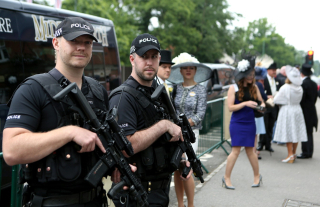
And while they did this, they moved our landmarks, such as our unique coinage and a human, poetic system of weights and measures, polished in use. They replaced the advanced world���s only unarmed police force with a baseball-capped, scowling gendarmerie festooned with guns, clubs and gas canisters.
They presided over a systematic forgetting of our national literature, so that a land where every ploughboy once knew the King James Bible is now full of people to whom the works of Shakespeare, Bunyan, Dickens, Wordsworth and Tennyson may as well be written in Martian.
They declared themselves ���Europeans���. They regarded this as superior to their own country. ���How modern! How efficient!��� they trilled. I have heard them do it. They did not notice that the EU was also a secretive, distant and unresponsive monolith, hostile or indifferent to the freedoms we had so carefully created and so doggedly preserved.
They failed to see that its ���parliament��� does not even have an opposition, that its executive is accountable to nobody. They inherited jury trial, habeas corpus and the Bill of Rights ��� the greatest guarantees of human freedom on the planet ��� and they traded in this solid gold for the worthless paper currency of human rights.
If they win on Thursday, the process of abolishing Britain will be complete. If they lose, as I hope they do and still think they will, there is a faint, slender chance that we may get our country back one day.
Random horror of mental illness
I would not dream of exploiting the untimely death of a young mother for political purposes. I am grieved for all those who loved Jo Cox, and are desolated by her death. I extend my sympathy to them.
But I have the strong sense that others do seek to turn this event into propaganda for a cause. It has happened very swiftly. It needs to cease. And to counter it I shall need to say some things I would normally have waited some time to say, as I would prefer to have more evidence than I now have. This consideration does not seem to bother those whom I criticise.
The suggestion has been made that Mrs Cox died because of her views on the EU. The implication is that those with different views are in some way to blame for her death. We should scornfully reject this insinuation. Nobody on any side in the EU debate wishes any opponent dead.
In this country, no cause is served by violence and no rational person believes that it is. Political murder is not common here, and in modern times has usually been the calculated and vengeful work of Irish criminal terror gangs.
What is regrettably common is the random killing of innocent people by the mentally ill. Numbers vary and can be calculated in many different ways, but even The Guardian accepts that in 2010 there were 40 such killings across the UK, carried out by patients with mental-health problems. In 2005, there were 92. In the decade 2001-2010 there were 738 by one calculation, or 1,216 by another.
People going about their daily business are pushed under trains, stabbed, kicked to death, even beheaded by unhinged assailants, who have suddenly and unpredictably become violent.
Many of these killers are known by the authorities to be ill but still allowed to walk the streets, because dozens of mental hospitals have been shut to save money. Some of them have become ill following long-term use of cannabis, now decriminalised in all but name. A long-overdue reversal of these foolish policies would be a better cause than trying to take partisan advantage of a human tragedy.
Disturbed people do sometimes embrace the wilder political and religious creeds. But it is their mental illness, not these barely understood ���opinions���, that makes them capable of the dreadful act of killing ��� an act which separates them from the rest of humanity.
The alleged killer, Thomas Mair, is said by neighbours to have a history of mental illness. By his own account it seems likely that he has taken some sort of medication at some stage. He is said by his family to have had no interest in politics. Let us leave Jo Cox���s family and friends to mourn. And let us all listen carefully to the evidence when it is, eventually, placed before the courts.
If you want to comment on Peter Hitchens, click on Comments and scroll down
Peter Hitchens's Blog

- Peter Hitchens's profile
- 299 followers

