
Peter Hitchens's Blog, page 169
April 3, 2016
Privatisation! Free trade! Shares for all! The great con that ruined Britain
This is Peter Hitchens' Mail on Sunday column
 I am so sorry now that I fell for the great Thatcher-Reagan promise. I can���t deny that I did. I believed all that stuff about privatisation and free trade and the unrestrained market. I think I may even have been taken in by the prophecies of a great share-owning democracy.
I thought ��� this now seems especially funny ��� that private British Telecom would be automatically better than crabby old Post Office Telephones.
I think anyone who has ever tried to contact BT when things go wrong would now happily go back to the days of nationalisation. Soviet-style slowness was bad, but surely better than total indifference.
And it���s all very well being able to buy cheap goods from all over the world, as we fling our borders wide and abandon the protection of our own industries that everyone says is so wicked and will make us poor and backward.
How I miss the old names of trusted brands, and the knowledge that these things had been made for generations by my fellow countrymen.
But the new broom swept, and it swept pretty clean. In towns I know well, car assembly lines, railway workshops, glassworks engineering plants, chocolate factories vanished or shrank to nothing.
A journey across the heart of England, once an exhilarating vista of muscular manufacturing, especially glorious by night, turned into archaeology. Now, if it looked like a factory, it was really a ruin.
Someone usually pops up at this stage and says that we still manufacture a lot. If you say so, but then why are the drug-dealers so busy in our new factory-free industrial areas, and why can I never buy anything that was made here, except from absurdly expensive luxury shops?
Why are our warships made of foreign steel? Why are the few factories that do exist almost always foreign-owned, their fate decided far away by people who don���t much care about this country?
And why is our current-account deficit with the rest of the world the worst it���s ever been in peacetime, and nearly as bad as it was during the Great War that first bankrupted this country a century ago?
If it���s all been so beneficial, why do so many of the containers that arrive in British ports, full of expensive imports, leave this country empty?
Sure, some things have got cheaper, and there are a lot more little treats and luxuries available.
The coffee and the restaurants are better ��� but the essentials of life are harder to find than ever: a good life and an honest place; a solid, modest home big enough to house a small family in a peaceful, orderly landscape; good local schools open to all who need them; reasonably paid secure work for this generation and the next; competent government and wise laws.
These have become luxuries, unattainable for millions who once took them for granted.
And now the remains of our steel industry are vanishing, not because nothing can be done (any determined government could save it if it really wanted to) but because we���re all still worshipping that free-market dogma that captivated us 30 years ago.
I never thought I���d yearn for the National Coal Board or British Steel or, good heavens, British Leyland. But I do begin to feel I was fooled into thinking that what was coming next would be any better. At this rate it may soon be much, much worse.
Maybe our real enemy isn't ISIS...
The cross-eyed prejudice of this country���s chattering classes sometimes gets beyond all bearing.
We all loathe Islamic State. We were all rightly dismayed when these maniacs captured Palmyra, one of the great monuments of human civilisation, murdered its chief curator and began to smash it up.
Yet when the Syrian army, backed by Russian air power, succeeded in driving the fanatics out of Palmyra, the media could hardly bring themselves to put it anywhere further forward than page 94, and the politicians, always ready to say rude things about IS, could barely utter a word.
It���s this kind of thing that makes me wonder whether the alleged hostility of the West to IS is genuine, or a pose.
It often seems to me that they loathe Russia, and Syria���s President Assad, much more. Which side are we really on in this conflict?
Striving to identify the maddest moment of the week, I am forced to choose between two: the crazed closure of the majestic coal-fired power station at Ferrybridge to satisfy green zealots (remember that when the power cuts come, as they soon will); and the police ordering paying passengers off a Cornwall-bound train because it was too full ��� the culmination of a 50-year policy of trying to drive custom away from the railways, rather than expanding and modernising them.
So bad, it had me backing the villains
I have actually been watching the BBC���s dramatisation of John le Carr�����s The Night Manager because it is so bad. How much worse could it get?
A secret agent in deep cover who simpers nervously every time he is rightly accused of treachery and can���t stop himself ogling the boss���s girlfriend, while the boss is looking?
A supposed spy chief, who more closely resembles a grumpy Barnsley social worker who has just failed to arrange a gay adoption ��� and who, while many months pregnant, travels across the world and outshoots a professional assassin?
After not too much of this I was rooting heartily for the villains, who seemed to me to be making a perfectly sound case for the arms trade.
And, while I understand that plots sometimes have to be changed for TV, I think it was utterly gratuitous to invent scenes in which the beautiful Elizabeth Debicki was sadistically tortured, when no such thing happens in the book. Not to mention the ridiculous ���happy��� ending. Please, spare us a sequel.
Archbishop in an unholy mess
I am still scratching my head over the Archbishop of Canterbury���s bizarre response to powerful evidence, gathered and assembled by eminent lawyers, a former police officer and a judge experienced in child abuse trials, that abuse allegations against the late Bishop George Bell are highly questionable, and based on a sloppy, inadequate investigation.
The Archbishop, Justin Welby, hasn���t given an inch and continues to defend the Church���s acceptance of a solitary, ancient, uncorroborated, anonymous charge ��� even though, since it was made public, there have been no further accusations.
But Archbishop Justin has now told the BBC that George Bell ��� a man he believes to be a filthy child molester who dishonestly and selfishly abused a little girl ��� is also ���the greatest hero that most of us have���. I���ve heard of a broad church, but this is ridiculous. One or the other. Not both.
If you want to comment on Peter Hitchens, click on Comments and scroll down


April 2, 2016
A discussion on British Summer TIme at the IEA
A kind member of the audience has sent me this audio recording of a debate in which I took part, on the weird habit of shifting the clocks.
You may listen to it here
March 29, 2016
Leninism and Lennonism aren't that far apart. Some thoughts on the Rolling Stones in Cuba.
One of the most enthralling events of the last few days was the Rolling Stones concert in Havana on Friday night. I once went to one of these strange events , as a work assignment, in Washington DC, and thought I had been clever to take binoculars so that I could get a good view of the caperings of Mr Jagger and Mr Richard (as people of my generation still think of him). Alas, the sound was so worryingly powerful (loud won���t do as a word, the first wave from the banks of speakers actually seemed to strike me in the chest like a light but definite blow), that I had to spend the whole evening with my fingers jammed into my ears to preserve my hearing. So I could only take brief breaks from this to use the field glasses. If I ever go to one again (Heaven forfend) I aim to take earplugs *and* binoculars.
I reckon they are some sort of pagan celebration, a pre-Christian manifestation like football matches, in which people willingly take leave of their reason in return for feeling they are part of something greater than themselves. In my view this something is not very nice, and I find it rather frightening. Why is it that men lose their reason in crowds so much more than they do alone?
Soccer and rock music both leave me cold, but I have been tempted by this mass emotion once or twice on big demonstrations (I recall feeling a twinge of it at Easter 1966 in Trafalgar Square, my first CND ban-the-bomb demonstration and the culmination of a couple of days of mass politics, which had included sleeping on the hard wooden floor of a church hall in Kentish Town and a lot of foot slogging and shouting). It was coming on to drizzle, there had been some ritual scuffles up towards South Africa House, and we were singing a parody of 'Jerusalem' the only line of which I recall being '...and that the bland shall lead the bland'.
But I didn���t like the loss of control involved and held that part of myself back. I hope I always will. People like me fear unreason. I���m fairly sure that in any but a very advanced society I would have been clubbed to death quite early in life, for the serious offence of not being one of the crowd. School bullying is a modern instance of this which does sometimes end in death, though usually in the form of suicide.
But I digress. In this moment in Havana, Cuba did a sad thing. It went straight from the depths of Castroism into the new neo-liberal world (I use this expression consciously and deliberately to annoy a conservative friend of mine who says that the use of the term is an invariable sign of hopeless stupidity. I simply don���t agree. In fact I think this is a very good example of why it is a useful formula. Capitalism has not defeated communism in a triumph of Christian conservatism. It has merged with Communism in a bizarre synthesis of Margaret Thatcher and Deng Xiaoping, in which it is glorious to get rich, personal morality is more or less irrelevant, the state monitors minds and regulates all, but yet takes no responsibility for anything, and the freedom of the market entails no freedom of thought, but there are lots of consumer goods and self-indugences to make up.
Cuba was admittedly never all that Christian, thanks to the great power of Santeria, a distillation of African pre-Christian faiths. But Christianity was certainly one of the things the Castro despotism strongly discouraged in its early, murderous years, when the Guevara monster was supervising mass shootings at La Cabana, and smirking at lawless show trials, and Huber Matos was, as he delicately put it, having his genitals pierced by Mr Castro���s torturers, for daring to criticise his old comrade.
And Pope Francis, interestingly, tried and failed to get the concert switched to another day because (like me) he reckoned that raucous, sexually-charged and far from reverent event such as this shouldn���t really be held on Good Friday in any part of the world where the Christian faith is widely practised.
I���ve given up trying to explain to most people why this is important. Perhaps I should mention the role of a certain rather famous raucous crowd on the first Good Friday, to give you some idea. But so few people now recall Good Friday as a solemn day of penitence and reflection (though we���re happy to respect similar days in the calendars of other faiths) that it is more or less useless to suggest that it matters. Of course this mixture of indifference and scorn is reserved for the Christian faith, the one we���re all trying so hard to escape because we���re afraid its strictures might in some way apply to us and load us with obligations we dislike. I wonder how the Rolling Stones management would respond to a similar request to avoid performing during a solemn commemoration in a Muslim or Hindu location.
But back to the concert and the coverage of it. There was a lot of talk about how rock music was *once* banned in Cuba, as if it was seen as subversive by the Castro despotism. In fact (the use of the word ���once��� is a rather feeble nod to this) this has not been the case for many years.
The Guardian, in an excellent report on this event http://www.theguardian.com/world/2016/mar/25/rolling-stones-cuba-historic-concert-diplomacy noted ���Very little rock music was played on the [Cuban] radio and TV until John Lennon released the politically driven Power to the People, which was approved by the Cuban government and heralded a change that continues. (Lennon now has a park named after him in Havana, as well as a statue of him sitting on a bench)���. That statue was unveiled 16 years ago. And Wikipedia records that ���Power to the People��� (check the lyrics for yet more evidence of John Lennon���s famously stupendous poetic talent) was released in March 1971, 45 years ago.
So perhaps there are other reasons why the Stones have not performed in Havana before , apart from the alleged subversiveness of rock music (which is in my view not at all subversive in Communist states, since the things it attacks, family, conservative culture, self-restraint, etc, are not things such states value). Could it be that money and logistics played a part?
I was interested by this part of the Guardian story : ���Funding was the next problem. With average salaries of about $20 a month, the vast majority of Cubans are unable to afford even a cut-price ticket, let alone the usual sky-high fees for a Stones gig. The answer was to stage a free concert, a throwback to the band���s reputation-making gigs at the end of the 1960s...
'...In Cuba, they have managed to put on a free concert thanks to the sponsorship of Gregory Elias, a 62-year-old entrepreneur from Cura��ao.���
This is also interesting
http://www.rollingstones.com/2016/03/01/the-rolling-stones-announce-free-concert-in-cuba/
Also note in the Guardian story that Gorki Aguila, a Cuban musician not beloved by his country���s authorities because he is very rude about them, had his doubts : ���Although he is a fan of the Stones, he feels the British rockers are being used. ���If I could speak to them, I would tell them they are disrespecting the rights of artists in this country who are not able to express ourselves,��� he said. ���The tyrants here are trying to portray an image of Cuba as an island of happy people. If the Rolling Stones don���t talk about what is going on here [in terms of human rights violations], then they are indirectly serving as collaborators with the Cuban tyranny.���'
If The Rolling Stones did mention political liberty during their concert, I have not seen a report of it (Has anyone? Please let me know if so). Barack Obama certainly did, most emphaticall, mention this issue, on live Cuban TV as far as I can find out, though the state newspapers did not mention this. He also pointedly met dissidents at the US Embassy in Havana. Just before he arrived Cuban police arrested (yet again) the ���Women in White��� whom I once saw outside the Church of Santa Rita in Miramar, making their extraordinarily courageous peaceful demonstration against the imprisonment of their husbands for political dissent .
Cuba always locks up dissidents on what it says are normal criminal charges, and thus denies having any political prisoners. It���s an evasive lie. I remain deeply perplexed by the strange death in a supposed road accident in 2012 of the late Oswaldo Paya, an utterly principled opponent of the Castro state who pointedly sought no support from the USA and was opposed to neoliberalism. Look it up and see what you think.
The Sunday Telegraph reported that senior officials of the Castro police state (its ���Committees for the Defence of the Revolution��� monitor the lives and thoughts of the people in every street and block of flats) had been present at the concert.
I���m not surprised. I imagine they���re as indifferent to Good Friday as the Stones were. That common, shared indifference to what was once the most solemn day in Christendom is an interesting symbol of the fact that the formerly Communist states seem always to go straight from Communism to the most ultra-liberal, secular form of society, well symbolised by the Stones and their hymns to self-rule.
March 28, 2016
We aren't fighting a 'war' - they're just a bunch of doped-up losers
This is Peter Hitchens's Mail on Sunday column
Here we go again, politicians and media hand in hand, doing the work of the terrorists. They are called terrorists because their aim is to scare us into doing their will. Those who help them scare us, by exaggerating their power and importance, are giving aid and comfort to the enemy. It is stupid, and they should stop.
Supposed ���experts��� speak in grave tones about ���security���, an area about which you can say anything at all because nobody ever confirms or denies anything. The ���security services���, costly and ineffectual as they are, are pleased to be given an importance they have not earned.
And they will be along in a minute demanding more powers to snoop into the lives of the innocent while continuing to fail to spot the guilty. Like anyone who is allowed to claim expenses while not being required to give details of how he spends the money, these people live by boasting and exaggeration, plus a bit of angry pomposity if anyone questions their real worth.
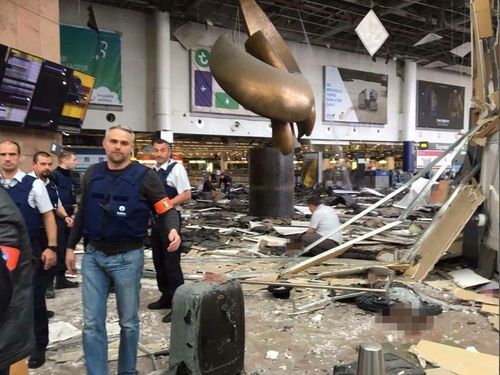 I especially dislike all this lofty stuff about how bad the Belgians are at tracking terrorists. Are we so much better? How will all this look if ��� and in truth we have no realistic way of predicting or preventing it ��� it is London next?
The French Prime Minister, Manuel Valls, says ludicrously that this is a ���war��� and others bloviate and splutter along the same lines, instantly winning themselves starring roles on the 24-hour news feeds.
What nonsense. How the sordid criminals of the Brussels suburbs, who are common murderers of low morals and low intelligence, must grin like dogs and rejoice to be paid such a fat compliment.
Let Monsieur Valls visit a real war zone and see what modern munitions can do to a big city, such as Baghdad, where the shockwaves from bombs falling a mile away made the hospitals tremble so violently that women gave birth prematurely.
Let him see the enormous craters, the concrete buildings with their floors collapsed like a pile of pancakes, the general chaos. Let him observe how normal life ends, schools close, money loses its value, the shops empty as supplies dry up and the economy ceases to function.
If we were at war, life as we know it would come to a stop, and we would be set back decades, living in ruins without electricity.
That is war. They know all about it in Iraq, Syria, Libya and the other places we have ���liberated��� recently. What we face is crime ��� stupid, vicious, cruel, but crime, actions which don���t deserve to be dignified or pumped up beyond their real significance.
When we have eventually found all there is to be known about the culprits, I predict that they will turn out to be very like the drug-addled petty crooks and lowlifes who killed Lee Rigby, who attacked the offices of Charlie Hebdo and who murdered more defenceless people in Paris last November.
Read this report from the BBC���s Secunder Kermani, which brilliantly describes the reality, quite different from our fictional picture of Wahhabi puritans directed from a bunker in Arabia: ���One friend of the [Abdeslam] brothers who used to hang out there told me he would regularly see Brahim Abdeslam ���watching IS videos, with a joint in one hand, and a beer in another���. He said Brahim would spout off radical statements but that no one took him seriously.
���Another friend showed me a video from a Brussels nightclub of the two Abdeslam brothers on a night out with girls, drinking and dancing ��� this was February 2015, just months before they started to plan the attacks in Paris.
���The network that the Abdeslam brothers had around them ��� based as much on personal loyalty, disenchantment and petty crime as radical ideology ��� would be key in helping Salah [the other brother] escape after the Paris attacks.���
 This is not war. It is the action of deranged nobodies, trying to give their dead-end lives meaning with a grandiose cause.
If you want to know where to find them, just follow the smell of marijuana, the supposedly harmless drug which rots the reasoning powers of its users and which, when combined with radical Islam, explodes into red ruin.
The Big Dope Lobby and its many suckers and dupes constantly attack me for pointing out the dangers of the drug they want to legalise. They claim I blame everything on it. But what can I do?
This week I ask your pardon for referring to this drug twice in one column. For it is not just associated with Islamic terror. It is also linked with the most callous and cruel non-political crime.
The dreadful death of PC David Phillips was caused by Clayton Williams, a youth who smokes the drug so much that his Facebook picture showed him with a cannabis joint in his mouth.
Williams had been smoking this supposedly ���soft��� drug on the evening he mowed down PC Phillips, the father of a young family ��� a horror Williams���s doped mind still seems unable to understand.
When will the twin lies, that there is a ���war on drugs��� and that taking cannabis is a harmless, peaceable recreation, be exposed for the dangerous falsehoods they are?
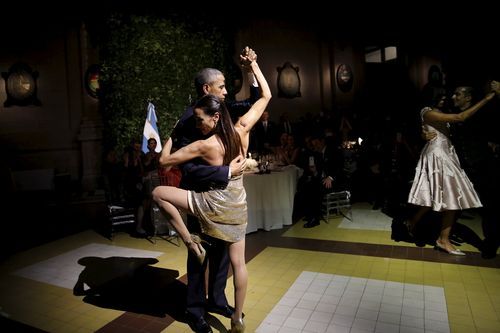 Though I dislike most of his views, I have always been rather impressed by Barack Obama, a thoughtful and interesting man. He has also been dead right about Cuba, realising that the best way to finish the Castro nightmare is to end the US blockade and make it clear that island���s misery is the fault of its communist despots. He should do something similar in North Korea. A picture of him standing alongside Kim Jong Un might cancel out the embarrassing memory of his plainly unwanted surprise grapple with tango dancer Mora Godoy in Buenos Aires (right).
Once again you will have woken this morning to find that the clocks have been shoved forward by an hour. For me, and for many other early risers, this means weeks of something rather like jet-lag. But what���s it for? Why do we do it? Nobody actually knows. We just do it because we have done it for years. There���s no solid objective evidence that it does any good at all.
Wait a few weeks and the evenings will get lighter all by themselves. Yet we���re told absurdly that it provides more light. It doesn���t.
A Cherokee elder, baffled by the paleface habit of messing around with clocks, once asked: ���What sort of person thinks that by cutting a foot off one end of a blanket, and then sewing it on to the other end, he gets a longer blanket?���
You won���t be surprised to learn that I am more interested by the gloomy bit of Easter ��� the betrayal by the secret police spy, the show trial, the cowardice of the government in the face of the mob, executing the innocent and releasing the murderer ��� than in the happy part. The really great myths, so-called, are not about something which once happened. They are about something that goes on happening all the time, and is happening now.
March 27, 2016
This is Peter Hitchens' Mail on Sunday column
Here we go...
This is Peter Hitchens' Mail on Sunday column
Here we go again, politicians and media hand in hand, doing the work of the terrorists. They are called terrorists because their aim is to scare us into doing their will. Those who help them scare us, by exaggerating their power and importance, are giving aid and comfort to the enemy. It is stupid, and they should stop.
Supposed ���experts��� speak in grave tones about ���security���, an area about which you can say anything at all because nobody ever confirms or denies anything. The ���security services���, costly and ineffectual as they are, are pleased to be given an importance they have not earned.
And they will be along in a minute demanding more powers to snoop into the lives of the innocent while continuing to fail to spot the guilty. Like anyone who is allowed to claim expenses while not being required to give details of how he spends the money, these people live by boasting and exaggeration, plus a bit of angry pomposity if anyone questions their real worth.
I especially dislike all this lofty stuff about how bad the Belgians are at tracking terrorists. Are we so much better? How will all this look if ��� and in truth we have no realistic way of predicting or preventing it ��� it is London next?
The French Prime Minister, Manuel Valls, says ludicrously that this is a ���war��� and others bloviate and splutter along the same lines, instantly winning themselves starring roles on the 24-hour news feeds.
What nonsense. How the sordid criminals of the Brussels suburbs, who are common murderers of low morals and low intelligence, must grin like dogs and rejoice to be paid such a fat compliment.
Let Monsieur Valls visit a real war zone and see what modern munitions can do to a big city, such as Baghdad, where the shockwaves from bombs falling a mile away made the hospitals tremble so violently that women gave birth prematurely.
Let him see the enormous craters, the concrete buildings with their floors collapsed like a pile of pancakes, the general chaos. Let him observe how normal life ends, schools close, money loses its value, the shops empty as supplies dry up and the economy ceases to function.
If we were at war, life as we know it would come to a stop, and we would be set back decades, living in ruins without electricity.
That is war. They know all about it in Iraq, Syria, Libya and the other places we have ���liberated��� recently. What we face is crime ��� stupid, vicious, cruel, but crime, actions which don���t deserve to be dignified or pumped up beyond their real significance.
When we have eventually found all there is to be known about the culprits, I predict that they will turn out to be very like the drug-addled petty crooks and lowlifes who killed Lee Rigby, who attacked the offices of Charlie Hebdo and who murdered more defenceless people in Paris last November.
Read this report from the BBC���s Secunder Kermani, which brilliantly describes the reality, quite different from our fictional picture of Wahhabi puritans directed from a bunker in Arabia: ���One friend of the [Abdeslam] brothers who used to hang out there told me he would regularly see Brahim Abdeslam ���watching IS videos, with a joint in one hand, and a beer in another���. He said Brahim would spout off radical statements but that no one took him seriously.
���Another friend showed me a video from a Brussels nightclub of the two Abdeslam brothers on a night out with girls, drinking and dancing ��� this was February 2015, just months before they started to plan the attacks in Paris.
���The network that the Abdeslam brothers had around them ��� based as much on personal loyalty, disenchantment and petty crime as radical ideology ��� would be key in helping Salah [the other brother] escape after the Paris attacks.���
This is not war. It is the action of deranged nobodies, trying to give their dead-end lives meaning with a grandiose cause.
If you want to know where to find them, just follow the smell of marijuana, the supposedly harmless drug which rots the reasoning powers of its users and which, when combined with radical Islam, explodes into red ruin.
The Big Dope Lobby and its many suckers and dupes constantly attack me for pointing out the dangers of the drug they want to legalise. They claim I blame everything on it. But what can I do?
This week I ask your pardon for referring to this drug twice in one column. For it is not just associated with Islamic terror. It is also linked with the most callous and cruel non-political crime.
The dreadful death of PC David Phillips was caused by Clayton Williams, a youth who smokes the drug so much that his Facebook picture showed him with a cannabis joint in his mouth.
Williams had been smoking this supposedly ���soft��� drug on the evening he mowed down PC Phillips, the father of a young family ��� a horror Williams���s doped mind still seems unable to understand.
When will the twin lies, that there is a ���war on drugs��� and that taking cannabis is a harmless, peaceable recreation, be exposed for the dangerous falsehoods they are?
Though I dislike most of his views, I have always been rather impressed by Barack Obama, a thoughtful and interesting man. He has also been dead right about Cuba, realising that the best way to finish the Castro nightmare is to end the US blockade and make it clear that island���s misery is the fault of its communist despots. He should do something similar in North Korea. A picture of him standing alongside Kim Jong Un might cancel out the embarrassing memory of his plainly unwanted surprise grapple with tango dancer Mora Godoy in Buenos Aires.
And for your next dance, Barack... try a tango with Korea���s despot.
Once again you will have woken this morning to find that the clocks have been shoved forward by an hour. For me, and for many other early risers, this means weeks of something rather like jet-lag. But what���s it for? Why do we do it? Nobody actually knows. We just do it because we have done it for years. There���s no solid objective evidence that it does any good at all.
Wait a few weeks and the evenings will get lighter all by themselves. Yet we���re told absurdly that it provides more light. It doesn���t.
A Cherokee elder, baffled by the paleface habit of messing around with clocks, once asked: ���What sort of person thinks that by cutting a foot off one end of a blanket, and then sewing it on to the other end, he gets a longer blanket?���
You won���t be surprised to learn that I am more interested by the gloomy bit of Easter ��� the betrayal by the secret police spy, the show trial, the cowardice of the government in the face of the mob, executing the innocent and releasing the murderer ��� than in the happy part. The really great myths, so-called, are not about something which once happened. They are about something that goes on happening all the time, and is happening now.
March 21, 2016
'Murder in the Cathedral' - the Casual Wrecking of a Great Name
'Murder in the cathedral'
We could call this affair ���Murder in the Cathedral���, for it is about the ruthless murder of a great reputation, and it took place in and around the ancient cloisters of Chichester Cathedral in Sussex. The attack was made in broad daylight by respectable Englishmen. It is a detective story, and like all the best such stories it is set in beautiful English surroundings, the lovely Bishop���s Palace, in the serene and tranquil close in that ancient walled Roman city.
A disgusting charge
What we are led to believe is that among these dappled gardens and old stone walls, a seemingly holy, white-haired old man, revered around the world for his moral courage and apparent saintliness, repeatedly did disgusting things to an innocent little girl left in his care.
The charge has been made by one person. Since it was made, in both national and local media, neither the Sussex police nor the NSPCC which advertised a helpline, have heard of any further accusations of the same type against George Bell, though criminals of this type seldom restrict themselves to one victim. The charge remains solitary, ancient and uncorroborated, yet an astonishing number of people and media have chosen to believe it, and treat it as if it were true.
All or nothing
To me, it is all or nothing. If this charge is true, with its horrible selfish, lying exploitation of a defenceless child, with the name of God greasily profaned (in the alleged words allegedly said to the alleged victim ���This is just our little secret, because God loves you���), none of George Bell���s reputation as pastor, statesman, scholar or man survives. Good and evil are ultimately done in minute particulars. I had the impression from some study of his life that George Bell was a man of great personal kindness, loved by all who knew him, and it was this goodness and honesty which impelled him to take the unpopular and difficult stands he did take.
���A millstone hanged about his neck, and he cast into the sea���
If he betrayed a small child while pretending to look after her, a supreme act of selfish dishonesty then ���It were better for him that a millstone were hanged about his neck, and he cast into the sea, than that he should offend one of these little ones.��� But his goodness is so important to me that I cannot believe this accusation, unless and until it is proven beyond reasonable doubt. And it has not been. And now there is more doubt than before. I seek only permission to disbelieve this charge, and ask that others who do believe it recognise that it is legitimate for people like me to disbelieve it, that it is an allegation, not a proven charge, and that they stop trying to wipe George Bell���s name from the record, or to equivocate ludicrously about how he could still have been a great man as well as a revolting, unctuous paedophile. He couldn���t have been. One or the other. Not both.
Happily married
George Kennedy Allen Bell, by the time of these alleged events, was a man of 65, apparently happily married. He was the son of a vicar. He had won scholarships to Westminster School and the Oxford, where he had also won a major poetry prize. Two of his beloved brothers had died in the trenches, in the final months of the First World War. Another became a senior officer in British occupation forces in post-1918 Germany before taking up teaching and becoming head of a Public School, ending his life as a keen spokesman for the Moral Rearmament movement. His sister married a bishop. Their child, Barbara Whitley, is George Bell's niece, now aged 92, his only surviving close relative.
A shy man who stammered
I have heard suggestions, not easily confirmed, that a bout of mumps in adolescence may have made George Bell sterile, hence the childlessness. The marriage appears to have been contented and companionable by all accounts. Choirboys who sang in the Cathedral remember the Bishop with affection as a shy man who stammered, deeply devout and an ���upright, entirely moral figure who meant a great deal to us as children��� as one of them, Tom Sutcliffe, recently recalled. He died ten years later, much-honoured and loved, and at the time no breath of scandal ever came near him.
Blackballed by Churchill, jeered at by Noel Coward
He was renowned for several things. He had persuaded the great poet T.S.Eliot to write the play ���Murder in the Cathedral��� for its first performance in Canterbury (where Bell was once Dean). But he was also an early opponent of the Nazis and a loyal friend to the German resistance to Hitler, much beloved by the refugees he saved and by that great hero of Christian resistance to National Socialist terror, Dietrich Bonhoeffer. He was an unvarying and powerful support to refugees from Hitler���s tyranny, when this was not popular. He is believed to have saved many lives through using his influence to win asylum for them. He was particularly concerned for for the fate of German Jews who had converted to Christianity. His private life was austere and filled with hard work. Despite making a fair amount of money from successful books, he left little in his Will and is believed to have given much of the money away. T.S. Eliot, on first meeting him, was pleased and surprised to find a Prince of the Church who travelled by rail in a third-class carriage. Later, he became known and disliked by some, for having spoken publicly against the RAF bombing of German civilians in their homes ��� a stand that very probably caused Winston Churchill to veto his appointment as Archbishop of Canterbury. It is also said to have inspired Noel Coward���s sarcastic little song ���Don���t let���s be beastly to the Germans��� (which now sounds embarrassingly triumphal given the ultimate outcome of events and our subservience to a revived Germany through membership of the EU). The line ���We might send them out some bishops as a form of lease and lend��� is pretty certainly a reference to George Bell���s unpopular insistence, even in the depths of war, that we should not regard all Germans as Nazis.
A good time to expose him
Had anyone wished to air any private misdeeds by Bishop Bell, and expect a ready audience, this wartime and postwar unpopularity (still in evidence at the time of the alleged offences) would have been a good moment to do so. And in fact this means he was probably rather less protected from exposure (had anything been there to be exposed) than most public figures of his age.
After he died in 1958, reverence superseded controversy and schools and other buildings were named after him. An elegant but modest memorial to him was placed in the Cathedral, not far from the famous Arundel Tomb made famous by the great poet Philip Larkin, where a mediaeval knight and his wife, in effigy, hold each other���s hands - demonstrating, as Larkin wrote, that ���what will survive of us is love���.
���Carol��� won���t speak to me
Not in this case. The little girl in the story, having kept silent for more than 40 years and become a middle-aged woman with children of her own, complained in 1995 that George Bell had sexually abused her. Her identity is a secret, but she uses the name ���Carol���. I have sought to meet her and ask her about her story, but she has declined, though she has given three interviews to other reporters. ���Carol��� said that a member of the Palace staff, a relative of hers, had brought her into the Palace. We know that this person, almost certainly a woman, existed. But she is long dead. The Church authorities refuse to say (there are a lot of such refusals in this story) whether they interviewed her before she died. Carol alleged that the Bishop had repeatedly interfered with her under the pretext of reading her stories while she sat on his knee, between the ages of five and nine, on many occasions.. She said her protests had been ignored in the deferential society of those days.
The Chauffeur investigates
In 1995, when she first made her complaint, child abuse did not attract the attention it now does. She was offered counselling, and refused it. The Bishop of the time, the late Eric Kemp, asked around the older Palace servants, especially Charles Monk, who had been George Bell���s driver, and who had lived (with his wife and daughter) next door to the Palace. Mr and Mrs Monk, like so many people in this story, are now dead. He said he knew of no evidence that any such thing had been going on. Silence descended again until 2012 when Carol complained again, first to Archbishop Rowan Williams, who by then had left office and never received her letter, and then to Archbishop Justin Welby. There was a mix-up about her complaint to Rowan Williams, , which seems to have been nobody���s fault. What is certain is that another Archbishop, George Carey, was not involved, and Carol has apologised for claiming wrongly that Lord Carey (as he now is) had ignored a letter from her.
A very clever lawyer
This time the Church acted. We do not know very much about what they did, as Lambeth Palace and the Chichester Diocese mostly refuse to say. We know that they supplied ���Carol��� with a counsellor, of whom more later, and an intermediary who put her in touch with the Bedford law firm Emmott Snell whose senior partner, Tracey Emmott, has been extremely successful in pursuing abuse cases against the Church and achieved a major change in the law, making churches responsible (as they were not before) for the actions of their clergy.
In her interview with the Brighton ���Argus���, ���Carol��� cites the Church���s decision to pay her compensation out of court as evidence in her favour. ���Then why did the Church pay me?���, she asked . ���They must have believed me, I assume���. She may be right. But belief in such matters is a complex thing, understood, alas, by fewer and fewer people. English law does not make an all-or-nothing distinction between believing an allegation and disbelieving it, or witnesses for the losing side in any case would be open to prosecutions for perjury. It asks for proof beyond reasonable doubt.
A short lesson in the Law of England
By rejecting a criminal allegation, it does not classify the accuser as a liar (though some in the Church, involved in this case, seem to think so). It classifies him or her as someone whose claim may (or may not) be true, but is not proven to this standard.
And by paying a plaintiff in a civil claim, a defendant is not necessarily saying that he or she believes or accepts the claim. Going to trial is expensive and unpredictable. Both sides usually seek to avoid it, especially now that lawyers (working on a no-win, no-fee basis, as they usually do) have much more limited rights to extract their fees from the courts.
Who���s going to care about a dead Bishop?
By 2013, a number of court cases had put the Church in a weak position. Many abuse cases had been proven. The Church���s liability for the actions of all clergy was (see above) established. It���s quite possible the Church���s insurers advised that the best thing to do was to settle ��� a rather modest payment of ��15,000 reflected the long time between alleged crime and accusation. You can see the thinking. Chichester had a bad reputation for child abuse, and for not doing enough about it. It was a good moment for a decisive action. The only person who would suffer was a long-dead Bishop, who had nobody present to speak for his interests. Who would object? As far as anyone knew George Bell had no living relatives, and he was, surely, a forgotten figure.
A statement was issued saying that a payment had been made and an apology (whose full text was never published) issued. We still don���t know exactly what the apology, in the name of the current Chichester Bishop Martin Warner, was for. It may have been for the failure of his forerunner, Eric Kemp, to handle the case properly in 1995.
An odd thing to say
The Sussex police proclaimed that if George Bell had been alive, they would have arrested him. This was an odd thing to say, since identities of arrested persons aren���t revealed when they���re alive, and, as the Church would repeatedly say, it wasn���t a criminal matter, just a civil case. Also, only about 25 per cent of people arrested in such cases are ever charged, so it is not the indication of guilt it seemed to many people to be. In many conversations I have had about this, discussing the credibility of the charge, the police statement has been cited by almost everyone who has chosen to believe the allegations. They have seen it as strong evidence that they are true. Actually, it is nothing of the sort, but it looks as if it is, and this is what counts in an increasingly uneducated society.
The police���s only lawful duty if the alleged perpetrator is dead (I have checked this) was to record the alleged crime. They refuse to say what enquiries they made beyond interviewing Carol, or indeed if they made any other enquiries at all. But it may well have been that police statement which made many people think there was no doubt about it, and another paedophile priest had been got bang to rights. Whatever it was, though the Church never said Bishop Bell was guilty, local and national media all said he was.
Dead men have no protection. Three major national newspapers, two local ones and the regional BBC all reported the case as if George Bell had been tried and found guilty. ���Revered Bishop was paedophile��� they said. ���Proven Abuse���, they asserted. In fact they had no basis for saying so. The BBC has partly withdrawn some of what it said, though no newspaper yet has. The Church���s statement ��� on which they based these reports ��� did not say he was guilty. The Bishop of Durham told the House of Lords some weeks later on the 28th January ���In fact, if noble Lords read very carefully the statements that have been put out, they will see that there has been no declaration that we are convinced that this (the abuse) took place.���
The Man in Black
It would be hard for anyone to have been sure. ���Carol��� did not make her charge until 37 years after George Bell���s death, and nearly 45 years after the events she alleged. The things she seemed to know about George Bell, how he dressed, that he had a book-lined study, were known by anyone who had ever seen photographs of him. The one thing she knew that was not commonly known, the existence of a staircase behind the private kitchen in the Bishop���s Palace, leading up to a corridor which led eventually to his study, could have been given to her by the relative who had once worked there. Not surprisingly for a lady in her 70s recalling events in her childhood, there were problems of detail. The abuse is supposed to have gone until she was nine, but it is hard to see how a man in his late 60s, or anyone else, could have perched a nine-year-old girl on his lap as Carol says he did. The most fascinating is this: ���Carol��� was taken by a church-supplied ���counsellor��� to revisit the scene of the alleged crime.
The Wrong Kitchen?
She explained, in her interview with the Brighton ���Argus��� ���The lady who was giving me counselling actually took me to the Bishop���s kitchen. The Cathedral had some sort of pottery exhibition on there and she said ���we���ll go, and see how you feel.���
���Well, I got in there and I said ���Can we leave now?���.We had to leave���
The interviewer recorded ���Carol���s voice only broke once in the course of a three hour interview, when she recalled how it felt to stand back in that room, at the foot of those stairs. Hoarsely, slowly, she said ���It was horrible. You start to feel all jelly inside. It���s not nice; believe me���.
���Perhaps, having bravely chosen to break the silence to which she was entitled, Carol has helped ensure that she will not have to revisit that Cathedral kitchen- in her mind or in person ��� ever again���.
There is one difficulty with this account. The mediaeval Palace kitchen (the scene of a recent pottery exhibition, often open to the public, and so presumably the one described in the interview) is a two-storey historic survival from the past. It is not the kitchen in which the live-in cook (almost certainly the relative who supposedly took ���Carol��� to the Palace) would have worked. This was the private kitchen, in the Bishop���s private quarters. The staircase leading up to the study is from the private kitchen, a wholly different room.
A surprise witness appears
We know this because there is, seemingly unknown to the Church of England authorities, another eyewitness to George Bell���s life and work in the early 1950s, the period of the alleged abuse. Carol has said of those who have defended George Bell���s reputation ���They weren���t there���.
But Canon Adrian Carey was there. For two years from September 1950, he worked and lived and ate and slept in the private part of the Bishop���s Palace at the time, performing his duties as Bishop���s Chaplain. He guarded the door to the private apartments and was constantly in the company of the Bishop, who worked incessantly (generally under the eyes of his secretary, of his wife and of his chaplain) and would have been highly unlikely to have ceased to do so to lessen the burden of work on a cleaner or a cook, let alone to abuse a child. He can recall all the servants who worked in the palace at that time. He washed dishes in the private kitchen, and helped serve meals. He never during his two years in the job (which coincided with the period of Carol���s alleged abuse) once saw a child in the private apartments, except during the annual Christmas party for the children of the clergy (not the children of the Palace staff).
Mr Valiant-for-Truth
Canon Carey to this day loves and admires George Bell ���To me, he was Mr Valiant-for Truth (a heroic figure in John Bunyan���s great story ���the Pilgrim���s Progress���) And he still is!���, he said to me. He says George Bell���s regard for truth, his fierce Christian purpose and austere morals make it extraordinarily unlikely that he could have done such a cruel and dishonest thing. And his closely-observed daily routine, when he was seldom alone and even more seldom unobserved, made it practically nigh-impossible.
Not some gullible parson
Canon Carey is not to be lightly dismissed. Though he is 94, he remains tough-minded and his memory is astonishing. He can quote at will great chunks of Greek and Latin verse, learned at Eton and King���s College Cambridge in the days of much more rigorous education. Nor is he some unworldly, gullible parson, easily fooled.
Mentioned in Despatches
Before joining the priesthood he served in the wartime Navy, firstly as an ordinary seaman, then as a sub-Lieutenant in the Royal Naval Volunteer Reserve (RNVR). He was aboard HMS Liverpool when she was torpedoed in the Mediterranean on a Malta convoy, and in the destroyer HMS Onslaught during many perilous voyages to and from North Russia, on the convoys which Winston Churchill described as ���the worst journey in the world���. He has Russian and British medals for this. In the summer of 1944 he was mentioned in despatches for his part in a skirmish with the Germans off the Channel Islands.
Meeting (and mistrusting) Jimmy Savile
Later, he worked for the BBC religious broadcasting department, where he met and mistrusted Jimmy Savile.
He describes the Church���s treatment of his old friend George Bell as ���nauseating���, and has taken great trouble and much time to ensure that his rebuttal of these charges should be published. I have spent some hours with him and was greatly impressed by his recall and his precision. He was there by day and by night for much of the period of the alleged abuse. And he does not accept the charges.
Yet he was never approached for his version of events by the Church of England, which claims to have conducted ���a thorough pre-litigation process during which further investigations into the claim took place including the commissioning of expert independent reports.��� It also says ���None of those reports found any reason to doubt the veracity of the claim.���
How odd. Any Englishman always has a reason to doubt any charge. It is a principle of liberty. English law requires all involved in investigating alleged crimes to doubt the accusation. The presumption of innocence demands that no man be convicted of anything until a jury of his peers has heard both sides of the case and is convinced beyond reasonable doubt that the accused is guilty.
How come they never looked?
Surely, that would involve searching for witnesses. Is it possible that Chichester Cathedral has no record, anywhere, of who worked for George Bell as his chaplain in the late 1940s and early 1950s? Is it possible that it was incapable of looking up Crockford���s Clerical Directory, now searchable online, which lists all living clergy, and identifies Adrian Carey as such a chaplain, conveniently providing his address.
A ���thorough pre-litigation process��� would surely have found Canon Carey. Since he was not found, or asked, can it really be called thorough? What else did it not do, and what else did it not ask? We don���t know, since the whole thing is hidden by a shield of confidentiality which ���Carol��� herself has not observed all that much. There���s no sign that George Bell���s extensive archive , detailing his many appointments and journeys, was matched against any dates which ���Carol��� came up with . His biographer, Andrew Chandler, wasn���t asked his opinion, even though he lives in Chichester. A priest involved in handling the 1995 allegation, still very much alive, wasn���t asked about that either.
A nasty shock for the Bishop���s niece
The Sussex police, who said they would have arrested the Bishop had he been alive won���t say if they interviewed anyone apart from ���Carol��� before reaching this conclusion. Nobody found or warned Barbara Whitley, the Bishop���s 92-year-old niece who thinks the charges are preposterous, is much distressed by them and has officially complained to the police about their part in blackening her uncle���s name.
Soviet-style process
Meanwhile, a Soviet-style process goes on, in which George Bell���s name is removed from schools and other places that were once named after him. The world proceeds as if this is proven, defying the ancient principles of English law. In which case, this not just about the reputation of a great Englishman, forever besmirched and diminished by accusations of an especially filthy and callous crime.
It is about a personal example of selfless goodness, rare in our times, reduced without proof or due process to ashes and dirt.
Who is not vulnerable now?
And it is a threat to every one of us. Who is not vulnerable to an accusation, made after his or her death when no defence is possible? Come to that, as Field Marshal Lord Bramall recently found, it is a threat to the living as police officials, with brains seemingly made of wood, treat even the most honoured person as a suspect criminal on the basis of a single uncorroborated accusation.
One place where the accusations are still treated with proper English scepticism is Oxford, where Christ Church Cathedral (also the chapel of George Bell���s old college) . There, in a serene part of the ancient building, there is an unaltered memorial to the late Bishop. A small altar of black oak, out of which a rough but powerful cross has been carved, stands in front of a slab on which the following rather interesting words are incised, along with George Bell���s name, dates and titles: :
���No nation, no church, no individual is guiltless without repentance, and without forgiveness there can be no regeneration���.
The words are, of course, George Bell���s own, as he contemplated the post-war world. Certainly, nobody is guiltless. But who now most needs to repent, and who to forgive? I said this was a detective story, but most such stories are in fact based on the belief that a trial, and justice, will follow the investigation and the uncovering of the truth by the sleuth.
Not on this occasion. There is no earthly place where this question can be settled. There can be no trial and n final verdict, just a trial in the hearts of those men and women who have long valued the story of George Bell���s life as a rare example of human goodness, and seek to continue to do so. How do you find the defendant? Guilty, or not guilty?
The Defence of George Bell - Full Documents in the Case
Here are the documents released last night by the Bell Support Group, urging a reconsideration by Church (and Media) of the charges against Bishop George Bell
1.Statement
Press Statement
George Bell���s naming as a paedophile is challenged today by a group of lawyers, academics, politicians and senior Church figures
Release 00:01hrs on Sunday the 20th of March 2016
George Bell���s condemnation as a paedophile has been challenged by a group of lawyers, academics, politicians and senior Church figures. The treatment of George Bell has been taken up today with the Archbishop of Canterbury.
George Bell is famed for being one of the first to speak out against the dangers Hitler posed in the 1930s and for saving many lives during these years by guaranteeing refugees from Germany. He was one of the few to condemn our government���s obliteration bombing of German cities during the Second World War.
A surprised world learnt on October 22, 2015 that this much-admired wartime Bishop of Chichester had in 2015 apparently been found guilty, by Church authorities, of child sexual abuse. As a result, his reputation has been irreparably damaged, and schools and institutions dedicated to his memory have been renamed.
The Church of England���s statement appears to accept the allegation of abuse as true. It contained a highly damaging statement that the Sussex police would have arrested the Bishop had he still been alive. But this would have been no more than standard police practice, a fact not mentioned in the statement. The police have confirmed that after investigation arrests lead to charges in less than 30% of cases, and of course, not every charge leads to a guilty verdict. It is significant that neither the police nor the NSPCC have received any further complaints against the Bishop. Although challenged, the Church has not provided details of any corroboration to enable the complainant���s story to be judged.
A detailed report compiled by the George Bell Group, today reveals that the Church���s inquiries were astonishingly inadequate, especially since they followed an uncorroborated allegation, first made many decades after the alleged offence, and so far unaccompanied by any further accusations of the same nature. The report shows that the Church authorities:
failed to seek, find or interview the most qualified and knowledgeable witness to George Bell���s daily life at the time of the alleged abuse, though his name and details appear in the Church���s own clergy directory. This witness, interviewed by the George Bell group, utterly and in detail rebuts the allegations and regards them as incredible.
made no attempt to consult George Bell���s extensive papers and diaries, kept at Lambeth palace Library, to check these allegations, their dates and nature, against the recorded details of his life at the time.
failed to find or contact any of George Bell���s living relatives, to warn them in advance of their plan to blacken George Bell���s name publicly, most notably his niece, Barbara Whitley, who also strongly rebuts the claims.
The group questions whether the safeguarding group had the legal and forensic expertise to come to a judgement that would support the idea that, on the balance of probabilities, George Bell was guilty of child sexual abuse.
Victims of child abuse are as interested as the wider community, if not more so, in having a robust system to investigate their claims of abuse. It is clear to the George Bell Group that such a system still needs to be established by the Church of England.
The group���s concern is that the valuable reputation of a great man, a rare example of self-sacrificing human goodness, has been carelessly destroyed on the basis of slender evidence, sloppily investigated. The group also feels that the Church���s whole approach to such cases needs to be more transparent, and more in tune with the principles of justice. The guilty must indeed be punished. But the innocent must be protected, whether they are living or dead, and whether they are ordinary citizens or eminent in the eyes of the world.
The Report of the George Bell Group can be found at:
http://www.georgebellgroup.org/
*******
Letter to the Archbishop of Canterbury
The Archbishop of Canterbury
The Most Revd Justin Welby
Lambeth Palace
London SE1 7JU
19th March 2016
Your Grace
We write on behalf of an independent group whose members represent a concentration of experience in public life, in the fields of law, policing, politics, journalism, academic research and church affairs. This group began to meet in response to the 22 October statement issued by the Church of England about Bishop George Bell.
We are now publishing our analysis of the way in which the allegation against Bishop Bell has been handled by the authorities of the Church.
We note that the public has been consistently assured that the process by which the Church of England reached a view on Bishop Bell was 'thorough' and 'objective', and that it commissioned 'experts' whose 'independent reports' found 'no reason to doubt the veracity of the claim[s]' of sexual abuse made by the complainant.
However, although the nature of this process has never been publicly disclosed, we have discovered enough to establish its severe limitations which render it quite inadequate as a basis for assessing the probability of Bishop Bell���s guilt. The scope of the independent experts��� inquiries was limited to a degree that made a proper analysis of the complainant���s allegations virtually impossible. Our criticisms of the investigation are highlighted in paragraphs 15 to 17 of the enclosed Review. What is more, little or no respect seems to have been paid to the unheard interests of Bishop Bell or his surviving family ��� a serious breach of natural justice.
In view of the evidence that we have gathered and examined we have concluded that the allegation made against Bishop Bell cannot be upheld in terms of actual evidence or historical probability.
We enclose our Review, which sets out our concerns at length.
We have concluded that on moral, pastoral and legal grounds the authorities of the Church of England clearly owe an apology, principally to the living relatives of Bishop Bell, and also to many people across the churches who have honoured his memory. We further invite all public institutions which have owned an association with the name of Bishop Bell to restore his name to the places where it was known and valued before 22 October 2015.
Finally, we must recognise how seriously the confidence of many church people has been shaken by this matter. We believe that the processes which have produced such a public denigration of Bishop Bell���s reputation should now be the subject of a thorough investigation. It is obvious to us that the Church of England must reassure the public at large that its future processes will meet, with all due sympathy and rigour, the needs of complainants. It must also weigh equally, and under the law, the proper interests of those who may be the object of such allegations.
Sincerely,
Signatories
Desmond Browne QC, Chairman of the Bar of England and Wales, 2009
Andrew Chandler, Historian
The Revd Dr Keith Clements, former General Secretary, Conference of European Churches
The Lord Dear, former Vice Lord Lieutenant; cross-bench Peer; former senior Chief Constable and HM Inspector of Constabulary
Mark Dunn, Sometime Chairman of West Sussex County Council and Sussex Police Authority
The Rt Hon Frank Field MP, Member of Parliament for Birkenhead
The Revd Dr Anthony Harvey, Emeritus Canon of Westminster, Former lecturer at the University of Oxford
The Lord Lexden, Conservative Peer and Historian
His Honour Judge Alan Pardoe QC
The Very Revd Professor Martyn Percy, Dean of Christ Church, Oxford
Margery Roberts, Member of the Diocese of London Bishop���s Council and churchwarden
The Revd Dr Philip White, Faculty of Canon Law of the Catholic University of Louvain.
Copies to: Bishop of Durham, Bishop of Chichester, Dean of Chichester Cathedral, Town Clerk, Chichester City Council, Vice-Chancellor of the University of Chichester, Headmaster of Bishop Bell School, William Nye, Church House Westminster, Andreas Whittam-Smith, Church Commissioners, the Editor of the Brighton Argus
*********
3: The Review
A REVIEW BY THE BELL SUPPORT GROUP OF THE TREATMENT BY THE CHURCH OF ENGLAND OF THE LATE BISHOP OF CHICHESTER,
GEORGE BELL
The Purpose of this Review:
The purpose of this Review is to examine the process leading up to the release by the Church of England���s Media Centre of its statement on 22nd October 2015 (���the October Statement���) and the events which followed in the hope that no further steps will be taken to remove Bishop Bell���s name from public memorials until a proper enquiry has taken place into the allegations against him. The members of the Bell Support Group responsible for this document believe that natural justice and the damage done to the Bishop���s good name by the October Statement cry out for such an enquiry.
The Reputation of Bishop Bell until 22nd October 2015:
The reputation of George Bell, Bishop of Chichester from 1929 to 1958 could hardly be better described than it is on the memorial plaque in the Cathedral:
���A TRUE PASTOR
POET AND PATRON OF THE ARTS
CHAMPION OF THE OPPRESSED
AND TIRELESS WORKER FOR CHRISTIAN UNITY���.
Until the October Statement Bishop Bell���s reputation was close to saintly. It was certainly quite unsullied: he is commemorated in the Church���s liturgical calendar on 3rd October and Christ Church Cathedral in Oxford has an altar dedicated to him. Following the Statement the wording of the Memorial in Chichester Cathedral has been described by the Diocese as���problematic���, and it seems likely that at some stage in the future a proposal may be made to remove the late Bishop���s name from the Calendar.
The Wording of the Church���s Statement of 22nd October 2015:
The wording of the October Statement was treated by the media as an acceptance by the Church that Bishop Bell was a proven paedophile. Examples of such reports on the same day are:
(1) The Telegraph: ���A former Church of England bishop revered as a peacemaker ��� and granted the closest thing Anglicanism has to a saint���s day ��� was a paedophile, the Church has acknowledged.���
(2) The BBC: ���A victim who was sexually abused as a young child by a former Bishop of Chichester who died in the 1950s has received compensation from the Church.���
(3) The Times: ���Eminent bishop was paedophile, admits Church.���
It is not clear who drafted the October Statement, but it seems that only a very small number of people in the Diocese were involved (for example, the Dean of Chichester has never seen the evidence relied upon).What is clear, however, is that the Statement was very carefully worded. In the House of Lords on 28th January 2016 the Bishop of Durham told the assembled peers that if they ���read very carefully the statements that have been put out, they will see that there has been no declaration that we are convinced that this [abuse] took place [emphasis added]���. If those responsible were not convinced by the evidence before them, the wording of the October Statement was (at best) reprehensibly equivocal, and (at worst) positively misleading. It was predictable that the subtlety of the wording would be overlooked and that the media would report the statement in precisely the way they did.
To the credit of the BBC, the Corporation has accepted that both their broadcast and their article online were inaccurate in suggesting that Bishop Bell had been proven guilty of sexual abuse. The Head of Editorial Complaints acknowledged to a complainant that ���no information has been disclosed about the matter which might warrant the view that the allegations had in effect been proven, even though not through court proceedings.���
A particularly prejudicial part of the Statement, since it has no direct bearing on the truth of the complaint, is that which stated that the Sussex Police had confirmed in 2013 that the information obtained ���would have justified, had he still been alive, Bishop Bell���s arrest and interview, on suspicion of serious sexual offences.....���. Those unfamiliar with police procedure will have had their minds prejudiced and most likely have thought that this added weight to the allegations. In fact, an arrest in such circumstances in order to carry out an interview under caution is standard police process. This has been confirmed in a letter dated 26th February 2016 by T/Detective Superintendent Jason Tingley of Sussex Police. There has been no suggestion that the police based their statement on any evidence other than Carol���s complaint. Furthermore, Sussex Police confirmed on 16th March 2016 that they had received no further complaints about Bishop Bell. This is significant: experience shows that instances of solitary abuse, one adult only picking on one child, are exceptionally rare.
Following an arrest police procedure involves carrying out further inquiries before submitting a report to the Crown Prosecution Service for advice on whether to charge. It is elementary that not every arrest and inquiry is followed by a charge, not every charge results in a trial and not every trial results in a conviction. Mr Tingley has stated that only 20% to 30% of investigations by Sussex Police result in a suspect being charged.
In the October Statement the Diocese did not shrink from naming Bell as being liable to arrest had he still been alive. But in fact had he been arrested, the police would not have named him at that stage. The conduct of the Diocese in this respect differs from the manner in which the Church dealt with the publication of the report commissioned from Ian Elliott into the conduct of Chancellor Garth Moore and Brother Michael Fisher, both of whom were dead. In October the Church paid ��35,000 damages to a man subjected to attempted rape by Moore, who died in 1990 after requesting to meet his victim on his deathbed. Initially (according to a report in The Times of 16th March 2016) the Church named neither priest, nor the Bishop (the Church���s spokesman on child protection, the Bishop of Durham) who was said to have broken off contact with the victim on the advice of insurers. The names of the priests and the Bishop were confirmed after The Times managed to see a full copy of the report.
The Background to the Diocese���s Settlement with the Complainant:
It is not the intention of this review to try to overturn or undermine the settlement reached between the Church and the individual whom the October Statement calls ���the survivor���, still less to do anything which might tend to reveal her identity. The Group does not challenge the survivor���s belief in her story; the question is whether others should believe it. The shock at the contents of the October Statement felt by those still alive who knew Bishop Bell and by those who revere his memory was all the greater for the fact that it is not possible to gauge the basis upon which the Chichester Diocese decided to pay compensation of an unstated amount (later revealed as ��15,000) and to issue a formal apology.
It has never been said whether insurers were involved in the settlement, but the figure for damages is very modest for serious sexual abuse alleged to have taken place over such a lengthy period. (It is markedly less than the ��35,000 compensation paid to the victim of the attempted rape by Chancellor Moore). It is obvious that insurers would have been keen to settle the Chichester claim as quickly and cheaply as possible, and would have had little or no interest in the reputation of a dead man, however much revered.
Any attempt to understand the background to the settlement is complicated by the fact that the Diocese also accepted that Bishop Eric Kemp had not dealt adequately with the complaint when it was first raised in August 1995. It is not clear whether compensation was paid for that deficiency. At any rate what were described as ���serious sexual offences���, which were alleged to have occurred in ���the late 1940s and early 1950s��� were not made the subject of complaint for well over 40 years, by which time Bishop Bell (who had no children to defend his name) had been dead for 37 years.
The Church, citing confidentiality, has provided no further information beyond that contained in the October Statement. That statement gave no indication of the nature of the abuse, the circumstances in which it was alleged to have occurred, or even the gender of the alleged victim. It simply said that ���the settlement followed a thorough pre-litigation process during which further investigations into the claim took place, including the commissioning of expert independent reports���. None of these reports had ���found any reason to doubt the veracity of the claim���.
In his statement in October 2015 Bishop Warner said of his revered predecessor that ���we face with shame a story of abuse of a child���. Such words left no room for doubt as to the (supposed) fact of the abuse. He explained that ���the scrutiny of the allegation has been thorough, objective and undertaken by people who command the respect of all parties���. The Bishop did not identify the ���parties��� to whom he was referring, and he provided no information about the scrutineers, their number, their professional backgrounds or (most important of all) the nature of the process they undertook. This last point is especially relevant since the October Statement did not suggest that any corroboration of the allegations had been found. Nor, it might be added, has any come to light since. The October Statement invited those with further information to contact the hotline set up by the Church together with the NSPCC. As at 15th March 2016 the NSPCC had received no calls in relation to Bishop Bell.
The Investigation by Independent Experts:
Although the Diocese has remained silent about the process of investigation, it has been described by the Bishop of Durham as not just robust, but ���long and careful���. Using the pseudonym ���Carol���, the complainant chose to provide details of the alleged assaults in an interview given to the Brighton Argus published on 3rd February 2016:
(1) Chichester Cathedral paid for ���counselling which included a return to the scene of her abuse, which she hated���. The visit to the Palace would have confirmed nothing. It provides no proof of the allegations; on the contrary, from what she saw of the lay-out of the Palace it may well have served to confirm Carol���s self-belief that she had been assaulted there.
(2) Chichester Cathedral also appointed an intermediary, who ���acted as an independent go-between���. However, it was this independent intermediary who introduced Carol to the solicitor who acted for her against the Diocese. The independence of the intermediary does not seem to have extended to protecting the interests of Bishop Bell. The process of investigation appears to have been complainant-led.
Carol���s account in the Argus was that Bishop Bell waited for her on the stairs leading to the Bishop���s Kitchen.
(1) Her quoted words are as follows:
���If you go into the Bishop���s kitchen there���s a wooden stair that comes down and he used to wait on there, half way down it.
And then he���d go, ���Oh, Elsie, I���ll take Carol and read her story.���
(2) As mentioned above, the counselling provided to Carol included a return to ���the scene of her abuse���. Carol described that visit in the Argus article:
���The lady who was giving me counselling, actually took me to the Bishop���s kitchen.
The Cathedral had some sort of pottery exhibition on there, and she said ���we���ll go,
and see how you feel���. Well I got in there, and I said ���Can we leave now ?���. I had to leave.���
(3) The author of the article records that ���Carol���s voice only broke once in the course of a three-hour interview, when she recalled how it felt to stand back in that room, at the foot of those stairs.���
(4) The website of the Southern Ceramic Group http://www.southernceramicgroup.co.uk... shows photographs of the ceramic shows held in the Bishop���s Kitchen each summer since 2007 to date. As can be seen from the photographs, the Bishop���s Kitchen is a two-storey building with no staircase leading out of it. There is no staircase on which Carol could have seen the Bishop standing. The Bishop���s Kitchen (and for that matter the staircase outside it) was not part of the Bishop���s domestic residence or where he worked. Away from the door to the domestic quarters, it was a quite separate complex, at that time in regular use by the Theological College, its staff and students.
Despite the silence about the Diocese���s process of investigation, it is already clear that it was seriously deficient in a number of respects. In particular, no explanation has been given as to why no contact was made, before or after the October Statement, with the surviving chaplain of Bishop Bell (or that of Bishop Kemp).
(1) Canon Adrian Carey: Canon Carey was Bishop Bell���s chaplain from 1950 to 1952, the last two years of the four-year period over which the abuse is alleged to have taken place.
Canon Carey has stated that from his knowledge of Bishop Bell and the hours which he worked, he finds it impossible to imagine how such abuse could have occurred. He knew who was obtaining access to the Bishop���s Palace, since it was his duty to answer the door. (Roy Porter, a previous domestic chaplain from 1947 to 1949, bears out Canon Carey���s evidence as to the hours worked by Bishop Bell; he recalled him being ���at work all day���.)
There was only one living-in member of staff at the Palace ��� the cook. Two women came in the morning to clean: Flora Monk, the wife of Charles (the Bishop���s chauffeur) and a Mrs Green. Apart from the chaplain, at a child���s bedtime in the evening, the only person working in the Palace was the cook. Canon Carey strongly refutes any suggestion that anyone working in the Palace ���would often take the little girl with her when she went to work��� [emphasis added]. He never saw a child in such circumstances, and it is not clear in what capacity the relative can possibly have worked at the Palace in the evenings.
(2) Former Choristers: No former choristers at Chichester Cathedral are known to have been approached by the inquiry team. Eleven of them who had served in the choir between 1949 and 1958 wrote to The Times in the aftermath of the October Statement recalling Bishop Bell as ���a loved, respected and saintly figure��� and describing the revelation by Bishop Warner as ���not only shocking but incredible to us ��� especially since so little information has been provided about the offence���. They expressed the fear that Bishop Bell had been ���smeared to suit a public relations need. Unless basic facts about the accusation are made public, its truth will remain cloudy.���
(3) Living relatives: No attempt was made to find living relatives ��� a failure about which Bishop Warner has told one relative, Captain Wood, that Lambeth Palace is concerned. They are surely right to be so. Another relative, Bishop Bell���s niece, Mrs Barbara Whitley, who stayed from time to time in the Bishop���s Palace, is alive and well in her early-90s living in Kent.
(4) Bishop Bell���s Papers and Diaries: So far as has been revealed, no examination of the Archives or Bell���s extensive papers and diaries was conducted during the scrutiny said to have been so long and careful. This is potentially relevant, since Bishop Bell travelled widely abroad and was often away during the period of the alleged abuse (1948-1952), for example, in Australia, New Zealand, Singapore and India between August and December 1949. In a written Parliamentary answer for the Church Commissioners on 24the February 2016, Mrs Caroline Spelman MP confirmed that ���Lambeth Palace Library has no record in the last three years of any of the individuals involved in these investigations making an application to view the papers and diaries of George Bell that are held in the Library.���
(5) Historians and Experts on Bell: Nor does any contact appear to have been made with any of those who have studied the life and character of Bishop Bell in depth, notwithstanding that his biographer, Dr Andrew Chandler works at the University of Chichester. Dr Chandler has pointed out that Bishop Bell���s ���daily patterns of life and work were meticulously documented by himself and almost constantly observed by those who lived and worked with him..... Bell shared almost all of his time with his wife, secretary, domestic chaplain and driver���.
The Burden of Proof:
All those who have expressed concern about the conduct of the Church are well aware that a civil claimant for damages does not need to prove their case to the criminal standard. However, the wording of the October Statement indicates that though Bishop Warner and the independent experts on whom he relied addressed the question whether there was ���reason to doubt the veracity of the claim���, they did not approach the issue of liability by asking themselves whether the claimant had discharged the civil burden of proof on the balance of probability. This is probably because the inquiry team did not have a lawyer to assist them in a proper assessment of the evidence. In discharging the burden of proof in civil proceedings, there is no prima facie presumption as to the claimant���s credibility. On the contrary, it is for the claimant to adduce evidence to prove it.
If the independent experts had directed their minds to the balance of probability, they would have needed to take into account against the background of all that is known about Bishop Bell the inherent probability (or improbability) of him committing over a period of four years frequent serious sexual offences against a young child. The proper legal approach was expressed by Lord Nicholls in the House of Lords in Re H (Minors) (1996) AC 563: ���The more improbable the event, the stronger must be the evidence that it did occur before, on the balance of probabilities, its occurrence will be established.���
There is no reason to think that the experts or Bishop Warner approached the matter in this fashion. Natural justice makes the proper approach to the evidence all the more important, where there appears to be no corroboration and an adverse factual conclusion is drawn in the absence of any opportunity for refutation by the alleged perpetrator. The passage of time does not mean that there is no relevant circumstantial evidence, and a failure to seek it out undermines the conclusion drawn.
The Justification for Close Scrutiny of the Diocesan Investigation:
In a letter published in the Church Times on 20th November 2015 the Master of Trinity Hall, Cambridge and others expressed their ���hope that something at least of the ���expert independent reports��� will be released, appropriately redacted, to demonstrate the strength of the evidence......���. Regrettably this has not happened, even after the complainant in early February 2016 chose to recount her story not merely to the Brighton Argus, but also to BBC South Television. A story on the BBC website for 9th February 2016 http://www.bbc.co.uk/news/uk-england-sussex-35535241 stated that the victim alleged Bishop Bell ���molested her in the cathedral as she sat listening to stories [emphasis added]���.
Carol gave a third interview on Tuesday 8th March 2016 to BBC Radio Sussex http://www.bbc.co.uk/programmes/p03jydzj. As with the BBC TV interview her voice was not disguised.
It is difficult to understand how the Diocese can cling to the confidentiality of Carol���s account, when she herself has waived that confidentiality by the details of the alleged assaults she has provided to the media. No one seeks to uncover her identity, but with appropriate redactions it should be possible for the Diocese to provide details of her account and of the steps taken by the inquiry team to check it so that (in the words of the Master of Trinity Hall) the strength of the evidence against Bishop Bell can be assessed. The Diocese has even declined to say when the servant alleged to have taken Carol to work died, or whether she was questioned before she died. In a matter of this gravity, it is inequitable that the only details of the assault in the public domain are those which Carol chooses to place in the media. In contrast, she declined to give an interview to a journalist who had written defending Bishop Bell.
Bishops (like Field Marshals and Prime Ministers) are not immune from false allegations; the example of the former Bishop of Gloucester, forced to stand down before being completely exonerated, was cited in the Lords��� debate on 28th January 2016. Over recent years there have also been a number of notorious cases of non-judicial inquiries into alleged child abuse which have fallen into grave error. One such example was the inquiry carried out for Newcastle City Council, which led to the maximum award of ��200,000 libel damages each to Christopher Lillie and Dawn Reed. At an interlocutory stage in that litigation (on 7th February 2002) Mr Justice Eady emphasised the critical importance of close scrutiny of the reasoning process by which such an inquiry reached its conclusion. He said:
���For all I know [the Review Team���s] motives may have been of the highest; in other words, to serve the public interest and to protect children in the future. But of course we do not have a system where people can be condemned as guilty of any serious criminal offence let alone rape and mass child abuse without a trial and behind closed doors [emphasis added]. Anyone who arrogates to themselves such a responsibility must expect, if it is necessary, to have their reasoning processes and their motives brought into the sunlight and subjected to close scrutiny.���
Carol���s Account in the Media:
It is highly significant that in her account in the Brighton Argus, Carol provided no details of the circumstances of the alleged assaults which were not in the public domain. She said nothing which she could only have known if the rest of her story was true.
(1) Her description of Bishop Bell was of him ���wearing a black tunic thing that came down to his knees and long black leggings���. She added that the leggings ���might have been trousers���. There are, of course, numerous published photographs of the Bishop in the episcopal garb of those days -- a frock coat and leggings.
(2) Carol described the room in which the assault had taken place as big, and said there were ���books all around���. Again, just as one might expect, there are numerous photographs of Bishop Bell in book-lined rooms, including in his study (see, for example, the frontispiece to the Otter Memorial Paper No.17 on Bell���s life published in 2003).
According to Carol, the pretence used by Bishop Bell to molest her was to read her a bedtime story. This suggests that she was put to bed somewhere in the Palace, whilst her relative (as instructed by the Bishop) got on with her work. There is no record of any employee who ���went to work��� at the Palace in the evenings. The cook apparently lived in. This makes all the more significant Canon Carey���s conviction that there was never any employee in the Palace accompanied by a child. Carol���s account of the time spent with her relative was that she ���went for weekends and school holidays, usually for two or three days at a time, sometimes a week.��� It is inconceivable that if a child was spending such a length of time in the Palace, she would not have been seen by the Bishop���s chaplain or chauffeur. But Mr Monk apparently saw nothing untoward and Canon Carey���s recollection is quite emphatic that he never saw a child staying in the Palace.
It is not just supporters of Bishop Bell who are likely to feel that Carol���s story does not ring true. In his letter to the late Bishop���s niece dated 9th February 2016 Bishop Warner commented in relation to the account in the Argus published six days before: ���We might indeed wonder about some details���. Regrettably the Bishop fails to recognise that wonderment at some of the details is good reason to question the veracity of the account as a whole, particularly in the absence of independent corroboration.
The Alleged Complaint to Archbishop Rowan Williams:
Carol���s account in the Argus contained one detail which had not been mentioned before. She claimed that ���in around 2010" she had written to Archbishop Rowan Williams, and that all she got in reply was ���a ���sorry this happened���, that was it and that was in an e-mail���. It is unfortunate that Carol did not retain the e-mail; for his part, Lord Williams told the Argus that he had no recollection of such an e-mail and that he was ���quite certain that [he] saw nothing on this matter���. Since Lord Williams had opened George Bell House just two years previously, it is inconceivable that he could ever have forgotten such an electrifying allegation, had it been made to him. During his time at Lambeth Palace, Lord Williams did not use a personal e-mail account.
After liaison with the correspondence secretary at Lambeth Palace and staff in records, it has been confirmed by the Palace that:
(1) the first evidence of any e-mail from Carol occurred in the autumn of 2012 (not 2010) when the Palace was effectively between Archbishop Williams and Archbishop Welby, and
(2) there was ���no mutually acknowledged correspondence until Spring 2013", by which time Lord Williams was no longer Archbishop.
In an interview published in the Mail on Sunday for 6th March 2016 Lord Carey, the former Archbishop of Canterbury between 1991 and 2002, called for a public enquiry into the Church���s treatment of Bishop Bell. In a letter to Mrs Whitley, he had stated that he shared her distress: ���I am frankly appalled by the way the church authorities have treated his memory... The fact is that the Church of England has effectively delivered a ���guilty��� verdict without anything resembling a fair and open trial. His reputation is in tatters.....���.
Carol responded to Lord Carey in an interview she gave to BBC Radio Sussex on Tuesday 8th March 2016. The BBC reporter said that Carol was angry at Lord Carey���s intervention as she had written to him 14 years ago (ie. in 2002) when he was Archbishop. Carol was then heard saying: ���Perhaps he is feeling guilty that he didn���t take any notice of me. Now he wants to discredit me. He doesn���t understand the impact it has on your life....���.
Lord Carey has categorically denied that he ever received such a complaint from Carol, and it is now said on her behalf that she muddled her complaint to the Archbishop in 2012/2013 with her supposed complaint to Archbishop Carey in 2002. However, it is clear that she was aiming her remarks on BBC Radio Sussex explicitly at Lord Carey because of what he was reported as saying in the Mail on Sunday. All of this contributes to any assessment of Carol as a witness.
The Removal of Bishop Bell���s name:
In the aftermath of the October Statement, Bell House at Bishop Luffa School and Bishop Bell School in Eastbourne have both been re-named. For the time being George Bell House is now simply referred to as ���4 Canon Lane���. Other steps taken or proposed are:
(1) Chichester Cathedral Chapter announced on 12th February 2016 that as part of the ���re-evaluation���, they had considered the memorial to Bishop Bell in the Cathedral, adding that ���there are those who find the description of George Bell on the memorial problematic since the announcement of the settlement.���
(2) Chichester Cathedral volunteers have been given ���comprehensive guidance��� as to how ���to refer to Bell���s legacy while acknowledging the recent settlement and apology by Bishop Martin.��� In a letter dated 14th January 2016 from the Chancellor of the Cathedral they were told they should now recognise ���the likelihood that the same man who showed moral courage in opposing saturation bombing, was also responsible for the devastating abuse of a child.���
(3) The Bishop of Durham has indicated that he suspects that at some point in the future a formal proposal will be made to remove Bishop Bell���s name from the Church Calendar.
These attempts to extirpate Bishop Bell���s name from the public mind are the context in which this review has been undertaken. The signatories strongly urge that before further steps are taken to exorcise his name, there is a proper review of both the process and the evidence which resulted in the October Statement. So far that has not occurred. Justice to the memory of George Bell demands that it should. The point was well put in an article in the Church of England Newspaper on 28th October 2015 under the damning headline ���The rule of the lynch mob���. The article deplored the ���indecent haste��� to describe Bishop Bell as an abuser, and concluded:
���There may be a stain on his reputation for a short time but his memory will be cherished again in future especially when we look back at this time of witch-hunting [emphasis added] with a proper sense of perspective.���
BELL SUPPORT GROUP March 2016
Friday 17th March 2016
March 20, 2016
That robot at the checkout? It'll be taking your job next
 This is Peter Hitchens' Mail on Sunday column
Why do you do it? I watch you every day, nice, kind, respectable, generous people helping to throw your fellow citizens out of work and turn this country into even more of a bleeping, commercialised desert than it already is.
Do you really want every job in the world to be done by a robot ��� except your own? Why do you think you are immune? Once you give in to this, how long will it be before you, too, are replaced with a flashing, winking machine with an infuriatingly soothing voice? Unexpected person in sacking area!
In which case, how will you afford to shop at all the robotic stores and supermarkets which will sit in spookily staff-free colonies on the edge of every town, reached by robotic buses and patrolled by drones and robotic store detectives, who will mechanically detain anyone they suspect of shoplifting?
A rather good glimpse of this Blairite nightmare was provided in the recent Hollywood film Elysium, in which contact with commerce and the state was almost entirely through machines, and even a hint of sarcasm towards them earned you a whack round the head from a cybercop, followed by an offer of happy pills to cure your discontent with chemical peace.
Those who govern us, and those who sell to us, increasingly retreat into an impenetrable world where we cannot reach them. The last human contact is visibly dying. I went to the post office on Wednesday to send a letter by recorded delivery. Fifteen people queued interminably for two staffed counters, while an employee with a fixed smile tried to persuade customers to use machines instead, so helping to put herself out of a job in the long term.
I have refused to do this (with occasional lapses at railway stations when I am short of time) for some years. At first, it seemed quite fun to do it all yourself.
Then I caught myself, at an ultra-modern gas station in the endless Washington DC suburbs, rejoicing at how I was avoiding human contact. I was suddenly disgusted with myself for this anti-social laziness. Surely this bit of the world was quite lonesome enough already.
Now, I stand and wait, often for quite a while, for the luxury of doing business with a human being. This is not just because the supermarket isn���t paying you or me the wages it saves by using robots instead of people. It isn���t just because I think there are quite enough unemployed people already.
It���s because I sat back and did nothing while all kinds of people disappeared ��� bus conductors, patrolling police officers, park keepers, station porters ��� along with police stations and old-fashioned banks where they knew who you were. And the unstaffed world which resulted is bleak and dangerous, because nobody is watching except those cameras ��� and is anyone watching them?
It only happens because we put up with it and take part in it. It wouldn���t be that hard to resist, but (as in everything else) we don���t.
Last October I was grieved and angered when it was claimed ��� on the basis of a single, ancient uncorroborated charge ��� that the late Bishop George Bell was a child abuser.
I never met this austere, fiercely moral, self-sacrificing man, but he had stood in my mind as a rare example of goodness. If this charge is true, then that example dissolves in a mist of filth, and we have all lost something precious.
I do not think it is true. Since last October, despite much publicity, no further similar accusations have been made. And several other admirers of Bishop Bell, including an experienced judge, a top-flight barrister, academics and senior churchmen, have got together to examine the case against him.
They have found it was sloppily conducted, and failed even to look for, let alone find, a crucial witness, whose testimony strongly challenges the accusation.
This seems to me to be a powerful blow for justice, and especially that ancient English justice of which we should be so proud, but often forget.
Cheap shot at a German star
Germany���s new political star, Frauke Petry, is in trouble for allegedly calling on border patrols to shoot refugees.
Actually, she didn���t. Mrs Petry is not, in fact, Hitler. Though I suspect she wouldn���t be a reader of The Guardian either, there is quite a lot of ground between these two positions.
I���ve checked her interview with a Mannheim newspaper and she consciously tried to avoid saying any such thing. She repeatedly told her interviewers they were trying to lead her into saying something outrageous.
Eventually, pressed to say what a border policeman should do if refugees climb the fence and ignore orders to stop, she said: ���He must prevent illegal entry across the border, if necessary even using firearms. This is the law.���
The reporter tried to suggest this was like East Germany���s hated policy of shooting anyone who tried to get out of that prison state. Mrs Petry replied: ���No guard wants to shoot at a refugee. I don���t want it either. But in the last resort the use of firearms is appropriate. What is important is that we don���t let it get that far.���
She called for agreements with neighbouring Austria to slow the flow of migrants. I am told that Germany���s law on The Direct Use Of Force To Enforce Public Order By Law Enforcement Officials (Section 11) permits the use of weapons by border guards against those who ignore repeated orders to stop. This must have been passed by the same parties which now attack Mrs Petry, pictured right, for citing it.
But how far can Europe (all of it, not just the EU) go in defending its borders against the greatest economic mass migration in history? Countries surrounded by deep, rough, cold water used to be spared this problem, until the era of mass air travel. And we have that tunnel as well. Now, our frontier lies on the Mediterranean and the Aegean. These seas are not like those which surround Australia, nor are the countries from which the migrants come like the South East Asian nations. We cannot tow them back, or keep them on remote islands.
And I don���t think we can shoot them either. How long could we stomach such a thing, even occasionally?
Mass immigration has already happened. It began when we made our stupid interventions in Iraq and Afghanistan. It speeded up when we did the same in Libya and Syria. We are paying for what we did, and will pay for decades to come.
We are on the verge of giving the police terrifying and unjustified powers to hack into our private communications. The country should be convulsed with opposition. As it isn���t, don���t complain when you get hacked by the State.
If you want to comment on Peter Hitchens, click on Comments and scroll down
March 17, 2016
Some Thoughts on Germany's New 'Alternative' Party
I have learned to be careful with continental movements which at first appear to be conservative. In France and Belgium, I tend to find that such groups have unlovely origins, which they are unwilling to disown. The founders of France���s Front National are, shall we say, ambiguous about the Vichy era and by implication the Hitler era.
Flemish nationalism in Belgium has similar problems with fully disowning the, er, questionable behaviour of some of its forerunners during the ascendancy of National Socialist Germany. And so on. When I describe Britain as being almost the only virgin in a continent of rape victims, this is, sort of, what I mean.
Almost every continental country experienced either a tyranny or a tyrannical occupation in the middle of the 20th century, polluting its past. Even the democratic neutrals, Sweden and Switzerland, were compelled to make sordid bargains with the German Empire (German troops crossed Sweden, German war materials crossed Switzerland, which was unable, out of self-preservation, to offer much sanctuary to Jews, and also offered a haven for money and gold whose origins were perhaps suspicious). Portugal, not then a democracy, was blown this way and that by the winds of power. This past continues to pollute much conservatism, just as past associations with Stalin pollutes so much of the Left. People who won���t deal frankly with either (depending on which albatross they have around their necks) don���t, in my view, deserve to be taken seriously.
But the new anti-immigration party in Germany (not ���anti-immigrant��� as the BBC and the liberal media so tendentiously claim in their unbiased way) may not be of this type, any more than UKIP is here. Not that I am necessarily inspired by its success, any more than I was by the gains made by of UKIP.
I have made more than one voyage to Germany to examine various supposed revivals of neo-Nazi movements, none of which in fact turned out to be significant. They are invariably knuckle-brushing movements led by idiots. I think Germany has learned pretty thoroughly to avoid such things, which seldom get above 7% of any vote and swiftly sag into impotence, despite winning seats in local assemblies through proportional representation, and even qualifying for state aid, as they sometimes do (a good argument against state support for political parties).
These days such things tend to begin in the former East, partly because it is much, much poorer and partly because the old East German State did little in the way of de-Nazifying education, claiming as it did that it was the inheritor of the anti-Nazi part of Germany and so (unlike the West) did not need to do so.
The recent Pegida (���Patriotic Europeans Against the Islamisation of the West���) Movement certainly began in the East and was quickly found to have nasty elements in it. Actually crude hostility to outsiders is to be found all over continental Europe, where the racial and cultural tolerance common in post-colonial Britain is often absent, as I have been privately told by Polish immigrants explaining why they come here rather than to other EU countries. I have myself directly encountered this bitter loathing (directed against North Africans) in Rotterdam, the heart of supposedly liberal Holland. One of Pegida���s leaders was certainly guilty of using contemptuous and hateful language about migrants as such, rather than simply opposing immigration. I think it���s pretty much disqualified from serious politics. Any such movement in Germany has to be about 100 times cleaner than it would need to be anywhere else.
But the Alternative fur Deutschland is not quite so easily dismissed, which is perhaps why it did so well in Sunday���s provincial elections (though far better in the former East than in the West) .
The AfD began, much as did UKIP, among academics, economists and rather grand journalists concerned at the threat to German independence from the EU and to German prosperity from the Euro. It did quite well, but not well enough to win seats, in the 2013 federal elections.
But in 2015 it switched to much stronger emphasis on immigration (unsurprisingly) and found in Frauke Petry a new and persuasive leader. Mrs Petry, 40, is not a Farage figure, but a young woman in the modern style, educated and very much in tune with the world of today, not especially socially conservative in her life or opinions. She is a chemist who studied in Britain, at Reading University, but got her Doctorate from Goettingen. She is estranged from her husband (a Lutheran Pastor) and now living with a party colleague. She still takes her four children to church. She was born in the East but moved to the West in 1990 at the age of 14.
But she does have dangling round her neck the claim that she once called for border police to shoot refugees. Did she? I am genuinely unsure. I have yet to see a complete unedited version of what she said. Does anyone have one?
This is one of the newspaper stories about it
I thought I knew less after reading it than I felt I���d known before. What exactly did she say and in what sequence?!��� I want to shout at the reporter.
Whatever it was, it wasn���t enough to put off a lot of voters in Germany on Sunday. There have been many analyses of these votes. Where did they come from? Often from people who hadn���t voted previously, and not necessarily from Angela Merkel���s Christian Democrats. But the AfD is now established as serious threat to Germany���s suffocating consensus, in which the equivalents of Labour and the Tories openly embrace each other in coalition government, instead of pretending to be hostile as they do here.
The AfD may come to threaten both major parties, if the migration problem is not somehow got under control. It also reflects a growing discontent with falling standards of living among Germans who had once been used to stable jobs and rising incomes. It might not help anyone to see this as a kind of revival of the Nazis. By doing so, you might miss the real point.
Personally, I think the moral impossibility of civilised countries using violence to guard their borders against migrants is one of the most complicated issues facing us. We're not as nice as we like to claim we are. For instance, a border featuring razor wire is itself a passive but severe threat of violent injury to anyone who seeks to cross it illegally. So is the presence of armed border patrols. What are we saying when we erect such fences and employ and deploy such patrols? Or even when we rely implicitly (as we in Britain do) on the depth and danger of the cold sea to keep our coasts secure from unwanted arrivals?
Yet in the end we are compelled by all we hold dear to weaken when the choice is to do so or to use violence, or to abandon people to drown in the sea. We will let people in, and rescue them. We have to, or we would not be the civilisation we are. Once it has got to this stage, I can see no alternative.
Australia, almost alone, is spared these dilemmas, because it has entirely maritime borders, composed of deep and inhospitable seas, and also because the countries from which migrants headed for Australia come have functioning governments and can be compelled to take them back . So it can repel unwanted illegal migrants by using measures (mainly interception on the high seas, towing back to point of departure or detention on extra-territorial islands) well short of lethal or even injurious violence. Not that these methods escape criticism.
The EU and the USA simply cannot do this. They have unenforceable land borders, which can be overwhelmed by numbers and cannot conceivably be adequately patrolled. And they face an unending migration across the often calm waters of the Mediterranean, from Libya which has no central authority, and across the narrow seas from Turkey, which isn���t prepared to exercise its authority and, even if it does accept returned migrants, can���t be expected to try very hard to keep them from trying again. Both EU and USA also lack extra-territorial islands on which to place unwanted migrants.
It might have been possible, 30 years ago, by exerting influence on nearby states, to persuade them to prevent mass immigration across the Aegean, the Mediterranean or the Rio Grande. But it���s my belief that many influential people in the US actively supported mass migration from Central America , as the USA was transformed into a low-wage economy (this caused a notable split in the US conservative movement in the early 1990s, in which social conservatives were pretty much flattened by Reagan-Thatcher-Murdoch economic liberals who had snatched the body of conservatism there much as they have done here) .
And I also suspect, but cannot prove, that many in the higher reaches of the EU felt much the same way. Libya���s Colonel Gaddafi made no secret of his ability to open the gates of migration if he so chose, and blackmailed the EU by doing so, as I���ve mentioned here earlier. How odd that Britain and France should choose to overthrow him without having a clue what would replace him, and made a similar ill-planned assault on Syria which has been almost as disastrous from the migrant point of view. The most absurd thing about this has been the monstrous, ludicrous claim that Russia(!) is ���weaponising��� Syrian refugees, when the whole problem has been caused by Western and Gulf actions. If it hadn���t been for Russia, Syria would be just like Libya only a lot worse and millions more of its people would be heading our way. Whereas if we and the Gulf states had stayed out, Syria would be peaceful. Is this what Freudians call ���projection���, accusing others of the things you���re guilty about?
But getting anyone to say anything sensible about Russia is almost completely impossible. Even quite intelligent people are determined to see Moscow as the seat of all villainy, and this distortion makes it hard for them to see what is wrong with our own societies and governments. Perhaps that���s why they do it.
March 15, 2016
An Exchange on Correlation and the Possible Dangers of Some Drugs,Legal and Illegal
What follows is a posting from 'Theo', a reader of my Sunday column, and my responses interleaved and marked ***.
I felt it deserved a posting of its own. 'Theo' is of course welcome to reply at length.
Theo: The use of Anti depressants by one of the columbine shooters? CORRELATION IS NOT CAUSATION... a psychologically disturbed individual with suicidal and homicidal thoughts was taking anti depressants, wow, what a revelation!
***PH writes: Indeed, correlation is not causation. But it is also the case that correlation is not necessarily *not* causation. On the contrary, it is the foundation of epidemiology. This is why I call for an inquiry, to see if the correlation is meaningful (as some are) or meaningless) as some are). I cannot see why any open-minded person could possibly be against such an inquiry.
Theo: As for 'a psychologically disturbed individual with suicidal and homicidal thoughts was taking anti depressants, wow, what a revelation!', this remark is neither as clever nor as conclusive as he seems to think. Unhappy people, of whom there are many, often have nothing physically or measurably wrong with them and are not objectively distinguishable from happy people, by any scientific test (with the possible exception of an absence of physical exercise from their lives, see below) .
PH: It is possible - and despite being jeered at for saying this when I first did so I now find considerable research support for the suggestion ( eg http://bit.ly/1P7Vt4n )- that the widespread absence of serious physical exercise common in advanced western societies may explain a great deal of the otherwise inexplicable unhappiness known as ' clinical depression'. There may be other explanations. I do not know.
But as soon as a person begins taking the chemicals known as 'antidepressants' he or she alters his or her brain and body , quite possibly irreversibly.
While crowd madness is frighteningly common, severe irrationality (especially associated with violence or suicide) is actually quite rare in individuals and is often associated with some sort of external trauma, whether induced by violence or drugs. Until quite recently, most suicides were readily explicable by the inescapable desperation of the suicide's position, and, in a horrible way, rational. Now, it is often the case that devastated relatives tell coroners (I read a lot of these cases in local newspaper reports) that they had no idea the suicide was so unhappy, and cannot explain the action. Almost invariably, I find that the subjects of these puzzling cases are said (often in passing with no further interest shown by the coroner) to have been 'depressed' or 'undergoing treatment for depression', which I would judge usually means that they were taking some sort of 'antidepressant' medication. I was almost absolutely sure when I heard of the Lubitz case that it would emerge that he had been taking such pills, or possibly was a cannabis user. As I always do, I held my tongue while I waited for the details. There would just have been a lot of ignorant howling if I had speculated without data, and the lack of information would have made it impossible to resolve it at the time. Being proved right later wouldn't have made up for this.
As I almost always find, my speculation was eventually found to be correct. As I almost always find, nobody drew any conclusions from this.
It is also the case that quite a lot of such chemically-associated suicides are no longer recorded as such, and are registered under such vague categorisations as 'narrative verdicts', thus making the statistics unreliable.
It is also now pretty much accepted ( see Nordic Cochrane Centre reports January 2016) that 'antidepressants' make suicide more likely among the young. I have never seen any good reason for supposing that this might not apply to those who are not young, and the research which established this link did not in fact rule out the possibility that it might apply to others as well.***
Theo: It's very similar to you always pointing out how a lot of terrorists and killers happen to have smoked lots of marijuana, well yeah lots of disturbed people happen to fall in to substance abuse and consume drugs and alcohol.
****PH writes: Yes, it is similar, and essentially the same point. And the same argument applies. People who take serious mind-altering chemicals whether on prescription or illegally via criminal dealers are exposing their physical brains to possible physical and chemical alterations and effects ( quite possibly permanent effects) which go way beyond the effects of personal distress or unhappiness, and might well, as a result, undertake behaviours well outside the normal range of human actions. ***
How easy do you think it would be to find dozens of pacifist philanthropists and heroes who smoke lots of cannabis? I'm guessing pretty easy, one could easily identify such people and say, 'look they're smoking lots of cannabis and doing all these good things, so cannabis must make you do good things. The pilot who crashed the plane most likely did so because he was suffering from severe depression and psychological issues, hence why he was taking the anti depressants. Psychologically disturbed and sick people often take drugs, either through prescription or by self medication, or both.
***I find this argument evasive and also designed to avoid further investigation. My position is that there is a matter here that plainly needs to be investigated properly. Once again, I have not suggested that *every* person who takes such drugs becomes a violent killer or kills himself. Not every cancer sufferer dies. But if in some extreme cases there is a link between such drugs and such actions, it would tend to suggest that the drugs themselves might not be as 'soft' or 'safe' as their promoters and defenders suggest. We should therefore, at a minimum, be more careful about allowing people to use them than we are****
Peter Hitchens's Blog

- Peter Hitchens's profile
- 299 followers

