
Peter Hitchens's Blog, page 172
February 18, 2016
Roads to Freedom?
Recently I���ve become frustrated by the patchiness of my memory about the late 1960s, a period of my life about which I can remember only very patchily (though I was there, undrugged and sober and ��� for a teenager ���probably more conscious of current events than most). Originally I was interested in it because I thought I might try to construct a novel around this time, but I now know I can���t and won���t do this. I cannot write good fiction. Since then I have kept up the interest for its own sake.
Looking for keys to open up and trigger memory, I have deliberately seen films and read books which I saw or read in that era, and even walked down roads I hadn���t visited for years, to see if anything happened and if anything came back. Nothing much has resulted. These things come by accident, I suspect, if they happen at all.
My most ambitious experiment along these lines has been to re-read Jean-Paul Sartre���s trilogy ���Roads to Freedom���, which somebody gave me, or which I gave myself, on my 17th birthday in October 1968. My spidery teenage handwriting on the fly-leaves gives the date. It is the Penguin edition of the time, five shillings for each pre-decimalisation volume (using the 5/- form, which most people born since 1965 will not even recognise as indicating a sum of money). The covers, redolent of the sunny relaxed mood of the Sixties, are Picasso paintings (���Guernica��� for 'The Age of Reason, ���Peace��� for 'The Reprieve��� and ���War��� for ���Iron in the Soul���. There were supposed to be four books, but Sartre abandoned the fourth (���The Last Chance���) after the third one was given very bad reviews.
Astonishing as it is to recall, 48 years later, the era described in the books was only 30 years in the past when I read them. I can see now why they were so much read in the late 1960s, and why they were made into an (infuriatingly unavailable) BBC2 serial in 1970, much of which I watched.
For in many ways the Paris of 1938, in which the book opens prefigures the English 1960s. I recall the late 1960s as almost wholly warm, sunny and hectic, which is not a mistake I make about any other period. The first volume revolves entirely around the efforts of Mathieu Delarue, pretty plainly a semi-autobiographical version Sartre, to procure an abortion for his pregnant mistress. When I first read it I (along with every other selfish and irresponsible young male of the age) most certainly sympathised with his quest, first for a reliable abortionist and then for the money to pay him. Abortion on demand (as opposed to the previous much more restrictive law based on the Aleck Bourne judgement of 1938) had just become legal in 1967, and was still tentative. Like much of the cultural revolution, it appeared fragile and reversible to those who supported it, though in fact it wasn���t really so.
I read the book with my tattered 1970s Taride Paris A to Z to hand, to trace Mathieu���s wanderings ( and those of his other characters) across Paris, from nightclub to bar to caf�� to more-or-less squalid habitation. Given that he has very little money, it is amazing how often he uses taxis, and how seldom (if at all) he travels by Metro. Actually, I can think of a lot of left-wing metropolitans who, pleading poverty, even so spend huge parts of their income on cabs, and abominate public transport. It���s odd. The Spanish Civil War is always present in the background, along with Sartre���s unfulfilled semi-wish to fight in it (he could have done if he had really wanted to) . So is the coming murder of Europe���s Jews, which Sartre know of at the time he wrote the book, but not at the time it is set. Also featuring prominently in the plot are a fading nightclub singer, who takes cocaine with consequences I won���t reveal in case any of you read the book, and a homosexual character, whose role is crucial and in a sort of way, heroic. Religion is disparaged. Communism is not. Mathieu is urged by the austere fanatic Brunet (whose Christian name I think we never find out) to join the Communist Party. He declines, but this is plainly a struggle for him. he is also tempted by the Party's discipline and dedication.
I don���t know if this book has been re-edited since, but the translation, struggling to be colloquial, is pleasingly archaic, with ancient English slang expressions such ���being ploughed��� for failing an examination. We are in the past, but also, as it turned out, the future. I found I recalled only very small parts of what I read. And yet, it was clear from my patchy recollection that I had in fact read the whole book, not skimmed it.
The second volume, ���The Reprieve���, concerns the brief hot, humid days during which France and Britain abandoned Czechoslovakia at Munich. At this time I still accepted the generally-approved myth about this episode, and so does Sartre. It���s a very hard book to read as he switches from character to character incessantly and without warning ( and often just where you wish he would not switch) , so that the story unfolds more like a dream than anything else. I suspect I skipped large chunks, which I didn���t do this time. Parts of it are very powerful, especially when Daladier pours himself a drink in his office and ponders the vast holiday from responsibility which a war would be, and the scenes where a Czech family helplessly await the mob as the Germans take over in their small town. I remember those bits very well.
I think this opportunity for irresponsibility is why some people like wars. They long to be carried along in the great stream of events, as bold swimmers are I ( I never quite found the nerve) in the fast-flowing green river Aar that runs through Bern in Switzerland. In Bern they need to be on the alert to grab at the rails to get out before they are swept to disaster. In war, you just let go from the start, and wait to see if you are washed up, and where.
But for me the elusive atmosphere of autumn 1938 is better summed up elsewhere. That year and time seemed very close in those days, especially in Oxford. One teacher at the Oxford College of Further Education, where I was doing A levels, had taken part in the great October 1938 Oxford by-election, in which ( I think uniquely) a ���Popular Front��� candidate sought to defeat the Tory, Quintin Hogg, the future Lord Hailsham (twice over).
The united left���s champion (whose sole cause was opposition to the Munich Agreement) was Alexander ���Sandy��� Lindsay, the philosopher and Master of Balliol College. My teacher at the CFE remembered merrily chanting ���Hitler wants Hogg!��� at public meetings as a teenage girl. It also turned out that Oxford wanted Hogg, as Lindsay lost, by about 3,000 votes. It was rather thrilling to have such a direct memento of actual history. But Oxford is like that, very often.
And I have always found Louis MacNeice���s ���Autumn Journal��� much more evocative of the Munich days than Sartre, my favourite bit being the personal reprieve MacNeice records, amid the national relief, a mistaken feeling that all is back to normal after all. MacNeice had in fact campaigned for Lindsay in the Oxford by-election.
After the lines:
���Hitler yells on the wireless,
The night is damp and still
And I hear dull blows on wood outside my window;
They are cutting down the trees on Primrose Hill.
The wood is white like the roast flesh of chicken,
Each tree falling like a closing fan;
No more looking at the view from seats beneath the branches,
Everything is going to plan.
They want the crest of this hill for anti-aircraft,
The guns will take the view���
As they did. Funnily enough, I didn���t know Primrose Hill at all when I first read these words, but a picture of it formed in my mind that later turned out to be exactly right. And then , in the midst of European catastrophe and preparations for war, MacNeice suffered a personal blow when he lost his dog���.
���But found the police had got her at St. John���s Wood station
And fetched her in the rain and went for a cup
Of coffee to an all-night shelter and heard a taxi-driver
Say ���It turns me up
When I see these soldiers in lorries��� ������ rumble of tumbrils
Drums in the trees
Breaking the eardrums of the ravished dryads ������
It turns me up; a coffee, please.���
Sartre���s final volume deals with the coming of war. Once again, I remember in great detail a passage in which Mathieu Delarue decides he must fight the Germans, even after it is futile to do so, and joins a group of diehard soldiers atop a church tower until a Schnellfeuerkanon (a word I remembered precisely) brought up by the enemy to kill him and his comrades. It duly does so.
In Paris, the homosexual character is having a sort of ecstasy of masochistic joy as he, after a life as an outsider, welcomes the arrival of immoral evil as the new ruler of Paris. These disturbing passages in a cemetery-like, deserted French capital in which the Germans slowly appear on the streets, are horribly well imagined
Finally, the Communist Brunet reappears, a prisoner of war , starved, herded, helpless, forced ( in a moment of symbolism well understood by all involved) to adopt German instead of French time. I don���t recall reading these crucial passages at all. Perhaps I gave up after the death of Mathieu. At one point Brunet watches in Marxist despair as a clever priest tells the defeated rabble ��� who lap up the message willingly - that their defeat is the result of France���s turning away from faith and self-discipline. I am sure this scene was witnessed by Sartre himself who (unlike his fictional alter ego Mathieu Delarue) did not fight to the last atop a Church tower but was captured, as an army meteorologist, and transported to Trier in Germany.
The book ends as the captives are trundled eastwards in cattle trucks, along a route that would soon bear a more sinister and more doomed cargo in similar vehicles. One of those aboard knows the track well, and understands their approaching fate as the train heaves itself over a certain set of points.
What all this has to do with freedom I have no real idea. Sartre���s philosophy has always been a mystery to me, and dribbles out of my head within a few minutes of being explained (so please don���t try). But as an evocation of an era that ended in shame and failure, and as a prefiguring of a moral revolution which appeared exciting in 1968 (which had begun with the thrilling May ���events��� in Paris which I yearned to be part of, without having a clue as to why) but came to seem first commonplace and then mistaken, it���s a powerful read. I still wish I could see the BBC2 version, starring the excellent Michael Bryant as Mathieu, once again. I���d understand it properly, this time.


February 16, 2016
'The Guardian' concedes my point without meaning to
I can now reveal that ���The Guardian��� has quietly and unintentionally conceded the main point of my months-old complaint against its coverage of the George Bell case.
It has formally rejected the complaint.
The case is summed up in today's Guardian newspaper here
BUT....
Its Review Panel (the paper does not belong to the Independent Press Standards Organisation, but maintains its own complaints system which it maintains fiercely is wholly independent) has said
���Where someone has not been convicted of a criminal charge as in the instant [present] complaint, it might have been clearer to put the allegation in quotation marks���.
(this is at the end of paragraph 9 of the judgement by the Guardian���s Review Panel, which can now be viewed here.
Indeed it might have been 'clearer' . This is an understatement the size of a Blue Whale. I have for some months been trying to get ���The Guardian��� to concede an error in its newspaper and website stories of October 22nd and 23rd, in which it proclaimed, without qualification, that the late Bishop George Bell was a child abuser. Putting the allegation in quotation marks would in fact have taken most of the force and point out of my complaint,
I remain surprised by this, as The Guardian would normally value the reputation of George Bell, a man who defended the powerless from the powerful at some cost to himself. He is surely the sort of person this venerable liberal newspaper should champion.
Yet, on the basis of a single, ancient and uncorroborated allegation, it has done so. The basis for this is the out-of-court settlement of a civil case brought against the Church of England and/or the Diocese of Chichester ( we have never been told), in which George Bell (being deceased) could not have been and was not the defendant, and in which he and his interests were not represented. It is surely absurd to presume guilt on the basis of such things. An out-of-court settlement can be reached for many reasons, the main one usually being cost. It cannot be used to impute guilt of a terrible crime to a third party who was not represented in the reaching of the settlement.
Church statements, principally one issued on 22nd October, are also cited by The Guardian for their presumption of guilt. This is unwise.
The Bishop of Durham has said, while clad in episcopal robes and speaking under the strict rules of truthfulness of that House:
���In fact, if noble Lords read very carefully the statements that have been put out, they will see that (my emphasis) there has been no declaration that we are convinced that this [the abuse] took place.���
I drew this January 28th statement to the attention of the Guardian Review panel before they formally published their decision, but they chose not to take it into account. So, when I was shown a letter (dated January 11th) from another senior churchman, much involved in the George Bell case, saying ���At no point have I stated that Bishop Bell was guilty��� , I did not pass this to them. It remains relevant. Personally, I am amazed that nobody at ���the Guardian��� stood up for George Bell, for the presumption of innocence, or for the long-established rule that allegations are not treated as proven facts.
An interview of PH by a Manchester Student magazine
Some readers may be interested by this interview of me by Tim Harvey, of Sonder magazine at Manchester University.
https://sondermag.wordpress.com/2016/02/15/an-interview-with-peter-hitchens-tim-harvey/
In Memory of Justice Antonin Scalia of the U.S. Supreme Court
I was lucky enough to meet Antonin Scalia, the US Supreme Court justice whose death at the weekend has begun a political crisis (something I think he would much have enjoyed). I���m not surprised to read in his obituaries that he was on good personal terms with political opponents, including those who he frequently disagreed with on the Court itself. He was that kind of person.
He was a big, confident, funny man who obviously knew a lot about almost everything, and I met him because he came to what I used to call ���the Vast Right-Wing Conspiracy���, an irregular dinner of conservative journalists, generously hosted by Bob Tyrrell of the ���American Spectator��� at a French restaurant just up the road from Union Station in Washington DC. This would have been around 1994, which seems recent in my mind but which I now realise to be quite long ago.
Hillary Clinton, at the time, was convinced that there was a ���vast right-wing conspiracy��� against her husband���s administration, and I thought we might be it. We weren���t that vast and we weren���t that right-wing, and our conspiracies tended to consist of laughing at our opponents��� misfortunes, especially Bill Clinton���s sexual adventures. But there certainly wasn���t anything else that justified the name. Look what happened next.
Scalia was certainly a conservative. But he was also very aware of being a Justice, a member of the USA���s most powerful legislative chamber ( and its least democratic one), which meets, robed in black, in a severe classical mini-palace on Capitol Hill, and which was once described by one of its members as ���Nine black beetles in the Temple of Karnak���.
I���m not sure exactly when the Supremes, as they are often known, began acting as a legislative chamber. I think it probably got seriously under way in the FDR era, when they repeatedly challenged Roosevelt���s attempts to take power over the economy, to the fury of the Left.
Perhaps that gave them the idea. For in recent decades the American left has rightly placed huge importance on getting its friends nominated to the court (in my view it is one of the few lasting powers a President has) Court has generally been activist on behalf of the Left . The fictional Supreme Court justice who naively but spitefully plays a nasty part in Allen Drury���s clever political thriller ���Advise and Consent���, set in the early 1950s, is very much a na��ve leftist liberal.
Liberal Court members are also very good at not dying or retiring while there is a conservative President in office. Scalia was appointed in 1986 to replace another conservative appointee, Chief Justice Warren Burger ( as a Judge, not as Chief Justice).
When I met him Scalia was known as a ���strict constructionist��� (this term has now been replaced by others such as ���originalist���) because he stood on the principle that the drafters of the US Constitution had made laws, which were written down as such, and on which future decisions should be based. If people wanted to change these laws, then they had to do so using the normal methods ��� standing for election, drafting bills and amendments and getting them passed. If they���d been restricted to such things, the liberals would never have got anywhere, which was why they preferred trying to imagine what the founding fathers had *really* meant, and ruling accordingly.
The liberals tended to use these laws as starting points for discussions on what their writers had actually meant, and what they would think of issues that aren���t mentioned in them, such as abortion, the death penalty and same-sex marriage. By doing this, they changed and have continued to change the USA out of all recognition, without the tedious need to pass legislation, again and again over the last 50 years.
Other liberal lawyers, across the world, have observed this and realised the immense power they can world, if only nobody calls their bluff. Human Rights charters, wonderfully vague and fall of grand pronouncements, make a great weapon for such law-making, if there���s no constitution to interpret.
In emulation, we now have an absurdly mistitled ���Supreme Court��� (which as far as I know has never had any social or moral conservatives on it at all, though I���m willing to listen to evidence) . It is not in any way Supreme. Within the United Kingdom, Parliament remains supreme and can legislate to cancel Supreme Court decisions. Within the EU, all courts and legislatures are subject ( as all serious students of the EU knew from the start, but which eventually became quite clear in the Factortame case) to the European Court of Justice in Luxembourg, which is actually our Supreme Court. The Luxembourg Court has now begun to gather power by its use of the European Charter of Fundamental Rights, the EU's own private version of the Human Rights Charter. It���s not supposed to do this, but it does.
I asked Justice Scalia if he was ever tempted to abandon Strict Construction and interpret the constitution in a conservative way, to match his liberal opponents. He said he was sure it would be fun for a while, but that his real aim was to restore the idea that law was law, and Judges interpreted it according to law. He was of course quite right. It's a pity he as not able to do more, but his influence will live on.
He really meant it about the law, you see. I almost cried this morning when I read that he had once said: ���We decide who wins under the law that the people have adopted. Very often, if you're a good judge, you don't really like the result you're reaching.���
That is the real Rule of Law, where law stands high above Power and human will, but you still know you must obey it. This rule doesn���t actually come from ���the people��� who(left to their own devices) would make terrible laws all the time. But that���s another argument we���ve had already.
Time After Time - A debate on making the clocks lie - why does the government do it?
My old opponent, Christopher Snowdon of the Institute of Economic Affairs, has had the clever idea of suggesting a debate on the issue, many times discussed here, of messing around with the clocks twice a year. It'll be in London on 30th March, details here.
http://www.iea.org.uk/events/discussion-rage-rage-against-the-dying-of-the-light
February 14, 2016
We must defend these 'rapists' - or YOU will be locked up next
 This is Peter Hitchens' Mail on Sunday column
This is the way we lose our freedom, through the semi-secret decisions of boot-faced bureaucrats and the slavish obedience of over-zealous policemen.
Almost nobody cares about the presumption of innocence until it affects them personally, but it is actually far more important to British liberty than the freedom to vote, let alone the miserable Human Rights Act.
As long as the State has to prove you are guilty before throwing you into prison, you are safe. As soon as you have to prove you are innocent, a nasty government or a raging mob can have you locked away for years and you can do nothing about it.
Our current national frenzy about sex crimes has caused us to forget this. Surely, the worse the crime of which you are accused, the more you need to be sure you will get a fair trial.
So there should have been the most enormous row when Sir Thomas Winsor, Her Majesty���s Inspector of Constabulary, declared on November 18, 2014, referring to cases of rape: ���The police should immediately institutionalise the presumption that the victim is to be believed.���
There wasn���t any row at all. In fact, I fear I didn���t even notice it when it happened.
But no wonder, after that, that those accused of such crimes found themselves subjected to heavy-handed punishment without trial.
From a person of such authority, this shocking rubbish was far worse than the recent crass remark by an individual police officer that an allegation was ���credible and true��� before it had seen a courtroom, or promises to accusers that ���you will be believed���. If this is so in sex cases, how long before it is so in cases where people are charged with breaches of political correctness? There is no shortage of accusers.
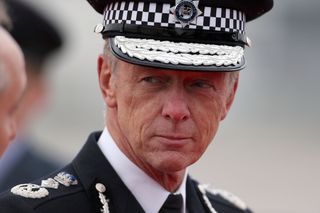
And so I applaud the Metropolitan Police chief, Sir Bernard Hogan-Howe, for his plan to pull back from this nasty, prejudiced and unBritish point of view. I hope he succeeds and is copied all over the country.
It is not the job of the police to believe or disbelieve. It is their job to investigate, where it seems likely that a crime may have happened. And that rarely means descending in platoons on the homes of elderly military men, subjecting them to humiliating searches in which their homes are turned over by prying fingers, and interrogation about events that supposedly happened 30 years ago. As the experienced lawyer and former prosecutor Alison Levitt QC has rightly asked: ���What are they expecting to find in these searches?���
Long before the accused person is questioned, the police should have investigated the claim itself, searched for corroboration and witnesses, established that the alleged crime was physically possible, that the location actually existed and the accused could have been there at the time.
Isn���t that what you would have thought happened all along? But it hasn���t been happening. And it all changed while we weren���t looking.
But if you care more about football or the Lottery than you do about freedom, then you will lose that freedom.
The Economist, the bumptious and self-satisfied weekly journal of war, money and greed, far more often wrong about the world than it is right, has come out emphatically in favour of legalising marijuana.
Perhaps this will at last alert the soppy vegan Fairtrade types, who bizarrely support the slick, billionaire-backed Big Dope campaign, that they are on the wrong side. The pathetic rump of the Liberal Democrats, now pursuing this greasy, irresponsible cause, should also know better.
I have always thought it odd that people who are (rightly) worried about the ruthless conglomerates who cram us with deadly hamburgers and lethal fizzy drinks, and who (reasonably) regard Big Tobacco as Satan made flesh, ally with Big Dope.
The product which Big Dope so irresponsibly promotes is increasingly correlated with irreversible mental illness, a scourge that has already scarred many families. That���s surely worse than anything a cheeseburger can do.
And Big Dope, now backed by many politicians who hope to levy heavy taxes on human greed, grief and folly, is one of the most unscrupulous and most avaricious of all the lobbies now operating on this planet. It���s no place for gentle people.
Helen, real star of a flawed film
One day Hollywood will make a film about Stalin���s Great Terror in the 1930s Soviet Union. It���s time the world knew more about this insane outbreak of mass murder, in which a misplaced joke could earn you a bullet in the head or living death in a slave camp, and the parks of Moscow were full of mass graves.
But Hollywood is still far more worried about the (undoubtedly wrong) blacklisting of a few pro-communist stars and scriptwriters in Tinseltown itself, in the 1940s.
Trumbo is the second movie about this subject, and makes a liberal hero out of Dalton Trumbo, a rich and talented writer, who defended the Kremlin regime in its most murderous years and (following the Stalin line during his peace pact with Hitler) campaigned to stop the US allying with Britain in 1940.
The best thing in it is Helen Mirren playing the villainous, anti-Semitic gossip harpy Hedda Hopper in a succession of 150-megaton hats.
It���s a peculiar cause in which to take on the role of wicked witch.
But the modern liberal West still hasn���t really come to terms with just how nasty communism was ��� and bizarrely smears Russia���s Vladimir Putin as a new Stalin, when he, having seen it at first hand, long ago utterly rejected the hammer and sickle.
The deep injustice done to the late Bishop George Bell, publicly pilloried on the basis of unproven abuse charges, continues. This great and saintly man has been robbed of his name and reputation by the Church that ought to treasure him. Instead, it has sparked a Stalinist campaign to erase his memory.
When criticised, its bishops seek (rather revoltingly) to hide behind the anonymous accuser, who of course must be treated with kindness and sympathy. This fails to conceal their own confusion. Today I can reveal that a very senior figure in the Church, involved in the actions that have done so much damage to George Bell���s good name, has written to a complainant: ���You will note that at no point have I stated that Bishop Bell was guilty.��� This follows a similar statement in the House of Lords by the Bishop of Durham, which I reported last week.
How strange, then, that several newspapers and the BBC have somehow got the idea that he is guilty. Who told or briefed them that this was so?
Lambeth Palace has clumsily tried to unsay the Bishop of Durham���s words, issuing a garbled mass of piffle in his name, in which he appears to contradict himself.
Odd that this happened only after I publicised his speech here. These flapping prelates should not think this matter is anywhere near finished.
If you want to comment on Peter Hitchens, click on Comments and scroll down
February 12, 2016
A Speech on Marriage at the Oxford Union
The Oxford Union has now posted online the debate on Marriage in which I took part a few months ago. Here is my contribution
https://www.youtube.com/watch?v=5e2vFc1AIOA
The whole debate is here
https://www.youtube.com/watch?v=Rm_WNH1wQBw&feature=youtu.be&list=PLOAFgXcJkZ2x3o4uhyv-lRMXRdGs6EsbC
Actually, Sir Bernard Hogan-Howe probably shouldn't apologise *publicly* to Lord Bramall
Actually, I can see an argument for the Metropolitan Police Commissioner not to make a *public* apology to Field Marshal (not, not, not ���Field Marshall���, the immensely common mis-spelling of this word) Lord Bramall.
In the end, offering such a public opinion on the case has awkward implications, which is what I bet the lawyers at New Scotland Yard are telling Sir Bernard, not unreasonably . If he apologises to Lord Bramall, can we then assume that when he *doesn���t* personally apologise to some other suspect who has had his life turned over without result, that the said individual is less innocent than Lord Bramall?
The Police have no business pronouncing on anyone���s guilt or innocence, explicitly or implicitly, before, during or after investigation or trial .There is a faint hope at the moment that some of them may be realising this, after a long period when they have acted like French examining magistrates. Oddly enough, this also means they should be very careful about making public apologies, which might become informal verdicts of ���not guilty���, and further usurp the job of the courts.
In my view the police need to be very firmly put in their place, as the servants of the criminal justice system, not its bossy masters. ���Police Bail���, an absurdity in the first place, should be abolished. It is not bail in any real sense. A court is supposed to grant or refuse bail within strict time limits, to a person who has been charged and has been remanded while preparations are made to try him.
For the police to use the word ���bail��� to make a permanent mark against a person���s name, who has not even been charged, is not the same thing at all. This abuse can quite possibly lose him his job, continues without time limit, is oppressive and quite alien to our justice system. The more I learn about it, the angrier I get it that it was created with so little discussion.
At the same time the absolute freedom to remain silent, without any imputation being made as a result, should be restored. No Englishman should be required to assist in his own prosecution.
And the police powers of arrest and search should be greatly limited, because of their repeated abuse of them, with mass dawn raids and televised sieges of the homes of celebrities. I wish more judges would be prepared to throw out, on sight, cases which have been prejudiced by this kind of behaviour. As I have said here elsewhere, the police are simultaneously too powerful (as unacknowledged prosecutors and magistrates) and too feeble (in their actual job of the prevention of crime and disorder by foot patrolling). This isn���t helped by the fact that most people (including many police officers) don���t understand what the police are for or why they were founded.
Now, my objection is only to a public apology.
Sir Bernard Hogan should certainly go round to Lord Bramall���s home and make a *personal* apology in private, as should all the wooden-headed officers who wrongly harassed this distinguished old soldier during his wife���s last illness. It would do them all good, and make them keep their wits about them the next time an equally ridiculous set of allegations are made.
Their first step should not have been to pester and humiliate Lord Bramall, but to have checked the veracity and coherence of the claims against him. That should have come first, rather than an expedition to question Lord Bramall himself, and arrive in conspicuous legions at his modest home, exposing him thereby to distress and embarrassment.
Some very good points about this were made on BBC Radio 4���s Today programme this morning about 1 hour 16 minutes into the programme.
http://www.bbc.co.uk/programmes/b070jd0m
oddly enough by Alison Levitt QC, a former prosecutor for the ���Crown Prosecution Service��� .
I summarise: She rightly said the police are there to investigate, aren���t therapists, judge or jury, and what they personally believe or don���t believe doesn���t matter (they also shouldn���t say what they believe or not, or promise to believe accusers).
Her parallel with burglary is especially good. Police don���t reject a burglary report because they fear it���s an insurance fraud. Likewise, if you ring the police and say you were burgled 30 years ago it might be a good idea for the police to check that you were living in that house 30 years ago, before going airborne.
She called for practical measures. In very old allegations the arrest should be the last thing that happens, not the first thing that happens. What is an interview or a search of the suspect���s house going to achieve after 30 years? The suspect can only say he didn���t do it. The investigation should start at the other end. Turning up with 20 officers over something that allegedly happened decades ago isn���t justified unless and until other investigations have established that there���s a realistic case.
She also came up with some sensible ideas about when suspects should be named, which I���m not sure I agree with but are at least intelligent and thoughtful.
Sir Bernard���s article in the Guardian, which can be read here
���.is at least an attempt to address a serious breach of the presumption of innocence which has been opened by the great number of child abuse allegations now being made.
He is absolutely correct when he writes: ���Investigating these cases is exceptionally difficult. Victims are often damaged by their experience and rarely disclose everything until they begin to trust officers. The passage of time makes it difficult to prove or disprove the allegations. If there���s only one complainant at first, the only way to find corroboration is to investigate and go where the evidence takes you.���
And even more so when he adds ���Those investigated are innocent until proven guilty, but reputations may be tarnished before we have been able to reach a conclusion. This is distressing for those who are investigated, and for their families, which is why we expressed our sympathy to Lord Bramall.���
It is a pity that his suggestion of anonymity for suspects before they are charged wasn���t in force when Sussex Police, intervening very oddly in what the Church of England now insists has always been a civil and not a criminal case, ���.
http://www.anglican.ink/article/diocese-chichester-defends-handling-george-bell-abuse-claims
���.made their famous statement that ������Following a meeting between the [alleged] survivor and Sussex police in 2013, it was confirmed by the police that the information obtained from their enquiries would have justified, had he still been alive, Bishop Bell's arrest and interview, on suspicion of serious sexual offences, followed by release on bail, further enquiries and the subsequent submission of a police report to the CPS.���
I am more and more perplexed by this statement, and have asked (without much success) for an explanation from Sussex Police of how it came to be made and publicised, and how it is part of their statutory responsibilities. As far as I know, these consist in such cases solely of adding a report of an alleged crime to historical statistics. This statement does not do that, and also goes far beyond it.
The arrestee was named, though he was both uncharged and deceased. Is this possibly right in any way? What���s more, I have not heard of Sussex Police (having very unusually decided to investigate charges against a deceased person, whom they could never in fact have arrested, charged or reported to the CPS) making any attempts to find or interview any living person who worked at the scene of the alleged crime at the time at which it is said to have been committed. Surely if they were going to follow the very odd course of investigating an alleged crime supposedly committed 45 years ago by a man who had been dead since 1958, and make this public, then they should have done it properly?
As Sir Bernard says, explaining his stated preference for anonymity before charge : ���By the time we charge somebody, we must have sufficient evidence to believe the chance of convicting them is broadly greater than 50%, and justice should be open. But the bar is necessarily much lower at the start of an investigation. Even an arrest only requires reasonable suspicion (**PH: NB Sussex Police and the C of E**) . During an investigation, we have to track down witnesses and are obliged to provide complainants with information, so journalists will, in all probability, find out the names of public figures who are suspects.
'To ensure that a suspect is treated fairly, I would only allow police to name them in a sexual assault case after an application to a court, so that a judge can assess the public interest. The media could argue their case if they wished to name someone, as happens in other areas of the law.���
This is very important. If we cannot defend the presumption of innocence in the worst cases of all, then we have lost our liberty .
February 11, 2016
An interview with Andrew West of the ABC
Some of you may be interested by this interview I gave recently to Andrew West, the Australian broadcaster on the recent so-called 'Commission' on religious belief.
https://radio.abc.net.au/programitem/pgZ961M3m6?play=true
Some of you may not be.
February 10, 2016
A Reply to Theo Hobson, in defence of George Bell, and of his Defenders.
In reply to Theo Hobson:
He defends the Church's handling of the George Bell case.
Oddly enough, I spent some time with Theo Hobson on Sunday morning (we were guests on the same TV programme) and he never mentioned this subject to me. Had he done so I could have helped him avoid some errors and misconceptions.
For instance, he says specifically that I have said compensation should not have been paid to the woman who accuses George Bell of abusing her. His actual words are : ���Christian columnists of left (Giles Fraser) and right (Charles Moore, Peter Hitchens) agree: Bishop Bell has been most sorely wronged. The Church should not have compensated the person he allegedly abused about seventy years ago.���
He includes in this a link to my original Spectator article on the subject:
http://www.spectator.co.uk/2015/11/the-church-of-englands-shameful-betrayal-of-bishop-george-bell/.
If he had followed this link himself, he would have found that this article contains the words : ���By all means comfort and assuage the accuser, and compensate him or her (we are not even allowed to know the sex of the person involved).��� This is the exact opposite of saying the church should not have compensated the accuser. I also repeatedly make it clear that I do not know, or claim to know, if the charges are true or false. I accept that it is possible that George Bell may be guilty of thrse charges. I approach this just as I would if I were a sworn member of a Jury on the case, with as open a mind as I can maintain.
This error is most significant. Defenders of the Church���s behaviour towards George Bell repeatedly suggest that its critics are being unkind to his accuser. As is clearly demonstrated in this case, we have not been. The unkindness is imaginary, and incorrectly described.
The current Bishop of Chichester, The Rt Revd Martin Warner, recently issued a statement in the same vein.
It speaks of ���strident voices���, charging: ���The presence of strident voices in the public arena which have sought to undermine the survivor's claims has added in this case to the suffering of the survivor and her family. To that extent it is not surprising that she felt it necessary to take the courageous decision to speak out in public and reveal the personal details which the Church could not.���
He does not give any examples, and , if he is reading this, I would like to ask Dr Warner if he might now do so.
Does he not grasp that it is in the very nature of our justice system and its presumption of innocence that the defenders of any accused person must by implication challenge the accuracy of the charges? Justice would be impossible if any such defence were immediately characterized as an attack on the accuser���s integrity. The Bishop of Durham, in a bizarre statement issued yesterday (8th February) and discussed here http://hitchensblog.mailonsunday.co.uk/2016/02/in-tywo-minds-the-strange-position-of-the-bishop-of-durham.html accurately and properly refers to the accuser���s charges as ���claims���. On Bishop Kemp���s logic (and Durham's own) this too could be taken as a personal assault on her. This is obviously absurd.
In fact, the defenders of Bishop Bell have concentrated their attacks on the Church authorities.
We have questioned their processes. We have questioned their motives in releasing the accusations to the media. We have pointed out that the document in which they did this did not in fact state Bishop Bell���s guilt (it could not, as no process has taken place, or is likely to take place, which could establish it). We have wondered aloud as to how, in that case, it was taken as, and reported as, a statement of his guilt by several media religious affairs correspondents, and other reporters.
The least personal and ad hominem way of dealing with accusations which you wish to challenge is surely to insist, as we have repeatedly done, upon the impersonal presumption of innocence as a principle.
Where does Mr Hobson stand on justice and the presumption of innocence? Doesn���t be believe that the thirst for justice and truth is one of the central desires of the Christian person? Yet he seems confused about what truth is, and what belief means. He writes :��� But it [the Church]chose to believe her [George Bell���s accuser]. In doing so it signalled that responding honestly and compassionately to the painful truth (or almost certain truth) is the Christian thing to do.���
I don't actually see how that follows. The accused, as well as the accuser, are owed truth and justice. But there is nothing Christian that I can see about believing an unsubstantiated, uncorroborated charge. Even Mr Hobson, by writing of ���almost certain truth��� , concedes that he does not know it is true. Of course he doesn���t. That's the whole point, and the probably irreversible destruction of a great reputation has therefore proceeded on the basis of a single unproven charge (which I do not myself think the Church has adequately investigated).
Mr Hobson is in the same position as those unwise police officers who described unproven charges, prejudicially, as ���credible and true��� or promised accusers ���you will be believed���. They have, quite rightly, had to backtrack It is not the job of investigators to believe (or disbelieve) charges. Their duty is to accept that thy may be true, and to investigate them without prejudice or preconception, fear or favour, or pursuit of self-interest, to find the truth and act accordingly. It is in these aspects of the matter that I believe the Church has acted wrongly.
No doubt all of us, including George Bell, have many secret sins to our account, known to God and to us. But that does not mean that George Bell is guilty of the particular charge levelled against him. I do not happen to think that this particular crime fits in any way with the life and actions of George Bell as I (and others who knew him when he was alive or are far more expert than me on his life and work) understand them.
I don���t at all mind Mr Hobson disagreeing with me. All debate is useful and healthy. But I do object to having my words and actions misinterpreted in this way. I think he owes me, and other campaigners for justice for George Bell, an apology.
Peter Hitchens's Blog
- Peter Hitchens's profile
- 299 followers

