
Peter Hitchens's Blog, page 175
January 24, 2016
The British bobby is long dead - but we have one last chance to bring him back
This is Peter Hitches' Mail on Sunday column
The police are too powerful. They are also too feeble. Unless we put both these things right very soon, this will become a very dangerous country.
We are all less free than we used to be. We have to be careful what we say, especially if we work in the public sector. We are under constant surveillance, from CCTV cameras, and thanks to snoopers who monitor our calls and internet use. If, for some reason, the authorities take against us we can be plunged, in an instant, into an unexpected underworld of highly publicised suspicion that can last for years and ruin us with legal fees, even if at the end they sullenly drop the charges.
Nobody is safe from this. If a field marshal in his 90s can be raided at home by 20 officers at breakfast time, and subjected to questioning and searches on the basis of the wild fantasies of an unhappy nobody, then so can you. And though the police themselves will insist they have not released your name, don���t be surprised if this Trial By Plod somehow becomes very public, very quickly.
The police are too powerful. They are also too feeble. Unless we put both these things right very soon, this will become a very dangerous country
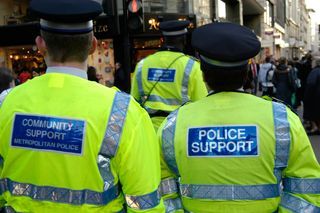
Yet, at the same time, ordinary crime and bad behaviour ��� the things the law now regards as trivial ��� grow unchecked around us. Who now lives in a town free of graffiti and vandalism, or one where Friday night has not become menacing, drunken and loud?
Years ago, when I first noticed that something had gone badly wrong with the police, readers would write in and chide me for being rude about a force they still trusted. I get very little of that now. Respect for the police has largely disappeared among the law-abiding classes, and seldom survives any actual contact with them. Now I brace myself for apparently organised abuse from police officers themselves. I should warn them that this behaviour only helps to make my point.
Their ���I���m all right Jack��� mentality and refusal to accept just criticism is as bad as anything trade unionists used to do and say back in the 1970s.
I have to say, because I hope it is true, that not all police officers have this mentality, but a distressing number do.
Ordinary crime and bad behaviour grow unchecked around us. Who now lives in a town free of graffiti and vandalism, or one where Friday night has not become menacing, drunken and loud?
The police have been subjected to a 30-year inquisition and revolution, in which old-fashioned coppers have been pushed aside (and into retirement) by commissars of equality and diversity. Deprived of their proper occupation, preventive patrolling on foot (long ago abolished), they have become officious paramilitary social workers. These new police are obsessed with the supposed secret sins of the middle class, and indifferent to the cruel and callous activities of the criminal class.
They are also in the grip of a dogma that excuses ordinary crime by blaming it on bad housing and ���poverty��� (in one of the world���s most advanced welfare states).
Only a small part of this crime even reaches the courts any more. Much of it is dealt with, if at all, by empty ���cautions��� and laughable ���restorative justice���. The police can then concentrate on what really bothers them. Yet when they turn sternly on the middle classes, they act like continental examining magistrates, who assume everyone is guilty before trial (and sometimes even say so) and demand that suspects co-operate in their own prosecution.
They can arrest, noisily and in large numbers and at miserable times of day, to punish people who have never been found guilty of anything. In most cases, these people would have come willingly to an interview. They can seize property vital to people���s livelihoods, and hang on to it for months. They can grant supposed ���police bail���, so allowing them to keep their chosen victims under suspicion for years.
When these things mysteriously become public, they can deny responsibility, and who can prove otherwise?
This is oppressive, dangerous and scandalous. The treatment of Lord Bramall may be the last warning we get that it has gone too far, and the best chance to turn the police back into the friends of the public, and the enemies of crime and disorder.
Picking a fight we cannot win
Do you really think the Russian deep state couldn���t have murdered Alexander Litvinenko secretly, in such a way that we could never have traced it to them?
The oddest thing about this case is the use of a violently radioactive, totally traceable poison, and the conduct of the two alleged killers, whose revolting deed was mismanaged in a way that would be comic if a man had not died as a result.
Meanwhile, the two suspects prance about in public (I once met a smirking Andrei Lugovoi in Moscow, as he strolled through an expensive hotel).
This is surely a gesture of angry contempt, against which Moscow knows we are more or less powerless to react effectively. We might wonder why. Maybe it has something to do with our courts refusing to extradite people such as the Chechen leader Akhmed Zakayev, regarded in Moscow as terrorists, and then giving them political asylum.
Whether this decision was right or wrong (and I don���t know enough to say), you can see why it might annoy them. Despite being an increasingly insignificant country, we have got ourselves involved with some big and nasty people in a rather rough neighbourhood. I hope it���s worth it.
At least poor Leo's not the 6.22 from Paddington
There���s one good reason to see the overrated new film The Revenant, starring Leonardo DiCaprio. It���s not as good as they say. I longed for subtitles and the only character whose dialogue I clearly understood was the grizzly bear. She said ���Grrrrrr��� as if she meant it.

But if you are a regular railway commuter, this immensely long movie will reconcile you to your lot. After what seems like about nine hours, unable to get to the lavatory, confronted with incessant cold, revolting meals of raw offal, charmless travelling companions, your uncomfortable journey frequently interrupted by unexplained disasters or pure spite, the 6.22 from Paddington begins to seem like paradise. Even when, as recently happened to me, you are turned out of the train by ���Great Western��� on to a freezing platform halfway through your journey home and told it is for your own good.
There���s one good reason to see the overrated new film The Revenant, starring Leonardo DiCaprio. If you are a regular railway commuter, this immensely long movie will reconcile you to your lot.
The Government wants you to support the renewal of the absurdly elaborate and huge Trident missile system. I see that the Defence Ministry organised, as a complete coincidence, a press trip to show off the red Scalextric-type nuclear trigger I was allowed to play with aboard HMS Repulse 30 years ago. Well, Israel, a more fearsome nuclear power than us, facing a greater danger, doesn���t waste its money on such a luxury item.
Spending ��100billion on Trident, and neglecting your conventional forces as a result, is like spending so much on insuring yourself against abduction by aliens that you can���t afford cover for fire and theft.
My thanks to all of you who remembered my friend Jason Rezaian, unjustly imprisoned in Iran, in your thoughts and prayers, and who wrote to the Iranian authorities urging his release. After more than 500 days in a Tehran prison, and some nervous final hours as diplomats ensured his wife was able to leave the country with him, Jason is now free again, and recovering in a US military hospital. I am sure that you played your part in securing his release.
If you want to comment on Peter Hitchens, click on Comments and scroll down


January 22, 2016
Poland, once again, Produces More History than it can Consume Locally
If you have consonants to spare, prepare to use them now. This is about Poland. a country that so often produces more history than it can consume locally. A new and fascinating crisis is erupting on the eastern fringes of the German Empire, sorry, European Union. As the Ukraine crisis, provoked by US-backed EU expansionism, sinks into torpor and stalemate, Poland is now pushing at the boundaries of ���limited sovereignty���.
So let us begin with a quick rummage through the Cupboard of the Yesterdays:
Now, ���limited sovereignty��� was formulated 100 years ago by Richard von Kuehlmann, the Kaiser���s Foreign Secretary. He was trying to put a landmine under the Russian Empire in Poland, the Baltic states an Ukraine. In the middle of the 1914-18 war, Berlin invented a pseudo ���Kingdom of Poland��� to try to win over Poles who lived under direct Russian tyranny. Then came the collapse of Imperial Russia (brought about by the Bolshevik putsch in Petrograd, financed by German gold and prepared by the German agent Ulyanov, codenamed ���Lenin���, smuggled into Russia under the supervision of the German general staff).
Germany���s intervention, and its decision to hire Lenin, was not idealistic and din't even pretend to be ( as its equivalent would nowadays) . The Bolshevik putsch followed the February revolution, a genuine political convulsion from below, which had overthrown the Romanovs and would have led to a constituent assembly, elected by what is almost certainly still the most free and democratic poll ever to have taken place in Russia. The Bolshevik coup destroyed the first non-autocratic government Russia had ever had, as that government wished to continue the war against Germany.
The German-backed Bolsheviks and their armed Red Guards then surrounded and dispersed the constituent assembly, postponing Russian constitutional democracy for at least 70 years. The resulting Russian military and moral collapse led to the peace treaties of Brest Litovsk (now on the border of Poland and Belarus, see http://hitchensblog.mailonsunday.co.uk/2014/07/where-east-really-meets-west-and-you-can-stay-in-the-hotel-bug.html ).
And these created the new, wholly German-dominated state of Ukraine. That was limited sovereignty, if ever there was such a thing. How all this would have worked out we shall never know, since Germany���s defeat in the West (by no means foreordained) cancelled the Brest-Litovsk Treaties.
Soviet Russia eventually grabbed back Ukraine by force. Poland became a French client state, and the Versailles jig-saw - supposedly a barrier against a revived Germany - replaced the former empires of the region with new states based on national self-determination. But it was complicated by the presence of awkward, unenthusiastic national minorities within their borders. As always, such minorities came in very handy when aggression needed to be justified.
Few recall the bitter months between the Munich agreement and the outbreak of World War Two, when both Poland and Hungary opportunistically took bites out of the corpse of Czechoslovakia. Poland���s seizure of Zaolzie (with tanks, not cavalry https://en.wikipedia.org/wiki/Zaolzie#/media/File:Polish_Army_capturing_Zaolzie_in_1938.PNG)
is especially forgotten (as is the anti-Semitism that was rife in that country at the time) because it upsets the ���plucky little Poland��� myth, part of the general myth in which World War Two has been transformed into a simple struggle between good and evil, by ignoring large quantities of actual history.
I make no apologies for this history lesson. These things, along with the bodily westward shifting of Poland to satisfy Stalin in 1945, the Soviet massacre of Polish officers at Katyn (subject of an official lie maintained in Poland and the Soviet bloc until the fall of Communism) , the very violent and cruel mass expulsion of ethnic Germans from the region after 1945 (http://hitchensblog.mailonsunday.co.uk/2012/11/orderly-and-humane.html )
are not forgotten in these regions and still influence thought and speech.
So bear them in mind when you study Poland���s new government, described in tones of maidenly horror by Europe���s liberal, pro-EU media,( and in tones of absolute loathing by Ryszard, a Polish acquaintance who works in a coffee shop near my London office and who is utterly horrified by what has overtaken his home country).
I myself do not much like this government. Its main strength flows from the fact that it has an absolute parliamentary majority, with which it is seeking to impose its will on the courts and the state broadcaster. The things about it which I quite like (a combination of social conservatism and resistance to mass immigration, with social democratic welfare measures and a real concern for the unemployed) are cancelled out by its unreliability on the key issues of law and liberty.
The best critical articles about it come from my old friend Tim Garton Ash, who (despite being a bit liberal) knows more about Poland than almost any English person. Tim was fairly relaxed to start with
http://www.theguardian.com/commentisfree/2015/oct/26/poland-election-survived-worse-orbanisation
But is more worried now
The EU, having been burned by intervening in Austrian politics some years ago, and has had similar difficulties with the Orban government in (much smaller) Hungary, is probably itching to put pressure on this wayward member. But the EU is also constrained by the fact that it is nowadays rather obviously dominated by Germany, a country which is debarred by history from intervening too openly in Polish internal affairs. Martin Schulz, the German President of the European ���Parliament��� , probably hasn���t helped get Poland to conform by describing events in Warsaw as having ���the characteristics of a coup d���etat���:
Maybe a French politician could have got away with this. But a German? Such interventions only strengthen the Law and Justice Party, and allow it to preen itself as a patriotic force. You���d think Germans would realise this, but they don���t always seem to.
Germany���s EU Commissioner Guenther Oettinger has said there is a ���a lot to be said for activating the mechanism of the rule of law and putting Warsaw under supervision���. Supervision! So much for EU members being truly independent states (which of course they are not, but which, under ���limited sovereignty��� they must be allowed to pretend to be).
I don't ,as I say, much like Law and Justice.
But then again, I did not much like its forerunner, which was pathetically pro-EU, though it wisely kept out of the Euro) and accepted huge quantities of EU money while its own native industries shrivelled and a low-wage economy more or less forced huge numbers of young men and women to find work abroad to support their families. It also imposed the EU���s secular, politically correct ideas on a Poland where many people are still conservative Roman Catholics.
What Tim Garton Ash notices about the Law and Justice government (and what I find most fascinating about it) is this. It is a new combination, deeply dangerous to the modern consensus. It is Corbynite on the welfare state, but conservative on culture and migration:
���PiS [the Law and Justice Party���s rather unfortunate acronym in Polish] represents a large part of Polish society: patriotic, Catholic, conservative inhabitants of small towns and villages, especially in the poorer east and south-east of the country; people who don���t feel they have benefited from the transition to market democracy. It promises a strong state to protect them from the cold winds of economic and social liberalism. It is rightwing in culture, religion, sexual morality (no abortion or in vitro fertilisation), xenophobia (no Muslim refugees please, we���re Polish) and nationalism, but almost leftwing in its economic and social promises to the poor and left-behind���.
I am puzzled that no such combination has yet arisen in Britain, and can only explain it by the Labrador-like devotion of British social conservatives to a Blairite Tory Party which repeatedly kicks them in the ribs with its well-polished brogues, laughing as it does so. I have tried to challenge this barmy, servile devotion, but found it impenetrable.
The other thing is this. The EU has coddled Poland (with aid which will total 100 billion Euros by 2020) and not pressed it too hard to join the Euro. It has seen it as a star member, compliant, and an example which Ukraine might one day follow. And now, after a long period when it seemed to be on a smooth flight-path to ever-closer union, Poland���s national sentiments, previously buried under layers of Euromoney, have reawoken, partly thanks to harsh economic conditions and partly because a nation which has only recently re-established itself feels particularly threatened by Angela Merkel���s relaxed policy onwards Muslim migrants.
These are fundamental problems, not easily resolved either by negotiation or by pressure. Europe���s bitter, difficult history has come back once again to poke the idealists in the eye. The debts of 1914 have not yet been paid in full, and the damage it did is not yet repaired. Watch with interest.
January 21, 2016
BBC Radio Sussex interviews me on the George Bell C of E School's plan to change its name
At about two hours ten minutes into BBC Radio Sussex's Breakfast programme, you may find an interview with me on the decision of the George Bell Church of England School in Eastbourne to change its name on the basis of unproven allegations against the late Bishop George Bell
A Debate at Trinity College, Dublin, on the Validity of Theism
I spent a very enjoyable and sociable Monday evening in Dublin debating the validity of Theism at the Metafizz, a fine society at Trinity College in that city, one of the loveliest in these islands.
Here you may watch the discussion (which ended in a vote so narrow that it really counts as a draw)
Here is an observer's account of the evening
http://randompublicjournal.com/2016/01/18/why-theism-isnt-a-reasonable-philosophical-stance/
And here, for those of you found it captivating and brilliant, as I did, but thought it slipped by too quickly, and wished to revisit it, is the text of Patrick Masterson���s contribution, which I asked him to send me afterwards. This, in my view, is the sort of thing which Universities are really for, the soft, alluring glint in the darkness of real, profound knowledge, lightly worn and elegantly expressed, enough to attract even lightweights such as me towards thought and study:
���PHILOSOPHICAL REASONABLENESS OF THEISM
Chairperson, Ladies and Gentlemen.
Thank you for inviting me to address your renowned Metaphysical Society. As I am in my 80th year it is very courageous of your auditor to invite me to address you on the reasonableness of anything especially the reasonableness of Theism. However, I will try.
Until the 17th century there was no great problem about the reasonableness of Theism. The affirmation of God was pretty universally accepted. It was the fool who said in his heart there is no God.
Two great intellectual movements of the 17th century changed this. These were the modern scientific revolution and the modern philosophical revolution inaugurated by Descartes. The one concentrated on explaining everything in terms of mathematically modelled experimentally verifiable hypotheses, the other on grounding all meaning and value exclusively in human terms. These two viewpoints have generated influential philosophical objections to the reasonableness of Theism. I will offer a few critical words about each of them and then a few positive remarks about the philosophical reasonableness of Theism.
Scientists such as Copernicus, Galileo and Newton inaugurated a new conception of scientific knowledge --- a less speculative and more practical experimental one. It sought an intrinsic understanding of the material world in terms of itself rather than an extrinsic one in terms of a Creator. The 19th century Darwinian theory of evolution greatly reinforced this approach.
When such empirical science is adopted as the ultimate and exclusive form of genuinely scientific knowledge it becomes a philosophy or ideology. As an ideology its form of argument is essentially reductionist. What occurs later in time and is more complex is to be explained in terms of what is prior in time and is physically more basic. Ultimately all explanation, particularly of biological and mental phenomena, is to be provided in terms of basic, mathematically formulated, laws of physics and chemistry.
This is fundamentally a form of reductionist materialism. It rejects the philosophical reasonableness of Theism.
However, I do not believe that such reductionism is the ultimate and exclusive model of explanation. It assumes that any entity is no more than the sum of its physical parts operating basically according to universal physical laws of motion ---whether the entity considered is the solar system, a flower blossoming, an animal fleeing, or Socrates deciding to remain in prison.
Such a view overlooks the undeniable fact that conscious subjects and their mental lives constitute a distinctive order of reality not adequately describable by physics and chemistry. They are emergent novel realities. They have their own distinctive laws and forms of activity which are neither reducible to nor deducible from the physical properties of the entities in which they subsist and from which they are emergent. They exercise causality by generating meaning as well as by physical motion.
The question inevitably arises ���How must reality be understood and evaluated if it cannot be understood exclusively in terms of mathematically formulated scientific materialism. Einstein had framed on a wall in his study: ���Not everything that can be counted matters and not everything that matters can be counted.���
The other and contrary, modern challenge to the philosophical reasonableness of Theism is the radical humanism deriving from the Cartesian turn inwards to human subjectivity rather than outwards to a divine Creator for the source of all meaning and value. This approach was significantly developed in the 18th century by the philosophy of Kant. He maintained that we know things only as they appear to us and never as they are in themselves and that we ourselves rather than God invent the moral code which we adopt.
This radical humanism finds contemporary expression in forms of Existentialism, Phenomenology and Linguistic Philosophy. The only world which we know, it is claimed, is one totally correlative to our conscious subjectivity and language. Nothing can exist as objectively knowable apart from its correlation to our consciousness. The only absolute is human consciousness to which everything we know is correlative in one manner or another. To claim to know about anything as it exists independently of our consciousness of it is an illusion. ���Consciousness and language enclose the world within ourselves ��� We are in consciousness or language as in a transparent cage. Everything appears to be outside yet it is impossible to get out.��� (Q. Meillassoux, After Finitude,p.6).
This radical humanism which interprets all objective meaning and value as strictly correlative to human subjectivity clearly poses a fundamental objection to the reasonableness of theism. For theism affirms that God exists independently of any relation to human consciousness.
However, I believe such humanism is not ultimately sustainable. For the phenomena of which we are aware in experience disclose more than a human viewpoint or appearance. What we know is the intrinsic intelligibility of independently existing things even if only inadequately. Our knowledge of reality is discovered not simply invented. To be and be intelligible is to be more than a correlate of human consciousness. Paradoxically, an effective objection to such absolute humanism is provided by the other mainspring of modern thought namely empirical science. For empirical science provides us with knowledge of reality which cannot be simply a correlate of human consciousness. For it provides knowledge of the physical universe as it was prior to the existence of any human life or human consciousness.
Thus I think that neither of the two main philosophical objections to the reasonableness of Theism constitutes a conclusive objection since they each leave fundamental features of reality unaddressed.
Finally, a few words in positive support of the philosophical reasonableness of Theism.
Undoubtedly most people affirm the existence of God on the basis of personal religious faith. Their religious affirmation of God is not the conclusion of a rational argument. However, reason too can lead us towards this affirmation.
I think we sometimes get into muddles about reason because we adopt too restrictive a view of it. We tend to think of rationality primarily as a matter of drawing irresistible conclusions from self-evident propositions. We have mathematics in mind as the model of rationality. On this narrow view of reason neither the existence of God nor indeed his non-existence can be established.
A more adequate view of reason is one which sees it as a liberating capacity which enables me to live in a specifically human way as a communicating openness --- to the world --- to other people --- and to myself.
The light of reason opens me out beyond my bodily limitation to participate in a life of scientific enquiry and cultural achievement. I can progress from knowing particular truths to knowledge of scientific laws and theories and finally to marvel and wonder at the intelligibility and truthfulness of reality which grounds my scientific endeavor. It is indeed remarkable that through us the material universe comes to know itself, discovers the world of values, and can ponder its own ultimate meaning and value.
Likewise, in the practical sphere, reason enables me to develop from mere self-interest, through mild benevolence, to ethical acknowledgement of the absolute moral demands which another person can make upon me. I can even come to love another person selflessly through loving her intrinsic, more than physical, goodness.
Again, I can marvel at the various levels of rational questions I can put to myself in seeking to understand myself. As Kant observed, reason enables me to ask; ���What can I know? ���What must I do? and ���For what may I hope?���--- each level involving its own type of rational discourse.
In a word, through the life of reason we can come to live under the authority of truth, beauty, justice and love. I believe that both theists and atheists can agree about this conception of an authentic human life governed by these requirements of reason. They can co-operate in promoting it, whatever its ultimate significance.
However, it seems to me that the affirmation of God as a personal creative principle of unrestricted truth, beauty, justice and love makes ultimate and dependable sense of this conception of the life of reason in a way that atheism does not. For it grounds and validates as most ultimately real and dependable these values which are the life-blood of reason.
Atheism on the other hand is committed, I think, to viewing these values, however heroically, as encompassed fundamentally within a context of contingent inexplicable fact. They are disclosed as in no way necessary or ultimately vindicated. They just happen to have occurred or evolved accidentally and seem destined, as empirical science predicts, to peter out in a silent inanimate universe. As Bertrand Russell put it: ���All the labors of the ages, all the devotion, all the inspiration, all the noonday brightness of human genius are destined to extinction in the vast death of the solar system.��� If human intelligence owes its ultimate origin either to mindless matter or an intelligent Creator it seems odd to use this same intelligence to choose the former as a more reasonable explanation of itself than the latter.
The affirmation of God as an infinite personal centre of dependable meaning and value does not dispel the mysteriousness of being. Indeed it even deepens it and accentuates agonizing issues such as suffering and evil. It is a profoundly self-involving affirmation unlike the impersonal deliverance of mathematics or physics. It expresses a hopeful validation of a rational concern for meaning and value and a repudiation of the despairing suggestion that the life of reason originated mindlessly and is destined to perish in post-human oblivion.
It is along these lines that I think rational space can be created for the philosophical reasonableness of Theism. Such philosophical affirmation of God, as even Kant enthusiastically argued, can be reliably affirmed as a personal and genuinely rational hope in the assured ultimate significance, of meaningful enquiry, moral endeavor, and unselfish love.
This rational expectation is not logically inescapable. But neither is it just an exercise in self- delusion. It is a genuinely rational interpretation of the ultimate significance of reality in general and of human existence in particular. It affirms the real coincidence of what is inherently valuable with how things ultimately and fundamentally are. It maintains that reality is intrinsically valuable, ultimately characterized by values such as truth, goodness and love rather than by contingent inexplicable occurrences. As Wittgenstein observed ���If there is a value which is of value, it must lie outside all happening and being so.���
Such an interpretation of the ultimate significance of reality is one to which each person is challenged to respond in their individual circumstance. Thus it can make sense of enigmatic utterances such as ���love is stronger than death��� when, for example, one finds it hard to accept that the intrinsic goodness of a deceased beloved partner is reduced without residue to a handful of ashes. Such intimation of the intrinsic more than physical goodness of a beloved is an existential sign or cipher of the more than transitory reality of truth, goodness and love. I believe that the affirmation of God as infinite, creative, personal love deciphers and vindicates rationally such finite existential ciphers of the ultimate and dependable reality of these values which are the lifeblood of reason. So at least I have found to be the case.���
Did Alan Rickman win a 'scholarship'? Or was it something else?
A few words on the story of Alan Rickman, the great actor who died last week. I had no idea, until I read his obituaries, that he had grown up as the son of a factory worker on a council estate in Acton, a pretty bleak and basic area of West London, well beyond the Olive Oil and Polenta zone now, before or later.
This made me search the same obituaries for the thing I thought I would find, especially given that he was born in 1946, the dawn of the great era of social mobility which culminated in the 1960s.
I expected to find a selective grammar school education, of the kind that used to offer such children opportunities they are now denied by supposedly egalitarian ���comprehensives��� which select their pupils on their parents��� wealth or (often feigned) religious faith.
But no, all the obituaries said he had won a ���scholarship���, to Latymer Upper School in Hammersmith, now a private co-educational school which does what it can to offer bursaries to children from poor homes.
But in the 1950s, when Alan Rickman went to it, Latymer Upper was an all-boys Direct Grant School (I checked this with the school���s resident historian) , a now-forgotten type of school which took huge numbers of state school pupils, whose fees were paid by the local authority, solely on the basis of merit. At the same time, it continued to take some fee-paying pupils.
Another example of such a school is Manchester Grammar School, whose head in the 1960s, Eric James, was one of the principal opponents of the comprehensive movement, because he believed (rightly) that comprehensives would destroy the opportunities provided by grammars and direct grants (which were, effectively, grammar schools which admitted some private pupils). The direct grants have almost all (I suspect all, but there may possibly have been exceptions.**NB Wikipedia says 45 went comprehensive - almost all Roman Catholic schools) now gone private rather than accept comprehensive entry. Three such schools in and around Oxford, where I live, are now fee-paying, though all do their limited best to give bursaries where they can.
Eric James became Lord James of Rusholme and was the first Vice-Chancellor of the University of York which, when I attended it in the early 1970s, had plainly sought to admit as many grammar-school products as possible. It was the last late flowering of the grammar school revolution, as I failed to realise at the time. One misses so much when one is self-absorbed.
As their products headed off to university in the thousands, the grammar schools were closing down all over the country. This revolution was over and would not happen again. The direct grants survived a few years longer, until the undistinguished Labour Education Secretary, Fred Mulley slammed this door of opportunity in 1975. (He's mostly remembered, not wholly unjustly, for being photographed asleep while sitting next to the Queen at an air display, when he was Defence Secretary).
One has to wonder if the selective school had something to do with the more fiery and troublesome behaviour of that generation, by giving the freedom of university life to so many who had no privileges and knew the hard underside of the world from personal experience. But my own recollection is that most of my generation just got on with life, and that the hot winds of revolution stirred only a minority, most of them from comfortable homes like my own.
Anyway, what about Alan Rickman���s supposed ���scholarship���? I am almost wholly certain that he got no such thing (though he might have done in the pre-war years). I think he passed the eleven plus at a high grade, and was awarded a place at one of the best schools in England on merit, and proved in his life that he richly deserved it, giving back to the rest of us a hundred times the investment an enlightened country made in him. But I think most modern journalists have no idea that such a system existed, or how widespread it was, or how good the schools were to which it gave access. So they naturally assumed it was some sort of special individual breakthrough, and called it a ���scholarship��� . I���d be grateful for any specific information, either way.
Those who write in here ( as many do, often) to say that selective education didn���t benefit the real poor will have a problem with this case. And they will also struggle with the account of the school in the biography of Alan Rickman by my one-time colleague Maureen Paton, (http://www.amazon.com/Alan-Rickman-The-Unauthorized-Biography/dp/1852276304
Which says that 80% of the boys were from poor homes, and that the school had the social mix of a comprehensive (plus the educational power of a good private school, surely the ideal combination) .
We won���t return to this as long as so many informed people never even knew that such a system existed, worked and produced people such as Alan Rickman.
January 19, 2016
How Thick do they Think We Are? The Trident Argument Continued
Some readers may enjoy listening to this brief, concentrated version of my case against
Trident renewal, broadcast on LBC ( a London independent radio station which also broadcasts on the web) on Sunday. I think it makes quite clear (as does my article) that I���m in favour of this country keeping nuclear bombs in some form. Just not Trident. I stress this because some readers seem to have commented in the absurd belief that I support nuclear disarmament. I can see that this belief makes it easier for them to dismiss my case. But it���s mistaken. Once again, I don���t.
Please listen:
http://www.lbc.co.uk/colossal-pointless-toy-peter-hitchens-lets-rip-at-trident--123315
Arguments about this are of course complicated by the Labour Party���s curious divisions, in which the leader is against nuclear weapons on principle, and the unions support a ludicrous weapon simply because of the jobs it provides. Quite reasonable, even if unprincipled, you may say, and so would I (my father was very fond of Barrow-in-Furness where his favourite ship, the cruiser H.M.S. Ajax, was built, and where the officers and many of the ship���s company lived for some months to supervise her completion) if it weren���t the case that our economy���s distortion by such things almost certainly destroys manufacturing capacity elsewhere.
Though it is true that our military industries survive because they are the only ones we can protect from foreign competition (nobody admits this, but any government can find ways of giving preference to its own manufacturers for defence contracts, and all do, despite the supposed commitment to total free trade in the EU and elsewhere) .
I am amazed that there is no serious protectionist strand in modern British (or American) politics, given the devastation which has been wrought (and is being wrought) on our mining and manufacturing industries by free trade. Since Ross Perot was defeated by Al Gore���s largely irrelevant comparison of his policies to the Smoot-Hawley laws, there hasn���t been a major protectionist voice in any big manufacturing country. But Germany, by ingeniously using membership of the Euro to effectively devalue the Deutschemark, has achieved a level of protection for its industries ( at the price of reducing its own living standards) without getting into trouble.
Those who laugh at Jeremy Corbyn���s idea of emulating the Japanese, and not actually arming, which he seems to have been a good deal less specific about than you would think (a transcript of the interview is here http://news.bbc.co.uk/1/shared/bsp/hi/pdfs/17011602.pdf) really need to consider just how serious Trident itself is.
Submarine drones, now being developed at amazing speed, present a threat to missile submarines which may render them as obsolete as battleships in the age of the dive-bomber, long before the renewal is complete. The technical battle between hunters and hunted, in which submarines become ever-quieter and hunters become ever more capable of detecting the slightest noise over vast distances, never ceases.
Thanks to the known ranges of their missiles, the shallow approaches to their home ports, and other factors of depth, currents and water conditions, major world navies all know roughly where these vessels hide. If they had detected individual submarines, using passive sonars which themselves make no noise, they wouldn���t boast about it now. I personally would be amazed if the US Navy could not find one of our Trident submarines if it wanted to, which raises an interesting question (see below).
Then there���s the issue, always dodged by the Trident cultists, of the lack of true independence. Why spend all this money on a weapon which, if it came to it, we might find we couldn���t use? How are these missiles guided to their targets? I can���t help thinking that they need to communicate with satellites for mid-course corrections during their ballistic flight. Who owns and runs these satellites? The missiles themselves are American, and are in effect leased from the US Navy by us. The US Navy maintains them at its King���s Bay facility in Georgia. The warheads, are built to an American design. If modern technology can take over a car from a remote station then what about a missile, one you made, designed and maintained?
Then there���s the point about how we are not the country we were in the 1940s, when Ernest Bevin decided to go ahead with a British bomb at all costs. Actually the original British bomb was mainly directed at the Americans , who cast us aside like an old shoe as soon as the 1941-45 war( as they saw it) was over. This included total ingratitude for our important role in building the first US Atomic bomb, and the disrespectful; treatment of Ernest Bevin by the US Secretary of State, James Byrnes.
It was Bevin���s fury over this humiliation which impelled him to back the British independent bomb, crippling though the cost was.
But in those days we still had a global empire and pretensions to world power. Countries as significant as us now manage quite well without nuclear weapons. Why do we stick with them , when we are much smaller, much less important and when the Cold War is over? Inertia.
Anyway, New Labour is and was crammed by people (including Anthony Blair himself, who concealed his membership of CND until it was definitively exposed) who campaigned against British nuclear weapons when they actually had a purpose and a role.
The same people who savage Jeremy Corbyn for openly opposing British nuclear weapons, fawned on Blair despite his secret, dishonestly concealed, opposition to them (which is surely far more alarming). The Blairites and their Cameroon heirs support Trident because they think we are too thick to grasp that we don���t need it any more, and that we are so stupid we will think they are patriots for supporting it.
January 17, 2016
Jason Rezaian Released!
I have just heard that Jason Rezaian, wrongly locked up in Iran on absurd charges, has been released. Thanks to all those who have signed petitions and prayed for this outcome.
The bearded pacifists are right...Trident IS a waste of money
This is Peter Hitchens' Mail on Sunday column
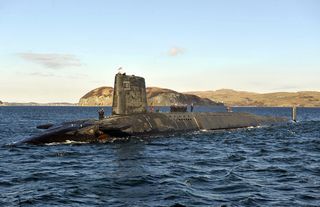 Trident may seem to David Cameron to be a very useful weapon for attacking Jeremy Corbyn. But does it keep Britain safe?
Actually, no. There is a good, hard, patriotic argument for getting rid of this unusable, American-controlled monstrosity before it bankrupts us and destroys our real defences. And lazy, cheap politics shouldn���t blind us to these facts. I write as someone who has nothing against nuclear weapons. I used to deliberately wreck the meetings of the Campaign for Nuclear Disarmament in the 1980s, by standing up at the back and asking awkward questions.
I was howled down at my local Labour Party (to which I then belonged) for supporting the deterrent against the Corbyn types (he may even have been there) who wanted us naked in the face of Soviet power.
When I went to work as a reporter in the Soviet empire, I was greatly amused by a visit to Kurchatovsk, HQ of Stalin���s nuclear bomb laboratories. All along the main street were witty banners jeering at the folly of giving up your weapons when your enemy kept his.
How I wished I could have shown them to British ban- the-bombers who (though they were shifty about this) always had a sneaking sympathy for the Soviet Union ��� as it then was ��� and scorn for the USA. In those days, vast concentrations of Soviet troops, tanks and planes sat in Germany ready to move westwards. I went to look at them. They were no myth.
Our nuclear bombs neutralised this incessant blackmailing threat. They made sure that if those armies moved one inch beyond their territory, it would end in Armageddon. So they never did move, and the threat was empty. It worked.
Then the facts changed. And, as that clever man John Maynard Keynes once drily remarked: ���When the facts change, I change my mind. What do you do, sir?���
The Soviet Union collapsed. I watched it happen, before my eyes. Its armies and navies melted away and its empire dissolved. Modern Russia, for all the silly nonsense about a ���New Cold War���, would be our friend if we let her be, and has no interest in attacking us or any conceivable reason for doing so.
The USA, meanwhile, has ceased to be the arsenal of freedom and has become instead the headquarters of a bumbling neo-liberal policy whose main achievement has been to turn the Middle East into a war zone, which we could easily stay out of if we wanted to.
The principal threat to this country���s prosperity, liberty and independence has been, for many years, the European Union, whose agents work tirelessly inside our borders to subjugate us, our laws, economy, trade and territorial seas, to foreign governance. Trident is useless against this, just as it is against the mass migration now transforming our continent, and against the terrorism of the IRA (to whom we surrendered, despite being a nuclear power) and Islamic State.
WE do not even control Trident, relying on the USA for so much of its technology and maintenance that we could never use it without American approval. How independent is that?
Meanwhile the Army is visibly shrivelling, demoralised, ill-equipped, historic regiments hollowed out and merged, experienced officers and NCOs leaving. Something similar is happening to the Navy, saddled with two vast joke aircraft carriers whose purpose is uncertain, even if they ever get any aircraft to carry. The RAF is a little better off, but not much.
This is caused mainly by the giant bill for renewing Trident, which will probably end up more than ��100���billion, at a time when we are heavily in debt already. If there were any obvious or even remote use for it, then maybe this could be justified. But there isn���t. We could easily maintain a small arsenal of H-bombs or nuclear-tipped cruise missiles, just in case, for far less.
It is not just bearded pacifists who doubt its use. Senior civil servants, serious military experts, senior officers in all branches, privately and in some cases publicly reckon it is simply not worth the money. Even if we decide to go ahead with it, I confidently predict we will have to cancel it (at great cost) when the long-awaited economic crisis finally strikes.
It would be a great shame if we failed to have a proper debate about this, just because it was easier to take cheap shots at the Labour Party. A grown-up country, and a grown-up government, would address it now.
The strangely bewitching face and voice of Jennifer Lawrence, with her cat-like presence, make her new film Joy well worth seeing. But seldom has a film been so wrongly named. In the end, it���s more or less a traditional Hollywood story of a lone individual���s triumph over adversity. But there���s little joyous about the portrayal of a bitterly broken family and devious business partners.
Only a society that had lost all sense of taste and proportion would mark the death of David Bowie as if some great light had gone out. He wasn���t Beethoven or Shakespeare. He wasn���t even Elvis. And it���s interesting that the Cultural Elite so easily forgave him for openly and explicitly praising the Nazis.
In general, I find, they���ll forgive everything provided you���re in favour of promiscuous sex and lots of illegal drugs. I was also fascinated to see Justin Welby, Archbishop of Canterbury, joining in the Bowie-mania and talking of ���relishing what he was, what he did���.
Does that include the drugs and the sex? This odd praise came from the leader of a church that has recently been trashing the reputation of the late Bishop George Bell, a truly distinguished man of huge integrity and courage, by needlessly publicising an unproven allegation of child abuse against him.
How I shall miss Alan Rickman, his beautiful command of English and a voice he played like a musical instrument.
But how is it that this fine Shakespearean actor could have come from a council estate in Acton, son of a factory worker? It wouldn���t happen now. In those days we still had Direct Grant schools, alongside grammar schools, the great open staircase by which talented children could and did go all the way to the top. When he was at Latymer Upper School, 80 per cent of the boys at this superb establishment were from poor homes. Now it���s mostly fee-paying, but still tries hard to find places for the less well-off.
Direct Grants, private schools which took huge numbers of state pupils, involved effective co-operation between state and private sectors ��� a thing all modern governments claim they want.
So why were they abolished? And why aren���t they now restored?
If you want to comment on Peter Hitchens, click on Comments and scroll down
January 16, 2016
It would be easy....
....not to publish comments at all here. Currently the threads are dominated by a series of private conversations about topics not even raised on this site (eg Halal slaughter). If readers wish to debate such things, please find somewhere else. Your contributions are boring me, and putting off readers who want to comment on the site itself.
January 15, 2016
Olivia Manning's Balkan and Levant Trilogies
It���s odd how Portsmouth seems to produce or stimulate writers and stories. Conan Doyle was a penniless doctor in Southsea (grubby, tarry Pompey���s green seaside twin sister). Charles Dickens was born there. H.G. Wells toiled in a draper���s shop in Southsea and hated it. The city features often, with its grotesque, ferocious prostitutes known as ���Portsmouth Brutes��� in Patrick O���Brian���s matchless series of novels about the Navy in Napoleonic Times, and of course in C.S.Forester���s currently under-rated ���Hornblower��� stories. The murder victim (as he turns out to be) in Josephine Tey���s extremely ingenious ���The Singing Sands��� is a young man from Portsmouth who used to love crossing Portsmouth harbour on the Gosport ferry, one of the great unsung delights of England. Knowing it as I do, I���m not surprised. If I had time I���d slip down to the Hard now, and take the ferry again.
Portsmouth is a curious mixture of the ugly and the lovely, best seen on a clear late winter���s afternoon from the top of Portsdown Hill, where several of my forebears are buried in the unyielding chalk. Amid harsh, practical and warlike buildings, and high walls to keep out saboteurs and spies, monstrous Victorian forts to keep out the scheming Frenchies, you find the occasional flash of unintended beauty, especially relics of the 18th century, when it seems even government builders were not immune from grace and proportion. And then there���s the pure scoured air, never free from salty wind, and the constant glitter from the unresting sea, and the impossible rural prettiness of the Isle of Wight, its miniature Downs like Bunyan���s Celestial City, clear enough to make out individual buildings, but out of reach beyond deep water.
Find yourself in Pompey on New Year���s Eve, and you���ll hear the mournful, heartless howl of the ships��� whistles and hooters at midnight, all sounding to mark the turn of the calendar. I happen to associate this dismal racket with sad moments, but I defy even a cheerful, optimistic person to hear it without being moved and a bit disturbed. It also reminds me of how, as a child living near the sea, I would listen safe in bed to the giant sirens of transatlantic liners on their way into Southampton, and huge warships inbound for Pompey, feeling their way through the Spithead fogs as the enormous tides tried to tug them away from their courses.
Perhaps it���s that mixture of tarry smells and slimy seashore stinks, the faint thumping of distant brass bands behind barrack walls, rackety brown pubs exhaling gusts of stale beer smells, big guns, sea-glitter, glum, momentous memorials (imagine the day the news came that several Pompey-based ships had been lost with all hands in the Battle of Jutland. I mean, imagine it, in the days when we still took death seriously and suddenly there were hundreds of destitute widows and orphans where before there had been contented families. Whole streets must have been overshadowed at once by the Angel of Death).
Such a city might just stimulate the mind, even among those who didn���t especially like the place. Indeed, I have had mixed feelings about Portsmouth all my life. But a year in which I have not visited it is incomplete for me.
In this strange place was born and raised one Olivia Manning, a greatly underestimated author whose two trilogies (the Balkan and the Levant) were dramatised as ���The Fortunes of War��� in the late 1980s by the BBC, with Emma Thompson playing Harriet Pringle, the main character, based upon Olivia Manning herself.
Olivia Manning was still alive at the time, and objected a bit to Emma Thompson because she thought her feet were too big (thus making it plain that Harriet Pringle and Olivia Manning (proud of her small feet) are more or less interchangeable).
It���s not a bad attempt at screening a large story featuring many characters, though it tails off a but at the end because the books are too big to televise.
They encompass battle, marital misery, the fear of defeat, the despair of a badly-wounded soldier, many personal betrayals and tragedies, and contain extraordinary portrayals of life as it was really lived in Bucharest, Athens, Cairo. Jerusalem and Damascus, in the very last hours of the colonial era.
They run partly in parallel to Evelyn Waugh���s ���Sword of Honour��� Trilogy (and his ���Put Out More Flags���, which I tend to see as a separate but linked volume) , and as essential for understanding Britain���s part in the Second World War.
The series begins with the Pringles, Harriet and Guy, making their way to Bucharest by train in the last minutes of peace in 1939. In the warm dark, a man without papers is hustled away to what will probably be his death, while the supposedly safe English passengers look on helplessly. It was more or less insane for anyone to undertake such a journey in September 1939, but before the rapid collapse of Poland and the wholly unexpected fall of France, few if any English people had any idea of this.
Harriet Pringle is a modern woman, a caustically witty, tough and independent young person from 1930s literary London, who would later be pretty much at home in the post-war world. Some of this we know because the books are so obviously autobiographical. An illustration of her toughness is a description, plainly drawn from the life , of a very risky mission, in mid-war, to the disputed city of Cluj. In the book, this crazy journey (at the request of a British reporter anxious to find out what is going on but not prepared to go himself) is made by Prince Yakimov, a White Russian aristocrat, ratfink, sponger, pig and general scapegrace, who is even so loveable, one of the most brilliantly drawn figures in fiction, worthy of Dickens himself.
Harriet���s bizarre marriage to Guy is the constant theme of the book. Guy, based on a Communist called R.J. (���Reggie���) Smith is the open-handed friend of all, endlessly dispensing his love to the poor and suffering, almost entirely absent from his wife���s life and oblivious to her concerns. He can barely see in front of him through thick glasses, so cannot serve in the Army. His official role in Bucharest is to lecture at the University, part of the ���soft power��� efforts of the British Council, the official voice of British culture abroad. It is not really a moment for soft power, though it is hugely touching that , as Hitler���s Panzers grind through the Low Countries in a river of grey steel, Guy manages to produce an excellent version of Shakespeare���s ���Troilus and Cressida��� (later he reveals a talent for producing smutty revues as well).
This difficult, sometimes utterly infuriating relationship continues in the most extraordinary circumstances. It is the unchanging theme of all six novels in the series. For those nurtured on legends of British victory and finest hours, the events described may be a shock.
Since they are living, without diplomatic protection, in an increasingly dangerous neutral capital liable at any time to he seized by Stalin or Hitler, Harriet and Guy are extremely exposed to the results of British diplomatic incompetence, military weakness and failure.
The menacing growth of Nazi power affects them personally, gradually interfering with their expatriate lives ��� neutrality means direct encounters with aggressive and deliberately unpleasant Germans, and the symbolic Nazi takeover of the hotel favoured by the British. Restaurants which used to find them tables begin to turn them down and turn them away. Jewish friends face increasingly nasty and ultimately savage treatment.
A poster war is played out between the British and German propaganda bureaux (the British response usually feeble) , and at one stage Harriet sees a Nazi placard gloating over the bombing of what is obviously Portsmouth.
This bohemian and unconventional young woman, who one can imagine refusing to stand for ���God Save the King��� at home, is wounded to the point of tears by the military collapse of the British Empire. She cannot believe that British troops have fled before the German advance. By mistake, she and her husband and an absurd visiting professor (the appalling Lord Pinkrose, a much more outrageous villain than Anthony Powell���s Widmerpool) find themselves attending a pro-German propaganda concert, and flee the auditorium amid cold contemptuous stares as the Horst Wessel song is bawled from the stage.
Having escaped (after a dreadful shock) the tragedy of Romania, they almost immediately find themselves embroiled in the even worse tragedy which overcomes Greece, the last unconquered corner of mainland Europe.
Again, we see defeat and incompetence, absurd optimism, the bad behaviour of rather too many of the British ���community���. And there are, alas, the pathetic hopes placed in Britain and its supposed fighting power, by the poor Greeks, who have nowhere to go when the Germans (probably drawn into Greece by British intervention there) arrive. We know, as the Greeks did not, exactly what they brought with them.
Harriet and Guy manage ���just- to escape to Egypt, where they find Britain unloved, and its impending defeat at the hands of Rommel happily anticipated by many Egyptians. By the way, this section of the book contains a description of an appalling true incident, whose real-life participants objected strongly to her writing about it. I have read it three times now, and am still unsure whether this very painful event should have been included in the story.
The book is strongly sympathetic to poor Egyptians and observant about them and their lives (in one extraordinary moment, Harriet notes that a man who makes a tiny living as a porter, has feet which have become almost circular from carrying too many heavy loads), and often unenthusiastic about the conduct of their British occupiers.
And it contains scenes from the battle of Alamein which I believe to be highly realistic accounts of real warfare.
It is full of life as it actually feels and must have felt at the time��� the reader experiences the Bucharest winters, the grinding hunger of wartime, when there is nothing to eat ��� even for the fortunate - but the foulest offal, the grey lonely soaking chill of Damascus after the bone-baking, unhealthy blaze of the Cairo heat. For long periods, the immediate possibility of total defeat and utter destitution, lost far from home among strangers, reliant on the pennies of their charity and grateful for it, is a constant danger. The barbarians really could arrive. We have seen them arrive in Bucharest and Athens. Will they come to Alexandria and Cairo too?
For me this setting is especially poignant. Some of the most intense moments of my life were spent in Bucharest around Christmas 1989. I lived as an expatriate in a turbulent foreign capital (Moscow) for two years, never entirely sure of being safe from events. I have been twice to Cairo (and hope never to go again) and find Olivia Manning���s account of the same place in another era enormously evocative. The Mediterranean was where my father spent much of his time in the Navy. He was familiar with the Greek Islands, Alexandria and Suez, as all naval men were then, and he and my mother spent the early years of their marriage in Malta, still a last vestige of the Imperial life, British manners and restraint amid the sun-scorched stone buildings of another civilisation. The war Olivia Manning saw tearing through her life came to dominate my childhood and adolescence, forming as it did our national politics, literature and self-image. How do we think of it? What do we owe to the dead, and those who knowingly and repeatedly risked death? ? What should we think of it? Where does it leave us, morally and culturally, nearly 80 years later, as the last survivors near the end of their days, and the world finally shakes off the treaties and unwritten deals that brought it to an end?
The brief coda to the last book of the six, ���The Sum of Things���, is so powerful that it made me involuntarily hold my breath. It is a brief flash of the hard, determined and passionate steel beneath the artifice of these books, and may give you a clue as to why they are so very well worth reading. Here it is:
���Two more years were to pass before the war ended. Then, at last, peace, precarious peace, came down upon the world and the survivors could go home. Like the stray figures left on the stage at the end of a great tragedy, they had now to tidy up the ruins of war and in their hearts bury the noble dead.���
Peter Hitchens's Blog

- Peter Hitchens's profile
- 299 followers


