
Peter Hitchens's Blog, page 174
February 2, 2016
How to Report on a Controversy in Modern Britain
A certain newspaper carried on a certain date a very interesting story on its front page, to which I will not refer you or link for reasons which will become clear. The report was about a leading politician. But I won���t name him or her because I have heard that he or she thinks that this story threatens the privacy of one of his or her children, whose sex I will also not reveal. I���d better not say which party he or she belongs to since they���re all the same, so this matters less than you might think) or how leading he or she is, either. No clues here.
The story said that this politician (let us call her or him X) , was considering sending the child (whom we shall call Y) to a leading private school (which I will call Z) in a large city somewhere in South-East England (which I shall call A).
Now, the thing about X (who lives in A) , is that X has said in the past that X hoped to send X���s children to state school. X has in fact sent several of X���s children (I won���t say how many, in case it identifies X) to a state primary school (which I shall call B) and a number of children (whom I shall call D) to a state secondary school (which I shall call C) . Both of these schools (B and C) are in the city of A. So is the independent school called Z. For reasons I can���t explain, because they would reveal important details about both Y and B ,Y cannot go to C. But D can go to C. And Y can go to Z, though no decision has yet been taken.
X was careful, very sensibly, to qualify this. State schools in A, especially secondaries, are of, shall we say, variable quality, especially for children of one of the two sexes (let us call this sex E, a sex which includes child Y). X has made sympathetic remarks about other parents who have been scared off by poor state secondary schools, especially (but not exclusively) in the city of A . Really the issue is about whether X���s decision to consider independent school Z for child Y reflects in any way on the success (or failure) of the school policies of X���s party (which, like all the parties, claims to be sorting out the state sector and making it wonderful) .
I hope you are following me, because I am not sure I am following myself. But I am sure you will agree that this ABC and XYZ method of reporting these matters, not to mention the almost total failure of the rest of the media to follow the original story in the unnamed paper with any vigour or verve, is far superior to the way in which the media used to report the educational choices of leading politicians whose public pronouncements differed (or seemed to differ) in various ways from their private policies, notably Anthony Blair, who spurned Labour���s beloved local comprehensives for a highly selective Roman Catholic school miles from his home, or Harriet Harman, who spurned Labour���s beloved local comprehensives in favour of a grammar school, or Diane Abbott, who spurned Labour���s beloved local comprehensives in favour of an independent school.
I���d ask anyone commenting on this posting not to engage in speculation about the identity of X or Y, or about the name of the city or the names of any of the schools involved.


The Bell Affair -an attempted defence of the C of E and my rebuttal of it
I have been asked if, for the sake of fairness, I could link to a supposed defence, by an official of the Church of England, of the Church���s decision to publicise an allegation of child abuse against the late Bishop George Bell.
Happy to do so
Here it is. The author is Gabrielle Higgins, The Chichester Diocesan Secretary
'In October 2015, the Church of England announced that the Bishop of Chichester had issued a formal apology following the settlement of a civil claim regarding sexual abuse against the Right Reverend George Bell.
Bishop Bell had a long and distinguished ministry as bishop of Chichester from 1929 until his death in 1958.
The process leading up to the settlement, the apology and the announcement was long, complex and carried out with all the sensitivity that a case of this nature demands. Given the nature of the allegations and the reputation of Bishop Bell, it is however understandable that questions have been raised since the announcement was made. These have come from members of the church nationally and locally, as well as from the media.
We would like to take this opportunity to try to answer some of these concerns ��� as best we can. For legal reasons, it has often been impossible to respond to specific questions about the case and we understand this has been frustrating. It is possible however to clarify three broad areas to which the majority of concerns relate.
Presumption of Innocence
In criminal cases, innocence is presumed until guilt is proved and the burden of proof rests entirely on the prosecution. This means that no-one can be subjected to criminal penalties by the state unless their guilt is proved beyond reasonable doubt. The concept is probably familiar to most people, but not well understood. In popular culture the assumption is that this principle applies to all ���legal cases���, but in fact it applies to criminal prosecutions only.
The case of Bishop George Bell was a civil and not a criminal case ��� regardless of the serious nature of the allegations. Bishop Bell has not been denied the ���presumption of innocence���, because proceedings were never brought before a criminal court. This may seem like a technical point, but it is important that this fundamental legal principle is understood.
Where allegations are made against a deceased person, as is the case with Bishop Bell, they must ��� of course ��� be taken seriously and dealt with accordingly, however uncomfortable this may prove, or however high profile the individual may be. The death of the person does not mean that allegations should not or cannot be investigated at all. It only means that a criminal prosecution cannot be pursued.
The Evidence was not disclosed
Many have asked to see the evidence on which the civil case was settled, and many have expressed concern that we have not been able ��� or seemed willing ��� to provide it.
The desire for transparency does not sit easily with the requirement for confidentiality. Many vexed questions from local, national and international correspondents have been raised, which is understandable given the international standing of Bishop Bell as a theologian and church leader.
But here we must also consider the courage displayed by any survivor in coming forward. The law rightly affords them protection to safeguard the confidentiality of their deeply personal information.
Time and again we hear from people reporting abuse about how painful it is for them to disclose their experiences, as reporting involves re-living. We sympathise with those struggling to come to terms with Bishop Bell���s situation. We also understand the desire to see the evidence. However, this cannot outweigh the individual���s right of privacy.
Even if we wanted to reveal the information, we would be unable to do so: the survivor���s privacy is protected in law. It is legally impermissible for the Church to disclose any evidence used in the settlement, or any information that might lead to identification of the complainant. To be absolutely clear: no specific confidentiality agreement has been applied in Bishop Bell���s case; confidentiality laws apply in all cases of this nature.
Betrayal of Memory?
The third tranche of questions raised by this case is an extremely difficult one. It relates to the question of betraying the memory of someone praised as one of the greatest Churchmen of the 20th Century, a man who had devoted so much of his ministry to the cause of peace.
There is no doubt that George Bell achieved many great things during his lifetime, for which he is rightly honoured and which should continue to be remembered. But any suggestion that those who have done good deeds should be afforded an extra degree of protection from serious allegations cannot be upheld. This is fundamentally wrong.
This position led many institutions, including the Church, to respond to allegations of sexual abuse so poorly in the past and we cannot ��� and will not ��� allow this to continue in the 21st century. All allegations of abuse must be taken seriously and dealt with sensitively and professionally; we must never demand a higher threshold of suspicion because the accused person is of high standing, or has an ���impeccable��� reputation, however uncomfortable this may make us feel.
To conclude: this case has been extremely difficult for all concerned. Many complexities ��� legal and otherwise ��� have given rise to many questions. A number of the questions which have risen cannot be answered, and this blog offers clarification as to why that is so, and also provides some guidance to those frequently-posed questions to which answers can be given.'
Gabrielle Higgins, Chichester Diocesan Secretary
22nd Jan 2016
It can be found here:
http://www.anglican.ink/article/diocese-chichester-defends-handling-george-bell-abuse-claims
MY reply: To be clear, it is the *publicising* of a solitary unproven accusation made by an unnamed person concerning events alleged to have happened decades ago, and the way in which this revelation of an unproven allegation somehow turned into several prominent media stories declaring that the allegation was a fact, that seems to me to be completely indefensible.
If the details can���t be publicised, and I personally accept that they now can���t. then why should the general accusation be publicised?
I have no objection to the kind and generous treatment of the complainant, and indeed support it up to and including the payment of compensation. In the absence of proof, we should give the complainant the benefit of the doubt to that extent.
But I cannot see what purpose was served by this publicity, nor, as it happens, can I see how it has helped the complainant, who clearly wishes to stay out of any spotlight.
I am more than happy to publish this supposed defence, as it seems extraordinarily weak to me. It is absurd, in my view, to say that the case ���was a civil and not a criminal case���.
No civil case against George Bell in such a matter could, in my view, conceivably have taken place before a criminal case on the issue had been heard. If a serious crime such as this is alleged against someone, then its truth or falsehood are resolved in a criminal court to criminal standards of proof ���beyond reasonable doubt���. Only after such a trial might the accuser be able to sue for a civil tort. I think it would have been extremely difficult to proceed, let alone succeed, with such a suit had the Jury brought in a verdict of 'not guilty'. Thus, the presumption of innocence still very much applies, and would have stood as a barrier against any civil suit had the accusation been made in Bishop Bell���s lifetime. There is no excuse for dispensing with it now.
In any case, no criminal or civil case could have been mounted against George Bell in either 1995, the time of the first allegation, or 2013, the time of the revival of the allegation, since on both occasions he was deceased (in 2013 he was considerably more deceased than he was in 1995, having died in 1958) , and you cannot sue the dead, any more than you can prosecute the departed.
I am not sure what civil case could ever have been mounted in an English court against anybody or anything connected with this. I'd be interested in the opinions of others as to what shape it might have taken. The Bishop who is alleged to have mishandled the original complaint, in 1995, the late Eric Kemp, is also deceased, having died in 2009. So he cannot be sued. Could the current Church of England or the Chichester diocese be sued? You would have to ask a lawyer, which I am not, but for what, exactly, could they be sued, and what could such a trial establish? Could the church or diocese be held responsible for the alleged actions of a defunct bishop, half a century ago? Or for the alleged inaction of another defunct bishop, 18 years ago at the time of the second complaint, now 21 years ago?
I can see difficulties here. In any case, the normal law of limitations on civil suits is 12 years, which would have expired in 2007 in the case of Eric Kemp���s alleged failures, and by about 1956 in the case of George Bell���s alleged actions. And surely at such a trial some effort at defence of the Church and of Bishop Bell might have been attempted, which seems to have been absent from any of the processes which led to the public and probably permanent damaging of Bishop Bell���s hitherto high reputation. Personally, I don���t accept that his reputation can be taken in parts. If this charge were proven to be true, all else collapses in dust and ashes. True Good is done in minute particulars, and so is true evil. Publicising the charge was the most damaging thing anyone could do to a deceased man with a high reputation, imprisoning that reputation for all time in a dank cell of shame. Did anyone truly know enough to do this?
February 1, 2016
She's done the bank scandal... maybe Margot Robbie can explain the Great Happy Pills Delusion
This is Peter Hitchens's Mail On Sunday Column
The biggest scandals go on for years because they are so huge that nobody notices them. We stand and watch outrageous things going on, thinking that everything is all right because nobody else is making a fuss.
The new film about the 2008 bank collapse, The Big Short, makes this point perfectly. Anyone who wanted to could see the great lending boom was based on garbage, worthless loans that would never be repaid.
But most people didn���t want to. And even now we shy away from the blatant truth. The film���s makers, realising how easily our attention wanders, hired the Australian actress Margot Robbie to sit in a bathtub, naked except for a few thousand symbolic bubbles, to explain sub-prime mortgages in simple (and very crude) English.
 The Big Short���s makers, realising how easily our attention wanders, hired the Australian actress Margot Robbie to sit in a bathtub, naked except for a few thousand symbolic bubbles, to explain sub-prime mortgages in simple (and very crude) English
How I wish I could afford to hire her to explain the equally shocking truth about the vast ���antidepressant��� scandal that goes on all around us.
But, just as banks and investors were willing ��� if blinkered ��� accomplices in the mad folly that ripped the West���s economy to bits eight years ago, many doctors and decent men and women are complicit in the Great Happy Pills Delusion.
Doctors can get plenty of rewards from drug companies for promoting their pills. Invitations to conferences at five-star hotels, with diving, golf and fishing laid on are not unknown. Others are paid to write apparently unbiased articles in medical journals praising a company���s drugs.
But even those who don���t accept this are often relieved to have something, anything, to prescribe to the dozens of unhappy patients who seek their help. If they and the patient believe these pills work, then, in a way, they will. So would inert pills made of chalk, as it happens.
If only Margot Robbie could be hired tp explain the equally shocking truth about the vast ���antidepressant��� scandal that goes on all around us, in which many decent men and women are complicit
And so the patients, too, are recruited into the ���antidepressants saved me from misery��� campaign. There���ll be some in every street and workplace, given that more than 53 million prescriptions for these drugs are dispensed in the UK to about four million people every year.
The trouble is that rigorous science, in which they are tested against sugar pills, increasingly doubts that they do work. And, worse still, there is worrying evidence that the side effects of some of these drugs may be very serious indeed.
Now, in the respected pages of the British Medical Journal, comes a stinging report, carefully analysing 70 trials of ���antidepressants���, which found that some common drugs of this kind actually double the risk of suicide and aggressive behaviour in under-18s.
This, by the way, does not mean that adults are unaffected. The drug companies��� research repeatedly under-reported deaths and episodes of self-harm by tested patients.
A drug that does not really work is one thing. A drug whose users harm themselves (or others) is another.
The vast extent of this problem and the huge sums of NHS money spent on it may make media and politicians think it must be all right. But they thought the same about sub-prime mortgages. And it was not all right. Nor is this.
Those who voted Tory in 2010 to ���get Gordon Brown out��� might ponder George Osborne���s relentless Brown-style raids on private pension funds
Our crazy war on savers
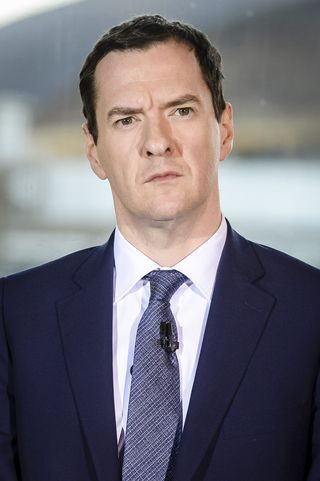 In Japan now they are starting to charge people for keeping healthy credit balances in the bank. It is called ���negative interest��� and is part of a vicious war on savers under way all over the world. It���s pretty intensive here too. Those who voted Tory in 2010 to ���get Gordon Brown out��� might ponder George Osborne���s relentless Brown-style raids on private pension funds, punishing and robbing dedicated savers with extra taxes, to subsidise Google���s tax breaks.
The same goes for ���quantitative easing���, designed to push small investors into putting their cash into risky places to get any return at all. Those who refuse have their interest-free bank balances slowly drained by inflation (which is supposed to have disappeared, but hasn���t). How long before there���s ���negative interest��� too? Destroying the savings and hopes of the middle classes is what, in the end, led to Germany���s gruesome descent into fanatical madness in the 1930s.
It helped put Vladimir Putin in power in Moscow. It is deeply irresponsible politics as well as deeply irresponsible economics.
I think I could just about bear it, even so, if people didn���t keep telling me what a great and righteous Chancellor George Osborne is. It is, once again, a lie so huge that they get away with it.
So now all of us must live in the knowledge that a double murderer, with severe psychiatric problems, is living secretly among us. I defy anyone to say with total assurance that it is safe to let him out. His crime is said to have been horrific. But he has been released into the ���community���. He is in his 40s, but we cannot know his new name, or his old one, or where he is or what he does.
This is thanks to our ���Supreme Court��� (the name is itself a lie, for it is not supreme at all, but subject to Parliament and also the European Court of Justice in Luxembourg).
These exalted personages overruled four wiser judges, and common sense. If they have made a terrible mistake, how will they be made to pay for it?
Last week I finally underwent root canal dentistry, the lurking ill-defined horror that lies in wait for the middle-aged. Well, I am here to report that it was nothing like as bad as most of the things I have heard it compared to. And it was far less gruelling, protracted and demoralising than trying to extract an apology for wrongdoing from the BBC, or a Left-wing newspaper, or from a railway company ��� all activities I have been engaged in during the past few weeks.
Not all Gas and Gaiters
The Archbishop of Canterbury has had a nasty surprise. It follows the Church of England���s decision to publicise, in national media, an unproven claim of child abuse against the long-dead Bishop George Bell, one of the C of E���s few genuinely great men.
Now Justin Welby has had a stonking letter from Bishop Bell���s niece, Barbara Whitley, telling him off. Mrs Whitley,91 and with a mind as sharp as a guillotine, wrote to the Prelate: ���My uncle was an extremely holy, private man. A deep thinker with many engagements and a loving, helpful wife. I am convinced he would not have done any such thing���.
This must have come as something of a surprise, since the C of E���s bureaucrats had assumed George Bell had no living relatives.
You would have thought Mrs Whitley, herself the daughter of a Bishop, deserved a swift and personal reply. But Archbishop Welby passed the matter to a subordinate. Mrs Whitley has written to him again, protesting that her Uncle���s name is being smeared. I do hope he writes back himself, this time.
If you want to comment on Peter Hitchens, click on Comments and scroll dow
January 31, 2016
An Appearance on Eric Metaxas's New York radio programme
Some of you may recall an interview which I posted here recently, in which I discussed many issues with the American commentator and author Eric Metaxas, biographer of the German Protestant Pastor murdered by the Nazis, Dietrich Bonhoeffer.
Eric was dismayed to hear of the smearing of Bishop George Bell, a close friend and collaborator of Bonhoeffer, whose international reputation is now perhaps greater than his reputation in England, and kindly offered me airtime to discuss the Bell case.
Here is the resulting programme
https://soundcloud.com/the-eric-metaxas-show/peter-hitchens
Some extracts from a debate in Oxford on Free Speech
Here is my initial contribution to a debate on free speech at universities held last November at Blackwell���s bookshop in Oxford
https://www.youtube.com/watch?v=03AhikGdymw
and a later one
https://www.youtube.com/watch?v=4_XfB_iNXhU
I don���t know where the complete recording is, but here are some other extracts
https://www.youtube.com/watch?v=tDVR_p_lkRI
https://www.youtube.com/watch?v=wCvTXxTiJ7E
https://www.youtube.com/watch?v=PaBXB65vp9k
She's done the bank scandal... maybe Margot Robbie can explain the Great Happy Pills delusion
This is Peter Hitchens' Mail On Sunday Column
The biggest scandals go on for years because they are so huge that nobody notices them. We stand and watch outrageous things going on, thinking that everything is all right because nobody else is making a fuss.
The new film about the 2008 bank collapse, The Big Short, makes this point perfectly. Anyone who wanted to could see the great lending boom was based on garbage, worthless loans that would never be repaid.
But most people didn���t want to. And even now we shy away from the blatant truth. The film���s makers, realising how easily our attention wanders, hired the Australian actress Margot Robbie to sit in a bathtub, naked except for a few thousand symbolic bubbles, to explain sub-prime mortgages in simple (and very crude) English.
The Big Short���s makers, realising how easily our attention wanders, hired the Australian actress Margot Robbie to sit in a bathtub, naked except for a few thousand symbolic bubbles, to explain sub-prime mortgages in simple (and very crude) English
How I wish I could afford to hire her to explain the equally shocking truth about the vast ���antidepressant��� scandal that goes on all around us.
But, just as banks and investors were willing ��� if blinkered ��� accomplices in the mad folly that ripped the West���s economy to bits eight years ago, many doctors and decent men and women are complicit in the Great Happy Pills Delusion.
Doctors can get plenty of rewards from drug companies for promoting their pills. Invitations to conferences at five-star hotels, with diving, golf and fishing laid on are not unknown. Others are paid to write apparently unbiased articles in medical journals praising a company���s drugs.
But even those who don���t accept this are often relieved to have something, anything, to prescribe to the dozens of unhappy patients who seek their help. If they and the patient believe these pills work, then, in a way, they will. So would inert pills made of chalk, as it happens.
If only Margot Robbie could be hired tp explain the equally shocking truth about the vast ���antidepressant��� scandal that goes on all around us, in which many decent men and women are complicit
And so the patients, too, are recruited into the ���antidepressants saved me from misery��� campaign. There���ll be some in every street and workplace, given that more than 53 million prescriptions for these drugs are dispensed in the UK to about four million people every year.
The trouble is that rigorous science, in which they are tested against sugar pills, increasingly doubts that they do work. And, worse still, there is worrying evidence that the side effects of some of these drugs may be very serious indeed.
Now, in the respected pages of the British Medical Journal, comes a stinging report, carefully analysing 70 trials of ���antidepressants���, which found that some common drugs of this kind actually double the risk of suicide and aggressive behaviour in under-18s.
This, by the way, does not mean that adults are unaffected. The drug companies��� research repeatedly under-reported deaths and episodes of self-harm by tested patients.
A drug that does not really work is one thing. A drug whose users harm themselves (or others) is another.
The vast extent of this problem and the huge sums of NHS money spent on it may make media and politicians think it must be all right. But they thought the same about sub-prime mortgages. And it was not all right. Nor is this.
Those who voted Tory in 2010 to ���get Gordon Brown out��� might ponder George Osborne���s relentless Brown-style raids on private pension funds
Our crazy war on savers
In Japan now they are starting to charge people for keeping healthy credit balances in the bank. It is called ���negative interest��� and is part of a vicious war on savers under way all over the world. It���s pretty intensive here too. Those who voted Tory in 2010 to ���get Gordon Brown out��� might ponder George Osborne���s relentless Brown-style raids on private pension funds, punishing and robbing dedicated savers with extra taxes, to subsidise Google���s tax breaks.
The same goes for ���quantitative easing���, designed to push small investors into putting their cash into risky places to get any return at all. Those who refuse have their interest-free bank balances slowly drained by inflation (which is supposed to have disappeared, but hasn���t). How long before there���s ���negative interest��� too? Destroying the savings and hopes of the middle classes is what, in the end, led to Germany���s gruesome descent into fanatical madness in the 1930s.
It helped put Vladimir Putin in power in Moscow. It is deeply irresponsible politics as well as deeply irresponsible economics.
I think I could just about bear it, even so, if people didn���t keep telling me what a great and righteous Chancellor George Osborne is. It is, once again, a lie so huge that they get away with it.
So now all of us must live in the knowledge that a double murderer, with severe psychiatric problems, is living secretly among us. I defy anyone to say with total assurance that it is safe to let him out. His crime is said to have been horrific. But he has been released into the ���community���. He is in his 40s, but we cannot know his new name, or his old one, or where he is or what he does.
This is thanks to our ���Supreme Court��� (the name is itself a lie, for it is not supreme at all, but subject to Parliament and also the European Court of Justice in Luxembourg).
These exalted personages overruled four wiser judges, and common sense. If they have made a terrible mistake, how will they be made to pay for it?
Last week I finally underwent root canal dentistry, the lurking ill-defined horror that lies in wait for the middle-aged. Well, I am here to report that it was nothing like as bad as most of the things I have heard it compared to. And it was far less gruelling, protracted and demoralising than trying to extract an apology for wrongdoing from the BBC, or a Left-wing newspaper, or from a railway company ��� all activities I have been engaged in during the past few weeks.
If you want to comment on Peter Hitchens, click on Comments and scroll dow
January 29, 2016
An Interview of PH by a Sixth Former at Merchant Taylors' School
Some readers may be interested in this exchange, which will, alas, provide an excuse for more religious bores to do their interminable boring on the comment thread, but covers other subjects too.
http://www.merchanttaylors.com/senior-boys/u6-student-ben-interviews-peter-hitchens.html
Time for Some Serious Thought about 'Antidepressants'
I expect to have more to say about this, but today���s BMJ? UCL/ Nordic Cochrane Centre analysis of research on ���antidepressants��� should surely change the terms on which we debate this subject.
I should say that all intelligent people should draw lessons about the difference between what they think is happening, and what is actually happening, from two major Hollywood films ��� The Big Short��� and ���Spotlight���. In both cases ��� the sub-prime mortgage disaster and the widespread unpunished sexual abuse of children by priests ��� complacency prevented serious concern for years. In both cases the alarm was raised by outsiders, and most people refused to believe what was being said.
I believe that psychiatric medication contains a similar problem, which in a few years, everyone will acknowledge as fact. But at the moment, it is still difficult to raise it without being accused of being a crank. Complacency rules.
For some years now I have been more or less begging my readers to obtain the book ���Cracked��� by James Davies��� and to study two clearly-written and straightforward articles on the subject by Dr Marcia Angell, a distinguished American doctor, and no kind of crank, in the New York Review of Books. I link to them (yet again) here. They are devastating, not least because of their measured understatement. The alleged scientific theory (the Serotonin theory) which underpins the prescribing of such drugs is, to put it mildly, unproven. The drug companies themselves have kept secret (until compelled to disgorge them by FoI requests) research results which suggest their pills are, again to put it mildly, not that effective.
http://www.nybooks.com/articles/2011/06/23/epidemic-mental-illness-why/
http://www.nybooks.com/articles/2011/07/14/illusions-of-psychiatry/
Dr Angell���s articles are themselves reviews of important recent books on the subject.
I have also drawn attention to the huge sums of money involved, and to a recent case in which a major drug company was fined *three billion dollars* for (amongst other things) mis-selling ���antidepressants���.
Now comes the new report, a survey of research, which today led the front page of the Daily Telegraph
Not merely does it link the use of ���antidepressants��� to increased risk of suicide among teenagers ( a suggestion I have often been derided here for making by people whose argument can be summed up as ���they were depressed- duh!��� ).
It also suggests that clinical trials have until now been misreported and dangers under-reported. I urge you to read it.
You might also note this crucial admission: ���Dr Joanna Moncrieff from University College London said: "People in the United Kingdom are consuming more than four times as many antidepressants as they did two decades ago. Despite this, we still do not fully understand the effects of these drugs.���
Indeed we do not. People who are prescribed ���antidepressants��� naturally assume that they are being given them on the same principle as they might be given an antibiotic or an anti-inflammatory, or some other drug aimed at treating physical infection or a diagnosed disease. I think this greatly exaggerates our understanding of how mind-altering drugs work, or even whether they do work.
As to their side-effects, which can be considerable, these may actually be their effects.
Yes, it is that vague. And it is that big, with tens of millions of prescriptions for ���antidepressants��� issued every year. So how come there���s no big fuss about it? Well, how come there was no big fuss about the bundling of worthless loans into dangerous financial instruments, which ended by exploding the world���s stock-markets and causing a global recession? How come priestly child abuse carried on in Boston for years, and nobody did anything? Maybe the bigger it is, the harder it is to believe there���s anything wrong.
January 28, 2016
If Neil Kinnock Says You'll Lose, You'll Lose. But so what?
I see that Neil Kinnock now says that Jeremy Corbyn is certain to lose the next election. Well, if Neil says you���ll lose, you���ll lose. He's the expert.
Meanwhile, New Labour���s medium-sized beasts and not-very-grandees are writing openly about a new SDP-style split from Labour, following the path trodden by the Gang of Four back in the 1980s.
Which part of the word ���Doom��� don���t these people understand? As I wrote here http://hitchensblog.mailonsunday.co.uk/2010/01/whatever-happened-to-the-labour-party.html nearly six years ago, journalists have a very poor understanding of what happened to Labour in the 1980s, exemplified by the moronic belief that New Labour was a turn to ���the right���, when in fact it was the opposite. It was an embrace of the new world order, liberal in economics and social and cultural politics, open borders, mass immigration, low wages, corporate greed, vast debts, rule by supranational bodies, wars against sovereignty, for ever and ever.
The same cluelessness pervades coverage of the Tory Party, in which David Cameron���s quite open espousal of virulent social radicalism, globalist warmongering, affinity with the EU���s aims and fanatical warmism is minimised, and his alleged ���Euroscepticism��� , traditionalism and patriotic conservatism (for which there is no evidence at all) repeatedly trumpeted.
It is in fact quite funny watching political journalists pinning the label ���Eurosceptic��� on anyone who happens to be passing ��� Philip Hammond, Theresa may, Michael Gove, . Do they do this to make an utterly dull job feel more interesting? None of these people has any intention of supporting a British exit from the European Union, or ever did.
Of course, as has been many times pointed out here, ���Eurosceptic��� doesn���t mean anything fixed anyway, and is just a term, applied to those who in opposition make critical noises about the EU, and in government do its loyal bidding.
But in any case, the 1980s Labour party split over the European issue (which led to the breakaway) is now an incomprehensible remnant of political archaeology, or even palaeontology.
Despite a handful of MPs who can see that EU membership prevents the adoption of any seriously socialist programme, the Labour Party now contains no significant opposition to the EU. We���re told that Jeremy Corbyn once opposed membership, though I can find no direct record of him ever having said so in person (rather than through membership of groups which adopted this position at one time) . But if so he has chosen to keep very quiet about it now. This, for him , is not like the nuclear issue, a matter of principle so important that he will damage himself and his party to maintain it.
Not that it matters. I suspect Mr Corbyn knows that only a colossal economic collapse, far worse than 2008 (and not wholly impossible) could lift him into office, and under circumstances where nobody could be anything but unpopular. It would be like being Ramsay Macdonald. If he has any sense, he���d rather lose.
And yet he carries on, acting his hopeless part with a certain amount of quiet valour. He was lawfully and correctly elected to his post, quite against his own expectation as well as against anyone else���s. What else is he supposed to do, now he has won it? He can���t really say he never wanted it in the first place. He is plainly not a stupid person, and even has a sense of humour, a reliable sign of a sense of proportion. His recent interview with the Independent on Sunday, in which he described his relationship with his cat, seemed to me to be crammed with dry humour, as did a recent confession that he was, in fact, once a geography teacher. He knows why people laugh at him, and I suspect he shares the joke.
In this he is very unlike the man he is often compared with, the unfortunate Iain Duncan Smith. IDS���s inability to grasp the absurdity of his position was painful, even tragic to behold. I remember once calling on him soon after he was elected, and sinking into a mixture of utter despair and profound boredom within 90 seconds. He had no idea what was going on or what to do, or of the hopelessness of his position. Worse still was a ghastly encounter in his chilly, painfully brightly-lit Blackpool hotel suite, just before he was ousted, where he sat alone on the burning deck, whence all but he had fled because there was no point in staying. He still didn���t grasp just how doomed he was. And I just felt very, very sad and embarrassed.
Mr Corbyn, by contrast, is well aware that he has been dealt a ludicrous hand of cards towards the end of his political life. He must lead a Parliamentary party which loathes and despises him, while the actual members like and admire him. Despite all his unlovely policies on Ireland and the rest, Mr Corbyn rather creditably doesn���t return the loathing of his parliamentary colleagues, having been brought up by ethical socialists almost indistinguishable in their morals from nonconformist Christians of the old sort, peaceable, patient, declining to render evil in return for evil, avoiding rancour.
I do find this admirable, whatever else I think about him. He will carry the burden for as long as he has to. A putsch against him is by its nature very difficult, as he is constitutionally strong and his enemies are constitutionally feeble and stand for nothing coherent anyway. Their only major revolt was staged in favour of bombing Syria, which the government turned out not to want to do very much anyway.
Their only hope is some really bad local, Euro or by-election results, or a catastrophic Parliamentary performance. These may not in fact arrive. As it is, Mr Corbyn���s decision to use underarm bowling against David Cameron has been more effective than most are prepared to admit. David Cameron���s flashy First XI style always looked a lot better than it was, a lot of elegant strokes but not many runs and hardly any boundaries It only works against dud fast bowling. Against Mr Corbyn���s slow, accurate straight underarm balls, trickling annoyingly along the ground towards him, he can only play a dull straight bat, from which the balls dribble away again after meeting the wood with a muted thunk.
Sometimes people even notice that Mr Cameron isn���t actually answering the questions very well (he never has) and that his home crowd is cheering because they have been ordered to by the whips, not because he has said anything especially good. They may even notice that PMQs is actually rigged so heavily in favour of the Premier that surviving it one a week doesn���t really prove anything at all.
But Mr Corbyn���s constituency in the country is so small and weak, and so easily portrayed as unpatriotic and disastrous (because in some ways it is these things, though the government is too in its own way) that it cannot, in normal times, hope to win a general election.
But then, nor could the New Labour lot who chafe at his leadership. And they know that there���s nothing they can do, in policy or organisation or leadership terms, which will alter that. Their clothes, and their big donors, and their media friends, have all been stolen from them by the Tories. Nor is there any reason to believe that they will ever be able to steal them back. By adopting the pursuit of office at all costs and accepting that this meant pursuing a neo-liberal globalist agenda at home and abroad, Labour discovered the problem with having your wishes granted. There���s always a catch. Remove principles from politics, and turn it into a pursuit of office for its own sake, and you allow others to do the same to you as you have done to them. All that triumphalist sneering, dishonest propaganda of 1997 and 2001 has now come back, and it is being used against them. And what can their answer be?
In a contest in unscrupulous electioneering and raising mountainous sums of money, and in manipulation of the media, the Tories were always bound to win in the long term. They saw what New labour did in the era of Lord Cashpoint and Peter Mandelson, then they copied it. Now they are new Labour, and New Labour, like the husk of ex-person in ���Invasion of the Body Snatchers��� is an ex-party with no function in British politics. Let them split if they want to. Whatever happens, they won���t bring back the lost days of Blair. His mantle now lies on David Cameron���s shoulders. And then? Well, here���s a treat in store. Al ���Boris��� Johnson waits to be the Heir to the Heir to Blair. He can do it. Wait and see.
January 25, 2016
A discussion about Russia on LBC Radio
Here is a recording of a discussion I had with Kate Maltby of I (among other things) The Spectator on LBC radio. The subject is British relations with Russia
http://www.lbc.co.uk/great-clash-between-commentators-over-putin-and-russia--123729
Peter Hitchens's Blog

- Peter Hitchens's profile
- 299 followers

