
Paul Garrigan's Blog, page 23
December 29, 2013
The Willingness to be Vulnerable in Sobriety
I can only be loved to the extent that I’m willing to risk being hurt.
In this video, I discuss the need to become vulnerable in order to enjoy a sense of well-being and happiness. If I put up barriers, it may protect me from short-term pain, but it also prevents me from experiencing the real joy of life.
Press play to watch the video


December 18, 2013
Recovering From Writer’s Block and Freelance Burnout
I’m usually a bit skeptical when I hear people talking about ‘writer’s block’. I’ve been knocking out an average of 4,000 words per day since turning full-time as a writer four years ago. There have been days when I’ve felt too lazy to write, but it seems a bit disingenuous to use a fancy name to describe these periods of not wanting to work. You don’t hear nurses claiming they have ‘nurse’s block’ or fire fighters moaning about ‘fire-fighter’s block’ when these professionals are in the mood to take things easy.
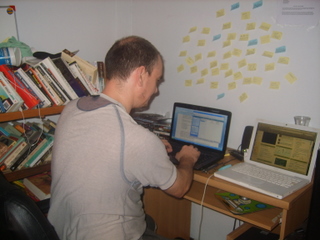
More to Writer’s Block than Laziness?
It is only in the last few weeks that I’ve come to appreciate that there may be more to ‘writer’s block’ than just a fancy name for laziness. I’ve had a few days recently where writing has felt like pure torture – even responding to an email or replying to a Facebook comment has been hard work. I’ve managed to still meet my work commitments, but it is taking my twice as long to get things done, and it has been a real battle with my brain.
This recent struggle with writing does not seem to be connected to motivation. I’ve no problem sitting down in front of the computer, but it is like my mind won’t cooperate – I can’t concentrate and the words don’t come. If I try to force myself to write, I start to feel physically ill. It’s been a scary time, and I’ve had to seriously consider the possiblity that I might need to give up writing completely.
Freelance Writing Burnout
It is pretty obvious that this period of ‘writer’s block’ is a symptom of burnout. I’ve been pushing myself too hard and my brain has started to rebel. I hardly ever take a full-day away from the computer, and I haven’t had a real holiday since I began freelancing four years ago. I’m also very bad when it comes to taking regular breaks when I’m working.
Forcing myself to work when feeling like this only makes the situation worse, so I’ve decided to be kind to myself instead. I can’t really afford to, this could not have happened at a worse time, but I’ve temporarily reduced the amount of work I’m taking on from clients, and I’m going to take a few days away from the computer over the Christmas period. I’ve gone back to using the pomodoro technique – this means that I only work in 25 minute slots. I’m only going to write blog posts as I feel like it – I’m not going to feel guilty about not posting.
This episode of writer’s block appears to be resolving, but it has been a bit of a wake-up call. I need to take better care of myself – if I don’t make time to relax, may brain will take action so that I have to rest. In future, I’ll be a bit more understanding when I hear other people complaining about writer’s block.
December 9, 2013
You are an Alcoholic Because You Hate Yourself
In this video/podcast I discuss how we can be our own worst enemies. It can be almost impossible to break free of addiction until we stop hating ourselves. Press play to watch the video. The podcast edition of this episode is below.
Press play to listen to the podcast:
December 4, 2013
Self Obsession is the Source of Misery in Addiction and Recovery
In this video and podcast I discuss how self-obsession led me into addiction, kept me drunk for years, and how it can continue to make me miserable in my new life. You will find the podcast of this episode below the video:
Press play to listen to the podcast of this episode:
December 1, 2013
I’m So Bored with Thai Politics
I hate politics – it’s almost as boring as football. I view politicians as a necessary evil, and I treat anyone with a plan for saving humanity as highly dangerous. If people put half as much effort into sorting out their own life as they did into obsessing about politics… well, I bet we’d be much better off.

When I’m forced to think about politics, my mind always drifts to the movie ‘Moon over Parador’. In this 1988 comedy, the dictator decides to allow ‘free and fair’ elections. He creates two political parties – white and blue – and lets everyone vote for their favorite – but he is the leader of both of these parties. This is what always happens in elections, you still end up with career politicians running the show no matter who you vote for.
I’m sure that those people who get obsessed with politics actually believe that their side is going to improve the world. It doesn’t happen because we always get the politicians we deserve. If we want to improve our world, we have to improve ourselves first of all. Trying to fix a country by changing the politicians is like trying to fix a crumbling house by sticking a new chimney on the roof.
November 27, 2013
You Might Need to be an Alcoholic So Stop Fighting It
I go to war against myself on a regular basis. You would think that I’d know better because I’ve never managed to win one of these encounters – how can I possibly win when the other side knows all of my weaknesses? The only way I can be victorious is to stop viewing myself as the enemy – this is how I stopped being an alcoholic.

War and Peace with the Inner Drunk
I once believed my alcoholism was due to a disease – this helped to explain why a part of my own mind seemed to be working against me. The AA people told me that my only hope was to arrange a ‘one-day-at-time’ peace treaty with my inner demon.
I unquestionably adopted the disease theory to explain my enthusiasm for alcoholism for a long time, and I did manage to have periods of relative peace. I once managed to stay sober for a full two years but for most of this time it felt like I was walking on eggshells. It is hard to completely relax when you believe there is a demon inside you called alcoholism just waiting for a chance to destroy you.
When I wasn’t trying to broker a peace treaty with my inner-alcoholic, I would be out there on the battlefield. I tried every possible tactic to bring this demon under control. I’d sometimes manage to go weeks where I’d act like a social drinker, but these victories on the battlefield were always short-lived.
At the end of my drinking, I felt completely hopeless. I knew there was no way that I’d ever be able to beat this inner-demon – in fact, my opponent was seemed to be getting stronger. The idea of another peace treaty didn’t sound so appealing either – I’d had enough of being afraid of myself.
Why I Needed to be a Drunk
I managed to stop being an alcoholic when I realized there was no demon inside trying to get me. It turns out that it was all one huge embarrassing misunderstanding. My inner-alcoholic was really just an inept friend and not any type of monster. The poor guy had been trying to help me for years, but I’d been too busy fighting him or hiding from him to consider his motives.
My alcoholism served a function – it provided me with a cushion against the ups and downs of life. As a teenager I felt completely overwhelmed by my emotions but alcohol helped me cope. Maybe I would have committed suicide or ended up in a locked psychiatric ward without it.
The driving force behind my addiction was the need to feel safe and comforted. These are two of the most important human needs, so it is hardly surprising that part of my mind felt protective over something that had seemed to help me so much.
I tried to rationalize with this part of my thinking, but it could never work – if it did, none of us would have any bad habits. This is because this part of my mind doesn’t deal in words – it only cares about experience. Alcohol had helped me to cope in the beginning, and this is why my inner friend continued to promote it.
How I Stopped Being a Drunk
I gave up fighting alcoholism and instead befriended it. I discovered what was driving the behavior, and this made it possible to negotiate a permanent peace. I demonstrated to that part of my mind that it could have the safety and comfort it yearned for by choosing a different type of life. My words alone weren’t good enough – I had to show this part of my mind what was possible.
The part of my mind that drove my alcoholism wasn’t being unreasonable. I had needs that were not being met, and it was doing the best it could. Once I found an alternative way to meet these needs, alcoholism no longer felt necessary. Staying sober became easy, and I’ve never struggled since.
Going to war against myself is just a waste of time. If there is a behavior I want to change, I need to understand the reason it exists in the first place. It is always going to be due to some inner need that is not being properly dealt with.
How to Stop Needing to Be an Alcoholic
• Stop seeing alcoholism as the enemy
• Figure out how being an alcoholic is benefiting you
• Once you have found the need this behavior is serving, find a better way of better serving it
November 21, 2013
Sometimes Life in Recovery Can be Shitty Too
Walking away from alcoholism was the best decision I ever made – it’s just a pity it took me so long to realize it was a decision I could make. My life has improved so much since I began showing up sober, but there have also been some incredibly hard times as well. In this video and podcast, I discuss how sometimes life in recovery can be shitty too.
Press play to listen to the podcast:
November 17, 2013
Result of Ten Weeks of 5:2 Intermittent Fasting
I’ve just completed 10-weeks of 5:2 intermittent fasting – this means I managed to skip food for twenty days out of the last seventy. I attempted the same challenge last year but gave up after seven weeks, so it felt important to go all the way this time.
So What Did All This Fasting Achieve?
My last 24-hour fasting period ended on Friday. I didn’t weigh myself at all during the 10-weeks because I became discouraged during my last attempt due to my weight stabilizing about half-way through. I was sort of expecting to lose about 4 or maybe even 5 kg this time, so I felt a tiny bit disappointed to only lose 2.8 kg (about 6.2 pounds).
This means that altogether I’ve lost 9kg (almost 20 pounds) since August. I expect my weight shot up at least 1 kg in the week following the juice fast, so I probably did lose almost 4 kg due to intermittent fasting – which really isn’t bad at all. My current weight is 79.4kg and ideally I’d like to get this below 75 kg (165 pounds).
One of my main motives for all this fasting has been to stop grazing on food . The main reason my weight has become an issue in recent years is my habit of eating when I’m not hungry – I just stuff things in my mouth automatically. This period of fasting has shown me how it is possible to enjoy the feeling of hunger, and to be more selective about when I eat.
I didn’t enjoy the same sense of achievement at reaching the end of this ten weeks of 5:2 fasting as I got with 15 days of juice fasting. This is because the positive effects of fasting twice a week are less obvious. It is also much easier for me to go 24-hours without food than it is to go 15 days with only juice – maybe if I hadn’t done the juice fast first, it would have felt like more of an achievement.
What Now?
I was considering continuing with 5:2 intermittent fasting indefinitely, but I’ve had a change of heart. I’m now going to experiment with 16:8 fasting – this means I’m only going to eat between midday and 8:00pm every day. I’ll continue with this fast until the end of the year to see if I can lose a bit more weight.
November 12, 2013
How to Turn Your Dreams of Moving to Thailand into a Reality
A guy in at a bar on Koh Chang once told me that at least fifty percent of visitors to Thailand dream about being able to return as a full-time resident. This person obviously pulled this statistic out of his arse, but it does kind of ring true. You only have to look at the unhappy faces in Suvarnabhumi Airport departure lounge to see that many tourists feel desperate to stay.

Why Do Some People Only Dream of Moving to Thailand
Only a tiny minority of those who dream about moving to Thailand are going to turn this into a reality. Here are the most common reasons people never get beyond the dreaming stage:
• For a lot of these people, the idea of moving to Thailand is just a whim – a symptom of post-holiday blues. They are mostly happy to return to their normal life, and they look back upon their sudden desire to move sticks to the ‘Land of Smiles’ as a kind of brain-fart.
• There are lots of dreamers who are waiting for the right time to move to Thailand. They fail to realize that there is never going to be a perfect time – there will always be another excuse to delay.
• The majority of people choose financial security above their own happiness. This means they are unlikely to ever do anything drastic like quit their job to start again in an unfamiliar country. The sad reality for these people is that their sense of security is often only an illusion – they can play it safe and still end up struggling.
• In some cases it just won’t be practical for the person to move to Thailand. The sacrifices they would need to make in order to turn this dream into a reality involve too high a cost for them.
Giving Advice to People Who Dream of Moving to Thailand
I regularly receive emails from people who are eager to move to Thailand. I used to work as a teacher here, so these exchanges usually involve advice on how to gain access to this profession. I do try to be as helpful as possible, but it is difficult to get the balance right between being realistic and not trampling on people’s dreams. My knowledge about teaching in Thailand is a bit out-of-date, so I tend to recommend resources like ajarn.com.
I honestly believe that if somebody is motivated enough, they are going to be able to make a life in Thailand. The problem is lots of these dreamers have half-backed plans that sound likely to end in disaster. I feel particularly pessimistic when people tell me they want to move to Thailand to escape their ‘shitty life’ – I know from experience that we tend to take our shitty life with us.
I think it is a mistake to sacrifice too much now just to be able to live in Thailand at some point in the future. I’ve had guys tell me how they put in incredibly long hours at jobs they hate for years just so they can save up enough money for the move. It sometimes sounds as if these people don’t have any type of real life – all they do is work and dream about moving to Thailand. This is a real shame – as John Lennon once said, “life is what happens to you while you’re busy making other plans”.

How to do More Than Just Dream of Moving to Thailand
Here are my suggestions for turning the dream of moving to Thailand into a reality:
• Create a definite deadline for moving to Thailand – don’t wait for the right time because it is unlikely to ever come.
• Do your homework and find out as much as you can about the expat life in this part of the world – online forums can be a good source for the latest information.
• Don’t view Thailand as a solution to your problems – sort your life out before you make the move.
• If you want to teach English in Thailand, it is best to always try to do things as legitimately as possible. You may be able to pick up some teaching work without qualifications, but your options are going to be very limited.
• It may sound boring, but it is a good idea to carefully plan your move to Thailand.
• The goal of moving country can be intimidating, so it may be best to break it down into smaller goals – e.g. you could focus on savings or getting qualifications for teaching first of all.
• Sometimes we have to change paths in order to reach a goal. Don’t become so attached to a plan that you continue with it even though it is leading you to failure.
• Do ask advice from expats and be open to what they have to say – this doesn’t mean that you have to believe their every word.
• Learn the Thai language before you come and get involved in Thai cultural events in your home country.
November 11, 2013
Treating Alcoholism Like a Disease Leads to Learned Helplessness
In this video/podcast I discuss how the disease theory of alcoholism turned me into a powerless victim. This view of addiction continues to be heavily promoted. Those of us who resist the theory can be made to feel guilty with the help of some circular reasoning – i.e. one of the symptoms of alcoholism is the belief you don’t have the disease.
Press play to watch the video. The podcast version of this episode can be found below.
Press play to listen to the podcast:
Paul Garrigan's Blog

- Paul Garrigan's profile
- 3 followers

