
Elizabeth Jarrett Andrew's Blog, page 15
June 22, 2016
Merton’s Adam
 God makes Adam and Eve, places them in the garden, and tells them not to eat from the tree of knowledge. They screw up. God kicks them out to spend their lives toiling the fields and suffering in childbirth. To this day we bear Adam’s curse—our inclination toward evil.
Or at least that’s the story most of us know, and rebel against accordingly. At the Re-Imagining, the feminist theological revival that happened in the nineties, women proudly chomped on apples as a symbol of their willful embrace of knowledge. Liberal Christians reject the doctrine of original sin, replacing it with Matthew Fox’s “original blessing.” All of us Christians struggle to overcome millennia of unnecessary shame about human nakedness. There’s even a movement to reinstate the good reputation of snakes.
The story of Adam and Eve is so problematic and has been so soundly refuted, most of us call it quaint and shelve it.
So imagine my surprise when Thomas Merton, whose theological and mystical teachings I greatly admire, takes Adam seriously. His reading of this archetypal story is so fresh I can barely wrap my mind around it:
After Adam had passed through the center of himself and emerged on the other side to escape from God by putting himself between himself and God, he had mentally reconstructed the whole universe in his own image and likeness. That is the painful and useless labor which has been inherited by his descendants—the labor of science without wisdom; the mental toil that pieces together fragments that never manage to coalesce in one completely integrated whole: the labor of action without contemplation, that never ends in peace or satisfaction, since no task is finished without opening the way to ten more tasks that have to be done.
To Merton, sin isn’t a moral failing; it’s the false self we construct and sustain. As James Finley describes Merton’s thought, “Sin is a fundamental stance of wanting to be what we are not. Sin is thus an orientation to falsity.” The path back to the garden follows Adam’s journey in reverse, away from our attachment to false constructs back through the center of our soul toward God.
While I utterly reject the notion that I was born a sinner, I struggle daily with the falseness that masks what I’m sure is my real essence. I know that frantic, fruitless scrambling for a sense of my place in the world. I’m going to need some time mucking around Merton’s Eden before I get it, but I have a hunch he’s on to something. –Elizabeth Jarrett Andrew
*****************************************
One last spiritual memoir writing session at Wisdom Ways before our summer break: This Friday from 1:30-3:30. We’ll “unearth the truth” in memoir together. Please join me!


 Related StoriesMessage from the Page: “Would you please pay attention?!”Loving Through CreationBeyond Hope


June 1, 2016
Intercourse with the World
 New writers are often surprised to learn that the main drama of memoir is not what happened in the past but what happens when we consider the past and allow ourselves to be changed by the consideration. “What happened to the writer is not what matters,” Vivian Gornick writes in The Situation and the Story. “What matters is the large sense that the writer is able to make of what happened.”
In other words, memoir is a discourse with memory. It is conversation between past and present—the self you were and the self you’ve become. This sense of exchange happens in fiction as well and is why Nathanial Hawthorne called writing an “intercourse with the world.”
For this reason I always encourage memoir writers to reflect on their stories. (Here’s a link to my post on the reflective voice. ) We writers have been so drilled in the school of “show, don’t tell” that often we suppress any impulse to have thoughts about our stories. Yes, lively scenes make lively books, but without the author’s clear quest or intellectual and emotional engagement—without any relational exchange between the story and the meaning-making self—“intercourse” doesn’t happen. Stories are not sequences of events; they are relational hubs, connecting events and characters and writers and readers in a web of meaningful intercourse much like a good dinner-table conversation.
A psychotherapist once told me that when his depressed clients begin asking questions like, “What’s the meaning of life? What’s my purpose? Who am I, really?” he stops worrying about suicide. Because as soon as we enter such conversations, we enter life. Carl Jung believed that the conversation between the small ego and our larger Self is the source of all aliveness. “This is how we make oxygen for everyone else,” Ann Belford Ulanov agreed.
The separation between the small self and our broadest being is also the essence of any spiritual practice. So as we develop our memoirs, we gradually separate the small character self—the younger self who is the main character of the story—from the larger narrator self, whose perspective is still limited but nonetheless more encompassing. And as we develop our novels, we gain increasing perspective on the characters, their circumstances, and the cosmologies they inhabit. Distance between creator and creation makes space for an interchange. And the interchange is the source of life, light, and unity.
*********
NEWS
There’s still room to join me at the Christine Center from June 19-23 to explore writing as a deep form of listening. We’ll have creative solitude, writing community, and the opportunity for one-on-one mentorship.
UPCOMING OPPORTUNITIES
Fourth Fridays; 1:30-3:30 p.m.
Spiritual Memoir drop-in sessions
Wisdom Ways Center for Spirituality.
June 24: Unearthing the Truth
June 19-23, 2016
The Inner Life of Stories: Writing as Deep Listening
The Christine Center
September 12-16, 2016
Alone Together writing retreat
Madeline Island School of the Arts

 Related StoriesWalking On AirLove Matters Most: My Latest Writing CredoWriting as Deep Listening
May 17, 2016
Loving Through Creation
(My mother, Helen Andrew, died at home on May 5th. Instead of my regular column I’d like to share this excerpt from my eulogy.)
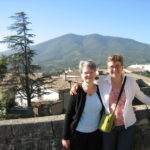 My mother loved through the created world. My first memories are of her hip pressed into my thigh as she tucked me into bed at night, said our prayers, and sang “Swing Low, Sweet Chariot” and “In the Bleak Midwinter.” She loved me through the needlework rabbits jumping through a green field over my bed, through the smocking across the front of my dresses, and through the ridiculously intricate 1970s pant suits she sewed for my Barbie dolls. She loved us through her dried beef casseroles and split pea soup and dozens of crazy cakes baked both at home and in reflector ovens while camping. She loved home, being home, and making home. This was my mother’s art form, her ability to make a beautiful, comforting home base for family wherever we were—even in Japan for four years, even at a campsite.
She tended the community this way, too, humbly, by making and ironing the altar cloths at church, for example—which is why we always had white grape juice for communion. My mother was terribly worried about what other people thought, and at times this prevented her from being comfortable outside of family circles and a perfectionism that complicated the expression of her love with social expectations. When I came out bisexual to my parents in my mid-twenties, my mother experienced the anguish of loving a child whose sexual identity wasn’t acceptable, whom her church treated as a second-class citizen. For a while she didn’t tell anyone. But once she did, she rode her righteous love into a level of national activism that went against every shy bone in her body. She poured her love for me and the church into thousands of rainbow stoles you can still find today all over the country, draped around Methodist necks. Every inch of that fabric passed through her hands. When the New York Annual Conference honored her work with Bishop’s Award, she was embarrassed. “The auditorium was packed with life-time activists. I don’t know why I got the award,” she told me.
My mother loved Christmas more than any other holiday. I never asked her why, but I’d guess she’d say because it gave her a chance to recreate the house or because she enjoyed the special decorations and music and Christmas cookie recipes. I like Christmas best, too, because of the amazing story of God becoming a human. It’s really a story about love infusing itself into the cells of all creation. Divinity isn’t out there; it’s in here, and always has been. Christmas just helps us remember this fact.
In recent years my mother began to believe that the stardust that makes up our molecules is inseparable from love, and that this itself is God. She was enormously relieved by this. A few weeks before she died, she said to me, “Now I don’t have to worry about socializing in heaven.” She believed her the essence of her being would be joined back to the essence of creation. In a way she knew this all along: Love felt is beautiful, but love expressed, love enacted, love made into something, is divine. This is how God is, and how God becomes.
As hard and awful as it is to be without my mom today, she’s already taught us how to proceed without her. We just need to put our love into the created world, because that’s where she is—in the altar cloth, in the plants all over her house, in the stoles all over the country, in my genes, and in the relationships she nurtured. Now that my mother is finally free of fear and released from all social expectations, now that she’s part of God’s ongoing force of love in the world, what can’t she create?
–Elizabeth Jarrett Andrew
*************************
Please join me for these upcoming events:
Fourth Fridays; 1:30-3:30 p.m.
Spiritual Memoir drop-in sessions
Wisdom Ways Center for Spirituality.
May 27: Perspective and Insight
June 24: Unearthing the Truth
June 19-23, 2016
The Inner Life of Stories: Writing as Deep Listening
The Christine Center
September 12-16, 2016
Alone Together writing retreat
Madeline Island School of the Arts

 Related StoriesOriginal ImmaturityHow To Retreat (with advice from a 7-year-old)Marty’s Gift: Better than Publication
April 19, 2016
Beyond Hope
 When I first heard that my mother’s ovarian cancer had not been removed by surgery as the doctors led us to believe but had spread throughout her abdomen, I did an emotional nosedive. I’d been through life-threatening cancer twice before with my partner and had just begun accompanying a dear friend on his journey with brain cancer. I knew how devastating treatment would be. I knew my mother would likely never be cancer-free again.
Immediately inside me an old battle revved up: Keep hope! screamed one voice; Be realistic! screamed the other. Hope buoys the spirits, motivates, and reminds us to stay open to possibility—all of which I wanted, for me and my mom. Reality, however, is real. Ovarian cancer spreads like glitter. My mom’s particular brand of cancer is platinum-resistant, meaning the traditional chemotherapies don’t work. But miracles happen, I told myself—the doctors don’t have the last word.
When I felt hopeful I had the sinking suspicion I was engaging in wishful thinking. When I was realistic I worried that my glum outlook was detrimental to my mother’s well-being. Hope tied me in knots.
As soon as I recognized the fight, I stopped. What was going on? I most wanted my mother to be well. I prayed for this, I wished for it, I hoped for it, and still do. Nonetheless, something felt wrong about setting my heart on hope.
Then I stumbled across this passage from Kathleen Dowling Singh’s extraordinary book, The Grace in Dying. “For the mental ego faced with a terminal prognosis, hope typically signifies one thing: the continuance of self. … Hope and fairness are sourced in the mental ego. … Hope is a clinging wish for something other than what is.” Exactly. I want my mom to continue. I want to continue as my mother’s daughter. I like the form and content and nature of this living relationship. I am severely attached to it. “When hope evaporates, we are left with here and now. Hope, a posture of the mental ego, is transformed into presence, a stance of Spirit. Healing, automatically and naturally, unfolds out of presence.”
Ah. Today I’m immensely grateful for Singh’s insight, that presence and not hope is the source of healing, because it’s freed me from any obligation to be hopeful. Instead my job is to be present—to my mother as she struggles with pain, to the various emotions that flood me an inconvenient times, to my hope and despair, to what is. This I can do, and with a peaceful heart.
–Elizabeth Jarrett Andrew
*********
Please join me for any or all of these upcoming events:
Fourth Fridays; 1:30-3:30 p.m.
Spiritual Memoir drop-in sessions
Wisdom Ways Center for Spirituality.
April 22: Describing the Indescribable
May 27: Perspective and Insight
June 19-23, 2016
The Inner Life of Stories: Writing as Deep Listening
The Christine Center
September 12-16, 2016
Alone Together writing retreat
Madeline Island School of the Arts
NOTE: MISA has extended the Red Barn Special until mid-May–get $100 off lodging.

 Related StoriesHow To Retreat (with advice from a 7-year-old)In DialogueWriting as Deep Listening
April 4, 2016
Writing as Deep Listening
 Jim was a thoughtful, retired pastor who came to me for writing support. Because of prolonged wheelchair use, a wound had appeared at his sacrum that proved difficult to heal and challenging to his faith. Jim wrote personal essays about the struggle while enduring multiple surgeries and long periods of immobility.
Then his project stalled. He had expected the wound to close and provide neat closure to his essays. When it didn’t, he couldn’t finish his essays.
I told Jim (rather crassly) that a physical healing would be a clichéd ending to his story. Besides, his essays weren’t about the wound so much as the questions the wound posed to his well-being. The wound didn’t need resolution for his writing to be complete, but his questions did. Or they at least needed discussion and movement. Maybe living with lack of closure was the resolution to his essays.
When he revisited the topic, Jim found that his wound forced him to be “open” in ways that strengthened his listening skills. It made him dependent on others’ care, keeping him humble. He railed against the limitations imposed by the wound, he sought medical solutions, and yet he also understood himself to be a wounded healer, working from a place of vulnerability. Jim wrote his way into acceptance—and, in the process, learned to love revision. His completed essays awed me, not because the writing was fabulous (it was clear and straightforward prose) but because it was true.
Writers have the potential to discover wisdom beyond what we currently embody. “Great novels are always a little more intelligent than their authors,” Milan Kundera wrote. Encountering this intelligence in our work stretches us, opens us.
Every story has a hidden life—a soul, if you will. How writers tend this soul significantly affects our work and our well-being. This tending is really active listening. It’s both willful, sprung from the self, and responsive, heeding that life-force beyond the story and its readership. “To be a writer,” Sarah Porter says, “means, perhaps, exactly this: surrendering the defined, expressible self to the wider possibilities of the page.” This is the same surrender the Christian mystics and Zen Buddhists describe—a releasing of the limited self in service of…nothing, everything. Mystery. The Other. “There comes a time in the composition of a work of fiction,” Alice McDermott writes, “when the writer must put aside all plans and intentions and preconceived notions of the work at hand and simply proceed, blindly, if you will, with the writing itself.” We know the most effective craft techniques and the rules of grammar; we have refined our skills; we can recognize quality, and we disregard all that to set our hearts on what really matters. This letting go is “the most difficult aspect of craft for a young writer to learn” and is the writer’s form of faith. “We must teach ourselves to walk on air against our better judgment,” according to Seamus Heaney.
In revision, we probe the many ways in which our stories are not our selves. They have their own integrity, their own identity. We can have broken, conflicted lives and still write honest, complete, unified memoir. We can create functioning fictional families while our own falls apart. Writing is redemptive. It grants us an experience of wholeness in an otherwise fractured world. “Poetry cannot say the unsayable. It builds something that holds the unsayable,” poet Marie Howe said. Our interaction with the container is real, with tangible results in our prose and psyches. –Elizabeth Jarrett Andrew
*********
Please join me at the Christine Center this summer to explore writing as a deep form of listening. We’ll have creative solitude, writing community, and the opportunity for one-on-one mentorship. June 19-23, 2016.
UPCOMING OPPORTUNITIES
Fourth Fridays; 1:30-3:30 p.m.
Spiritual Memoir drop-in sessions
Wisdom Ways Center for Spirituality.
April 22: Describing the Indescribable
May 27: Perspective and Insight
June 19-23, 2016
The Inner Life of Stories: Writing as Deep Listening
The Christine Center
September 12-16, 2016
Alone Together writing retreat
Madeline Island School of the Arts

 Related StoriesMessage from the Page: “Would you please pay attention?!”Walking On AirMarty’s Gift: Better than Publication
March 22, 2016
Original Immaturity
 The other night I dreamt that I had to pee but the toilet bowl was filled with colorful plastic toys. The image was perfect. I’d just spent a week managing the behavior of three rambunctious cousins, trying to get them to pick up and not exclude each other and eat with their forks and please-please-please give the adults some mental space. Even the bathroom, that last bastion of privacy, had been messed with. I could get no relief.
We were in New York so one afternoon we took the kids on the Circle Line around Manhattan. With the kids lobbying for hotdogs in the foreground and skyscrapers vying for airspace in the background—including the new multimillion-dollar high-rises towering over Central Park that are the outrageously and illicitly wealthy’s latest way to hide money—I couldn’t help wondering about humanity’s basic propensity to covet, and then follow greed into evil. So much of parenting is simply teaching the kids first to stop putting toys in the toilet, then to understand why, then to take responsibility for their actions. At one point, my father gave the cousins a here-is-the-legacy-I-want-to-pass-on lecture: “Be kind. That’s it. Just be kind.”
For years I’ve dismissed the idea of original sin. I don’t believe we’re born evil and think the notion itself is damaging. Matthew Fox taught me about original blessing, that our fundamental nature is instead holy, and this belief has proven fruitful. But daily I struggle with the conundrum of my own selfishness, my inclination to lose my temper with the kids and despair over the rise of authoritarianism in America and lust after other writers’ successes. So I’ve constructed the idea of original brokenness: We’re blessed but broken, and our journey through life is toward a wholeness that encompasses our cracks. We’re kinsugi pottery, our beauty brought forth when we seal the cracks with gold.
This last week, though, I began to see the human journey more plainly as growing up. We’re born with original immaturity. Kids throw toys in the toilet. Our task is to develop into our fullest, flourishing, interconnected Self, the seed of which exists from the start but can never flourish in the small, grasping, individualistic self. A moral life—a kind life—isn’t about being good. It’s about growing up. It’s about changing. It’s about making an effort. The difference between the kids and the Trumps of the world is that at least the kids are trying.
–Elizabeth Jarrett Andrew
*************************
 Interested in reading more reflections on faith? My first book, Swinging on the Garden Gate, is only $0.99 in ebook form. Enjoy!
UPCOMING OPPORTUNITIES
March 25, 1:30-3:30 p.m.: The Blessed Body
Spiritual Memoir drop-in sessions
Wisdom Ways Center for Spirituality.
June 19-23, 2016
The Inner Life of Stories: Writing as Deep Listening
The Christine Center
September 12-16, 2016
Alone Together writing retreat
Madeline Island School of the Arts

 Related StoriesHow To Retreat (with advice from a 7-year-old)In DialogueIn Praise of TransParency
March 1, 2016
Walking On Air
 When my partner Emily teaches a traditional circle dance to a group of newbies, they go through a predictable progression. First, they’re so uncomfortable they trip over their feet. They talk nervously, drawing attention away from their awkwardness. Sometimes they give up. But Emily’s a patient teacher and her dances are simple, ancient, and usually repetitive, so those who stick with it eventually fall into a pattern and begin enjoying themselves.
Then, if the dancer repeats these steps over weeks and months, he or she forgets the steps entirely and enters the dance. I’m not much of a dancer but even I have experienced my self-consciousness release into consciousness and then fall away entirely.
I’m interested in how this happens for writers, too. Seamus Heaney describes it as “walking on air”: “We must teach ourselves to walk on air against our better judgment.” Lately in my own writing practice I’ve experienced it as the art of forgetting. I’ve been writing long enough that I’ve gotten a pretty good grasp on the elements of craft; I’ve some skills under my belt. What if it’s time to forget all this and enter the story?
I’m reminded of a disastrous class I taught at the Loft Literary Center a few years ago. The course was an introduction to revision, and that evening’s lesson was on transitioning between reflection and narration. At first students moved easily between story and exposition; it’s something we humans naturally do when we tell each other stories. But when I called attention to the distinction between our character selves and narrator selves—when I showed them how they were transitioning between these voices and what effect it had on the reader—they got stymied. Self-consciousness made it impossible to write well. The class got disgruntled, and the evening ended with fifteen writers writing worse than when they arrived.
But this is our progression when learning an art, and (I suspect) when living life: First we’re unconscious, then we’re self-conscious, and then we’re aware of being self-conscious, which is truly agonizing. Only then can we come into consciousness and make conscious choices that shape our lives. My students needed to recognize that they were using a technique before they could choose to use this technique. Intention, not default, makes art. And intention makes life itself deliberate and artful.
But at some point even intention sinks down into muscle memory and the body takes over, moving in a dance far bigger than itself. At some point consciousness can fall away, if we let it. We can walk on air. I don’t know yet, but I’m curious about where that will take me and my writing. –Elizabeth Jarrett Andrew
**************************
Are you an emerging Twin Cities writer looking for community? Are you published, or do you have an established writing practice and a project well under way with the intent of publication? Consider attending Book Binders, a monthly salon discussing the writer’s purpose in the broader world. I’ll begin a new six-month series beginning in April. Contact me for more information.
UPCOMING OPPORTUNITIES
Fourth Fridays; 1:30-3:30 p.m.
Spiritual Memoir drop-in sessions
Wisdom Ways Center for Spirituality.
March 25: The Blessed Body
April 22: Describing the Indescribable
May 27: Perspective and Insight
June 19-23, 2016
The Inner Life of Stories: Writing as Deep Listening writing retreat
The Christine Center
September 12-16, 2016
Alone Together retreat for emerging writers
Madeline Island School of the Arts

 Related StoriesLove Matters Most: My Latest Writing CredoWriting and ForgivenessBroken & Beautiful: How the Light Gets In
February 16, 2016
How To Retreat (with advice from a 7-year-old)
 Retreats: I’m a pro. I’ve been on silent retreats, church retreats, centering prayer retreats, women’s retreats, led retreats, self-directed retreats. I’ve led more writing retreats than I can count. I worked in retreat ministry for three years, so I even know retreats from behind the scenes—the frustration beforehand as numbers fluctuate; the frantic food preparation; the retreatants who use kitchen dish towels to clean their ears; conflicts that fester and flare among the staff until dishes get smashed; the enormous effort behind the scenes to support a silent space. Jesus went up to a lonely place. Moses heard the still, small voice. We, too, can take time apart to support our outward journey with the inward journey, to balance our noisy, active lives with silence and stillness.
Or with whatever. Gwyn wanted pop music on the drive north. She arrived wearing bunny-print PJs, shed her coat, ran at the couch and took a flying leap. She recognized the spiritual toys—finger labyrinths, zen sand trays—and knew exactly what to do with them. Prayer cushions were for jumping on. Prayer bells were for ringing. The grand log lodge with its angled ceilings and sofas hidden behind bookshelves was for playing hide-and-seek. The piano was for playing. The circle of grown-ups at the breakfast table were for listening to her stories. Gwyn swiftly fell in love with retreat, or at least with her version, and I became a beginner all over again.
The gift of retreat is a singular focus: Building, meals, leaders, groups, and silence are all there to support your relationship to whatever you name as holy. On this retreat my singular focus was Gwyn, who’s been struggling with her grandmother’s illness and with my own distraction. Gwyn gets most of my attention most of the time anyhow, but rarely all of it. So we headed off to the woods together, spotted Orion between the dark tree branches, snuggled in the single bed, negotiated how many cookies was appropriate after lunch, colored a few dozen valentines, and had a huge fight because I wouldn’t let her bring a snowman home. In other words, we continued our ordinary ways. But she had me all to herself, and I had her, and a warmth surrounded us even in the midst of our power-struggle.
Our retreat was precious and fleeting like that ridiculous snowman, and she knew it. Once again I saw divinity in this humble, stumbling way—not by escaping my life but diving deeper into it, the way a seven-year-old does when a retreat center welcomes her with a lumpy couch. –Elizabeth Jarrett Andrew
************
UPCOMING OPPORTUNITIES WITH ELIZABETH
Fourth Fridays; 1:30-3:30 p.m.
Spiritual Memoir drop-in sessions
Wisdom Ways Center for Spirituality.
February 26: Epiphany
March 25: The Blessed Body
April 22: Describing the Indescribable
May 27: Perspective and Insight
February 27, 9:00-noon
The Inner Life of Stories: Writing as Deep Listening
Plymouth Congregational Church
June 19-23, 2016
The Inner Life of Stories: Writing as Deep Listening retreat
The Christine Center
September 12-16, 2016
Alone Together writing retreat
Madeline Island School of the Arts

 Related StoriesIn DialogueIn Praise of TransParencyBlind Faith
February 3, 2016
From Will to Inspiration: The Creative Spectrum
 Today I’m celebrating marvelous diversity in creative process. On one end of the spectrum, you’ve got Vladimir Nabokov, who claimed his characters were his galley slaves. Here the artist controls the medium and the content. You have an idea and, with great discipline and hard-earned skill, you execute it. On the other end of the spectrum, you get the novelists whose characters dance the tarantella or pick up a gun or cook tortellini of their own volition. The artist is simply a channel for material and craft. Creative energy works through you and your creation, surprising you in the process.
Then there’s the muddled middle between willful exertion and utter surrender which is where most artists reside. I love the dialectical nature of this realm, how we call out an idea in an inspired rush and then step back to listen, think, analyze, and respond. Next we sweat. Then we’re surprised. Then we crack the whip, fidget in our chairs, and despair at how hard the work is. Then we hear a still small voice. In the middle of the creative spectrum, the artist participates in a fantastic dialogue between his or her very human will and a mysterious, unidentifiable creative force. Call it The Muse, call it inspiration, call it God, call it the emergent collective conscience; this energy is an undeniable participant in every creative project. As are we.
I’m coming to appreciate how over time I skid up and down this spectrum. The poems I penned in junior high were all heavenly-inspired passion. Hannah, Delivered, my first novel, was 85% sweating blood. Most of the time I write somewhere in between, one draft a grueling effort that churns out sparkling prose and the next a magical flow in need of corrections. Both inspiration and willful exertion bring gifts and weaknesses; neither one is more worthy or more likely to produce art. That said, I’m convinced that an artist who inhabits an extreme on the spectrum at the stubborn exclusion of the other extreme is certain to stumble. The best art-making slides up and down the scale. The most meaningful art comes of dialogue between human and Spirit. And let me tell you—am I in love with this conversation! –Elizabeth Jarrett Andrew
**************************
Are you writing spiritual memoir and looking for a writing group in the Twin Cities? Wisdom Ways is starting three incubator writing groups in the coming weeks. Check it out!
If you’re new to my work, I invite you to try out Swinging on the Garden Gate, which is only $0.99 in ebook form.
UPCOMING OPPORTUNITIES WITH ELIZABETH
February 6, 9:00-noon
Writing the Sacred Journey: The Art & Practice of Spiritual Memoir
Wisdom Ways Center for Spirituality
February 13, 1:30-4:30 PM
The Reflective Voice in Creative Nonfiction
The Loft Literary Center
February 27, 9:00-noon
The Inner Life of Stories: Writing as Deep Listening
Plymouth Congregational Church
June 19-23, 2016
The Inner Life of Stories: Writing as Deep Listening retreat
The Christine Center
September 12-16, 2016
Alone Together writing retreat
Madeline Island School of the Arts

 Related StoriesMessage from the Page: “Would you please pay attention?!”Marty’s Gift: Better than PublicationLove Matters Most: My Latest Writing Credo
January 19, 2016
The Interior Hearth
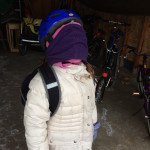 Highs in the negative digits. Ice so cold it squeaks when you skate on it. Gwyn pedaling the tagalong with a scarf completely covering her face. Minnesota January: Not for the fainthearted.
But it’s perfect for those (like myself) who love hearth and home, who in the glory days of summer dreamt about sorting photos in front of the fireplace on some dark winter night and who like nothing better than to creep down the cold stairs at 5:30 a.m., build a fire, drink tea, and read. My book of choice these days is Mirabai Starr’s translation of The Interior Castle, a fresh, feminist, contemplative take on Teresa of Avila’s classic. Starr has purged the text of its fustiness—most of Teresa’s self-denigration before the eyes of the Inquisition and all its outdated theological language. Teresa now has a podium to address the twenty-first century, and for that I’m grateful.
In winter the fireplace is the soul of our house, a red glow radiating warmth into our living spaces and drawing family and any guests into its radius. Firelight beats away darkness and its heat pushes the cold up into the far reaches of the bedrooms. It’s like Teresa’s image of the soul as an interior castle, at the center of which is a radiating sun. Teresa asks, Of all the magnificent choices God has, where do you imagine the Beloved would most like to reside? What would bring the Holy One the most delight?
“I myself can come up with nothing as magnificent as the beauty and amplitude of a soul,” she answers. God is drawn to your soul, and mine. The winter is bitter. God just wants to warm up.
Don’t we all? Well, actually not. “It must seem like I am talking nonsense. If this castle is the soul, you obviously cannot enter it, because it is inside of yourself. It would be absurd to suggest that someone go into a room she is already in! But remember, there are many different ways to “be” in a place.” Most of us hang outside admiring the castle walls, which is why Teresa was asked to write her book in the first place. We’re so attached to the external glitter, we can’t bring ourselves to enter.
But sometimes life gives us no choice. Loss and suffering and Minnesota winter are pretty strong invitations to enter. If you don’t have a fireplace, a candle will suffice. Stop, sit, and tend the internal flame. The Beloved is eager to join you. –Elizabeth Jarrett Andrew
********************************
In honor of my beloved fireplace, on this ridiculously cold morning I’m renaming my blog, “On Tending Art, Heart, and Hearth.” Enjoy!
Upcoming Opportunities
February 6, 2016, 9:00-noon
Writing the Sacred Journey: The Art & Practice of Spiritual Memoir
Wisdom Ways Center for Spirituality.
February 13, 2016, 1:30-4:30 PM
The Reflective Voice in Creative Nonfiction
The Loft Literary Center
February 27, 2016, 9:00-noon
The Inner Life of Stories: Writing as Deep Listening
Plymouth Congregational Church
June 19-23, 2016
The Inner Life of Stories: Writing as Deep Listening retreat
The Christine Center
September 12-16, 2016
Alone Together writing retreat
Madeline Island School of the Arts


