
Elizabeth Jarrett Andrew's Blog, page 22
September 7, 2011
Anna Karenina
Joy! ANNA has been the ideal summer reading. I've had months of complete immersion in Tolstoy's Moscow and St. Petersburg--an experience I almost never get with contemporary fiction. Which leads me to puzzle: What makes this book work?
Tolstoy follows very few of the "rules" of modern fiction. He takes us on prolonged digressions into rural politics and farming theory and social etiquette. He makes no effort to get every detail to bear weight, that is, keep the plot moving forward. And yet I'm willing to linger with him, perhaps because he's evoking an entire world and I'm both interested in that world and interested in his take on it.
I'm also flabbergasted--and delighted--by how very Christian this book is. Levin has become my favorite character of all time. I love his bumbling, practical-minded, logical perspective, his unwillingness to accept easy or acceptable answers, and his drive to find meaning behind his life. Tolstoy's Christianity is by no means in keeping with church doctrine, but it is very much in keeping with natural order and a deep need for human morals. I find it interesting that Levin's conversion becomes the book's climax, and stands in sharp contrast to Anna's pitiful end.
What heartens me most about ANNA KARENINA is seeing quite clearly that Tolstoy was working out a philosophy through the life of his characters--which is exactly what I like to do when I write. This may not be very hip or publishable these days. But it's certainly worthwhile.
View all my reviews
Tolstoy follows very few of the "rules" of modern fiction. He takes us on prolonged digressions into rural politics and farming theory and social etiquette. He makes no effort to get every detail to bear weight, that is, keep the plot moving forward. And yet I'm willing to linger with him, perhaps because he's evoking an entire world and I'm both interested in that world and interested in his take on it.
I'm also flabbergasted--and delighted--by how very Christian this book is. Levin has become my favorite character of all time. I love his bumbling, practical-minded, logical perspective, his unwillingness to accept easy or acceptable answers, and his drive to find meaning behind his life. Tolstoy's Christianity is by no means in keeping with church doctrine, but it is very much in keeping with natural order and a deep need for human morals. I find it interesting that Levin's conversion becomes the book's climax, and stands in sharp contrast to Anna's pitiful end.
What heartens me most about ANNA KARENINA is seeing quite clearly that Tolstoy was working out a philosophy through the life of his characters--which is exactly what I like to do when I write. This may not be very hip or publishable these days. But it's certainly worthwhile.
View all my reviews


July 27, 2011
In the Beginning...Creativity by Gordon D. Kaufman
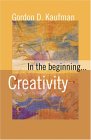 In the Beginning...Creativity by Gordon D. Kaufman
My rating: 3 of 5 stars
Kaufman posits God as the unfolding creative force behind creation and human creativity--a seemingly great idea. But I found his theology hugely disappointing, and only toward the end of the book, when he shares the evolution of his theological thinking, did I realize why. Despite devoting his life to theology, Kaufman has never had a personal experience of divinity (he writes off Christian mystical tradition with a single sentence), and instead sees "God" as a worthy symbol for steering human behavior. As such, we can shape that symbol to encourage a more just and loving relationship to one another and to the planet. So he replaces the "God" symbol with the fact of unfolding creativity.
What I find baffling about theologians like Kaufman is that they seem completely ignorant of the creative process--the human experience of engaging in a creative act, and how very relational this process can be. At the end of this book, I felt like Flannery O'Connor--if it's just a metaphor, to hell with it. Human beings can actively engage with a creative, loving, just source that is not simply a symbol but a lived reality. Once again, here's an example of a smart person dismissing the power of imagination. Just because humans have created "God" as an imaginative symbol does not mean that God does not exist. We co-create in relationship with this mystery.
View all my reviews
June 22, 2011
The Book of Embraces by Eduardo Galiano
A remarkable book for its structure and social commentary. Made up entirely of short anecdotes, THE BOOK OF EMBRACES is unified by voice (curmudgeonly, observant, funny) and by a sweeping critique of colonial culture, pop culture, dictatorships, and market-based economies. A thoughtful but quick read.
June 1, 2011
Deep Revision by Meredith Sue Willis
Meredith Sue Willis has a playful but realistic understanding of revision. I appreciate her holistic approach; revision happens throughout the entire writing process and throughout our lives. She believes (as do I) that a first grader revising makes decisions very similar to an adult, and so the lessons of revision apply regardless of age. This book is chock-full of exercises for the practical-minded.
May 25, 2011
Left to Tell, by Immaculee Ilibagiza
LEFT TO TELL is an important witness to the horrors of the Rwandan holocaust--a story not present enough in American awareness. While I found the theology and prose simplistic, I appreciated Ilibagiza's resilient and lively voice. Her story is definitely a testimony to the power of faith to sustain us through horrific times.
March 31, 2011
Let's Take the Long Way Home, Gail Caldwell
A gorgeous memoir. Rarely do you see friendship taken seriously as a subject worthy of literary exploration. This book is also a great example of how you don't need a dramatic experience to make a good story. Caldwell begins by spilling the beans: "It's an old, old story: I had a friend and we shared everything, and then she died and so we shared that, too." We don't turn the pages to find out what happened; we turn the pages to experience fully what happened, and to learn what Caldwell makes of it. This memoir is also a beautiful example of the power of the reflective voice to carry a narrative. "Maybe this is the point: to embrace the core sadness of life without toppling headlong into it, or assuming it will define your days. The real trick is to let life, with all its ordinary missteps and regrets, be consistently more mysterious and alluring than its end."


