
Elizabeth Jarrett Andrew's Blog, page 17
September 2, 2015
Writing and Forgiveness
 A book composed in her head but not yet written, Ann Patchett says, is like an oversized butterfly of indescribable beauty, “so wild and loyal in its nature that my love for this book, and my faith in it as I track its lazy flight, is the single perfect joy in my life.” Ah, yes. Isn’t this the tremendous joy of an idea? Who doesn’t love the pleasurable secrecy an unformed creation?
And then we begin.
“When putting it off has actually become more painful than doing it,” Patchett writes, “I reach up and pluck the butterfly from the air. I take it from the region of my head and I press it down against my desk, and there, with my own hand, I kill it. It’s not that I want to kill it, but it’s the only way I can get something that is so three-dimensional onto the flat page. Just to make sure the job is done I stick it into place with a pin. Imagine running over a butterfly with an SUV. Everything that was beautiful about this living thing—all the color, the light and movement—is gone. What I’m left with is the dry husk of my friend, the broken body chipped, dismantled, and poorly reassembled. Dead. That’s my book.”
Ugh. When Patchett tells this to audiences, they laugh. They assume she’s joking. But anyone who writes regularly knows she’s deadly honest. This ability to withstand the disappointment, humility, and grief at the inevitable brokenness of our writing is what distinguishes real writers from those who simply want to write. “Only a few of us are going to be willing to break our own hearts by trading in the living beauty of imagination for the stark disappointment of words.” Margaret Atwood calls this reverse incarnation, the flesh made word. The endeavor is doomed from the start. Life on the page will always pale in comparison to vibrant life in the flesh.
The key to enduring, as an artist and as a human, is learning how to “weather the death” of that butterfly and forgive ourselves for it. “I can’t write the book I want to write, but I can and will write the book I am capable of writing. Again and again throughout the course of my life I will forgive myself.” We are always less intelligent or creative or precise or wise than we want to be, and doubly so on the page. I’m grateful for Ann Patchett’s insight, that forgiving ourselves and proceeding regardless is a fundamental part of living fully, and writing well. –Elizabeth Jarrett Andrew
Quotes are from Ann Patchett’s “The Getaway Car,” in This is the Story of a Happy Marriage, HarperCollins, NY 2013.
************************
Here’s my most recent issue of Pen Feathers, my occasional newsletter: Revision—A Laughing Matter.
All you writers of spiritual memoir out there: Here’s a great chance to get an introduction to the genre and connect with other writers. I’m offering a Saturday workshop, Writing the Sacred Journey: The Art & Practice of Spiritual Memoir, at Wisdom Ways Center for Spirituality on September 26, 9 a.m.-2 p.m. We’ll follow this with monthly drop-in classes for anyone who wants to deepen their work with memoir–October 16, November 20, December 18, 1:30-3:30 p.m.
Join me for a romp through the joys of revision! In the morning of October 31, I’m teaching a Revision Revolution workshop at The Loft Literary Center.


 Related StoriesBroken & Beautiful: How the Light Gets InIn DialogueMoral writing? Uncool, but bring it on!


August 13, 2015
Rampant Generosity
 In a few weeks a team of landscapers will tear through our yard to grade the soil and build retaining walls and rain gardens. In anticipation we’re tearing out fences, moving bushes, hauling rocks, and creating general muddy chaos. Plants everywhere need to move. So I took advantage of that community-building tool of modern technology—the neighborhood list-serve—and posted our excess: picket fencing, hostas galore, lilies of the valley, and those native plants that think they own the place, all for the taking.
Which is why all week a series of gardeners from the neighborhood have shown up with buckets. One woman wanted rhubarb; her partner wanted the fence (which I hadn’t yet finished digging up) for making into planters and benches. The posts were either extended four feet under ground or sunk in concrete. My immediate neighbor, who’s a work machine, had mysteriously and generously managed to take out the stretch of fencing along his property in under two hours while we were away. I’d already given two hours to a single post and hadn’t budged it. The women stuck around, helping me dig and haul, until the remaining fencing was loaded in their van. “When you’re ready to plant,” they said, “come check out our rain garden. We’ll give you whatever flowers you want.”
Most of the plants in our garden have a lineage of friendship or neighborliness. The ever-bearing strawberries were a housewarming gift when I bought my first home twenty years ago. The rock garden’s bath pinks, iris, and coral bells came from the garden of a woman I freelanced for when I first began self-employment. The raspberries came from across the alley. The plum tree was a gift from my daughter’s grandmother. We received this generosity and continue to enjoy the plants’ gifts in bounty and beauty and their need, ultimately, to be thinned. The rampant generosity of hearty plants invites the attentive gardener into even more generosity in an exponential increase of wealth. This is the earth’s scripture, the wisdom that’s ripe for the taking. By tending growing things we participate in this bigger evolving story that links us to memory and friendship and community—as I see it, the abundant body of God.
Hostas, anyone? –Elizabeth Jarrett Andrew
***********
Two or three times a year I put out a newsletter with all my upcoming classes and events, publications from students and clients, and a few reflections. Here’s the link to the latest issue of PenFeathers. If you’re interested, you can subscribe by clicking the link at the bottom of that page.

 Related StoriesRampant GenerosityIn DialogueBlind Faith
August 6, 2015
Why I Write, Part 2: Because it’s worthwhile.
Yesterday I was yet again talking with an emerging writer about her first steps into publishing and ran up against that all-too-common resistance to self-publishing: “I just want to know that someone other than myself thinks this story is worthwhile,” she told me.
There are many arguments for and against self-publishing, none of which I want to tackle here. Instead I’m interested in her (and our) bare desire to receive external affirmation for our creative work. We seek it from agents, from publishers, from an audience. This is not necessarily bad. We’re human. We want to know we matter. We want to do good work. We want to make a difference.
But it’s so easy to get trapped! The measures the world uses for worth (the name of your agent, the size of your publishing house, reviews, sales numbers) don’t give an accurate reading of true value. “I don’t trust the publishing world to determine the worth of your book,” I told my student.
“Ah,” she said. She’s Sufi and a long-time meditater. I watched her return to center.
What’s the real value of our writing? Others may answer this differently, but here is my take: Does the act of writing help you come more alive? Then it’s valuable. Does your writing help even one other reader come more alive? Then it’s valuable. Do you believe your writing contributes even incrementally to the wellbeing of the world by adding beauty or wisdom or healing or good fun or radical justice, even if you have no proof, even if you have no readers? Then it’s valuable.
Yesterday a writer I respect immensely told me she uses Writing the Sacred Journey as part of her theology classes for women in prison, and that they’ve done amazing work as a result. “Your book is on ten shelves in a prison in Georgia,” she told me. I was so grateful! Ten women are using my book as a door into their own stories. That, I believe, is a trustworthy measure of worth.
Of course a publisher accepted and printed my book and made it available for this professor to buy. While I’m grateful to Skinner House for investing in my work this way, I’m increasingly unwilling to stake my worth or the worth of my writing on the judgments of any organization that needs a margin of profit or must kowtow to the whims of the consumer. It’s not healthy for me, for my writing, for my students or their writing, for literature itself or for our culture at large. I can appreciate my publisher, but I must remember to locate worthiness in the most worthy locations.
Writers can follow any number of paths into or away from publication. Just as there is no one path to God, there is no one way to bring your work to fruition. Thomas Merton wrote, “Be anything you like, be madmen, drunks, and bastards of every shape and form, but at all costs avoid one thing: success . . . If you are too obsessed with success, you will forget to live. If you have learned only how to be a success, your life has probably been wasted.” We writers must not forget to live. –Elizabeth Jarrett Andrew
**********************************************
After a lovely hiatus from teaching over the summer, I’m eager to dive back into school! I hope you can join me at one of these upcoming events.
September 26, 9 a.m.-2 p.m.: Writing the Sacred Journey: The Art & Practice of Spiritual Memoir, Wisdom Ways Center for Spirituality.
October 16, November 20, December 18, 1:30-3:30 p.m.: Spiritual Memoir drop-in classes.
October 31, 9-12 a.m.: Revision Revolution workshop, The Loft Literary Center.
SAVE THE DATES:
June 26-29, 2016: The Inner Life of Stories: Writing as Deep Listening retreat at The Christine Center.
September 12-16, 2016: Alone Together writing retreat at the Madeline Island School of the Arts.
I’ll also be leading a retreat called Writing about Transformation, Transforming our Writing for the first time at Tanque Verde, a ranch outside of Phoenix, in early February. If you’d like more information about this or would just like to stay posted with my offerings, please sign up for my infrequent newsletter at the bottom right corner of www.elizabethjarrettandrew.com.

 Related StoriesWhy I Write, Part 2: Because it’s worthwhile.Why I Write, Part 1: Nikki KirbyWriting and Forgiveness
July 20, 2015
Wearing God
Christians need testimonials about emptiness; it’s a valid dimension of the life of faith.
Winner describes the barren breadth of what St. John of the Cross called a “dark night” and she calls “the middle” of her faith journey. Christians need testimonials about emptiness; it’s a valid dimension of the life of faith. Otherwise the world assumes we’re wearing blinders; otherwise we don’t confront the beloved paradoxical reality that is our Source.
Winner’s latest book, Wearing God: Clothing, Laughter, Fire, and Other Overlooked Ways of Meeting God is the logical next step. “God’s utter difference from the world is too much to describe, and God’s nearest intimacy with the world is too near to name,” Winner writes. In Wearing God Winner plunges into this intimacy, attempting to describe the indescribable by means of the Bible’s under-explored images of God.
Read more: http://collegevilleinstitute.org/bear...

July 15, 2015
God of Nothing
 During a Sunday service my pastor asked the congregation for our images of God. What people shared—God as the sound of children laughing; God as prairie; God as executive assistant—filled me with hope. Holiness is abundant, emerging in and through creation, and can be encountered in the smallest of ordinary moments. I too have known God as the breadth of the Hudson River, its salt water pushing against the fresh water flow, its expanse my wide margin, its current my clear direction. I’ve known God in the indiscriminate attraction of my bisexual body. I’ve experienced God in the joy of a climate march and a Black Lives Matter protest and in a community’s story-telling at a beloved member’s funeral.
But had my pastor confronted me yesterday, had she held the microphone to my face and waited for me to muster up my courage, I would have said God is emptiness. I kneel these days before the God of nothing. It’s not that the rest isn’t also true—I still know God when Gwyn clomps down the stairs first thing in the morning and falls into my warm lap—but my primary experience of divinity is its absence, an emptiness at the margins of consciousness, the silence I can’t comprehend and can barely hear, the unknown place where I disappear and vast nothingness takes my place.
Had she waited, I probably couldn’t have said anything—for lack of words more than courage. I barely know how to talk about this. I’m reminded of those vase faces we drew in art class where you saw a vase in the positive space and two faces gazing at each other in the negative. It’s all holy. But these days I see but can’t sense the vase. Instead I’m out in the black margins, gazing across white space to a black and fathomless face, and stammering when I try to describe it.
Or maybe I would have told my pastor that my God is a dark cavern, as vast as our universe and as dark and empty as space, so big that what God isn’t is also what God is, so unknowable that what we can’t say is more God than what we can. I feel like I’ve lost my faith when really I’m falling into it, backward and blind. Nothing will catch me, thank God. –Elizabeth Jarrett Andrew
****************************************************
In May I had the honor of participating in the Twin Cities Listen To Your Mother show (which I highly recommend trying out for). For those who missed the reading and are interested in hearing how I became one of my daughter’s three mothers, here’s the video.
This fall I’ll be launching a new experiment at Wisdom Ways Center for Spirituality–a Saturday introduction to spiritual memoir followed by monthly writing sessions. For those of you interested in exploring the Spirit’s movement through your life, this will provide inspiration and ongoing support.
And if you want to dip into the revolutionary, revelatory work of revision, join me at The Loft on October 31 for Revision Revolution!

 Related StoriesGod of NothingBlind FaithIn Praise of TransParency
July 1, 2015
Why I Write, Part 1: Nikki Kirby
 Ninety-eight percent of the time I take it on faith that my writing matters. But every once in a great while I get hard evidence. Like this photograph a reader sent me of Writing the Sacred Journey; her copy was so marked up and falling apart she had to buy a new one. My words have been good company, and I find this deeply gratifying.
Shortly after Swinging on the Garden Gate was published, I participated in a panel discussion about sexuality and faith at a college and was heading out the door when a young woman approached me, holding out a copy of my book for me to sign. At first I was aghast—had she intentionally mutilated it?! The cover was curled, pages were dog-earred, pink highlighter marred chunks of text and comments in ballpoint filled the margins. That memoir was used.
You have to understand that as excited as I was to have Skinner House print Swinging, I was also disappointed, as many writers are, that the publication of my first book was not all I’d hoped for. For eight years I’d written with such longing, such fierce drive, and I’d assumed my ache would be satisfied by launching to the story into the public. In the little niche Swinging filled (readers looking to reconcile faith with sexual identity), it did very well. I spoke on a circuit of GLBT advocacy groups and to this day Swinging is the best book out there exploring both Christianity and bisexuality. But the first print run was 750 copies. No major publication reviewed it. At the time of that panel discussion, my small creative endeavor seemed lost in the tidal wave of books. And none of this assuaged my ache. What exactly had I wanted?
The young woman introduced herself as Nikki; she was a sophomore, raised Catholic, and my story had given her the courage to come out lesbian. She thanked me profusely, and I felt honored. But it was the state of her book that really moved me. She’d lived inside my story. She’d chewed it and digested it. To this one woman, my memoir mattered.
A few weeks later she turned up at the United Methodist Church where I’m a member. Only slightly embarrassed, she admitted she’d sleuthed me out. So I got to know Nikki well, and eventually learned that Swinging had awakened in her a call to ministry. She joined the United Methodist Church, a radical step for a born-and-bred Catholic; she attended seminary; she integrated her sexual identity and life of faith and lived both openly.
Stories weave themselves into the fabric of our lives and irrevocably change us. That my story did this for Nikki seems a miracle, or at least an act of grace. Perhaps the miracle is that I actually got to know Nikki and watch her build her own amazing story with my words in the margins. She flourished in seminary. She loved her pastoral internship. Then, at age 25, Nikki died suddenly from a rare infection from dental work that spread to her heart. I can’t stand that she’s not serving some hip congregation in Minneapolis today. She had been bouncy, big-hearted, and smart, and all that potential ended with her death.
When I think of Nikki now, I’m awed by what her too-short life gave me—this conviction that my stories, that all our stories, can heal and transform. They can matter, to real people, in important ways. Nikki satisfied my ache. If my faith in writing were to take on a body, it would be Nikki in high-top sneakers. I don’t write for her, I write with her, our stories weaving in and out of one another. Someday I’ll ask her for her autograph.
***************************************************
Thanks to everyone for helping me celebrate the 15th anniversary of Swinging on the Garden Gate’s publication. Over 6000 free copies were downloaded! I’ve decided to keep the price low from here on out–only $.99!–because it’s important to me that this story be affordable to readers.
Happy summer, all!
Elizabeth Jarrett Andrew

 Related StoriesWhy I Write, Part 1: Nikki KirbyWhy I Write, Part 2: Because it’s worthwhile.Writing and Forgiveness
June 22, 2015
Blind Faith
I can’t even write the words “blind faith” without my skin crawling. Despite forty-six years of attending church and more than half that time intentionally engaged in spiritual practices, enough of me is rational, academic, and post-modern that I’m unwilling to “blindly” do anything. Isn’t blind faith the purview of global warming deniers who believe humans were given dominion over the earth and the earth’s preservation is in God’s hands? Isn’t blind faith the stuff which sends terrorists careening airplanes into high rises?
That said, I confess to dabbling. For years I was single and lonely, and tried to have blind faith that God would find me a partner. Finally I got my butt out the door and started dating. My blind faith was really laziness—I wanted God to do my work for me. Or my blind faith was a misguided assumption that just because I wanted love I would get it.
With hindsight—that is, with the seeing faith I have now—I’m grateful for those aching years because they motivated me to take responsibility for my desire. I recognize faith in the stirring of my heart, in my own agency, and in the remarkable way I was called out of hiding. I no longer feel like a victim of circumstance. Instead, I participate in accepting what I’m given, claiming my desire, shaping my life and being shaped by my life. As Jungian analyst Ann Belford Ulanov wrote, “Aliveness springs from our making something of what we experience and receiving what experience makes of us.”
But this too is faith. The call and response between human and mystery, between body and spirit, between who I seem to be and who I essentially am is a stunning dialogue. Faith is an interchange between receptivity and activity, and I don’t understand it one bit. I’ve been reading a lot of St. John of the Cross lately, and for St. John faith is dark, an abyss, a road of nakedness, not contrary to reason but transcending it. Blind faith is the embrace of mystery within our reason, our will, and our relationships. Even when we exercise all our human faculties, there exists this life, this aliveness, which springs from our making and receiving. It is beyond our comprehension. Faith is the only way to approach it, and faith, St. John writes, is blind.
Here I sit, squirming. And yet, and yet…
**************************************************
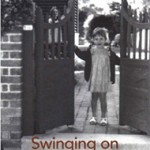 Swinging on the Garden Gate is 15 years old! To celebrate I’m offering the ebook for FREE through the end of June. Enjoy!
Please join me at the Queer Voices Pride reading, this Wednesday at 7 p.m. at the Minneapolis Central Public library.

 Related StoriesBlind FaithIn DialogueGod of Nothing
June 8, 2015
Hierarchy & Division in the Writing World
Recently I asked a writer and agent whether I should attend an upcoming pitch conference to pitch my revision book. His reaction surprised me: He compared current trends in publishing to the increasing disparity of wealth in our country, the separation between the “haves” and the “have nots,” the elevation of celebrities and specialists and the successful above most ordinary folk… To move from peon status to what our culture views as success, he said, you have to get on your knees and beg. He sees pitch conferences as an opportunity to beg.
While I don’t entirely agree (I pitched my book at AWP and got an agent at Bloomsbury to look at my proposal; was that begging?), I’ve been mulling over his analogy ever since. Yes, the 1% of authors earn a disproportional amount of the pot of money that goes to writers and receive the majority of media attention. Yes, the metaphorical 1% of publishing houses (the “Big Five”—Hatchett, Harper Collins, Penguin Random House, MacMillan, and Simon & Schuster) own a disproportional part of the market. Ingram and Baker & Taylor dominate distribution. And we all know about Amazon’s monopoly. On the sales curve, a tiny minority of authors sell the majority of books while most of us reside on the “long red tail” of small sales.
This is our cultural reality. How does it affect our thinking? Our art-making? Our willingness to publish? I’m quite certain we’ve all participated in this “have” and “have-not” thinking. It happens when literary writers look down their noses at the genre writers, when the stranger you’ve just told you’re a writer asks, “Have you published?”, when the paper book is deemed more worthy than the ebook, when writing for print publication is more valid than web journals, when the poets dismiss prose as worldly, when sacred texts are considered separate from secular texts, when any writing (sacred or secular) gets canonized… I remember one writer friend of mine dismissing her sister-in-law as “not really a writer” because she wrote Chicken Soup of the Soul pieces. I couldn’t help but wonder how her distinctions between “real” writers and others affected her own confidence.
These prejudices infect the best of us. When I found myself waiting outside the auditorium at the Key West Literary Seminar beside Marilynne Robinson, the author I admire more than any other living today, I was too tongue-tied even to say hello. Respecting authors is fine; elevating a writer like that, to the detriment of my own accomplishments, is a form of psychological transference. It deprives her of her humanity and me of my agency.
The literary world isn’t served well by our super-star culture. Publishers throw money at certain books to guarantee their stardom. Readers get a thrill from reading the books of famous people rather than from reading good stories. And writers must labor at building platforms rather than honing our craft.
How then can we crow-bar ourselves out of hierarchical thinking into a place of greater freedom? How can we write and publish in this climate and stay healthy? How can we open our hearts to writers of all stripes and still strive for the highest quality in our own work?
One of the things I’ve always loved about The Loft Literary Center is that it’s a place “where writers learn from other writers.” In the Loft classroom the playing field is even, and this egalitarianism has been one of the best gifts I’ve received as a writer. Now I hope this value saturates all my work with writers. A writer is someone who writes. Let’s celebrate our great diversity!
******************
Upcoming opportunities:
June 24, 7 p.m.: Queer Voices Pride Reading, Minneapolis Central Library.
September 26: Introduction to Spiritual Memoir, Wisdom Ways Center for Spirituality.
October 31, 9-12 a.m.: Revision Revolution workshop, The Loft Literary Center.
SAVE THE DATE: September 12-16, 2016: Revision retreat at the Madeline Island School of the Arts.
 Related StoriesHierarchy & Division in the Writing WorldWhy I Write, Part 1: Nikki KirbyWhy I Write, Part 2: Because it’s worthwhile.
May 29, 2015
In Praise of TransParency
Gwyn’s frolicking in the neighborhood splash pad with a kindergarten buddy and a new friend, all three wearing pigtails and an obnoxious amount of pink. I sit on the bench with their mothers chatting about teachers which for some reason requires my offhand explanation, “Gwyn has two moms.” My new acquaintance nods. “Chrissy is transgender,” she shares, nodding toward her five-year-old who is now being towed around on a noodle. The conversation careens forward.
What?!
Later, we’ve patted the girls dry and they’re out piling playground sand over their legs. We mothers occupy yet another bench. Because I’ve never known an out transgendered preschooler, I ask, “What’s Chrissy’s story?” And then this extraordinary mother tells me how her little boy always loved girlish things, how all the ECFE mothers wondered about his identity, and then one day when he was four he climbed into her lap and asked, “Mommy, why did God make a mistake?”
God didn’t make a mistake, Chrissy’s mother insisted. The next day she took him to Target to buy a new set of clothes. Chrissy danced through the racks announcing to strangers, “I get to buy dresses! I get to wear skirts!” Chrissy goes to kindergarten next year and already her mother has done a presentation on gender inclusivity for the elementary faculty. Chrissy will enter school as a girl.
I am awed, humbled, and suddenly, fiercely, in love with this mother-daughter pair—because this child knows herself, because her mother listens to her and accepts her, because they’re both flexible enough to revise their ideas about their identities, because they’re fearlessly honest as they enter the ever-widening circles of childhood… I love this mother’s transparency. I love the possibilities for Chrissy’s life in spite of the many hardships I’m sure she’ll endure. I love that Chrissy will know her mother’s love regardless of what else happens.
Who knows why our bodies are the way they are, fleshy and fit, broken and breaking out, male and female and the spectrum between? Who understands the indomitable nature of our souls? Creation unfurls immeasurable variety, and all of it can be transparent to this unexpected, revising love.
–Elizabeth Jarrett Andrew
*****************
A friend of mine recommended this amazing blog, Transparenthood, in case you’d like to learn more.
Just in case anyone wants to sign up at the eleventh hour, there are still two spaces left in my retreat from June 15-19, 2015: Alone Together: Write That Book at the Madeline Island School of the Arts.
And if you’d like to explore revision within your writing, pencil in September 12-16, 2016, for a retreat at the Madeline Island School of the Arts. More to come!
 Related StoriesIn Praise of TransParencyGod of NothingBlind Faith
May 11, 2015
HANNAH, DELIVERED receives IPPY Award
http://www.independentpublisher.com/a...


