Rosa Say's Blog: Managing with Aloha, page 28
September 20, 2012
The Bull in Your China Shop
One of the things you quickly learn as a workplace culture coach, is that there can be significant differences between what your point-of-contact wants (i.e. the person calling or hiring you) and what everyone else in the organization wants. You learn to assess both, best you can, and strike for that happiest meeting ground between the two as your coaching sweet spot.
Thus, the question I’ve learned to ask is, “What is your team ready for?” It goes a bit deeper than asking, “Will we get buy-in for what we plan?” and frankly, it saves a lot of misdirected time and energy: Why plan a training program that misses the mark, and will potentially upset people?
When you think about a proposal for change (and that’s what most training is), thinking about it in terms of workplace readiness will bring cause-and-effect to mind: What must happen first, so the end result you desire will soon follow?
Readiness and Acceptance Go Hand-in-Hand
A workplace is like that proverbial china shop, and neither of us, change agent or coach, want to be the charging bull that wreaks havoc for no productive reason.
In another scenario, the bull is your people — when they feel they’ve been cornered by impending change that scares or bewilders them.
This is not just a question we face in new training: All managers are change agents (or they should be), and when change is on the horizon, “What is my team ready for?” becomes a daily question.
To return to the concept of buy-in for a moment, readiness and acceptance go toward change hand-in-hand: They are partners, where one checks that the other is okay. The best kind of acceptance is when eagerness and enthusiasm kicks in; the comprehension, obedience, and compliance of “Okay, I’ll try it” aren’t enough for the readiness of true buy-in to happen.
Is the void you’ll fill one of Participation, or one of Direction?
That said, workplaces aren’t entirely democratic places, are they. And for the record, I don’t think they should be: Democracy has its place, and so does leadership. The clarity of value-mapping is a must, and strong, visionary directional leadership is essential in the overall confidence of a healthy culture. To state it more succinctly, there are times we WANT our leaders to lead and direct us, and not be wimpy about it.
So the question for the Alaka‘i Manager becomes this one: “When can we charge ahead full throttle, for this is such a fabulous idea!” And conversely, “When must I first work to help my team get ready? What do we need in our Circle of Comfort and our places of greatest potential?” You’ll often be looking to see where more participation is needed in step-by-step decision-making: People march best to the sound of their own drum. (Do you recall the story of Ferdinand and his flowers?)
If you’re getting push back, whatever your change initiative might be, slow down to ask yourself these questions of readiness, and those of participation versus direction. Harness the bull and give it some sweet clover to eat: Going forward is always better with the right nourishment to sustain you, even for bulls.

Archive Aloha with related reading
Here are a few articles written to help managers cultivate that Circle of Comfort I refer to:
Next-stepping and other Verbs
Managing: Be a Big Fan of the Small Win
All Conversations Are Not Created Equal
Managing: Let’s talk about the Basics
The Acid Test of a Healthy Workplace Culture




September 18, 2012
The Workplace Mixology of ‘Ohana
Think back to kindergarten, for it usually was one of the earliest lessons we had, in which art and science blended so pleasingly well. It was back when we felt at our most creative and free-spirited selves, not really knowing what was ahead of us, and too young to give our future much thought at all, yet this color lesson was one that made us so energetic, and so hopeful.
There were crayons, pots of poster paint, and those magic prisms that our teacher would hold up to the sunlight and dazzle us with. Remember?
The teacher mentioned black and white in these color lessons, but she (or he) fully understood our impatience with them; they were kinda boring. Those connective impressions were left to learn later in a different context, and in a different age.
For now, our three primary colors of red, blue, and yellow were all we wanted, all we needed. The primary colors could mix for secondary colors, and my goodness, we’d blend, blend again, and blend again. There was so much experimenting we could do, and we did it tirelessly.
Sometimes we overdid it, and we got the colors of mud, a subjective stopper if there ever was one! The muddiness wasn’t that ugly to us, because we remained fascinated by the way it happened, and all it did, really, was get us to stop one batch and start another one. We quickly learned to wash our hands first so our primary colors wouldn’t be tainted, and then the teacher showed us another trick:
“Go back to the mud before it dries, and dip into it,” she’d say. “It would be a shame to waste that lovely brown. Try putting a streak of it into your painting.”
Who knew? Finger painting would one day be Culture Building.
Similar to those bright and cheerful primary colors of infinite mixology, I think of three primary concepts within the value of ‘OHANA; family, community, and chosen form. That “chosen form” we talk about in the Managing with Aloha philosophy is what we call the ‘Ohana in Business (Key Concept #6), and I will honestly tell you that I take supreme delight in the workplace mixology it creates.
Workplace reinventions can be messy, sure. But just as it was in kindergarten, messy means art!
The workplace canvas of an ‘Ohana in Business is the biggest one possible, one that swaddles us heart, mind, body and soul; the canvas of our Aloha Spirit.
These are the subheadings of my Managing with Aloha chapter on ‘Ohana; when a business owner asks me to help his or her management team in culture building, or with a healthier reinvention of what they’ve now got, I’ll usually scroll through them for inspiration that flows from each phrase:
‘Ohana is family.
‘Ohana is form for the sharing of one’s life.
Acceptance in ‘Ohana is unconditional.
‘Ohana is all-inclusive.
The best human circle you can bring to business.
Work is personal: a story.
Bringing the customer into your ‘Ohana.
Bringing community into ‘Ohana.
Managers create their own ‘Ohana.
Who are those you choose to call ‘Ohana?
When we’re guided by ‘OHANA, we strive for the human circle of complete ALOHA. If you only model the conventional designs of the ‘family-run business’ you limit yourselves: It’s like starting with only one of those primary colors instead of all 3. Your art will flow when you go for the trio of family, community, and chosen form. It will be inspired by the designs of personal intention, passion, and purpose – another lovely trio!
The true magic of this is that prism effect of light shining through: ‘OHANA gives us a feeling of belonging in workplace culture. And that’s something we all need.
So mix your colors in freshly bright batches. Honor the browns of your storied history. Experiment on a big enough canvas so everyone can find their place on it. No lines of containment though: Be willing to get messy. You’ll be creating your ‘Ohana in Business.

Archive Aloha with related reading:
The ‘Ohana in Business is a key modeling concept in a Managing with Aloha culture: Learn more here: The 9 Key Concepts
A follow-up on the why of form and function is here: The 9 Key Concepts — Why these 9?
We are guided by our values, in this case, ‘OHANA: why?: Let’s Define Values
Just as color shines through a prism, you shine through a workplace which honors your Aloha Spirit, and celebrates your strengths: What is the Aloha Spirit? It’s you!
My final caution to you was, no lines on your canvas! There are no silos in a healthy ‘Ohana in Business: Tear Down Your Walls
For more reading paths, follow the article links which tracked back to each suggestion above (they appear after the comments), go to New Here? or click on the tags found in each post footer. For instance, on this post, clicking on “managing change” brings up this article: Find your Doubting Thomases
Key 6. THE ‘OHANA IN BUSINESS MODEL:The best form for your life CAN be the best form for your ‘Ohana in Business® as well, where the objectives of each will support the other — they need not be mutually exclusive. A business can be more than self-sustainable and profitable: It can thrive in perpetuity though key people will come and go. In Managing with Aloha we learn a values-based business model and organizational structure simultaneous to learning productivity practices which drive ROI (return on investment) and ROA (return on your attentions). There is art and science in business, and we love it all: Business modeling is never boring in an MWA culture, and we value financial literacy in the complete education of sustainable modeling.


September 15, 2012
When the Student is Ready, the Teacher will Appear
My title is an adage adapted from a quote that’s been attributed to Buddha and the tradition of Tibetan Buddhism: “When the disciple is ready, the master will appear.”
I prefer the original quote as tone and challenge for the workplace managed with ALOHA: It’s tone for a potential partnership which is powerful in its revelations of passionate desire, innate strength and emerging character. Beyond mere learning curiosity, and as powerful that curiosity may be, the student must have the desire of the disciple — a follower of a leader in a philosophy. The teacher must have the expertise of a master, or of a leader who desires that expertise. That master is intentional student himself, and now applies his progressively learned lessons to his (or her) daily HO‘OHANA.
Another wise adage advises, “Whatever it is you want to do, find the person who does it best. Then see if they will teach you.”
When we deliberately choose to work for someone, we choose them by reputation — by merit of their good example relevant to our world view of desired vocational possibility. We choose them for their leadership — we perceive forward movement in their work; they don’t stand still; they’re progressive and demonstrate dynamic momentum. And we choose them for their mastery — we recognize their strength and their presence as the results of comprehensive knowledge or skill, and it’s a demeanor of mastery we aspire to as well. So we ask ourselves, who better to be with, and learn from?
That, dear Alaka‘i Managers, is the expectation I ask you to assume everyone who works for you, and with you, has of you: The HO‘OHANA presence of a master, and the giving generosity of a teacher. When you are a manager, you are charged with developing your people, and supporting them in their work. To be “the person who does it best” yourself is not enough.
Assume that your people deliberately chose to work for you, even if they didn’t, for that assumption will become your expectation of yourself: You’ll elevate your efforts, and work toward being master and teacher for them.
From Managing with Aloha (Chapter 11 preamble):
‘Ike loa is the value of learning.
Seek knowledge, for new knowledge is the food for mind, heart and soul.
Learning inspires us, and with ‘Ike loa we constantly give birth to new creative possibilities.
‘Ike loa promotes learning in the ‘Ohana; we must incorporate the seeking of knowledge and wisdom into our business plan and into our daily practice.
‘Ike loa is to know well, and knowing others well enhances our relationships and broadens our prospects.
‘Ike loa. Pursue wisdom. Learn and know well.
‘IKE LOA (more here) is a value I ask Alaka‘i Managers to adopt whatever and wherever their workplace, so that together, we can all contribute to the omnipresence learning should attain. I believe that lifelong learning is essential in the life of ALOHA because it is spark to the PALENA ‘OLE fuse of unlimited human capacity:
Key 9. PALENA ‘OLE:Palena ‘ole is the Hawaiian concept of unlimited capacity. This is your exponential growth stage, and about seeing your bigger and better leadership dreams come to fruition. Think “Legacy” and “Abundance” and welcome the coaching of PONO into your life as the value it is. We create our abundance by honoring human capacity; physical, intellectual, emotional, and spiritual. When we seek inclusive, full engagement and optimal productivity, any scarcity will be banished. Growth is welcomed and change is never feared; enthusiasm flourishes. PALENA ‘OLE is an everyday attitude in an ‘Ohana in Business, assuming that growth and abundance is always present as an opportunity. Given voice, Palena ‘ole sounds like this: “Don’t limit yourself! Why settle for ‘either/or’ when we can go for the ‘and’ and be better?”
Read more: The 9 Key Concepts of Managing with Aloha
If you are a manager, and you are not teaching, you squander a magnificent opportunity. I would take it even further, and suggest that you are disrespecting the potential of your people, for I charge you with making their progressive learning possible as the culture-builder you’re supposed to be. They need your support in their present and future learning.
So I ask you, teacher and master, what is your current workplace curriculum?
Your answer should be immediate, it should be detailed with the mastery you now possess, and it should reek of your passion.
If you aren’t teaching, your people aren’t learning.
Well, I take that back. We humans just can’t help but learn; it’s how we’re wired to survive. If you aren’t teaching, your people just aren’t learning from you, so other teachers appear in their lives.
Is that what you want? Don’t leave it to random and unpredictable chance.
It may be that you recognize others who are better equipped to teach than you are, and you want to offer them as additional mentors: If so, be a connector, and host those arrangements between master and student. Support master as partner within your own curriculum, and encourage your students kukupa‘u. Know that their lessons-learned will be applied, as they should be, in your workplace culture.
As for the connection between disciple and teacher, where workplace philosophy is discussed within your culture’s Language of Intention (MWA Key 5), that relationship better be reserved for you, and you best make those conversations happen (See number 4 in this article: All Conversations Are Not Created Equal)
Be the Alaka‘i Manager you can be. I believe in you, and so will your people. Don’t let them down, for chances are, you can teach way more than you are, and way more than you think you can. So do.

Archive Aloha with Related Reading:
The philosophy of Managing with Aloha
Ethos of the MWA Student: Be true to your values
People Who Do Good Work and This, is what Ho‘ohana sounds like
The 9 Key Concepts of MWA: Why these 9?
Managing: Let’s talk about the Basics and “I’m a manager.”
For more reading paths, go to New Here? or click on the tags found in the footer.


September 12, 2012
Beauty in the Work: “Things Occur to You.”
During a car-ride conversation with my husband yesterday, we challenged each other to remember the meaning of a series of letters which had been quite significant in our work when we were both employed by The Ritz-Carlton Hotel Company over twenty years ago: M-R-B-I-V.
We both started our recall with a vivid picture in mind, for in our Hawai‘i corner of the RCHC world at the time, M-R-B-I-V had become this sketch-type drawing of this odd little man too, purposely black and white: He was “Mr. Biv” and a total quality management acronym created for us when The Ritz-Carlton Hotel Company applied in earnest for the Malcolm Baldrige National Quality Award for the first time. And boy, was he sketchy, for he personified what nobody wanted to find in their work, and in their work places: Mistakes, Rework, Breakdowns, Inefficiencies, and Variation.
A funny aside: While the other letters were easy to recall, with a short hangup on Inefficiencies as Inconsistencies, the ‘B’ was the one we struggled to remember — it became our breakdown as we both laughed at the memory of a particular manager we’d all then called Barry Biv. You can imagine why… it was sorta like this: Give Managers Their Chance to Excel. Barry wasn’t a very good juggler.
If you fail to keep him away, Mr. Biv doesn’t need much to move in, gain his foothold, and stay.
Mr. Biv came to mind for us after all these years because we are embroiled in a project riddled with more than its plausible share of mistakes, rework, breakdowns, inefficiencies and variation. It’s a project we were loathe to take on, a project where Mr. Biv and all his relatives have been squatting for far too long. We had procrastinated about getting as involved as we are now — procrastinating for years.
I keep telling myself it was meant to be. I’m in it for the deep and undeniable passion I have connected to the end result we desire, but working my way toward that still-elusive end has been frustrating and stressful in turns. There is no more procrastination as legal deadlines assert themselves, and dealing with this project is time-consuming and quite expensive. Thus I’m at a juncture where I’d decided: If I’m foiled at this turn, I’m out. Enough is enough.
Or so I thought.
It’s the kind of project where you constantly feel you take two steps back to make one step forward. But oh, those steps forward! Each one reveals more than the one before. The path widens, the light gets brighter, and you realize: Yes, I took those two, sometimes three steps backward, but this step forward is so much bigger than all of them combined; it’s huge!
That’s because the steps forward, no matter how small they’ll seem at first, are steps taken with the feelings of supreme victory in personal accomplishment. Personal, hands on, all-on-me accomplishment, where the light has brightened because it is finally coming from you!
For example, as one of those steps I authored a legal brief for the first time, a document referred to as Proposed Findings, Facts, and Conclusions of Law. They’re usually written by lawyers, by merit of expertise I certainly do not have: “You write the opinion [for judge and/or jury deliberation]. Stick to the facts in the record, recite the applicable law, analyze the factors, and rule in your client’s favor.” If you work hard to gain the elemental degree of expertise you will in fact need, and you write it well, there is a much greater chance that the final decision at hand will go in your favor, at least more than it otherwise would.
I have learned SO much in that process of authorship and gaining of ‘elemental expertise.’ So very much about the subject at hand, and surprisingly, about me and what I truly want to achieve. It’s been an episode of experiencing this quote first hand:
“The advice I like to give young artists, or really anybody who’ll listen to me, is not to wait around for inspiration. Inspiration is for amateurs; the rest of us just show up and get to work. If you wait around for the clouds to part and a bolt of lightning to strike you in the brain, you are not going to make an awful lot of work. All the best ideas come out of the process; they come out of the work itself. Things occur to you. If you’re sitting around trying to dream up a great art idea, you can sit there a long time before anything happens. But if you just get to work, something will occur to you and something else will occur to you and something else that you reject will push you in another direction. Inspiration is absolutely unnecessary and somehow deceptive. You feel like you need this great idea before you can get down to work, and I find that’s almost never the case.”
— Chuck Close
— Charles Thomas “Chuck” Close is an American painter and photographer who achieved fame as a photorealist through his massive-scale portraits.
So I write this particular posting to encourage you: Thrill to the work.
Find that beauty and that art and that accomplishment of self-reveal in your work, whatever your work might be. Dig into it, loosen whatever has compacted and gotten stagnant or stuck, and take stuff apart so it can be reexamined again. Take it one very good step at a time, and do good work. Find your joy in it. Take nothing for granted as you go treasure-hunting: The parts you can potentially like and enjoy may have been hidden from view.
Like me, you will probably discover that Mr. Biv can make several unwanted appearances, but getting rid of him can be supremely satisfying work, and you’ll widen your own path with bigger steps forward, especially when you loosen that hold Mr. Biv might have with value-mapping: Ethos: Be true to your Values.
My project continues, as does the work within it.
But that work? Oh, how it sustains me when I allow it to become part and parcel of my HO‘OHANA.
As Close said, “All the best ideas come out of the process; they come out of the work itself.” and indeed, “Things [will] occur to you.”

Key 2. THE WORTHWHILE WORK OF HO‘OHANA:
HO‘OHANA requires a personal approach. Work with passion, with purpose and intention, and with full joy while realizing your potential for growth and creativity. When you Ho‘ohana you are actively engaged in creating your future; you work on purpose, and make things happen. You create your best possible life and you forge your own destiny, for you have connected your wide-awake intentions to the work you have chosen to do, or to learn more about.
Read more: The 9 Key Concepts of Managing with Aloha


September 6, 2012
Give Managers their Chance to Excel
I received a phone call yesterday, from a business owner wanting my hiring recommendation; he knew his applicant had once worked for me. When I asked, “What are you looking for?” his response was long and detailed: “Well, besides the technical and tactical applications of our industry, she’ll need to handle the supervision and development of those who were once her peers, she’ll need to project and fulfill her own budget and do strategic planning, generating some fresh ideas in her department and correcting their existing challenges, she’ll…”
It began to sound like an entire business plan instead of a single managerial position, and I had to stop him. I could feel the heat rising within me, and couldn’t resist blurting out, “All that from a single person who will be new to departmental management? You are being completely unreasonable, likely to set her up for failure, no matter how great a candidate she is right now — and yes, I do feel she’s an exceptional candidate for you.”
Unfortunately, the lofty expectations this owner has of his managers seem to be fairly commonplace these days, a holdover attitude from recessionary downsizing and the slow recovery we’re in. Managers are getting stripped of their opportunities to excel, because their job descriptions and/or unwritten-but-very-real expectations are so unrealistic and unreasonable.
A manager who constantly juggles balls in the air, will never create a better ball. Her juggling performance will simply drone on — until the inevitable moment she simply stops of pure exhaustion, dropping each and every ball.
The coach in me couldn’t be stopped, and I took our conversation on a different track: “Let’s look at this in another way. She’s a wonderful person with the potential to be a fantastic manager for you. Are the job expectations reasonable enough, giving her the resources, space, time, and opportunities to succeed? What kind of support will she have, and will you be a good boss for her?”
If you’re a boss, please, reconsider the expectations you have of your managers. They cannot do everything, no manager can, and you must be reasonable. Ask yourself what it is you want them to do exceptionally well, setting them up for optimal success in getting that primary expectation accomplished in a stellar way. They can handle more than that one thing, but you must give them a momentum-builder, especially if you want an innovator, and not a juggler.
Be more empathetic: If you were in their shoes, would you want the job? Would you love the job, and relish it for the possibilities it represents?
If you were in their shoes (same degree of talent, resources, positional responsibility and accountability) would you succeed? Would you excel and be a star?

Key 4. THE ROLE OF THE MANAGER RECONSTRUCTED:Managers must own workplace engagement and be comfortable with facilitating change, creative innovation, and development of the human asset. The “reconstruction” we require in Managing with Aloha is so this expectation of the Alaka‘i Manager is both reasonable and possible, and so they can channel human energies as our most important resource, they themselves having the time, energy, and support needed in doing so. Convention may work against us, where historically, people have become managers for reasons other than the right one: Managing is their calling. A new role for managers must be explicitly valued by the entire organization as critically important to their better success: Managers can then have ‘personal bandwidth’ for assuming a newly reinvented role, one which delivers better results both personally and professionally, and in their stewardship of the workplace culture.
Site category for Key 4: The Role of the Manager
Read more: The 9 Key Concepts of Managing with Aloha


August 30, 2012
Ka lā hiki ola and the ‘Can do’ attitude of Ho‘ohiki
The first time I went out on the ocean with the Alaka‘i Nalu, I was in seat five of their first and oldest canoe, the seat where the steersman in seat six could best keep an eye on me. The canoe was named Ka lā hiki ola, the dawning of a new day.
The kaona (hidden meaning) I now hold in that day’s memory, was that she represented my hope in all we would do together as an ‘OHANA, one bonded by our ALOHA and MĀLAMA for each other. When I climbed into that canoe, I was making a deliberate choice as to what I was going to give my attentions to. It sent a strong message to my Alaka‘i Nalu too, for up until that moment they’d expected, and received, a degree of managerial detachment from me, separating my world view from theirs. It would be the day that separation ceased to be, and thus, the day my managing results significantly improved.
That day figured prominently in my own search for PONO, and it would indeed be a turning point in my relationship with the Alaka‘i Nalu: They didn’t believe I could understand them completely until I had been out on the ocean with them.
They’d been right.
—adapted from the Ka lā hiki ola Epilogue in Managing with Aloha
As I’ve written of before, I’m not one who believes the effective manager must be able to do each task those they supervise and direct must do. Our goal as managers isn’t equal ability, it’s complete awareness so we can understand exactly what it is we need to manage. I will never be an expert paddler or great swimmer, yet the Alaka‘i Nalu were much wiser than I in realizing I needed some of their “Can do” confidence in the canoe for myself most of all. It wouldn’t be the first time I’d discover I had much to learn from my employees, nor the last!
Within KA LĀ HIKI OLA (literally; the dawning of a new day) is a little word that is immensely powerful: Hiki.
Hiki means ‘Can do.’
Hiki implies both possibility for lā, the day at hand, and ability, the ability to ho‘o, and make something happen.
Therefore, what KA LĀ HIKI OLA alludes to, is that you have the ability to do what it takes to make your life (ola) happen in the way it delivers best possibility to you.
Values are what we lay claim to: We own up to them because we believe in them deeply.
Thus, to lay claim to KA LĀ HIKI OLA as a value, is to say you deeply believe you can do whatever it takes to improve your life, your work, your future.
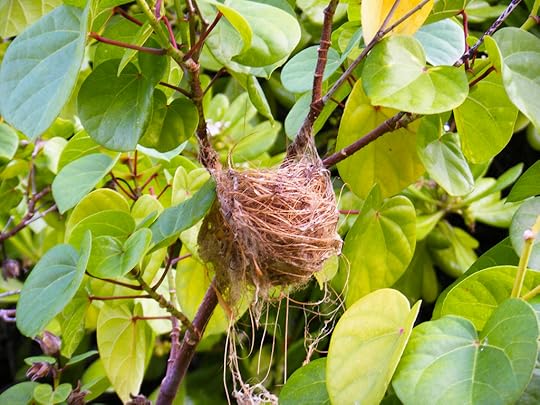
I am quite sure that the bird which labored to build this nest,
never for a moment stopped to worry that it could not be done.
Put ho‘o, to make something happen, together with hiki, your confident knowledge in your own ‘Can do’ ability to get it done. Always ‘can,’ and never ‘won’t.’
Ho‘ohiki then, becomes the promise you make to yourself.
The promises we make to ourselves are powerful, for we don’t accept our own excuses. We ‘fess up’ to ourselves more readily than we do to anyone else.
Now think about that “dawning of a new day” we know KA LĀ HIKI OLA to literally mean:
“New” is always so tantalizing, isn’t it. Though some cynics who wax nostalgic will seek to temper our enthusiasm (ignore them!) we know that “new” means a fresh energy of some kind, carrying with it the hope and promise of some difference, and perhaps, an extraordinary difference.
New is innovative, new is bold.
In our attentions, new is rarely lowly or unimportant.
New is novel, new is contemporary; new is never tired or old-fashioned.
New is modern and new-fangled. New is up-to-the-minute. New is original.
No matter our age, no matter our circumstance, new can always be within us.
We can be tantalizing.
We can be fresh.
We can be innovative.
We can be bold.
We can be novel.
We can be contemporary.
We can be modern, up-to-the-minute and original.
We can, and we will, when that’s what we choose with HO‘OHANA intention.
Next time you open your journal, consider writing a Ho‘ohiki Statement of Intention for the KA LĀ HIKI OLA you lay claim to; the “dawning of the new day” you have the ability to create for yourself.
You can do it as a personal exercise, or you can do it together with your team. I have an example for my company, Say Leadership Coaching, that you can look at as an example: Ho‘ohiki: We Promise. It is something I have always publicly published as a public commitment to make good on my own word. You will notice that it is written as a collection of “we will” statements for me and those I consider to be my ‘Ohana in Business (Key 6).
If you wish to, use the comment boxes here to make your Ho‘ohiki a public commitment too, for you have the entire Ho‘ohana Community of Managing with Aloha practitioners and Alaka‘i Managers available to support you. If you have written statements like this before and can make suggestions for others, or share your own experience with them, please do.
We can also talk story here about the “New.” What will that be for you, or for your business or workplace? What kind of ability will you be drawing from to feather the nest you confidently create?
Mahalo, thank you for reading today, sharing your fresh energies here with me.
Read more about Ka lā hiki ola here: KA LĀ HIKI OLA
For more on Ho‘ohiki, see these in our archives:
On Ho‘ohiki: Keeping your promises
A Sense of Place Delivers True Wealth
Palena ‘ole Positivity is Hō‘imi— look for it
Tear Down Your Walls
These may help with your self-coaching in that ‘Can do’ attitude:
Trusting
Banish your Possibility Robbers
People Who Do Good Work
The ‘But’s Which Work to Favor


August 26, 2012
Ha‘aha‘a means Humility Laughing
Actually it doesn’t. Not exactly.
HA‘AHA‘A is indeed the Hawaiian value of humility, however the word does not literally mean ‘humility laughing,’ that’s my kaona about it in our Managing with Aloha Language of Intention (Key 5).
The kaona of a word or phrase refers to the hidden meaning the speaker may have in choosing to say it, and word associations, either visual or verbal, will often come into play in our Language of Intention and Language of We.
Sometimes, kaona hints to a long and involved story, and other times it is as simple as mine is with HA‘AHA‘A. I think the Hawaiian word we have for humility simply looks like another very creative, and liberating way to spell those Ha ha ha! belly tickles of laughter, and I love thinking about that.
With HA‘AHA‘A, we don’t laugh at others, but smile and chuckle at ourselves, happily embracing our blunders, our mistakes and missteps, and even our eccentricities and weaknesses, knowing they leave us totally open to what they could be, instead.
We let the sheepish (a person or expression showing embarrassment from shame or a lack of self-confidence) become the silly-looking, yet very wise HA‘AHA‘A, where laughing about it becomes the best choice we can make, for it’s the choice to invest in what we truly value — more precisely, that open-minded wonder our humility opens so many doors to.
6. WONDER
To have an inner capacity that can always make room for awe and wonder is such a blessing. To return to child-like innocence and acceptance, to be rendered speechless, and have it feel good and right, never helpless. To not have all the answers, but feel it is perfectly fine not to, to just have wonder.
— from the Twelve Aloha Virtues
HA‘AHA‘A can also be saying “Aha! I got you!” to those marvelous times our humble modesty and acceptance of how things are (i.e. how they can actually be okay), can help us catch ourselves. HA‘AHA‘A is a magnificent stopper when we shouldn’t venture too far, not until we’ve had time to think, to self-assess, and to be sure, or at least more sure, and less impulsive.
Within our acceptance, we don’t worry about what distresses us; we Hō‘imi, and look for what else it can mean. If the visual pleasure of HA‘AHA‘A is what we keep foremost in mind, we will look for whatever can be more pleasing – we look for the pleasure, and we expect it to be there!
Hō‘imi: To look for better and for best.
To have positive expectancy, and be optimistic.
Read more, at Palena ‘ole Positivity is Hō‘imi— look for it
As I share the 19 Values of Aloha in my talks and workshops, I notice that many people hesitate to actually say HA‘AHA‘A, for those ‘okinas (the ‘backward apostrophe’ glottal stops) give them pause, and they’ll choose the English word, and say “humility” instead. If I press them, point to the word, and say, “You mean this?” they invariably look up at me, smile, and you can guess what we do next:
We laugh about it.

Ha! Aha! Aha!
When we accept we aren’t perfect,
Yet we aspire to humility,
We ask for help more than we normally will.
We let others in.
Wonder-full how that happens!
We have recently studied the value of humility in these postings: (open all in a separate page)


August 24, 2012
Listening Alone Does Not Humility Make
Humility, the value of HA‘AHA‘A, continues to be on my mind lately. It’s not one of those values that appear in my work when it’s dominant, but when it’s missing.
My coaching business generally falls into two distinct areas; consultation, teaching and training in MWA and its business/culture modeling, and coaching, mentoring in response to the specific challenges that managers are having, and coaching them through it.
The most frequent subjects which come up in the second arena, the responsiveness coaching I do, can be summed up as helping managers to work with people they struggle to understand, whether that person is an employee, a peer or boss, a vendor or customer. Managers will usually start our conversation with something like, “How do I deal with someone who…” because they feel they have tried everything they can think of, yet they still feel thwarted and are frustrated: They are searching for an answer which eludes them, and not because they aren’t trying hard as they can.
As I listen to the situation they describe to me I am listening for clues that tell me;
a) what value drivers the other person brings to the situation or to their day-to-day working relationship with that manager,
b) what value drivers the manager deems most important, and prefers to have in their day-to-day working relationship, and then,
c) where the disconnect is between those two things, and between them as proud individuals standing their ground, so we can reconcile it in a mutually beneficial way.
Communication breakdowns loom large as the probable causes in these disconnects. A sentence I will often hear at some point is “I know they hear me and understand me, but they don’t listen to me.”
We managers revere listening: It has repeatedly been drummed in our heads that listening is the grown-up sage to the stubborn youngster called hearing. We concede however, that there are good listeners and not-so-good listeners, and how we normally define that difference is this way: To a manager’s way of thinking, a good listener is compliant, and will take the desired action we want. A not-so-good listener doesn’t, and will continue to push back, and reject our suggestions.
What we define as “good listening” is very relevant to what we personally want to happen. Even better, someone else needs to be the one doing it so we can move on.
This is important to understand in virtually all problem solving done with, and for others: We aren’t looking for listening alone. We actually get listening in both of these situations (compliance/acceptance and violation/rejection), and something else is missing. What we are hoping for and not getting, is HA‘AHA‘A, the value of humility, in its KĀKOU manifestation of being together in our efforts. HA‘AHA‘A is the whipped cream, and KĀKOU the cherry on top.
Consider some of these quotes on humility from others in our Ho‘ohana Community:
“Humility is exhibiting strength and confidence in the process of adding value to others.”
—Tim Milburn
“When I aspire to be humble, I realize I have a lot to learn.”
—Stephanie Zolezzi
“Humility is what makes us grow and helps us truly help others.”
—Brad Shorr
“Humility is the ability to submit to daily growth and learning and maintaining a healthy sense of humor about it all.”
—Karen Swim
Listening is just the beginning. What humility adds to the process is the acceptance of what we have heard, and the willingness to use our new learning about it, or applied to it. We needn’t buy in completely yet, but acceptance and willingness must be attained in large enough doses if the concrete action of “Okay, I’ll give it a shot and try it.” is to follow.
In coaching, my task is to coach a manager toward asking for those two things, because they cannot force them. They ask their staff for more input which will convey just how much of an idea or suggestion they accept, and what part of it they might reject. Then, and only then, and with the intermediary resolution of any obstacle issues completed, can they move on to sparking some learning intrigue which will tip off a person’s willingness to try something new, something unknown, or something which scares them.
Managers must do this asking when they themselves are aspiring to be humble, accepting of another’s challenges, and willing to work with them in meeting those challenges. Then, those once-difficult, once-frustrating situations become golden opportunities for KĀKOU collaboration.
Weekend Learning Project
I know that many of you who are managers catch up with me over the weekend when you raise your heads up from the day-to-day. Here is how we can use this coaching reflection with our MWA value-mapping:
1. Nānā i ke kumu (look for the source): Revisit and reconsider any situation at work where you have been frustrated because you felt that listening was present but it fell short somehow.
2. ‘Ike loa (seek new learning): Think about how you might need to coach another (or self-coach) in a) open-minded acceptance and b) the willingness to take new and different action.
3. Ho‘ohiki (make a promise to yourself): Resolve and commit to solving your listening or communication by integrating specific actions into the coming week’s Strong Week Plan, i.e. make this process part of your Weekly Review.
4. Ha‘aha‘a (be humble): Use humility as your value-driver through-out this process.
5. Kākou (be “we-minded”): When another person is involved, be willing to ask, not just tell with new directions! Enroll them in your goal to improve honestly. Do not inadvertently try to manipulate them by doing this alone: Openly ask them to learn with you.
Let me know how this works for you! For remember, we Ho‘ohana together!
~ Rosa

Archive Aloha with related reading:
Speak up, I’m listening
All Conversations Are Not Created Equal
Find your Doubting Thomases
You can’t “Be fair.”� Be consistent.
The Acid Test of a Healthy Workplace Culture
For more reading paths, go to New Here? or click on the tags found in the footer.


August 22, 2012
On Ho‘ohiki: Keeping your promises
This is a short and sweet post folks, but it’s important: Follow up, and keep your promises.
You should consider your credibility and your reputation with keeping your word to be one of the defining hallmarks of your character.
Life will twist and turn in unexpected ways.
There will be times when you’ve fallen short of delivering on a commitment you made.
What is the best way to make up for it when this happens?
Own up to it, and let the person who had the expectation of you know that it didn’t happen (or won’t be happening when expected) if they haven’t discovered it on their own yet. Let them hear it from you and not someone else.
Apologize, and simply acknowledge that the present situation is not the best state of affairs. They don’t want to hear your excuses and justifications— even when they are valid. However if they do ask why, this is a time for the truth, and for humility. What they do want to hear from you next, is that you will still follow through.
Take care of it, and soon. Your apology doesn’t negate the fact that something still has to get done. Make a new agreement on when you’ll deliver, and make sure it happens (i.e. be smart about that new agreement).
When you deliver, add more value. You’ve now got to make your delivery exceptional somehow. Expectations have grown. Get your cues from the other person, and ask them if there is anything else you can do.
The kaona of Ho‘ohiki:
Hiki means ‘Can do.’ Ability is present, and it awaits intention and/or opportunity.
To Ho‘o is to ‘Make happen.’
Thus Ho‘ohiki is to deliver, and to deliver fully.

Archive Aloha with related reading:
7 Steps for Resolving Customer Complaints
A Sense of Place Delivers True Wealth
Banish your Possibility Robbers


August 20, 2012
Humility tames the Indispensable Beast. Here’s how.
“Pick me. Choose me. Love me.”
— Meredith Grey to Derek Shepherd in Grey’s Anatomy
We all share a basic human desire: Like Meredith Grey, we want to be needed, and we want to be loved for who we are. (For those who haven’t followed Grey’s Anatomy, Meredith would eventually become Derek’s wife.)
We like being missed when we step out of a room. To be needed by other people is to feel worthy and important. It’s affirming, for we feel our presence counts and is meaningful to others. We are social animals who thrive when we are with more of our own, pleasing them, functioning well within their company, and being truly useful to them. The good life is not a solo proposition! We want to add our value wherever we are, and we want to embody an essential quality that others will recognize in us.
Sounds good so far. You could even say it sounds like a very worthy goal.
“I want you to want me.
I need you to need me.
I’d love you to love me
I’ll shine up the old brown shoes, put on a brand-new shirt.
I’ll get home early from work if you say that you love me.”
— song lyrics, I Want You To Want Me, Cheap Trick
And yet…
We have another word for this at work, a word that has some negative connotations to it: Indispensability. The person who is indispensable, is quite the beast!
On the one hand, we all work toward being indispensable — at being really, really good at what we do. Running counter to this however, is the commonly held belief that no one should actually arrive on that beastly pedestal, and sit there. We believe the Indispensable Beast should not reside in any workplace, for if so, it’s a sign that the business itself isn’t self-sustaining or as healthy as it could be: Dependency must mean that work delivery is hit-and-miss (and thus service is inconsistent), teaming is dysfunctional, good succession plans are lacking, and therefore, the business is subject to unreliability and weakness.
We think of singular strength as imbalance, and not as the personal signature it can be. We consider that strong outlier to be a kind of antibiotic workplace symptom: Surely, for there to be indispensability of any kind, there must be some connected dependability to make it so, and that can’t be good, right?
Fear trumps admiration: We fear indispensability because we fear the weakness of human failings. We’re certain the Indispensable Beast will falter or leave us, and be our single point of failure one day, with no back-up plan to stop its inevitable tumble and fall from grace. We’ll fall too, and we’ll fall hard.
Be honest: Are you the Indispensable Beast?
HA‘AHA‘A, the value of humility, can really help us sort out this unsettling state of affairs. We coach ourselves in practicing more admirable and beneficial behaviors as we shed any beastly tendencies. To leverage HA‘AHA‘A well, high achievers must:
1. Be more Generous:
Make room for others to share in the credits of achieved successes. Be the champion of your entire team.
2. Delegate Better:
In the process, give others the opportunity to grow, and assume more responsibility. Step into the role of partner and coach, and not star.
3. Convert Busyness to Accomplishment:
Get things done, and then move on. Don’t dwell within what is over and done with; resist any urge to rest on your laurels.
4. Embrace Change:
Then model it; “be the change you wish to see in the world.” Be a trend-setter with a shining new example.
5. Learn to Lead:
Learn to inspire, shape and better develop ideas, and possibly create a new vision.
These are essentially five different ways we are trading up from raw ambition, using humility to help us become better workplace champions. We use our own talents simultaneous to harnessing other strengths within our workplace culture.
Wanting to feel needed is very natural, very human. So be needed in better ways, primarily as the self-managing partner and leader you can be, championing the efforts of your entire team.
We feel beastly when we feel boxed in.
Being a star is not as shiny-good as it can appear to be. There’s this funny thing about achieving indispensability, no matter how pretty you try to paint it: The success we feel in the beginning will shackle us — and very quickly. We feel the chains almost immediately, and find we need to break free.
Conversely, HA‘AHA‘A will also prove to be better for our own individual growth. In making room for others to shine and be needed, we make space for ourselves too, the space to tackle other progression; new learning, new relationships, new accomplishments. We create a positive expectancy of new possibilities, and we grow into them, finding our true sweet spot.
When we achieve the 5 HA‘AHA‘A trade-ups covered above, we ‘rise like cream to the top’ and we find that being indispensable was a worthy goal all along, as one focused on our self-development within HO‘OHANA. We have qualified our good work with humility, becoming essential to a healthy workplace culture of collaborative effort.
Over to you….
Have you ever found yourself in that sticky trap of indispensability? Many of us have! How did you get out of it, or convert your workplace practices? What was your breakthrough in trading up, or did you decide to just walk away? How can we learn from your story?

From Managing with Aloha (Chapter 12 preamble):
Ha‘aha‘a. Have humility.
Ha‘aha‘a teaches us to groom our own character with humility in respect for others. There is nothing noble in being superior to someone else; true nobility is in being superior to your previous self.
Ha‘aha‘a helps us understand that no individual can satisfy every need. All in the ‘Ohana are needed. All are to be respected and supported for the talent and uniqueness they offer.
Be humble, be modest, and open your thoughts. This is Ha‘aha‘a.
Learn more about this value on its dedicated page: HA‘AHA‘A