
Janice Hardy's Blog, page 110
April 9, 2018
What Are Your Protagonist’s Relationships Like?
 By Janice Hardy, @Janice_Hardy
At the center of every story is a protagonist. Around them are their friends, foes, and everyone in between. They interact with multiple characters during the course of the story, but how much time have you spent developing those relationships?
I’m not talking about the various roles characters play in your protagonist’s life, but the relationships with those others characters. Most protagonists have a best friend archetype, but how do they get along? What benefits do they receive from being best friends? What’s different abut this relationship than the one they have with another “friend” character?
Look at your protagonist and ask:
Do they have the same relationship with everyone in the story?
On first glance, it’s easy to say “No,” but look closer. If you swapped out the various characters, would the interactions with the protagonist be basically the same? Is the role of the character more important than the person? For example, if the sidekick changed genders and became the love interest, how much would charge in their scenes with the protagonist? If they could say the same lines and act the same way and there’s no real difference, odds are the relationships aren’t that different either.
Read more »Written by Janice Hardy. Fiction-University.com


April 8, 2018
Writing Prompt: The Skill Builder: What’s Really Being Said?
 By Janice Hardy, @Janice_Hardy
This week’s prompt focuses on an exercise designed to work on a particular skill or technique, such as a POV exercise or character builder. Today’s skill: Subtext.
Write a scene where people are not saying what they really mean, but readers can tell what’s actually going on by the subtext and body language.
If you’re looking for a little help on writing subtext, try these articles:
Don’t Speak: The Power of What’s Left Unsaid When Crafting Dialogue
What Are You Really Saying? (The Use of Subtext)
What Are Your Characters Not Saying?
A Trick for Writing SubtextWritten by Janice Hardy. Fiction-University.com

April 7, 2018
Real Life Diagnostics: Is This Protagonist Sympathetic?
 Critique By Maria D'Marco
 Real Life Diagnostics is a weekly column that studies a snippet of a work in progress for specific issues. Readers are encouraged to send in work with questions, and we diagnose it on the site. It’s part critique, part example, and designed to help the submitter as well as anyone else having a similar problem.
If you're interested in submitting to Real Life Diagnostics, please check out these guidelines.
Submissions currently in the queue: Three
Please Note: As of today, RLD slots are booked through April 28.
This week’s questions:
1. Does the transition work?
2. Is my protagonist unsympathetic?
3. Is the setting clear? I'm trying to show this story is set in the UK and that football=soccer not American football.
4. Will readers expect the brother in jail to turn up at some point? This isn't planned and is character background on Chardonnay as she is the antagonist.
Market/Genre: Gay Fiction
On to the diagnosis…
Read more »Written by Janice Hardy. Fiction-University.com

April 6, 2018
I Have An Idea for a Novel! Now What?
 By Janice Hardy, @Janice_Hardy
 This week's Refresher Friday revisits an old favorite on turning your idea into a novel
Many a writer has had an idea for a great book pop into their heads, only to be unsure how to proceed. It happens more often for those still learning to write, or those attempting their first full-sized novel. The entire process can be intimidating if you've never done it before and aren't sure where to start.
Everyone has their own process, and finding that is part of learning to write. You might be a panster (one who writes "by the seat of their pants" with no clear idea where the story will go) or an outliner (one who outlines out what will happen beforehand), or somewhere in between.
If you don't where you stand yet, I've found it a lot easier to start with a basic outline so you have a template to guide you. Sometimes it's helpful to see the points A and B spelled out to figure out how to connect them. You may discover you like to pants your way through later on, and you can always adjust your process.
Read more »Written by Janice Hardy. Fiction-University.com

April 5, 2018
Event Goals: Getting the Most Out of Conference Networking
 By Damon Suede, @DamonSuede
Part of the Indie Author Series
I’ve been with a niche press since I first started publishing romance, and despite some swanky offers from the Big 5, I find that I dig my neck of the niche woods. Of course working outside NYC’s hegemony requires moxie and flexibility, but it also gives me crazy latitude so that I can adapt and respond to market shifts on the fly.
Today, I want to speak to conference networking, which is something I adore and embrace with abandon. Full disclosure: unlike many authors I am an unapologetic extrovert and as a result I have some oddball insights into the way conferences can (and don’t work) for indie authors.
Obviously this is too big a topic for us to cover in one post so for today I'd like to talk about networking goals.
Read more »Written by Janice Hardy. Fiction-University.com

April 4, 2018
Message for M. Reader: Are You Telegraphing Your Plot?
 By Janice Hardy, @Janice_Hardy
 Still down with a cold, so I'm pulling from the archives today. Here's an updated (and useful) reminder from 2012 on the perils of telegraphing your plot. Enjoy!
Have you ever watched a TV show or movie, and someone says something that you know is going to come back later and be the key to saving the day? "Well now," says random stranger, "we haven't use that road since a big old sinkhole opened up ten years ago." Immediately, we know that sinkhole is totally where the hero is going to lead the horrible monster or bad guy chasing him at the climax--and he does.
Kinda takes all the fun out of it, right?
Read more »Written by Janice Hardy. Fiction-University.com

April 2, 2018
How Writing in Chunks Can Make You a More Productive Writer
 By Janice Hardy, @Janice_Hardy
 When I’m working on a new draft, I like to write in chunks. It’s a way of fast drafting in small sections that keeps my productivity high, but also lets me control the story. The smaller chunks allow for spontaneity, but I never let the story run too far without seeing how it fits in with the rest of the plot.
This has kept me from going off on tangents I’d later have to cut, and given me unexpected ideas that turned into the best parts of the novel. Writing in chunks lets me both plot and pants at the same time, so I get the benefits of both processes in a way that works with my writing style.
(Here’s more on fast drafting your first draft)
After lots of trial and error, I’ve discovered that three chapters is the right size for me—four if I’m writing dual points of view—and I develop those chunks of chapters at the same time. Once they’re at “solid first draft quality,” I move on to the next set.
Read more »Written by Janice Hardy. Fiction-University.com

Next Workshop Event for Janice Hardy: How to Turn Your Idea Into a Novel
 Florida Heritage Book Festival Novel Workshop: How to Turn Your Idea Into a Novel
 When: Saturday, April 14
Time: 9:00 am to 4:00 pm
Where: St. Augustine, FL
Cost: $85 for a full-day workshop. You also get my Plotting Your Novel Workbook.
Register Here!
This day-long workshop is hosted by the Florida Heritage Book Festival folks.
Ideas hit us all the time, but we don't always know how to turn those ideas into a novel, or what's the best way for us to develop those ideas. In this workshop, you'll learn multiple ways to break down your idea and turn it into a solid plan for your novel. You'll work on exercises designed to help you:
Brainstorm your ideaFind your protagonist and antagonistCreate compelling charactersFind your core conflicts and use them to build your plotDevelop your settingDetermine the key turning points of the plotDiscover your themeFind the right structure for your writing process This hands-on workshop will guide you through the novel-planning process and help you find the plot and story within your idea. By the end of the day, you'll have a solid outline (or guide for those who don't like to outline) to your story.
Written by Janice Hardy. Fiction-University.com

April 1, 2018
Writing Prompt: The Chain Story: The Tale of the House
 By Janice Hardy, @Janice_Hardy
This week’s prompt is a chain story! I’ll give you the first line, and someone else comments and builds off that line. Next commenter will build off that line, and so on.
In the event of two commenters posting at the same time and sending the story in different directions, just pick the line you like best, or try to incorporate both if you can.
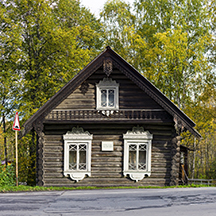
The house told the real story, if you listened hard enough.
Let the fun begin.
Written by Janice Hardy. Fiction-University.com

March 31, 2018
Real Life Diagnostics: Does This Prologue Work?
 Critique By Janice Hardy, @Janice_Hardy
Real Life Diagnostics is a weekly column that studies a snippet of a work in progress for specific issues. Readers are encouraged to send in work with questions, and we diagnose it on the site. It’s part critique, part example, and designed to help the submitter as well as anyone else having a similar problem.
If you're interested in submitting to Real Life Diagnostics, please check out these guidelines.
Submissions currently in the queue: Four
Please Note: As of today, RLD slots are booked through April 28.
This week’s questions:
I'm taking the plunge and sending you the first page of my Prologue for your critique. With respect to our previous correspondence regarding Prologues, I fear that maybe all your red flag warnings apply. However, because of the 26-year time lapse, I don't see how I can bring this into the main body of the novel without interrupting with extensive back-story and flashbacks. So, my questions (based on your four Prologue triggers) would be:
1. Does this opening work?
2. Would you continue reading?
3. Would you stay with the story if you knew this narrator is not the main POV character but nevertheless an important character who helps drive the plot?
4. Would you invest your time and energy reading a prologue knowing the actual story takes place 26 years and a generation later?
5. What, if any, are your expectations from this opening?
Market/Genre: Mainstream fiction
On to the diagnosis…
Read more »Written by Janice Hardy. Fiction-University.com


