
Orrin Grey's Blog: Shovel Murders & Monologues, page 38
March 30, 2016
High Adventures
Though I have played tabletop role-playing games most of my life–and spent more than my fair share of that time as GM–I had never actually written an adventure until I was asked by Matt Goetz of Privateer Press to put together a campaign to cap off the forthcoming Iron Kingdoms Unleashed expansion Wild Adventure. In some ways it was the perfect place for me to start, since I love pretty much everything about Unleashed and this adventure let me throw together some of my favorite things, including a mad gatorman bokor, dark rituals, swampy ruins, and lots more. Wild Adventure is due out in May, and I’ll talk more about the contents of the adventure when the book is closer to release.
Between the time that I wrote “Blood Runs Cold,” the campaign that I contributed to Wild Adventure, and the official announcement of the book’s release, I was actually asked by Matt to write another adventure, the second I ever wrote, though it was actually the first to be published. This was to be an adventure for the Iron Kingdoms RPG themed around the Llaelese Resistance, which they were generous enough to let me call “Once Upon a Time in Khadoran-Occupied Llael.” It was released in No Quarter #65, which hit local gaming shops this month.
When I’m running games, I tend to have very little in the way of story line and even less in the way of specific in-game events planned out in advance. I run games a lot like how I write fiction; I have some idea that I want to hit, and from there I tend to play it by ear, letting the game evolve organically. So it was a definite change of pace for me to write adventures, but I had a lot of fun doing it, and thankfully every time I introduced some element that I thought was going to be too over-the-top, Matt would come back with a note that basically said, “I like it, but can we have more of that over-the-top thing?” And I was like, “Hell yes we can!”
I’ve been doing a lot of writing for Unleashed and the Iron Kingdoms RPG lately, including working with Matt on a five-part series in No Quarters 61-64 (he did the first part in issue 60 on his own) bringing the Legion of Everblight into the Unleashed rule set. As a lifelong fan of role-playing games and a fan of the Iron Kingdoms setting for as long as there has been such a thing, it’s been a real pleasure working in the IK RPG, and I hope that I’m far from done.



March 21, 2016
Making Contact (1985)
 Before his name became inextricably associated with blockbuster disaster picture fare like Independence Day, The Day After Tomorrow, and the execrable American Godzilla, Roland Emmerich made an incredibly bizarre little movie called Joey, or, as it was known in its American release, Making Contact. (I first heard of Making Contact thanks to this list.)
Making Contact is essentially every Steven Spielberg/Amblin Entertainment movie of the 80s all wrapped up into one film and passed through a James Wan filter. There are elements of Poltergeist, E.T., The Goonies, *batteries not included, and just about everything else you can imagine. The story concerns a young boy named Joey–hence the film’s original title–whose dad has just passed away. He’s either just turned 9 or is maybe 11? The version I watched said 9, but various write-ups say 11, so who knows? Anyway, shortly after his dad’s death–we see the funeral in the film’s opening shots–Joey begins to develop telekinetic powers, and talks to his dad on a red plastic toy phone in a sequence that is so reminiscent of Poltergeist as to be borderline ridiculous.
Joey’s bedroom is essentially wall-to-wall 80s pop culture touchstones. He’s got Return of the Jedi sheets, there’s Smurfs and Pac-Man and Donkey Kong stuff, and lots more. The first manifestation of Joey’s powers involve all of his toys sort of coming to life in a scene reminiscent of the “Trumpy you can do magic” bit from Pod People, including a fairly creepy song about someone calling him on the telephone, a fantastic little robot named Charlie who sort of looks like R2-D2, as well as a stuffed critter who looks a lot like Alf, even though Alf wouldn’t be on TV until the following year.
Later in the film, all of Joey’s Star Wars toys attack the requisite mean kids, while near the film’s climax the leader of the mean kids dresses up like Darth Vader to give a speech. There’s actually a recurring motif of Vader’s helmet which is sort of odd.
Anyway, the robot, Charlie, who appears to be more sentient than the other toys, goes exploring in the creepy house that’s just next door, and discovers a ventriloquist dummy in the basement. Joey brings it home, but the dummy is predictably evil, disrupting phone lines, demonstrating the same sorts of telekinetic powers that Joey has, and showing us his back story on a floating television. Most of the rest of the film is occupied with the conflict between Joey and the dummy, whose name is Fletcher, though there are plenty of digressions for things like government research teams in shiny vans and white jumpsuits and a trash can monster who actually looks a little bit like a scary E.T.
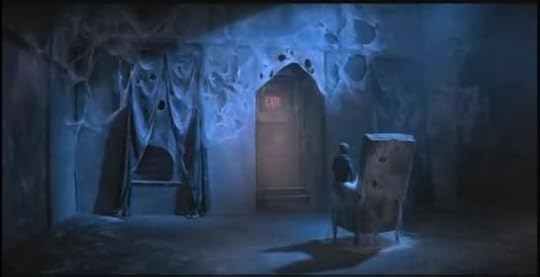
I’m just going to go ahead and commit to this: Fletcher is the best evil ventriloquist dummy in the history of evil ventriloquist dummies. Not only does he look great and have crazy magic powers (and a monocle!), but, while he does occasionally talk, more often when he opens his mouth he just makes this noise like uuuuuurrrggh. (Fletcher isn’t the only one, either. Charlie, the little robot, is also pretty great.)
While the movie starts out in heavy Spielberg territory, by about the halfway mark–in the longer German cut, which is the one I watched–when the government research guys and local cops and everything show up and start crawling all over the house, it goes full bore Spielberg. There’s loads of optical effects of blazing, hovering lights. There’s clouds gathering and swirling ominously. The whole nine yards.
The film’s climax gets pretty epic, too, involving an enormous maze underneath the scary house–or maybe in another dimension, or both–complete with what I think are supposed to be manifestations of the various kids’ fears, which include a giant rock monster, a living corpse, a killer hamburger, and none other than reprise by Darth Vader himself, complete with lightsaber. Before the end, we’re also treated to a fantastic scene of a giant stone version of Fletcher rising up above the maze, which is pretty ridiculous and wonderful.
Unfortunately, it’s a little bit hard to figure out what the hell is going on most of the time–maybe it would have helped if I spoke German, but the subtitles certainly didn’t seem to know–but it also doesn’t really matter what’s going on, because whatever it is is delightful. This is another movie that I hope someone like Scream Factory releases in a nice Blu-ray special edition. In the mean time, maybe I’ll check out Emmerich’s other, similar-sounding feature from a couple of years later, Ghost Chase, and let you know how that goes…
[This post previously appeared on my Patreon.]


March 10, 2016
But Is It Scary?
A couple of months ago, I was asked to contribute an installment to Nightmare Magazine‘s recurring column The H Word. I chose to write about a topic that I’ve spent a lot of time pondering during the years that I’ve been a consumer and creator of horror film and fiction, and the resulting column went live yesterday: But Is It Scary?
For those who’ve been following along and recall my recent posts about The Witch, some of this will sound pretty familiar, even though I wrote it a couple of months ago, before I’d ever seen The Witch. Still, it’s a perennial subject that keeps circling back around, and I doubt that I’ve given it any treatment so definitive as to finally lay it to rest this time, either.
As I said in that post, I’d consider even the most intense of my own stories “creepy” rather than “scary,” and a big part of my development into whatever the heck it is that I am these days has been about accepting the fact that I’m a horror writer who isn’t particularly interested in scaring people.
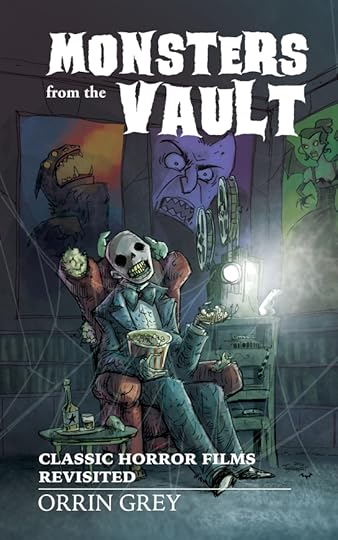
Speaking of things that aren’t particularly scary (sorry, I really didn’t have a very good segue here), I am also very proud to reveal the front cover of my next book–and my first nonfiction book–Monsters from the Vault: Classic Horror Films Revisited, coming this summer from Innsmouth Free Press. The cover is by the extremely talented Thomas Boatwright, who was my first choice for this project and who comes about as close as anyone ever has to drawing what the inside of my head looks like. There’ll be more news about the book coming very soon, but for now, here’s that cover:


March 7, 2016
Where You Will Find Me (in Fine State)
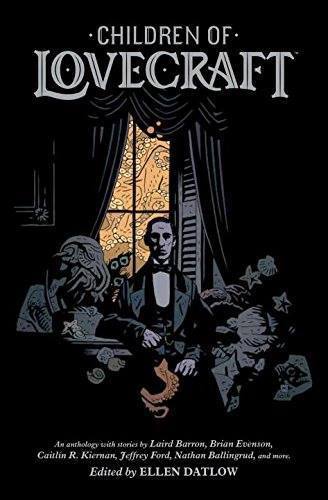
So, the latest news is that my story “Mortensen’s Muse” will be joining an absolutely stellar lineup in Ellen Datlow’s Children of Lovecraft, which also allows me to check “be in a book with a Mike Mignola cover” off my list. I’m very excited about this publication and this story, which concerns a fictionalized version of photographer William Mortensen’s real-life friendship with Fay Wray. (I changed some of the names, so that I could play faster and looser with history, but then ended up staying pretty close to the facts for at least the first part of the story anyway.)
And speaking of stories that I’m excited about, I can also announce that my story “Baron von Werewolf Presents: Frankenstein Against the Phantom Planet” will be appearing in Ross Lockhart’s Eternal Frankenstein, coming soon from Word Horde and continuing my string of Word Horde anthology appearances. The story is inspired by my memories of watching monster movies as a kid, Willis O’Brien’s never-produced King Kong vs. Frankenstein, and so much more. It’s also probably the best story title I will ever come up with, so I’d better enjoy it while I can.
Those are just the latest in a string of stories that I’ve got in various stages of production for 2016. In addition to short stories, you can also expect to see more news about Monsters from the Vault, my collection of columns on vintage horror films coming soon from Innsmouth Free Press, a project that I’m working on with Dunhams Manor, and hopefully some word on getting Never Bet the Devil back into print sooner rather than later…
For now, I am up to my eye sockets in freelance work and various projects, so I must get back to the word mines. More soon!


February 25, 2016
The VVitch (2015)
So here I am, almost two months into 2016, and I finally saw a movie in theatres for the first time this year, and of course it was a movie that technically came out last year, apparently, though it didn’t get a wide release until now. I have a feeling this post is going to get pretty far off topic, so before it does, I’ll give you what I’m sure you came here for: The Witch is a potent brew, and one that I recommend drinking down.
We saw it in a basically empty theatre with only two other people in the whole place. They were quiet and respectful throughout the movie, but as the credits rolled, they certainly looked perplexed. Then, on the way out, we were stopped by a handful of (young) theatre employees who said that they had tried watching The Witch and gotten maybe an hour into it, but it was boring and they kept waiting for something to happen.
Both of these reactions baffle me, honestly, because, like the movie or not, I found The Witch to be pretty straightforward, really, and surprisingly fast (if deliberately) paced. Maybe some of the disconnect comes from the fully twenty minutes of trailers that preceded the movie, which demonstrated with utter facility that the people responsible for programming such things had no idea who the target audience for a film like this is.
Prior to walking into the theatre, I shared a link to this post on Facebook, where I said that I hadn’t seen anyone reacting that way to those movies, which, at the time, was true. Since then, over on Twitter, Bret Easton Ellis, speaking in the voice of a thousand fratboys, chimed in, “Indie Arthouse Horror is becoming my least favorite new genre: It Follows, Goodnight Mommy, The Babadook, The Witch.”
Oddly enough, I feel like both the author of the original post and Ellis are doing The Witch a disservice by lumping it in with films like It Follows and The Babadook, a comparison that is apt only insofar as they are all more or less successful independent horror features released in the last few years with modest budgets and deliberate pacing. I would instead place The Witch in its rightful position in the spectrum of folk horror films, where it joins the likes of Witchfinder General, The Witches, The Blood on Satan’s Claw, The Wicker Man, and more recently Sauna, Black Death, Kill List, and A Field in England. That The Witch adds to that very respectable pantheon the lens of early American Puritanism also places it in the spectrum of Puritan witch panic narratives, and means that it’s probably about as close to a Daniel Mills story as we’re ever likely to get on film, because we inhabit a cold and uncaring universe.
While walking out of the theatre, we also had a discussion about how we need a more robust vocabulary for talking about whether or not things are scary. It’s a subject that I’ll get into some in my forthcoming piece for Nightmare Magazine‘s The H Word column, and one that came up last year surrounding Crimson Peak, a movie that I did see plenty of people claim wasn’t horror, sometimes its critics and sometimes its supporters. For what it’s worth, if pressed, I would call the emotion that The Witch prompts “dread” instead of “fear,” while I would call even the most intense of my own stories “creepy” instead of “scary.”
While I hadn’t seen many people disparaging The Witch prior to seeing it–and certainly none claiming that it wasn’t horror–what I had seen were plenty of the equal and opposite reaction, people saying that movies like The Witch and It Follows are the only legitimate horror films that have been released in the past however-long. Again, I find both of those positions equally wrongheaded.
Personally, I liked The Witch, thought The Babadook was pretty good, was disappointed in It Follows, and dug The Conjuring. But to draw arbitrary lines in the sand and say that one isn’t horror while another is seems fruitless and, ultimately, reductive to the genre, no matter which side of the line you’re on. I don’t care for Cabin Fever, but I would never argue that it isn’t horror.
Over on his Twitter, The Conjuring director James Wan has been very vocal in his support for The Witch. Ultimately, trying to stack the one up against the other seems like a pretty pointless endeavor. Both are very successful movies, and both are very emphatically horror, and hell, both even involve witches, but they’re operating in two completely different modes. And that’s fine. Variety is, after all, the spice of life, and who doesn’t want to live deliciously? We don’t have to like everything that comes out in order to embrace the diversity of horror that’s available to us. As J.T. Glover put it perfectly in response to my Facebook post, “Many shades of black are better than one.”


February 19, 2016
Red Lights (2012)
Somehow, in spite of an intimidating cast including Sigourney Weaver, Toby Jones, Robert De Niro, Cillian Murphy, and Elizabeth Olsen with nothing to do, I had never heard of Red Lights before Netflix suggested it to me. But just a glance was enough to tell me that it seemed right up my alley. A cerebral thriller about skeptics debunking paranormal phenomena and clashing with an ominous psychic? Sign me up. I was hoping for some slick production values and lots of shots of people looking intently at electronic equipment–the science equivalent of sorting paperwork and looking at old photos–and that’s mostly what I got.
Unfortunately, Red Lights is a bit of a mess. It’s been compared unfavorably with the films of M. Night Shyamalan, but I think a more apt comparison would probably be to early David Fincher, albeit without Fincher’s tight control of the material. There are lots of good moments scattered throughout Red Lights, but they never really come together, and are hampered by a meandering script and a “twist ending” that is at once the only ending that the movie could ever possibly have had, and yet also somehow largely unsupported by the preceding film. Honestly, I found myself kind of wishing it was just a whole movie about feuding college departments and the dangers of confirmation bias…


February 15, 2016
2015: The Year in Writing
Well, it took me a while to get to this, so here we are almost two months into 2016, but here’s a recap of how writing went in 2015. First off, it was my second full year as a full time freelance writer. It was also, by far, the hardest year as such, but unexpected factors came into play to help get us through it, and so far 2016 is looking up (knock on wood).
Of course, the big writing event in 2015 was the release of my second collection, Painted Monsters & Other Strange Beasts from Word Horde. The second-biggest piece of writing news last year was probably my ghost apocalypse story “Persistence of Vision” getting reprinted in Ellen Datlow’s Best Horror of the Year 7, marking my first (and so far only) best of the year publication.
Besides Painted Monsters and the three original stories contained therein, 2015 saw the publication of six new stories by yours truly. I also continued to do freelance work for Privateer Press and started doing regular freelance gigs for The Lineup. Plus I got to check something off my bucket list by making my first sale to Clarkesworld in the form of a nonfiction piece about bugs in the films of Guillermo del Toro.
So in spite of being a rough year in a lot of ways, 2015 was also a pretty great year for writing in a lot of other ways. And 2016 is off to a promising start. I’ve got at least one book coming out this year, Monsters from the Vault, a collection of my Vault of Secrets columns from Innsmouth Free Press. (More on that very soon.) I’m also in talks to get a new edition of Never Bet the Devil back into print sooner rather than later.
I’ve already got six stories in press that should be coming out in various anthologies in 2016. Some of them I’ve already talked about, others are still a secret for now, and there’s one that’s still under wraps that I’m very excited about. Besides that, I’ve also got four stories in various stages of progress for various anthology invitations, plus a project that I’m working on for Dunhams Manor. And I’m working on a pitch for an illustrated mid-grade book with Eric Orchard, among other projects. So 2016 is shaping up to be an exciting year.


February 12, 2016
Split Second (1992)
Given my longstanding affection for Rutger Hauer and monster movies, it should come as no surprise that I watched Split Second–probably a few times–when it was at the video rental section of my local grocery store growing up. That said, I didn’t remember much of anything about it besides that it was set in “the future” and that the serial killer/monster had something to do with the Scorpio Zodiac sign (which stuck with me probably because I’m a Scorpio).
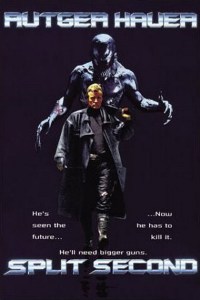
You’ll really never get to see the monster this well in the actual movie…
When I sat down to re-watch it recently, I was all geared up to make fun of how 1992 pictured 2008. And certainly the move hits all the check boxes of a movie about the future made in the early 90s: it’s grim, dark, crowded, polluted, and it rains all the time. But in spite of the fact that all the computers still look like ancient IBMs and I don’t remember London being under water by 2008, the not-too-distant future as envisioned by the set dressers of Split Second wasn’t as hilarious as I was expecting. And congrats to the writers for (correctly, it would seem) pegging global warming as the culprit for the future’s many woes.
While I was watching the movie, one of the things that struck me most forcibly was realizing that people in 1992 felt comfortable positing a future this bleak only 16 years away. Probably says something about how hopeful we felt back in the early 90s, huh?
Anyway, prognostications aside, all of Split Second was actually less hilarious than I was expecting. For a movie that’s been called “an extremely stupid monster film” and “utterly soulless and imitative,” I actually found that Split Second held up better than I had imagined. Sure, it’s an incredibly 90s movie. See the completely pointless nudity, the obligatory strip club scene, the dynamic between the lead characters, and maybe especially the weapons. (I’m pretty sure a Gatling shotgun is the most 90s weapon imaginable.) But if you can get into that, then there’s some surprising bits to be found buried within all the tough guy quips and shots of people slogging through water.
For one, flooded London is surprisingly well-realized, and works nicely as a backdrop for the serial killer/monster story. And while Hauer is hampered by the fact that he’s being asked to play essentially a parody of the maverick cop character that was pretty much every lead in every action movie of the era, he’s Rutger Hauer, so he at least extracts some entertainment from the role, and also peppers in a surprisingly good portrait of anxiety and even panic attacks for good measure.
I keep calling this a “serial killer/monster movie,” and that’s another place that Split Second stands out a bit from its peers. The killer in question is certainly a monster, but it’s also a serial killer, and while it never speaks, it is intelligent enough to leave taunting messages for the police and use firearms. So there’s that.
Better yet is the film’s decision to throw in a bunch of information about the monster, but no explanation for it. It’s got the DNA of all of its victims, which probably means something, but we’re never told what. It’s also got rat DNA, tying it at least thematically into the rat infestation that’s plaguing the city, but we’re never told that it’s a mutated rat, or some kind of human/rat hybrid, or anything else of the sort. It leaves occult symbols scrawled in blood at some of the crime scenes, and one of the characters hypothesizes that it thinks it’s Satan, and that, besides taking its victims DNA, it also eats their hearts in order to take their souls to hell. The movie throws a bit of everything at the wall when it comes to the monster, and what makes it kind of work is that it never actually waits for any of it to stick, just tosses it up there and then leaves it hanging. While it’s probably actually sloppiness on the part of the filmmakers, it’s the kind of approach to the strange and unusual that really appeals to me, and that movies take all-too-seldom.
The reactions of the characters to the existence of the monster are also pretty spot on, even if they’re often played for laughs in the film. Seeing the monster transforms the characters. While it doesn’t quite drive them Lovecraftian, gibbering in the madhouse crazy, it does fundamentally alter their priorities and their ideas about things like reason and reality. As it should. From the moment the characters encounter the monster directly, they are obsessed with the monster, and watching them spitball ideas about its nature and origins is a delight. Again, this isn’t always sold particularly well, but it’s a welcome touch, and really, how much nuance can we ask of a screenplay by the writer of The Fast & the Furious?
The monster itself, once it finally makes its appearance, is designed by Blade and League of Extraordinary Gentlemen director Stephen Norrington. Norrington also worked on the creature effects crew for Aliens and Alien 3, and it shows. The monster here is emphatically in the xenomorph school of design, boasting an inexplicable motorcycle helmet visor and pretty cool monster hands (reminiscent of the H.R. Giger poster for Future Kill). It’s also apparently From Dusk Till Dawn vampire squishy, as Rutger Hauer is able to rip its heart out of its chest with his bare hands, in spite of it surviving hails of gunfire as well as being blown up and electrocuted. As a kid, I’m sure that I just assumed this was possible because he was Rutger Goddamn Hauer.
In all, I’ve probably made Split Second sound a lot better than it is, but it is a lot better than you may have heard, and than I had expected. While all the good qualities are just seasoning mixed into a pretty generic early-90s action thriller package, and many of them are undercut by the film’s willingness to go for lazy tropes or play things for laughs, especially in the final reel, they are at least there. Whether you can extract the enjoyment from Split Second that I did will probably depend a lot on your tolerance for this kind of thing, and your willingness to dig around in the soggy detritus around the edges for those few interesting nuggets.
[This post previously appeared on my Patreon.]


February 7, 2016
Panic, and Festivals Thereof
Last year, just before I left for Panic Fest, I received a phone call about my dad’s failing health. It wasn’t the first such call, and it wasn’t the last, but that Panic Fest sticks in my mind as the last time for a long time that my dad’s illness, death, and the subsequent emotional and mental fallout therefrom wasn’t heavily on my mind. I didn’t really realize how much Panic Fest had become the symbolic anniversary of all those things for me until this weekend rolled around.
I had been planning to help work the fest, but for various reasons that didn’t come to pass. And it turned out to be a good thing, because I got buried in some quick-turnaround deadlines that kept me busy much of the weekend. I did make it out to say hello and pick up a couple of Funko minis, but I wasn’t able to stick around and enjoy the festival. Maybe next year.
What I did instead–besides work on the aforementioned deadlines–was have a rougher-than-expected weekend. It took me until this morning to figure out why, to connect the occasion of Panic Fest to my memories of all that I’ve been struggling with over the past year and change. I know that I’ve come a long way in that time, and that I’ll be all right, but it hit me hard today.
To the folks at Panic Fest itself: Sorry I wasn’t able to make it more, or stay longer. It was great to see everyone for the brief moment that I did, and thank you guys for being a pleasant memory in the midst of a lot of unpleasant ones.


February 6, 2016
“The Voice in the Night” (1958)
A few years ago, I co-edited Fungi with Silvia Moreno-Garcia. In the time since, my affection for William Hope Hodgson’s “The Voice in the Night” and its peculiar 1963 Toho film adaptation Matango–as well as all fungal monsters everywhere–has been well documented. However, in all that time, there was always another adaptation of “The Voice in the Night” that I had never gotten a chance to see. Until now.
In a recent interview with The Haunted Omnibus, I mentioned my frustrated desire to see the “Voice in the Night” episode of the 1950s TV series Suspicion, and lo and behold, Michael Bukowski came to my rescue with a link to that very episode on YouTube! The last time I had looked for it, I had been unable to find it anywhere except in a film archive in California. Sadly, the picture quality of this YouTube version is completely terrible, and large portions of the beginning and end of the episode are lost almost utterly to darkness, but still, it’s worlds better than nothing!
Essentially a two-person show starring Barbara Rush (It Came from Outer Space) and James Donald (Quatermass and the Pit) as the pair of hopelessly-in-love (she sells it better than he does) newlyweds who become lost at sea and marooned upon the ill-fated island. Also keep an eye out for Patrick Macnee and James Coburn as the sailors who hear the haunting tale. The human drama is actually pretty well-realized, and there are enough tantalizing glimpses of the derelict ship and the fungus-shrouded isle to make you long for a better print than the one that we have available to us.
Sadly, there are no fungus creatures–or maybe there are, lost somewhere in the sea of inky blackness that are the episode’s last couple of minutes–so it’s no Matango, but it’s still a fairly admirable adaptation of Hodgson’s tale. Hopefully someday it will get a high definition release of some kind so that we can see the lost ships and fungal landscapes a little more clearly. Until then, thanks to Mike for directing me to this, and that’s one more off my list…


