
Orrin Grey's Blog: Shovel Murders & Monologues, page 37
May 25, 2016
Books, Books, Books
Today kicks off the beginning of Word Horde‘s big Summer Solstice Giveaway over on Goodreads, where they’re giving you the chance to snag a handful of the latest Word Horde titles, including Painted Monsters & Other Strange Beasts. If you’ve already got your copy of Painted Monsters, though, there are also giveaways for Mike Griffin‘s debut collection The Lure of Devouring Light, Livia Llewellyn‘s critically-acclaimed second collection Furnace, and even Ross Lockhart‘s Lovecraftian anthology Cthulhu Fhtagn!, which includes my story “The Insectivore.”
It’s not a part of Word Horde’s Summer Solstice Giveaway, but there’s also a Goodreads giveaway still running for Monsters from the Vault through June 17. Want to be sure you secure your copy? You can always pre-order it direct from the publisher at less-than-cover-price until June 3!
Speaking of pre-orders, they also just opened for Swords v Cthulhu, coming in July from Stone Skin Press and editors Molly Tanzer and Jesse Bullington, featuring my choose-your-own-adventure story “A Circle That Ever Returneth In.” That’s it for now, but stay tuned for more news on whatever is coming next! Otherwise, turn to page 217.



May 18, 2016
“Girl’s Just Wanna Have Fun” – Night of the Comet (1984)
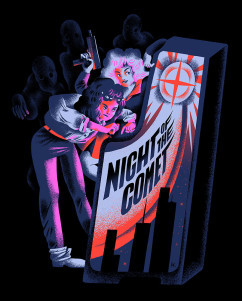
Arwork by Andrea Kalfas, available as a t-shirt from Pizza Party Printing.
When I was a kid, we had a VHS copy of Night of the Comet at my house for a while. I don’t remember where it came from–maybe one of my older brothers owned it, or maybe a friend did–but I don’t think I ever actually watched it, I just remember the VHS cover. For a long time I thought I had seen it and had simply forgotten, but watching it now, I’m pretty sure I would have remembered, well, anything about it, if I had seen it before. After all, it’s tough to forget a Valley Girl version of I Am Legend from the director of Captain Ron…
(Captain Ron, on the other hand, I watched about a million times when I was a kid. Because we did own a copy of it on VHS, and because it had Kurt Russell in it, mostly.)
I decided to give Night of the Comet what I thought was a second look and what proved to be a first due in no small part to Trevor Henderson sharing that above piece of delightful art by Andrea Kalfas. That, coupled with Scream Factory releasing the flick on Blu-ray some time back made me think, “I should check this out.” And I’m glad I did.
Night of the Comet is one of those movies that is so firmly rooted in its time that it somehow becomes almost timeless. The story prominently features an arcade cabinet, what appears to be a single-screen movie theatre (where the ushers still wear uniforms), lots and lots and lots of pop music on the soundtrack, and a radio station. Not to mention more neon than you can shake a stick at, which I love. In fact, the colors in Night of the Comet are frequently pretty great, alternating between the strange toxic orange glow of the LA skyline in the wake of the titular comet and the interior of the radio station with its neon hues.
While Night of the Comet could–and probably should–be easily classed as a zombie movie, there aren’t actually many zombies in it, with the creepiest ones showing up in a layered dream sequence. I compared it to I Am Legend instead of a lot of the other zombie fare of the era because, like that book and some of its cinematic successors, the focus here is less on the threat of the zombies themselves than it is on the effects of being essentially the last person(s) on earth.
Which is not to say that Night of the Comet doesn’t do some interesting stuff with its “freaked out zombies.” The sunken-eye effect is pretty potent for something so simple, and the fact that the zombies are degenerative–being people who were only partly exposed to the comet, who slowly turn from normal to zombie–means that it beat Return of the Living Dead‘s thinking, talking zombies to the punch by a year.
Even with all that, Night of the Comet wouldn’t be much without its protagonists, who are given the task of carrying most of the movie literally by themselves. From the moment we’re introduced to Catherine Mary Stewart’s Reggie, I kind of want to be her when I grow up. She’s working as an usher at a movie theatre–“You ever been hit with Dots? Milk Duds? Those things hurt.”–and her primary focus in life seems to be beating every high score in the theatre’s Tempest arcade cabinet, including an odd gag that only really pays off at all in the movie’s last seconds.
The best thing about Reggie and her sister Sam is not that they’re able to take care of themselves, though they make that pretty clear, casually beating up guys and zombies more than once, and knowing their way around guns better than most of the men in the movie, thanks to training with their military father when they were little. (“Daddy would have gotten us Uzis.”) No, the best thing is that the movie never pokes fun at them for who and what they are. Capable of switching between shallow and complex, the characters aren’t treated as jokes or stereotypes–though they often hit the notes of stereotypes–but instead as just people. And after all, if we’re really honest with ourselves, who among us wouldn’t raid the shopping mall while blaring “Girls Just Wanna Have Fun” if we were the last people on earth?
[This post originally appeared on my Patreon.]


May 3, 2016
Monsters from the Table of Contents
Monsters from the Vault, collecting every single one of my more than four years worth of Vault of Secrets columns from Innsmouth Free Press, is now available for pre-order, and cheaper than cover price! But you don’t have to take my word for it. Here’s the blurb it got from no less a personage than John Langan, author of The Fisherman, among others: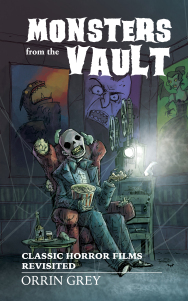
“Orrin Grey’s Monsters from the Vault is a delight. Grey takes the reader on a film-by-film journey trough some of the lesser-known horror films of the middle decades of the twentieth century, offering incisive and witty analysis of them along the way. Possessed of an apparently encyclopedic knowledge of these films, Grey points out connections among their directors, writers, actors, and production crews. The result is a book that can be enjoyed both for its discussions of individual films and for its overview of horror film during this period. Put this one on the shelf next to Danse Macabre and The Outer Limits Companion–even better, keep it on your desk, so it’s close at hand.”
I’ve already been asked elsewhere about the table of contents, which should be showing up over on the IFP site directly. But for those of you who just can’t wait, I’ll go ahead and post it here, though I warn you, that’s a full 80 movies, so you’re in for a long list of titles, which I’m gonna put behind a cut:
Doctor X (1932)
The Mask of Fu Manchu (1932)
Murders in the Rue Morgue (1932)
Island of Lost Souls (1932)
The Old Dark House (1932)
Son of Kong (1933)
Mad Love (1935)
Werewolf of London (1935)
Mark of the Vampire (1935)
The Devil-Doll (1936)
The Invisible Ray (1936)
The Return of Doctor X (1939)
Renault’s Secret (1942)
The Undying Monster (1942)
The Boogie Man Will Get You (1942)
The Leopard Man (1943)
The Uninvited (1944)
The Mummy’s Curse (1944)
House of Frankenstein (1944)
House of Dracula (1945)
Dead of Night (1945)
The Thing from Another World (1951)
War of the Worlds (1953)
It Came from Outer Space (1953)
The Mad Magician (1954)
The Quatermass Xperiment (1955)
Tarantula (1955)
The Mole People (1956)
The Deadly Mantis (1957)
The Monster That Challenged the World (1957)
The Monolith Monsters (1957)
The Aztec Mummy (1957)
The Curse of the Aztec Mummy (1957)
The Aztec Mummy vs. the Robot (1958)
The Vampire’s Coffin (1958)
The Brain Eaters (1958)
Fiend Without a Face (1958)
The Atomic Submarine (1959)
The Four Skulls of Jonathan Drake (1959)
The Alligator People (1959)
The Tingler (1959)
Hound of the Baskervilles (1959)
Caltiki (1959)
Black Sunday(1960)
13 Ghosts (1960)
Creature from the Haunted Sea (1961)
Gorgo (1961)
Konga (1961)
Reptilicus (1961)
Night Creatures (1962)
The Cabinet of Caligari (1962)
House of the Damned (1963)
The Old Dark House (1963)
Paranoiac (1963)
Matango (1963)
Black Sabbath (1963)
Castle of Blood (1964)
The Gorgon (1964)
The Curse of the Mummy’s Tomb (1964)
The Last Man on Earth (1964)
Curse of the Fly (1965)
Planet of the Vampires (1965)
Voyage to the Prehistoric Planet (1965)
Plague of the Zombies (1966)
The Reptile (1966)
Island of Terror (1966)
It! (1967)
Yongary (1967)
King Kong Escapes (1967)
Spider Baby (1967)
The Living Skeleton (1968)
The Lost Continent (1968)
The Oblong Box (1969)
The Beast in the Cellar (1970)
The Blood on Satan’s Claw (1971)
The Mephisto Waltz (1971)
The Omega Man (1971)
Horror Express (1972)
The House on Skull Mountain (1974)
The Food of the Gods (1976)


May 2, 2016
The Nameless Dark: A Review
Don’t let how long it took me to finish reading Ted E. Grau‘s debut collection throw you; my reading schedule has been all screwed up lately, and various things kept coming along to interrupt the process, and, frankly, I didn’t want to rush things. I wanted to savor each story, at least a little bit, and these aren’t the kinds of stories that you want to read while you’re waiting at the doctor’s office or something. These things require a certain amount of ceremony. Reading is the kind of thing that feels like it needs to be done right.
Like a lot of contemporary horror authors–myself included–Ted wears his influences on his sleeve in these stories, and if you know me at all, then you know that I think that’s for the best. While several of the stories in The Nameless Dark got their first printings in Lovecraftian anthologies, and often default to some familiarly Lovecraftian ideas, the more telling influences often come from other places, notably names like Bradbury or Barron. But as I was reading, I was surprised to find that my mind kept coming back to King, as in Stephen. Not that these are necessarily Stephen King-ish stories–with the possible exception of “Beer & Worms,” one of several stories in this volume that have that added bite of an E.C. Comics-style twist in the tail–but rather that almost all of the stories in The Nameless Dark partake of King’s affinity for normal people who aren’t so normal, and unusual people who are maybe more normal than they appear.
While the Lovecraftian trappings, when they come, may seem familiar, they never feel faded, always given a new life, a new immediacy that elevates them above the crush of Mythos mimics out there. Nowhere will you find anything as simple as a string of Yog-Sothery or a “and they were all fish people!” ending. Instead, even the most familiar tale is invested with a beating human heart that brings grit and breath and blood and bone to the lofty cosmic horror conceits. See hallucinatory stories like “Return of the Prodigy” or the dynamite collection-ender “The Mission” for perfect examples. And then, just to show that Grau is capable of taking the Mythos and turning it on its ear in some different way, there’s a story like “The Truffle Pig,” which was one of my first exposures to Ted’s writing back when we shared a table of contents in Ross Lockhart’s Tales of Jack the Ripper.
In fact, I was already familiar with several of the stories in The Nameless Dark before I ever picked up this volume. Besides Tales of Jack, I’d shared anthology space with Ted in The Children of Old Leech and Cthulhu Fhtagn! So I knew that I was in for a treat, but I still found new surprises, and new stories to love. I think my favorite piece in the whole book is one that, unless I am mistaken, is original to this collection, and is also the one that opens the volume: “Tubby’s Big Swim,” a story that is darkly humorous, full of heart, and with a voice that only Ted could manage.
But you don’t have to take my word for it: The Nameless Dark was just this very afternoon nominated for a Shirley Jackson Award for best collection! You can pick it up 

April 30, 2016
“You’ve got to pick up every stitch”
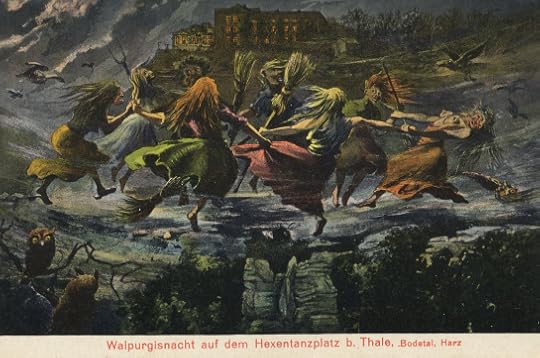
Tonight is Walpurgisnacht, which, if it means nothing else, means that we’re at the halfway point on our trip back around to Halloween. Along with your bonfires and whatever else, I recommend some seasonally appropriate reading to mark the occasion. As you probably already know, I’ve got a story called “Walpurgisnacht” that takes place tonight and which initially appeared in The Children of Old Leech, though you can also read it in my second collection, Painted Monsters & Other Strange Beasts, both of which are available from Word Horde. Want a taste? You can read an excerpt from the beginning of “Walpurgisnacht” right here.
And speaking of Word Horde, this auspicious day also marks the debut of Mike Griffin’s, well, debut collection, The Lure of Devouring Light, published by, well, you guessed it.
If your reading card is all filled out for the night, might I recommend a suitably witchy film for your Walpurgisnacht enjoyment? Suspiria is always a good bet, but may be too familiar. Hammer’s The Witches is a little less often-seen, and is a particular favorite of mine. And though I don’t actually remember much about it, I’ve now got an ingrained soft spot for Virgin Witch, thanks to a late-night viewing with Simon Berman of Strix Publishing on the heels of the H.P. Lovecraft Film Festival a couple years back.
Whatever particular form your libation or revel may take this evening, happy Walpurgisnacht to all who celebrate! Tend to your bonfires, watch out for strange shapes in the sky, and beware of music from beneath the ground. See you all in May, when we’re on the downhill slope toward All Hallow’s Eve.


April 26, 2016
“Each one of these things comes from an egg, right?”
It was March 14, 1989 when I first saw Aliens in its broadcast television premiere. (Thanks to Jason McKittrick of Cryptocorium for helping me track down the date.) I must have been seven years old–I would turn eight that October–and it hit me the same way that Star Wars seems to have hit most everyone else.
To this day, I remember the scenes from the CBS Special Movie presentation intro, which included my first glimpse of the famous xenomorph design, and I also remember being confused by my later viewings of the theatrical cut, which was missing several scenes that were added back into the television version, notably the moment when Ripley learns about her daughter. It led to one of those bizarre situations that sometimes happened in the days before DVDs and special editions, where I knew something about a movie that wasn’t included in any cut of the movie that I could conveniently find, and so I wondered if I had perhaps made it up.
I had seen other horror movies before, of course. I grew up watching stuff like Squirm and C.H.U.D., The Food of the Gods and countless Godzilla flicks. I think that I had even seen bits and pieces of Predator when my brother rented it on video. I remember watching Cronenberg’s The Fly on network TV while eating a hamburger, and my mom coming into the living room during some particularly gross scene, and asking how I could eat while watching that. I don’t know if that was before or after I saw Aliens. (I wonder now how heavily edited The Fly must have been to even show up on TV in those days.)
But when I first saw Aliens, it was like nothing else I had ever seen. It felt more complex and more ambitious than I was used to my monster movies being, and I was struck by the design–and, of course, the life cycle–of the eponymous creatures. The alien queen might have been my first introduction to the idea of the boss monster in cinema, and the battle between the queen and Ripley in the cargo-loader exosuit, with its callback to the great stop-motion monster battles of King Kong and Ray Harryhausen, and the rubber suit wrestling matches of the Godzilla films, had an enormous impact on my young imagination.
I can’t remember a time when I wasn’t in love with movies, but seeing Aliens was, without a doubt, a turning point in that fascination. The Alien franchise became my first fandom, for lack of a better word, a fact that was only reinforced by the gradual revelation that the Alien and Predator films might take place in the same universe–another concept that, while not actually original, was new to me at the time.
When I saw Aliens for the first time, I had no idea that it was a sequel to anything, and the opening minutes of the movie felt so amazingly ground-breaking to me. Here was this character we met in media res, having survived some strange off-screen ordeal that primed her for the one that was coming. It’s an oddly inaccurate experience, but one that has remained lodged in my consciousness ever since, one that I come back to again and again.
I don’t remember when I first saw Alien, but I saw Alien 3 and Resurrection in the theatre. I bought piles of the Aliens and Predator toys that Kenner brought out in the 90s, with their various animal-themed xenomorphs. I even got the cloaked (ie, cast in clear plastic) “Ambush Predator” figure that you had to send away for.
Through it all, Aliens remained my favorite movie in either franchise, and something very close to my favorite movie period (a slot it probably had to share with Monster Squad). And while today other films have usurped that favorite spot, and my affection for the Alien and Predator flicks are as much nostalgia as not, both franchises are ones I own on Blu-ray and revisit regularly. (Less so the unfortunate crossover films, though I’ve seen both of them more times than they probably deserve.)
Their influence was so formative that I can’t really identify all the ways that the Alien films made inroads into my creative output. Besides obvious places like the near-closing line of “Painted Monsters,” that big, haunting, H.R. Giger-designed ship with its ancient astronaut and its payload of mysterious eggs, the grotesque and bizarre life-cycle of the aliens themselves, that line from the CBS intro, “so who’s laying these eggs,” that shot of the xenomorph rising up out of the water behind Newt, the alien queen, the enormous ships that were like floating industrial blocks, all of it feels like my gateway to so many of my later obsessions, from the grim future of Warhammer 40k to weird fiction.
To this day, the films hold a special place in my pantheon, and they remain one of a handful of franchises for which I would love to one day write licensed fiction. So in honor of “Alien Day” (4/26, get it?) , I figured it was high time to do something to pay tribute to one of the most important cinematic experiences of my life. So here’s to you, Aliens CBS Special Movie Presentation. You may not have started it all, but you sure as hell started a lot.


April 19, 2016
A Nightmare on Elm Street, Halloween, and Revisionist Glee
For the month of March and into April I was watching with some interest a March Madness-style bracketed tournament over at the Save Horror Twitter in which their best-reviewed movies competed for reader votes to see which one would ultimately emerge on top. A few days ago, I expressed my enthusiasm on Facebook when A Nightmare on Elm Street and The Thing beat The Shining and The Exorcist, respectively. Not, as I said then, because I think those movies are necessarily better than the ones they beat (though, if I’m honest, I probably do think that) but because I was happy to see them all breathing the same rarefied air.
Later, I was somewhat less enthusiastic (we’ll say) to see Nightmare beat The Thing, but, as I observed then, my revisionist glee sometimes cuts both ways. Yesterday, the contest came to a close with A Nightmare on Elm Street beating out first Psycho and then the two-time previous champ Halloween to take the top slot. It’s not the film I would have chosen for the honor, but good for it, anyway.
Do I think that Halloween is a better movie than A Nightmare on Elm Street? By most measures, yeah, absolutely. Moreover, do I think that it’s a more apt movie to represent horror as a whole–sampling, as it does, from so many of the things that make up the genre? Sure. Do I think Halloween or Nightmare (or any of the other contenders, for that matter) is the best horror movie ever made? I have no idea. Honestly, my nature makes me somewhat allergic to the whole idea of picking a “best” anything.
That said, the joy I felt at seeing Nightmare and The Thing besting their more-respected elders (if only by a couple of years in The Shining‘s case) remains. Not, again, because I have anything against The Shining or The Exorcist or any of the other more well-regarded entries into the horror canon that populated the list, but because I’m pleased to witness the slow, steady process of revisionism that is seeing movies like A Nightmare on Elm Street as every bit the classics that those films have long been acknowledged as.
So while I wouldn’t necessarily elevate A Nightmare on Elm Street above The Thing or Halloween or Psycho in my own personal pantheon, I’m thrilled to see them all sitting at the same table. That’s good enough for now.


April 16, 2016
Numbers of the bEast: The One We Keep Secret
Almost all of this story is true. Or no, wait, maybe most of it is a lie. Either way, I’m not going to tell you which part is which.
#
So there we were, standing outside that bar near the Hollywood Theater–the one that isn’t the Moon & Sixpence or a pool hall, I can never remember the name. Pulver had stepped outside to smoke, and I had gone along to continue our conversation about jazz and improvisation and writing and how they all went together. Had I just met him for the first time earlier that day? I can’t remember now. It certainly wasn’t my first HPLFF, but I couldn’t recall if he’d been at the last one, if we’d been introduced. It was definitely the first time we’d talked at length.
I’d heard things about him, of course. Some people said that he was an actual wizard, and I knew that they called him “the bEast,” though I couldn’t figure why. He seemed cuddly enough, with his cookie duster mustache, like Wilford Brimley or a human Lorax. Of course, Wilford Brimley wasn’t so cuddly with that fire ax in The Thing, so I guess you never can tell, right?
Anyway, we were talking, expounding, improvising, when I noticed the shape. Not like the Shape, not Michael Myers or anything, but it was spooky. Just this person sitting on a bus stop bench across the street, like a clump of rags, but seeming somehow too dark in the gathering dusk. Pulver must’ve noticed me watching it, because he put a hand on my shoulder. “Don’t worry about it,” he said. “It’s not here for you.”
#
That’s the last part that anybody but me knows about; the last part that even I know about for sure. Here’s the rest, though, and you can make of it what you will. The last evening of the Festival, I was walking back from the Moon & Sixpence at the ass end of the night. My hands were jammed in my pockets because it had gotten damn cold, and I was walking fast, my shoulders hunched. I’d had a couple of drinks that night, which was unusual for me, so you can chalk it up to that, if you want.
The neighborhood was deserted by then, even the last dregs of the revelers having finally turned pumpkin-shaped and headed off to one bed or another. I was cutting across back parking lots and through dark alleys, making a bee-line for the shortest route back to my room at the Banfield, when I saw something move out of the corner of my eye.
It was in this dark crevice between two buildings–you wouldn’t call it an alley, not really, because it wasn’t wide enough for a car, barely wide enough for two people to walk abreast. The shadows in there were moving wrong, the humped, jerky motion of marionettes with twisted wires. And in the midst of them was Pulver. They were gathering around him, and they didn’t look friendly.
I thought about going to his aid–I may be a coward, but I’m not a complete asshole–but something stopped me, and it wasn’t just the memory of his hand on my shoulder, his reassurance that the shape on the bus stop bench wasn’t there for me. It was something about him, and it took me several skipped heartbeats before I realized what it was. He seemed to be growing, expanding. Like that guy in Big Trouble in Little China, but not funny. He was adding mass, adding height. Like he was drawing something up inside himself, like he was maybe eating the shadows that grew up around him. At least, that’s what I thought at the time.
My head spun, and I stumbled. When I woke up, I was in my bed back at the room, unsure whether I had dreamed the whole thing or what. I’m still unsure, so I’ll let you draw your own conclusions, but I’ll leave you with this: I saw Pulver the next morning, while those of us who hadn’t left the night before were still straggling out of our beds and our cocoons. He looked just as he always did, nothing amiss, but when he spotted me across the parking lot, he gave me a wink.
For Joe Pulver


April 8, 2016
My Soul to Take (2010)
I’m just going to go ahead and say it: My Soul to Take got a bad rap. I’m not gonna say “gets,” because I don’t think anybody even talks about it enough to say anything bad about it anymore, minus a passing mention in that episode of Castle where Wes Craven guest starred. Instead it came out, got panned, and narrowly avoided being Craven’s swan song only by virtue of Scream 4 coming along the following year. It’s got a damning 9% at Rotten Tomatoes, where the critical consensus claims that the film is, “Dull, joyless, and formulaic,” and “suggests writer/director Wes Craven ended his five-year filmmaking hiatus too soon.”
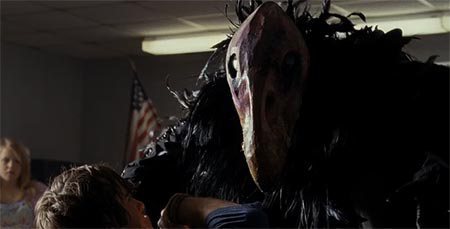
Here’s the thing, though: My Soul to Take is actually a lot better than that. I think the problem is that it’s a creature out of place and out of time. Almost a decade-and-a-half earlier, Craven and writer Kevin Williamson–who would reteam directly on Scream 4–had created a new boom in the teen slasher genre with the original Scream. This led to a variety of attempts to capitalize on the fad, including stuff like I Know What You Did Last Summer and Urban Legend to name just a few. My Soul to Take is a late entry into that particular pantheon, hearkening back to the old early-80s slashers that were as much about whodunits as they were about body counts. It is probably that very lateness to the party that plays a big part in why My Soul to Take is so widely discounted, though you’d think the fact that it’s helmed by the guy who kickstarted the renaissance would buy it at least a little more consideration.
As such, My Soul to Take isn’t actually great at being a horror film. What it is good at is being a supernaturally-tinged whodunit, even if its supernatural angle is more than a little under cooked, and its ultimate reveal has… some problems. It’s a movie that would benefit enormously from a bigger investment in setting–the little town has character, but we don’t spend enough time with it to really get the most out of it–and more time developing its various characters and sub-plots. Because where My Soul to Take leaves most of its equally half-baked competition in the dust is in its dramatis personae.
See, on the surface, the Riverton Seven–our cast of characters, and also, of course, of suspects–are the stock cut-outs that populate pretty much all of these movies, generic enough that they could practically have come from a send-up like Cabin in the Woods. But My Soul to Take plays them, at least at the beginning, like characters from a high school comedy, instead of a “dead teenagers” flick, which helps to carry the rest of the movie through its most formulaic moments.
It doesn’t hurt that most of the actors are good, with Max Thieriot (who we would later see as Norman Bates’ dissolute half-brother in Bates Motel) anchoring the picture as the twitchy Bug, required to be able to switch personalities as dictated by the film’s (admittedly) rather convoluted central conceit. John Magaro (who I recently saw as one of the start-up guys in The Big Short) plays his predictably wise-cracking best friend from an abusive home, but the two lend their characters enough verisimilitude and have enough chemistry together that we can actually believe that they’re best friends, separating this from, y’know, 80% of similar fare.
Most of the other actors acquit themselves well enough, with poor Frank Grillo being given almost nothing to do as the town cop who knows all the secrets, Danai Gurira (Michonne on The Walking Dead) as an EMT with spiritual insights (of course) whose part seems like it got cut down from some longer, better movie, and Emily Meade bringing a nice physicality to a late-game scene with Fang, the villain from a high school comedy given something different to work with here.
Of course, My Soul to Take is a hell of a long ways from perfect, and there’s plenty of dumb stuff in there. (The killer’s knife saying “Vengeance” on it for no reason except to make sure that we can easily identify it throughout.) It’s nowhere near the best of Craven’s work but it also isn’t, as several critics have claimed, the worst thing he ever did. (I think they’re forgetting Cursed and Swamp Thing and Vampire in Brooklyn and my new favorite “so bad it’s good” go-to Deadly Friend.)
Frankly, it’s probably better than the first couple of Scream sequels–and certainly better than The Ward, John Carpenter’s return to the genre after an even longer hiatus, which likely deserves all those adjectives from the critical consensus above–and it makes a nice companion piece to the also-somewhat-better-than-workmanlike Red Eye from five years before. In the end, if there had never been a Scream 4 and this had been the last film Wes Craven left behind, he wouldn’t exactly have gone out with a bang, but he wouldn’t have had anything (new) to be ashamed of, either.


April 2, 2016
Purged
I recently–in front of The Witch, I think, inappropriately enough–saw the trailer for the third installment of the Purge franchise, which is coming out this summer under the fairly cute title The Purge: Election Year, and remembered that I’d heard that the first two movies in the series were better than I expected, so I decided it was time to track them down and give them a shot before the third one came out. I’m not sorry.
I think that I initially skipped The Purge (2013) because it looked like another in the glut of home invasion movies that we’d been getting, and the home invasion genre has never really been my thing. And while I guess it is a home invasion movie in the strictest sense, what it actually is is another remake of Assault on Precinct 13. This probably shouldn’t be surprising, since the writer/director of the entire Purge franchise was also the screenwriter of the 2005 version of Assault, which also starred Ethan Hawke, just in case the parallels were too subtle for you otherwise.
The Purge: Anarchy (2014), meanwhile, is pretty clearly the movie that The Purge always wanted to be, but had to wait until its second installment due to budgetary restrictions. While it still owes a big, big debt to John Carpenter movies, this one is more Escape from New York than Assault, taking its action to the streets as it follows a man out for revenge and four innocent bystanders caught–for one reason or another–out in the open during the Annual Purge. Frank Grillo–whose character, spoilers, apparently returns in the third film–anchors the movie in a role that feels like he’s practicing for a part as the Punisher that he’ll probably never get now that it went to Jon Bernthal instead. (Or maybe he was just warming up to play Crossbones in the Captain America movies.) Michael Kenneth Williams (Leonard from Hap & Leonard) also makes a brief appearance as the resistance leader with a name that could probably have dropped straight out of Escape from New York, Carmelo Johns.
Besides being decently directed and capable–at times–of generating tension, what makes the Purge franchise better than you’d expect is its ambition. In addition to their not-always-credible-but-always-thinking-big world building, these films want to be the kinds of violent social commentary that we used to get in movies like They Live and Robocop. While the titular Purge itself is sold, within the world of the movies, as an opportunity for individuals to “purge” themselves of their violent feelings once a year, thereby keeping crime rates down and everyone safe the rest of the time, what it is instead is an opportunity for the rich to “purge” the streets of “undesirables,” ie, the poor. If this was too subtle for you in the first movie (it wasn’t), it’s made explicit in Anarchy, when one character explains that people weren’t killing each other off in large enough numbers on their own, so professional teams were sent into the poor neighborhoods to pick off people who weren’t participating.
Along with its not-very-subtle take on class warfare, The Purge franchise also takes occasional aim at the gun lobby, and it’s probably no accident that the logo for the new political movement responsible for the Purge could be mistaken for the NRA if you squint.



