
Orrin Grey's Blog: Shovel Murders & Monologues, page 41
October 14, 2015
Painted Monsters: “The White Prince”
For the month of October, as part of the Countdown to Halloween, I’ll be revisiting each of the thirteen stories in Painted Monsters & Other Strange Beasts and suggesting movies that pair well with them, for your viewing pleasure!
The second story in Painted Monsters is also the one that has probably the least connection to cinema. “The White Prince” was written for Steve Berman’s incubus anthology Handsome Devil: Stories of Sin and Seduction, and when I wrote it what I had in mind were the early treatments of vampires in novels and stories.
That said, just about any cinematic adaptation of Bram Stoker’s Dracula seems like it would be an appropriate pairing. Most people have probably already seen the 1931 Bela Lugosi version and the 1992 Francis Ford Coppola version, so to go along with your reading of “The White Prince” I recommend the Spanish-language version that was filmed at night on the same sets that Lugosi and company were using to film their version during the day, or the 1979 version starring Frank Langella, whose hands do more acting than most actors who portrayed the sinister and seductive count throughout the years.



October 12, 2015
Painted Monsters: “The Worm That Gnaws”
For the month of October, as part of the Countdown to Halloween, I’ll be revisiting each of the thirteen stories in
Painted Monsters & Other Strange Beasts
and suggesting movies that pair well with them, for your viewing pleasure!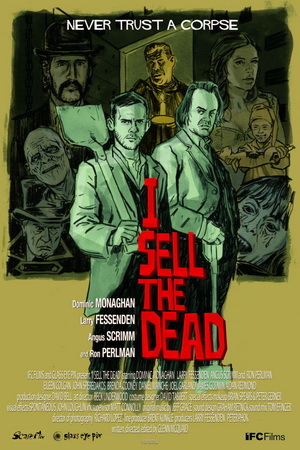
It’s still October 13 (for about another hour), so what better time to begin my countdown of the thirteen tales that make up Painted Monsters & Other Strange Beasts. We’ll begin with an old favorite, the oldest story in the book, in fact, though this is also its first time in print: “The Worm That Gnaws”
“The Worm That Gnaws” was written partly as an exercise in atmosphere, but mostly to see if I could capture a certain accent: the thick Edinburgh accent associated with movie grave robbers and resurrection men. It was first produced as an audio version at Pseudopod, way back in 2009. Ian Stuart nailed the voice so perfectly that it remains my preferred version of the story, and also guarantees that I can never read it aloud myself; there’s not way I could even come close to doing it the same justice that he does.
I’ve always loved grave robbers and resurrection men–those individuals, long of need and short on scruples, who provided cadavers for the medical schools of old. Probably partly inspired by the real-life duo of Burke and Hare, grave robbing pairs made frequent appearances in the early horror cinema, often providing comic relief. A good example can be found in the opening minutes of Frankenstein Meets the Wolf Man.
There were a few movies made that were overtly about grave robbers, including The Flesh and the Fiends and The Doctor and the Devils, but my favorite is probably also the earliest, a 1945 adaptation of the Robert Louis Stevenson story The Body Snatcher, produced by Val Lewton and directed by Robert Wise. The film stars Boris Karloff in a meatier-than-usual role as a sinister grave robber named John Gray, who no doubt went a long toward influencing the character of Wolfe in “The Worm That Gnaws.”
When I first wrote this story, I had not yet seen Glenn McQuaid’s brilliant 2008 horror comedy I Sell the Dead, which is probably good, because if I had, I might have thrown in the towel and assumed that everything that needed to be done with grave robbers and supernatural horror had been done. While the story was written with those movies from the 30s and 40s in mind, there’s probably no better film to pair it with that McQuaid’s own love letter to the (sub)genre. Plus, if they ever were to adapt “The Worm That Gnaws” to the screen, I can think of much worse people to play Wolfe than Larry Fessenden.


Countdown to Halloween 2015: Painted Monsters
Lo, I come stumbling forth from my crypt to inform you that I am once again participating in the Countdown to Halloween this year, and while I’m off to something of a late start, I plan to keep the ball rolling a little more reliably than I have in past years. To that end, I have a plan.
As you may have noticed, Painted Monsters & Other Strange Beasts was just released on an unsuspecting populace, and I’ll be spending the whole month promoting it in a hopefully-not-too-annoying way. While other authors have paired their stories with soundtracks or cocktail recipes, my own sphere of expertise and the theme of my collection suggest some other possibilities, so for the remainder of the month I’ll be discussing each of the thirteen stories in Painted Monsters and suggesting movies that go well with that story.
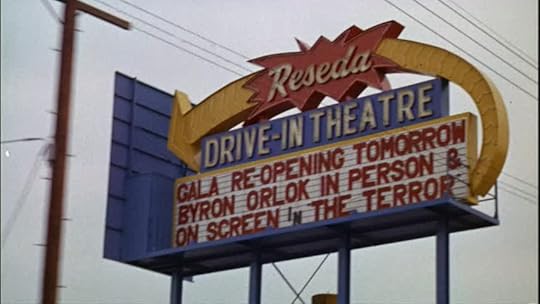
Painted Monsters was conceived as a follow-up to my previous collection, certainly, but also as a sort of crash course in the history of horror cinema, as told through stories inspired by movies from across the decades. From silent films to found footage, there’s hopefully a little something for every horror or weird fiction fan in Painted Monsters. I’ll be suggesting movies both obvious and not-so-obvious that either influenced the stories or that simply pair well with them. To get you started, the title and epigraph of the collection come from the 1968 Peter Bogdanovich film Targets, which provides a pretty succinct dissertation on the way that horror cinema was changing from before the 1960s to after. It’s also a good place to begin your viewing.
If you pre-ordered your copy of Painted Monsters direct from Word Horde HQ it should be shipping out as we speak, so you’ll have it in your hands directly. Once you do, follow along as I take you through each story in turn, and we also watch some horror movies–some classic, some forgotten, some ridiculous, some sublime–together!


October 8, 2015
HPLFF 2015
I’m a few days back from the H.P. Lovecraft Film Festival and sufficiently recovered as to make a token effort at a wrap-up post. As always, I had a great time at what is consistently my favorite convention/festival/gathering of the year, with my only complaint being that there is never enough time for all the people I want to see, movies I want to watch, and things I want to do. (Nor, for that matter, enough money for all the things I want to buy.)
Of course, the big news for me this year is that Painted Monsters & Other Strange Beasts is now a real, actual, physical book that real human beings (including myself) have now seen and touched and–given how long some peoples’ flights home were–maybe even read! My fantastic publisher was in attendance, and he brought a box of books so that we had copies to sell and sign at the mass author signing event on Saturday morning. I got to flip through my new book–which, if anything, looks even better in person–and smell that new book smell. It remains a pretty heady experience.
I actually flew into Portland on Wednesday night, and Mike and Lena Griffin were kind enough to pick me up from the airport and give me the run of their place Wednesday night and all day Thursday until it was time to fetch Justin Steele from the airport and deposit me at the Banfield, where I was rooming with some of my oldest and dearest friends, Reyna and Gavin Sparby. Our room at the Banfield this year was remarkably free of kicked-in doors, blood stains, or millipedes, though we overheard someone reporting a “mysterious pool of liquid” in one of the other rooms, which sounded about right. The greatest mysteries our room contained were a massive, faux-leather headboard about as big as the bed itself, a missing toilet paper roll holder, and a bathroom mirror that was clearly doing an inadequate job of covering up a hole in the wall. Oh Banfield, you are as inextricably a part of the HPLFF experience as anything.
While we were waiting for the HPLFF proper to kick off, the Kickstarter for Simon Berman’s latest project The Book of Starry Wisdom launched on October 1. I contributed an essay to this incredible tome, in which I talk about “The Call of Cthulhu,” Descartes, In the Mouth of Madness, and epistemological certainty. You’ve got until the end of the month to get this thing backed, and there are some nice stretch goals waiting in the wings, so everybody take a break from reading this and go throw some money into Simon’s hat so he’ll stop beating me.
The biggest change between this HPLFF and previous years is that I actually watched any movies this year. I had gone in with one big goal: to see City of the Dead aka Horror Hotel, a black-and-white 1960 Christopher Lee picture that I’d never seen before. Unfortunately, fate stood in the way, and my reading was scheduled opposite its only showing on Friday night. And because Amanda Downum and I are real, big time professionals, we did not put up an “IOU one reading” sign and go see Christopher Lee instead.
Later that evening, however, I did see the first of four feature films and a handful of shorts that I would watch over the weekend, making my total HPLFF 2015 film viewing almost fully double the sum of all the film viewing I did at both previous HPLFFs. That first night was Extraordinary Tales, and I also caught Final Prayer (aka The Borderlands), which Trevor Henderson has been on me to watch forever, as well as Black Mountain Side and a Greek film called The Winter. All of them were solid except The Winter, which would have made a good short, but felt stretched at 105 minutes. Black Mountain Side–about which I knew literally nothing going in–turned out to be my favorite film of the fest, and it seems that I wasn’t alone, since it took home the statue for Best Feature Film. Most of the actual shorts I saw were disappointing, and I was unfortunately compelled to miss The Mill at Calder’s End, since I was moderating a panel on cosmic horror in film at the time.
Maybe the best thing I got to see at the whole festival, though, was a live performance of Ask Lovecraft, in which I got to ask Lovecraft how many fish he could name. I am ashamed to say that I had never actually watched any episodes of Ask Lovecraft prior to this, though I knew Leeman from Facebook and from the TOC of Resonator and various other interactions, and getting to hang out with him in person–both in and out of character–was one of the real treats of the whole festival for me. In some ways, I’m glad that this was my first exposure to Ask Lovecraft, because getting to see it live for the first time was a unique pleasure.
The festival had a lot of other highlights, including a big robot named D.A.G.O.N. that hugged Simon and told him “There there, human. It’s okay that your life has no meaning.” As has been the case at previous festivals, most of the time that I didn’t spend doing something else I spent eating delicious food or hanging out on the back patio of the Moon & Sixpence. There were people I got to see a lot of and, as always, lots more people I didn’t see nearly as often as I would have liked. I did shake Jeffrey Combs’ hand, and also ran into him in the upstairs bathroom of the Hollywood Theatre. I know that he got passed a copy of the special HPLFF issue of Strange Aeons magazine, in which I wrote an extensive appreciation of his work, but it might be for the best if he never reads it, since I lovingly discussed Doctor Mordrid at some length.
Speaking of extensive, Monday while I was still wrapping up my festival, a very lengthy round table that I did with Adam Cesare before leaving went live on his monthly Paper Cuts column over at Cemetery Dance Online. In it, we hash out our favorite movie monsters of each decade, and discuss items of important interest like whether or not Michael Myers is a monster, my panhandling skills, swearing in PG-13 movies, whether or not metaphors count as monsters, and that comic book rack from The Mist. Because we are really good at staying on topic, is what I’m saying.
Since I didn’t fly out until Monday afternoon, Amanda and Josh and I went exploring at the Witch House, which was down a long trail full of fallen trees straight out of the spider pit sequence from King Kong. In spite of everything that movies and stories have taught us, we survived the experience, and Josh even found $20, which we assume meant that the witches were pleased with us. We also made the obligatory stop by Powell’s books, and discussed the necessity of an app that replaces the navigational voice on our phones with the Deer God from Black Mountain Side.
Upon arriving home, I had the pleasure of announcing that I’ll be hosting a FREE screening of Dario Argento’s Deep Red at the Tapcade here in KC, where you’ll have a chance to win copies of both Painted Monsters and Giallo Fantastique! More on that as it draws closer, and I return ever more to what passes for a human state around these parts. As for the HPLFF, apologies to all the people I failed to mention in this post, it was a joy and a pleasure as always, and I’m already looking forward to next year!


September 27, 2015
Words & Appearances
In just a few short days I’ll be catching a plane to Portland for the 20th anniversary of the H.P. Lovecraft Film Festival. This will be my third consecutive year as a guest of the festival, and it’s always a great time. There’ll be movies, of course, including a black-and-white 1960 Christopher Lee flick that I’ve never seen before, and way cooler guests than me, like Dr. Herbert West himself Jeffrey Combs! What’s more, Ross Lockhart and I are planning to debut Painted Monsters & Other Strange Beasts at the festival, which only seems fitting. If you’re going to be there, we should have copies, and if you’re not it’s available for pre-order from the Word Horde site.
Partly to help boost awareness about the book, I’ve been doing a lot of interviews lately, and a few of them have already gone up, with some more–including at least one that I’m very excited about–waiting in the wings. First off, I answered a few questions from Word Horde’s new social media manager Sean M. Thompson about monsters, the role of genre in fiction, and buying clothes for skeletons:
Don’t get me wrong, I love thoughtful, meditative horror as much as anyone, stories that stick with you, that carry a hefty thematic weight and leave you thinking, and I hope that my stuff manages that at least some of the time. But most of my favorite horror stories also have something of the spook house in them. Something of the carnival barker challenging you to “Step right up!” It’s why House on Haunted Hill sits right alongside The Haunting in my personal pantheon, and always will.
Sean also interviewed the great Nick Gucker, who provided the fantastic cover art for Painted Monsters. Not content with answers to those more restrained questions, Mr. Thompson also hit me with a Random Ass Interview, in which we talked Del Toro films, zombies biting vampires (and vice versa), and how I became a skeleton who likes monsters. In the meantime, I also participated in author Scott Cole’s brilliant 20Q7A interview series, in which participants are all asked the same 20 questions, but are only allowed to answer 7 of them. I talked about movie monsters, comics, and what food I would eat for the rest of my life.
It’s not an interview with me, but Scott Nicolay recently talked with phenomenal up-and-comer Daniel Mills on his stunningly great Outer Dark podcast, during which Daniel had some extraordinarily kind things to say about Painted Monsters and yours truly:
Orrin is one of those writers who… he makes it look effortless. His stories are so… they’re so approachable, they’re so easy to read, and by the end of them you’ve somehow become turned around.
Like I said, I’ve got some more stuff coming up very soon, but you may not hear a lot from me between now and when I get back from the HPLFF, by which time Painted Monsters should be a real thing that I’ve physically held in my hands. If you follow me on social media, you can also expect pictures and sporadic updates from the festival itself. More soon!


September 14, 2015


September 11, 2015
Painted Monsters TOC
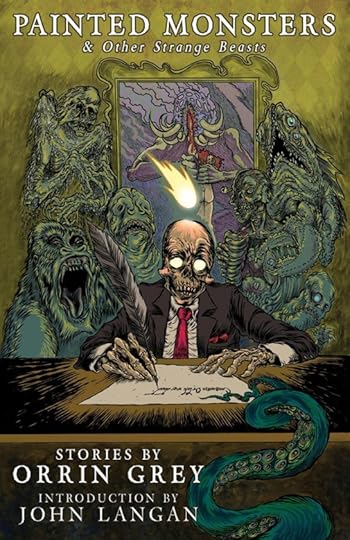
So, it’s been a big day for me. This morning I woke up to a notification that the Pseudopod production of my story “Night’s Foul Bird” had been mentioned on Entertainment Weekly! This is good timing, because “Night’s Foul Bird” is being reprinted in Painted Monsters & Other Strange Beasts, which is coming out in October from the good folks at Word Horde and just went up for preorder this morning as well! Expect a reveal of the amazing cover featuring art by Nick Gucker next week, and lots more rambling about the collection in the weeks to come. For now, I’ll talk just a bit about the genesis of the book, and then give you the exclusive reveal of the table of contents.
The title of Painted Monsters came from the 1968 Peter Bogdanovich film Targets, in which an aging Boris Karloff basically playing himself says, “My kind of horror is not horror anymore. No one’s afraid of a painted monster.” That line stuck with me, and the movie that it’s in felt so much like a meditation on the way that horror films were changing in the 60s, what they gained and what they lost, that when it came time to put my collection together, I knew that I wanted to use that quote as the epigram, and that I wanted the collection to explore the changing face of horror cinema. So while this is my second fiction collection, featuring a lot of the stories that I wrote between when Never Bet the Devil came out and now, it’s also been specifically chosen to highlight stories that are inspired by horror cinema, and organized so that the stories go through the history of horror, starting with silent films and working up to kaiju movies, Giallo films, and found footage. The title novelette–which is one of three stories completely original to the collection–is kind of a crash course across horror movie history, and also maybe the most me thing I’ve ever written.
Painted Monsters consists of thirteen stories, three of which, like I said, are entirely new to the collection. Another, “The Worm That Gnaws,” has previously only appeared on Pseudopod, while yet another, “Remains,” was only available as part of the special all-fiction issue of Strange Aeons offered to backers of the 2014 HPLFF Kickstarter. So without any (further) ado, here’s the table of contents for Painted Monsters & Other Strange Beasts:
Introduction by John Langan
The Worm That Gnaws
The White Prince
Night’s Foul Bird
The Murders on Morgue Street*
Ripperology
Walpurgisnacht
The Red Church
Remains
The Labyrinth of Sleep
Lovecrafting
Persistence of Vision
Strange Beast*
Painted Monsters*
* Titles marked with an asterisk are original to the collection.


September 7, 2015
Masters of the Universe (1987)

Happy Halloween from Frank Langella!
So, Masters of the Universe recently showed up on Netflix streaming, and I decided that I would live-tweet my viewing of it. Before diving in, I was under the impression that I had seen it before, back when it was new, which would have meant that I was about 6 years old. Having now watched it at 33, I think I was mistaken about that, because I did not remember one single, solitary thing about the movie. Not even vague impressions. So, how is Masters of the Universe when you see it for the first time as an adult? Well, better than I expected, actually, though that’s not saying much, since I expected it to hit roughly Troll 2 levels of magnificent incompetence.
I knew, going in, that it bore very little resemblance to the toy line/cartoon show that inspired it, but for some reason (probably the many, many pictures of a shirtless, sword-wielding Dolph Lundgren that decorated its advertising campaign) I was expecting something more in the vein of assorted Conan-alikes a la Beastmaster, and instead I got something wedged midway between Star Wars and Flash Gordon. The Star Wars parallels are particularly egregious, with Frank Langella’s Skeletor looking a lot like Emperor Palpatine, using weird purple Force lightning, and even falling down a big long mechanical pit at the end, not to mention the budget stormtrooper-wannabes who make up his army, or the fact that the music mostly sounds like rejected tracks from the Star Wars score. The Flash Gordon elements come up more in the costumes which, honestly, are kinda the high point of the whole shebang. Of special note are Skeletor’s leveled-up boss armor, Meg Foster’s Evil-Lyn outfit, and the Sorceress’ hat, which looks like it was made out of my grandma’s chandelier. Some of the bad guys look pretty great, too, although the best one, Saurod, is also the first one to get killed off, presumably because his makeup was the most expensive. (He was, incidentally, played by a guy whose real name sounds like it could have come straight outta Star Wars: Pons Maar.)
Also a surprise to me was that Masters of the Universe had what I think of as “the Beastmaster 2 storyline” where they all traveled to “present day” earth. (Although Masters of the Universe came out several years before Beastmaster 2, so it would be more accurate to say that Beastmaster 2 had the Masters of the Universe storyline.)
None of which should indicate to anyone that Masters of the Universe is actually good. Frank Langella does his best with what he’s got, but that ain’t much, and Meg Foster seems a little pissed about being in every scene that she’s in, which works for the constantly-put-upon Evil-Lyn, but Dolph Lundgren gives probably the worst line-reads of a career not exactly known for its nuanced portrayals, his sweaty bare chest doing most of the acting for him, and even a very young Courteney Cox delivers all of her lines like she’s talking to someone over the shoulder of whoever she’s actually supposed to be speaking to. Still, if you’re looking for silly space fantasy with goofy costumes and decent actors performing shamefacedly, you could do worse than checking out Masters of the Universe while it’s on Netflix streaming. If you go in with a bar set low enough, you might even be pleasantly surprised!


August 31, 2015
“I’m into survival…”
I’m saddened by the passing of Wes Craven, though I don’t think I ever followed his career assiduously enough to be considered a fan. Like any other horror buff my age, Scream was a big deal for me when it hit theatres, even though prior to it I’m not actually positive I had seen more than maybe one or two Wes Craven films. Of course, I grew up with Freddy, just as I did with Jason and Michael Myers, but, like with those other two, I grew up with the sequels to the original movies, and never saw the ones that started it all until I was already an adult. I’ve still never seen any of Craven’s pre-Nightmare films, except the so-bad-its-good Swamp Thing. Maybe this will be the impetus I need to finally check some of them out…
If A Nightmare on Elm Street was the only thing that Wes Craven had contributed to our collective mythology, that would have been enough to cement his position as a legend in the field. While its legacy may have been diluted by sequels, the original Nightmare on Elm Street remains one of the weirdest and most potent horror films ever made, with imagery as indelible as any ever committed to celluloid, and ideas that are more surreal and bizarre than you would imagine possible in something that launched a franchise and effectively built a movie studio.
Of course, Nightmare isn’t Wes Craven’s only legacy. He’d already made a name for himself by the time Freddy Krueger slunk onto cinema screens, and he continued to create horror flicks long after, giving him one of the most consistent filmographies in the business. And while that filmography is loaded with as many duds as gems, it’s difficult to deny Craven’s impact on the genre. As Kim Newman said on Facebook, “Wes Craven reinvented horror at least four times – most directors don’t even manage it once.”
It’s impossible to talk about Craven without talking about Scream and Nightmare, but a big one for me from his “lesser” works has always been The Serpent and the Rainbow, starring a pre-Independence Day Bill Pullman. And of course, we need to mention best/worst movie contender Deadly Friend. As Ross Lockhart observed, who else would have given us this ridiculous thing?
So here’s to you, Wes. Given some of the dominant themes of your oeuvre, it seems somehow inappropriate to say “rest in peace,” so instead I’ll content myself with celebrating the work of a master of horror, and second Thomas Boatwright‘s suggestion that we consider this the official kickoff of Halloween for this year.


August 21, 2015
“The Thing cannot be described…”
 Yesterday was the 125th birthday of that cantankerous Old Gent from Providence himself, HP Lovecraft. Today, just about everyone I know is at the NecronomiCon in Providence, a convention celebrating the works and influence of one of the most important writers in the history of weird fiction, even as debates continue to rage within the genre about his racism, and various other problematic aspects of his life and work.
My name is one that is, I think, pretty closely tied to Lovecraft’s, whether I want it to be or not. Of the fifty-plus stories that I’ve published or sold to various places over the years, more a dozen have been in explicitly Lovecraft-themed publications, the most recent being Ross Lockhart’s Cthulhu Fhtagn! which was just released from Word Horde. In October I’ll be attending my third consecutive HP Lovecraft Film Festival as a guest. I don’t guess I get to deny that I’m a Lovecraftian writer, but at the same time, I’ve worked very hard to avoid dipping more than just the very tips of my toes into what I think of as the Mythos, instead taking cues from Lovecraft’s themes, the atmosphere of his tales, and running with those.
For last year’s HPLFF, I drove from Kansas City to Portland, picking up fellow guest and good friend Jesse Bullington on the way. During the long drive through countryside that was at turns bleak and beautiful, we talked of many things, and one of the topics that came up was “Why Lovecraft?” What was it about the man that made his legacy endure, while others were, if not forgotten, then certainly not remembered with such fervor by so many? I hypothesized that Lovecraft’s lasting influence had a lot to do with the fact that he was a kind of crossroads where many prior traditions of weird and supernatural fiction intersected, and from whence they then spread out again to go their various new directions. It’s a thought that I expanded upon a bit for my contribution to last year’s online DelToroCon.
Like a lot of people–maybe most people, in this day and age–Lovecraft was essentially my introduction to weird fiction. I came to Lovecraft by way of Stephen King, whose obvious homages to him in stories like “Jerusalem’s Lot” led me inexorably to checking out the work of the Old Gent himself. From there, Lovecraft was both the key and the door to an entire pantheon, not of hideous and ancient god-monsters, but of other writers of weird and spectral fiction both before and since.
On that same long car ride with Jesse, while acknowledging that I was considered a Lovecraftian writer, I said that, in a more perfect–or perhaps simply more accurate–world, I would instead be known as a Bensonian writer, or a Jamesian one (MR, not Henry), or a Hodgsonian or a Wellmanian one, and so on. Lovecraft was my introduction to that world, and as such he will always have a place in my DNA, but as far as the shape that my own writing has taken, there are hordes of other names that share at least equal blame in making me the creator that I am today. Jean Ray, Fritz Leiber, Roger Zelazny, Richard Matheson, Clive Barker, and countless others all threw their particular influences into the mix. And of course none of that is even mentioning movies, which have had a huge impact on my imagination and my writing, or the person who is undoubtedly my greatest influence, Mike Mignola.
Mignola has a story that he tells in interviews, about how it was reading Dracula that made him really realize that all he wanted to do was draw and tell stories about monsters. My similar clarifying moment came about as a result of reading Mignola’s own work on his ever-expanding Hellboy universe. The fact that Mignola–like Lovecraft–proved to be a portal through which I discovered many of the other writers and creators who have most influenced me was icing on the cake.
So here’s to you, Mr. Lovecraft. If you’re not already chilling with the ghouls in the Dreamlands, may our continued excavations leave you and all your forebears and descendants restless in your graves.


