Nancy Lawrence's Blog, page 6
March 12, 2019
Stories from Quarry Bank
Not long ago I wrote a post for the Austen Authors blog about Charles Bingley, a character in Jane Austen’s Pride and Prejudice. (You can click on the Austen Authors logo to read the post.)
If you’ve read Austen’s classic novel, you know that Charles Bingley and his sisters are quite wealthy by the standards of their day. They certainly enjoyed the finer things in life and spent their money freely on travel, clothes, and large, expensive homes. Austen told us the Bingley siblings inherited their wealth from their father, and that the family fortune had been “acquired by trade.”
I’ve often believed “trade” meant ownership in a textile mill, a belief I explained in the Austen Authors post. Also in the post, I wondered what kind of mill owner the Bingley’s father would have been.
My opinion has always been that the elder Mr. Bingley would have been among the enlightened brand of mill owners. By that, I mean that he treated his employees with respect and probably established churches and schools for his workers. I based my theory on research I did about Quarry Bank, a real-life mill founded in 1784 in Manchester, England.
At the time I wrote that post, I didn’t know there was a book about Quarry Bank Mill that described the workers and the conditions at the mill. Nor was I aware English television had broadcast a dramatic series that told the stories of the children who worked at the real Quarry Bank Mill.
I haven’t seen the series, but last week I discovered the book on Amazon. You can click on the book cover to read more about it
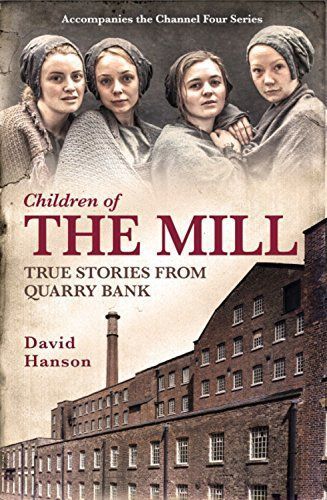
I just ordered my copy, and it’s on it’s way (Thank you, Prime two-day-shipping!).
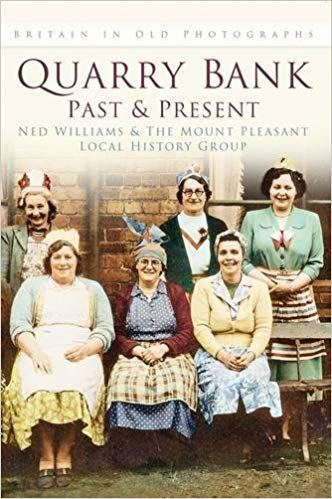
On a whim, I switched from the U.S. Amazon site to the U.K. Amazon site to see if I could find a DVD of the TV series. Lo, and behold, Amazon U.K. has quite a few books about Quarry Bank Mill! Oh, how I wish I had known about them before!
This book, for example, is only 128 pages long, but contains over 250 pictures of life at the mill:
And this one really piqued my interest:
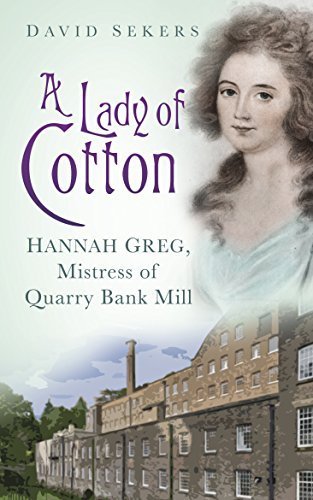
It tells the story of the wife of Quarry Bank Mill’s owner, and her life-long efforts to improve the education, health and welfare of Quarry Bank’s workers.
Both of these books are must-haves for me! And if you’re a fan of North and South (another classic novel that centers around early English Textile mills), or ever wondered how those Bingleys got so rich, you may find these books of interest, too.
If you’ve read any of these books, I’d love to know what you think of them!


March 5, 2019
Symbolic Armor
I’m an American fascinated with all things British, especially manor houses. In my Yankee mind, every English country house has a butler, a stable full of horses, and an ominous-looking suit of armor standing guard in the hall near the front door.
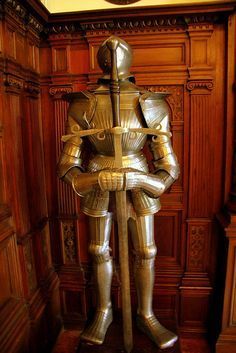
Suit of Armor inside Peles Castle, Romania (from Pinterest)
But then, a funny thing happened.
While browsing through The Metropolitan Museum of Art collections, I came across this eighteenth century helmet and shield, and all my previous fascinations with battle armor went out the window.
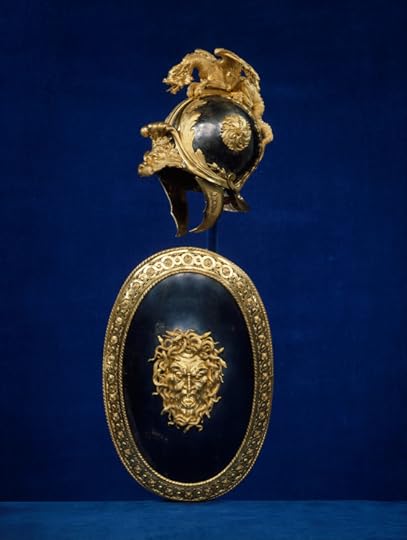
It’s gorgeous! No clunky, clanking armor here; just beautiful design, plenty of gilt, and a deep blue patina that makes every beautiful detail stand out.
This kind of armor was symbolic, rather than functional. Its design was based on Classical themes that remind me of Greek and Roman heroes.
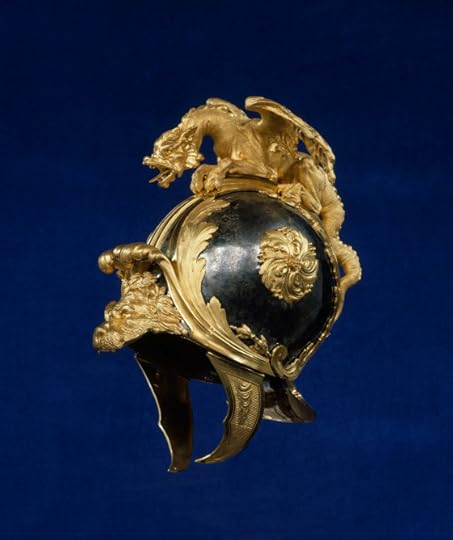
It’s also the kind of armor that was created to impress all who saw it. Very probably it graced an important place in a grand castle or estate, in the same way we’d hang a Monet or Rembrandt so it could be viewed and admired.
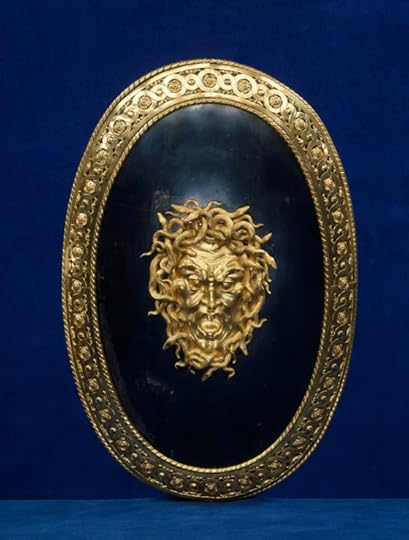
Thanks to this display at The Met I now have an entirely new take on armor, and a new bit of inspiration to use when I want to imagine the luxurious interior of a great English country house.
If you’d like to know more about this helmet and shield (as well as other armor on display), follow this link to The Met’s website.
March 2, 2019
Jane Austen’s Novels Are . . .
. . . not romances nor are they historical fiction. So, how do we Janeites describe her novels to someone who has never read them before?
I’m tackling that question on the Austen Authors blog today. Please click on the link below and share your opinion!
February 27, 2019
Baby, It’s Cold Outside
For the past few weeks we’ve been in a
deep-freeze in Colorado. Before going outside I have to bundle up in multiple
layers of clothing, before I don my warmest coat, gloves, and hat.

I may not look very stylish; but under the
circumstances, I’m much more interested in being warm than fashionable.

Not so for the gentlemen pictured in this post. They’re dressed to meet the winter elements while still maintaining a strong sense of Regency style.
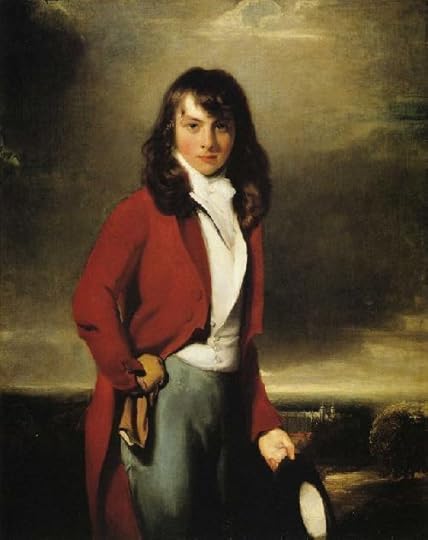
Their coats appear to be made of different types of wools, while their coat collars are fashioned from velvets and furs.
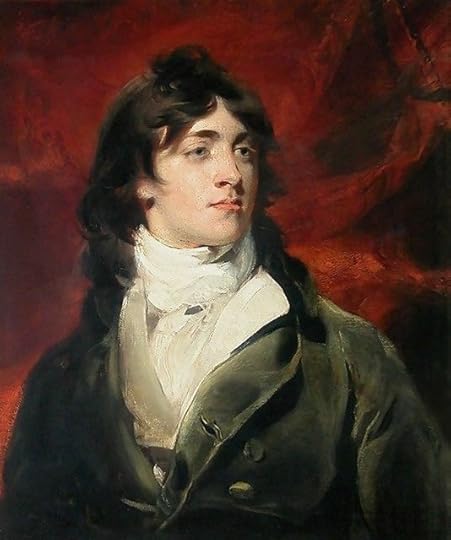
In our modern times people don’t wear fur. We have the technology to create fabrics and garments that insulate us from cold, so we don’t need to rely on animal hides for warmth; that wasn’t the case for people who lived through in the late 1700s and early 1800s.
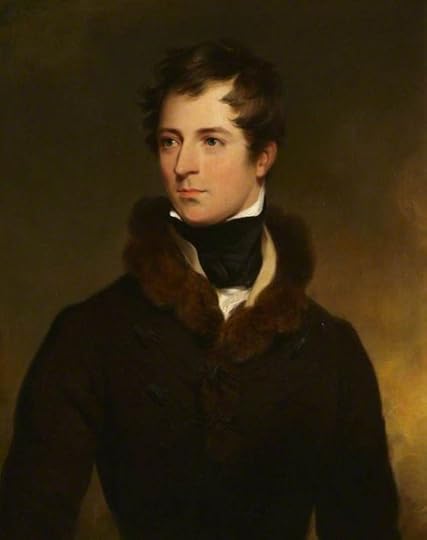 William Willoughby Cole (1807-1886), 3rd Earl of Enniskillen; by william Robinson
What I like about these images is that I can sense the weight of the garments these gentlemen are wearing. They look pretty substantial—like they might have some weight to them.
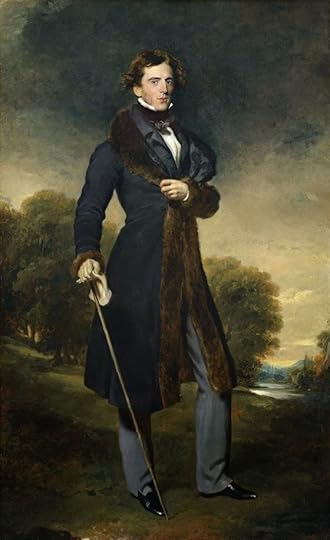
I also think the luxurious fabrics and furs serve as a visual reminder of each gentleman’s wealth and stature; not everyone could afford to wear fine furs.
 John Arthur Douglas Bloomfield, 2nd Baron Bloomfield, 1819.
These images are part of my collection of men’s wear illustrations; I refer to them when I want to generally describe a gentleman dressed for a cold winter’s day in England . . . . which, I’m beginning to suspect, feel very similar to a cold day in Colorado!
February 14, 2019
Happy Valentine’s Day!
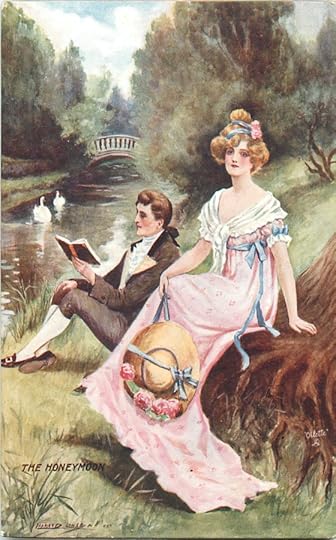
The title of this piece is “The Honeymoon.” I rather like the romantic setting, as the newlyweds relax together on a grassy slope beside a gentle brook, while a pair of swans glide by. Do you suppose the gentleman is reading poetry to the lady?
February 5, 2019
Smokin’ Hot Literary Characters
Back in the day when cigarette smoking was cool (and some physicians actually prescribed cigarette smoking to their patients!) tobacco companies invested heavily in advertising.
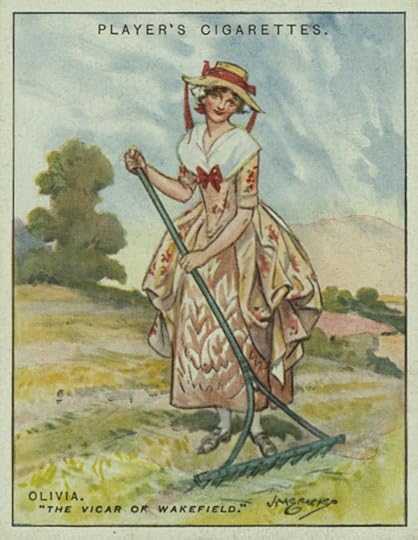
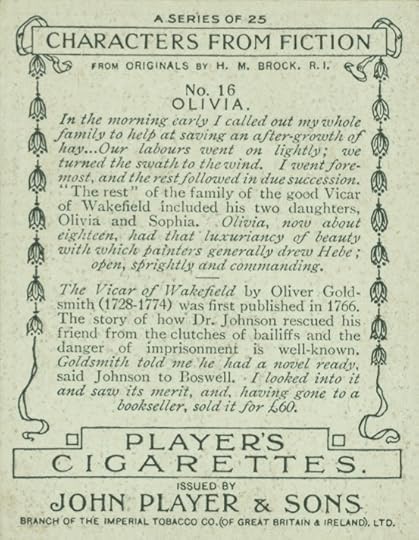
One of the most successful and effective methods for spreading the word about cigarettes was through printed cigarette cards.
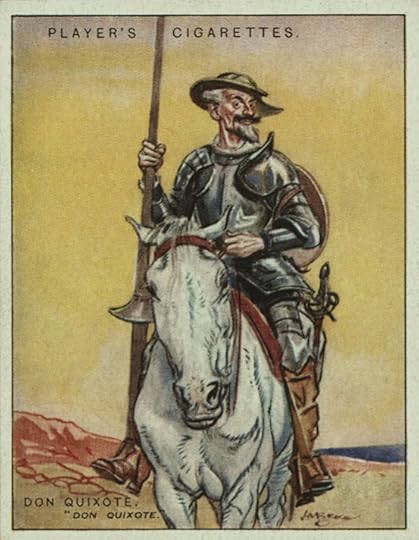
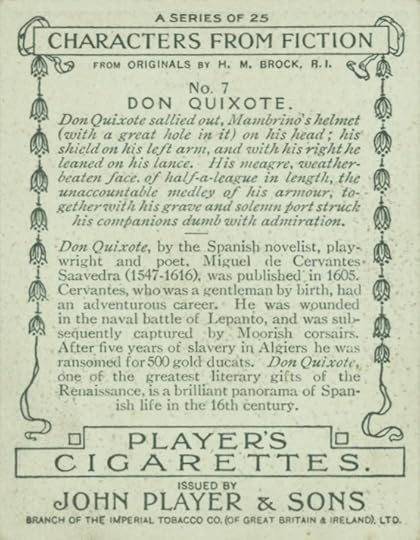
Issued between 1885 and the beginning of World War II, pictorial cards were extremely popular with consumers. Each cigarette pack included a collectible card and a bit of history, which might have helped smokers justify wasting their money and health on the wicked weed.
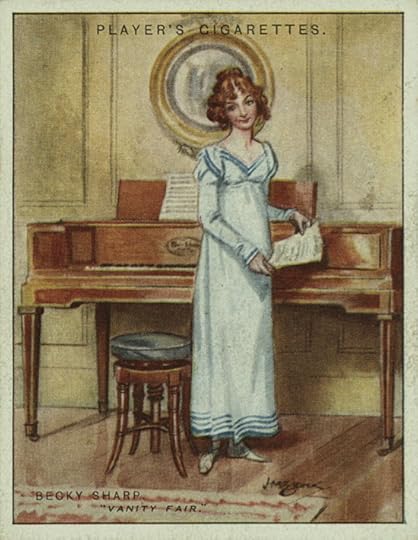
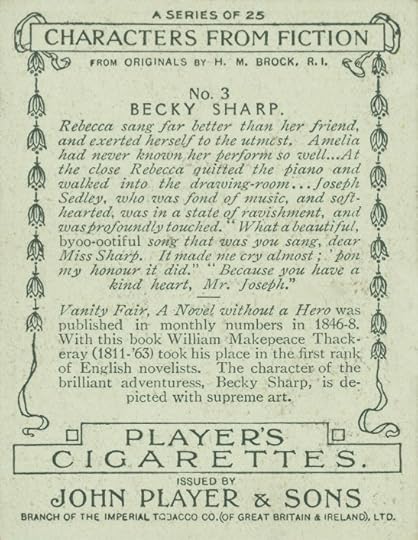
In England, John Player & Sons (a branch of The Imperial Tobacco Company) was arguably the most popular producer of collectible cards. They typically issued their cards in sets and encouraged consumers to collect them all.
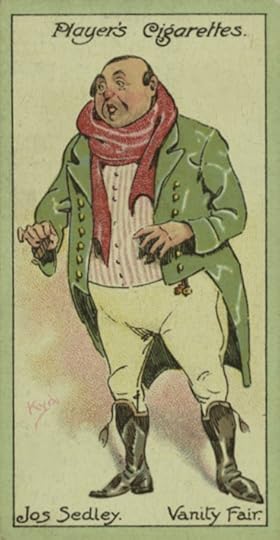
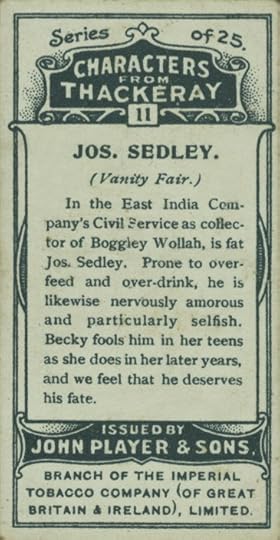
The company issued hundreds of different sets, some containing as many as 50 individual cards. The most popular sets featured images of royalty, with collectible sets depicting kings and queens, coronations, castles, and highlighted events from a particular monarch’s reign.
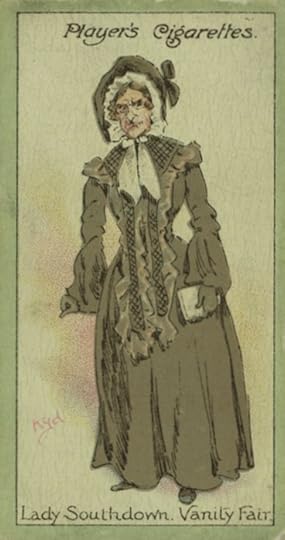
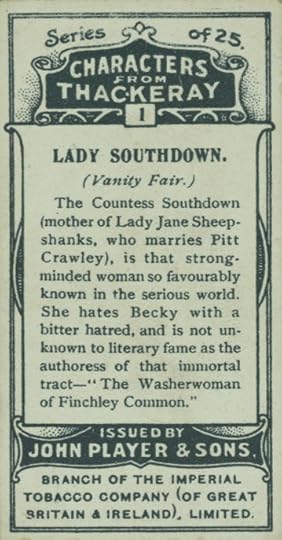
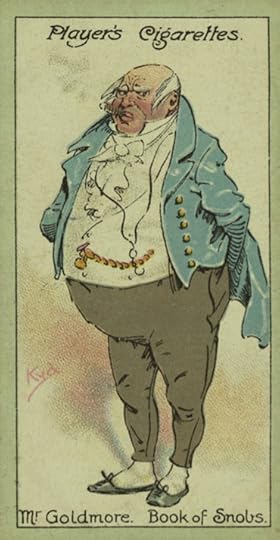
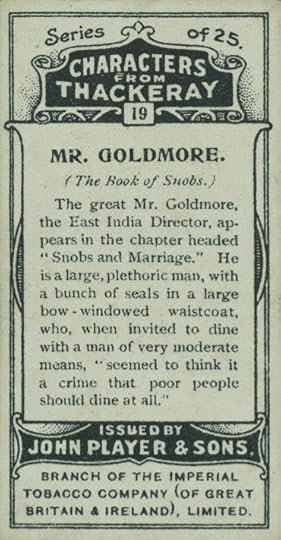
While not quite as popular, the company also issued about a dozen sets dedicated to literary characters. Dickens was very popular; Thackeray and Scott had their own sets, too.
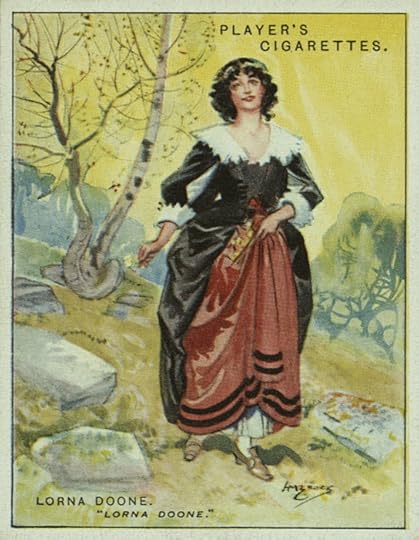
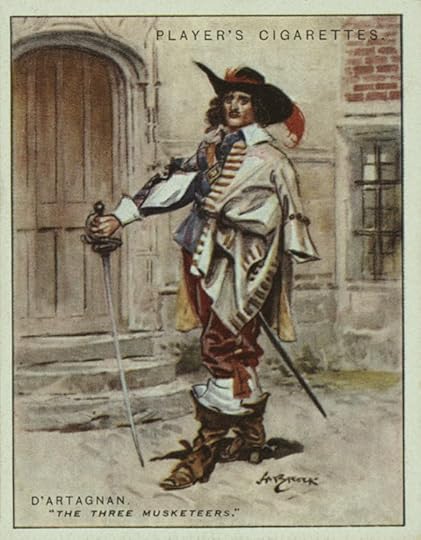
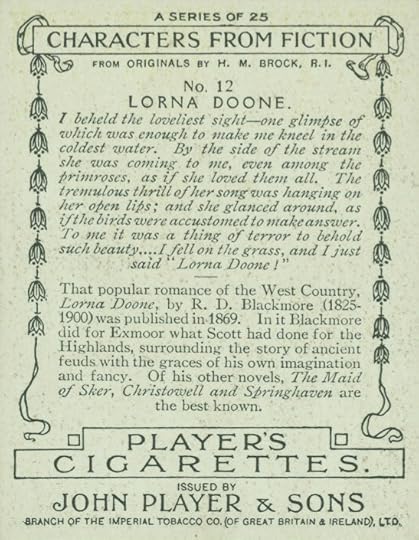 The images in this post give a sampling of characters from books published in 1766 to the mid-1800s. Some of the artwork was produced by major artists, including H. M. (Henry Matthew) Brock, British illustrator of Jane Austen’s novels.
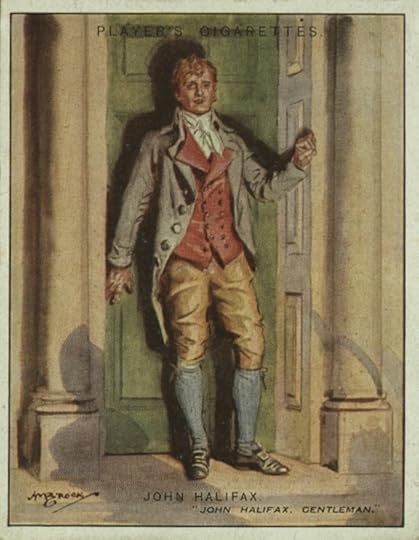
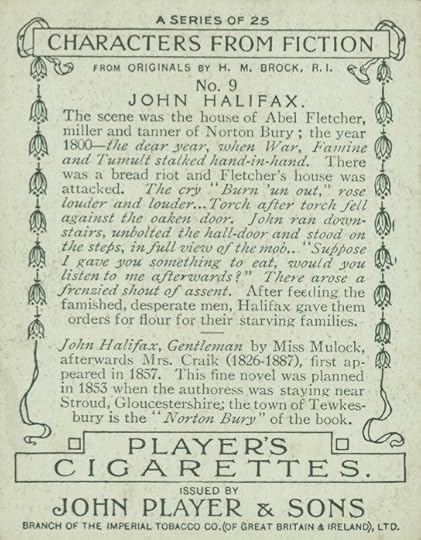
I like these particular images, because they coincide with the way I imagined the characters in my head when I read the books.
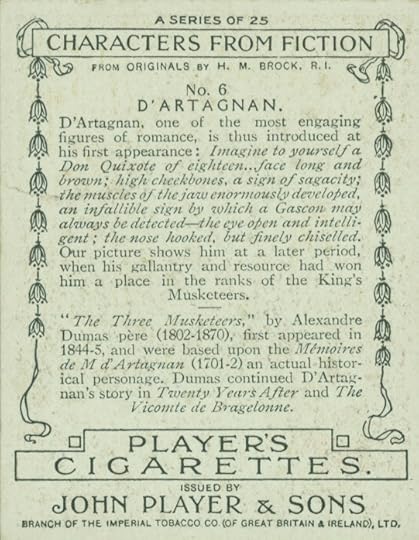
An added bonus: the Cliffs-Notes-style descriptions of the books on the reverse side of the cards, which gave just enough information about the characters and the plots for smokers to converse intelligently about classic novels while they smoked themselves to death.
My favorite cards are the three characters from Vanity Fair: Becky Sharp, Jos Sedley, and Lady Southdown.
What do you think: Are the characters portrayed on these cards as you imagined they would look?
February 2, 2019
Confessions of a Lookie-Loo
Be a Lookie-Loo with me and take a peek into Elizabeth Bennet’s bed chamber at the Inn at Lambton!
I’m on Austen Authors today discussing rooms and places in Jane Austen’s novels that haven’t been depicted in movie adaptations. Please click on the image to join me!
January 29, 2019
A Jigsaw Puzzle for You!
It’s National Puzzle Day. If you’re like me and enjoy solving puzzles of all kinds, here’s one of the jigsaw variety.
This puzzle will reveal a scene that might be in the beginning chapter of a Regency or Austen-inspired romance.
Ready to solve the puzzle? Just click on the puzzle pieces to solve the jigsaw puzzle online.
If you need help, click on the image below to see what the entire finished puzzle will look like.

Once you’re done, I hope you’ll comment and tell me how you liked solving the puzzle.
Have fun!
January 23, 2019
I’m Giving Away Books!
Shame on Santa. He brought me new books for Christmas, but neglected to bring the shelves to put them on.
That means I have to get rid of some of my
existing books to make room for my new treasures.
If you’re a book-lover living in the U.S., and you’re interested in history and all things English, I’d love to send you one of my research books FOR FREE!
All you have to do is promise to give it a good
home.
Here are the books I’m giving away this month:
The London Mob; Violence and Disorder in Eighteenth-Century England, by Robert Shoemaker
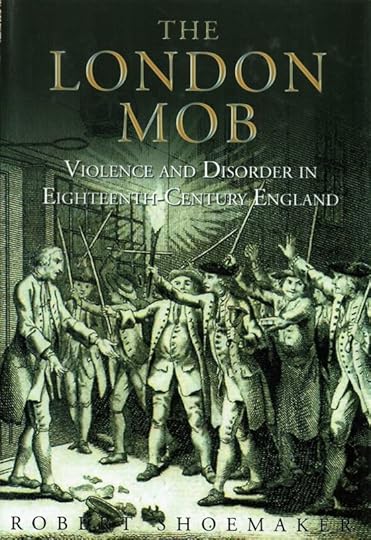
About the book: By 1700 London was the largest city in Europe, with over 500,000 inhabitants. Weakly policed, its streets saw regular outbreaks of rioting by a mob easily stirred by economic grievances, politics or religion. If the mob vented its anger more often on property than people, eighteenth-century Londers frequently came to blows over personal disputes in a society where men and women were quick to defend their honour. Slanging matches easily turned to fisticuffs and slights on honour were avenged in duels. In this world, where the detection and prosecution of crime was the part of the business of the citizen, punishment was public and expected to be endorsed by crowds. The London Mob draws a fascinating portrait of the public life of the modern world’s first great city. This is a hardback book with original dust cover.
Heroines, by Norma Lorre Goodrich
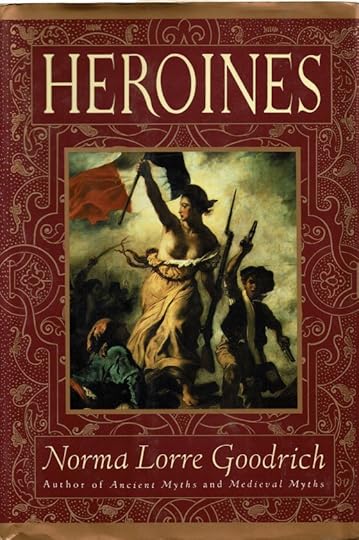
About the book: Norma Lorre Goodrich, world-renowned Arthurian scholar and historian, turns her attention to female heroes whose valor, fortitude, fearlessness, brilliance and fame have defined and defied women’s roles throughout the ages. She traces the core archetypes of women in ancient history, shows how the stories have descended through the ages, and examines the historical truths behind the myths. From legendary “Good” women to Amazons, fallen women to Joan of Arc, Goodrich examines the female legends on which today’s grand operas, classic novels, and beloved movies are based. This is a hardback book with original dust cover.
Mrs. Keppel and Her Daughter, by Diana Souhami
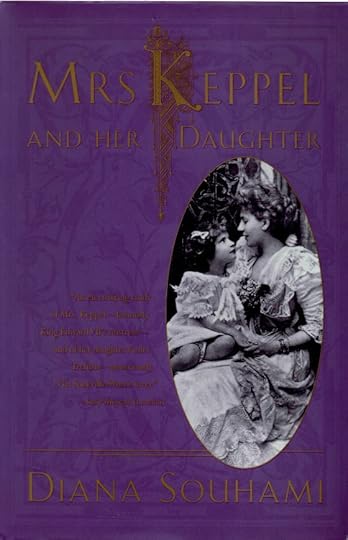
About the book: Alice Keppel, the married lover of Queen Victoria’s eldest son and great-grandmother to Camilla Parker-Bowles, was a key figure in Edwardian society. Hers was the acceptable face of adultery; discretion was her hallmark. It was her art to be the king’s mistress, all the while lauding the Royal Family and the institution of marriage. Formidable and manipulative, her attentions to the king brought her wealth, power, and status.
Her daughter Violet Trefusis had a long and tempestuous affair with author and aristocrat Vita Sackville-West, during which Vita left her husband and two sons to travel the world with Violet.
From memoirs, diaries, and letters, this is a fascinating portrayal of two strong women, their complicated relationship, and the duplicity and double-standards of the world in which they lived. This is a hardback book with original dust cover.
The Man Who Would Be King, the Life of Philippe D’Orleans, Regent of France, by Christine Pevitt
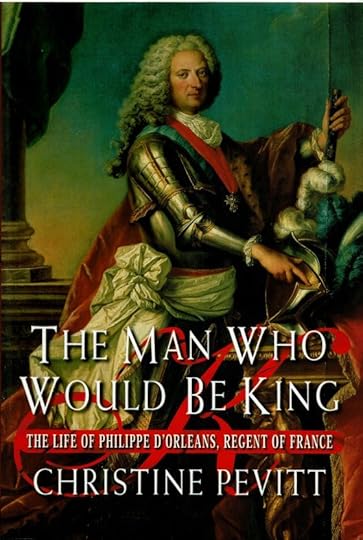
About the book: When Louis XIV, the Sun King, died in 1715, his five-year-old great-grandson succeeded him as King Louis XV. But real power passed to the new Regent, the man who became the de facto ruler of France, Philippe, duc d’Orleans. This biography examines the character of a man whose scandalous reputation has almost overwhelmed his many extraordinary qualities. He earned a reputation as a philanderer and a rake, but he was also intelligent, diligent, loyal, and brave. At a time when Europe was enjoying the dawn of the Enlightenment, Philippe d’Orleans established France as the very center of the intellectual and artistic ferment. This is a hardback book with original dust cover.
If you reside in the USA and would like to have one of these hardback books, leave a comment below, telling me which title you want.
If none of these titles sound like your cup of tea, please check back regularly. I’ll have more research books to give away in the next week or two!
January 14, 2019
Remembering Alan Rickman
Actor Alan Rickman passed away on this date in 2016.
He was a beloved actor known for many roles, including the villain in the first Die Hard movie, and Professor Severus Snape in the Harry Potter movies.

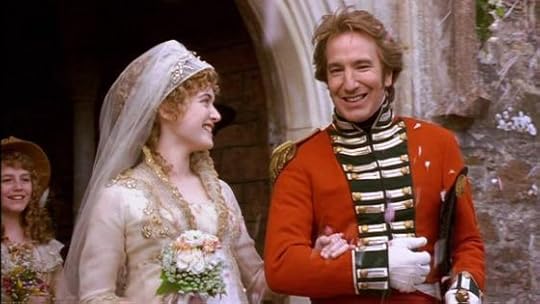
But I’ll always think of Alan Rickman as the perfectly honorable, perfectly romantic Colonel Brandon in Sense and Sensibility (1995).
Here’s one of Alan’s performances you may not have seen yet. He joins a stellar cast of British actors (including Imelda Staunton, Geraldine McEwan, Bill Patterson, and Victoria Wood) in a delicious bit of silliness for Regency and Jane Austen fans. Enjoy!