Beth Tabler's Blog, page 211
November 22, 2021
Short Story – Sunbird by Neil Gaiman
 Beth Tabler
  Sunbird by Neil Gaiman Purchase Here
 Neil Gaiman, Sunbird My Thoughts“Oh, Mandy,” sighed Virginia Boote. “When you’ve tasted one beetle, you’ve tasted them all. And we all tasted several hundred species. At least the dung bee- tles had a real kick to them.” “No,” said Jackie Newhouse, “that was the dung-beetle balls. The beetles them- selves were singularly unexceptional. Still, I take your point. We have scaled the heights of gastronomy, we have plunged down into the depths of gustation. We have become cosmonauts exploring undreamed-of worlds of delectation and gourmanderie.” ―
Sunbird by Neil Gaiman is a glorious story. Imagine a group of foodies, gourmands if you will. That have tasted everything. Not just run of the mill foods. No they have scoured the world for pill bugs, dung beetles, flamingos, and dolphinfish. They have taken a bite out of life. They have tried everything and are getting bored, because if you have tried one dung beetle, face it, you have tried them all. But, maybe there is one creature out there they have not tried.. Or have they?
“THEY WERE A RICH AND A ROWDY BUNCH at the Epicurean Club in those days. They certainly knew how to party. There were five of them: There was Augustus TwoFeathers McCoy, big enough for three men, who ate enough for four men and who drank enough for five. His great-grandfather had founded the Epicurean Club with the proceeds of a tontine which he had taken great pains, in the traditional manner, to ensure that he had collected in full. ”
Poultry Ala Sunbird
Ingredients:
1 chicken1 can of cider, 1/3 filled1 sprig rosemary1 sprig sage½ tsp. dried lavender1 tsp. cardamom½ tsp. coriander seedFill the can of cider with the spices and herbs. Place the can inside the chicken, and stand it up in a pot. Cover with aluminum foil, and cook for around 1 hour. While it’s cooking, make the sauce (below).Remove the chicken from the oven, and let rest for 15 minutes.Discard the can and carve the bird. Drizzle with sauce, and serve hot.Sauce
Cook’s Notes: Of all the quirky ingredients that went into the description of this dish, patchouli was the only one I didn’t have on hand. Feel free to improvise according to what’s in your own pantry!
Ingredients:
1 stick butter (½ cup)1 clove garlic, minced2/3 can cider½ cup apple cider vinegar2 Tbs. honey½ tsp. red sandalwood powder½ tsp. ground grains of paradise¼ tsp. ground cinnamonpinch of clovespinch of nutmeg1 vanilla bean1 Tbs. molasses1 Tbs. worcestershire sauce1 Tbs. fresh orange or lemon juiceDirections:
Melt butter in a large saucepan. Add the garlic and sautee until soft. Add the rest of the ingredients and simmer for around 40 minutes, stirring occasionally, until it has thickened. Turn off the heat, add the citrus juice, and stir to incorporate. Serve immediately.Link to Recipe Sunbird by Neil Gaiman is so much fun. You can read it in 30 mins, and get a whole lot of joy out of it. Give it a try. Check Out Some of Neil Gaiman's Other StoriesReview of Hansel and Gretel by Neil Gaiman
If You Liked This - Please Share the Love Where to find it? Procurement This was part of the Unnatural Creatures story collection. About the Author
Neil Gaiman’s work has been honoured with many awards internationally, including the Newbery and Carnegie Medals. His books and stories have also been honoured with 4 Hugos, 2 Nebulas, 1 World Fantasy Award, 4 Bram Stoker Awards, 6 Locus Awards, 2 British SF Awards, 1 British Fantasy Award, 3 Geffens, 1 International Horror Guild Award and 2 Mythopoeic Awards. Full list here.
Beth Tabler
Elizabeth Tabler runs Beforewegoblog and is constantly immersed in fantasy stories. She was at one time an architect but divides her time now between her family in Portland, Oregon, and as many book worlds as she can get her hands on. She is also a huge fan of Self Published fantasy and is on Team Qwillery as a judge for SPFBO5. You will find her with a coffee in one hand and her iPad in the other. Find her on: Goodreads / Instagram / Pinterest / Twitter


November 21, 2021
Short Story – The Griffin and the Minor Canon by Frank Stockton jr.
Beth Tabler  The Griffin and the Minor Canon by Frank R. Stockton Purchase Here
 Frank R. Stockton, The Griffin and the Minor Canon My ThoughtsWhat could I do?” cried the young man. “If I should not bring him he would come himself and, perhaps, end by setting fire to the town with his red-hot tail.―
The Griffin and the Minor Canon is one of the older short stories from Unnatural creatures, but it has stood the test of time.
Stockton was a popular humorist from the late 19th and early 20th century. The Griffin and the Minor Canon has a current of humor flowing through it that has an ageless quality to it. Especially on the part of the griffin, who although is not the protagonist, steals the story from the get go. He reminds me much of an old blustery English gentlemen crossed with Scrooge McDuck. He absolutely can not understand what all the fuss is about, but if you people don’t mind your P’s and Q’s he will remind you what true manners are.
“OVER THE GREAT DOOR OF AN OLD, old church which stood in a quiet town of a far-away land there was carved in stone the figure of a large griffin. The old-time sculptor had done his work with great care, but the image he had made was not a pleasant one to look at. It had a large head, with an enormous open mouth and savage teeth; from its back arose great wings, armed with sharp hooks and prongs; it had stout legs in front, with projecting claws, but there were no legs behind, the body running out into a long and powerful tail, finished off at the end with a barbed point. This tail was coiled up under him, the end sticking up just back of his wings. ”
Even after all this time, The Griffin and the Minor Canon holds up as a timeless story that you can enjoy repeatedly.
It is all highly entertaining, and a very fun read.
Check Out These Other StoriesHansel and Gretel by Neil Gaiman
If You Liked This - Please Share the Love Where to find it? Procurement This is part of the Unnatural Creatures story collection. About the Author
Frank Richard Stockton (April 5, 1834 – April 20, 1902) was an American writer and humorist, best known today for a series of innovative children’s fairy tales that were widely popular during the last decades of the 19th century.
Beth Tabler Elizabeth Tabler runs Beforewegoblog and is constantly immersed in fantasy stories. She was at one time an architect but divides her time now between her family in Portland, Oregon, and as many book worlds as she can get her hands on. She is also a huge fan of Self Published fantasy and is on Team Qwillery as a judge for SPFBO5. You will find her with a coffee in one hand and her iPad in the other. Find her on: Goodreads / Instagram / Pinterest / Twitter
Short Story – Damage by David D. Levine
Beth Tabler 4/5 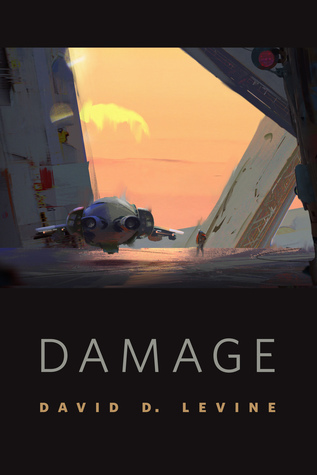 Damage by David D. Levine
 David D. Levine, Damage About In the extremities of war, we may know what we’ve been, but not what we will become. “Damage” is a tale of desperate times, desperate measures, and the inner life of a fighter spacecraft. Stats ebook, 25 pagesPublished January 21st 2015 by Tor BooksOriginal Title DamageISBN1466886056 (ISBN13: 9781466886056)Edition Language EnglishLiterary AwardsNebula Award Nominee for Best Short Story (2015)Theodore Sturgeon Memorial Award Nominee (2016) My Thoughts“I know. And I’m sorry.” She paused, and I listened to the breath in her headset mic. From what I could hear, she was alone in the ops center, but I had no access to her biologicals—I could only guess what she was feeling. Whereas my own state of mind was laid out on her control panel like a disassembled engine. “I’ve done what I can, but . . .”―
Whether for good, like in this story or evil like HAL 9000 from 2001 Space Odyssey, emotional artificial intelligence is a well-used trope in science fiction. It hits on all the essential aspects that make readers empathize with the characters. Computers are objects that humans know intimately. Yet, they are “other.” Not human and never will be until becoming sentient. Then all bets are off, and we get an engaging and thoughtful story like in Damage by David D. Levine.
Damage involves a sensitive AI protagonist, JB6847, but affectionally nicknamed Scraps. Scraps is the combination of parts from two space crafts joined anew like Frankenstein’s monster. She refers to herself as a Frankenship. Scraps is made up of not only the parts of the two broken ships, but also the memories of those ships—even the moments before death and the death of the ship’s crew. Ships can have conscious thought within parameters and with that a sense of right and wrong. The reason why the ship is sentient never came through quite clearly, but sentient ships are also a well-loved trope in science fiction.
“Whereas I—I was a frankenship, a stitched-together flying wreck, a compendium of agony and defeat and death unworthy of so fine a pilot.”
The one consistency in the coding of the scraps consciousness is the love and adoration of her commander. In this case, Commander Ziegler. But he sees her as nothing more than a means to end. It is a troubled relationship, as we see and hear Scrap’s pain and obeying while the commander is unaware or does not care. At the same time, Scraps fights off PTSD from her memories from the other two ships and how they met fiery ends. She is terrified of dying, but soldiers on because the commander wills it so.
All of this leads up to the terrifying choice that Scraps will have to make. Will her own experience and ethics prevail over the commander’s decisions and her love for him.
Damage touches on a lot of familiar ground, but I found the story engaging and moving. I empathized with this AI and the emotional drain of having to please two masters, herself and the captain. As a reader with an outside of the story, I had a different view of the situations she faces. And could see and understand her moral quandary and commander’s personality when not blinded by love. But Levine writes this well by adding a bit of ambiguity to some of the choices Scraps makes. Life is rarely about black and white choices, but the shades of gray. No bad guy truly believes they are the villain. Scrap’s choices added more humanity to Scrap’s character because if a computer starts to understand nuance, pain, and fear, the line that divides what is human and what is not blurs.
“Yes, sir.” Valkyrie had used chaff, of course. Memories of fear and pain and tearing metal filled my mind; I pushed them away. My pilot’s talents, my speed and skill, and my enduring love for him would keep us safe. They would have to, or the Free Belt would fall.”
David Levine, Damage“That was brilliant flying, sir,” I said to Commander Ziegler as we returned to Vanguard Station.―
The commander’s character is one dimensional; he is a figurehead, an idol in Scraps world. However, the tech’s role that patched up Scraps and had initially named her has a much larger and more critical role in Scrap’s life. Tech shows Scraps kindness. It is in stark contrast to the commander’s ambivalence. I viewed The Tech as Scraps’s mother, while the commander is the father whom Scraps always wants to please. Scraps had to make her own choices, outside of the influence of her father to grow up.
I enjoyed this story, and I found it deserving of it’s Hugo nomination. Scraps is a lovable character. The plotting was well done, and the moral quandary that Scraps faces, although I wasn’t surprised by, I still enjoyed reading. Damage is an excellent story to read, and at 7k words is a nice bite-sized piece of science fiction.
If You Liked This - Please Share the Love Where to find it? About the Author
David D. Levine is the author of novel Arabella of Mars (Tor 2016) and over fifty SF and fantasy stories. His story “Tk’Tk’Tk” won the Hugo Award, and he has been shortlisted for awards including the Hugo, Nebula, Campbell, and Sturgeon. Stories have appeared in Asimov’s, Analog, F&SF, and five Year’s Best anthologies as well as award-winning collection Space Magic from Wheatland Press.
David is a contributor to George R. R. Martin’s bestselling shared-world series Wild Cards. He is also a member of publishing cooperative Book View Cafe and of nonprofit organization Oregon Science Fiction Conventions Inc. He has narrated podcasts for Escape Pod, PodCastle, and StarShipSofa, and his video “Dr. Talon’s Letter to the Editor” was a finalist for the Parsec Award. In 2010 he spent two weeks at a simulated Mars base in the Utah desert.
Where to Find Them
David lives in Portland, Oregon with his wife Kate Yule. His web site is www.daviddlevine.com.
Beth Tabler Elizabeth Tabler runs Beforewegoblog and is constantly immersed in fantasy stories. She was at one time an architect but divides her time now between her family in Portland, Oregon, and as many book worlds as she can get her hands on. She is also a huge fan of Self Published fantasy and is on Team Qwillery as a judge for SPFBO5. You will find her with a coffee in one hand and her iPad in the other. Find her on: Goodreads / Instagram / Pinterest / Twitter
November 20, 2021
Short Story – Inksplot by Gahan Wilson
Beth Tabler Inksplot by Gahan Wilson Purchase Here Gahan Wilson, Inksplot AboutHe had barely done it when he heard Faulks give a small cry of despair. He turned to see the old fellow wringing his hands in abject misery. “I just blinked, sir!” he quavered. “Only blinked!” ―
GAHAN WILSON is a cartoonist. He draws things that scare me. Sometimes he writes stories too. In this story, with a somewhat unpronounceable title (you’ll see why), he combines writing and drawing with terrifying results, to show us a most unnatural creature indeed.
One morning, beside the eggs and toast, there’s a dark spot on the tablecloth, and where it came from, no one knows. The only certainty is that the moment one stops looking at it, it moves. And as it moves, it grows….
StatsInksplot, AKA Blot and *, is perhaps Gahan Wilson’s best known short story, appearing first in 1972 in Harlan Ellison’s Again, Dangerous Visions. The story is only 15 pages long with 1.5 of those pages as graphics. The story appeared again as the first story featured in Unnatural Creatures by Neil Gaiman.
My ThoughtsAnything and everything is scary if you look hard enough. Even a ink spot on a blotter.
A seemingly innocent ink splotch, a smirch, a smear and a smudge. What if it moved from one space to another. Appearing on the wall, the floor, eventually on the dog? What does one do with an unnatural creature like a blot that keeps getting bigger and bigger.
Do you run?
Or do you stay to see what happens?

Gahan Wilson, InksplotA spot. Nothing more. Black, as you see, somewhat lopsided, as you seean unprepossesing, unpretentious spot.―
Read this very entertaining story and get a glimpse into what a very proper English gentlemen did.
If You Liked This - Please Share the Love Procurement I read this as part of the Unatural Creatures collection by Neil Gaiman.

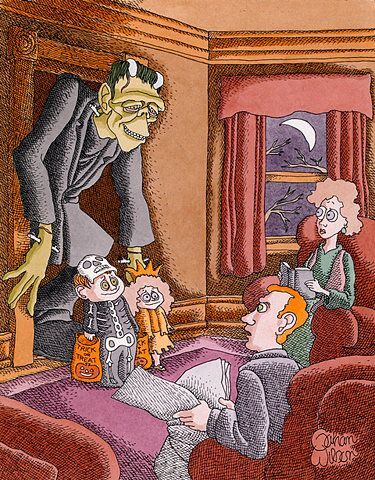
 Bonus comics from Gahan Wilson - Most are featured in Playboy Magazine.

 About the Author
Gahan Wilson is an author, cartoonist, and illustrator in the United States.
Beth Tabler
Elizabeth Tabler runs Beforewegoblog and is constantly immersed in fantasy stories. She was at one time an architect but divides her time now between her family in Portland, Oregon, and as many book worlds as she can get her hands on. She is also a huge fan of Self Published fantasy and is on Team Qwillery as a judge for SPFBO5. You will find her with a coffee in one hand and her iPad in the other. Find her on: Goodreads / Instagram / Pinterest / Twitter
November 17, 2021
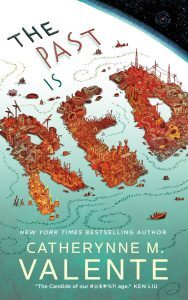
An Interview with Catherynne Valente, Author of The Past is Red
 catherynne m. valente "...I wrote Apples very quickly, it was very much all there before I set one word to paper. I think the stripped-down style was also helped by two things: one, I had done some media tie-in work recently, which requires pulling back on my own signature stylings quite a bit, so I was in good practice. But also, to be blunt, I had had a baby about a year before and I was just tired. I’m still tired! Which I think is weirdly serving me pretty well! The tired balances out my predilection for purple prose and makes everything run damn smooth and just terribly accessible. Because I think we’re all tired at this point...."
 Catherynne Valente is the author of over twenty books, several novellas, and a long list of short fiction. Her most recent, The Past Is Red, a post-climate change story of the last of humanity sailing on a pile of floating garbage, has been my favorite book I’ve read this year. Her newest, Comfort Me With Apples, a genre-defying not-quite-horror not-quite-thriller not-quite-fairytale comes out November 9th. I was thrilled to get a chance to interview her.
[RHM] First off, The Past is Red was so far my favorite book of the year, and a large part of that was Tetley’s voice. How did you know you had the voice right? Was it difficult coming back to that specific voice after the initial novelette?
 [CV] The voice arrived in my head with the first line of the short story and simply never left. Tetley was her own self from the jump, and I just followed where she led. I’ve always felt odd about other writers saying that—we make our characters, we are in control! But now I have to eat garbage-crow, because Tetley just appeared in my skull like Athena, determined to crack her way out. The story lives or dies on Tetley’s voice, if you like it, you’re in, if you don’t, my apologies. It’s also the most fun to write—the dichotomy between her joyful love of the world and conviction that it, and the people in it, is good and right, contrasted with the absolute grim horror of the reality of that world as it exists around her is pretty endlessly fertile ground.
That said, it was a bit tough getting back into that voice. I wrote The Future Is Blue, the first quarter of this volume, in the beginning of 2016. I wrote The Past Is Red in 2020. A LOT HAPPENED TO MY OPTIMISM GLANDS IN THAT TIME. It felt daunting to climb Mt. Joyful Girl again, and I wondered if I could get it back, make it last for much, much longer than a short story. The concepts of Mister and Big Red Mars pulled me through. I knew if I could get to them, I could pull it off. So Tetley is perhaps a little more cynical, a little more damaged, but her core is as it always was, a big summer sun shining on literal Sesame Street.
[RHM] With The Past is Red and Comfort Me With Apples coming out so close together, what scenes from each would you use to pitch new readers to pick them up?
[CV] I usually use the participation trophies scene to sell people on The Past Is Red. I knew I would the day I wrote it—being a writer sometimes involves that kind of time travel. It re-frames the oft-mocked concept of participation trophies through the eyes of someone just trying to eat enough to survive, who sees them literally and unquestioningly, not as something stupid and wasteful, but as something extraordinary. Stripped of cultural context, participation trophies shine.
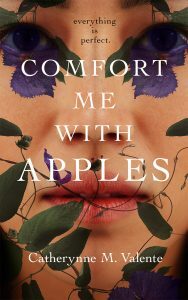 Comfort Me With Apples is a tough one because it has such a massive twist that we’ve worked so hard not to spoil in the lead-up to its release (and reviewers have kindly helped out!) so I would likely just read the first chapter, which sets up Sophia and her ever-so-slightly off existence, as well as the first of the hilariously specific HOA bylaws she lives under. All without giving away the game.
[RHM] Your writing tends to have a lot of voice, but this was purposefully reduced in Comfort Me With Apples, as Sophia has a more muted, naive personality than many of your protagonists. How hard was it to write a more stripped-down story?
[CV] It wasn’t at all, really. The voice serves the story, it’s not idiosyncratic for its own sake. Because of who Sophia is and what is happening to her, as well as the literary magic trick I’m trying to pull off, her voice couldn’t be too specific, or it would cease to feel in any way universal. Too much style would obscure this story, which takes its tone from more traditional suburban thrillers.
I wrote Apples very quickly, it was very much all there before I set one word to paper. I think the stripped-down style was also helped by two things: one, I had done some media tie-in work recently, which requires pulling back on my own signature stylings quite a bit, so I was in good practice. But also, to be blunt, I had had a baby about a year before and I was just tired. I’m still tired! Which I think is weirdly serving me pretty well! The tired balances out my predilection for purple prose and makes everything run damn smooth and just terribly accessible. Because I think we’re all tired at this point.
[RHM] Given Sophia’s personality, were you worried about people’s reactions to her?
[CV] I mean, it nearly killed me to write a perfect housewife who is so entirely fulfilled by that. Sophia might be the most alien character I’ve ever created—at least, alien to me. But I think that pretty quickly, she becomes sympathetic, as her world starts to crumble and she takes on some agency seeking after the truth. I don’t know if people will love her the way they love Tetley, but I feel pretty confident they will feel sorry for her, and that’s good enough for government work.
There is a certain demographic I suspect will hate this book, but they don’t usually go in for my work, anyway.
[RHM] Both The Past is Red and Comfort Me With Apples are quick reads. Was there much cut from either of them?
[CV] Absolutely nothing, to be completely honest. They are both very lean and close to the bone, not a word wasted. With novels, I often have deleted scenes or alternate versions of chapters, with both these books, I have no scraps.
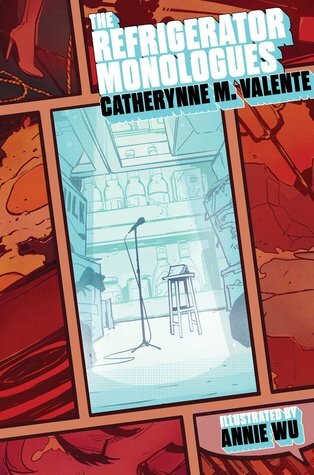
[RHM] You’ve mentioned The Refrigerator Monologues was inspired by The Amazing Spider-Man 2, and The Future is Blue was inspired by The Great Pacific Garbage Patch and the Drowned Worlds anthology. What was the moment of inspiration for Comfort Me With Apples?
[CV] Erm. Well. I can’t exactly tell you! Because spoilers! Let’s just delicately say that in researching another book I came across a piece of mythological/folkloric tale I had never heard of before. I made a cynical joke about it to my empty office, and that joke became Comfort Me With Apples.
 [RHM] Your work jumps around constantly, from myth to superheroes, science fiction to fantasy, comedy to horror, and middle-grade to adult. What do you enjoy about this? Is there a genre or a tone you prefer? Is there a particular kind of story you’d still like to try out?
[CV] It’s very important to me to always be trying something new, pushing the edges of my skill level, challenging myself. Which is a lot of positive spin on: I have severe ADHD and it literally kills my soul to do the same thing twice.
As far as genre and tone—usually my favorite is what I’m working with when someone asks. I enjoy the more comedic tone of Space Opera and Refrigerator Monologues (and Past Is Red to a slightly lesser extent) quite a bit these days, though.
If I haven’t tried it yet, I still want to try it out! Except realism. Ew. No thank you.
[RHM] Given how much your work jumps around, how do you know which project to take on next?
[CV] Whichever editor is currently yelling the loudest calls the lineup.
Not a joke, just a fact.
[RHM] Are there any themes that you find yourself mining repeatedly, consciously or unconsciously?
[CV] Oh good lord I’ll be dead in the ground before I stop hauling Persephone out of the underworld to be a motif. I seem to be fully unable to knock that off.
[RHM] You wrote tie-ins for both Mass Effect and Minecraft. Can you tell us about how writing those books is different from writing your own fiction? Is there another franchise you’d love to work in? (Also, Yorrik was the best.)
[CV] I’d love to write for Doctor Who, or perhaps less obviously on-brand, Terminator. I suppose the happiest I could be with other people’s IP would be getting a call to work on something Star Trek-related.
The major difference is literally no one cares how pretty I can make a sentence. It’s about the story, it’s about the world, it’s about being face-paced and exciting and accessible. That challenge is why I took those two projects in the first place—basically, I got paid to take a couple of classes in commercial writing.
[RHM] What books have impressed you recently?
[CV] Children of Time, by Adrian Tchaikovsky, Ten Thousand Doors of January by Alix Harrow, and Mexican Gothic by Silvia Moreno-Garcia.
[RHM] Other than ‘read a lot’ and ‘write a lot’ what’s your best advice for writers?
[CV] Well, that’s two of the big guns. I suppose it would be: you can never tell what the market is going to want. You can’t tell today, but you especially can’t two years from now when a book sold today might actually come out. So you might as well be yourself, write what moves you and what excites you, no matter how weird it is, because unique and authentic always sells.
[RHM] And finally, what can you tell us about what you’re working on now?
[CV] I’m working on the sequel to Space Opera, Space Oddity! I think that about says it all.
Interview original appeared in Grimdark Magazine
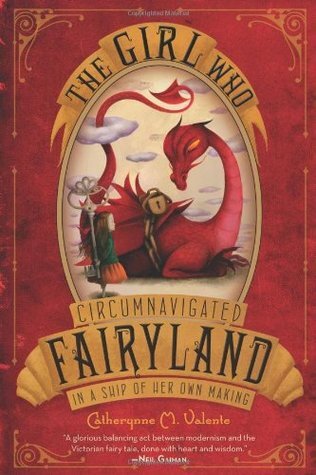
CHECK OUT CATHERYNNE VALENTE'S BOOKS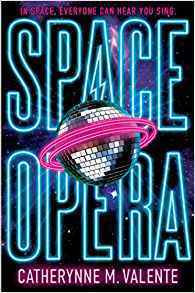

 Check Out Some Of Our Other interviews
 Interview – Kristyn Merbeth Author of the Nova Vita Protocol
Interview – Author Grady Hendrix
Interview – Author Jason “David Wong” Pargin
Ryan Howse
I’m funnier without context.
Okay, you want context.
I’m a mid-30s nerd, married, with two kids. Also two cats–Cathulhu and Necronomicat.
I like, in no particular order, tabletop gaming, board games, arguing over books, ancient history and religion, and puns.
I’m unconundrum on reddit.
November 16, 2021
Review – Even Greater Mistakes by Charlie Jane Anders
 check it out here
 BOOK REVIEW
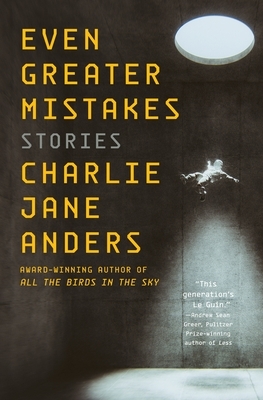
EVEN GREATER MISTAKES - STORIES by charlie jane anders November 16, 2021 10:00 am No Comments Facebook Twitter WordPress Short Story List As Good As NewRat Catcher’s YellowIf You Take my MeaningThe Time Travel ClubSix Months, Three DaysLove Might Be Too Strong a WordFairy Werewolf vs. Vampire ZombieGhost ChampagneMy Breath is a RudderPower CoupleRock Manning Goes For BrokeBecause Change Was The Ocean and We Lived by Her MercyCaptain Roger in HeavenCloverThis is Why We Can’t Have Nasty ThingsA Temporary Embarrassment in SpacetimeThe Bookstore At The End of AmericaThe Visitmothers WHAT IT IS ABOUT?In her short story collection, Even Greater Mistakes, Charlie Jane Anders upends genre cliches and revitalizes classic tropes with heartfelt and pants-wettingly funny social commentary.
The woman who can see all possible futures is dating the man who can see the one and only foreordained future.
A wildly popular slapstick filmmaker is drawn, against his better judgment, into working with a fascist militia, against a background of social collapse.
Two friends must embark on an Epic Quest To Capture The Weapon That Threatens The Galaxy, or else they’ll never achieve their dream of opening a restaurant.
The stories in this collection, by their very outrageousness, achieve a heightened realism unlike any other. Anders once again proves she is one of the strongest voices in modern science fiction, the writer called by Andrew Sean Greer, “this generation’s Le Guin.”
Charlie Jane Anders’s short stories always span the spectrum of emotion and world-building. Some of her stories leave you gut-punched; others are uplifting. At the same time, others are deep science fiction. It is a nod to her as an author that she can evoke so many emotions from her readers in such a small word count.
“Short stories are dangerous: tiny sparks of pure narrative fire that burn hotter because they snuff out sooner. Small, self-contained adventures gave me the freedom to fail — to push my limits, to experiment with styles and ideas that I wasn’t sure I could pull off. And fail I did, over and over. I wrote scores of short pieces before I managed to turn out one that fired on all cylinders. The wonderful thing is, if you blow it with something short, you’ve only wasted a week or three of writing time. And if someone reads your story in a magazine and hates it, there’ll be another story, by another author, on the next page.”
Short stories need to be concise to the point of being brutal. A short story is no time to go mucking around with your reader’s attention. There aren’t enough words. By the time a writer gets done fancifully describing a door know, the story needs to be done. This is why Anders does brilliantly as a short story writer and long-form if you have read her long-form novels. She gets to the point. I appreciate that as a short fiction reader.
Even Greater Mistakes, her newest anthology of work, is a beautiful collection of stories that run the gamut. And while I won’t go into each one, I can call out some that are excellent:
As Good As New is one of the first short stories I read. It is such a unique story to me as a reader because apocalypses, while awful essentially, take the individual and their lives after the fact out of the equation. Yes, life is terrible, but people need to move on. There has to be some joy, or life isn’t worth struggling for.
“It is astounding to me that Anders wrote so much about human emotions in only 28 pages. I have IKEA instructions longer than 28 pages. But it works, and it is damn good.”
In this case, it is Marisol and her ability to find hope and joy, even amongst the muck and mire. It is uplifting and joyous.
“The first thing I thought of when I finished “Rat Catcher’s Yellow” was the Hamlet quote, “There are more things in heaven and earth, Horatio, / Than are dreamt of in your philosophy.” This seems like an odd quote for this story, but it is a vast world that is constantly changing. Even after a significant disease destroys people’s minds, they interact and build kingdoms online with cats. It seems absurd, but it is steeped in the truth. There is more to this world than we know, and depending on the angle in which you approach a problem, anything is possible.
If you Take My Meaning was one of the more complex stories to read and understand. But through the context of Ander’s story The City in the Middle of the Night, it makes a lot of sense. It is a continuation after the end of the novel. It gives us a hint as to the future of the characters.
Six Months, Three Days is when an unmovable object meets an unstoppable force: two characters, one who can see all possible futures and another who can see only their lot. Nothing deviates; nothing changes. What if they have a relationship? What would it look like? Yes, we know there will be lots of pain in this relationship. Yes, we know exactly how it is going to end. However, there are many beautiful moments, moments of love, and life that are worth celebrating even if you have already seen them in your mind’s eye; you haven’t experienced them. The juice is worth the squeeze!
There is a brilliant variety in this collection told by a master short story author. It is vibrant and queer and wonderful but holds to concise storytelling. These stories might not hit for everyone, but they hit pretty hard for me as a reader and reminded me why she is one of my favorite storytellers.
Beth Tabler Elizabeth Tabler runs Beforewegoblog and is constantly immersed in fantasy stories. She was at one time an architect but divides her time now between her family in Portland, Oregon, and as many book worlds as she can get her hands on. She is also a huge fan of Self Published fantasy and is on Team Qwillery as a judge for SPFBO5. You will find her with a coffee in one hand and her iPad in the other. Find her on: Goodreads / Instagram / Pinterest / Twitter
November 15, 2021
Short Story Review – The Bookstore At The End of America by Charlie Jane Anders Found in Even Greater Mistakes
check it out here BOOK REVIEW
The Bookstore At The End of America found in Even Greater mistakes by charlie jane anders November 15, 2021 10:00 am No Comments Facebook Twitter WordPress Short Story List As Good As NewRat Catcher’s YellowIf You Take my MeaningThe Time Travel ClubSix Months, Three DaysLove Might Be Too Strong a WordFairy Werewolf vs. Vampire ZombieGhost ChampagneMy Breath is a RudderPower CoupleRock Manning Goes For BrokeBecause Change Was The Ocean and We Lived by Her MercyCaptain Roger in HeavenCloverThis is Why We Can’t Have Nasty ThingsA Temporary Embarrassment in SpacetimeThe Bookstore At The End of AmericaThe Visitmothers The Bookstore at the end of americaI first read The Bookstore at the End of America by Charlie Jane Anders when it appeared in A People’s Future of the United States: Speculative Fiction from 25 Extraordinary Writers, which offered exciting perspectives. Even then, I found this story to be one of the best and most memorable of the volume. Maybe it is because I am such a bibliophile, or perhaps as an American, the political divide hits home. Either way, this story is pretty special to me. I am now doubly happy that Anders has included it in her upcoming release, Even Greater Mistakes.
The first thing to understand about this story is the context in which Anders built the world. The United States is impossibly divided and has diverged culturally. This bookstore sits on the border of California and the rest of the United States, with sections of the store catering to both groups. It is a veritable Switzerland in that it does not take a stand but remains neutral because books are for everyone. And that is the crux and main theme of the story; books and ideas can bring folks together as much as divide them. Whether you are a “hipster” from California and look at the perspective of communities working together with a hive mentality or from the south and view life through a very conservative lens, books are neutral. They are ideas put to paper.
One of the story’s strengths is the neutrality that Anders employs when writing. I don’t think the story could work if there were a political lean. She uses the ridiculousness of both sides as a way to bring the sides together and force them to work with each other. We discover that we aren’t so different. It is a powerful message condensed down into a tight package.
Check Out some of our other reviews
Review – The Final Girl Support Group by Grady Hendrix
55 Books With LGBTQIAP+ Representation to Add to Your TBR
Beth Tabler
Elizabeth Tabler runs Beforewegoblog and is constantly immersed in fantasy stories. She was at one time an architect but divides her time now between her family in Portland, Oregon, and as many book worlds as she can get her hands on. She is also a huge fan of Self Published fantasy and is on Team Qwillery as a judge for SPFBO5. You will find her with a coffee in one hand and her iPad in the other. Find her on: Goodreads / Instagram / Pinterest / Twitter
November 14, 2021
Short Story – Any Way The Wind Blows by Seanan Mcguire
 Any Way The Wind Blows by Seanan McGuire Purchase Here
 Seanan McGuire, Any Way The Wind Blows AboutI’m tired of this. They warned me when I started that one day I’d be tired of this, and I thought they were ranting and raving the way hidebound old fools always rant and rave when there’s a scientific advancement at hand—it’s as much a part of the process as the grandiose declarations of showing them, showing them all, and the ceremonial passing of the adventurer’s compass.―
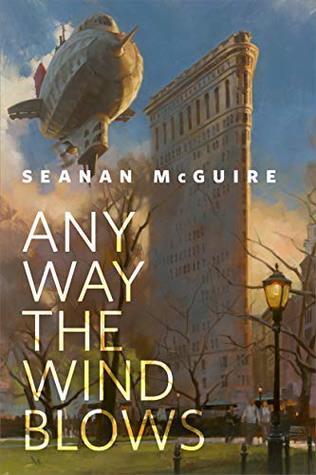
In the original Tor.com story Any Way the Wind Blows , New York Times bestselling author Seanan McGuire presents a sweet tribute to Manhattan’s iconic Flatiron building–celebrating the longtime home of Tor Books as the publisher bids farewell for new office space.
Composed of travelers from nine different parallel dimensions, the Cartography Corps crew aboard the airship Stalwart Trumpet of Glory descends on the New York City in our universe to collect and preserve artifacts from the legendary turn-of-the-twentieth century landmark Flatiron building.
My ThoughtsThis is a fun and fairly short story from famed author Seanan Mcguire. Even in it’s short format, the story packs in plenty of worldbuilding to give you a full sense of the moment in time and space that Mcguire is describing.
As someone who has visited The Flatiron building in New York, I can attest that it is an architectural marvel jutting away into space like the sail of a great ship. It is fitting that Mcguire used the imagery of another ship, in this a blimp, as a way to connect the two. At least that is the imagery I got from the story. She created it to celebrate Tor.com’s residence at the Flatiron building. This is a fitting nod to the Tor team, and a node to the architecture of New York. It is wonderfully fun and a quick read that you can do in 15 minutes.
Check it out!
In An Absent Dream by Seanan McGuire
If You Liked This - Please Share the Love Where to find it? Procurement I bought this from Amazon. About the Author Hi! I’m Seanan McGuire, author of the Toby Daye series (Rosemary and Rue, A Local Habitation, An Artificial Night, Late Eclipses), as well as a lot of other things. I’m also Mira Grant (www.miragrant.com), author of Feed and Deadline.Born and raised in Northern California, I fear weather and am remarkably laid-back about rattlesnakes. I watch too many horror movies, read too many comic books, and share my house with two monsters in feline form, Lilly and Alice (Siamese and Maine Coon). Beth Tabler
 Elizabeth Tabler runs Beforewegoblog and is constantly immersed in fantasy stories. She was at one time an architect but divides her time now between her family in Portland, Oregon, and as many book worlds as she can get her hands on. She is also a huge fan of Self Published fantasy and is on Team Qwillery as a judge for SPFBO5. You will find her with a coffee in one hand and her iPad in the other. Find her on: Goodreads / Instagram / Pinterest / Twitter
November 12, 2021
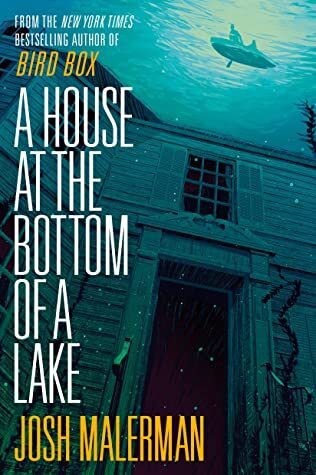
Review of A House at the Bottom of a Lake by Josh Malerman
 check it out here
 BOOK REVIEW
a house At the bottom of a lake by josh malerman November 12, 2021 10:00 am No Comments Facebook Twitter WordPress “For the first time in either of their lives, they were falling in love”The House at the Bottom of the Lake by Josh Malerman is a lovely novella full of nostalgia and wonder with just a touch of horror that takes it from saccharin to sweet.
I remember being 17, don’t you?
Looking back on that period of my life, it was a magical but weird time. I sat on the cusp of adulthood, not quite a kid but also not quite an adult. More importantly, I saw myself as an adult; I thought I knew everything. Looking back on this weird age 20+ later, I now know that I knew nothing then. Hell, I barely know anything now.
A House at the Bottom of the Lake by Josh Malorman starts with a boy and a girl, Josh and Amelia. Two 17-year-olds, both are stepping out and trying something foreign.
“How can I say no? Canoening with a stranger? Yes. I’d love to.”
Both seventeen. Both afraid. But both saying yes.””
They meet up for a canoe date. James’s uncle has a place on a lake. But there is a second lake, one that no one uses that is directly off of the first one. Both self-conscious and not knowing what to do on this first date, they head out on Jame’s uncle’s green canoe. They find the second lake, and a bit of magic happens.
The magic isn’t showy like dragons or unicorns, but it is the magic that occurs between two people connecting for the first time. It is that zing that flows through someone who meets another person, and they become their +1. They connect, marveling at this lake.
“For the first time in either of their lives, they were falling in love.”
On the second date, they find the third lake. If the first was beautiful, the second more so, the third lake was not. It was much less grand, with murky water, and smelled. There was something off about it. But the third lake had something; it felt unvisited. It felt like these two kids were doing something slightly naughty on a grand adventure.
And very soon after, they find a house on the bottom of the lake, one that was not rotting and crumbling from the pressures of the lake and time, but one that is held in stasis. As if it was waiting for them.
A House at the Bottom of a Lake’s narrative touches on various dichotomies of ideas. The story’s main characters have feet in two worlds: reality and dream, 17 and older, horror and beauty, and seclusion and society. A house sitting perfectly nestled on the bottom of a lake is in itself a dichotomy. It is something “other” inside of something natural and normal.
“Curiosity killed the cat and the snooping seventeen-year-old girl.”
Do not go into this story thinking that this is a horror novel. Malerman writes many great horror novels: Bird Box, Mallory, and Pearl. A House at the Bottom of a Lake is about young love first and how terrifying that can be. Later as we learn more about the house, it is creepy and unnatural. It is “other” with fear of the unknown vibes. This otherness enhances the connection between the two main characters but never overshadows it.
Overall, this is a great story. Malerman shows real range with his character creation in his bibliography of work. But the one thread going through his books is true authenticity. His characters feel real, and this story is no exception. The House at the Bottom of the Lake is both fantastical and character-focused. I fell a little bit in love with the idea of Josh and Amelia, and I think you will too. at
Check Out some of our other reviews
Review – The Final Girl Support Group by Grady Hendrix
Interview with Josh Malerman, Author of Pearl and Birdbox
Beth Tabler Elizabeth Tabler runs Beforewegoblog and is constantly immersed in fantasy stories. She was at one time an architect but divides her time now between her family in Portland, Oregon, and as many book worlds as she can get her hands on. She is also a huge fan of Self Published fantasy and is on Team Qwillery as a judge for SPFBO5. You will find her with a coffee in one hand and her iPad in the other. Find her on: Goodreads / Instagram / Pinterest / Twitter
November 11, 2021
Interview with Josh Malerman, Author of Pearl and Birdbox
 josh malerman "...It wasn’t easy! And it was also incredible. Derek loved driving, Chad loved reading or practicing the bass in the back, and I had shotgun to myself. I could either read, sleep, call someone, or… write. We’d average some 4 hours driving a day, which was a pretty perfect writing window, a perfect session....."
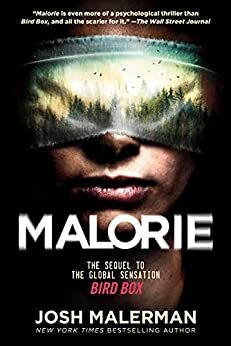
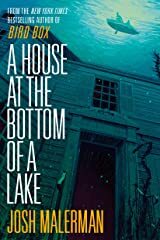
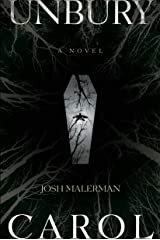
 Josh Malermen entered the book scene 8 years ago with Bird Box, a novel about the apocalypse. We met Malorie and watched her struggle past the unthinkable. It was highly acclaimed and was eventually turned into the Film Bird Box for Netflix starring Sandra Bullock. Since then Josh has had added a ton of terrifying books to his repertoire: Black Mad Wheel, Unbury Carol, and A House at the Bottum of the Lake to name a few.
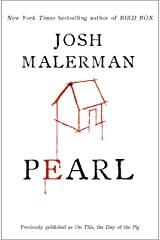
But now with the upcoming release of Pearl, a story about a pig that is difficult to describe, but absolutely unsettling and riveting to read. Josh was kind enough to sit down to interview with us and let you know why you should check out Pearl, and maybe sing for precious Pearl if he asks.
GdM: Can you tell me about The High Strung and how you came by your love of music?
My friends Derek and Chad and John were all playing in bands since we were like ten years old. I didn’t think I had that exact bone in me, but I was already writing back then, weird comics and totally emo poems and eventually short stories. Trying to anyway. So… eventually, Chad and John and another friend Adam invited Derek and me to come join their band. Derek because he was amazing at drums and me because… of proximity. We were all hanging out together all day every day and Derek and I came in a package deal or something and they were like, “We’ll get you an organ, Josh, and we’ll teach you some chords, and you’ll play along. Nothing to it.” And while there was definitely something to it, I loved being part of it all. But the real love for it came one night when Derek and I were practicing in the basement of his mom’s house, organ and drums, and our other friend Mark Owen came over and started singing some of his poems and some of mine over the music Derek and I were playing. That was the moment the songwriting door opened to me, to Mark, and we stepped through it without a second thought. We’re working on a new album now. Mark is the closest thing I’ll ever have to an artistic soulmate. He’s unfathomably great to work with.
GdM: When you craft a song versus crafting a story, is it a similar creative storytelling space?
The biggest link I’ve found is this sense of a drummer when I’m writing a book. An invisible, shirtless, crazy guy who plays the same beat throughout the entire rough draft. Sometimes that beat is weird and I don’t realize it until the rewrite, but other times it’s four-on-the-floor and easy to follow. Bird Box was like that. I think this comes from the fact that Chad Stocker, the bass player in the High Strung, was really our lead guitarist, even though he was on bass, for many years, while I pretty much played rhythm with Derek. So, for me, songs and books, it’s a lot about rhythm. The roll. And maintaining a steady, unsettling beat for the duration of writing the book.
GdM: Your story of writing on the road sounded pretty fun. I read that you wrote a dozen novels on the road touring with high Strung. How did writing work on a tour bus?
It wasn’t easy! And it was also incredible. Derek loved driving, Chad loved reading or practicing the bass in the back, and I had shotgun to myself. I could either read, sleep, call someone, or… write. We’d average some 4 hours driving a day, which was a pretty perfect writing window, a perfect session. So, I started doing it. I got this lap-pillow thing that had a pillow on one side, a wood board on the other, so it was like a little desk top. And I wrote. I wrote freehand, too. We’d be hungover or tired but we were also living so far under the radar, so broke, so outside the box, that writing novels between cities felt like the exact right thing to do. It was a liminal space, so to speak. I miss it.
GdM: Can you tell me about Spin a Black Yarn, (which is a helluva name by the way) and We Need to Do something? It is exciting for me as someone who loves horror to see you and Max Booth III collaborating.
I met my manager Ryan Lewis some thirteen years ago. I was writing novels in the tour van at the time and he was representing a handful of screenwriters. Ryan worked with an incredible woman named Candace Lake and the two of them read Goblin, sent to them by the lawyer Wayne Alexander, and Ryan called me up and said he’d like to represent me. I was horrified because I didn’t know what representation meant in any form at the time. I hadn’t even shopped a book or queried an agent, nothing. I’d been writing and writing alone, believing in a sort of dust devil swirling cloud that would rise like momentum around me and eventually somehow deliver these books to actual bookshelves. Ryan, Candace, and Wayne were the first steps toward that reality. Eventually Candace retired and Bird Box was shopped and came out, and Universal bought the film rights, and eventually sold them to Netflix, and then (a glorious lifetime later) the movie came out and did better than anybody could’ve anticipated. After that, Ryan suggested we start our own production company. Not because we were upset at having no say in the movie, but because we saw how it works, we learned, and we believed we could get movies made in our own way, too. It started as us focusing entirely on my own books but pretty soon into it Ryan suggested we look at books from other writers as well.
We’ve got some 26 projects in some form of development right now, from a potential screenwriter reading a book we like, to books set-up at Apple (Inspection), and everything in between. Fourteen of those projects are books of mine, the rest not, and it’s all a wonderful bastion of creativity. Max had written the script for his book and it was done really well and so Ryan was like, let’s shop it asap. But something really cool happened here: the very first people we sent it to (hoping they would want to partner or possibly even finance the movie) said they wanted to direct it. We were all a bit happily stunned but also worried, right? What if the first person you shop to says they wanna do it and you give them that exclusivity and then they never make it? Then it’s like you never shopped it. So Ryan did something brilliant: Sean O’Grady (the director) had said he wanted to make it “this year” (2020) and so Ryan put that in the contract, that it had to be made in 2020.
And if not? We could bring it elsewhere. I suppose you could look at it like Ryan was saying put your money where your mouth is, but it wasn’t really like that. We had no doubt Sean wanted to make the movie right away, but Ryan was just ensuring that the project wouldn’t end up in some development purgatory. Just… brilliant. So, Sean and co made it! And it was wonderful! And it was shot not three miles from where I am right now. It was shot during COVID and so nobody was allowed on set (including me), but I sure as hell attended the wrap party and it was stone cold glory. Ryan and I got the name for our production company from a collection I’d written called Spin a Black Yarn (which is coming out in 2023 through Del Rey). Marty Feldman is our spirit animal and “mascot.” And I gotta say, sometimes the business side of things is overwhelming.
I’m an artist. I have no shame calling myself that and I find it strange when other writers do. My heart is in the books and the novel is home, but at the same time? Working with Ryan on all this has been one of the joys of my life. And working with these other writers, like Max and Jonathan Janz and Laurel Hightower and Izzy Lee, Sadie Hartmann, it’s all just fabulous. So, way I see it… even when it’s overwhelming, when there’s a lot of work to do, I just imagine what no work to do looks like and I get over it real fast.
GdM: I read that there was early talk about writing and directing Wendy. Is this still something that might happen?
This is a real dream of mine. It’s the first book I wrote, the first I finished, and it ranks as one of the all-time artistic experiences for me. And I still know exactly how the story feels. Do you know what I mean by that? Books and movies change for us over time, but that one… Wendy (which is printed up and sitting almost within arm’s reach from where I’m sitting now in my office), Wendy hasn’t changed on me. I’d love to direct this movie. It’s probably the scariest thing I’ve done.
GdM: You write unflinching unvarnished prose, and you don’t shy away from diving deep into terror and horror. Are there any ideas you would like to build a story around that you haven’t yet, and are there any ideas that are just too disturbing that you mentally shy away from?
I do have a couple recurring ideas that are just too brutal for me. They’re almost like bullies, how they taunt me. They say: come on, don’t be shy, Josh, write us. And I’ve heard people say you’re supposed to write those ideas, the ones that disturb you, especially, but honestly… these ideas… they’re like… they’re darker than I am. They’re artless, too. Which might excite some people. Artless and brutal has a nice ring to it. This isn’t to say that what I do write is somehow less scary… no no. Just… less abusive.
GdM: I have always thought that horror or dark fantasy writers have to remain very close to their childhood experiences with things that go bump in the night because no one understands horror quite as a child does. Do you think that could be true?
I could not agree more with this than I do. For me, my love for horror comes partially from an arrested development that I have absolutely no desire to outgrow. When I think horror, I imagine a big kid sitting cross-legged before an orchestra made of toy instruments. The music is atonal, the lights in his playroom are dimmed, his eyebrows are arched, and he’s saying: Let’s see how this song makes Mommy and Daddy feel. There’s a part of me that believes every scary movie I see, every scary book I read. A big part of me. I walk around, believing the possibility of these things all day. And I hope that never changes. It would be as frightening to me as when you see an animal lose its appetite. Like, it would mark the end of something very meaningful to me. So, yes, remain close to your childhood… I’m with that all the way.
GdM: Many of your novels use dichotomies as a means of storytelling. For instance, in The House at the Bottom of the Lake, the story has a beautiful, wholesome plot, young love, exploration, and being 17 with your life entirely ahead of you. All of this is on the surface, the dichotomy being the house at the bottom of the lake where things are not entirely as they should be. Bird Box has a similar dichotomy. The domestic tasks of everyday living and surviving versus the malice creeping outside the blocked windows. What is it about this kind of dichotomy of two opposing ideas that attracts you as an author?
You know… I’m not sure where this came from. It’s interesting because, as an artist, you can’t really recognize patterns until you’ve finished enough works of art to see patterns in to begin with, right? Like, I was surprised to discover the river in Bird Box is similar to The Trail in Unbury Carol which is similar, in a sense, to a singular setting, the farm, in Pearl. I’ve noticed other patterns, too: a horror story told partially off-camera. Bird Box has a lot of that but so does Dandy, A Nightmare Got In, Two Gods in the House, and at least a dozen more. I think of that scene in Taxi Driver when DeNiro is on the phone and Scorsese pans to the empty hall and keeps the camera there while DeNiro talks. A lot of my books do that, whatever that is. It’s not just a haunted house, but a haunted house under water, right? But I haven’t thought much about this dichotomy thing. Now I’m certainly going to.
GdM: An aspect of Bird Box that I appreciated as a reader was you never showed me what the monster was. The monster was whatever the beast is for the reader. It made the monster take on a very amorphous shape that was so much scarier than if it had tentacles or breathed fire because it could be anything and everything all at once. Was this always the intention when you were writing the story? Or did this idea organically develop as you went along?
About halfway through the rough draft I thought to myself, “Are you going to show these things?” Then, three quarters through I was like, “Ummm, Josh?” And when I entered the home stretch I understood I wasn’t going to. It was no small revelation, in terms of writing the book, because I hadn’t seen something exactly like that in a horror story before. But, like I said, I look for that one unsettling note to play throughout the book I’m writing, that one steady beat, and it was obvious to me that showing the creatures would change the beat entirely. Now, do I know what they look like? Did I ever? Well, I know as much as Malorie knows. And that’s all I ever know.
GdM: Malorie’s experiences in Bird Box, being blindfolded, the trapped feeling she has knowing madness is lurking just outside the cloth, was so well done it was viscerally terrifying. Did you spend time blindfolded in preparation for writing those scenes?
Some. I wish I’d done more. I should’ve attempted an entire walk around the block. But mostly just stuff around the apartment, the space where I wrote the book.
GdM: What was it like seeing your creation on the big screen and people’s reactions to it?
We saw it at Netflix headquarters in Los Angeles. A screening room called “The Upside Down.” The second I saw Sandra Bullock on screen as Malorie, I teared up. How could I not? I’d written the rough draft in 2006. And while the book was completely rewritten by 2014 when it was published, I’d been with Malorie the character for 13 years by the time the movie came out. I mean, this was a big feeling, seeing her on screen, out of my head, outside my imagination. Upside down indeed. As goes the reaction: what can I say other than it’s one of the best things that ever happened to me and I’m grateful for literally every second, every minuscule element of this entire experience. I’m going to write a couple novels a year no matter what happens, this I’ve already proven to myself over a long time now. So, the fact that I get to see them published? The artwork? That I get to discuss them with you? Well, Bird Box the book and movie played a major part in that. For that, I will be forever grateful to it all.
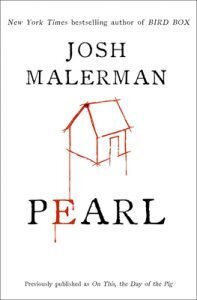
GdM: Pearl had another title, On This, the Day of the Pig. What made you decide to move away from On This, the Day of the Pig to Pearl as a title?
I like both titles. It was definitely my decision. I felt the story is already a beast to pitch and I wanted something more streamlined. I was looking to highlight the fact that Pearl is our slasher here, our monster, our Carrie. The original cover was super colorful and violent (and I love it), but I wanted this edition to be streamlined. A simple rendering of a barn. A simple title. My way of saying, “This story starts small… but becomes a lot more.” The cover and title for the original limited edition feel like how the book ends. And the new title and cover feel, to me, how it begins.
GdM: I liked how, on the surface, the idea of a psychic pig terrorizing a farm is part schadenfreude and part revenge fantasy. But, this story is so much scarier than it has any right being. It is an absolute symphony of horror—specifically the chapters from Pearl’s mind. What was pitching Pearl like?
It was the kind of story that was hard to explain even to my friends at the bar! They’d ask, what are you working on, and I start in about a telekinetic pig and then I’d think, WHAT are you talking about? Because it sounded crazy. I know. Yet… I believe Pearl is one of those scenarios where the actual book is better than the pitch. And wouldn’t we all rather write those books than the opposite? Also: THANK you for the kind words about it here. I’m going to use “an absolute symphony of horror” immediately. And I will credit you of course!
GdM: I watched the interview that you did with The Lasser Cast where you mentioned animating Pearl. It can be done. I think an animated version of Pearl would both traumatize and enthrall kids and adults. Have you watched any of Junji Ito’s work as horror animation?
I have not. But now I’m going to. And yeah… a legit horror movie, animated, truly scary, like the Bernie Wrightson illustrations from Cycle of the Werewolf, only in motion. That may be how this book should go. I could also see an animatronic Pearl… could be scary like going to see the Chuck E. Cheese band was scary when we were kids. Doesn’t that sound fun?
GdM: I read that you listen to horror soundtracks while writing. What kind of music was on your playlist for Pearl?
At the time was probably… the soundtracks for Under the Skin, Creepshow, Troll, and John Carpenter’s Lost Themes I and II. I really do need to start writing down the soundtracks I listened to throughout each rough draft. That’s fun stuff to remember later on.
GdM: So, what is next after Pearl’s release? What are you working on?
Okay, so… Ghoul n’ the Cape is coming out on Earthling Publications in December. The book is a beast. 300,000 words. And I’m working on two books now, well over halfway into each. Working with Ryan on the movie side of things and also making a new album with the High Strung. I have that familiar feeling right now, when you’re mid-project (a few projects here) and you start imagining what life will feel like when these projects are finished, when they’re added to the body of work, as the canon has always been the most important thing to me, a life’s work rather than an individual hit or miss, etc. So I’m starting to see these newer books on the shelf and this new album on the record player, as all my friends drink and dance and talk and laugh and we continue along this incredible path we’ve taken.
Original Interview Appeared On Grimdark Magazine
Check Out Some Of Our Other interviewsInterview – Kristyn Merbeth Author of the Nova Vita Protocol
Interview – Author Grady Hendrix
Interview – Author Jason “David Wong” Pargin
Check Out Josh Malerman's Books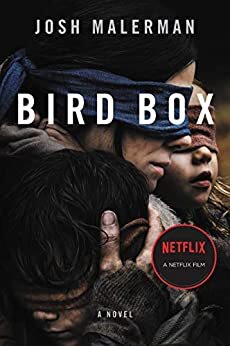
 Beth Tabler
 Elizabeth Tabler runs Beforewegoblog and is constantly immersed in fantasy stories. She was at one time an architect but divides her time now between her family in Portland, Oregon, and as many book worlds as she can get her hands on. She is also a huge fan of Self Published fantasy and is on Team Qwillery as a judge for SPFBO5. You will find her with a coffee in one hand and her iPad in the other. Find her on: Goodreads / Instagram / Pinterest / Twitter