Beth Tabler's Blog, page 209
December 9, 2021
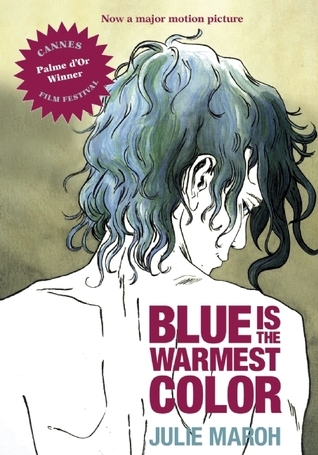
Review of “Blue Is the Warmest Color” by Julie Maroh, Ivanka Hahnenberger (Translator)
“There is only love to save this world. Why would I be ashamed to love?”
Excerpt from Blue is the Warmest Color by Julie Maroh
About
Blue is the Warmest Color is a graphic novel about growing up, falling in love, and coming out. Clementine is a junior in high school who seems average enough: she has friends, family, and the romantic attention of the boys in her school. When her openly gay best friend takes her out on the town, she wanders into a lesbian bar where she encounters Emma: a punkish, confident girl with blue hair. Their attraction is instant and electric, and Clementine find herself in a relationship that will test her friends, parents, and her own ideas about herself and her identity.
Stats
Rating – 4 out of 5 stars
Paperback, 156 pages
Published September 3rd 2013 by Arsenal Pulp Press (first published April 1st 2010)
Original Title Le bleu est une couleur chaude
ISBN1551525143 (ISBN13: 9781551525143)
Edition Language English
Characters Clementine, Emma, Valentine
Awards
Prix du Festival d’Angoulême for Prix du public Fnac-SNCF (2011)
BDGest’Art for Meilleur Premier album (2010)
My Thoughts
“I want to do everything with you.
Everything is possible in a lifetime. “
Excerpt from Blue is the Warmest Color by Julie Maroh
I think that this is one of those important books that someone should read once in their life.
Just once.

It is too heart-rending to read more than once. This is a story of the hardness and softness of first love. How it can both shred your soul like tissue paper and leave you like a piece of hardened steel.

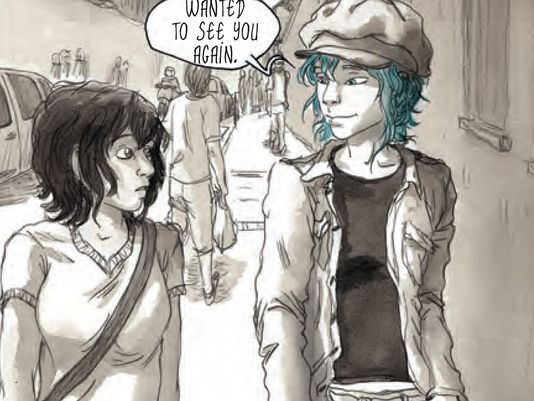
Le bleu est une couleur chaude Also known as Blue is the Warmest Color is about Clementine. A young girl at the start of the story, a 16-year-old junior and her fascination with Emma. Emma is everything that Clementine is not at the beginning: outgoing, sure of herself, and most importantly… out. They have instant electricity and start a sweet love affair that challenges Clementines preconceptions of herself and helps her become the person she wants to be.
Blue is the Warmest Color talks openly about the challenges of being a homosexual, and finding that love sends chills through your body. What I enjoyed and laud the author over is how she wrote the love story so openly and honestly. Oftentimes when reading about a gay or queer character it can get unauthentic and tropey. This isn’t.
“I can not feel anymore.
I feel like I’m carrying light in my veins.
All that happens to me has a name … Emma, her name is Emma. ”
Excerpt from Blue is the Warmest Color by Julie Maroh
Aside from the gorgeous writing, it is stunningly drawn. The scenes are crafted carefully with a limited color palette of grays and the single color blue. Most often found in Emma’s hair. Emma’s hair is almost a blue flame burning through each scene. You can tell why Clementine is so attracted to her. She lights up every room. There are quite a bit of sex scenes dealt with very honestly in this story. I appreciated it and I thought that it enhanced the love story between the two of them without detracting from the overall story. Some readers might not be comfortable with that level of open sex between two consenting adults. Just know that, unlike the movie, this isn’t pornlike. This is a loving depiction of a romantic couple expressing their passion for each other.
Highly recommended
Check out Some of Our Other Reviews
Review Risen by Benedict Jacka
About the Author

Julie Maroh (born 1985) is an author and illustrator originally from northern France. She studied comic art at the Institute Saint-Luc in Brussels and lithography and engraving at the Royal Academy of Arts in Brussels, where she still lives.


2021 Hugo Art Review – John Picacio
 stories in photos
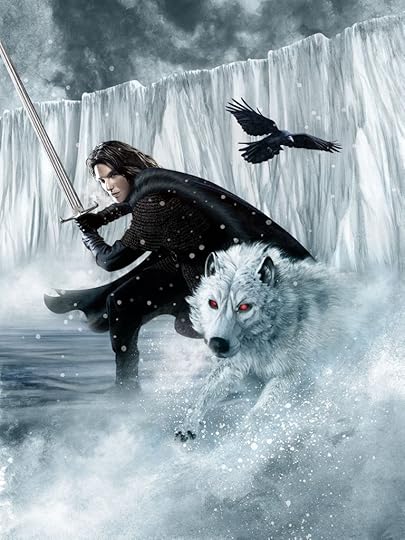
 JOHN PICACIO is one of the most acclaimed American artists in science fiction and fantasy over the last decade, creating best-selling art for George R. R. Martin’s A SONG OF ICE AND FIRE series, the STAR TREK and X-MEN franchises. as well as over 150 book covers. Major clients include Penguin Random House, Tor Books, Macmillan, HarperCollins, Scholastic, Simon & Schuster, Saga Press, Pyr, Baen Books, Tachyon, and many more. His body of work features major book illustrations for authors such as Leigh Bardugo, Rebecca Roanhorse, Michael Moorcock, Harlan Ellison, James Dashner, Brenda Cooper, Frederik Pohl, Mark Chadbourn, Sheri S. Tepper, James Tiptree, Jr., Lauren Beukes, Jeffrey Ford, Joe R. Lansdale, and many, many more.
His accolades include three Hugo Awards, eight Chesley Awards, three Locus Awards, two International Horror Guild Awards, the World Fantasy Award, and the Inkpot Award. He is the founder of the creative publishing imprint, Lone Boy, which has become the launchpad for his Loteria Grande cards, a bold contemporary re-imagineering of the classic Mexican game of chance. In 2018, he became only the third person in the history of the World Science Fiction Convention to serve as Guest of Honor and Hugo Awards Master of Ceremonies at the same Worldcon, and the first Latinx to ever be a Worldcon Guest of Honor. He is the founder of The Mexicanx Initiative. He lives and works in San Antonio, TX.
John Picacio’s AwardsJohn Picacio has won three Hugo Awards, the World Fantasy Award, eight Chesley Awards, three Locus Awards, two International Horror Guild Awards and the Inkpot Award.
2020 SFWA / Kate Wilhelm Solstice Award
2016 Chesley Award for Best Product Illustration (for ‘El Arbol‘)
2015 Locus Award (Artist)
2014 Inkpot Award
2013 Hugo Award (Best Professional Artist)
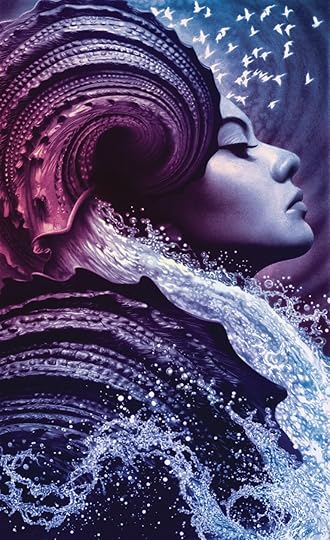
2013 Chesley Award for Best Product Illustration (for ‘La Sirena’)
SELECT CLIENTSPenguin Random House, Del Rey, Tor Books, Tor.com, Macmillan, HarperCollins, Scholastic, Simon & Schuster, Saga Press, Pyr, Baen Books, Tachyon
PRESSSelected Interviews, Articles and Media Appearances
Anime Herald Interview with John Picacio (October 29, 2019)Interview with John Picacio by One Fantastic Week / 1FW 240 (November 13, 2018)Interview with John Picacio by Mia Araujo / Artists of Color (October 19, 2018)Interview with John Picacio by Chris Urie / Clarkesworld Magazine (June 2018)Interview with John Picacio by Evan Narcisse / io9 (October 31, 2017)Full List of Press and Interviews




 Previous Next
 For more information please visit John Picacio’s website. All images are the property of John Picacio.
© 2021 All Rights Reserved.
Facebook-f Twitter Check Out Other 2021 Hugo nominated artistsDecember 8, 2021
Hugo Art Review – Alyssa Winans
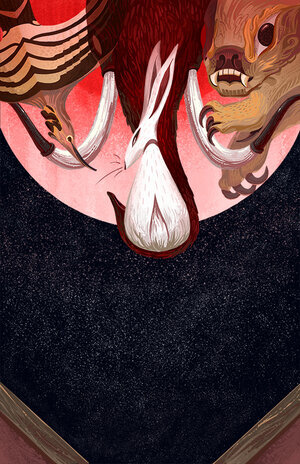
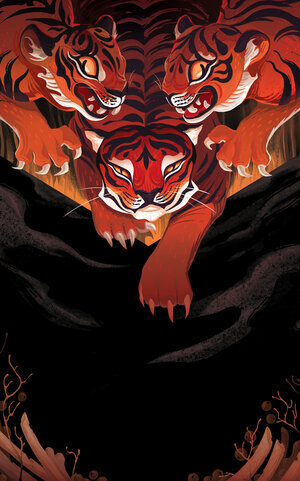
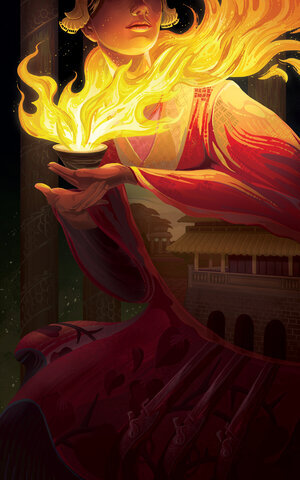
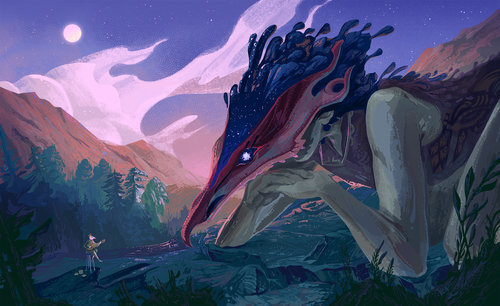
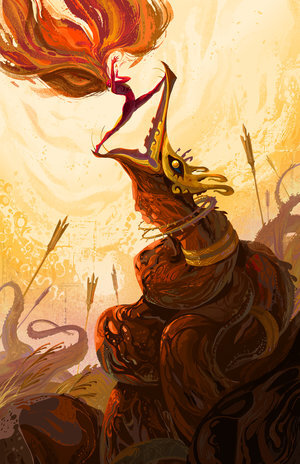
stories in photos About:Alyssa is an illustrator, animator, and game artist based in the SF bay area. She currently works for the Google Doodle team and enjoys making pastries and unusual ice cream flavors on the weekends.
 Contact:
alicique@gmail.com
Select Clients:Harmonix, FableVision, Tor Books, Tor.com Publishing, Hodder & Stoughton, Cricket Magazine, Google, Warner Animation Group
Honors:
Best Professional Artist Hugo Nominee 2020 & 2021
Spectrum Fantastic Art 22 2015
Society of Illustrators of LA Illustration West 53 2015
3×3 Professional Show No. 11 2014
3×3 Picture Book Show No. 11 Honorable Mention 2014 & 2015
Society of Illustrators West Student Show (Silver Award) 2012
Society of Illustrators Zankel Scholar Finalist 2011





 Previous Next
 For more information please visit Alyssa Winans website. All images are the property of Alyssa Winans.
© 2021 All Rights Reserved.
Facebook-f TwitterDecember 7, 2021
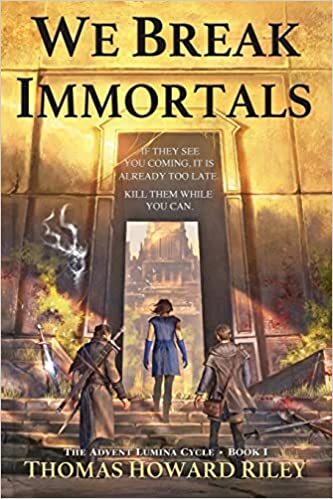
How Can You Be A Fantasy Author If You Flunked Creative Writing Class? – An Origin Story by Thomas Howard Riley
“Your academic accolades do not determine whether you can be a writer or not. “
I want to introduce myself to you, and by doing so, I hope to at the same time show you that there is no right way to be a writer. There is no set path, no particular switches to turn in some specific order that if you deviate from even a little bit, you will not be good at writing.
I have seen many new writers who fear that they have somehow been marked as inferior since they missed out on expensive college courses or literature degrees or exclusive writing workshops because they did not have enough time or money to attend (particularly in the U.S. where higher education is frequently financially prohibitive). I would like to help negate this fear.
This is not a knock on academic achievement. Far from it. I merely wish to show that there are many paths to becoming a better writer.
This is not meant to be a template for how to do it. This is proof that you can do it.
 This is an origin story.
I used to spend a lot of time in school not doing schoolwork. One tenth of the space in my backpack was actually devoted to real textbooks, the rest of that volume being dedicated to the ten novels or RPGs or gaming rulebooks or copies of Games Workshop White Dwarf Magazines I was simultaneously reading just for fun.
A large percentage of my school day was spent daydreaming and doodling (mostly fields of dead bodies impaled on stakes, with burning villages in the background—this is normal because I say it is) I also frequently wrote little stories to pass the time.
I read Dune, Lord of the Rings, and every Star Wars book I could get my hands on. I devoured every book from the Dragonlance Saga, and everything that said Forgotten Realms on it. I obsessed over the X-Men, and Space Marines, and I read the Silmarillion from cover to cover when I was 11 and liked it. (Let the horror of that last bit sink in for a moment, why don’t we?) I could list out for you every book, every RPG module, and show you my handwritten notes and charts and geneologies and hierarchies for each of them. But let’s summarize for brevity’s sake.
I loved worlds filled with magick. (Oh, I spell magick with a K, by the way. We can still be friends.)
I spent grades 1-8 in classes with slightly advanced reading curriculum, what they labeled honors classes, a fact that was in part due to the side benefits of my having synesthesia (oh, by the way, I have synesthesia, but let’s stay on topic here). Let us also not blow this out of proportion. I would not exactly be qualifying for any academic scholarships or anything, merely that the odds of me failing a course were slightly less than the average.
Now this was mostly fine. Words and numbers were fun to me, the assignments easy enough, and that left all the more time to read my fantasy books instead.
But as high school approached, the theme of the “advanced” classes changed from simple assignments in grammar, writing, and rhetoric, to focus exclusively on “classic” novels and “classic” authors. The “right” people. The ones that people with fancy PhDs held up as the pinnacle of artistic expression. The ones you had to look up to if you wanted to play the game.
This soon-to-be future on the horizon presented a problem of motivation for me. I had read most of those books already…and hated them. Let me restate that. I started most of them, and discarded many very quickly. Reading and discussing the themes of Charles Dickens was stiff competition for watching paint dry. One can talk about the important allegories in Moby Dick, but have you ever actually read it? Holy shit. It’s…a lot.
And there were, among the classics, some notable absences.
Where were the swords? There was, as far as I recall, very little magick in Huckleberry Finn. Where were all the orks in A Tale of Two Cities? And the dragon in Of Mice And Men was not very convincing. (I have not read it in a while, so some of the details may be fuzzy).
I loved Shakespeare though, and I LOVED mythology. That was as close as ‘the classics” came to actual Fantasy. Gods and monsters, magick and spirits, swords and ghosts, petty villains and desperate, imperfect heroes. I was all in for that stuff.
One problem: that curriculum was only a part of the standard course. The regular one. The one I would not be going into when I became a freshman.
So, genius that I am, always with one eye on the future of my education, I naturally determined the best course of action would be to intentionally flunk out of the advanced course. Which I promptly did, with great celerity and much aplomb. I whimsically failed to turn in projects, show up for speeches, read the assignments, do literally anything that was asked.
Believe it or not, this worked splendidly. I was demoted to the regular old english class, so that I could spend all day palling around with Othello and Macbeth, Achilles and Zeus, Shiva and Kali, Thor and Loki, Quetzalcoatl and Ishtar and Manannan Mac Lir. That was my wheelhouse. I reveled in my schoolwork because it was finally fun. I even wrote my own little myths and legends to pass the time.
This worked well until senior year. Because the senior standard course material looked suspiciously like the advanced ones. Only here were the very same books I had tearfully vomited over as I tried and failed to enjoy reading years before.
Luckily for me, there was an escape hatch.
So, like all soon-to-be famous and important authors, I took a Creative Writing course in high school for the sole reason that it would count as a senior english credit so that I would not have to read books by famous and important authors.
This should have been a dream scenario for someone like me. I wrote little stories on my own already. I was a creative person dammit! I should have been oozing A+ after A+ grades on those assignments, and looking down my nose at the teachers and student aides with casual disdain for daring to try to grade my magnificence.
There was only one teensy little problem.
I never scored higher than a C on any assignment. If fact, on many of these assignments I scored resounding Fs. Getting an F in Creative Writing was like being slapped in the face. It seemed absurd. How was it possible? How could anyone fuck up being creative?
Then I realized what was wrong.
Example. Our midterm assignment was to write a 10 page short story, complete with a beginning, middle, and ending, with certain themes represented. I looked at the assignment I had handed in, the one with that big red F on the top, so red I could smell the ink. I looked at it and I realized I had written a 40 page prologue for an epic space opera. A nonexistent space opera. With none of the themes from the assignment represented.
I went back through my other assignments and it was all the same. Everything was a giant intro to an epic fantasy realm of magick, or a prologue for a space fleet war of ten thousand worlds, or character introductions for the seven members of a crew that would eventually, 600 nonexistent pages later, form up like a Lord of the Rings Avengers.
I was even given an assignment to create a journal (handwritten in an actual journal) of a fake person somewhere in actual history. So I made a journal of a knight on the ill-fated 2nd crusade (the one that belly-flopped into failure, because the 1st and 3rd are too easy of targets).
After a terrible battle, my intrepid made-up character and a ragtag group escape annihilation, only to be pursued by death-cultists of the Elder Gods, before befriending some locals and trying to escape back home, only to stumble into a Lovecraftian terror sandwich of cosmic horror on land and at sea, complete with sketches and unreliable narration, and a new obsession with summoning the Great Old Ones when he finally returns to his family manor, and his hubris leads to his inevitable destruction. (WTF? Who even am I?)
Of course I failed the journal assignment…..because 2/3 of the grade was adding an “introduction”, a “bibliography of works cited”, a “timeline”, and use of “primary sources”.
Oops.
I did not have any works cited because I had unfortunately memorized all the events of the 2nd Crusade years before. (I was obsessed with the ones that failed in particular, yay Schadenfreude) I was a bit of a history buff. (I am also a bit of an understatement-maker). I would not have known what books to cite. It was all just in my head. And there was no wikipedia back then.
So there went another project. (I still have that journal to this day, and it is still crazy to me that some high school kid wrote the absolute madness inside it, even though I was that kid)
Long story short, once all the grades were tabulated at the end of the semester, I was staring at a pleasant little F. For the semester.
So, to ensure my actual graduation, I had to retake the course instead of having a free period during my final semester. This time I followed the stupid rules. I managed to pass it by the skin of my teeth.
This should have, one might think, been a moment for self-reflection.
But in the end, the one thing I took away from it was how…arbitrary it all seemed. We were graded on how well we adhered to a pre-selected format. We were judged against other work made-to-order with identical thematic elements.
We were permitted to exercise creativity only in a single narrow way we were allowed to. We could be creative, as long as we did not stray from the chosen framework. Like being told you will be able to design a car, only to find out that all you were allowed to design was the paint color, the seat cushions, and the wheels.
Well, I wanted to take apart the whole car and start from scratch.
I wanted to write outside the lines.
This inability of mine to write short stories will sound very familiar to some—nay, obvious—but it was this very same obsession that resulted in me flunking Creative Writing that also made me realize I should just be ignoring arbitrary criteria and writing what I want instead.
So instead of teaching me how to write the way they wanted me to, Creative Writing taught me to ignore the expectations of others and just go ahead and write the other 600 pages that went with all those prologues. It taught me that I did not need to mimic “the classics”, or follow the educational tracks of people who had certificates on their walls. That I could choose my own material, that I didn’t need a PhD in writing to write.
I discovered that I only needed dedication, and a library in order to learn how to be a writer.
So I did.
So can you.
That is the moral of the story. This was a weird (and I hope at least marginally entertaining) way to say that there is no specific way to become the writer you were meant to be. Papers and certificates and awards and grades are all helpful things for a future writer. But it is important to know that they are not requirements. You are not excluded from the game because you are missing any of those, Or all of those.
All that matters is knowledge and practice, and you can get both of those for free.
You don’t have to have an A+ in Creative Writing (though it doesn’t hurt if you do, of course).
You don’t need a formal declaration from any authority to be allowed to make art. Find sources of knowledge for yourself wherever you can. Talk to other writers about the craft. Find videos and books that talk about storytelling. Study the topics you want to write about. Learn the rules of writing and the formulas of storycrafting, and then laugh as you break them all.
Above all, READ. Read as much as you can, of as many different styles as you can (even if you only read one genre, branch out into different authors so you can see many examples of prose and storytelling). Find all the things that fascinate you. And dive into them until you understand why they do. See how other authors do it, and you will find things that ring true for you, tips and tricks that you can add to your repertoire.
These days you can learn all you need to know from watching free tutorials and visiting your local library.
Above all, never feel discouraged in the presence of someone with the Appropriate Academic Accolades. Because, even if they are a great writer, and even if their fields of study contributed positively to their writing, none of those pieces of paper alone is what made them better.
Curiosity and dedication did.
Some people study the classics, pass creative writing, and obtain a masters degree. Some people flunk out, never graduate, and learn the craft by reading and studying and practicing and creating on their own. Or anything in between.
You do not need credentials to be a writer.
All you need is a writing device and a page to put words on.
And to trust yourself.
And to never give up.
That’s it.
That’s all it takes.
Write what you want.
They don’t get to decide. You do.
Thank you for taking the time with me today.
Check Out Some of Our Other ReviewsReview – Risen by Benedict Jacka
Review- The Bear and the Nightingale by Katherine Arden
THOMAS HOWARD RILEY
Thomas Howard Riley is a purveyor of thicc Rated R Epic Fantasy books. He currently resides in a secluded grotto in the wasteland metropolis, where he reads ancient books, plays ancient games, watches ancient movies, jams on ancient guitars, and writes furiously day and night. He sometimes appears on clear nights when the moon is gibbous, and he has often been seen in the presence of cats.
He always wanted to make up his own worlds, tell his own stories, invent his own people, and explore both the light and the darkness of human nature. With a few swords thrown in for good measure. And some magick. Awesome magick.
He can be found digitally at THOMASHOWARDRILEY.COM
On Twitter he is @ornithopteryx, where he is sometimes funny, always clever, and never mean.
On Instagram he is ThomasHowardRiley, where you will see books, and cats, and mayhem.
https://amzn.to/3hVPA3J Amazon US link
https://amzn.to/2UYvhtT Amazon UK link
https://amzn.to/3vDCb5w Paperback/Hardcover link
https://bit.ly/3zU8qyq Goodreads link
http://thomashowardriley.com Author Website
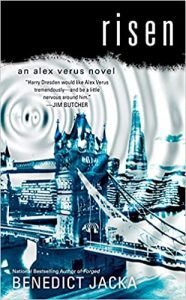
Review – Risen by Benedict Jacka
 check it out here
 BOOK REVIEW
RISEN by BENEDICT JACKA December 7, 2021 1:00 pm No Comments Facebook Twitter WordPressRisen is a shattering final book of the Alex Versus series by Benedict Jacka; we say goodbye to the titular character Alex. It is all done. Finito.
Endings can be difficult; it is hard to wrap up all the emotion and gravitas of a series, especially one as large as the Alex Verus one with a neat bow. Instead of allowing the series to pitter out like a band still on stage when patrons are getting their bags and heading home, Jacka finished the series with a thundering crash of an orchestra in its final song for the night. It was perfectly timed and perfectly executed, and a conscious choice by Jacka that this book and this plot arc is the right time to finish. Jacka did a great job, and I am left with a fondness for the series.
It took us 12 books to get to this point, and unlike other stories in the Alex Verus series, you can’t start at book 12, Risen. You won’t get the gravitas of what is going on and the combined struggles Alex has faced. Jacka does his best to give context to the situation that Verus finds himself in. But even with some backstory, it will read like an excited but superficial action fantasy novel. Instead, Risen feels like a story written as a nod for the fans and everything Verus has gone through and lost.
Alex Verus is an unlikely hero on many fronts. Firstly, up until recently, he was not a hugely powerful mage. Verus has always been cunning and strategic in planning because of necessity. He was scrappy, the runt puppy of the Mage world. Often his fights were akin to someone attacking with a pea shooter instead of a Nuke. You can do a lot of damage with a pea shooter if you get someone right in the eye, which was Alex’s modus operandi. It took him far in the mage world, but Verus was always lacking true power.
That is, until the last few books, where the tides began to turn. But there is always a price to pay for power.
One of the most positive aspects of the story is how Alex has grown and nurtured his relationships with his allies. As I mentioned above this is essential for Alex’s survival, but I think this is more so because of his highly protective nature. It is the epitome of a found family.
If Alex chooses you and trusts you, he will likely care about you his entire life, and possibly burn the world down to save you. With all the magical and political machinations going on in the background, his relationships take center stage and are the beating heart of the Alex Verus series.
Verus also has a distinctive duality in his nature, which was evident as the series progressed but doubly true for the last book. He can be intensely pragmatic and ruthless, in essence, a dark mage. The very thing he spent most of his adult life running from. He is capable of very dark things, which many dark mages attempted to exploit for their gain. Especially, the longstanding villain of the story Richard Drakh. The morally ambiguous nature of Jacka’s hefty cast of characters seems much more realistic and practical than the perfect “good guy/bad guy” characters that many other urban fantasy series employ.
So, who is Alex Verus and why should you read this series? Alex is a complex character set in difficult situations that never jump the proverbial shark. The series has grey characters that have an authenticity that is appealing and grabs you. And those characters have psychological issues that again, add to the realism of the series. The ever-evolving plot is great, you continually want to know more. And now that it is a finished story, you can binge-read it. There is so much good, which is why I have loved and read this series for years.
It was bittersweet to see it go, but it was time. Jacka did Alex Verus justice and I was thrilled with the ending. I would highly recommend it to anyone looking for a great urban fantasy series to binge read. You won’t be able to put it down
Check Out some of our other reviewsREVIEW – SUNDERED SOULS BY TIM HARDIE
Review: When Things Get Dark Edited by Ellen Datlow
Beth Tabler
Elizabeth Tabler runs Beforewegoblog and is constantly immersed in fantasy stories. She was at one time an architect but divides her time now between her family in Las Vegas, Nevada, and as many book worlds as she can get her hands on. She is also a huge fan of Self Published fantasy and was on Team Qwillery as a judge for SPFBO5, and now runs her own team for SPFBO7. You will find her with a coffee in one hand and her iPad in the other. Find her on: Goodreads / Instagram / Pinterest / Twitter
December 5, 2021
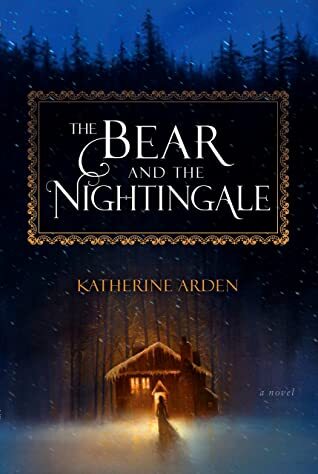
Review – The Bear and the Nightingale by Katherine Arden
 check it out here
 BOOK REVIEW
the bear and the nightengale by katherin arden December 5, 2021 10:00 am No Comments Facebook Twitter WordPress “All my life,” she said, “I have been told ‘go’ and ‘come.’ I am told how I will live, and I am told how I must die. I must be a man’s servant and a mare for his pleasure, or I must hide myself behind walls and surrender my flesh to a cold, silent god. I would walk into the jaws of hell itself, if it were a path of my own choosing. I would rather die tomorrow in the forest than live a hundred years of the life appointed me. Please. Please let me help you.” The Bear and the Nightingale by Katherine ArdenHello again dear reader or listener, I hope you are doing well! For my part, the days have gotten much colder in my little corner of Italy, and thus I find myself in the mood for all the wintery reads. Truly unexpected, I know.
It will be no surprise then when I tell you that after walking Figaro one evening and freezing my fingers off, I went back home, wrapped myself in my coziest blanket, and sat to read The Bear and the Nightingale, book one in Katherine Arden’s The Winternight trilogy. I read the first thirty pages that evening and was absolutely hooked!! So much so that when I had the chance to sit and read again a couple days later, I actually finished the rest of the book in one sitting! I know I’m a little late to this party considering all the praise this series has gotten but let me share why I loved it so much as well.
The Bear and the Nightingale is a historical fantasy set in medieval Russia and it borrows from Slavic mythology and Russian folklore. More specifically, it is set during the time when Orthodox Christianity was working towards stamping out other pagan religions and beliefs; you know, the usual jazz when it comes to the delightful early Christians. The protagonist, Vasilisa, is a young girl with the gift to see the spirits and creatures that inhabit the world, and as such she is branded a witch by the priests and more religious people around her.
Personally I am a sucker for a plot where an old religion comes head-to-head with the new, and I’m an even bigger sucker for folklore. So you can imagine my delight when I got to recognize some figures from my childhood stories (I watched a lot of Russian cartoons dubbed apparently and listened to audiobook tapes while playing) or learn about new ones! Moreover, this is a tale about gender roles and finding one’s place in a world that is slowly casting you out.
So I appreciated that, when writing Vasilisa, Arden took care to be true to what a woman of her time would behave and think like, but also made her protagonist into a strong figure who embraces change and being different and wishing for something else for herself once she realizes she does not fit into that mold and expectation. Arden managed to find that delicate balance brilliantly and created my favorite kind of no nonsense heroine who gets things done and has so much heart.
Arden’s writing in The Bear and the Nightingale was overall was truly spellbinding, her prose beautiful, and her imagery evocative in a way that fully immersed me into the story. You feel invested in almost every single character no matter how small their role on the page, because they all somehow have an almost surprising level of depth right from the get-go. This is mostly because of Arden’s 360-degree narration pov, as third omniscient lends itself super well to painting a full picture from every relevant angle, sometimes even from characters you weren’t expecting, making the story that much richer!
Reader, I laughed out loud, I rolled my eyes, I awwwed so much my dog looked worried, and by the end, I even teared up. Which just goes to show how invested Arden managed to get me in her mesmerizing characters and wonderful story. It’s hardly a surprise this series as a whole was a finalist for a Hugo Award!
By the time I’d read those first 30 pages I’d already ordered the sequels and now I am (not so) patiently waiting for the sequels to get here so I can continue the story of Vasilisa, a heroine I’ve definitely grown to look up to and feel inspired by for her perseverance and independence, and also to see more of Morozko cause… well, reasons… ahem. In fact, while The Bear and the NIghtingale wraps up its story in a satisfying manner, allowing for it to be read as a standalone, you can’t help but want more of this world and these characters who brave the biting cold in more ways than one.
Until next time,
Eleni A.E.
9.5/10
Check Out some of our other reviews
Review – The Final Girl Support Group by Grady Hendrix
Review – A Psalm for the Wild Built by Becky Chambers
Review – Legacy of the Brightwash by Krystle Matar
Eleni A.E.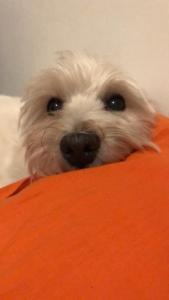
Eleni is a Greek book nerd who grew up in Italy, and got her BA Honours degree in Literature from a Scottish university! She can be found reading all the SFF she can get her hands on, and reviewing it for fun when inspiration strikes and she just needs to share her passion. Alternatively, she will definitely be with a needy Westie in her arms watching series, anime, or movies. You can find her other writing on https://fanfiaddict.com or on her personal blog where there are also posts about other literary genres. Feel free to follow her day to day ramblings on Twitter
@eleni_argyroor Instagram @the_words_we_read .
December 4, 2021
Let’s Talk About Mood Reading

“The library was a little old shabby place. Francie thought it was beautiful. The feeling she had about it was as good as the feeling she had about church. She pushed open the door and went in. She liked the combined smell of worn leather bindings, library past and freshly inked stamping pads better than she liked the smell of burning incense at high mass.”
Betty Smith, A Tree Grows in Brooklyn Tweet
It can be a blessing in disguise, but it can also be, put bluntly, a bit of a bitch.
Hello again dear reader or listener, welcome back to another little article from yours truly, a.k.a. Eleni felt like rambling about something book-related. So mood reading, what is it exactly? Well, the name is fairly self-explanatory, but I myself didn’t know that my kind of reading habits even had a name to begin with! As with everything then, reading is a strongly subjective experience, and with mood reading, in particular, it becomes even more so. In other words, take this for what it is, an opinion based on personal experience.
The baseline is that when you’re a mood reader, you can only really read the very specific subgenre/trope/plot type, etc., that you’re feeling like getting lost in at a given time. Or that you can only read when the mood strikes you, and not on a planned schedule, so to speak.
Which also means that you cannot stick to a pre-set TBR to save your life and that often, if you force yourself to get through a book that isn’t your current interest, or while you’re in your non-reading days, you will find yourself struggling to even like something that at a later time you might actually love. Not to mention lead you to the much-dreaded reading slump that haunts every bookworm out there.
This can also make things a little awkward if you are a book reviewer who has received an ARC or free review copy, because you really want to be able to read them in good time, but if you are suddenly hit with the proverbial bat of a completely different mood, then you’re in trouble. It’s pretty hard to explain, especially to people who are not mood readers, and even more so if that person is the author that has sent you the book. Like, please, do not think less of me, or that I am making up excuses to not read your book.
It is a genuine struggle, and I want to give your kindly offered book the best chance to become my next favorite! Personally, it is the main reason I don’t request many ARCs to begin with, and even then, only when I know I have a long enough time to read them by so that I can still hopefully manage even if some different mood hits.
The thing is, just like with reading slumps stressing us out since we are suddenly feeling all kinds of odd because we are not doing the very thing we love and enjoy, mood reading can make us feel like we’re doing something wrong compared to other people in the book community.
Why can’t I connect with this when everyone around me seems to be loving it, and (to add insult to injury) technically, I know I would as well? It’s the usual conundrum of trying not to feel like we’re lagging behind because we haven’t read as many books as others, because we’re not reading fast enough, because we’re not reading the newest/latest releases, and the list goes on and on. It comes naturally to compare ourselves to our reading peers after all! But it is also important to remember that by letting ourselves fall into that trap we’re only really harming ourselves and putting pressure on our favorite hobby, turning it into a chore.
On the other hand, as I said at the start, mood reading can also be quite neat of a quirk to have because you can be sure that at least 90% of the time, the book you are reading is one you cannot easily put down. By virtue of being drawn to specific elements in a story and hence having to seek out the very book that meets those requirements with some extra attention and research, you’re almost certainly going to find what works for you and avoid what doesn’t. Mainly the reason most of my reads end up being 8 and above ratings to be honest, and I am not at all complaining!
Ultimately, I can say that I love the book community I’ve found on Twitter. I love that it gave me the opportunity to have contacts with so many cool authors, and with tons of amazing people involved in the book industry and the reviewing world. My TBR has quintupled granted, and I suddenly learned that I am not always able to read every book that I learn of right away because, well, I am not in the mood for it right in that given instant. But I’ve also learned (and occasionally need to remind myself) that it is ok to take my time to enjoy my readings at my own pace and when the mood strikes.
To any authors that I owe a review to, this mini article was partly for you I suppose and please know that I’ll get there cause I’ve given my word and I genuinely am eager to get to your stories. To other mood readers out there, I salute you, and this is your friendly reminder to not be hard on yourself because there is no real reason to! If you’re feeling like a reread of an old favorite, go for it, treat yourself to your comfort read, it is what you deserve. And if someone tells you otherwise, send them my way for a chat.
What about you dear reader/listener? Are you a mood reader? And if yes, how do you navigate it? If you’re not, what does it feel like being able to stick to a plan and schedule? Is it like having an Infinity Stone? Asking for a friend.
Until next time,
Eleni A. E.
Some Great Books To REad If You Are A Mood Reader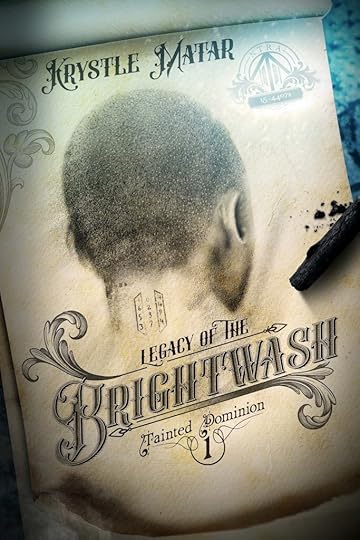 Link
Link  Link
Link  Link
Link  Link
Link  Link Eleni A.E.
 Eleni is a Greek book nerd who grew up in Italy, and got her BA Honours degree in Literature from a Scottish university! She can be found reading all the SFF she can get her hands on, and reviewing it for fun when inspiration strikes and she just needs to share her passion. Alternatively, she will definitely be with a needy Westie in her arms watching series, anime, or movies. You can find her other writing on https://fanfiaddict.com or on her personal blog where there are also posts about other literary genres. Feel free to follow her day to day ramblings on Twitter
@eleni_argyroor Instagram @the_words_we_read .
December 3, 2021
A Piece of History in Every Panel in “Mandela and the General” by John Carlin, Oriol Malet (Contributor)
 What is it About?
 From the publisher, “In this thrilling graphic novel, Nelson Mandela’s fight against racism is about to spiral into an all-out race war. Unless he can win over his archenemy, the white supremacist General Viljoen, the democratic struggle for equality and justice in South Africa will end in “the peace of graveyards.”
“Intense.”–Booklist
“A riveting read.”–Morgan Freeman
“Fascinating.”–Library Journal, starred review
As the first post-apartheid elections approach in 1994, with South African blacks poised to take power, the nation’s whites fear reprisal. White nationalist militias claiming 50,000 well-armed former soldiers stand ready to fight to the death to defend their cause. They need someone who can lead and unite them. That man is General Constand Viljoen, former chief of apartheid South Africa’s military.
Mandela knows that he can’t avert a bloodbath on his own. He will have to count on his archenemy. Throughout those historic months, the two men meet in secret. Can they trust each other? Can they keep their followers and radical fringe elements from acts of violence? The mettle of these two men will determine the future of a nation.
The drama of this contest and the history that pivoted on it comes vividly to life in visual form. Veteran British journalist John Carlin teams up with Catalan artist Oriol Malet to create a historically and artistically rich graphic novel with obvious relevance to today’s polarized politics.”
 Review
 “We must strive to find a political solution that reconciled White fears with black aspirations.”
Mandela and the General is a powerful book full of historical moments that changed the fate of a nation. The story is not frivolous, and watching power and change unfold page to page is a heady thing. Also, the story is an accessible and well-done distillation of Mandela’s and General Viljoen’s characters. It could be a heavy thing due to the gravitas and importance of the content, but it effortlessly flows from page to page.
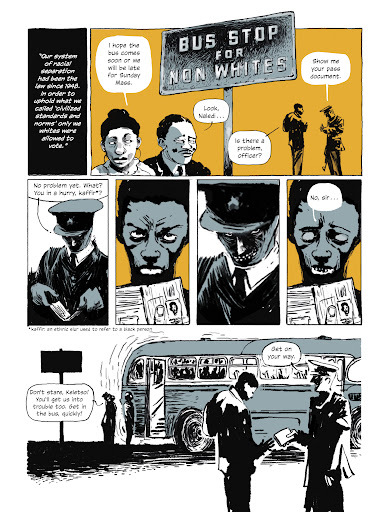
 Mandela and the General is the correct book to read for an American right now. I think it mirrors some of the struggles currently facing the US. Two opposing ideologies, democrat and republican, bickering and waring with each other. No, I know that it is not the same thing as apartheid, but I felt the echoes of it reading this book. The reader can learn so much from such an accessible historical story.
Nothing can stop the Afrikaner from obtaining his freedom!
Mandela and the General is told from the General’s point of view. The violence is never sugar-coated nor is it excused, and even though he was on the wrong side of history, it showed how he was trying to do what he thought best for his people. The good and the bad of it are drawn out for the reader to see. I appreciate this as a lover of history. There are two sides to everything, showing the thought process behind the General’s actions keep him from becoming a one-dimensional character.
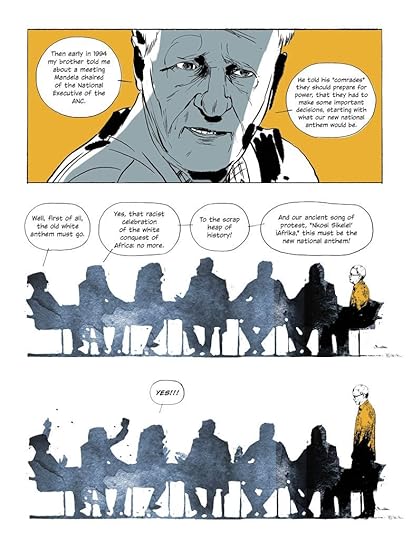
It is graphically a beautiful book. Ink and watercolor are such lovely mediums to group together. They add softness and a crispness to panels at the same time. Also, the monochromatic color scheme of the book adds a certain level of gravitas to the story and it is very well done.
Graphic novels are an excellent way to tell history. Not only does the reader get the subtle nuances of the written word, but they also get a visual representation. Mandela and the General does both very well. It is engaging without being over-cramped with facts. Beautifully inked and a definite recommend.
 Check Out Some of Our Other Review
Review – A Psalm for the Wild Built by Becky Chambers
 check it out here
 BOOK REVIEW
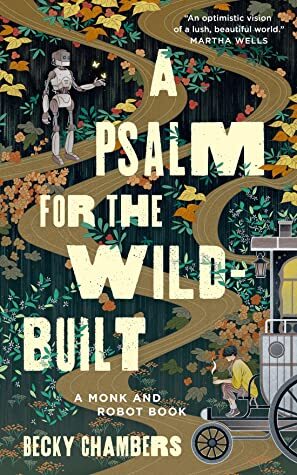
a psalm for the wild built by becky chambers December 3, 2021 10:00 am No Comments Facebook Twitter WordPress “You’re an animal, Sibling Dex. You are not separate or other. You’re an animal. And animals have no purpose. Nothing has a purpose. The world simply is. If you want to do things that are meaningful to others, fine! Good! So do I! But if I wanted to crawl into a cave and watch stalagmites with Frostfrog for the remainder of my days, that would also be both fine and good. You keep asking why your work is not enough, and I don’t know how to answer that, because it is enough to exist in the world and marvel at it. You don’t need to justify that, or earn it. You are allowed to just live. That is all most animals do.”The Psalm for the Wild Built is a joy to read. There is no great antagonist to the battle except for your nagging inner voice, and only hope guides your journey through the lands.
Hope is a pervasive emotion; if you let it, hope can seep into every crevice and neuron in your body. It gives you the belief that more can come and there are better days ahead. That is what Monk and Robot show with every step and clank the tea cart, there is a low chanting sound that swirls around them as they travel singing “Hope. Hope. Hope.”
The story follows Sibing Dex and Splendid Speckled Mosscap. Dex is a tea monk. A traveling monk and a cart full of herbs and spices moving from town to town, healing the sick with their spicey creations and leaving comfort in their wake. As a character, Sibling Dex is battling the old thought of “am I doing what I should be doing.” and “Why aren’t I happy.” I think that many readers will empathize with his thoughts and struggles, myself included. Happiness can sometimes feel like a slippery emotion; you grasp it and hold on, yet somehow it wriggles out of your hands and flies away.
“You keep asking why your work is not enough, and I don’t know how to answer that, because it is enough to exist in the world and marvel at it. You don’t need to justify that, or earn it. You are allowed to just live.”
Splendid Speckled Mosscap is a wonderfully depicted robot who meets up with Sibling Dex while walking the roads between camps. There is an honesty in Mosscap’s character and a refreshing uncluttered view of what is essential in life and why.
Mosscap is the first robot to meet up with a human in centuries. This story has flavors of the “first contact” motif. Apparently, in this future world, when humans discover that the robots gained sentience, they let them go to be free people out in the world. There were no battles and bloody betrayal. No Arnold Schwarzenegger saying, “i’ll be back.” The humans realized that the robots were people. This is such a wonderful hopepunk idea. Humans do what is ethically and morally right with no monetary compensation or power struggle. Humans are proper and sound, and to this reviewer, who reads 90% of grimdark novels, it was quite the change.
I do not want to spoil anything in this “warm cup of tea on a raining morning” book. The pair talked about philosophy and mindset that hit me hard. And I think readers will love it. A Psalm of the Wild Built is lovely, the characters are beautiful people trying their best, and I can’t wait to read more of their adventures.
Check Out some of our other reviewsDecember 2, 2021
Review – Legacy of the Brightwash by Krystle Matar
check it out here BOOK REVIEW
legacy of the brightwash by krystle matarREVIEW BY BENJAMIN FROM LITERATURE & LOFI
December 2, 2021 10:00 am No Comments Facebook Twitter WordPress "Something frantic built in Tashués chest, something wild and raw. It had been a long time since he'd looked down on the body of a child so horribly mutilated." Trigger warning: I think it goes without saying that this book includes scenes of graphic violence as well as references to miscarriages. Now that I have your undivided attention… Welcome to the Legacy of the Brightwash by Krystle Matar. An immersive gaslight fantasy that is best served alongside a cold dram of copper stilled whiskey (or seven). This is a book that has been making a lot of noise within the SFF Twitter community and for a good reason. I’ve been processing about picking up this book for a while, but finally took the inevitable plunge. This isn’t your regular fantasy story. I was completely impressed with how a huge variety of genre tones are mish-mashed seamlessly into the overarching story. If I had to pick sub-genres other than gaslight, I’d say pulp noir and mystery predominately come to mind. But Krystle also clearly has a desire to pay homage to numerous others including romance, conspiracy, court intrigue, sci-fi and grimdark to name a few. And the amazing thing… Is that all these elements are blended masterfully, together just like a bottle of aged Bowmore 12 single malt whisky. Oh and whisky is mentioned a lot in this book. (In case you couldn’t tell). The story follows our central protagonist, Tashué Blackwood, veteran cavalier, now working as Regulation Officer keeping both registered/unregistered “tainted” civilians in check across the city. This is a society where civilians with magical abilities (or talents) are known as tainted and must be controlled by the authority. One day Tashué discovers the body of a girl washed up in his neighborhood. With no one else seeming to care for the mysterious origin of this girl, it’s down to Tashué to investigate the matter further. But the secrets he unveils will not only shock him to the core, but also challenge him to question everything he’s ever dutifully believed in. I’m a sucker for a storyline shrouded in mystery and Brightwash does not disappoint in this regard. The investigation storyline doesn’t dominate the read-through but runs in perfect harmony with all the other storylines without derailing any of the pivotal character development. But let’s talk about intimacy for a second… “His hands ached to reach out to her, to take her in his arms, to press his face into that beautiful hair, to feel her skin against his body.” There’s this superb refinement and intricate detail to character moments, both romantically and otherwise. Krystle Matar does a terrific job of immersing us inside the thoughts and feelings of her characters. This defines them on not just a personal view but a more intimate and profound level. This is the difference between following a character and following a character that you know. We become familiar with all of the characters and their conflicts, inner-desires, objectives and even emotions. It’s sensational. All these characters quickly gravitate away from becoming defined archetypes, growing into individuals that are far more layered and personable. Tashué could easily have been a carbon copy of the lawful veteran. But instead what we’re given is a very complex protagonist. We see his flaws and weaknesses in equal measure to his strengths and positive attributes. Tashué is almost as self-destructive as he is righteous. I couldn’t help but be hooked by his actions at every turn, be it led by his somewhat short temper and hot-headedness or by his calm and controlled demeanor. His arc is a pleasure to watch unfold. And the beauty is that he isn’t the only character like this. All five of the POV characters feel incredibly rich with personality and raw emotion. As they break out of their stereotypical moulds into roles which are deeply vibrant and compelling. Even the side characters give off these familiar vibes. It’s a commendation to the author for such careful, detailed and personal character work. I can’t proceed the review without discussing the other characters that surround Tashué and all the chaos he attracts (and causes). Firstly we have Stella. If Tashué is the lead male, them Stella is certainly the leading woman. I love her devotion to protecting those that she loves while also concealing several secrets that haunt her from the past. Jason, Tashué’s son, reveals a darker side to the entire authoritative institution. His feelings for his family, feel so raw and sentimental. You can feel the pain of this character, but also this burning passionate fire inside him. Lorne’s loyalties between duty and family really hit me hard, but inevitably I couldn’t help but be sucked into his fierce fighting spirit as well as his true devotion blazing inside his heart. And finally we have Ileana, certainly the most divisive character, but once you get to know her, you can’t help but be intrigued as she sets her ambitious plans into motion. Her sultry fatale vibes both entertain and enrapture me. If that wasn’t enough we have the equally chaotic antics of Ishmael, the wholesome charm of “little warrior” Ceridwen (the best written child character I’ve encountered for a while.) As well as Kaz, a character who’s loyal friendship to Tashué leaves me craving more. I guess my point is that if you’re looking for substantial, motivated characters, then you are truly spoiled for choice. Truthfully the only flaw I could find in this novel was the knowledge that this book might not appeal to readers who crave relentless action and are addicted to a faster pacing. This is a book that relishes taking it’s time to absorb you into the characters, their dilemmas and the environment around them. It favours a slower yet smooth and intimate pace, and I know that might not be to everyone’s taste. “They aren’t human.” The themes explored in this novel are overwhelmingly powerful but not in a way that spoils the experience with the characters and plot. Krystle has clearly endeavoured to work to the finest, meticulous details to ensure that these ideas and concepts are embedded organically into the text. All the juicy themes like, corruption, guilt, morality, classes, loyalty, redemption, forgiveness and justice are explored in a deliciously rewarding and more-ish way. This only adds more depth and ambiance to the story. We’re left with a world that is so beautifully dark that we can’t help but be enthralled in both the moments of sheer delight and happiness while also invested in the heavily cold and harsh events that balance out this realm. The characters have to suffer. Matar is aware that when characters make decisions, that there must be the price with brutal consequences and ramifications. And this has a knock-on effect where our entire roster of conflicted personalities begin to effect one another’s lives, sometimes for the better, but like the cruelty of reality, most likely for the worst. I loved the exploration of social class and hierarchy in this book. It’s yet another rich component that helps to define the laws, structure and order to the magic system, history and culture in this world. Something tells me that were only scraping the surface of this topic and that it might become a more prominent theme in further novels. “I’m sorry I didn’t know how to save you.” But in the end I ultimately find myself ensnared by the dark realism to this fantasy world. It’s the buried secrets, the sinister order of society and the lack of altruistic behaviour from antagonistic characters that truly has me hooked. Often as a reader we’re quick to label definitive heroes and villains to a story. But I find myself in a predicament here. There’s a larger force at play. Where this grey world has been built by collective influences, I can’t help but feel that the true big bad is actually the darker traits to humanity carried in every single human being. It’s the willingness to turn a blind eye to the cruel reality standing in front of you that really hits me hard. The decision to conform and commit under fear, greed or pride rather than to do what is morally right. It’s inevitable that with such stellar and masterful writing, that Matar will inadvertently encourage us as readers to question our own ideals. Emotively hitting us in the heartstrings with points which are so empathetically relatable. This is something which is engrained into our nature as human beings. To think, to feel and to ultimately be the master of the actions that define us. Pick up this book if you like: Intimate character work. A sleuth of compelling pulpy mysteries. Rich snippets of numerous sub-genres intertwined into fantasy. Relatable themes that resonate with human nature. A dark world filled with graphic detail and explicit cuss words. A reason to pick up a dram of whisky while reading. You might like this book if you’ve read and enjoyed the following books: We Men of Ash and Shadow. Breach of Peace. Dresden Files. The Blade itself. The Final Verdict: 10 out of 10. Check Out some of our other reviewsReview – The Final Girl Support Group by Grady Hendrix
Interview – Author Krystle Matar
Benjamin from Literature & lofi
Hey the name’s Benjamin from Literature & Lofi. You can find me posting weekly videos on my booktube channel or on Twitter shouting about my love for Dresden Files out into the void. Reading, reviewing and recording is something I love to do in my free time which is steadily requiring more and more caffeine as the channel builds momentum. My passion for the fantasy genre was reignited a couple years ago. Now I’m trying to make up for lost time by reading some of the big household names, while also advocating for indie/SelfPub books. (A section of the SFF community that is growing rapidly). My goal is to spark constructive discussions within the reading community. I try to be a positive reviewer, looking for the strengths in books and critically considering who they are perfect for. Recently I’ve gained an interest in urban fantasy and the next year will entail me diving much deeper into that sub-genre. My guilty pleasure is reading romantic fantasy. I’m also beginning to dip my toes into grimdark. Champion of #IndieAugust Creator of #FebruarySheWrote