Scott Batson's Blog, page 8
April 21, 2023
How to write a great first line for your novel
 Photo by Ugur Akdemir on Unsplash
Look up the syllabus of any writing course and you will see at least one lesson dedicated to “writing an opening hook” or “writing a killer first line.” It was certainly a point of focus during my degree program in college and my professors led me to believe that if I couldn’t write a good open sentence, no one would ever read my work.
Well, jokes on them because at least three people have read my work…
In a world of e-books, audiobooks, and serialized content, I think we can all agree that first lines aren’t as important as they used to be. I’ve personally never put down a book because the first line isn’t stellar. However, the opening line/hook/scene is the best chance to pull in your reader, and books with killer opening lines do stand out.
So, what goes into a great opening line? I’m not going to pretend like I have the secret recipe (after all, I’ve never published a novel), but I have read a lot of books in the genres I enjoy writing and noticed some themes across great opening lines.
Let’s start with one of the most famous opening lines in sci-fi literature, 1984:
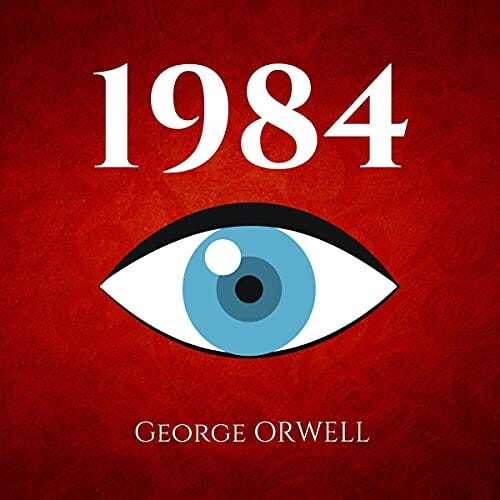 1984 by George Orwell
It was a bright cold day in April, and the clocks were striking thirteen.
The hook here is that it is offering us a unique detail. We know, from the first line, we aren’t in our normal world and the number thirteen is ominous in itself. This line does a lot and if you were the type of person to judge a book by its first line, I would wager you’d keep reading. You might even read three lines.
So, is the conclusion that the opening line needs to offer some unique detail about the world? Definitely not. There are plenty of examples out there of genre fiction not hooking you with a unique detail in the opening line. However, it does hit on an important rule: your opening line needs to do something. It can’t just be that “Bob didn’t like Mondays.” That may sound like a good opening line, but it’s too mundane and tells us nothing about the setting, Bob or the stakes of the story.
Looking at the opening lines of the fantasy and sci-fi novels I’ve read over the past few years, the ones that stand out to me do one (or more) of these four things:
Gives a very unique detailEstablishes a unique narrative style or character voiceStates the theme of the storyConveys the stakes of the situationWe’ve covered the first one with the 1984 example, but how is that different than the second? For that, let’s look at one of my favorite series, The First Law and the opening line from The Blade Itself:
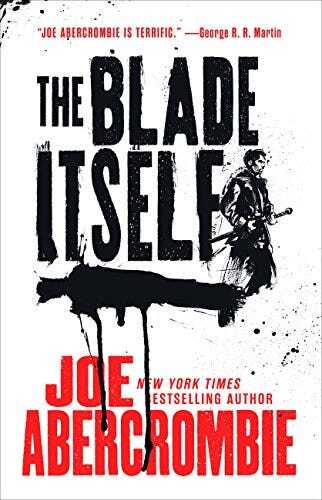 Cover of “The Blade Itself” by Joe Abercrombie
Logen plunged through the trees, bare feet slipping and sliding on the wet earth, the slush, the wet pine needles, breath rasping in his chest, blood thumping in his head.
We are thrust right into an action scene (Logen running away) and we get a glimpse at his unique voice. Logen has a lot of fragmented, poignant, and action-driven blocking. Read that sentence out loud and I think you can hear it. Here, we don’t get a unique detail about the setting, but we do get a glimpse at the narrative voice that will carry us through the book.
The last two things I notice in great opening lines might seem like the same thing, but they are quite different in execution. The first is “Stating the theme of the story.” This is all about the characters. What lesson do they need to learn in this story? What conflict keeps coming up for them?
A good example of this, I think, is the opening line of Mistborn:
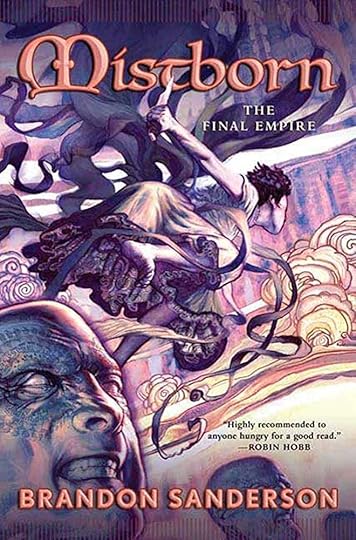 Cover for “The Final Empire” by Brandon Sanderson
Sometimes, I worry that I’m not the hero everyone thinks I am.
This is not the line right after the first chapter’s header, but is instead the epistolary entry that appears before every chapter and helps drive the narrative throughout this series. I just wanted to call that out because some will say the first line is “Ash fell from the sky,” which is also a good first line because it offers a unique detail, but it does not state the theme:
No one knows if what they are doing is truly right.
The last, “Conveying the stakes of the situation,” is about plot. Will the world end if our characters don’t do the right thing? Is someone’s life in jeopardy? Basically, what is the external outcome of the story (separate from the internal struggle of the characters)?
An example of this can be found in one of the greatest sci-fi/fantasy novels ever written: The Fifth Season by NK Jemisin:
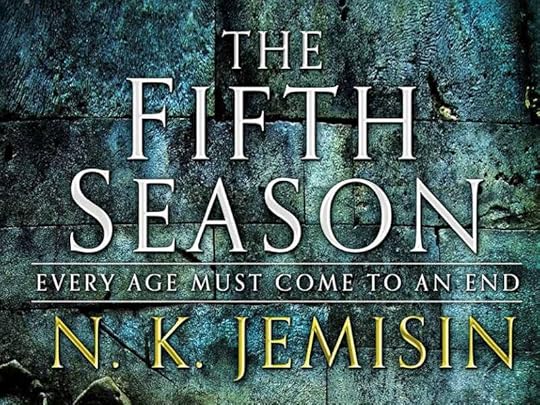
Let’s start with the end of the world, why don’t we? Get it over with and move on to more interesting things.
Here, we get a unique voice and we understand the stakes of the plot: the world is ending. Better yet, the narrator is telling us there is something even more interesting than that! If that doesn’t make you want to keep reading then… you probably didn’t make it this far in the article, so… whatever.
There are countless examples out there in fantasy and sci-fi, but these are the few that stand out to me. I’d love to hear some of your favorite lines! And if you are struggling at getting your opening just right, don’t fret: I’ve enjoyed plenty of books with weak opening lines too.
To close out, here are just a few more opening lines I’ve enjoyed from some pretty popular series.
The Scopuli had been taken eight days ago, and Julie Mao was finally ready to be shot.
Stakes set, unique detail
I would have lived in peace. But my enemies brought me war.
Stakes and theme
The palace still shook occasionally as the earth rumbled in memory, groaned as if it would deny what had happened.
Unique setting
By the time Professor Richard Lovell found his way through Canton’s narrow alleys to the faded address in his diary, the boy was the only one in the house left alive.
States the theme of the story (although it may not be immediately obvious if you haven’t read it and I don’t want to spoil it here).
[image error]

April 14, 2023
Book Review: Knife of Dreams
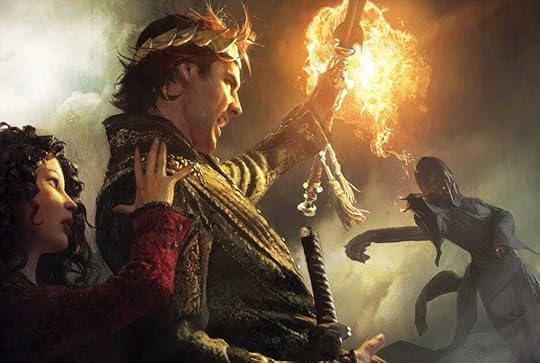 Cover image from the Barnes & Noble edition of Knife of Dreams
I have finally made it through the slog and finished what many people consider to be one of the best books in the Wheel of Time: Knife of Dreams. There’s something bittersweet about finishing Robert Jordan’s final book (as he passed away 2 years after its publication and before book 12 was released). Even though his prose doesn’t always gel with me, it will feel weird to read entries in this series by another author (even if it’s an author I love).
Is it worth it?One question I had when starting the Wheel of Time was “Is it worth getting through the more boring books?” or “Is there enough of a payoff?” To that, I would say: maybe 🤷
First off, if you have made it this far and finished books 8–10, then absolutely keep going. This book is literally one of the best of the series. More happens in the prologue than the entirety of the previous book and if you’ve stuck with these characters for this long, I’d say you owe it to yourself to read this next installment.
However, if you are just getting to Path of Daggers and feel like you aren’t engaged anymore, I’m not sure the series overall is worth it (but I could be proven wrong by the next 3 books). I would recommend doing what I did: listen to the audiobooks for books 8–10. Or even… gasp… read a summary and move onto book 11.
You can’t skip those books, and even though they are a slog to get through, there are some parts that are quite fun (looking at you, Mat). So, I do think they are worth reading (I’ve certainly read worse books), it’s just that Jordan’s prose is a bit verbose to begin with and combine that with a slow plot, it sometimes felt like homework to finish Winter’s Heart and Crossroads of Twilight.
Knife of Dreams (Spoilers)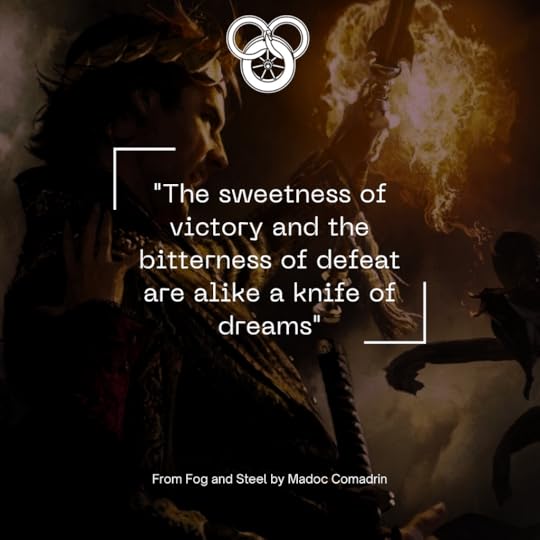 Quote from Knife of Dreams
Let’s talk about this actual book, though. What makes it a fan favorite?
Unlike the previous book… stuff actually happens here. Perrin allies with the murderous Seanchan to free his wife from the Shaido. Elayne fights for and secures her throne. Rand inadvertently starts a war, kills a Forsaken and loses his hand. And Mat… well, we just get more Mat and that’s always a good thing.
But the story I’m most interested in is Egwene’s. At the end of the last book, we see her captured as she tries to halt trading to Tar Valon by blocking the ports. Someone has betrayed her and she is now under captivity in the White Tower.
This is when she, in my opinion, becomes a great character. We have seen her go from country bumpkin, to naive novice, to Siuan’s lackey, to collared damane, to Wise Ones’ lackey, to puppet Amyrlin. You’d think that being captured by Elaida would see her broken, but this is when she finds her most strength.
Egwene leads by example. She shows grace, humility and patience with those around her and wins people to her cause by being a good person. It was quite refreshing to see a character rise above their hardships — something we don’t get a lot of in this series as of late. We don’t get to see the conclusion of her arc in this book, but that just means I’m all the more excited for the next installment.
Mat, Mat, MatIf you haven’t realized already, Mat is my favorite character. I think he’s one of the best characters in all of fantasy (I’m a sucker for reluctant heroes).
We see him reunite with the Red Hand, out maneuver an army with ten times his numbers, and see him court and marry Tuon, Daughter of the Nine Moons. He had the best story arc through the slog and it continues to get better in this book.
Most importantly though: he finally reads the note Moraine gave Thom before disappearing. She’s alive and trapped by the very creatures that haunt Mat’s mind and only he can help to free her. Once again, he is asked to lead despite every attempt to slink out of the spotlight.
As the reader, we all know he’s going to do the right thing.
A Theme of CaptivityCaptivity has been an ongoing theme throughout this series but it is most prevalent in this book. It starts with Egwene entering captivity (again) and how she finds strength while being a prisoner.
Tuon remains a willing captive with Mat as some of the Seanchan pursue her to put Suroth on the throne, escorted by damane — Aes Sedai held captive by collars.
Elayne herself gets captured as she walks into a trap against Black Ajah, sparking the events that would lead to her taking the throne in Caemlyn.
Faile spends the entirety of this book in captivity, trying to navigate Aiel politics and ally herself with an Aes Sedai promising to set her free.
And those who aren’t literally prisoners are still held captive by their situation. Perrin must ally with the people actively destroying his country to free his own wife from captivity.
Mat is held captive by duty and fate. He has to see Tuon to safety because he knows he is meant to marry her but the note from Moraine adds another obligation that keeps him bound to leadership.
And finally, we have Rand who has to barter with his own internal demon, Lews Therin, who took control of Rand at one point to eradicate an army of trollocs (which was one of the best parts of this book). Rand can’t even trust himself anymore and it costs him greatly in the end as he loses his hand while capturing Semirhage.
Captivity is another way to frame the overall theme of this series: the wheel weaves as the wheel wills. No one can escape their duty and the world will force them all into Tarmon Gai’don
Tarmon Gai’donThis is the first book where I really felt like the final battle was soon. If I didn’t know how many books in total were in this series, I would guess we only had one left (and I believe that’s what Robert Jordan intended before his passing). The omens we get of the final battle approaching are great, and reminded me that Jordan can write some great high fantasy when needed.
We get
A man vomiting up clouds of black beetlesThe dead walking the halls of Tar ValonA town appearing and swallowing travelers as it disappears againPalaces and cities rearranging themselvesThese are the kinds of things that I felt had been missing from the previous few books, which mostly just focused on people learning to Travel, Heal, etc.
I can’t wait for more off-the-wall magic with a bit of horror in the coming books.
Final thoughtsOverall, this book was great and it is made better by the context we got in the previous three books. I’m glad I stuck with the series and would encourage you to keep going if you’re thinking of giving up on this series.
More than anything, it’s made me excited about this series again and I’m resisting the urge to jump right into the next book and see Mat rescue Moraine.
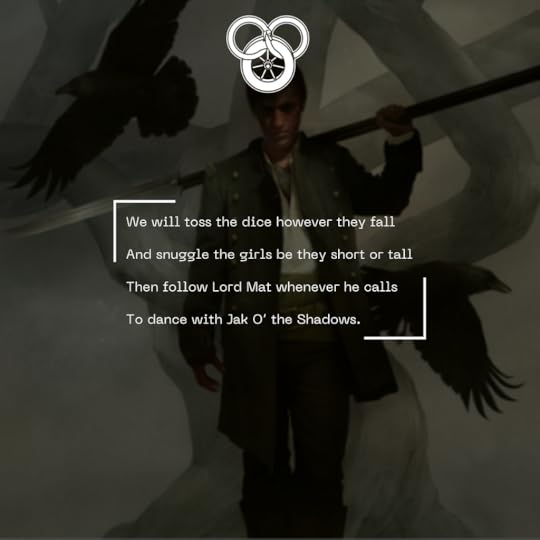 Jak O’ the Shadows song verse[image error]
March 31, 2023
Is The First Law the Best Series Ever?
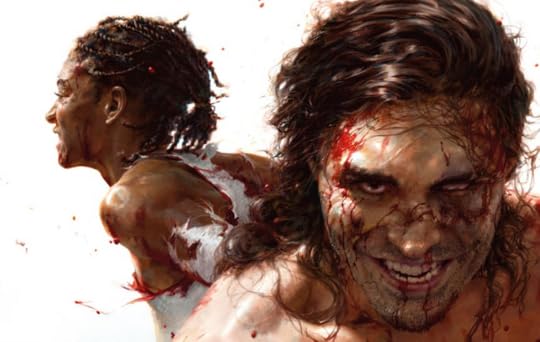 Logen Ninefingers and Ferro Maljinn
My favorite fantasy series of all time is The First Law by Joe Abercrombie. I’ve read all nine books consisting of the original trilogy, three stand-alone novels and the Age of Madness trilogy.
However, I don’t consider it the best fantasy series of all time. By that I mean, it’s hardly a fantasy series at all. There are no dragons, only one wizard who barely does much wizarding and none of the main characters have any “real” magic to speak of (Riki can see the future and Logen can talk to spirits… sometimes. But nobody is flinging fireballs or soaring through the sky, is my point).
The characters are what makes this series great, along with pithy dialogue and some well-timed dark humor. You see Joe Abercrombie compared to Brandon Sanderson a lot, simply because they became popular at the same time. However, they couldn’t be any different in terms of writing. You don’t get an avalanche of action to close out Abercrombie’s books (well… except for one), or complex magic systems that never break their own rules. In fact, I’d wager Abercrombie made it up as he went.
What you do get (and what I think Sanderson lacks at times) are characters who have to make hard choices–the type of choices that could only be told in a fantasy setting.
My journeyI’ll admit, when I finished The Blade Itself (book 1), I shrugged and said “that was fine.” I didn’t think I’d continue with the series. But as time passed, I thought about the characters a lot. Logen’s emotional burden, Glokta’s self-victimization, Jezal’s pure naivety. It was all so well done and I realized: “I want to know what happens to them.”
I have never been compelled to read a second book without being left with a cliffhanger ending in the first. I’d never come back to a series simply because I wanted to know how the characters navigated the world. But I needed to know if Logen Ninefingers would find some sort of redemption or if Glokta would actually strive to make the world a better place.
There is no “good” character in the First Law series. After all, “History is littered with dead good men” and I would argue that in all nine books, there isn’t a single person who is anything close to resembling a hero. You may cheer for particular people throughout the story, but you know that you’re cheering for the lesser of evils the whole time.
However, that doesn’t mean these characters don’t try to do good or make up for their mistakes. A hallmark of grimdark series, after all, is not that there are no people doing good, it’s that the world punishes those who do.
Well. What can we do, except try to do better?
— Sand dan Glokta
So, I picked up the audiobook for book 2: Before They Are Hanged and the characters became alive in a new way. Steven Pacey is an amazing narrator and he captures each character so well, that you’d swear they were separate people. Much like the first, our characters are thrown into otherworldly situations, but how they react and grow from those experiences is downright human and tragic. This is what makes them great to read.
You end each book caring about people who have done absolutely atrocious things and have only begun taking the journey to redeem themselves. A journey they often never complete because, as the grimdark world teaches us, no good deed goes unpunished. And that is what makes their story so touching. Logen Ninefingers put it best:
Every man has his excuses, and the more vile the man becomes, the more touching the story has to be. What is my story now, I wonder?This makes it the best series ever?
It’s certainly the best series I’ve read. But then again, I haven’t read every series in existence, so odds are I’m way off the mark. However, I challenge you to find a fantasy series with so many memorable characters. It completely changed the way I think about characters in my own writing.
Say one thing for Logen Ninefingers, say he’s a great character.
[image error]March 24, 2023
Is Brandon Sanderson Actually a Bad Writer?
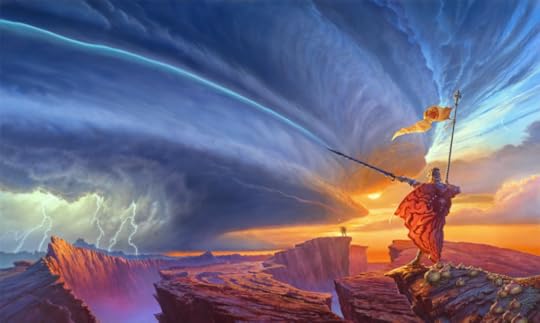 Cover of “The Way of Kings”
If you follow fantasy news at all, then you’ve already heard about the Wired Article titled “Brandon Sanderson Is Your God” and its backlash from the fantasy community. It’s an odd article that maybe isn’t as harsh as people make it out to be but it did lead to a thoughtful response from Brandon himself.
Whether or not the article is fair or even good is up for debate. However, after reading it, I saw many points brought up that I’ve had friends mention as to why they don’t enjoy Sanderson: his prose isn’t that great.
Sanderson is not my favorite author, but he’s up there. He’s my second-most-read author behind Stephen King (though I’m not a huge King fan either, I just happened to grow up in Maine where reading him is a requirement). But I’ve enjoyed every book of his I’ve read and I even backed his Kickstarter to get my hands on four novels without even knowing what they’re about.
I do agree with the opinion that his prose isn’t as great as others in the genre. I far prefer Joe Abercrombie, George RR Martin, Patrick Rothfuss, and others. There has been obvious work in their craft and the text in something like Name of the Wind practically dances off the page.
In the article, the author mentions his own issue with the prose:
Here’s a sample sentence: “It was going to be very bad this time.” Another one: “She felt a feeling of dread.” There’s a penchant for redundant description: A city is “tranquil, quiet, peaceful.” Many things, from buildings to beasts, are “enormous.” Dark places, more thesaurically, are “caliginous.” On almost every page of Mistborn, his first and probably most beloved series, a character “sighs,” “frowns,” “raises an eyebrow,” “cocks a head,” “shrugs,” or “snorts,” sometimes at the same time, sometimes multiple times a page. I count seven books in which one of the characters frets about their metaphors. “I have trouble with metaphors,” one literally says
Mistborn and Elantris (his earliest works) are the most egregious in this regard and although his later books improve, I’d say this is still a fair assessment. His descriptions and rhythm don’t match someone like Abercrombie or Rothfuss.
When recently discussing books with a friend, I mentioned that I enjoy Sanderson more than Rothfuss even though “his prose is nowhere near as good.” To which my friend replied, “but isn’t that all of writing?”
Anyone who has ever tried to write a story — especially a novel — knows there is so much more to writing than fancy prose. Even if you have a lyrical ear and write sentences that sing to your readers, you still have an enormous mountain to climb to write a good novel.
So what does Sanderson do well?
PlotSanderson’s complex plots rival the best of the genre. I feel like sometimes his storylines get written off because they aren’t as dark as A Song of Ice and Fire, but there is just as much (if not more) complexity in something like Stormlight Archives.
EndingsHe is most famous for amazing, fast-paced, and complete endings. If you’re like me and you’ve read a lot of Stephen King, then you know firsthand that a lot of good books don’t have great endings. A Sanderson book builds to the perfect ending. Sometimes they’re predictable but they are always fun.
WorldbuildingThis is the most obvious one given how unique his magic systems and worlds are. For a long time, it was the consensus that fantasy books had to be about wizards in a medieval, European setting, possibly with dragons. Anything that differed from that was niche and wouldn’t be picked up by most readers. Sanderson said, “what if people at metal, and it allowed them to fly or play with people’s emotions or listen well?”
And the crazy part is, it works. His ability to write a compelling story around an outlandish idea like that is what separates him from most authors.
Show Don’t TellA lot of people will point to “he should be showing, not telling” and it is a fair criticism. However, I think people get too hung up on this and are too quick to dismiss a good story because it doesn’t perfectly adhere to the creative writing course they took in college.
So… Is he a good writer?Well, that’s a matter of opinion. But you don’t sell millions of books unless someone thinks you’re a good writer. And if your only criticism is that his characters say how they feel, he tells when he should show sometimes, or that most sentences could be punched up, then you’re ignoring all of the other parts of writing.
But there are too many people out there who won’t give him a chance because of some rule they learned in their High School English class. Sometimes, it is ok and just enjoy a fun book.
[image error]March 15, 2023
Tomorrow and Tomorrow and Tomorrow
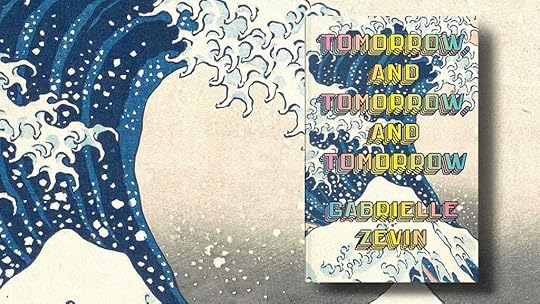 Cover of Tomorrow and Tomorrow and Tomorrow
I know this post is a bit late, as most everyone is done talking about Tomorrow, and Tomorrow, and Tomorrow by Gabrielle Zevin. It was by far one of the most popular books of 2022 and it’s been a few months since I’ve finished it.
But like most books I love, it didn’t quite strike me until I had some distance from it. A good book lingers and great characters occupy your mind for a long time after you close that last chapter.
As an english major, I’m ashamed to admit that I knew the quote the moment I saw this book’s title not from Macbeth, but from the musical Hamilton:
Tomorrow and tomorrow and tomorrow
Creeps at this petty pace from day to day
I trust you’ll understand the reference to
Another Scottish tragedy without my having to name the play
— Lin Manuel Miranda (modern day Shakespeare?)
It would be easy to look at Macbeth’s soliloquy and think this might be a book about nihilism. Macbeth’s speech comes at a moment where he is tormented by guilt, his enemies are closing in and he’s just learned his wife has committed suicide. In this moment, life has no meaning — it’s as brief as a candle flame, ending in eternal darkness. A loud, furious monologue by some minor character who will never be heard from again.
But in this book, Marx (the failed actor who recites this soliloquy) interprets this passage in a much more positive light.
It’s tomorrow, and tomorrow, and tomorrow. It’s the possibility of infinite rebirth, infinite redemption. The idea that if you keep playing, you could win. No loss is permanent, because nothing is permanent, ever.
Marx is in strong contrast to the two main characters, Sam and Sadie, who both view the passage as “bleak.” They need there to be purpose and drive and when they do find success, it isn’t enough. They go from one project right into the next, all the while sacrificing their own well being for the sake of these projects (the video games they’re creating).
Sadie jumps in and out of an abusive relationship while Sam constantly sacrifices his own health for the sake of their games and company. Neither understand why the others’ ordeal is so big and neither reflect on their own shortcomings until much later in the story.
But Marx grounds them and brings these two friends in and out of each others’ lives. Even when things aren’t going perfectly, when the second game they ship isn’t a huge success, he finds meaning where there is none. Discussing yet another literary masterpiece (we get it, Gabrielle, you’re a brilliant author), he says the ending of the Iliad is the best part:
‘Tamer of horses’ is an honest profession. The lines mean that one doesn’t have to be a god or a king for your life to have meaning.
The more time I spend away from this book, the more I think about Marx and his impact on these two fascinating characters. He shows how different outlooks can greatly affect our lived experiences.
There are so many takeaways from this book: that friendship is a type of love and it can be just as complicated, that perceived pain is still pain, or that moral compromises are a part of life. But the one I keep coming back to is:
If you’re always aiming for perfection, you won’t make anything at all.[image error]
March 10, 2023
How to write an impactful character death
A tragic death of one of our favorite characters can stick with us forever, whether it’s in a book, movie, or TV show. We can all point to death scenes that shocked us and completely change the storyline we were following.
But for every one of those types of scenes, there are ten others that fall completely flat. Characters we didn’t care about being killed off or killing off a main character just because George RR Martin did it. And sometimes there are characters killed off that you think should have an impact but don’t. I started to wonder why that happens.
Why do we care about some characters being killed off and not others?
The death of meaningless characters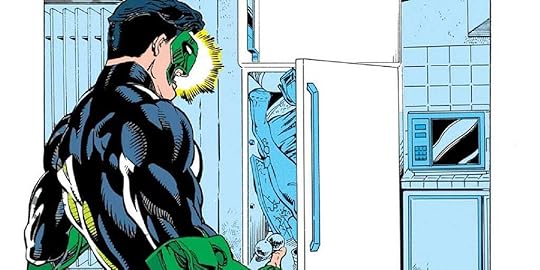
The most notorious example from Green Lantern number 54, where Kyle Rayner finds his girlfriend dead and stuff inside a refrigerator. It continued the trope of killing off female characters for the sake of motivating the male hero. It was bad storytelling. Examples like that are easy to spot (even when it isn’t drowning in misogyny).
Killing off unimportant characters just to spark some outrage for our protagonists never hits. It’s typically pretty obvious and more often than not, the reader just doesn’t care. Sufficed to say, this isn’t a good approach to killing someone off in your story.
Okay, glad we got the obvious one out of the way.
(Spoilers ahead for Faithful and the Fallen, A Song of Ice and Fire and The Ember Blade)
Death of a parental figure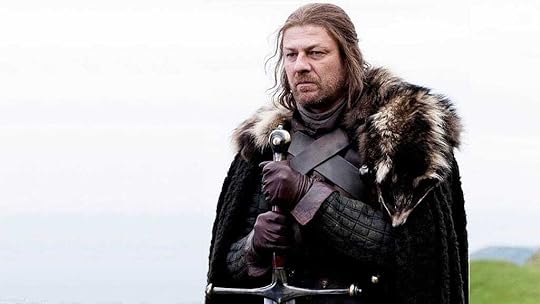 Ned Stark from A Game of Thrones
The most common death we see in fantasy and SciFi novels is the death of a parental figure. It either happens early in the series to jump-start our hero’s adventure (see: Luke Skywalker) or at the end as they make some sacrifice that demonstrates their love (see: Obi-Wan).
SpoilersThose two acts in themselves aren’t shocking (although they are sometimes good narrative tools). If we look at something like Ned Stark dying at the end of A Game of Thrones versus Thannon dying at the end of Malice, we may think the two are similar. They were both the heads of their households, and they both left a wife and children (and a wolf) behind. So why was Ned Stark’s death so shocking?
It’s because he was a POV character!
— Astute readers
My first thought was that Ned Stark was a main character.
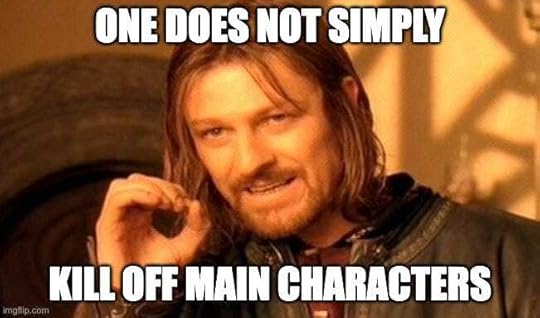
But that can’t be it. I’ve read plenty of books where a POV character dies at the end, but it didn’t slap the way Ned Stark’s death had. In fact, in Malice, a POV character is killed off and I wasn’t shocked in the least.
So what’s the difference?
It’s what we leave behindWhen I think back on the character deaths that have impacted me the most, it’s when the death of that character has an enormous impact on those around them.
Ned Stark dying wasn’t just a shock because he was being undermined by the antagonists of the series. It was impactful because of where it left his children.
Arya was being hunted and trying to escape execution. Sansa was left as a political prisoner to the Lannisters (the very people who had killed her father). Rob was now the head of the household and forced to seek vengeance. Jon was now sworn to stay on the watch and couldn’t aid his family.
All of our major characters were immensely impacted by Ned’s death and as the reader, we could see those repercussions.
What’s the conclusion, then?If you’re looking to write a character death scene and you want it to slap, ask yourself “how does this affect everyone else in my story?” And the answer can’t just be “they’ll be sad.” We know there will be grief, as there is with any death but for a character’s death in a story, the reader should see how their absence uproots everything. Are plans ruined? Alliances shattered? Is someone’s last hope now gone?
Those are the things that really make a character's death feel impactful. So please, don’t kill off main characters just because. Plan how their death will impact your story.
[image error]March 3, 2023
Writing Multiple POV’s in a Fantasy Series
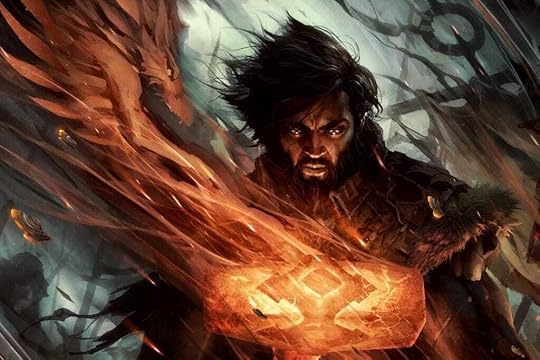
I’ve been working on a couple of larger projects over the past few years that involve multiple Points of View (POV’s). If you’re like me, you’ve probably come across countless blog posts and YouTube videos talking about how to do just that.
5 Steps for Mastering Multiple POV’sHow to write multiple POV’s with easeYou down with multi-POV? Yeah, you know me!Most of the advice is either so generic it doesn’t need to be written down or it is so specific it isn’t useful for 90% of the people out there. So rather than being yet another voice telling you how to handle multiple POV characters in your fantasy epic (it’s not like I have a novel published…), I thought I would break down some of the trends I’ve seen through the numerous series I’ve read.
The Wheel of TimeRegardless of whether you like the Wheel of Time or not, you can’t deny that it’s popular. It is an enormous, 14-book series with 147 unique POV’s. It’s kind of absurd when I write it down like that…
So, how did Robert Jordan achieve that from a writing perspective? It could be easy to just say “slap in a new POV whenever you feel like it,” but if you analyze Jordan’s writing you’ll notice trends (and some other authors who do this too).
The Eye of the World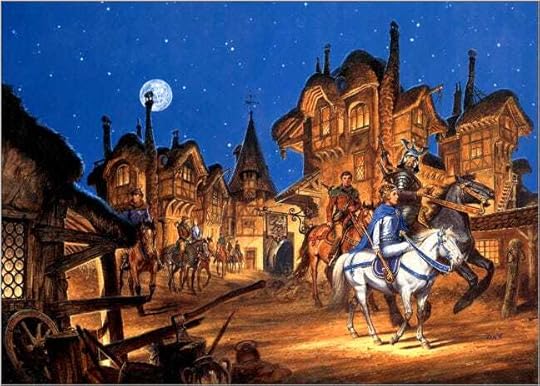
Let’s focus on just the first book. How did Jordan pull in readers and kick off a series with 147 POV characters? By sticking with one character to start!
It takes a whopping 20 chapters before we get one that isn’t from Rand’s point of view. It might be hard to remember if it’s been a while since you’ve read the first book, but it is almost completely told from Rand’s point of view. It isn’t until the party gets separated (mild spoilers… sorry) that we start getting chapters from the other characters.
But what about the prologue??
- Pedantic readers.
My response is: we’re going to skip the prologues from the analysis for now (more on this in a bit).
We literally go through half the book (~400 pages in the version I read) before we get a new POV character. We don’t even get Mat as a POV character until Book 3! Which should be a crime in itself. In fact, if you exclude the prologue and the closing paragraphs (124 words), we only get two other POV’s that aren’t Rand.
So is the takeaway “start with one main character and then slowly introduce others later?”
To answer that, let’s look at another enormously popular series.
A Song of Ice and Fire
George RR Martin’s unfinished series has had 24 POV characters so far. Not as many as Jordan, but that’s still a lot.
Let’s skip the prologue again (I promise I’ll get to it) and look at the early chapter breakdowns.
BranCatelynDaenerysI’m not going to list out all of the chapters because I think these first 3 demonstrate the most important aspect of the POV breakdown. We get chapters from the Starks and we get chapters from Daenerys. And that’s pretty much it. Tyrion gets chapter 9 and a few more, but I put him in the same bucket as “Starks” given he is mostly with Jon for the first book.
One thing that is true throughout the published books, however: after chapter 3, we never get a POV from a character we haven’t met yet. All of the Starks are introduced in the first couple of chapters, along with Tyrion. Every other major POV through the series (Theon, Jaime, Sansa, Cersei, Samwell, Brienne, etc.) we know about before we get a chapter from their perspective.
The same is true for The Wheel of Time. Excluding the prologues, we never get a POV chapter from a character we haven’t met. That makes transitioning to new POV’s really easy because the reader knows how that person fits into the narrative.
Okay, but what about those prologues?Prologues
- Those same pedantic readers
The job of a prologue is to set context for the coming story. It’s to give the reader an idea of the world and possibly knowledge that none of our characters have yet. They usually take place long before the main story and honestly… you can typically skip them.
I don’t think Eye of the World and A Game of Thrones would be any worse if there was no prologue. From a writer’s perspective, this means you can have random characters in your prologues just to set the stage for the chapters to come and not worry about fleshing them out (spoiler: most prologue characters die…).
Other Series
Not every series with multiple POV’s follows this rule. Joe Abercrombie’s First Law series is a great example of characters who all start in different places and come together.
John Gwynne’s Faithful and the Fallen similarly has characters starting in three separate locations, coming together for the climax (at least in the first book). However, both of the series follow a rule: all of the POV characters are involved in the main conflict.
The Greenbone Saga is another great example of multiple POVs where each is the member of an influential family (except for Bero, whose actions affect that influential family… Bero is great, by the way). All three of the series stick to a rule: as the reader, you can see quickly how these different characters fit into the great scheme of the story.
Writing advice time (TL;DR)So how do we distill this into actual writing advice?
When I started out writing a multiple-POV story I had a lot of misconceptions and made-up restrictions. After reading a ton of series over the past few years, here are the things I’ve realized:
Main characters don’t have to have an equal share of chapters. One character can dominate the count if need be or one really important character can have just one or two chaptersNot every main character needs to be introduced early in the storyWhen a new character is introduced later in a story, the reader should know how they fit inPrologues are a free-for-all and you probably don’t need oneA good strategy could be “don’t give a character a POV chapter until the reader has met them”Obviously, there is a lot more to writing multiple characters than all that (i.e. making sure they have distinct voices, the timeline makes sense, etc) but these were technical approaches that I never saw people discussing.
Hopefully, you found this helpful. Leave a comment if you did!
[image error]