How to write an impactful character death
A tragic death of one of our favorite characters can stick with us forever, whether it’s in a book, movie, or TV show. We can all point to death scenes that shocked us and completely change the storyline we were following.
But for every one of those types of scenes, there are ten others that fall completely flat. Characters we didn’t care about being killed off or killing off a main character just because George RR Martin did it. And sometimes there are characters killed off that you think should have an impact but don’t. I started to wonder why that happens.
Why do we care about some characters being killed off and not others?
The death of meaningless characters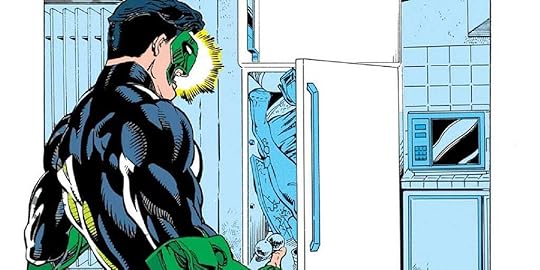
The most notorious example from Green Lantern number 54, where Kyle Rayner finds his girlfriend dead and stuff inside a refrigerator. It continued the trope of killing off female characters for the sake of motivating the male hero. It was bad storytelling. Examples like that are easy to spot (even when it isn’t drowning in misogyny).
Killing off unimportant characters just to spark some outrage for our protagonists never hits. It’s typically pretty obvious and more often than not, the reader just doesn’t care. Sufficed to say, this isn’t a good approach to killing someone off in your story.
Okay, glad we got the obvious one out of the way.
(Spoilers ahead for Faithful and the Fallen, A Song of Ice and Fire and The Ember Blade)
Death of a parental figure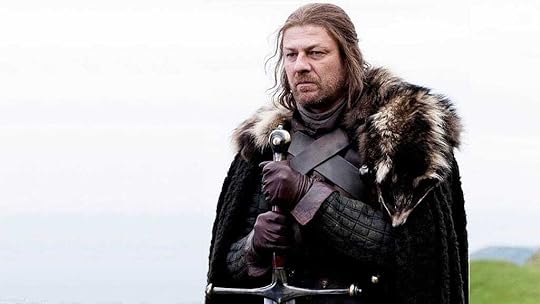 Ned Stark from A Game of Thrones
The most common death we see in fantasy and SciFi novels is the death of a parental figure. It either happens early in the series to jump-start our hero’s adventure (see: Luke Skywalker) or at the end as they make some sacrifice that demonstrates their love (see: Obi-Wan).
SpoilersThose two acts in themselves aren’t shocking (although they are sometimes good narrative tools). If we look at something like Ned Stark dying at the end of A Game of Thrones versus Thannon dying at the end of Malice, we may think the two are similar. They were both the heads of their households, and they both left a wife and children (and a wolf) behind. So why was Ned Stark’s death so shocking?
It’s because he was a POV character!
— Astute readers
My first thought was that Ned Stark was a main character.
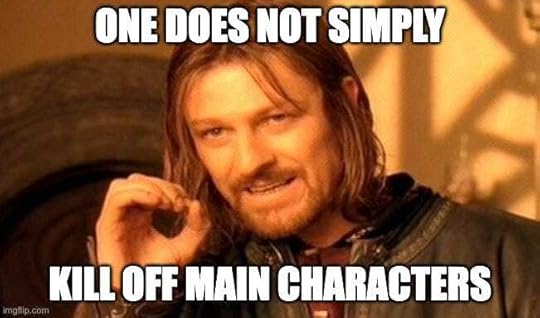
But that can’t be it. I’ve read plenty of books where a POV character dies at the end, but it didn’t slap the way Ned Stark’s death had. In fact, in Malice, a POV character is killed off and I wasn’t shocked in the least.
So what’s the difference?
It’s what we leave behindWhen I think back on the character deaths that have impacted me the most, it’s when the death of that character has an enormous impact on those around them.
Ned Stark dying wasn’t just a shock because he was being undermined by the antagonists of the series. It was impactful because of where it left his children.
Arya was being hunted and trying to escape execution. Sansa was left as a political prisoner to the Lannisters (the very people who had killed her father). Rob was now the head of the household and forced to seek vengeance. Jon was now sworn to stay on the watch and couldn’t aid his family.
All of our major characters were immensely impacted by Ned’s death and as the reader, we could see those repercussions.
What’s the conclusion, then?If you’re looking to write a character death scene and you want it to slap, ask yourself “how does this affect everyone else in my story?” And the answer can’t just be “they’ll be sad.” We know there will be grief, as there is with any death but for a character’s death in a story, the reader should see how their absence uproots everything. Are plans ruined? Alliances shattered? Is someone’s last hope now gone?
Those are the things that really make a character's death feel impactful. So please, don’t kill off main characters just because. Plan how their death will impact your story.
[image error]