Scott Batson's Blog, page 6
February 14, 2024
Authors published after 40
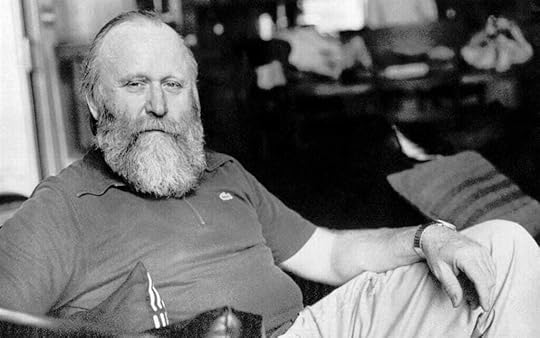
Many famous authors from JRR Tolkien to Frank Herbert didn’t get their first break in publishing until after the age of 40.


February 12, 2024
How to write compelling action: advice from an award winning author
 Epic fantasy battle made with MidJourney
I recently finished “The Faithful and the Fallen” by John Gwynne — a four-book epic fantasy series that is regarded by many to be one of the best ever written.
Gwynne is a Viking history buff. He and his sons partake in Viking reenactments and his two major series are very inspired by Norse history and mythology. One of the reasons his two series are held in such high regard is his accuracy in depicting battle scenes and great action.
The final battle in “The Faithful and the Fallen” was engrossing, and I’m a reader who often gets bored with drawn-out battles and action sequences. So why did this one hold my attention?
I had to stop and think about it. One thing for certain was that it was filled with personal grudges, redeeming acts, selfish motives, and more. Mostly, the battle was secondary to what the characters were growing through (sort of… they were also trying to save the world)
This led me to think of other series with action sequences that held my attention. The one that really popped to mind was “The Sword of Kaigen,” which if you’ve read my other posts, you know I adore.
How did the author, M.L. Wang, write fight scenes and battles that were so engaging and avoid the trap of throwing too much noise at the reader?
Well, rather than guessing and fretting over it, I just asked her.
M.L. Wang’s AdviceI emailed M.L. Wang and told her how much I loved “The Sword of Kaigen” (authors appreciate hearing how much fans like their work!) and I asked her how she went about balancing character-driven narratives with intense action.
I also asked her permission to use her response in this blog post — don’t quote people without their consent!
I’m going to break down what she said.
“Thank you so much for picking up The Sword of Kaigen, and I’m glad to hear you enjoyed it!
Re: your question about balancing action and character development scenes, I think the trap is conceptualizing these as two separate types of writing… I think that action is a language as much as English. Consequently, my favorite fight scenes read like conversations between characters and my favorite action sequences function as character development moments.”
I’ll admit that this shifted how I conceptualized these types of writing. As someone drafting a fantasy story with some action, I fell into the trap of telling myself “Action scenes are not good character development scenes.”
But M.L. Wang is absolutely right, especially when you are crafting a story where someone is skilled/competent in a particular way. And this isn’t just true in epic fantasy novels (as I’ll break down in a minute) — the same can be said for any type of competition.
M.L. Wang wrote a guest blog post on Where Words Bloom prior to the release of “The Sword of Kaigen” where she discussed some of this in more detail.
“The strategy I landed on, after months of trial and error, was to treat the action scenes of The Sword of Kaigen not just as ‘character scenes’ but as conversation. While your average street brawl might not carry more meaning than ‘I don’t like your face,’ a fight between skilled martial artists is an exchange with as much nuance and energy as the snappiest dialogue. This wasn’t something I understood until I was actually proficient at martial arts myself (not to say that you have to be a martial artist to grasp it; I’m just a slow and tactile learner). For years, sparring was an anxiety-inducing, no-fun nightmare for me, but it abruptly became engaging — and ironically, one of my favorite things — the day I realized that I had gotten good enough to converse with an opponent. Fighting, I learned, is like language; it’s more fun when you’re fluent.”
Thinking of action scenes as conversations is enlightening and the more I thought of other examples, the more I realized how accurate it is. We often recognize great dialogue as a hallmark of good writing, and when you broaden your definition of “dialogue” to include intent expressed through action, you’ll see why some authors can nail action scenes better than others.
“Most editors will tell you that if a line of dialogue doesn’t justify its place on the page — if it doesn’t provide new information, reveal or reinforce a personality trait, shift the balance of power between characters, force a decision or introspection, diffuse or escalate tension, or just make the reader feel something — it gets cut. By holding every strike, step, and stumble to that standard, I hoped to create fight scenes full of character.”
Fonda Lee, the author of the Green Bone Saga, also discussed this in her article “Martial Arts & Fantasy — More Please, But Better.” When you have characters are extremely competent in a particular skill, that skill becomes their way of communicating.
“In martial arts stories, the action scenes are character scenes”
Side note: I also received great writing advice from Fonda Lee about writing time skips.
Other types of competition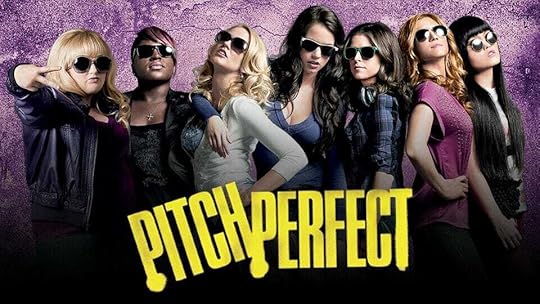
This advice can be applied to much more than just “fight scenes” or “big battles.” Take, for example, the movie “Pitch Perfect”. In the last sequence, where The Bellas are performing their closing act to clinch a victory at the Finals (sorry for the spoilers… but this movie came out 12 years ago and it is literally perfect, so if you haven’t watched it, that’s on you).
I won’t go into too much context here, but our main character Beca, played by Anna Kendrick (who, coincidentally, grew up a few miles up the road from me) has not only swallowed her pride to help her friends, but she is attempting to repair the damaged relationship with her love interest, Jesse (played by Skylar Astin).
She includes “Don’t You (Forget About Me)” in their closing mashup, one of Jesse’s favorite movies — a moment that earns her a fist pump. As an introverted and stubborn character, she took the opportunity to express her apology and appreciation through the action scene.
That last sequence is as much a conversation as a scene of straight dialogue.
Sports stories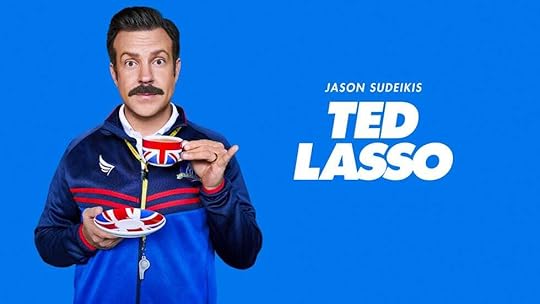
Sports stories are especially great at this type of “action as a conversation” sequence.
The final episode in the first season of Ted Lasso is a great example. Jamie Tartt, who served as a pseudo-antagonist through the first season clinches a victory for his team over Ted Lasso’s Greyhounds not by being dominant, but by finally heeding Ted’s advice and passing the ball to share the glory. It’s a great moment not because it’s devastating for the protagonist, but because it’s a huge character moment without any words.
I can point to a dozen examples in sports films, but the best ones are always stories where the competition frames the character development.
ConclusionAs M.L. Wang says, treat action as a conversation. Whether it’s:
1. fight scene (The Sword of Kaigen)
2. musical performance (Pitch Perfect)
3. soccer game (Ted Lasso)
4. chess match (The Queen’s Gambit)
5. defending a barricade (Les Miserables)
This is doubly true for action scenes related to experts. A chess match between Grand Champions is as much a clash of personalities and ideologies as it is a game.
[image error]February 8, 2024
What running taught me about writing
 Photo by Alessio Soggetti on Unsplash
Growing up, my parents signed me up for every sport imaginable. Soccer, baseball, basketball, and many more. Sufficed to say, I was pretty bad at all of them. I’m not coordinated and I rarely paid attention when grownups explained the rules.
The problem was I had a lot of energy. So although I wasn’t good at any of these sports (one could even say I was downright “bad”), I loved to move and my parents needed me to get my energy out.
Finally, when I was 10 they signed me up for Track & Field through our Parks & Recreation program. There were no rules past “run fast” and I didn’t have to catch anything. I loved it.
Now, I wasn’t necessarily good at Track either, but I at least wasn’t “bad.” And that led to encouragement, which led to confidence, which led to motivation, etc.
BTW if you’re curious, encouragement is one of the best things you can do for kids if they are trying sports! There is a lot of research behind this, parents.
In middle school, I started running Cross Country in the fall and Track in the spring. I grew up in a pretty small town in Maine, so we didn’t have a winter program… plus, there was a lot of snow and who wants to deal with that?
I was getting better but at the bigger meets, I was swallowed into the mass of kids and finished in mediocre places in the middle of the pack. I thought I was doing everything right, never missing a practice, and I was starting to get frustrated I wasn’t improving.
It would be a few years before I accidentally cracked the code.
In that small Maine town, I worked at a fish market in the summers where I would help unload lobster crates and pick lobster meat. It was literally the most “Maine” you could get and I did it every summer from when I was 14 to 19.
Side note: I met two presidents through this job as the market was up the street from George Bush’s home. At 15, I met a sitting president and he gave me presidential M&M’s.
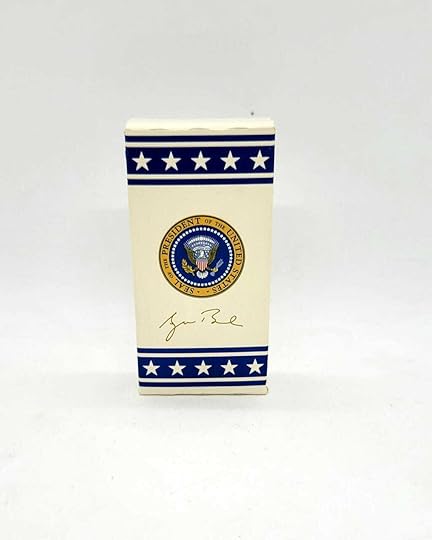 A box of “presidential M&M’s” with George W. Bush’s signature
When I was 16, I started riding my bike to work. If you asked my parents about it, they would say “he waited until he got his license to finally start riding his bike.” Sorry…
It was 6 miles there and 6 miles back, which isn’t a ton on a bike but considering I was there 6 days a week, those miles added up. And considering there were some considerable hills and I was fighting the treads on my mountain bike, that mileage added up.
On July 4th of that year, I went to a local 5k road race. I’d run it the past few summers — it follows the coast of Goose Rocks Beach. It was a big race (for a small town) typically around 800 people. In years past, I had consistently been in that “mediocre” spot in the middle of that mass of people.
And that’s what I had expected that year too. But without even putting in much effort, I ran under 17 minutes for the first time and finished in the top 10! At 16, I was blown away and I knew that those consistent bike rides had been key.
I kept riding my bike and even started taking the long way home for the next couple of summers.
I don’t have to go into my whole running career after that. My senior year I qualified at the state level to race in “Region 1” (my first time going to New York City). There, I qualified for nationals in San Antonio (and was very out classed). Before I knew it, I was in a Division 1 program in college, running races in California, Maryland, Pennsylvania, New York, Canada, and more.
What does this have to do with writing?What I learned from that whole experience is that “consistency leads to success.” Those bike rides were not hard by any measure. It was the fact that I did those “not hard” bike rides consistently over time that led to results.
 Photo by Glenn Carstens-Peters on Unsplash
I did the same thing with my career when I started to learn how to program (I got a degree in English…). I consistently practiced and learned over the span of a couple of years and that led to eventual success.
The same can be applied to my writing. I had no idea what I was doing when I set out to write a fantasy novel. I didn’t know how to outline or structure acts, but I kept consistently working at it over many years.
A lot of “not hard” writing sessions have led to a completed manuscript of a 185,000-word novel, another 90,000-word novel, and many short stories. It’s led to this blog and nearly 600 followers on Instagram where I literally just post pictures of books.
Now, are these masterpieces? Or published? No… but I do think finishing long manuscripts is farther than most people get and that should be celebrated.
I’m sure everyone has heard that advice of “just write” or “just do x” but what they don’t typically say is “just write… consistently for a long time.” It can be so easy to not see progress in the short term, but I’ve learned that it usually takes a year or two to see results — both in fitness and writing.
For every person you see succeeding, there are usually years of work and experience behind their work that you don’t see (something I have to keep reminding myself as I read so much great stuff here on Medium!)
Running always made sense to me: you get out what you put in. The more you do it, the better you get and there aren’t many shortcuts. Writing is much the same.
[image error]February 5, 2024
The Sword of Kaigen is the best standalone fantasy novel of all time
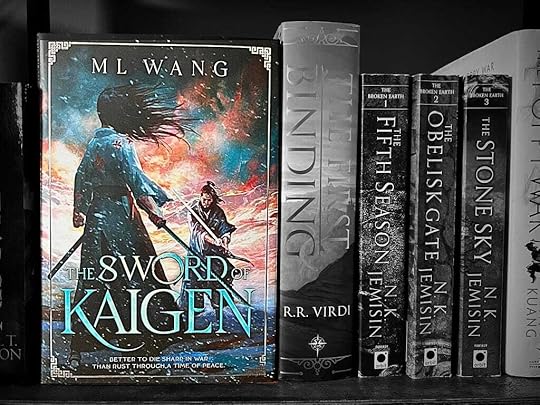 My special edition copy of The Sword of Kaigen by M.L. Wang
I know saying a book is the greatest of a particular genre is a big claim, especially because “best” is subjective. But give me a chance to make my case.
I read a lot of fantasy books every year. I love a chunky epic with multiple nations, big battles, and interesting magic. More than anything, I like character-driven stories. I think fantasy and science fiction gives us a chance to explore themes and situations in ways that literary fiction cannot.
However, after reading 100+ fantasy books, I’ve noticed that it is rare to get a book that can have a huge, epic world with amazing action and well-developed, complex characters without it being a long series.
Before you throw “Game of Thrones” at me, let me cut you off there. I love A Song of Ice and Fire (for the characters), but it doesn’t have what I would call “epic” battles. It has… battles. Sure, they are fun, but they aren’t magic-sword, world-shaking, dragon battles (at least not in the books that have been released so far).
For the series that do have those things like Wheel of Time, Stormlight Archive, and The Faithful and the Fallen you have to dedicate thousands of pages of world-building, character development, and context to hit the mark.
Simply put: I didn’t think it was possible to have amazing character work and epic, fun magic in a standalone novel.
Until I read The Sword of Kaigen by M.L. Wang.
So, give me a chance to convince you that this book is worth reading.
M.L. WangM.L. Wang is a martial artist and self-published author who started with her Young Adult series “Theonite.” She describes it as heavily influenced by Avatar: The Last Airbender but inspired by Harry Potter. The Sword of Kaigen is an adult fantasy novel set in the same world (although you don’t need to know anything about Theonite to enjoy SoK).
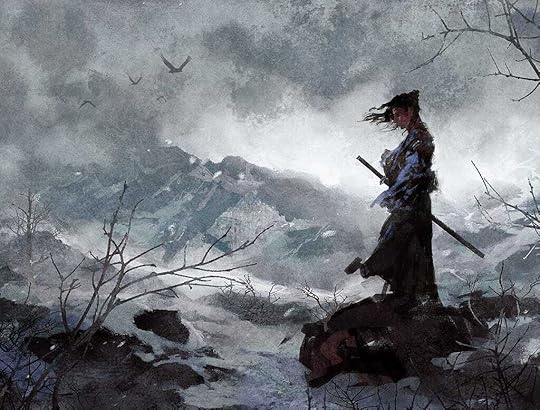 Interior art in The Sword of Kaigen // Félix Ortiz
In an interview with The Fantasy Book Critic, Wang talks about her inspirations for the series and what surprised me the most was that she doesn’t read much fantasy herself.
“Here’s the part where I have to admit that I don’t read much fantasy, or indeed much at all. I know that everyone and their mom insists that you need to read in your genre constantly in order to be a good writer, but that had better not be true because reading has never been part of my writing process. I very occasionally listen to fantasy audiobooks… but when I read with my eyeballs, it’s almost always history books.
The world is full of fantasy based on other fantasy, meanwhile, there are whole real-world cultures that go unexplored in modern SFF. I have a tragically limited attention span for reading — just ask any of my grade school teachers, I was the worst — so when I am able to read, I prefer to put that energy into the neglected histories of our own world. If these count as literature, I would cite the Kojiki, the Nihon Shoki, and The Tale of the Heike as influences for The Sword of Kaigen.”
M.L. Wang majored in history, so it’s no surprise that she draws a lot of influence from historical events. What’s more interesting is how she uses history to create her fantasy world.
Kaigen is an imperial nation in the world of Duna. The “Sword” of Kaigen refers to a peninsula that serves as the first line of defense against the Ranganese, the technologically more advanced nation at war with Kaigen.
From the beginning, you’ll see Kaigen is very heavily influenced by Japanese and Korean cultures. From the attire to the architecture to the honorifics used. This is certainly not the first book to do that, but what I found the most refreshing is the use of technology and traditions.
This is a modern fantasy novel filled with cell towers, airplanes, and more. The peninsula that serves as the “Sword” of Kaigen though is anything but a “modern” nation (I put in “modern” in quotes since that term is subjective).
Students train with swords and martial fighting techniques even though guns and air bombers exist. There is no internet or connection to the outside world other than antenna TV and radio. No major roads and one of the first conflicts of the book is whether or not they should construct a cell tower in the region.
I read some reviews where people called this out as odd. “Why would a prosperous nation let itself fall behind on purpose?”
In that above interview, Wang touches on this a bit:
“…to me, one of the most interesting things about the modern world is the interplay between traditional lifestyles and new technology. Some of the Japanese officers who shot at my relatives during World War II carried katanas. I’ve been to mountain villages in central Africa where men headed out to hunt with spears in their hands and iPhones in their back pockets. The mutual exclusivity some people imagine between swords and cell phone towers is a product of genre, not reality.”
The result is a refreshing setting for a fantay novel that feels completely plausible.
History shaping stories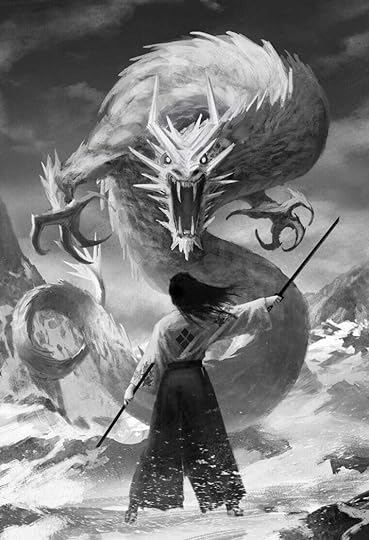 Misaki (The Sword of Kaigen Wraithmarked Special Edition) // Félix Ortiz
If you’re wondering what piece of history shaped the plot of The Sword of Kaigen, you’d have to research the “Nanjing Massacre” during the Second Sino-Japanese War. The same event inspired parts of The Poppy War by R.F. Kuang (another one of my favorite series).
The difference here is that the power structures in The Sword of Kaigen are flipped.
“The underlying premise of Planet Duna is that it takes the racial hierarchies of our own history and flips them, giving the reader a chance to walk a mile in someone else’s shoes. In Theonite, ‘Europeans’ (Hadeans) have been colonized by ‘West Africans’ (Yammankalu). In The Sword of Kaigen, the ‘Chinese’ (Ranganese) do some genocide in a ‘Japan’ (Shirojima, Kaigen) ruled by an Imperial ‘Korea’ (Jungsan, Kaigen)”
We follow a Japanese-inspired nation that is the victim of one of the biggest tragedies in modern warfare, rather than the perpetrators. You might be quick to think this is some sort of wish fulfillment or revision of history, but the appreciation of modern Japanese culture and the complex history of Japan and China is something M.L. Wang struggles with.
“My mom is American and my dad is from Jiangsu, China. For those unfamiliar with Eastern World War II history, Jiangsu is the province where the Nanjing Massacre happened. Growing up, I had a weird relationship with Japan — basically trying to reconcile my fondness for modern Japanese culture and people with the genocide that affected the previous generation of my family and left a scar on the collective Chinese psyche.
… fiction is the way I process reality. This was all a coping mechanism of my teenage brain.”
We see the characters in The Sword of Kaigen struggle with similar conflicting feelings. Matsuda Mamoru feels betrayed by his country and has a strong resolve to protect and preserve it. His father, Matsuda Takeru, wrestles with his own complicity, blind faith, and nationalism in the face of mass tragedy.
Then there is Misaki…
Matsuda Misaki is one of the best fantasy characters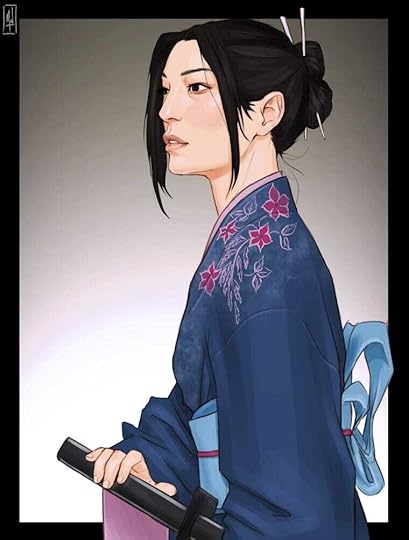 Misaki (The Sword of Kaigen) // Merwild
Although the story starts by focusing on Mamoru (the teenage son of Misaki and Takeru), the character that sees the most growth is absolutely Misaki. She is one of the few characters that kept popping into my mind months after finishing this book and it would be impossible to talk about everything that makes her so memorable without completely spoiling this novel.
She is in her thirties, her life of action and fighting is behind her, she’s in an estranged, emotionless marriage, and she has no clear goals when the story sets out. By all definitions, she shouldn’t be an interesting protagonist. Even M.L. Wang says “She is, from a utilitarian perspective, the worst-designed protagonist for an action story.”
So, why am I even talking about her? Wang discusses this in a blog post:
“…when I first outlined The Sword of Kaigen, I thought that I was embarking on a simple novella-length story about a simple mother and her oldest son. However, when I started writing Misaki in her restrictive kimono, in the cold halls of her husband’s house, I realized that there was a more complex character in that little housewife. That complexity sprang from the sheer contrast between a reckless teenager sprinting across rooftops and a poised mother of four. My now-adult writer’s brain recognized that there must have been a period of transition between the spirited teenager and the housewife of infinite patience — and that that transition could not possibly have been painless. …Misaki loved her old life, loved fighting, yet she left it behind at the age of nineteen to marry a man she didn’t love at all. Logically, that decision had to be a source of regret. And the Matsuda family, with their cold aura and repressed emotions, is a place where that kind of regret could only fester and grow in silence.”
Unlike the other people in Kaigen, Misaki has traveled the world and does not have the same reverence for the empire as the rest of her community. She spent the first decade and a half of her arranged marriage resentful, which led to a distance not only with her husband but her children.
When her son begins to question the history he’s been taught, she defaults to the complacent, emotionless respect she’s been living with for years.
As the story progresses (I won’t spoil it too much), we see Misaki not only step into her role as a mother, but begin to take pride in her own history and what she can teach her children. As the stakes get higher and higher, we see a woman who is strong not just because she spent years training, but because she begins to fight for something she believes in.
“Wholeness, she had learned, was not the absence of pain but the ability to hold it.” — The Sword of Kaigen
There is a grueling action scene where she is the last line of defense against soldiers invading her home to get her children as her husband (one of the most powerful men in the world) is fighting off an entire army.
And when I say “grueling” I mean it. It’s not the typical action scene you’d expect from an epic fantasy novel — it literally takes place in a kitchen. It is the closest thing to a John Wick scene in a novel I can think of.
Misaki goes through a lot and I would say that a major theme of this story is righting your own wrongs and learning to live with a new reality. The characters — from naive Mamoru to stubborn Takeru — each recognize hard truths in themselves and the world around them.
But this is also a story about parenthood and I think this story hits differently if you have children or someone dependent on you. Because it’s not just about hard truths, but swallowing your pride in the face of those truths to create a better world for the ones you care about.
The Action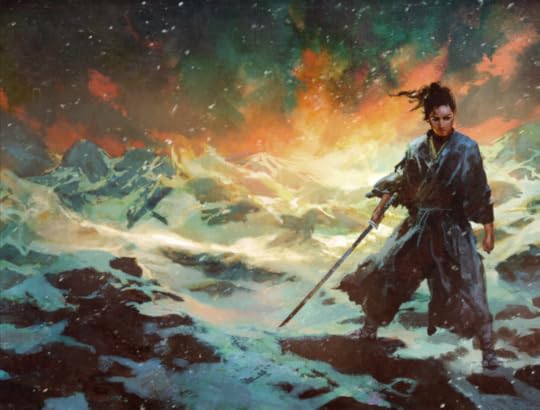 Mamoru from The Sword of Kaigen, art by Félix Ortiz
One thing I see pop up a lot in reviews on Goodreads and YouTube is people saying that “the climax is in the middle of the book!”
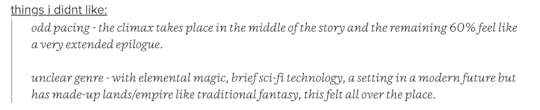 Review screenshot from a prominent book review with 42k followers on Goodreads
What they’re referring to is the epic, magic-filled, bare-knuckled, martial-arts-inspired, brutal battle when the Ranganese army invades Kaigen.
But that is not the climax because that’s not what the story is about.
This is a story of grief and of a community dealing with tragedy in the aftermath of an invading army. So although that epic battle is a lot of fun to read and the type of thing you’d expect to close out an adult fantasy novel, it is not the climax.
The climax is Misaki finally facing her husband, standing up for what she believes in, and repairing her family. The ice dragons are just cool set pieces.
Should you read this?There are definite trigger warnings: sexual assault and violence against children. Although they aren’t egregious as parts of The Poppy War (which references the same historical event), it can be very hard to read.
But if you like fantasy novels and character-drive stories, I would say yes. This is one of the few books I’ve purchased multiple times (first on my Kindle, then again with the special edition). It’s the rare standalone fantasy gem and it is worth every page.
Plus, it’s always good to support an indie author!
[image error]January 30, 2024
Why you should read Parable of the Sower in 2024
The year is 2024. The global food supply is dropping. Climate change is wreaking havoc on the West Coast. Dangerous, addictive drugs are…
January 24, 2024
Why were R.F. Kuang and Neil Gaiman disqualified from the Hugo Awards?
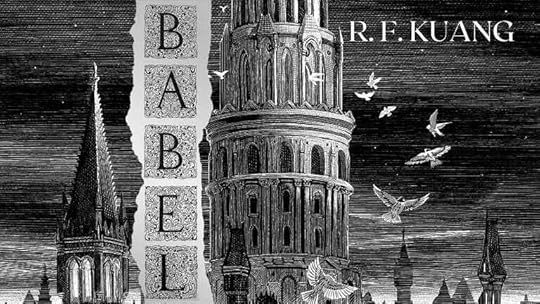
Did the People’s Republic of China force the Hugo Awards to disqualify nominees for Best Novel?
January 21, 2024
How Pirated Copies of Lord of the Rings Landed On Bookshelves
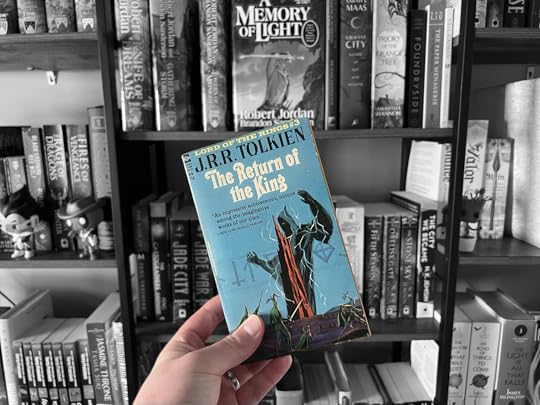
Did you know that The Lord of the Rings were made popular in the US by pirated editions that exploited a copyright loophole?
Prints, Pirates, and Paperbacks: The Ace Books vs. Tolkien Saga
Did you know that The Lord of the Rings were made popular in the US by pirated editions that exploited a copyright loopholes?
January 17, 2024
Why Can’t We Adapt Fantasy Stories?
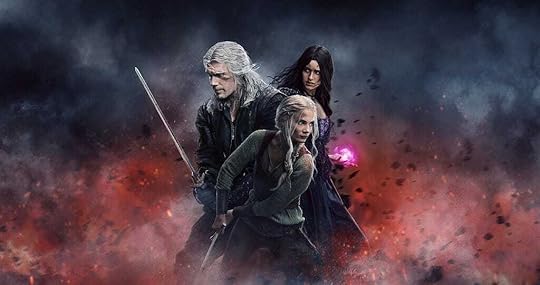 Geralt, Yennefer, and Ciri from The Witcher Netflix series
For two and a half years, I worked as a Lead Software Engineer at Netflix. No, I didn’t work on the streaming service (so don’t ask me about how the recommendation algorithm works). I worked for Netflix Studios building apps that helped produce Netflix Originals.
(Side note, you can read about my journey to becoming a developer/engineer on my other blog)
These were mostly admin apps for scheduling studio dates, breaking down shooting days, organizing crews, managing contractor contacts, etc. The apps I worked on were used on Stranger Things, Birdbox, GLOW, Always Be My Maybe, Lost In Space, and more.
And when I see the amount of data we have to track, the number crewhands, grips, Assistant Directors, Seconds, Second Seconds (yes, that’s a real term), best boys (yes, also a real term), and more, I got a good idea of just how much goes into creating a single episode.
The script is only one small piece of TV and movie media, yet it’s the thing we blame the most when an adaptation fails.
The WitcherWe used to get internal emails when new contracts were signed or IPs were acquired and I remember specifically sitting in my home office when an email about purchasing the rights to The Witcher came through. This was long before Henry Cavil was attached or before any script was even penned.
And I thought “this one might work.”
At the time, I’d read a few of The Witcher books (The Last Wish, Sword of Destiny, Blood of Elves, and Time of Contempt), and although there were a lot of things I enjoyed, there were aspects that kept it from being a favorite series. Sometimes the narrative framing was clever, but other times, it just confused the story. There was a lack of three-dimensional female characters, overly-masculine stereotypes, etc.
So when I thought of Netflix turning it into a TV series and being forced to “tighten” it up, it seemed like the perfect series. You could keep all the fun fantasy aspects and weed out the things that haven’t aged well!
And season 1 was mostly good! It had some of the disjointed story telling of the books, but it came together in the end. They even fleshed out Yennefer’s story to make her less of a paper-doll character. It could only get better, right?
Season 2 started out so well — the first episode is arguably the best of the entire series. It all fell apart after that. Yennefer loses her powers in a weird B story. There is a lot of focus on the elves. We’re shown a community of witchers. And more.
Very little of that is in the books. Yennefer never loses her abilities, the elves do not ally themselves with the humans and there is no baby killing. Why would the show stray so much from the source material?
Game of Thrones The iron throne from Game of Thrones
Game of Thrones is another example of starting strong and fizzling out in a brilliant dust cloud of crap.
Those first five(ish) seasons are some of the best television ever made. But we all know how that ended…
Although there were a lot of differences between the early seasons and the books, there is a clear line as to when the show dropped in quality: it ran out of source material. Without GRRM’s books to pull from, the writers and producers had to finish the story themselves. What we got was a rushed, dumbed down version of epic fantasy.
The Wheel of Time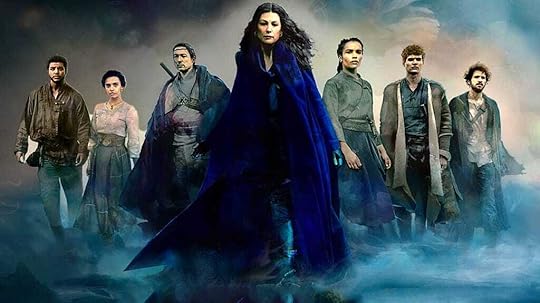 Poster for the Wheel of Time
Much like The Witcher, The Wheel of Time is an amazing series that most fans will admit has some tedious storylines and boring chunks. Again, I was so hopeful for this TV series given the amount of money being poured into it by Amazon and the fact that you could cut out a lot of content and have a great fantasy series.
But what we got was a watered down version that didn’t know what to do with itself. Granted, I’ve enjoyed Wheel of Time more than The Witcher (and Rings of Power… which is a whole other mess).
The best moments of the series were the times when it was closest to the source material. Egwene being captured by the Seanchan was some of the best TV I saw all year and it was almost scene-for-scene with the book (minus the ending…).
The issue with straying from the sourceThere is a very valid discussion to be had about how much an adaptation should stray from the source material.
To be clear, I am not talking about better representation of people of color, LGTBQ+ storylines, or three-dimensional and nuanced female characters. Representation in media matters and if you don’t like those things… well, you have like a century’s worth of media you can consume already.
I’m talking about changing a story from “Yennefer is a powerful, self-serving person who helps Ciri because of her love for Geralt” to “Yennefer lost her powers to a witch in a magical cabin and she is going to sacrifice Ciri to get them back.” That’s not a different interpretation of the story. That’s a whole new story.
So why stray? Especially when there is already a fanbase baked into a series like The Witcher that just want to see their favorite scenes on the big(ish) screen?
Are we just too dumb?Well, according to executive producer on The Witcher, Tomek Baginski, the problem is us Americans.
“When a series is made for a huge mass of viewers, with different experiences, from different parts of the world, and a large part of them are Americans, these simplifications not only make sense, they are necessary… It’s painful for us, and for me too, but the higher level of nuance and complexity will have a smaller range, it won’t reach people. Sometimes it may go too far, but we have to make these decisions and accept them.”
Quote from Wyborcza, as translated by Redanian Intelligence
Us Americans just don’t get nuanced, complex stories.
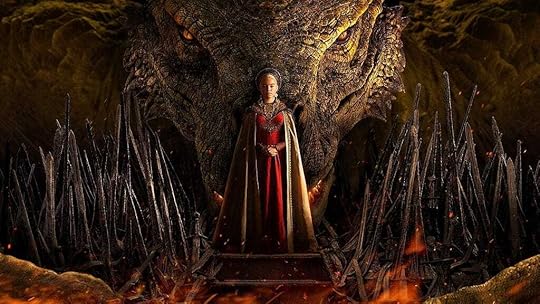 House of the Dragon
Obviously, I disagree. That same year, the best scene from a fantasy adaptation was from House of the Dragon and it was literally a man walking to a chair.
Game of Thrones as a whole shows us that complex, nuanced stories work. Not only that, but they can produce the most watched TV series ever.
Regardless of what you think of Baginski’s comment, it underlines something important: sometimes, a decision is made at a studio that forces the writer’s hand.
It’s easy for us to blame the writers (in the case of Game of Thrones, I think we can) but there is so much that goes on at a studio that can affect a show or movie. It’s how we get different versions of The Justice League or how The Rise of Skywalker had to be rewritten. Sometimes a studio gets involved in the creative process and a project suffers as a result.
The Witcher in particular has had a lot of gossip online about the writers mocking the source material. There’s no concrete proof of that so it’s hard to say if it’s true or just a dreamt up scapegoat. (And no, a tweet from someone who says they overheard something is not proof)
So… can we ever adapt any fantasy series?When I heard Netflix was creating a live action One Piece, I was anything but interested. After they completely destroyed Cowboy Bebop (another one that I thought really could have been adapted well), I had no hope for something as off-the-wall crazy as One Piece.
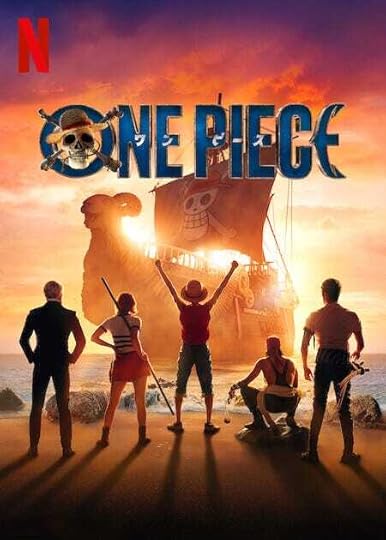 Poster for One Piece
And yet… they did it. This show is nothing short of amazing, and you can’t ignore that it is true to the manga. Season 1 follows the first major arc very well — at times, even shot for shot. But the most important thing is that it kept the tone, the world, and feeling of One Piece.
No, that show will not appeal to everyone. That’s fine. It appealed to the right people, though and that’s why it is sitting at a 95% audience score on Rotten Tomatoes. The show runners didn’t set out to create something for “a huge mass of viewers.” They set out to make a live action show for One Piece fans.
Should we always stick to the source material, then? I say, yes. If the series in question has a lot of misogynistic tones, problematic themes, racist underpinnings, and more, then the issue is with the original source and studios should question whether it should be adapted. But don’t ostracize an existing fanbase by just taking the name and creating something completely different.
[image error]January 4, 2024
Fonda Lee’s Advice On Writing Time Jumps In Fiction
 A silhouetted family standing in front of a giant clock
When you’re starting out as a fiction writer, one piece of advice you hear a lot (especially in the epic fantasy space) is: avoid big time jumps. I’m not talking about “jump to the next day” jumps that move the story along, but significant, year-long time jumps.
And for the most part, this is good advice. Look at Children of Dune which includes significant time jumps to expose the consequences of events from previous books. Although many readers love the third installment, one thing detractors often bring up is time jumps making the narrative structure feel challenging and awkward.
Stephen King’s The Dark Tower is another example of a large, epic series that has a significant time jump in the later books. Again, many readers love the series as a whole, but the use of time jumps (not to be confused with flashbacks) altered the story in a way that many readers didn’t appreciate.
For the most part, I was one of those readers. I didn’t think time jumps could be done well.
Until I read The Green Bone Saga by Fonda Lee.
If you haven’t read it before, it is epic, urban fantasy about a mafia-style family that control the trade of magical jade — a natural stone that grants the user abilities like the ones you’d see in old kung fu movies. It’s a very original and epic story that follows multiple generations of this family of the course of three books. So, of course there are time jumps. But the crazy thing is…
These time jumps work!
Why didn’t these time jumps feel as disjointed or awkward like the ones in The Witcher or The Dark Tower?
As someone who wanted to write a story that included a time jump (yes, I understand the hypocrisy) I wanted to answer the question: how did Fonda Lee do it?
So, I simply asked her. I sent her an email telling her how much I loved her series (FYI, most authors enjoy nice fan mail) and asked her about how she handled time jumps in The Green Bone Saga. She was gracious enough to write back with some great advice (and yes, I asked if it was okay if I shared it on this blog).
High Risk, High Return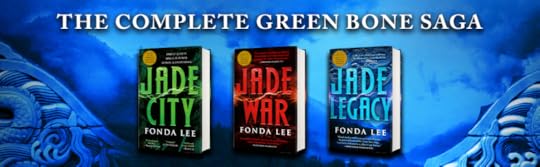 All three books in The Green Bone Saga
I think of [time jumps] as a high-risk, high-return endeavor. On one hand, there are readers who simply do not like time jumps, no matter how they are done. Also, it is easy for the story to lose coherence and narrative urgency when time jumps are done poorly. On the other hand, time jumps allow the writer to greatly expand the scope of the story, and when they work well, they preserve and even increase the sense of narrative momentum by taking the reader directly to the most important parts of the character’s lives without any filler.
Before breaking down how to write them, it’s important to understand why you would want to. The Green Bone Saga is a generational story — you simply can’t write that in three books without significant leaps in time.
Children of Dune wanted to show the fallout of events over the course of centuries. Again, you _have_ to skip huge chunks of time to write that type of story.
So, if you are thinking of a time jump, ask yourself if it is justified. Are you writing a story about a family, a society, a planet, etc.? If you want to write a story large in scope, they may be a necessary tool.
Framing Time JumpsIn the Green Bone Saga, I knew that time jumps would be necessary for me to convey the generational epic that I wanted to write. One thing I did was break the story down into “seasons” and think of time jumps much like the break between a season finale and the following season’s premiere. In TV, there is no exposition; you open in scene and what the reader sees on screen fills them in on what changes have occurred. So whenever I made a time jump, I opened the next chapter in such a way that it was apparent time had passed for the characters.
This is the most important piece of advice: you have to ground the reader quickly when a time jump has occurred. It isn’t enough to write the date, especially in second-world fantasy. I see this come up a lot and most readers don’t pay attention to the date headings on chapters. You have to ground the reader in the text itself.
In epistolary formats, you can get away with this as the date entries are usually part of the narrative device. Dracula is told through journal entries, so the dates there can really ground us as we have an existing mental model of the format.
But writing “May 1, 1893” at the top of your chapter and then diving into a typical third-person POV won’t convey the passage of time in the same way. This is doubly true for books where you’re making up calendar systems — readers don’t remember the date by the time they finish a chapter.
How To FrameWe understand that grounding the reader and framing the time jump is important, but how can we actually go about it?
This worked well for me because the story had children, so an easy way for me to convey the passage of time was to show the children aging. It’s the reader’s connection to the characters that allow time jumps to pass gracefully, in the same way that one can often quickly and easily catch up with an old friend after not seeing them for awhile.
There are two really good pieces of advice here. The first is that you can use physical characteristics to ground the reader. In “The Green Bone Saga” we see the children of our main characters age and become adults themselves. Going from one chapter where Ru is a baby to another where he is walking and talking tells us instantly that time has passed.
In R.F. Kuang’s Babel we follow Robin Swift, a Cantonese orphan who was spirited away to England when he was 11 and follows him through his higher education. We get some big time jumps in this novel which are framed in two ways: Robin aging and the natural cadence of school.
Landing in a scene where they are studying for finals tells us a school year has come to an end without having to spell it out for us. Most readers (especially those who would be interested in a book like Babel) already have a mental model of a school year.
There are a lot of other ways you show the passage of time:
A building slowly being builtA city expandingA tree growingThe second, and probably more important, piece of advice is that without a strong connection to the characters, a time jump could feel ungraceful. All fiction writing advice boils down to “write memorable characters” and time jumps are no exception. If we’re not following characters we care about, why should we care about what happens 10 years later?
HamiltonI’ll take any chance I can to talk about the musical Hamilton (which, according to Spotify has been my most listened to album 3 years in a row).
 Hamilton: An American Musical
Fonda Lee did an interview with Petrik Leo after the release of Jade Legacy and although they covered a ton of topics, one thing I remember is that she mentioned Hamilton was an inspiration for how to show the passage of time.
I asked about that specifically in my email to her. To which, she replied:
Hamilton, as I mentioned, is a good example of this. It moves through big historical events by always retaining a strong focus on the main character and how life is changing for him and his family.
The time jumps in Hamilton work because we care about this young, scrappy, and hungry man as he rises up from nothing. We also have the framing of US history to show us the passage of time with significant, historical events.
If it was a story where we just jumped from one historical event to another without centering around a character, it would just be a textbook. We need to care about characters for the passage of time to be meaningful and we need to jump to a time that is significant for them. That’s why we read.
TL;DRTime jumps are “high risk, high return”Ground the reader and give some framing for the time jumpAsk yourself why you need to skip so much timeUse physical cues to clue the reader in on time passing (don’t just tell them the date)Write a character that readers want to follow[image error]