Scott Batson's Blog, page 7
December 29, 2023
Fanning the Flames: The Surprising Impact of Fanfiction
 A library with floating hearts
During my junior year of college, I was in a creative writing workshop as part of my English degree. Each class, we workshopped one student’s submission both through written feedback and in a roundtable discussion.
It was rare to read a science fiction submission, so when we got a story about a parcel deliveryman after an intergalactic war, I was excited. He had to navigate working in the nation that had conquered him and struggle with his own flashbacks. It was an interesting concept enhanced by some science fiction elements.
During the workshop, my professor asked where a certain term came from and the author explained that it was an established part of lore in an existing series. My professor’s face straightened as he asked “is this fanfiction?”
When the author said yes, my professor simply said “don’t ever do that again”
That had painted my view of fanfiction for years to come. It was 2006, just before the iPhone was released so spaces like Wattpad and Archive Of Our Own (ao3) either didn’t exist or didn’t have the traffic that they do today.
I viewed fanfiction as something people did when they couldn’t write stories of their own — an opinion completely shaped by that one interaction.
But I recently finished The Atlas Six by Olivie Blake and The Scholomance series by Naomi Novik — both writers who started by writing fanfiction. Were they just exceptions to the rule? The more I looked into it, the more I found that many authors started with fanfiction and some still write fanfiction even after getting published.
Authors who write fanfictionLev Grossman, the author of The Magicians, wrote a piece for TIME magazine in 2011 about the value of fanfiction. He was someone who not only wrote fanfiction when he was younger, but continued to do it even after being traditionally published, writing fanfiction for “How To Train Your Dragon.”
In his piece he talks about one of the earliest forms of fanfiction in TV pop culture — The Man From UNCLE. The show had a short run in the 1960s but managed to established a group of dedicated fans. Before the internet, these fans exchanged stories via homemade magazines and xeroxed copies of stories expanding the storylines for the characters.
Just a few years later, Star Trek premiered. Similarly, it had a short run on TV only running for 3 seasons. To the surprise of no one today, it gathered a huge following and fans created their own fan magazine called Spockanalia. This die-hard fanbase (plus reruns in syndication) led to this 3 season showing becoming an international phenomenon.
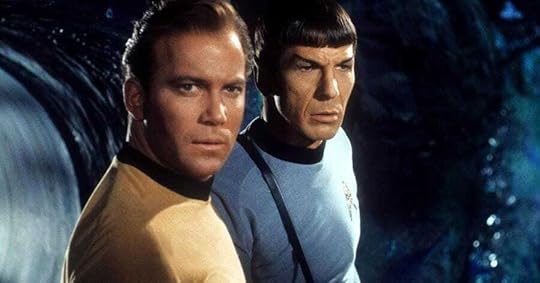 Kirk and Spock
“Even back then it was apparent that fanfiction was not just an homage to the glory of the original but also a reaction to it. It was about finding the boundaries that the original couldn’t or wouldn’t break, and breaking them.” — Lev Grossman
One of the most popular Star Trek plot lines explored by fans was the idea of a Kirk and Spock relationship. So much so that it was abbreviated to “K/S” and then, simply “/” (slash) and has been a part of the fanfiction nomenclature ever since. Slash fiction is a genre of fanfiction that focuses on relationships between two characters of the same sex.
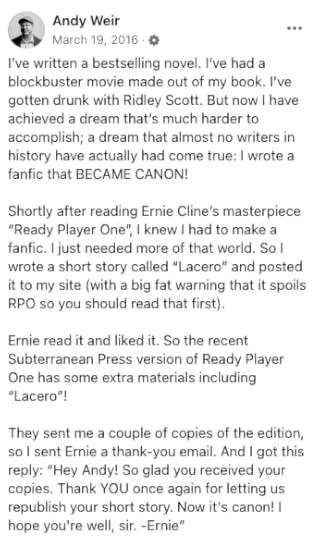
Andy Weir, author of The Martian (fun fact: The Martian was originally self-published), enjoys writing fanfiction. He enjoyed Ernest Cline’s Ready Player One so much that he wrote his own short story about one of the minor characters on his website.
Cline enjoyed it so much that it was included in a special edition of the novel, officially becoming canon.
 A facebook from Andy Weir about fanfictionDetractors of fanfiction
Not every author views fanfiction in the same way, however. George RR Martin famously said he isn’t a fan of fanfiction for multiple reasons. The first is that he doesn’t view it as a good tool for getting better at the craft of writing.
“I don’t think it’s a good way to train to be a professional writer when you’re borrowing everybody else’s world and characters. That’s like riding a bike with training wheels. And then when I took the training wheels off, I fell over a lot, but at some point you have to take the training wheels off here. You have to invent your own characters, you have to do your own world-building, you can’t just borrow from Gene Roddenberry or George Lucas or me or whoever.”
Naomi Novik, Olivie Blake, and many others would disagree. However, GRRM is from a different generation of writers, however and his framing may be shaped by things like Spockanalia.
Secondly, he does bring up the gray area of legality.
“The other thing is there are all sorts of copyright issues when you’re using other people’s work…My understanding of the law is that if I knew about I would have to try to stop it, so just don’t tell me about it and do what you want there.”
For most, fanfiction falls under “fair use.” As long as an author is profiting from their fanfiction work, it’s fair to use copyrighted characters and worlds. The gray area comes from whether or not this detracts from the original work at all.
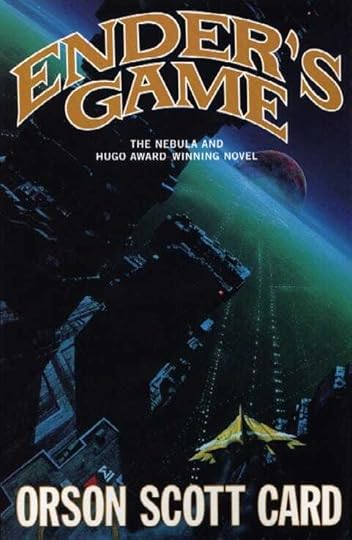 Cover of Ender’s Game by Orson Scott Card
Orson Scott Card, author of Ender’s Game, not only looked down on fan-fiction but threatened to sue. When asked about fanfiction on his website, he responded with:
“As for using characters created by another author: That’s where you’re going to find yourself sued by any author who understands where the financial future of his work lies. In order to protect copyright and potential filmmaking rights, you have to AGGRESSIVELY protect your own authorship of characters, precisely because it is the characters that film companies need to license and protect when your work is filmed. Anybody writing fiction using my characters without my specifically having licensed it to them will be sued, not because I’m mean and selfish, but because this is the INHERITANCE OF MY CHILDREN, and to write fiction using my characters is morally identical to moving into my house without invitation and throwing out my family.”
He has seemed to come around in recent years — after all, there is a lot of Ender’s Game fanfiction out there and I doubt he’s sued everyone.
Why write fanfiction?I think Naomi Novik put it best:
“Fanfic writing isn’t work, it’s joyful play. The problem is that for most people, any kind of writing looks like work to them, so they get confused why anyone would want to write fanfic instead of original professional material, even though they don’t have any problem understanding why someone would want to mess around on a guitar playing Simon and Garfunkel.”
How is fanfiction different than a cover? Is someone posting their Harry Potter fanfiction (like author Rainbow Rowell) different than someone posting their Taylor Swift cover on YouTube? And if that Taylor Swift fan gets inspired and starts their own career? If that wasn’t allowed to happen, we wouldn’t have Olivia Rodrigo’s amazing album Sour.
So is fanfiction good for fiction as a whole? I personally think so. If it gives us the Naomi Novik’s of the world, it can only be a good thing. The argument that it may detract sales from the original work hasn’t proven itself out and is a much smaller concern when compared to pirated copies of e-books.
Should you start writing fanfiction? The answer to that is: if you want to. Fanfiction writers, first and foremost, are fans. They love a work so much, they want more of it. If you’ve ever felt that about a book, show, movie, manga, comic, or anything, give it a try. You might find a passionate community of likeminded people online!
Side noteI went back and forth on spelling it “fanfiction” versus “fan fiction.” I had originally opted for the former, but grammarly insisted it was wrong. However, I found this great article Flourish Klink on Fansplaining that dove much deeper into the spelling.
[image error]

December 20, 2023
Where to submit your SFF short stories
I curated a list of magazines and journals that pay competitive rates for quality science fiction and fantasy stories
December 18, 2023
Self-published Authors That Signed With Trad Publishers
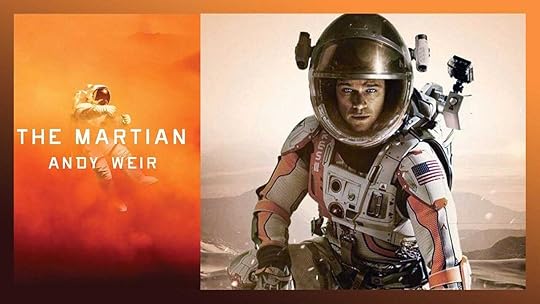
Is self-publishing the new path to getting a traditional publishing deal? Here are a few examples of self-published authors who went on to…
December 13, 2023
You Need Rejection To Become a Better Writer
What I learned from getting 20 rejection letters for my short stories this year
 Typerwriter on a desk with some coffee
I received 20 rejection letters for my writing in 2023 (all short fiction) after submitting to about 40 places. Some of you might think that’s a ton while others will say “that’s not even close to enough.” Unfortunately, a lot of places will never reply or will take over a year! My short story “The Shtriga” was published at Leading Edge Magazine in 2021 after being submitted in 2019.
Although I’ve had a story traditionally published, I feel strongly that the stories I was submitting this past year were much better. I’ve grown a lot as a writer and am especially better at pacing than I was in 2019. So how come I’m having **worse** luck? And what can I learn from all these rejection letters.
As anyone who has tried to publish short fiction will tell you, getting something accepted is a numbers game. Magazines like Clarkesworld, Uncanny, Fantasy & Science Fiction, etc. receive hundreds of submissions a month and only end up publishing a few a quarter. Even if you have a quality story, will it fit with the theme of their issue or the other pieces they’ve already accepted?
Logically, we can tell ourselves these things. It’s like dating. Very few people find true love after their very first date. Sure, it happens but those are the exceptions.
Still, there’s a part of us that thinks we will be that exception and it’s hard not to get discouraged when you receive a rejection letter. So, in this mess of rejections, did I actually learn anything?
If your story gets rejected from one place, you can say it was luck. But if it continuously gets rejected, you need to start evaluating what isn’t working, and the unfortunate truth is that most magazines won’t tell you if they even read your story, let alone why they passed on it.
Join a writing groupIf you’re tired of the “join a writing group” advice then… well, I can’t help you. Getting eyes and feedback on your story is key. I’ve been in the same writing group for just over 2 years now and it has been the absolute best thing for my writing. Not only does it inspire me just to talk about writing, but my group genuinely gives me good feedback from different perspectives.
If you can find a diverse writing group, even better. People from different backgrounds can point out why a story might have been rejected.
In one of my short stories, there was a woman traveling through time to find a cure to a disease running rampant in the world. In the original draft, the people of the world called the disease “The Blues” because of the way it made their skin turn blue. The name was not an important part of the story, but I liked the way it sounded in dialogue. I hadn’t given it much thought after that and my beta readers never brought it up.
Feedback from submissionHowever, the story was getting rejected left and right. Finally, I submitted it to Utopia Science Fiction and after a few weeks, received this feedback from the editor:
“Thank you for the submission of your short story “The Color of Midnight” to Utopia Science Fiction Magazine. Unfortunately, we will be unable to accept it for publication.
While we really enjoyed the piece, and thought the idea was great, we essentially decided to go with other stories. One of the things we discussed in depth about this piece is the use of “the blues” as the name for the disease. Blues music has roots in American slavery and the early years of post-emancipation. It carries with it cultural symbolism and we weren’t sure if it was used in the most culturally sensitive way. I would advise to change the name of the disease and alter the story accordingly, as this might be the reason other magazines are reluctant to accept the otherwise strong piece.
We still thought the story was good and it was well written and we would be happy to see anything else you might submit to us in the future.”
This was an important learning moment for me — what you name things as your world building can have a lot of impact.
More than anything, it was encouraging that someone actually read it. Every rejection I’d had up until this point was a canned response. How did I know people were even getting past the first sentence? So, although I was rejected, I found this critique validating.
As a note, if you’re lucky enough to receive feedback in your rejection, simply say thank you! Editors appreciate it. But more importantly, don’t try to debate their feedback — just take it in stride and try learn from it.
 Blank sheet of paper
So, I changed the name of the disease and updated the story in a few places.
A few more rejections, and then I got one more small piece of feedback from “The Magazine of Fantasy & Science Fiction”
“Unfortunately, this story didn’t work as well for me as I’d hoped, and I’m going to pass on it for The Magazine of Fantasy & Science Fiction. To strengthen this story for another market, you might consider focusing on how you can pick up the pace and raise the stakes (sense of urgency) throughout for your characters. But I wish you best of luck finding the right home for it, and I hope you’ll keep us in mind in the future for your other new stories.”
This is slightly better than a canned message. Upon rereading, I agreed. There needed to be more urgency, especially in the beginning.
Once again, I updated the story.
There 3 more rejections before I received yet another set of feedback. This time from “The Colored Lens”
“Thank you for considering us, but we’re going to pass on this one. The story is well written and the plot is well paced. For those reasons, I nearly passed it around the editorial team to consider holding for final voting. The general ending didn’t quite work for me, though. First, Ajax helping them felt a bit like a deus ex machina, and then her destroying the note didn’t feel like it had quite the lead-up if that was going to be the last line. It seems like there should have been a bit more plot centered around her putting herself first beyond just the overall jump itself.”
I was honing in! If the plot was well paced, then I most likely got the sense of urgency right. Plus, just hearing something is “well written” is always encouraging. All I had to fix was… the ending. Notoriously, the hardest part of any good story.
And so I updated the story again.
I have it out to a few more places but haven’t heard back. I do think what I have now is superior to the version I was sending out at the beginning of the year. I could have spent more and more time editing it before ever sending it out, but I never would have ended up with *this* version. I needed these rejections to learn what wasn’t working.
TL;DRSubmit your story to a lot of places. Yes, getting something accepted is a numbers game, but so is getting meaningful feedback. Some editors will give you genuine, impactful feedback on your writing. Use it to improve and keep submitting!
[image error]November 28, 2023
Why you should read Hyperion
Hyperion by Dan Simmons is one of the greatest SciFi stories ever written and achieved that accolade by pulling from 14th century poetry.
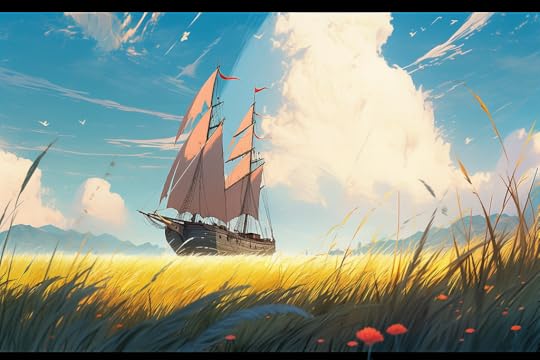 A sailboat saling across a seas of grass
“In the beginning was the Word. Then came the f****** word processor. Then came the thought processor. Then came the death of literature. And so it goes.”
What if I told you one of the best SciFi stories ever told was based on 14th century poem, didn’t have an ending, and had a villain named after a bird that could fit in the palm of my hand? There are a lot of reasons why Hyperion by Dan Simmons shouldn’t work but people are still discovering and talking about this book almost 35 years after it’s publication.
I’m not the biggest SciFi fan in general, doubly so for “classic SciFi.” So although I had heard great things about Dan Simmons’s “Hyperion” I was hesitant to read it. A lot of classic SciFi gets mired in over explaining, politics, technologies, etc. I crave character-first stories and a lot of times, I don’t get as much of that as in want with Frank Herbert or Isaac Asimov or Phillip K. Dick.
If you’re a literature nerd, you’ll probably love all the references throughout this book. Firstly, it’s named after the unfinished epic poem by John Keats (Hyperion) about the fall of Gods from Olympus. Keats is referenced throughout this book in both subtle and knock-you-over-the-head-with-a-hammer ways. Without getting too much into spoilers, a very topical part of this book talks about the use of AI to recreate personas from the past based on feeding it information. And so, an AI version of John Keats is created based on analysis of his works.
This part of the story feels more relevant today than it probably did in 1989 (I was 3 when this book came out, so I didn’t quite have my finger on the pulse of the AI debate back then). Humankind creates AI so advanced that the AIs secede from humanity and create their own government/organization known as the TechnoCore. Much like the AI we see today, most people don’t know how it works, what industries are influenced by it or what the repercussions are in the long term.
So what does that have to do with John Keats? Well, the AIs create “Cybrids” which are AI consciousnesses inside a human body. As a result, we get John Keats — an AI created from John Keats’s writing and journals inside a human body.
However, the poem that is much more prevalent in Simmons’s Hyperion is Chaucer’s 14th-century poem “The Canterbury Tales” — an epic poem (also unfinished) about a group of people from different walks of life going on a pilgrimage to the titular city of Canterbury. In fact, the ominous creature that haunts the world of Hyperion is named the “Shrike” — a bird that appears in Chaucer’s work as “wariangle” that roughly translates to “destroying angel” in Old English.
Much like Chaucer’s work, Hyperion is a story of seven people (and a baby) going on a pilgrimage to meet the mystical creature “The Shrike” that lives on the uncolonized planet Hyperion.
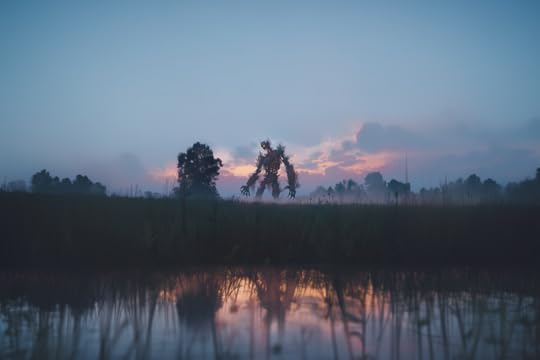
Shrikes (the bird) are often referred to as “Murder Birds” as they use spikes of thorn bushes and trees to impale insects, lizards and small mammals to consume later… That’s a real thing that actually exists in our world. A fitting name for mystical monster made of metal.
And like Chaucer’s Canterbury Tales, this pilgrimage is more of a vehicle to present multiple short stories that are loosely connected. This is where Simmons’s writing really shines. Each story is engrossing and uniquely told, even shifting between first and third person at times to emulate different authors of the genre.
The cast has to spend hours on ships sailing across grass seas and space elevators, with nothing to do but talk about how they ended up there. Pilgrims for this trip have to volunteer and only a small number are selected. Worst of all, they all know that only one person ever returns. So what type of person would volunteer for such a thing?
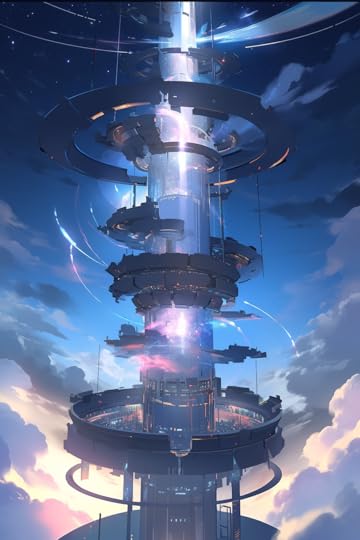 Space elevator
The most notable story was Brawne Lamia (her name coming from John Keats’s love Fanny Brawne and the eponymous creature his “Lamia and Other Poems”). Simmons tries to channel Cyberpunk author William Gibson, who was very influenced by the hard-boiled detective novels made famous by Raymond Chandler. In fact, Simmons even names Brawne’s section “The Long Good-Bye” in honor of Chandler’s award-winning novel.
This is the section where we meet Cybrid John Keats and how the influence of AI has shaped the galactic, political landscape. It’s also where Simmons poses some philosophical questions around what makes something truly “alive” that feels very relevant today.
Each story told here could stand on its own. Simmons does a wonderful job of laying the foundation of the world through the narrative voice of his characters and not through the prose sections between each story. It would have been easy to have a bunch of info dumping up front before jumping into each character’s story, but that would have felt forced.
There’s a lot more to unpack here but overall, knowing the background of this story can give you a better appreciation for the story as a whole. I gave this 5 stars — it really is that good as far as fantasy books go. It blends together multiple stories with clever worldbuilding, difficult philosophical questions, and memorable characters.
If you haven’t read it but enjoy SciFi, I highly recommend.
[image error]July 10, 2023
Even the Biggest Tigers Grow Old
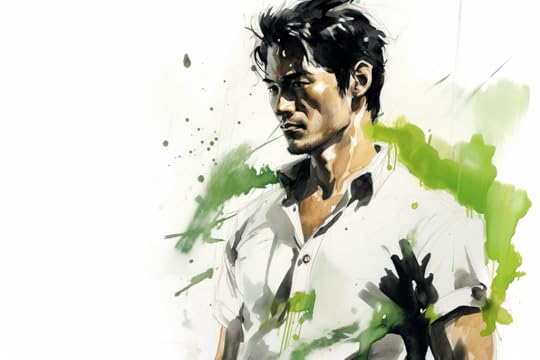 Ink sketch of Kaul Hilo, one of the main characters
I follow a lot of BookTubers and Bookstagram accounts and for the past six years, I feel like people have talked a lot about the Green Bone Saga by Fonda Lee. Petrik Leo (one of my favorite BookTubers) lists it as one of the best series of all time.
Daniel Greene has similar praise, saying the second book was one of the best urban fantasy books ever written.
The series appeared in Time Magazine’s list “The Best Fantasy Books of All Time” and NPR’s “50 Favorite Sci-Fi and Fantasy Books of the Past Decade.” Jade City, the first book of the trilogy, won the 2018 World Fantasy Award and Aurora Award for Best Novel. The second book, Jade War, received multiple award nominations the final volume won both the 2022 Locus Award for Best Fantasy Novel and the 2022 Aurora Award for Best Novel.
Given all the accolades, I obviously had to read this series. But could it live up to the hype?
The possibility of death was like the weather — you could make attempts to predict it, but you would likely be wrong, and no one would change their most important plans due to threat of rain.What type of series is it?
If you pick up any of the books in a bookstore, you may notice multiple quotes on the back describing the series as “fast-paced” or “action-packed” but don’t take those reviews at face value. Yes, there are intense, intricate action sequences that will keep you turning the page, but most of the 1,800 pages of this trilogy are filled with internal hardships, family dynamics, political machinations, and people being… well, human.
Throw out the notion that this is an “epic fantasy” in the typical, marketable sense. Yes, this is through-and-through a fantasy series and yes, it is epic in scale. However, it is ultimately a crime and family drama akin to The Godfather (an inspiration for this series). It is slowly paced, well thought out, and asks the reader to trust in the author to deliver an ending that befits the characters you’ll come to love.
There are too many things to praise about this series, so I will focus on just a couple.
World-building through languageAs someone who reads a lot of fantasy, I am used to unnatural colloquialisms and turns of phrases. “By the Light!” “You’re Rusting Mad.” “By the Old Gods and New.” They rarely feel natural to me, but I just accepted them as part of the genre.
Lee’s use of language in the Green Bone Saga feels natural and enhances the world she’s created, rather than feeling like something tacked on during the editing process. The phrases she creates not only fit the theme of the world but they portray the meaning without the author having to explain it to you.
Whether it’s “Whispering the name” of someone you want killed, “offering a clean blade” to someone who has wronged you, or the terms for every person in the clan.
The PillarThe WeathermanThe HornLanternmenAll of these little titles, sayings, restaurant names, street names, etc. come together to form a city that is so well realized, you may forget that it isn’t real.
A Legacy, Not A StoryThere’s no surprise why the final book is called Jade Legacy. It spans multiple decades, multiple nations, generational grudges, political intrigue, espionage, and more. This isn’t a story with one villain or one goal. It’s the representation of the struggles of power, the growth of a man who was forced into leadership, and the story of what we pass on to our children.
Kaul Hilo is the most talked about character in this series and for good reason. He’s at the very core of what makes it so great and in each novel, he embodies the lessons everyone has to learn to survive in a cutthroat world steeped in a vicious tradition.
He balks the life that was laid out for him. He is forced into leadership, despite being one of the least qualified men to lead diplomatically. He loves, he loses, he becomes a father, and he accepts that he is past his prime.
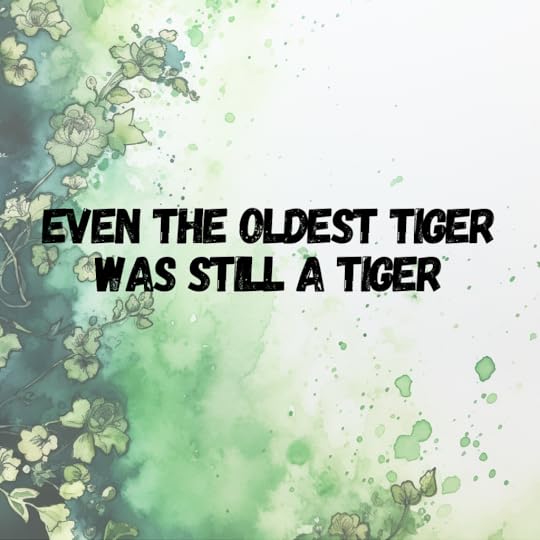 Quote from the book “even the oldest tiger was still a tiger”
Somehow, the brash, arrogant man-child of the family became one of my favorite characters of all time. Lee found a way to write a character that is always true to himself but still grows in the way life requires.
That being said, the story is not his alone. Shae, Lan, Anden, Ru, Niko, Jaya, Ayt Mada, Tar… Each one of them has great arcs that keep tickling their way back into my mind. Some of them only get a few chapters, others get an entire novel, but each of them felt real from start to finish.
So, should you read The Greenbone Saga? I hope the answer is obvious. It might be everyone’s favorite book, but I think it is a refreshing and gritty installment that will stand the test of time. I think people will be reading this series twenty years from now.
[image error]June 9, 2023
Reading Multiple Books At Once
Growing up, I was not much of a reader. I read the occasional sci-fi novel and comics, but in a given year, I’d finish maybe three books (odd, given how much I loved writing).
In college, I started reading a bit more, but usually, just the ones assigned to me. It was rare for me to read books in my free time. In my twenties, I tried to become “a reader” but life was busy and motivation was in short supply. During a good year, I’d finish ten books.
However, over the past few years, I’ve been finishing close to fifty books (some years it’s closer to forty given how many massive fantasy tomes I read). So, how did I jump from ten to forty-fifty? It’s not that I have more time… especially now that I have kids. I do more consciously spend my time, but I think the biggest contributor to my increase is reading multiple books at the same time.
But reading is reading. I’ll be just as unmotivated for each book
— Skeptical reader
The first key to having multiple books going at the same time is to diversify the types of books you’re reading. What I realized as I struggled to get through more than a book a month was that some nights I wasn’t in the mood for that one particular book.
Some nights, I want a dark mystery to get into. Others, I want an epic, sprawling world with gigantic battles. Or I’m in the mood for self-help, memoirs, coming of age, etc.
Having different types of books going at the same time means you can almost always pick one that you’re in the mood for. There are times when I will switch books during a single reading session as I realize the first one I picked up isn’t engaging. This has proven to be a lot better than what I used to do: hop on Twitter and doom scroll.
I can’t keep multiple storylines straight in my head. I’ll get too confused.
— Still skeptical reader
I’ve heard this complaint a lot when talking to people about reading multiple books at the same time and it doesn’t make any sense. Those same people will also tell me about the latest episode of Severance, Ted Lasso, Succession, and a dozen other shows with complicated plot lines and characters.
If you can follow multiple TV shows, you can read multiple books without getting confused.
Finally, the last piece that really helped me get over the hump was learning to abandon books when they weren’t holding my attention. This is advice you hear repeated over and over, but still, people struggle with it. The idea of abandoning something that might payoff is hard to swallow.
What I’ve come to realize with DNF’ing books is that it isn’t that a book doesn’t work for me, it’s that a book doesn’t work for me right now. As an example, I was reading Shadow of the Gods by John Gwynne — the first book in an epic fantasy series by an author I already liked. I got about two-hundred pages in and put the book down. I just found I never looked forward to reading it.
Fast forward six months. I pick the book up again and devour it. It was one of my favorite books of 2021! But for whatever reason, I wasn’t in the mood for it when I first started it. Had I trudged through it, I would have ruined the book for myself and probably never picked up the sequel (which I also loved).
If you’re skeptical, just give it a try. What do you have to lose? I recommend picking books that are very different from one another and don’t be afraid to put a book down if it isn’t working for you!
[image error]Reading Multiple Books
Growing up, I was not much of a reader. I read the occasional sci-fi novel and comics, but in a given year, I’d finish maybe three books (odd, given how much I loved writing).
In college, I started reading a bit more, but usually, just the ones assigned to me. It was rare for me to read books in my free time. In my twenties, I tried to become “a reader” but life was busy and motivation was in short supply. During a good year, I’d finish ten books.
However, over the past few years, I’ve been finishing close to fifty books (some years it’s closer to forty given how many massive fantasy tomes I read). So, how did I jump from ten to forty-fifty? It’s not that I have more time… especially now that I have kids. I do more consciously spend my time, but I think the biggest contributor to my increase is reading multiple books at the same time.
But reading is reading. I’ll be just as unmotivated for each book
— Skeptical reader
The first key to having multiple books going at the same time is to diversify the types of books you’re reading. What I realized as I struggled to get through more than a book a month was that some nights I wasn’t in the mood for that one particular book.
Some nights, I want a dark mystery to get into. Others, I want an epic, sprawling world with gigantic battles. Or I’m in the mood for self-help, memoirs, coming of age, etc.
Having different types of books going at the same time means you can almost always pick one that you’re in the mood for. There are times when I will switch books during a single reading session as I realize the first one I picked up isn’t engaging. This has proven to be a lot better than what I used to do: hop on Twitter and doom scroll.
I can’t keep multiple storylines straight in my head. I’ll get too confused.
— Still skeptical reader
I’ve heard this complaint a lot when talking to people about reading multiple books at the same time and it doesn’t make any sense. Those same people will also tell me about the latest episode of Severance, Ted Lasso, Succession, and a dozen other shows with complicated plot lines and characters.
If you can follow multiple TV shows, you can read multiple books without getting confused.
Finally, the last piece that really helped me get over the hump was learning to abandon books when they weren’t holding my attention. This is advice you hear repeated over and over, but still, people struggle with it. The idea of abandoning something that might payoff is hard to swallow.
What I’ve come to realize with DNF’ing books is that it isn’t that a book doesn’t work for me, it’s that a book doesn’t work for me right now. As an example, I was reading Shadow of the Gods by John Gwynne — the first book in an epic fantasy series by an author I already liked. I got about two-hundred pages in and put the book down. I just found I never looked forward to reading it.
Fast forward six months. I pick the book up again and devour it. It was one of my favorite books of 2021! But for whatever reason, I wasn’t in the mood for it when I first started it. Had I trudged through it, I would have ruined the book for myself and probably never picked up the sequel (which I also loved).
If you’re skeptical, just give it a try. What do you have to lose? I recommend picking books that are very different from one another and don’t be afraid to put a book down if it isn’t working for you!
[image error]June 2, 2023
The Brilliance of R.F. Kuang’s Writing
 Typerwriter and pancakes
When I was living in Cambridge, I was just starting to get into reading fantasy novels. I had dabbled with A Song of Ice and Fire and Name of the Wind, but I wouldn’t say I was a fan of fantasy series at that point. I wanted something new and unlike anything I had read before (which was European-inspired sword and sorcery, for the most part).
So, I went to the Harvard Book Store (the very bookstore that would later become R.F. Kuang’s home base for signings and personalizations). For those not familiar with the Boston area, Harvard Book Store (HBS) is not associated with the University (which has its own book store for students) but is instead named after Harvard Square, where it is located.
 A man looking for books in a book store
I typically scour the basement, where the used book and clearance section lives, but there tends to not be a lot of turnover in the fantasy genre. Instead, I relied on the staff picks — where the employees of the store would highlight new releases or series they loved.
Tucked behind think-pieces and whatever memoir was popular at the time was this little orange book called “The Poppy War.” The staff card said it was a dark fantasy novel inspired by the events of Sino-Japanese War (something I knew nothing about before reading this series).
When I brought the newly released paperback to the counter, the woman at the register told me she had just read it and said “I’ve never read anything like it.” I hadn’t started following Booktubers or Bookstagram yet, so this was more hype than I was used to. Two people had recommended this book so far? It must be amazing!
Admittedly, I didn’t read The Poppy War right away. I buy books and let them sit for two or three months before diving in. This is a bad habit that leads to me having way more books than I can get through. Oh well. Book reading and book collecting are two different hobbies.
But when I finally read it, I tore through it. The pacing was solid and Rin was a character that was so engrossing, I just had to see how she would make things worse with each chapter. And the ending. Oof, I loved it for a lot of reasons. It was raw and cathartic, but mostly, it was thematically problematic.
By this point, the sequel, The Dragon Republic, had been out for a few months, so I went back to Harvard Bookstore and picked it up. The only problem was, it was only out in hardcover, and my copy of The Poppy War was in paperback… future me would re-purchase The Poppy War, don’t worry.
This was March of 2020 and as we all know… everything changed. I moved out of Boston as my company went remote and that book was packed into a box before I got a chance to read it.
During the PandemicAs lockdown became normal and I started to accept I’d never be going back to the office, my hobby of reading fantasy books went into hyperdrive. This is when I started following people on Instagram, Twitter (although I’ve since deleted Twitter… thanks, Elon), and most importantly, YouTube.
Most notably, I started following Daniel Greene — who I loosely knew about because I’d also started reading The Wheel of Time the previous year. That’s when I saw an interview with R.F. Kuang up on his channel, talking about The Dragon Republic. She gave a great interview and what was apparent to me was that she put a lot of thought into the stories she crafted.
This was a woman who had studied at Oxford, had advanced degrees and was getting her PhD at Yale. With that resume, I would have thought her books would be overly wrought with complex metaphors, snippy social commentary, and a bunch of words I didn’t understand.
But when I read The Dragon Republic in a single weekend, I found her prose to be very readable, her plots hectic and fun, and her character engaging in a way that only self-destructive characters can be. But there was one thing I noticed for certain: R.F. Kuang had something to say in her books.
Yellowface Cover image from RF Kuang’s Yellowface
Since The Dragon Republic, I had purchased each of Kuang’s books the day they came out (The Burning God, Babel and Yellowface), something I’ve never done with another author. And with each installment, I’ve seen her weave more complex themes, address nuanced issues, and find engaging ways to talk about very difficult subjects.
Authors June Hayward and Athena Liu were supposed to be twin rising stars. But Athena’s a literary darling. June Hayward is literally nobody. Who wants stories about basic white girls, June thinks.
So when June witnesses Athena’s death in a freak accident, she acts on impulse: she steals Athena’s just-finished masterpiece, an experimental novel about the unsung contributions of Chinese laborers during World War I.
I think Yellowface is her best work yet, even though I mostly read fantasy and it is her first non-fantasy novel. From reading her previous works and watching a few interviews she’s given, I can see the way she’s applied her knowledge of the writing process and the publishing industry to produce a book that is not only a great criticism of publishing as a whole but a great reflection on the career of a writer.
Juniper Song Hayward (the main character) echoes the complaints I’ve seen on Twitter from writers like James Patterson about diversity in the industry negatively impacting white writers. Much like Patterson was wrong (and since walked it back), June is absolutely off the mark with her own assessment.
However, June does correctly identify just how broken the publishing system is. In their podcast, The Publishing Rodeo, hosts/authors Sunyi Dean and Scott Drakeford break down what exactly happens when a book is purchased and just how much influence an advance, marketing, and author treatment have, and how they are dictated long before a book is read by fans.
In some ways, June is right in that her first book was never given the right chance. Given the right editor, marketing team, publisher, etc. maybe she could have produced a hit. Does she prove herself right by stealing Athena’s work? Or is it further proof that Athena possessed all the talent and June could only find success with someone else’s words?
Apart from these interesting, but hefty questions, Kuang makes a lot of nods to her own literary journey. Whether it’s June scoffing at her use of “she let out a breath she didn’t know she’d been holding” (a line used in a lot of works of fiction, including Kuang’s own series), or the criticism June receives for describing an Asian character as having “almond shaped eyes” (another line Kuang herself used in her earlier works — watch this interview to understand why this type of description is problematic given the context of the content and the author).
But it’s important to note that June is not a stand-in for Kuang in this story. Nor is Athena — the young writer who skyrocketed to fame, much like Kuang herself. Both of them were problematic in their own way, which is what helps blur the lines of “ownership” in this story (not to mention, that’s what makes it so fun to read).
But I think they both reflect some aspects of Kuang’s writing career. After all, someone without any experience in the publishing industry could not have written Yellowface. And perhaps it’s the best attributes of these two characters meshed together that produced the best art. As June says in the book, with Athena’s eye for story and subject matter, she can be like Kanye, becoming “harder, better, faster, stronger” (which is an amazing play on the theme on Kuang’s part, given Kanye stole that hook from Daft Punk.
Should you read R.F. Kuang?As I said above, Kuang is a writer that uses her work to say something. Whether that is a commentary on colonialism, representation versus cultural appropriation, or justification of genocide — she finds entertaining ways to talk about these heavy issues. That type of writing is not for everyone and I’ve met quite a few people who did not gel with her writing.
However, if you are interested in the publishing industry, I strongly suggest picking Yellowface.
[image error]May 4, 2023
Top 5 Non-European Fantasy Series
I’ve read over a hundred fantasy books over the past few years ranging from standalone self-published darlings to massive, multi-book blockbusters. I love the escapism, the second-world settings, the fantastical tropes, and the magical cliches. As much as these series can vary in tone, plot, or characters, one thing is pretty consistent: setting.
Sure, The First Law is drastically different from The Wheel of Time which is different from Mistborn. But they all center around a world very much inspired by Western European history — kings, knights, castles, royal titles, landscapes… the list goes on and on. There’s nothing wrong with that — after all, many of them were inspired by Lord of the Rings and attempted to recreate that magic.
When I come across a series or book in a non-European setting, inspired by a culture I’m not so familiar with, the book feels especially fresh. And luckily, there have been so many new series published over the past couple of years that really broaden the horizon of the fantasy genre.
That’s why I wanted to call out my top 5 recent fantasy series with non-European settings. In no particular order:
The Poppy War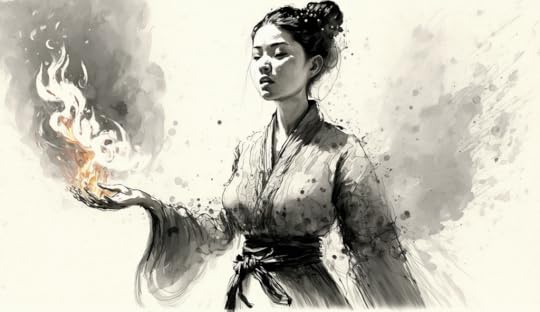 Rin from the Poppy War
If you follow book reviewers, you are probably well aware of The Poppy War by R.F. Kuang. I often get asked “is the series worth it?” To which I would answer “Most definitely.
This series follows Rin, an adopted orphan who manages to get a coveted spot at a prestigious school where she’ll train to be a warrior and scholar. She is subject to stereotypes due to her heritage and learns that she can harness the power of a god by using narcotics — drugs that make her powerful but unhinged.
Don’t be fooled by the first half of this book — it is not a “small-town kid learns magic.” This is a brutal, fantastical retelling of the Second Sino-Japanese War, the cost of War, and the lengths people will go to justify genocide.
The Burning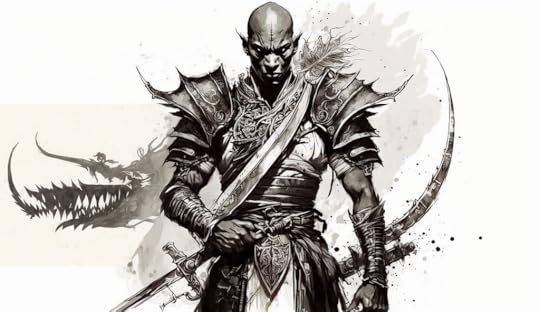 Tao from The Burning
Much like Rin in the Poppy War, Tao from Evan Winter’s The Burning series borders on paranoid and psychotic in his quest for revenge and power. Once again, you may think this is a “small-town kid learns magic,” but it’s a story of perseverance and rising above one’s station despite repeated and systemic persecution.
This started as a self-published darling and was later picked up by Orbit, and for good reason. It’s very readable, has some memorable characters, and is action-packed.
It has an African-inspired setting, which is something I haven’t read much of in fantasy. The magic system is fresh and plays well with the themes of caste systems and biases. Tao is a character you’ll root for even though a part of you knows he is fundamentally wrong in his quest.
Green Bone Saga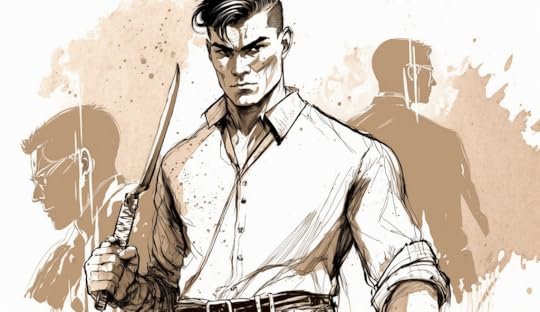 Hilo from The Green Bone Saga
First of all, if you haven’t read this series, go do it. Now.
The Green Bone Saga is a Godfather-inspired urban fantasy with inspiration from Kung Fu movies. It takes place in the nation of Kekon, a small island nation that is the world’s only source of Jade — the rare gem that grants people superhuman abilities.
Although there are great action scenes and some inventive, fantastical elements, this is very much a story about a complicated family and their struggles with power — both how to keep it and how it corrupts.
If you enjoyed Game of Thrones for the intricate character relationships, but don’t want yet another story about dragons, check this out.
Broken Earth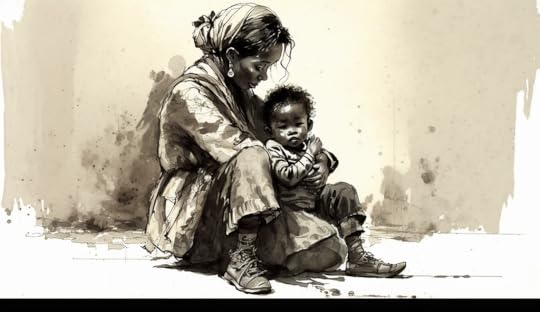 Essun from The Broken Earth
The Broken Earth trilogy is the only trilogy to receive the Hugo Award for best novel for each book. Literally, all three books were considered the best books of the year for the year they came out.
You might be able to make the case that this is a European-like setting, but the world is so broken, and societal structures have crumbled so much that it isn’t really analogous to anything anymore.
Broken Earth is a character-driven fantasy story, a novel about the perils of climate change and the consequences of systemic racism, but more than anything, it’s a story about motherhood. If you’re a parent, I think this series will hit especially hard. Even if you only read the first book (The Fifth Season), this series is worth checking out.
Sword of Kaigen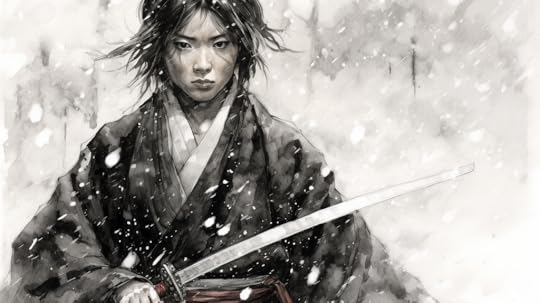 Sword of Kaigen
If you read self-published books, you’ve probably already read The Sword of Kaigen. And if you steer clear of self-published, then I would urge you to check this out.
Kaigen is a nation stuck in the past and the first line of defense for an empire on the brink of implosion. An isolated community, decades behind the rest of the world is also the home of some of the most powerful warriors. Three men alone nearly stop an invading army and that happens just halfway through the book.
One things I’ve seen a lot of people say is “The climax happens in the middle of this book but it still works!” But I think those people are missing the point of this book. Much like The Broken Earth, this is a book about parenthood and familial relationships. The epic, fantastical battle is the “Midpoint” event — where the protagonist suffers a defeat that propels them toward the moral lesson they need to learn.
I have not read other books set in this universe, so rest assured that this one stands on its own. It’s rare to get a good standalone fantasy novel, so it’s especially rare to have one this good.
[image error]