Judith Hale Everett's Blog, page 4
December 11, 2020
Not Your Average Occupations
In an earlier post, I talked about the most well-known ways that Regency women kept themselves occupied during the times between engagements, walks, errands, and mealtimes. But there were some lesser-known activities that enjoyed at least bouts of popularity during the era.
Covering Screens
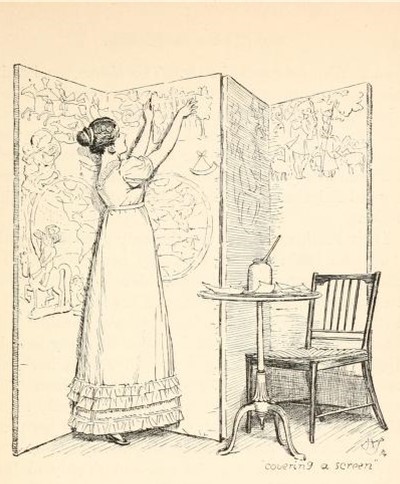
“It is amazing to me,” said Bingley, “that young ladies can have patience to be so very accomplished as they all are… They all paint tables, cover screens, and net purses.”
Pride and Prejudice by Jane Austen; illustration by Hugh Thomson
Nowadays, screens can be either ornamental—something purchased from a far-off country or in an antique shop to add decoration or elegance to a room—or they are functional—to block off the view. Screens in the Regency were always functional, but often in different ways than today.
In a time when homes were made of thick stone blocks with no insulation, and windows were set in wood frames that often cracked and shrunk with the weather, drafts were a daily evil. Enter the ubiquitous screen, which blocked or redirected the draft away from where people were seated or congregated, thus ensuring their comfort whatever the temperature outside.
Also a daily evil was the unpredictable heat emanating from the fireplace, which could become hot enough to bring an unseemly flush to anyone’s cheeks (upper or lower). Here, the screen could be employed to buffer the heat so that grandmama or Aunt Hester had no need to remove from the most comfortable chair in the room in order to seek solace.
But all these screens served yet another, and arguably more important, function: to advertise the accomplishments of the young ladies in the household. A screen covered in a lovely scene drew the eye and admiration, and if that eye belonged to a rich, single man in want of a wife—well, purpose served.
Rolled Paper Art
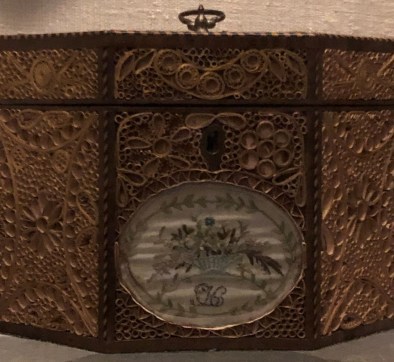 Tea Cannister, Victoria and Albert Museum, London, UK
(photo Judith Everett)
Craft kits have been around for centuries, it seems. Cabinet makers would make boxes or other ornaments with empty frames for accomplished young ladies to fill in with their designs of rolled paper. The designs could be copied from somewhere, or created by the artist. As always, useful items were the norm, because Regency ladies didn’t like to waste their time!
Shell Art
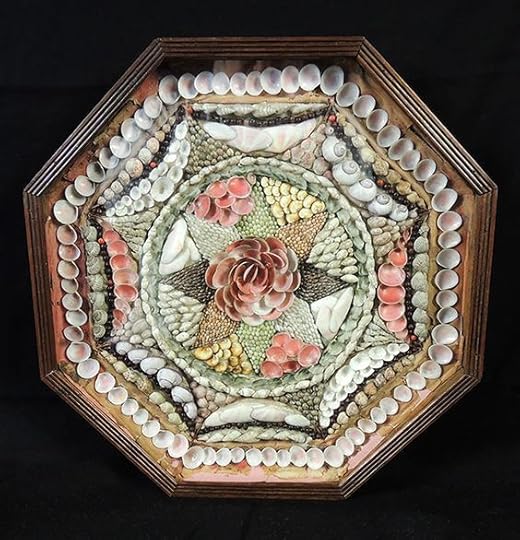 19th century shellwork, artist unknown
During the Regency—especially during the years of the Napoleonic Wars—travel and sightseeing within the UK became a huge pass time among the middle and upper classes. And people then were no different than people today—they always wanted to bring something home with them to show for their adventures.
Seashells were abundant and easy to carry, and could be found on the beaches or purchased from seaside shops. But instead of letting them sit in jars gathering dust, young ladies from the Regency put them to good use, tastefully arranging them in little collector’s boxes, or, as shown above, decorating plaques, boxes, and vases with them.
The designs could be quite ornate, with shells used as flower petals of varying kinds, with stems and leaves, or in geometric patterns. This craft was so popular that it survived well into the Victorian era.
Painted Tables

“Pray let her know that I am quite in raptures with her beautiful little design for a table, and I think it infinitely superior to Miss Grantley’s.”
Miss Bingley to Mr. Darcy, Pride and Prejudice by Jane Austen
Along with painting screens, Regency young ladies often enjoyed using their talents to beautify tables. This desire to decorate various pieces of furniture seems to be akin to the toll-painting craze of the 1980’s, but there is not much proof that anything other than tables and screens were affected. At any rate, the results were often lovely, and generally fetch a huge price in auctions today, so the exertions of those young ladies of two centuries past were not wasted.
There are probably many more occupations I’ve missed, or that we simply don’t know about, but the point of all this is that even fine ladies kept themselves busy with activities that were more often useful than not. Though they lived in grand houses and dressed in fine clothes, they still made efforts to help the poor and create gifts and to beautify their surroundings with whatever talents their upbringing and inclinations had provided them.
And while many did while away hours on makeup or reading or eating bonbons, at least none of them wasted their time staring at a flickering screen attached to a wall.


December 3, 2020
Pandemic of a Different Color
When the Covid-19 Pandemic hit the US in March of 2020, I was surprised. Pandemics were the stuff of science fiction—wild imaginings to strike fear in the hearts of movie-goers. Unfortunately, half of the citizens of my country held the same belief, and never let go of it, leading to widespread infection and death in our major cities.
It didn’t take long for me to find out about the 1918 Spanish Flu, which became a pandemic thanks largely to the close of the first World War, with the virus hitching rides home with returning soldiers from all over the globe. Interestingly enough, the same devil-may-care attitudes plagued enough people during that pandemic as to cause the same rampant spread and the same inexcusably high death toll as now.
It didn’t escape me that these two pandemics were roughly 100 years apart, so, out of curiosity, I searched in the Regency era to see if there was another such disaster—and there was. It was not labelled as a pandemic per se, so some might argue that it doesn’t count, but it checked all the pandemic-worthy boxes (such as causing world-wide suffering and death), so I’m counting it.
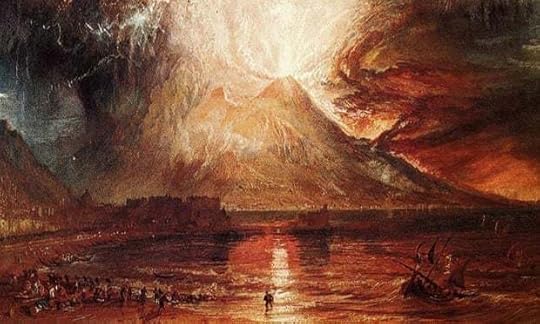 Rain of Fire–the Eruption of Tambora (artist unknown)
In April of 1815, the volcano Tambora in Indonesia erupted, spewing 12 cubic miles of ash, rock, and sulfuric gas into the atmosphere. The resulting lava flow, falling debris, and suffocating ash killed 10,000 people on the surrounding islands instantly, and an estimated 60–90,000 died in the following months from starvation due to smothered crops.
But that was not all. Remember those 12 cubic miles of ash and noxious gas? They floated in the atmosphere for approximately three years, migrating across the globe and causing all kinds of disruptions in weather patterns, which in turn caused even more devastation.
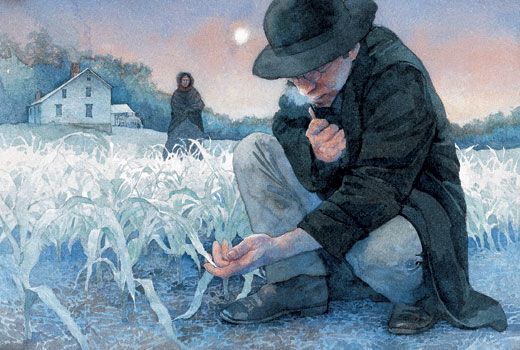
Across the Northern Hemisphere, the main effect was unseasonable cold and rain. Sounds tame, doesn’t it? Well, it wasn’t. We’re talking a winter that never ended, freezing crops before they had even begun to mature. Floods of rain washed out fields, carrying seeds and topsoil away and ruining farms. Constant smudgy cloud cover blocked sunlight and starved plants. Hailstorms in August destroyed anything that had managed to survive, and damaged the property of already desperate farmers. Fierce storms wrecked ships, and seamen and cargo disappeared into the bottomless ocean.
 from “Blast from the Past” SmithsonianMag.com
Widespread crop failure and disrupted shipping led to famine, and all that malnourishment led to disease. In Europe, typhus broke out in Ireland, and in 1816 spread all through the British Isles, leaving thousands dead in its wake. Similar plagues were recorded in other areas of the world.
We still can see the effects, both emotional and physical, of this 19th century pandemic as recorded in such literary works as Lord Byron’s poem “Darkness,” John Polidori’s story “The Vampyre,” and Mary Wollstonecraft (Shelly)’s “Frankenstein,” as well as in the high sulfuric content of core samples taken recently in Greenland and Antarctica.
This plague was not transmitted through human contact, but it certainly took its toll of human life, taking responsibility for the loss of tens of thousands over three years. It also took its toll on the human spirit, just as the 1918 Spanish Flu and the 2020 Covid-19 pandemics have.
Something amazing about the human spirit, though, is its ability to rebound from devastation. Time and again, humanity has been beaten down by war, pestilence, disease, or disaster. We’re still here, and we’re still fighting. The key, I think, is to learn from history, and remember.
Pandemic of the (19th) Century
When the Covid-19 Pandemic hit the US in March of 2020, I was surprised. Pandemics were the stuff of science fiction—wild imaginings to strike fear in the hearts of movie-goers. Unfortunately, half of the citizens of my country held the same belief, and never let go of it, leading to widespread infection and death in our major cities.
It didn’t take long for me to find out about the 1918 Spanish Flu, which became a pandemic thanks largely to the close of the first World War, with the virus hitching rides home with returning soldiers from all over the globe. Interestingly enough, the same devil-may-care attitudes plagued enough people during that pandemic as to cause the same rampant spread and the same inexcusably high death toll as now.
It didn’t escape me that these two pandemics were roughly 100 years apart, so, out of curiosity, I searched in the Regency era to see if there was another such disaster—and there was. It was not labelled as a pandemic per se, so some might argue that it doesn’t count, but it checked all the pandemic-worthy boxes (such as causing world-wide suffering and death), so I’m counting it.
Rain of Fire–the Eruption of Tambora (artist unknown)In April of 1815, the volcano Tambora in Indonesia erupted, spewing 12 cubic miles of ash, rock, and sulfuric gas into the atmosphere. The resulting lava flow, falling debris, and suffocating ash killed 10,000 people on the surrounding islands instantly, and an estimated 60–90,000 died in the following months from starvation due to smothered crops.
But that was not all. Remember those 12 cubic miles of ash and noxious gas? They floated in the atmosphere for approximately three years, migrating across the globe and causing all kinds of disruptions in weather patterns, which in turn caused even more devastation.
Across the Northern Hemisphere, the main effect was unseasonable cold and rain. Sounds tame, doesn’t it? Well, it wasn’t. We’re talking a winter that never ended, freezing crops before they had even begun to mature. Floods of rain washed out fields, carrying seeds and topsoil away and ruining farms. Constant smudgy cloud cover blocked sunlight and starved plants. Hailstorms in August destroyed anything that had managed to survive, and damaged the property of already desperate farmers. Fierce storms wrecked ships, and seamen and cargo disappeared into the bottomless ocean.
from “Blast from the Past” SmithsonianMag.comWidespread crop failure and disrupted shipping led to famine, and all that malnourishment led to disease. In Europe, typhus broke out in Ireland, and in 1816 spread all through the British Isles, leaving thousands dead in its wake. Similar plagues were recorded in other areas of the world.
We still can see the effects, both emotional and physical, of this 19th century pandemic as recorded in such literary works as Lord Byron’s poem “Darkness,” John Polidori’s story “The Vampyre,” and Mary Wollstonecraft (Shelly)’s “Frankenstein,” as well as in the high sulfuric content of core samples taken recently in Greenland and Antarctica.
This plague was not transmitted through human contact, but it certainly took its toll of human life, taking responsibility for the loss of tens of thousands over three years. It also took its toll on the human spirit, just as the 1918 Spanish Flu and the 2020 Covid-19 pandemics have.
Something amazing about the human spirit, though, is its ability to rebound from devastation. Time and again, humanity has been beaten down by war, pestilence, disease, or disaster. We’re still here, and we’re still fighting. The key, I think, is to learn from history, and remember.
November 25, 2020
What to do with the time
“I wish it need not have happened in my time,” said Frodo.
“So do I,” said Gandalf, “and so do all who live to see such times. But that is not for them to decide. All we have to decide is what to do with the time that is given us.”
JRR Tolkien, The Fellowship of the Ring

They say that hard times bring out the worst in all of us, and that can definitely be true, but the opposite can also true. Because hard times push us to our limits, they can just as easily humble us and make us turn outward, away from ourselves, to see the needs of others.
I’ve seen this time and again this year, the dreadful 2020. When quarantine hit, there were those who stampeded and hoarded and pushed and shoved, but there were also those who shared and cared and served and loved. Big name businesses reached out to their customers with assurances of safety and comfort, and bent over backward into their bank accounts to ensure the well-being of their employees. Internet companies scrambled to meet the sudden demands for bandwidth, and donated services to those in financial straits.
When political and social strife slammed us mid-year, and the powers-that-be looked to be failing us, well-known personalities stepped up to encourage communication and understanding, and again big name companies responded to the need with thoughtful solutions and commitments to positive change.
Through the whole year of craziness, we’ve seen extremes on social media, with more hate and vitriol and inhumanity splashing itself all over than ever before—but also more good humor and solidarity and straight up love that has eased tensions and helped the common person get through the most hellish days.
While social media deserves much of its bad rap, I’ve realized that it has also played a huge part in holding us all together as a global family through this year. Every meme that has passed from one side of the world to the other, that has given us a break from our worries, or has translated our fears into something humorous, is a reinforcement of our bond as humans. Every post that ignores the problem of the day to point out a positive light is like a pin that grounds us to our humanity. It shows a restraint that can only come from compassion.
So if 2020 is the craziest year, it might also be the year we all got stronger—cared more, tried harder, loved deeper, and let go of ourselves—the year we made the most of the time we have.
November 24, 2020
*Black Friday Sale*
To give back something in the face of all 2020 has thrown at us, Two in the Bush on Kindle will be FREE for 5 days—Thanksgiving Day through Cyber Monday. If you haven’t had a chance to read it yet, pick it up for FREE this weekend!
 Click here to link to Amazon.com
November 11, 2020
What To Do With the Time
“I wish it need not have happened in my time,” said Frodo.
“So do I,” said Gandalf, “and so do all who live to see such times. But that is not for them to decide. All we have to decide is what to do with the time that is given us.”
JRR Tolkien, The Fellowship of the Ring
If someone had told me in January 2020 that there would be a pandemic, I never would have thought that things would play out as they have. I would have expected the quarantine, masks, and upscaled sanitation, but I would never have imagined the controversy these measures could excite, nor the other social and natural upheaval that has played out alongside the pandemic.
I don’t think anyone can fully prepare for the future, even with a lot of facts to guide them. I figured I’d be ok during this pandemic because I’m a low-key prepper (just food and essentials storage—no bunker in the backyard—unless you count my hobbit-hole), we have computers with webcams, and my husband works at a job that would continue during a quarantine. I knew I was lucky.
But I didn’t foresee the depression that having kids lose their outlet of playtime with friends would produce, nor the anxiety over what the heck to expect from this virus that seems to hit very randomly—some just feel sick, others languish for weeks or months, and others die, and no one seems able to tell who will fall where. I also didn’t foresee the hatred that would seethe all over social media, nor the intensity of opinion that would split us as a nation, and how it all would affect my sense of well-being and humanity.
It seems so overwhelming, but we aren’t alone in this. Throughout history, people have grappled with the unknown, being forced to slog through unforeseen challenges to reach their goals. But if we’re going to learn anything from history (and I feel that’s the whole point of looking back at all) then I think it is this: they didn’t give up.
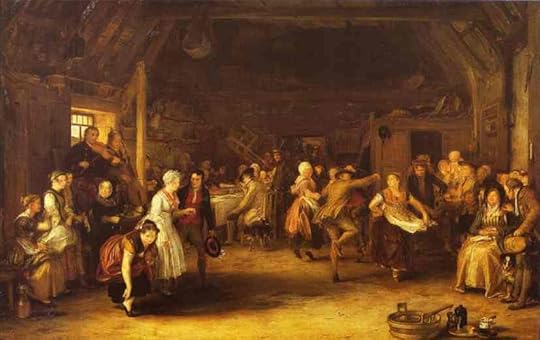
Take for example the lower classes of the Regency era. They made up more than 45% of the population, and yet they made less than 15% of the income (hmmm, looks like things haven’t really changed much worldwide). The normal avenues of improvement (education, promotion, investment) were denied them, generally from lack of funds (either personal or charitable), or lack of opportunity.
But while their lives were not easy, and we wouldn’t want to put ourselves in their shoes, people back then had something that we squint at today: a strong work ethic. If they were able to work, they would work, and they would work as hard and as long as it took to provide for their responsibilities. Though there will always be those willing to get something for nothing, there was a strong sense of pride in the laboring classes which kept the majority of them from accepting handouts or favors. They wanted to succeed on their own terms, and on their own power.
This is kind of a foreign concept today. With welfare, socialized medicine, and parents paying for their kids’ expenses well into their adulthood, it’s no wonder that we gape at the idea of someone refusing monetary help. We see the hardworking poor of the Regency as downtrodden—and many undoubtedly were—but there is a lot of evidence that they tended to take pride in the work of their own hands, and were happy.
 The Penny Wedding by Sir David Wilkie
Which brings me full circle to what Gandalf said, which I can’t help linking with the quote from the Bible regarding lilies: sufficient is the day to the evil thereof. I think we can expect that our time will fill itself with plenty of evil, but we still have a choice of what to do about it.
November 7, 2020
To Be Transported
I first fell in love with historical romance through movies: Anne of Green Gables with Megan Follows, Jane Eyre with Zelah Clarke, and the 1980 Pride and Prejudice. There was something addictive about being transported to a different time and place and experiencing stories of strong women making their own way in an often unforgiving world.
Part of the fascination was the costumes, manners, and language, which were so much more elegant than that of my own time. But the other part was the strong relation I felt to these women, despite the disparity in our times. Their flaws and struggles and losses and victories transcend time and place, and I came to care as deeply about them as I could if they were my friends or sisters.
Reading these stories deepened my connection, not only with the characters, but with the authors. They were chroniclers of the human experience as it was—or as they believed it should have been. The stories they made were bits of their hopes and dreams, and that is what made them so alive.
That is why, when I decided to write Regency romance, I chose to emulate the writing style of that era. I want my readers to connect deeply with my characters and their stories, and I believe that is most likely to be achieved when the time and place which I am describing is as authentic as possible.
I hope that you will feel transported into a tangible time and place—a place that inspires and empowers you, and that makes you fall in love with historical romance all over again—as you discover the world of the Branwell Chronicles.
November 2, 2020
Two in the Bush available Now!
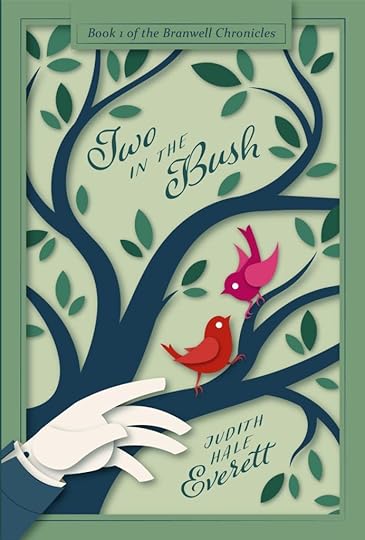
Both the ebook and print book are available on Amazon.com right now.
Sir Joshua Stiles wants nothing more than to fill the hole in his heart left by his wife’s death, but it seems that women are more interested in his fortune than in himself. Cynical and ready to renounce all females, he is none too pleased when his sister invites her dear friend to visit for the Season.
Having survived a joyless marriage, Genevieve Breckinridge has no romantic expectations. In coming to London, she hopes only to cure her daughter’s Gothic fantasies. But Sir Joshua seems always to be at hand, either to witness Genevieve’s most mortifying moments, or to make himself so agreeable that she wishes she had not given up romance.
When her daughter develops a decided tendre for Sir Joshua, however, Genevieve suddenly realizes where her own heart lies, and must make a painful choice. For what loving mother could—or would—play rival to her own daughter?
October 28, 2020
Two in the Bush release date: 11/2/2020!
cover copyright Rae AllenMy new Regency romance novel will be released November 2, 2020. The cover art is by the incredibly talented Rachel Allen Everett.
Sir Joshua Stiles wants nothing more than to fill the hole in his heart left by his wife’s death, but it seems that women are more interested in his fortune than in himself. Cynical and ready to renounce all females, he is none too pleased when his sister invites her dear friend to visit for the Season.
Having survived a joyless marriage, Genevieve Breckinridge has no romantic expectations. In coming to London, she hopes only to cure her daughter’s Gothic fantasies. But Sir Joshua seems always to be at hand, either to witness Genevieve’s most mortifying moments, or to make himself so agreeable that she wishes she had not given up romance.
When her daughter develops a decided tendre for Sir Joshua, however, Genevieve suddenly realizes where her own heart lies, and must make a painful choice. For what loving mother could—or would—play rival to her own daughter?
October 21, 2020
Can or Can Not—There Is No Try
It’s amazing how many mundane matters conspire to thwart a writer once they’ve gotten on a roll. It seems that whenever I have nothing planned for the week, as soon as I settle into a rhythm with writing, something comes up—then something else, and something else…
It’s Murphy’s law, I guess, and there’s nothing I can do about it.
But really, what would I want to do about it? Almost every one of my mundane matters has to do with my family, so if I wished away everything but writing, where would I be? Pretty sad and pretty lonely, that’s where.
So what brings all this philosophizing on? Well, canning season has finally come to a close. (Hallelujah!) Yes, I am part of a sisterhood of crazy people who till up their lawn so they can plant a bunch of stuff so they can put it into jars and into the dehydrator so they can fill up shelves in their basement against the end-times.
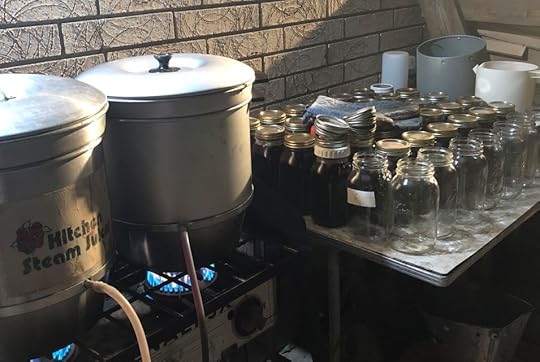 My outdoor canning setup—we may be crazy, but we’re crazy smart
Actually, we start eating our preserved food almost as soon as we put it up, and it’s a good thing COVID hit in March, because we still had plenty to tide us over through the mad rush on the stores at the beginning of quarantine. In fact, it was the first time we have had to rely on our storage to survive (not just pretend), which was surreal. I felt so not-crazy all of a sudden. So it was all worth it.
But it’s always worth it, even when I have to break into my sacred writing time to bust out 40 quarts of apple juice, or 7 batches of grape leather, or 35 pints of stewed tomatoes. There’s really no satisfaction like work well done—and work well done for someone else is even better. The look on my kids’ faces as they drink our homemade grape juice is worth all the writing time in the world.
Well, at least several hours anyway.