
Brian Fies's Blog, page 55
March 23, 2015
Sittin' and Thinkin'
Karen and I enjoyed a pre-Anniversary getaway last weekend. I won't bore you with the details or a droning travelogue, but I did want to share one photo that I found particularly thought-provoking:
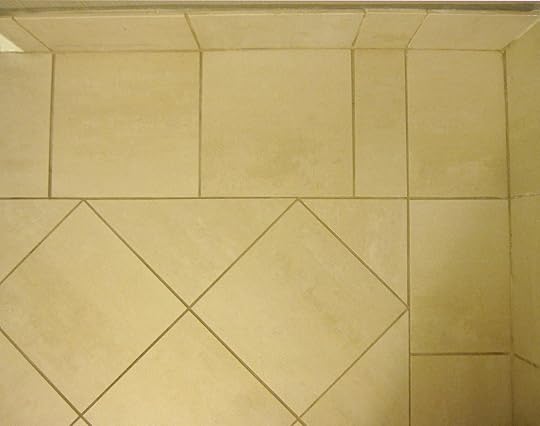
That's the tile in the floor of our hotel bathroom. As I had the opportunity to contemplate it, I got to thinking about that extra filler tile (marked in green in the photo below), and wondering how you'd lay out tiles to avoid that awkwardness. As a result, I figured out something that I imagine every professional tile layer learns their first day on the job, but it was news to me.
Or it's possible I totally knew this before, forgot it, and rediscovered it. That seems likely. Doesn't matter; forgetfulness keeps things fresh.
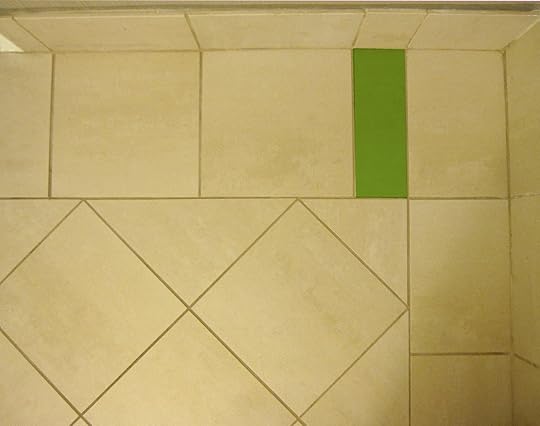
The square tiles are all the same size. Those on the inside of the pattern are turned 45 degrees from those on the outside (while others are cut in half or quarters to fill the gaps). They don't space out evenly because the diagonal of a square is (naturally) longer than the length of its sides. In fact, as we all remember from Pythagoras, they're wider by the length of their side times the square root of two.
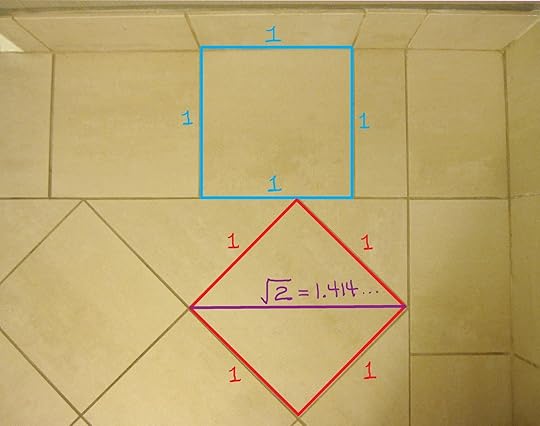
Since the square root of two is an irrational number whose decimals never repeat or end, the straight and diagonal tiles can never come out exactly even. However, we craftsmen in the tile-laying trade know that a little extra grout covers a lot of sins. How close can we get?
Because the square root of 2 is about 1.414, the first obvious answer is that if you laid out 141 straight tiles next to 100 diagonal tiles, you'd be off by four-tenths (0.4) of a tile. Increasing the separation between each of the 100 straight tiles by only 0.004 of a tile--just a skosh--would fill in the difference.
But we can do better.
Reduce the fraction from 141.4/100 to 14.14/10. How's that look? Pretty good!
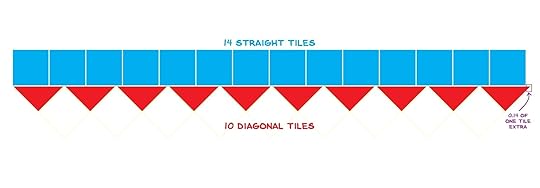
You're left with just a little piece of diagonal tile hanging over the edge--again, a pretty easy imbalance to fix simply by spreading out the 14 straight tiles a bit.
Now the thrill of discovery was making me light-headed. Could I do even better? Dare I try?!
Simplify 14.14/10 to 7.07/5. What have we got?
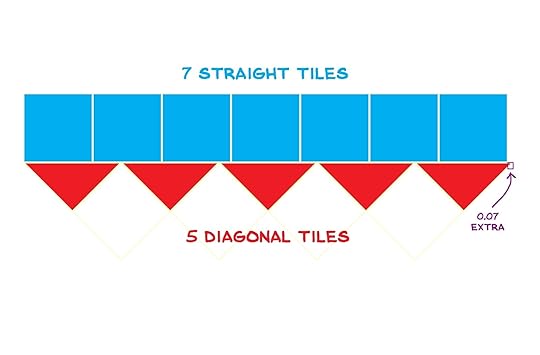
If anything, that's even better! It's . . . it's so elegant! So beautiful! I began to weep. Luckily I had two-ply nearby.
Now here's the part that blew my mind and convinced me this had to be a blog post. I counted how many tiles wide the actual bathroom was. Six. Six straight tiles wide, plus that filler tile. The poor blighters almost made it! But wait . . . There's that border of skinny tiles on the right. And the more I looked at that border, the more convinced I was that if they'd just omitted it, they could have laid a seventh tile and gone all the way:
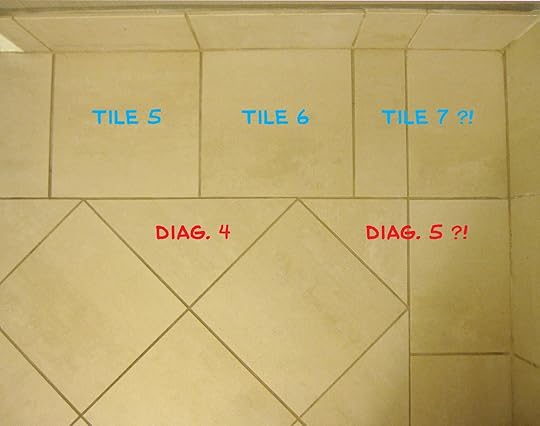
NOOOOO! So close! They were headed for the end zone and fumbled on the 1-yard line!
Karen and I have been married long enough that she barely even rolled her eyes when she saw our photos uploading and asked why I'd taken a picture of tile. She muttered something about knowing what she was in for when she married me. And she married me anyway.
I'm a very lucky man.

That's the tile in the floor of our hotel bathroom. As I had the opportunity to contemplate it, I got to thinking about that extra filler tile (marked in green in the photo below), and wondering how you'd lay out tiles to avoid that awkwardness. As a result, I figured out something that I imagine every professional tile layer learns their first day on the job, but it was news to me.
Or it's possible I totally knew this before, forgot it, and rediscovered it. That seems likely. Doesn't matter; forgetfulness keeps things fresh.

The square tiles are all the same size. Those on the inside of the pattern are turned 45 degrees from those on the outside (while others are cut in half or quarters to fill the gaps). They don't space out evenly because the diagonal of a square is (naturally) longer than the length of its sides. In fact, as we all remember from Pythagoras, they're wider by the length of their side times the square root of two.
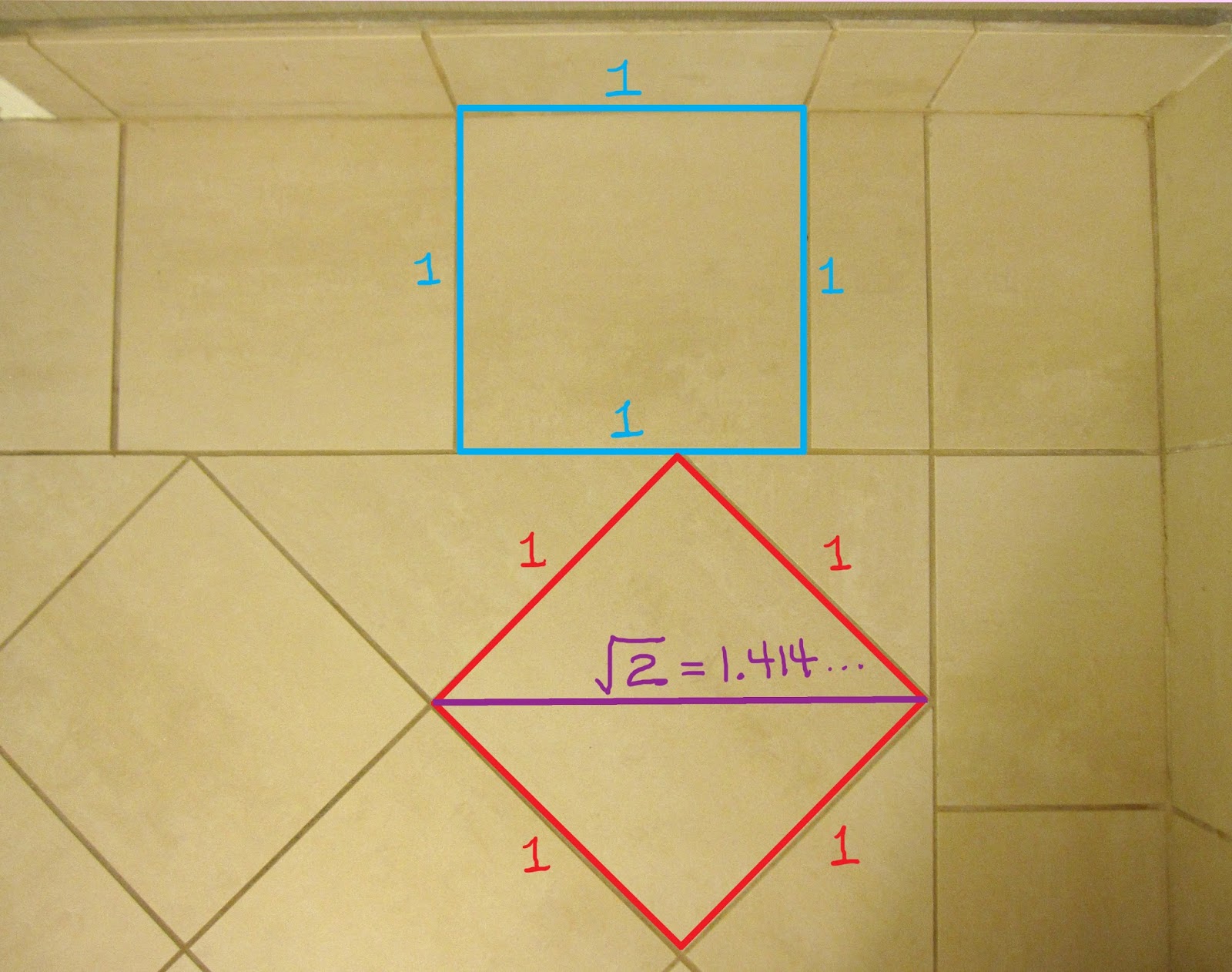
Since the square root of two is an irrational number whose decimals never repeat or end, the straight and diagonal tiles can never come out exactly even. However, we craftsmen in the tile-laying trade know that a little extra grout covers a lot of sins. How close can we get?
Because the square root of 2 is about 1.414, the first obvious answer is that if you laid out 141 straight tiles next to 100 diagonal tiles, you'd be off by four-tenths (0.4) of a tile. Increasing the separation between each of the 100 straight tiles by only 0.004 of a tile--just a skosh--would fill in the difference.
But we can do better.
Reduce the fraction from 141.4/100 to 14.14/10. How's that look? Pretty good!
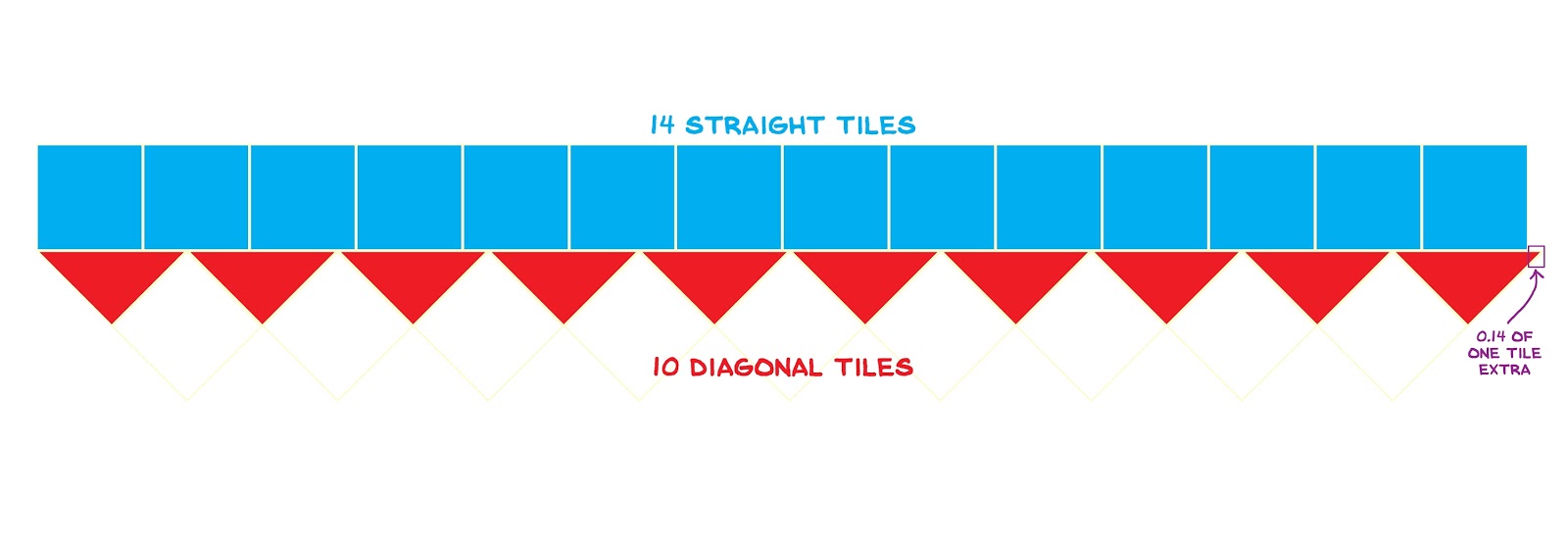
You're left with just a little piece of diagonal tile hanging over the edge--again, a pretty easy imbalance to fix simply by spreading out the 14 straight tiles a bit.
Now the thrill of discovery was making me light-headed. Could I do even better? Dare I try?!
Simplify 14.14/10 to 7.07/5. What have we got?
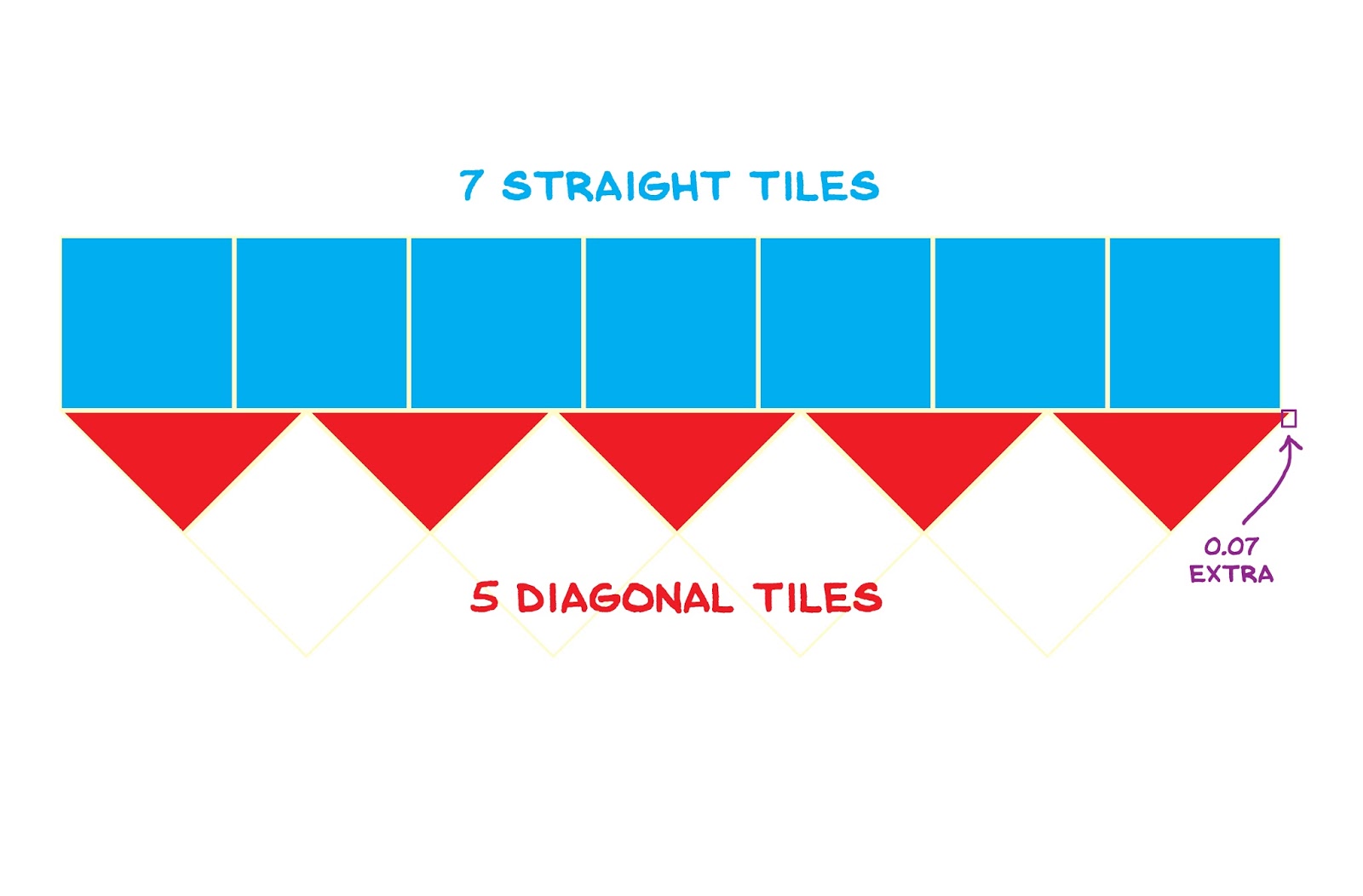
If anything, that's even better! It's . . . it's so elegant! So beautiful! I began to weep. Luckily I had two-ply nearby.
Now here's the part that blew my mind and convinced me this had to be a blog post. I counted how many tiles wide the actual bathroom was. Six. Six straight tiles wide, plus that filler tile. The poor blighters almost made it! But wait . . . There's that border of skinny tiles on the right. And the more I looked at that border, the more convinced I was that if they'd just omitted it, they could have laid a seventh tile and gone all the way:

NOOOOO! So close! They were headed for the end zone and fumbled on the 1-yard line!
Karen and I have been married long enough that she barely even rolled her eyes when she saw our photos uploading and asked why I'd taken a picture of tile. She muttered something about knowing what she was in for when she married me. And she married me anyway.
I'm a very lucky man.


March 13, 2015
Irwin Hasen
Aw. We lost another comics pioneer today, with the death of Irwin Hasen at nearly 97. He had a good run.
Mr. Hasen drew comic books almost as soon as the form existed, working on titles such as The Green Hornet, Green Lantern and The Flash beginning in 1940. He created the DC character Wildcat. After serving in World War II he returned to comic books, then began the work he may be best remembered for, the comic strip Dondi, in 1954.
I didn't know Mr. Hasen but I met him a few times, and he was always happy to share his wisdom and stories with anyone who asked. He was short, charmingly profane, and told great tales about the Depression Era gangsters and prostitutes he'd known growing up on the tough streets of New York City. Some of them might have been true.
Below is a blog post I wrote in July 2006, after running into Mr. Hasen at the San Diego Comic-Con. As I've mentioned elsewhere once or twice, being called an "S.O.B." by Irwin is a highlight of my comics career. He was one of the Golden Age greats. I'm sorry we've lost him but I'm glad we had him.
 With Irwin Hasen at the Society of Illustrators in New York, 2006.
JULY 2006
With Irwin Hasen at the Society of Illustrators in New York, 2006.
JULY 2006
I love the old guys.
The comics industry is famous for devouring its own. I know good, professional artists in their thirties forced out of the business for lack of work while thousands of eager teens line up with sketchbooks in hand ready to take their places. Short memories and fickle trends turn today's creative heroes into tomorrow's tired hacks. There's precious little appreciation or respect for the men and women who began and built the business--many of them still alive, some of them still working.
I've mentioned how I originally met Irwin Hasen in February at my book launch party at the Society of Illustrators in New York. I saw him again the next day at the New York Comic-Con, selling prints of the old DC characters he drew plus originals from his long-running comic strip "Dondi." I only took the time to greet him briefly, and left New York regretting that I'd let an opportunity slip through my fingers.
Last Thursday I saw Mr. Hasen again, set up in Comic-Con's Artists Alley. No one was at his table; in fact, I had to elbow my way through a line of fans queued up to meet the Hot Young Artist at the table next door to get to him. I reintroduced myself and we had a nice conversation.
I looked over his table and saw only prints. No originals.
"Oh, I remember you had some Dondi originals in New York," I said, disappointed. "I was really hoping to see them."
Mr. Hasen gave me a conspiratorial nod, pulled a portfolio from under the table, and slid out a dozen "Dondi" strips. We continued to talk as I flipped through them, figuring out which one I wanted to buy. At last I chose my prize.
"You've got a good eye, you S.O.B.," said Mr. Hasen, eyes twinkling. "You picked the best one."
 My original "Dondi" strip from 1968 is huge, nearly two feet wide. No contemporary artist I know of works that large, mostly because the shrinking space newspapers devote to comic strips these days doesn't allow for the kind of detail Mr. Hasen drew, as in Panel 1 below.
 They don't make 'em like that anymore.
EDITED TO ADD: Here's a very good profile of Mr. Hasen the New York Times did in 2011. Recommended reading.
EDITED TO ADD MORE: Mark Evanier posted this trailer for a documentary about Mr. Hasen. I haven't seen the film, but this trailer gives you a good sense of the gentleman and what it was like to talk to him for even a few minutes. I don't think they make characters like him anymore.
AND here is his obit in the New York Times.
Mr. Hasen drew comic books almost as soon as the form existed, working on titles such as The Green Hornet, Green Lantern and The Flash beginning in 1940. He created the DC character Wildcat. After serving in World War II he returned to comic books, then began the work he may be best remembered for, the comic strip Dondi, in 1954.
I didn't know Mr. Hasen but I met him a few times, and he was always happy to share his wisdom and stories with anyone who asked. He was short, charmingly profane, and told great tales about the Depression Era gangsters and prostitutes he'd known growing up on the tough streets of New York City. Some of them might have been true.
Below is a blog post I wrote in July 2006, after running into Mr. Hasen at the San Diego Comic-Con. As I've mentioned elsewhere once or twice, being called an "S.O.B." by Irwin is a highlight of my comics career. He was one of the Golden Age greats. I'm sorry we've lost him but I'm glad we had him.
With Irwin Hasen at the Society of Illustrators in New York, 2006.
JULY 2006
I love the old guys.
The comics industry is famous for devouring its own. I know good, professional artists in their thirties forced out of the business for lack of work while thousands of eager teens line up with sketchbooks in hand ready to take their places. Short memories and fickle trends turn today's creative heroes into tomorrow's tired hacks. There's precious little appreciation or respect for the men and women who began and built the business--many of them still alive, some of them still working.
I've mentioned how I originally met Irwin Hasen in February at my book launch party at the Society of Illustrators in New York. I saw him again the next day at the New York Comic-Con, selling prints of the old DC characters he drew plus originals from his long-running comic strip "Dondi." I only took the time to greet him briefly, and left New York regretting that I'd let an opportunity slip through my fingers.
Last Thursday I saw Mr. Hasen again, set up in Comic-Con's Artists Alley. No one was at his table; in fact, I had to elbow my way through a line of fans queued up to meet the Hot Young Artist at the table next door to get to him. I reintroduced myself and we had a nice conversation.
I looked over his table and saw only prints. No originals.
"Oh, I remember you had some Dondi originals in New York," I said, disappointed. "I was really hoping to see them."
Mr. Hasen gave me a conspiratorial nod, pulled a portfolio from under the table, and slid out a dozen "Dondi" strips. We continued to talk as I flipped through them, figuring out which one I wanted to buy. At last I chose my prize.
"You've got a good eye, you S.O.B.," said Mr. Hasen, eyes twinkling. "You picked the best one."
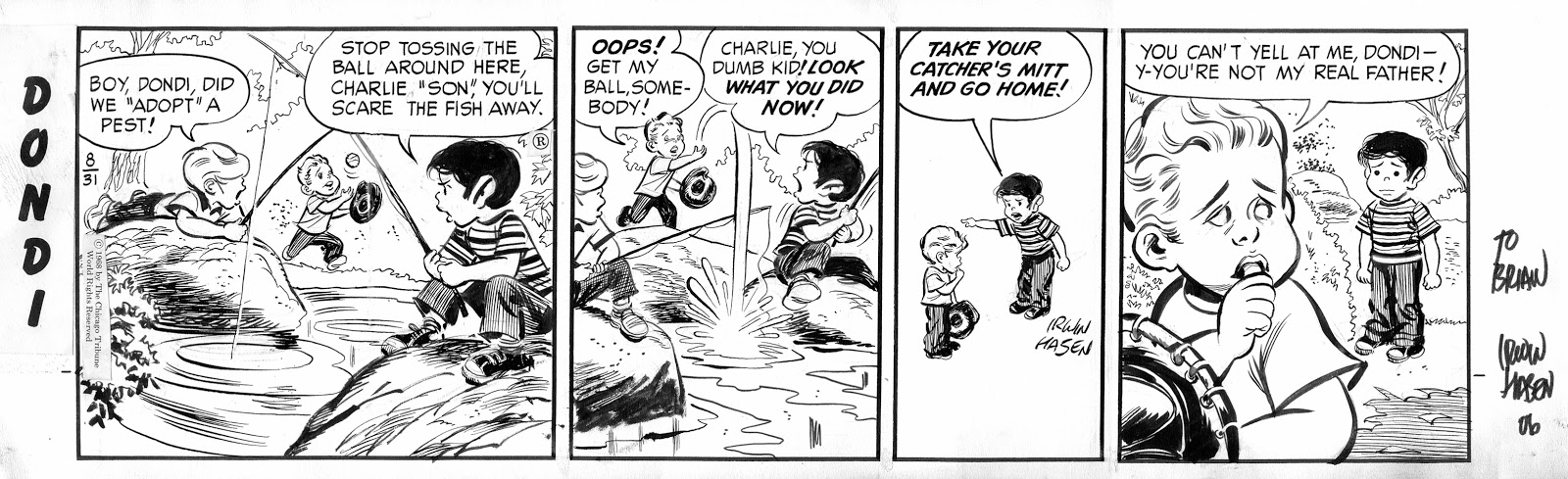 My original "Dondi" strip from 1968 is huge, nearly two feet wide. No contemporary artist I know of works that large, mostly because the shrinking space newspapers devote to comic strips these days doesn't allow for the kind of detail Mr. Hasen drew, as in Panel 1 below.They don't make 'em like that anymore.
EDITED TO ADD: Here's a very good profile of Mr. Hasen the New York Times did in 2011. Recommended reading.
EDITED TO ADD MORE: Mark Evanier posted this trailer for a documentary about Mr. Hasen. I haven't seen the film, but this trailer gives you a good sense of the gentleman and what it was like to talk to him for even a few minutes. I don't think they make characters like him anymore.
AND here is his obit in the New York Times.
February 27, 2015
The Undiscovered Country
Today Leonard Nimoy died. He was 83 and had been ill, so it wasn't a surprise but still a stab in the heart.
I thought about writing about how much his work meant to me--and of course by "his work" I don't mean the hundreds of roles he played over his six-decade career but only one of them. Then I realized I already did it. In 2006, the San Diego Comic-Con celebrated the 40th anniversary of "Star Trek" by inviting essays on the subject for its souvenir book. I wrote one and they printed it.
It's all still true except for the part about me being 45 years old.
The Ages of Man: An Appreciation of “Star Trek”
I am 45 years old: old enough to claim Star Trek: The Original Series (TOS) cred. I was there when Earth’s molten crust cooled, simple molecules linked to form complex proteins, and my family bought its first color television in time for me to feel the electric primary colors of “Star Trek” burn from ember-orange vacuum tubes through my retinas into my brain.
After 40 years, the thematic depth of the McCoy-Spock-Kirk trio has been well plumbed and hardly bears repeating. McCoy is emotion, Spock is reason, and Kirk is the balance between emotion and reason that draws on both to inform decisive action. Id, ego, superego. However, as I age, I’ve been surprised to find I gain new appreciation for these three characters as my understanding of them evolves. Their velour-bloused TOS incarnations haven’t changed since 1969. But I have.
When I was a child and teen, Leonard Nimoy's Spock was It: the apotheosis of alienated intelligence. His tools were logic, quiet confidence, and bone-dry wit. He defeated his enemies with brainpower. His weapons were numbers and words. Yet beneath that cool facade roiled overpowering emotions and superhuman strength barely contained. On the rare occasions Spock lost control, the results were unpredictable and frightening.
Adolescence never had a better metaphor.
Spock was important to me. He valued things I valued—reason, science, knowledge—and wasn’t embarrassed by it. I had a temper as a child; watching Spock struggle to maintain his self-control helped me tame it. He taught me grace under pressure. When a junior high bully twice my size picked me up and threatened to drench me under an overflowing rainspout, I replied with cold Nimoyan indifference, “I would actually prefer it if you didn’t,” and he released me with a laugh and enough respect to never bother me again. Being cool worked.
Spock was about restraint, temperance, placid courage, and the triumph of the intellect. He guided me through many rough passages as I matured, and got me safely to the other side.
Where I was met by James T. Kirk.
It’s always been easy to mock the flamboyant Kirk, yet I believe—in all sincerity and without a trace of condescending sarcasm—that Captain Kirk is one of the great characters of twentieth-century American fiction. Kirk was twentieth-century America, or at least the best of how twentieth-century America saw itself: bold, confident, powerful, ambitious, thoughtful, resourceful, loyal, compassionate. Had a twinkle in his eye. Did all right with the ladies. Always found a way to win. Shatner made him that.
For the past couple of decades, Kirk has gotten a bad rap as a trigger-happy gunslinger. Slander! Not this man who agonized over decisions that sent crewmen to their deaths. Who knew Shakespeare and quoted Masefield. Who once had a Gorn by the throat (felled by a cannon Kirk fashioned from dirt and twigs, and I’d like to see you try it) and showed the impressively advanced trait of mercy.
Spock may have been superhumanly smart and strong but, like an adolescent, he wasn’t comfortable in his own skin. Kirk knew who he was, what he was doing, and why he was doing it. He was a man.
Of course, part of being a man is that you quit looking to fictional role models to show you how to be one. Unlike Spock in my youth, I can’t pinpoint aspects of my adult life consciously patterned after Kirk, unless you count his purposeful stride as he leaves the Enterprise’s chapel headed for the bridge at the end of “Balance of Terror.” Sometimes I walk like that. I like to think I’ve internalized some of his courage and cleverness, but until I actually have to face down a rock-melting Horta or drive a computer mad with illogic, how would I know? Nevertheless, if anyone had asked me between the ages of 20 and 40 to name the best character in the “Star Trek” canon, I would have said Kirk.
Perhaps I still would. But when I watch TOS lately I find myself powerfully drawn to Leonard McCoy and the understated performance of DeForest Kelley. I never cared for Bones when I was younger. He was a few years older than Kirk and a few watts dimmer than Spock. Distrustful of technology and contemptuous of trivial rules. Cranky. Jaded. Jowly. Maybe a little weary.
Maybe I’m beginning to relate.
McCoy trusted the ship to Kirk and Spock while he calmly commanded Sickbay, comfortable in his mastery, as much a man of science in his element as Spock was in his. If you needed someone to brew a telekinesis serum or reinstall a brain, there was no one better in the galaxy. He faced down a scalpel-wielding Khan and, in my favorite McCoy moment, knocked out Kirk and Spock to take their places in an alien torture chamber. McCoy had paid his dues and didn’t have anything to prove to anyone. Despite his occasional bluster, he was probably the most laid-back person on the ship.
Until recently, I might not have recognized the quiet heroism of a mature adult who could be counted on to keep his cool and do the right thing. By now I’ve seen enough of the opposite in the real world to treasure those qualities wherever I find them.
Smart and Stylish
TOS was a sophisticated program for sophisticated viewers, and even before I finish typing this sentence I imagine scoffers pointing to its sometimes laughable effects and props, day-glo sets and costumes, outdated sexism, and overwrought melodramas with ham-handed morals.
Touche.
On the other hand, audiences in the 1960s didn’t need to have everything spelled out for them. They understood the art of allegory in ways that seem to escape modern viewers. TOS charmers like “A Piece of the Action” or “Bread and Circuses” would be impossible in later decades because more modern audiences, blinded by literalism, know for a fact that when we eventually travel the galaxy we will not find strange new worlds populated by Chicago gangsters or twentieth-century Romans.
Guess what: we won’t find pointy-eared Vulcans or blue-skinned Andorians, either. Guess what again: people knew that in the '60s, too.
Nor would modern audiences accept such highly stylized episodes as “The Empath” or “Spectre of the Gun” that deliberately screamed out, “This is a make-believe story filmed on a soundstage for your entertainment!” Today we applaud ourselves for seeing the mirrors and wires that sustain the illusion, not realizing that perhaps the greater skill lies in ignoring them. We’re not holding up our end of the artist-audience bargain.
(A similar erosion of sophistication killed the movie musical, I think. Audiences of the 1930s, '40s and '50s knew as well as we do that overjoyed or heartbroken people don’t actually break into song and dance. They were just able to wrap their minds around it. We apparently cannot, and more’s the pity for us.)
TOS was a smart, stylish program of its time. The fact that many viewers and fans moved on to newer, flashier, darker, or grittier Trek incarnations that abandoned metaphor and humor, and felt compelled to actually explain why everyone in the galaxy spoke English and looked like an L.A. starlet, reflects worse on them than on the original “Star Trek.” If you’d rather watch an hour explaining how Klingons got bumpy foreheads than exploring why a half-black half-white man hates a half-white half-black man, I won’t argue. Everyone’s entitled to their taste and opinion. We can both call ourselves “Star Trek” fans, even if it turns out we don’t have all that much to talk about.
But you may be surprised to discover which Treks grow on you—and with you—in the long run.
I thought about writing about how much his work meant to me--and of course by "his work" I don't mean the hundreds of roles he played over his six-decade career but only one of them. Then I realized I already did it. In 2006, the San Diego Comic-Con celebrated the 40th anniversary of "Star Trek" by inviting essays on the subject for its souvenir book. I wrote one and they printed it.
It's all still true except for the part about me being 45 years old.
The Ages of Man: An Appreciation of “Star Trek”
I am 45 years old: old enough to claim Star Trek: The Original Series (TOS) cred. I was there when Earth’s molten crust cooled, simple molecules linked to form complex proteins, and my family bought its first color television in time for me to feel the electric primary colors of “Star Trek” burn from ember-orange vacuum tubes through my retinas into my brain.
After 40 years, the thematic depth of the McCoy-Spock-Kirk trio has been well plumbed and hardly bears repeating. McCoy is emotion, Spock is reason, and Kirk is the balance between emotion and reason that draws on both to inform decisive action. Id, ego, superego. However, as I age, I’ve been surprised to find I gain new appreciation for these three characters as my understanding of them evolves. Their velour-bloused TOS incarnations haven’t changed since 1969. But I have.
When I was a child and teen, Leonard Nimoy's Spock was It: the apotheosis of alienated intelligence. His tools were logic, quiet confidence, and bone-dry wit. He defeated his enemies with brainpower. His weapons were numbers and words. Yet beneath that cool facade roiled overpowering emotions and superhuman strength barely contained. On the rare occasions Spock lost control, the results were unpredictable and frightening.
Adolescence never had a better metaphor.
Spock was important to me. He valued things I valued—reason, science, knowledge—and wasn’t embarrassed by it. I had a temper as a child; watching Spock struggle to maintain his self-control helped me tame it. He taught me grace under pressure. When a junior high bully twice my size picked me up and threatened to drench me under an overflowing rainspout, I replied with cold Nimoyan indifference, “I would actually prefer it if you didn’t,” and he released me with a laugh and enough respect to never bother me again. Being cool worked.
Spock was about restraint, temperance, placid courage, and the triumph of the intellect. He guided me through many rough passages as I matured, and got me safely to the other side.
Where I was met by James T. Kirk.
It’s always been easy to mock the flamboyant Kirk, yet I believe—in all sincerity and without a trace of condescending sarcasm—that Captain Kirk is one of the great characters of twentieth-century American fiction. Kirk was twentieth-century America, or at least the best of how twentieth-century America saw itself: bold, confident, powerful, ambitious, thoughtful, resourceful, loyal, compassionate. Had a twinkle in his eye. Did all right with the ladies. Always found a way to win. Shatner made him that.
For the past couple of decades, Kirk has gotten a bad rap as a trigger-happy gunslinger. Slander! Not this man who agonized over decisions that sent crewmen to their deaths. Who knew Shakespeare and quoted Masefield. Who once had a Gorn by the throat (felled by a cannon Kirk fashioned from dirt and twigs, and I’d like to see you try it) and showed the impressively advanced trait of mercy.
Spock may have been superhumanly smart and strong but, like an adolescent, he wasn’t comfortable in his own skin. Kirk knew who he was, what he was doing, and why he was doing it. He was a man.
Of course, part of being a man is that you quit looking to fictional role models to show you how to be one. Unlike Spock in my youth, I can’t pinpoint aspects of my adult life consciously patterned after Kirk, unless you count his purposeful stride as he leaves the Enterprise’s chapel headed for the bridge at the end of “Balance of Terror.” Sometimes I walk like that. I like to think I’ve internalized some of his courage and cleverness, but until I actually have to face down a rock-melting Horta or drive a computer mad with illogic, how would I know? Nevertheless, if anyone had asked me between the ages of 20 and 40 to name the best character in the “Star Trek” canon, I would have said Kirk.
Perhaps I still would. But when I watch TOS lately I find myself powerfully drawn to Leonard McCoy and the understated performance of DeForest Kelley. I never cared for Bones when I was younger. He was a few years older than Kirk and a few watts dimmer than Spock. Distrustful of technology and contemptuous of trivial rules. Cranky. Jaded. Jowly. Maybe a little weary.
Maybe I’m beginning to relate.
McCoy trusted the ship to Kirk and Spock while he calmly commanded Sickbay, comfortable in his mastery, as much a man of science in his element as Spock was in his. If you needed someone to brew a telekinesis serum or reinstall a brain, there was no one better in the galaxy. He faced down a scalpel-wielding Khan and, in my favorite McCoy moment, knocked out Kirk and Spock to take their places in an alien torture chamber. McCoy had paid his dues and didn’t have anything to prove to anyone. Despite his occasional bluster, he was probably the most laid-back person on the ship.
Until recently, I might not have recognized the quiet heroism of a mature adult who could be counted on to keep his cool and do the right thing. By now I’ve seen enough of the opposite in the real world to treasure those qualities wherever I find them.
Smart and Stylish
TOS was a sophisticated program for sophisticated viewers, and even before I finish typing this sentence I imagine scoffers pointing to its sometimes laughable effects and props, day-glo sets and costumes, outdated sexism, and overwrought melodramas with ham-handed morals.
Touche.
On the other hand, audiences in the 1960s didn’t need to have everything spelled out for them. They understood the art of allegory in ways that seem to escape modern viewers. TOS charmers like “A Piece of the Action” or “Bread and Circuses” would be impossible in later decades because more modern audiences, blinded by literalism, know for a fact that when we eventually travel the galaxy we will not find strange new worlds populated by Chicago gangsters or twentieth-century Romans.
Guess what: we won’t find pointy-eared Vulcans or blue-skinned Andorians, either. Guess what again: people knew that in the '60s, too.
Nor would modern audiences accept such highly stylized episodes as “The Empath” or “Spectre of the Gun” that deliberately screamed out, “This is a make-believe story filmed on a soundstage for your entertainment!” Today we applaud ourselves for seeing the mirrors and wires that sustain the illusion, not realizing that perhaps the greater skill lies in ignoring them. We’re not holding up our end of the artist-audience bargain.
(A similar erosion of sophistication killed the movie musical, I think. Audiences of the 1930s, '40s and '50s knew as well as we do that overjoyed or heartbroken people don’t actually break into song and dance. They were just able to wrap their minds around it. We apparently cannot, and more’s the pity for us.)
TOS was a smart, stylish program of its time. The fact that many viewers and fans moved on to newer, flashier, darker, or grittier Trek incarnations that abandoned metaphor and humor, and felt compelled to actually explain why everyone in the galaxy spoke English and looked like an L.A. starlet, reflects worse on them than on the original “Star Trek.” If you’d rather watch an hour explaining how Klingons got bumpy foreheads than exploring why a half-black half-white man hates a half-white half-black man, I won’t argue. Everyone’s entitled to their taste and opinion. We can both call ourselves “Star Trek” fans, even if it turns out we don’t have all that much to talk about.
But you may be surprised to discover which Treks grow on you—and with you—in the long run.
February 18, 2015
Dr. Gibbs
Watching TV recently, I saw a face in a commercial that brought my brain to a needle-scratching stop:
"Wait a second, I know her!"
Given the commercial's subject matter, it didn't take me long to figure out how I knew her. Here's the ad:
And here's what she looked like 10 years ago when I drew her in Mom's Cancer.
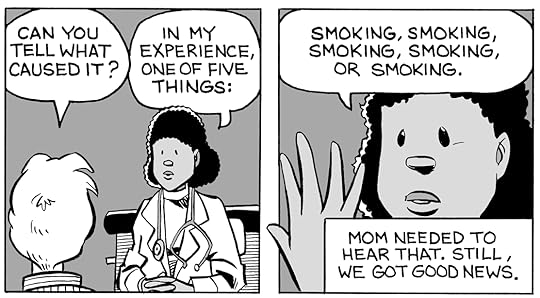
What, you thought I made those people up?
One of my mother's physicians is still out there getting it done. She's a great doc and I think that's terrific.
Weird to just have her pop up on my TV screen, though.
"Wait a second, I know her!"
Given the commercial's subject matter, it didn't take me long to figure out how I knew her. Here's the ad:
And here's what she looked like 10 years ago when I drew her in Mom's Cancer.
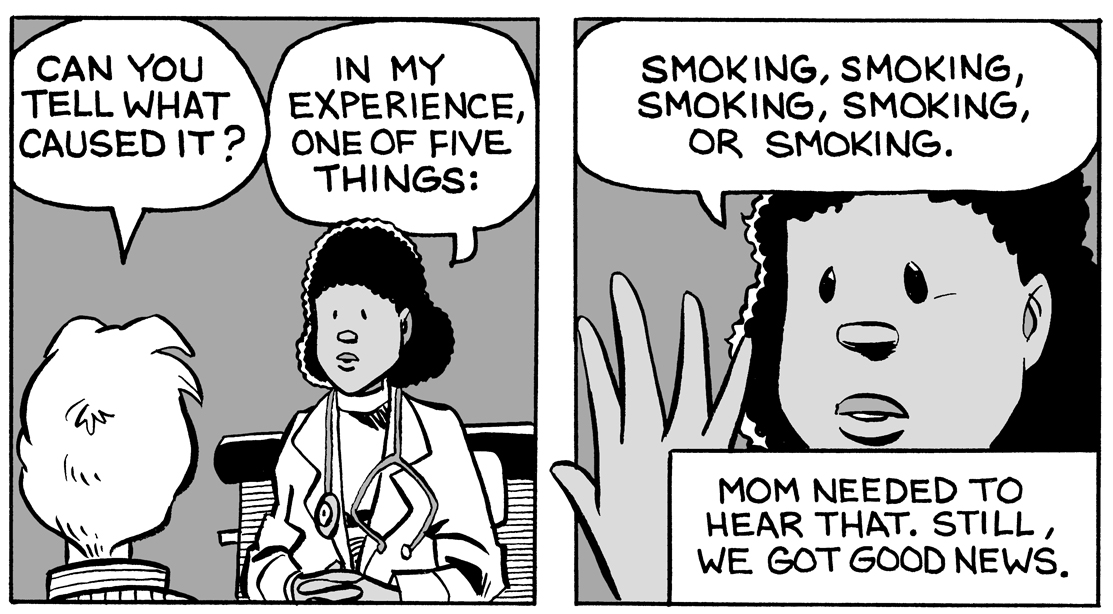
What, you thought I made those people up?
One of my mother's physicians is still out there getting it done. She's a great doc and I think that's terrific.
Weird to just have her pop up on my TV screen, though.
February 8, 2015
Fontastic
I'm spending some time this weekend developing a new hand-lettered font for upcoming comics projects. I'm happy with how it's turning out and wanted to show it off.
I've talked about lettering before, explaining how I hand-lettered all the pages of Mom's Cancer directly on the original art, the way God intended, but learned that it made it very difficult to edit and prepare foreign-language editions (which is a nice problem to have). For Whatever Happened to the World of Tomorrow I sampled letters from Mom's Cancer and used them to build a computer font using a program called Font Creator.
Now, there are websites that'll turn your handwriting into a computer font for free--you just print your letters on a template, upload it to them, and download your font a minute later--and I initially tried one of them. The quality wasn't good enough. A lot goes into making a real font, including how the letters are spaced (kerning, leading) and all work together. I needed more horsepower, and Font Creator had it.
So for the past several years I've used a computer font I created based on my original hand lettering, and it works swell. There are some trade-offs, including a loss of hand-crafted authenticity that I regret, but the benefits are just too great. Editing is a snap; I can change or delete text without having to redraw an entire page. When it comes time for non-English editions, I simply delete all the text (if you know Photoshop, it's on its own layer) and send them wordless files. There's no going back to the old ways for me.
However, traditional comic book lettering, including mine, is all upper-case capital letters. Now I need lower case, partly because some projects I'm working on will be text-heavy and it's hard to read paragraphs of upper-case narrative. IT LOOKS LIKE SOMEBODY'S SHOUTING AT YOU ALL THE TIME! I still wanted a font that looked handcrafted and was legitimately mine, but easier on the eyes.
Meet Brian Comix LC 2015:
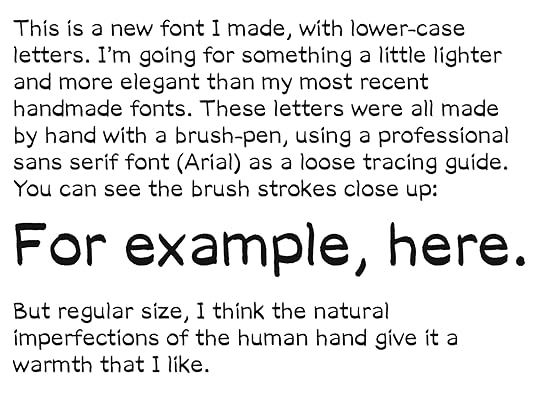
It needs some tweaking but I'm pretty pleased with it. Hope you get to see it in something soon.
I've talked about lettering before, explaining how I hand-lettered all the pages of Mom's Cancer directly on the original art, the way God intended, but learned that it made it very difficult to edit and prepare foreign-language editions (which is a nice problem to have). For Whatever Happened to the World of Tomorrow I sampled letters from Mom's Cancer and used them to build a computer font using a program called Font Creator.
Now, there are websites that'll turn your handwriting into a computer font for free--you just print your letters on a template, upload it to them, and download your font a minute later--and I initially tried one of them. The quality wasn't good enough. A lot goes into making a real font, including how the letters are spaced (kerning, leading) and all work together. I needed more horsepower, and Font Creator had it.
So for the past several years I've used a computer font I created based on my original hand lettering, and it works swell. There are some trade-offs, including a loss of hand-crafted authenticity that I regret, but the benefits are just too great. Editing is a snap; I can change or delete text without having to redraw an entire page. When it comes time for non-English editions, I simply delete all the text (if you know Photoshop, it's on its own layer) and send them wordless files. There's no going back to the old ways for me.
However, traditional comic book lettering, including mine, is all upper-case capital letters. Now I need lower case, partly because some projects I'm working on will be text-heavy and it's hard to read paragraphs of upper-case narrative. IT LOOKS LIKE SOMEBODY'S SHOUTING AT YOU ALL THE TIME! I still wanted a font that looked handcrafted and was legitimately mine, but easier on the eyes.
Meet Brian Comix LC 2015:
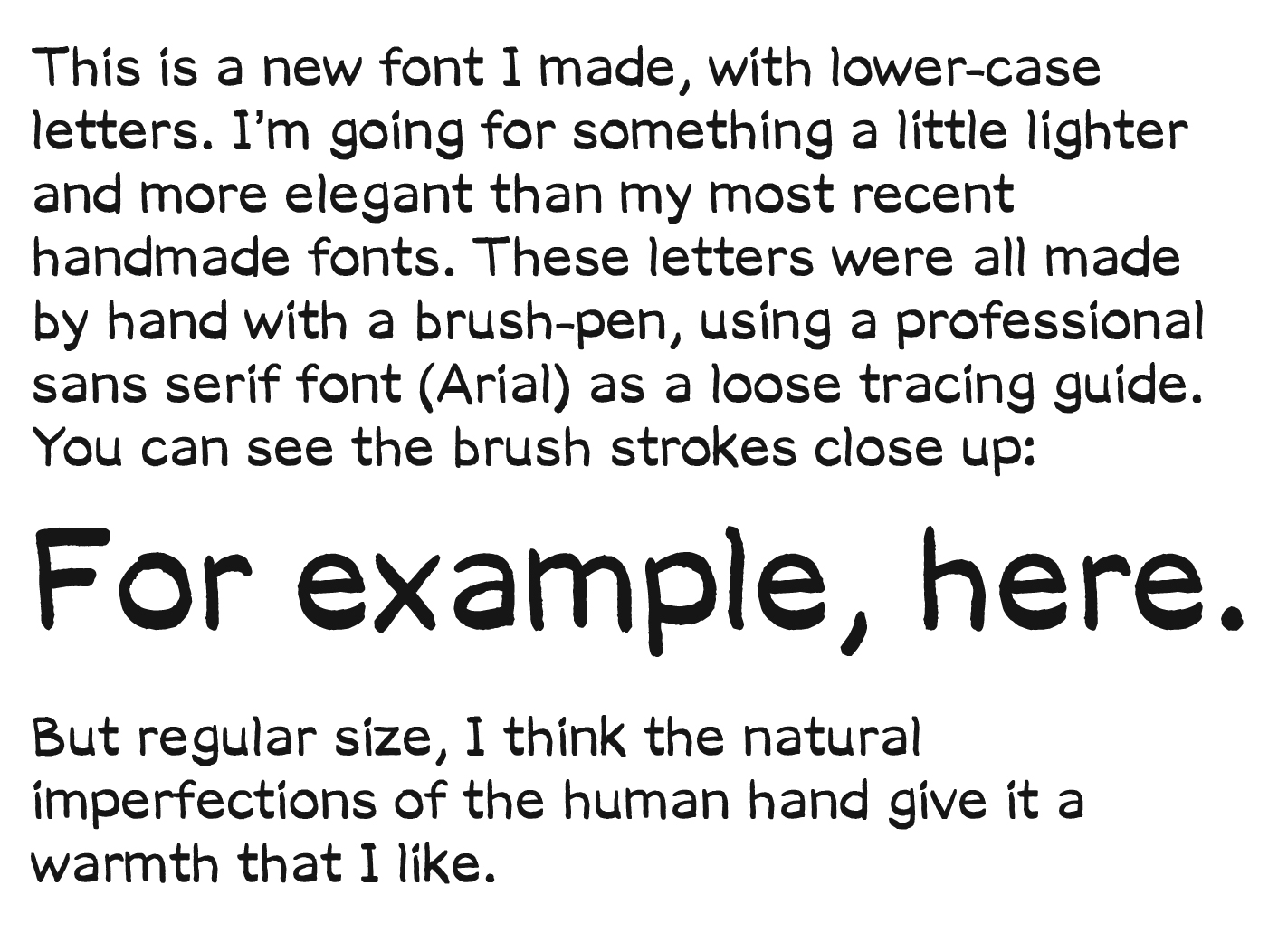
It needs some tweaking but I'm pretty pleased with it. Hope you get to see it in something soon.
February 3, 2015
Film Studies
I recently read a piece online about a young graphic novelist whose book, according to the article, "is being made into a movie." The excited creator talked about the screenwriting process and casting decisions--which stars they imagined playing which roles--and it went on like that for a while until deep in the article, when we learn that the creator's big break had been getting their story optioned.
Oh. Ohhhh. Poor kid.
An option means that you give a movie or TV studio the right to develop a film or show based on your work for some length of time, maybe a couple of years. Ideally they pay you some money for it, but it's not a deal or a commitment. It's just your promise not to sell your idea to anybody else while they think about it. I probably know a dozen writers, cartoonists and graphic novelists who've had their stories optioned (and I hardly know anybody). Fewer than one in a hundred will ever get made.
One friend has had the same project optioned by three different movie studios in succession, with nothing to show for it. Another friend had Will Smith sniffing around his comic because Smith wanted something for one of his kids to star in, until the kid got too old to play the character. An option sounds real neat but, from what I've seen, at a certain level in the business it's kind of routine and usually disappointing.
So going to the press super-excited about your option is a little embarrassing. Understandable--who wouldn't start drafting their Oscars speech?--but embarrassing.
I know a few people whose movies actually got made. Michael Fry, who's an Internet acquaintance, co-created the comic strip "Over the Hedge," which became an animated film from Dreamworks in 2006. Phoebe Gloeckner's "Diary of a Teenage Girl" just debuted to rave reviews at the Sundance festival. And of course Jeff Kinney's "Diary of a Wimpy Kid" has done pretty well. (I guess I also know some of the Schulz Studio people, but "Peanuts" doesn't count.)
Jeff is the exception that proves another rule of getting your stuff made into a movie, which is that creators are often disappointed to discover they have no say in what happens to their creation and are unlikely to become rich and famous. Ninety-nine percent of the time, a studio buys the rights for a relatively modest sum, hires its own writers, and cuts the creator out of the picture. If you want your movie to get made, that's the deal you sign. I'm always surprised by how many creators say they're OK with that. But Jeff is in the 1% who insisted on significant participation in the filmmaking and got it. He's credited as a producer and spends a lot of time hands-on on set. He had the leverage to say "my way or the highway"; not many other people do.
I am not at "a certain level in the business," just a kid with my nose pressed against the glass.
Several years ago an independent movie producer contacted me about optioning Mom's Cancer. He was a real nice guy but had no money to offer, and as we talked I didn't get a feeling he really knew what to do with the story. Also, at the time, Mom's Cancer was getting some press, and Kid Sis had her own circle of independent filmmaking friends in Hollywood whom we thought might be interested. So because I wanted to leave my options (heh!) open and not tie up the rights with no benefit to me, I declined. And that was my only nibble.
The year Whatever Happened to the World of Tomorrow was nominated for some awards, a scout for 20th Century Fox e-mailed and asked to meet with me at the San Diego Comic-Con. Here's one thing you may not know about me: I am the world's worst negotiator. I replied along the lines of, "Geez, I don't see why you'd be interested, it barely has a plot."
Nevertheless, we had our meeting, and the scout was so excited he got me excited. I began to see the movie in my head. I still couldn't imagine how anyone could film my book, but I could envision a movie-about-being-a-movie in the same way WHTTWOT was a comic-about-being-a-comic. Sort of a meta-movie about Space Age history with scenes featuring my Cap Crater character done in the styles of science fiction directors like Fritz Lang, George Pal and Stanley Kubrick. It would be brilliant! In the back of my head, I started working on my Oscars speech.
A couple of weeks later, the scout sent me a brief e-mail. Fox was going to pass because, it turned out, my book barely had a plot.
Who knew?
As I've matured in the comics world, I've learned the importance of keeping a level head. Don't be crushed by the lows, don't get too elated by the highs. Some things that seem like big opportunities aren't, and other things that seem like small potatoes turn into something good. Best just to roll with it, say "yes" to a lot, and see what happens. Still. It hardly ever hurts to dream.
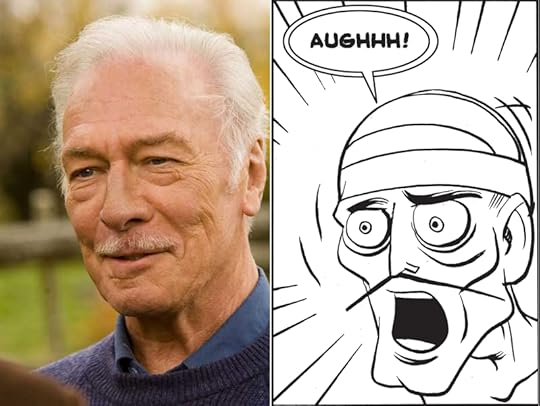 In a world where Christopher Plummer IS Sparky the Inventor, my Oscars speech is ready.
Oh. Ohhhh. Poor kid.
An option means that you give a movie or TV studio the right to develop a film or show based on your work for some length of time, maybe a couple of years. Ideally they pay you some money for it, but it's not a deal or a commitment. It's just your promise not to sell your idea to anybody else while they think about it. I probably know a dozen writers, cartoonists and graphic novelists who've had their stories optioned (and I hardly know anybody). Fewer than one in a hundred will ever get made.
One friend has had the same project optioned by three different movie studios in succession, with nothing to show for it. Another friend had Will Smith sniffing around his comic because Smith wanted something for one of his kids to star in, until the kid got too old to play the character. An option sounds real neat but, from what I've seen, at a certain level in the business it's kind of routine and usually disappointing.
So going to the press super-excited about your option is a little embarrassing. Understandable--who wouldn't start drafting their Oscars speech?--but embarrassing.
I know a few people whose movies actually got made. Michael Fry, who's an Internet acquaintance, co-created the comic strip "Over the Hedge," which became an animated film from Dreamworks in 2006. Phoebe Gloeckner's "Diary of a Teenage Girl" just debuted to rave reviews at the Sundance festival. And of course Jeff Kinney's "Diary of a Wimpy Kid" has done pretty well. (I guess I also know some of the Schulz Studio people, but "Peanuts" doesn't count.)
Jeff is the exception that proves another rule of getting your stuff made into a movie, which is that creators are often disappointed to discover they have no say in what happens to their creation and are unlikely to become rich and famous. Ninety-nine percent of the time, a studio buys the rights for a relatively modest sum, hires its own writers, and cuts the creator out of the picture. If you want your movie to get made, that's the deal you sign. I'm always surprised by how many creators say they're OK with that. But Jeff is in the 1% who insisted on significant participation in the filmmaking and got it. He's credited as a producer and spends a lot of time hands-on on set. He had the leverage to say "my way or the highway"; not many other people do.
I am not at "a certain level in the business," just a kid with my nose pressed against the glass.
Several years ago an independent movie producer contacted me about optioning Mom's Cancer. He was a real nice guy but had no money to offer, and as we talked I didn't get a feeling he really knew what to do with the story. Also, at the time, Mom's Cancer was getting some press, and Kid Sis had her own circle of independent filmmaking friends in Hollywood whom we thought might be interested. So because I wanted to leave my options (heh!) open and not tie up the rights with no benefit to me, I declined. And that was my only nibble.
The year Whatever Happened to the World of Tomorrow was nominated for some awards, a scout for 20th Century Fox e-mailed and asked to meet with me at the San Diego Comic-Con. Here's one thing you may not know about me: I am the world's worst negotiator. I replied along the lines of, "Geez, I don't see why you'd be interested, it barely has a plot."
Nevertheless, we had our meeting, and the scout was so excited he got me excited. I began to see the movie in my head. I still couldn't imagine how anyone could film my book, but I could envision a movie-about-being-a-movie in the same way WHTTWOT was a comic-about-being-a-comic. Sort of a meta-movie about Space Age history with scenes featuring my Cap Crater character done in the styles of science fiction directors like Fritz Lang, George Pal and Stanley Kubrick. It would be brilliant! In the back of my head, I started working on my Oscars speech.
A couple of weeks later, the scout sent me a brief e-mail. Fox was going to pass because, it turned out, my book barely had a plot.
Who knew?
As I've matured in the comics world, I've learned the importance of keeping a level head. Don't be crushed by the lows, don't get too elated by the highs. Some things that seem like big opportunities aren't, and other things that seem like small potatoes turn into something good. Best just to roll with it, say "yes" to a lot, and see what happens. Still. It hardly ever hurts to dream.
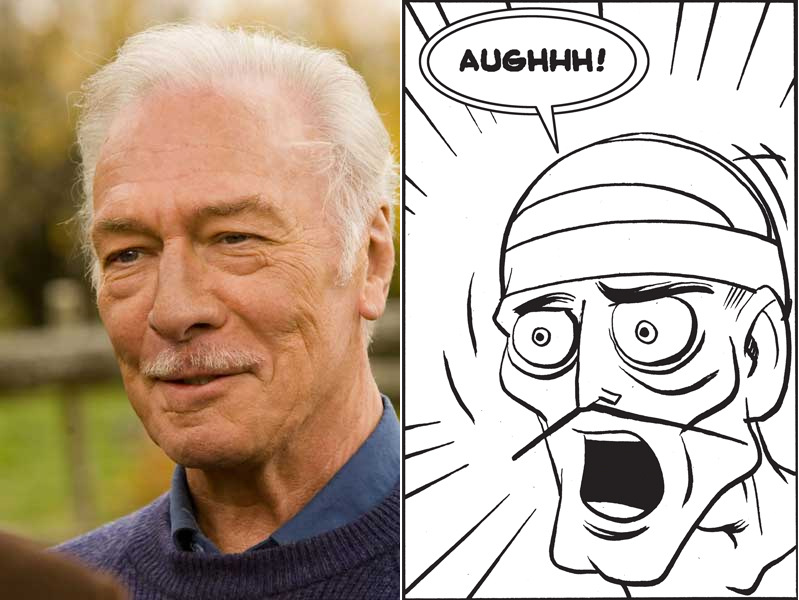 In a world where Christopher Plummer IS Sparky the Inventor, my Oscars speech is ready.
January 17, 2015
LumaCon I

I had a swell time today as a guest of the first annual LumaCon held in Petaluma, Calif. (hence the "luma"), a comics convention organized by high school librarians aimed at kids and families. The idea was to sit local kids side by side with comics pros to get a look at the art, craft and business of storytelling.
When one of the organizers contacted me last October, I thought it sounded like a cute idea and signed on. Honestly, I didn't expect much, and wouldn't have been shocked if the whole thing had fizzled out. As time passed I saw the guest list grow; LumaCon got commitments from pretty much everybody north of San Francisco who'd ever picked up an inkpen. I was impressed. In the past couple of weeks the press got wind, and every conversation I had with anybody involved in local comics (which admittedly wasn't a lot) touched on it. I still didn't know quite what to make of it, but I was beginning to think it might be big.
What it was was charming, and the most positive experience I've had at a comic con in a long time. Small, simple, low-key, unpretentious. One old comics hand told me it reminded him of the San Diego Comic-Con when it started in the '70s. The whole thing fit into one large round room at a fairgrounds, with a raised platform for panels and speakers, an Artists' Alley, a hands-on craft zone, LARPing (live-action role playing) outdoors, and a bake sale.
I've never been to a convention with a bake sale before.
No idea how many people came but the sign on the wall said the room held 907, and it was full. I did a morning panel titled "Doing What You Love: Artists' Stories" with Paige Braddock (Schulz Studio, Jane's World, Stinky Cecil) and Michael Stribling (art director for LeapFrog games and toys). The sound system fritzed but we did fine passing around one working mic.
Then I manned a table for a while. I have nothing to sell, but I brought my books and pages of my original artwork for people to look at, and had terrific conversations with probably a dozen or more kids (and their sometimes befuddled parents and grandparents) about my work and theirs. I saw pages of comics by a 10-year-old boy that astonished me with their Chris-Ware-like sophistication and met a 14-year-old girl whose Photoshop skills crush mine. I'm on the tail end of a bad cold so my voice sounded like a saw blade on a chalkboard before I lost it completely, but nobody minded.
My daughters, who are convention tabling veterans of their own, noticed the same thing I did: people approached with genuine interest, in contrast to the thousand-yard stare you typically see. They really wanted to talk about comics! A few of the kids seemed thrilled to realize they weren't freaks or weirdos. Some of their parents and grandparents seemed relieved as well. ("Oh, so this is a real thing that grown-ups actually get paid to do?")
I had a few minutes with comics-related friends, including Stephan Pastis (Pearls Before Swine), Lex Fajardo (Kid Beowulf), Jason Whiton (Spyvibe.com), Justin Thompson (Mythtickle), Art Roche (Schulz Studio), Jessica Ruskin (Schulz Museum), and Paige and her wife Evelyn. Some personal friends showed as well (Marion and Susan!). Also, as I relate in a photo caption below, I became reacquainted with someone I haven't seen in about 35 years, which was a highlight of the day for me.
I can't speak for attendees--their experience may have been very different--but from my perspective LumaCon hit the sweet spot it was aiming for. I've never been to a con like it. The room was small but there was plenty to do. The vibe was totally positive. These small-town kids got together to put on a show in the barn, and darned if it wasn't a fine one.
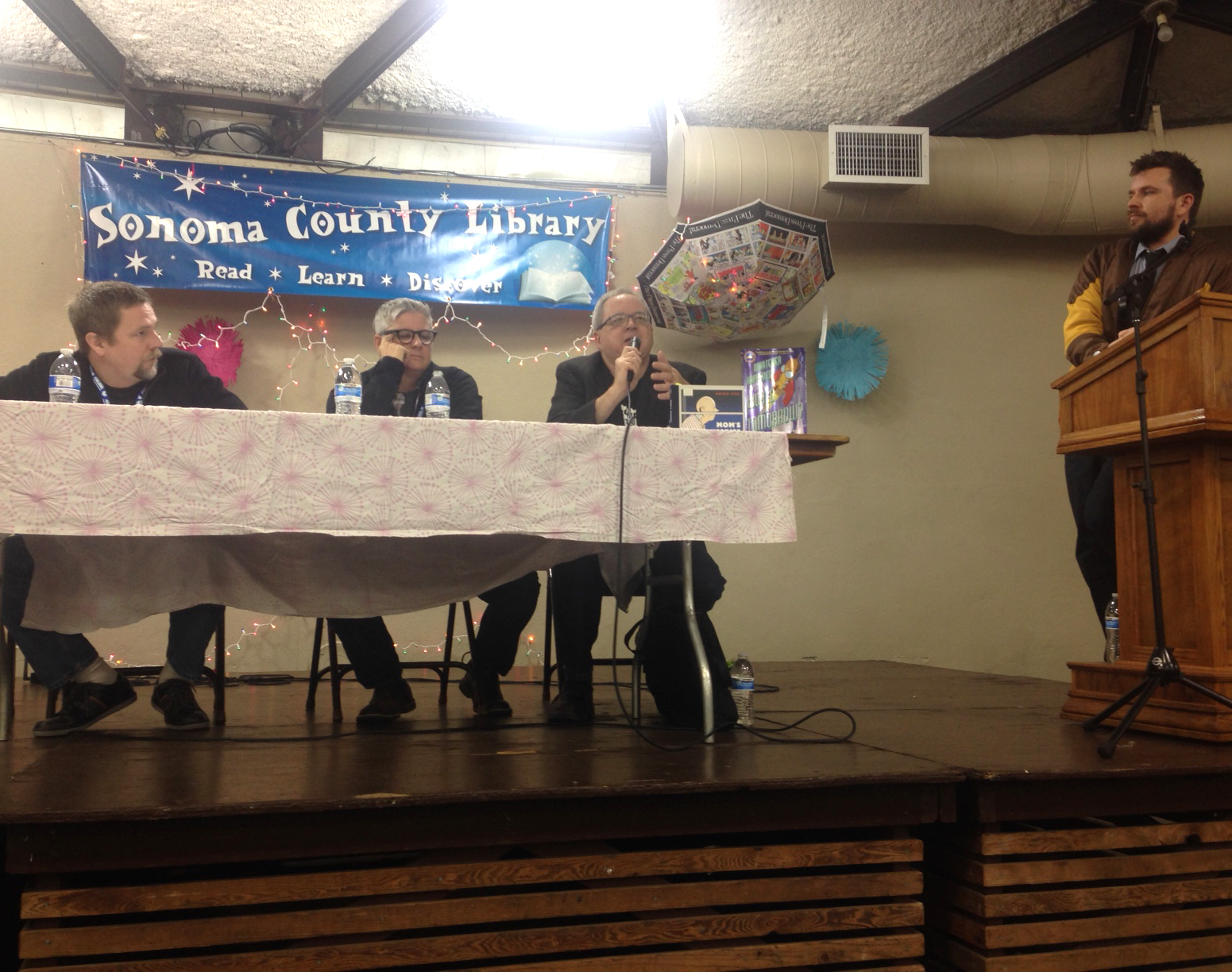 A panel with (L to R) Michael Stribling, Paige Braddock, me, and moderator Nathan Libecap, a high school librarian and one of the con organizers. As we began, Paige leaned over and whispered, "We're all wearing black." I replied, "That's because we're artists."
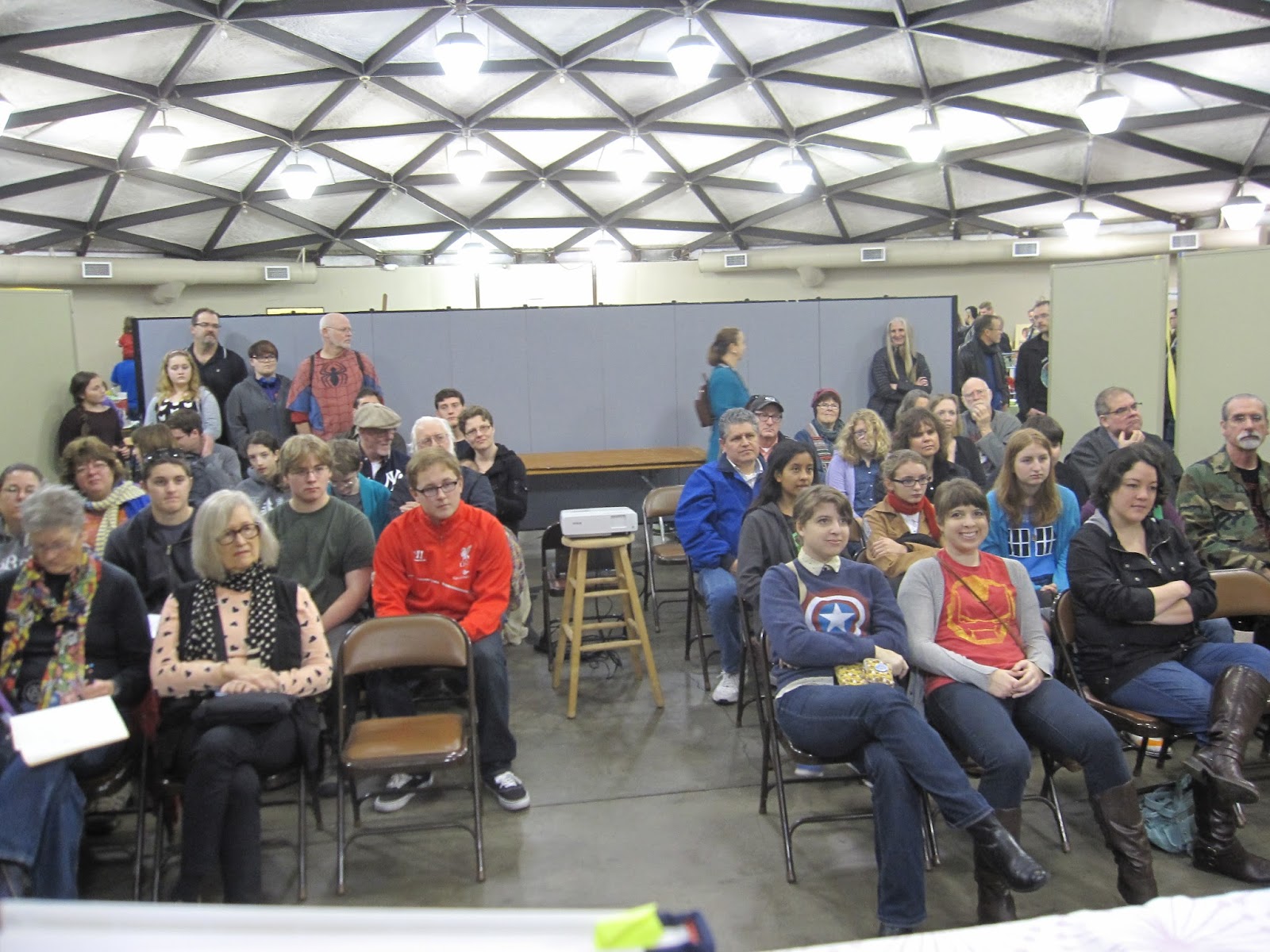 A view of the panel audience area from the stage. That's my daughters Laura and Robin, and their friend Caitlin, at lower right. The sides of this area were open so that many more people stood off to the left and right. It doesn't look like a lot of folks, and frankly it wasn't, but I've done panels at San Diego Comic-Con that drew fewer.
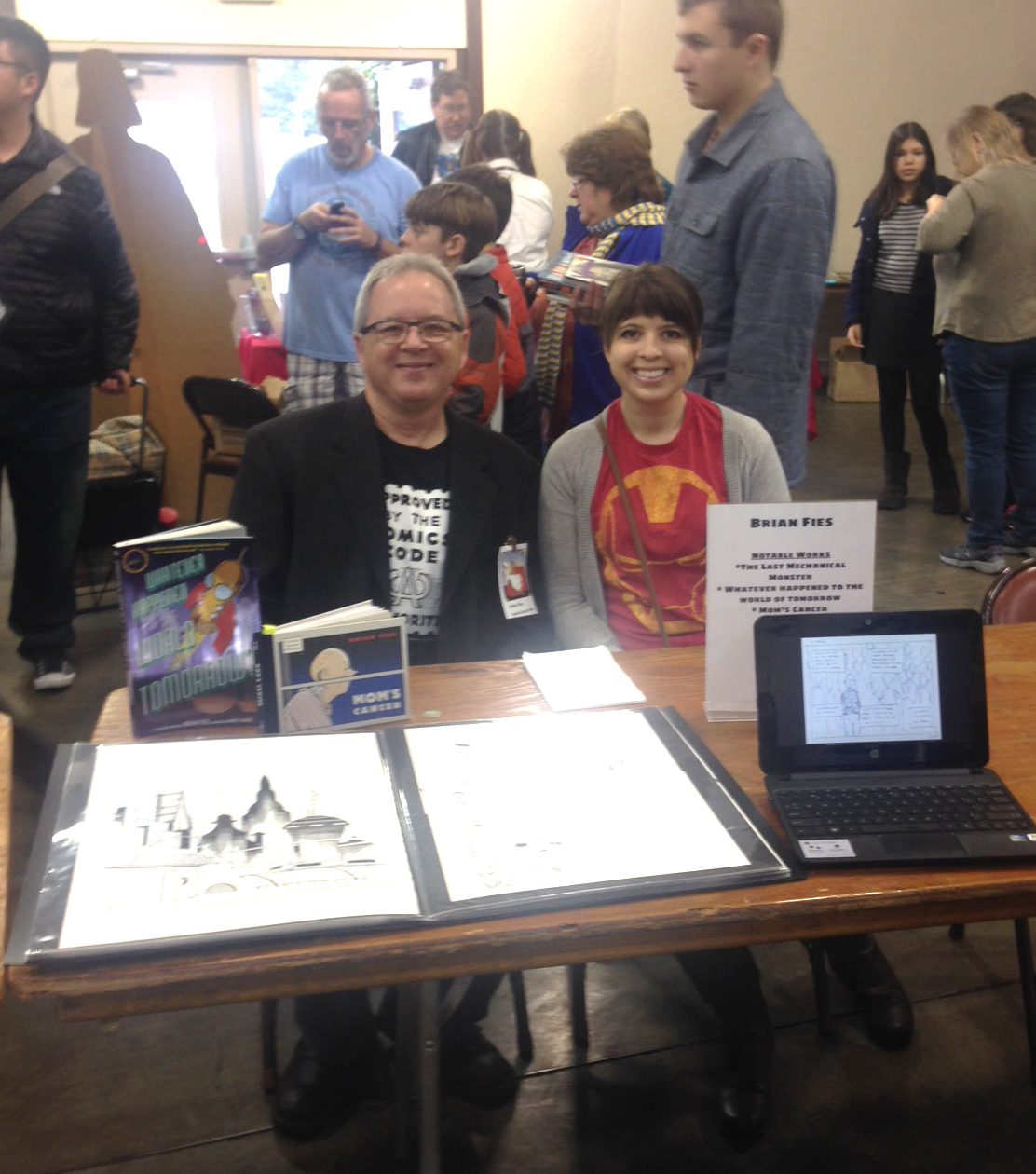 Personing my half-table with my daughter Robin (photo by Laura).
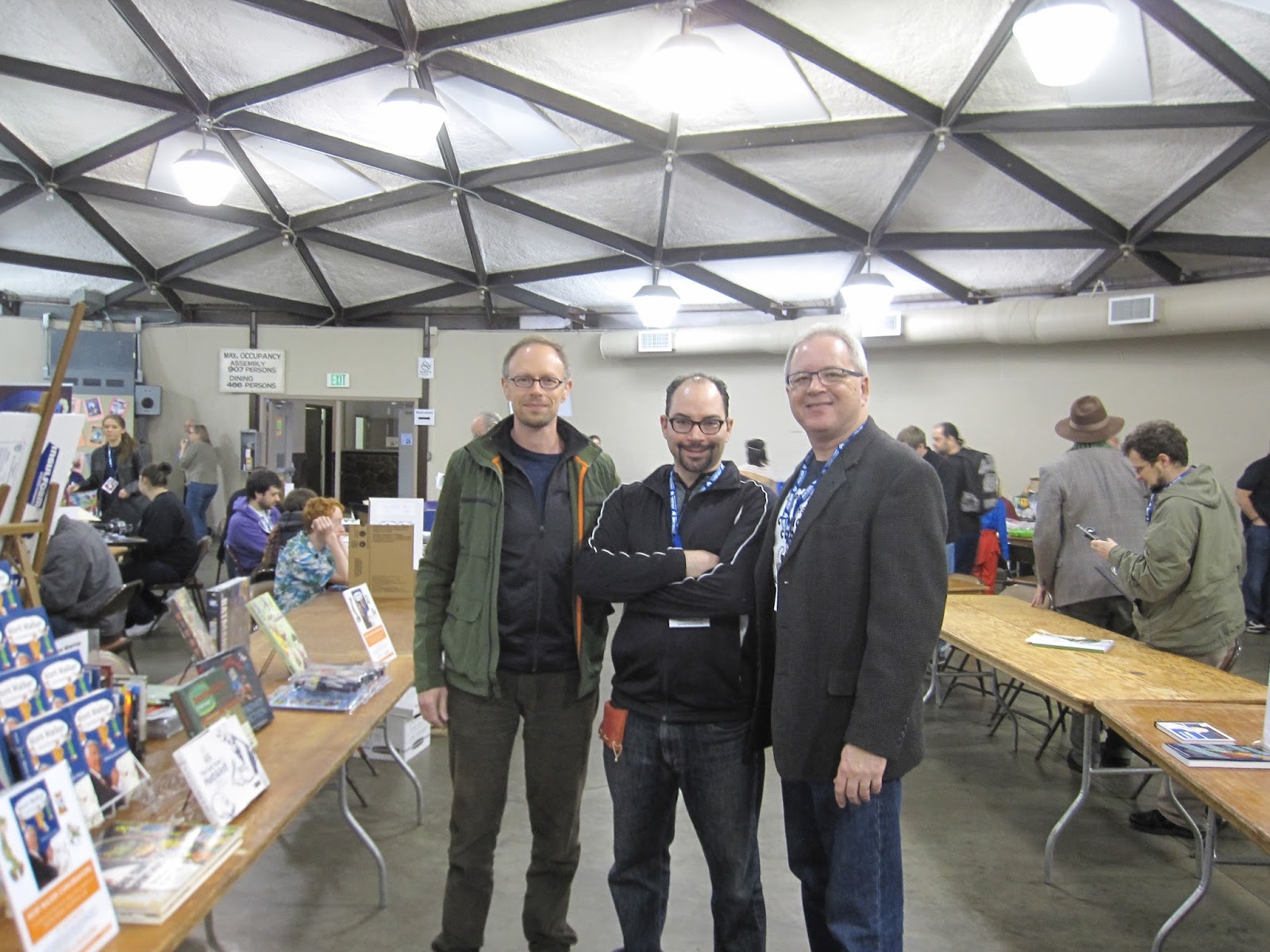 In Artists' Alley with Jason Whiton and Lex Fajardo (still early, not everybody had set up yet).
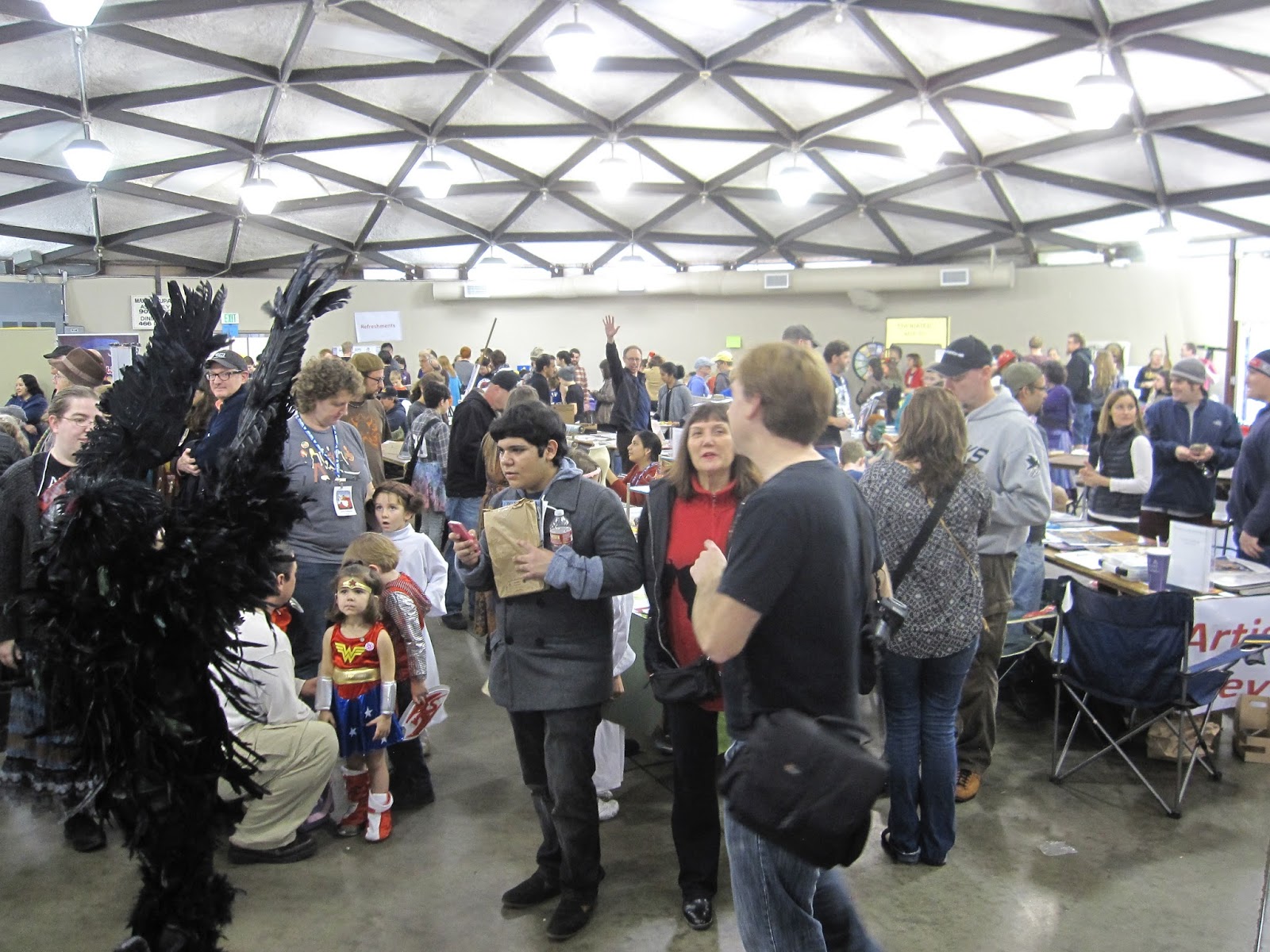 A good overview of the large round room, with some sort of winged creature enchanting a Wonder Girl at left (that's Jason Whiton photobombing me at dead center, and I just noticed Art Roche peeking between the creature's wings).
 The convention floor included a craft area where kids could make their own art and comics. The panel stage is behind the partitions to the right.
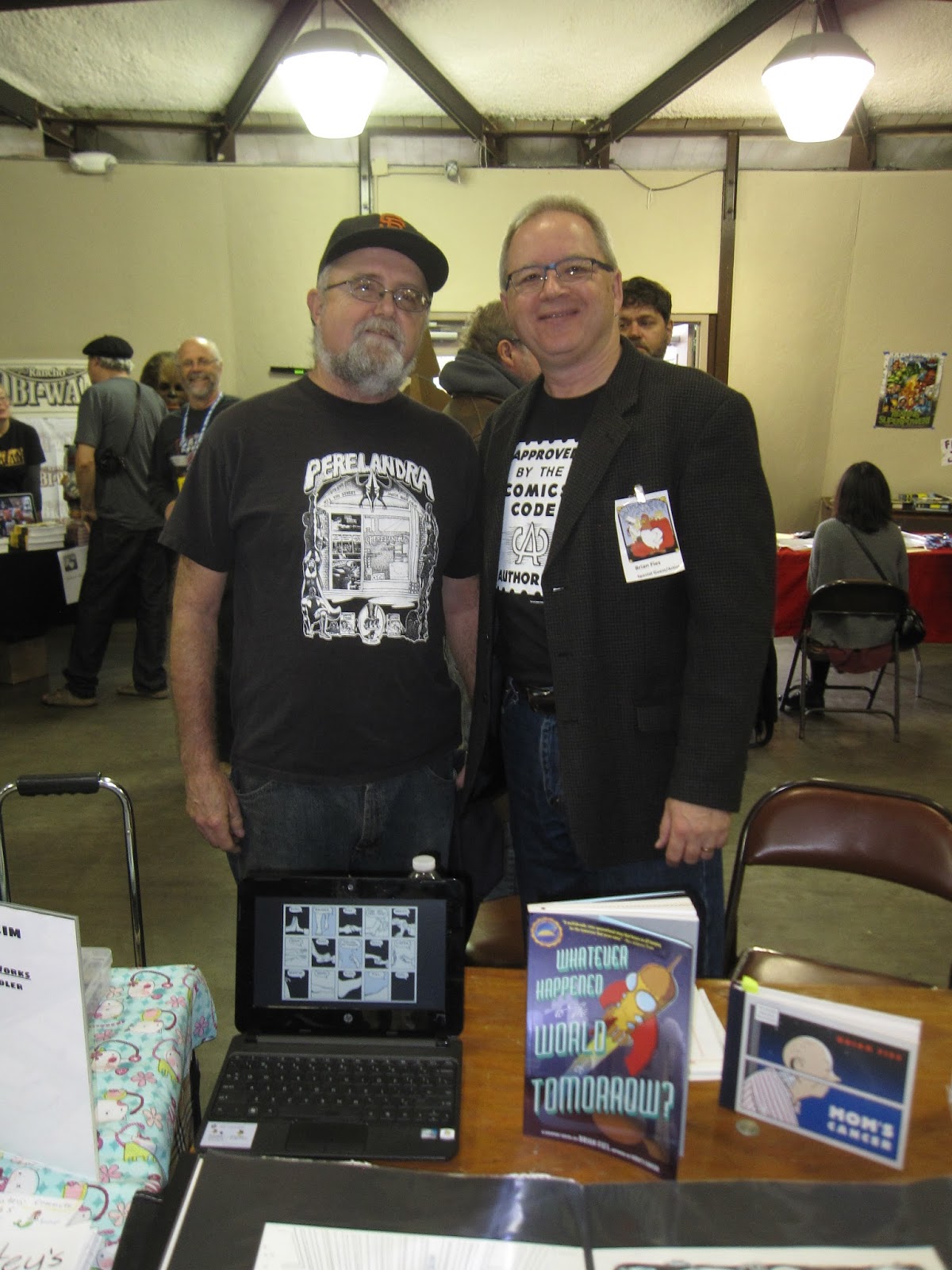 This is Brian Crist. When I was 13 years old, he opened a comic book store in what was then the seedy end of downtown. Many Saturdays I pedaled my bike three or four miles, bought a sandwich at a downtown deli, and went to his shop to browse through his stacks, ogle the original comic art on the wall, and buy new and back issues of "The Avengers." His store was a welcoming oasis to a kid who loved comics and didn't know anybody else who did, and I was a regular customer until I left for college--about the time, I believe, that he was priced out of his rapidly gentrifying neighborhood. A few months ago we reconnected via a Facebook group dedicated to local history, when somebody in the group asked if anyone remembered his shop and I replied with pretty much what I just wrote. Brian saw that post and responded. Today we met for the first time in 35 or so years. I don't think he remembers "the Avengers kid" but he made a big difference in my life and it meant a lot to me to tell him so. Sometimes life gives you a chance to get it right.
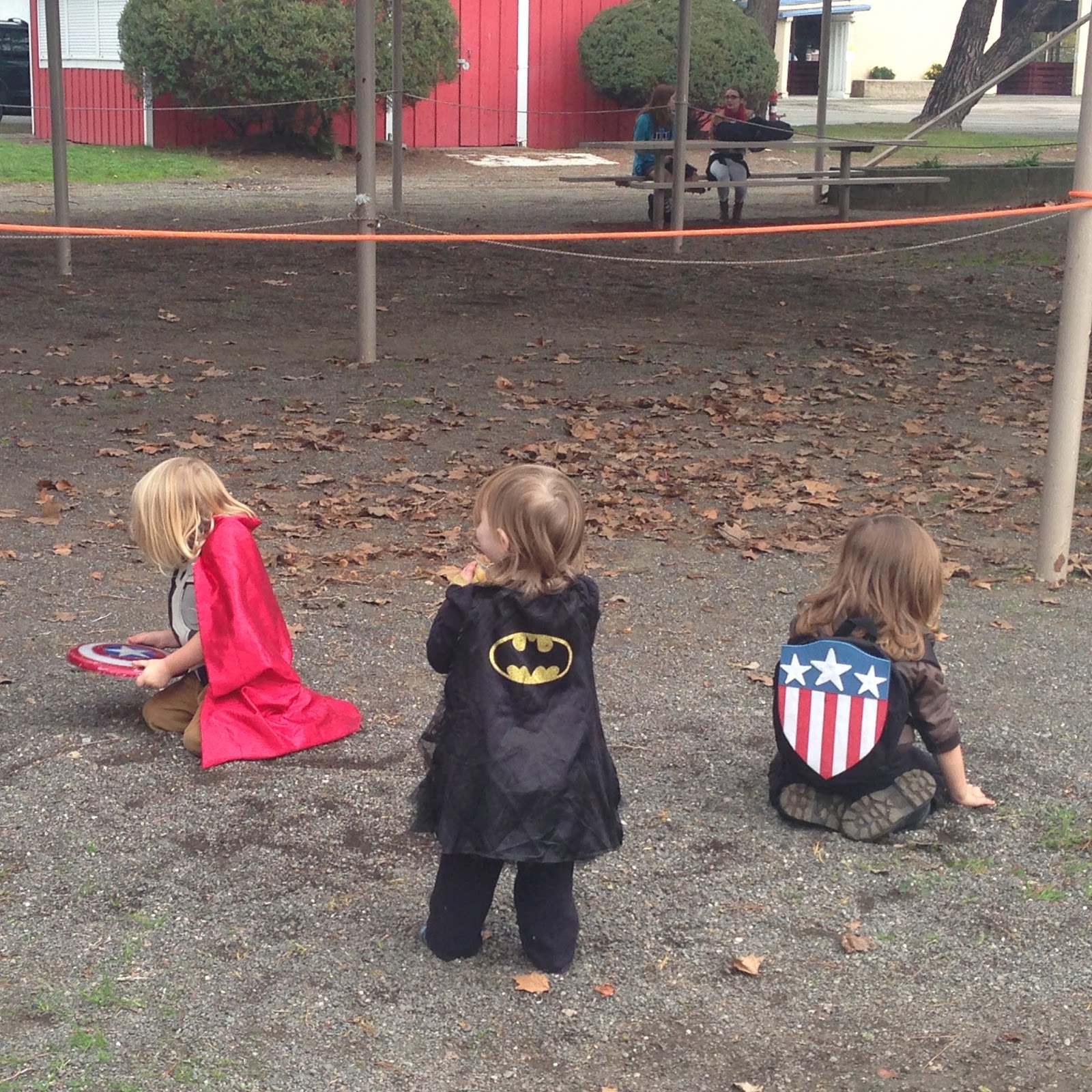 What it's all about (photo by Robin).
Edited to Add: We made the local paper Sunday morning. It's a good article even though (or because) I'm not in it. One correction: Brent Anderson (Astro City) was scheduled to appear but was sick and couldn't make it. They've got some good photos, too.
December 29, 2014
The Perils of Charlie
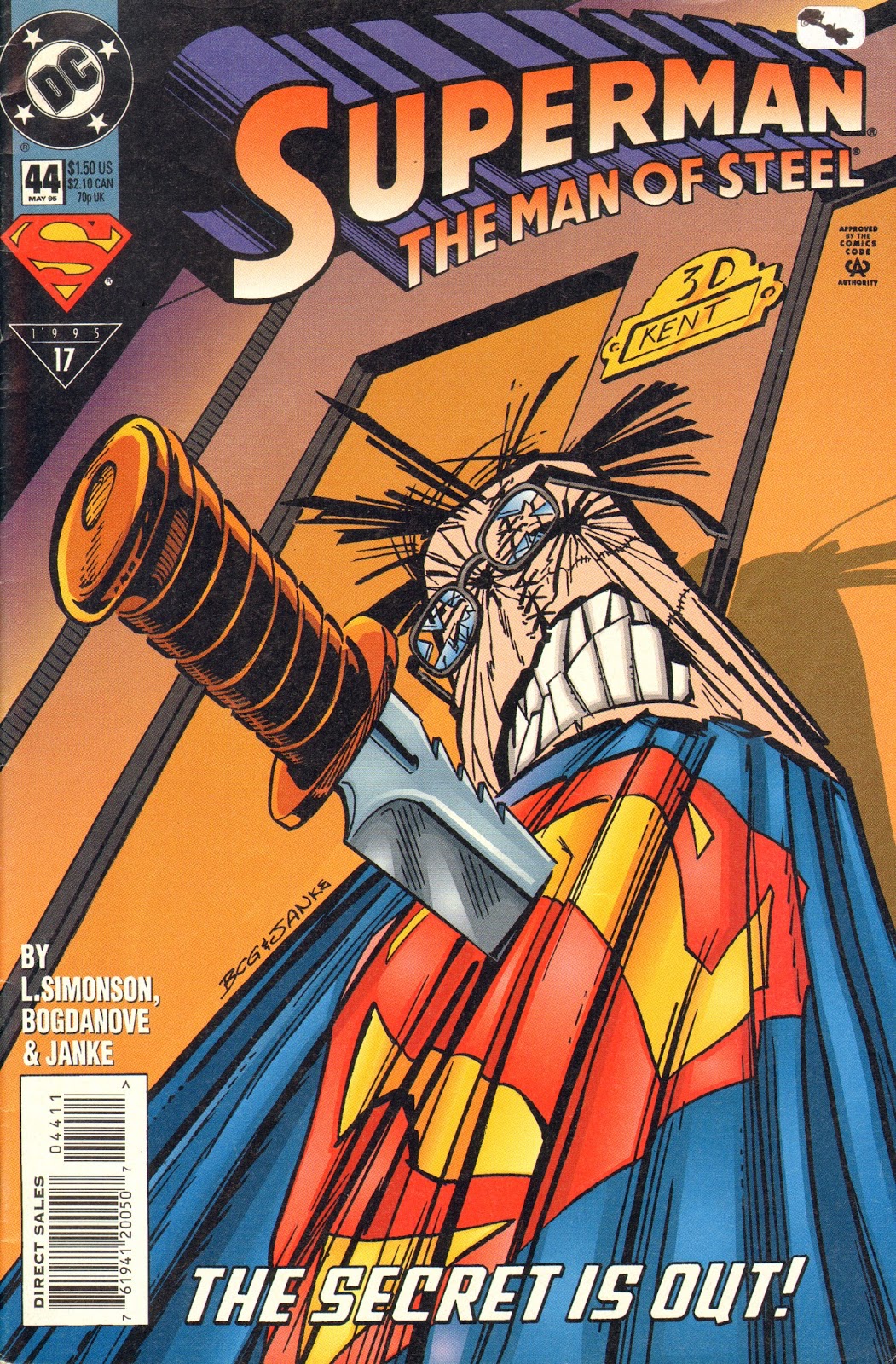
Even being one of the most rational, least superstitious people I know, once in a while I find a coincidence so improbable it brings me up short. The latest involves the comic book above: Superman The Man of Steel #44, cover date May 1995.
Karen and I were trolling through an antiques shop on Sunday when I came across a stack of comic books with that issue sitting atop it. Now, you might think that I, being a comics and cartooning kinda guy, would be all over old comic books. Not at all. First, 1995 isn't old. Also, I already have all the comic books I want, and haven't had much interest in mainstream superhero comics in 25 years. I keep up with what's going on through the comics press (yes, there's a comics press), but actually thumbing through a Superman comic book? Haven't done it in years.
But something about that cover grabbed me, and after circling around the vendor's stall I came back to it, picked it up, and opened it. My loud guffaw echoed through the large shop.
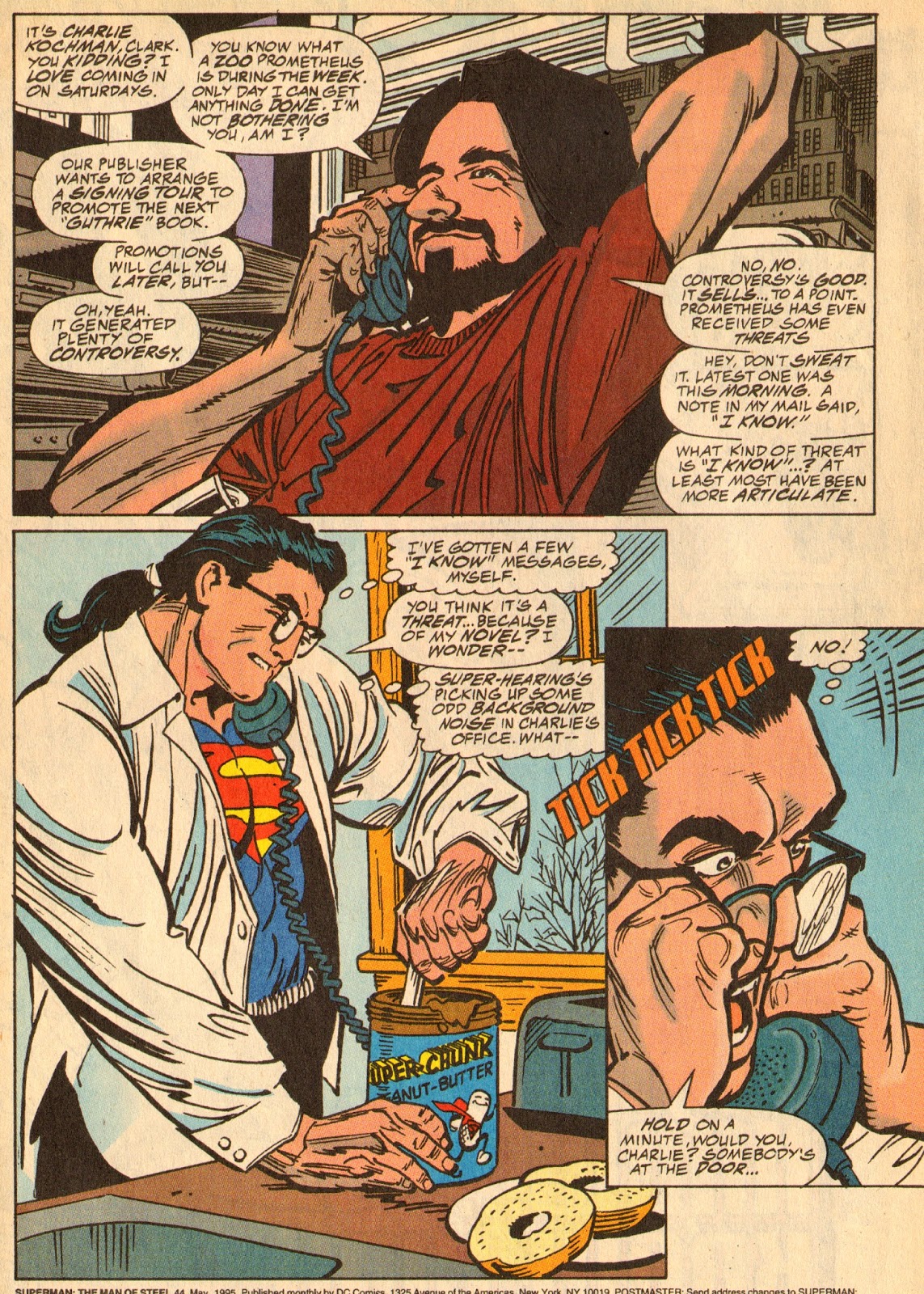
I could have randomly picked up any one of a million comic books and not found someone I know, and whose caricature I instantly recognized, on Page 1.

Son of a gun.
Before Charlie Kochman was my book editor and friend, he worked for MAD Magazine and DC Comics, where Superman writer Louise Simonson and artist Jon Bogdanove thought enough of him to put him in their book. Not just for a one-off cameo, either! Superman took four pages to save Charlie from a bomb planted in his office (click any of these images to see them larger).
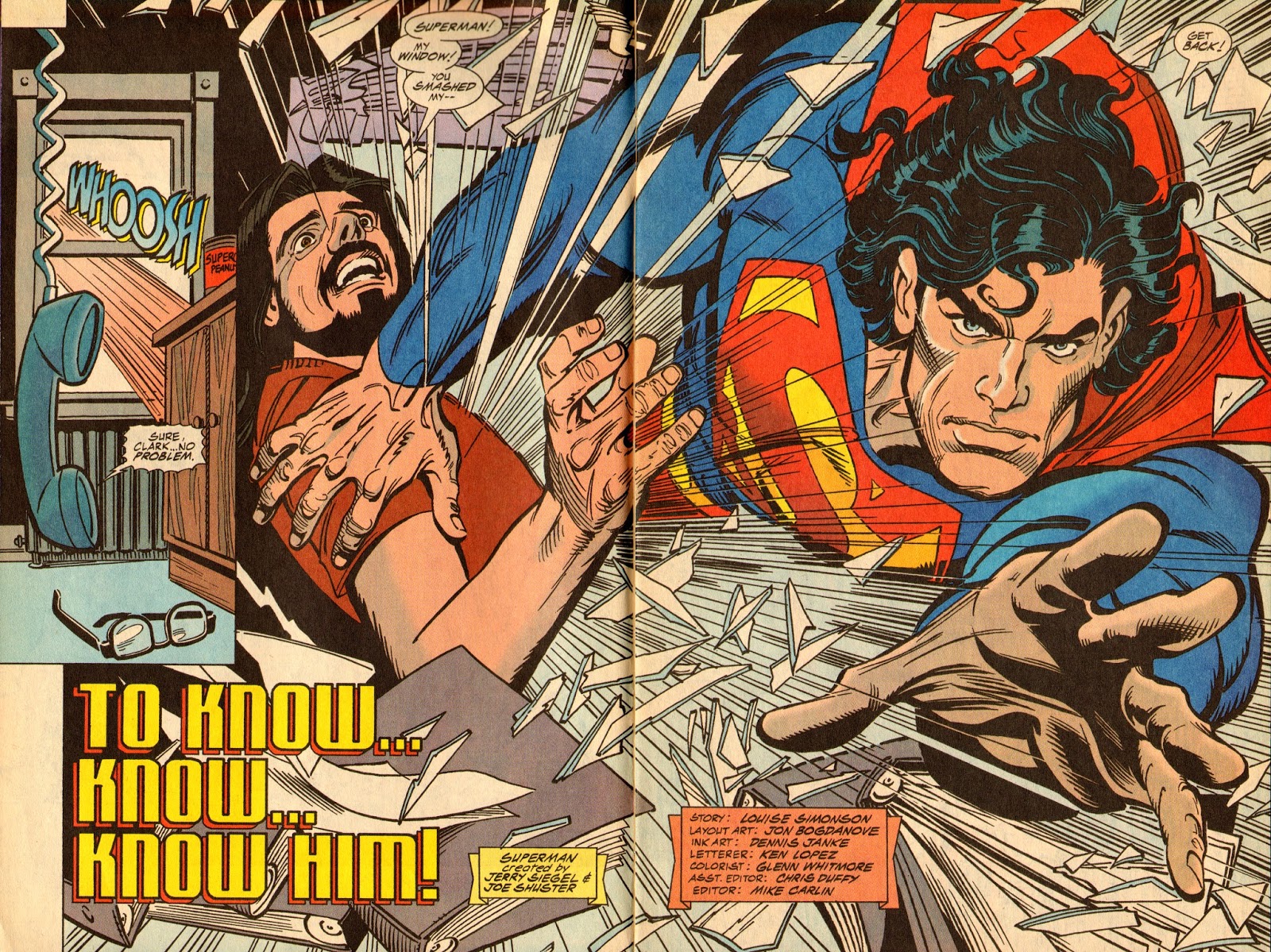
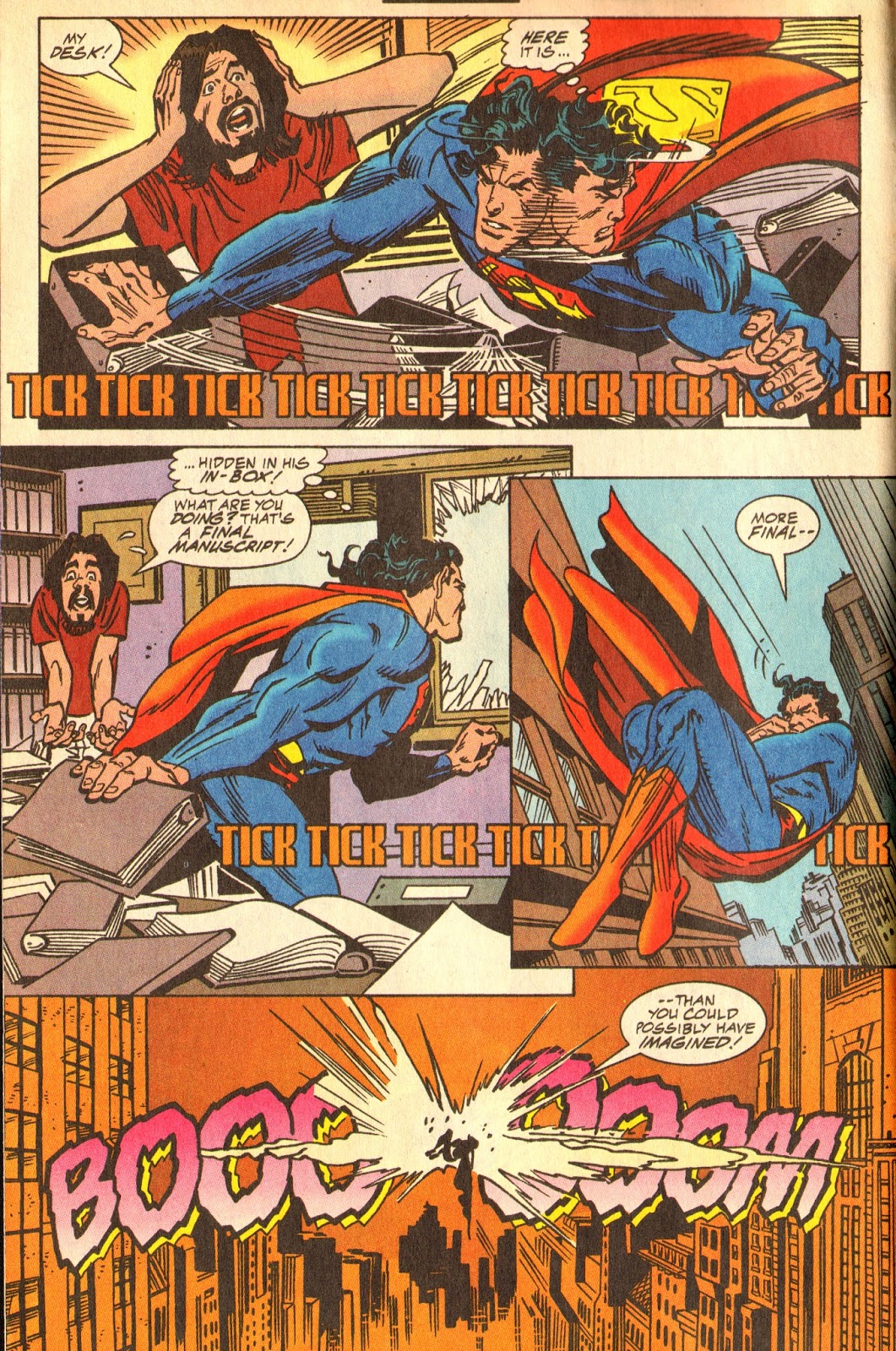
Let's break it down. In 1995, a friend of Charlie's puts him in a comic book that nearly 20 years later is sitting on top of a pile that I happen to notice for no particular reason and randomly open to the page he's on.
I can't . . . I don't even . . . I mean, what are the ODDS?
Not that this sort of thing is unusual for Charlie. He's got a lot of friends in comics who seem to take twisted glee in torturing him. I don't have a compendium of examples--maybe he does--but a favorite I have handy is the graphic novel Kingdom Come, a "what if" alternative future story featuring Superman, Batman and the Justice League, written by Mark Waid and beautifully rendered by Alex Ross.
We first meet Charlie aboard a tram being threatened by a supervillain:
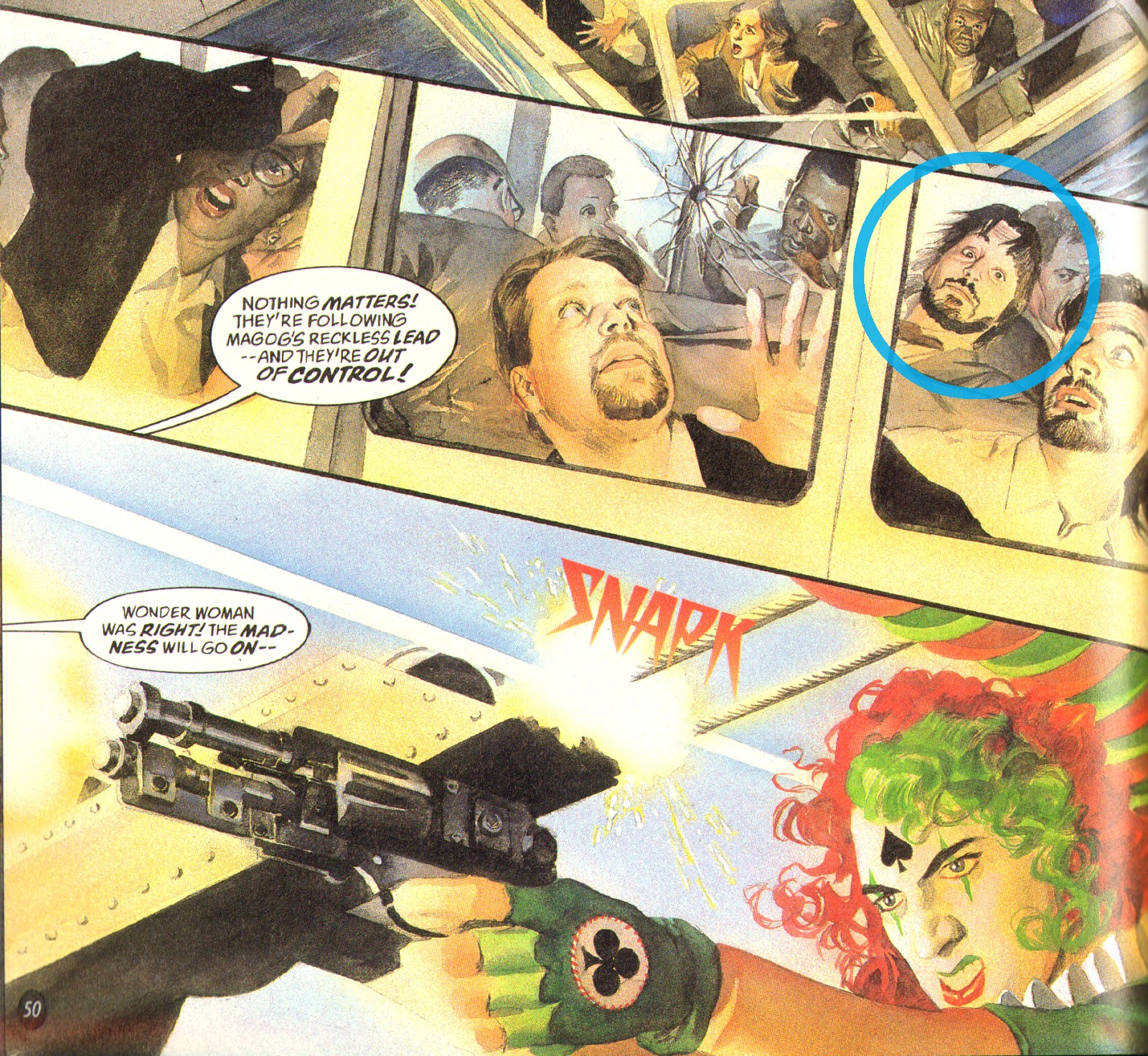 Circled in blue, with a panicky look that I've also seen on his face near deadline.
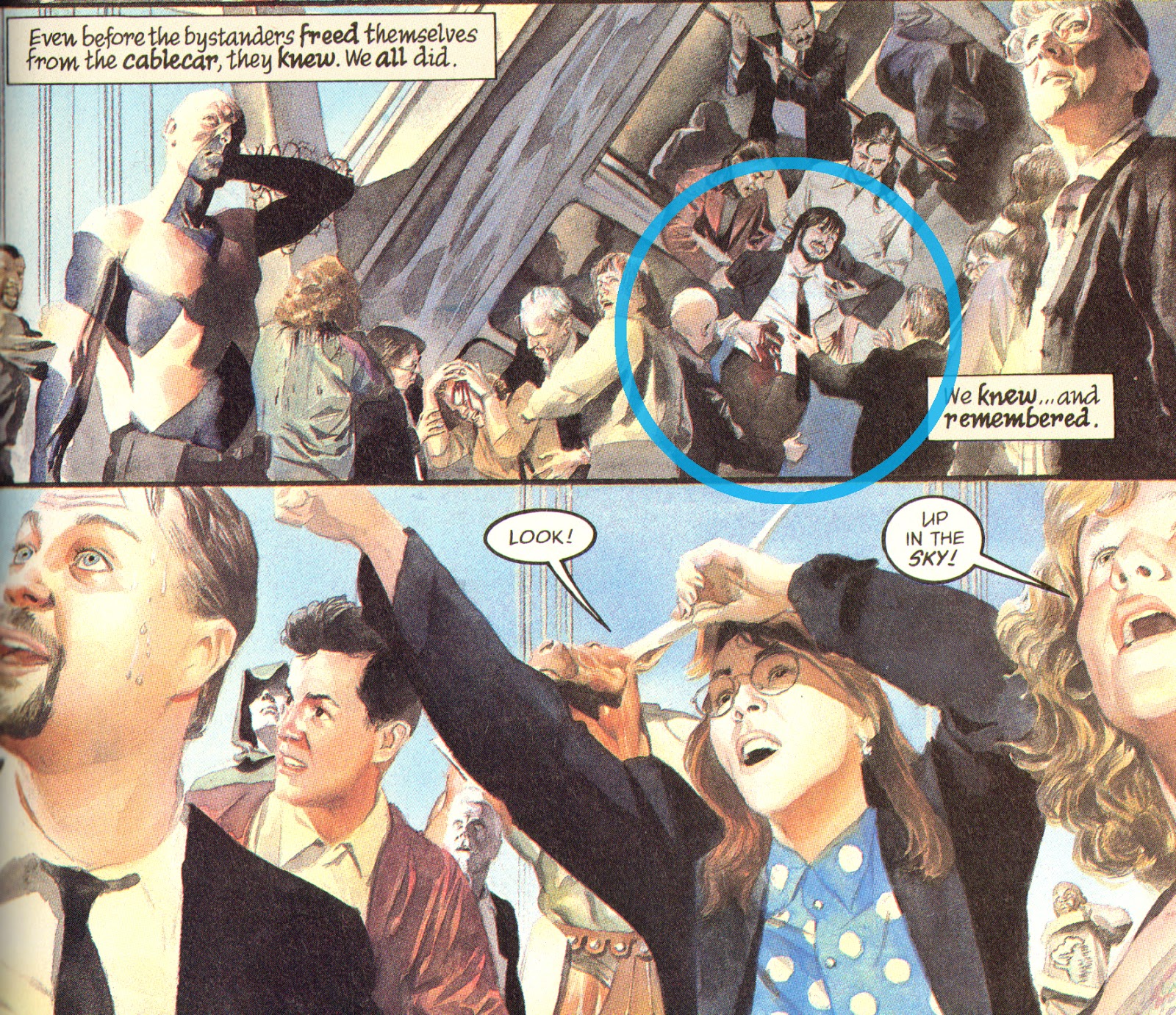
A couple of pages later, we see Charlie's not doing too well, having been gut-shot in the crossfire:
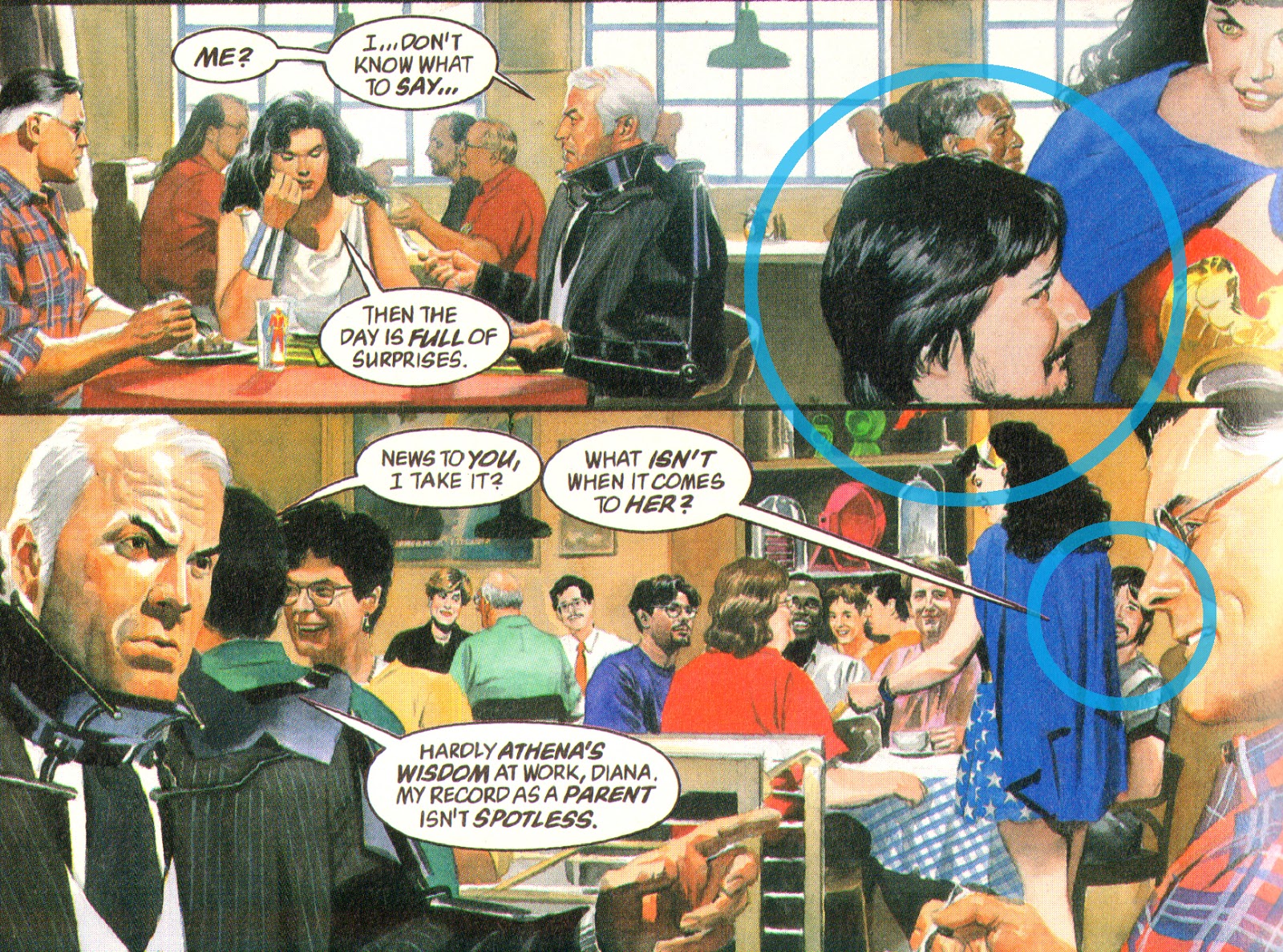
However, by the end of the story he's made a remarkable recovery, sitting in a superhero-themed diner next to a table where an aged Bruce Wayne, Clark Kent, and Diana Prince are enjoying lunch:
Although I'd never seen that issue of Superman, I knew some of Charlie's literary legacy when I did Whatever Happened to the World of Tomorrow, and I wanted to add to it. Mine was not the best-drawn doom Charlie had ever faced, but I like to think it was the most original.
I fed him to a giant radioactive prairie dog.
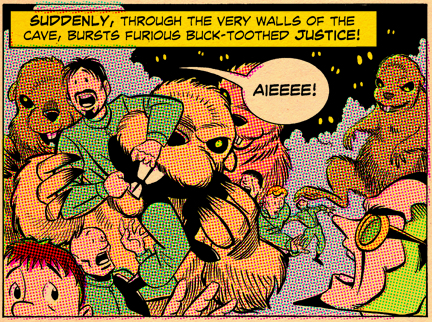 BTW, I still think "furious buck-toothed justice" is one of the best things I ever wrote.
Bear in mind, that's how I treat people I like.
Some days you wake up, get dressed, eat breakfast, and go out to browse through an antiques store never suspecting that you'll run into a good friend 3000 miles and 20 years from home . . . AND find out he's a close personal friend of Superman's, which enormously increases my ranking in the "Six Degrees of Separation" game. I appreciate it, pal, and look forward to tormenting you again in the future.
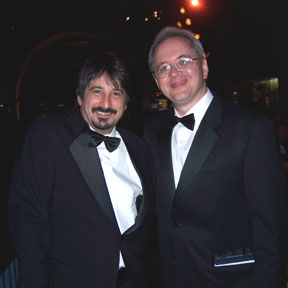 This picture's several years old but we both look so sharp and handsome I had to use it.
Brian Fies's Blog

- Brian Fies's profile
- 64 followers
Brian Fies isn't a Goodreads Author
(yet),
but they
do have a blog,
so here are some recent posts imported from
their feed.

