Kelsey Timmerman's Blog, page 43
April 16, 2012
Where Am I Wearing 2nd Edition is out !
The Where Am I Wearing? 2nd edition is out! Now with 38.4% more words! 
It was a pretty major update. All of the old material is still there, but there are also about 25,000 new words.
Here’s where to buy Where Am I Wearing?
I always felt that the book was incomplete. I went to Honduras, met a garment worker named Amilcar who I chatted with for 10 minutes, I didn’t ask him the questions I wanted to know (dude, is this a sweatshop?), I went home and was haunted by Amilcar, so I went to Bangladesh, Cambodia, and China to meet the people who made my clothes and ask them the questions I didn’t ask Amiclar.
But what about Amilcar?
New content includes:
• Astonishing search for the Amilcar in Honduras who inspired the book and who traveled a death-defying journey of love, sacrifice, and hope (you’ll never guess where I found him!)
• A visit to a fair trade Ethiopian shoe factory that is changing lives one job at time
• Updates on the lives of the workers I met and how rising food costs and declining orders in the wake of the global financial crisis have squeezed them
• New tips on how to be an engaged consumer
• A call to arms for glocals (global and local citizens)
• Discussion guide and activities for educators focusing on sweatshops, child labor, fair trade, globalization, global poverty, immigration, individual and corporate social responsibility, labor rights, microcredit, international aid, and global development
• Service-Learning ideas for educators
• Note to freshmen on how to get the most out of their college journey
I wrote the 1st edition of WEARING within a few months of returning from the adventure. Then, the jury was still out on how the experience changed me. And boy did it! Writing the 2nd edition allows me to share the big takeaways from my adventure.
I’m so thankful to my publisher John Wiley & Sons to give me another crack at it and to all of the readers, schools, professors, and students who made the 1st edition a success. I hope you’ll buy the new edition, share it with your friends, ask your library to carry it, review it, and do all of the things you can do to support an author you appreciate.
Oh yeah, to celebrate I’m going to be giving away loads of socially/environmentally responsible apparel over the next two weeks so check back soon and you’ll totally want to be my Facebook friend in order to win.


April 10, 2012
3 Things Criticizing TOMS Shoes Has Taught Me
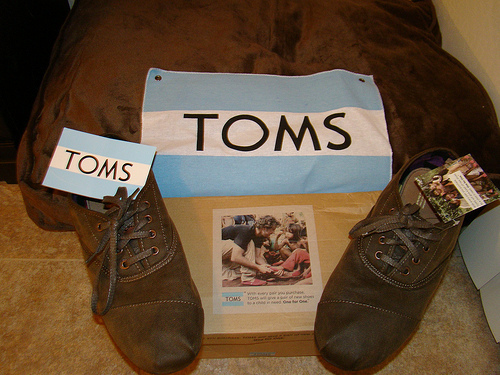
Are you wearing shoes today? In high schools and around colleges across the country students are going barefoot to celebrate TOMS Shoes One Day Without Shoes Event. Some call this event A Day Without Dignity.
Last April I weighed in with a view somewhere between the Kool-Aid drinkers and the stone throwers with my post The Problem with TOMS Shoes and Its Critics. The post has led to one of the best discussions ever on my blog.
Unfortunately half of those comments are summed up as such, "Oh yeah! Well, you're a stupid pants jealous of Blake Mycoskie. What have you ever done?" I suppose a stupid pants is the opposite of a smarty pants. I just made up the term. No one actually called me that. At least I don't thin they did. It's hard to keep track; I was called so many things, which brings us to the first thing I've learned…
1) I don't want to be Blake Mycoskie.
I like being Kelsey Timmerman just fine, thank you very much. That said, Blake is a nice guy who, as I mention in the post, I've been lucky enough to meet. It's just that Blake isn't married to Annie Timmerman (who can do ninja flips) and he doesn't have Harper and Griffin as kids and Oreo the Cat as a cat. He doesn't have a stay-at-home family. He doesn't live in the Midwest. He doesn't get to work as a banana worker in Costa Rica. He isn't blessed to have people around the world tell him their stories and then get to share those stories. (Actually, I suppose he gets to do that last one a bit.) I don't want to have a business with employees, sales reports, and meetings. Anyhow, I love being me.
2) We need to question good intents just as much as we do bad ones.
I believe that TOMS does some good. I believe that they could and should do more good. And that instead of just being a typical shoe company until the very end where they give away a pair (some question how good this actually is), they could also manufacture in a way that does good at the very start. I feel like I'm less of a critic of TOMS than I am a cheerleader.
Back in my basketball playing days, my dad was my biggest fan. If I scored 20 points and dished out 10 assists, he would still point out that one stupid turnover, or that one missed free throw on the front end of a one-in-one, or the way I reacted to that one call. No matter how good I did, Dad wanted me to do better. That's how I feel about TOMS.
I want TOMS to do better.
They've earned so much goodwill and have so much potential to be a shoe company like no other, and they could use that goodwill to lead the way in manufacturing in a way that provides people with great jobs and hope.
The adventures meeting garment workers that I documented in my book WHERE AM I WEARING? and the new adventures with my new project WHERE AM I EATING? have helped me realize how important a good jobs is – a job that allows you to send your kids to school is everything.
3) We long for our things to have stories even if we fill in the blanks of those stories.
I want TOMS to do better, but more than that I want their fans to do better. I've met so many raving TOMS fans that have no idea where TOMS are made. All they know is that a pair was given away somewhere – probably Africa – because they bought a pair. And that's enough for them to feel swell about their shoes.
Perhaps the beauty of the one-for-one model is its simplicity. We take the nugget of a story that can be printed on a shoebox and we make up our own story. Everyone who wears TOMS should look at where they are given and how they are given. I'm not saying they should look into this in order to find flaws or to criticize, but because if you are going to champion something, you should know something about it.
A lot of TOMS success can be contributed to that they sell shoes – and now glasses – with a story. It's a short story, unless we dig through their site, but it is a story. So many of our things don't have a story, or at least one we know about. In a landscape of story-less shoes, TOMS helps us connect with the world.
April 2, 2012
Harper singing We Are Young by Fun
Harper, 3, was supposed to be in bed sleeping, instead she was up singing We Are Young by Fun. I recorded her on my phone and added some photos. (note: I probably think my kids are cuter than you do. That's okay.)
7 reasons we became a single car family
I bummed a ride to the airport from a buddy that works in Indianapolis the other day.
He drives a shiny red sports car that makes me want to buy aviator glasses and gun it. He got a great deal on the car. The car barely had any miles when he bought it. The previous owner just drove it on weekends.
That's right, the dude had a weekend car.
Contrast this with the reason I was bumming a ride: We recently downsized to one car.
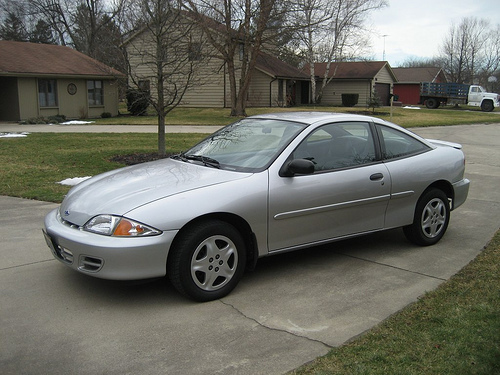
A month ago we sold Annie's Chevy Cavalier, which she bought in college. The average household has 2.28 cars and now we have 1. I thought I would share why we made this decision:
1) We outgrew our car. The Chevy Cavalier was a two-door car and with two kids, we are a four-door family. The car didn't fit us any longer.
2) We don't need it. Once we became a stay-at-home family we drove way less. Rarely were both cars out of the garage and when they were they didn't really need to be.
3) We'd rather have $5.6 million than a car payment. Being a stay-at-home family living off the irregular income of a writer/speaker, we took a long hard look at our budget. It turns out that the $4,000 the Cavalier was worth would pay our newer four-door G6 off. No car payment! That's nice on the budget, so is no car insurance.
According to AAA it costs $46,845 to own a car for five years. This figure includes, fuel, routine maintenance, tires, insurance, license and registration, loan finance charges, and depreciation costs. And if you invested the money over five years it would equal about $62,000.
According to Lloyd Alter at TreeHugger, the average American works 365 hours each year just to pay for one car! That's 9 weeks of work!
Get this. The average car payment is $475. If you put that much in a mutual fund instead of paying the bank for your car every month, after 30 years it would be worth $1.6 million and after 40 years it would be worth $5.6 million!
4) Rentals are cheap. When we really need a car, like when I need to drive myself to the airport, I can rent one for less than $30/day. I'll spend less on car rentals this year than I spent on parking at the airport last year.
5) Less cars = less driving. So often we go places we don't need to just because we can. We plan our trips better and our days. We spend less on fuel for needless trips and we spend more time together. Who wants to run more errands anyhow? Instead of paying for gas to the airport I treated my buddy to lunch.
6) Things (especially Chevy Cavaliers) don't give us joy or convenience. We give these to one another. In all of my travels I see people with so little who are so happy. They make me want to simplify my life. Having one car is a way of doing that.
7) Garage space! We have so many plastic-wheeled toys that are pushed, pedaled, and rolled that our garage was starting to overflow. Now we have one parking space for our car and one for all the kids' toys and yard equipment.
There are times that not having a second car is inconvenient and I'd be lying if I didn't tell you I've walked out to the garage to go somewhere and the car was gone. But a month after the downsize and we're happier than ever that we have only one car.
There are certain things we accept because everyone else accepts. Having a car per adult in our family was one of these things for us. But once we chose a different life, we started to look at things…well…differently.
I realize our circumstances – my commute to work is walking up the steps – are unique. But we chose for Annie not to work. I chose a career that I could do from home most days. We chose this life and we love it.
March 29, 2012
Be pissed off for greatness
"If you aren't pissed off for greatness, that means you're okay with being mediocre." – Ray Lewis
Ray Lewis delivers a 2-minute powerhouse of a motivational speech to the Stanford men's basketball team before their NIT semifinal game. It hits just as hard as Lewis does on the field. You can't watch this video and not go chest bump your nearest co-coworker or in my case my cat.
A shout out to my brother, Kyle, a scientist, for pointing this out with the following note: "Hell yeah! After watching this, I'm going to go do me some science until my eyes bleed."
March 28, 2012
Dude, why are you here?

I live in Muncie, Indiana. I don't have to be here. I choose to be here.
My wife Annie stopped working 10-months ago after the birth of our second child. That's when it dawned on us: we could live anywhere. I could do my job from Key West, California, or Colorado. We had a brief discussion about where we want to live and the result surprised us both: we wouldn't want to live anywhere else.
On more than one occasion I've had someone in Muncie who I was meeting for the first time say, "Dude, why are you here?" I'm not sure how to take this.
Is it a compliment? Are vagabonding, traveling authors / speakers too interesting for Muncie?
Or is it an insult? Who in their right mind, if they could live anywhere, would choose the Midwest or Muncie? There's a bumper sticker that I've seen in town that reads: Is Muncie Necessary?
I'll admit, from the ages of 12 to 22 all I wanted to do was leave the Midwest, and that's exactly what I did as soon as I had the chance. From 20 to 30 I traveled around the world a couple of times. From Australian beaches, I've watched the sun rise out of the pacific and a few months later watched it set behind Himalayan peaks. I lived in Key West and North Carolina.
But I'm back.
I'm here because it is home.
I'm here because my family and friends are here.
I'm here to watch my children run barefoot through the same yards I ran through when I was their age.
I'm here because the people are friendly.
I'm here because I realized that flat fields of corn are beautiful.
I'm here because I live in a 2,400 square-foot home that costs less than rent for a 240 square-foot apartment in New York City.
I'm here because there is no rush hour.
I'm here because deer walk through my backyard.
I'm here because my daughter can make perfect snow angels in our front yard.
I'm here because reservations aren't required.
There are places in the world I could live, where I would be surrounded by folks who saw the world more like me — not always the case here in Muncie — but that would be too easy. I like having my views challenged and my mind changed. I like challenging others to see the world in a different way.
I recently caught a lecture at Ball State by Richard Longworth the author of Caught in the Middle: America's Heartland in the Age of Globalism. He paints a pretty grim future for the Midwest. Agriculture isn't the future and neither is manufacturing.
What is the future of the Midwest then? He's not sure. Whatever the future is, I'll be here, to see it.
A few years ago I wouldn't have written this. I made up slogans for the Midwest – A Great Place to Leave!
I remember something mom used to say to me when I was faced with yet another long summer afternoon in which all the baseballs, soccerballs, basketballs, swords, lawn darts, and laser guns were strewn about the yard. I would complain to her, "I'm bored!" and she would respond, "Only boring people get bored."
The day is what you make of it and so is your hometown. I've decided to stop complaining about where I live and instead actively try to make it better and more interesting.
All of that starts with seeing home differently. I love Muncie. I love Indiana. I love the Midwest.
Where do you live? Dude, why are you there?
March 8, 2012
The banana worker's commute
It's 4AM; who's picking your banana?
March 2, 2012
EARTH University
More on what makes EARTH's bananas and EARTH's university different here.
February 22, 2012
Calling all teacher & profs! I'm giving a virtual lecture today at 3 EST.
I'm sure you have lot of questions, such as will I be wearing pants. Only your imagination will know the answer to that.
Sign up here
Attending the lecture will earn you 1 CPE credit, and, if you stick around until the end, I'll hook you up with the never-before seen preface to the new edition of Where Am I Wearing?
Here are the rest of the details…
Common Threads: Searching for Community in a Globalized World
Description:
*1 CPE CREDIT AVAILABLE* (Can you believe you could get a CPE credit for listening to me?!)
Kelsey Timmerman followed the labels of his clothes around the world to meet to the people who made them. During this Guest Lecture, Kelsey will bridge the divide between producer and consumer as he tells their stories and how they relate to issues such as globalization, poverty, child labor, global development, sweatshops, and individual and corporate social responsibility.
Advanced Preparation: None
Level: Update
Presenter: Kelsey Timmerman, Author and speaker
Date: 22 Feb 2012
Time: 3:00pm Eastern Time (US & Canada)
Event Type: Guest Lecture
Duration: 1 hour
February 15, 2012
What you can learn from a 19-year-old entrepreneur who raised $1 million to launch an app
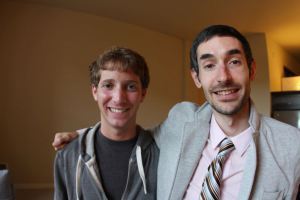 This weekend I spoke at Wabash College's 2nd Entrepreneur Summit. The other keynote speaker was 19-year-old Cory Levy. There's buzz that Cory might be the next Mark Zuckerberg. He likely grows tired of the comparison, but he looks the part.
For 19, the dude dropped some wisdom.
On Asking
If you ask for money, you'll get advice. If you ask for advice, you'll get money.
This is what he learned as he tried to raise funds to launch his app. Too often we approach people asking, "What can you do for me?" instead of, "Hey, I respect what you've accomplished and I'd love to pick your brain a bit."
Admitting that you don't know everything and asking for advice will get you farther.
On Golden Nugget ideas
Someone asked Cory about having potential investors sign non-disclosure agreements. Here's his response:
An entrepreneur not sharing an idea is like a comedian not sharing his jokes.
On Patience
After two years, Twitter only had 2,400 users.
His best advice
Go work for your hero.
When he was a teenager, Cory started to reach out to tech entrepreneurs through Facebook. He established relationships with some of the major players before he was even able to vote. It seems there's no way that he should have been able to make the connections he did.
He showed up. He offered to help. He was in. Now he's got an idea that he's super passionate about and 1 million bucks!