Kelsey Timmerman's Blog, page 35
February 7, 2013
The Next Big Thing
Cathy Day, champion of literary citizenship, English professor at Ball State, author of Circus in Winter and Comeback Season, and my fellow committee member of the Midwest Writers Workshop, tagged me in the Next Big Thing Blog Hop.
Here’s Cathy’s post answering the questions about her work in progress.
And here’s mine…
What is your working title of your book (or story)?
Where Am I Eating? An Adventure Through the Global Food Economy
Where did the idea come from for the book?
Ever look at your banana and wonder who picked it?
In 2009 the USDA began requiring Country of Origin Labeling on food. I couldn’t believe how global our diet had become. Today, the United State’s imports 86% of its seafood, 50% of its fruit, and 18% of its vegetables. I wanted to meet the people who catch, pick, and grow our food and work along side them. I swung machetes with banana workers in Costa Rica, picked coffee with farmers on steep mountainsides in Colombia, cut open cocoa pods with a slave in Ivory Coast, and picked apples with farmers in Michigan and China.
What genre does your book fall under?
Literary Journalism. If you think the literary means I made stuff up, you’re mistaken. All it means is taking the techniques and tools of creative writing and applying them to a real story.
Which actors would you choose to play your characters in a movie rendition?
Matthew MacConaughey. I’m told we sound alike, but I have better abs. All right! All right!
What is the one-sentence synopsis of your book?
A global adventure to meet the people who catch, pick, and grow our food.
Will your book be self-published or represented by an agency?
This is my second book published by John Wiley & Sons. Both of my books have been represented by agents. Unfortunately, after working with me, each agent decided to embark on new careers. It’s tough out there for agents right now. There’s a high turnover.
How long did it take you to write the first draft of your manuscript?
For me, writing is the easy part. It’s the living that is the hard part. The living/travel took about four months and the writing took about four months.
What other books would you compare this story to within your genre?
It’s like a global version of Omnivore’s Dilemma by Michael Pollan.
Who or what inspired you to write this book?
I was traveling in Nicaragua and came across Lobster divers. They dive deeper and deeper in search of a dwindling population of lobster. They dive on shoddy equipment and have no training. 100% of them have some type of decompression injury (think the bends). As a former dive instructor, I couldn’t believe what I was seeing. That experience really got me started thinking about the lives of the people responsible for catching, picking, and growing our food.
What else about your book might pique the reader’s interest?
A single bottle of apple juice could contain juice from apples on four different continents and seven different countries. In fact, 75% of all apple juice concentrate is from China.
I tried to free a slave. (Bad idea!)
I’m really bad at using a machete.
And now you know. Now it’s my turn to tag some folks. So, D.E. Johnson, Kelly Stanley, JR Roper, and Chris Humphries, you’re up.


God Made a Factory Farmer
I wasn’t the only one to see the disconnect in Dodge’s “God Made a Farmer” commercial. Funny or Die made God Made A Factory Farmer. You have to watch it. It would be funnier if it weren’t all so true. (Thanks to Micahel O’Donnell for pointing this out.)
Latino rights group Cuentame fixed the “white washing” issue in the ad. There are six million migrant workers in the U.S. and there are only about 3 million “farmers.”
February 6, 2013
God made farmers, man made ways to exploit them
God made a farmer to care for his lands, animals, feed His people, and, according to the Super Bowl commercial, to drive a Dodge Ram truck. It was one of the most talked about commercials of the evening, attempting to strike the chord in all of us that Mitt Romney (or any other politician) tries to strike when he wears a Carhartt jacket.
We are a nation of farmers a few generations removed from the fields. But today only 1% of Americans are actually farmers. We revere the image of farmers on TV commercials and in campaign speeches. The truth is there are 1 billion farmers on earth and 60% of them live in poverty.
In the past year I’ve worked alongside banana farmers in Costa Rica, coffee growers in Colombia, cocoa farmers in Africa, and apple farmers in Michigan and China, while researching WHERE AM I EATING. I’ve seen what life is actually like for farmers.
God made farmers and their seed, but man created laws that allow corporations to own the seed.
God made farmers, but man made “terminator technology” that keeps a crop from producing viable seeds so other men have to continue to buy the seed.
God made farmers, but man made the company store to which Costa Rican banana workers go in debt.
God made farmers, but man made a global market of speculation and short term profits that causes commodity prices to rise and fall and with them the lives of the farmers.
God made farmers, but man made pesticides of which flat broke farmers in China and India drink to end their lives and erase their debts.
God made farmers, but man made pesticides for farm laborers to spread, robbing them of their ability to father healthy children.
God made farmers, but man made farm subsidies that favor processed foods.
God made farmers, but man made slavery.
God made farmers, but man made a Super Bowl ad with a bunch of white farmers and one black one. In reality, much of American farm work is done by workers from Latin America, and much of our food isn’t even homegrown: 86% of our seafood, 50% of our fresh fruit, and 18% of our vegetables come from other countries.
God may have made farmers all around the world, but man continues to make new ways to exploit them.
After more than a decade, Boy Scouts still need more time
From the New York Times:
The Boy Scouts said in a statement e-mailed to reporters that it had received “an outpouring of feedback from the American public” over the proposed change.
“It reinforces how deeply people care about scouting and how passionate they are about the organization,” the statement said. “After careful consideration and extensive dialogue within the scouting family, along with comments from those outside the organization, the volunteer officers of the Boy Scouts of America’s National Executive Board concluded that due to the complexity of this issue, the organization needs time for a more deliberate review.”
Dithering is not leadership either.
February 5, 2013
Boy Scouts Showing Lack of Leadership
When the Boy Scouts of America doubled down on their policies to discriminate against gay scouts and leaders, I announced I was going to turn in my Eagle Scout awards.
The decision wasn’t made lightly. Scouts helped give me the confidence and independence to travel around the world alone as an author and journalist gathering stories. But Scouts also gave me the moral compass to stand up and act against injustice.
I promised my former troop leader that I would call Boy Scouts Of America’s national office to talk with them about how they reached their decision before I made my final decision to mail my awards.
That call went something like this:
“My name is Kelsey Timmerman. I’m an Eagle Scout. I promised my former scout leader that I would talk to someone at your office about your policy regarding gay scouts and leaders before turning in my Eagle Award.”
“Hold, Please.”
“Hello,” the man on the other end answered with a sigh.
I told him about my promise and that I wanted to have a conversation and better understand their decision.
“You can send your badge to–”
“No…No…that’s not why I called,” I said, “I want to have an actual conversation about this.”
He sighed and proceeded to tell me that an unelected board made up of undisclosed individuals based their decision on a study that found parents were against gays in scouting.
“Can you send me the study?” I asked.
“No,” he said. “It’s not available to the public.”
“How many parents were surveyed?”
“Can’t tell you.”
“How were the questions worded?”
“Can’t tell you.”
“How were the survey subjects selected?”
“Can’t tell you.”
“Let me get this right, a mystery board based their decision to discriminate against an entire group of people on a mystery study?” I asked, as respectfully as I could.
Click.
When I called Boy Scouts of America, an organization that prides itself on molding leaders, to have a conversation about the Boy Scouts anti-gay policies, I got hung up on.
That’s not leadership.
Scouting’s discriminatory stance bothered me for two reasons: 1) It was morally wrong; 2) I feared that the decision would harm an organization that meant so much to me.
While people can debate the first point–as I did on Talk of the Nation–there’s no doubt that I was right about the second point. Corporations and individuals have been distancing themselves from Scouts since July when they made the announcement that gays were still not allowed.
Not only did I send in my Eagle awards, I sent in cards that friends and family had given me at my court of honor, plaques, certificates signed by Senators, and one signed by President Clinton. I sent them pictures of my fellow scouts and me on top of mountains. When they opened my package, I wanted them to feel what scouting meant to me–the dedication, the accomplishment, the adventure.
When I heard the news about BSA’s possible shift to not have an official policy discriminating against gay scouts and leaders, I was pumped. I believe that anyone can benefit from the lessons and skills gained through the scouting experience. But then I read beyond the tweets and the headlines to the official Scout statement:
“The policy change under discussion would allow the religious, civic, or educational organizations that oversee and deliver Scouting to determine how to address this issue. The Boy Scouts would not, under any circumstances, dictate a position to units, members, or parents. Under this proposed policy, the BSA would not require any chartered organization to act in ways inconsistent with that organization’s mission, principles, or religious beliefs.”
This isn’t a firm statement saying, “We believe discrimination is wrong and has no place in scouting.” This is a statement about a discussion that could possibly lead to a shift in their position. This isn’t brave (one of the twelve scout laws) leadership to do what’s right. This is following your fears.
Discrimination is a slippery slope. If we don’t let gays into scouting, who else won’t we let in? What races? What religions? Boys with dogs? Men with toupees? Men and boys with dogs with toupees?
I would love my son, Griffin, to become a scout when he’s old enough. But I don’t want to have to ask the local troop what groups they discriminate against before allowing him to join.
Not having a “no discrimination” policy is having a policy of discrimination.
BSA isn’t leading the way on this discussion; they are removing themselves from it. This is hanging up the phone on a conversation and allowing discrimination to continue at the troop level.
This is not leadership.
January 24, 2013
Banana Ninja Fights Global Injustice
Kelsey Timmerman adventured through the global food economy perfecting his machete technique. He was injured in a freak accident involving gamma rays and a GMO banana on a banana plantation. Armed with great powers and great responsibility, he now fights global injustice as the Banana Ninja!
Learn more at www.whereamieating.com
January 21, 2013
“Where are you eating?” – MLK
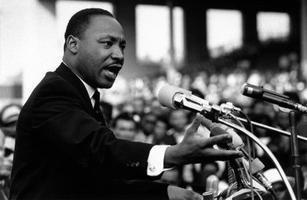
You get up in the morning and go to the bathroom and reach over for the sponge, and that’s handed to you by a Pacific islander. You reach for a bar of soap, and that’s given to you at the hands of a Frenchman. And then you go into the kitchen to drink your coffee for the morning, and that’s poured into your cup by a South American. And maybe you want tea: that’s poured into your cup by a Chinese. Or maybe you’re desirous of having cocoa for breakfast, and that’s poured into your cup by a West African. And then you reach over for your toast, and that’s given to you at the hands of an English-speaking farmer, not to mention the baker. And before you finish eating breakfast in the morning, you’ve depended on more than half the world. This is the way our universe is structured; this is its interrelated quality. We aren’t going to have peace on Earth until we recognize this basic fact of the interrelated structure of all reality.
- Dr. Martin Luther King, Jr. from “The Three Dimensions of a Complete Life,” delivered at New Covenant Baptist Church in Chicago on April 9, 1967. (Find the complete transcribed text here.)
January 14, 2013
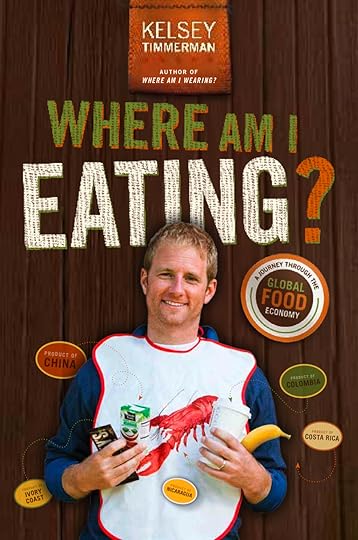
Where Am I Eating Cover
Here’s the Where Am I Eating cover! (I only had a low-res file, hence the pixilation.) A big thanks to Rule29 for the awesome design and to my parents for my rugged good looks. This bad boy will be hitting the shelves Earth Day (April 22nd).
January 10, 2013
AS FRESH AS ARBY’S ROAST BEEF
The winter’s night sky was clear, one of those where you can’t see just stars but the galaxies they make up. The snow hid the ground’s flaws – the potholes, the sewers, the frozen dead squirrels. I took a breath as fresh as fresh air can be, and turned to my wife and said:
“Ah as fresh as a store cut slice of Arby’s roast beef.”
[insert record scratch]
Now, I’ve consumed my fair share of Arby’s roast beefs over the years, so don’t think I’m above them. But nothing about their paper-thin slices of beef makes me think of freshness. Have you ever held up a slice? The anemic piece of meet shaved off of some poor feedlot cow is nearly see-through.
Yet their most recent ad campaign plays up that their roast beef is sliced in their restaurant and Subway’s (a brand that markets itself already as a healthy, fresh option) has their cold cuts sliced in a factory.
Never mind the journey that the beef was on before it was sliced, that the cow was pumped full of steroids and hormones so it would grow as quickly as possible and that it was force fed antibiotics because it lived in a world of cow shit. Never mind that an employee at an Arby’s Michigan operating one of those in-restaurant meat slicers sliced off part of her finger and a fourteen-year-old boy found it when he bit into the missing digit in his sandwich.
The boy, Ryan Hart, stopped chewing and was all like: “That has to be a finger.”
Fingers have also been found in TGI Friday’s food in Indiana, and last year in a frozen yogurt in North Carolina. I’m all for leaving the slicing and dicing to the professionals at the meat slicing factories.
The main reason I point out the absurdity of Arby’s ad campaign is that it shows just how dumb food marketers think we are. One of the things that continues to fascinate me about the global food industry is the gap between marketing and reality. And unlike that ill-advised vacuum purchase you made based on the fancy commercial where you thought, “Look how that thing takes turns!” we eat food. We can’t live without food. It gives us sustenance, but it can also make us sick and slowly kills us.
Food ads are the new tobacco ads. Where are you eating?
Have any fast food nightmares to share?
January 8, 2013
Write a Full-Length Work of Literary Journalism
If you’re interested in the writing I do, there’s a class for that.
The last writing class I took was English 102 during my freshman year at Miami University. At least that was the last class until I audited Literary Journalism taught by writer Mark Masse’ at Ball State University in 2010. Now the class is online and being offered to anyone interested. (You would enroll as a non-degree (non-licensure) student. If you are interested, Ball State is now offering this class online with Mark. That means you don’t have to worry about driving to Muncie and finding parking on campus, or about wearing pants while attending class! Freedom!
Here’s how Mark describes the class:
J614 is an advanced literary journalistic writing workshop taught in a 100 percent online format. It is designed to give students the opportunity to write an extensive, original narrative nonfiction story. Prior to producing this final writing project, students will work on moderate-length assignments, emphasizing critical skills in exposition, description, characterization, and dramatization.
Here’s how the Ball State course catalog describes it:
614 Writing Literary Journalism (3) An advanced writing workshop, emphasizing specialized journalistic research and narrative nonfiction techniques, including saturation reporting, exposition, description, characterization, and dramatization. Assignments range from moderate length writing exercises to an extensive (5,000-7,500 words) original work of literary journalism.
If you’re still wondering what literary journalism is, it’s using the techniques of a fiction writer in a work of nonfiction. It’s not making crap up! That would be way easier than actual literary journalism that requires doing the leg work, and taking copious amounts of notes, recordings, photos, and videos while collecting verifiable facts and experiences.
I think Where Am I Eating? is a better book and I’m a better writer because of the lessons I learned from Mark on characterization and dramatization. Anyone interested in writing long form nonfiction pieces could benefit from this class.
(Also, auditing this class was crazy cheap. I’m not sure what the online version of it costs now, but I paid $40 for an entire semester of the class. It was so cheap and so awesome that I almost felt guilty about it. Is it tacky to tip professors?)
If you are interested, don’t delay, contact Professor Mark Masse’ at mhmasse@bsu.edu for more details. The semester started yesterday (yep, I’m a little late getting the word out), but I bet that Mark can still squeeze you into his virtual classroom.
If you do take the class, and want another set of eyes on your final, full-length piece, I would be happy to offer my two-cents before you turn it in.