Kelsey Timmerman's Blog, page 31
May 31, 2013
A recap of traveling with Winthrop U students in Guatemala
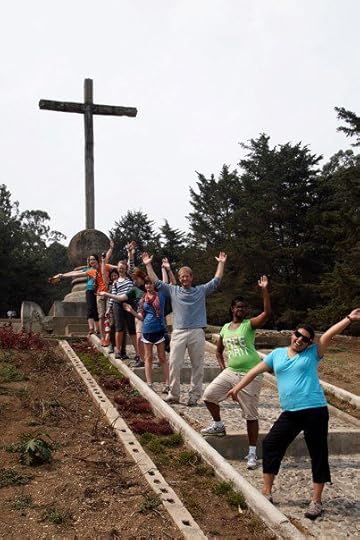 In May of 2012 I traveled with 7 students from Winthrop University to Guatemala on a trip arranged and led by The Village Experience. Here was our itinerary.
I wanted a place to compile all that was said about the trip. This is that place.
Jennifer Sandler, Winthrop’s study abroad coordinator, as quoted on the Winthrop University website: The students were exposed to so many new experiences, ideas, situations and people, and they were nothing but engaged and enthusiastic the entire program. We were all sad to leave Guatemala, but I firmly believe that the students’ fire for travel and international experiences has been stoked, hopefully never to be extinguished.
My post 7 things I learned traveling with 7 college co-eds: #5 Seeing with your heart is more important than seeing with your eyes.
Kelly Campbell on the education that comes with traveling: Last week I had the pleasure of leading a group from Winthrop University to Guatemala to carry the knowledge they learned from Kelsey Timmerman’s book, “Where Am I Wearing” into the field. This group of young women were new to traveling, the developing world, and stepping outside of their comfort zones in general. They came with only a small backpack and Keene sandals, but they left with half the market and memories to last a lifetime.
Lauren Miller on First World Problems: After this trip to Guatemala, I am learning to not take things for granted. I hope people will realize that no first world problem is a problem; it is a blessing.
Fatima Castro on putting her Spanish major to use: Talking to the women in the markets, some of the students in the rural village of Ceylan, and our tour guide, Jairo, gave me the opportunity to see the story behind the people.
Ali Jensen ponders American Selfishness: In America, we are so concerned with excess nutrition. Are we getting too much sugar? Are we getting too much salt? Is our food genetically altered? Guatemalans don’t get to indulge in the wonder of excess, just the bare minimum. Their diets consist mostly of beans, rice, and tortillas; not too much nutritional variance in that.
Anita Harris on the importance of people over things: We traveled to Guatemala with Kelsey, after having read his book Where Am I Wearing? Where he traveled to meet the people who made his clothes. The factory visit was interesting. We did not have the opportunity to enter, but Kelsey was able to talk to a worker. It was still exciting. This has been an awesome experience. I look forward to visiting again.
Callan Gaines finds that beauty lies in poverty: With poverty comes a sense of humility and gratitude which is rarely found in my own home country. While the people have far less than most Americans, they are much more selfless with the little things they have. When we visited the rural village of Ceylan, there was an amazing feeling of community. The incredible power of a smile or hug was so evident in this impoverished village, despite the fact I couldn’t speak the language of the Ceylan people. It was an experience which I know has changed my life.
It was a great trip and something that I intend to replicate with more universities in the future. If you’re interested, in such a trip, email me hi@kelseytimmerman.com and I’ll put you in touch with Kelly, who actually knows how to plan a trip.


May 30, 2013
The Bootsnall Interview
I had a blast talking about travel, food, and WHERE AM I EATING with Sean Keener of Bootsnall Travel yesterday.
Sean is a busy guy with three kids three and under. In fact, in the video he confessed that his kids and work keep him so busy that, “Sometimes I have to wait hours to take a dump!” I so appreciate him taking 55 minutes of prime pooping time to ask some great questions and getting pretty deep into EATING.
May 29, 2013
Hang out with me today at 3:30

In 2007, Bootsall Travel (one of the coolest travel communities online) named me as one of their rogue travelers, making them the first endorsement (other than my mom) of my idea to go all of the places my clothes were made to meet the people who made them. They hosted my blog. They shared my stories, and in doing so, became a part of my story.
Sean Keener, the co-founder and CEO of Bootsnall, is hosting a Google Hangout with me today at 3:30. Sign up to attend or just drop in. We’ll be talking about around the world travel, bananas, underwear (note to self: don’t use bananas and underwear together in a sentence), and my books WEARING and EATING.
Hope to see you there.
Check out my Bootsnall profile. If you love to travel, thinking of planning an around the world trip, or just want to swap tales and tips, you should join too.
Here’s my WHERE AM I EATING Adventure as depicted on the Bootsnall Around the World planner:
May 26, 2013

May 24, 2013
“Travel is…the best education.” – Kelly Campbell of The Village Experience
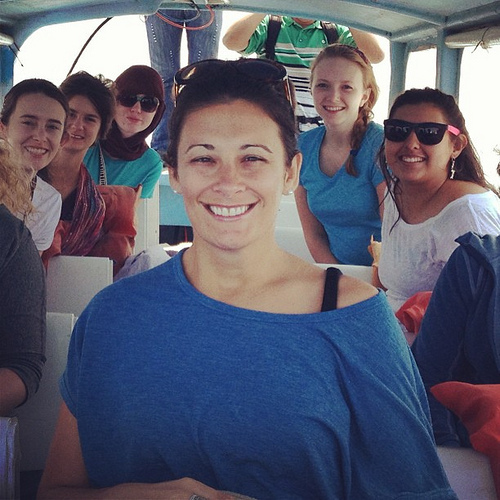 People assume since I’ve traveled a lot, I must be good at it. I’m not exactly sure what makes a good traveler, perhaps it’s the ability to sit a very, very long time as the world passes by out the window, or to go with the flow when plans derail. I have no problem going with the flow because I often travel with no plan, just a to/from plane ticket and a vague idea of where I’ll go in between. If being a good traveler involves being a good travel planner, I’m a bad traveler. That’s why when universities began asking to go on trips with me, I turned to Kelly Campbell of The Village Experience.
Kelly is a good travel planner and an amazing person changing the world one passenger, one fair trade product, and one trip at a time. She arranged Winthrop University’s trip to Guatemala (check out our itinerary) and everything went so smoothly. No one got lost, the police were never called, and we weren’t even close to inciting an international incident. This is to say, it was a much different experience than a lot of my solo trips.
Kelly wrote this guest post about why she does what she does.
—
Last week I had the pleasure of leading a group from Winthrop University to Guatemala to carry the knowledge they learned from Kelsey Timmerman’s book, “Where Am I Wearing” into the field. This group of young women were new to traveling, the developing world, and stepping outside of their comfort zones in general. They came with only a small backpack and Keene sandals, but they left with half the market and memories to last a lifetime.
I have been developing and implementing socially responsible trips around the world for more than 11 years. To me, travel is second nature. I throw the essentials in a backpack, I hitch a ride to the airport, I meet friends on the other side, and I carry out the mission of The Village Experience and The Village Cooperative. Sometimes I forget how life-changing that first trip abroad can be…and then I watch my passengers overwhelmed and energized in the markets or marveling at the money they’ve just exchanged. I listen to them shouting out the names of American fast food chains they never thought they would encounter on their travels – McDonalds, Subway, Taco Bell, KFC. I watch their comments pop up on facebook, and I try to see the trip through their perspective. And, on occasion, I hear them scream at the dinner table when the fish they ordered comes out with the head intact.
Travel is quite possibly the best education one can receive–learning about the history of a colonial city through a walking tour, conversing in Spanish with a local, using art to portray the indigenous struggle, sitting in a restaurant watching the news and understanding that history is being made in the very place you are eating, or sharing a glass of wine with people from cities all over the world and getting their view on the current election. You learn to appreciate and understand other perspectives, barriers come crashing down, those history classes start to make sense, and friendships are created.
It was with great joy that I watched as the women of Winthrop University explored their new surroundings, sampled Guatemalan coffee and chocolate, delivered food to the malnourished, squealed with joy on their first tuc-tuc ride in search of Maximon, and shopped fair trade to their heart’s content. The stories around the dinner table each night were of the next trip, returning to Guatemala, brainstorming career paths, and how to raise money to help the communities they had met. It made my heart happy to see so many young people so energized after just one trip…one experience…one journey abroad.
May 21, 2013
Moore Community Mightier Than the Storm
In the age of social media, many of us feel like we need to publicly address disasters and tragedies, as if we’re the President and PR department wrapped into one online presence. I don’t normally address such tragedies unless I have some connection to it or something to add, which I do, regarding the tornado that hit Moore, Oklahoma…
The tornado was expected. Maybe not the day or the location, but everyone knew it was coming, and that more will come.
I drove right through Moore last month on my way to speak at the University of Oklahoma in Norman (10 miles south of Moore). There are three things that folks love in the area: the Oklahoma Sooners, The Thunder (the NBA basketball team), and watching the weather. Norman is home to the national Weather Service, and surely has the world’s highest density of storm chasers.
The first day I was in Norman it was a humid 75-degrees; the next, there was snow on the ground. In between there was wind and hail and an inordinate amount of armored vehicles heading out to storm chase.
I suppose there are people who consider themselves professional storm chasers, but when it comes to weather, everyone is an amateur.
Some of the local meteorologists have it written into their contract that they aren’t allowed to storm chase. That’s how common it is. People don’t shake their heads at the storm chasers, they are proud of them.
The storms are part of the community’s identities. They don’t fear them. They live with them, and in awful tragedies, they even die with them. They could move away and avoid the next storm, but the area is their home, so they name their NBA team The Thunder, and they check the doppler radar on their iPhones during pauses in conversations.
The residents of Moore had a 16-minute warning that the tornado was coming. In most cases, a 10-minute warning is the best people can hope for, but in this part of Oklahoma, their warnings are 160% better.
A Senator from Oklahoma on the news this morning said that every Oklahoman has lived through a tornado.
No community can prepare for such devastation, but I doubt there is a community in the United States that is better able to handle recovering from a storm like this than those of Moore.
Their community is mightier than the storm. They’ve proven that in the past.
My heart breaks for those who lost family members, especially those parents who hugged their kids in the morning, sent them off to school, and lost them to this terrible event. No doubt that the last hug wasn’t long enough, or tight enough.
How could it be?
Think of Moore and hug your loved ones extra long and extra tight.
May 17, 2013
Winthrop U Student looks at #FirstWorldProblems differently after trip
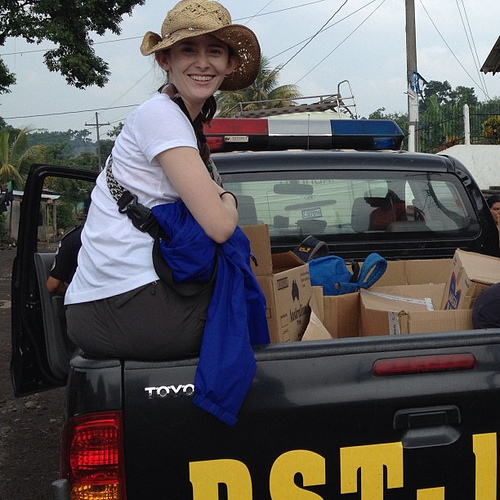
This guest post is brought to you by Lauren Miller, a sophomore at Winthrop University and one of seven students who traveled with Kelly Campbell of the Village Experience and me to Guatemala. I’m not sure Lauren ever stops smiling. She studies biology and is interested in environmental science, so she was our resident Jack Hannah.
–
By Lauren Miller
#firstworldproblems are just getting out of hand it would seem. We have it so hard. Our chargers are never where we need them, there is never good food in the pantry, and our houses are so big we need two wireless routers.
Now if we look at #thirdworldproblems we will see that we are a spoiled society. After traveling to Guatemala and visiting some very poor areas, it is easy to realize that first world problems should not be a popular topic on social media sites like twitter or pinterest.
“My laptop is dying but the charger is in the other room.”
In the city of Ceylon, Guatemala, most people do not have electricity or if they do they are haphazardly connected to the electrical lines. Even those with electricity only have a light on if absolutely necessary. They don’t have outlets to plug in their newest electronic, but rather a single bulb to light their rooms. We have the habits to leave lights on when we leave a room, leave electronics plugged in when not in use, and we never give it a second thought. If we, with out first world problems, were forced to live like those of Ceylon, we would have a hard time. It takes a strong will that those of us in first world countries do not possess.
“Everything in the fridge takes more than 3 minutes to make… Now I have to go hungry.”
We go to our pantry and fridge and cannot find anything we like. We then lower our expectations until something is worthy. We eat out, we throw away food we don’t eat, and we over eat because we can. The people of Guatemala don’t have that option. Families kick out their elderly relatives because they can no longer contribute to the family. Non-profit “Vamos Adelante” provides food for the elderly of Ceylon. These people live next door to their children who have nothing to do with them. “Vamos Adelante” also has an eating program for children at the school who have nothing to eat during the school day. Being picky is not an option in the poor villages of Guatemala. They don’t have pantries that they can go to with many food options. They have a diet consisting of mainly rice, beans, and tortillas. We as American’s don’t usually eat the same thing two nights in a row and leftovers are thrown away. There aren’t leftovers in Guatemala and variety is non-existent.
“I hate that my house is so big I need two wireless routers.”
Most people in first world countries have more space than they need. Everyone needs his or her own bedroom and bathroom. Everyone needs his or her personal space and everyone needs storage for ‘stuff’. Most households in Guatemala are one room, maybe two. We visited a family where 8 people were living in a one-room house. The floors are dirt, the ceiling is tin; space is used to the maximum. America’s poor are nothing compared to the poor of Guatemala.
A lot of the time I don’t realize how lucky I am to have my own room. I will never complain about the dinner my mom prepares for me. I will never take for granted the constant electricity I have access to.
After this trip to Guatemala, I am learning to not take things for granted. I hope people will realize that no first world problem is a problem; it is a blessing.
May 16, 2013
Student makes a connection beyond the words
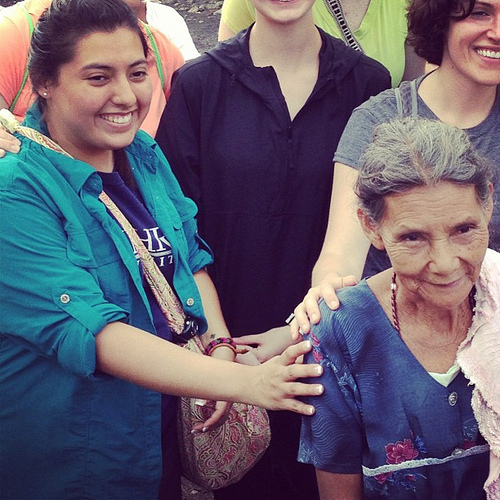 This guest post is brought to you by Fatima Castro, a recent graduate of Winthrop University and one of seven students who traveled with Kelly Campbell of the Village Experience and me to Guatemala. It was awesome to see Fatima translate for our group. She was totally in her element. I could see her living in the mountains of Guatemala connecting languages and cultures. I pretty much appointed myself as her career coach. Her parents should be worried.
What a great honor it is to share a little of my experience in Guatemala with Kelsey, Kelly, Jennifer and my classmates! The trip made for the best graduation gift ever.
This was the first time that I was able to go to the beautiful country of Guatemala, and, to say the least, it was an incredible experience. It was truly a life-changing trip that wrapped up my time at Winthrop University in a magnificent way.
As a Spanish major, some of the most important classes we have to take include history, literature as well as the various language classes. On this trip I had the pleasure of being able to serve as a translator during some of the meetings we had. Through Spanish, I was able to connect with the amazing people that we met in Guatemala. It was incredible to make an immediate bond with the people we met t just by being able to speak their language.
Talking to the women in the markets, some of the students in the rural village of Ceylan, and our tour guide, Jairo, gave me the opportunity to see the story behind the people. Each one of them had a story to tell that I did the best I could to share with my classmates as I translated. It was such a good feeling being able to talk with them in their language as I saw them feel much more comfortable after they heard me speak in Spanish.
One of the best moments was being able to translate at the women’s cooperative in San Juan la Laguna, as the young woman showed us how they make their own thread with natural dyes. It was fun and so informative as well as eye opening to see how what they do is so important to them and helps create their way of life.
This trip in general was life changing. As I step out into the “real world” and begin to choose a life path, I will take this trip with me very close to my heart.
—
(Note from Kelsey: I’m filing this in my swelling file titled – Reasons I regret not learning to speak Spanish in school.)
May 15, 2013
Winthrop U student ponders American selfishness in Guatemala
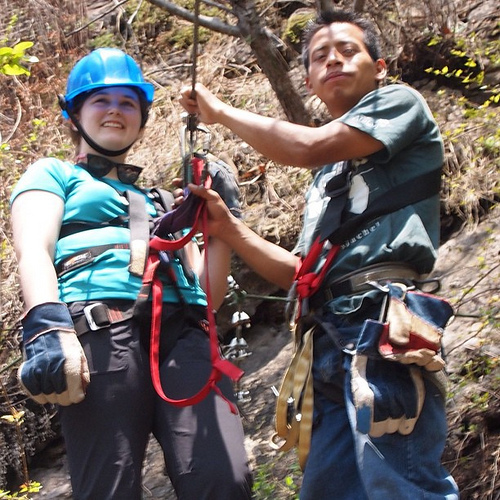
This guest post is brought to you by Ali Jensen, a junior at Winthrop University studying biology and one of seven students who traveled with Kelly Campbell of the Village Experience and me to Guatemala. It was awesome to see Ali connect her passion for biology and medicine with the experiences we had on our trip.
Often times in the states, kids don’t always like the food their parents prepare for them. So usually the parents just make something else, or don’t make that particular food for their child anymore. Kids in Guatemala don’t have that option. They eat whatever their parents can afford.
When you ask a child in the USA what their favorite is they say, “macaroni and cheese” or “pizza”. When you ask a kid in Guatemala what their favorite food is, they look confused. When I asked a little boy in Panajachel named Walter, what his favorite food was he looked at me like I was crazy and said, “Everything.” It’s that simple for them, they like whatever they can get. In placed like Guatemala people don’t have a choice, they eat the same things every day — rice, beans, and tortillas. There is no, “We ate that on Monday so we can’t have that on Friday.”
Americans have become so accustomed to choices in variety that they never stop to think, “We should eat that leftover chicken before it goes bad.” There is always the notion that we can throw it away if we don’t want it, that food is something easily disposed of. In places like Guatemala food is respected, it is a precious resource that shouldn’t be wasted and can’t be taken for granted. People don’t come home from work and ask, “What’s for dinner, honey?” They ask, “Is there enough to eat for dinner tonight?”
Ever since I could remember my father has always scolded me for not eating everything on my plate and tried to guilt me into it by saying, “There are starving kids in China who would love to have what is on your plate.” I thought nothing of it, until I came to Guatemala. These children aren’t Chinese, but they would love the countless amounts of food my family has thrown away over the years. (note from Kelsey: Americans throw away 40% of their food or about $2,275 of food each year for family of four.)
During this trip my group visited a small village in the jungle of Guatemala, part of our experience was trekking up the steep mountain hills with large bags of food to feed the elderly in the town who could not provide for themselves. The little old lady I gave my bag of food to was starving. She showed me the food she and her husband had before we showed up; it was one small bowl of rice.
I get hungry a few hours after breakfast, I can’t imagine having only one bowl of rice in my house. The bag of food I left them would sustain an American family for a week, it was supposed to last the old lady and her husband for about a month.
It is becoming a fad now in the United States to monitor how much children are eating now to prevent diabetes, obesity, and other diseases. In a little ice cream shop in Chichicastenago a little girl was begging for ice cream. She was all skin and bones, her dirty little hands were pressed up against the glass. Her pink tongue was licking the sides of her mouth in hunger; you could feel her desire for something to eat. It’s funny how parents are trying to prevent their children from eating ice cream and other unhealthy foods in the developing world while I’m sure this girls parents would be grateful to be able to give her a substantial meal or a treat like ice cream. Her parents didn’t have the luxury of worrying about what she was eating, just if she could eat. I can’t imagine what it would be like to not be able to feed your children.
In America, we are so concerned with excess nutrition. Are we getting too much sugar? Are we getting too much salt? Is our food genetically altered? Guatemalans don’t get to indulge in the wonder of excess, just the bare minimum. Their diets consist mostly of beans, rice, and tortillas; not too much nutritional variance in that. They start drinking coffee at infancy because it is a cheap staple that can suppress their hunger. This diet can seriously affect the health of Guatemalans because they are missing out on so many essential vitamins and nutrients, including folate, iron, vitamin A, vitamin B12, and zinc.
Almost all pregnant women in the developed world take folic acid to promote good fetus growth. Specifically, folate stimulates brain and spinal cord development; a deficiency in folate can result in an under developed brain and a lower brain efficacy. Many children in Guatemala have learning disabilities and I believe that is due to their lack of folate during crucial development. The government has started to fortify wheat flour and sugar with iron and vitamin A, respectively. However, a deficiency in either nutrient can result in growth stunting. Almost everyone in the USA know what vitamin B12 is because it is present in all of our energy drinks, however it also aids in the conversion from inactive folate to active folate. So a deficiency in vitamin B12 can also result in lower energy and a lack of brain development. A deficiency of zinc results in eye and skin lesions, which could be seen on many older Guatemalans in the jungle village. So often Americans are concerned with excess, what can we do with our excess? We take so much and give so little in return, is it fair?
The majority of this blog post has been about reprimanding Americans for their wasteful ways, but can we change? Personally, I don’t think I can change drastically.
Is it fair that the average Guatemalans make $4,650 per year while some people get paid $200,000 per year? I don’t think so. The saddest part about that question for me is that I wouldn’t want it any other way.
I’m fine with Guatemalans making more money, as long as it doesn’t take anything from me. My family has taken so much from them with our extreme consumerism, but I’m unwilling to give back if it affects my quality of life. I don’t say that out of ignorance; I say that out of pure, unadulterated, American selfishness.
—
Note from Kelsey: I appreciate Ali’s honesty here and want to leave you all with this question…
Would you change your life to improve the lives of others? If so how?
May 14, 2013
In Guatemala, students sees importance of people over things
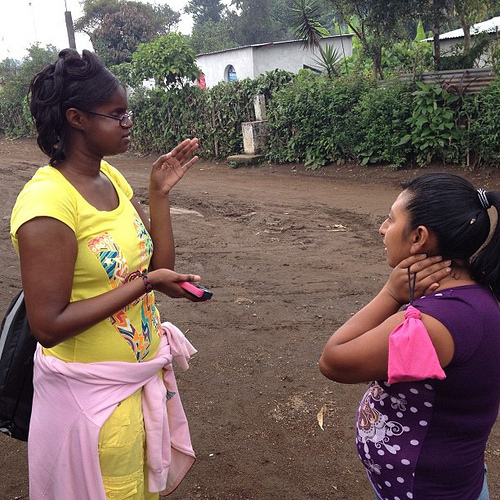
This guest post is brought to you by Anita Harris, a junior at Winthrop University studying mass communications with a minor in Spanish, and one of seven students who traveled with Kelly Campbell of the Village Experience and me to Guatemala. Anita loves people. She said that this trip didn’t just enlighten her about where her clothes come from, but it also immersed her in a Spanish speaking culture for the first time. Anita’s cancer as a child impaired her vision, but she doesn’t let it stop her. She walked up mountains and zip lined. It was an absolute honor to travel with Anita and watch her see the world.
Hello everyone! I am pleased to share my experience in Guatemala with Kelsey Timmerman, Kelly, Jennifer, and several other Winthrop students. I am so grateful to have gone on this trip.
The village experience really changed my life, from the bumpy truck ride to the hungry children, to the old lady whose home collapsed after the rain. The experience made me realize how everyone is so individualized in America. The Guatemalan people help one another and care for each other’s well-being. I was so sad when I saw all the hungry and malnourished children. They were so little. I really desire to help them now by fundraising money to send to feed them. I so admire people like Nina, the executive director of Vamos Adelante, who take the time to care for these people.
Their homes are so small compared to ours. These people are so happy. Materials thing seem to stimulate our happiness. The villagers of Ceylan are so content with the small things they have. Surprisingly, meeting them and seeing their lack of things didn’t make me miss the comforts of home, but made me miss my family.
I’m so thankful for my family. They are such a blessing.
The churches here are structured so nicely. I love the design of the arches and the paintings that are very symbolic.
This has been an awesome experience. I look forward to visiting again. The factory visit was interesting. We did not have the opportunity to enter, but Kelsey was able to talk to a worker. It was still exciting.
We traveled to Guatemala with Kelsey, after having read his book Where Am I Wearing? Where he traveled to meet the people who made his clothes. The funny thing was that Kelsey bought a Guatemalan soccer jersey for his son and it was made in….the United States!