
Barbara Chepaitis's Blog: http://aliterarylunch.blogspot.com/2015/07/frying-mad.html, page 5
July 12, 2013
GOING OFF MAP
 On Coyote's Map
Last week my husband and I took a much needed vacation in New Mexico, where we camped at Chaco Canyon, were viewed by coyotes, spent time in the hot springs of Ojo Caliente, and in general had a lovely time.
When it was done, I dropped my husband off at the Albuquerque airport (yes, that's how you spell it and it's the name of a Portugese statesman who conquered Goa in 1510. Go figure). I then had to drive the 6 hours to Gunnison, Colorado, and my teaching gig at WSCU's low residency creative writing MFA program. On my own. On a route I was unfamiliar with.
Most of the trip took me across the high arid lands, fields of sagebrush on either side of the road, a blue sky above, and a horizon that stretched out ahead with the feeling of forever about it. An easy drive, uneventful, just the way I like them. But then, at a certain point, the Rockie Mountains heaved into view straight ahead of me.
I grew up surrounded by the Catskills and the Berkshires, gentle mountains that always hover in the distance, a benignly protective presence that my mother told me kept us safe from hurricanes and tornados. You barely notice that you're actually in them, they cup you so gently.
But the Rockies are more like the line from the old Yes song - mountains come out of the sky and they stand there. They are living creatures - big ones - and you approach them with all due respect.
As I drew closer, I was keenly aware that I had to drive through and over them, and I steeled myself for this. I've driven enough around Colorado by now to have trepidation about their mountain passes. Often they're narrow, unpaved roads, with a rock wall on one side, a few thousand feet of drop off on the other, and no guard rails, because the fine people of Colorado truly believe guard rails just encourage stupidity. For all I know they're right, but driving over such passes makes me scream for my mommy. I really am a New York State kind of girl.
By the time I got to the intersection of the New Mexico flatlands and route 114, Colorado, I knew I was off my map, with no idea what I would face next. That's always a moment for a big indrawn breath.
 New Doors Lead Anywhere A haytruck, loaded with hay, drove by and my father taught me to wish on haytrucks - God only knows why - so I wished for a pleasant, easy journey to my current destination, and then home again.
 As I did so, I realized I do something similar every time I open up my screen to start a new novel, and that writing a novel isn't too different from approaching the Rockies. No matter how well you know your characters, plot, and settings, the emotional road is a new one, and it's bigger than you. A lot bigger. It's best to start with a request for a good ride home for you and your imaginary friends.
And I suppose any new venture is like that. Getting married, having a baby, buying a house, starting college - it all starts with an initial gasp, an initial wish or prayer or spell to see you on your way.
Then, you put your foot to the pedal, or your hands to the keyboard or the ring on your finger, and you're in it, present only to the moment, taking each moment as it occurs, moving forward. There will be some twisty spots and scary places, and at times your uncertainty of your ability to manage them may make you scream for your mommy. Yet, and yet, if all goes well, you'll come across some magic as well.
On my particular drive, as I was in the middle of the twistiest part of the pass, which required me to slow to 15 miles per hour, I saw a herd of small, hooved creatures moving between the rock walll of the mountain and the stream that flowed on the other side of the road. Being from New York state, my first thought was wow, they're very small for deer. Then, as they all walked into the road in front of me and came to stop, I also had to stop, and I realized I was staring at a herd of wild mountain goats.
So there I sat, in the heart of the rockies, while gamboling baby wild goats waved their hooves at me and cavorted capriciously (caprice being a word we get from goats, by the way). Mommy goat placed herself directly in front of my car and stared at me with her goat eyes, which were fully as alive with surprised intelligence as mine. If she could speak, I think she'd have asked, "what kind of goat are you?"
I stared back, smiled, shrugged. She shook her head and moved on up the mountain with the rest of her crew. I drove on, squealing with delight. I'd never seen wild goats before, and I'll admit, I was thrilled.
Being off map, physically, emotionally, in your writing or your life, is the only way you can ever make a new map. You get scared, of course, but sometimes you also get wild goats. A gift of grace from the immensity of mountains to remind you there's a largeness you can participate in beyond your fears. That's why I write. That's why I love. That's what we're here to do.
You can find my off-map novels and nonfiction books on Amazon . I hope they inspire you in your own travels.
OFF MAP FOOD
While I'm here in Gunnison, I don't have time or facilities to cook much, but I continue thinking of imaginary food. Here's something I imagined as I drove, an off-map possibility inspired by the sale of pinyon nuts on the side of the road. I used chèvre, to honor my wild goat friends, but you can change up herbs or cheese as you choose because you know the rule: PLAY WITH YOUR FOOD!
PINE NUT BRUSCHETTA
A baguette of bread, any kind you prefer
4 ounces of chèvre
An ounce or two of pine nuts, salted and briefly toasted (If you can't buy them that way, then get the plain, sprinkle salt on them, and pop them in a 350 degree oven or toaster oven for just a few minutes. Keep an eye on them, or they'll burn!)
2 tablespoons of chopped fresh mint
Honey for drizzling
Balsamic vinegar for dashing
Olive oil for the bread
Pepper for peppering
Cut the bread into quarter inch slices, and brush each slice with olive oil, then sprinkle some pepper over each slice. Pop them in a 350 degree oven or toaster oven for about three minutes. Watch them, or they'll get so excited they'll burn to a frazzle.
Mix the goat cheese with 1 tablespoon of the mint, the pinyon, and maybe a teaspoon of honey.
When the bread is cool, spread some of the cheese mixture on each slice, distribute the rest of the chopped mint over the cheese, and drizzle each with a little more honey.
Sorry, no picture of this food. It's purely imaginary.


June 21, 2013
SWEET AND LIGHT
In the mythology of my Lithuanian ancestors, the sun is imaged as a woman, Saule, a comforting mother. The moon, on the other hand is male, Menulis, and that’s an interesting turn around from our general tendency to see the sun as male and the moon as female. I’m not going to parse out what that means, because today is the Solstice, and if at all possible, we belong outdoors, taking in the energy of this benevolent orb of light and sweetness and warmth. My very short reading for today is an excerpt from my novel, The Amber, (coming out later this year) which talks a bit about that. I hope you read it quickly, then get away from any technology and participate in a day and night that’s all about abundance, and generosity, and joyous celebration.
 Sunny Faced Ziggy Loves Wild Roses Go outside and worship a honeybee. Listen to a tree. Turn your face skyward and address the spirits who love you best. Lay down on the earth and feel her pulse against your back. Dream of impossibilities. Love something without conditions or reserve. Sing. Sing loud. Laugh. Talk to a frog or a toad. Feed some birds. Feed some friends. Eat champagne and rose petal sorbet. Know that you are truly blessed.
From The Amber: Rasa
Nine year old Austeja sat on a wooden stool, kicking her heels against it while her grandmother bent over the big clay pot that rested on the table nearest the narrow, unshuttered window, muttering to it, to herself. The small, dark room where food was prepared smelled sweet, sticky and thick from the midus her grandmother was spicing and the honey loaves that were rising, waiting to go to the oven outside. The evening was hot, and the sky still silver with a sun that would linger for many hours. Today was Rasa, the longest day, the Day of Dews. The celebration had started at dawn, when she and her sister Daina went out to the riverbank to wash their faces with dew. That would make them beautiful. Then they went to the fields with their mother and father, aunts and uncles and cousins, to ask Zemyne and Perkunas to bless the land. They ate and drank outside, raising their bread to their lips and kissing it before they savored its goodness. And they sang to thank Saule, the sun, a goddess who cared even for those whom fortune had abandoned. The world itself was here under her motherly warmth.
 Sweet, and Light Her grandmother told her that Saule had even given them honeybees. She looked down at the people who worked so hard, facing hunger and sickness and hurt, and she thought they needed more than warmth. They also needed sweetness. So she allowed small pieces of herself to fly down, little creatures as golden as she was, and these were the honeybees. They made the fruit and flowers grow, and they shared honey and wax and the sticky glue of their hives. They kept some of Saule’s fire in them, and that could burn you if you weren’t respectful, but mostly they were peaceful creatures, calm under the sun. Austeja was named for the bee goddess Saule sent to protect her creatures, and it suited her. She knew the dances of the bees, and the songs they liked best. No one taught her. She was born knowing. She understood how the bees fed each other, making honey and wax in the feeding. She knew which hives had dark honey, and which had the light. The bees, who protected the houses from lightning when Perkunas raged in storm, would always take care of her, her grandmother said. They would remember who she was, and guard her if she respected them. “Honey is the blood of our spirits,” her grandmother told her, “Don’t spill it without cause, or take so much that the bees are angry. You must sing to them, since their honey gives us our songs. So we give back what we receive, and are given more. Do you see?” She did. It made sense to her that the world worked that way.
You can find my published novels through your favorite bookstore or on Amazon
CHAMPAGNE AND ROSE PETAL SORBET
This has some of my favorite solstice ingredients in it: Good spirits, flowers, and a touch of honey from Saule’s bees. Share it generously, just as Saule shares her light.
1 1/2 cups champagne or sparkling wine 1 cup white granulated sugar 1 tbsp. honey 1/2 cup fresh squeezed lemon juice About half a teaspoon of salt 1 1/2 cups water, or a combination of water and grapefruit juice 1 cup rose petals, chopped (I use wild roses and the ones from our garden, which don’t get sprayed with pesticides. Make sure yours are UNSPRAYED!)
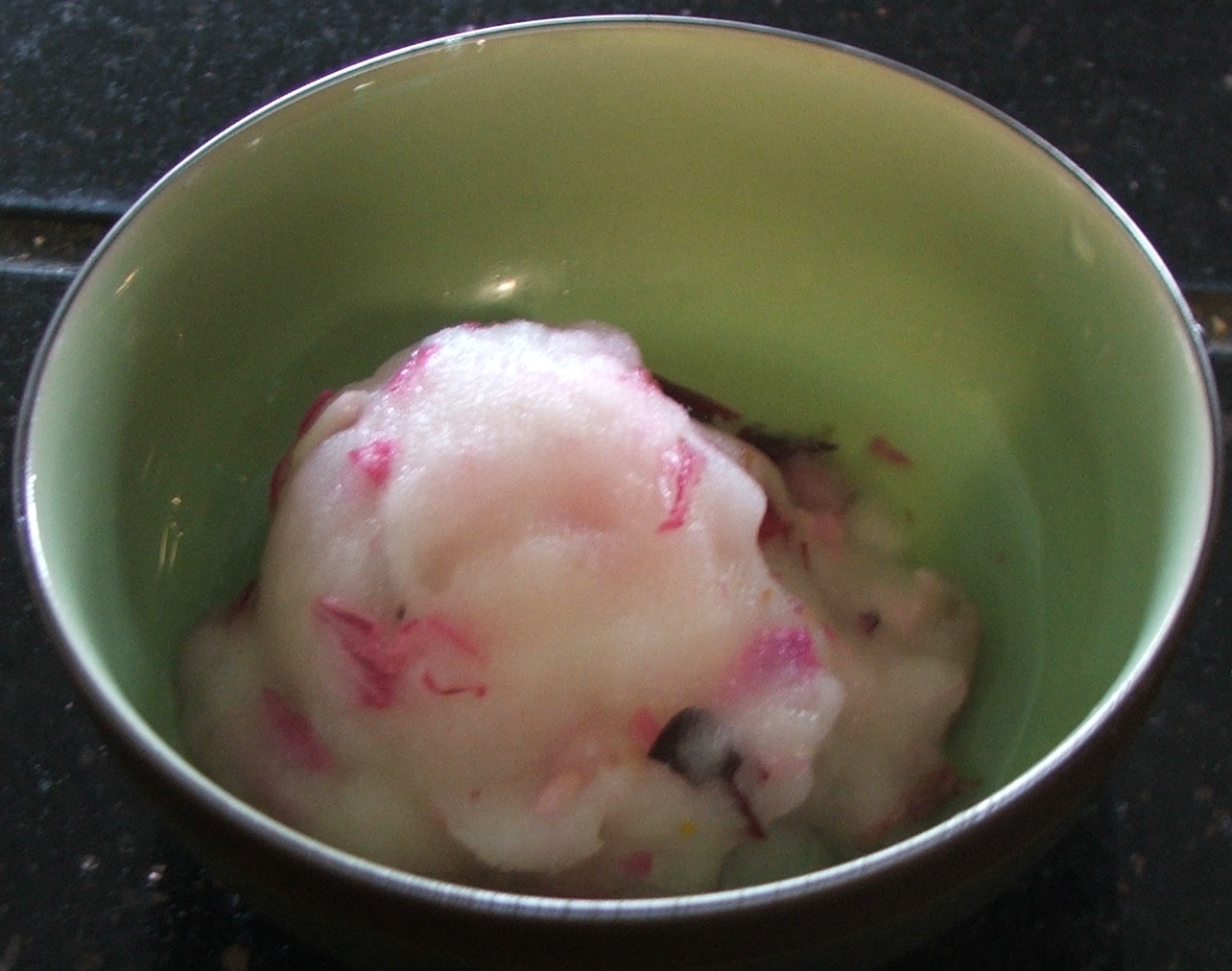 Pretty Solstice Fairy Food 1 tbsp rose water if you want more intense rose flavor. Or, you can add rose petal spread or jam to the mix once it’s in your ice cream machine. If you add it before, just be aware it will change the color.
Put champagne, sugar, and honey in a sauce pan and bring it to a vigorous boil, like it’s one the sun. Let the sugar dissolve completely, then remove it from heat and pour it into a bowl. Add the lemon juice and salt and water. If you’re adding rosewater, do so now.
Put the bowl in the refrigerator or freezer to chill like there is no sun.
When the ingredients are really really cold, brrr, like they live in Nunavut Territory, put them in your ice cream maker, according to its directions. As it begins to turn about, add the rose petals. Try different colors, different kinds, because you know the rule: PLAY WITH YOUR FLOWER FOOD! Let the machine do its thing while you decide what to do with the rest of the champagne. Drinking it is an option. If you drink enough, you’ll enjoy watching the transformation in your ice cream maker, and how PRETTY it is.
June 20, 2013
FLYING HIGH
 Wild and Big, NOT warm and fuzzy
According to many spiritual practices, each of the six cardinal directions - North, South, East, West, Skyward and Earthward - have certain spirits associated with them. In the East, where the sun rises, that spirit is often Eagle. Eagle, who sees the farthest, and flies closest to the sun. Eagle, who stands atop the Haudanosaunee Tree of Peace, to warn of anything that might cause harm. Of course, our national bird is the Bald Eagle, and other kinds of eagles have been honored around the world. When I was busy trying to rescue a wounded eagle from Afghanistan, I started looking up stories about those other eagles, wondering what the old tales had to say about this magnificent creature. And I came across a tale from ancient Sumeria, of King Etana and the eagle that helped him. I used it in my book, Saving Eagle Mitch , and here it is, for you to contemplate as the summer solstice, the big sun and the longest day, warms the earth. If you like, as you read, you can ask yourself what both the serpent and the eagle have to teach you.
From: Saving Eagle Mitch: One Good Deed in a Wicked World Humans define our world through stories, and stories are clearly shaped structures containing the important lessons of a culture. When I was talking to editors about the Eagle Mitch story, many of them scrunched up their editorial noses and said, “It’s a good story, but it’s not warm. You know, like dog stories.” Couldn’t I make it more doggie-like, they wanted to know.
No, I said. Not unless I lie. It’s an eagle story, not a dog story. It has a whole different pattern and purpose. Dog stories are about loyalty and unconditional love. Eagles are wild, noble, and fierce in their willingness to hang on. When Bald Eagles do their mating dance, the male and female soar high in the air, grabbing each other’s talons and spinning to earth, only letting go at the last possible moment.
Raptors, hold us hostage with the intensity of their gaze, and remind us of the potential power and nobility in our own souls, as we try to rise above what keeps us rooted in pettiness. Their stories teach us the difference between using our power well, and using it badly. For psychological background, I referred them to the ancient mytn of Etana, a Sumerian story dating back to about 2300 BCE.
This legend starts with local deities who are searching for a good king to rule the land of Kish after the great flood. The goddess Ishtar believes a man named Etana is the right guy for the job, and the others agree. He becomes king, and promptly builds a shrine to Ishtar and the sun god Shamash, near a poplar tree, proving them right.
As it happens, an eagle has a nest high in the branches of this tree, while a serpent has made a home in its roots. Perhaps inspired by their sacred site, eagle and serpent decide to cooperate with each other, and swear an oath of loyalty that the eagle will guard the serpent’s children when he searches for food, and the serpent will do the same for the eagle.
All is well until the eagle’s children no longer need protection. Then the eagle reneges on his side of the bargain. He eats the serpent’s children, though his own children cry out warnings against such a betrayal. When the serpent returns to find his children gone he appeals to Shamash to punish the eagle, and Shamash agrees. What the eagle did was just plain wrong.
Shamash makes a trap, luring the eagle with the carcass of a wild ox, instructing the serpent to wait inside it. When the eagle comes to eat, the serpent seizes him, clips his wings, and throws him into a pit Shamash has prepared for him.
Helpless and imprisoned in the earth, the eagle now cries to Shamash for forgiveness, and apparently the sun god has already figured out a way to teach the eagle a lesson and solve another problem at the same time.
King Etana has also been petitioning Shamash because he has no son, no heir for his throne. Shamash, in a response that seems at first to be a mythological non sequitur, sends Etana to the eagle, and the two stay in the pit together, perhaps commiserating on their bad fortune and bad choices. Etana sympathizes with the eagle’s plight and heals him as best he can. The eagle, appreciating Etana’s attention, pays him back by interpreting his dreams for him. Etana dreams repeatedly that he ascends to heaven, where the goddess Ishtar gives him the Plant of Birth, so his wife can have a son. The eagle says this as a message from the gods, and offers to bring Etana to the heavens, where he can speak with Ishtar. Etana clings to the eagle’s underbelly, and the eagle, healed by his human friend, flies up and up toward heaven. Etana hangs on, but when he looks down he’s terrified, and cries out, “I cannot see the land or the sea! Bring me back!” In his terror, he lets go of the eagle and plunges to earth. The eagle dives down and rescues him before he hits the ground.
Since everything in a story has to happen at least three times— mostly, I think, because it takes humans that long to learn a lesson— three times Etana and the eagle ascend, three times Etana lets go, and three times the eagle rescues him.
Then, on the fourth try, Etana overcomes his fear and man and eagle make it to the realm of Ishtar. The ancient text breaks off at this point, but we can safely assume the goddess was generous, because Etana is recorded as having a son, Balikh, and his dynasty continued for many generations to follow.
There were parts of this story that made my skin prickle with the kind of excitement only a true story geek gets from a text that’s numinous with archetypal imagery. The first striking element is the fact that the serpent is the good guy, and the eagle is the betrayer. That goes against most other stories our culture gives us, so it takes some pondering. I’ve been taught that in folktales and myth, each character is a piece of one whole psyche that’s attempting to integrate itself, and the events of the story make that integration happen. The story of Etana asks us to remember that while our eagle—our powerful, cerebral selves—holds the high ground, our more earthbound selves, like the serpent, can’t be betrayed without consequence. Though the eagle flies high, he must ground his power in relation to others, or his earthier self will surely clip his wings and ground him in less pleasant ways.
The eagle learns the lesson of relatedness through responding to the needs of a fearful, earthbound human—one who may be a king but is also just a guy who needs to chat with the goddess, balancing out the male and female energy of his own soul. And he does so by digging into the earth with the wounded eagle.
Etana, of course, won’t get the gifts of the goddess unless he compassionately heals the broken wings of another. As in many stories, it’s clear that in healing others, we always heal the corresponding broken part of ourselves.
And Etana’s fear at rising toward heaven is something most humans have felt in one way or another. When we leave our known emotional or geographical map to enter new territory there’s always a time between the start of the journey and the destination when what we’ve left is gone, but we can’t yet see the new land. We are nowhere, and we’re just plain scared. At that point, if we let go, it’s the task of our newly healed raptor self to dive to our rescue and make sure the journey is completed.
Reading it, I think of the powerful young men who saved Eagle Mitch, fixing his broken wing and staying with him in his earthbound pit. I think of how Mitch was wounded, shot in a war zone. I think of my own journey, the broken parts of my wings, and how they were being healed in my own attempts to save this eagle.
And I think of larger issues: our need as a nation to stay in grounded relationship with others if we’re to use our power well, our need to remember how utterly dependent we are on the health and well-being of the land that nurtures us. We are a people who dream big and look far, seeking the stars, but we can’t forget that all of us are earthbound creatures. Even those on top, those with the most money and power, had better not forget their dependence on the ones who live at the roots of the tree.
Saving Eagle Mitch is available on Amazon , at SUNY Press , and through bookstores near you.
SOLSTICE SANDWICH
 Orange as the Sun and Twice as Tasty This isn’t a cuban, but it may be a kind of variation on it, with some of the same flavor profiles. You’ll want to get lean pork, sliced thin, and you can certainly try variations on this theme - maybe smearing it with mustard or a mustard and mayo combo, or tossing some yummy olives on it as well, because you know the rule: PLAY WITH YOUR FOOD! This version makes three sandwiches.
About a pound of lean pork, sliced thin1 orange pepper, gutted and sliced VERY THIN, in strips about two inches long1 small onion or leek, sliced VERY THINAbout half a cup of sweet pickled peppers from a jar, chopped upA slice of provolone cheese for each sandwhich3 hard rollsabout a tablespoon of chopped fresh sageButtermilk to soak the pork inA slice of prosciutto for each sandwichAbout a teaspoon of garlic saltsalt and pepper to tasteOlive Oil for the pan
Soak the pork overnight in a mix of buttermilk, about a teaspoon of salt and half a teaspoon of pepper, and half a tablespoon of chopped sage.
The next day, put the pork on a cutting board, cover with plastic wrap and POUND THEM THIN LIKE YOU HATE CEOs WHO GET BONUSES WHEN JOBS ARE SCARCE!
You’ll feel much better after that.
Sprinkle the rest of the chopped sage, more salt and pepper if you want, and some more garlic salt on the cutlets.
Fire up your grill, or heat up a pan, and either grill the cutlets or saute them in olive oil until they’re cooked through. It’ll be just a couple of minutes on each side if you really pounded them like THEY WERE CORRUPT POLITICIANS! At the end, put about half a slice of cheese on each cutlet, and let it melt some, LIKE A HUMILIATED RICH MAN!
Heat up a separate pan on the stove and add some olive oil to it. When it’s good and hot, toss in the sliced peppers and onions and any other veggies you’re adding to your sandwich, and let them get warmed, a tad carmelized, but still retain THE CRISPNESS OF A RIGHTEOUS SOUL. At the last minute, add your pickled sweet peppers.
Get out your rolls, and toast them slightly if you like. Slap two slices of the pork on the bottom, cover with some of the veggies. If you want, use mayo and mustard on the roll, but my husband didn’t want that. He thought it had enough flavor as is.
Chomp away, and say Thank You to the earth and the sun, for making it all possible.
June 19, 2013
SUN WATCHERS
 Actually, the sun watches me. . . .
One of my favorite scenes to write in the Jaguar Addams novels took place in A Green Memory of Fear , where Jaguar is up on the mesas of Chaco Canyon, New Mexico, preparing herself to meet an old enemy. This scene allowed me to relive my first visit to Chaco Canyon, where I saw the ancient buildings of those people now called the Anasazi, a people who closely observed the motion of the sun and the moon.
 Fajada Butte at sunrise In order to keep track of that motion, the Anasazi walked up to the top of Fajada Butte and carved a spiral into the side of it, arranged flat boulders around it so that at noon, on the summer solstice, a dagger of light pierces the center of the spiral. Now called
Sundagger
, It’s the only such device in North America that notes the noontime solstice sun. It also notes the winter spiral with two daggers of light that hold the space between empty of light. Nearby are two smaller spirals that record the minimum and maximum orbit of the moon. What I love about all this is that it’s both scientifically accurate and complex, and artistically beautiful. And in perfect synchronicity, it was rediscovered not all that long ago by a woman named Anna Sofaer, who is an artist, a photographer. My experience of New Mexico is that it’s aptly named The Land of Enchantment, a place where synchronicity, or magic, or just really interesting stuff, happens early and often. And so it was a great pleasure to put Jaguar in that vicinity, to work her own brand of magic. Here’s the scene I wrote, which articulates Jaguar’s relationship with the sun, and talks about what it means to be a Sunwatcher in her terms.
Fajada Butte at sunrise In order to keep track of that motion, the Anasazi walked up to the top of Fajada Butte and carved a spiral into the side of it, arranged flat boulders around it so that at noon, on the summer solstice, a dagger of light pierces the center of the spiral. Now called
Sundagger
, It’s the only such device in North America that notes the noontime solstice sun. It also notes the winter spiral with two daggers of light that hold the space between empty of light. Nearby are two smaller spirals that record the minimum and maximum orbit of the moon. What I love about all this is that it’s both scientifically accurate and complex, and artistically beautiful. And in perfect synchronicity, it was rediscovered not all that long ago by a woman named Anna Sofaer, who is an artist, a photographer. My experience of New Mexico is that it’s aptly named The Land of Enchantment, a place where synchronicity, or magic, or just really interesting stuff, happens early and often. And so it was a great pleasure to put Jaguar in that vicinity, to work her own brand of magic. Here’s the scene I wrote, which articulates Jaguar’s relationship with the sun, and talks about what it means to be a Sunwatcher in her terms.FROM: A Green Memory of Fear
Jaguar watched the sun pull itself up over the horizon, then climb slowly toward the sky.She walked to a broad white rock and placed herself on it facing north, where her enemy lived.The sun climbed its way into the sky, fiery hands stroking her. She let it burn all superfluity away, leaving nothing except her work and her death. She lay back on the rock and stared up. What else was left to let go of? The answer came swiftly, with the heat of the sun. Alex.
She saw his eyes. The sweet pleasure of his eyes. She pushed a hand skyward, pressing him away. “No,” she said. She rolled over and stretched herself across the rock, belly to stone, as if it were her lover. It was gritty against her skin, old and capable of absorbing even that fire. She had to cut herself from the thought of him. She must have no distractions. The sun, an old friend, would help her get rid of them. There was a song One Bird used to sing, the story of a woman who saw a shaft of light enter her darkened room. It struck deep within her, engendering new life. She grew round and, for her part, she was happy. She was filled with life. Soon, she gave birth to twins. Twin sons, bursting with health. The young woman’s father was angry. He’d kept her safely locked away, and now this. But she remained happy. She dreamed and dreamed of the sun until he found her again, and their joy was so profound, their lovemaking so intense that she became the fire she loved and left her people, left her twin sons, left the earth. Now, she was a star in the southern sky. Later, Jaguar learned the story was part of the Mertec tradition of Sun Watchers - young women who praised the sun at the summer solstice and seduced his return in midwinter. They were made sacred by the contact, their dreams and visions taken seriously. One Bird warned her of the dangers they faced. Easy enough to die, out in the sun all day or freezing through the winter night, and even if you didn’t, what you did set you apart. Young men saw you as too powerful, already husbanded by fire. Sun Watchers rarely married, and they didn’t have children except the spirit kind. But while telling her all the reasons not to do this, One Bird also taught her all the steps of the ritual and where to perform it. Thus, in her sixteenth year, Jaguar went to Sundagger on the summer solstice, stood naked and faced the sun. What she felt and saw there was part of a vision she never revealed, but One Bird was right. It set her apart. The young men of the village viewed her with respect, but didn’t ask her to dance. And no lover had been the same since. Except Alex.
“That’s not true,” she protested. “It can’t be true.” The golden face of the sun stared down at her. She felt his heat rake like nails down her back.
You can find all of Jaguar's adventures, including Green Memory of Fear and the newest, A Strangled Cry of Fear, at Wildside Books .
 Definition of Cool Heat: Jaguar
COOL HEAT CEVICHE
This is a no-cook dish, lovely for hot summer days. The scallops ‘cook’ chemically in the lime juice. Since the scallops have to ‘simmer’ all night, this is also a do-ahead. My recipe will serve 2 or three people, so if you’re serving more, you do the math. NOTE: One reason I love this as a solstice dish is because the limes cook the scallops, but the sun cooked the limes. Yay! Go, Sun!
1/2 pound REALLY FRESH scallops (that’s IMPORTANT! I get mine at our local fishmonger, Fin , where all the fish is sushi grade.)
The juice of 4 limes, or enough lime juice to put the scallops under liquid
1/4 cup finely chopped cilantro (If your genes make cilantro taste soapy, substitute parsley because you know the rule: PLAY WITH YOUR FOOD!
1/2 cup diced mango1/2 cup diced tomato1/4 cup finely chopped scallionsSalt and pepper to tasteTabasco sauce to taste (That’s the heat part. Use as much or as little as you like. If you prefer, you can sub out cayenne pepper.)
Cut your scallops into smaller pieces - about a quarter to a half inch pieces.
Put them in a big bowl and squish the limes until they scream out all their juice over the scallops. The limes might complain, but the scallops will be quite delighted.
Cover the bowl and put it in the fridge. Wish the scallops sweet dreams. They’ll be cooking in the lime juice all night long.
The next day, a few hours before you’re ready to serve this, empty out about half the lime juice from the scallop bowl. Add the rest of the ingredients and stir gently. The scallops are still sleepy and you don’t want to wake them up yet. Put it back in the fridge until you’re ready to enjoy something cool, brought to you by the heat of the sun.
June 18, 2013
SUN SPOTTING
 Chaco Tries to Get Closer to the Sun
Our sun, one of more than 10 billion stars in the Milky Way, is, well, powerful. Temperatures in the core reach more than 27 million degrees, and you’d need to explode 100 billion tons of dynamite every second to match its energy. It was born roughly 4.6 billion years ago, and so it still a bit of a young tyke. Scientists figure it has another 5 billion years to go before it swells and becomes a red giant, then collapses into a white dwarf and slowly fades to become a dim, cool object in space. You may wonder why I’m mentioning all this, or you may already get it. Yes, the end of this week marks the summer solstice, when, in our area of the world, we get optimum time with the sun. Or, if you prefer, Sol. Helios. Ra. Saule. Amaterasu. Apollo. Garuda. Lugh. Surya. Those, of course, are names of gods and goddesses of the sun, and if you were inclined that way, now is the time to propitiate them. Be kind, be safe, but do honor our relationship with that massive glowing orb. We wouldn’t be here without it, and it deserves some thanks for 4.6 billion years of work helping to create and sustain life on the planet.
 Something Nice the Sun Does for Us So how do you honor the summer solstice? Celts and Slavs alike celebrated with dancing and bonfires, meant to increase the sun’s energy so it could properly warm and grow the crops that sustain us. My own Lithuanian ancestors would go out at dawn and wash their faces with the first dew of the day, and therefore the celebration was known as Rasa, Day of Dews. For my part, I like to collect rose petals on the solstice, which I’ll later make into rose petal jam or syrup for flavoring chicken and pork. Yum. Since the day is all about abundance and joy, that makes sense to me. This week, to honor that abundance, I’ll be posting a blog a day between now and Friday about the sun, with a new recipe and story to tell. For today, I’ll start with a Timbale, a vegetarian treat that uses early summer spinach and bright yellow duck eggs (you can use chicken eggs if you can’t find a duck). Timbale because drumming is also a really cool thing to do, to give a great big thanks to the sun, and the warmth it offers us.
 Enjoy!
You can find my favorite summertime books to read and write, the Jaguar Addams series, at Wildside Press, in ebook or trade paperback format.
SOLSTICE TIMBALE
4 eggs (Duck eggs if you have them! If not, use 5 large chicken eggs)1 1/2 cups milk1/4 cup bread crumbs1/2 tsp salt, or to taste1 10 pkg frozen spinach, chopped and drained, or enough fresh to make about a cup after it’scooked and drained
 Little Sun Drum1 tbsp. chopped fresh parsley2 cloves garlic, grated or presseda pinch of nutmeg1/4 cup grated pecorino romano cheese1/4 cup ricotta cheese1/2 tablespoon lemon juiceOptional: Throw some artichokes in the food processor and add them. Or, try a differentcombination of cheese. Next time, I’m trying feta cheese, and adding dill, because you know the rule: PLAY WITH YOUR FOOD!
Put a roasting pan on the bottom of your oven and fill it with water about halfway. Preheat the oven to 375, letting the water get hot. Just leave it there. It will keep the air moist for your little drums.
Heavily butter 6 six ounce custard cups or ramekins (I love the work ramekins. It always makes me think of tiny little mountain goats prancing about my cupboard.)
In a small bowl, add the spinach, nutmeg, lemon, cheeses, garlic and parsley and mix them up with a fork. (Spinach is easily confused, so this shouldn’t be difficult)
In a larger bowl, beat the eggs like they stole your best shoes. Add the milk, breadcrumbs, salt, nutmeg and garlic and beat some more, because nobody should steal your best shoes.
Add the spinach mixture to the egg mixture, and stir it with the fork until it’s well blended. Ladle the mixture into the ramekins (oh, little ramekins, scampering about!) and put them in the oven. Let them cook 25-30 minutes, or until a toothpick inserted in the middle comes out clean as the solstice sun.
May 27, 2013
BIG PICTURE, SMALL MOVES
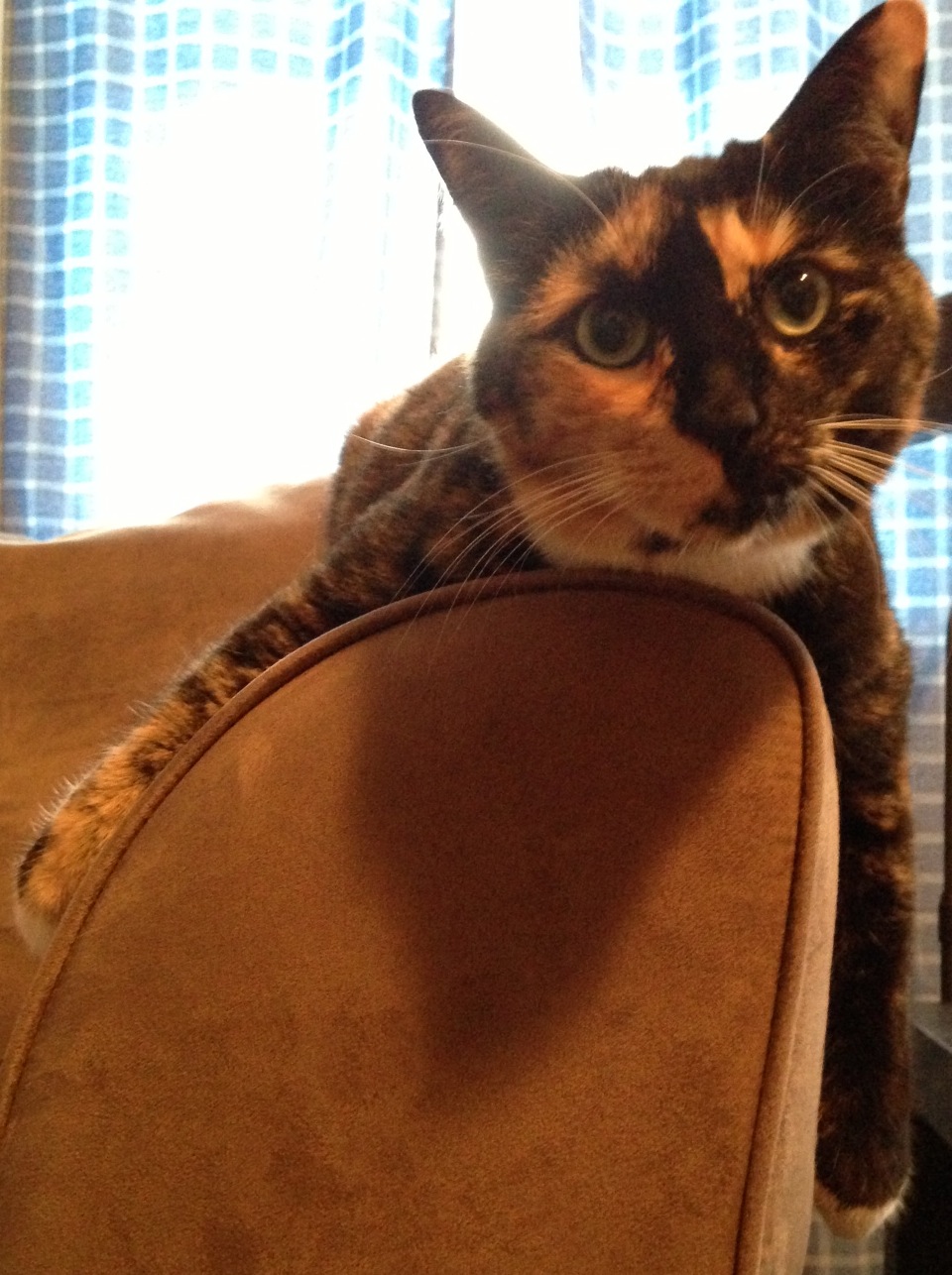 Zelda sees all, makes small moves
It’s Memorial Day, and I’m thinking about all the men and women who gave their lives for a goal they’d never see reached. That thought touches me where I live, and I hope it does the same for you. I hope you honor those who were willing to live their beliefs, and die for them, no matter what field they laid it down on. Since I’m on that kind of topic, let me just admit something right here: I believe in that kind of hope and passion and willingness to live large as your soul. In fact, everything I teach, and everything I write is about changing the world for the better. Jaguar Addams, Saving Eagle Mitch and more - every single word or world I’ve ever written or will write is meant to broaden human consciousness, to extend our capacity to love, our willingness to be the best possible humans we can be. Idealistic? Yeah. Some of you say that like it’s a bad thing, but reaching toward an ideal is the best thing we do, whether we get there in our lifetime or not. Many of the women who started the Suffragette movement didn’t live to see women vote, but the result wouldn’t have happened without them. Many of us who fight for a particular cause - saving the rainforest, preventing global warming, creating a just global economy or freeing Leonard Peltier - won’t see our goals realized, but it’s not really about us, is it? It’s about putting our drop in the bucket. Adding our energy to the store of good. Planting a tree that will mature beyond our lifetimes. This blog post is meant to encourage you to do just that.
 Because it's ADORABLE. That's why When I was in the middle of trying to rescue
Eagle Mitch
, I didn’t know if the job would be completed or not. I only knew i had to give my all to it. When I was writing
The Fear Principle
, I had no idea whether or not it would ever be published. I only knew this story and all the stories that grew in its wake had to be told, because Jaguar had something to contribute, a way of seeing the world that would help us chase love instead of fear. Nothing mattered more. So on Memorial Day, I’m asking you to think about what you need to do to make the world a better place. Do you value the safety of women? If so, male or female, you should be paying attention to the influence of the Taliban in Pakistan, and speaking out about it, as well as keeping up with legislation in the US to foster your intent. Pay attention to both local and global trends, and toss some of your energy toward the change you want to see, even if you never get to see it. You don’t know what your work will bring ten or twenty or fifty years in the future, but if you don’t do it, the world and all its creatures be diminished. One of my favorite poets, Joy Harjo, talks about looking at the world from above, shimmering and beautiful. She says: I saw revolutions, droughts, famines and the birth of new nations. The most humble kindness made the brightest light. Nothing was wasted. On a day like Memorial Day, it’s important to remember that. Nothing is wasted. It all contributes toward the good. And your voice, your compassion, is necessary. So find your ground and stand on it. Find your cause and fight for it, hard as you can. That’s what you’re here for - to live love, in the best way we know how.
Because it's ADORABLE. That's why When I was in the middle of trying to rescue
Eagle Mitch
, I didn’t know if the job would be completed or not. I only knew i had to give my all to it. When I was writing
The Fear Principle
, I had no idea whether or not it would ever be published. I only knew this story and all the stories that grew in its wake had to be told, because Jaguar had something to contribute, a way of seeing the world that would help us chase love instead of fear. Nothing mattered more. So on Memorial Day, I’m asking you to think about what you need to do to make the world a better place. Do you value the safety of women? If so, male or female, you should be paying attention to the influence of the Taliban in Pakistan, and speaking out about it, as well as keeping up with legislation in the US to foster your intent. Pay attention to both local and global trends, and toss some of your energy toward the change you want to see, even if you never get to see it. You don’t know what your work will bring ten or twenty or fifty years in the future, but if you don’t do it, the world and all its creatures be diminished. One of my favorite poets, Joy Harjo, talks about looking at the world from above, shimmering and beautiful. She says: I saw revolutions, droughts, famines and the birth of new nations. The most humble kindness made the brightest light. Nothing was wasted. On a day like Memorial Day, it’s important to remember that. Nothing is wasted. It all contributes toward the good. And your voice, your compassion, is necessary. So find your ground and stand on it. Find your cause and fight for it, hard as you can. That’s what you’re here for - to live love, in the best way we know how.To find out more about how one eagle contributed his part to the world, check out Saving Eagle Mitch: One Good Deed in a Wicked World. To learn how Jaguar gets the job done, go to Wildside Press.
FOSTERING WORLD PEAS
Of course, today’s recipe is seasonal, sustainable, and for me, all about local food. Really local, since I grow my own peas. You can use your own, or frozen if you can’t find fresh. It’s a simple recipe, but full of yum.
LETTUCE AND PEA SOUP (serves 7 idealists, if you give them some chocolate for desert)
 You can add parsley, or mint
1 tablespoon butterThe white parts of 4 leeks, chopped and washed2 cups veggie broth or chicken broth2 cups water1 head lettuce, chopped - iceberg, romaine, boston or butter are all great. About 1 1/3 cups of fresh peas, or 1 ten-ounce package frozen peas1/4 cup fresh dill1/2 yogurt or light cream (on the side)1 lemonsalt and pepper OPTIONAL: Mint, Parsley, Thyme
Get a good size pot and put it on medium heat. Add the butter and let it all melt into a state of total relaxation, feeling good about the world, maybe singing something from The Turtles.
Add the leeks, some salt and pepper, and a bit of the dill. What you’re doing is layering flavors, because persistent pays. Let them get soft and slightly transparent, like a young man in love. Add the peas, and then the lettuce, then the water and broth. Let it all dance around for about 15 minutes.
Pour everything into t a blender and puree it up. Put it back in the pot and add the juice of one lemon, and adjust the seasoning to your preferences.
If you like heat, at this point you could toss in some tabasco. If you want more zing you can toss in some Mint. If you want a deeper green, you could add some spinach. If you’re inspired in your own way to add something else go ahead because you know the rule, PLAY WITH YOUR FOOD!
Taste. Go mmmm. Adjust seasoning if necessary. You can add the cream or yogurt right before serving, stirring it in. Or, if some of your dinner companions are vegan, serve the dairy on the side and let people PLAY WITH THEIR OWN FOOD!
Peas and Love to you all.
May 11, 2013
COMPLICATED MOTHERING
 It's Complicated
My mother always ranted at us that Mother’s Day was a male-inspired, Hallmark card conspiracy meant to absolve us from being good to mothers the other 364 days of the year. We weren’t allowed to buy gifts for her, though we could make our own cards and bring violets if we picked them ourselves.
Her iconoclastic attitude had a lesson for us: Make it real, or leave it alone. Mothering is no four stanza rhymed verse in pink, and don’t you forget it. I didn’t. Having grown up with my particular mother, and being a mother myself, I know that our relationship with our mothers is complex as the universe, complex as the biological process it takes to create and birth and then nurture a child to adulthood. My mother’s objection to the holiday’s attempt to sell a false and simplified image of motherhood was valid. Even my friend who claims her mother was the prototype for June Cleaver will say that growing up with her left her with some stuff to work out. She had to learn how to get things wrong with grace. For my part, I was raised in the era of June Cleaver, with a mother who was a cross between Roseanne and The Ghost Whisperer, which left me with a different set of issues. Let me give you an example of her style: At the point where she’d admit she was old - at about 81 - she got a call from a telephone company offering her a special plan for long distance services. “My friends are all dead,” she told the lady. “You got a long distance plan for that?” And honestly, she didn’t need one. She was a bit of a witch, knowing what she needed to know without the use of technology. Or, as she put it, “I can smell it.” She had other interesting attributes. She was a master storyteller - i.e., liar - who never let the truth stand in the way of a good story - i.e., a story that made it seem like a privilege to eat liver, or wash the dishes. She was great with a guilt trip, understanding instinctively that the silent treatment was the worst possible punishment for sins real or imagined. Within it, we’d dig our own holes of culpability, much deeper than any she could create for us. She was also the Anti-Emily Post, someone who cared nothing for table manners. There were five children, two grandparents, and my parents at our dinner table, and really, she had no time to waste on etiquette. In fact, she encouraged us to make our mashed potatoes into gravy filled volcanoes, which we could explode with our forks, and to draw things on our plates and napkins with ketchup and mustard. Now, when I’m out to dinner with regular people I still forget my manners and start using my finger to sketch strange drawings with my coulis or hollandaise sauce. It takes me a moment to realize the raised eyebrows are for me. Then I shrug and say, “Sorry. Raised by wolves.” How do you fit any of that in a Hallmark Card? On this Mother’s Day, Mom, I’m thinking of you,
 Ziggy, Also Raised by Wolves Wiping my shirt which is covered in goo.
Or maybe this?
Mother, oh Mother, you filled me with guilt so great it would make the rainforest wilt. But now that I know how you got the job done, I can use it myself on my number one son. So thanks!
Listen, my mother was all of herself, and I inherited both the blessing and the curse of that, as we all do from our parents. There’s still a few memories about her that hurt, and send me in the wrong direction in my life. There’s also many lessons that served me well. All in all, she nurtured a healthy respect for what’s wild in the human soul, and without that I certainly couldn’t write Jaguar Addams , nor would I have been crazy enough to help rescue Eagle Mitch from Afghanistan. So this mother’s day, let’s acknowledge our mother’s complexities, admitting they got things wrong, because it’s impossible not to. If we’re lucky, they also got a lot of stuff right, and the balance leans toward love rather than the inevitable errors and pain that parenting brings. Or, if your mother really missed the boat, go ahead and admit you got a bum deal. Break a few plates, or kick something and yell about it. Then treat yourself to a really good dinner. After that, if you haven’t already, you can go searching for a mother of choice. Pick one whose life speaks of what it means to love deeply and fiercely. A woman whose biggest errors and victories grow from a core of integrity. It won’t be comfortable, but it will be real. My mother died three years ago, and to my surprise, she remains dead, even on the days I want to call her. So this year, in the spirit of someone who doesn’t need a long distance plan to speak with the dead, I’m sending her a poem I wrote for her - one which you won’t read in any Mother’s Day Card except one that I make personally for her, with wild violets pressed inside. If I’m lucky, she’ll call back, and let me know everything in it that I got wrong.
The Secret Animal Life of My Mother
My mother is not a horse. She does not stamp her hooveson dusty earth or let her loose, dark mane catch the night wind. She does not sing like horses running. She does not run hard. She did not run away.
She ran away.
My mother is not a wolf, though sometimes you’ll see the grey hill of fur and toothcrouched restless at the back of her neck. She does not break paths to this full moon or that crescent dipped in darkness. She does not howl (unless aloneon a mountain where her people lived and La Lupa suckled countries to life.)
My mother, who is not a wolf, would not be a cat.She refused to be a cat. Refused to be a black cat or fluffy white or streak of goldstroking song out of air with motion. She would not be a cat. Gave back her leopard's skin. There.
Don't ask my mother about birds. Wings fluttering frighten her with flight and vertigo. She will tremble, shudder, and at the back wall of her eyes you will see coursing crows perched over small animals shedid not want to eat. My mother did not screech or caw. Hardly ever. Don't ask her about it now.
And the white fish swimming blind under eons pressure in the rounded out corners of earth'swomb - That's not my mother.The white fish with fins billowing sheer as the curtains that dance in the storm-tossed house of my dreams - My mother is not a white fish with elusive fins.
If you want to know my mother look around the edge of smoking cookfires behind rocks under foreign skiesand you might catch a glimpse of her stalking the unnamed secret of her self. Hear the prowl and pounce of words openingdoors, closing windows, shaking out the rugs,with her animal life peering at you from raucous hair, proud back, and the dark wings that take flight in her eyes.
You can find out more about wild child Jaguar Addams at Wildside Press. And you can find out how my mother taught me to help a Navy SEAL rescue an Eagle at SUNY Press.
Look, no matter what my mother taught me, I’m going out to eat on Mother’s Day. No cooking for me. However, if you’re looking to honor a mother, particularly an Italian one, here’s my grandmother’s recipe for homemade gnocchi (pronounced nyoki), something my mother and I both loved, and an ultimate comfort food.
GNOCCHI
NOTE: Like any pasta, making really good gnocchi is a matter of developing a feel for when the dough is right. The need to add water or not will vary depending on the weather, the time of year, the kind of flour you use, and so on, so here’s my advice: Make it, and if it doesn’t come out, try it again another day. Keep trying it, until you get it right, remembering that both good mothering and good cooking takes a few tries.
5 large idaho potatoes2 large eggs1/2 cup fresh grated locatelli romano cheeseabout 2 1/2 cups Doppio (00) flour
 Pasta Bowl, and Doppio FlourPierce the potatoes, and bake them in a 375 degree oven about 45 minutes, or until they no longer resist you if you stick a fork in them. While they’re still compliant, put on gloves and peel them - really, what you do is kind of rub off the skin, or squish them out through the skin. It’s not pretty, but you’ve seen worse things in horror films, so deal with it.
 Put the potatoes through a ricer or food mill into a large, shallow bowl like my grandmother’s pasta bowl (photo below). Let them sit there and get over themselves for an hour or two, or even overnight if want. Take an example from my mother and give them the silent treatment. I think it works on food as well as people.
When you’re ready, in a separate bowl beat the eggs and cheese together and pour this over the potatoes. Pour the flour over it all.
Now get your hands into it, mixing it all up, kneading it until you’ve got a dough that’s slightly moist, but not tacky. If it’s too wet, add more flour.
Divide the dough into two or three parts, and roll each part into a long rope, about an inch thick. Use flour to keep it from sticking to your work surface. Cut the ropes into 1/2 inch pieces and put them on a well floured baking sheet, ONLY IN ONE LAYER!
Put a BIG pot of salted water on the stove and bring it to a boil Ad the gnocchi and cook until they float to the top, relaxed and puffy as drunken sailor boys. Scoop them out, and cover with your own special marinara sauce, or pesto, or cheese or something else because you know the rule: PLAY WITH YOUR FOOD!
April 30, 2013
A TOAST TO JAGUAR
 Just Enjoying the Ride
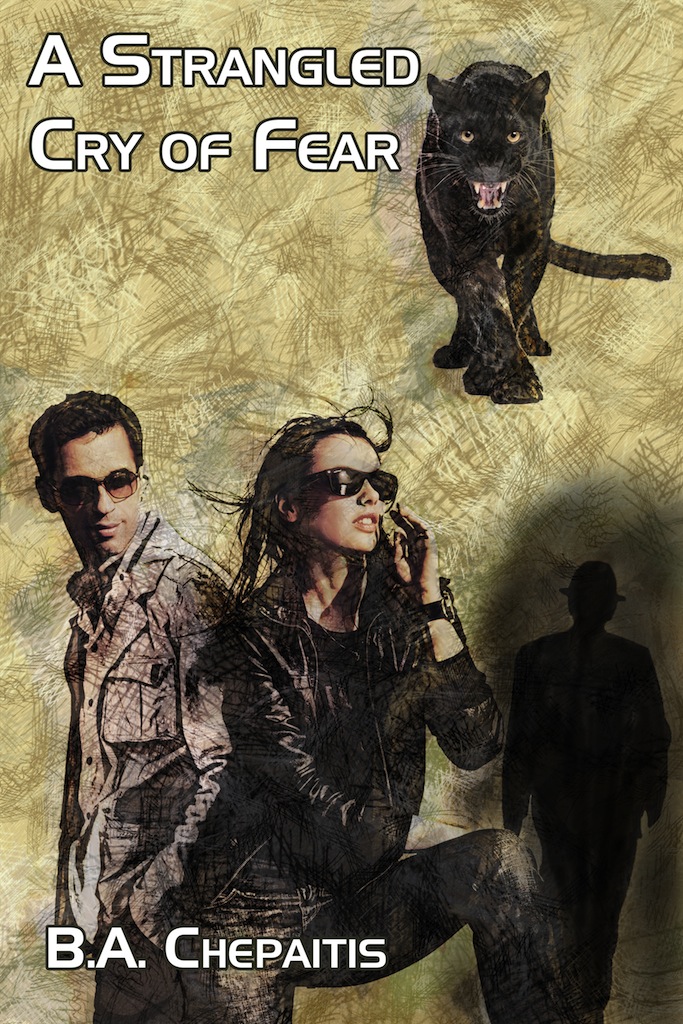
This week I’m celebrating the release of the sixth Jaguar Addams novel, A Strangled Cry of Fear. ( Wildside Press ) If you’re new to this blog, or managed to read it and not figure out what her world is like - no easy feat - here’s the precis on the series, as it says on the back of the books:
On Prison Planetoid Three, Jaguar Addams establishes an empathic link with the darkest criminal minds, forcing offenders to face the fears that drive them to their most desperate acts.
Just like a mystery series, each book is its own case, and this is the synopsis for Strangled Cry of Fear:
Jaguar is sent back to Planetoid One, her first Planetoid assignment, to investigate a prisoner convicted of killing Supervisor Diane Lasher, once her friend. As she walks the corridors of her own past, Jaguar is haunted by ghosts who might or might not be real, and plagued by attempts to kill her before she gets to the truth. Alex takes extreme measures to make sure he’s there to protect her, before she becomes one more victim of the strangler whose life is in her hands.
Ghosts, old friends and enemies, Alex in disguise. It’s just fun, but then again for me, Jaguar is always all that. For thirteen years, it’s been my privilege to work with Jaguar and her friends, and I have to say it’s been a hoot and a half from the start. Series themselves are a creature some writers love and some hate, and I definitely am on the love side. Writing a series gives you both variation, and familiarity. With each book you get to twist up a whole new plot, but you also get to grow your characters over the course of years, and spend time with them on a regular basis. Need I remind you that some of my best friends are imaginary? No. Of course not. And a series means I don’t lose them after just one book. What writer could ask for more? So I’m glad Jaguar found me, glad I get to keep playing with her. To celebrate thoroughly, here’s an excerpt on what happens when Jaguar craves toast, and a recipe of toast - both best enjoyed while you raise a glass of tequila and throw it down your throat, Jaguar style.
From A Strangled Cry of Fear (available at Wildside Press, and Amazon)
Jaguar’s clock said 7 am. Early for her to rise, but after a night of dancing, she was hungry. She wanted toast. She’s stocked in bread and cheese and tea for her own room so she could eat here, without any other human presence. The thought seemed wonderfully decadent to her right now, a guilty pleasure. She got out of bed, found her bread and cut a few slices, brought it to the toaster oven.
 As her hand reached out to open it, her intercom crackled into life.
She turned to it, heard a low, strange voice. “Don’t touch it,” the voice said.
She looked at her hand, at the toaster oven, back at the intercom.“Who’s there?” she asked.
There was a whispering of many voices, which returned to the first voice she’d heard. “Don’t touch it.” As it spoke, she realized what made it strange. It was too slow, like a recording played at the wrong speed. “Is this a joke?” she asked. Again that whispering, and the slow voice. “If you touch it, you’ll die,” it said.
The intercom crackled, and was silent. Jaguar put the bread down and stared at the toaster oven. She lifted a hand to perceive what energy it was putting out. She sensed rather than heard a humming, and felt a charge way too strong for a toaster oven. The current was running too high. There was a short in the system. If she’d touched it, she wouldn’t have felt a thing for a long time. Maybe not ever again. She lowered her hand, walked over to the intercom and studied it, made sure the charge around the intercom was running normal, then pressed the button for security. A voice responded, sounding a little distracted. “Security,” it said. No drop in pitch, no static. Just a clipped male voice, irritated. She dipped into his mind long enough to learn he was watching an interesting net show that could loosely be construed as a sexual harassment program, if you took out the word harassment. “Good porn?” she asked.
“What?”
“Never mind. I don’t give a rat’s ass what you do in your cubby hole. This is Dr. Addams. Did you just call me?”
“No, miss,” the answered. “Do you need assistance?”
She rolled her eyes. “It’s Dr. Addams. There’s something’s wrong with my toaster oven. Who do I talk to about that?” “Maintenance, mi—Dr. Addams. Extension 5562.” “Thanks,” she said, and ended the communication. She went to her telecom and punched in the extension for Maintenance, told them about her toaster oven not working.
“Yeah. I’ll send someone with a new one,” a desultory male voice told her.
She made herself coffee and sat brooding with it. There was a lot tobrood about, but none of it got her much of anywhere. When she heard a knock on her door, she was glad enough to stop. She opened it, and admitted a burly man with a lot of hair and very large hands. “There’s a short in my toaster oven,” she said. “Okay,” he said. He moved to it, reached a hand out. She grabbed his wrist. Her hand didn’t reach all the way around. “Don’t touch it,” she said. “It’s live.”
He pulled away. “If it was live, it’d be humming,” he said.
“It is. Can’t you hear it?”
His face expressed something rude about the female mind. “I don’t hear a damn thing,” he said.
“Then humor me. Don’t you have gloves? Insulated gloves?”
He gave her a scornful glance. “Lady,” he said, “it’s a toaster,” and he put his hand on it.
For a brief moment he lit up like a Christmas tree. Then he dropped. “Mister,” she said, “you’re toast.”
JAGUAR’S FULL MONTE
Like writing a series, cooking is often all about variations on themes, and here’s a variation on the Monte Cristo sandwich I thought Jaguar would enjoy. It’s savory, sweet, salty, and can be varied other ways as well so you go ahead and try your own version because you know the rule: PLAY WITH YOUR FOOD!
The measurements are for four half sandwiches, which you could cut into quarters and still feed the folks because it’s pretty hearty fare.
1 loaf of Challah or good white bread, sliced about 1/2 inch thick
 With a Red Knife, Of Course1 apple, peeled and cut into slices that are trim and slim, but not transparent or sickly.About a cup of smoked gruyere cheese, gratedThree or four slices of an onion, thin enough to worry about. (Use a mandolin if you have one.)6-8 slices of boiled ham, slim but not sickly, and GET THE GOOD HAM! YOU DESERVE IT!
3 eggs and 2 egg yolksTwo tablespoons of half and half1 or 2 tablespoons of maple syrupA dash or two of saltOptional: Tabasco sauce, shaken at your command
This is like a French toast sandwich, so get out the griddle or pan you use to make French toast. If you’re using an electric or built-in griddle, warm it up to 350 degrees. Also, cut your sliced bread into half slices, and put it in a warm and SAFE toaster oven or regular oven, at around 200 degrees. You want it a little crunchy on the outside, but soft on the inside. Like something Jaguar would eat.
Get a nice wide, shallow bowl and put the eggs in it (You can use 4 eggs instead of the two yolks, but the extra yolks makes it kinda rich, like Jaguar.) Add the half and half, maple syrup, a dash of salt and, if you like heat as much as Jaguar, the tabasco. And don’t skimp on the maple syrup either, because that does something incredibly yummy to the flavor of the whole thing. Beat this all together - I use an eggbeater rather than a whisk, to make sure it’s all smooooooth as Jaguar facing down a killer toaster.
Let it sit. It won’t run away.
Put some butter on your griddle or in your pan, and when it’s warm and lovely, put in the sliced apples and onions on one part of it, the ham on another. The goal is to carmelize the ham slightly, and just warm up the apples and onions. You want the apples to retain some some bite. I mean, this is for Jaguar, after all.
When that’s all done, assemble your sandwich, thusly: slices of onion on the bottom, then slices of apple, then ham, then the cheese. Distribute it equally among your bottom slices, then press the top slices - well, on top, right?
Then you have to dip each sandwich half in the egg mix, and I used tongs for this. Much much easier that way. Let it sit a moment and drink in some of the mix, then use the tongs to flip it over and let the other side drink. Put it on the griddle and do the next until you’re done. You want a slowish cook on this, so if it seems like it’s getting too brown or going too fast, turn the heat down.
When you’re done, raise your toast to Jaguar and enjoy.
SCIENCE EXPERIMENTS: Just so you know, I’m messing about with some sweet variations on this theme - blueberry and peach on cinnamon bread with mascaropone, or maybe cherry ricotta, with a bit of chocolate? Future blogs will tell all.
April 22, 2013
EARTH DAY, IN PARTICULAR
 Every day is Earth Day, Right?
It’s Earth Day, a day to appreciate our immensely improbable planet, which we share with even more immensely improbable creatures like tarsiers, hedgehogs, hummingbirds, cockcroaches and newly green grass. It’s good that we set aside a day for this, because in the rush and tumble, we don’t notice that we walk on a precious blue jewel spinning in space. We take for granted the billions of years this Great Mother spent stringing together the molecules it took to put us here, spinning and weaving the strange song we’re privileged to hear on a daily basis. Well, those are big notions, and it’s one thing to say ‘love the earth,’ but that job can feel overwhelming for most of us. I mean, it’s a small world and all, but I wouldn’t want to have to paint it, would you? Of course not. So I recommend you find the piece of it you’re meant to care for, and go care. Now, don’t go arguing that it won’t do any good. Ecosystems are dynamic systems, meaning that small input can create larger change. And even if it doesn’t, at least you’ll have done what you can. That’s something I had to tell myself a lot when I was involved in the saga of trying to get Eagle Mitch, a war-wounded eagle, out of Afghanistan and to safe haven here. Often, when I was awake at 2 am, searching for the right person to call at the Department of State, or composing strongly worded notes for Facebook, I asked myself why I was doing this, for one bird, not part of an endangered species. In fact, Eagle Mitch, a Steppe Eagle, is officially classified by Fish and Wildlife as a ‘bird of least concern.‘ As I beat my head against various walls, I assumed I fell into a similar category, a person of least concern. But the particularity of love is never of least concern. That specific bird needed help. I was one of the people asked to give it. Would the environment tumble if I said no? Hardly. But my life, and the lives of quite a few other people, would be much less rich. And the issue of supporting compassion for what’s wild is a big one. It deserved a leg up in a wicked world. There’s this writing trick I play on my writing students now and then. I give them the assignment of writing about love, then add that they have to start with a color, must include a sound and a tactile sensation, and can’t use the word love. Because I made them start with a particular, their writing was richer, their ability to translate feeling into words more lusciously complex. Billions of years ago, we gradually grew from stardust, from little bits of stardust and carbon. Writing is at its best when we ‘give to airy nothing a local habitation, and a name.’ And loving the earth gets real fast when we love a particular bird, or stream, or tree, which we’ve befriended, and which has been our friend. So today, for Earth Day, recycle, and write a politician about an important environmental issue you believe in. Then go out and find a bird to admire. Kiss a tree. Pet a patch of grass. Send your love to the clear blue sky. Remember that though some people might call it ‘nature’ or ‘the environment,’ really, what you’re touching is simply home.

You can find out more about Eagle Mitch at SUNY Press and Amazon.
SUPER SUET
Eagle Mitch, now thriving at Berkshire Bird Paradise, prefers a nice juicy ratsicle (frozen rat), so I have to content myself with making treats for my backyard birds. And of course, they give back, bringing color and song when the world is dismal and cold and grey, being cute or funny or astonishingly beautiful. To thank them, during the worst part of the winter and breeding season, I make them SUPER SUET. Well, I’m half Italian. They look hungry, so I cook for them. Here’s how I make sure they’re well fed.
1 pound beef suet1 small can vegetable shortening1 medium jar peanut buttersome chopped up dried cherries, blueberries, and/or cranberriesdried mealwormsbird seedNOTE: This is a very forgiving food to make. You can vary proportions of any of the ingredients, and the birds will still eat it, and continue to sing. So use all seeds instead of fruit or mealworms, or all mealworms, and so on, because you know the rule: PLAY WITH YOUR FOOD!
Put the suet in a big bowl and microwave it for about five minutes. It will begin to render down. Keep zapping it until you’ve got mostly liquid - and this can take a few times, so stick with it. Also BE CAREFUL NOT TO SPLATTER YOURSELF! That stuff burns.
 All for the BirdsWhen it’s mostly rendered, you can mush around the big chunks with a fork, and if you’ve got dogs take out a couple of the chunks that remain to cool down for dog treats. They’ll appreciate your thoughtfulness.
 Add the peanut butter and shortening, then zap it again, for three or four minutes.
Stir it up, let it cool a little bit, and pour it into flat molds of your choosing that will fit in your suet feeder. I use the leftover containers from store-bought suet. You could use just about any mold that’s about the same flatness.
Being generous as the birds, add some chopped up fruit, dried mealworms, and/or seed to each mold.
Let them cool in the fridge, then feed your feathered friends.
April 10, 2013
PRIDE AND INSECURITY
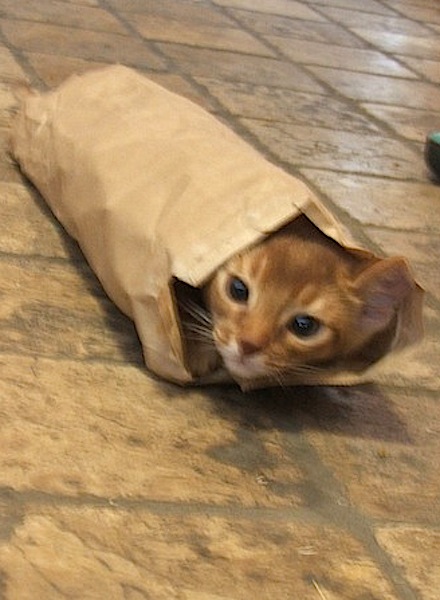 Chaco Deals with Insecurity Like This What I’m talking about is that I’ve got a new nonfiction book out - Saving Eagle Mitch: One Good Deed in a Wicked World. It’s a book that chronicles my attempt at achieving something impossible, and the people who helped get it done. I’m proud of what we all did, and proud of the book itself, because it offers both hope and some practical advice for anyone trying to better their world. Because of that, I’m really celebrating its arrival in the world, just in time for the return of spring birds and peepers peeping. But if you think I’m just celebrating, clearly you’re not a writer. I’m also twitching. Picking fights with my husband because he’s bantering when my ego is fragile as a warm day in April. Wishing I was a drinking woman, or had some other really reliable opiate addiction, because sending a book into the world is no small thing. Not at all. Not ever. Don’t let anyone tell you it is. Of course, it’s possible that I’m just a terribly neurotic writer. Wait a minute. Let me amend. Quite a few therapists would agree that I am definitely a terribly neurotic writer. On the other hand, I think the moment of a new book’s arrival in the world causes a tremble or two for steadier hands and heads than mine. It’s like having a baby. SO much joy. SO much fear. SO much EVERYTHING! Or maybe, more appropriately, like sending your child to kindergarten for the first time. How will they be received? Will they make friends? Will the teacher yell at them? Will they get bad report cards? Will they, in any way at all, be treated BADLY because if they are, you’ll probably have to beat someone up, which your lawyer won’t like much. For my part, I’ve been known to end up in the doctor’s office with torn neck muscles, because I carry the whole print run of a new book in my teeth, emotionally speaking. Well. Oh well. In spite of that, it might surprise you to learn that there’s a positive side to my neurosis. I’ll explain. At some point in the writing process, all writers hit a moment when they feel like an absolute fool (see last week’s post: The Fools of April). When they believe, realistically or not, that what they’re writing is just smelly awful cruddy fetid stuff at the bottom of old meatloaf in the back of the refrigerator. When they’re sure that they don’t have a clue what they’re doing, and should be shot before they write again. When that moment comes, many people stop writing, and call it ‘writer’s block.‘ That’s never happened to me, not because I’m a better writer, or because I’m less insecure, but because of the timing of that moment for me. I am truly blessed, because the imps of insecurity don’t arrive for me until a) I’ve got an editor reading the thing, or b) It’s just been published. Really. Think about how convenient that is. All my insecurities are willing to hold off until the job is done. Then I just take out the change on the back of my neck, once I’m ‘successful.‘ How do I do this? Well, lots of trauma in a complex childhood left me with a large capacity for denial, and in this case, it serves me well. I’ve learned to direct that denial toward my goal (FINISH THE BOOK! FOR GOD’S SAKE, JUST FINISH THE BOOK!), and I’ve established a bargain between my conscious and subconscious mind to let me have what I want before I fall apart. As a result, when I’m writing, my emotional eye isn’t on what’s wrong with me, but on love of the job at hand, which I get done. After it’s done I can collapse into the ganglionic goo of insecurity. If you’re a writer reading this - or if you’re someone engaged in another high risk activity like falling in love, or trying to change your corner of the world for the better in any way - I highly recommend nurturing that kind of timing. You can’t help but be insecure, because you’re human, but you can learn to delay the insecurities just a little while. Now a little bit more. Keep writing. Keep sending work out. Keep loving. Keep making the world better. Now a little bit more. Time enough, and valium enough, to be a wreck when the job is done.
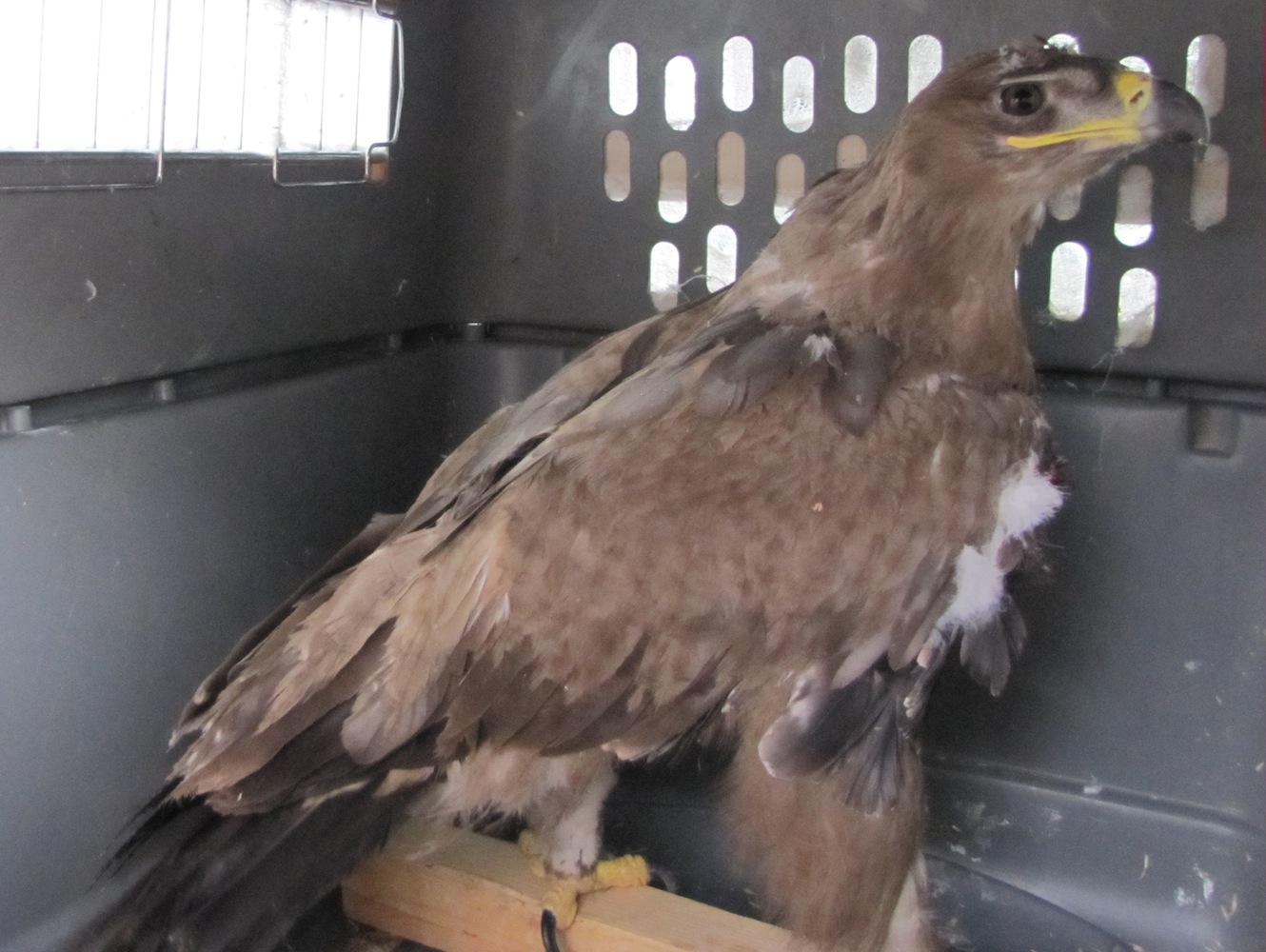 Mitch Has Also Known Fear Come to think of it, the job of rescuing Eagle Mitch took a lot of that kind of thinking. So do all really good and difficult ventures. And if you didn’t have a traumatic childhood to teach you the terms of denial, that just means you get to work out your own terms now. On your time. At your convenience.
If you need some inspiration to get through your own impossible task, Saving Eagle Mitch is available at SUNY Press , and amazon.com. You’ll find out about my other books at wildreads.com
ARTICHOKE SOUP FOR NEUROTICS EVERYWHERE
This artichoke soup was a surprise to me, because it had the creamy goodness necessary to qualify as comfort food, and a brightness that brings light to the angst ridden soul. It’s familiar enough and strange enough to help you negotiate your insecurities, when you find you’re off your own known emotional map.
1 can of quartered artichokes, or a package of frozen artichokesabout 5 cups chicken or vegetable broth1/2 cup heavy creama few grates of nutmeg1 cup frozen spinach1 clove garlic, crushed like an enemyabout a tablespoon of chopped fresh parsleySalt and pepper to taste
If you like, you can add these yummy little polpettina to the soup when it’s done:
CUTE DUMPLINGS
1/2 cup freshly grated parmesan cheese1/2 chup freshly grated pecorino romano cheese1/2 cup dry bread cups1 clove garlic, pressed like a lawsuit through a garlic press1 tablespoon fine chopped fresh parsley2 eggs, lightly beatensalt and pepper to taste
 The Taste of Comfort
For the soup:
Put the artichokes, parsley, nutmeg, garlic and seasoning in a pot on the stove at medium heat and get it all warm and cozy, bringing it to a simmer and letting it simmer for about five minutes.
Puree it in a food processor and return to the pot, on the stove, going back to warm and cozy. Add the spinach, and if you like you can add some mint, too, because you know the rule: PLAY WITH YOUR FOOD!
Add the heavy cream, and adjust seasoning. Turn the heat off, or keep it at low low simmer. NO MORE BOILING!
The cute dumplings:
In a bowl big enough to wash your pet bunny, combine the cheeses, the bread crumbs, the eggs and parsley and garlic and seasoning. Mix until you have a soft dough.
Get your hands wet, and roll the mixture into miniature meatballs (about 1/2 inch) Ask them to sit nicely on a baking sheet rubbed with olive oil, in the refrigerator for at 30 minutes. They can be left alone overnight if you like. They won’t bother the leftovers.
When you’re ready to cook them, get a pot of salted water on the stove and set it on high until it’s boiling, then reduce it to a simmer. Drop the meatballs into the pot one at a time, saying a little blessing over each one (Oh, polpettina, may you be tasty, may you be soft and light!) They’ll sink, and rise, just like the emotions of a writer with a new book out. Cook them about 5 minutes, then remove them, and add them to the artichoke soup.
Bella! Bella!


