
Barbara Chepaitis's Blog: http://aliterarylunch.blogspot.com/2015/07/frying-mad.html, page 3
March 8, 2014
SHINY
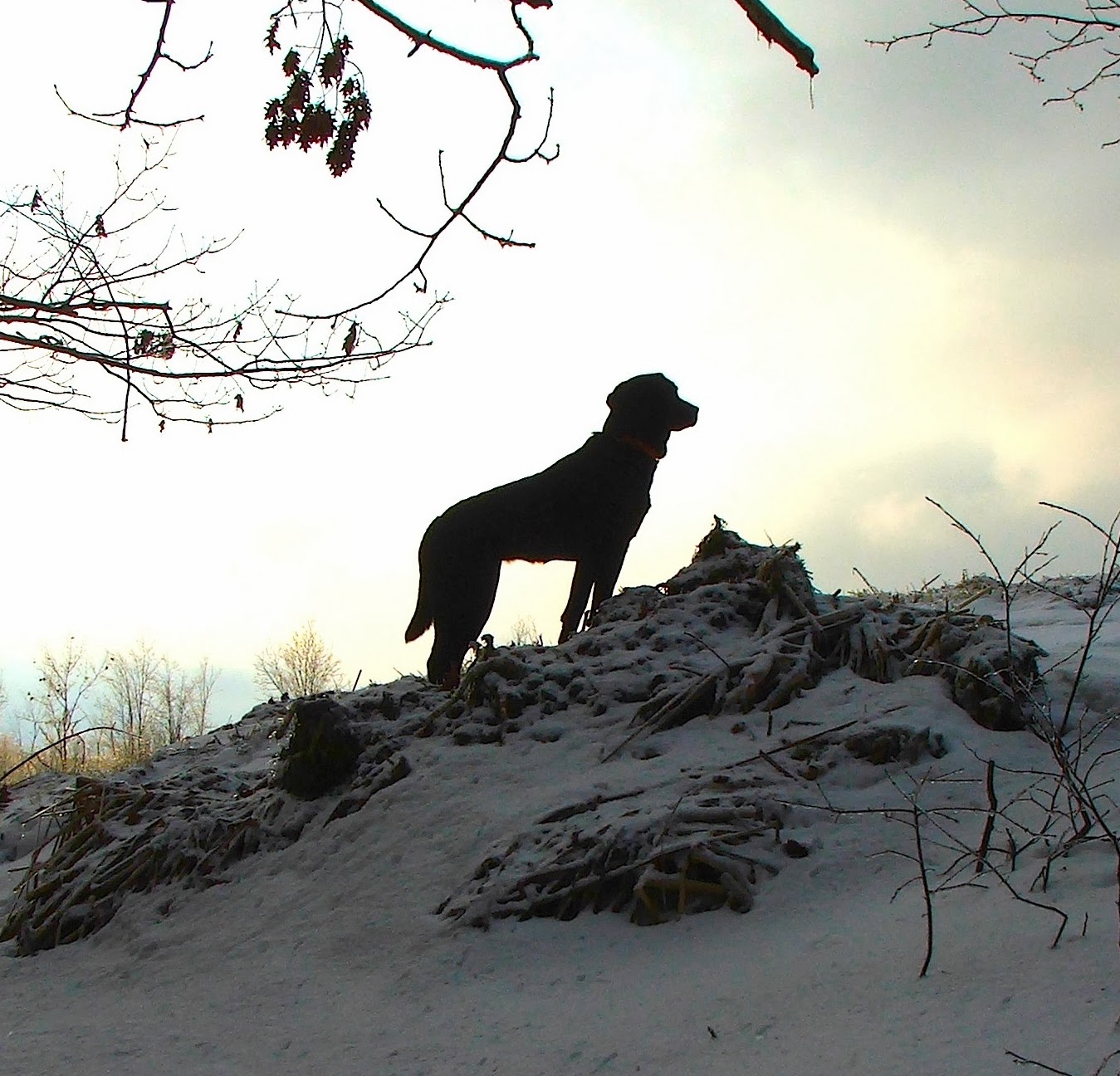 Looking at Sunshine During this phase of Luna’s training I took her a lot of different places, partly to socialize her, and partly because I still needed to bond with her. I was beginning to understand dogness, but I needed more training of my own. We went to the grocery store, and I’d have her sit while people went in and out, and she could greet them as long as she didn’t leap. Which she still tended to do. Labs are an exuberantly social breed. But I’d tell everyone who passed that she was in training, and they could pet her only if she was sitting, and everyone seemed to understand. Many people told me stories about training their own dogs, and the techniques they used. Many people said it was smart to get her out at a young age and do this. It would, they said, have a good pay off over the years. I also took her to my classes at UAlbany, and she learned how to pay attention to me in spite of many, many distractions. She also got really good at not freaking out at the high pitched sound of female undergraduates squealing with delight. “Puppeeeeeeee!” was the resounding cry, as a group of them rushed us, and I heard from both young men and women about how long it had been since they’d seen a dog or a cat, and how much they missed them. College campuses can be isolated from the regular course of daily living, with limited age groups, limited environment. “All we have are squirrels,” one student told me. “We feed them, because, you know, you have to feed something.” I understand that some colleges bring in dogs at finals, just to help students destress. I think it wouldn’t be a bad idea to have them around more often. I also took Luna to playgrounds, so she could learn how to behave around small, very young humans. I didn’t know if she’d grow up to be as big as her father, but if she did, I wanted to make sure she knew enough not to jump on toddlers. At one of those excursions, I learned something new about her.
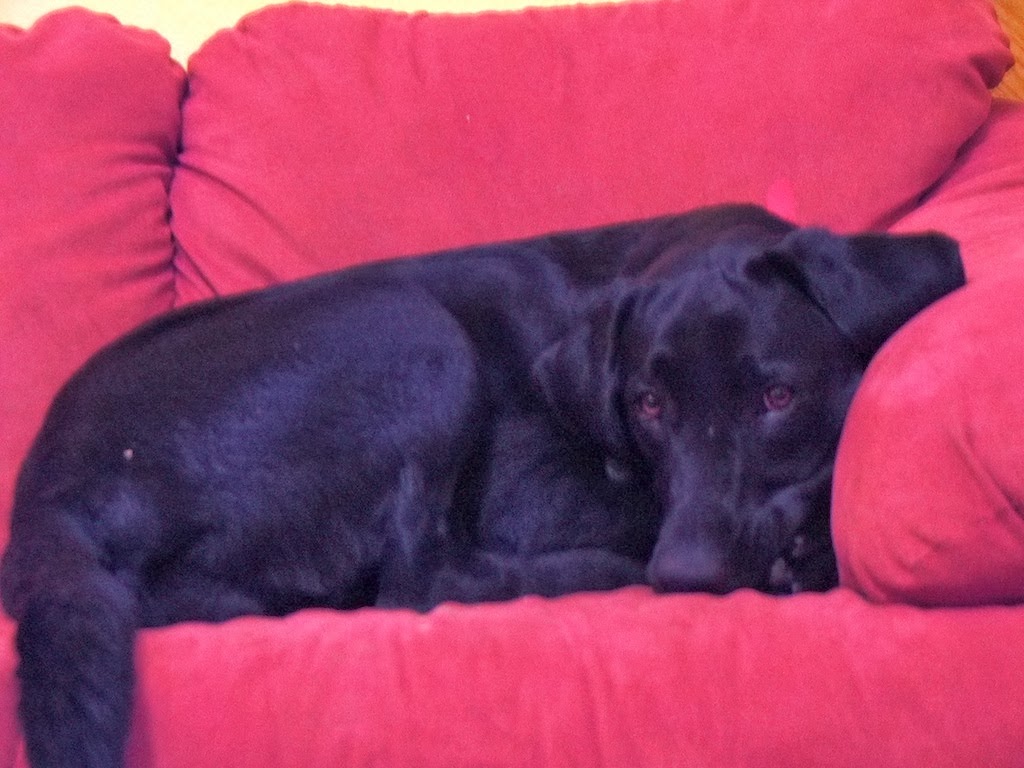 Luna is Shiny We were both sitting, me on a bench, her next to me, and for a while we just watched the children on the swings, on the merry go round and slide. Then, a tiny mite of a girl came over tentatively and stood just out of reach, staring at me and then at Luna, who stood and started her tail wagging furiously. But she didn’t lunge or leap, and that was a good sign to me. “Is that your doggie?” the girl asked. “It is,” I said. “She’s just a puppy, really.” She scuffled her feet in the dirt, keeping her distance while Luna grinned and wiggled. “What’s his name?” she asked. “It’s a girl, and she’s named Luna. Like the moon.” The little girl thought about this, gave Luna a long look, then nodded. “She’s shiny,” she said, emphasizing the word. “Very shiny,” she repeated. Then, she skipped away. Luna heaved a puppy sigh and sat down. The excitement was over. I looked down at her, and realized that at six months, and maybe forty pounds, she was losing her soft puppy fur look. Now she was a slim and leggy young lab, her black fur like a coat of laquered enamel, the closest I’d ever get to having a panther. She was indeed very shiny. For the first time, I felt a burgeoning pride in her, and in my relationship with her. I had a dog, and she was shiny. Very shiny.
On the way home, she sat in the front seat of the car, calm and alert, as she always did. From the start she was a good car dog. She didn’t jump around or try to drive. Instead, she’d look straight ahead, occasionally snuffling at the crack in the window, and her entire being expressed both contentment and confidence, as if she was saying, “I know how to ride in a car. In fact, I’m very good at it. And I’m very shiny.” Occasionally I’d reach over and pet her. She’d turn to me and wag her tail a little, but then turn back to watching the road, as if this was her job and she didn’t want to leave it for too long. “Okay, girl,” I’d say. “You’re doing great.” Though I’d approached these kinds of excursions as training exercises, merely a way of teaching her to be the kind of dog I wanted, I was beginning to enjoy the dog she actually was. At around this time I was driving somewhere without her, and Prairie Home Companion was on the radio. The guest musician talked about just getting a new puppy for her farm, then sang the song she’d written for him. “Look at you lying there,” she sang, “cockleburs in your hair, next to what’s left of my shoe.” I actually teared up, missing Luna. And it hit me. Not only did I have a dog now, and not only was I learning to deal with it, I loved my dog. My shiny, shiny dog. I was engaged with both my head and my heart, and so what she’d told me the first time we met was true.
We belonged to each other now.
 They will be SHINY! You can learn more about my writing at
wildreads.com
. And here's a shiny recipe, just in case you're hungry.
They will be SHINY! You can learn more about my writing at
wildreads.com
. And here's a shiny recipe, just in case you're hungry.ROASTED MAPLE VEGGIESAbout 5 carrots, peeled and sliced on the diagonalAbout 3 good sized beets, peeled and sliced into wedgesTwo fennel bulbs, fronds removed, and bulb cut into wedgesabout a quarter cup of REALLY GOOD extra virgin olive oilabout a quarter cup of REALLY GOOD and very REAL maple syrup (We use the dark kind)Salt and pepper, applied liberallyIf you want, you can add other veggies - potatoes or parsnips are good - because you know the rule. PLAY WITH YOUR FOOD!
Take all your ingredients and put them in a casserole dish. Sprinkle them liberally with salt and pepper. Pour in the maple syrup and oil and, using your hands (the cook’s best tools) toss the veggies around to distribute the rest evenly.Put the casserole, covered, in an oven that’s preheated to 350 degrees, and cook for about 45 minutes. Take the cover off and cook for about 15 minutes more.


March 6, 2014
TALK WITH THE ANIMALS
 Luna Listens to the World My wordless walks with Luna in the woods fulfilled a fantasy I’d had since I was a little girl: that of talking with the animals. In second grade, my teacher was a nun named Sister John Bernard, one of the few nuns whose names we didn’t change. The mean ones were given more appropriate appellations, such as Sister Concordia who became King Kong Cordia, or sister Mary Edgar, who became Sister Mary Eggbeater. Sister John Bernard retained her name because she one of the kindest people I ever met. She never raised her voice, ruling her class with love rather than fear, and she was adept at paying attention to the individual needs of every child, nurturing their skills rather than pushing them against their weakness. Through her eyes, our accomplishments were made bigger, while our faults were diminished. In her class, I was inspired to write a Christmas play, and it was about the magic hour of midnight on the first Christmas Eve, when Lithuanian legend said even animals could speak in human tongue for just one hour. Mary and Joseph arrived to a manger full of silent but wise and knowing animals, never realizing they had their own consciousness, which they could voice. The smartest thing about the play, besides the dialogue which was pretty cool for a second grader, was that animals know things. They’re conscious, and if only they could talk to us, they’d have a lot to say. What I didn’t know at the time was that it’s humans who have the problem. We impose human expectations on other animals, when the truth is we have to learn their language, rather than asking them to speak ours. My interest in connection with animals was fostered in many ways. The movie Ring of Bright Water, about a friendship between a family and otters, captivated me, and I longed for otters to play with. And the movie,
The Three Lives of Thomasina
was even better, because it spoke to so many parts of my life, including my understanding that science and art have to work together to accomplish anything. The movie features a little girl, Mary, whose mother is dead and whose father is a bitter, skeptical veterinarian. But through the death of Mary’s cat they both meet Mad Lori, a witchy kind of woman who seems able to talk with the animals. Ultimately, both she and the veterinarian learn that their combined skills work much better than either alone. Now, really. Does it get any better? And the story includes Thomasina the cat deciding to forgo her revenge, which is not easy for a cat to do, but I won’t go into detail about that here, because cat vengeance is a different blog. I wanted to be both Mad Lori and the veterinarian, learning how to talk with the animals in a soul sense, and understand them in a scientific way. As a daughter of both science and art, this theme permeates my life, and it began in my mother’s kitchen, at the sink, because my father, a deer hunter, would always bring the deer heart to me. He did this because he knew I was interested in anatomy, and so at the age of seven or eight I’d stand on a chair at the sink, the deer heart in a basin in front of me, and explore its various parts. On the counter next to me would be the Encyclopedia Britannica which, for my younger audience, was an antique form of the internet. I’d learn all the parts - aorta, ventricles, and so on, and name them in the actual heart. I memorized them, touched the heart and named them, because, as I’ve said before, naming is big magic. And then, at a certain point, I stopped. I closed the encyclopedia, stopped looking at the deer heart. I did so because I suspected there was something I had to learn that no book could teach me. That simply seeing the parts wouldn’t give me a complete understanding of the whole, and even as a child, I knew that mattered. Then, Luna came along, and I began to meld the two. I’d already begun that with my cats, following them on their nightly walks, sitting with them under the moonlight and listening, simply listening, to the world, I began to get a sense of how their perception differed from mine. But my only experience with cat research at that time was from a science teacher who used to experiment on them. He’d cut their ears off and drop them out of high windows to see if they still landed on their feet. Brrrrr. I wanted no part of that. To me, it seemed like an extension of all the past wrongs we’ve done to cats, this time under the umbrella of science instead of Christianity.
Luna Listens to the World My wordless walks with Luna in the woods fulfilled a fantasy I’d had since I was a little girl: that of talking with the animals. In second grade, my teacher was a nun named Sister John Bernard, one of the few nuns whose names we didn’t change. The mean ones were given more appropriate appellations, such as Sister Concordia who became King Kong Cordia, or sister Mary Edgar, who became Sister Mary Eggbeater. Sister John Bernard retained her name because she one of the kindest people I ever met. She never raised her voice, ruling her class with love rather than fear, and she was adept at paying attention to the individual needs of every child, nurturing their skills rather than pushing them against their weakness. Through her eyes, our accomplishments were made bigger, while our faults were diminished. In her class, I was inspired to write a Christmas play, and it was about the magic hour of midnight on the first Christmas Eve, when Lithuanian legend said even animals could speak in human tongue for just one hour. Mary and Joseph arrived to a manger full of silent but wise and knowing animals, never realizing they had their own consciousness, which they could voice. The smartest thing about the play, besides the dialogue which was pretty cool for a second grader, was that animals know things. They’re conscious, and if only they could talk to us, they’d have a lot to say. What I didn’t know at the time was that it’s humans who have the problem. We impose human expectations on other animals, when the truth is we have to learn their language, rather than asking them to speak ours. My interest in connection with animals was fostered in many ways. The movie Ring of Bright Water, about a friendship between a family and otters, captivated me, and I longed for otters to play with. And the movie,
The Three Lives of Thomasina
was even better, because it spoke to so many parts of my life, including my understanding that science and art have to work together to accomplish anything. The movie features a little girl, Mary, whose mother is dead and whose father is a bitter, skeptical veterinarian. But through the death of Mary’s cat they both meet Mad Lori, a witchy kind of woman who seems able to talk with the animals. Ultimately, both she and the veterinarian learn that their combined skills work much better than either alone. Now, really. Does it get any better? And the story includes Thomasina the cat deciding to forgo her revenge, which is not easy for a cat to do, but I won’t go into detail about that here, because cat vengeance is a different blog. I wanted to be both Mad Lori and the veterinarian, learning how to talk with the animals in a soul sense, and understand them in a scientific way. As a daughter of both science and art, this theme permeates my life, and it began in my mother’s kitchen, at the sink, because my father, a deer hunter, would always bring the deer heart to me. He did this because he knew I was interested in anatomy, and so at the age of seven or eight I’d stand on a chair at the sink, the deer heart in a basin in front of me, and explore its various parts. On the counter next to me would be the Encyclopedia Britannica which, for my younger audience, was an antique form of the internet. I’d learn all the parts - aorta, ventricles, and so on, and name them in the actual heart. I memorized them, touched the heart and named them, because, as I’ve said before, naming is big magic. And then, at a certain point, I stopped. I closed the encyclopedia, stopped looking at the deer heart. I did so because I suspected there was something I had to learn that no book could teach me. That simply seeing the parts wouldn’t give me a complete understanding of the whole, and even as a child, I knew that mattered. Then, Luna came along, and I began to meld the two. I’d already begun that with my cats, following them on their nightly walks, sitting with them under the moonlight and listening, simply listening, to the world, I began to get a sense of how their perception differed from mine. But my only experience with cat research at that time was from a science teacher who used to experiment on them. He’d cut their ears off and drop them out of high windows to see if they still landed on their feet. Brrrrr. I wanted no part of that. To me, it seemed like an extension of all the past wrongs we’ve done to cats, this time under the umbrella of science instead of Christianity.
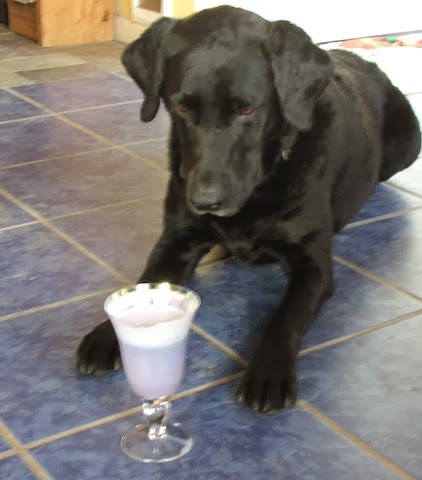 Luna Also Listens to Her Food But science has a lot to say about dogs, and I read all of it. Then, as I walked with Luna in the woods, I experienced firsthand how in tune she was to me, how she watched me for direction, for connection. I was aware, in a very visceral way, of how her whole body listened, sniffed, and watched for environmental cues from me and from her world. I was aware that my whole body, my entire energy, spoke to her more clearly than any words I could ever use, because dogs watch us. They not only watch us, they also make us more visible to ourselves, because they often interpret and act on what we mean instead of what we say. Then we have to become conscious of our own inner workings to straighten it out. You might say they’re the original psychologists, teaching us about our unconscious motives and drives. Other times, they watch for the simpler things - food, affection, walks. As Luna did this for me, I developed a deep sense of gratitude to her, and wanted to repay her in kind. If she could understand me, it was only fair that I should learn to understand her. And this, in many ways, completed my understanding of communication both within and between species. What matters isn’t so much the ability to talk, but a willingness to listen. Let me just return for a minute to how I opened this new blog. I said that yes, really, I still believe love is the answer, even when I’m not sure what the questions are. I meant that, and here’s more: Love is, by definition, ready to extend its interests beyond the self. In fact, I’d taken on dog ownership because I love my husband, because I went beyond my own limitations to listen to his needs. Love listens. That’s what it does. It listens, watches, pays attention, then acts on what it’s learned. That, I think, is why we see dogs as loving. Because they do that. And as a human animal, I knew I had to be willing to do the same.
 If you want to know more about how I listen to love, you might like my novel, These Dreams, which looks at all that. And a recipe to try in the meantime is below, all about listening to your food. Ricotta Fritters Really, any time you fry food, you have to listen and sniff as well as watch. The oil will sing at different pitches, and your nose is as good as your eye as you tend the proceedings. So listen to this as you cook, get a sense of what pitch means what, what sniff means what. It will help you understand your dog better.
IngredientsOil for frying
 Shhh. Listen.
 ¾ cup unbleached all-purpose flour
2 tsp. baking powder
¼ tsp. salt
2 large eggs1 cup whole milk ricotta cheese, drained in cheesecloth over a bowl overnight if wet2 Tbsp. sugar
1 tsp. vanilla
1 -2 tbsp confectioners sugar and 1 tbsp cocoa for dustingOPTIONAL, but I ALWAYS use it: About a cup of tiny semi-sweet chocolate chips, added to the mix for an even more chocolately experience because you know the rule: PLAY WITH YOUR FOOD!
MethodPrepare paper towels and/or brown paper for draining your hot fritters and set aside. Start preheating vegetable or canola oil in a large (14”) skillet. By all means use a thermometer to test for the right heat, around 370 degrees, but also listen to the oil. Get to know when it’s working, when it’s done working, when it’s furious.
As the oil preheats, stir together flour, baking powder, salt, in a mixing bowl and set aside, still listening. Always listening because cooking is also about love.
Break two eggs into another mixing bowl and beat them lightly, as if you’re having a good day and just want to dance. Add the ricotta, sugar, and vanilla and combine until mixture is smooth and all in sync with each other. Add the dry ingredients to this and fold in gently, gently, still listening to the oil, and very aware of the texture of what you’re mixing, careful not to mix too much. Just all together is good.
When the oil sings right and your thermometer concurs, use a small ice scream scoop or figure about 1 1/2 tablespoons and drop this into the skillet. Watch it cook until golden, listen carefully to the change in the oil’s song, and sniff to make sure you’re not burning anything as you go. Cook around six at a time, and DON’T CROWD THE PAN! Each will take about 4 minutes to cook.
Remove the finished fritters from the oil and sing back at them if you like. Any song will do. Transfer them to the paper to drain. When they’re still warm and cosy, sprinkle liberally with powdered sugar and cocoa.
Makes 16-24 fritters
March 5, 2014
HAPPY TRAILS
 Luna: Pathfinder When I was growing up, though their were many dogs in our neighborhood, I never saw one of them walked on a leash. Mostly they’d be let out in the morning, and called home at night.
 There was Bongo, a laconic basset hound who waddled around the block twice a day by himself. There was Kasmir, our neighbor’s Afghan, the most exotic dog ever seen in our part of town, his long blonde coat the mirror image of his owner’s perfectly coiffed blonde hair. He was sociable, and not very bright, and would leap in front of us to play, then immediately be distracted by something and run away. The closest thing to a leash we ever saw belonged to a man named Joe Black, who lived half a block down, and who we were warned to stay away from. He sat on his front porch in what were either shorts or boxer underwear, his little dachshund tied to the railing. The rope went halfway up the block, and she would trot that far while Joe sat and muttered to himself. After a while, he’d tug on the rope and rasp out, “Come on, sistah!” Sistah would turn around and amble back. That was all I’d ever known of someone walking a dog. That’s just one reason why I continued to struggle with what should have been the simplest task – walking Luna on a leash. My attempts were marvels of inconsistency, as Luna would pull ahead, and I’d do the corrective jerk, then immediately apologize, because pulling on something around a creature’s neck horrified me. “I’m sorry. I’m sorry,” I’d say. “Did I hurt you?” She’d wag her tail, wait patiently until I started walking again, then rush forward, jerking my shoulder at its joint. I’d correct her, apologize again, and we’d start over. The discomfort and guilt I got from walking her on leash was similar to the reaction I had when I mowed our lawn, which was filled with crickets, leafhoppers, preying mantid and the occasional frog and snake that slithered up from the pond. Hundreds of living things would rush out in the wake of my mowing, seeking refuge from what must be, to them, an apocalyptic storm. “I’m sorry,” I’d shout over the roar of the mower. “Go over there. Run away.” Once or twice I ran over frogs, which is as bad as you’re probably imagining. Like putting a frog in a blender without a top. This seemed especially wrong for someone like me, who patrols the road when mud turtles and salamanders are traveling, to make sure none get run over. Leashes worried me as much as mowing, and too many times Luna and I came home from walks with my temper in a frazzle, and Luna looking confused as to what, exactly, she was supposed to do. Her failure to learn was really all about my failure to teach, as is often the case with dogs. I needed to find a better way. Though cats manage ambivalence with ease, it doesn’t suit dogs. They want clear directives, given consistently. Without that they grow frightened and try for dominance. I was doing Luna no favors with my cycle of correction, apology, and irritation. I tried a variety of training methods. If the dog pulls, stop walking. When they sit, start walking again. I’m sure it works with many dogs, but for Luna it was just a brief rest between pullings. I tried the method where you turn around and go in a different direction every time they pull, but apparently Luna liked going in small circles, and the neighbors were starting to stare at us. I tried holding treats as we walked, which worked until she’d eaten the treat, at which time she’d forge ahead. The real problem wasn’t the methods. It was me. I just couldn’t mean it, and dogs know when you don’t mean it. So how on this green earth could I learn to mean it? And even if I could, would it help? Beyond my neuroses, Luna was and is a high energy dog, and she needed to run faster than I could go. To solve that part of the problem, I began taking her off-leash beyond our land, into the wild. That land, owned by our neighbor Bill, isn’t accessible by road, and no one goes there except during hunting season so we had it to ourselves. It was cow pasture in past generations, and has since grown into thick scrubland dotted with young trees, not the easiest to traverse. But Luna could safely leap and run here, so we bushwacked on. One day, as I was disentangling myself from some buckthorn, Luna went into an alert stance, then took off after a bunny. I knew she was safe, so I got myself detached without panic, then followed her. After thrashing my way through more brush, I emerged onto an open trail. Luna sat a few feet down from me, wagging her tail, looking like she’d led me here on purpose. I gazed around. There was a broad trail cut ahead and behind us for some ways, and grassy meadows all around that lead to woods of tall, old growth pine trees. We were well off our property, but it wasn’t hunting season so we kept going. “Thanks, Luna,” I said, and I continued to walk the trail, Luna trotting at my side. Meadows of tall grass and daisies, purple meadowsweet, goldenrod, grew all around the trail. We followed it into the woods, thick with tall pines, finding even more treasures and pleasures. A shallow stream flowed through the woods, and Luna splashed in it gleefully. Further in, we found a six foot tall rock wall, which we later learned was built by farmers more than a hundred years ago. We took our time, and if Luna wanted to sniff to my left or right, or slightly behind or ahead that was fine because we were both safe, in our most natural element. By the time we got home she was content, and I felt as if I’d discovered the promised land. And in a way, I had. I’d found a place where Luna can be Luna and I can be me. In the woods, we could walk without stress, and we were both confident in my capacity to lead. She could run as fast as she wanted, using her legs as they were meant to be used, and I knew that if I called her, she’d come right back to me. It was perfect. We went out again the next day, and the next and the next, both of us off leash, Luna behaving like a natural retriever, and me reliving my happiest times from childhood when I sought out mystery and adventures in the woods. Our communication was wordless. I’d point where I was going, and she’d turn that way. If I changed direction, she’d follow, always aware of where I was and what I was doing.
 Luna: Doofus Leashless, we were more deeply connected than we’d ever been. As if I was occupying my purely animal soul while I had the privilege of witnessing hers. And the connection extended from Luna to the land we walked on, as I began to understand it through her perception. I wondered what it meant to be a dog who knows the world through scent. Did smells create images in her mind, or just sensations of fear or pleasure? I’d know deer were close by when she pricked up her ears and stood at attention. If coyotes were around the night before she’d show raised hackles at her neck when she sniffed the air. When the sun was good and warm, she’d stand with her head lifted while a ripple of pleasure ran across her sleek back, and I’d share her essential, unabridged joy. I also learned that if she pawed at the ground I should go see what she’d found. Often it was a bone or leftover bunny parts I didn’t want her to eat. Once when she was pawing, sniffing, and looking a little baffled, I went over to her and saw she was staring at an unbroken egg. “Well, now,” I said to her. “That’s a new one.” I picked it up, feeling the million tiny bumps on it, wondering how an egg got into the middle of an open field, with no house in sight. Did someone drop it? If so, why would anyone be carrying a single egg in the middle of a field? Luna nuzzled me, waiting for me throw it so she could give chase. She’d sniffed this prize from the matted grass. Shouldn’t she get to play with it? “Sorry, Loons,” I muttered. “Not this one.” Finally, it occurred to me that we have flocks of wild turkey all over the place. Turkeys, when they’re perturbed, will drop eggs at random. Strange that I hadn’t considered this first, as if humans were the only creatures who lived here. We walked on, and I took the egg with me, a talisman of hope and trepidation. Eggs are secret places, their bland surface holding the possibility of life, of food, of anything. Luna, I suppose, imagined its possibilities of either play or food, if dogs imagine. Do dogs imagine, within or beyond their experience? And could I actually imagine beyond my experience? When I found the egg, it took me a while to remember things outside the human realm, like turkeys. But having gotten that far, I could go further yet, and imagine it as a magic thing, holding the spirit of the meadows and woods, a sleeping fairy I could wake by cracking the prize, seeds from a far away star that might wake human consciousness to a new level of love, or a new color, waiting to pour out into the world, or a new song, a lullaby for my restless nights. As Luna and I stood on the trail, she sniffed and I contemplated, which may actually be exactly the same thing. The long grass in the meadow was illuminated by a westering sun. The soft wind passing over it made a whispering of song. Luna lifted her head and breathed it in. I also lifted my head, and if I heard a different song, that didn’t matter. We knew who we were were, and where we were headed next.
We were, both of us, hungry. We were, both of us, going home.
If you want to read more about my interactions with birds, visit SUNY Press to read about Eagle Mitch and Berkshire Bird Paradise. And here's an unusual egg recipe to eat while you read.
EGGS LUNA
 Two eggsThis recipe calls for quail eggs. If you can't find them, use really small eggs. The smallest you can find. But do search for quail eggs, because they're beautiful, and tiny. I use them in lots of different ways, and this is just one of them.
 Slices of small loaves, preferably rye (I use my homemade rye and blue cheese bread, a recipe I'll offer at a later date.)Quail eggs or really small eggsSlices of papayaSlices of prosciutto
 Alike in Dignity
How much of this you want to make depends entirely on who you're feeding. I was just feeding myself, and my dogs, who sit one on either side of me at the breakfast table and wait for crusts, so I just made two. Increase ingredients according to your needs, and feel free to use ham instead of prosciutto or melon instead of papaya because you know the rule: PLAY WITH YOUR FOOD!
Keep the papaya in the fridge, nicely chilled. Toast your bread slice. Put butter in a sauté pan and let it get brown. Add the prosciutto slice and let it get crisp. Add the quail or small egg, and cook to your desired doneness. (You can flip it, for sunny side down, but it won't be as pretty or as runny as Luna is.)Place a slice of papaya on the bread. Put the prosciutto on top. Gently place the egg on the prosciutto, whispering prayers or spells for what might emerge in your life.Sit with your dogs and enjoy. Share the crusts, because they like that.
VARIATION ON A THEME:
Because no two dogs or eggs are alike, I also did this with a slice of smoked salmon, covering the egg with dill and finely chopped scallion. Also YUM!
March 4, 2014
OFF LEASH LADIES
 Luna: Off-Leash Girl Yeah. That’s me. An off-leash kind of girl. Putting a collar on a creature and then tugging it to follow you was irksome to my very soul. I mean, I’m a writer. We follow errant images to the boundaries of the universe. We work from midnight to 5 am, then sleep all day. We go where we want to go, play how we want to play. Leashes are the enemy, for ourselves, and for any living creature.But now I had a dog, and somehow, I was supposed to make her follow me on-leash. Listen, here we are in March, National Women’s History Month, and the history of important women is all about those who wore no leash. When Rosa Parks refused to sit in the back of the bus, she was off-leash. When
Marion Wallace Dunlop
, a militant suffragette sentenced to be imprisoned for a month in Holloway for vandalism in July 1909, went on a hunger strike without consulting the other suffragette leaders, she was off-leash. When my Grandma Campilli decided it was time to revisit her homeland, she was also off-leash. When I decided to be a writer, to get divorced, to build a house, to get a dog, I was the same. So how could I make a dog follow me when I despised the leash, on both political and personal grounds? Okay, I know. The leash allows you to take your dog to places they couldn’t go otherwise. In that sense, it provides mobility and freedom. But on a gut level, every time I put Luna on a leash and she tugged against it, my heart lurched. It was a visceral reaction, and no matter how I tried to work against it, I was unsuccessful. No matter what I said, she read the truth, sensing my tension and resistance, because dogs don’t deal in words. They see us beyond our masks, and respond accordingly. What Luna did was pull, tug, and run away. She got the leash out of my hands and chased squirrels, leaves dancing in the wind, and people. Especially, she chased people. Not to bite them, mind you, but to make friends. Labs are highly sociable dogs, always interested in making friends. Not everyone appreciated this, nor do I blame them. Some people have a marked preference not to be jumped on. There were two women in particular – let’s call them Darlene and Madge - whose regular walks past our house were interrupted by Luna’s antics. At the first hint of their approach, Luna would get the leash out of my grasp and race across the yard at high speed, then fling herself at them indiscriminately. I would chase after her, growling “Leave it! Leave it!” as meaningfully as I could. Darlene and Madge would stand there, saying things like “Shouldn’t you control her better?” Luna would bend into the play bow, and leap happily at Madge, tongue lolling. For the next few minutes the women would stand there watching, occasionally commenting, while Luna and I ran circles around them. If they walked on, she’d follow them. If they stood still, she’d cavort. When I lunged for her, she’d dodge out of reach and cavort some more. Only one of us seemed to be enjoying ourselves. The match usually ended with me flinging myself on Luna, both of us sliding against tar and going home with road burn. Then, inevitably, she’d escape my grasp and I’d go chasing her down the road. If I was rational, I would have realized that if someone is running toward you growling out angry words, your natural response would be to run away. But I wasn’t rational. I was angry. Luna was embarrassing me, her misbehavior a reflection of my inadequacy. The emotional complexity of the situation eluded her, and she continued to elude me. The ladies offered advise. “You should get a trainer,” Darlene suggested. “I’m her trainer,” I answered, and if I sounded like I was growling, I’m sure it was only because I was out of breath. “Oh. Really?” Madge asked. Her tone was exactly the same as Sister Margaret Paul, my fourth grade teacher, an imperiously tall and thin woman who always kept her chin raised high. Her response to bad behavior was to look down her nose at the offending party and say, “That was neither nice nor necessary.” Using only her superior demeanor to make her students feel like a small toads, she kept a roomful of fourth graders in line. But none of us felt very good about ourselves. Nor did I feel very good about myself now. “I’m new at this,” I apologized as Luna leapt at them and I blocked, “I’ll get the hang of it.”
Luna: Off-Leash Girl Yeah. That’s me. An off-leash kind of girl. Putting a collar on a creature and then tugging it to follow you was irksome to my very soul. I mean, I’m a writer. We follow errant images to the boundaries of the universe. We work from midnight to 5 am, then sleep all day. We go where we want to go, play how we want to play. Leashes are the enemy, for ourselves, and for any living creature.But now I had a dog, and somehow, I was supposed to make her follow me on-leash. Listen, here we are in March, National Women’s History Month, and the history of important women is all about those who wore no leash. When Rosa Parks refused to sit in the back of the bus, she was off-leash. When
Marion Wallace Dunlop
, a militant suffragette sentenced to be imprisoned for a month in Holloway for vandalism in July 1909, went on a hunger strike without consulting the other suffragette leaders, she was off-leash. When my Grandma Campilli decided it was time to revisit her homeland, she was also off-leash. When I decided to be a writer, to get divorced, to build a house, to get a dog, I was the same. So how could I make a dog follow me when I despised the leash, on both political and personal grounds? Okay, I know. The leash allows you to take your dog to places they couldn’t go otherwise. In that sense, it provides mobility and freedom. But on a gut level, every time I put Luna on a leash and she tugged against it, my heart lurched. It was a visceral reaction, and no matter how I tried to work against it, I was unsuccessful. No matter what I said, she read the truth, sensing my tension and resistance, because dogs don’t deal in words. They see us beyond our masks, and respond accordingly. What Luna did was pull, tug, and run away. She got the leash out of my hands and chased squirrels, leaves dancing in the wind, and people. Especially, she chased people. Not to bite them, mind you, but to make friends. Labs are highly sociable dogs, always interested in making friends. Not everyone appreciated this, nor do I blame them. Some people have a marked preference not to be jumped on. There were two women in particular – let’s call them Darlene and Madge - whose regular walks past our house were interrupted by Luna’s antics. At the first hint of their approach, Luna would get the leash out of my grasp and race across the yard at high speed, then fling herself at them indiscriminately. I would chase after her, growling “Leave it! Leave it!” as meaningfully as I could. Darlene and Madge would stand there, saying things like “Shouldn’t you control her better?” Luna would bend into the play bow, and leap happily at Madge, tongue lolling. For the next few minutes the women would stand there watching, occasionally commenting, while Luna and I ran circles around them. If they walked on, she’d follow them. If they stood still, she’d cavort. When I lunged for her, she’d dodge out of reach and cavort some more. Only one of us seemed to be enjoying ourselves. The match usually ended with me flinging myself on Luna, both of us sliding against tar and going home with road burn. Then, inevitably, she’d escape my grasp and I’d go chasing her down the road. If I was rational, I would have realized that if someone is running toward you growling out angry words, your natural response would be to run away. But I wasn’t rational. I was angry. Luna was embarrassing me, her misbehavior a reflection of my inadequacy. The emotional complexity of the situation eluded her, and she continued to elude me. The ladies offered advise. “You should get a trainer,” Darlene suggested. “I’m her trainer,” I answered, and if I sounded like I was growling, I’m sure it was only because I was out of breath. “Oh. Really?” Madge asked. Her tone was exactly the same as Sister Margaret Paul, my fourth grade teacher, an imperiously tall and thin woman who always kept her chin raised high. Her response to bad behavior was to look down her nose at the offending party and say, “That was neither nice nor necessary.” Using only her superior demeanor to make her students feel like a small toads, she kept a roomful of fourth graders in line. But none of us felt very good about ourselves. Nor did I feel very good about myself now. “I’m new at this,” I apologized as Luna leapt at them and I blocked, “I’ll get the hang of it.”“Teach her to come when you call her,” Madge suggested. “Yeah. I’ll do that,” I answered, hoping I didn’t sound as sarcastic as I felt. I made a quick dart and almost got Luna’s collar, missed, slipped, and ended up on my knees in the road. Between the fall and the unspoken criticism which felt like an old and familiar presence, I was furious. I may have barked. Luna tucked her tail down and ran into a neighbor’s shrubbery. Paying no attention to either the women or any trespassing issues, I crashed in after her. “Luna!” I screeched. “Get over here. Now!” She ran further into the shrubs, and I got tangled up in something sharp, cursing louder as thorns tore at my arms and hands. Then I heard scuffling in the brush and Luna reappeared, a few yards away. Her tail was down, and her expression fearful. Seeing it, I suddenly hated myself. Because of my father’s occasional temper tantrums, I’d grown up fearful of anger, and yet I had my own temper, inherited I suppose from seeing that his tantrums worked. At least, they got my mother’s attention, and made us get quiet. But now, Luna’s expression was a reflection of the fear I’d felt as a little girl when my father got angry. I never wanted to make any creature feel that way. I stopped fighting the thorns, disentangled myself, and walked away. Miraculously, when I did that, Luna followed me. As we cleared the shrubs, I had a new idea. “Luna,” I called, making my voice sound excited. “Here, Luna. Let’s run, Luna!” She paused. I waved at her, then turned and ran fast down the road. Luna wagged her tail and gallumphed after me. I ran down the road past our house, back up toward our house, down our driveway and into the yard. Luna, deciding this was a pretty cool game, followed all the way. I gamboled about the yard for a while, not caring if Madge and Darlene were still watching. When I was out of breath, I sat down and Luna charged over to lick my face.
 Luna's friend Bruce: Also Off Leash “Good Luna,” I said. “Good girl. Very good girl.”
From then on, when Luna ran away, so did I. And she followed me.
In this, I’d discovered a new essential truth about dogs: If you chase them, they run away. If you run away, they chase you. And you can use that to train them. More importantly, I learned in the most visceral and immediate way that anger isn’t authority. In fact, it’s the absence of authority, a signal that you’ve lost control. From then on, I also decided that since the leash inspired only tension and irritation in me, I’d focus on off-leash training - teaching Luna to follow me without a physical tether. That’s not something I necessarily advise to other dog owners, especially if you live in the city, but despite the current trend to ‘standardize‘ learning in all realms, I’ve found that following the unique needs of each learner, in each situation, is the best education possible. For Luna, in my world, I had to go off-leash from the training manuals, and follow my intuition. I worked with her on a daily basis, mostly using games. I’d run around the yard and have her chase me, then drop and tell her “stop.” I’d hold a frisbee up and ask her to stay while I walked away, then held the frisbee up and had her wait until I said “Now!” to leap for it. I increased the ‘stay’ time by ten second increments, until she’d willingly sit up to two minutes until she made her run for it. I worked with the ‘leave it‘ command, and recall commands, and more, all off-leash. I did this for maybe ten or twenty minutes on a daily basis for about a week. The next time Darlene and Madge went by, Luna raced straight to the end of the driveway, and then she hesitated, looking back to me. “Here, Luna,” I told her. And she came back. I’m not sure which one of us was more pleased. She was wagging her tail so hard her feet were lifting from the ground, as if she knew she’d gotten it right. I was grinning from ear to ear, feeling as triumphant as I ever had in my life. We had learned each other’s language in a new way, and I was feeling the joy of being a truly calm and authoritative pack leader. I leaned down and gave her a good hug. She lapped at my face, snorting with glee. That was good not just for purposes of training a dog, but also for my soul, showing me through experience the essential difference between leading and domination, between authority and anger, and reminding me how good it felt to claim my rightful authority with clarity rather than rage. Dogs, it seemed, have a lot more to teach us than I’d originally suspected. This interaction had straightened out a lot of old paradigms about the difference between authority and anger, reminding me once more how good it felt to claim my rightful authority with clarity rather than rage.
And she had more to teach me. Much more. Soon, our training would lead me back to the best places of my childhood, and the even better places I occupy now.
My favorite off-leash character is Jaguar Addams. I mean, really off leash. You can read all about her adventures at Wildside Books. And here's an off-leash pasta to eat while you read.
Pasta Puttanesca
If you know any Italian, you'll recognize this word. It's the pasta that prostitutes made, either because it was quick and easy, or because the aroma enticed customers their way. If you want, you can make your own pasta for it, or use a nice fresh papardelle that you buy. And do feel free to shift the ingredients. If you prefer a different kind of olive, or want to use fresh artichokes, or like anchovies or oregano, go off-leash with it because you know the rule: PLAY WITH YOUR FOOD!
 Big Yum
1 28 oz can crushed or diced tomatoes.1 15 oz can black olives1 15 oz can or package frozen artichokes8 oz. cremini mushrooms3 cloves garlic¼ cup fresh basil, chopped¼ cup extra virgin olive oil½ cup Locatelli Pecorino Romano, grated.
I use an iron skillet, but a good heavy pot will also do. Put your burner on high, get the pot hot, then add the oil.
When it's sizzling, throw in the mushrooms, a little at a time so they cook rather than steam. Add the olives, let them sizzle about while you sing "I am the sunshine of my life," then toss in the artichokes, and the tomatoes. Let it all simmer for a rosary, or the amount of time you want your dog to learn how to 'stay.' Turn the heat down to medium/low. Add the basil, and let it simmer more.
Taste it, because the heat and time will create the flavor. When it's begun to become really fine, add the grated cheese. Taste and see if there's anything else you want in it.
You can let it simmer more while you get the water hot for your pasta and cook it. When it's ready, mingle pasta and sauce. Let it sit. Stay. Sit. Stay. Add more herbs or cheese if you want. Serve it when you're ready. It will wait for you.
March 3, 2014
PACK LEADER
 Luna Loves Snow. Sigh. It’s March, though you wouldn’t know it from looking at all the snow in my yard, or the weather reports that say Washington DC is getting hammered. Still, it is March, I tell myself hopefully. Spring will be here. And in the meantime, March is National Women’s month, a good time to reflect on what it means to be a female pack leader. Author
Clarissa Pinkola Estes
says, “She who cannot howl will never find her pack.” Luna, a skilled howler, had found her pack. Now I had to become her Pack Leader. To do so I referred to some of my personal and political female heroes. Gloria Steinem spoke the truth when we needed to hear it. Maya Angelou did the same, but did so poetically. My Grandma Campilli, who bobbed her hair and marched with the suffragettes, was very clear about what she would and would not do, always. No dogs in her kitchen. When she wanted to go back to Italy for a visit, alone, in spite of the furor this raised with the rest of her family, she packed her bags and went. All this told me that what I needed most with my dog training, with my pack leadership, was to establish a very clear yes, and a very clear no. I also needed some specific skills, some education. I’d never done doggie training before, and my learning curve was pretty steep. However, I was raised by folks who believed education was the answer, and I bought that package. So, armed with a pile of books, and newly addicted to any doggie training TV show I could find, I went at it with gusto. Cesar Milan’s book Cesar’s Way was very helpful. It also made a great chew toy, bears the mark of Luna’s teeth. From the beginning, she liked chewing on my stuff best. My shoes, my books, my socks. But I counted myself lucky because my sister’s puppy ate her Victoria’s Secret thong underwear. She took him to the vet, where he was given an emetic to make him throw them back up. When the procedure was done the vet presented her with the thong, asking,“You want these back?” She didn’t. At any rate, I continued to read. The Monks of New Skete confirmed that my practice of making up songs for my animals and singing them was a good thing. They do that, too. (Recently, I learned that dog brains have an area similar to humans, which responds to the nature of our vocalizations, and can easily distinguish happy from sad or angry or fearful.) Stanley Coren’s The Intelligence of Dogs, taught me that Luna’s ‘yip-yip howl’ which disturbed me so much is a cry that means, “I’m lonely. I’m abandoned. Where’s my pack?” Knowing that helped me understand why, with my own abandonment issues, I reacted so strongly. I wasn’t crazy. Just overly empathetic. My reading also taught me some fundamental principles of dealing with doggie mind. Be the pack leader and walk in front. When the puppy chews on something, don’t spank the puppy, spank the chewed item – in the puppy’s presence. They’ll learn the thing itself is bad, and they should stay away from it. I had a moment of triumph when I spanked my books and watched her back away from chewing on them.
Luna Loves Snow. Sigh. It’s March, though you wouldn’t know it from looking at all the snow in my yard, or the weather reports that say Washington DC is getting hammered. Still, it is March, I tell myself hopefully. Spring will be here. And in the meantime, March is National Women’s month, a good time to reflect on what it means to be a female pack leader. Author
Clarissa Pinkola Estes
says, “She who cannot howl will never find her pack.” Luna, a skilled howler, had found her pack. Now I had to become her Pack Leader. To do so I referred to some of my personal and political female heroes. Gloria Steinem spoke the truth when we needed to hear it. Maya Angelou did the same, but did so poetically. My Grandma Campilli, who bobbed her hair and marched with the suffragettes, was very clear about what she would and would not do, always. No dogs in her kitchen. When she wanted to go back to Italy for a visit, alone, in spite of the furor this raised with the rest of her family, she packed her bags and went. All this told me that what I needed most with my dog training, with my pack leadership, was to establish a very clear yes, and a very clear no. I also needed some specific skills, some education. I’d never done doggie training before, and my learning curve was pretty steep. However, I was raised by folks who believed education was the answer, and I bought that package. So, armed with a pile of books, and newly addicted to any doggie training TV show I could find, I went at it with gusto. Cesar Milan’s book Cesar’s Way was very helpful. It also made a great chew toy, bears the mark of Luna’s teeth. From the beginning, she liked chewing on my stuff best. My shoes, my books, my socks. But I counted myself lucky because my sister’s puppy ate her Victoria’s Secret thong underwear. She took him to the vet, where he was given an emetic to make him throw them back up. When the procedure was done the vet presented her with the thong, asking,“You want these back?” She didn’t. At any rate, I continued to read. The Monks of New Skete confirmed that my practice of making up songs for my animals and singing them was a good thing. They do that, too. (Recently, I learned that dog brains have an area similar to humans, which responds to the nature of our vocalizations, and can easily distinguish happy from sad or angry or fearful.) Stanley Coren’s The Intelligence of Dogs, taught me that Luna’s ‘yip-yip howl’ which disturbed me so much is a cry that means, “I’m lonely. I’m abandoned. Where’s my pack?” Knowing that helped me understand why, with my own abandonment issues, I reacted so strongly. I wasn’t crazy. Just overly empathetic. My reading also taught me some fundamental principles of dealing with doggie mind. Be the pack leader and walk in front. When the puppy chews on something, don’t spank the puppy, spank the chewed item – in the puppy’s presence. They’ll learn the thing itself is bad, and they should stay away from it. I had a moment of triumph when I spanked my books and watched her back away from chewing on them.
 Luna Teaches How to Lead Most important to me in those early days was establishing healthy boundaries. As a good daughter of Italian women, I had a fundamental conflict about that, feeling I ‘should’ be available to meet all needs of all creatures at all times, and also really wanting my own space. I don’t think I’m unique in this. Women often believe it’s their job to care for everyone else. Boundaries seems so, well, wrong somehow. Maybe sinful if you’re Catholic, unempathetic if you’re a social worker. Maybe impolite if you’re Episcopalian. I knew the only way to establish good boundaries with Luna was to be clear with myself about my own. And the two I felt most strongly about were ‘don’t hurt the cat,’ and ‘stay out of my kitchen.’ The issue with the cat turned out to be very easy. I held Photon while I was walking Luna, and had Luna walk behind us. I also put Photon in front of Luna’s food first when I fed her, and let him sniff it, decide if he wanted any. I only had to do this a few times before they reconciled for good. Though Photon still felt a responsibility to make sure the dog stayed in line, he also began to groom her on a regular basis, because dogs aren’t as good at that as cats are. The kitchen was trickier, because our house is designed for open space, with no doors between living room, dining area, and kitchen. But when I cook, which is often, I’m very focused, and I use all available space. I foresaw disaster if a puppy was scampering under my feet when I danced between stove and sink with boiling water. I thought about getting a gate to put between the end cupboard of the kitchen and the wall on the other side, but I’d either have to open and close it, or leap over it, when I went to the dining area. Again, potential disaster. Then I remembered a story my friend, Sue Derda, told me about setting room boundaries with her dogs. She put a smallscreen across the area where she didn’t want them, and if they tried to leap over it, she’d slap it against the floor, making enough noise that they backed off. I used a broom, resting it across the opening between the counter and the adjacent wall. When Luna approached it, I said “He-ey,’ in a low, displeased voice and clatter the broom on the floor a little. To my surprise, she’d stop and sit. When she did, she got a treat. This worked great, I think ecause, as Cesar Milan would say, my energy was good. I wasn’t angry or upset. I was just letting her know this was my space, not hers. Also letting her know rewards accrued for honoring it. Steve, on the other hand, had no inherent interest in keeping Luna out of the kitchen, and she would gleefully follow him over the broom, sensing his permission to enter the Foodiverse. That created confusion and conflict, marital and puppy, so I tried a new tactic. I placed a two by four on its narrow edge in the same space. I could step over it easily, but if Luna tried it would fall over with a clatter, which made her step back and gave me time to re-establish the boundary. It was also just high enough to train Steve, readjusting his energy as well. Within a few days I placed the board flat on the ground. She could easily trot over it without noise or fuss, but she never did, not even to follow Steve. Both had learned that I ruled the Foodiverse. Now Luna could be in my company without aggravating the hell out of me, and she learned that calm behavior was valuable, earning her treats and affection, an important thing for a high energy, excitable lab. It also taught me that I could establish boundaries without harm. In fact, I could establish boundaries that served everyone’s interest. That was a lesson for my entire life, making it easier for me to stay with my boundaries in other situations without defensiveness or guilt. I refer to it more frequently than I ever imagined I would, so that when a student or an editor, a husband or family member, seems to be metaphorically underfoot in my kitchen, I can use the emotional and intellectual equivalent of a small board to set better boundaries for us all. Now, let’s get back to Women’s History Month. There’s two ways I learned about being a female leader. One is from the women who modeled it for me - Gloria Steinem and Maya Angelou. Also women like Malala Yousafzai, who defied the Taliban because she believed women should be educated, was shot for it, and survived to continue her battle. And women like Wangari Maathai, who won the Nobel Prize for planting trees in Africa, in a big way. Also, fictional women like Scheherezade, who married a king to stop him from killing other women. The persistent idealism of such women, their continued willingness to put themselves on the line for what they believed, informs all my decisions, from how I write and teach, to saving eagles, and determining how my own issues won’t stand in the way of moving forward. I suggest that this is a fine month for you to name the women who have taught you how to do the same. But then, unexpectedly, it was another female, this time a small black labrador retriever, who gave me the opportunity for personal practice in acting the part of pack leader, and getting comfortable with what it feels like in its best aspect. Luna, continuing in her own work, was leading me by teaching me how to lead her. Go figure.
If you want to read about one of my favorite strong female characters, check out Jaguar Addams , who will make you face your fears and get over them. And here’s a sustaining recipe to strengthen the Pack Leader in you.
OUR OWN RIBS
In case you didn’t notice, in Genesis, the first time humans are created, there’s no rib involved. It says specifically that humans were created together from, well, mud, earthlings of the earth, male and female. Then, for reasons scholars will explicate endlessly, humans were created all over again, and that whole rib story happened. So for National Women’s Month, here’s a rib recipe, to remind us that all our parts are, from the very earliest beginning, our own.
This is my version. You can change up spices and herbs or quantities because you know the rule: PLAY WITH YOUR FOOD!
About a pound of pork baby back ribsAbout a cup of brown sugar2 tablespoons kosher salt1 tablespoon ancho chili powder
 Claim the Rib1 teaspoon Old Bay seasoning2 teaspoons garlic powder1 teaspoon smoked paprika2 teaspoon sweet paprika1 teaspoon black pepper
Glazedrippings from ribsabout 2 tablespoons worcestershire sauce1 tablespoon maple syrup or honey2 tablespoons cider vinegar
(If you prefer,you can use your favorite brand of barbecue sauce, and mix about a quarter cup of it in with about half a cup of rib drippings)
NOTE: Do the first bit at night, before you go to sleep.
Mix your dry ingredients all together.
Put the ribs on a baking tray (one with sides) and rub your dry ingredients on them. Coat them thoroughly, really patting and rubbing until the ribs go ‘aaaah. that’s nice.” You might have some rub left over, and you can store that in the fridge for the next time you crave ribs.
Cover the tray with aluminum foil and put it in the fridge. The ribs will settle down to sleep right away, and so should you. Dream about the most powerful women you know, all night long.
The next day, take the ribs out of the fridge and let them wake up slowly, coming up to temperature. Go about your business. They don’t need you for this.
In about an hour you can set your oven on very low heat - about 250 degrees - and put the ribs in. They’ll stay in for about 2 1/2 hours. Continue going about your day. Use at least five minutes to honor a woman who taught you about leadership.
Take the ribs out of the oven and pour about a half a cup of rib drippings through a strainer into a small pot. Add your other wet ingredients or your bottled barbecue sauce and simmer until it’s a thick syrup consistency.
Brush this glaze onto the ribs and then you can either grill them until the glaze caramelizes to your liking (or licking), or broil them for a few minutes on each side until you’ve got just the right balance between brown and crunchy and soft and smooth. Remember, these ribs are yours.
March 2, 2014
NAME THAT DOG
 My name is Luna, and I'm shiny When I brought the puppy home, knowing this time it was for keeps, the next task was to discover her name. Finding an animal’s name is tricky, but crucial. Humans mediate experience with language, so our capacity to name anything - our fears, our needs, our joys - helps establish the reality we live with. That’s true of the animals we share our lives with as well. I learned this from my son, Matthew, when he was seven years old and we got our first cat. I was four years divorced from his father and in graduate school at the time, living in a big apartment with two other grad students, who loved Matthew and were amenable to a cat, so off we went to the shelter to pick one out. My oldest sister, Marita, also wanted a kitten for her four year old daughter, so she came with. And that’s where the trouble started. I took Matthew in the rooms where cats and kittens were clustered in crates and we looked them over as my sister and her daughter checked out their own possible picks. Matthew honed in a group of seven tabbies who were tumbling around in their crate. One of them pushed its way to the front and meowed relentlessly, waving tiny paws at him. “That one,” he said. “Seems a little high energy,” I noted. “That one,” he repeated.
 Still Luna, after all these years Okay then. I went up front to take care of the paperwork while Matthew stood guard over his kitten. I stopped to let my sister know, and learned she’d been told she couldn’t get a kitten because her daughter was too young. She was generous in defeat, so she stuffed some money in my hand for the fees, knowing what it’s like to be an underpaid grad student teaching assistant. The woman behind the desk was short and square, with gray hair cropped military style. When I told her we’d chosen a kitten, she fixed me with a steely eye and said, “I know what you’re doing.”
“Yes,” I said hesitantly. “I’m adopting a kitten.” “No you’re not. You’re getting one for her.” She pointed at my sister. “I saw her give you money for it.” I laughed and explained about being a grad student and everything, but she was unconvinced. She went into a tirade about People Like Me, and how she’d make sure I never got a shelter kitten again and so on. I began to understand that she meant to deprive my son of his kitten, and I bristled. “My son wants a kitten, and I’m not leaving here without one,” I told her. She said no. I said yes. We got loud. My gestures grew increasingly Italian. We got louder. People started looking at us, and I drew them to my cause. “Do you see what she’s doing? Do you see?” I shouted at them, at her. My son heard the noise and suddenly appeared in the room, took one look at the scene, and burst into tears. After that, I got really Italian, waving my arms and shouting “Look what she’s doing to my son!” While I kept shouting, the woman picked up the phone and made a call. I thought she was getting the police, and I was ready for them, but as it turned out, she was calling the Board President. She spoke briefly, tersely, then shoved the phone in my direction. “Board President,” she said. “Wants to talk to you.” I explained the situation to him, and he came back with soothing, presidential noises about how they had to be very careful, they’d had problems in the past, and they couldn’t afford bad publicity. “You want bad publicity?” I spit back. “I’m a writer.” He was quiet for a moment, then asked to speak to the steely eyed woman again. She listened for a while. When she hung up, she didn’t speak. Looking grim, she just gave me the paperwork to fill out. I was magnanimous in victory. Not once did I say Nyah Nyah. Not even when we left with the kitten. On the way home in the car Matthew was recovering quickly as he played with his new friend. “Well,” I said. “After all that, maybe we should name this cat Trouble.” He looked at me with all the profound wisdom of his age. “Oh, no, Mommy,” he said. “If we name her that, she’ll always see herself that way.” Naming creates the parameters of the reality we see for ourselves, and impose on others. Matthew told me we’d call this kitten Frisky, because she was all that. But as cats will, a few weeks later she revealed another name, the one about how she saw herself. At that time, a friend who was staying over with us left in the middle of the night. She put a note on the kitchen table saying she couldn’t sleep because Frisky wouldn’t stop dancing on her face. “Did you know,” she wrote, “in the middle of the night your Frisky kitty turns into The Psychokitty?” She became Frisky the Psychokitty, shortened to Psychokitty and sometimes to Psycho. And always saw herself that way.
Naming the puppy turned out to be easier. She was shiny black, a night sky dog, and she’d already taught me a mystery or two. I told Steve, “Her name is Luna. That’ll be nice to say when I’m training her.” “You’re training her?” he asked. “You bet,” I said. “She’s my dog now. And I’m her human.” And training, oh fine people, is what comes next.
You can find out about my odd adventures with an Eagle named Mitch in my nonfiction book, Saving Eagle Mitch , available at SUNY Press and on Amazon . And here’s some food that’s all about the name.
CHEPAITIS ON RYE
People often struggle to say my last name, though really it’s easy. It rhymes with arthritis, and hepatitis and most inflammatory diseases. However, someone suggested that I should name a sandwich after myself, to get everyone used to it. So here it is. This is for one sandwich. If you’re making more, you do the math.
2 slices rye bread 5 or 6 slices of thinly sliced ham from the deli
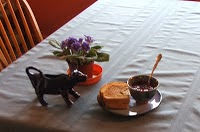 What's in this name?2 bread-sized slices smoked gouda About half a tart apple, peeled and sliced thin. 4 thin slices off an onionSome butterMayo and Horseradish, or a nice cranberry honey mustard, as you choose
Put a little butter in a hot skillet and when it’s frothy add the ham. Let it get just nicely browned a little, then remove it to a plate. Put the onion and sliced apple into the butter and let it get a tad browned, but not too soft. Also remove this to a plate.
Get two slices of rye bread (I prefer seedless, but you can do as you like.) and slather your mayo and horseradish or nice cranberry honey mustard on each slice. Be generous, now. No point in holding back. I never do.
Place some of the gouda on one slice, and some on the other. Put the ham, onion and apple on one slice. If you want some crunch, add some slices of uncooked apple because you know the rule: PLAY WITH YOUR FOOD!
Smash the two slices together. Add a little more butter to the still hot skillet, and press the sandwich down onto it. Let it brown nicely on one side, and then the other.
There you go. A Chepaitis on Rye.
March 1, 2014
TITANIC MOMENTS
 Luna Looks for Lifeboats
To start, I want you to think about the Titanic, because every marriage, every relationship of any depth, has at least one Titanic moment. You know what I mean. That moment when it looks like the ship is going down, and you have to figure out if you can still find a lifeboat, if you’ll be getting on it alone, if you’ll stay and go down with the ship, together or apart, if you can save each other or if you’ll end up in the freezing waters. One reason I married Steve was his reaction to Cameron’s movie, The Titanic, which we saw when we were dating. As the ship went down, Steve make a ‘tsk’ sound and gestured impatiently toward the screen. “Look at all that wood. I’d have gotten us to a boat alive.” Knowing that about him, and considering other parts of the movie, is what shifted my thinking about the puppy. Here’s how it went. Immediately after Steve brought her back to Bill, with the triggers and cues of past pain gone, I regained my equilibrium. The next day, while my husband was at work, I got the baggage out and unpacked it for real. I thought of my mother, who didn’t protect me because with five children, she was often tired and overwhelmed. As the baby of the family, my solution was to diminish my own needs, but then I’d be overwhelmed by what was happening to me, and my own need for someone to take care of me, and collapse into an emotional maelstrom. The puppy’s demands, and her gleeful, unrestricted romping, shoved me back into both grief and anger at what I had to deal with, and longing for what I wanted and didn’t get. Basically, I wanted to be safe to play, just like any child. The loss of that simple gift is much larger than many people suspect. While cats are the best at teaching us about personal space and pleasure, Dogs express joy like no other animal, in a total absence of fear or guilt. something I’d never had, and I’d wanted it desperately. None of this was reasoned or articulate. I was puppy-like myself, just reacting. Once all that was named, I understood the puppy had given me a great gift, providing the means to unearth old feelings, name and perhaps heal them. Within a day, I also suspected she had more to teach me. My own immediate needs met in a whole new way by someone I loved, I could turn my attention to Steve, who was clearly cut up by the loss of the puppy. His misery was written in his body, his face, his energy. Standing outside my own difficulties for the first time, I could perceive his. It occurred to me that if the puppy resurrected my old emotions, she’d been doing the same thing to Steve. He was the oldest of three boys, and throughout his childhood and adolescence he’d had to cope with his mother’s various illnesses, some of which were life-threatening. His youngest brother was born when Steve was fourteen, and his mother got seriously sick right after that. His father had to care for her, and Steve had to deal with both the fears and insecurities of a sick parent, and the care of an infant. As an adult, he’d decided not to have children of his own, but also remained adamant about all children and animals needing our protection. Both were drawn to him, instinctively seeing him as a source of safety. I’d seen this happen. When we’d gone to a petting zoo, though I had the bottle and the food, the animals flocked to him, all of them crowding around as if he was the ultimate source of sustenance. They just wanted to be near him. I felt the same way. Now, don’t get me wrong. He can be a real pain - stubborn, quirky, overly responsible, a typical first born son, totally unable to be anything other than who he is. But he exudes honesty and integrity. He’s inherently trustworthy, and that’s more sexy than most men realize. Having a puppy let him use his caretaking instincts, and gave him permission to play at the same time. Nothing else in his life did that in the same way. The puppy’s absence took that from him, and his grief was as deep as mine had been at having her here, though he didn’t give it voice. In fact, he hardly said a word. Once or twice I asked him tentatively if there was anything I could do. He said no. I apologized as much as I dared, not wanting to say too much for fear he’d tend my emotions instead of his own, but his only response was that he loved me more than a pet, and it wasn’t my fault. Re-enter the Titanic. A different part of the story. Let me just say that though I loved the movie, it seemed clear to me that if Rose had gotten on one of the lifeboats, Jack would have been able to save himself. He was resourceful, a survivor, and he only ended up in the water because he gave up his place on the plank of wood to her. Why did she let him do that? Why didn’t she insist that he get on it with her, somehow, someway, just as he insisted she stay alive? That always bugged me. Now, I had to ask myself if I was willing to let Steve save me, without saving him back. He’d shown fidelity to my soul. Could I show the same to his? If so, how? Because I’m even more stubborn than he is, because I was raised to be more curious than fearful, because I loved him, the answers were, respectively, yes, and I’d figure it out. Keep in mind that two very important internal motivations spurred me on. One was my commitment to not letting the bad parts or bad people of my childhood win. They’d stolen from me then, but they would not steal from me now. The second was from the best legacy of my childhood, which was being raised by imaginative, curious parents, who believed that learning could solve almost anything. I’d learned more about who I was. I could learn more about dogs.
 Hiding won't help, will it? I’ll pause for a moment here, and say that if this seems like a large emotional journey to be led by a labrador retriever puppy, I don’t consider that at all abnormal. We learn the best stuff of our lives through relationship. Friends, family, lovers, animals both wild and domestic that we stand in relationship with all teach us how to be human, and we need all of that, because being human is a complex task which we’re just beginning to get a handle on. Our intense, immense nervous systems have evolved in ways that are sometimes beyond our capacity to manage, unless we make it conscious, and then make a conscious effort to deal. Steve had my back, and I couldn’t let him freeze in the waters of my difficult past. And I owed something to the puppy who had already taught me something important about love. That Saturday, without telling Steve what I was doing, I went to Bill’s house to bring her home. I followed Bill down to the part of his basement where the puppies stayed. I told him I’d found some good allergy pills, and if it was okay, I’d take the puppy back, because Steve was feeling awful about letting her go. He looked perplexed, but amenable. He still had five, one of them our unnamed puppy, and as I hovered in the entrance to their room, I wondered if I’d be able to pick her out from this glump of puppydom. Bill opened the crate door and five black furballs poured out, tumbling over the floor and each other. They all ran toward Bill except one, who broke from the others and came trotting over to me. She had an air of happy alertness, and she seemed glad to see me, as if she’d had a nice little visit with her siblings, but was ready to go home now. I knelt down and she fumbled her way into my lap, licking my face. I didn’t have to worry at all about finding her. Just like the first time, she had found me. If you need a story about love and finding a home and all that, you can try my novel, Something Unpredictable. If you need some homecoming food, try the recipe below.
 COMING HOME PASTINA
This is a dish I usually keep pretty plain, for those nights when I want to really come home to the best part of my childhood. When I’m feeling like moving into the more adult part of my life, I’ll use the Optional Add-Ins, and sometimes substitute Orzo for pastina, because you know the rule: PLAY WITH YOUR FOOD!
 Mmm. Pastina 1 cup pastina 3 cups water 1 small package frozen spinach Salt and pepper to taste 1 tablespoon butter
ADD-IN OPTIONS fresh grated locatelli romano cheesecapersdried cranberriesleftover cooked chicken, dicedparsleygarlic Put the spinach in a pot with the water, and get it boiling. Let it thaw out for about five minutes. Add the pastina, some salt and pepper, and let it boil for maybe another ten minutes. Keep an eye on it, to make sure it doesn’t overcook. Turn the heat down real low and add the butter, and any of the other options that appeal to you. Or make up some of your own. You're human. You can deal with complexity, right?
February 28, 2014
THE HOWLING
 Not always a good girl
I'm going to continue the story in a linear way, and what happened next was meltdown, because ignoring emotional baggage never really works for long. In this case, it was the howling that started unpacking it for me.
You wouldn’t think so, since I love the sound of coyotes, but the the wild noise of a free-roaming pack is very different that the piteous howling of a puppy who doesn’t want to be in a crate. Coyote song invites me to be wild. Puppy cries call up abandonment and entrappment.
Our puppy, still unnamed, would go into her crate happily enough with a treat, but as soon as we went to our room and turned off the light, the howling began. This puppy wasn’t about to suffer in silence.
I’v read that the sound of a baby crying is the emotional equivalent of a jackhammer, and I knew that was true. Once, when my son was an infant, I’d tried to let him ‘cry himself out.’ I lasted about fifteen minutes, and never tried it again. The sound of the puppy’s distress had the same effect on me, but I didn’t know what to do about it.
We were crate training her, which is good for housebreaking, and also would allow Photon to roam freely at night. He was already ticked off, sticking to the circus room - a no-puppy zone - all day, and glaring at us whenever we approached him.
“She’ll be fine,” Steve told me.
“Will she cry all night?” I demanded.
“Probably not,” he said. He rolled over and went to sleep. I pressed a pillow over my ears and tried to do the same.
I don’t know how long the howling lasted. Twenty minutes? Twenty hours? At some point I dissolved into weird dreams about my father. I was woken by more whining, but Steve got up and took the puppy out, then climbed back into bed. More howling, more weird dreams, and then more whining. It was not quite six a.m. Time to take her out again.
The first three nights of the puppy’s presence were all exactly like that, and with each one I grew more miserable, more acutely disturbed by the noise rather than habituating to it as Steve said I would. The dreams about my father continued, unpleasant recurrences of his illness and death. I’d wake more miserable than the night before, and after Steve left for work, I’d bring the puppy out to the yard.
I’d take a post with my coffee on one of our many sitting rocks while she rolled about on the grass. She especially liked the plastic buckets our plants and shrubs came in, and she’d stick her head in them and run around in blind circles, then fall down and wiggle out to chase them again.
“Buckethead,” I muttered. “My puppy is a buckethead.”
Objectively, I knew she was really, really cute, especially when she ran around with a bucket on her head. However, her crying, the dreams, all the demands, had unloosed something unpleasant in my emotional drive, and I felt awful about myself for feeling that way.
Instead of doing what I knew I should do - lean into the feelings and figure out their origin - I tried to scold myself out of it. I’d better snap myself out of this, I told myself. I’m a smart woman who has lots of good things, and no right to feel this way. None of that got me anywhere, but I kept at it, and kept feeling worse as a result.
While the nightly howlings unearthed old grief, the daily round made me petulant. The puppy, unlike cats or kittens, wanted my attention all the time. When I walked around the yard, she’d stick to my heel, staring up at me as if I was supposed to do something. My cats had always glided slightly behind or to the side, with interest but no agenda.
When I was weeding, she’d leap onto my favorite flowers, crushing them. If I stood up she ran in circles around my legs, tripping me. I muttered a lot, spoke sharply to her when she whined to go out while I was writing. I didn’t want to go out. Didn’t I ever get what I wanted? She’d roll around on the floor with limitless delight, as if she was getting all her fun by stealing mine. More anger, more sorrow, wheeled through my veins. I was a feeling machine, unable to stop the wheels of emotion from churning out this crap.
In spite of all that, I didn’t want to let Steve down. He was clearly besotted with the puppy and doing everything he could to make it easy for me. And she was good for him, helping him to relax and show his playful, goofy side. I couldn’t mess that up for him.
I managed for a few days. Then, one more piece than I could manage was added to the mix.
I’d been keeping Photon inside, afraid he’d run away, but one morning he darted out across the yard before I even saw him stalking the door. The puppy was busy with a bucket and didn’t see him. I went to the vegetable garden to weed.
Soon, Photon came strolling back, and this time the puppy saw him. Suddenly she became a different kind of creature altogether. She lifted her head, did a classic point position, and went after Photon, charging with purpose. She’d found her inner predator.
Photon took a quick glance, puffed up and was off like a shot, running into the scrubby woods surrounding our yard.
I ran after them both, yelling at the puppy to stop, heel, sit, down. Nightmare scenarios rose in me. The dog would trap the cat, and hurt him, or even kill him, and I’d lose my cat to the damn thing I never wanted in the first place.
“Listen to me you little shit,” I screamed. “Leave the cat alone! Leave him alone!” She paid no attention and that enraged me. Dogs were supposed to be obedient.
I scrambled through the brush in time to see Photon shoot up a tree. I made a dive and grabbed the puppy by her collar. She yipped once and twisted around to get out of my grasp.
“No,” I shrieked. “No. Don’t eat the cat. No.”
I pulled her up and brought her back into the house, put her in her crate and closed the door. Then, shaking with anger, I went back outside to see about Photon. Again I pushed through brush to where he sat on a limb, hunched up, his fur puffy and his aspect disgruntled.
“You can come down now,” I told him. “I put the dog away.”
He didn’t move.
“You want to stay in the tree?” I asked him.
He squeezed his eyes shut and turned away. I left him there, knowing he could get down when he wanted to, but I felt awful.
When Steve came home I told him about it. “Photon’ll get used to it,” he said reasonably. “And the puppy will learn not to chase him.”
“She went after him,” I insisted. “Not playing. Like she wanted to kill him.”
“She’s a puppy,” Steve said.
“She’ll be a dog,” I pointed out. “She’ll get big and kill my cat and I won’t be able to stop her.” And I burst into tears. I sat down on the kitchen floor and wept as if my heart was breaking.
Steve sat down next to me and silently patted my shoulder, looking worried. His wife was cracking up, over a puppy.
But by now he knew it was more than that, and so did I. As a child, I’d had the burden of a grandfather who singled me out as his caretaker, and used his neediness to abuse me. I knew too well what it felt like to be trapped and helpless, to be prey. The possibility of that happening to my cat was too much for me.
 Don't mess with me In case you think that sounds totally bonkers, it's actually pretty common with survivors of any violence. It's called a trigger event. Just as memories both good and bad recur with the right physical cue, old trauma is sometimes resurrected by triggers, some of them so out of left field you don't immediately connect them to the actual memory. War veterans report them happening from sounds, smells, certain angles of light. I had survived the domestic wars, and it seemed my old battle wounds were kicking up. From a puppy.
Steve’s response was typical of him. He made a decision to protect what he loved, and acted on it. I got up the next morning to find him dismantling the crate. When I asked what he was doing, he said he was taking the puppy back.
“Back?” I asked, not getting it.
“Back to Bill.”
“But - you can’t.”
“Yes, I can. I’ll tell him you’re allergic. This can’t go on.”
“No,” I protested. “I’ll get over it. Just – I’ll get over it.”
He kept at what he was doing. When he decides a course of action
, his energy is so positive there’s really no denying it. In fact, you don’t want to, because what he’s doing seems so right.
“The dog is triggering you,” he said. “I’m not sure why, but it’s wrong for you to feel so bad. I won't let it happen. She’s going back.”
I was stunned. I believe it was the first time anyone had so consciously considered my well being above their own desires. It was such an unusual experience, I had no idea how to respond, so I said nothing.
And Steve, looking forlorn but determined, brought the puppy back to Bill.
You can find more of my writing at my website, wildreads.com.
COMFORT FOOD
No recipe today, because this is a sad part of the story, and I can’t eat when I’m sad. However, if you feel the need of comfort food, let me suggest the following:
Peanut butter and Jelly Sandwich - classic, when it calls up memories of the good parts of childhood.
Peanut Butter and Fluffernutter sandwich - even more classic, and best served on white bread for full effect. Nobody worried about that kind of thing when I was growing up.
Peanut Butter and Banana slices on toast - the healthy version of PB&J, especially if you use whole wheat bread and organic bananas.
Chicken noodle soup - Campbells, from a can, with saltine crackers. Do I need to explain?
February 27, 2014
LIKE CATS AND DOGS
 Once she was a puppy Daily bread, daily dogs and cats, and daily living
Steve and I got married shortly after we moved in to our new house, going on the theory that if we could survive building together, we could probably manage marriage. So far, it’s working out nicely. Then, of course, Steve started pining for a dog, and I chose the little black lab, daughter to Gandalf and Arwen, at Bill West’s house. Or she chose me. Either way, the day we brought her home, I got my first lesson in how to speak dog, for native cat speakers. We hadn’t named her, because it takes time for an animal to tell you its name, so she was still just Puppy. We brought her into our living room, put her down and let her sniff about. We watched, as she wagged her tail at pretty much everything. Before long, our three year old cat, Photon, entered the room. He’s one of a series of black cats who have strolled gracefully through my life. In fact, I’ve always made room for at least one black cat in my home, because they’re often last to be chosen at the shelter, and first to be used abusively in the world, which is sad. But right now, we really wanted him to keep a low profile. Clearly, he had different ideas. “I thought you put him in the Circus room,” Steve said nervously, using our name for the guest bedroom, decorated in homage to the circus house. “I did. He got out,” I answered just as nervously. I wanted to get used to the puppy before I dealt with the cat’s reaction, because I’m a little, well, let’s call it neurotic, about protecting my cats. But we’d done some work to prep him, bringing home doggie smells on a towel and so on. Maybe, I thought, it would be okay. It wasn’t. Photon padded over, made his trilling noise of greeting, then stopped and stared at the new creature in his house. The puppy turned her eager face to him. Photon glared. The puppy wagged her tail so hard her whole back end went into motion. Photon started his own tail flicking back and forth. They stood that way for a moment, two small black animals, both of them wagging their tails, mirror images of each other. Only, they each meant something very different by the gesture. Puppy, seeing a small furry black animal whose tail waved back and forth, did her play bow, then made a puppy leap. Photon, seeing an animal that wagged its tail and leaped, pushed out the ten tiny razors he kept in his paws for just such occasions, and used them. In the flying fur and yelps that followed, Steve and I frantically sorted out bodies, each of us retreating to our side of the living room with an animal in our arms. Suddenly, I felt myself burning with fury, beyond all proportion to the situation. “Watch your dog,” I hissed, hanging on to the cat. “She attacked my cat.” “Keep your cat back, before she hurts my dog,” he growled back, holding the puppy. The dog licked Steve. The cat settled into a nervous purr in my arms. Steve and I examined our animals for wounds, found none, and exchanged disapproving glances. I sniffed. “I’ll take Photon back to the Circus Room.” “Close the door this time,” he called after me as I went. I sat with Photon on the bed, and though he returned very quickly to trilling and purring, I was surprised at the emotions roiling around in me. I checked in with myself, and found simmering anger, that this interloper had disturbed my cat’s equilibrium. And how come Puppy got to take over the house, while we had to retreat? Also, quite unexpectedly, I was afraid. What if Photon got mad and ran away? And Puppy would soon be really big, if her 120 pound father was any indication of her ultimate size. What if - what if she squished the cat? Or ate it? My rational brain, my adult self, knew none of this was likely, but apparently the puppy had reached in and triggered the lock on a suitcase full of tricky old emotions. I shouldn’t have been surprised. There are almost always more tricky emotions than we want to acknowledge laying in wait for us, and animals, speaking to our wilder selves, often make them visible. Though Western thought likes to portray humans as above all that, we’re not. We relate to animals in visceral ways, not always able to articulate why we’re moved by the flight of the heron overhead, or drawn to the strange antics of squirrels in the park. Nonhuman animals hold up a mirror to our souls, teaching us who we really are. They’re incredibly generous that way, and we’d be wise to pay more attention to their lessons instead of texting so much. Cats and dogs, who live in close association with us, have also been burdened with a bunch of cultural accretions. In our minds, they’re bound up with gender metaphors, cats standing for women and dogs for men. You know what I mean. There’s that obvious reference to female anatomy associated with cats, and the way we call some men hound dogs. We also tend to privilege each along gender lines, seeing dogs as hard working, loyal and trustworthy, while cats are tricky, unpredictable, unaffectionate, or even evil. In Europe in the middle ages, the new religion of Catholicism went through village after village, burning even more cats than women because they were associated with goddess worship, and female witches. In fact, they burned so many cats the species almost went extinct. But then, the rat population grew, and the plague killed more than half the human population as well.
Sometimes, I imagine the ghosts of those burned cats sitting and licking their paws, saying ‘you should have been nice to us.’ Sadly, that legacy continues. A few years ago I heard a news story about a woman whose black cat was stolen by some local boys, tied to the end of their truck and dragged down a road until it died. She tried to prosecute them, but she lived in an area of Pennsylvania that still had a law on the books which said it was okay to kill black cats, because they were the familiar of the witch.
 Photon, considering options Dogs get abused, too, in horrible ways, but the prevalent metaphor we impose on each is different, and I naturally identified with cats at least partly because of that. I’m independent, contemplative, and I like a lot of grooming. The main character in one of my novel series is a woman named Jaguar Addams, and I’ll admit she’s a little tricky. Essentially, I understand cats. Dogs were a new species, with a new language. And suddenly, I wasn’t sure I wanted to learn it. But that was ridiculous. Puppies are cute and cuddly, loved by millions of people. My anger, my fear, must indicate something terribly wrong with me, and I better fix it before the Cute Police found out. As I sat with Photon in the Circus room, I delved deeper into the contents of my emotional suitcase. Of course, there was my mother’s smoldering resentment of the family dog which she didn’t like but had to care for, and my father’s tendency to give it more affection than he ever showed me. There was my own resistance to a creature that was so - so servile and dependent. Cats rule, and dogs serve, right? Yet, you have to take care of dogs. Their servility becomes your responsibility. The co-existence of human and cat was much more comfortable to me. I tentatively touched old wounds and persistent attitudes, aware of how many of them were given to me rather than chosen. Digging even deeper, I found that even my disdain for dog’s servility was the legacy of my mother’s ambivalence toward dependents and dependency. And all that, from a puppy. Could I really be that weird? I hoped not. I mean, it was embarrassing to have deep issues about dogs. I decided my best move was to ignore it, try to be normal, and move on. I stood and put my smile on. I left Photon purring with contentment on the bed, and went back downstairs, closing the door firmly behind me. If you want to read some of my strange adventures with birds, you’ll find
Saving Eagle Mitch: One Good Deed in a Wicked World
, and
Feathers of Hope
, on Amazon. And here’s a sustaining recipe for those times when you face your own emotional issues.
Photon, considering options Dogs get abused, too, in horrible ways, but the prevalent metaphor we impose on each is different, and I naturally identified with cats at least partly because of that. I’m independent, contemplative, and I like a lot of grooming. The main character in one of my novel series is a woman named Jaguar Addams, and I’ll admit she’s a little tricky. Essentially, I understand cats. Dogs were a new species, with a new language. And suddenly, I wasn’t sure I wanted to learn it. But that was ridiculous. Puppies are cute and cuddly, loved by millions of people. My anger, my fear, must indicate something terribly wrong with me, and I better fix it before the Cute Police found out. As I sat with Photon in the Circus room, I delved deeper into the contents of my emotional suitcase. Of course, there was my mother’s smoldering resentment of the family dog which she didn’t like but had to care for, and my father’s tendency to give it more affection than he ever showed me. There was my own resistance to a creature that was so - so servile and dependent. Cats rule, and dogs serve, right? Yet, you have to take care of dogs. Their servility becomes your responsibility. The co-existence of human and cat was much more comfortable to me. I tentatively touched old wounds and persistent attitudes, aware of how many of them were given to me rather than chosen. Digging even deeper, I found that even my disdain for dog’s servility was the legacy of my mother’s ambivalence toward dependents and dependency. And all that, from a puppy. Could I really be that weird? I hoped not. I mean, it was embarrassing to have deep issues about dogs. I decided my best move was to ignore it, try to be normal, and move on. I stood and put my smile on. I left Photon purring with contentment on the bed, and went back downstairs, closing the door firmly behind me. If you want to read some of my strange adventures with birds, you’ll find
Saving Eagle Mitch: One Good Deed in a Wicked World
, and
Feathers of Hope
, on Amazon. And here’s a sustaining recipe for those times when you face your own emotional issues. HAMMING IT UP This is an easy one. Very few ingredients, and if it’s a cold day, it’ll warm up the house. Of course, you can do it without the bourbon, or you can change up the brown sugar for maple syrup, because you know the rule: PLAY WITH YOUR FOOD!
 This pig is drunkIngredients1 ham, shank or butt portion, about 10 pounds1/2 cup bourbon3 1/2 cups apple cider1/2 cup brown sugarPut the bourbon, cider, and brown sugar in a small pot and stir it up. Turn the heat to high and let it come to a boil. Turn it down to medium and let it simmer for about five or ten minutes, to burn off the alcohol and mellow the flavors. Heat mellows us all, If you’re from the Northeast, surely you know that.
Score the ham to your preference (I don’t do diamonds, just slashes) put it in a roasting pan, its primary meat side down, and pour the liquid over it. Speaking with it courteously, tell it you’re now putting it in an oven preheated to 450 degrees.
But as soon as it’s in, turn the heat down to 300 degrees. The ham won’t mind. Let it cook without disturbance for two to three hours at this low temp, or until the internal temperature reaches a comfortable 140 degrees.
Serve with mashed potatoes and corn, or baked potatoes and brussell sprouts, or just with your own good will.
February 26, 2014
SINGING STARS, LAUGHING EARTH
Daily bread, daily cats and dogs, and daily living
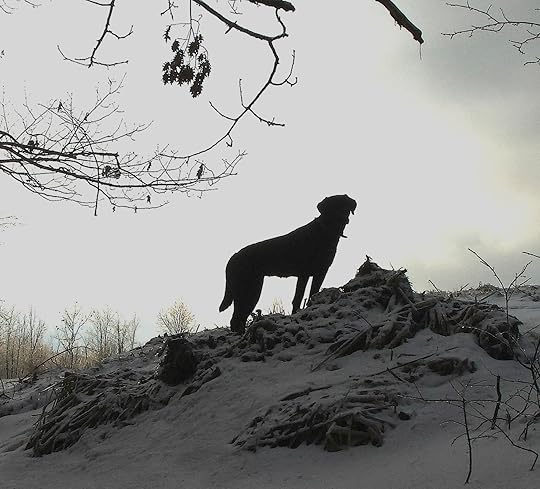 Luna can howl, too Today, the cats are glaring at me. Cricket, our black cat, wants to know why all that SNOW is still out there. Don’t I realize she doesn’t like walking on it? Can’t I get rid of it? Chaco resents that I’m keeping her out of the cellar, where strange men are Doing Things to that big box we call a furnace. She feels she should go have a look inside it, and I’m not letting her.“Relax, girls,” I tell them. “Have some catnip.” I wouldn’t mind having some myself. We were without our heat for over a week, getting by on spaceheaters and pretty damn glad we put a fireplace in, because our odd geothermal/radiant floor system went kaplooey. That, I think, is the technical term. It was the only part of building the house that didn’t go well, and we knew it would have to be replaced, but knowledge is just mental prep. It doesn’t stop you from feeling what you feel. For us, this last week or so, what we felt was cold. It reminded me of the days when we were building here. And I do mean building, because we not only took a chance on buying the land, we decided to be General Contractors, taking an active part. We hired out what we couldn’t do, and Steve, very organized about it all, had us interview three of each - three architects, three well guys, and so on - then choose the ones that best met our needs. It was a good plan. It only fell down on the geothermal unit, because we couldn’t find three of those, and the one we did find turned out to be a schmuck. Again, that’s the technical term. Other than that, building was a lot more straightforward than either of us thought it would be. This isn’t to say it was easy. No, no. It was work that took all our spare time and obsessive qualities for about a year. There were good days, bad days, and some days that were just interesting. A good day was when the footings were put in, but before the cement was poured, when I went around to the part of the earth that would hold our home, and placed pollen, sage, feathers, and some special stones in the corners and the center, thanking the land we’d rest on, and opening a conversation with it.
 Really. The sky does this sometimes An interesting day was when I was working outside, clearing brush, and one of our new neighbors, Mitch, stopped as he passed to welcome us to the neighborhood. “You’re gonna love it here,” he said with great enthusiasm. “I got an explosive license!” Later, I found out that meant he did big firework displays every fourth of July. He took me for a tour of his basement to show me the stacks and stacks of them, but when he lit a cigarette, I gracefully and quickly withdrew. A bad day was when the foundation guys were late with the pouring, and with winter coming on, we were getting a bit hysterical about it all. That evening I called the guy and sobbed, “I want you to know I wake up crying every night. And I want you to wake up every night, thinking about me crying.” Apparently, tears are what big construction guys fear most, because it was done the next day, and our framers were out framing in one of the worst snowstorms of the year. A really interesting day was when we entered the building to see all the dry wall up, and Steve said to me, “We’ll prime it today, and finish the painting tomorrow.” He is the ultimate optimist. Another good day - when the well was sunk, and water gushed from the ground in a marvelous torrent. I thought, oddly, of the day my water broke and I went into labor. Another good day - when I finally finished the damn insulation (I was known as The Bat Queen, because it was my job to install all the insulting bats). On that day, before the drywall went up, I placed many magic objects behind the insulation, including copies of my son’s early writing and drawings, copies of my novels, a newspaper, a magazine my husband was published in. And I wrote praise and blessings on the walls behind the insulation. In looking back, there were clearly more good days than bad, which wasn’t true of our house hunting experience. Go figure. Maybe we’re just karmically marked as DIY folks. Or because we’re writers, our inherent attitude is, ‘if it doesn’t exist, we’ll just have to create it.” Actually, I wrote my first novel because I couldn’t find anything I wanted to read. But no, it wasn’t easy. It was down and dirty work, and after a year of it I longed to put my girl clothes back on and go get a manicure. But I think we do ourselves a grave injustice when we believe just because something is difficult, it’s not right, looking to ‘easy’ as a sign that we’re on the right track. Nor do I think the opposite is true. Like a good Italian who always adds and never subtracts, I think both are true. It’s right when it’s meaningful, and sometimes getting to meaningful is hard work, but generally you also have a sense that the work is good. That you’ve chosen well, if not wisely. And here, finally, is what told me that. In November, after we’d put in the well and septic, but still hadn’t broken ground for the house, a Celestial event occurred - The annual
Leonid meteor shower
. Astronomers said it was to be one of the best ever, and I decided to leave my small house in the city and go watch it on the hill. That meant waking up at around 3 am on a cold night, but there are no streetlights on the hill, and it’s far enough away from the city that we get the best view of the stars. When I arrived at our land, I bundled up good in sweater, coat, and blanket, and sat on the hood of my car (still warm), looking up. I’d anticipated a bunch of shooting stars, but what I got would certainly give Mitch’s explosive license some pretty stiff competition. Discs of fires, with sizzling tails danced across the darkling plain. Stars poured down like discarded petals of flowers in the wind. Tiny drops of light burst out and disappeared. And in the distance, from different spots on the hill, I heard human voices, gasping, calling out, ‘Aaah!” This was more than a meteor shower. It was a conversation, between the children of the earth, and their progenitors, the stars. In it, I recognized something - that I was here not just to build a house, but also to touch my origins, and be touched by them, with stardust shivering down the sky toward my new home. Dawn began to rise in the east, but in the still dark western sky, stars continued to fling themselves toward earth, as if they yearned for us the way we yearn for them. Then, as if I hadn’t had enough magic already, the coyotes started to howl. If you’ve never heard coyotes, you should know that their cries seem to contain both wild laughter and exigent longing. You can’t help but think of drunk old men, and the call of the goddess at the same time. Those who know the language can interpret: Someone caught a bunny? Coyote pups want their pack? I’m not conversant, so what I heard was a reminder. I’m made of stardust, and, as the bible says, an earthling of the earth. I’m part of each, where I belong. Humans absorb wisdom and mystery through their skin and senses, and it lives in us in wordless ways. The land shapes us, body and soul. The song of the coyotes, the dance of the meteors,my neighbor’s responses, marked me that night, and claimed me for this place where I’d chop wood, gather water, and chat with stars. Later, when other canids came into my life, I’d have to remember that. I’d long been friends with felines, but soon the canids would put me on notice that I still had more to learn. Next time, let’s go back to my dog, shall we?
Really. The sky does this sometimes An interesting day was when I was working outside, clearing brush, and one of our new neighbors, Mitch, stopped as he passed to welcome us to the neighborhood. “You’re gonna love it here,” he said with great enthusiasm. “I got an explosive license!” Later, I found out that meant he did big firework displays every fourth of July. He took me for a tour of his basement to show me the stacks and stacks of them, but when he lit a cigarette, I gracefully and quickly withdrew. A bad day was when the foundation guys were late with the pouring, and with winter coming on, we were getting a bit hysterical about it all. That evening I called the guy and sobbed, “I want you to know I wake up crying every night. And I want you to wake up every night, thinking about me crying.” Apparently, tears are what big construction guys fear most, because it was done the next day, and our framers were out framing in one of the worst snowstorms of the year. A really interesting day was when we entered the building to see all the dry wall up, and Steve said to me, “We’ll prime it today, and finish the painting tomorrow.” He is the ultimate optimist. Another good day - when the well was sunk, and water gushed from the ground in a marvelous torrent. I thought, oddly, of the day my water broke and I went into labor. Another good day - when I finally finished the damn insulation (I was known as The Bat Queen, because it was my job to install all the insulting bats). On that day, before the drywall went up, I placed many magic objects behind the insulation, including copies of my son’s early writing and drawings, copies of my novels, a newspaper, a magazine my husband was published in. And I wrote praise and blessings on the walls behind the insulation. In looking back, there were clearly more good days than bad, which wasn’t true of our house hunting experience. Go figure. Maybe we’re just karmically marked as DIY folks. Or because we’re writers, our inherent attitude is, ‘if it doesn’t exist, we’ll just have to create it.” Actually, I wrote my first novel because I couldn’t find anything I wanted to read. But no, it wasn’t easy. It was down and dirty work, and after a year of it I longed to put my girl clothes back on and go get a manicure. But I think we do ourselves a grave injustice when we believe just because something is difficult, it’s not right, looking to ‘easy’ as a sign that we’re on the right track. Nor do I think the opposite is true. Like a good Italian who always adds and never subtracts, I think both are true. It’s right when it’s meaningful, and sometimes getting to meaningful is hard work, but generally you also have a sense that the work is good. That you’ve chosen well, if not wisely. And here, finally, is what told me that. In November, after we’d put in the well and septic, but still hadn’t broken ground for the house, a Celestial event occurred - The annual
Leonid meteor shower
. Astronomers said it was to be one of the best ever, and I decided to leave my small house in the city and go watch it on the hill. That meant waking up at around 3 am on a cold night, but there are no streetlights on the hill, and it’s far enough away from the city that we get the best view of the stars. When I arrived at our land, I bundled up good in sweater, coat, and blanket, and sat on the hood of my car (still warm), looking up. I’d anticipated a bunch of shooting stars, but what I got would certainly give Mitch’s explosive license some pretty stiff competition. Discs of fires, with sizzling tails danced across the darkling plain. Stars poured down like discarded petals of flowers in the wind. Tiny drops of light burst out and disappeared. And in the distance, from different spots on the hill, I heard human voices, gasping, calling out, ‘Aaah!” This was more than a meteor shower. It was a conversation, between the children of the earth, and their progenitors, the stars. In it, I recognized something - that I was here not just to build a house, but also to touch my origins, and be touched by them, with stardust shivering down the sky toward my new home. Dawn began to rise in the east, but in the still dark western sky, stars continued to fling themselves toward earth, as if they yearned for us the way we yearn for them. Then, as if I hadn’t had enough magic already, the coyotes started to howl. If you’ve never heard coyotes, you should know that their cries seem to contain both wild laughter and exigent longing. You can’t help but think of drunk old men, and the call of the goddess at the same time. Those who know the language can interpret: Someone caught a bunny? Coyote pups want their pack? I’m not conversant, so what I heard was a reminder. I’m made of stardust, and, as the bible says, an earthling of the earth. I’m part of each, where I belong. Humans absorb wisdom and mystery through their skin and senses, and it lives in us in wordless ways. The land shapes us, body and soul. The song of the coyotes, the dance of the meteors,my neighbor’s responses, marked me that night, and claimed me for this place where I’d chop wood, gather water, and chat with stars. Later, when other canids came into my life, I’d have to remember that. I’d long been friends with felines, but soon the canids would put me on notice that I still had more to learn. Next time, let’s go back to my dog, shall we?
You can find out more about my novels on my website, wildreads.com . And here’s a recipe that’s both grounded, and sparkly.
STARS AND PLANETS FRUIT SALAD
During the worst part of the heat crisis in my house, my friends Amy Atkins and Mary Browne, two amazing women, invited me for a lunch which they prepared. It was elegant, immensely tasty, and just what I needed - to have someone else cook for me. Here’s what starfruit look like, beautiful as the Leonids.
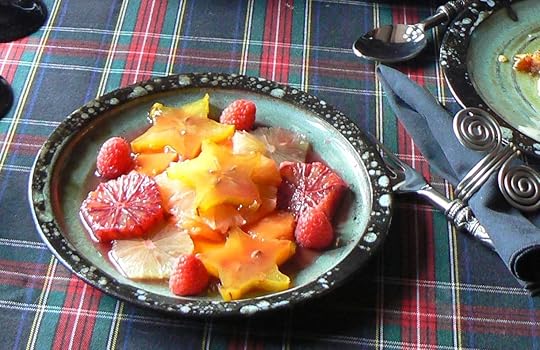 These starfruit SING!Ingredients
thin, broad slices of mango,
papaya, and blood orangesStarfruit slicesSome raspberries
Dressing1/2 cup pomegranate juice1/4 cup pineapple juice4 tbsp honey3/4 cup raspberry vinaigrette dressing
Simmer the dressing briefly over medium heat (about five minutes). You can add other fruits as you prefer, and if you like heat in your salad, toss in some cayenne pepper or tabasco because you know the rule: PLAY WITH YOUR FOOD!
 Luna can howl, too Today, the cats are glaring at me. Cricket, our black cat, wants to know why all that SNOW is still out there. Don’t I realize she doesn’t like walking on it? Can’t I get rid of it? Chaco resents that I’m keeping her out of the cellar, where strange men are Doing Things to that big box we call a furnace. She feels she should go have a look inside it, and I’m not letting her.“Relax, girls,” I tell them. “Have some catnip.” I wouldn’t mind having some myself. We were without our heat for over a week, getting by on spaceheaters and pretty damn glad we put a fireplace in, because our odd geothermal/radiant floor system went kaplooey. That, I think, is the technical term. It was the only part of building the house that didn’t go well, and we knew it would have to be replaced, but knowledge is just mental prep. It doesn’t stop you from feeling what you feel. For us, this last week or so, what we felt was cold. It reminded me of the days when we were building here. And I do mean building, because we not only took a chance on buying the land, we decided to be General Contractors, taking an active part. We hired out what we couldn’t do, and Steve, very organized about it all, had us interview three of each - three architects, three well guys, and so on - then choose the ones that best met our needs. It was a good plan. It only fell down on the geothermal unit, because we couldn’t find three of those, and the one we did find turned out to be a schmuck. Again, that’s the technical term. Other than that, building was a lot more straightforward than either of us thought it would be. This isn’t to say it was easy. No, no. It was work that took all our spare time and obsessive qualities for about a year. There were good days, bad days, and some days that were just interesting. A good day was when the footings were put in, but before the cement was poured, when I went around to the part of the earth that would hold our home, and placed pollen, sage, feathers, and some special stones in the corners and the center, thanking the land we’d rest on, and opening a conversation with it.
 Really. The sky does this sometimes An interesting day was when I was working outside, clearing brush, and one of our new neighbors, Mitch, stopped as he passed to welcome us to the neighborhood. “You’re gonna love it here,” he said with great enthusiasm. “I got an explosive license!” Later, I found out that meant he did big firework displays every fourth of July. He took me for a tour of his basement to show me the stacks and stacks of them, but when he lit a cigarette, I gracefully and quickly withdrew. A bad day was when the foundation guys were late with the pouring, and with winter coming on, we were getting a bit hysterical about it all. That evening I called the guy and sobbed, “I want you to know I wake up crying every night. And I want you to wake up every night, thinking about me crying.” Apparently, tears are what big construction guys fear most, because it was done the next day, and our framers were out framing in one of the worst snowstorms of the year. A really interesting day was when we entered the building to see all the dry wall up, and Steve said to me, “We’ll prime it today, and finish the painting tomorrow.” He is the ultimate optimist. Another good day - when the well was sunk, and water gushed from the ground in a marvelous torrent. I thought, oddly, of the day my water broke and I went into labor. Another good day - when I finally finished the damn insulation (I was known as The Bat Queen, because it was my job to install all the insulting bats). On that day, before the drywall went up, I placed many magic objects behind the insulation, including copies of my son’s early writing and drawings, copies of my novels, a newspaper, a magazine my husband was published in. And I wrote praise and blessings on the walls behind the insulation. In looking back, there were clearly more good days than bad, which wasn’t true of our house hunting experience. Go figure. Maybe we’re just karmically marked as DIY folks. Or because we’re writers, our inherent attitude is, ‘if it doesn’t exist, we’ll just have to create it.” Actually, I wrote my first novel because I couldn’t find anything I wanted to read. But no, it wasn’t easy. It was down and dirty work, and after a year of it I longed to put my girl clothes back on and go get a manicure. But I think we do ourselves a grave injustice when we believe just because something is difficult, it’s not right, looking to ‘easy’ as a sign that we’re on the right track. Nor do I think the opposite is true. Like a good Italian who always adds and never subtracts, I think both are true. It’s right when it’s meaningful, and sometimes getting to meaningful is hard work, but generally you also have a sense that the work is good. That you’ve chosen well, if not wisely. And here, finally, is what told me that. In November, after we’d put in the well and septic, but still hadn’t broken ground for the house, a Celestial event occurred - The annual
Leonid meteor shower
. Astronomers said it was to be one of the best ever, and I decided to leave my small house in the city and go watch it on the hill. That meant waking up at around 3 am on a cold night, but there are no streetlights on the hill, and it’s far enough away from the city that we get the best view of the stars. When I arrived at our land, I bundled up good in sweater, coat, and blanket, and sat on the hood of my car (still warm), looking up. I’d anticipated a bunch of shooting stars, but what I got would certainly give Mitch’s explosive license some pretty stiff competition. Discs of fires, with sizzling tails danced across the darkling plain. Stars poured down like discarded petals of flowers in the wind. Tiny drops of light burst out and disappeared. And in the distance, from different spots on the hill, I heard human voices, gasping, calling out, ‘Aaah!” This was more than a meteor shower. It was a conversation, between the children of the earth, and their progenitors, the stars. In it, I recognized something - that I was here not just to build a house, but also to touch my origins, and be touched by them, with stardust shivering down the sky toward my new home. Dawn began to rise in the east, but in the still dark western sky, stars continued to fling themselves toward earth, as if they yearned for us the way we yearn for them. Then, as if I hadn’t had enough magic already, the coyotes started to howl. If you’ve never heard coyotes, you should know that their cries seem to contain both wild laughter and exigent longing. You can’t help but think of drunk old men, and the call of the goddess at the same time. Those who know the language can interpret: Someone caught a bunny? Coyote pups want their pack? I’m not conversant, so what I heard was a reminder. I’m made of stardust, and, as the bible says, an earthling of the earth. I’m part of each, where I belong. Humans absorb wisdom and mystery through their skin and senses, and it lives in us in wordless ways. The land shapes us, body and soul. The song of the coyotes, the dance of the meteors,my neighbor’s responses, marked me that night, and claimed me for this place where I’d chop wood, gather water, and chat with stars. Later, when other canids came into my life, I’d have to remember that. I’d long been friends with felines, but soon the canids would put me on notice that I still had more to learn. Next time, let’s go back to my dog, shall we?
Really. The sky does this sometimes An interesting day was when I was working outside, clearing brush, and one of our new neighbors, Mitch, stopped as he passed to welcome us to the neighborhood. “You’re gonna love it here,” he said with great enthusiasm. “I got an explosive license!” Later, I found out that meant he did big firework displays every fourth of July. He took me for a tour of his basement to show me the stacks and stacks of them, but when he lit a cigarette, I gracefully and quickly withdrew. A bad day was when the foundation guys were late with the pouring, and with winter coming on, we were getting a bit hysterical about it all. That evening I called the guy and sobbed, “I want you to know I wake up crying every night. And I want you to wake up every night, thinking about me crying.” Apparently, tears are what big construction guys fear most, because it was done the next day, and our framers were out framing in one of the worst snowstorms of the year. A really interesting day was when we entered the building to see all the dry wall up, and Steve said to me, “We’ll prime it today, and finish the painting tomorrow.” He is the ultimate optimist. Another good day - when the well was sunk, and water gushed from the ground in a marvelous torrent. I thought, oddly, of the day my water broke and I went into labor. Another good day - when I finally finished the damn insulation (I was known as The Bat Queen, because it was my job to install all the insulting bats). On that day, before the drywall went up, I placed many magic objects behind the insulation, including copies of my son’s early writing and drawings, copies of my novels, a newspaper, a magazine my husband was published in. And I wrote praise and blessings on the walls behind the insulation. In looking back, there were clearly more good days than bad, which wasn’t true of our house hunting experience. Go figure. Maybe we’re just karmically marked as DIY folks. Or because we’re writers, our inherent attitude is, ‘if it doesn’t exist, we’ll just have to create it.” Actually, I wrote my first novel because I couldn’t find anything I wanted to read. But no, it wasn’t easy. It was down and dirty work, and after a year of it I longed to put my girl clothes back on and go get a manicure. But I think we do ourselves a grave injustice when we believe just because something is difficult, it’s not right, looking to ‘easy’ as a sign that we’re on the right track. Nor do I think the opposite is true. Like a good Italian who always adds and never subtracts, I think both are true. It’s right when it’s meaningful, and sometimes getting to meaningful is hard work, but generally you also have a sense that the work is good. That you’ve chosen well, if not wisely. And here, finally, is what told me that. In November, after we’d put in the well and septic, but still hadn’t broken ground for the house, a Celestial event occurred - The annual
Leonid meteor shower
. Astronomers said it was to be one of the best ever, and I decided to leave my small house in the city and go watch it on the hill. That meant waking up at around 3 am on a cold night, but there are no streetlights on the hill, and it’s far enough away from the city that we get the best view of the stars. When I arrived at our land, I bundled up good in sweater, coat, and blanket, and sat on the hood of my car (still warm), looking up. I’d anticipated a bunch of shooting stars, but what I got would certainly give Mitch’s explosive license some pretty stiff competition. Discs of fires, with sizzling tails danced across the darkling plain. Stars poured down like discarded petals of flowers in the wind. Tiny drops of light burst out and disappeared. And in the distance, from different spots on the hill, I heard human voices, gasping, calling out, ‘Aaah!” This was more than a meteor shower. It was a conversation, between the children of the earth, and their progenitors, the stars. In it, I recognized something - that I was here not just to build a house, but also to touch my origins, and be touched by them, with stardust shivering down the sky toward my new home. Dawn began to rise in the east, but in the still dark western sky, stars continued to fling themselves toward earth, as if they yearned for us the way we yearn for them. Then, as if I hadn’t had enough magic already, the coyotes started to howl. If you’ve never heard coyotes, you should know that their cries seem to contain both wild laughter and exigent longing. You can’t help but think of drunk old men, and the call of the goddess at the same time. Those who know the language can interpret: Someone caught a bunny? Coyote pups want their pack? I’m not conversant, so what I heard was a reminder. I’m made of stardust, and, as the bible says, an earthling of the earth. I’m part of each, where I belong. Humans absorb wisdom and mystery through their skin and senses, and it lives in us in wordless ways. The land shapes us, body and soul. The song of the coyotes, the dance of the meteors,my neighbor’s responses, marked me that night, and claimed me for this place where I’d chop wood, gather water, and chat with stars. Later, when other canids came into my life, I’d have to remember that. I’d long been friends with felines, but soon the canids would put me on notice that I still had more to learn. Next time, let’s go back to my dog, shall we?You can find out more about my novels on my website, wildreads.com . And here’s a recipe that’s both grounded, and sparkly.
STARS AND PLANETS FRUIT SALAD
During the worst part of the heat crisis in my house, my friends Amy Atkins and Mary Browne, two amazing women, invited me for a lunch which they prepared. It was elegant, immensely tasty, and just what I needed - to have someone else cook for me. Here’s what starfruit look like, beautiful as the Leonids.
 These starfruit SING!Ingredients
thin, broad slices of mango,
papaya, and blood orangesStarfruit slicesSome raspberries
Dressing1/2 cup pomegranate juice1/4 cup pineapple juice4 tbsp honey3/4 cup raspberry vinaigrette dressing
Simmer the dressing briefly over medium heat (about five minutes). You can add other fruits as you prefer, and if you like heat in your salad, toss in some cayenne pepper or tabasco because you know the rule: PLAY WITH YOUR FOOD!


