Paul O'Connor's Blog, page 9
March 15, 2021
A trillion dollars second by second.I came across this image...
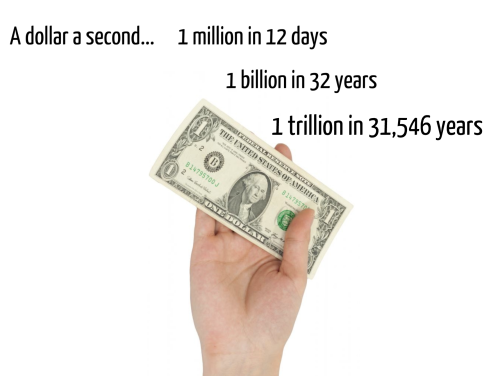
A trillion dollars second by second.
I came across this image looking at an old presentation I used in a class on Globalization. It comes from an example Manfred Steger uses in an introductory text to globalization and the 2008 global financial crisis (GFC). Needless to say with the continued expanse of wealth, the image and the anecdote is still potent and relevant.
Simply put, it is easy to not take the enormous wealth we hear about seriously. What really is the difference between a millionaire and a billionaire. After a billion dollars, is a trillion really that much more significant? The answer becomes more distinct if you think about simply paying out these huge sums. If you pay someone a dollar every second, it will take 12 full days until you have paid out 1 million dollars. Using the same method of a dollar a second would take you a staggering 32 years to reach a billion. Finally, to reach a trillion dollars would take an incomprehensible 31,546 years. Paying a dollar a second, it would take you 3583 years to pay Jeff Bezos all the wealth he has accrued.
You can use these figures when surveying the number of billionaires in the world, the estimated 614 in the USA with a combined wealth of 2.95 trillion. China is close behind the US. The map below provides a neat visual representation of global wealth and where it is concentrated. The GFC wiped 2 trillion dollars off of the global economy. In the light of this exercise above, this seems all the more edifying.



March 1, 2021
"Climate change deniers like to claim that environmentalists want to return us to the Stone Age. The..."
- Naomi Klein. “This Changes Everything: Capitalism vs. The Climate
February 18, 2021
"It is ultimately for that reason that the passing of the consumer test is a non-negotiable condition..."
- Zygmunt Bauman, Consuming Life (2007, pg 57)
February 14, 2021
Book Review: No Beer On A Dead PlanetIf you are looking for a...
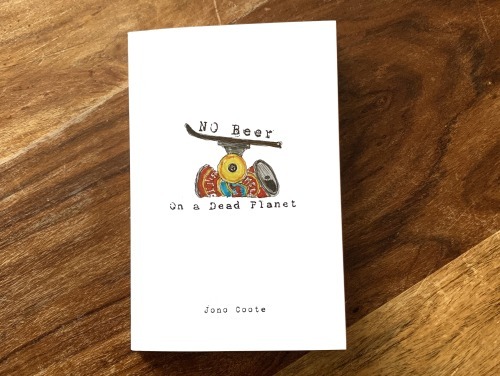

Book Review: No Beer On A Dead Planet
If you are looking for a first class read that fuses travel writing with the peculiarities of a skateboarder’s perspective on the imponderabilia of everyday exchanges, look no further. Jono Coote has crafted a beautifully written text on his travels through Australia and his skateboard trysts with marsupial colonised concrete bowls and scooter plagued skateparks. He provides us with a dreamy narrative that meanders between cultural history, beer soaked hedonism, and commentary on an ailing sore world. This is very much the travel account of a veteran skateboarder who values exploring urban detritus and the unusual eccentrics that occupy such spaces. Coote is an author who is at ease referencing both Robert M. Pirsig and Finbarr Saunders. We are given ample insight to his feelings and opinions as he readily encounters bigotry on the road with which his interlocutors assume, to their error, that he is in accordance with.
The book is full of beer and at times I felt slightly dehydrated as Coote recalls another sun drenched skate sweating off a hangover. But do not be mistaken, this is a thoughtful and engaging book that departs from the formulae of both travel and skate journalism. This is a book that raises questions about late modernity and our slide into ecological doom. It also posits a scathing assessment of Insta-tourism and the mindless pursuit of selfie-stick photo opportunities to #hashtag for venal and vane intentions. The writing is mindful of the transformations taking place in skateboarding and charts some recent losses from the culture with poignant melancholy. He talks of the death of Jake Phelps as another part of skateboarding’s ongoing metamorphosis.
“…another few stones rattled loose in skateboarding’s slow landslide from lifestyle to sport”
The book changes pace a few times. On arrival in Melbourne we hit a more permanent location. Amusing anecdotes about a job that only lasts a day, and the embarrassing vernacular of craft beers pepper this more settled part of the travelogue. In the final parts of the book the journeying moves to New Zealand and I learn much from these final chapters about the country and its skateboard terrain. Still Coote draws on all manner of insights discussing Grey Nomads, Haast’s Eagle, Peter Jackson’s Braindead, but we learn nothing of Steampunk. Perhaps one example indicates the ethos of this book more than any other. In touring Wanaka we are given an evocative appraisal of its instafamous willow tree. Impressed by its natural beauty but turned off by its tourist appeal, the author departs to the more rewarding concrete beauty of the local skatepark in which he finds a ready made community and mutual connections to friends around the world.
Another thing to note was the pleasure of the format. Published by Josh Sutton’s Indie publishing house Red Fez Books, the book is notable for its subtle but stylish typography. Beautifully illustrated by Lewis Brownlie, I especially enjoyed reading a physical book after trawling through so many online readings of this semester. Beyond the body of the text there is a useful bibliography and a comprehensive appendix of each skatepark visited with amusing and helpful comments. The book is sensibly priced at £10 and 10% of the profits go to the Ben Raemers Foundation. This is a book that truly comes from and is supported by skateboard culture, from author, to publisher, to bookseller.
Coote has a gravitas in his words. He laces his accounts with nods to mythic forces, pilgrimage, and absent gods. This style of writing brings to life the beauty of Australia, New Zealand, and our brief entry point in Taipei. But he also delivers the harsh and brutal banality of life on the road as a skateboarder. We are informed of disappointed treks to barely skateable locations, hours spent emptying a half filled pool, and a challenging wallride avoiding human excrement.
Coming as it does in the midst of the Covid lockdown, its release is tinged with irony. Recreational travel is a distant memory for many of us, and one not likely to return in the near future. It is therefore a true joy to be able to partake in this literary journey and revel in the pleasures of travel and skateboarding vicariously.
If you come across Jono Coote in your own skateboarding travels, buy the man a Holsten Pils and thank him for his efforts.
February 12, 2021
"Like any art form—for that, finally, is what we are dealing with—the cockfight renders ordinary,..."
-
Clifford Geertz, The Interpretation of Cultures. Chapter 15 Deep Play: Notes on a Balinese Cockfight

"One thing to bear in mind through all of life’s up and downs is that nature never goes out of..."
- I had a research interview with someone yesterday and this simple point came up. Thought it was worth sharing.
February 1, 2021
"Take vampires. First you place them: vampires are stock figures in American horror movies. American..."
By observing these axes of inversion, we can get a sense of what such symbols are really about: that vampires, for instance, are not necessarily so much about death, or fear, but about power; about the simultaneous feelings of attraction and repulsion that relations of domination tend to create.”
-
David Graeber (2015) “The Utopia of Rules: On Technology, Stupidity and the Secret Joys of Bureaucracy”
This is from an excerpt where Graeber deftly explains why structuralism (not a grand theory but as a method) remains so helpful in terms of schematising and theory building.
January 25, 2021
Bordering on the SacredA nice little Jenkem interview with...

Bordering on the Sacred
A nice little Jenkem interview with Werner Herzog finds him considering what music he would set to a film of skateboarding. He responds with an answer that selects Russian Orthodox choral music. He justifies this by saying that it would need to generate ‘a strange feeling of space and sacrality. So what you are doing is special, bordering on the sacred.’
More on Skate CultsRecently I have seen a few posts on Instagram...




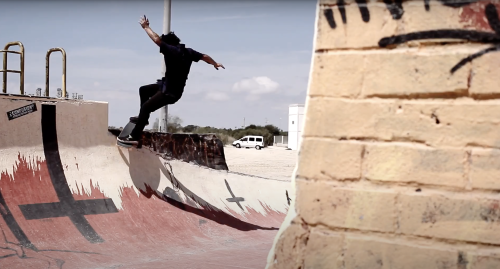
More on Skate Cults
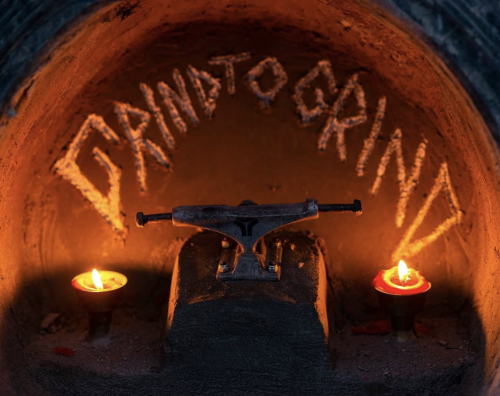
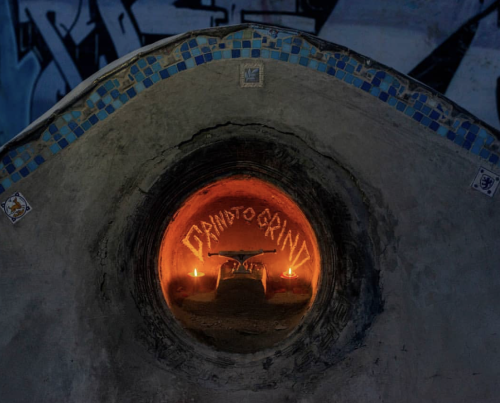
Recently I have seen a few posts on Instagram from the Grind to Grind group based in Spain who have focussed their skate cult around trucks. Specifically they fetish maximising the grind experience. They are also a commercial enterprise with their signature product being skateboard rails made out of melted down trucks. These can then be assembled on your board to slide(grind) coping for a deeply gnarly experience.
In my book I refer to a number of curb cults who have ritualised curb skating and elevated the slappy to a divine trick. I guess you could suggest that curb cults also fetish the grind and trucks to a degree. Andrew Luecke’s piece on the cult of Independent Trucks might also be relevant here. Yet Grind to Grind have taken it one step further and also construct coping made out of trucks.
A recent video on Instagram shows the construction of truck coping at a DIY spot and the carving out of a small truck altar beneath it. Sage is burnt and candles are lit as the coping is given a quasi-baptism of ritual grinds. Parallels to other skate cults such as BA. KU. are self evident here.
What I find particularly interesting is the political alignment of such cults. Alike BA. KU. the Grind to Grind group skate locations adorned with satanic symbolism. Inverted crosses in the picture above and also inverted pentagrams. BA. KU. declare that they are anti-celebrity skateboarding and Grind to Grind seem similarly aligned. Notably Grind to Grind merchandise provide a clear orientation to their skate politics with T-shirts and caps bearing the slogan ‘Fuck the Olympics’ and interestingly ‘Fuck Skateparks’. Some of their T-shirts also include the slogan, ‘Skateboard Inquisition’ a clear nod to their Spanish roots.
So Grind to Grind, like other nascent skate cults seem to be part ‘tongue in cheek’ and also part serious boundary construction. These cults attempt to fence off a part of skate culture as arcane and subversive, untouched by sportification, energy drink sponsorship, and mass corporations. Yet, many skate cults remain entrepreneurial, making their own brands and selling merchandise.
January 22, 2021
I got my hands on another Ralph Whitlock classic. The Folklore...
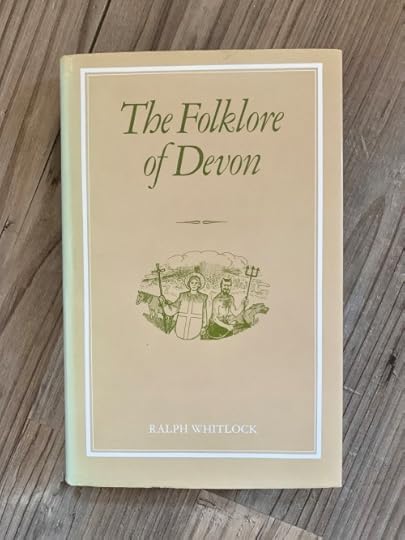
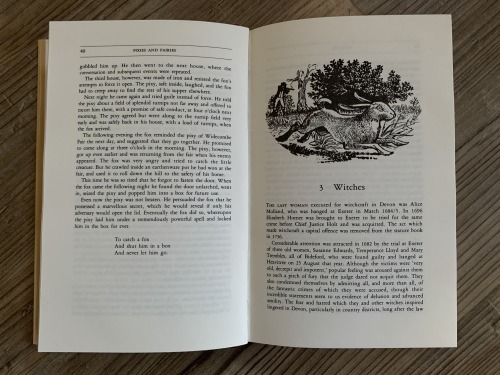
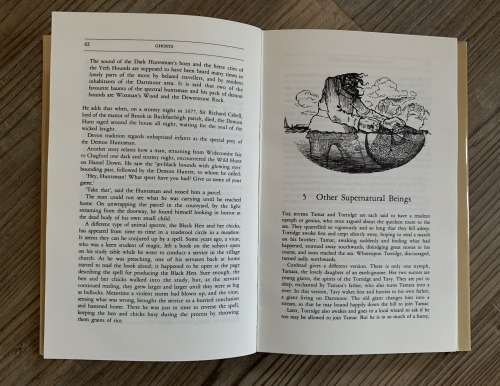
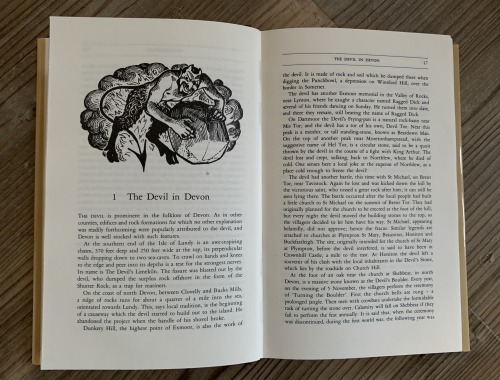
I got my hands on another Ralph Whitlock classic. The Folklore of Devon published in 1977. It includes chapters on ‘The Devil in Devon’, ‘Pixies and Fairies’, ‘Witches’, ‘Ghosts’, ‘Charms, Cures and Traditional Beliefs’ and more on churches, legends, and rogues.