Paul O'Connor's Blog, page 14
April 6, 2020
I couldn’t pass up reblogging this gem. Religion and...

I couldn’t pass up reblogging this gem. Religion and Skateboarding and Coronavrius. Tongue firmly in cheek.


March 29, 2020
Silent Running - Lockdown as Interstellar TravelOne of my...
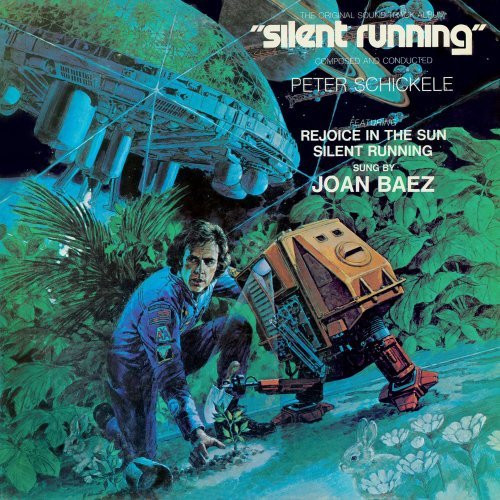
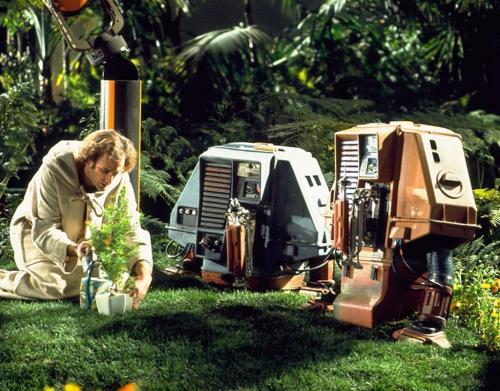
Silent Running - Lockdown as Interstellar Travel
One of my favourite thought experiments is to imagine that my apartment is actually the living quarters on an enormous interstellar spacecraft. At a time of mass international lockdown across the globe, this imaginative scenario might be a nice departure from the monotony of indoor life. You can even consider that your windows are digital projections of a long departed earth. The benefit of this scenario is that it forces your hand, you have to stay inside as there is simply no other option. No one wants to open their front door and become sucked into the vacuum of space. It is an imaginative form of learned helplessness, you have to give in. The benefit is when you cease the thought experiment and realise you are still earthbound, and much much more free than you would be in the loneliness of deep space.
Now there are numerous films that provide such a scenario. Many indulge in suspended animation to sidestep the boredom of the travel (Alien franchise), or the trials of mass communal living as we journey through space (Battlestar Galactica). The humans in WALL-E seem not too distant, entranced by their screens with endless supplies of food and I suspect toilet paper.
As a way to exxplore this idea and to muse on the current condition of lockdown, I refer to the overlooked 1972 classic Silent Running. This is a slow and lonely movie but full of hope. Bruce Dern’s character is adrift deep in space tending to the last remaining gardens from earth. His loneliness is enforced when the ship’s crew are given orders to jettison the gardens, effectively destroying them forever. Dern’s character, Freeman Lowell, rebels and opts to save the gardens at the expense of his crew. He is left alone with three robots to manage the gardens. The film explores the boredom and self-loathing of the lonely Lowell. It also captures his resolve and motivation to set things right. The final scene of the movie provides a still provocative image of our technological future and environmentalism.
The film is not without its critics. It is seen by some as too twee and sentimental. But it remains a powerful and thought provoking project. The director, Douglas Trumbull is well-known for his special effects work on Blade Runner and also 2001: A Space Odyssey. He reportedly made the film in response to the lack of humanity and emotion in the latter. A recommended lockdown film, full of humanity, and also a helpful thought experiment.
March 27, 2020
More peculiar things to happen on lockdown. Abbey Road zebra...
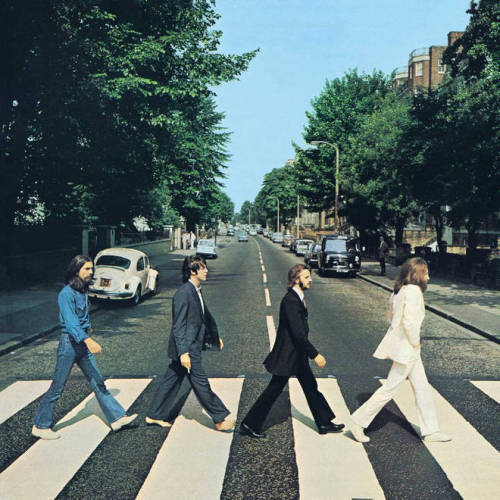
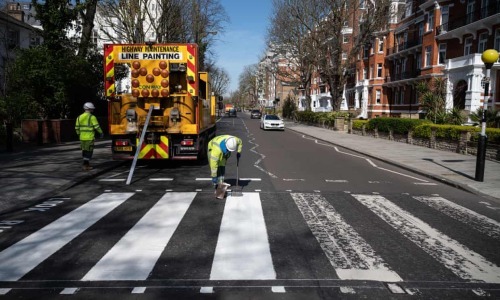
More peculiar things to happen on lockdown. Abbey Road zebra crossing gets a lick of paint while it is quiet. More from the Guardian.
March 26, 2020
A Rear Window During LockdownSince the Coronavirus lockdown...
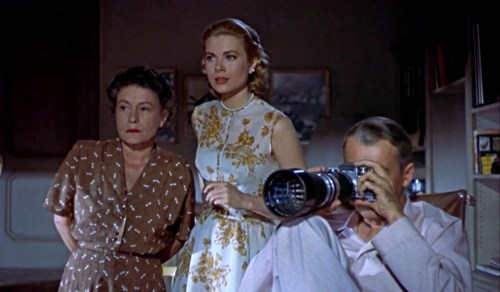
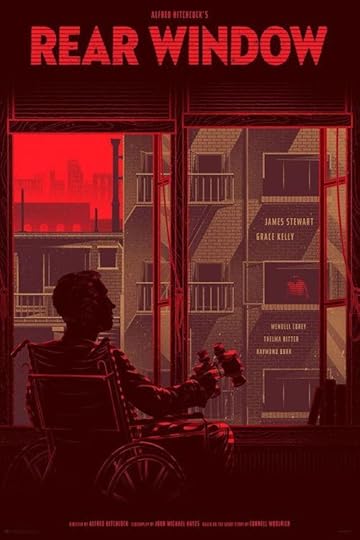
A Rear Window During Lockdown
Since the Coronavirus lockdown began I have fastidiously avoided those online articles about what Netflix shows to binge on, or what movies to revisit. Thus, i believe my desire to re-watch Hitchcock’s Rear Window appeared out of nowhere. I was suddenly afflicted with an itch to settle down and watch this classic, much as Jimmy Stewart labours with itches in his leg cast.
Perhaps it was some subconscious wisdom that guided me as Rear Window turned out to be a timely tale about quarantine. Trapped at home with a broken leg Jimmy Stewart’s character, photographer L.B. Jeffries, turns into a voyeur. He chronicles the everyday routines and exchanges of his neighbours out of his apartment’s titular rear window. As the drama unfolds he is pursued by his socialite girlfriend Lisa Freemont, played by Grace Kelly. Their relationship is a subtext to the emotionally constrained yet adventure hungry Jeffries who is reluctant to commit to his ‘perfect’ love.
What struck me on this rewatch was the fact that Jeffries had no internet, YouTube, or Netflix to sate his boredom in confinement. His voyeurism, as both photographer and neighbourhood snoop was a lesson in 1954 about moviegoers, and the garish tales they paid their cash to consume. In 2020 the voyeur’s gaze turned inward, neck bent into their phone or laptop, equally curious and imaginative about the dramas they passively watch unfolding online.
Hitchcock is however not judgmental of our voyeurism. He does tease throughout the film that Jeffries might indeed be wrong, but finally shows that the suspect was guilty and the curious voyeurs are vindicated. However, I think the real message in the movie seems less and less subtle on subsequent rewatches. It is about our relationships and their changing contours. Miss Lonely Hearts, Miss Torso, the pained Pianist, the Newlyweds. But it is also about community relationships. When the couple who sleep each night on their balcony find their dog has been killed, the wife scolds the neighbourhood.
“The only thing in this whole neighbourhood that likes anybody. Did you kill him because he liked you? Just because he liked you?”
The other character that underlines this dynamic is the nurse Stella. At the start of the film she notes presciently that drama is unfolding and that Jeffries will have a date in court. Her pragmatism and insight balance the film giving legitimacy to some of the more bizarre charades that unfold i.e. suspicion, and home invasion. She and Lisa provide strong female characters to the incapacitated, both physically and emotionally, male lead.
So, this is my recommendation for a quarantine movie. It is free from the dystopian themes of zombies, disease, and calamity. Throughout, Jeffries has a gaze that is turned outwards. He wants to jet to Kashmir, to be back in the field. Yet he, just as we, must remain where he is both safe and not a nuisance. Th film is a reminder that our individual vicissitudes are common, and that a few moments gazing out of the window each day might be a prudent and even helpful form of voyeurism in contrast to the ones delivered through corporate algorithms.
March 13, 2020
“If individualization is a sign of the times, then this is also reflected in pilgrimage.”From,...
“If individualization is a sign of the times, then this is also reflected in pilgrimage.”
From, Margry, Secular Pilgrimage pg. 23
Skateboarding won't 'save' Afghan girls
Some very interesting content in this article. I touch on some of these ideas in my book in a chapter on self-help, and also in a chapter I had published in an edited volume years ago. It isn’t an easy thing to critique skateboard philanthropy, but it does need a critical eye. The optics are celebrated, but there is much more to think about along the way.
March 6, 2020
February 28, 2020
Book Review by Daniel O’Neill
From the Leisure Studies Journal, Dan O'Neill reviews my book Skateboarding and Religion from Palgrave.
Here is a excerpt from the review…
Skateboarding and Religion has much to offer those who are interested in reading more serious
work about skateboarding and action sports. The book will also interest researchers studying
contemporary religion and spirituality, particularly those with an interest in religion’s relationship
with popular culture and sport. O’Connor displays a fine skill for bringing together work from
divergent fields of scholarship, as his concept of ‘lifestyle religion’ demands. For instance, O’Connor
draws on Conrad Ostwalt’s notion that secular life is becoming more and more religious, with
skateboarding (much like wider popular culture) being sacralised through shared myths and
symbolism. O’Connor combines this idea with Belinda Wheaton’s idea of ‘lifestyle sports’, high-
lighting that activities such as skateboarding require a considerable commitment of time from
participants and come to form part of their identity. The result is an activity which holds a central
place in the lives of skateboarders and endows them with a unique worldview, with the shared joy
the activity brings helping to build a large community of believers. Skateboarding is, however,
a thoroughly modern and individualised activity which indulges people’s desire to be true to oneself
and to not be committed to some higher authority or dogma. In this sense, skateboarding is
comparable to other potential lifestyle religions such as motorcycle gangs, yoga and veganism,
which provide participants with a strong sense of belonging and identity.
IS SKATEBOARDING A RELIGION?
Check out Anthony Pappalardo’s latest deep dive into skateboard culture. He discusses my book and explores themes of religion and conservatism in skateboarding. It was fun to help out on this and to pick up some undeveloped threads from my book.