Paul O'Connor's Blog, page 12
November 10, 2020
A Viral, Virtual, Political PilgrimageIn just a few short...




A Viral, Virtual, Political Pilgrimage
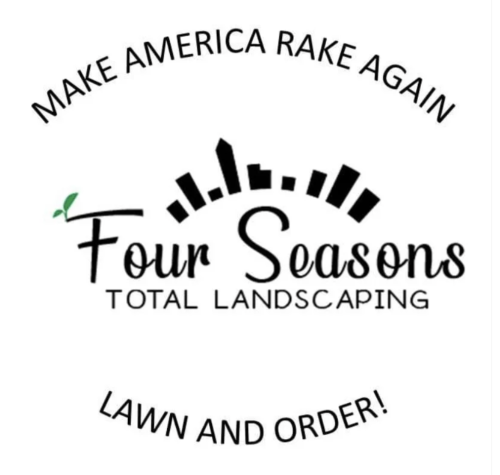
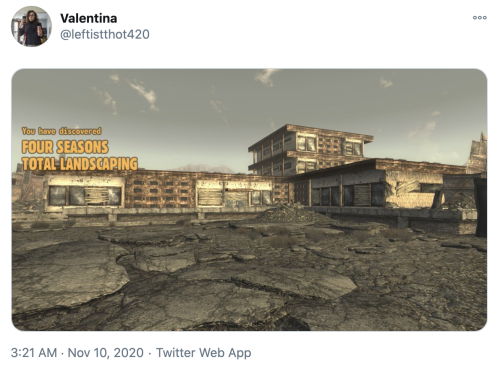
In just a few short hours ‘Total Landscaping’ has entered the vernacular as a euphemism for something below standard, and quite frankly a mistake. Of course this is in reference to the botched attempt at a press conference by the Trump camp following Joe Biden being declared President Elect. While the story isn’t completely clear it appears that a conference was initially planned for the Philadelphia Four Seasons hotel. Due to some miscommunication and mistakes the event took place at the Four Seasons Total Landscaping garden centre. The rest has quickly become history and a poetic motif to a crumbling political legacy.
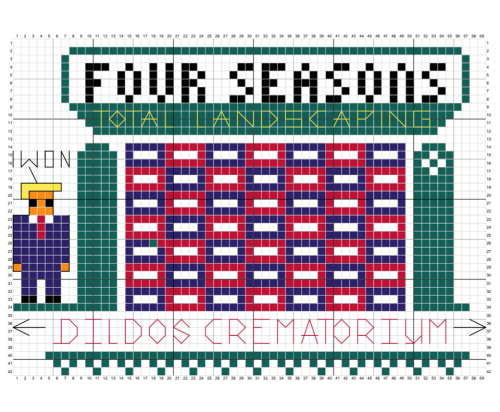
Over the last couple of days the business has be inundated with press enquiries and public interest. They have set up a Twitter and Instagram account, and launch ‘Make America Rake Again’ T-Shirts, Caps, and Sticker merchandise. They have released a virtual zoom background, and the location has quickly. appeared on VR Chat where Furries turned up to party. Memes are flooding in, with a CrossStitch pattern on Reddit, and a screen shot from the computer game Fall Out: New Vegas looking much alike the small family owned business. Others are releasing merchandise too, some supporting voting rights.
I am particularly curious to see how this will play out in the long term. Will Four Seasons Total Landscape become a real site of political pilgrimage, beyond this viral and virtual interest. Will it outlive Covfefe?
joking aside, it is remarkable how quickly this small business has taken on a new life. Typically place-making takes significantly longer. It can take decades to acquire the momentum which attracts this type of attention. This happened within hours, to an essentially nondescript and banal location. It is a testament to the power of digital networked technology that so much has happened so quickly. Let’s check back in a year and see if the notoriety has endured.


November 6, 2020
Sacred Spots - Mount Baldy
James Callahan from Barf Comics Tweeted out some photos from his trip to the Mount Baldy Fullpipe. He aptly titled the post ‘made a pilgrimage today’.
The skateboard folklore surrounding this spot is dense. Like all authentic pilgrimage sites, access to the location requires a decent amount of effort. It is off the beaten track. Once you have located the spot you then need to fulfil a rite of passage in order to be able to skate the pipe. A large chasm like gap (think Raiders of the Lost Ark) must be reckoned with. If you make the leap, custom suggests that you have earned the honour of skating the spot.
It is cool that James sees the spot in these mythic terms, he is also the artist and creator behind the interactive Thrasher comic ‘Ditch Diablo’. In this evocative ‘choose your own adventure’ type story, you are encouraged to make decisions about a deathly skate spot. A variety of demons threaten your safety and you must rise to the challenge. This neatly captures the sociophobics of skateboarding, the danger courted and fear overcome in skateboarding sojourns both big and small.
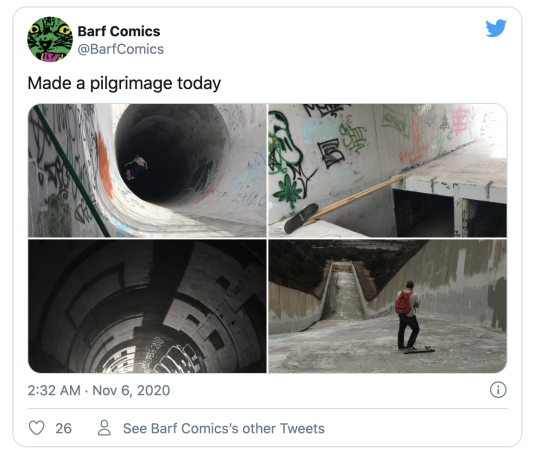
Made a pilgrimage today pic.twitter.com/ibHbVxwKdy
November 5, 2020
Skateboarding and HalloweenI have written in depth about...
Skateboarding and Halloween
I have written in depth about skateboarding festivals. There is the IASC international Go Skateboarding Day, the Israeli Yom Kimpur communal skate, and all manner of small annual events. Some are grafted on top of existing festivals, others are purely skate-centred events. Of all the annual skate festivities, Halloween has become increasingly prominent over the last decade. Scroll through the Thrasher website and you will see videos from the last few years including the Halloween Hellbomb, Tempe Park Halloween party, and Burnside’s anniversary Halloween skate. Each Halloween in Hong Kong would be an excuse for a good communal skate, this year seemed to be no exception. House of Vans in the UK have held Halloween events, and Jenkem have posted a couple of articles on Halloween Costumes.
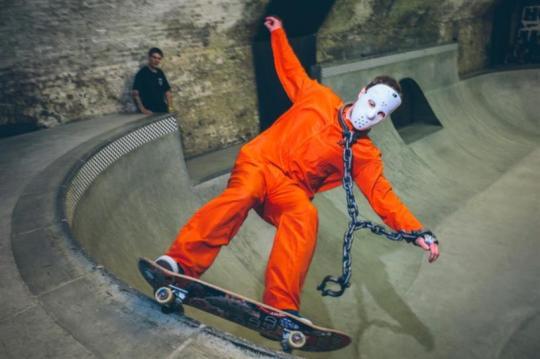
This year Halloween has been much more low-key. The Covid-19 pandemic and social distancing impacts all sorts of festivity, Halloween has been no exception. So, social media has once again filled the gap with skateboarding folk posting their Halloween costumes even if not quite able to participate in a big Halloween skate session.
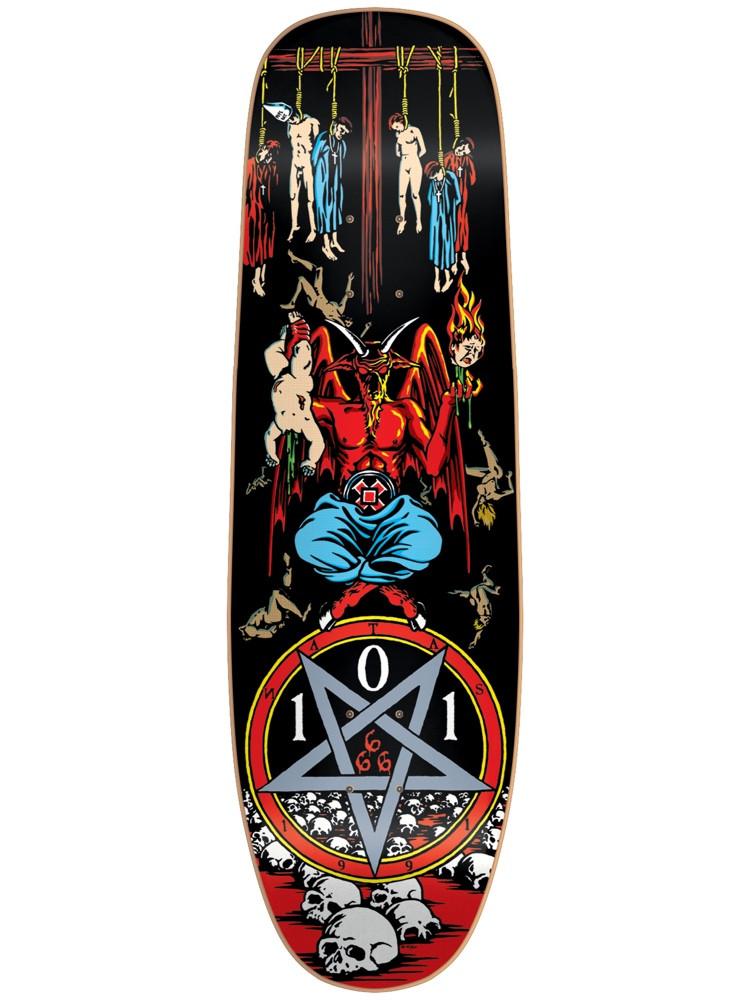
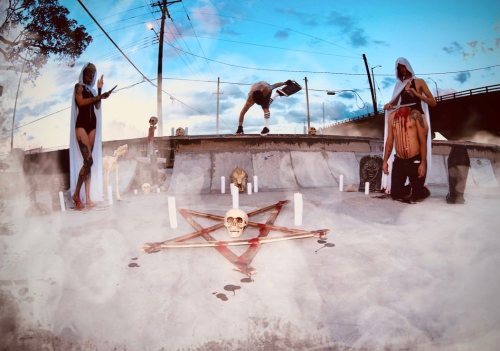
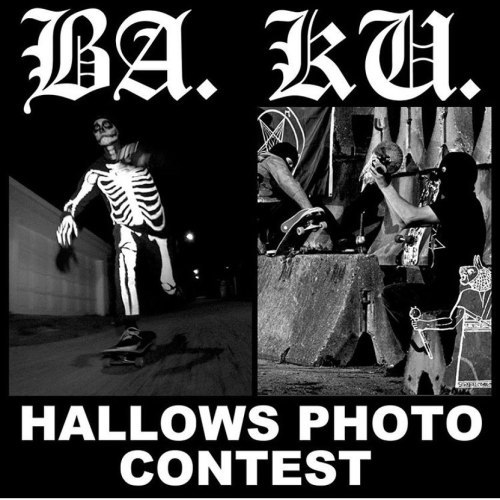
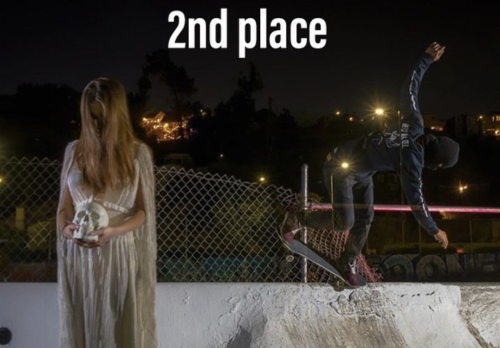
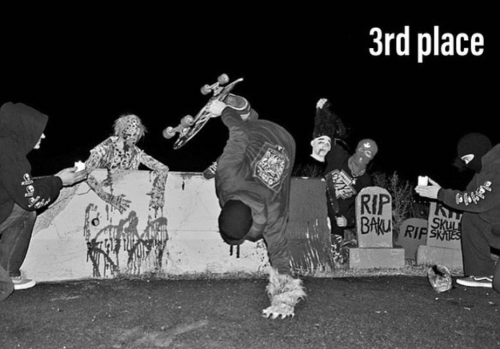
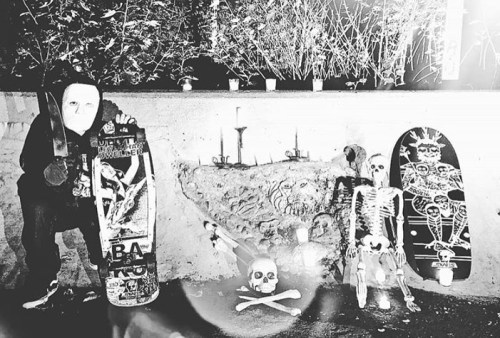
Barrier Kult launched their own Halloween competition, inviting fans, disciples and Horde members to create their own BA. KU. inspired photos. Search the #BAKUHALLOWSCONTEST for a selection of the entries. The winning entry has all the paraphernalia of BA. KU., a skated Jersey Barrier, Pentagram, candles, with the added gore of decapitation. BA. KU. thrive on satanic imagery and their own very niche ritual language in which boards are referred to as daggers. They are a perfect marriage between the gnarly skate imagery of death and destruction and the Halloween festivities. This was nicely portrayed this October 31st with the release of Franky Villani’s new video part. Famous for his love of corny horror movies, Villani’s Halloween release included a comically gruesome claymation intro and a lot of seriously good skateboarding.
But, delving deeper into the skateboarding and Halloween partnership, do other sports share this bond? Or is skateboarding with its innate playful character simply more attuned to such hijinks? A quick search online found all manner of Halloween sporting events, there is Halloween hockey, football, swimming, and of course skateboarding’s twisted cousin, golf.

Yet, for skateboarding these events seem to take on a greater significance, or simply fun. Certainly with the audience provided by the Thrasher website, a local Halloween skate can get a global audience. I also think the ludic nature of skateboarding works well with Halloween, and more broadly all festivals. Festivals are intended to provide a catharsis, an opportunity for normal social roles to be relaxed or inverted. I am even inclined to argue that skateboarding at its essence is actually about spontaneous urban festivity, simply disrupting the banal.
October 28, 2020
Close Enough’s ‘Skate Dad’ - The Sociology of Skate in an 11...
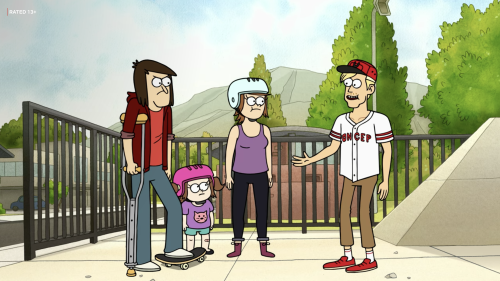
Close Enough’s ‘Skate Dad’ - The Sociology of Skate in an 11 Minute Cartoon
If you want a condensed and humorous tour of some of the key themes in the sociology of skate, you might want to take a peek at J.G. Quintel’s ‘Skate Dad’ episode from his new show Close Enough. Okay, so the show isn’t a critical take on the politics of public space and inclusion. It does however flag some central issues about parenting, older skateboarders, and the accessibility of skateboarding.
The episode begins with Josh trying to connect with his daughter Candice who is glued to her tablet watching YouTube unboxing videos. It is only when Josh’s wife Emily is about to throw out some old junk that Candice is pulled from her comatose state by Josh’s old skateboard. Nostalgic for his youth, Josh decides to teach Candice how to Skate. The premise is the classic folly of the middle aged dad trying to recapture some of his youth by returning to skateboarding, and also cash in on some cool with his young daughter.
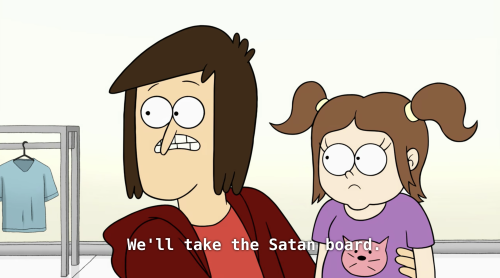
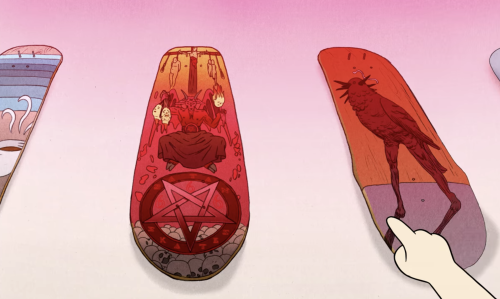
The boutique style skateshop they visit to buy Emily a board is a nod to the minimalist aesthetic of Supreme. Josh is immediately alienated by the vibe of the store and the clean cut staff. Candice picks out a Satanic board from the wall, which is an obvious nod to the Natas 101 board. Emily is freaked out by the dark graphic, but then Josh decides the Satanic board is preferable to the graphic modelled on the store’s ‘pro’ rider’s torso. I of course, with my research interests, relished the acknowledgment of the satanic graphics and the sociophobics of parents navigating such imagery.
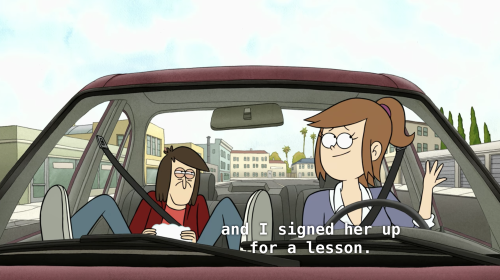
Next we see the community skatepark which immediately makes me think of the family skateboarding sessions described in Atencio and Beal’s book Moving Boarders. This vibe is replicated many times. When Emily signs Candice up for lessons, the local pro provides free classes, and mum and daughter wear helmets. The new gendered norm of skateboarding mother and daughter is nicely understated but clear, while the dad flounders for relevance in a mainstream skate culture transformed from the subcultural clique of his youth.
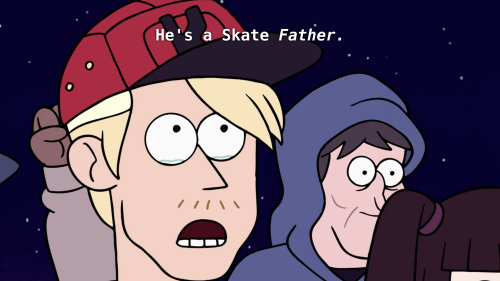
The next trope visited is that of the injured veteran. Keen to impress wife and daughter with his skateboarding skills, Josh pops a flawed ollie that sends the board directly to his groin. Here reference to the Tired video and waning abilities is most apt. Josh is packed off to the hospital while the skateboarding adventure is played out without his participation. The climax of the episode comes in a daft duel in which Josh’s heroic stature is consolidated as he saves his family from a brutal hill bomb. He is awarded the moniker of ‘skate father’, rather than the more cheesy and derisive ‘skate dad.’
The great success of sociology, paraphrasing Mills, is its ability to tackle private troubles as public issues. The critical stance and reflexivity of the sociologic approach is reflected in pop culture media. The themes in this episode touch on a number of key topics academic work on skateboarding has explored, the older skaters, satanic graphics, skate parks, and skateboard parenting. Anyone looking for more on these sorts of themes can find a wealth of literature out there… scroll through the archive of this blog for more posts, or start with this link from UCL’s Urban Pamphleteer.
I think what really struck me about this episode was that despite the comic format, it was quite sophisticated for the types of issues it handled. This is a far cry from the Tony Hawk cameo in the Simpsons, and various other awkward media takes on skateboarding. This is a cartoon with a more mature focus that actually reads it audience well enough to not be cringeworthy, and actually nail a couple of things perfectly. I’m grateful for media like this that provide a comic visit to some topical themes, shallow enough to not get bogged down but savvy enough to hold water.
October 7, 2020
The last couple of months seem to have been a renaissance for...
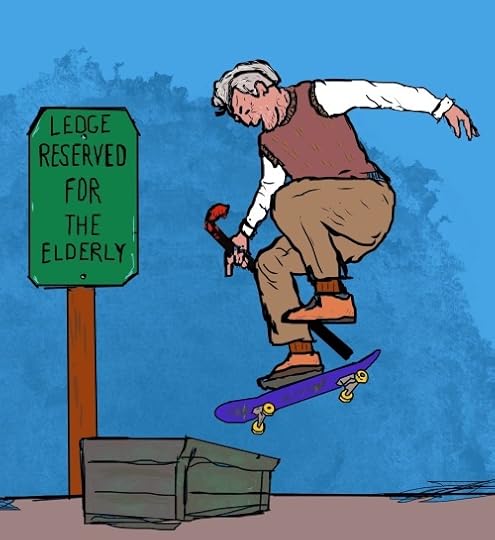
The last couple of months seem to have been a renaissance for ‘older’ skateboarders. Having published research on this topic before and being a greying skater in his mid-forties, the topic is far from new to me. However some changes seem to be afoot that can be described as somewhat typical responses to our collective plight during 2020. On various social media platforms it seems I have encountered growing numbers of videos from older skaters either trying out for the first time because of the lockdown, or returning to skateboarding after a protracted gap sometimes trailing back to their teenage years.
This is all good news and older skaters have been around… well, for a long time.
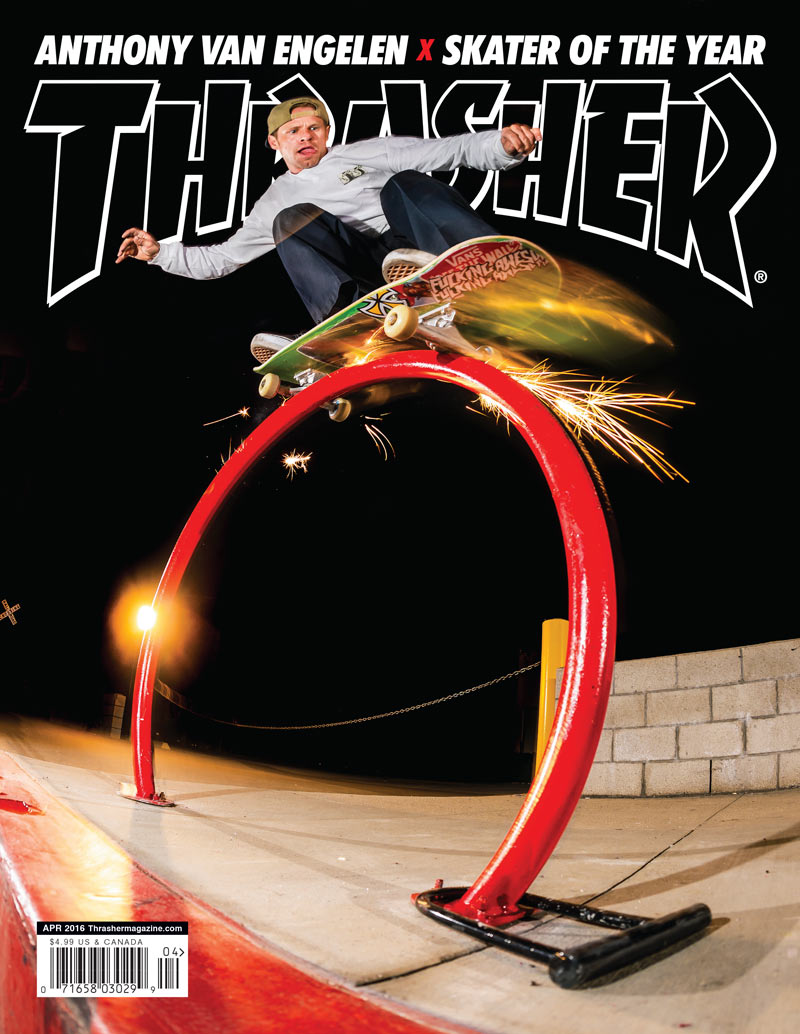
When I first started investigating older skateboarders I was partly drawn to the fact that older skaters remained quite visible in the professional circuit. Take Tony Hawk and Steve Caballero as examples, but also consider AVE who was awarded SOTY at the age of 35. Mark Gonzales at 52 still inspires and recently had a video part with the 2018 SOTY Tyshawn Jones. This was aptly captured in their ages at the time which were used as the title to the video 20|50. Gonzales has also just released a new book, remaining influential in a sport typically associated with youth. Influential beyond the niche world of core skateboarding, Tony Hawk re-released his iconic THPS video game which has no doubt inspired people to touch base with their long forgotten boards. Similarly the Tony Alva documentary released by Vans is another slice of nostalgia that is set to fan the flames of a certain demographic of older skater. Poignantly the Alva story is narrated by Jeff Grosso, the unofficial statesman of old school skate nostalgia and sadly one of skateboarding’s greatest losses this year.
In one of Grosso’s final videos he also touches upon another important part of the ‘older skateboarder’ revival, or most recent transformation. Interviewing LGBTQ skaters we see that over the last few years the inclusivity of skateboarding has expanded further. Many of the skateboarders who have come out and made space for LGBTQ skaters are some of the old guard. So it is not just that older guys are finding skateboarding, or re-visiting it. Now the older skater can be literally anyone, no longer typically the white male, but also people of colour, trans, disabled, you name it.
One enjoyable blog post from Josh Sutton involves a discussion with Esther Sayers. Josh started skateboarding in his early 50s and Esther started skateboarding in her late 40s. It is an enjoyable discussion and highlights how we don’t need the validation of professional skateboarders or the latest SOTY to prove that you can skate at any age. I remember being struck by what Esther said at the Pushing Boarders conference, where she noted that at a certain age women become somewhat invisible . By skateboarding we redefine the notions of age and challenge them. We start to claw back control and shape the narrative about our own abilities and competencies. Some fantastic research has been performed in this area of lifestyle sports. Belinda Wheaton has really provided some first class contributions on surfing and also my colleague Indigo Willing, herself a convert to skateboarding in her forties, has written about the Tired video and also the Bones Brigade documentary.
In my own research (which you can download here or email me for a copy), I spoke to a variety of skateboarders both male and female who skate into and beyond their forties. One of the elements that I came across repeatedly was the sense of community and meaning that older people get from skateboarding. What is remarkable about this, is the fact that as you get older, friends, community, and meaning seem to be harder to establish or hold on to. I think this helped me turn my research focus to skateboarding and religion. After a lifetime of skateboarding many of the people I interviewed had developed some kind of spiritual attachment to the activity. But then again these ideas were not absent in youth. Similarly my friend Sophie Friedel taps into this soothing potential of skateboarding and wellbeing and explores how skateboarding can be part of therapy for all ages.
The other really important thing about older skateboarders is their roles as receptacles of history. Indeed the explosion in skateboarding podcasts has been a great way to delve into the stories of pros and compile an oral history. I am no fan of mawkish nostalgia stealing the limelight from the current state of skateboarding, but I do think having a dialogue with the past is valuable. I recently read the doctoral thesis of Neftalie Williams in his exploration of race in skateboarding. One of the fascinating parts of his research is the history of skaters of colour (SOC). He does an important job of compiling a history that in an even handed way highlights that skateboarding has historically been far from the toxic and exclusive culture some have argued it to be. Through an exploration of the experiences of older SOC and a deep delve in skateboard media, Neftalie highlights that skateboarding in the USA has historically been more progressive about race than many others sports and elements of popular culture.
The very best thing about being an older skater is that you don’t have to live in the past. You get to be there and participate in how skateboarding continues to evolve and continues to be a space for all.
October 6, 2020
Skate Nottingham has launched a campaign to spread the passion...
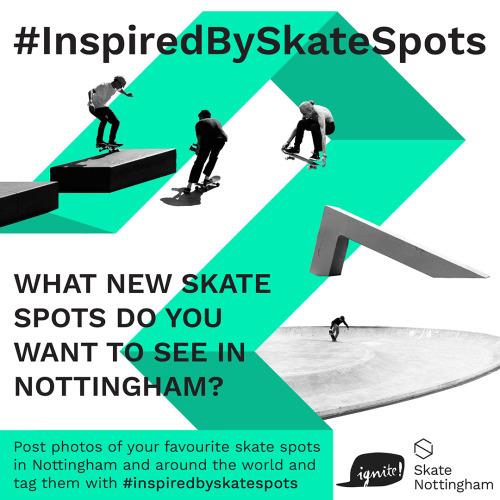
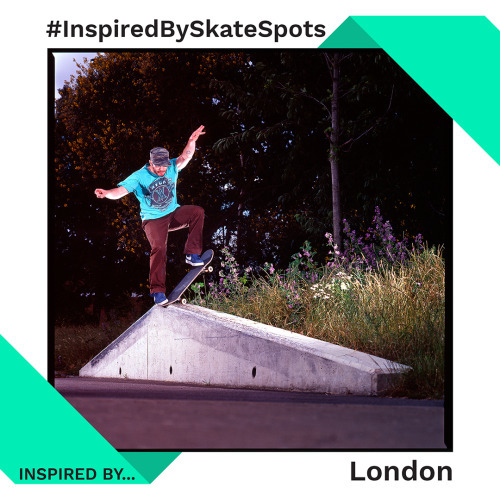
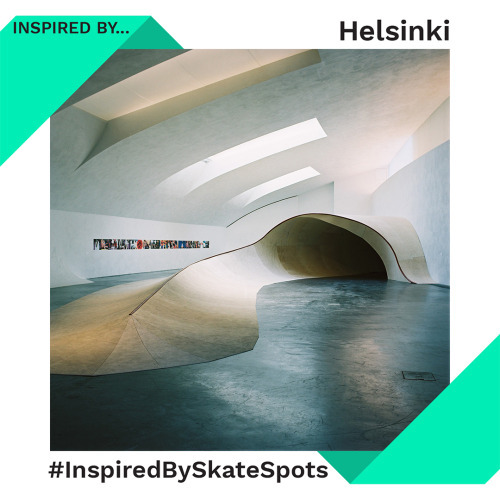
Skate Nottingham has launched a campaign to spread the passion about inspiring spots. They want to introduce new skatespots to the city by the summer of 2021 and they are asking people to send in pictures of the locations that make them excited. So use the hashtag #inspiredbyskatespots and post your muse on Twitter and Instagram.
September 21, 2020
Proselytizing Skateboarding through a Videogame: Possibility...
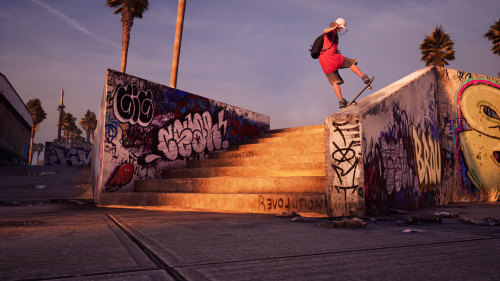
Proselytizing Skateboarding through a Videogame: Possibility Models & Lifestyle Religion
I have written a guest blog on the site Popular Culture and Theology that links the Tony Hawk Pro Skater (THPS) video game to my Skateboarding and Religion dynamic.
I basically argue that the original THPS became a vehicle to espouse skateboarding and recruit a new generation of believers. The game also modelled possibilities - introducing new ideas about what was possible in skateboarding and the culture.
September 14, 2020
Stumbled on a DIY skate spot in Prague today. It seems to be...
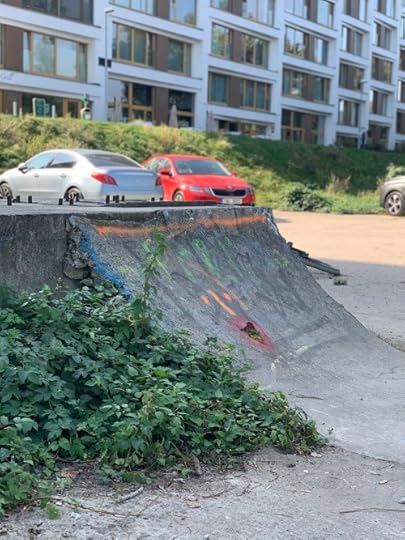
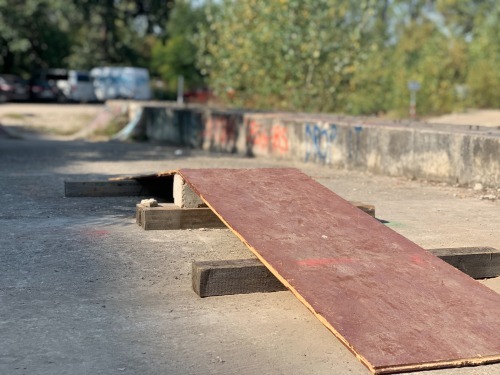
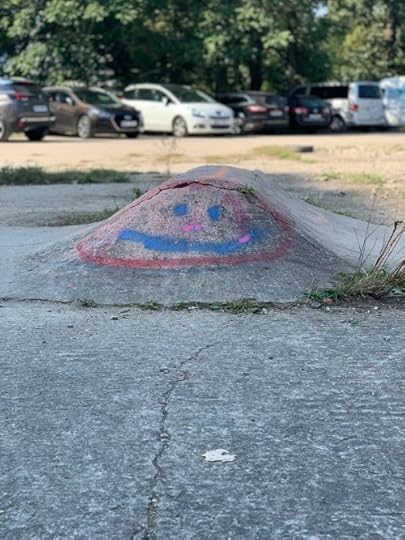
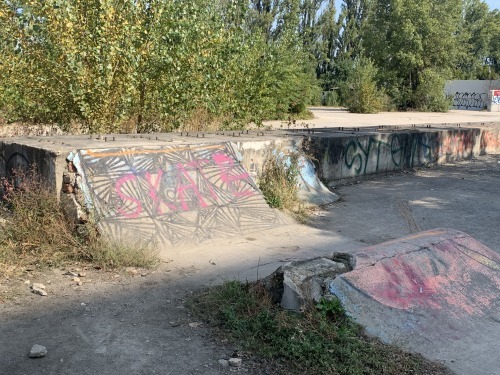

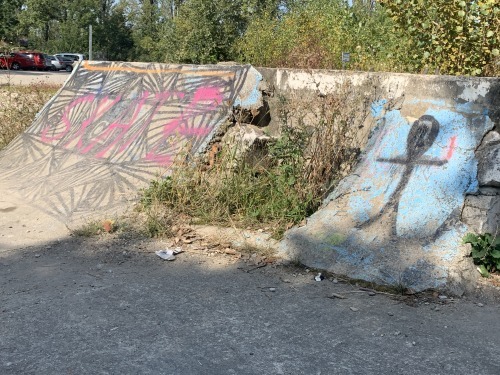
Stumbled on a DIY skate spot in Prague today. It seems to be mostly on its last legs but still in use. Coming across such a spot by surprise is a real joy. It makes me feel like a modern antiquarian. Couldn’t help but think of Richard Gilligan’s book as like many of the locations he depicts, this was empty of life. I was on my bike and had no board to enjoy the terrain. This made it feel even more like some old ritual space that I could not quite bring to life. I was however able to dig out a photo of the spot when it was in its prime. Brightly coloured with a mermaid pattern.
September 8, 2020
A Sociological Take on Bernardo Kastrup’s Idealist OntologyYou...
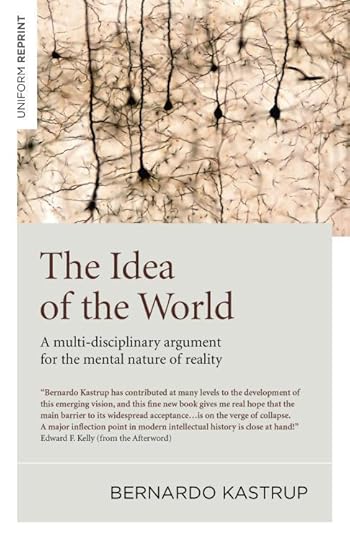
A Sociological Take on Bernardo Kastrup’s Idealist Ontology
You might well have come across Bernardo Kastrup on social media. He has participated in numerous podcasts, YouTube discussions and interviews. In general, he is promoting what appears at first glance to be some fairly wayward ideas. The notion that all reality is in essence a conscious mind and that we are disassociated alters of this universal consciousness. All intriguing ideas, but in what way might they interest a sociologist? Having just finished Kastrup’s book The Idea of the World I am largely convinced that his philosophical outlook can be a helpful tool across academic disciplines. To qualitative sociologists, it could be a real boon as I shall describe below.
The Book
This is a truly multi-disciplinary work that treads firm and deliberate steps across philosophy, neuroscience, psychology, quantum mechanics, and religion. Far from suffering from this mixture the book is lucid and thoughtfully planned. Kastrup has compiled ten previously published articles from highly regarded Open Access journals into an unfolding and progressive narrative that delineates his argument. As the foreword by Menas Kafatos acknowledges, this is both unusual and remarkable for its coherence. Kastrup’s intention is to lay out his thesis with veracity, using both the peer review system to legitimise his arguments from an interdisciplinary position, and Open Access to make his ideas widely available to readers. As he notes, anyone could freely download all 10 articles and piece together the narrative of the book. This format is also laudable because the subject matter is so dense, complex and counter intuitive that each essay revises the key tenets of his argument. Yes, there is a good deal of repetition in this volume. Yes, it is welcome and needed. This is not easy reading, but it is certainly rewarding. I struggled with one chapter in particular (Chapter 6) and restarted it on three occasions until I was confident enough to proceed.
The book lays out an argument against the material nature of the world and claims that reality is really simply consciousness. Our perception of the world is our primary data and we only register an exterior world through the lens of our conscious perception. For Kastrup, this exterior world is actually a disassociation, part of a universal consciousness, but one in which we are disassociated. Think of a dream. You conjure up a dream from your own mind, but the actors in your dream act independently of you. Universal consciousness is kin to this dynamic, we are all connected, but also disassociated.
“The inanimate universe we see around us is the extrinsic appearance of a possibly instinctual but certainly elaborate universal thought, much like a living brain is the extrinsic appearance of a person’s conscious inner life.”
The material world is simply our perception of thought process reflected from this universal consciousness. As Kastrup explains this allows us to make sense of how other individuals appear to experience the same reality as us, they are similarly a disassociated part of that universal consciousness. This is a simplification and one of the merits of this book is that it takes seriously the need to argue the case in respective fields of knowledge. Kastrup makes a series of increasingly sophisticated arguments that touch upon the relevance of quantum theory in validating an idealist ontology, the fallacy of the unconscious, and the incoherence of a physicalist world view. Kastrup argues that consciousness will never be explained in physical terms, it is after all, the primary data of life and it is qualitative not quantitative. These arguments strike at the heart of AI innovation and cast doubt of theories of singularity.
The Sociological Angle
The primary sociological message I got from this book was to champion qualitative methods. Kastrup repeatedly highlights that physicalism provides a flawed and incomplete vision of the world. Worse still it is a vision that compromises our perceptions. As many have argued, sociology has an Achilles heel, and that is its tie to mechanistic science. Carefully, I would highlight that this should not invalidate scientific, medical, and environmental knowledge to make sense of a physical world, but in terms of an ultimate view of reality science has its limits. Kastrup’s thesis validates qualitative enquiry in which we look not at quantifiable elements, but qualitative experience. In Chapter 15 of the book he talks of the role of archetypes and the need to apply a hermeneutic in order to deconstruct the puzzle of the world. If Kastrup’s argument is taken in its fullest form then we need to imagine a sociology founded on the notion of an idealist ontology, in which reality is consciousness and individuals and all social interactions are between disassociated alters of this primary consciousness.
This is all valuable rhetoric because sociology has become somewhat lost in recent public debate. The emphasis on qualitative work hits hard at the neoliberal university that seeks to quantify all academic work by counting citations, ranking journals, and scrutinising knowledge transfer. The erosion of the Social Sciences, Arts, and Humanities as valid academic disciplines worthy of investment and funding could be slowed and ultimately reversed with generous consideration to the points Kastrup makes. Hard science is treading a mobius loop that will only ever tell us of the abstracted world. It speaks to itself. The mantra one might read through Kastrup’s book is that of quality. Oddly enough the same concept that sends Pirsig insane in Zen and the Art of Motorcycle Maintenance. Kastrup critiques culture as the vehicle of a redundant physicalist worldview, an argument that holds great anthropological interest. His target in this complaint is that the physicalist, material, mechanical view of the world has stripped life of meaning. If we are simply atoms bouncing around, what is the purpose or message of life? In the idealist view the world becomes enchanted once more with the message of life imbedded in everything we perceive.
The sociological implications of the book are vast. In one of the closing arguments Kastrup introduces the topical notion of pronouns, not as a political concept of identity, but purely in reflection of his ontology. What, in terms of an idealist philosophy, are the values of ‘I’ and ‘You’ ? If ‘I’ is a disassociated part of universal consciousness, and so is ‘You’, then we are at once unified and separated. What could this mean in terms of life after death? This expansive notion of identity points to our shared humanity and indicates that more must be done to cultivate our unity rather than individual divisions. The notion of unity is clearly analogous to elements of religious philosophy found in monotheistic religion and also Eastern philosophy. Thus, Kastrup opens further debate in the sociology of religion.
Kastrup’s book is a testament to the need for scholarship to be promiscuous and take seriously the responsibility to break down boundaries between academic worlds. The challenge to step outside of the mechanistic physical world and commit to an idealist ontology is both radical and full of promise.
August 11, 2020
You Can’t Stop Nike Using Skateboarding Like a Marketing Mall...
You Can’t Stop Nike Using Skateboarding Like a Marketing Mall Grab
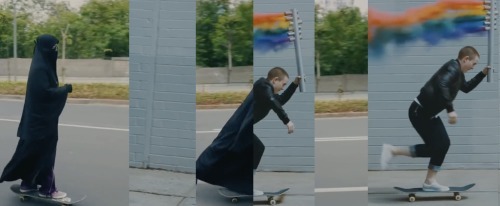
The recent release of a new Nike video in which a series of sporting images are edited into montages with elite athletes has caused quite a stir. We see a bricolage of identities, politics, and triumphs melded together. Many people are lauding the innovative editing techniques, and the inspirational message of the video. Others have created their own juxtaposition by highlighting the way that Nike has been using Uighur labour at Chinese factories for their own products. However, one image that strikes out is a Muslim woman skateboarder in a Niqab sutured on to Leo Baker skateboarding with a LGBTQ flag. The video gives the impression of a transformation in which the veiled woman progresses across the screen turning into Leo Baker. As this image hits the screen the voice over declares…
“And if we don’t fit the sport, we’ll change it”
Part of the ire surrounding this edit is the concern that there is a supposed connection, a pending trajectory between conservative religious dress and liberated sexual identities. Some have criticised that this is a misleading marriage, in which the interests of the two groups are not aligned, or even unproblematically juxtaposed. Similarly, the visual cue of transformation has made some suggest that this is a tacit wish of Nike, that it can liberate Muslim women and co-opt them into a consumptive catchall ‘Just Do It’ Nike utopia.
To be clear, I think this edit was misplaced and not thought through, but it seems quite evident that the intention was to critique skateboarding more than Islamic dress and values. The voice over points directly to the fact that some identities have not been historically welcome in skateboarding. This is true.
Nike are naively actually scratching the surface of a bigger issue. This issue is the way in which religion is dismissed from skateboarding. In recent years a vast amount of progress has taken place with women skateboarders becoming more visible, marketable, and powerful in the skateboard industry. Similarly skateboarding has started to shed its homophobic past and enthusiastically embrace the full spectrum of sexualities and gender identities. Even Thrasher ran an article earlier this year title ‘The Top 10 Women & Non-Binary Skaters of 2019.’ Yet, skateboarding and religion remain a somewhat taboo topic.
I do have sympathy for those that critique the advert as I feel the Nike is being somewhat callow in its choice of identities. They are pandering to orientalist notions of an oppressed Muslim woman. It would have been braver to include the skateboarding monk, Shaun Hover (an evangelical Christian skateboarder), or a skatepark bible group (yes they do exist). My research on skateboarding and religion reinforced the notion time and time again that religion was for many involved in skateboarding, a taboo subject. In many cases I spoke to Muslim skateboarders in Malaysia and Indonesia. Their experiences were vastly different to Christian skateboarders in the USA. My investigations revealed a stigma associated with religious affiliation, particularly Christianity and skateboarding. As a result, a subculture of evangelical skateboarders exist who are largely ostracised by the broader skateboarding culture. Let me emphasise, these are the sorts of skateboarders that would not receive Nike endorsement because, despite their abilities, a Christian identity is not a marketable asset in skateboarding. Christian skateboarders are essentially told to lose God in order to get sponsored.
So, I also welcome the critique of this new Nike advert. But I feel that an over-reliance on visual cues actually damages Nike’s message. These issues are trivialised by superficial celebration and end up reducing complex identities and political movements to marketing fodder. I take particularly issue with the insincerity of including a reference to skateboarding and religion. Yet the issue of Nike and Uyghur workers is particularly potent. How do these stories keep appearing? In truth Chinese factories are adept at conforming to a host of international standards. As soon as an inspection is announced factories are able to present an image that conforms to the international standard being assessed. Those doing the assessment are often aware of this duplicity, but they work to assess what is presented to them. In this way massive corporations are able to tick the box that they are doing all that is demanded of them and need not delve further. This is a beautiful metaphor for the Nike advert itself which is solely an act, a presentation of a set of images that they perceive to be most acceptable to the ideas and values of their consumers.