Paul O'Connor's Blog, page 13
July 24, 2020
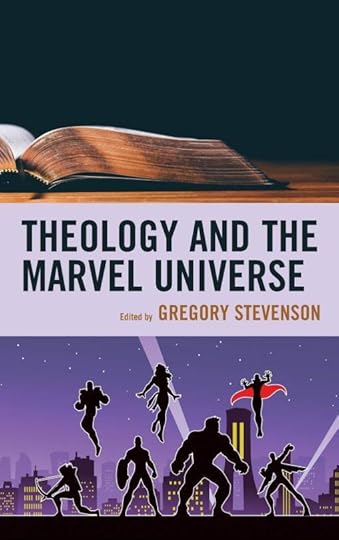
Review of Theology and the Marvel Universe
I was recently asked to review Theology and the Marvel Universe edited by Gregory Stevenson. The review has just been published in the Journal of Graphic Novels and Comics.
Here is an excerpt from my review.
The vast popularity of the Marvel Universe is hard to ignore. The enormous success of the Marvel Cinematic Universe (MCU) over the last 12 years, and the unprecedented popularity of Netflix Marvel spinoffs, means that the reach of Marvel comics has been deepened and extended. The various characters, either on the page or screen, play out relatable sagas with which we can identify. In no trivial way these comic book heroes have become a new pantheon of gods to which we relate personally. It is to this scenario that the collected essays within this book speak. Importantly Gregory Stevenson has brought together a collection of writers who read theology through the tales of the Marvel Universe. Quite unlike any other book to address comic books and religion, this collection deals with an array of connected characters and explores them through quite different media, comics, television, and film. Yet, despite this freedom the authors focus directly on how these stories can be read through theology. In the first half of the book the theme of violence is ever-present, while in the second half of the book it becomes more subtle as other themes branch out toward other paths…
In essence this is a book unlike other religious explorations of comics.(1) It keeps faithful to its emphasis on theology. For readers of popular culture and religion, this book deviates from more general readers (2) as it is focussed on Christian theology. In this respect readers should be aware that the book is wholly analytical and textually based with the Marvel Universe acting as a canvas to develop theological narratives. The scholarship throughout these chapters is largely erudite and engaging, and we are given much to reconsider both Marvel characters and also a range of theological perspectives. However, the explorations of the authors are not always consistent in what they are seeking to address. Are they aiding us in understanding the Marvel Universe, or helping us engage more familiarly with theology? Some appear to be validating Christian theological tropes through Marvel which could, perhaps, be better placed in an exploration of how fans might relate to the Marvel Universe. I was left curious about how fans and fandom might interpret and play with some of themes that are addressed within the book. Take for instance the engagement of Christian fans in the religious motifs of the Marvel universe, a theme that is touched upon in a recent collection by Cusack, Morehead, and Robertson.(3) While there are also efforts made to recognise some of the religious heterogeneity of Marvel characters, I was disappointed that there was no mention of Kamilla Kahn, the new Ms Marvel launched as a Muslim teen hero to balance some of the longstanding religious and ethnic bias in Marvel comics. Despite these misgivings, this is a commendable achievement and a welcome addition to extant work on comic books and religion. Its reach is far beyond this niche and is of more general interest to contemporary explorations of religion and popular culture.


July 19, 2020
New Publication - HK Women Skateboarders
I recently had a new paper published in the International Review for the Sociology of Sport. This was a collaboration with Clara Fok, a researcher who looks at feminism, sport, and social media.
This project responds to the contradiction between the different social worlds of skateboarding. Women skateboarders in recent years have become both more marketable and visible as political tokens regarding empowerment and the inclusive nature of skateboarding. We wanted to see how this played out in Hong Kong, where some of the values of Western feminism are regarded with caution.
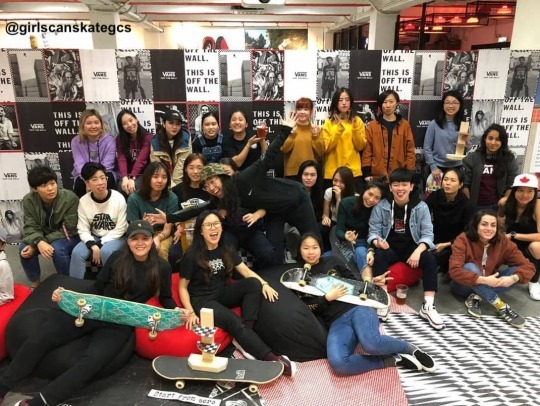
In many ways this a is an unusual paper to have published just as Hong Kong enters its most volatile period in decades. This is clearly a peripheral topic when teenagers are being brutalised by the Hong Kong police and arrested en masse. Yet, at the same time skateboarding endures for many young people in the territory as an escape, an a-political oasis where they need not fear being arrested or harassed.
There is an irony here as skateboards and skateboarders have become distinct in the George Floyd and Black Lives Matter protests in the USA in recent weeks. A skateboard began to symbolise resistance and for the first time in a long time clawed back its rebellious and subversive image in a justifiable way. Jokes abound that even the Mall Grab became acceptable because of the protests.

But here is the point I would like to underline. Skateboarding means very different things in the political protests simmering in both Hong Kong and the USA. Similarly the meaning of skateboarding for women in Hong Kong differs in its politics and the freedoms accessed in North America and Europe. In the paper we draw on MacKay’s (2016) concept of skatefeminism to address these differences.
If you would like a copy of the publication. Please send me an email.
May 16, 2020
Not the post you wanted on the Brooklyn Banks
Toward the end of...

Not the post you wanted on the Brooklyn Banks
Toward the end of Loren Eisley’s hypnotic memoir The Night Country he talks about our attachment to place. He speaks of a flock of pigeons that would thrive of the detritus from passengers on Philadelphia’s elevated train system the El. In 1955 when a section of the train line was diverted underground, Eisely noted that pigeons would return to the track stations looking for fallen peanuts from the vending machines that were simply no longer there. Eisley builds this anecdote to refer to a journey he made in his sixties to his childhood home. He stands at the fence overlooking his onetime garden. His visit spurred by a need to gaze at the tree he and his father planted in his youth. Confessing an attachment to it lingering in his mind over the last five decades, he gazes into an empty space. The seed of the tree appeared to have only taken root in his mind. Standing at the white picket fence alike a pigeon stalking the abandoned El.
My attempts to visit the Brooklyn Banks have been unsuccessful. I tried for more than an hour to access the site in 2014 while passing tourists pestered me for directions and a slow rolling police car eventually moved me on. I broke my rib that weekend and never got to return during that visit to New York. I had visited New York 20 years earlier and was too ignorant of the geography of Manhattan, or the US to know what gems lay nearby. My most recent visit to the city in 2016 was wholly a family affair from which I stole only half an hour skating in Harlem. Yet my mind reached out across the city curious about the place I hoped to visit in the fullest of terms. Much like Eisely gazing at the empty plot of land where he planted a tree, the Brooklyn Banks are frozen in time as a possibility that will never quite ripen. Yet in truth little has changed in the status of the location for the last decade. What has been stolen in this time? New memories, missed opportunities for seeds to be sown, and saplings to be tended. Even if the banks are preserved, the world will have changed. I’ve vicariously visited the banks in numerous video clips and photographs. I listened to the stories of those who have skated or filmed at the spot, and accepted their critiques of the location. For years I also had a proxy near my home in Exeter, ‘Barnfield Banks’ which acted as a faint shadow to its transatlantic partner, aping its alliteration and its brickwork. In these visits, I was there with them all, as I had been when watching the videos and flicking through the magazines. Out of touch yet forever present.
May 14, 2020
Exploring Grief in Animal Crossing: New Horizons | The Order of the Good Death
Memorials, Ritual and Grief in Animal Crossing. Following on from yesterday’s post on “All the Ghosts in the Machine’, this sprang up on my feed. It is a really nice little write up about how gamers are dealing with death in Animal Crossing.
May 13, 2020
I have long been interested in how death is mediated online....
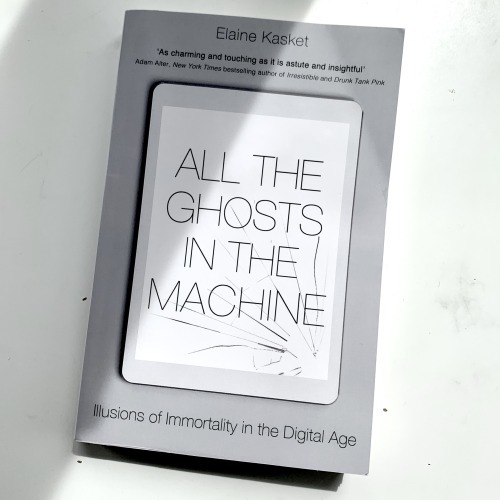
I have long been interested in how death is mediated online. Occasional stories crop up about receiving Facebook ‘Year in Reviews’ with the images of dead friends, or more challenging tales about trying to access digital data from deceased loved ones. Quite simply the complexities of our digital afterlives are poorly understood. Labyrinths of information, layers of passwords, and a host of legal contradictions regarding ownership, jurisdiction, and user agreements. I have previously toyed with this in the way my kids created an online pet cemetery in Minecraft.
One thing is for sure, even the most disinterested and lightest of users of digital technology will have a sizeable digital footprint. This digital footprint is something that people may well want to exercise some form of control over. Yet very few are prepared to do so. This is the context in which Elaine Kasket writes, leading the reader to consider a host of issues that are problematic, emotionally compelling, and unavoidable.
Consider the following issues, who will inherit your iTunes library once you die? It might be simple to pass on physical books, but who has the right to your digital texts? How would you manage the social media feeds of a recently deceased spouse, or child? What privacy would the dead expect, and what level of control would others demand? This all gets more complex when we consider that the information (or data) that is posted online tends to have mixed ownership. Photos of friends might well relate ownership not just to who is in them, but who took the photo. Private messages are also a legacy of communication between at least two people and thus cannot simply be rendered to a third party after death. Or can they?
Much of this book deals with a variety of interesting case studies that introduce us to the problems many have faced in dealing with a digital legacy. As the book progresses we turn more towards the provisions, strategies, and businesses that are emerging to tackle digital life beyond death, or ‘death tech’. Some of this tackles themes from pop-culture films and television like the Black Mirror episode ‘Be Right Back’.
The book closes with ten helpful suggestions regarding the management of your own digital legacy. Each of these points is fleshed out earlier in the text in considerable detail, but are turned toward the reader in conclusion. One of Kasket’s messages is to think seriously about what you might want preserved. What digital content represents you, what content would you like your legacy to be?
All this made me think of my Tumblr blog. This is perhaps the greatest resource of ideas and interests that I place online. Less personal than my old Facebook profile, which I eventually deleted, but far more a product of my own creativity than much of my other social media. Even Instagram has become mediated more by who follows me than what I really want to post… My academic work also orients to a particular perspective and tone, so while my publications are a legacy they are a peer reviewed legacy. Tumblr is however a voice that I simply don’t get to use in other social media, even if I refrain from posting some of the quirkier side of my interests and personality. Even more curious is the fact that just a year ago Tumblr was pronounced dead after the platform scrubbed all the porn off. Yet, many have stubbornly persisted with their blogs and perhaps Tumblr is due for a renaissance. However powerful and monolithic Facebook and Twitter may be, there are no guarantees they or any other social media will stick around. They are built to be archives. Indeed Tumblr provides a curious intersection with digital life after death. Blogs live on, and the dead are also easily able to post in their absence with the queue function. Even more permanent, and likely to outlive an electromagnetic pulse, is the printed Tumblr, blog, or social media feed. Years ago a friend signed up to a now defunct service which would compile all your Tumblr posts and print them as a book. There are now other such services.
So we are in a rather profound moment. At one level I am likely to back-up hardcopies of letters and old photos by scanning them, but now I am also considering making hard copies of some of my favourite digital creations. This, as Kasket adeptly shows us, is just the tip of the iceberg.
May 11, 2020
Throughout the pandemic I’ve been keeping notes on the various...
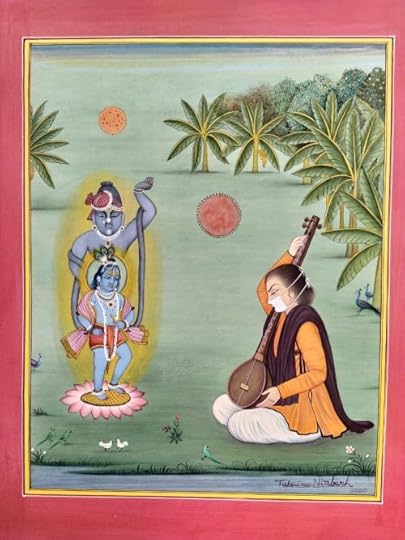
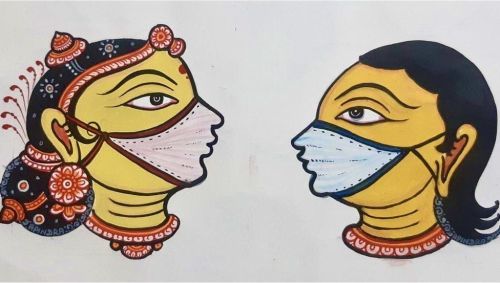
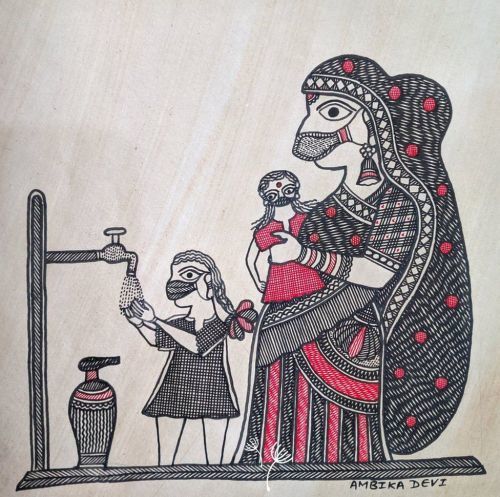
Throughout the pandemic I’ve been keeping notes on the various religious intersections with the virus. Some remarkable things have been unfolding, from a Russian priest circling Moscow with an idol, to Megachurches defying lockdown orders. The images of a sparse Grand Mosque in Mecca are wholly remarkable.
But the most aesthetically pleasing are the folk art of mixing people wearing face masks with Hindu deities. These as the BBC reports serve a functional and sincere purpose. They might well be contrasted with the Christian branded face masks that are now cropping up. A good reminder that faith needs to be given a helping hand with some common sense scientific basics.
For more on Religion and Covid-19 see below.
Ohio Churchgoer protect by the blood of Christ
Russian patriarch tours city with idol
April 30, 2020
"Dear Eberhard,
Today was a hot summer’s day here, and I could enjoy the sun only with mixed..."
Today was a hot summer’s day here, and I could enjoy the sun only with mixed feelings, as I can imagine what ordeals you’re having to go through. Probably you’re stuck somewhere or other, tired and up to your eyes in dust and sweat, and perhaps with no chance of washing or cooling down. I suppose you sometimes almost loathe the sun. And yet, you know, I should like to feel the full force of it again, making the skin hot and the whole body glow, and reminding me that I’m a corporeal being. I should like to be tired by the sun, instead of by books and thoughts. I should like to have it awaken my animal existence - not the kind that degrades a man, but the kind that delivers him from the stuffiness and artificiality of a purely intellectual existence and makes him purer and happier. I should like, not just to see the sun and sip at it a little, but to experience it bodily. Romantic sun-worshipping that just gets intoxicated over sunrise and sunset, while it knows something of the power of the sun, does not know it as a reality, but only as a symbol. It can never understand why people worshipped the sun as a god; to do so one needs experience, not only of light and colours, but also of heat. The hot countries, from the Mediterranean to India and Central America, have been the intellectually creative countries. The colder lands have lived on the intellectual creativeness of the others, and anything original that they have produced, namely technology, serves in the last resort the material needs of life rather than the mind. Is that what repeatedly draws us to the hot countries? And may not such thoughts do something to compensate for the discomforts of the heat?”
-
Excerpt From: Dietrich Bonhoeffer. “Letters and Papers from Prison.
I’ve had an abridged edition of Dietrich Bonhoeffer’s Letters and Papers from prison since I was a teenager. For years I was in a habit of reading this one letter to his friend Eberhard Bethge just as Spring started to bring warm weather. I dug it out the other day as a matter of converging coincidences, it began to be very warm here in Prague, my son asked me a question about the warmth of the sun, and I had earlier read some esoteric text about sun rituals. It all added up and then I realised that Bonhoeffer’s deprivation in prison was an interesting situation to reflect upon during our own lockdown. His lament for the sun and his rich remembrance for the joys it brings is evocative. How many of us are longing for similar freedoms? Simple ones, relating to movement, open space, without the constraints of masks. Even the boredom and lethargy of old routines seems enticing.
Urban Pamphleteer #8: SkateboardingsThis is a great project and...
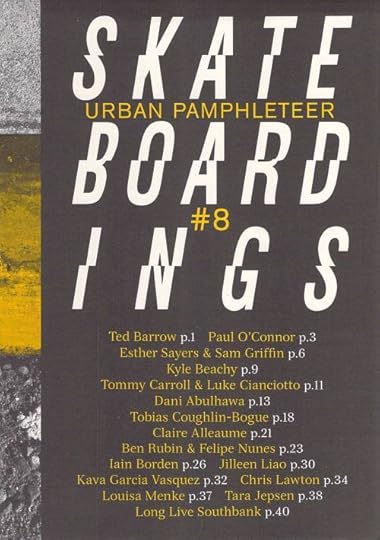
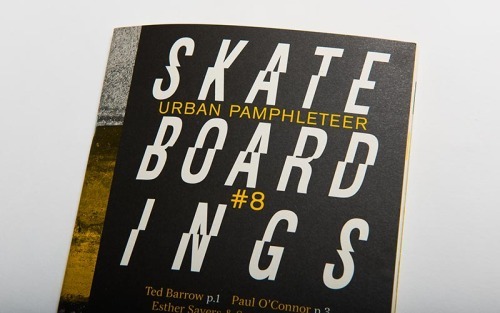
Urban Pamphleteer #8: Skateboardings
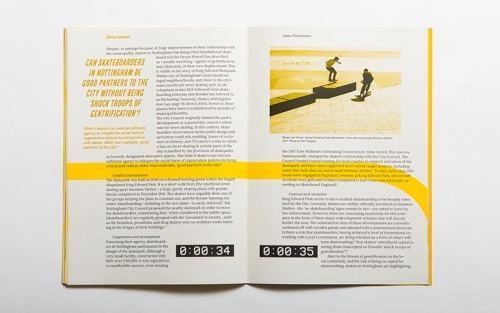
This is a great project and I am happy to announce that it is freely available to read and download at the Urban Pamphleteer site. This occasional publication is a must for all urbanists and people interested in the various cultural aspects of urban life.
Back in 2018 after the first Pushing Boarders event, two of the organisers Sander Hölsgens and Thom Callan-Riley decided to follow up the event and publish a collection of musings on skateboarding. True to the spirit of Pushing Boarders this is a fusion of academics, skateboarders, artists, and activists and it is freely accessible. A great initiative from UCL.
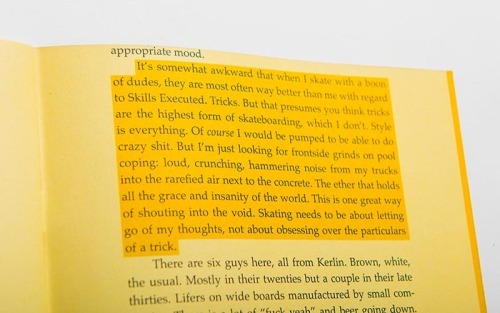
I was fortunate enough to be invited to contribute and reflect on the direction of skateboarding scholarship. My piece strives to tie the very diverse range of topics in the issue together.
Basically I am stoked that this accessible collection of writing is out there and that people can plug into it. So do… follow the link here, donate if you can afford it, and enjoy.
April 14, 2020
April 8, 2020
"I want the new kid coming to skateboarding for the first time to have the exact same or at least a..."
-
Jeff Grosso, Skateboarding and Religion, pg 104
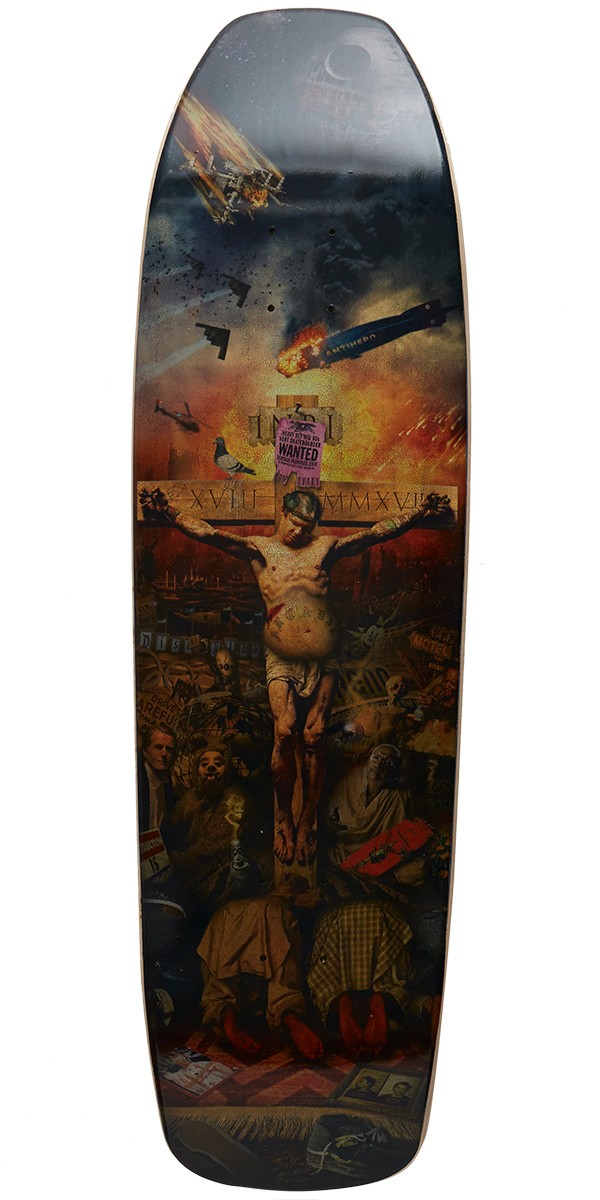
I had the privilege of talking to Jeff Grosso while I was writing my book. I called him up just as he was leaving the skatepark. We chatted for over an hour and it was a riot. The main focus of our discussion was the graphic for his Crucifried board in which his long time friend Christian Cooper produced the art. It has been heartbreaking that the skateboard community has lost Jeff. His deep love for skateboarding and his wisdom for connecting with its essence was cherished by legions. This quote shows a fraction of that love and his blunt critique about the move skateboarding has made into a sports sideshow.
Love you Jeff