Sourabhh Sethii's Blog, page 5
August 2, 2018
Artificial Intelligence also works on The Law of Karma “Cause and effect”.
Artificial Intelligence also works on “Cause and effect” i.e. “Latent effect and manifest effect”. If we create a cause or do any action on that “cause” there would be its “effect” that means on the basic of current “actions” there would be a “reaction”, due to the nature of the “reaction”, we get rewards and that’s how we learn so our brain projects those conditions of the environment onto your actions and that’s how you know when you are doing good and when not so much and that’s how we learn.
Let’s discuss Q-Learning Intuition where we have Reinforcement learning. In which we have agent who works in a specific environment and perform some actions and as result “State and Rewards” would be given to agent, in case of “State” agent takes its action and would be rewarded accordingly. This would help agent to learn environment and good rewards leads to better state where as bad rewards lead to unfavorable state. Further we have Deep Convolutional Q-Learning and A3C model.
Machine Learning evolves around AI, as data is evolving exponentially hence we need efficient Machine Learning algorithm which has potential to reduce the Junk data.
Deep Learning is most fascinating branch of Artificial Intelligence and Neural Network are most powerful machine learning model based on Deep learning concepts. Deep learning is used for very powerful and intensive tasks like computer vision in medicine. It can be used for variety of purposes from classification and prediction to a business problems or for computer vision like recognition faces and patterns. It can be used to recognize tumors in brain images with the use of Deep Boltzmann machine.
ANN (Artificial Neural Network). It is used for Regression and classification. Classification problem e.g. prediction of those customers who are leaving the bank on the basics of number of given independent parameters like credit score, balance and more.
CNN (Convolutional Neural Network). It is used for Computer Vision. Image classification where we provide Input Image to CNN and we get the Image class as output on the basic of Image feature extraction, pooling, and flattering concepts.
RNN (Recurrent Neural Network). It is used for time series analysis. RNN is more dynamic and self-learning prediction method, this concept has been taken from the working of brain where output of hidden layers is given back as input to hidden layer which provides Neural Network a self-learning capabilities.
SOM (Self-Organizing Maps). It is used to reduce dimensionality. They take the multidimensional dataset where we have lots of Colum and we reduce its dimension. DBM (Deep Boltzmann machine) and AE (Auto Encoders) are used for recommendation system.
As our brain and human existence is evolving so the AI is evolving.
Artificial Intelligence also works on The Law of Karma “Cause and effect”. was originally published in Virtue on Medium, where people are continuing the conversation by highlighting and responding to this story.


August 1, 2018
How to do Innovation in an Organization?
With the Introduction to Cultural based innovation in all the department of the organization irrespective of Traditional R&D based innovation lead to implement innovative ideas on large scale in an organization.
Innovation can be of different type.Incentive based Innovation would leads to drastically change the process, services and products of the organization.Innovation in distribution network by making strong retailer based innovative distribution system.Cost Innovation by reducing the cost of the product at the same time maintaining better quality.Other type of Invocation e.g; Customer relationship Innovation , Business model Innovation, workflow Innovation, System delivery Innovation, Supply chain Innovation, Value innovation, Revenue Model innovation.
Innovation always depends upon future projections based on product, service, process innovations.There is difference between experience and imagination. experience is based on your past patterns while imagination is based on future or predictive patterns.
Innovation is always depends upon need of the industry or customer.After creating goal statements and brain storming on ideas which further lead to pilot project and build prototype on top of pilot project.
Ideas lead to prototype, prototype lead to testing, testing lead to feedback.

How to do Innovation in an Organization? was originally published in Virtue on Medium, where people are continuing the conversation by highlighting and responding to this story.
July 18, 2018
Introduction to Augmented Reality.
Augmented Reality is a technology that superimpose Computer generated image on the users view of the real world thus providing a composite view.For example Pokemon Go Game.
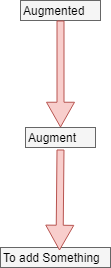 Adding Object in the Real world Image.Different types of Augmented Reality.
[a]. Marker based Augmented Reality.
[b].Marker less Augmented Reality.
[c].Projection based Augmented Reality.
[d].Superimposition based Augmented Reality.
What is Virtual Reality.Virtual reality is fully computer based simulated technology generated with the help of realistic image, sound and other sensation which give the user a feeling of being a different environment instead of actual environment.
Main Sensors in VR Headset are magnetometer, accelerometer, gyroscope Sensors. These senors help us to measure motion and direction.
[1] Magnetometer Sensors measure magnetic field.
[2] Accelerometer Sensors measure changes in X,Y,Z axis of phone.
[3] Gyroscope Sensors is an advance form of Accelerometer which measure very small change in Smart phone.
[4] Camera
[5] G.P.S
Article on Google glassHow and what makes a google glass work - EngineersDream
Conclusion : In next Article on Augmented Reality, we would discuss Installation of Unity and Vuforia along with AR Application development.
Introduction to Augmented Reality. was originally published in Virtue on Medium, where people are continuing the conversation by highlighting and responding to this story.
July 5, 2018
IOT Part 1 — IOT Sensor
Light Cup
The Light Cup modules contain Mercury Switches that provide a digital signal. The LED’s are dimmable.
 Light Cup.
RGB LED
This LED contains light emitting diodes. A red one, a green one and a blue one. Combining those into one LED will give you a RGB LED.
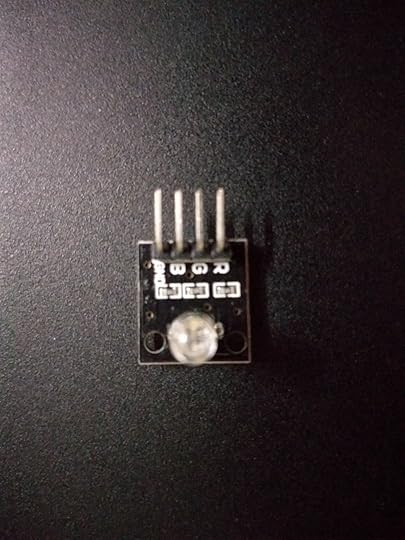 RGB LED.
Heartbrat
This sensor uses a bright IR LED (infrared) and a phototransistor to detect the pulse of the finger.
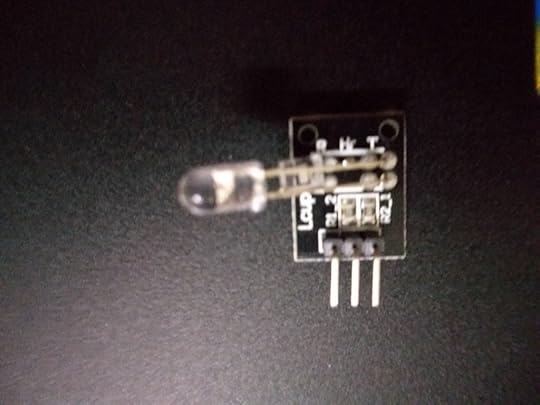 Heartbrat.
Joystick
The JoyStick is a analog sensor that can be used to control your arduino.
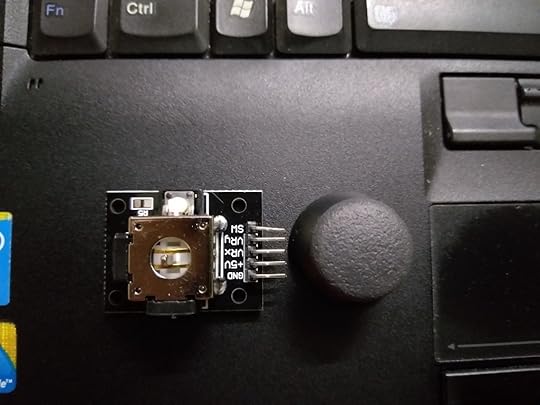 Joystick.
Flame
These sensors are used for short range fire detection.
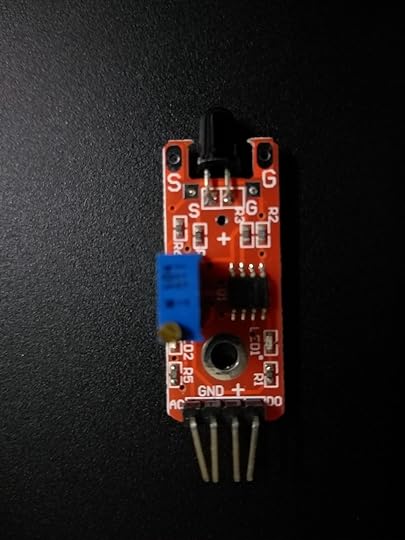 Flame.
Conclusion : One would be able to understand the basic senors i.e Light Cup, RGB LED, Heartbrat, Joystick, Flame.

IOT Part 1 — IOT Sensor was originally published in Virtue on Medium, where people are continuing the conversation by highlighting and responding to this story.
Analog Temperature reading using Analog Temperature senor and Arduino Nano development board.
Requirement
1x Arduino Nano 3.0
1x LM35 temperature sensor
Breadboard and wires
Below connection diagram would help to connect Analog Temperature senor with Arduino Nano development board.
 Board connections.
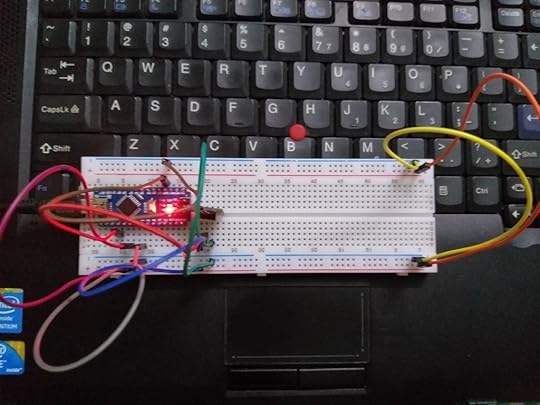 Development Board Setup.
Copy sample code to analysis analog temperature.
// Setup by Sourabhh Sethii.
//TMP36 Pin Variables
int sensorPin = 0; //the analog pin the TMP36’s Vout (sense) pin is connected to the resolution is 10 mV / degree centigrade with a 500 mV offset to allow for negative temperatures.
/*
* setup() — this function runs once when you turn your Arduino on
* We initialize the serial connection with the computer
*/
void setup()
{
Serial.begin(9600); //Start the serial connection with the computer
//to view the result open the serial monitor
}
void loop() // run over and over again
{
//getting the voltage reading from the temperature sensor
int reading = analogRead(sensorPin);
// converting that reading to voltage, for 3.3v arduino use 3.3
float voltage = reading * 5.0;
voltage /= 1024.0;
// print out the voltage
Serial.print(voltage); Serial.println(“ volts”);
// now print out the temperature
float = (voltage — 0.5) * 100 ; //converting from 10 mv per degree wit 500 mV offset
//to degrees ((voltage — 500mV) times 100)
Serial.print(temperatureInC); Serial.println(“ degrees C”);
// now convert to Fahrenheit
float temperatureInF = ( * 9.0 / 5.0) + 32.0;
Serial.print(temperatureInF); Serial.println(“ degrees F”);
delay(10000); //waiting a second
}
Logs
49 volts
98.93 degrees C
210.07 degrees F
1.24 volts
73.54 degrees C
164.36 degrees F
1.24 volts
73.54 degrees C
164.36 degrees F
1.25 volts
75.00 degrees C
167.00 degrees F
1.28 volts
77.93 degrees C
172.27 degrees F
1.29 volts
78.91 degrees C
174.03 degrees F
1.26 volts
76.46 degrees C
169.64 degrees F
1.23 volts
73.05 degrees C
163.48 degrees F
1.23 volts
72.56 degrees C
162.61 degrees F
1.30 volts
79.88 degrees C
175.79 degrees F
1.29 volts
78.91 degrees C
174.03 degrees F
1.25 volts
75.00 degrees C
167.00 degrees F
1.23 volts
72.56 degrees C
162.61 degrees F
1.24 volts
73.54 degrees C
164.36 degrees F
1.46 volts
96.00 degrees C
204.79 degrees F
0.88 volts
37.89 degrees C
100.20 degrees F
1.84 volts
134.08 degrees C
273.35 degrees F
3.32 volts
281.54 degrees C
538.78 degrees F
1.08 volts
57.91 degrees C
136.24 degrees F
0.63 volts
12.50 degrees C
54.50 degrees F
0.57 volts
6.64 degrees C
43.95 degrees F
2.33 volts
182.91 degrees C
361.24 degrees F
1.17 volts
66.70 degrees C
152.06 degrees F
1.24 volts
74.02 degrees C
165.24 degrees F
Conclusion : One would be able to connect analog temperature senor with the Arduino Nano development board.

Analog Temperature reading using Analog Temperature senor and Arduino Nano development board. was originally published in Virtue on Medium, where people are continuing the conversation by highlighting and responding to this story.
Introduction to IOT devices and development board.
one would be able to make basic IOT application using below development boards and senors.
Arduino Nano 3.0
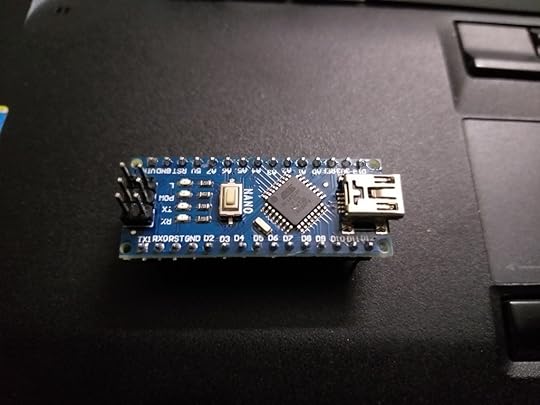 Arduino Nano
Raspberry Pi 3B.

1x LM35 temperature sensor
Analog temperature senors.
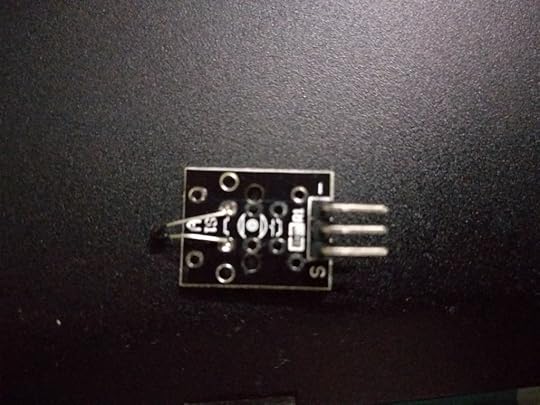 Analog Temperature
Breadboard and wires
Breadboard and wires are used to create connections between development board and IOT sensors.
 Breadboard.
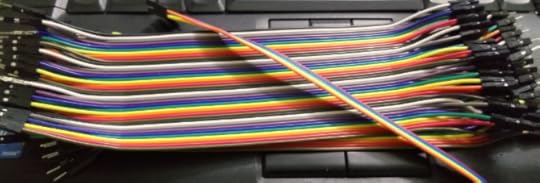 Jump Wires.
Conclusion : One would be able to develop IOT application and play with IOT Development board and Sensors.

Introduction to IOT devices and development board. was originally published in Virtue on Medium, where people are continuing the conversation by highlighting and responding to this story.
July 4, 2018
Proof of Existence Part 2 — Creating data stream to store hash of the file and metadata in…
Step 1: First we would create a new blockchain named chain1. On the first server, run this command:
multichain-util create chain1
Step 2 : Initialize the blockchain, including mining the genesis block. multichaind chain1 -daemon
Step 3 : Get info of blockchain run command (multichain-cli chain1).
sourabhsethi8888@mutichain-instance-1:~$ multichain-cli chain1MultiChain Core RPC client build 1.0 alpha 26 protocol 10006
Interactive mode
chain1: getinfo
{"method":"getinfo","params":[],"id":1,"chain_name":"chain1"}
{
"version" : "1.0 alpha 26",
"protocolversion" : 10006,
"chainname" : "chain1",
"description" : "MultiChain chain1",
"protocol" : "multichain",
"port" : 9565,
"setupblocks" : 60,
"nodeaddress" : "chain1@10.142.0.4:9565",
"burnaddress" : "1XXXXXXWZzXXXXXXYBXXXXXXbVXXXXXXWsKJr3",
"incomingpaused" : false,
"miningpaused" : false,
"walletversion" : 60000,
"balance" : 0.00000000,
"walletdbversion" : 2,
"reindex" : false,
"blocks" : 15549,
"timeoffset" : 0,
"connections" : 0,
"proxy" : "",
"difficulty" : 0.00001526,
"testnet" : false,
"keypoololdest" : 1530472920,
"keypoolsize" : 2,
"paytxfee" : 0.00000000,
"relayfee" : 0.00000000,
"errors" : ""
}
chain1:
Step 4: Create stream POE in chain1.
Now let’s create a stream POE, which can be used for general data storage and retrieval.
chain1: create stream poe false{"method":"create","params":["stream","poe",false],"id":1,"chain_name":"chain1"}
922ce92090a540222ccd2cb9349d7fc34fd83570938b9e500102543189667f95
chain1:
The false means the stream can only be written to by those with explicit permissions. Let’s see its permissions:
chain1: listpermissions poe.*{"method":"listpermissions","params":["poe.*"],"id":1,"chain_name":"chain1"}
[
{
"address" : "1HGMosmcKEPUnwD2DzNUfQ46HCA9Th4mBZCZEF",
"for" : {
"type" : "stream",
"name" : "poe",
"streamref" : "15591-267-11410"
},
"type" : "admin",
"startblock" : 0,
"endblock" : 4294967295
},
{
"address" : "1HGMosmcKEPUnwD2DzNUfQ46HCA9Th4mBZCZEF",
"for" : {
"type" : "stream",
"name" : "poe",
"streamref" : "15591-267-11410"
},
"type" : "activate",
"startblock" : 0,
"endblock" : 4294967295
},
{
"address" : "1HGMosmcKEPUnwD2DzNUfQ46HCA9Th4mBZCZEF",
"for" : {
"type" : "stream",
"name" : "poe",
"streamref" : "15591-267-11410"
},
"type" : "write",
"startblock" : 0,
"endblock" : 4294967295
}
]
chain1:
subscribe poe
chain1: subscribe poe{"method":"subscribe","params":["poe"],"id":1,"chain_name":"chain1"}
Step 5: So for now, only the first server has the ability to write to the stream, as well as administrate it. Let’s publish something to it, with key key1:
chain1: publish poe key1 73747265616d2064617461{"method":"publish","params":["poe","key1","73747265616d2064617461"],"id":1,"chain_name":"chain1"}
744f9a635f6fb34ee9fa58245341d6d9799574c94fa2c5dc960e7961b80d9f81
chain1:
Step 6: Now let’s query the stream’s contents in many different ways.
liststreamitems poe
chain1: liststreamitems poe{"method":"liststreamitems","params":["poe"],"id":1,"chain_name":"chain1"}
[
{
"publishers" : [
"1HGMosmcKEPUnwD2DzNUfQ46HCA9Th4mBZCZEF"
],
"key" : "key1",
"data" : "922ce92090a540222ccd2cb9349d7fc34fd83570938b9e500102543189667f95",
"confirmations" : 22,
"blocktime" : 1530693688,
"txid" : "525cc31b4de0627f19a9bea627fad933252d8ccecdf7a7a04cbf9a3486686f78"
},
{
"publishers" : [
"1HGMosmcKEPUnwD2DzNUfQ46HCA9Th4mBZCZEF"
],
"key" : "key1",
"data" : "73747265616d2064617461",
"confirmations" : 6,
"blocktime" : 1530693893,
"txid" : "744f9a635f6fb34ee9fa58245341d6d9799574c94fa2c5dc960e7961b80d9f81"
}
]
chain1:chain1: liststreamkeys poe
{"method":"liststreamkeys","params":["poe"],"id":1,"chain_name":"chain1"}
[
{
"key" : "key1",
"items" : 2,
"confirmed" : 2
}
]chain1: liststreampublishers poe
{"method":"liststreampublishers","params":["poe"],"id":1,"chain_name":"chain1"}
[
{
"publisher" : "1HGMosmcKEPUnwD2DzNUfQ46HCA9Th4mBZCZEF",
"items" : 2,
"confirmed" : 2
}
]
chain1:
Conclusion : One would be able to understand the Streams in multichain network to store the data in blockchain.

Proof of Existence Part 2 — Creating data stream to store hash of the file and metadata in… was originally published in Virtue on Medium, where people are continuing the conversation by highlighting and responding to this story.