Omid Malekan's Blog, page 6
May 7, 2018
The Real Reason Warren Buffet Doesn’t Like Bitcoin
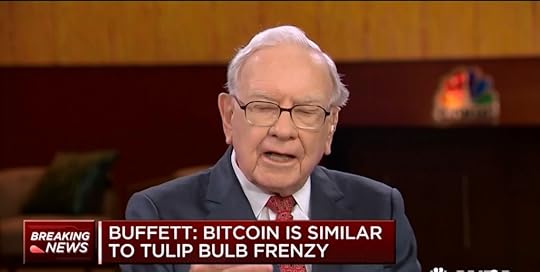
The most recent tirades against Bitcoin by famed investor Warren Buffet and his sidekick Charlie Munger follow an all too familiar pattern that we’ve seen time and again.
First, a successful member of the financial community goes on a colorful rant against the very idea of Bitcoin. Then, the traditional financial media — whose readership consists mostly of people who probably don’t understand crypto and certainly don’t own any — picks up the thread and runs away with it. Last, coin prices take a tumble. Remember Jamie?
But there is a key fact that always gets left out in the reporting of these attacks, and it’s an omission substantial enough to rob the story of most of its credibility. A more honest headline of these events would read something like this:
Billionaire Bank Investor Does Not Support Technology That Was Invented To Eliminate Banks
In case you didn’t know it, Warren Buffet is arguably the world’s biggest investor in our existing banking system, both through his holding company Berkshire Hathaway and in his personal portfolio. According to the latest SEC Filings, Berkshire currently owns $24 billion worth of shares of Wells Fargo, making the mega bank its second biggest holding. It also owns $20B in Bank of America stock and $15B in American Express, along with multi-billion dollar holdings in US Bankorp, Bank of New York Mellon, Moody’s, Visa and Goldman Sachs.
Put it all together, and almost 40% of Berkshire’s portfolio is in financial services companies involved in everything from commercial banking to back office clearing to payments. Bitcoin, and various other cryptocoins like it, threaten the very existence of every one of those companies. Even a tokenized fiat currency riding a government-sanctioned blockchain would seriously crimp their profitability.
That Warren Buffet is not a believer in crypto is about as surprising as the CEO of Wonder Bread not believing in the Atkins diet.
Buffet’s primary gripe about cryptocoin investing has always been that people only do it on the greater fool theory, buying something because they believe someday someone else will pay them more for it. He certainly has a point there. But this argument is always something of a canard, because that’s the only reason anyone ever invests in anything. The real fool is the person who invests in something while not believing that someday it will go up in value.
Buffet’s real beef, I suspect, is that like most of today’s gatekeepers, he can’t fathom a world where distributed ledgers operating with transparent and meritocratic consensus mechanisms replace our centralized banking system.
How could he? Not only has such a centralized system made him lots of money over the years, it also prevented him from losing his shirt during the financial crisis.
Buffet’s love affair with big banks goes all the way back to before the crisis, when his single biggest holding was Wells Fargo. He owned a bunch of other banks as well, and was further exposed to the meltdown through the complicated derivative holdings of his insurance holdings. Buffet should have lost a lot of money during that period, for no other reason than because he made some very poor investment decisions (whereas others made the opposite bet.)
But thankfully for people like him, the government stepped in and threw billions of dollars worth of taxpayer money at the problem. The highly controversial decision to bail out the banks was nudged along by none other than Mr. Buffet himself, who after making a sizable investment in Goldman Sachs, went on national television and threatened to start dumping his bank shares if Congress didn’t “do the right thing.”
The rest of the story is history. Whatever your opinion of the bailouts, two facts remain undisputed: millions of people still lost their home and suffered years of financial hardship, but the banks (and their shareholders) rebounded smartly, despite being enrolled in one shameful scandal after another.
It’s no coincidence that Bitcoin was invented during that dark period. What the financial crisis and the ensuing bailouts made clear was that our existing banking system operated by the golden rule. Not that golden rule, but the one that says those who own the gold, make the rules.
When asked about his specific thoughts on Bitcoin recently, Birkshire vice-chairman Charlie Munger went on to say:
“I regard the whole thing as a combination of dementia and immorality. I think the people pushing it are a disgrace. There ought to be some things that are beneath you, that you just don’t do, and this is one”
As the old schoolyard saying goes: it takes one to know one.
Omid Malekan is the author of the newly published The Story of the Blockchain: A Beginner’s Guide to the Technology That Nobody Understands. You can purchase it on Amazon .


The Real Cause of the Bitcoin vs. Bitcoin Cash Divide

Why do people resent those who disagree with them slightly more than those who disagree with them entirely?
A question I get asked frequently from people interested in learning about blockchain technology is “what’s the difference between Bitcoin and Bitcoin Cash?” Not having a vested interest in either, the most honest answer I can give them is: “not much.”
After all, both are cryptocoins that derive their legitimacy from a distributed and decentralized ledger that uses a proof-of-work consensus mechanism. They have the same encryption algorithm and inflation schedule. They even share the same exact transaction history up until last year’s fork.
Sure, there are some fundamental differences, like the bigger block size of Cash or SegWit implementation of the original, but if you compare the two coins to more traditional kinds of money, or even most other cryptocoins, it’s easy to conclude that they have more in common than not. If you think that Bitcoin is great, then a reasonable opinion on Cash would be that it’s almost great.
But that’s not what you hear from the avid supporters (not to mention core developers) of either coin. Instead, words like “fraud” or “illegimtiate” get thrown around, and unsubstantiated conspiracy theories are trotted out to try to explain the motivations of the other side.
This is an odd situation, especially since the same people seldom offer a strong opinion on the countless other cryptocoins out there — many of which differ wildly from either implementation of Bitcoin.
There is a long history of this kind of “resentment between those who disagree slightly” in human affairs. In politics, primary contests between the members of the same party are often nastier than the eventual general election between two distinct ideologies. In religion, the worst violence usually occurs between different sects of the same faith. Far more blood has been spilled over the centuries between Protestants and Catholics, or Sunnis and Shiites, than Christians and Muslims.
To understand where this antagonism comes from, it helps to look at situations where sectarianism is not pronounced. Engineers, for one, don’t get into brawls about what kind of bridge design supports the most weight, and tennis players don’t argue about who the true champion is. Why? Because bridges either fall down or they don’t, and Wimbledon always ends with a clear winner.
In other words, when there is a definitive resolution in sight, people tend to be humble and more open to a different point of view. It’s the thornier and seemingly unanswerable questions, like how much power the Pope should have, or how much memory a block should take up, that can turn neighbors (or coders) against each other. In these situations, those that disagree with someone just a little are the greatest reminder that deep down inside, they themselves have no way of being sure.
The real reason why the Bitcoin and Cash maximalists dislike each other so much is because none of them are certain of the answers when it comes to the Big Questions, so they take their uncertainties out on the other side. It’s an experience we’ve all had at some point in our lives, and paradoxically, the smaller the difference in question, the bigger the bitterness.
Lightening might be a perfect scaling solution, or not. Even if it does work, it might still benefit from a bigger block size/weight at some point down the road, in the same way that a 32mb blocked-sized Bitcoin might still want off-chain payment channels for micro-transactions. It’s too soon to know for sure, and to claim otherwise is to be historically ignorant of all of the pivoting that had to be done to get either coin this far.
All technology evolves in an unpredictable fashion. Given how this technology is trying to tackle some of society’s thorniest issues, like money and trust, it will probably need more pivots and rethinks than most. As a non-denominational believer in Bitcoin, I’m glad that there are two distinct implementations of it being carried out by very intelligent people. Trying both scaling solutions is the only way we’ll find out the best way forward. Anyone that says otherwise is speaking more to their own insecurities than the facts.

April 18, 2018
What Fax Machines Can Teach Us About the Blockchain Revolution
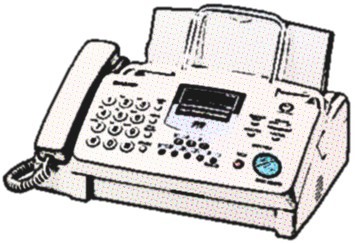
What is the actual pace of technological adoption?
Futurist Roy Amara’s famous law tells us that we tend to overestimate the effect of a new technology in the short run while underestimating it in the long run. I was reminded of this phenomenon not that long ago, when I was informed by the receptionist at my doctor’s office that they can only accept documents sent via fax, as opposed to email.
And so, almost half a century after a better technology was invented, the halls of one of America’s biggest hospitals still echo with the sound of fax machines receiving documents one excruciatingly slow page at a time (unless there was a busy signal.) A bit of googling reveals that faxing is more popular than one would think, despite the ubiquitous availability of a better, faster and cheaper alternative.
There is an important lesson here for those of us getting swept up in the blockchain revolution.
If you understand the true potential of decentralized and distributed ledgers ruled by consensus, then it’s not hard for you to imagine a world where banks have been usurped by cryptocoins, Uber has been replaced by a dapp on Ethereum and Facebook is losing users to a social media site structured as a DAO. Your imagination is probably right.
But it’s also early. Making a compelling argument as to why people should switch to a new way of doing things takes knowledge. Creating a viable product that utilizes that technology takes hard work. Getting users to actually switch to that technology takes time. Lots of it.
The main reason businesses that still use fax give for not switching to email is security, because a fax machine can’t get hacked the way email can. That’s a valid concern, but it’s not a legitimate reason not to switch. It’s just a reason to have strong security once you do.
The real reason I suspect more companies don’t abandon faxing is because doing so represents a major change to their operation, and changing whatever it is that has been working for you is scary, regardless of the benefits.
Blockchain technology, on account of its ability to build trust where it wouldn’t otherwise exist, has the potential to be one of the most disruptive phenomenon in history. But that means it hits at the core of so many of the processes that are fundamental to our lives today, like entrusting large financial institutions to handle our money or using a “wet” legal system to settle contracts
The more fundamental the change you hope to bring about, the more social inertia you are bound to encounter.
Most entrepreneurs live by the old saying that if you build a better mousetrap, the world will beat a path to your door. But history is full of examples where the opposite was true, and it was the entrepreneurs who had to beat the path to the people, by making compromises. Our smartphones, after all, still dedicate significant resources to making old fashioned analog phone calls, despite the availability of countless digital alternatives.
One of the more counterproductive habits among the crypto faithful is a tendency towards absolutism. Projects that promise to radically change the world are celebrated, while those that want to incrementally improve it are dismissed.
In the grand scheme of things, faxing itself is not that old of a technology. The fact that it has yet to be disrupted away should serve as a warning to anyone who thinks fiat money, a technology that’s been around for a thousand years, is about to go away thanks to the superior features of Bitcoin.
The solution is to embrace all the little bridge technologies in between. A project like Ripple might have its flaws, but we shouldn’t automatically dismiss using a blockchain to improve the existing banking system. It will take such an intermediate step to convince many of the viability of the technology, in the same way that DVRing cable TV was a good stepping stone toward cutting the cord and subscribing to Netflix.
And even when financial blockchains are accepted as viable, there is no guarantee that cryptocurrencies will become the standard medium of exchange. Most of the benefits of such coins, like fast and cheap transactions, can also be offered by tokenized fiat money riding on government-sanctioned blockchains. To most of the millions of people who use PayPal, a tokenized Dollar riding the official Blockchain of the Federal Reserve would be a sufficient upgrade.

Money is controlled by governments, and governments are always late adopters (a perfect example of which is their continued reliance on faxing.) If they are that slow at embracing digital communication, imagine how slow they will be to embrace digital money.
Perfect, as the old saying goes, is the enemy of the good. In that same spirit, the desire for total change is the enemy of actual progress. That’s not a reason not to try, but a motivation to grab the low-hanging fruit. An idealist will just sit around and wait for the day when cryptocoins replace our existing banking system. But the successful entrepreneur will call up those in charge of that system today and offer them a product that will incrementally improve their service.
That was probably the thinking of the people who founded eFax, an internet faxing service that was founded less than 20 years ago, at a time when the impending death of the fax machine was already a hot topic. Instead of waiting for email to take over, eFax made it a core part of their offering. Today they boast over 10 million subscribers, and given their monthly subscription fee, are probably more profitable than many email startups that have come and gone ever were.
My beginner’s guide to blockchain technology will be published this month. Sign up for my newslette r to get an alert when it’s available for purchase on Amazon.

March 27, 2018
What Can We Really Learn From the Recent Crypto Crackdown?

What is the environmental impact of the plastic in all the credit and debit cards issued annually, so many of which end up in landfills? That’s not an easy question to answer, because the environmental impact of our current banking system is not something journalists write about. Why then have so many written sensational articles on the electrical usage of Bitcoin?
The blockchain space seems under assault lately, as a series of negative headlines, regulatory crackdowns and advertising bans have resulted in falling cryptocoin prices across the board. But if we take a step back and a broader look at the negativity, we can see that most of it has more to do with who is doing the criticizing, than the intended target.
The electrical usage of proof-of-work mining is a good example, because in of itself, it’s a reasonable issue to discuss. But what’s telling is how nobody does an apples to apples comparison. If they did, you’d see the resource usage of crypto mining compared to that of the financial infrastructure a cryptocoin could someday replace, like hundreds of thousands of bank branches and millions of ATM machines, not to mention all that plastic.
That sort of analysis is never done, because the blockchain space is always treated with a double standard. Case in point: the recent blanket advertising bans by Twitter, Google and Facebook.
On its own, the ban is understandable, because the industry has seen a spike in shady operators lately (upsetting the real innovators in this space more than anyone else) and crypto investing is by nature risky. A ban by the tech giants would make sense if they were consistent in banning ads for any activity that might entail risk.
So, what’s Googles Adwords policy on gambling?
We support responsible gambling advertising …
Casinos and fantasy sports sites are profitable because in the long run, consumers are guaranteed to lose money. Google has no problem with that. But an ICO where you might lose money? That’s not allowed!
A critic might say there is a distinction, because a casino is selling entertainment, while a coin or token is supposed to be an investment. Fair enough.
Run a Google search for the term “Inverse ETF,” and the first thing you’ll see is an advertisement for “ProShares Tactical ETFs,” which as the ad goes on to explain, are investment products that allow you to “Trade 2x, 3x, -2x, -3x.” These are exchange-traded funds that allow people to gamble on the daily moves of the financial markets.
I say gamble, because responsible investors don’t touch this stuff. To see why, click through that advertisement and read up on any one of the leveraged products whose very name sounds more like a slot machine than an investment, like the UltraproShort Dow 30.
The point of this product is to do the opposite of what the stock market does, but with three times the leverage. It’s complex, expensive and can lead to ruin, as described in its own prospectus:
The use of such leverage could result in the total loss of an investor’s investment.
Google, as it turns out, doesn’t have a problem with ads for dangerous investments, just crypto ones. Our critic might now argue the tech giants are simply taking their lead from the regulators, who’ve been cracking down on everything crypto. But there too lies a double standard.
The Securities and Exchange Commission, the same body that has repeatedly rejected the creation of a Bitcoin ETF because it’s too risky, has approved dozens of levered and inverse ETFs, and stood by idly while many of them grind their way to zero.
Owning Bitcoin is risky — we don’t call it hodl for nothing — but the one thing we can say for certain is that it has a nine-year track record of not vaporizing in a single day, unlike one particularly notorious SEC-approved ETF.
Back in February, the VelocityShares Daily Inverse VIX Short-Term Exchange Traded Note lost 90% of its value in a matter of hours, with no hope of recovery. Credit Suisse, the creator of the product, defended itself by reminding everyone that the product worked as intended. Cue its prospectus:
The long term expected value of your ETNs is zero. If you hold your ETNs as a long term investment, it is likely that you will lose all or a substantial portion of your investment.
If all it took to get a risky product approved was a prospectus that spelled out the risks, we’d have a Bitcoin ETF already. But the regulatory reactions, just like the advertising ban, are not about how dangerous cryptocoins can be for investors. They are about how dangerous blockchain technology might be for today’s gatekeepers.
In my upcoming book, “The Story of the Blockchain: A Beginner’s Guide to the Technology Nobody Understands,” I try to introduce novices to the possibilities of blockchain technology by describing it as a great disintermediary. One way to think of many of today’s most powerful organizations, be they banks, social media platforms or even government regulators, is as gatekeepers who create trust where it wouldn’t otherwise exist. For that, we should be grateful, because our society would not have gotten this far otherwise.
But now we could look down the road and imagine a world where distributed ledgers and consensus mechanisms could provide the same trust faster and cheaper. A great accomplishment for the average person, but a terrible development for the gatekeepers.
Mark Zuckerberg might talk a big game about the potential of crypto, but if he’s a half-way decent CEO, he is terrified of the existential threat blockchain technology poses to his company. Other than providing a reliable platform that monetizes the content created by its users, there is nothing inherently special about Facebook. That’s why it’s not hard to imagine it being replaced by a blockchain-based platform that allows content creators, as opposed to Facebook shareholders, to monetize their work.
Such a decentralized platform would also reduce the risks of the privacy breaches for which Facebook is currently under fire. The transition might not happen tomorrow, and it might not be to Steem, but when you understand the technology, you know it’s possible, as is the replacement of Google’s ad-supported business, and whatever it is that makes the big banks that keep poo-pooing cryptocoins so profitable.
Less banks means less bank regulators. Ever since the financial crisis, being a bank regulator, or a compliance officer working for a bank (then switching between the two) has been a great career path. Nobody roots for a technology that might someday replace them.
Despite the fact that crypto assets have taken a hit recently from all of this negativity, when you look at who is doing the criticizing, it becomes apparent that the great promise of blockchain technology is slowly starting to become real. Social media giants don’t ban ads for casinos and government regulators don’t mind ETFs that occasionally blow up because neither is an existential threat. If anything, both are good for business (as are sensational stories written by reporters who don’t understand the technology.)
The gatekeepers are reacting because deep down inside, they too are starting to believe. The best proof that the rebellion is getting somewhere is the empire striking back.
My beginner’s guide to blockchain technology is due to be published in early April. Visit omidmalekan.com to learn more.