
Mark T. Conard's Blog, page 8
May 25, 2014
Chicken and Vegetables in the Dutch Oven

I love food, and I’ve gotten pretty good at cooking. (Okay, pretty damn good.) And as I promised in my inaugural post, I’m going to offer the occasional recipe here.
For this dish, I use chicken thighs, since I think they’re the best part of the chicken. As for vegetables, I mix it up. I use different combinations of green beans, eggplant (make sure you sweat it first), red pepper, mushrooms, okra.
• First, cook 3 or 4 pieces of chopped-up bacon in the Dutch oven, remove it and save the pieces.
• Salt and pepper the chicken thighs (6 to 8 of them), and brown them in the bacon grease. Remove the thighs.
• Sauté a minced onion and a couple of garlic cloves until they’re soft.
• Add a small can of drained diced tomatoes, half a cup of red wine, half a cup of chicken stock, a sprig of rosemary. Add salt and pepper.
• Let this cook for a couple of minutes, then return the bacon and chicken to the pot, and put the vegetables on top of these (altogether it’s around 1 ½ to 2 lbs of vegetables).
• Cover the Dutch oven and let it simmer on the stovetop for around 90 minutes.
The chicken should be very tender and the vegetables well-cooked. I’m on a low carb diet, so the dish as is works for me as a complete meal. You could serve it with rice or some such thing, if you wish. Definitely have a nice bottle of red wine on hand.
You need to have a good Dutch oven for this. We have Le Creuset. They’re expensive, but well worth the money. I use it all the time.
[contact-form]



May 19, 2014
Inspirational Quotes and Shit
The Twitter stream is filled with lots of silliness, which isn’t surprising. One of the things that I find to be the most silly is the steady dose of supposedly-inspirational quotes that many people throw up there. The great majority of them are aren’t remotely clever or interesting or original. They’re hackneyed phrases that are banal at best.
Some real examples grabbed from the stream:
“Nothing’s more fun than doing what people say you can’t do!”
“Live in the moment. Forget the past and don’t concern yourself with the future.”
“If you asked me what I came into this world to do, I will tell you: I came to live out loud.”
“Worry is a down payment on a problem you may never have.”
“Opportunity may knock only once, but temptation leans on the doorbell.”
“The secret of happiness is to count your blessings while others are adding up their troubles.”
See what I mean?
So I went on a mission a while back to try to expose just how banal they are. One of my more successful efforts was to add “and shit” to the end of traditional quotations. E.g., “Religion is the opiate of the masses, and shit.”
In no way did this motivate people to stop and think about the banality of what they were doing in posting quotes, but it was a lot of fun.
So I’ve put together a partial list of the “and shit” quotes that I posted on Twitter. They’re not in any particular order, and some are obviously more successful than others (that is, they’re funnier).
What I discovered was that the more noble-sounding the language and the sentiment, the greater the contrast with the “and shit,” and so the funnier is the addition. Also, the shorter sayings typically work better. Plus, the best are when the “and shit” can be part of the reference. E.g., Leibniz’s quote that “The present is big with the future, and shit.”Is Leibniz saying that the present is big with both the future and with shit?!
(FYI, I always add a comma before the “and shit” to mark the end of the actual quote, whether that comma is needed or not.)
Enjoy!
The “And Shit” Quotes
“I can resist everything except temptation, and shit.” (Oscar Wilde) #AndShit.
“My tastes are simple: I’m easily satisfied with the best, and shit.” (Churchill) #AndShit.
“Do anything, but let it produce joy, and shit.” (Walt Whitman) #AndShit.
“Life is nothing without friendship, and shit.” (Cicero) #AndShit.
“All cruelty springs from weakness, and shit.” (Seneca) #AndShit.

Immanuel Kant:
“Two things inspire me to awe: the starry heavens above and the moral universe within, and shit.”
“Silence is a source of Great Strength, and shit.” (Lau Tzu) #AndShit.
“Man’s loneliness is but his fear of life, and shit.” (Eugene O’Neill) #AndShit.
“Laughter is the language of the soul, and shit.” (Pablo Neruda) #AndShit.
“Man is born free, and everywhere he is in chains, and shit.” (Rousseau) #AndShit.
“Wonder is the desire of knowledge, and shit.” (Aquinas) #AndShit.
“I quote others only to better express myself, and shit.” (Michel de Montaigne) #AndShit.
“Men are born ignorant, not stupid. They are made stupid by education, and shit.” (Bertrand Russell) #AndShit.
“Patience is the companion of wisdom, and shit.” (Augustine) #AndShit.
“The present is big with the future, and shit.” (Leibniz) #AndShit.
“Anticipate charity by preventing poverty, and shit.” (Maimonides) #AndShit.

Henry David Thoreau:
“Our life is frittered away by detail. Simplify, simplify, and shit.”
“As far as possible, join faith to reason, and shit.” (Boethius) #AndShit.
“To understand is to perceive patterns, and shit.” (Isaiah Berlin) #AndShit.
“Mathematics is the language with which God has written the universe, and shit.” (Galileo) #AndShit.
“Let us dare to read, think, speak and write, and shit.” (John Adams) #AndShit.
“Whatever crushes individuality is despotism, and shit.” (John Stuart Mill) #AndShit.
“Leisure is the mother of Philosophy, and shit.” (Thomas Hobbes) #AndShit.
“Wonder is the seed of knowledge, and shit.” (Francis Bacon) #AndShit.
“Every law is an infraction of liberty, and shit.” (Jeremy Bentham) #AndShit.

Niccolo Machiavelli:
“Never was anything great achieved without danger, and shit.”
“The world is knowable, harmonious, and good, and shit.” (Plotinus) #AndShit.
“People do not lack strength, they lack will, and shit.” (Victor Hugo) #AndShit.
“If triangles made a god, they would give him three sides, and shit.” (Montesquieu) #AndShit.
“Viewed from a distance, everything is beautiful, and shit.” (Tacitus) #AndShit.
“The secret to success is constancy of purpose, and shit.” (Benjamin Disraeli) #AndShit.
“Adversity is the first path to truth, and shit.” (Lord Byron) #AndShit.
“Knowledge of what is possible is the beginning of happiness, and shit.” (Santayana) #AndShit.
“The destiny of man is in his own soul, and shit.” (Herodotus) #AndShit.
“All universal moral principles are idle fancies, and shit.” (de Sade) #AndShit.
“The seed of revolution is repression, and shit.” (Woodrow Wilson) #AndShit.

Thomas Edison:
“To invent, you need a good imagination and a pile of junk, and shit.”
“Sometimes history needs a push, and shit.” (Lenin) #AndShit.
“What is now proved was once only imagined, and shit.” (William Blake) #AndShit.
“Silence does not always mark wisdom, and shit.” (Samuel Taylor Coleridge) #AndShit.
“Let food be thy medicine and medicine be thy food, and shit.” (Hippocrates) #AndShit.

Robert E. Lee:
“Obedience to lawful authority is the foundation of manly character, and shit.”
“Everything existing in the universe is the fruit of chance and necessity, and shit.” (Democritus) #AndShit.
“Man is the measure of all things, and shit.” (Protagoras) #AndShit.
“All life is problem solving, and shit.” (Karl Popper) #AndShit.
“The work of memory collapses time, and shit.” (Walter Benjamin) #AndShit.
“The only thing constant in life is change, and shit.” (La Rochefoucauld) #AndShit.
“I write to discover what I know, and shit.” (Flannery O’Connor)

Diogenes Laertius:
“One original thought is worth a thousand mindless quotings, and shit.”
[contact-form]


May 15, 2014
A Review of David Baldacci’s The Hit
Last month I took a quick trip to San Diego for a conference, and as is my usual habit, I picked up a suspense novel at one of the airport shops. I normally don’t go out of my way to read people like Baldacci, Michael Connolly, or Lee Child. They’re solid story-tellers, but I’ve read them before and I don’t have time to read more of their stuff, except on airplanes. Then I make an exception, since the books are quick and fun.
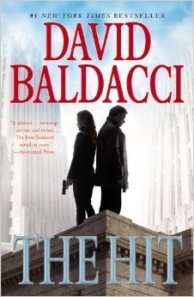
The Hit concerns two elite CIA assassins, Will Robie and Jessica Reel. Reel has apparently gone off the reservation and is killing guys in upper management at the agency. Robie is tasked with taking her out. There’s a fun/exciting cat-and-mouse between the two of them, at the end of which Reel convinces Robie that something is amiss at the CIA, and she’s only been trying to make things right, though in an unsanctioned way. I won’t spoil for you how this plays out. For the most part, it’s a fun read, though the end fizzles a bit.
As I say, Baldacci is a good writer who tells an engaging tale. As a writer myself, I find fault with some of his prose. For example, I subscribe to the Elmore Leonard rule that you should only use ‘said’ to tag a line of dialogue (and you should only use it when necessary). Baldacci gets a bit heavy-handed with his tags. For example, in the space of two pages, one character ‘echoed’, another ‘noted ominously’; one ‘snapped’, while another ‘said quietly’. One said something and was ‘clearly frustrated’ saying it. Another ‘snapped’ again. One ‘interjected’, and another ‘wanted to know’.
You get the picture. He does a lot of telling, rather than showing, a big faux pas, and he uses lots of adverbs, which for many of us is another mistake. He does sell a lot of books, but then so did Dutch, and he was a much better writer.
[contact-form]


May 14, 2014
A Frank Koenig Story: “The Meridian Lounge”
The Meridian Lounge
The Meridian Lounge on West 125th Street in Harlem featured local and up-and-coming jazz acts. The venue, smoke-filled and done in brass, contained a dozen tables, and the varnish had worn off the floorboards where the waitresses trekked from the bar to the patrons in the tight space. Alma Boudreau stood on the bandstand behind the microphone, cooing “Love For Sale,” the Cole Porter tune, accompanied by piano, bass, and a drummer using brushes. She wore a tight-fitting white sleeveless dress that plunged at the neckline and hugged her generous hips, and her honeyed voice would make songbirds jealous.
Frank Koenig, NYPD detective, had the only white face in the joint. The manager ran an establishment for coloreds, but made an exception for Frank, since he took a particular interest in black neighborhood crime when other cops wouldn’t. Nobody in the city knew why. It was Frank’s secret.
When he fought with the Third Infantry in Europe, he’d fallen in love with a black French woman. He didn’t know a word of French, and she couldn’t speak English, but somehow they communicated. He said goodbye to her when his until marched into Germany to defeat the Nazis, and he never heard from her again. Back home, he tried over and over to find what he’d had with her, but it never worked. He kept trying anyway.
Frank wore a crew cut, had a square jaw, a handsome nose, and full lips. His forehead bore a small scar from a piece of shrapnel he caught during the battle of Nuremburg. He wore last year’s sports jacket and matching pants, a white shirt and brown tie, and size eleven Florsheim wingtips. Before the war, he’d enjoyed big band music, Benny Goodman and Glen Miller, Gene Krupa and Artie Shaw. But when he’d returned stateside, he’d heard a new sound with a new energy, jazz with a new kind of beat, fast, and with solos that flew. He loved this new kid, Charlie Parker, and his the sound of his sax. He told people that’s why he came to Harlem, to Minton’s, to the Apollo, to the Meridian—for the music. It made a good cover for what he was really after, and he did have a passion for the songs.
The waitress, Carolina, approached his table with a glass of beer. She wore a knee-length skirt, and a dark blouse opened a few buttons. She had light eyes, a broad nose, skin the color of milk chocolate, and hair straighter than you’d find on most colored girls.
“Thanks,” said Frank, glancing up at her, as she set the glass in front of him.
“Want anything else?” she said over the music, allowing her hip to brush against his shoulder.
Frank felt his pulse quicken and Mr. Johnson come to life.
“Later,” he said.
“I’m off at eleven,” she said.
“My place.”
“Be there by half past,” she said and walked away.
The song ended, and people cheered. Frank clapped. He loved listening to Alma Boudreau, loved her voice. He thought she was as good as Billie Holiday or Dinah Washington, better maybe, and he’d told more than one person that she ought to be playing down on 52nd Street, rather than at some dive like the Meridian. She reminded him a lot of the girl he’d left in France.
“Here’s another one by Cole Porter,” said Alma from the bandstand. “’Just One of Those Things’.”
The drummer counted off, and the band tore into the up-tempo tune.
Frank glanced over to the bar to see Bobby O’Neill, the bartender and Carolina’s brother, staring back at him. Bobby wore his hair cut short, almost shaved, and had a bristly moustache. He had on black pants, a white shirt, and black suspenders. He always wore a scowl on his face, or maybe he saved that look for Frank. Carolina had kept their relationship secret, but Bobby wasn’t stupid. He might’ve figured it out.
June, another waitress, approached Frank. She had a few years on Carolina, and she seemed to live for gossip and to flirt. She wore the same knee-length skirt and dark blouse.
“Get you anything, baby?” she said to Frank.
“No thanks.”
She grinned at him. “I see. Carolina taking care of you, right?”
“She brings me drinks when I order them, if that’s what you mean.”
“I get a feeling she do more than that for you, honey.”
Frank ignored the comment, and June headed off to another table. He smoked a cigarette and finished his beer, while listening to Alma sing a few more tunes, then headed out. He never socialized with the other patrons.
He lived in a one-bedroom in Morningside Heights, on the border with Harlem. He’d furnished the place with used and worn pieces, a scratched up dining table, and blackout drapes. The one expensive item in the apartment was his record player. He’d paid top dollar for the latest model, so he could get the best sound from his albums.
He put on a Coleman Hawkins record, since he’d seen Hawkins play at Jimmy Ryan’s a few weeks back and had really enjoyed his stuff.
Frank smoked a cigarette listening to the music and dozed off. When he woke it was after midnight, and Carolina wasn’t there. He figured she got held up or changed her mind. It hadn’t happened before, but there was always a first time. He pulled himself up off the armchair, stripped out of his clothes, and went to bed.
In the morning, Saturday, he drank coffee and smoked a cigarette at the dining table while reading the papers. Duke Ellington played on the phonograph. A nice breeze blew in through the open window.
The phone rang. It sat on an end table by the window. Frank looked over at it, the cigarette dangling from his lips, while it rang a few more times. He got up and plodded across the room in his undershorts and bare feet to answer it.
“Hello?”
“Frank, it’s me, Carolina,” she said in a whisper. Her voice sounded strange and tight, like she had a mouthful of marbles.
“What happened last night?”
“Nothing you should worry yourself over.”
“You all right? You sound queer.”
“Yeah, I’m okay, only we can’t see one another no more.”
“Why, what’s wrong?”
“Best if you don’t come to the club anymore, neither.”
A frown came to his face.
“What the hell happened?”
“Just stay away, Frank.”
The line went dead. He stared at the receiver in his hand, took a drag on his cigarette and blew out the smoke, then hung up.
He showered and shaved, and dressed in a dark pair of trousers, sport jacket, and white shirt, no tie. He strapped his holster to his belt under the jacket, and left the apartment.
Frank drove a dark green pre-war Buick Super that was held together with duct tape and chicken wire. Holes like craters dotted the seats. He steered it up to 142nd Street just off Lennox, where Carolina lived with her mother on the first floor of a brownstone. He’d never been to her place, of course, but he knew where she lived.
He rang the bell and rapped at the door. In a few minutes an older black woman answered. She wore a pastel green housedress and had a blue kerchief covering her head. Frank got the impression she’d been doing housework.
“Mrs. O’Neill?”
She nodded and eyed him with suspicion.
“I’m Detective Frank Koenig.”
“Oh, you,” she said, giving him a scowl.
“So you know who I am.”
“Course I do.”
“I’m sorry to bother you, but I just wanted to check on Carolina, to see if she’s okay.”
“She’ll recover,” said Mrs. O’Neill.
“Was she hurt?”
“No more than usual.”
“It was her brother, right? Bobby? He found out about me and her and kicked her around a little?”
“I ain’t saying nothing.”
“Thanks for your time, Mrs. O’Neill,” said Frank. “And please tell Carolina to take care of herself.”
He stepped down off the stoop and walked across the sidewalk, when Mrs. O’Neill called to him.
“Detective,” she said.
He turned around.
“You ain’t so bad for police.”
He smiled and nodded at her, then climbed back into his Buick. He drove to West 125th Street and parked at the curb. Inside the Meridian he found Bobby stocking booze behind the bar.
“What the fuck you want?” said Bobby, glowering at him. “Didn’t Carolina tell you never to come back here?”
Frank nodded. “She told me. But now I got something to tell you.”
Bobby set down the case of gin he was holding and came around the bar. He planted his feet. Frank watched him clench his fists.
“What you got to say?”
“Lot of white girls owe me a favor for getting them out of trouble, saving their asses from abusive fathers, getting them off drugs, whatever. A couple of them would do anything I asked.”
“So what?”
“So you ever lay a hand on Carolina again, and one of those girls is going to swear out a complaint saying you raped her.”
O’Neill’s jaw dropped.
“Say what?”
“You’d go away for a long time,” said Frank, folding his arms. “’Course you wouldn’t last long. Any of those good old boys in the can find out you raped a white girl, well, I think they’d have something to say about it.”
Bobby rushed him, howling, but Frank had his pistol in his hand before O’Neill reached him. Frank sidestepped, and bashed him on the side of the head with the gun. Bobby hit the floor with a thud.
Frank holstered his pistol again.
“Remember what I said, Bobby.”
He turned and walked back out of the Meridian.
[contact-form]


May 13, 2014
Plato’s Forms
I had a request to post more about Plato’s Forms. So, here you go, Jess!
UNIVERSALS
Plato’s theory of Forms is a proto-theory of universals. What are universals? They’re characteristics that individual things share. The quality of being blue, blueness, for instance, isn’t an individual thing. It’s a characteristic shared by many individuals. Universals also include class concepts, like ‘cat’ or ‘dog’ or ‘tree’. We know that individual things exist, like Mona the cat, or Rex the dog, or my blue sweatshirt. But philosophers beginning with the ancients wondered about the nature of universals—catness, dogness, blueness—do they have some sort of existence of their own, part from the individuals? Because, here’s the thing, individuals come and go—Mona and Rex will die, and my blue sweatshirt will wear out—but the universals somehow remain the same. They seem to have a kind of timeless existence apart from individual physical things.
So Plato came up with his theory of Forms to explain the commonality between individual particular things. What do Rex, Fido, and Spot have in common? What makes them the same sort of thing? They “share in” or are “modeled after” the same Form. The Form stands outside all change, since it’s not physical. It’s timeless, perfect, immutable. Plato seemed to struggle with the exact relationship between forms and physical things (which we tend to call ‘particulars’). He used the language of “sharing in,” or being “modeled after,” and he also said that particulars “participate in” the forms.
KNOWLEDGE
As I said in the last post, Plato was particularly keen to explain how necessary knowledge was possible. As I noted, he recognized that things in the world around us are continually changing. You can never definitively say (in a timeless way) that a particular thing is a certain way. You can never say necessarily that it’s F (whatever the quality of F might be: blueness, beauty, tallness, slowness, etc.). Particulars are always both F and not-F. They always are both one way and its opposite, and for different reasons (though not at the same time and in the same regard). The main reason, though, is that particulars are always subject to time and change, so that whatever characteristic a particular thing has, wait long enough and at some point it will no longer have that quality. A painting might be beautiful now, but at some point it won’t be. So you can’t say definitively and for all time that it’s beautiful.
So Plato introduced The Forms as objects of necessary knowledge. When we know something absolutely, eternally, the thing we know must itself be absolute and eternal; it must stand outside all change, all time. Plato doesn’t normally talk about physical objects or about animals, etc.; in discussing the Forms, he usually talks about virtues such as Justice, Piety, or Goodness generally; or about qualities such as Beauty. (This is because of the influence of his great mentor, Socrates, whose whole philosophical concern was ethics.)
BEAUTY
In sum, Forms are universals, and they’re the objects of necessary knowledge. We’re able to grasp them when we get away from sense perception of physical things and use our minds to contemplate the eternal, the unchanging. We venture out of the cave when we cease concerning ourselves with individual beautiful things and contemplate Beauty itself.
Plato’s Symposium depicts Socrates and some friends having a drinking party and giving speeches in honor of the god of love. (One of the most memorable passages in all of Plato’s works is Aristophanes’ discussion of original humanity as double beings who were split in half by Zeus, such that love is the desire to be reunited with one’s other half.)
Socrates’ speech describes how we all begin to appreciate beauty (which is the object of love): we desire a beautiful body. He then proceeds to describe how we progress to recognizing the beauty in many bodies, the beauty of the soul, the beauty of great works; and then ultimately we grasp Beauty itself in pure contemplation. So, in other words, love, our desire for beauty, begins with erotic attraction and ends in philosophy, which is the love of wisdom.
The Symposium contains one of Plato’s clearest depiction of The Forms, and it’s a brilliant piece of work, so if you’re interested in these issues, this would be a good place to start (definitely read the Nehamas/Woodruff translation).
[contact-form]


May 12, 2014
Narratives and Our Ways of Knowing Part I: Plato’s Dialogues
Narratives and Our Ways of Knowing Part I: Plato’s Dialogues
The question of knowledge is a very old problem, going back to the ancients. What we can know about the world, and how we know it, is a huge puzzle. Now, we all love to tell stories, to tell people about things that have happened to us—or even stuff that happened to others, if it makes for a good tale. More than that, story-telling seems to be hardwired in us. We have a deep need to construct narratives to make sense out of the world and our lives. So not only do we try to convey what we think we know through our stories, but those stories also reflect the issues and problems regarding our ways of knowing.
I’m going to write a series of posts concerning the history of story-telling and our problems concerning the ways of knowing. I’ll move from Plato to Medieval Christianity, then to Descartes and the Enlightenment, Nietzsche, then modernism and classic film noir, and finally postmodernism. I only intend to provide a sketch of these issues, so what I’ll say is greatly simplified.
PART I: PLATO’S DIALOGUES
Neo: “Why do my eyes hurt?”
Morpheus: “Because you’ve never used them before.”
The Homeric epics are one of the greatest story traditions in the West. The ancient Greeks largely took their mythology, their understanding of the gods, from those stories, so it was those tales that helped them make sense of the world. Rains flooded my crops and they died, but why? Zeus was obviously angry with me. But these were fallible, humanlike gods, so what happened in the world was subject to their whims. This constituted a real constraint on our ways of knowing, which were limited to guessing the humor of the gods.
Now, Plato also wrote stories, dialogues, the main character of which was usually Socrates. It’s intriguing that Plato decided to communicate his philosophy through narrative. Most other traditional philosophers lay out their claims in straightforward arguments (“Here’s what I think: X and Y, therefore Z”). Plato communicated his insights through fictional conversations.
One of the big questions that concerned Plato was the question of knowledge, and particularly our ability to have necessary knowledge, to know things absolutely, as in mathematics (though he thought that necessary knowledge extended much further). Every time you put two apples and two more apples together, you’re always going to get four apples. That’s obvious, but how we know that to be true, explaining that kind of knowledge, is a real problem. Experience tells us that things are a particular way, but not that they have to be that way.
Let me explain. Plato realized that things in the world around us, physical objects, are changing all the time. Physical things come into existence, last for a while, then are destroyed (however long that process takes). And if necessary knowledge like 2 + 2 =4 is timeless knowledge, eternal, perfect, and unchanging, then it can’t be about anything that changes; it can’t be about anything in the physical world. That is, since those apples only last for a short while, this mathematical truth isn’t really about them. It must be about something else.
So, to explain the possibility of having timeless knowledge, Plato claimed that that knowledge must be about something non-physical, something that stands outside all change. Since those apples don’t last long, when we’re adding two and two to get four, we really must be talking about something else. What we’re really talking about are abstract, non-physical (but real!) entities that he called “The Forms.” They’re timeless, immaterial, perfect and unchanging objects.
So the theory that Plato devised, and that was highly influential for a long time, was that we’re rational beings, and because of that we can use our minds to tap into timeless realities and have necessary knowledge about them.
This is what’s going on in his famous allegory of the cave. Most of us poor, dumb slobs are sitting at the bottom of the cave, staring at shadows, believing them to be real. But one of our fellow prisoners is able to make an intellectual journey outside the cave to grasp what is actually real. This is a metaphor for the intellectual journey the philosopher makes to grasping the non-physical forms. He is the enlightened one, the one who obtains real knowledge.
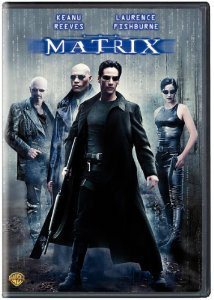
In The Matrix, Neo’s voyage out of the matrix is (in part) the philosopher’s journey out of the cave. Although, as I argue in an essay (in Steven Sanders’ The Philosophy of Science Fiction Films), the Wachowski brothers changed the meaning of the story in important ways.
In sum, Plato had seen the power of story-telling, particularly in the form of the Homeric epics. Those narratives provided a whole mythology by which people understood themselves and their world. They constituted a powerful tale. But Plato found them insufficient. There was much they didn’t explain, and according to them the world and our understanding of the world was subject to the irrationality of the fickle gods. He wanted a rock-solid foundation for our knowledge; he believed we could know things absolutely and necessarily about reality, and so he constructed a theory to explain how that’s possible. And he expressed that theory through his narratives, his stories: the Platonic Dialogues.
Looking ahead, there’s a link between Plato and Christianity. As Nietzsche quips, “Christianity is Platonism for ‘the people’.” In the next post, I’ll talk about one of the next great narratives in Western history: that of Medieval Christianity.
As a side note, many mathematicians are Platonists with regard to the reality of numbers. See this recent New York Times piece: http://www.nytimes.com/2014/02/16/opinion/sunday/is-the-universe-a-simulation.html?_r=0.
[contact-form]


May 9, 2014
Flash Fiction: “Caution”
Here’s a bit of flash fiction. The character, Ray Stendon, comes from my novel Killer’s Coda. I always liked that character, so I decided to put him into action again. Hope you enjoy this!
“Caution”
Mark T. Conard
Ray Stendon fell back against the headboard, breathing hard, and wiped sweat off his forehead. His engorged dick fell slack against his thigh.
“Goddamn, sweetheart, you sure know how to fuck,” he said.
He watched her walk naked across the room, a cheap pay-by-the-hour motel, no amenities, no questions asked. She sat down on the stool in front of the vanity, picked up a brush, and started running it through her dark hair.
“You’re a lot older than the girls I usually run around with,” he said. “I like those young, skinny things, with little titties. But, shit, you might just change my whole way of thinking, the way you made me come. I swear I saw stars there for a minute.”
He could see her face in the mirror, concentrating on the motions of her arm, the brushstrokes like the ticking of a clock.
“You probably can’t tell, but I just got out of the can. Eighteen months for assault and battery. I was seeing this girl, Cindy Marshall, cute little thing, really liked to fuck, but I tell you, that girl had some attitude on her. So I had to smack her around a few times. Wasn’t nothing big. I didn’t knock out any teeth or nothing, hardly left a bruise on her. Anyway, she took it like she ought to the first couple times, and then she called the cops on me when I did it again. I mean, she’s the one with the fucking attitude, and she set up a precedent by not squealing on me, so I blame it all on her, the little bitch.”
The woman shifted the brush to the other hand.
“Anyway, all this is my way of getting to the point that I ain’t had none in a while. Maybe that’s why it felt so good, and it wasn’t particularly you. It’s always the best ass you ever had when you go a long time without fucking, and then you get laid. I don’t mean you were bad or nothing, sweetheart, so don’t go getting offended.”
Ray grabbed the sheet and wiped the come and pussy juice off his dick.
“Shit, I know what the ex-cons around Philly are saying—Oh, you got to be careful, some crazy chick’s out there cutting the throats of guys just got out of the joint. Fucking pussies. I ain’t never been scared of a woman. First time I am, you can cut off my balls and hang them on your mantel. Any man’s frightened of a woman ain’t much of a man, you ask me.”
He grinned at her reflection. She stared straight ahead and hadn’t looked back at him. He heard her sniff.
“You know what’s funny? You kind of look like that woman, the crazy one, least the way they describe her. I seen them artist’s sketches. Anybody tell you that before? You know what’d be funny as shit? My old pal Stanley Bunt got out a few months ago. What if I set you up with him, and after you get done balling him, you pull out a razor, pretend like you’re going to slice him up? Wouldn’t that be funny as shit?”
He shifted on the bed and scratched his balls.
“I’m just fucking with you, though. I wouldn’t ask you to do nothing like that. Still it’s queer, ain’t it, you looking so much like her? And I guess it’s true, a guy’s got to be careful out there, with this crazy bitch taking guys out worse than the AIDS. But being careful’s different from being afraid. It was the same with my old daddy, when he’d go on a bender and come after me and Phyllis. I wasn’t never afraid of him, but I sure did learn to be cautious.”
The woman hopped up from the stool, turning it over, and came rushing at Ray with a knife. Ray pulled his pistol from under the pillow and shot her twice. She flopped onto the bed, smearing blood across the white sheet, then tumbled onto the floor.
Ray hunched up to look at her laying on the floor, her wild eyes staring back at him.
“I was just fucking around,” he said. “I knew it was you all along.”
[contact-form]


May 7, 2014
Nietzsche and the Importance of Translation
Nietzsche has been on my mind lately, and more about that in subsequent posts. Right now I want to talk about this quote that I pulled from GoodReads. It’s a translation of an epigram from Beyond Good and Evil (#147):
“Battle not with monsters, lest ye become a monster, and if you gaze into the abyss, the abyss gazes also into you.”
I’m not sure where this translation comes from, but you see it quite frequently. It’s one of my favorite examples of a horrible mistranslation.
The original German reads:
“Wer mit Ungeheuern kämpft, mag zusehn, dass er nicht dabei zum Ungeheuer wird. Und wenn du lange in einen Abgrund blickst, blickt der Abgrund auch in dich hinein.”
And it’s more accurately translated:
“Whoever battles monsters should see to it that in the process he does not become a monster himself. And when you look long into the abyss, the abyss also looks into you.”
The first translation says, mistakenly, that you shouldn’t battle monsters, since if you do, you’re in danger of becoming one yourself. The second, accurate, translation doesn’t say you shouldn’t battle with monsters, only that, when you do, be sure that in the process you don’t become one.
Nietzsche would never say we shouldn’t battle with monsters. In fact, one of the main thrusts of all his work is that we should confront and destroy the monsters of falsehood, mythology, and everything anti-nature and life-denying. He spent his whole life battling such monsters.
Sometimes translation is everything.
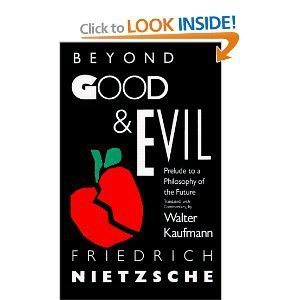
My preferred translation of the book.
[contact-form]


May 6, 2014
Film Noir Roundup
After yesterday’s introductory post, I had a request to do a list of classic films. In partial fulfillment of this request, here’s a film noir roundup I did with my fellow Rogue, Court Haslett at The Rogue Reader. It’s in two parts.
Part I: http://theroguereader.com/2014/01/film-noir-fantasy-draft/.
Part II: http://theroguereader.com/2014/01/film-noir-fantasy-draft-part-ii/.
Enjoy!


May 5, 2014
Philosophy, Film, and Fiction
This blog is dedicated to philosophy, film (with some TV thrown in there), and fiction. In this first post, I’ll talk a bit about the three and give you preview of what’s to come.
1. Philosophy.
As a depressed teenager I was unhappy when I first went to college (I started out studying engineering because I’d been good at math and science in high school). So I dropped out, did the whole rock and roll thing for a while, then re-enrolled at a different college. I happened into a philosophy class and that was a life-changing experience. I felt like I’d found a home, a calling. I finally found people talking about things that mattered and in a serious way. I changed my major immediately, ended up going to grad school, and now I teach the stuff for a living. Imagine getting paid to talk about really interesting ideas. I still marvel at that fact.
But philosophy isn’t what most people think it is. The average person seems to think of philosophy as chucking around opinions about whatever (“my philosophy is…”); or they think of it as old bearded white guys in togas talking about bullshit, stuff that doesn’t matter for anyone’s daily life.
But that’s all wrong. Philosophy is an investigation of the most important issues people face, particularly issues concerning reality, knowledge, and values. These are questions that, if you’re at all reflective, you’ll run up against at some point or another. And they demand answers.
The study of the nature of reality is METAPHYSICS (questions about God, free will, the mind) ; the study of knowledge is EPISTEMOLOGY (issues concerning belief, truth and falsity); and the study of moral values is ETHICS. (More posts to follow about these different areas.)
Philosophy is different from the natural and social sciences because it’s not an empirical investigation (it doesn’t concern observable facts). It concerns non-empirical, abstract issues (knowledge and moral values aren’t concrete; they’re abstract). Just because they’re abstract doesn’t mean they’re not real. Justice, belief, evil, truth are certainly real.
And that doesn’t mean it’s all just a matter of opinion (or just bullshit). Philosophy is reasoned inquiry that operates via arguments. In other words, you have to back up your philosophical claims with good arguments, and the best argument wins the day.
Does anything ever get decided or settled in philosophy? Absolutely! Just as any theory in the natural sciences is always subject to further testing and revision, so any philosophical position or claim is subject to further examination and argumentation. Those positions that stand the test of time and further evaluation are settled (just as it is with any empirical claim that withstands further investigation).
2. Film.
We didn’t do a whole lot of reading in my house when I was a kid. Instead, I grew up on movies. I devoured them. In life pre-cable (yes, I’m that old), the networks used to show movies on Saturday and Sunday afternoons. Sure, they were edited for content and broken up with commercials, but I didn’t care. I got sucked into the stories.
I loved Clint Eastwood’s spaghetti westerns, loved the classic noir films, particularly the ones with Bogart (The Big Sleep was a particular favorite). I loved big epic dramas like Lawrence of Arabia or Bridge on the River Kwai. And, yes, I loved those classic films that cineastes tell us are great, like Citizen Kane. I never missed a chance to watch Casablanca (I still get teary-eyed during the Marseillaise scene).
So it was only natural, I suppose, that I ended up writing a great deal on the philosophy of film.
My first foray into philosophy and film was when I wrote a piece about the symbolism in Pulp Fiction. That was great fun. Afterwards, I got involved writing chapters and editing books for different series in popular culture and philosophy (mostly for my own series). Thus were born my volumes on Woody Allen, film noir, neo-noir, Scorsese, the Coen Brothers, and Spike Lee.
The essays in this area either do a philosophical analysis of some aspects of the film, or use the film as a way to discuss and examine some classic philosophical ideas. E.g., my Woody Allen essay is on the meaning of life in his films, my Coen brothers essay is on Barton Fink and the problem of interpretation, and my Spike Lee essay is on 25th Hour and the issue of justice.
This work has been my academic bread and butter, so to speak, in my professional life.
3. Fiction.
I came to write crime/suspense fiction somewhat accidentally. In grad school in Philly I started working on a screenplay with a buddy of mine. We got together in various pubs, drank a lot of beer, and hammered out a story. It ended up being a mystery/suspense tale, and we came up with a rough outline and some character sketches. My friend left it to me to put the thing into the format of a screenplay, which I didn’t know how to do. So I set it aside for a while, and one summer I broke it out and started developing it as a novel.
It was only then that I started reading in the suspense genre. In that way I ended up discovering the great writers who became my strongest influences: Elmore Leonard, Jim Thompson, Raymond Chandler, James Ellroy, and David Goodis.
It took a lot of time and effort, and abandoned drafts, but I finished that first novel, and I enjoyed the process so much that I started another one right away. I’ve been doing it about fifteen years now, and I’m continually learning new things and developing as a writer.
The connections between philosophy and film should be clear from what I said above. And I’ve become more and more aware that there’s a deep connection between film and suspense writing for me. Since I grew up on movies, my approach to story-telling is very cinematic. I’ve recently come to embrace that approach more explicitly. I’ll post about that soon.
The connection between philosophy and suspense fiction is less obvious. Training in philosophy teaches you to be analytical, which helps a great deal in structuring plots (for example); and it gives you great insight into the central existential questions of humanity, and these are the heart and soul of our stories.
This blog will be about these three passions of mine, plus the occasional foray into bourbon, blues, food and wine.



