Brian Meert's Blog, page 125
March 20, 2018
New Facebook Ad Feature Helps Travel Brands Reach Prospective Travelers
 March 20, 2018
Anna Hubbel
New @facebook ad feature helps #travel brands reach prospective travelers. #digitaladvertising #socialmediamarketing #facebookads
Click To Tweet
Wouldn’t it be great if Facebook ads could convince prospective travelers to travel, to go on an adventure? Sometimes these prospective travelers need a little nudge to convince them to take the leap and book that flight or hotel room. In some cases, they simply need inspiration on where to go for their adventure.
According to Facebook, users often turn to Facebook and Instagram for travel ideas and inspiration, especially millennials, with 68 percent getting ideas for their most recent trip from Facebook and 60 percent from Instagram. To help advertisers reach these individuals, earlier this month Facebook introduced Trip Consideration, a new feature for Dynamic Ads. Trip Consideration allows advertisers to showcase deals and popular destinations to give users that extra push to book.
Currently, Trip Consideration is available to reach users across Facebook, Instagram, and Audience Network. It’s also accessible through Adphorus, Koddi, MakeMeReach, Smartly.io, and StitcherAds, all of which are Facebook marketing partners. Facebook says it will be extending the feature as an objective for building brand later this year.
What Is Trip Consideration?
Unlike Dynamic Ads for Travel, which showcases relevant ads to users already planning to travel, Trip Consideration helps advertisers reach users who are interested in traveling, but who have yet to make plans. It functions as a targeting feature, delivering travel-inspired ads to the right users at the right time.
For example, a bride-to-be may indicate interest in honeymoon spots through browsing activity across various travel-related pages. However, her activity also indicates that she has yet to make a decision on a specific destination. Using Trip Consideration, advertisers can push the bride-to-be to book a flight or a hotel room by showing her ads for flights or hotel promotions to specific honeymoon destinations. Facebook created Trip Consideration to help advertisers reach prospective, indecisive travelers and help them plan their dream adventure.

For advertisers, there are specific benefits to enjoy with the Trip Consideration feature. First, it’s simple to set up. Advertisers don’t need to put together a catalog, as they do with Dynamic Ads for Travel. They just need a static creative. Second, advertisers have creative flexibility: they can choose which creative they want to use. Third, the feature is optimized for intent, meaning ad content is pushed to reach users who have already expressed interest in traveling. Finally, Trip Consideration allows advertisers to enhance their existing audience by combining it with other audience targeting to further refine reach.
According to Facebook, advertisers are finding Trip Consideration to be very useful in their campaigns already.
“Facebook is one of our biggest sources of traffic and is crucial to scaling our efforts without diminishing our effectiveness,” says Nick Schaulsohn, director of marketing at EF Ultimate Break, in a Facebook blog post. “We added trip consideration into our acquisition strategy and used it to drive people with travel intent into our funnel while continuing to leverage Dynamic Ads to drive users to book. The powerful combination of these solutions improved our conversion rate by 49 percent.”
“Our True York City campaign was the first time we tested trip consideration,” says Jason Berman, managing director of brand marketing at NYC & Company, in the same post. “We were extremely impressed with how easy it was to use, but even more so with the results it drove. This new solution enabled us to deliver 61 percent more video views and 58 percent more link clicks, all at a 29 percent more efficient CPC. This has been our best performing strategy to date on Facebook, and we look forward to using trip consideration for future campaigns.”
How to Set Up Trip Consideration for Dynamic Product Ads
Here’s a step-by-step guide on how to set up Trip Consideration for Dynamic Product Ads.
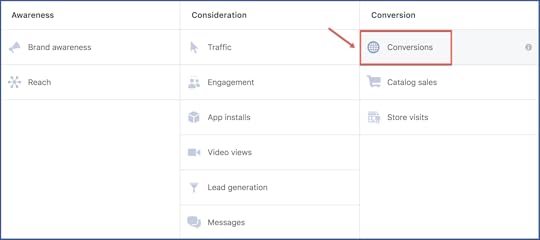
Step 1: Select the conversions objective
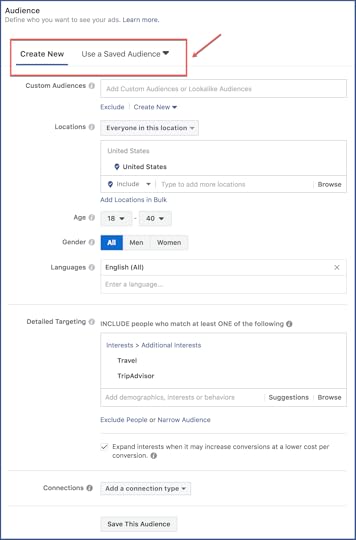
Step 2: Select your audience
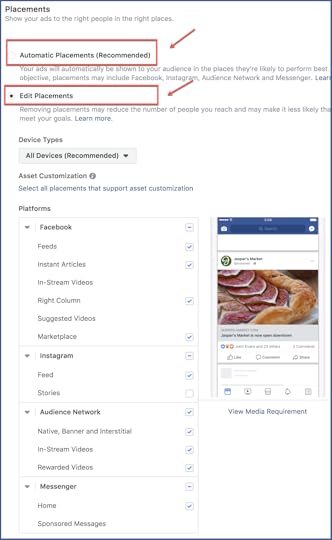
Step 3: Choose your placements
There are two placement options: automatic or manual (“Edit”). With automatic, Facebook chooses the placement. With manual, advertisers can choose which placement they want to use.
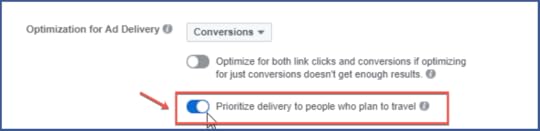
Step 4: Toggle the option “Prioritize delivery to people who plan to travel”
When choosing your budget and schedule, optimize for conversions then toggle the option “Prioritize delivery to people who plan to travel.”
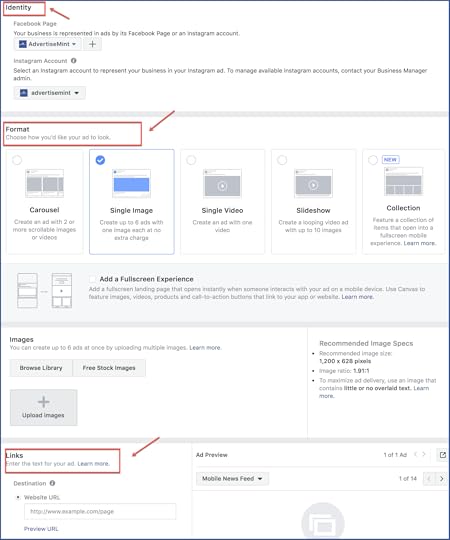
Step 5: Add your identity, format, and links
When choosing media, advertisers should use creatives that showcase top travel deals, popular destinations or inspirational destination, or brand-building creative. After you’re done, submit your ad for review.
Trip Consideration for Dynamic Product Ads Best Practices
According to Facebook, to get the most out of the Trip Consideration feature, advertisers should keep in mind the following best practices.
Target Audience-Set a broad audience because a narrow audience may not deliver the best results. Advertisers should, instead, set their audience size to seven million or more. As a simple rule of thumb, bigger is better in this case.
Optimization-Optimize for search, initiate checkout, or purchase events under the website conversion objective.
Bidding-Begin with autobid to maximize delivery then test other specific bid targets after three days of good performance on the autobid.
Campaign Period-To reach new users expressing intent for travel, set your Trip Consideration campaign to an always-on basis. That way, every time a new user begins expressing interest in travel, advertisers can ensure their ads are delivered to that user from the get-go.
Measuring Success-Measure Trip Consideration success by evaluating the impact on the optimized event. If search events are the optimized event, for example, advertisers should use cost per search and search volume to measure success.
Creative-Advertisers have the opportunity to test various creative formats with the Trip Consideration feature. The options include static image, carousel, single video, or collection. Giving users a taste of what they can experience, photos of beaches, mountain views, or European cities, help nudge them to make that booking.
With Trip Consideration, advertisers can become part of the adventure that a prospective traveler has always dreamed of. Other marketers have already experienced success with the new feature, as it helps refine reach to deliver ads to those individuals as soon as their social media activity reflects an interest in travel.
The post New Facebook Ad Feature Helps Travel Brands Reach Prospective Travelers appeared first on AdvertiseMint.


March 18, 2018
Facebook’s Changes to News Feed Algorithm Increase Ad Costs
 March 18, 2018
Anna Hubbel
Facebook ad costs are increasing, according to @AdStage , and the culprit is Facebook iteself. #socialmedia #facebookads #digitaladvertising
Click To TweetPhoto courtesy of Entrepreneur.com
Digital advertisers everywhere felt a lump in their throats when Facebook announced the changes to its News Feed algorithm two months ago, the change that prioritizes posts by family and friends over those by brands and publishers, that makes organic reach on Facebook just that much harder.
As CEO Mark Zuckerberg predicted, users are spending less time on Facebook as a result of the change. Naturally, less time spent scrolling News Feed means fewer users seeing ads. And consequently, fewer ad impressions means ad costs are going to spike. According to Recode, that’s exactly what’s happening.
Data Shows Decline in Impressions, Spike in Costs
Although it’s still very early on in 2018, data collected by Ad Stage, an official marketing partner of Facebook, found that ad impressions in News Feed were down year over year in January. Although the data also indicates a slight increase in February, the rate was still smaller compared to that of the past months.
As it normally would in the economy of digital advertising, ad costs are going up in response to the decrease in ad impressions. Ad Stage’s data indicates that the cost of a thousand ad impressions (CPMs) was up 122 percent year over year in January and 77 percent in February. Looking back at the last 14 months, Recode says these CPM numbers reflect the two highest year-over-year ad cost jumps. There are a couple of flaws to this data that Facebook is no doubt already considering:
Will advertiser demand remain consistent?
Because it’s still very early, is this data an accurate result of the algorithm change?
Will Advertiser Demand Remain Consistent?
Advertisers have historically been willing to pay top dollar for Facebook ads. However, as new challenges such as the new News Feed algorithm and increased ad restrictions continue to present themselves, Facebook advertising may eventually hit a little bump in the road.
Back in September 2017, for instance, Facebook announced it was removing self-reported targeting in response to discriminatory purposes it was being used for by some advertisers. In January, Facebook announced it was reducing the amount of news sources in News Feed.
Additionally, research is showing that younger users are migrating from Facebook to Snapchat. Advertisers targeting that demographic may not be far behind.
Although there hasn’t been any sign as of yet that advertisers will lose interest in advertising on Facebook as a result of changes like these, it isn’t a possibility that should be disregarded entirely.
Is This Data Really an Accurate Result of the Algorithm Change?
Recode points out that the data presented by Ad Stage only shows trends from over the past two months. It could be that the decline in ad impressions and the spike in ad costs are merely part of an existing trend outside of the influence of the algorithm change, which came into play merely two months ago. It may be a bit longer to determine the actual direct effects the change is having on impressions and cost.
However, as previously mentioned, the demand for Facebook ads does not show signs of a drastic drop anytime soon. In fact, according to Facebook’s fourth quarter earnings report, ad revenue reached $12.97 billion by the end of 2017.
It will be interesting to see what new Facebook advertising patterns emerge as we continue on into 2018.
The post Facebook’s Changes to News Feed Algorithm Increase Ad Costs appeared first on AdvertiseMint.
March 17, 2018
What Is Amazon Advertising?
 March 17, 2018
Jennifer Storch
What is Amazon advertising? How do you advertise on Amazon? Your questions answered here. #amazonadvertising #digitalmarketing #ecommerce
Click To Tweet
Amazon.com, known most commonly as, simply, Amazon, routinely sets unprecedented heights for the e-commerce industry. An estimated 54 percent of online shoppers go directly to Amazon to purchase products. Amazon began as a humble online bookstore. Today, it’s the single largest e-commerce website in the world, a veritable source of potential customers for advertisers. How can you get a piece of Amazon’s large audience? Two words: Amazon advertising.
Amazon Advertising in a Nutshell
Although Amazon is mainly an e-commerce site where merchants sell, Amazon also allows advertisers to serve ads to its website. The ads appear within product searches, as banner ads, or as suggested products.
When advertising on Amazon, you only pay for your ad after a customer clicks on your product. Views are free. Once shoppers click to see more, you’re officially charged for your ads. This system enables thousands of people to see your product while you only pay for those who directly express an interest. How much you pay, however, is up to you. Amazon ads are auction-based, which means you decide the maximum amount you’re willing to pay for each click. The more you’re willing to pay, the more likely Amazon will display your ads.
What Are the Benefits of Amazon Advertising?
As an advertising platform, Amazon delivers the holy grail of marketing: massive traffic. Business owners who advertise on Amazon enjoy direct access to an immense number of people. If you’re on Amazon, your product displays for a lot of eyes to see. This online window shopping lead to clicks, and these clicks lead to sales.
Not only does Amazon deliver massive traffic to your websites and views to your products, but it also delivers customers who are more likely to convert. Customers on Amazon have high purchase intent: they visit Amazon with a product in mind that they want to buy. Because they have high purchase intent, because they are already at the bottom of the marketing funnel, it is easier to convince them to buy. Here are the other benefits of Amazon advertising.
You can sell more during the holiday season: Customers buy billions of items on Amazon during the holiday season.
You have access to millions of customers: 144 million customers find, discover, and purchase new products across all devices on Amazon.
How Does Amazon Advertising Work?
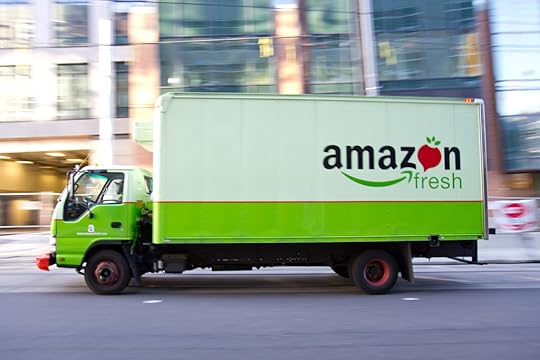
Everything from gardening tools to groceries, clothes to computers, even cars and houses are available for sale on Amazon. What does this mean for your ads? Your ads can appear in a large variety of placements among these products, including the context of complementary or competitive products and a buyer’s purchasing history.
When buyers search for a product, your product can appear alongside your competitor’s, enticing them to purchase your product instead. This marketing strategy instantaneously reminds customers of other options on the table. If shoppers search for a product similar to yours, your ad appears to remind them that your product might complement their purchase. For example, Joe Smith shops for a digital camera, and your SD card displays on his screen automatically.
This complementary product matching can give customers more options by introducing your product. Cross-selling is typically the work of a sales rep in a brick-and-mortar store. On Amazon, your ads automatically appear to shoppers when relevant. The customers simply decide if they want to buy.
Types of Amazon Ads
Amazon offers a variety of ads to fit your marketing strategy. Here are a few things to keep in mind about Amazon ads.
All advertisement packages are cost per click and based on an auction model.
You choose the highest price you’re willing to pay for each click.
The higher the price, the more likely your ad will appear.
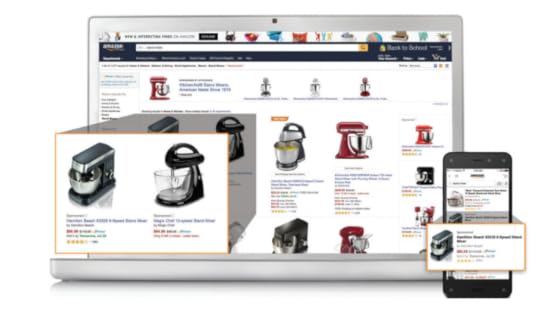
Sponsored Products: These ads appear around or within search results and on product detail pages. Because these ads are keyword targeted, you can choose the keywords yourself or let Amazon automatically target your ad with suggested search terms.
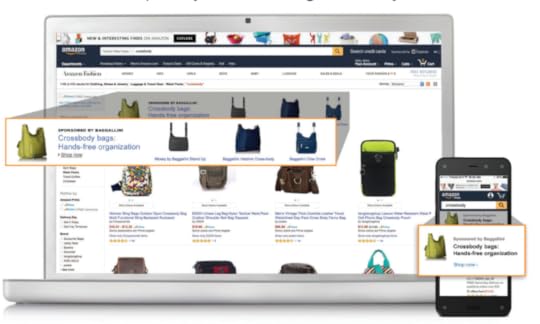
Headline Search Ads: These ads also appear within search results, an area of high visibility, perfect for promoting brand awareness.With this type of ad, you can create a custom headline and logo and target keywords. When customers click on your ad copy, the ad will direct them to a customized page that showcases a collection of your products.
Product Display Ads: These ads appear in merchandising emails and on product detail pages towards the end of the shopping experience when the customers review their order. With this type of ad, you can target customers based on their interest in certain products and categories. You can choose which products these ads will appear alongside of, including your own products for up- or cross-selling and a competitor’s products to offer an alternative.
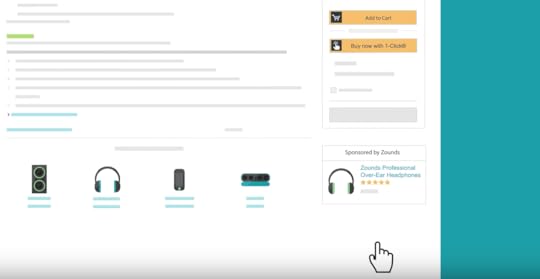
The algorithms that determine ad placement rely on more than just the customers’ current shopping experience. Amazon tracks buyers’ history to offer additional products they may be interested in. The customers receive options based on specific previous preferences.
This individualized advertising experience sets Amazon apart from other social media advertising platforms. Amazon, as the middleman, expertly arranges your products in front of the people are oh-so-willing to buy.
What Do You Need to Advertise on Amazon?
To advertise on Amazon, you first need to set up a seller or vendor account. You can sell as a professional or as an individual, depending on the number of items you plan to sell each month. Your products will appear on countless desktops, phones, and tablets all around the world. Here are the ways you can sell on Amazon.
If you’re a novelist or an app creator, Amazon can strategically release your brand new product into the digital universe. Check out Amazon Marketing Services and Web Services.
Amazon Advantage is a consignment program. Amazon will operate all of your product sales for a 55-percent fee. You can source your product to Amazon, and it does all the rest. Amazon will order your product from you and then pay you when it’s shipped to Amazon customers.
Amazon Stores offers you a complete on-site Amazon web page to highlight your products and brand. You design the page, tailor-made to your own unique style and seamlessly integrated with the entire Amazon platform.
The Amazon Associate Program is a bit of the reverse. You advertise Amazon products on your separate business website. When your viewers click on the Amazon products, you receive payment for the clicks. You’re generating traffic from your website for Amazon products.
No matter how big your business gets, with Amazon, you’ll always have the manpower to keep growing. You ship your products to an Amazon warehouse (no need for your own storage space), and they’ll distribute it for you. Amazon also takes care of your customer service in case of shipping errors or returns.
What if you don’t sell products that fit into Amazon’s categories? No problem. Off-platform advertising is available for products and services that aren’t sold on Amazon. Amazon’s audience will still see your ads, and clicks will be immediately directed to your off-platform business website. With off-platform advertising, your ads will pop up in the right places and grow your business with the benefits of Amazon’s marketing expertise.
Proven Success: The Burt’s Bees Story

Burt’s Bees is a prime example of the transformative power of Amazon advertising. As an established brand, Burt’s Bees sought to enhance its customer base by improving its online marketability.
It was instrumental that Burt’s Bees marketed directly to customers who had an existing interest in their niche product line. By using Amazon’s advanced marketing techniques, Burt’s Bees discovered that 68 percent of their current e-store customer base was shopping on Amazon.
By identifying the shopping habits of current customers, Burt’s Bees extrapolated those habits to target other Amazon shoppers with similar purchasing histories. When Burt’s Bees began marketing to Amazon shoppers based on the preferences of their current customers, they quadrupled their ROI.
The advanced capabilities of Amazon leads to constant research and development in the marketing industry. When advertising with Amazon, you know you’re in good hands (and the biggest according to their market share of e-commerce).
Regardless of the size and structure of your business, you can propel your advertising strategy by aligning with the irrefutable progress of Amazon. As Amazon continues to revolutionize the retail industry, your business can flourish in the fast-paced development of new marketing techniques.
In the new age of advertising, stay in the spotlight with Amazon advertising.
Jennifer Storch is a freelance writer and editor-in-chief of Free Lances, Ltd.
The post What Is Amazon Advertising? appeared first on AdvertiseMint.
March 16, 2018
How to Get Your Posts at the Top of Instagram’s Feed
 March 15, 2018
Anna Hubbel
Learn how to beat #instagram 's algorithm. #socialmedia #contentmarketing #hacks
Click To Tweet
You post and post on Instagram, hoping that the frequency of your posts will increase the chances of your content appearing in your followers’ feeds. You schedule posts to publish often, and you’re feeling on top of your game.
I have some sad news for you: you can post as often as you like and still not appear in your followers’ feeds if you’re not posting the right type of content. Why? Because Instagram’s new algorithm no longer works chronologically. Relevance is the new driving factor.
How Does Instagram’s Algorithm Work?
Instagram’s new algorithm displays content in feeds that is relevant and meaningful to the individual user. This wasn’t always the case, however. Previously, before 2016, Instagram’s algorithm ordered posts chronologically in feeds; it did not prioritize content based on relevance. With the old algorithm, the frequency of your posts did matter because the algorithm functioned as a first come, first served system.
Instagram found a flaw in this chronological system, however: users were missing the posts that they cared about because incoming, chronological posts were pushing them lower and lower in feeds. To solve this issue, Instagram altered its algorithm to prioritize posts that are considered more relevant and meaningful to each individual user based on previous activity and engagement with certain types of content. For example, if you have a history of liking posts by your mom, Instagram will show content published by your mom in your feed over posts by a distant friend with whom you rarely interact, even if that distant friend published a post prior to the time your mom published hers.
But what specific information does Instagram’s new algorithm consider when prioritizing content in users’ feeds? It all comes down to these four factors:
Number of Engagement on Posts (likes, shares, and comments)
Relationship with the Instagram User
Time of Post
Profile Searches
By understanding these four factors, you are well on your way to moving up on Instagram’s feed.
Number of Engagement on Posts (Likes, Shares, and Comments)
If quality pushes your content up in feeds, you may think that you simply need to polish your content. Well, it’s a little more complex than that. Engagement plays a big role in what Instagram’s algorithm considers relevant for users.
Say you post a photo. Instagram will first show it to a small percentage of your followers. Then Instagram looks at specific engagement activity, such as likes, shares, and comments, that your photo receives, as well as how quickly people engaged with it. Next, Instagram compares your photo’s engagement performance with that of posts you published previously at similar days and times. For example, it will look at a photo you shared at 5 p.m. on Saturday and compare its engagement performance with a previous photo you also shared at 5 p.m. on a Saturday.
The more engagement your photo has, the higher it will appear in the feeds, the more exposure it gets, and the longer it will stay on the top of users’ feeds. In contrast, if your photo receives little to no engagement, it will drop to the bottom of feeds, if it’s even shown at all.
 Posts with high engagement appear higher in feeds.
Relationship with the Instagram User
Instagram places such importance on engagement, including shares, because it strongly indicates the relationship between you and your followers. Instagram’s new algorithm shows users posts by those they care about, those with whom they often interact with. The more a follower engages with your content, the stronger Instagram perceives the relationship between the two of you. If you want to appear higher in users’ feeds, you want to focus on establishing relationships with your followers.
Time of Post
Yes, the new algorithm is no longer chronological, but that’s not to say it’s going to display weeks-old posts at the top of feeds simply because it identifies a strong relationship between you and a follower. The new algorithm still considers the time the content was posted, but it only does so for users with strong relationships and high engagement.
Once a relationship is established, you want to focus on when you post, concentrating on times when your followers are online. Just as you would in any interpersonal relationship, you want to give users the time of day needed to foster the relationship.
Profile Searches
When a follower searches for your profile, Instagram sees that action as an interest in your account because the follower is intentionally seeking posts from you. Instagram then concludes that your content is relevant to that follower and will consider displaying your posts higher up in that follower’s feed.
 Users can search for profiles using Instagram’s search engine
How to Get Your Posts at the Top of Instagram’s Feed
Now that you know how Instagram’s algorithm works, it’s time to use the information to push your posts higher in your followers’ feed. Here’s a breakdown of how to do that.
Gain more engagement: Post photos relevant to your followers and photos that are visually appealing. You want your photos to catch followers’ attention and cause them to pause mid scroll. To do this, you want an image that looks great and bears some meaning to your followers. For example, if your account is dedicated to cats, you may want to post photos and videos of cats.
 Instagrammers should post content relevant to their accounts. Cats of Instagram does this well.
Learn from the best: If you are struggling to create new posts that generate high engagement, look back at previous posts that performed well. Replicate the most popular posts, using Instagram Insights to identify them.
Post when your followers are online: Post at times when the majority of your most engaging followers are online. If you do not know when that is, try Squarelovin, which can help identify peak times of your followers’ activity.
Post on Instagram Stories: Users enjoy viewing spontaneous and personable Stories, and Instagram takes engagement on Stories into consideration when determining relevant relationships.
Humanize your brand: Post content that feels less like an advertisement and more like an opportunity to socialize and connect. Using the cat account example again, instead of creating a post that says “Buy new cat toys today,” you would likely get a better response saying “Nala is enjoying her cat toy,” with a photo of a gray tabby cat playing with her toy.
With all this in mind, maybe now posting Instagram content for your business or brand will feel less like you’re fighting a losing battle. Maybe now you will coast along with high engagement, stronger relationships, and an overall meaningful connection with your audience.
The post How to Get Your Posts at the Top of Instagram’s Feed appeared first on AdvertiseMint.
March 15, 2018
10 Hacks to Make Your Facebook Video Go Viral
 March 15, 2018
Kaila Yu
10 #hacks to make your #facebook video go viral. #socialmedia #socialmediahacks #videomarketing
Click To Tweet
Video marketing is an important marketing strategy that no business owner can ignore in 2018. Facebook is one of the top social media platforms for video: Tech Crunch reported that 100 million hours of Facebook videos are watched on a daily basis, and this number keeps increasing.
Getting a video to go viral on Facebook is a marketer’s dream, but how do you stand out from the crowd? Video production takes a significant investment in time, so it is crucial that you optimize your video and campaign.
Here is an infographic that breaks down the 10 hacks to make your Facebook video go viral.

This infographic originally appeared in nohatdigital.com.
The post 10 Hacks to Make Your Facebook Video Go Viral appeared first on AdvertiseMint.
March 14, 2018
Instagram Voice and Video Calling May Be on the Horizon
 March 14, 2018
Anna Hubbel
@Instagram #Voice & #VideoCalling may be on the horizon. #unreleasedproducts #instagramphone
Click To Tweet
It appears Instagram wants to be more than just a camera app. Files hidden within the Instagram app and Android Application Packages (APKs) for Instagram Direct reveal code for calling and video call capabilities.
Tech Crunch explained that this uncovered code indicates features that have yet to be released, as APKs often contain files of features the company intends to eventually launch.
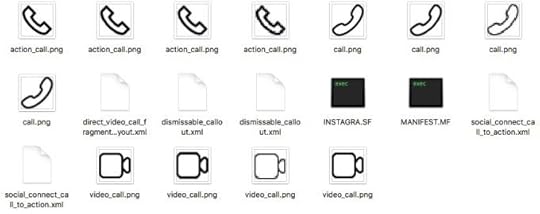 APK files showing calling and video calling functionalities for Instagram. Photo Courtesy of Tech Crunch
Allegedly, the company is currently not commenting on inquiries to confirm or deny the existence of the uncovered code. However, it’s quite clear that “Call” and “Video Call” features are on the horizon.
But why haven’t these features been released sooner? Especially since Snapchat already has a video call feature?
The reasoning isn’t certain, but perhaps it has to do with Instagram making augmented reality and Stories features more of a priority. After all, those are the features making Snapchat a worthy competitor.
Additionally, Facebook’s Messenger app already offers users the video calling feature. Perhaps Facebook felt safe leaving calls in the hands of Messenger while Instagram handled augmented reality and photos for the time being.
Although Instagram is beloved primarily for its prominently visual elements, putting everything into one platform—including phone calls—could be laying the way for an all-Instagram phone experience.
The post Instagram Voice and Video Calling May Be on the Horizon appeared first on AdvertiseMint.
March 13, 2018
Snapchat’s Product Updates for App Ads Include Deeplinks and More Granular Reporting
 March 13, 2018
Anna Hubbel
Getting users to download your app, much less make an app purchase, takes a lot of tries, re-tries, and patience. Last month, Snapchat introduced app ad product updates to help you attract new users, re-engage with existing ones, and reap the benefits of in-depth performance measurements to see how your campaign is doing. Specifically, Snapchat rolled out Deeplinks and increased granular measurement for Ads Manager.
@Snapchat's latest product updates for #AppAds Include #Deeplinks & more #GranularReporting. #SnapchatAdvertising #appinstalls
Click To Tweet
Re-Engaging through Deeplinks
Deeplink attachments allow you to include links in your app ads that, when swiped up by the user, transfers them to a specific place (that you’ve specified) within the app. So with users who’ve already downloaded your app, you are re-engaging and giving them more reason to explore parts of the app you want them to see. For example, if your app is a game and the user has played up to a certain level, a deeplink could direct them to the start of the next level. If you are a retailer and users added a few things to their cart within your app but haven’t made the purchase yet, a deeplink could direct them to the point of purchase.
For users who have yet to download the app, they are prompted to download your app before they can be directed to the location of the deeplink.
Deeplinks offer better app install targeting, which will overall help you improve your Snapchat campaign.
More Granular Measurement
Ads Manager now allows you to track post-install activity for users who’ve downloaded your app through Snapchat. Whether it’s purchases, level achievements, or sign-ups, you can track any event or behavior relevant to your campaign goals with these improved metrics for app ads.
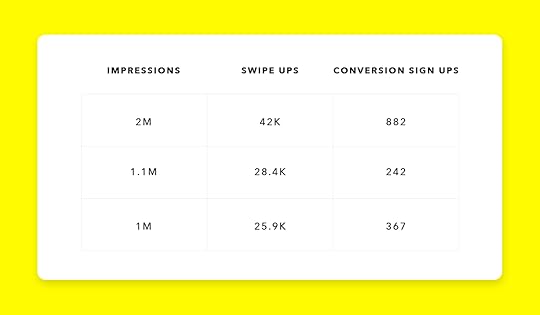 Photo Courtesy of Snapchat
Additionally, for improved insights on the ways Snap Ads help drive downloads for your app, Snap introduced better flexibility for attribution windows. For instance, to gather information about users’ views of your ad, you have attribution options between one hour and 28 days. To gather information about swipe-ups on your ad, you have an attribution window range from one to 28 days.
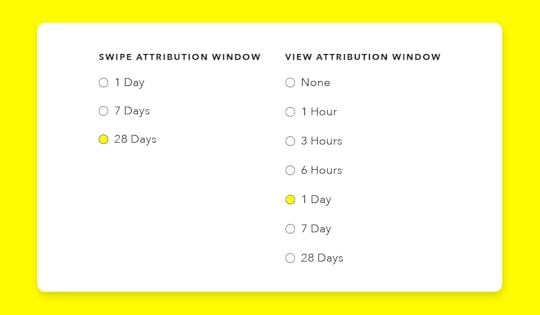 Photo Courtesy of Snapchat
“Today’s update marks an important step in our efforts to make Snapchat the best place for app developers and marketers to advertise,” Team Snapchat said in the update announcement last month. Developers and marketers aren’t the only priority on Snapchat’s list, however. The company recently offered free ads to small business startups to earn their business as well.
The post Snapchat’s Product Updates for App Ads Include Deeplinks and More Granular Reporting appeared first on AdvertiseMint.
March 11, 2018
Snapchat Is Copying Instagram’s Hands-Free Mode in a Secret Test
 March 12, 2018
Anna Hubbel
@Snapchat is copying @Instagram's #HandsFree mode in a secret test. #productupdates
Click To Tweet
Snapchat is breaking barriers hands-free (well, not literally). According to Mashable, the social app is secretly testing a hands-free mode for the latest Snapchat beta app (version 10.27.0.18). The mode allows users to record a maximum of 60 seconds of video hands-free.
The mode is activated by pressing the record button and swiping downward. The hands-free mode lasts up to one minute.
 Photo Courtesy of Mashable
The hands-free mode is not included in Snapchat’s app notes for beta users. However, when a user starts to record a video, the prompt “Drag down to go hands-free” appears above the record button.
Although an uncharacteristic feature of Snapchat, an app typically associated with a short, one-time-then-gone mentality across its features, hands-free is a convenience that users have wanted for a while. This functionality simply makes sense as the next progressive step for Snapchat, especially since big-time competitor Instagram Stories already offers such a capability.
Full-Body AR Camera
On top of the secret hands-free test, Snapchat also snuck in an update to its World Lens feature on the official version of the app (10.26.1.0). Specifically, a full-body AR camera that allows users to virtually attach Snapchat animations to real-life objects, such as a human body. Mashable demonstrated the feature using a storm cloud to follow a moving person.
This latest update indicates Snapchat’s continued dedication to augmented reality as its niche.
Little tweaks and improvements such as these may help users forgive Snapchat for its redesigned interface. Users have been somewhat miffed at the app for the new changes, but Snapchat continues to carry on. It is also unlikely that the updated interface will negatively affect Snapchat’s overall appeal to younger users, as the app continues to win in its popularity across younger demographics.
The post Snapchat Is Copying Instagram’s Hands-Free Mode in a Secret Test appeared first on AdvertiseMint.
Twitter’s New Bookmarks Feature Allows Users to Save Tweets
 March 11, 2018
Anna Hubbel
@Twitter's new #Bookmarks feature allows users to save #tweets. #twitterchanges #saveforlater
Click To Tweet
Ever have that one tweet you find interesting or noteworthy, but you don’t necessarily want to let everyone else know by liking it? According to The Verge, Twitter recently rolled out its Bookmarks feature, which allows you to do just that: bookmark tweets you want to revisit later.
What makes this feature different from simply liking a tweet is that it doesn’t notify the tweet’s composer that you’ve saved it. Your followers can’t see that you’ve saved it either.
Three ways to share a tweet are now located in one place. Simply click the icon to the right of the like icon. You then have three options: to share the tweet in a Direct Message, share it outside of Twitter, or bookmark it for later.
To access your saved bookmarks, navigate to the main slide-out menu in your profile.
The Bookmarks feature, according to The Verge, is a product that Twitter has been testing in response to users’ requests for a way to save tweets for later.
You can now access the new feature on the Twitter platform across Android, iOS, Twitter Lite, and the network’s mobile site.
Twitter also listened to the voices of its users when it increased its character limit for tweets.
The post Twitter’s New Bookmarks Feature Allows Users to Save Tweets appeared first on AdvertiseMint.
March 10, 2018
Study Reveals That Marketers Plan to Invest More in Influencers
 March 10, 2018
Anna Hubbel
Study reveals that marketers plan to invest more in #influencers. #2018campaigns #influencermarketing
Click To Tweet
They don’t call them influencers for nothing. Marketing firm WhoSay recently conducted a study that revealed the influence this market is having on advertisers.
According to Emarketer, the study found that 70 percent of US agency and brand marketers plan to increase their investment in influencer marketing in 2018. Additionally, 89 percent of the participating marketers indicated a belief that influencers primarily have a positive impact on consumers in regards to their brand. But can influencer marketing be measured? According to 82 percent of the respondents, the answer is yes.
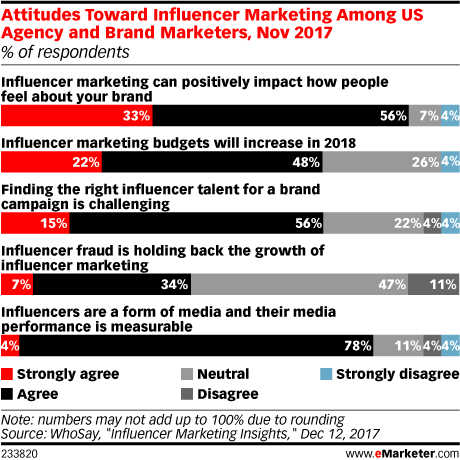 Photo Courtesy of Emarketer
Measurability of Influencer Marketing
According to Emarketer, marketers primarily measure the effectiveness of influencers in their campaigns through press coverage. Specifically, press mentions, as a September 2017 Celebrity Intelligence poll indicated.
The poll revealed that 62 percent of respondents said they used press coverage to measure influencer success, whereas 59 percent said they used generated web traffic; 54 percent used generated revenue; 51 percent used online mentions; and 46 percent used the number of times content is shared.
Emarketer explained that revenue generated came out lower than press coverage and web traffic because it is challenging to measure revenue that specifically comes from influencer campaigns.
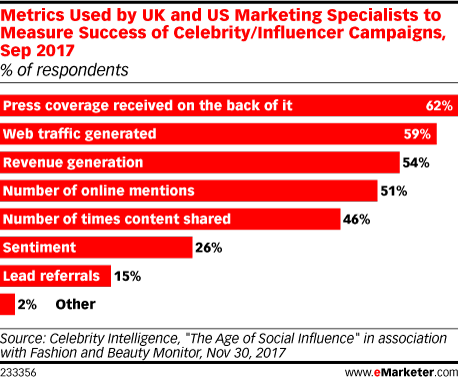 Photo Courtesy of EMarketer
Finding the Right Influencer
Although the potential for success with influencer campaigns is very promising, there is still the issue of finding the right influencers to work with. Whether it’s finding the best match or getting influencers to agree to work with a brand, it can be difficult to get an influencer campaign up and running.
But it appears that brands and agencies are willing to put in the effort to make it happen.
The post Study Reveals That Marketers Plan to Invest More in Influencers appeared first on AdvertiseMint.