Savannah Jane McCrary's Blog, page 5
August 16, 2021
"I Never Walked Alone": The Story of Hans Poley, Hero of the WWII Dutch Resistance
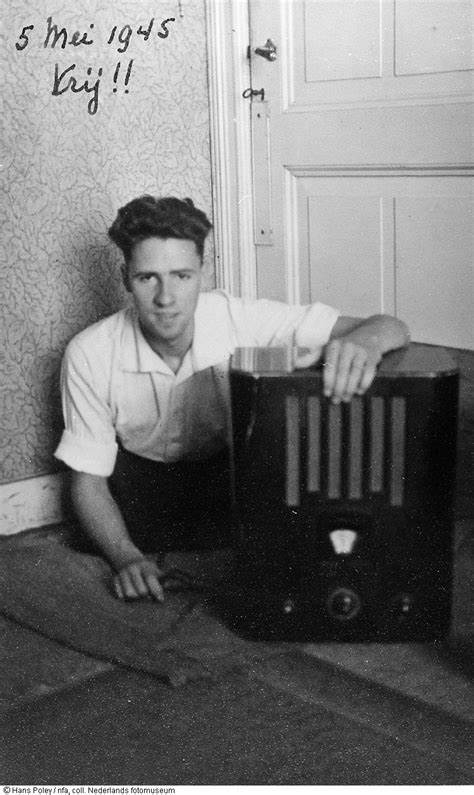
Hans Poley was an eighteen-year-old student at Delft Technological University in the Netherlands in early 1943 when an announcement came that all who wanted to continue their studies must sign a declaration of loyalty to the Nazi regime. Those who didn’t sign were to report for deportation to a labor camp in Germany.
A spirit of resistance against their Nazi persecutors was strong among the Dutch students. Their land was occupied by foreign invaders. “Voor Joden Verboden” (“Jews Forbidden”) signs guarded public places like the Nazi soldiers who seemed to be everywhere. Jews and dissenting voices mysteriously vanished. Rumors--which turned out to be true--had it that they were sent to death camps.
The razzia was an ever-looming threat for the young men of Holland. At anytime, the Nazis could burst in, seize them, and force them to work for Germany. And raids were carried out on universities. These were mass deportations of dissenting professors and students to labor--slave, really--in Germany. Life in the Netherlands now consisted of rations and shortages and blackouts and curfews.
And now this order to declare allegiance to the Nazi regime.
Yes, the spirit of resistance was strong among the young people of Holland. Only fifteen percent of the students signed the declaration.
Hans had already been on the move for a few months when the announcement came because of how the Gestapo had been harassing students.
While staying with relatives, Hans had met and fallen in love with a girl named Mies. They were convinced they were meant to be together and the threat of Hans’ arrest made no difference. For Hans had been reading and thinking and had made his decision. In his words,
“...the war against national socialism was not just a battle with arms; it was an ideological, a religious battle, and I could not sign the declaration.”
May 1943, at eighteen years old, Hans was an outlaw.
His parents supported his decision and looked for a place for him to hide. Mrs. Poley soon found the perfect answer. Hans could stay with her friends the ten Booms at their home in Haarlem.
Hans was not quite as enthusiastic at first about living with an old man and two middle-aged spinsters. But as he said, beggars can’t be choosers, and he was grateful for a place to hide.
Hans was the first of many to be sheltered by the ten Boom family, in their house, the Beje. He soon grew to love and respect “Opa” (Grandfather) and his two daughters, Betsie and Corrie, whom Hans called “Tante (Aunt) Bep” and “Tante Kees.”
Several more “guests” came to the house, and Hans became good friends with many of them, especially a Jewish man whom they dubbed “Eusi.” When Eusi’s wife gave birth, Eusi asked Hans to go and see her and their baby son, since he could not. Hans wasn’t enthusiastic, but Tante Bep and a Jewish woman staying at the Beje convinced him. So Hans, laden with flowers, was admitted into a large room with about a dozen young mothers, and fulfilled his duty to Eusi.
A secret room was built, an alarm system installed, and Hans and the other guests practiced disappearing as quickly as possible, in case of a Gestapo raid.
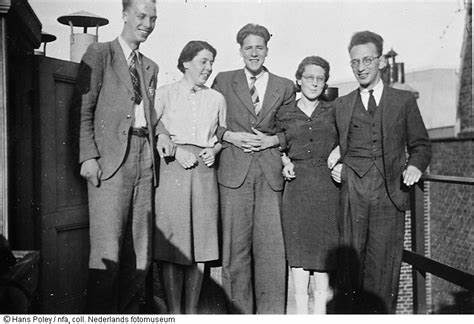 Hans (in the middle) and other guests at the ten Boom home
As time passed, the ten Booms became more involved in underground work--and so did Hans. At first, he simply delivered messages, ran errands, and the like for Tante Kees. But soon he became more and more involved in armed Resistance work. Owning a gun was punished with immediate death in Nazi-occupied Holland. When he wasn’t using his, Hans kept it hidden behind the books on a bookshelf at his room in his parents’ house.
Other members of the ten Boom family were also involved in the Resistance including Kik ten Boom, Peter van Woerden, and Peter’s sister Aty’s fiancée, Piet Hartog.
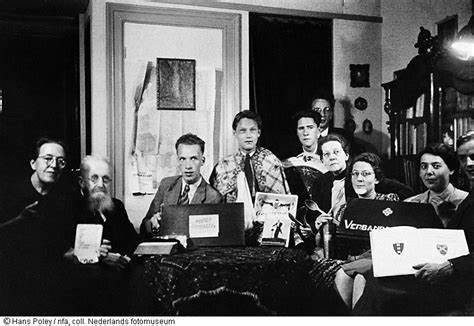 The ten Booms and their guests
Going out was dangerous, and once Hans dressed like a girl to avoid seizure. Eventually he obtained false identity papers which identified him as a 24-year-old assistant minister in the Dutch Reformed church. This made him less liable to being deported. He grew a small moustache to match his pretended age better.
One morning in February 1944, Hans was woken early by Tante Kees with the news that he had an important errand to go on. The Gestapo were looking for a Mr. Van Rijn and would arrest him--unless Hans could warn him first. They prayed for safety, and Hans boarded a train first to Amsterdam and then to Soest.
He asked for directions at the station from two men in light raincoats and headed to the house, where he hastily explained the danger to Van Rijn and his wife. Mrs. Van Rijn cried and protested, but thankfully Mr. Van Rijn believed Hans and the two quickly agreed on a cover story. Then Hans left.
Mission accomplished, he thought. Now I need to get away. But as he started down the drive, he saw the two men in light raincoats, and his heart sank.
“Hold it right there! Gestapo!”
They didn’t believe Hans’ cover story and in a few moments, Hans and Mr. Van Rijn were searched and handcuffed. To make matters worse, Mrs. Van Rijn told the Gestapo that Hans had come to warn them.
Hans was dragged to a train and questioned on the journey back to Haarlem. He told them nothing.
By the time he was locked in a cell at the Haarlem police station, he was desperate. What should he tell the Gestapo? He couldn’t involve the ten Booms. But how was he to keep them from searching his house and finding his gun?
Later that afternoon, Hans was taken to a spacious room in the Gestapo headquarters and handcuffed to the central heating. They would have checked his identity papers, but it was Saturday, and that couldn’t be done until Monday.
A bit later, he was cuffed to a chair, and the interrogation began. At first, Hans said nothing. He had a story ready, but he wanted to wait as long as possible.
Then they switched on a strong light and adjusted it so that it shone directly in his face. The barrage of questions and threats continued, harsher now. Hans was tired and hungry, and now he was terrified. The urge to yield was strong.
After a few hours, Hans finally made a show of breaking down and begged them to stop. Bit by bit, he related the story he had concocted. He even had a name to give them: Evert van Leyenhorst. Evert had been killed last December.
At last, they switched off the light.
“You do know that we’re now going to your home to verify your story?” one of the interrogators asked.
Hans nodded. He was again handcuffed to the central heating. And so began what he would later call “the darkest hours of my life.” He was certain his home would be ransacked and his story proven false. They would find his gun which meant immediate death by firing squad.
His family, his friends, his fiancée were all gone. All that remained was his faith.
He prayed hard while he waited for the Gestapo to return. Hours passed in which Hans fluctuated between peace and panic.
Late in the evening, the Gestapo returned and so did Hans’ fear. What had happened? Were his parents already in prison?
“You probably already know what we found,” one said. “And you also know what that means for you.”
This is it, Hans thought and prayed desperately for courage.
The Nazi opened his briefcase and threw some items on the table between them. A few underground papers and a boy scout knife.
Hans could hardly believe it. Yes, he’d be going to prison or concentration camp. But they hadn’t found his gun!
Later Hans learned that out of the twenty-four shelves on his bookcase, the Gestapo threw the books off twenty-one of them. One of the only three untouched shelves held his gun.
After a few days of agonizing solitary confinement, Hans was taken outside and ordered into a truck. That road would lead him to concentration camp. Decades later, Hans wrote,
“I would be beaten, kicked, and abused, but I would never walk alone. God never left me.”
Meanwhile, the ten Booms had been betrayed, and the Gestapo raided the Beje. Opa, Tante Bep, and Tante Kees, along with some of their friends and family members were arrested.
But the Nazis didn’t find the secret room. Two underground workers and several Jews, including Eusi, huddled inside while the Gestapo beat and banged on the floors and walls. Then all became silent. They remained in the cramped little space for three days while the house was kept under guard until it was miraculously arranged for two friendly policemen to be put on guard who helped them get out and get to safety.
Opa soon died in prison. Tante Bep and Tante Kees were eventually taken to a notorious women’s extermination camp. Betsie (Tante Bep) died there. After months of suffering, Corrie (Tante Kees) was providentially released through a “clerical error.” (For more about Corrie read this blog post and this one.)
Hans was interrogated again and spent some time in another prison before being transferred to Amersfoort concentration camp. He endured six months of cruelty, hunger, sickness, and humiliation at that camp.
Among the never-ending suffering, Hans would later remember one particularly bright spot. As he and the other prisoners stood motionless during roll call, suddenly the sweet song of a caroling lark swept over them. To the weary prisoners, it was a symbol of liberation and light.
Hans was promoted to barracks administrator and later deputy camp administrator and he sought to use his position to help the other prisoners.
One day while at the administration office, Hans saw a paper with a list of prisoners to be deported to Germany. Among the list of names and numbers was: Poley, number 9238.
Hans hurried to tell one of the camp doctors who was a friend. “Report to sick-parade for doctor’s check tomorrow morning,” the doctor said with a smile.
The next morning, the doctor gave him the diagnosis of tuberculosis. He wouldn’t be welcome in Germany with that disease.
A few weeks later, on August 15th, Hans received another list of prisoners, this time ones to be released. Through clouded eyes, Hans stared at his name: Poley, number 9238. The next day, he walked out of the gates of the concentration camp, free. Later, he would learn that many of his camp friends were deported to Germany only to die of deprivation.
Hans had a jubilant reunion with his parents and Mies and later with Tante Kees. He was home, but the war wasn’t over yet. Resistance work continued. Many friends were killed, including Piet Hartog. Before being shot by firing squad without even a trial, Piet sent a letter to his friends testifying of his faith in Christ and how he was grateful for the opportunity to share the hope of Jesus with his fellow prisoners.
Once, the Gestapo searched Hans’ home. Hans hid under the living room floor through a hidden hatch. The Nazis beat and questioned his father, but his performance of a weak and frightened old man was convincing, and they left. Hans’ father was really a leader in the Resistance.
Then finally came what Hans called “the sweetest May in our history.” Liberation. The war came to an end.
For those who had suffered under the Nazi occupation in Holland, it was a struggle to adjust to normal life. The lying and stealing they had done to survive and save others had to stop.
Other Christians told Hans he needed to forgive the Germans collectively, something Hans termed “well-meant nonsense.” He said the Bible taught that forgiveness was from individual to individual and only after repentance. Hans did feel hatred for Germans as a whole, but he knew that hate doesn’t heal, and he slowly learned to walk the path of reconciliation with Christ’s help. It wasn’t easy, and decades later, Hans still cringed at the color combination of black and red. But he was healing.
Hans and Mies were married and had two sons and a daughter. Hans finished his degree in physics at Delft Technological Institute and later received his Ph. D. He worked as a physicist until his retirement and was awarded the Dutch Memorial Cross for his role in the Resistance.
Hans and Eusi remained friends and returned to visit the hiding place with Corrie in 1974.
After a full life of serving the Lord, Hans Poley died in 2003.
Source: Return to the Hiding Place by Hans Poley
P. S. I also highly recommend the movie Return to the Hiding Place about Hans Poley, the ten Booms, Piet Hartog, and other members of the Dutch Resistance. It’s amazing! I plan to write a review of it soon, but for now, you can read the Dove Review here and the MovieGuide review here.


July 17, 2021
Unbroken: Path to Redemption Movie Review

Nicknamed Louie, Louis Zamperini and his family were Italian immigrants living in sunny Torrance, California. An incorrigible troublemaker as a kid, Louie was a magnet for getting into mischief. Serious mischief.
That changed when he began to run. Discovering an outstanding ability, he broke records and even ran in the 1936 Berlin Olympics.
When World War II broke out, he became a bombardier and while out on a mission, his plane crashed in the Pacific. Louie spent 47 days on a raft before being captured by the Japanese. He endured horrible tortures at the hands of brutal guards, but his spirit remained unbroken.
At the war’s end, he was liberated, returned home, and was reunited with his family. That’s where the movie Unbroken: Path to Redemption begins, though a series of newspaper clippings shown at the beginning of the movie gives us a recap of previous events.
I think it’s an excellent movie, and here’s why. (Note: this review contains spoilers!)
It’s a movie about the power of the gospel.
Though he was free and back home with his family, Louie realized his struggles were far from over. Every night, his sleep was haunted with terrifying nightmares of his time as a prisoner of war and most of all, of one particularly cruel guard called the Bird. Louie turned to alcohol in an attempt to find relief.
There were moments of happiness. He married Cynthia and they had a daughter who was Louie’s pride and joy. But the more he tried to find relief in drinking, things only got worse. He was running out of money, and his life was a mess. The movie powerfully portrays both the happy times with his family and the darkness and despair he experienced.
When he was on the raft, Louie had told God, “If You’ll save me, I will serve You forever.” He’d tried to forget that promise, though. Convinced that God was to blame for his troubles, Louie ran from the only One who could save him, instead drinking and making plans to kill the Japanese guard who had so cruelly abused him.
Louie’s life completely and utterly changed when he gave his life to Christ. I’ll refrain from giving too many particulars so as not to completely spoil it if you’re not familiar with the story. But at its core, this is a movie about how Christ changes a life. Where once there was darkness, now there is light. Hate was replaced with forgiveness, despair with hope.
“Therefore, if anyone is in Christ, he is a new creation; old things have passed away; behold, all things have become new.”
2 Corinthians 5:17
It also includes some other great themes.
Besides the theme of the transforming power of the gospel, one of the other great themes I enjoyed in this movie is the love of family. We see Louie’s parents and siblings’ love and loyalty in the movie. And we especially see his brother Pete’s love for Louie. He’s not afraid to tell Louie the truth and what he knows is best for him even when he doesn’t want to hear it, and is there for him through his struggles. We also see a great example of real love in Louie’s wife Cynthia. After giving her life to Christ, Cynthia sticks by Louie, but she won’t just let him continue down his destructive path. She prays for him, speaks truth to him, and urges him to attend the evangelistic meetings that changed her life.
It’s kept close to the true story.
While a few details are changed or added, the overall story is kept very close to the true story. And that’s part of what I think makes this movie so powerful--it really happened.
Final Thoughts
I’d highly recommend this movie, however there are a few content warnings you should be aware of. Louie’s nightmares are a bit, well, scary. Louie and Cynthia kiss a few times (both before and after they’re married), there are a couple of scenes where we see girls in two-piece bathing suits (1940s style), and one or two instances of someone using a mild swear word. And of course we see Louie get drunk, although it’s clearly portrayed as a bad thing and after his conversion we see Louie pour the alcohol down the drain.
Even though there are a few things I would have left out or handled a bit differently, I still give this movie 5 out of 5 stars for a powerful portrayal of the true story of how Louis Zamperini’s life was transformed by the gospel of Christ.
May 27, 2021
In the Footsteps of Sarah Raymond Herndon

In the spring of 1865, twenty-four-year-old Sarah Raymond left war-torn Missouri with her mother and two younger brothers to head west with a wagon train. They didn’t know where they would end up. Perhaps Oregon or California.
Across the plains of Nebraska, through Wyoming and Idaho, they traveled. Enduring hardships of many kinds, including unfriendly weather, hot-tempered travelers, rough terrain, and sickness, they pressed on.
Finally settling in Virginia City, Montana, Sarah married a builder and miner named James Herndon. They went on to have five children and spent the rest of their lives in the west they loved.
Over 150 years later, I traveled through Montana with my mother and siblings. We had a Chevy suburban instead of a covered wagon, and paved highways instead of rugged trails. But the Montana we saw was the same Montana Sarah Raymond saw. The Montana of breathtaking, snow-capped mountain peaks, vast blue sky, dazzling sun, and forests, mountains, and plains teeming with wildlife--elk, moose, bison, deer, pronghorn, grizzlies, bald eagles, and a plethora of other creatures.
Like Sarah Raymond and her family, we had left Missouri to head west. We first settled in Colorado, then took a brief sojourn in Georgia, before heading west again. That was when we drove through Montana and found the place we would call home.
To those who are settled comfortably somewhere, it may be hard to understand why someone would want to pack up and head to a strange place where, even though it’s beautiful, it has its own set of hardships, including loads of snow (sometimes even in June).
Sarah Raymond pondered this same question. She wrote: “The motive does not seem to justify the inconvenience, the anxiety, the suspense that must be endured. Yet how would the great West be peopled if it were not so? God knows best. It is, without doubt, this spirit of restlessness, and unsatisfied longing, or ambition--if you please--which is implanted in our nature by an all-wise Creator that has peopled the whole earth.”
I hadn’t thought about it that way before. But I think she’s right. The Bible tells us that God has a plan for people to spread throughout the whole earth, living and glorifying Him in every corner of the planet. Perhaps this desire in us to go west is part of God’s way of fulfilling His plan for humanity.
It may be difficult to put into words, but there is something about the west, and for us Montanans, there’s especially something about Montana, that draws us.
Source: Days on the Road: Crossing the Plains in 1865 (The Diary of Sarah Raymond Herndon)
April 21, 2021
4 Lessons from the Life of Corrie ten Boom

Curfew was at 8:00. It was 7:55 when Corrie ten Boom heard a knock at the little alley door of her family’s home. She hurried to the door and opened it.
A woman carrying a suitcase stood in the dusky street. Even though it was a warm spring day, she wore a fur coat, gloves, and thick veil.
“Can I come in?” she asked in a shrill, frightened voice.
“Of course,” said Corrie.
After a furtive glance over her shoulder, the woman stepped inside. “I’m a Jew,” she explained. “My name is Kleermaker.”
Taking Mrs. Kleermaker upstairs where her father and older sister Betsie sat at the dining room table, Corrie introduced their guest.
“I was just about to make some tea!” Betsie cried, jumping up.
And over cups of hot water flavored slightly with reused tea leaves, the woman told her story. Her husband had been arrested, her son had gone into hiding, and the political police who worked for the Nazis had ordered her to close the family clothing store. She was afraid to return home, and she had nowhere else to go.
Mrs. Kleermaker was only one of many who would find shelter during the horrors of the Holocaust in the unusual old house where Corrie ten Boom lived with her father and sister in Haarlem, Holland.
Holland was an occupied country. When Corrie walked around town, Nazi soldiers were everywhere. Systematic persecution of the Jews was happening right in front of her eyes, and she had family members and friends already engaged in underground work. While she did not know nearly the full extent of what went on in the concentration camps, she knew that those who helped the Jews, or resisted the Nazis in any way, could expect to suffer greatly.
Corrie and Betsie, both middle-aged spinsters, and their elderly father may not have seemed the most likely candidates to be involved in underground resistance work. But their love for God and others motivated them to open their doors and help anyone in need.
Every time I read or listen to Corrie’s testimony, I am incredibly inspired. I’ve assembled four lessons from her life here, and I hope they’re a blessing to you.

The lesson for us? Start at home. Start right where you are. In one of Jesus’ parables, He says, “you were faithful over a few things, I will make you ruler over many things,” (Matthew 25:21). Later in life, Corrie traveled the world telling her story. But she had that story to tell because she had been faithful in the little things. We must be faithful with the few things God has set before us now and trust His plans for our future ministry, no matter how large or small it may seem to us.
2. God will give you the strength you need, when you need it. When Corrie was a little girl, she went with her mother and sister Nollie to visit a family whose baby had died. After touching the ice-cold fingers of the dead baby, Corrie was terrified. If that baby could die, so could Father, Mama, or her siblings! When her father came to tell her good night, Corrie sobbed out her fears.
Her father asked her, “When you and I go to Amsterdam--when do I give you your ticket?”
“Why, just before we get on the train,” Corrie sniffed.
“Exactly,” said Father. “And our wise Father in heaven knows when we’re going to need things, too. Don’t run out ahead of him, Corrie. When the time comes that some of us will have to die, you will look into your heart and find the strength you need--just in time.”
Again and again throughout her life, Corrie remembered Father’s train ticket. She lost her mother to sickness, later she lost her father in prison, then her older sister Betsie died in a Nazi concentration camp. She endured hardships she could never have imagined going through. Yet, despite the grief she experienced, God gave her strength, just when she needed it.
3. God is sovereign. After being in Ravensbruck, the notorious women’s extermination camp in Germany, for what must have felt like ages, Corrie was released. After an adventurous and difficult journey, she made it back to Holland. She basked in the bliss of a hot bath, good food, a clean bed, and the kind care of the nurses at a hospital before being reunited with her remaining family and returning to her old home.
Later, she learned that all this had happened through a “mistake.” Shortly after her release, every other woman her age in the camp had been killed. A clerical error had caused Corrie to instead be set free.
But Corrie knew it was no mistake. As Betsie had said, “There are no ‘ifs’ in God’s kingdom.”
This was just one of many times that Corrie witnessed the miraculous sovereignty of God in her life. Other times included a bottle of vitamin drops that never ran out until they obtained more, and concentration camp guards who thoroughly searched the prisoners in front and behind, but didn’t touch Corrie, allowing her to bring her precious Bible into the camp.
4. Tell what God has done in your life. Before Betsie’s death, she shared with Corrie her dream of opening homes that would be places of healing for those hurt by the war. “We must tell them,” she said, “that there is no pit so deep that He is not deeper still.”
After her return to the Netherlands, Corrie fulfilled Betsie’s dream. She started with opening a home. Then she began to travel and tell the story of what she had experienced and learned.
She published several books and continued to share what God had done in her life until her death at the age of ninety-one in 1983. And even today, millions of people are still being encouraged and inspired by her testimony.
Well, there you have it! I’ve only shared a few of the many lessons we can learn from Corrie’s life. If you haven’t read her book The Hiding Place, you need to.
And always remember, “He who calls you is faithful, who also will do it,” (1 Thessalonians 5:24).
All for Him,
Savannah Jane
P. S. Drawing at the beginning of this post done by yours truly. :)
March 17, 2021
The True Story of St. Patrick

Happy Saint Patrick’s Day, everyone! Today, I’d like to share with you the true story of how this holiday got started. Hint: It’s about a man who became known as Saint Patrick. And, even though there are legends and myths surrounding this holiday, the true story is about a man who followed Jesus Christ.
Britain, 389 A.D.Patrick was born in Britain to loving parents, both who became Christians due to the influence of Roman Christians who had come to the island. Britain was under Roman control at this time. In fact, the Romans controlled much of Europe. However, they could not conquer Ireland. Fierce warriors known as Celts were in control of Ireland and not even the powerful Roman army was a match for these fighters. Often, these Celts would make raids on Britain, taking booty and captives. When Patrick was about fifteen, they made a raid on his home village and took captives, including Patrick.
Patrick was taken to Ireland and sold as a slave. He endured the hard life of a slave for six years. But God took what was meant for evil and used it for good. It was during those years of slavery that Patrick became a Christian. Even though his parents had taught him about God and prayed for him, he had never truly come to know Christ himself until now. Patrick began to pray, sometimes as many as one hundred times a day. One day, he believed God told him it was time to go back to Britain and a ship was waiting for him. So Patrick made his escape, travelling one hundred miles to the coast where he found a ship and was able to gain passage in exchange for caring for the wolfhounds on the ship. However, the ship was not headed for Britain, but Gaul, which is modern day France. After spending two years at a monastery in France, Patrick finally made it back to Britain and was reunited with his parents.
He hadn’t been there long, though, when he had a dream. In his dream, the people of Ireland were asking him to come back and teach them about his God. As time passed, Patrick became more and more certain that God was calling him to go back to Ireland as a missionary. He spent several years training and preparing for missionary work and waiting for God’s timing to return.
At last, he was on a ship headed for Ireland again. But this time he was going, not as a slave, but as a missionary, bringing the message of Jesus Christ to the people of Ireland. Many of the Druids (the superstitious pagans of Ireland) did not like him coming. But Patrick pressed on, enduring many difficulties, yet always preaching the gospel, speaking out against the evils of slavery, and the Druid practice of child sacrifice. God used him mightily to impact many people for the kingdom of God. He never left his beloved Ireland, finally dying there on March 17, 461, which is why we celebrate Saint Patrick’s Day on March 17. His life is an example to all of us of following Jesus Christ, no matter the cost.
Sources:
Saint Patrick: Pioneer Missionary to Ireland by Michael J. McHugh
Great Christian Classics Volume 1 (Patrick's Confessions)
February 24, 2021
5 Tips for Writing About Dark Times in History

“The people who walked in darkness
Have seen a great light;
Those who dwelt in the land of the shadow of death,
Upon them a light has shined.”
Isaiah 9:2
I’m now working on writing my third book set in first-century Rome when the early church was severely persecuted under Emperor Nero. There’s no doubt this was a very dark period in history. This was when the Christians were killed in some of the most horrific methods imaginable for entertainment.
And I’ve written dozens of blog posts and shorter pieces about the early church, World War II, the transatlantic slave trade, and other dark times in history.
So why do I write about these dark periods in history? It’s not because I think things like persecution, the Holocaust, and slavery are good, because I certainly don’t. It’s not just because I like the drama these settings create for stories (although I confess I do).
There is a much more important reason. I have noticed that it is in the darkest times that the light shines the brightest. Maybe that sounds cliche, but it’s true. It is in times of danger, suffering, and risk, that hope, courage, and sacrificial love gleam the most brilliantly. I don’t write about dark times in history merely for the sake of writing about darkness. I write to point my readers to the light.
Jesus said, “I am the light of the world. He who follows Me shall not walk in darkness, but have the light of life,” (John 8:12). He is the light that has shined upon us who once dwelt in darkness. Ephesians says, “Walk as children of light,” (5:8) and “have no fellowship with the unfruitful works of darkness, but rather expose them,” (5:11). So when we write about dark periods in history and darkness in general, our goal should be to expose it, to show that it is bad, contrast it with the light, and share the infinite treasure of hope we have as followers of Christ, no matter what trials befall us or how dark the world around us.
Here are five tips I have learned through my writing journey, and I hope they’ll be beneficial to you as well!
Don’t sugarcoat evil and suffering. Suffering and evil are real, and we shouldn’t deny that or try to make things sound as though they really weren’t so bad when they truly were. The Bible contains plenty of examples of writing about evil and suffering.
That being said, this doesn’t mean you need to share every detail. I mentioned that the Bible contains plenty of examples of darkness. It includes graphic details at times, too. However, I’m sure there are a lot of details it doesn’t mention. And a big difference I see between the way the Bible records events opposed to how many novels do, is that the Bible usually just states the facts. Novels give you the characters’ emotions and use your senses to try to transport you into the scene. This can be a good thing. I enjoy good, vivid descriptions. But when we’re writing about sin and evil, we must be careful. An article I read recently made a good point: we must be careful that the way we expose a sin does not become a sin in itself. Of course, people will have varying levels of what they’re comfortable reading about, and how much description you give will vary depending on your target audience. When I first planned my first-century Rome trilogy, I intended to write it for older teens and adults. But then I realized I wanted it to be a book parents could read aloud to their children. So I cut back on the detail a bit. It’s still violent at times, but I my goal was to write in a way appropriate for children.
Focus on the good guys. The Bible is our example again here. Yes, write about the villains in history. But make your focus be on the good guys. No, not perfect people, but those who were seeking to do right and honor God, whether they be real people from the past or characters you create for your historical fiction. And those who have dramatic redemption stories, too, like Paul, the zealous persecutor of the church who was transformed into one of the boldest, most faithful Christians this world has seen. Or John Newton, the hardened slave trader turned pastor, abolitionist, and hymn writer. This doesn’t mean you can’t ever write anything from the perspective of a bad guy. The Bible does include examples of telling what the villains are thinking. But focus on the heroes.
Research, but don’t immerse yourself too much. Do read extensively about your time period. But don’t read exclusively about it. Read about other times in history. Throw in some good nonfiction on Christian living. Maybe read a little poetry, too. Or try an allegory. Don’t become too obsessed with one time period. It’s easy (at least for me) to let a passion turn into an obsession. So do read lots about the time period you’re writing about. But read other things, too.
And most importantly, always, always, always communicate hope. I saved the best one for last. Please, please end your stories, whether they be an entirely true narrative or historical fiction, with hope. I don’t mean you should only write ones that have a fairy tale ending. I actually like reading about martyrs. But even when you end with a tragedy, give hope. For us as Christians, death is simply the doorway to Heaven. As Dietrich Bonhoeffer said shortly before he was executed at the age of thirty-nine, “This is the end. For me, the beginning of life.” Or to quote the Apostle Paul, “To live is Christ, and to die is gain,” (Philippians 1:21). Communicate that to your readers. And show the good that comes out of tragedies. Even something as terrible as the unjust execution of a faithful follower of Christ can lead to great good. Often the death of one Christian will lead many to Christ. As an early church father said, “The blood of the martyrs is the seed of the church.” Then there are other cases, such as the soldier who is slain in battle and the side he fought for still loses the war, or the child who dies from disease, where we cannot see any good that came out of that. But we can still trust God that He has a purpose we cannot see. We know that He is sovereign, wise, and loving, and we live by faith, not by sight. That’s the hope we want to give our readers.
So go, write about times of persecution and poverty, suffering and slavery, warfare and want, disease and danger, enemies and evil. But don’t make that your focus. Zoom in on courage and character, hope and heroism, faith and friendship, love and light, peace and patience, joy and justice, grace and goodness, redemption and reconciliation, family and forgiveness, bravery and beauty, perseverance and purity, trust and truth.
And always remember, “He who calls you is faithful, who also will do it,” (1 Thessalonians 5:24).
All for Him,
Savannah Jane
January 30, 2021
Paul, Apostle of Christ Movie Review

I’d heard very good things about this movie, so I was expecting it to be good. I was not disappointed. Paul: Apostle of Christ is a very good movie. It’s made by the creators of Risen (which is also a good movie; read my review of it here), and takes place during the last imprisonment of the Apostle Paul with some flashbacks of his earlier life. The movie depicts Luke coming to Rome to find Paul and write the book of Acts.
Here are some things I liked about it:It's true to ScriptureThere are fictional elements added to the story, but the parts that are taken from the Bible line up with the Bible. Also, the characters, especially Paul, speak Scripture all through the movie and it seems very natural and not forced. It’s really great to see a movie with so much Scripture in it.
You see the early Christians stand strong in persecutionThe year is A.D. 67, during the reign of the Emperor Nero, shortly after the great fire of Rome, when Christians were persecuted, I mean, really persecuted. Christians were used as human torches, torn apart by wild animals in the arena to the amusement of the crowds, flogged, imprisoned, and suffered many other cruelties. This movie shows some of that, so some parts of it are hard to watch. I thought they did a good job, though, of showing you enough so that you see what it was really like, but not showing too much. (It is rated PG-13, though. I suggest reading the Answers in Genesis and PluggedIn reviews for a fuller description of what all it shows before watching it.) Anyway, you’ll see the early Christians standing strong in persecution, knowing that Jesus had promised it would come and promised He would be with them through it.
It's also a very well made movieTo me, the costumes are a very important part of a historical movie. I understand that new Christian filmmakers often don’t have a lot of money for really good costumes, but when they do, I think that’s great. The costumes, also the acting, the setting, really everything was excellent in this movie.
Final thoughts I’d give Paul: Apostle of Christ 5 out of 5 stars for a movie that’s excellent in every way.
It wasn’t perfect, of course. I’ve yet to see a movie that is. For example, (spoiler alert) at one point, Aquila plans to leave Rome, while his wife Priscilla plans to stay. I had a hard time imagining the real Aquila and Priscilla agreeing to that. But in the end, Priscilla acknowledges that they are stronger together and they leave Rome together.
After watching the movie, I wanted the unshakable faith in Christ those early Christians had. It also made me want to go back and read the book of Acts and Paul's letters in the New Testament again. In closing, I highly recommend this movie.What about you? Have you seen Paul: Apostle of Christ yet? What did you think of it?
Well, always remember, “He who calls you is faithful, who also will do it,” (1 Th. 5:24).
All for Him,
Savannah Jane P. S. I originally published my review of this movie on my old blog, Written on Your Heart. This movie is so good, though, that I wanted to share my review of it here on my new blog, too!
December 21, 2020
The World War 1 Christmas Truce

It was 1914. A deadly war, which later became known as World War I, was raging. For 600 miles, from the English Channel to Switzerland was a zig-zagging line of trenches. In these filthy, putrid, muddy trenches, soldiers not only faced enemy gunfire, but disease, lice, rats, fleas, and homesickness.
Sometimes they were ordered over the top and it was kill and be killed in “no-man’s-land.” Other times they languished in the foul trenches for weeks or even months.
But during this bleak time, Christmas came. On Christmas Eve of 1914, a group of German soldiers put up little Christmas trees and began singing carols. Allied soldiers in the opposite trench heard it, and once the Germans had finished, began singing “The First Noel.” The Germans clapped and began another.
An Allied soldier said,
“And so it went on. First the Germans would sing one of their carols and then we would sing one of ours, until when we started up ‘O Come All Ye Faithful’ the Germans immediately joined in singing the same hymn to the Latin words ‘Adeste Fideles.’ And I thought, well, this was really a most extraordinary thing--two nations both singing the same carol in the middle of a war.”
And that was how it began--a most extraordinary Christmas celebration, a truce held in the midst of a war for no other reason than to celebrate Christmas. When Christmas morning dawned, instead of the staccato of machine gun fire and the rumbling of artillery, there was quiet. Signs were posted, reading “Merry Christmas” and “YOU NO FIGHT, WE NO FIGHT.” Instead of soldiers crossing no-man’s-land to fight each other, they tossed gifts across. And then the men themselves emerged to shake hands with their enemies, exchange gifts, and show each other pictures of their loved ones. Some started a game of soccer. A group of Irish soldiers even posed for a picture with their German enemies. In some places the truce lasted for days. In others it lasted only hours. Sooner or later, though, everyone returned to their trenches, and the war started back up. But it had been a brief glimpse of peace. There were those who had refused to participate (Including a young corporal named Adolf Hitler. But that’s another story.) Yet for those who did participate it was a momentary pause taken in this dark and broken world to celebrate how the Son of God came to save us from our sins and give us peace with God. And one day, wars and suffering will end for good.
“God will wipe away every tear from their eyes; there shall be no more death, nor sorrow, nor crying. There shall be no more pain, for the former things have passed away.” Revelation 21:4
Until then, let’s rejoice in the hope of Christ! Merry Christmas!
All for Him,
Savannah Jane
Sources:
The Mystery of History Volume IV by Linda Lacour Hobar
The Handel’s Messiah Family Advent Reader by Donna W. Payne and Fran Lenzo
December 4, 2020
The Nativity Story Movie Review
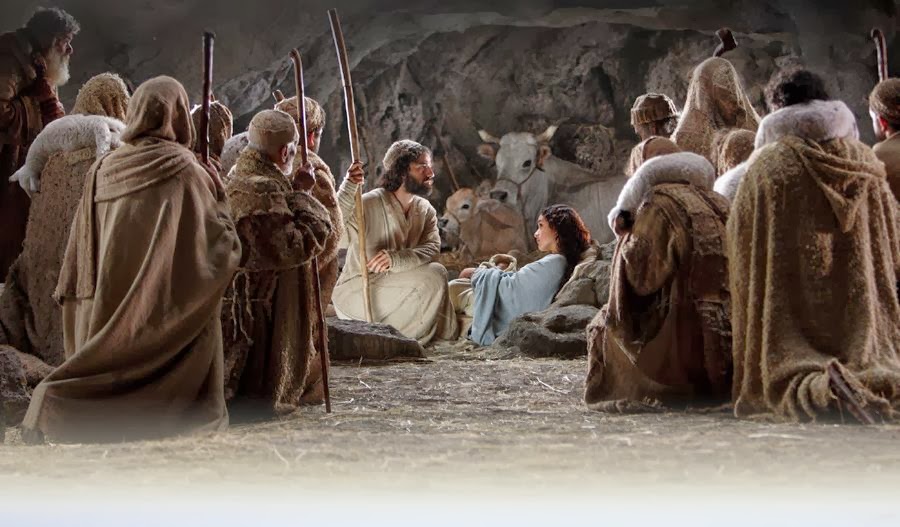
Without a doubt, my favorite Christmas movie is The Nativity Story. It’s a movie that beautifully captures the wonder of the Nativity.
The costumes and settings are wonderfully done, really bringing you back to turbulent first-century Judea. And the music--I love the music! The score is beautiful, and there are lovely renditions of “O Come, O Come, Emmanuel,” “Silent Night,” and other Christmas songs.
I like how it portrays Mary, Joseph, and the other characters who played a part in the birth of Christ. They were people who loved God and were seeking to serve Him, yet they were sinful human beings who needed a Savior just like the rest of us.
Keep in mind that it is Biblical fiction; there is artistic license taken. We don’t know how Mary felt at first about being betrothed to Joseph or what the wise men’s names and personalities were. And the wise men probably didn’t arrive on the night of Jesus’ birth. But for the most part, the story stays consistent with Scripture.
Most importantly, it communicates that Jesus is truly the promised Messiah, the One who came to save His people from their sins. The prophecies of the Messiah to come are talked of throughout the movie. Joseph relates to Mary how the angel told him He would be called Jesus because He will save His people from their sins. And Mary tells a shepherd, “He is for all mankind.”
It shows the sinful and broken world He was born into, including the unpleasant, but important, part of the story when Herod has the baby boys in Bethlehem slaughtered in an attempt to kill Jesus. We also see examples of how the Jews suffer under Roman rule--executions, high taxes, someone’s daughter being sold to be able to pay those taxes, and other glimpses of poverty and oppression. It was in the midst of that darkness that the true light of the world came to save us from our worst problem--sin, and give us the hope of eternal life with Him.
Overall, I highly recommend The Nativity Story as a beautiful portrayal of when “the Word became flesh and dwelt among us,” (John 1:14).
But don’t just watch the movie! Read the accounts in the Bible of the birth of Christ: Matthew 1-2 and Luke 1-2. Read in John 1:1-18 the beautiful words about how the eternal God became man. Read in the first chapters of Genesis about Creation and the Fall, and how God had a plan for redemption even then. Read the prophecies that Jesus fulfilled such as Micah 5:2, Isaiah 9:6, and Isaiah 53. And read the accounts of His death and resurrection in Matthew 26-28, Mark 14-16, Luke 22-24, and John 18-21. Remember how He came humbly in a manger, suffered, and died, for you. And have a Merry Christmas!
All for Him,
Savannah Jane
November 9, 2020
The Story of Blandina

Blandina coughed and gasped for air. The prison was suffocating.
It was the second century A. D. In the last decades, the gospel had spread throughout the Roman Empire. And as the gospel spread, so did persecution.
The Roman Emperor Marcus Aurelius had ordered Christians to be rounded up and killed in the most horrific methods. Slave and free, male and female, old and young--all were arrested and thrown into prison.
In the city of Lyons in the Roman province of Gaul, Blandina, a young slave woman, was imprisoned with several other believers awaiting death in the Roman arena. The lack of fresh air and foul stench made for a stifling experience. Some of the Christians even suffocated in the prison.
Blandina’s mistress was a Christian, and it may have been through her that Blandina first learned of Christ. Blandina had never been physically strong, and her mistress, who was imprisoned with her, feared she would not be able to stand fast.
But when soldiers led her away to be tortured, Blandina displayed a strength not her own. The soldiers took it in shifts to subject her to dreadful tortures, urging her to curse Christ and confess the wicked deeds done by the “godless,” as they termed the Christians. Blandina refused to deny Christ or accuse her brothers and sisters in the faith, saying, “I am a Christian. Among us no evil is done.” Eventually, the soldiers gave up. They could hardly believe she was still alive after all the tortures inflicted on her.
The day came when the Christians were to be killed in the arena. Blandina was hung on a post, intended to be eaten by wild animals. But the beasts refused to touch her, and as she hung there crying out to God in prayer, her faith and courage inspired the other Christians facing death.
The others perished, but Blandina was hauled back to prison. A few days later, she was again in the arena with a Christian boy of fifteen named Ponticus. Blandina urged him to stand firm. After facing the lash and the wild animals, Ponticus lay dead. Blandina, though her body was bruised, bloodied, and broken, yet lived.
An eyewitness said that she looked as if she were invited to a wedding feast rather than thrown to the wild beasts. Her face was radiant.
Blandina was wrapped in a net and tossed about by a raging bull before she finally died. Those watching said they had never seen a woman suffer so greatly and for so long.
The bodies of Blandina and the other Christians were left in the streets for six days before being burned to ashes and cast into the Rhone River. Their fellow believers were not allowed to give them a proper burial. The Romans said it was their hope in the resurrection that gave them such courage, and they were attempting to take away that hope.
What they didn’t know was that the hope of eternal life with Christ is a hope that no one can take away.
“Therefore, having been justified by faith, we have peace with God through our Lord Jesus Christ, through whom we also have access by faith into this grace in which we stand, and rejoice in hope of the glory of God. And not only that, but we glory in tribulations, knowing that tribulation produces perseverance; and perseverance, character; and character, hope.
Now hope does not disappoint, because the love of God has been poured out in our hearts
by the Holy Spirit who was given to us.”
Romans 5:1-5
Sources:
Trial and Triumph by Richard M. Hannula
Ten Girls Who Didn’t Give In by Irene Howat