Savannah Jane McCrary's Blog, page 4
November 10, 2022
A Lesson from the ten Boom Sisters in Being Thankful
We ought to give thanks for all fortune: if it is "good," because it is good, if "bad" because it works in us patience, humility, and the contempt of this world and the hope of our eternal country.- C. S. Lewis
Hi friends! With Thanksgiving being almost upon us, I wanted to share with you some thoughts on being thankful. I was thinking of Betsie and Corrie ten Boom giving thanks in a horrible Nazi concentration camp during World War II. Here's the story:The ten Boom sisters had just arrived at a new camp and realized the overcrowded barracks were also swarming with fleas. Corrie wondered how they could live in such a place, but her older sister, Betsie, said God had already given them the answer. She told Corrie to read the passage from the Bible they'd read that morning. Corrie went to First Thessalonians chapter five. When she came to verses sixteen through eighteen, "Rejoice always, pray constantly, give thanks in all circumstances; for this is the will of God in Christ Jesus--", Betsie exclaimed, "That's it, Corrie! That's His answer! 'Give thanks in all circumstances!' We can start right now to thank God for every single thing about this new barracks!"
 Barracks at Ravensbruck concentration camp,
 where Betsie and Corrie ten Boom were imprisoned. "Such as?" Corrie asked.
"Such as being assigned here together," Betsie said, and Corrie agreed. They went on to thank God that they had been able to keep their Bible, that there were so many people there who would be able to hear God's Word, and then Betsie gave thanks for the fleas.
The fleas! Corrie thought. "Betsie," she said, "there's no way even God can make me grateful for a flea."
"'Give thanks in all circumstances,'" Betsie quoted, "It doesn't say 'in pleasant circumstances.' Fleas are part of this place where God has put us."
So they gave thanks for the fleas. But Corrie felt sure that this time Betsie was wrong.
Time passed, the days filled with hard work and cruel guards, but every evening the women in their barracks would gather round to hear the Word. They were grateful they were able to read the Bible, but they wondered why the guards didn't stop them.
Then, one day, Betsie learned why. It was because of the fleas! The guards refused to enter that barracks because they knew it was infested with fleas. God had a purpose, even for those horrible fleas.
 Betsie and Corrie ten Boom with their father (seated between them on the couch)
and Jews and other refugees they sheltered in their home. Wow! If they could give thanks in such terrible conditions, I thank we ought to be able to be thankful, too. The Apostle Paul, who wrote those verses in First Thessalonians, was beaten, flogged, stoned, imprisoned, and finally died a martyr's death. Yet he was still able to give thanks.
Sometimes, our eyes are so fixed on the difficulties, the hard things, in our lives, that we can't see anything to be grateful for. But when we fix our eyes on Jesus, and then look at all the good things He's given us, we can give thanks. My life is so full of good things: loving family, good friends, a warm house, delicious food, leaves arrayed in their fall colors... and I'm sure you have much you can give thanks for, too. And even if it seems there is absolutely nothing else to be thankful for, we've been given the best gift ever: Jesus Christ who died and rose again to save us from our sins and give us eternal life with Him. Nothing will ever take that away, and we can always give thanks for that. And, like C. S. Lewis said in the quote at the beginning of this post, we can give thanks in hard times because it draws us closer to the Lord and helps us look forward to Heaven.
Well, friends, have a happy Thanksgiving and always remember, "He who calls you is faithful, who also will do it," (1 Thessalonians 5:24).
All for Him,
Savannah JaneSource:The Hiding Place by Corrie ten Boom with John and Elizabeth Sherrill Note: This post was originally published on my old blog (writtenonyourheart.weebly.com) in November of 2018.


August 31, 2022
Best Historical Movies I Watched for the First Time Last School Year

I greatly enjoy a good historical movie, and I thought today I'd share with you my favorites that I watched for the first time last school year.
Top 3 Historical Dramas 1. Bonhoeffer: Agent of Grace
A friend recommended this movie to me, and my whole family enjoyed watching it. It's about (you guessed it!) Dietrich Bonhoeffer. With excellent quality and a very authentic feel, it tells the story of Bonhoeffer's decision to leave the safety of America and return to his homeland in Germany and how he became involved in the conspiracy to overthrow Hitler. His faith in God and His Word is clearly portrayed as being his motivation and his relationships with his family and fiancé, Maria, are also portrayed well. I was pleased they kept it so close to the real story.
Read the MovieGuide review of it here.

2. A Hidden LifeAnother movie based on the life of a real person who lived during World War II, A Hidden Life is about Franz Jagerstatter, an Austrian farmer who, when called up to fight in the German army, refused to swear allegiance to Hitler and paid the ultimate price for it. Although it's sad, I thought it was a beautiful movie about doing what you believe to be right in God's eyes even if no one sees, no one understands, it makes no seeable difference, and it costs you everything. The scenery (mostly Austrian mountains and countryside) and the costumes are lovely. And regardless of whether you would have done exactly the same in Franz's place, there are many spiritual lessons to take away from this movie--both from Franz and from his wife, Fani. I personally came away freshly inspired to pray and to live as a follower of Jesus and not merely an admirer.
Read the PluggedIn review here .

3. Field of Lost ShoesAlso based on a true story, Field of Lost Shoes is set during the American Civil War. It introduces us to seven young cadets of Virginia Military Institute who are called upon to defend the Shenandoah Valley. I thought it handled difficult topics like war and slavery very well and a little humor is interspersed among the sadness and seriousness. There are also some strong messages of faith and character.
Read the MovieGuide review here . (Note: we watched it on PureFlix, and it had been edited slightly for family viewing). Top 3 Documentaries:
 1. Free Burma RangersThe most gripping documentary I've seen, Free Burma Rangers, chronicles the journey of missionaries Dave and Karen Eubank and their family and their work bringing hope and help to the people of war-torn Burma and later Iraq.
2. Making Choices: The Dutch Resistance During World War IIThis was the documentary that first introduced me to Diet Eman (whom I wrote a blog post about which you can read here ). I greatly enjoyed hearing her tell her story and hearing the stories of other heroes of the Dutch Resistance.

3. Overlord: A Mighty HostAnother great documentary, this one is about D-Day, telling the story through black-and-white video footage, and the reflections of the veterans who fought in that historic battle. Runner-ups And here are a few more historical dramas I thought were very good, even though they didn't quite make my top three:
MidwayBased on historic facts, this is an intense, very well-made movie on the battle that turned the tide of the war in the Pacific during WWII. Note: we watched this one with filters on for language.
Rising FreeSet in the late 1800s, among the beautiful landscape of the Oregon Coast, this movie is a story of how Christlike love, hope, and forgiveness can overcome hate and prejudice.
Walking With the Enemy One of the most intense movies I have ever watched, and inspired by a true story, this one is about a young Jewish man in Hungary during World War II who saved the lives of hundreds of Jews by masquerading as a Nazi.
***
What about you? What historical movies have you watched recently? Have you seen any of the ones I mentioned and, if so, what did you think of them? Leave a comment below!
June 6, 2022
The Story of Diet Eman Part Two
 Diet Eman and her fiancé, Hein Sietsma
If you missed Part One, read it first here!
On June 6th, 1944, the Allies invaded Normandy, France, and the prison at Scheveningen in the Netherlands was emptied. Diet Eman, along with about sixteen hundred other prisoners, including Betsie and Corrie ten Boom, were herded onto trains.
At one point on that train ride, Diet noticed a woman was staying in the bathroom a very long time. When the train went around a small curve, Diet saw that she had gotten the bathroom window open. She was going to try to escape! Diet went and stood by the bathroom door as if she was in line to make sure no one else went in. Then she saw the woman jump. She had timed it perfectly at a curve where the train had to slow considerably and there were trees and shrubs. When they reached their destination, the concentration camp of Vught, about eight women were missing. Eight women had escaped!
Diet and the other prisoners were made to strip and given ugly prison dresses and a stern warning: “If you try to escape, you will be killed.”
Life at Vught settled into a miserable routine. But there was light in the darkness. Betsie and Corrie ten Boom taught Bible classes. And pages of Corrie’s Bible were passed around at night. Each woman could read for about five minutes, then pass it onto the next woman.
Then Betsie and Corrie were transferred to a different part of the camp. But Diet had learned to depend on God alone and not other people. She continued to pretend to be very dumb. When the Germans would order her to stand up straight or take her hands out of her pockets, she would say, “I can’t understand what you’re saying.” She really spoke German fluently, but she had vowed at the beginning of the war that she would not speak a word of German while they occupied her country.
Diet prayed for her family and friends every night, but beyond that she tried not to think of them and not to worry about them. She knew she had put her parents in danger. One day, she and her fiancé, Hein, had come to her parents’ house with a bunch of rifles and revolvers they didn’t know what to do with and had buried them in the garden. Possession of a gun in Nazi-occupied Holland was punished with immediate death.
Diet trusted two main women in the barracks–a woman named Mrs. Folmer and a Catholic girl named Freddy. But there was one woman in the barracks she knew was a German spy, and others she wondered about.
Eventually, Diet was put to work doing laundry. Some of the clothes were bloody, and Diet found out they belonged to executed prisoners. She began to look closer at them. Sometimes the bullet holes were not at the heart as the Geneva Convention required but at the stomach, which meant the men probably suffered for hours before finally dying. And Diet had to wash their clothes to be sent to Germany. The feeling of that blood on her hands–the blood of Resistance workers, of loyal Dutch men–was one of the most horrible of her life. Shortly after this, she woke up one morning literally paralyzed. After a few days it passed, but Diet was physically and emotionally exhausted and shattered. Still, God did not fail her.
One day, Diet was called for a hearing. As she was being led away, her friend Freddy swept past her and whispered, “I’m going to storm the gates of heaven for you.”
That brought great comfort to Diet, but still fear clutched her inside. Suddenly, though, God’s promises came to her.
Don’t worry. If you appear before authorities and kings, I will give you the words. Not a hair of your head will be harmed without the will of your Heavenly Father.
Okay, Diet thought. I have often broken my promises to You, Lord, but You’ll never break Your promises. You take over now. You have promised it–now You have to do it. I am going into my hearing, and You have said that You would be my God. Now I’m going to hold you to it.
And as Diet walked through the camp, her hatred disappeared, and she found comfort.
“Don’t be afraid,” a little voice said. “They can’t hurt a hair of your head unless it’s the will of your Heavenly Father.”
And God was faithful. Diet again played dumb, and her interrogators could find no holes in her false story.
As she sat there in her dirty prison gown with greasy hair and horrible oozing boils on her face, she felt pity for the well-fed, clean, healthy, and smartly dressed Germans, because God was on her side. They thought they had power, but they couldn’t touch a hair of her head unless it was God’s will. She’d always believed that when we do wrong, we’ll have to give a final accounting, and she thought, I would absolutely hate to be in your shoes, boys.
Diet believed that in many wars, God isn’t on one side. But in this war, she was absolutely certain God was on her side.
One evening after her hearing, Diet was talking to the other women prisoners and one of them asked her, “If you could choose what day you would go out and be free, what day of the week would you choose?”
Diet thought of Sundays with her family and how they would get all squeaky clean on Saturday and said, “If I had the opportunity to choose, I would want it to be a radiant sunshiny day. I’d love it to be a Saturday morning. I’d go home and take a bath and soak and shampoo and put on clean underwear and clean clothes. And then Sunday morning I want to go to church and thank God for freedom–with capital letters.” She added, “Of course, if it’s Monday morning, I’ll go too–even if it’s pouring.”
Saturday, August 19th, a radiant sunshiny day, Diet was released from Vught concentration camp.
Soon, Diet was at her parents’ home. She and her mother hugged and hugged and talked and talked. When her father came home and saw her, tears streamed down his face. Diet had never seen him cry before. And then her brother Albert! Diet said she had blue spots from him hugging her.
But it wasn’t safe to stay with her family, and Diet was soon hiding at Aalt and Alie’s farm again. And she was soon back in Resistance work. After one particularly hard day when she felt like giving up, Diet found inspiration to keep going in a verse in a Biblical diary book her parents had given her. The verse was Judges 8:4, “Being exhausted, yet keeping up the pursuit.”
One Sunday afternoon, Diet was at Aalt and Alie’s with military maps and charts spread in front of her. She was gathering information to give to a friend who was a spy. Gathering information for the Allied armies was one of the very biggest crimes under the Nazi regime.
In the middle of all Diet’s map reading and marking, she happened to look up and out the window. There, at the end of the long driveway, were two Dutch Nazis. Diet hurriedly hid her maps and told another girl who was staying there to hide the Jews. The Dutch Nazis found a few trivial things–bikes, butter, a hog–but they had no idea that there were Jews hidden in the home (one who made false IDs) and that Diet was a Resistance worker who had just been working on spy maps.
If she had not happened to look up… But as Betsie ten Boom said, “There are no ‘ifs’ in God’s world.”
The Allied shelling came closer and closer until Diet and everyone else at Aalt and Alie’s farm sat in a tiny space under the kitchen stairs for three days. The Allies were getting nearer to liberating the area, but the shelling that would break the German defenses could also make a quick end of any unfortunate Dutch in the vicinity.
Suddenly, after three days, on April 20th, 1945, the bombardment ceased. All was quiet. Diet decided to have a look outside.
Dead cows were everywhere. Diet walked to the road, and then she saw them. Canadian tanks stretching as far as her eyes could see. Liberation! She wanted to run back to the farm and tell the Jews in hiding. She wanted to scream: “It’s over.”
But then she spotted three heavily armed and camouflaged German snipers in the brook along a row of weeping willows. They saw her and knew that she had seen them.
Diet took off, zigzagging her way up to the Canadians. She could speak English, so when she reached the front line of the tanks, she stopped them and told the man up top about the German snipers.
“Okay, hop on,” the Canadian told her. So Diet climbed on top of the tank and it moved slowly on.
“There they are,” Diet cried.
The tanks stopped and aimed their huge turrets at the Germans, who promptly threw up their hands. And sitting there on top of the tank, Diet felt as if she had won the war.
The Canadian soldier asked Diet what else she could tell him and she gave him all the information she could. He then told her there was to be a grand thanksgiving service, and Diet flew back to the farmhouse to tell the good news.
That evening, they went to the celebration and with tears streaming down their cheeks, sang their national anthem. The next day, with all the dead cows, there was lots to eat. And Diet went to check on all “her Jews.” Every Jew that she had found a hiding place for survived the war. She said that by the end of the war, she could pick out Jewish people, almost as if she had a sixth sense about it, even if they had blue eyes and blond hair. “I would have been a very valuable Gestapo person,” she said.
Now if only Diet could see Hein and her parents. Even though the country was free, the war wasn’t over yet, and travel was restricted. It was a long, adventurous trip to go see her parents in The Hague. Diet rode next to a coffin in the back of a truck part of the time. At one point, the Dutch officials wouldn’t allow her to cross a bridge, so she walked along the river until she found a place to cross on foot.
She finally made it to her parents’ house. Not long after, she received word that Hein was dead. Her brother Arjan died in a Japanese prison camp in Indonesia. And many friends were dead also.
For the first few weeks after receiving the news of Hein’s death, Diet was angry. She even struggled with being angry with God at first. Her dreams were crushed and her heart broken. She didn’t know what to do or how to go on. But soon she began to receive letters from men who had been imprisoned with Hein, telling how he was a light in their darkness.
She also got one last gift from Hein. (Later, she couldn’t remember exactly when she received it.) While on a transport train, he’d dropped a letter written on a piece of toilet paper from the railway car. Miraculously, someone found it and mailed it and Diet treasured it always.
In the letter, Hein wrote, “...even if we won’t see each other again on this earth, we will never be sorry for what we did, that we took this stand.”
And Diet was not sorry. Even fifty years later, she could not think of that part of her life without crying. But when people asked her if she wished she could skip that whole part of her life, she said she did not. Those years of her life were years when she was very close to God, when she not only knew He kept His promises, but experienced His faithfulness.
Still, right after the war, Diet did want to forget. She left the Netherlands and worked as a nurse in Venezuela with Shell Oil Company. Eventually she moved to the U.S., married an American man, and had a son and a daughter. Sadly, her marriage ended in divorce, and afterward Diet settled in Grand Rapids, MI.
But when Corrie ten Boom came to her town and spoke of her experiences and God’s faithfulness, the Lord began to nudge Diet to share her own testimony. Her son also urged her to write a book, and finally with author James Schapp, she wrote the book Things We Couldn’t Say.
She was also concerned by polls showing that a disturbing percentage of the U.S. population did not believe there was a Holocaust. The story had to be told and learned from. So Diet told her story and shared the message that God always keeps His promises.
In addition to sharing her wartime testimony, Diet also did volunteer work as a translator for Christian doctors and relief organizations during her retirement years.
Diet Eman went home to be with her Lord on September 3rd, 2019, at ninety-nine years old.
Sources:
May 12, 2022
The Story of Diet Eman Part One
.png)
For as long as she could remember, Berendina (called Diet) Eman’s father had owned an interior decorating business, doing a good deal of work in the Dutch city called The Hague where Diet lived with her parents, her older sister, Fanny, older brother, Arjan, and younger brother, Albert.
As a young girl, Diet loved adventure. With her hair a mess, she would climb trees and try to jump over ditches.
When Diet was seventeen, a man from church asked Diet’s parents if they could take in a boy for a time. The boy–eighteen years old–had recently lost his mother. He’d found work in The Hague and needed a place to stay. Diet’s mother’s heart melted and she readily agreed to take him in.
Diet threw a fit. Having a strange boy in the house was nothing to be excited about. And his name was Hein! Hein Sietsma. To Diet, the name “Hein” was some sort of backward farmer’s name, rather like “Old McDonald.”
So Hein came to stay with them. And Diet tried hard not to like him. She really did. Soon, though, she was forced to admit that he really was a nice young man.
A couple of years later, in May of 1940, only hours after Adolf Hitler made false promises of respecting the Netherlands’ neutrality in the war, Germany attacked, and Hein was called up for military service. The little Dutch army put up a brave fight and held out for five days.
But after the horrific bombing of the city of Rotterdam, and the threat of more bombing and more civilians killed, the Dutch surrendered. Queen Wilhelmina and her government fled to England.
By this time, Diet and Hein were very much in love. Hein had witnessed the fires and suffering in Rotterdam, and was taken prisoner by the Germans. He was soon released, though, to Diet’s great relief.
And so began five years of enemy occupation. Radios were confiscated. The royal family’s color, orange, and the national colors of red, white, and blue, were forbidden, along with the national anthem. Food was rationed. Identity cards were issued and had to be carried at all times. Young men were rounded up and sent to work in Germany. University students had to either sign an oath of allegiance to the Nazi party or report for deportation to Germany… or go into hiding.
And then there were the Jews.
First their ID cards were marked with the letter “J.” Then they had to wear a yellow star of David. Signs that read “Jews Forbidden” popped up in public places. And then the Germans began to take them away. Few people knew that they were being transported to death camps.
Herman, a young Jewish man with whom Diet worked at a bank, was summoned along with his family to report for transport to East Germany. Herman asked Diet what she would do. She said she probably wouldn’t go and asked Hein about it. Hein agreed. They agreed to find a place for Herman to hide, and that was when their Resistance work really began.
They’d already been in the Resistance–listening to the forbidden BBC radio station and other such small crimes–agreeing with many fellow Reformed Christians that their duty before God was to be loyal to their exiled Queen Wilhelmina. She was their rightful government, not the Germans. They read Scripture for direction and were confident in their position, though there were plenty of Dutch Christians who disagreed, believing the biblical mandate of submitting to the government including obeying the Germans.
Then Herman asked if they could find a place for his fiancé and her mother, too. His sister also wanted a place to go. Within a few weeks, they had sixty Jews wanting hiding places. From then on Diet and Hein’s main purpose was clear–to find shelter for as many Jews as they could. Before this, Hein had tried to go to England, and he and Diet had become officially engaged, exchanging rings on a tram. Now they were in the Resistance together.
Diet was kept very busy finding hiding places for Jews, delivering mail, messages, ration cards, and IDs. One place Diet visited often was the apartment of a lady named Mies. Mies had 27 Jews hiding in her little apartment. As soon as Diet found hiding places for some of them, Mies would take more in. Diet was very concerned about the situation, and eventually Mies and the Jews she was sheltering were arrested. And even though Diet had never told Mies her real name, Hein had given some of Diet’s contact information to a man who delivered supplies to Mies whom he thought could be trusted. Under threat of deportation, this man gave the Germans Diet’s name and address.
The Gestapo showed up at Diet’s family’s home. Only her brother Albert was there and managed to telephone and warn her not to come home. Later, the Gestapo questioned Diet’s parents. Diet was really a very obedient daughter, but her parents pretended they had no knowledge of her engagement with Hein and no idea where their rebellious daughter was, successfully fooling the Nazis. That was Spring 1943. The Germans sporadically came back again and again. For the rest of the war, Diet would only be able to come home on short, secret visits.
Diet went into hiding–first masquerading as a housemaid for a well-to-do family and helping care for their special-needs little boy. Then Hein found a farm for her to stay at, with a couple named Aalt and Alie and their children. Aalt and Alie also hid Jews in their home. Soon, Diet was heavily involved in Resistance work. She walked and biked all over the country.
One day, Hein came and they had a glorious day together. But that evening, as they rode their bicycles, Diet heard a voice say, “You’d better have a good look at him.”
A few days later, Hein was arrested. That was the last time Diet saw him on earth.
But there was no time for Diet to sit and grieve. Hein had papers on him when he was arrested. Diet had to warn anyone who could be in danger because of those papers. She had to come up with another false identity for herself as well. She also emptied out a post office box containing incriminating papers at Hein’s instructions. Then a friend asked her to deliver more illegal papers.
And so it was on May 8th, 1944, Diet was traveling on a train with a false ID and a big envelope of illegal papers inside her blouse–including stolen ration cards and materials to make false IDs for downed Allied pilots.
Six Gestapo officers searched the train and soon all six were looking at Diet’s forged ID. They could tell it was fake. When the train stopped, Diet was made to sit on a bench at the station with the six Germans standing around her. One of them at least was always looking at her. Diet knew that she would be taken to prison and thoroughly searched. They would find that envelope and it would all be over.
She began to plead with God, “Lord, if it’s necessary, then we will give our lives, but if it is at all possible, grant that those six men give me half a minute so that I can get rid of this envelope.”
What happened next Diet would call “probably the greatest miracle of my whole war experience.”
One of the Gestapo agents, a tall man, was wearing a shiny gray plastic raincoat, a marvel in that time and place.
“Is that one of those new coats?” another of the Germans asked. “Is it really waterproof?”
And so began a conversation about the marvelous coat.
“Oh, what a great coat,” said one of the men, “and it has so many pockets.”
“You think that it has a lot of pockets on the outside, you should see the inside.” And the tall man opened wide his coat. Five heads looked inside to see the pockets, and Diet had her chance. She pulled the envelope out of her blouse and hurled it as far as she could.
That moment changed Diet’s whole attitude.
She decided her best chance was to play dumb, so she did so when a cocky young officer questioned her, and she kept up the tactic for the duration of her imprisonment.
When Diet was transferred to a tram in her hometown of The Hague, she was concerned that someone would recognize her and greet her by her real name. So when the conductor came to collect her payment, she told him she wasn’t paying. She said she was there against her will and pointed out the Gestapo men, who hadn’t wanted to be identified.
“If you want money from me to ride the tram, then you should get it from them, because I don’t want to be here,” she said.
The conductor went to one of the Gestapo men. “If you want her to ride, you pay the dime.”
After getting off the tram, Diet was questioned again, and then there was a long wait, sitting beside a German who was writing reports at his desk. Then she remembered something. Her mother had given her a bottle of vitamins from their family doctor. The doctor had written “Mrs. Eman” on the bottle, and that bottle with her last name on it was in her suitcase right there! Diet asked the German if she could get a sandwich out of her suitcase. He said she could, so while she ate the sandwich, she used her fingernail to scrape the label off the vitamin bottle.
After that, the cocky young officer came to take Diet to the prison and questioned her once more. This time he told her that if she would tell him why she had a false ID, she would get “preferred treatment” in prison. She could choose whatever she wanted to eat. Diet didn’t fall for it, but she pretended she did. Diet thought applemoes, the Dutch word for “applesauce” was a rather silly-sounding word, so she said, “Really, sir, do you think I could even have applemoes?”
“Sure, sure,” he said, very pleased.
But when they reached the prison, she still hadn’t told him anything. They stopped in front of the door, which had a button you pressed to get a response from inside. “Well–” the officer said and held his finger in front of the button, “I haven’t yet pressed the button. You can still tell me why you have that false ID. You can still tell me. I haven’t pressed it yet, you see?”
Diet took his hand and pressed that button herself. He immediately slapped her, but Diet was at peace.
Diet spent many dark days at the prison at Scheveningen. But on the wall of her cell, she scratched Jesus’ promise, “Lo, I am with you always.”
***
Check back in a few weeks for Part Two of Diet Eman’s story or subscribe to get it delivered straight to your inbox!
Sources:
Things We Couldn’t Say by Diet Eman with James Schapp
Making Choices (documentary film)
March 24, 2022
A Peek Inside My New Historical Fiction Book
Hello friends! I'm so excited to share with you that A Torch in the Empire Series Book Three: Whether We Live or Die is now published!!!
Here's the back cover blurb:
This series has been a joy to write, and I'm thrilled to now be able to share the finished product with y'all. My prayer is that this story will freshly inspire you to seek closer fellowship with our Savior, and find your hope and courage in Him. Writing the story certainly helped me grow in my faith and I hope it will do the same for its readers.
It’s A. D. 67. A year has passed since brother and sister Jesse and Abigail were sold as slaves in Rome. Both long to be reunited and return home to Jerusalem.
Abigail, still working in the patrician Aurelius’ house, tries to honor Christ even though she knows it’s only a matter of time until her master finds out she is a Christian and she faces the consequence--death in the arena.
Haunted by guilt for the lives he took as a gladiator and for how he failed to keep his promise to his dead father that he would care for his sister, Jesse is determined to rescue Abigail. He manages to escape the gladiator school, bringing his newfound friend Lucas with him, but a multitude of obstacles still stand in the way of him saving his sister. And even if he succeeds in rescuing her, the Jewish Revolt rages in Judea, and Jesse fears they’ll be unable to return to their beloved home.
As for Lucas Aurelius, his newfound Christian faith has given him hope through the trials he’s endured so far, but his difficulties are far from over.
The third book in A Torch in the Empire Series, Whether We Live or Die, is a story of hope in the midst of suffering, courage in the face of death, and sacrificial love during a time of great darkness. Weaving fictional characters together with real historical persons and events, this series takes you back to the turbulent first-century Roman Empire when the early church faced the worst of persecutions under Emperor Nero.
I also enjoyed all the historical research. Bringing real historical events and people into the story, including some from the Bible, like the Apostle Paul, Tryphena and Tryphosa, Amplias, Persis, Eubulus, Linus, Claudia, and others, was quite fun.
The book includes illustrations by yours truly, and my mother, younger siblings, nieces, and nephew each did an illustration. I thought I'd give you a little peek inside the book here.
 This illustration is by me. You'll have to read the book to find out what's happening. :)
 This cute little illustration of a bird is by my niece Abby.
 This great illustration of a fish is by my nephew Daniel.
  This sweet little dog illustration is by my niece Elizabeth.
 This ferocious wild boar was drawn by my little brother Levi.
.jpg) This remarkably done leopard illustration is by my younger brother Louis.
This remarkably done leopard illustration is by my younger brother Louis.  These charming lilies were drawn by my little sister Sadie.
  This impressive illustration of the catacombs was drawn by my younger sister Sophia.
  This lovely illustration of the Mediterranean Sea was done by my mother.
 And here is the first chapter with an illustration by yours truly.

Chapter One: Nighttime Escape
“The heavens declare the glory of God;
And the firmament shows His handiwork.
Day unto day utters speech,
And night unto night reveals knowledge.”
Psalm 19:1-2
D. 67, The City of Rome
Jesse
If I fail, it will mean my death, Jesse thought, eyeing the approaching guard warily. But I will not fail. My plan will work. It has to work.
Keeping his gaze on the guard, Jesse whispered to Lucas. “Don’t say a word. Leave this to me.”
“And where will we go once we leave here if your plan works?” Lucas whispered back.
Jesse turned to face him. Lucas lay prone on the floor of the gladiator school’s courtyard. The crisscrossing cuts on his exposed back were barely visible in the dim light from the waning moon and a few scattered torches.
“I haven’t figured that out yet,” Jesse answered.
“There is a home,” Lucas said with some effort, shifting slightly to get into a less painful position, “of a Christian woman named Mary. She’ll take us in.” He told Jesse where the street was, then added, “You’ll know it because it’s the only place on that street where there are flowers growing.”
Lucas stopped and closed his eyes. Jesse knew he must be feeling faint and weak from loss of blood. Pushing away the nagging accusation that the flogging Lucas had endured a few hours prior had been because of him, he focused his attention on the guard and his plan for escaping the ludus.
The burly guard in his armor with a gladius and a ring of keys on his belt crossed the remaining distance and stood before the two boys.
“Take him to his cell.” The guard spoke gruffly, gesturing toward Lucas.
Jesse yawned and stared blankly at the man. “What?”
The guard let out an exasperated sigh. “I said, ‘Take him to his cell.’”
“Oh. You mean pick him up and carry him?” Jesse asked.
“Yes, I mean pick him up and carry him! What, are you dull-witted, man?”
It took a great deal of willpower for Jesse to keep a straight face. He realized he was actually enjoying himself—a little bit. Or he would be if it wasn’t so serious. As it was, his little game was dead serious, in the most literal sense of the term. The penalty for attempting to flee the ludus and breaking his gladiator vow was death. Goodbye, freedom. Goodbye, life. And goodbye to any chance of ever seeing his sister again. He had to succeed, not only for himself, but for Abigail.
Jesse stood up, reached over, and placed his arms under Lucas’ head and shoulders. Lucas didn’t stir. His eyes were still closed. Was he truly unconscious or only pretending? Jesse couldn’t tell.
Jesse groaned and turned to the guard. “I can’t carry him.”
The guard rolled his eyes and let out another sigh. “You can’t carry him?” He walked over to Lucas’ feet, muttering under his breath, but loud enough for Jesse to hear, “And this is the gladiator who has won multiple fights? The undefeated champion of the arena? A clumsy fool he seems to me.”
The guard lifted Lucas’ feet and the two carried him between them to a corner of the courtyard and through a doorway leading to a flight of stairs. Once down the steps they bore Lucas past several cells until they reached his.
The guard released Lucas’ legs, allowing them to fall to the floor and fumbled about with his ring of keys. Jesse cautiously set Lucas’ head down, certain now that he truly was unconscious. The guard placed a key in the keyhole and attempted to turn it.
Now is my chance.
Jesse quickly reached forward and pulled out the guard’s gladius.
“Hey! What do you think you’re—” he began, but before he could finish, Jesse knocked him in the back of the head with the short sword. He slumped to the floor.
Hurry! Hurry! A voice pounded away in Jesse’s mind as he hastened to unlock the cell door.
There! The cell door swung open. Cringing as it creaked, Jesse turned back to the motionless guard. Lifting the man up, he placed him on the board hanging by chains from the wall in the cell—Lucas’ bed. He picked up Lucas’ cloak from the cell floor and tucked it around the guard.
“Sleep well,” he whispered. Jesse closed the cell door and locked it.
Picking up the ring of keys, he turned to the adjacent cell and unlocked it. His cell. He went to the back corner of the cell, pried away a loose stone from the floor, and removed the bag of coins from the hollow. After tucking it into his tunic, he quickly fluffed up his blanket, hoping to make it look like he was in bed. Then Jesse re-locked the door. He hoped to never see the inside of that cell again.
Next, he secured the guard’s gladius and ring of keys to his own belt and then heaved Lucas onto his shoulders. He struggled slowly up the steps and into the courtyard. An anxious glance about confirmed it was still empty. He made his way over to the massive locked gate and set Lucas down.
The clamor of men talking and laughing drifted from the dining hall on the other side of the courtyard. Hurry! Jesse took the keys off his belt. Now which key is the right one? He tried one, then another, and another. Any moment, someone could come and catch him and it would all be over. If ever there was a time to pray, surely now would be it. But Jesse hadn’t prayed for years, and he doubted it would do any good to start now.
Finally! He had found the right key. He turned the lock and pushed the door open. Freedom. After more than a year as a slave gladiator, was it possible that he could really be free? Could he really find Abigail and fulfill the promise to his father that he would take care of her?
A particularly loud guffaw from someone in the dining room reminded him to hurry. He turned back to Lucas and lifted him onto his shoulders. His escape would be so much easier if he left Lucas behind. But he couldn’t do that. Lucas knew where Abigail was. And Lucas was in his current helpless condition because he had taken a punishment Jesse deserved. He felt he owed it to him to do what he could to help him also escape this foul prison of a gladiator school.
Jesse stepped out into the night and pushed the door shut behind him.
He breathed in deeply. I made it out. For a moment, he gazed up at the stars peeking out through the blackness. It made him think of shreds of light shining through the holes in an old, worn curtain. The analogy fell so far short, though. The stars were beautiful, so beautiful. If his mother had been there, she would have said, “The heavens declare the glory of God.” Jesse could almost see her standing there, gazing up at the stars as she reverently quoted the psalm.
The clattering of cart wheels reached Jesse’s ears and reminded him that his escape wasn’t over yet. Repeating Lucas’ words to himself, Jesse set out for the home of the lady named Mary where hopefully they would be safe, for the time being anyway.
The bulky weight of his unconscious friend on his shoulders made for slow going. Friend? There was a time when Jesse would never have called a Roman his friend. Never mind that he was half-Roman himself. If not entirely a Jew by blood, he was wholly a Jew at heart. And Jews did not consider Romans friends. The Romans had taken their liberty, their land, oppressed them… But Lucas—Jesse had to admit that in the short time he had known him, Lucas had been a true friend.
Jesse trudged on through the dusky streets. Every so often he would pass by a person—a staggering drunken man, a merchant hurrying home late, a slave boy, whether out on an errand for his master or on business of his own, Jesse didn’t know. A couple of people glanced at him curiously, but at least he’d not run into any soldiers.
Suddenly, Jesse’s foot caught on a loose stone. He stumbled and lost his grip on Lucas. Lucas’ limp frame slid off his shoulders and landed on the ground, his head striking the hard stone. A small spattering of blood appeared on his forehead where it had hit the rock. Jesse heaved him back up onto his shoulders and walked on.
At last, he was nearing the place. Ahead of him, he glimpsed a cluster of lilies growing beside the door of a tenement building.
This is it.
Jesse halted before the door and hesitated. Oh, how his back ached from carrying Lucas all that long way! And he had a few lash marks not entirely healed on his own back, too. At the ludus, if you failed to keep up during exercises or slipped up in any way, it was the lash. Even though Jesse had done tolerably well in his training and very well in the arena, he’d still experienced the sting of the whip more than once.
But if he were caught now while trying to escape he’d be facing a whole lot worse. A shiver of trepidation ran through him as he raised his hand and knocked.
For what seemed a dreadfully long time there was no reply.
Jesse knocked again. Finally, a faint voice queried from inside, “Who is there?”
Jesse swallowed. Here goes. “My name is Jesse. Lucas said a woman named Mary who lived here would take us in.”
The door slowly creaked open, and the face of a gray-headed woman appeared. “I am Mary,” she said. Then she looked them over and her brown eyes widened. “Lucas? Why--what--” she stammered. Collecting herself, she opened the door wider. “Please, come in.”
She closed the door behind Jesse and to his great relief, gestured to a mat on the floor and said, “You can lay him there.” Jesse gratefully laid Lucas down, but remained standing himself.
Suddenly feeling extremely awkward, he stretched his aching muscles slightly and stared at the wooden floor.
Mary was bent over Lucas. “He was flogged?” The question was evidently directed to Jesse.
“Yes, ma’am,” he said.
The woman rose. “I will fetch some ointment.” Pausing before Jesse, she said, “Please, make yourself comfortable.” She bustled past him and into the area of the room that appeared to be the kitchen. A moment later she returned with a jar of ointment and a small flask.
Jesse sat down on the floor and watched her clean Lucas’ wounds in silence.
“Now,” Mary said, turning to Jesse, “I want to know everything. Who are you, and how did you and Lucas manage to get here?” She eyed him keenly.
Unsure how to begin, Jesse wet his lips and fumbled with his sandal strap.
As if she sensed his discomfort, Mary attempted to help him out. “Abigail, that is a girl who comes to our meetings, informed us that Lucas’ father had sold him to a gladiator school. I’m very curious to know how he is now here. I know Lucas from the meetings, but you I have never met. I mean you no harm. But if you are to remain in my home, you must tell me who you are.”
“I’m--” Jesse began. Why did the words catch in his throat so? “I’m Abigail’s brother.”
Instantly, Mary’s expression changed. “Abigail’s brother! She will be overjoyed! Your sister had found out you were a gladiator. She asked for prayer for you, and the entire assembly of Christians here has been praying for you, Jesse. Abigail is very dear to all of us.”
Jesse couldn’t speak. So Abigail knew he was a gladiator. Did she know he had killed men--at least one of them thoroughly innocent--in the arena? Shame washed over him like a wave of the Mediterranean rolling onto the seashore. Mary said the Christians prayed for him. What would they think of him if they knew he had killed a Christian? And what would his parents think of him, were they still living? Surely, Father and Mama would be horrified. No, he wouldn’t go there. The all-too-familiar feeling of hopelessness settled over him. He was a failure. Not only had he failed to protect his sister, but he’d surely lost her good opinion as well.
But I will make it right, he thought.
“I must find Abigail as soon as possible,” he told Mary.
“Of course,” Mary said. “And what will you do then?”
“I’ll buy her freedom and we’ll return home-to Jerusalem.”
Mary seemed to be looking at him with something akin to pity. Jesse wished she wouldn’t. He didn’t need her sympathy or her prayers. He just needed to find Abigail and get her home.
“I am sure you are tired,” Mary said, standing up. She retrieved two wool blankets from the corner and handed them to Jesse. “Get some sleep. You can tell me the rest of your story on the morrow.”
“Thank you, ma’am,” Jesse said, taking the blankets. The respect and good manners his parents had drilled into him as a child had not left him--at least the outward manifestations hadn’t.
He unrolled one of the blankets and lay on it, covering himself with the other.
He was tired. Very tired.
Sometime later, Jesse startled awake. What were those noises outside? People shouting? A mob? He groaned and closed his eyes again. A short time later, the sounds of the mob were replaced by a different sound. It was raining. Jesse fell asleep to the gentle splashing of water on the cobblestone street.
***
Well, I hope you enjoyed that little sneak peek! Feel free to leave a comment below and let me know what you think! Again, you can order a signed copy of the book here or find it on Amazon here.
As always, remember, "He who calls you is faithful, who also will do it," (1 Thessalonians 5:24).All for Him, Savannah Jane
January 25, 2022
3 Lessons from the Life of Amy Carmichael
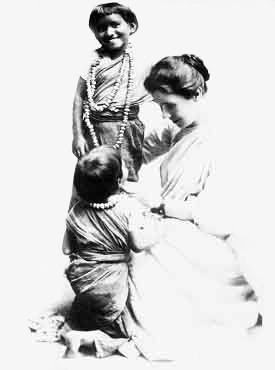
originally published on The Wilting Rose Project September 23, 2021, reprinted with permission
“Amma! I want to stay with you always!” the little girl in Amy’s lap sobbed.
Amy Carmichael, an Irish missionary woman, had come to India to share the gospel. Returning from an evangelistic trip, Amy had been met by an Indian Christian woman who brought the child to her, explaining that she had run away from slavery in a Hindu temple.
Her mother had given her up to be abused in worship of the Hindu gods, but now little Preena clung to Amy and called her "Amma"– "Mother."
Preena would be the first of many motherless children to call Amy “Mother.” For Amy, being a mother was another opportunity to serve the Lord, something she had been doing for years.
Amy Carmichael has left us a rich legacy of a life of service. There are a multitude of lessons we can glean from her life, and today I want to share three with you.
1. Serve Christ by Serving OthersThough she never married, Amy Carmichael was not lonely. She learned an important lesson: serving others brings joy.
When she was seventeen, she was walking home from church with her two brothers when the threesome spotted a beggar woman struggling under a load of firewood. Amy and her brothers hurried to help. But soon, other churchgoers caught up, and Amy was embarrassed. Later, as they passed a fountain, Amy suddenly heard the words in her mind, “Now if anyone builds on this foundation with gold, silver, precious stones, wood, hay, straw, each one’s work will become clear; for the Day will declare it, because it will be revealed by fire; and the fire will test each one’s work, of what sort it is,” (1 Corinthians 3:12-13, NKJV).
From that day on, Amy decided that nothing would ever matter to her again except the things that were eternal. The oldest of seven children, she threw herself with renewed vigor into helping care for and teach her younger brothers and sisters. When she learned about the plight of the “shawlies” (factory girls who were too poor to buy hats so they put their shawls on their heads), Amy launched a ministry to share the love and hope of Jesus with them. Eventually, her passion for helping others led her to Japan and finally to India where she would spend the rest of her life.
The lesson for us? When we are feeling lonely or down (or even if we’re not), reach out. Author and speaker Leslie Ludy teaches that turning outward leads to joy. “Giving joy brings joy,” she writes.
As one of seven children myself, Amy’s example inspires me to invest in my siblings. What about you? Are there family members you could love, sisters in Christ you could encourage, neighbors you could reach out to, church members you could serve?
2. Labor for a heavenly reward, not an earthly oneAm Carmichael’s life was a breathing illustration of these lines from the ancient Irish hymn “Be Thou My Vision”:
Riches I heed not, nor man’s empty praise,
Thou mine inheritance now and always.
When a ministry building she had planned for the shawlies was dedicated, Amy herself sat with the shawlie girls in the crowd while a large banner read, “That in all things He [Christ] may have the preeminence,” (from Colossians 1:18).
Amy hated “fuss.” Her eyes were fixed on Heaven, and she cared nothing for earthly fame. When she found out her books were referred to as “popular,” she was horrified. Her goal was not to write popular books, but God-glorifying, truthful words.
Not, of course, that it’s wrong to seek to reach more people with our message, or that it’s sinful to enjoy receiving compliments, or that it’s bad to relish the fruits of your labor. Yet while we are thankful for our earthly blessings, our eyes are set on a higher prize.
As Matthew 6:19-21 says, “Do not lay up for yourselves treasures on earth, where moth and rust destroy and where thieves break in and steal; but lay up for yourselves treasures in heaven, where neither moth nor rust destroys and where thieves do not break in and steal. For where your treasure is, there your heart will be also,” (NKJV).
3. It’s About Your Spirit, Not the WorkAmy Carmichael once said, “It is not the place where we are, or the work that we do or cannot do that matters, it is something else. It is the fire within that burns and shines, whatever be our circumstances.”
She spent the last nearly twenty years of her life bedridden. During this time, she wrote and prayed extensively. How wonderful it is to think that even when there is literally nothing else we can do, we can always lift our burdens to our Heavenly Father. As another missionary, Mary Slessor, said, “Pray on, dear one. The power lies that way.”So, dear girl, don’t be discouraged if health or other circumstances prevent you from doing all the work you would like to do. Pull a Miss Carmichael and do what you can, knowing that the Lord does not look on the outward appearance, but on the heart—the heart that beats and burns and loves and longs for Him.
Amy left this earth on January 18th, 1951, yet she has left us a shining example of a life devoted to Christ. She was but an ordinary person, as we all are, a sinner saved by the Cross.
I’ve only shared a few of the many lessons we can learn from her life. If you haven’t already, I hope you’ll learn more about her through her writing and biographies.
And keep the faith, dearest sisters, as we follow in the steps of those who have gone before as they followed Christ.
--Savannah Jane
December 16, 2021
On the Road to Freedom: The Story of Dietrich Bonhoeffer

Early Life
On February 4th, 1906, Dietrich Bonhoeffer was born in Breslau, Germany, to Karl and Paula Bonhoeffer, ten minutes before his twin sister, Sabine. The sixth of eight children, Dietrich came from a prestigious line of doctors, teachers, pastors, judges, theologians, professors, lawyers, and other noble occupations.
Growing up, his twin, Sabine, and younger sister, Susanne were his constant playmates. His childhood was full of happy memories of birthday parties, outdoor adventures at their holiday house in the country, celebrations, reading books, and playing music.
His mother presided over his early education at home with the assistance of a governess. Mrs. Bonhoeffer taught the children hymns and prayer, and read the Bible to them, instilling a love for the things of God in Dietrich from a very early age. Mr. Bonhoeffer, a famed psychologist, was not a Christian, but did not stop his wife from sharing her faith with the children.
When the “Great War,” later known as World War I came, Dietrich’s three older brothers along with extended family members fought for Germany. Cousins were killed in the war, causing Dietrich to ponder death and eternity. Then his brother Walter was killed, a great blow to the family.
The Theologian
Shortly after Walter’s death, Dietrich began to consider becoming a theologian. Some of his family, particularly his remaining older brothers, mocked his decision. But Dietrich had his mother’s support, and he was undeterred. When he made up his mind to do something, he did not let what anyone else thought stop him, a trait that would come in handy later in his life.
When Dietrich was confirmed in the German Lutheran church, his mother gave him Walter’s Bible which he used for his personal devotions for the rest of his life.
Life rolled on–school, two weeks of compulsory military training, and college. Other students at his college laughed at how close Dietrich was to his parents. That didn’t stop him from calling them often and asking their advice when making decisions.
When Dietrich was eighteen, he had the opportunity to visit Rome with his older brother. That trip was an important event in his life, for it was there, worshiping with Christians of all nationalities, that he believed he began to understand what the church really was. Pondering the question, “What is the church?” was a lifelong pursuit for Dietrich and he wrote his doctoral thesis on the subject.
Dietrich continued his studies and service, pastoring a German congregation in Barcelona, Spain, and finally, going to America to study at Union Theological Seminary in New York. He was appalled by the liberal teaching at the university, and the inability of the university students to think for themselves or compare ideas with Scripture, accepting liberal views unhesitatingly. Dietrich could respect an honest liberal, like some of his previous professors, even though he disagreed with them. But these liberals didn’t seem to think things through; they simply rejected any idea they deemed “fundamentalist.”
Visiting churches, he was shocked at how little preaching of the gospel of Christ took place. It was at an African-American Baptist church where he finally heard truth proclaimed. He also loved the music there and bought records of African-American spirituals to bring home to Germany.
This was when segregation was prevalent in the United States, and Dietrich was horrified, grateful that no such racism was present in Germany, or so he thought. But he saw that the African-American church was thriving and began to understand that suffering actually strengthens the church.
About this time Dietrich’s faith deepened considerably. He had been reading and preaching the Word for years, but now it became real to him like never before.
He returned home to Germany, began teaching at a university, continued to spend time with his family, formed friendships, enjoyed playing piano at gatherings of family and friends, listened to his African-American spirituals, studied, and wrote.
He wrote a book, called in English, The Cost of Discipleship, in which he explained the idea of “costly grace.” We are saved by God’s grace, lavished freely and undeservedly upon us. But it is not a cheap grace that we can accept and then live however we please. It demands something of us. It calls us to walk in the bloody footsteps of our crucified Master, living a devoted life of obedience, faithfulness, and sacrificial love. It is costly.
Dietrich wasn’t afraid to “get political,” and unashamedly approached the Bible as the Word of God. He could be very serious and intense, but had a sense of humor, too.
Hitler Comes to Power
On January 30, 1933, Adolf Hitler became the democratically elected chancellor of Germany. Two days later, Dietrich delivered a speech which turned out to be prophetic in which he warned of the danger of elevating a leader above his God-ordained role. The speech was cut off partway through (it’s unclear exactly what happened). So Dietrich had it duplicated and sent to his influential friends and relatives.
Time passed, and Hitler and his National Socialist Party (or Nazis) continued to gain power and began to try to take control of the church.
Persecution of the Jews began in earnest, and Dietrich Bonhoeffer boldly spoke and wrote against it.
Despite their varying beliefs, the entire Bonhoeffer family saw through Hitler from the beginning.
When the Nazis ordered a boycott of Jewish businesses, Dietrich’s ninety-year-old grandmother informed the SD men she was not about to be told where to shop and boldly entered Jewish stores.
Dietrich’s twin, Sabine, was married to a Jew (who was a also a baptized Christian), Gerhard Liebholz. When Gerhard’s father died, Dietrich declined to speak at his funeral, following the advice of his church superior, a decision he would later deeply regret.
The German church was purged of anything deemed “Jewish,” and the “German Christians” began to reject even the most basic biblical doctrines.
An opportunity was offered Dietrich to help pastor two German congregations in London, which he accepted. There he met Bishop George Bell, who was also in the British House of Lords, and would become an important contact for Dietrich later.
Dietrich kept in close contact with his mother, who had furniture shipped to him and even a piano. He also kept in touch with other friends in Germany and was involved in the church struggle from afar.
The Confessing Church
The end of May, 1934, the leaders of a group called the Pastors’ Emergency League, including Dietrich, met. They drafted a statement of their beliefs, called the Barmen Declaration, and the Confessing Church was birthed.
The Barmen Declaration included these words (and much more):
“Jesus Christ, as he is attested for us in Holy Scripture, is the one Word of God which we have to hear and which we have to trust and obey in life and in death…
We reject the false doctrine, as though there were areas of our life in which we would not belong to Jesus Christ, but to other lords–areas in which we would not need justification and sanctification through him…
We reject the false doctrine, as though the State, over and beyond its special commission, should and could become the single and totalitarian order of human life, thus fulfilling the Church’s vocation as well…
The Church’s commission, upon which its freedom is founded, consists in delivering the message of the free grace of God to all people in Christ’s stead, and therefore in the ministry of his own Word and work through sermon and sacrament.”
After a return to London, Dietrich Bonhoeffer went back home to Germany and taught an illegal seminary, training leaders for the Confessing Church. One of his students, only a few years younger than himself, Eberhard Bethge, became Dietrich’s best friend and the one to whom he confessed his sins and shared his deepest struggles.
While teaching, Dietrich met an elderly lady named Ruth von Kleist-Retzow. She was a strong-willed, accomplished woman who took a great interest in Dietrich’s ministry, and he taught a confirmation class to some of her grandchildren.
One of the seminaries, called Finkenwalde, was shut down by the Gestapo, but Dietrich still continued to teach ordinands.
And he continued to speak out against the persecution of the Jews, citing the Scriptures Psalm 74, Zechariah 2:8, Romans 9:4, 11:11-15, as his inspiration. He helped Sabine, her Jewish husband, and their two daughters leave Germany and go first to Switzerland and then to England.
Against Hitler from the beginning and friends with powerful people, it was only natural for several members of the Bonhoeffer family to join the conspiracy to overthrow Hitler.
Dietrich knew war was coming and he knew he could not fight for Hitler. But what should he do? After much agonizing, he accepted an invitation to return to Union Theological Seminary in America and avoid military conscription. But after only 26 days in New York, he boarded a ship to return to Germany, now absolutely certain that God was calling him to stand with his suffering brethren in the Fatherland.
From Confession to Conspiracy
The crimes of the Nazis increased. Thousands of those deemed unfit, including small children were secretly killed. Most people would only know of the atrocities after the war. But Dietrich’s brother-in-law, Hans van Dohnanyi, had been gathering information in what he called “The Chronicle of Shame.” Hans was heavily involved in the conspiracy, and at some point, Dietrich became involved, too.
Dietrich’s best friend Eberhard knew after Dietrich threw out his arm in the Hitler salute at a cafe when the radio announced that France had surrendered that he’d crossed the line from confession to conspiracy. Dietrich whispered to Eberhard, “Are you crazy? Raise your arm! We’ll have to take risks for many things, but this silly salute is not one of them!”
Eberhard wrote later,
“We now realized that mere confession, no matter how courageous, inescapably meant complicity with the murderers.”
Dietrich Bonhoeffer could no longer teach ordinands; the Gestapo had finally put a complete end to it. Soon, he was a double agent in the Abwehr (the German military intelligence organization) under Admiral Canaris, who was secretly against Hitler. It was unlikely he would be called up for military service now.
Many of his fellow Christians did not understand his deception, and he didn’t ask them to. But for Dietrich, he was convinced that being a conspirator was how God wanted him to serve the truth.
The conspiracy began to plan for the assassination of Adolf Hitler, and in September of 1941 at the Dohnanyis’ home, Dietrich said he would be willing to kill the Fuhrer if necessary. This was not a statement he made lightly; it was an issue he had been pondering for a long time.
As an agent for the Abwehr, Dietrich assisted in Operation 7–helping what was first seven and then fourteen Jews escape to Switzerland. The Swiss said they must bring foreign currency, a crime under the Nazi regime. He took a few trips internationally, seemingly for official Abwehr business in service to the Nazis, but really to gain support for the conspiracy. English Bishop George Bell was one of his most important international contacts.
On a visit to his friend Ruth von Kleist-Retzow, something happened that would change his life. Ruth’s granddaughter Maria was there. When Dietrich had seen her before, she’d been a girl, too young for the confirmation class Dietrich taught to her older brother and cousins. Now she was a beautiful young woman. Maria’s father and brother both died fighting, and soon Dietrich was more than just a pastor offering comfort. They became engaged.
As for the conspiracy, they had spent enough time planning. It was time to act. They launched Operation Flash–planting a bomb on Hitler’s plane. The bomb didn’t go off, but thankfully, it wasn’t discovered either. The conspirators would try again.
Major Rudolf-Christoph von Gersdorff volunteered for a suicide bombing mission. He would lead Hitler and his entourage through a display of captured weaponry, with a ticking-time bomb in his coat pocket. However Hitler left early, before the bomb exploded. Gersdorff ripped the fuses from the bomb, and ended up living until 1980. Another assassination attempt had failed.
Amid all this, Dietrich worked on his new book, Ethics.
Arrest and Imprisonment
On April 5, 1943, Dietrich was arrested and locked in Cell 92 at Tegel Prison. At first, he was arrested for minor offenses such as the money involved in Operation 7. Because his uncle Paul von Hase was the military commandant in Berlin, prison conditions improved, but at one point, Dietrich refused the offer to be moved to a more comfortable cell, knowing that someone else would have his then.
He counseled condemned prisoners and guards, studied and wrote, and basically acted like a pastor in prison. In November of 1943, he got a surprise visit from the four people he loved most in the world: his fiancée, Maria, his parents, and his best friend, Eberhard Bethge. Maria made him an Advent garland.
The prison chaplain asked him to write some prayers for the prisoners to use for Christmas. Dietrich wrote this:
“O God,
Early in the morning do I cry unto thee.
Help me to pray,
And to think only of thee.
I cannot pray alone.
In me there is darkness,
But with thee there is light.
I am lonely, but thou leavest me not.
I am restless, but with thee there is peace.
In me there is bitterness, but with thee there is patience;
Thy ways are past understanding, but
Thou knowest the way for me.”
Dietrich wrote lots of letters to Maria, his parents, and Eberhard, and continued to work on Ethics. Through secret messages passed onto him from his family in books or inside the lid of a jar of food, Dietrich stayed informed of what was happening in the conspiracy.
On his 30th birthday, Maria visited Dietrich and gave him a book with a coded message from his parents. Admiral Canaris of the Abwehr had been deposed from office. A new leader in the conspiracy would now arise: Colonel Claus von Stauffenberg.
Stauffenberg was a devout Catholic who was motivated by what he had seen of the SS’s treatment of Polish POWs and the murder of the Jews. In his words,
“It’s time for something to be done. He who has the courage to act must know that he will probably go down in German history as a traitor. But if he fails to act, he will be a traitor to his own conscience.”
Stauffenberg was ordered to be at Hitler’s headquarters in East Prussia on July 20th. This was the perfect opportunity to attempt another assassination. He planted the bomb, and hastily made his escape. It exploded, but did not kill Hitler, because of the design of the table at which he sat. The huge plinth used as a support instead of regular table legs shielded the Fuhrer from the blast.
Anyone remotely involved in the conspiracy was arrested and interrogated.
When Dietrich heard of the plot’s failure, he knew the ramifications but told Eberhard he had taken pleasure in the day’s Bible readings and hymns. The readings for July 20th were: Psalm 20:7 and Romans 8:31 and for July 21st: Psalm 23:1 and John 10:14.
Stauffenberg died bravely, shouting out just before his execution, “Long live sacred Germany!” Many of the other men also spoke boldly before their deaths. One, Von de Schulenberg, said,
“We resolved to take this deed upon ourselves in order to save Germany from indescribable misery. I realize that I shall be hanged for my part in it, but I do not regret what I did and only hope someone else will succeed in luckier circumstances.”
Hitler soon forbade further reporting on the conspirators’ trials.
The Chronicle of Shame was discovered–with Dietrich’s name in it.
Dietrich declined an opportunity to escape, partly because he knew the Gestapo could go after his parents and Maria. He spent four months in another prison, a Gestapo prison in Berlin. He couldn’t write or see Maria, who some time earlier had moved in with his parents.
The war was nearing its end. Americans bombed Germany, including the prison Dietrich was in.
Final Days
In February of 1945, Dietrich was taken to the Nazi center of death, Buchenwald. We get most of our information about Dietrich’s last two months from the account written by his fellow prisoner, British Intelligence Officer, Captain S. Payne Best.
On Easter, April 1st, American guns could be heard in the distance. Liberation would surely come very soon. But late in the evening of April 3rd, sixteen prisoners were loaded into a van fueled by a wood generator.
They were an odd assortment–Dietrich Bonhoeffer, Payne Best, a Russian air force officer, a Catholic lawyer, a diplomat and his wife, a woman of questionable reputation, a concentration camp “doctor” (in other words, one of Hitler’s sadistic torturers), among others.
It was a long journey. At one point they were stopped by police. Two prisoners were herded out. It’s unclear whether it was a man by the name of Gehre or Bonhoeffer called as the third one, but at any rate, it was Gehre who got out and was taken to Flossenburg.
The van continued south until it broke down and one of the prisoners who was an engineer, Hugh Falconer, pronounced it irreparable. Eventually a bus picked them up, carrying what appeared to be S. D. guards, but who told a group of girls they picked up that they were a film crew out to shoot a propaganda film.
At last they ended up at a school in the village of Schonberg.
The next day, April 8th, was the first Sunday after Easter. Dietrich was asked to hold a service and preached on Isaiah 53:5 and 1 Peter 1:3. He had barely finished the final prayer when two “evil looking men” (Payne Best’s words) came and ordered Dietrich to come with them. Before he left, Dietrich told Payne Best, “This is the end. For me, the beginning of life.”
It was his last full day on earth. Dietrich was taken back to Flossenburg concentration camp, and the next morning he was hanged. A concentration camp doctor who witnessed his death said, “In the almost fifty years that I worked as a doctor, I have hardly ever seen a person die so entirely submissive to the will of God.”
Admiral Canaris was also hanged at Flossenburg that day.
Dietrich’s parents lost two sons, Dietrich and Klaus, and two sons-in-law, Hans van Dohnanyi and Rudiger Schleicher, all executed for their roles in the conspiracy. Upon hearing the news of their deaths, Dietrich’s father, Karl Bonhoeffer said, “We are sad, but also proud.”
Only a few weeks after Dietrich’s death, history has recorded that Hitler committed suicide, and the Allies liberated Germany.
But for Dietrich Bonhoeffer, true freedom had finally begun.
“Stations On the Way to Freedom” by Dietrich Bonhoeffer
Self-discipline
“If you set out to seek freedom, you must learn before all things
Mastery over sense and soul, lest your wayward desirings,
Lest your undisciplined members lead you now this way, now that way.
Chaste be your mind and your body, and subject to you and obedient,
Serving solely to seek their appointed goal and objective.
None learns the secret of freedom save only by way of control.
Action
Do and dare what is right, not swayed by the whim of the moment.
Bravely take hold of the real, not dallying now with what might be.
Not in the flight of ideas but only in action is freedom.
Make up your mind and come out into the tempest of living.
God’s command is enough and your faith in him to sustain you.
Then at last freedom will welcome your spirit amid great rejoicing.
Suffering
See what a transformation! These hands so active and powerful
Now are tied, and alone and fainting, you see where your work ends.
Yet you are confident still, and gladly commit what is rightful
Into a stronger hand, and say that you are contented.
You were free from a moment of bliss, then you yielded your freedom
Into the hand of God, that he might perfect it in glory.
Death
Come now, highest of feasts on the way to freedom eternal,
Death, strike off the fetters, break down the walls that oppress us,
Our bedazzled soul and our ephemeral body,
That we may see at last the sight which here was not vouchsafed us.
Freedom, we sought you long in discipline, action, suffering.
Now as we die we see you and know you at last, face to face.”
The end.
P. S. For a great movie on the life of Dietrich Bonhoeffer, I highly recommend Bonhoeffer: Agent of Grace. Read the MovieGuide review here.
Sources:
Bonhoeffer: Pastor, Martyr, Prophet, Spy by Eric Metaxas
Dietrich Bonhoeffer: In the Midst of Wickedness by Janet and Geoff Benge
The Cost of Discipleship by Dietrich Bonhoeffer
December 6, 2021
Preorder A Torch in the Empire Series Book Three: Whether We Live or Die

Hi friends! I have some exciting news for you! A Torch in the Empire Series Book Three: Whether We Live or Die is now available for preorder!
Here’s the back cover blurb:
It’s A. D. 67. A year has passed since brother and sister Jesse and Abigail were sold as slaves in Rome. Both long to be reunited and return home to Jerusalem.
Abigail, still working in the patrician Aurelius’ house, tries to honor Christ even though she knows it’s only a matter of time until her master finds out she is a Christian and she faces the consequence--death in the arena.
Haunted by guilt for the lives he took as a gladiator and for how he failed to keep his promise to his dead father that he would care for his sister, Jesse is determined to rescue Abigail. He manages to escape the gladiator school, bringing his newfound friend Lucas with him, but a multitude of obstacles still stand in the way of him saving his sister. And even if he succeeds in rescuing her, the Jewish Revolt rages in Judea, and Jesse fears they’ll be unable to return to their beloved home.
As for Lucas Aurelius, his newfound Christian faith has given him hope through the trials he’s endured so far, but his difficulties are far from over.
The third book in A Torch in the Empire Series, Whether We Live or Die, is a story of hope in the midst of suffering, courage in the face of death, and sacrificial love during a time of great darkness. Weaving fictional characters together with real historical persons and events, this series takes you back to the turbulent first-century Roman Empire when the early church faced the worst of persecutions under Emperor Nero.

Lord willing, the book will be released the end of February. If you preorder, you’ll get this bookmark featuring art by my friend Grace Obenhaus and a set of four stickers made by yours truly. And even though you won’t get the book for a few months, I’ll mail you the bookmark and stickers right away! (So if you want to buy it as a Christmas gift for someone, you will have a little something to give them now and they’ll have the book to look forward to!)






This book has been in the works for a while, and I am so thrilled to now be making it available for you to order! I’m very thankful to all my family and friends who have helped me make this dream a reality, and most of all to my Savior Jesus.
As always, feel free to reply, and remember “He who calls you is faithful, who also will do it,” (1 Thess. 5:24). Merry Christmas!
All for Him,
Savannah Jane
October 20, 2021
Return to the Hiding Place Movie Review
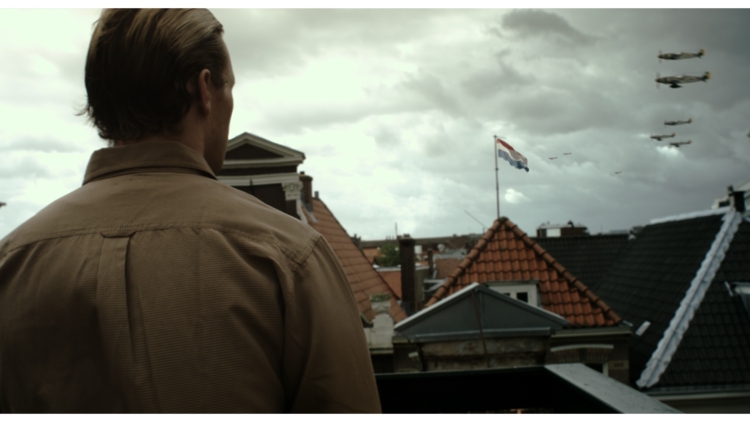
Hi friends! In case y’all haven’t noticed yet, I really enjoy and appreciate a good historical movie. And I have a new favorite: Return to the Hiding Place. Many know of the courage of Corrie ten Boom and her family in rescuing Jews during World War II, but few know of the intrepid Dutch Student Resistance, whom Miss ten Boom called her “teenage army.” This movie tells that incredible true story, introducing us to Hans Poley, Piet Hartog, Corrie ten Boom's niece Aty van Woerden, Frans van Hasselt, and other brave young members of the Resistance, in addition to Corrie, Betsie, and Opa ten Boom.
Several great themes shine in this movie.
One of my favorite parts is when Frans van Hasselt boldly declares, “This oath offers allegiance to Adolf Hitler and his kingdom on earth. My allegiance is to the kingdom… of heaven!”

Another theme is how Christians should respond to a tyrannical government that is slaughtering God’s people. When is it right to disobey the authorities? And is it right to lie, steal, and kill to save lives? We see characters turn to Scripture to find these answers, and find peace in doing what they know to be God’s will.
This story made me think of Jesus’ words in John 15:13, “Greater love has no one than this, than to lay down one’s life for his friends.” Some 880 Jews found refuge in the ten Boom home during the Holocaust. Nearly all of them survived the war. But many of the Resistance workers died, willing to sacrifice their lives to save others.
And finally, what I think is the most important message of all is that it was faith in Christ that motivated these people to give their all to rescue Jews, orphans, and others hunted down and persecuted by the Nazi regime. The hope of Heaven and the knowledge that they were following in the footsteps of their Master, Jesus Christ, spurred them on to resist the cruelty of Hitler and save lives, whatever the cost to themselves.
I do want to give a caution for violence and upsetting content, particularly one especially heartbreaking part involving a little Jewish boy. The worst happens off-screen, but it’s still horrifying. (Read the Dove review here for a full content description).
There are a few young couples whose budding relationships play a role in the movie, but it’s all very wholesome, nothing inappropriate.

Thankfully, a bit of lighthearted humor is interspersed, and always the hope of Christ is communicated as characters testify of their abiding faith in Christ that carries them through these trials.
This movie is one of the most intense and gripping I’ve ever seen. I love the costumes and sets, and found it truly riveting. But far more important than being simply an engaging movie, this a movie with a powerful message, all the more powerful because it really happened. Compared to Hans Poley’s book of the same name, it does appear the movie took a few creative liberties. But overall, it’s kept accurate to the true story. Truly, the real story is so remarkable and inspiring that it doesn’t need any fictionalization! The director of the movie was inspired to make it after meeting the real Hans Poley, and footage of Mr. Poley during the credits adds an extra special touch.
I think this is a story with an important message for everyone, but especially for us young people. It challenges us to think of how we would respond in the same situations and to consider how we can live fully for the Lord now and prepare for harder times in the future.
I probably don’t even need to say now that I give this movie 5 out of 5 stars and highly recommend it! Go watch it, and always remember, “He who calls you is faithful, who also will do it,” (1 Thess. 5:24).
All for Him,
Savannah Jane
September 28, 2021
Sybil Ludington: The Female Paul Revere
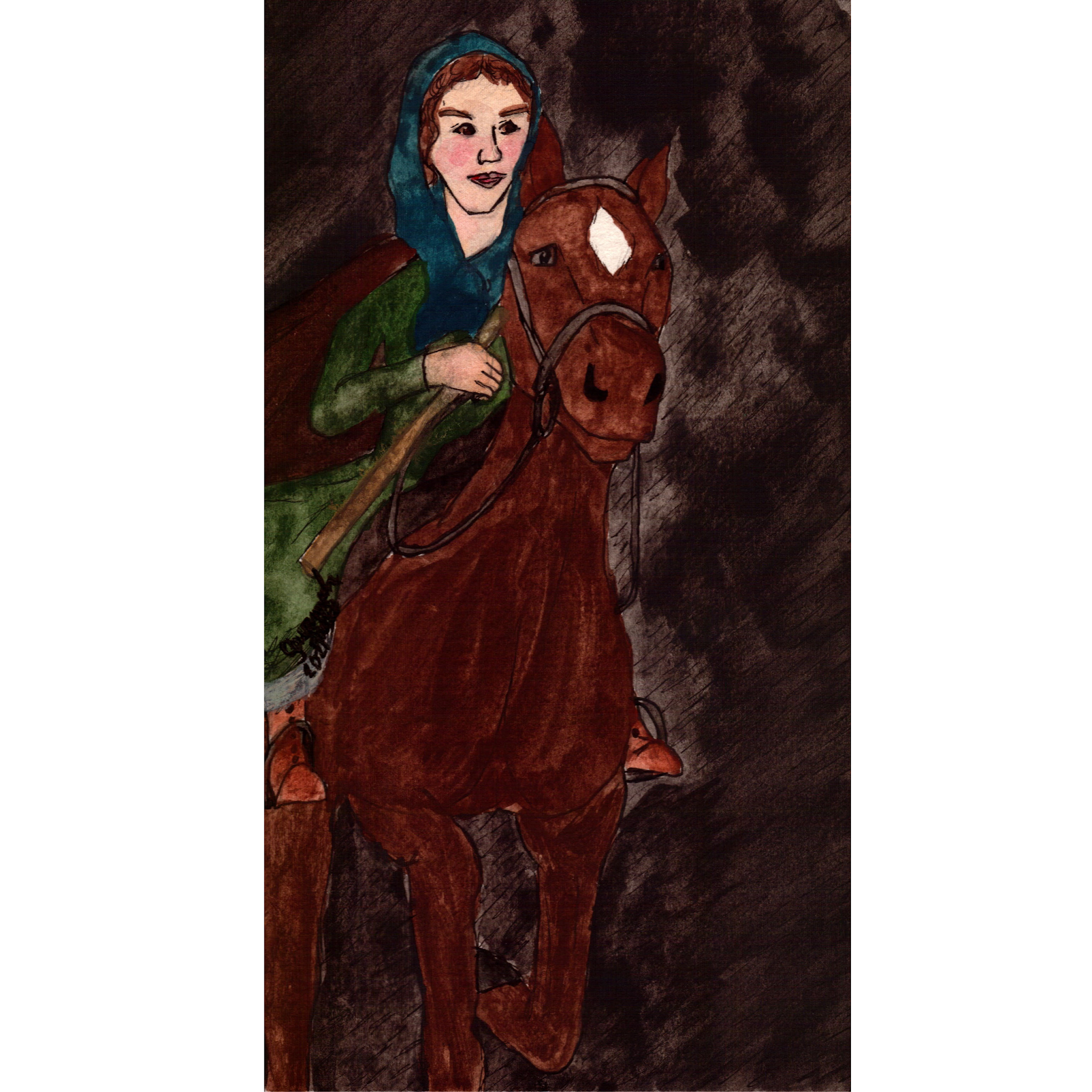 Guest post by Bella DeLong
Artwork by Savannah Jane McCrary
On a stormy April night, the inhabitants of the Fredericksburg countryside were awakened by loud battering on their doors, and a young female voice crying out, “Call to arms! The militia is needed! Call to arms!”
Responding to the summons, the men of the local militia stumbled out of their beds, wondering why it was The Colonel’s teenage daughter they’d heard giving the call-to-arms.
The fight for American independence had been raging for two years. The British had ceased to look upon it as a hapless uprising, and were now engaged in a deadly power struggle for their valuable colonies. They had made a grand tour of the northeast, burning property, hanging outspoken civil leaders, and terrorizing the people in an effort to stifle rebellion.
Sybil Ludington, the eldest of Col. Henry and Mrs. Abigail Ludington’s twelve children, was sixteen years old.
Lovingly styled a “tomboy” by her family, she preferred riding and watching her father’s men drill to standard interests of women in colonial New York. She had a tenacious spirit and was a fervent patriot, likely inspired by the example of her father and his friends.
Col. Ludington, referred to anonymously by his men as “The Colonel,” was the commander of the 7th Duchess County Militia, as well as aide-de-camp to George Washington. Because of his reputation for harassing British troops and heavy involvement with Washington, he was wanted with a price of 300 guineas ($3,000) over his head. He shared a close relationship with his daughter, trusting not only her loyalty but judgment and dependability as well. Sybil and her younger sister Rebecca often acted as sentinels, standing guard with loaded muskets. They were also formal liaisons between The Colonel and his spies.
The reward for Colonel Ludington was tempting, and several efforts were made to capture him. Despite the secrecy and caution exercised by his family and his men, more than once he was nearly caught. One evening, the discovery was made that the Ludington house was surrounded by Tories. Resolved to protect their father and husband, Sybil and Mrs. Ludington leapt into action. After setting a light in every window, they instructed the children to present musket muzzles at the loopholes. The Tories, seeing what appeared to be a fully guarded house, changed their minds and turned back without capturing The Colonel.
On the night of April 26, 1777, a horse with frothy sides and an exhausted rider galloped into view of the Ludington home, bringing word that the British were ravaging and setting fire to the nearby town of Danbury. At the time, there was nobody within call that The Colonel could send to muster the furloughed troops. Nobody, except his daughter Sybil.
She eagerly volunteered, despite the thunderstorm raging outside. The route was thickly wooded and forty miles—twice the distance that Paul Revere had ridden on a clear, moonlit night.
With no other choice, Colonel Ludington gave her a stick and told her to bang it on the doors as she gave the call-to-arms. Wrapping a shawl over her head, Sybil mounted her horse and galloped off into the night. It was nine o’ clock, p.m.
The British, led by General William Tryon, had landed six warships and two-thousand forces in Westport Connecticut, eager to raid colonial supplies and capture patriot leaders. By morning the town was engulfed with flames, and the inhabitants ruined, raped, or wounded. One account described the attack on Danbury: “One of the most brutal and disgraceful performances of British arms in all the war.”
Meanwhile, Sybil had succeeded in spreading the word. She returned at daybreak, having mustered the four-hundred and twenty-one men, who rode without delay to revenge decimated Danbury. Meeting general and subsequent traitor Benedict Arnold at the Bay, they routed the retreating British and sent the survivors frantically swimming out to the retreating warships. What began as a prospective victory for the British ended in wholesale failure and embarrassment.
Alexander Hamilton wrote Col. Ludington: “I Congratulate you on the Danbury expedition. The stores destroyed have been Purchased at a pretty high Price to the Enemy.”
When she was twenty-three years old, Sybil married a lawyer named Edmund Ogden. She had one son, Henry Ogden. The tale of her ride faded into obscurity, and by the time she died in 1839, barely anyone remembered or even knew of her courage. It wasn’t until the 1880s when local historian Martha Lamb wrote and popularized her story, raising it from local history to a national legend.
Sybil died at the age of 77, and is buried beside her father in Patterson Cemetery, New York.
“For if you remain completely silent at this time, relief and deliverance will arise for the Jews from another place, but you and your father’s house will perish.Yet who knows whether you have come to the kingdom for such a time as this?”
Esther 4:14
References:
Martha Lamb, History of the City of New York: The century of national independence
Rick Green, Legends of Liberty
www.wallbuilders.com/women-heroes/
Carl Holiday, Woman’s Life In The Colonial Days
Lindsay Williams, Her Midnight Ride
Alexander Rose, Washington’s Spies
 About the Author:
Bella DeLong is an amateur historian, novelist, and homeschool graduate. Her greatest passion, besides serving Jesus Christ, is to remind Americans of their extraordinary heritage, and find inspiring stories that modern young people can relate to. She has been a student of English and history for three years, and now is studying journalism and theology.