Angela Ackerman's Blog: Writers Helping Writers, page 178
June 20, 2012
Villain Myths
Happy Wednesday, people! Normally, Wednesday is hardly a day to celebrate, but today's different for a couple of reasons. First, our Goodreads giveaway is still going strong, so if you're hoping to score a paperback copy of The Emotion Thesaurus (and you live in the US or Canada), head on over and enter to win. And secondly, our own Angela Ackerman is hanging out at the fabulous Query Tracker blog, where she will be spewing writing wisdom by the bucket loads. Today's topic: Three Myths About Villains. And boy does she know what she's talking about--er, I mean, she's...done a lot of research on villains. All second-hand experience, of course...


June 19, 2012
A Worthy Cause, and a Few Words on Good Description
Angela and I were recently contacted by fellow author Kathy Bradey, who's organizing a Writers Auction to support the late Andy Whitfield’s documentary about cancer awareness. Sadly, Andy passed away before his documentary was finished, and Kathy is raising funds to help complete the project. She's lined up a number of published authors who have donated critiques; if you're looking for fresh eyes for your latest book, please consider bidding on one of the crits. All of the funds raised will go towards the effort to finish Andy's project.
****************
 And now, Heather McCorkle's here today (whoop! whoop!) to talk about the importance of good description...
Nothing draws me into a book like a great description. I want to feel what the character feels, taste what they taste, hear what they hear, see what they see, and smell what they smell. That is what truly immerses me and makes me feel like I’m experiencing the story. That is what keeps me coming back to an author for more. Here's a sample of description that engages multiple senses:
"The floors had been dusted with flavored sugar. Specks of it still sparkled in the corners, traces left when our hosts brushed it up before opening the doors to us. Brunt sugar, vanilla cream--both scents hung in the air and I tasted them when I licked my lips." ~from The Springsweet by Saundra Mitchell.
How divinely executed is that? Here's another example of multi-sensory description:
"Neala clamped a hand over her mouth to stifle a cry when her ankle touched Dubh’s side. The pain was so intense that her vision went dark and she leaned forward onto Dubh’s neck. The smell of horse sweat brought her a small measure of comfort, it also helped that he was warm. She suddenly realized she was freezing." ~from To Ride A Puca by Heather McCorkle.
But it's important to remember that good description isn’t just lines and lines of the five senses. It is carefully crafted and balanced so as not to overwhelm the reader, done in a way that flows naturally with the story. Even description has to be integral to the plot line; it has to mean something, serve some kind of purpose. Dialogue and action should be woven into the description, almost like a dance that is carefully balanced.
Some of The Greats write description seamlessly into their novels. A few of my favorites that accomplish this with stunning results are Saundra Mitchell, Eldon Thompson, and Leah Cypess. At times their writing is so smooth and fluid it almost feels lyrical.
For help on fantastic description you need to look no further than the sidebar of this blog and The Emotion Thesaurus. It truly is the bible for writers who wish to take their description to the next level. Because, really, description is all about making your readers feel something.
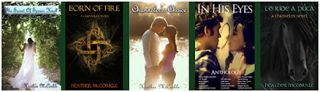
~Heather McCorkle is the author of the YA urban fantasy novels, The Secret of Spruce Knoll, Channeler’s Choice , the novella connected to the series Born Of Fire (which is now free on Smashwords), and the acclaimed historical fantasy about the last of the druids in ancient Ireland, To Ride A Puca.


****************
 And now, Heather McCorkle's here today (whoop! whoop!) to talk about the importance of good description...
Nothing draws me into a book like a great description. I want to feel what the character feels, taste what they taste, hear what they hear, see what they see, and smell what they smell. That is what truly immerses me and makes me feel like I’m experiencing the story. That is what keeps me coming back to an author for more. Here's a sample of description that engages multiple senses:
"The floors had been dusted with flavored sugar. Specks of it still sparkled in the corners, traces left when our hosts brushed it up before opening the doors to us. Brunt sugar, vanilla cream--both scents hung in the air and I tasted them when I licked my lips." ~from The Springsweet by Saundra Mitchell.
How divinely executed is that? Here's another example of multi-sensory description:
"Neala clamped a hand over her mouth to stifle a cry when her ankle touched Dubh’s side. The pain was so intense that her vision went dark and she leaned forward onto Dubh’s neck. The smell of horse sweat brought her a small measure of comfort, it also helped that he was warm. She suddenly realized she was freezing." ~from To Ride A Puca by Heather McCorkle.
But it's important to remember that good description isn’t just lines and lines of the five senses. It is carefully crafted and balanced so as not to overwhelm the reader, done in a way that flows naturally with the story. Even description has to be integral to the plot line; it has to mean something, serve some kind of purpose. Dialogue and action should be woven into the description, almost like a dance that is carefully balanced.
Some of The Greats write description seamlessly into their novels. A few of my favorites that accomplish this with stunning results are Saundra Mitchell, Eldon Thompson, and Leah Cypess. At times their writing is so smooth and fluid it almost feels lyrical.
For help on fantastic description you need to look no further than the sidebar of this blog and The Emotion Thesaurus. It truly is the bible for writers who wish to take their description to the next level. Because, really, description is all about making your readers feel something.

~Heather McCorkle is the author of the YA urban fantasy novels, The Secret of Spruce Knoll, Channeler’s Choice , the novella connected to the series Born Of Fire (which is now free on Smashwords), and the acclaimed historical fantasy about the last of the druids in ancient Ireland, To Ride A Puca.
June 16, 2012
Character Trait Entry: Sensitive
 Definition: Responsive to stimuli; strongly susceptible to the attitudes and emotions of others
 Causes: Deep sense of empathy; feeling connected to people and the environment; a highly spiritual nature; a past emotional wound that one never recovered from; hormonal imbalance; low self esteem; having a strong affinity (love) for someone or something; a deep self-awareness & understanding of one's emotions
Characters in Literature: Luna Lovegood (Harry Potter); Jonas (The Giver); John Coffey (The Green Mile)
Positives: Sensitive characters, when their emotional armor is removed, are caring and trustworthy and will often do whatever they can to help or make another feel better. Because of their own need for acceptance and love, they are capable of great love and acceptance themselves. Naturally empathetic, Sensitives will often do whatever they can to alleviate the suffering of others, and are capable of a deep level of understanding and connectedness that is rarely found. Sensitives make strong confidants, true friends, and do well in supportive roles where they can advise and be there for the hero.
Negatives: Sensitives can be viewed as weak by other dominant, insensitive types, which often places them in a situation where they are bullied, made fun of or used in some way. The necessity for survival is the adaptation of strong emotional armor that protects the Sensitive from being continually hurt. As a result, anger and resentment can build, creating a wall that few can breach. The Sensitive may also lash out, but almost always regrets it later because of their empathetic qualities, creating confusion within and a drop in self esteem. If a character is too sensitive, this will cause those around them to feel they must handle them with 'kid gloves' to avoid an emotional explosion. Other may view the Sensitive with pity and actively try to create distance from them in order to avoid being caught in the emotional wheel.
Common Portrayals: the geeky, quiet & socially inept male bullied by family members or peers; the sensitive girl with few or no friends; the character who prefers the company of animals/nature over people; the sensitive 'best friend' who pines over a love because they refused to act and declare their feelings
Cliches to Avoid: the 'mama's boy' ridiculed by an overbearing 'manly-man' male role model (a father, a muscle-bound gym teacher, a hard-ass principal); a homosexual male portrayed as emotionally melodramatic to the point of ridiculousness; the Mean Girls circle who pretend to care for a plain-jane sensitive girl to provide them cruel entertainment
Twists on the Traditional Sensitive:
In most fiction, the sensitive character wishes to be different--less sensitive and more able to fit in. Show us a sensitive who is at peace with who they are.
A common theme is characters who oppose a Sensitive view this trait as a weakness. I challenge you to have your character do something so worthy that even the most critical antagonist changes his mind about the sensitive trait!
Put your Sensitive in a role where this trait is not only a huge hindrance, it could negatively impact those he cares for. Let your Sensitive grow by mastering this trait to the point where he can achieve what he must, but still accept who he is.
Conflicting Characteristics to Make your Sensitive Unique or More Interesting: confident; visionary; brave; bossy; impulsive


June 14, 2012
5 Techniques for Adding Subtext to your Story
Just a reminder that our Goodreads giveaway of two print copies of The Emotion Thesaurus will be running through June 30th. Click here for more info.
Today we've invited Ollin Morales to clue us in about subtext--thank goodness, because while I know what it is, I've never understood how to add it to a story without confusing the readers and myself. Ollin's blog is a Top Ten Blogs for Writers winner, and, as I'm sure you'll agree once you've read his post, he knows his stuff.
***********
About 90% of the time, we human beings don’t say what we mean to say. Instead, we speak in subtext. The beauty of subtext is that it makes human interaction fascinating; and, likewise, it’s what will make your story worth reading. If you, as a writer, can fundamentally understand the importance of subtext, I guarantee that you'll see the benefit in adding it to you story.
What Is Subtext? The best way to explain it is with an example:
Boy meets girl.
Boy asks girl: "Do you like Coldplay?"
Boy smiles. Girl frowns.
Girl says: "No, they suck."
Boy asks: "Oh—what music do you like then?"
Boy walks towards girl. Girl steps back.
Girl blows a raspberry.
Girl says: "I hate music."
Boy says: "Oh. So, you wouldn't be interested in going to a free concert?
Boy winks.
Girl takes a moment to think about it. Then, Girl shakes her head.
Boy shakes his head.
Boy says: "Okay, good-bye."
Boy leaves.
Girl takes a huge sigh of relief.
Now, if you take a quick, superficial look at this scene, you might conclude that not much happened in it, right? WRONG. A WHOLE LOT happened. It’s just that it’s hard to catch because it all happened “in between the lines.”
This is how the scene would read if there were NO SUBTEXT, and everyone in the scene was saying exactly what they meant to say:
Boy meets girl.
Boy says: " I think you're cute . "
Boy smiles. Girl frowns.
Girl says: " Thanks ."
Boy asks: " Are you single ?"
Boy walks towards girl. Girl steps back.
Girl blows a raspberry.
Girl says: " Yes. But I'm not interested in you ."
Boy asks: " Can I be your sugar daddy at least?"
Boy winks. Girl takes a moment to think about it. Then, Girl shakes her head.
Boy shakes his head.
Boy says: " Okay, but you're the one who’s missing out ."
Boy leaves.
Girl takes a huge sigh of relief.
Now do you see what really went on in the scene? You probably also recognized an interaction that happens all the time, in real life. Just like in real life, your human characters will never say what they really mean. What they really mean to say will be conveyed through subtext: unspoken words hidden "in between the lines."
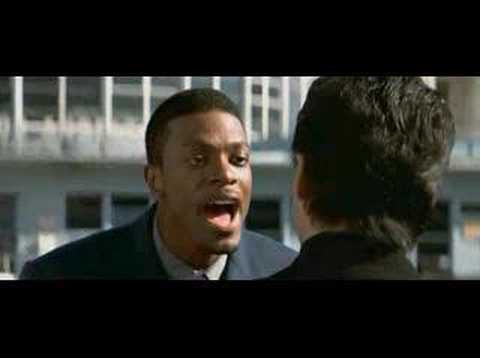
DO YOU UNDERSTAND THE WORDS THAT ARE COMIN' OUTTA MY MOUTH?
Now that we've learned what subtext is, here are 5 techniques you can use to add it to your story.
1. Give Your Character An Objective
We all have an objective, whether we realize it or not--“big picture” objectives (buying a house) and “small picture” objectives (going to the bathroom.) In the example above, we can see that the boy's objective was to land a date with the girl, while the girl's objective was to make it clear to the boy that she was not interested in him. Your characters should have something that drives them. The only thing that will drive them is an objective—a goal. Furthermore, having a goal will automatically add subtext to everything they say.
2. Give Your Character An Action
Now that the character has a goal, you have to give them the means by which they can achieve that goal. Try not having your character attempt to achieve his/her goal by deliberately asking for it. Instead, let them use their body language, or their tone of voice, to show what they want. In the example I shared with you, the girl blows a raspberry at the boy to show the boy that she's not interested in him. Blowing a raspberry (although childish) is an action the girl is taking to achieve her objective (making it clear to the boy that she’s not interested in him). Her action also provides a clue to her subtext.
Giving your character an action will help the reader read between the lines of your story—and it will also reveal what the character really wants without you having to explain what the character really wants.
3. Make Your Characters Talk In Gibberish
It might sound strange, but when you replace all your character’s dialogue with gibberish, the subtext is revealed (or at least hinted at). For instance:
Boy meets girl.
Boy asks: "Je janga pota blub?"
Boy smiles. Girl frowns.
Girl says: "Glooby."
Boy asks: "Jin go ploopa?"
Boy walks towards girl. Girl steps back.
Girl blows a raspberry.
Even though we have no idea what they’re saying, it’s pretty clear to us that this girl doesn’t like this boy. How do we know that, if all they did was talk in gibberish? SUBTEXT. If you replace your character’s dialogue with gibberish and it's impossible to know what’s going on, then it probably means you have to develop more subtext. On the other hand, if you did a great job of developing the subtext of the story, then your reader should have a general idea of what’s going on in the scene—even when the characters are talking nonsense.
4. Give Your Character A Secret
When you give a character a secret, it instantly makes them more interesting—and boy will there be subtext galore.
5. Give A Character A Secret About Another Character
What is more tantalizing than a character with a secret? A character who knows another character’s secret. When you put those two characters together in a room it makes for a very fascinating scene—chock full of delicious delicious subtext. Yum!
Good luck!
Hopefully, today, you learned something new: that human beings all talk in subtext and that if you want to create intriguing, believable characters, they'll have to talk in subtext, too. By utilizing these five techniques, you’ll not only vastly improve your ability to create subtext, but you’ll probably never look at human interactions the same way again.
Ollin Morales is a fiction writer, freelance writer, blogger, and ghostwriter. His blog, Courage 2 Create , chronicles his journey as he writes his first fiction novel. His blog offers writing advice as well as strategies to deal with life’s tough challenges. His blog was named one of The Top Ten Blogs for Writers by WriteToDone two years in a row (2011, 2012).


June 10, 2012
The Emotion Thesaurus Sample Entries Are Moving!
 Hi Everyone! I just wanted to stave off any panic in case you notice the Emotion Thesaurus Sample Entries are missing from the sidebar. It's okay--they are safe and sound, just moved to their own page. From now on, all posts and entries to do with The ET will be here: EMOTION THESAURUS.
 The reason for this is simple...the sidebar is getting crowded, and we need to free up some room for NEW Descriptive Thesaurus Collections as we roll them out. So, from now on, please visit THE EMOTION THESAURUS page and scroll down to find all your favorite entries :)
Thanks!
Angela & Becca
OH! And today you can find me over at the QQQE blogging about Zombies. SERIOUS discussions going on over there folks, so hop on by!


June 9, 2012
Character Trait Entry: Excitable
Since today's character trait is all about getting excited, it's fitting that I should announce our giveaway of The Emotion Thesaurus at Goodreads. If you haven't gotten your hands on a copy yet and you live in the US or Canada, two print versions are up for grabs. Just follow this link and enter to win before June 30th!
And now for this week's Character Trait Entry...
Excitable!!!
(exclamation points added for emphasis)
Definition: being easily roused into a state of excitement
Causes: curiosity, immaturity, an optimistic outlook, boredom, a need for action or adventure, a desire to perform or prove oneself to others, medication or diet, mental imbalance, a highly intelligence person who is consistently under-stimulated
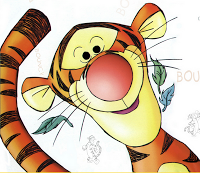
Characters in Literature: Gilderoy Lockhart (HP and the Chamber of Secrets), Fflewddur Fflam (The Black Cauldron), Tigger
Positives: Excitable characters are passionate. Their zeal is infectious and their exuberance can be the catalyst to spurring fence-sitters into action. Excitables make excellent support characters because they're willing to go along with whatever crazy idea is suggested. Their willingness to do just about anything makes them open-minded and impulsive. If you need someone to do something incredibly brave, dangerous, or stupid, an excitable character will get the job done.
Negatives: Excitables may be passionate, but they rarely think things through. Their lack of common sense and impulsivity often leads to trouble for them and their friends. Because Excitables are delighted by just about everything, they're often viewed by others as childish and simple and aren't taken seriously. They tend to react to opportunities rather than create them for themselves, so it's difficult for an Excitable to be an effective hero.
Common Portrayals: children, sidekicks, crackpots
Clichés to Avoid: the yes man who jumps eagerly into any adventure the hero suggests; the Excitable motivated by curiosity and the thirst for knowledge; the lap-dog-type sidekick who fawns after the hero with no discernible thoughts of his own
Twists on the Traditional Excitable:
Because these characters are often portrayed as mindless followers, give your Excitable a brain. Maybe he can see the foolishness or randomness of his actions, but he is compelled by some other reason to always leap without looking
An Excitable hero who doesn't think for himself would make for an interesting journey and a story rife with trouble
An Excitable mentor would also create some serious conflict for the hero
Conflicting Characteristics to Make your Excitable Unique or More Interesting: timid, rational, cruel, serious, responsible, obedient
*****
And speaking of being excited, I'm totally chuffed to be interviewed today at Miriam Forster's blog, which might have one of the coolest blog names ever. I'd tell you what it is, but what's the fun in that??

And now for this week's Character Trait Entry...
Excitable!!!
(exclamation points added for emphasis)
Definition: being easily roused into a state of excitement
Causes: curiosity, immaturity, an optimistic outlook, boredom, a need for action or adventure, a desire to perform or prove oneself to others, medication or diet, mental imbalance, a highly intelligence person who is consistently under-stimulated
Characters in Literature: Gilderoy Lockhart (HP and the Chamber of Secrets), Fflewddur Fflam (The Black Cauldron), Tigger
Positives: Excitable characters are passionate. Their zeal is infectious and their exuberance can be the catalyst to spurring fence-sitters into action. Excitables make excellent support characters because they're willing to go along with whatever crazy idea is suggested. Their willingness to do just about anything makes them open-minded and impulsive. If you need someone to do something incredibly brave, dangerous, or stupid, an excitable character will get the job done.
Negatives: Excitables may be passionate, but they rarely think things through. Their lack of common sense and impulsivity often leads to trouble for them and their friends. Because Excitables are delighted by just about everything, they're often viewed by others as childish and simple and aren't taken seriously. They tend to react to opportunities rather than create them for themselves, so it's difficult for an Excitable to be an effective hero.
Common Portrayals: children, sidekicks, crackpots
Clichés to Avoid: the yes man who jumps eagerly into any adventure the hero suggests; the Excitable motivated by curiosity and the thirst for knowledge; the lap-dog-type sidekick who fawns after the hero with no discernible thoughts of his own
Twists on the Traditional Excitable:
Because these characters are often portrayed as mindless followers, give your Excitable a brain. Maybe he can see the foolishness or randomness of his actions, but he is compelled by some other reason to always leap without looking
An Excitable hero who doesn't think for himself would make for an interesting journey and a story rife with trouble
An Excitable mentor would also create some serious conflict for the hero
Conflicting Characteristics to Make your Excitable Unique or More Interesting: timid, rational, cruel, serious, responsible, obedient
*****
And speaking of being excited, I'm totally chuffed to be interviewed today at Miriam Forster's blog, which might have one of the coolest blog names ever. I'd tell you what it is, but what's the fun in that??
June 8, 2012
Connecting With Creatives
Hi everyone, there's two great things I want to mention today. The first is that my friend Elana Johnson's new book Surrender has hit the shelves! I'm incredibly excited for her, because she's a great person and strong force of good in the Writing Community. Too, she's worked incredibly hard to create a companion book to Possession that keeps us in Vi's world but shows us something new and fresh through the eyes of two new characters, Raine and Gunner.
 Raine has always been a good girl. She lives by the rules in Freedom. After all, they are her father's rules: He's the Director. It's because of him that Raine is willing to use her talent--a power so dangerous, no one else is allowed to know about it. Not even her roommate, Vi.
All of that changes when Raine falls for Gunner. Raine’s got every reason in the world to stay away from Gunn, but she just can’t. Especially when she discovers his connection to Vi’s boyfriend, Zenn. Raine has never known anyone as heavily brainwashed as Vi. Raine’s father expects her to spy on Vi and report back to him. But Raine is beginning to wonder what Vi knows that her father is so anxious to keep hidden, and what might happen if she helps Vi remember it. She’s even starting to suspect Vi’s secrets might involve Freedom’s newest prisoner, the rebel Jag Barque....
I love the irony of a city named Freedom in a world where everything is controlled--brilliant. Anyway, slide on over to Elana's blog to see all the awesome release stuff going on (you can read the first 100 pages free!), and add her book to Goodreads if you'd like!
The second big news I want to share is WANA INTERNATIONAL. Many of you know Kristen Lamb, and how she is amazingly adept at understanding and forecasting the twists and turns of Social Media, and how it best can benefit artists without sucking away every drop of time and creativity. Well, with WANA INTERNATIONAL, she's and her business partner Ingrid Schaffenburg, are embracing the vision of having one place for all creatives to gather for support, friendship, knowledge sharing and collaboration.
Meet Francis, WANA's Mascot
WANA’s Mission:
WANA is seeking to fill a vacuum. We were inspired by the movie “Midnight in Paris.” We found ourselves longing for a time when creative people—ALL types of creative people—could all hang out, talk, chat, brainstorm, help each other, etc.
One of the things that bothers me about social media is that I see a lot of inbreeding. Writers talk all to writers about writing and that is good, but after time it stagnates. No new blood and no new ideas. Thus, WANA will solve this problem. —Kristen Lamb
I don't know about you, but I think there is so much to be inspired by in this world. Each day we see collaborations take place between Technology & Environmentalists, between Google and NASA and the result is a fresh perspective, and incredible results.
What might happen if writers did the same? What if they reached beyond the writing community to meld withe the talents and ideas of other creative disciplines? If you're interested in seeing how this question is answered, check it out. WANA will offer many opportunities, including a large education component. There's also a Ning site for socializing and to better aid collaboration as well. You can find me there as well.
Becca and I hope to teach a few webinars in the not-so-distant future at WANA, so look for us there in the coming months. :)

Raine has always been a good girl. She lives by the rules in Freedom. After all, they are her father's rules: He's the Director. It's because of him that Raine is willing to use her talent--a power so dangerous, no one else is allowed to know about it. Not even her roommate, Vi.All of that changes when Raine falls for Gunner. Raine’s got every reason in the world to stay away from Gunn, but she just can’t. Especially when she discovers his connection to Vi’s boyfriend, Zenn. Raine has never known anyone as heavily brainwashed as Vi. Raine’s father expects her to spy on Vi and report back to him. But Raine is beginning to wonder what Vi knows that her father is so anxious to keep hidden, and what might happen if she helps Vi remember it. She’s even starting to suspect Vi’s secrets might involve Freedom’s newest prisoner, the rebel Jag Barque....
I love the irony of a city named Freedom in a world where everything is controlled--brilliant. Anyway, slide on over to Elana's blog to see all the awesome release stuff going on (you can read the first 100 pages free!), and add her book to Goodreads if you'd like!
The second big news I want to share is WANA INTERNATIONAL. Many of you know Kristen Lamb, and how she is amazingly adept at understanding and forecasting the twists and turns of Social Media, and how it best can benefit artists without sucking away every drop of time and creativity. Well, with WANA INTERNATIONAL, she's and her business partner Ingrid Schaffenburg, are embracing the vision of having one place for all creatives to gather for support, friendship, knowledge sharing and collaboration.
Meet Francis, WANA's Mascot
WANA’s Mission:
WANA is seeking to fill a vacuum. We were inspired by the movie “Midnight in Paris.” We found ourselves longing for a time when creative people—ALL types of creative people—could all hang out, talk, chat, brainstorm, help each other, etc.
One of the things that bothers me about social media is that I see a lot of inbreeding. Writers talk all to writers about writing and that is good, but after time it stagnates. No new blood and no new ideas. Thus, WANA will solve this problem. —Kristen Lamb
I don't know about you, but I think there is so much to be inspired by in this world. Each day we see collaborations take place between Technology & Environmentalists, between Google and NASA and the result is a fresh perspective, and incredible results.
What might happen if writers did the same? What if they reached beyond the writing community to meld withe the talents and ideas of other creative disciplines? If you're interested in seeing how this question is answered, check it out. WANA will offer many opportunities, including a large education component. There's also a Ning site for socializing and to better aid collaboration as well. You can find me there as well.
Becca and I hope to teach a few webinars in the not-so-distant future at WANA, so look for us there in the coming months. :)
June 6, 2012
WRITING HERO: Jami Gold
Well after an insanely busy May which featured the release of The Emotion Thesaurus, an awesome Random Acts of Kindness Blitz for Writers, two kids birthday parties, one new house, and a class camping trip that the school forgot to tell me about...Becca and I are getting back into a routine again. And, along those lines, we're also returning to our Writing Heroes Series, where we acknowledge the people who have helped us develop into stronger writers and who add to the writing community as a whole. These heroes really make an impact, and deserve recognition for all they do.
 So with that, I'd like to tell you about my Writing Hero, JAMI GOLD.
I met Jami through Twitter, where I quickly discovered that not only was she super friendly, she also had a treasure trove of writing information at her blog, Beach Reads With Bite. From there I found out that she had a zombie cat, and this reaffirmed what I suspected--she was one of the most awesome people ever.
One thing I love about Jami is that she really pays attention to the mood in the writing community. She always posts timely articles on what's happening, how writers feel about it, and what her take is. Some people stay away from topics that are sensitive or might cause friction, but Jami knows that writers need to understand the climate we all work in in order to navigate the ups and downs. Whether on writing life or the how-to's of writing craft, her posts always offer sound ideas and advice.
I had an opportunity to read some of Jami's work, and I really loved it. I won't post spoilers, but her premise took on high fantasy idea which she then re-genred (probably not a word, but it fits) as a contemporary romance. Brilliant!
Anyone who knows Jami will not be surprised to see her featured here. She is always willing to help, advise, and offer encouraging words to those who need it. She works hard to forge friendships and stay connected to writers. Find her on Twitter, Facebook, Pinterest and more!
Thank you Jami, for being one of my WRITING HEROES. You inspire me, woman!
To pay it forward, I will give a 1000-word critique to Jami. She can then choose to keep it for herself or offer it as a giveaway on her blog! As a resident writing hero, she will also have a permanent link in our header.
So tell me Musers...do you know Jami Gold? Has she helped you or your writing in some way? Please tell us in the comments and help celebrate this amazing WRITING HERO!

So with that, I'd like to tell you about my Writing Hero, JAMI GOLD. I met Jami through Twitter, where I quickly discovered that not only was she super friendly, she also had a treasure trove of writing information at her blog, Beach Reads With Bite. From there I found out that she had a zombie cat, and this reaffirmed what I suspected--she was one of the most awesome people ever.
One thing I love about Jami is that she really pays attention to the mood in the writing community. She always posts timely articles on what's happening, how writers feel about it, and what her take is. Some people stay away from topics that are sensitive or might cause friction, but Jami knows that writers need to understand the climate we all work in in order to navigate the ups and downs. Whether on writing life or the how-to's of writing craft, her posts always offer sound ideas and advice.
I had an opportunity to read some of Jami's work, and I really loved it. I won't post spoilers, but her premise took on high fantasy idea which she then re-genred (probably not a word, but it fits) as a contemporary romance. Brilliant!
Anyone who knows Jami will not be surprised to see her featured here. She is always willing to help, advise, and offer encouraging words to those who need it. She works hard to forge friendships and stay connected to writers. Find her on Twitter, Facebook, Pinterest and more!
Thank you Jami, for being one of my WRITING HEROES. You inspire me, woman!
To pay it forward, I will give a 1000-word critique to Jami. She can then choose to keep it for herself or offer it as a giveaway on her blog! As a resident writing hero, she will also have a permanent link in our header.
So tell me Musers...do you know Jami Gold? Has she helped you or your writing in some way? Please tell us in the comments and help celebrate this amazing WRITING HERO!
June 4, 2012
Emotional Profiling at Just Jemi

Happy Monday, Musers! I'm over at Just Jemi today, talking about the importance of knowing your character's Emotional Temperament. Once you've gotten your coffee and a doughnut hole or three, feel free to pop on over and say good morning to Jemi and her followers :).


June 2, 2012
Character Trait Entry: Courage

Definition: mental or moral resilience to face opposition, danger or difficulties, despite one's own fear
Causes: A desire to honor family or role model heroes by living up to their moral strength and/or sacrifice; a belief that one must not let fear stand in the way of what is right; a need to protect others from harm or suffering; a very strong moral code; the belief that one person can make a difference and that the future is determined by one's own actions.
Characters in Literature: Harry Potter (Harry Potter); Hans Hubermann (The Book Thief); Frodo (Lord of the Rings); Willow (Willow)
Positives: Courageous characters will make up for what is lacking in any circumstance they deem necessary. After reflection or a moral assessment, they will step up in a situation, no matter the odds, because they know inside it is the right thing to do. People who show courage have a core of inner strength, a strong moral compass and put the welfare of others first when it counts most. They are willing to stand up for their beliefs regardless of risk. They feel fear, but have mastered it, and do not allow it to motivate their choices or decisions. Characters who are courageous lead by example, even if they are unsuited to a task, or realize a great deal of work lies ahead. Others are inspired by courage and often strive to honor it by showing courage themselves.
Negatives: Courage, while commendable, is not always smart. This type of character cannot always see beyond the immediate situation to the long term impacts of a choice or action. Sometimes wisdom is overridden by the need to stop something from happening, and from the desire to act. Courageous people can be impulsive and react emotionally to what's happening around them when pausing to think of the best course of action is what is really needed.
Common Portrayals: Military soldiers, police, fire and rescue first responders, political activists; court case witnesses to crime
Cliches to Avoid: the hero who is the complete package--strength, courage, intelligent, good looks, popular, etc.; having a minor character be the courageous yet wasteful sacrifice as a plot device to show the strength of the villain
Twists on the Traditional Courageous:
Characters with courage draw admiration, because somewhere deep inside, we want to believe we too would show the same courage and fortitude when faced with a similar choice or situation. Shake things up by giving your hero an unlikable flaw that lessens his appeal, making him more realistic.
Warrior and courage are not synonymous. Internal strength comes in all all shapes and sizes, so consider making your character someone who is not the best choice for what is ahead.
Courage is to act despite fear, but every character has a breaking point. What's your character's, and how can they move past it to succeed?
Conflicting Characteristics to Make your Courageous Unique or More Interesting: Naive; Proper; Shy; Impulsive; Eccentric; Worry Wart
**Special Note! Today the gracious Lindsey and Lindsey of After The Ending are hosting us at their blog to give one of our older posts a bit of love. Aren't they awesome? Please stop in and say hello!


Writers Helping Writers

A place for writers to find support, helpful articles on writing craft, and an array of unique (and free!) writing tools you can't find elsewhere. We are known far and wide for our "Descriptive Thesau
...more
- Angela Ackerman's profile
- 1023 followers