Meredith Colby's Blog, page 9
September 23, 2016
The Answer to the Question, "Can Anybody Sing"? Vol. 1
“Can anybody sing”?is a question I’ve been asked many times. I now know there’s always a question behind that question and it can have any number of meanings. So far I’ve figured out a four of them. Here’s the first.Can-Anybody-Sing Question #1:When “can anybody sing” really means “could I (or my loved one) sing better than I (they) currently do”?Answer:Yes Singing may seem like a single action, but really there’s a lot going on when you sing.Your brain is perceiving, decoding, and reproducing beats and rhythms, pitch and volume, sound quality and shape. Your body is responding in intricate and specific ways to stimulus from your brain. Accurate singing is no small feat.There’s also the fact that singing is a learned behavior. Some studies show that children who are raised in homes in which they aren’t exposed to music suffer a permanent deficit; they can never learn to discern and reproduce pitch as well as a kid who’s parent’s exposed them to music. Doesn’t mean they can’t learn to enjoy music or sing for enjoyment. It just means you probably won’t see them stunning audiences at Lollapalooza.I truly believe that we humans are not inclined to pursue activities in which we have no talent. I, for one, have never once in my life thought I’d like to be a trapeze artist or a chemist. I’m pretty confident that I’d suck at those things. But there are activities and skills I would like to explore. I’m sure that if I chose an activity I was interested in, and actually worked on it for a while, I could improve upon my current ability. So could you.What do you want to do with your singing? Join a choir? Audition for a show? Join a band? Record the songs you’ve been writing? Be honest about what you want. Know that it’s all good.There’s a heck-of-a-lot of room between the shower andThe Voice.You’ll definitely improve your singing if you give yourself something to shoot for and work towards it.
Singing may seem like a single action, but really there’s a lot going on when you sing.Your brain is perceiving, decoding, and reproducing beats and rhythms, pitch and volume, sound quality and shape. Your body is responding in intricate and specific ways to stimulus from your brain. Accurate singing is no small feat.There’s also the fact that singing is a learned behavior. Some studies show that children who are raised in homes in which they aren’t exposed to music suffer a permanent deficit; they can never learn to discern and reproduce pitch as well as a kid who’s parent’s exposed them to music. Doesn’t mean they can’t learn to enjoy music or sing for enjoyment. It just means you probably won’t see them stunning audiences at Lollapalooza.I truly believe that we humans are not inclined to pursue activities in which we have no talent. I, for one, have never once in my life thought I’d like to be a trapeze artist or a chemist. I’m pretty confident that I’d suck at those things. But there are activities and skills I would like to explore. I’m sure that if I chose an activity I was interested in, and actually worked on it for a while, I could improve upon my current ability. So could you.What do you want to do with your singing? Join a choir? Audition for a show? Join a band? Record the songs you’ve been writing? Be honest about what you want. Know that it’s all good.There’s a heck-of-a-lot of room between the shower andThe Voice.You’ll definitely improve your singing if you give yourself something to shoot for and work towards it.


September 2, 2016
When We Play Small
Elizabeth and I had worked on a songfor a showcase she was doing. She’s a music theater singer and her song was perfect for her. She was communicating the character and her voice sounded great. She was completely selling the song. Until the showcase. I was there, and watched her sing her song as though she was punching a time clock. Rather than communicating the text of the song, she was communicating…well…nothing. She was a pretty girl singing a nice song with her pretty voice. Who cares. Of course I was supportive; she had beautifully incorporated some technical things we’d been working on, and I was proud of her for that. At our next lesson I asked what had happened to the presentation we’d worked on. Turns out there were singers at the showcase whom Elizabeth thought were better than she was. That was it. That was the whole reason she’d turned her sunshine off. “There were singers there who were so good…I knew I couldn’t sing as well as them.”Well, that got me to ponderin’.Elizabeth’s situation is a common one, even among really experienced, professional singers.There’s someone you’re sharing the stage with, or who’s in the audience, whom you know to be a really good singer. Or even great. Someone who’s skill level you can’t touch even at your best. So you play small.Or, conversely, you might try much too hard.It’s the rare singer who isn’t affected by this. We don’t even ask ourselves why we’re trying too hard, or not trying at all. We don’t challenge whatever faulty logic we’re using to justify our actions, or even get conscious about it. We just do it. And then we feel horrible; self-recriminating if we didn’t share our best performance, or embarrassed if we overdid it.I think it’s human nature, and it doesn’t make us bad. But here’s the thing; you know it’s going to happen. At one time or another you’ll be in this situation. So rather than react in the moment out of fear, plan ahead with intention from a state of calm. Hopefully, then, you’ll have a better chance of being in control of your response to the in the presence of awesomeness.One of the many items on my “What-I-Know-Now-that-I-Wish-I-Knew-Then” list, is that people like what they like. You can’t please everyone, so all you can do is be the best you you’re capable of, right here and right now. The more you imagine that there’s one perfect way to sing -and once you get it everyone will like you - the more you’ll be frustrated and false.
 What people like is for performers to be real. What people find desirable in any art form is not on a nice, tidy continuum.So use your singing to help your process of uncovering what it is you love, hate, value, or desire. As you uncover the musical reflections of your truths you’ll find what those truths are, and then uncover deeper truths through your singing. For a singer who’s singing as a way to genuinely express music, the process never ends.Art is about personal discovery and expression.As artists find their own truths and are able to express them accurately they find an audience that resonates with that truth. That doesn’t mean you have a Truth you can write down like a mission statement. That means that your singing just feels right to you.It means that as you’re performing, or recording, that you’re working to meet your own standards. That’s a big job that takes a lot of faith. But it’s true. And the more you invest in the ego race of figuring out who is better, or worse, than you are, the longer it will take you to find yourself in your own singing.
Of course I was supportive; she had beautifully incorporated some technical things we’d been working on, and I was proud of her for that. At our next lesson I asked what had happened to the presentation we’d worked on. Turns out there were singers at the showcase whom Elizabeth thought were better than she was. That was it. That was the whole reason she’d turned her sunshine off. “There were singers there who were so good…I knew I couldn’t sing as well as them.”Well, that got me to ponderin’.Elizabeth’s situation is a common one, even among really experienced, professional singers.There’s someone you’re sharing the stage with, or who’s in the audience, whom you know to be a really good singer. Or even great. Someone who’s skill level you can’t touch even at your best. So you play small.Or, conversely, you might try much too hard.It’s the rare singer who isn’t affected by this. We don’t even ask ourselves why we’re trying too hard, or not trying at all. We don’t challenge whatever faulty logic we’re using to justify our actions, or even get conscious about it. We just do it. And then we feel horrible; self-recriminating if we didn’t share our best performance, or embarrassed if we overdid it.I think it’s human nature, and it doesn’t make us bad. But here’s the thing; you know it’s going to happen. At one time or another you’ll be in this situation. So rather than react in the moment out of fear, plan ahead with intention from a state of calm. Hopefully, then, you’ll have a better chance of being in control of your response to the in the presence of awesomeness.One of the many items on my “What-I-Know-Now-that-I-Wish-I-Knew-Then” list, is that people like what they like. You can’t please everyone, so all you can do is be the best you you’re capable of, right here and right now. The more you imagine that there’s one perfect way to sing -and once you get it everyone will like you - the more you’ll be frustrated and false.What people like is for performers to be real. What people find desirable in any art form is not on a nice, tidy continuum.So use your singing to help your process of uncovering what it is you love, hate, value, or desire. As you uncover the musical reflections of your truths you’ll find what those truths are, and then uncover deeper truths through your singing. For a singer who’s singing as a way to genuinely express music, the process never ends.Art is about personal discovery and expression.As artists find their own truths and are able to express them accurately they find an audience that resonates with that truth. That doesn’t mean you have a Truth you can write down like a mission statement. That means that your singing just feels right to you.It means that as you’re performing, or recording, that you’re working to meet your own standards. That’s a big job that takes a lot of faith. But it’s true. And the more you invest in the ego race of figuring out who is better, or worse, than you are, the longer it will take you to find yourself in your own singing.
August 23, 2016
Getting Over Yourself
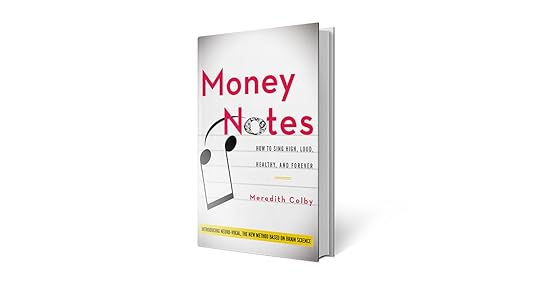 I’ve written a book.It will be printed next week. It’s calledMoney Notes:How to Sing High, Loud, Healthy, and Forever.It introduces Neuro-Vocal, a voice method that uses brain science to deliver fast and healthy results to people who sing popular styles.That's my elevator speech.This post isn’t about the books contents. This post is about how the writing of a book made me get over myself. A hundred times. On this subject. For now. Read on if you’re an author, a creator, or anyone with a gift to share. (Um…that would be you. Keep reading.)I’ve learned that writing a book takes a long time, like most things worth doing. When I first thought about writing this book, I didn't think it would take very long. I knew how easily I could sit and describe what I teach; why and how it works. I’m an expert, writing what I know well. How long could that take? (“Ha, ha”, the Universe laughed.)My main challenge, the one that came up again and again, was that I had to get over myself. I had to believe inthe work, not necessarily inmyself. I had to show up even when I didn’t feel like it. I had to act as if this wasn’t about me.When I teach studentsI’m looking at one face at a time. I'm conscious of sharing, teaching, and helping. In fact, on days that I'm crabby or depressed, I especially look forward to seeing a student. Teaching draws me out of myself; with my focus on someone else I can't stay crabby. One of the many gifts of my vocation is that it regularly forces me to get over myself.When I writeit's just me and my laptop. Easy to be crabby, easy to blow off, easy to quit. There’s been a voice in my head that kept (keeps) asking me why I’m bothering to write this book. Who’s going to read it? Who gives a rip? And what if people are mean to me, or criticize me?Knowing this phenomenon is common among authors hasn’t made it any less real for me. Being told that every first-time author struggles to get over herself hasn’t made it easier for me.
 On good days,the part of me that’s wise and fair, that believes in goodness, love, and positive, pithy sayings, steps in and sprays me with a hose. Then I admit that I know for a fact Neuro-Vocal Method can help people to master pop technique. I know there aren’t a lot of voice teachers out there teaching pop method. I know there are great voice teachers who won’t teach pop method because they don’t believe it can be vocally healthy. I know that not everyone can afford, or has access to, private voice lessons. So what if my book helps ten people in the world. Is that worth it?The thing about teaching is that you can only preach your beliefs so many times before you have to start applying them to yourself.Ihad to apply to myself some of the things I’ve claimed, for years, to believe; things I’ve encouraged my students to believe. For instance:I believe that if you can find, and do, the thing that genuinely motivates you toward your higher good, then you should.I believe that singing (or any art form) matters as a vehicle for self-expression. If self-expression matters to you, and singing is your thing, then you have to sing. I don’t believe that the only singing that matters is the singing that makes people famous.This book is a part of walking that talk. I have something to share that nobody else has shared. I know it motivates me toward my higher good. So it had to be done.So that I didn’t give up on this project I chose to believe that maybe there are ten, or ten thousand, people in the world that needs to read and use Money Notes. My book might help some people get their singing to a place where it can bring them joy. That’s worth it.Every artist knows that the more intimately something is felt, the more universally it’s shared.The odds are, then, that you understand what I’m talking about. You have something to share. The sharing of that thing may be part of walking your talk. But it’s also scary. It doesn’t have to be tangible - a book or a CD - it can be a project, or a way of being in the world. I hope you can find ways to help you get over yourself so you can share it.I did. It wasn’t so bad.
July 31, 2016
Here Be Dragons
Map:a two dimensional representation of our three-dimensional world. Historically, a drawing of the world beyond the walls of your village. A drawing of a world unknown to you. In the days before humans flew, maps could be drawn but one way: someone had to travel somewhere and draw what he saw. So maps of large areas were generally put together little by little, and by contributions from several cartographers. Unknown and uncharted areas were often depicted with a drawing of a fierce serpent, and these words:Here be DragonsSingers are, almost by definition, explorers. They are exploring their voices, their musicality, their potential, and often the possibilities their singing holds for them as people. The people who seek voice lessons are people who are willing to explore uncharted territory. Simply by committing to voice lessons they show they’re willing to take the risks others might not.There are dragons there, of course. A few are called What If I Can’t Do This, and What If the Teacher Laughs At Me, and Who Do I Think I Am. These dragons are easily seen by many singers, most of whom no voice teacher will ever meet.Explorers continually find themselves on the edge of their uncharted territory. Most fear the dragons that may be looming there. Some press on in the face of fear. Some do not. Some scoff at the idea of dragons, imagining instead a land full of happiness and promise.
 Here’s the thing, though. Dragons or not, explorers MUST explore. It’s who we are. It’s how we’re made. We are not the people who watch the band or choir or production and say, “What a delightful presentation”! We are the people who watch that show with desire bubbling beneath our skin. We want to go where those singers are.We cannot passively enjoy the postcards sent from that unknown place; we feel the pull to go there.But, often, here be dragons.Allison said, “I want to record my songs, but what if they’re no good”?Monica said, “I want to join a band but what if I audition and they don’t want me”?Ron said, “I know I’m ready to audition for Equity shows, but I hate the rejection of not getting cast”!D.K. said, “That group sounds perfect for me, but in their picture they all look young and white, and I’m neither”!Dragons, dragons, dragons. They’re everywhere.It must be, though, that true explorers have it within them to challenge dragons.Explorers will not resist the call to move forward simply because of a fear - a dragon - someone else drew on their map.Though you know your journey could be dangerous, you also know you can face whatever comes your way. You believe in your mission and are pulled by your desire, because that is who you are. You learn about your journey from those who have gone before, go that far, and then farther into a new land. Into an experience that is all your own. And then, if you choose to, you can chart that territory for someone coming after you.
In the days before humans flew, maps could be drawn but one way: someone had to travel somewhere and draw what he saw. So maps of large areas were generally put together little by little, and by contributions from several cartographers. Unknown and uncharted areas were often depicted with a drawing of a fierce serpent, and these words:Here be DragonsSingers are, almost by definition, explorers. They are exploring their voices, their musicality, their potential, and often the possibilities their singing holds for them as people. The people who seek voice lessons are people who are willing to explore uncharted territory. Simply by committing to voice lessons they show they’re willing to take the risks others might not.There are dragons there, of course. A few are called What If I Can’t Do This, and What If the Teacher Laughs At Me, and Who Do I Think I Am. These dragons are easily seen by many singers, most of whom no voice teacher will ever meet.Explorers continually find themselves on the edge of their uncharted territory. Most fear the dragons that may be looming there. Some press on in the face of fear. Some do not. Some scoff at the idea of dragons, imagining instead a land full of happiness and promise.Here’s the thing, though. Dragons or not, explorers MUST explore. It’s who we are. It’s how we’re made. We are not the people who watch the band or choir or production and say, “What a delightful presentation”! We are the people who watch that show with desire bubbling beneath our skin. We want to go where those singers are.We cannot passively enjoy the postcards sent from that unknown place; we feel the pull to go there.But, often, here be dragons.Allison said, “I want to record my songs, but what if they’re no good”?Monica said, “I want to join a band but what if I audition and they don’t want me”?Ron said, “I know I’m ready to audition for Equity shows, but I hate the rejection of not getting cast”!D.K. said, “That group sounds perfect for me, but in their picture they all look young and white, and I’m neither”!Dragons, dragons, dragons. They’re everywhere.It must be, though, that true explorers have it within them to challenge dragons.Explorers will not resist the call to move forward simply because of a fear - a dragon - someone else drew on their map.Though you know your journey could be dangerous, you also know you can face whatever comes your way. You believe in your mission and are pulled by your desire, because that is who you are. You learn about your journey from those who have gone before, go that far, and then farther into a new land. Into an experience that is all your own. And then, if you choose to, you can chart that territory for someone coming after you.
You Are Made of Stardust
Once upon a time I was a mother of a little baby. When she was a little flurb I used to delight in handing her off to people. Not just any people, only the people who obviously liked babies. That was the only criterion, though. And I didn’t hand her off forever, just for a few minutes. I’d hand her off and then stand back and watch the magic.The magic was in her being-ness.I was amused and astounded by the power this little human had. She’d lie there, wrapped in her flurb-wear and in someone’s arms and they’d get all…real. Just holding her made them happy and vulnerable and present to the moment. Simply looking at her little face and feeling her little hand wrapped around one of their fingers could do as much for a person’s Inner Peace and Harmony as a year of dedicated meditation practice might have done.That little baby was more powerful than anyone I’d ever seen and she wasn’t doing a darned thing. She was just being.I realize that a new mother responding to virtually anyone commenting on the cuteness of her baby with, “Wanna hold her”? is pretty strange. But I considered it sort of an on-going experiment. It turned out to be one that worked predictably every single time.My little daughter was completely vulnerable, present, honest, and cute. She didn’t want anything from the people who held her. She just Was. And it seemed like whoever was holding her just got lost in her world for a few seconds or a few minutes, and they too became vulnerable and present and cute.She couldn’t even stand up and yet she seemed to have a comic book hero’s Super Power. She could melt people with her gaze.Every person was once a baby, and we all have remnants of that Super Power within us. We can love more powerfully than an angry word, and leap tall defenses with a single touch. If we want to. The baby is vulnerable by design. We must be vulnerable by choice. And there’s the rub.Physicists say that since all the material of our Earth is made from the material of the universe, then everything on earth was once a star. Including us. We are made of stardust. Maybe the Super Power of babies is that they’re still aware of that, somehow. Maybe they’re just naturally beaming the power of the Universe onto everything they see. Maybe they can see the stardust in the grown-ups that hold them, and what we love is that stellar reflection of ourselves in their eyes.
 On these ever-darkening days of December we must look for, and take in, light wherever we can find it. Look in the mirror and see the light in your own eyes. You are made of stardust.
When she was a little flurb I used to delight in handing her off to people. Not just any people, only the people who obviously liked babies. That was the only criterion, though. And I didn’t hand her off forever, just for a few minutes. I’d hand her off and then stand back and watch the magic.The magic was in her being-ness.I was amused and astounded by the power this little human had. She’d lie there, wrapped in her flurb-wear and in someone’s arms and they’d get all…real. Just holding her made them happy and vulnerable and present to the moment. Simply looking at her little face and feeling her little hand wrapped around one of their fingers could do as much for a person’s Inner Peace and Harmony as a year of dedicated meditation practice might have done.That little baby was more powerful than anyone I’d ever seen and she wasn’t doing a darned thing. She was just being.I realize that a new mother responding to virtually anyone commenting on the cuteness of her baby with, “Wanna hold her”? is pretty strange. But I considered it sort of an on-going experiment. It turned out to be one that worked predictably every single time.My little daughter was completely vulnerable, present, honest, and cute. She didn’t want anything from the people who held her. She just Was. And it seemed like whoever was holding her just got lost in her world for a few seconds or a few minutes, and they too became vulnerable and present and cute.She couldn’t even stand up and yet she seemed to have a comic book hero’s Super Power. She could melt people with her gaze.Every person was once a baby, and we all have remnants of that Super Power within us. We can love more powerfully than an angry word, and leap tall defenses with a single touch. If we want to. The baby is vulnerable by design. We must be vulnerable by choice. And there’s the rub.Physicists say that since all the material of our Earth is made from the material of the universe, then everything on earth was once a star. Including us. We are made of stardust. Maybe the Super Power of babies is that they’re still aware of that, somehow. Maybe they’re just naturally beaming the power of the Universe onto everything they see. Maybe they can see the stardust in the grown-ups that hold them, and what we love is that stellar reflection of ourselves in their eyes.On these ever-darkening days of December we must look for, and take in, light wherever we can find it. Look in the mirror and see the light in your own eyes. You are made of stardust.
3 Tips to Make Your Life Easier
Once you get a little long in the tooth, you tend to be able to see the things that “work” in life, as opposed to the things that make life harder. That’s why people over 40 can be so full of advice – they’ve often become aware of the ways and times that they’ve chosen the difficult path. Or just the wrong path. And they’re aware of the beliefs they’ve held and insecurities they’ve nurtured. The farther you get from 40 the clearer all those things can become. And at the same time you’re also becoming aware of how blurry the lines are in Real Life; how many shades of grey there are and how many opportunities we’re given to begin again.Luckily for me, I’m a teacher by profession. Which means that I get to impose some of those realizations on others; and those people might actually hear me and benefit from my experience. Emphasis on “might”. At least they’re more likely to be polite about it.This is probably not the last time I’ll put up a short list of things I wish people had told me when I was younger. Or maybe they did tell me and my list should be “advice I wish I’d listened to”. But in any event, a person can’t hear this sort of thing too much. Eventually some of it sticks. Truth #1: Attitude is everything.If you want your life to go smoothly, have a good attitude. Be the person who doesn’t complain but rather makes the best of any situation. Be the person who shows up a little early, who lends a hand, who goes the extra mile. Have integrity in your endeavors, and have the humility to fail gracefully. (Failing is how we learn, and most of the Bad Attitudes you see around you, as well as your own, are manifestations of a fear of failure.)The person with a good attitude is a person other people like. The value of being liked and trusted cannot be overstated.Your good attitude will get you chosen for opportunities, it will open doors for you, it will lend a magical ease to your life.Not that the stuff of life won’t happen to you – of course it will – but on the whole the trajectories of your careers and your relationships will be smoother, faster, and easier.
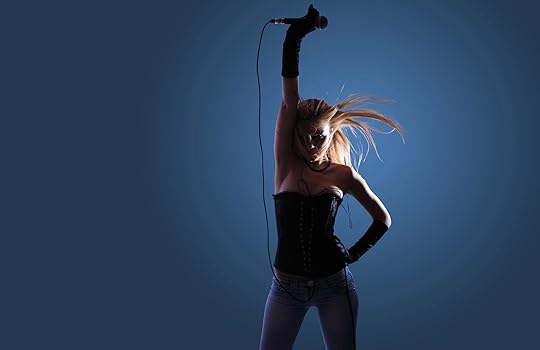 Truth #2: Singing is a performance art.It is not un-cool or insincere to practice in front of a mirror. You’re going to be standing up in front of people and they’ll be looking at you. You should know exactly what your audience is looking at. Practice singing in front of a mirror.By watching yourself sing you may find that some gestures that initially FEEL really weird or inauthentic actually LOOK really good.You may find that you have a little physical habit that you never knew you had; for the good or the bad. You may find your eyes dart around or realize how much you keep your eyes closed.The upshot is that you need to be intentional in the way you look when you sing. Just as you are being intentional in the way you sound when you sing. It matters.
 Truth #3: Good singers should always make The Face.This applies to people who are reasonably good singers, and will not hold up for a beginning performer. In fact, if you haven’t clocked some time getting to be a good singer and/or good performer, DO NOT do this. It won’t help. But if you’re a reasonably good singer, you have to make The Face.When you hit a note that is even remotely on the higher side, and/or that you hold for a while, you should squinch up your face as though it’s hurting you to sing this note.Especially if it’s at or near the end of the song. Just trust me. Look like it hurts and they’ll think you’re really feeling what you sing – which is the non-singers’ definition of a good singer.There you have the first three of what will doubtless prove to be an ever-expanding list.Try these things for a few months and see if they don’t make a difference in your experience as a singer, as well as your experience of life. You may be pleasantly surprised.
Truth #1: Attitude is everything.If you want your life to go smoothly, have a good attitude. Be the person who doesn’t complain but rather makes the best of any situation. Be the person who shows up a little early, who lends a hand, who goes the extra mile. Have integrity in your endeavors, and have the humility to fail gracefully. (Failing is how we learn, and most of the Bad Attitudes you see around you, as well as your own, are manifestations of a fear of failure.)The person with a good attitude is a person other people like. The value of being liked and trusted cannot be overstated.Your good attitude will get you chosen for opportunities, it will open doors for you, it will lend a magical ease to your life.Not that the stuff of life won’t happen to you – of course it will – but on the whole the trajectories of your careers and your relationships will be smoother, faster, and easier.Truth #2: Singing is a performance art.It is not un-cool or insincere to practice in front of a mirror. You’re going to be standing up in front of people and they’ll be looking at you. You should know exactly what your audience is looking at. Practice singing in front of a mirror.By watching yourself sing you may find that some gestures that initially FEEL really weird or inauthentic actually LOOK really good.You may find that you have a little physical habit that you never knew you had; for the good or the bad. You may find your eyes dart around or realize how much you keep your eyes closed.The upshot is that you need to be intentional in the way you look when you sing. Just as you are being intentional in the way you sound when you sing. It matters.Truth #3: Good singers should always make The Face.This applies to people who are reasonably good singers, and will not hold up for a beginning performer. In fact, if you haven’t clocked some time getting to be a good singer and/or good performer, DO NOT do this. It won’t help. But if you’re a reasonably good singer, you have to make The Face.When you hit a note that is even remotely on the higher side, and/or that you hold for a while, you should squinch up your face as though it’s hurting you to sing this note.Especially if it’s at or near the end of the song. Just trust me. Look like it hurts and they’ll think you’re really feeling what you sing – which is the non-singers’ definition of a good singer.There you have the first three of what will doubtless prove to be an ever-expanding list.Try these things for a few months and see if they don’t make a difference in your experience as a singer, as well as your experience of life. You may be pleasantly surprised.
James Brown, Joan Rivers, and Acts of Service
I love Terry Gross.For those of you who don’t know who she is, she has a radio show (+ podcast) that is the best interview show you’ll hear. By that I mean thatA) she asks really good questions that are relevant to the person rather than simply the persons latest movie/book/show/award, andB) she listens when they speak.Terry replays interviews of famous people when they die. In a couple of these recent interviews, both Joan Rivers and James Brown inspired me from the great beyond.James Brown was, aside from being a ground-breaking musician, known for a number of personality traits. He was hyper-focused, committed, self-centered, uncompromising, and larger-than-life. It turns out there was a reason for that.James Brown was a service-oriented performer.Sounds strange, I know. And frankly I was surprised. But in the interview it was clear that James Brown was someone who was passionate about giving his audience the show they had come to see. He over-prepared and held himself and everyone on his team to extremely high standards because he was always cognizant of his audience.He talked about what he considered his duty and privilege to entertain and uplift his audience. He believed in the transformational power of music and knew that his music and performance could reach people at a level that nothing else could. His costuming and choreography, his super-tight band, even his set list, were created and delivered from a commitment to service. Not from a place of self-indulgence or self-importance. Surprise.
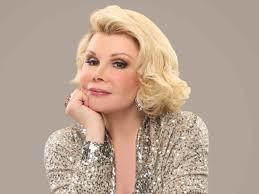 In the interview I recently heard, another supposed egomaniac, Joan Rivers, said the same thing. She seemed to us like a driven, neurotic, self-absorbed entertainer. Hilariously funny, of course. But some people are just naturally funny, right? Turns out she prepared for her shows almost compulsively. She said she felt a deep obligation to her audience. To paraphrase, “They’ve made time and spent money and hired sitters and come a long way to see me. I owe them a good time. It’s the most important thing to me that everyone there has a good time”.Two entertainers who were internationally and inter-generationally successful. Two people who were so innovative and talented and experienced that they surpassed fame to become legends. And they were both service-oriented. Both motivated by their obligation to their audience. Both able to see themselves from a chair in the theater.Lest you miss my point, hear this:Being meticulous about your stage persona is not self-centered unless you make it that way.Planning your music, your movement, your presentation, your pacing, your costumes, etc. can and should be an act of service. Preparing your presentation can be about your audience and their experience – you may find yourself more energized to put more time and care into your work if you think of it that way.If you’re afraid to practice your singing in front of a mirror then you may want to take a moment to question your motivation. Take a moment to figure yourself out. Give yourself more than one way to think of your performance.When your performance is about your audience you may find you’re truly set free to do your best job.You may find yourself set free from the “should’s” and the various versions of “who do you think you are” that swim around in your head. You may see how the things you’re hard on yourself about - perhaps your height or weight or age or gender or background - are completely irrelevant. At least to your audience.When you get out of your insecurities you’ll deliver the goods.
personality traits. He was hyper-focused, committed, self-centered, uncompromising, and larger-than-life. It turns out there was a reason for that.James Brown was a service-oriented performer.Sounds strange, I know. And frankly I was surprised. But in the interview it was clear that James Brown was someone who was passionate about giving his audience the show they had come to see. He over-prepared and held himself and everyone on his team to extremely high standards because he was always cognizant of his audience.He talked about what he considered his duty and privilege to entertain and uplift his audience. He believed in the transformational power of music and knew that his music and performance could reach people at a level that nothing else could. His costuming and choreography, his super-tight band, even his set list, were created and delivered from a commitment to service. Not from a place of self-indulgence or self-importance. Surprise.In the interview I recently heard, another supposed egomaniac, Joan Rivers, said the same thing. She seemed to us like a driven, neurotic, self-absorbed entertainer. Hilariously funny, of course. But some people are just naturally funny, right? Turns out she prepared for her shows almost compulsively. She said she felt a deep obligation to her audience. To paraphrase, “They’ve made time and spent money and hired sitters and come a long way to see me. I owe them a good time. It’s the most important thing to me that everyone there has a good time”.Two entertainers who were internationally and inter-generationally successful. Two people who were so innovative and talented and experienced that they surpassed fame to become legends. And they were both service-oriented. Both motivated by their obligation to their audience. Both able to see themselves from a chair in the theater.Lest you miss my point, hear this:Being meticulous about your stage persona is not self-centered unless you make it that way.Planning your music, your movement, your presentation, your pacing, your costumes, etc. can and should be an act of service. Preparing your presentation can be about your audience and their experience – you may find yourself more energized to put more time and care into your work if you think of it that way.If you’re afraid to practice your singing in front of a mirror then you may want to take a moment to question your motivation. Take a moment to figure yourself out. Give yourself more than one way to think of your performance.When your performance is about your audience you may find you’re truly set free to do your best job.You may find yourself set free from the “should’s” and the various versions of “who do you think you are” that swim around in your head. You may see how the things you’re hard on yourself about - perhaps your height or weight or age or gender or background - are completely irrelevant. At least to your audience.When you get out of your insecurities you’ll deliver the goods.