Meredith Colby's Blog, page 2
January 8, 2019
THE MISSING PIECE IN VOICE TEACHING (Spoiler: It's Your Brain)
The following is an excerpt from Money Notes: How to Sing High, Loud, Healthy, and Forever by Meredith ColbyChapter 4: This is Your Body, Singing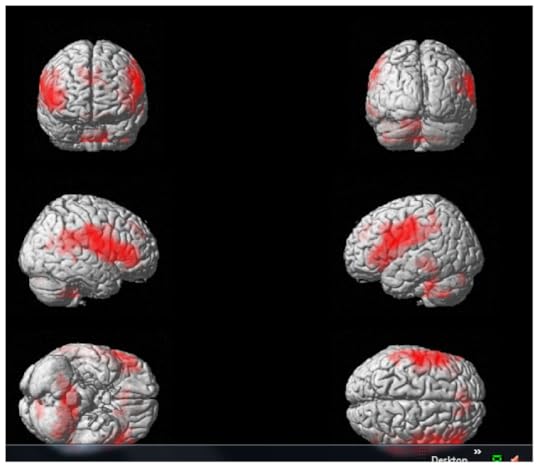 This isn’t a biology book; it’s a singing method book. But I need to explain the basics of the way Neuro-Vocal Method works in your body. You have to understand it at least a little bit, or you won’t apply it effectively.I’m going to describe the biology and physiology with as much Regular Person language as possible. I promise I’ll be brief, and I’ll avoid being unnecessarily specific. Just enough to get the point across.BRAIN NEIGHBORHOODS
 Your brain is comprised of three parts: the cerebellum, brain stem, and cerebrum. The cerebellum is a big contributor to regulating and coordinating movement, posture, and balance. It’s called the “old brain” because we share this anatomical feature with our four-legged brethren all the way back to our evolutionary grandparents, the reptiles. For this reason, I lovingly refer to the cerebellum and brain stem as the “Lizard Brain.” We’re going to be seducing your Lizard Brain—which is really only interested in the way things feel to you—and get it to influence your motor cortex.Your motor cortex is in charge of a whole lot of files, all collected under the heading “How You Do Stuff.” So, for instance, when you catch something that’s been tossed at you, you don’t think, “I’ll now flex this muscle, then this muscle, now relax this tendon, and adjust for this trajectory, etc.” Nope. You just reach out and catch. That’s because you have a unified motor response to the instruction “catch.” It’s called a motor action plan. It means that as you learned to catch things flying your way, your brain bundled all the individual physical movements—along with the visual and tactile information—into one unified action.
 To get a sense of what I’m talking about, think about signing your name. You exclusively sign your name with either your right or left hand. Do it with your other hand and it becomes someone else’s signature. (Probably someone who’s, like, two years old.) That’s because you have a motor action plan called Signing My Name housed in your motor cortex, and it applies only to one hand. Attempting the same action using the other hand—the one that doesn’t have that motor action plan—produces very different results.Once you have a motor action plan for a specific activity, it’s pretty hard to change (as you may recall from when you were fifteen and you tried to change your signature to make it cooler). That’s because that motor action plan initiates in response to your intention, not the actual movement. Those ball-catching or name-signing neurons start firing about 100 milliseconds before there’s any actual motor response. Then, to make things even harder, you have another neighborhood in your brain called the somatosensory cortex. The somatosensory cortex anticipates how your physical actions are going to feel to you and how objects will feel when you touch them. That’s called a forward model.That, for good or bad, is why it can be very hard to change your singing. You’ve been singing all your life. You have a seriously complex and unique file in your motor cortex called Sing. You have a forward model of Sing that anticipates what you’ll be feeling when you sing. Your intention to sing opens the Sing file, which results in a manner of singing that you’ve been learning and reinforcing your whole life.
 Therefore, if you want to change your singing, you have to change your unconscious motor response to the command Sing. You have to carve new neural pathways. You have to build a new—or change your existing—motor action plan; your Sing file. To do that effectively you’ll need a basic understanding of how things work, and you’ll have to (at least temporarily) agree with some of the premises of Neuro-Vocal Method.Of course, singing isn’t the same as signing your name. Singing is an art form. Catching a ball, though miraculous in its way, is gross motor movement. Singing requires a finer coordination as well as a more specific and (often) emotional intention. Because singing is so complex, change can be more difficult. But the payoff is fabulous.####neurovocal #singing #voice #brainscience #neurologyofsinging #vocalpedagogy
This isn’t a biology book; it’s a singing method book. But I need to explain the basics of the way Neuro-Vocal Method works in your body. You have to understand it at least a little bit, or you won’t apply it effectively.I’m going to describe the biology and physiology with as much Regular Person language as possible. I promise I’ll be brief, and I’ll avoid being unnecessarily specific. Just enough to get the point across.BRAIN NEIGHBORHOODSYour brain is comprised of three parts: the cerebellum, brain stem, and cerebrum. The cerebellum is a big contributor to regulating and coordinating movement, posture, and balance. It’s called the “old brain” because we share this anatomical feature with our four-legged brethren all the way back to our evolutionary grandparents, the reptiles. For this reason, I lovingly refer to the cerebellum and brain stem as the “Lizard Brain.” We’re going to be seducing your Lizard Brain—which is really only interested in the way things feel to you—and get it to influence your motor cortex.Your motor cortex is in charge of a whole lot of files, all collected under the heading “How You Do Stuff.” So, for instance, when you catch something that’s been tossed at you, you don’t think, “I’ll now flex this muscle, then this muscle, now relax this tendon, and adjust for this trajectory, etc.” Nope. You just reach out and catch. That’s because you have a unified motor response to the instruction “catch.” It’s called a motor action plan. It means that as you learned to catch things flying your way, your brain bundled all the individual physical movements—along with the visual and tactile information—into one unified action.To get a sense of what I’m talking about, think about signing your name. You exclusively sign your name with either your right or left hand. Do it with your other hand and it becomes someone else’s signature. (Probably someone who’s, like, two years old.) That’s because you have a motor action plan called Signing My Name housed in your motor cortex, and it applies only to one hand. Attempting the same action using the other hand—the one that doesn’t have that motor action plan—produces very different results.Once you have a motor action plan for a specific activity, it’s pretty hard to change (as you may recall from when you were fifteen and you tried to change your signature to make it cooler). That’s because that motor action plan initiates in response to your intention, not the actual movement. Those ball-catching or name-signing neurons start firing about 100 milliseconds before there’s any actual motor response. Then, to make things even harder, you have another neighborhood in your brain called the somatosensory cortex. The somatosensory cortex anticipates how your physical actions are going to feel to you and how objects will feel when you touch them. That’s called a forward model.That, for good or bad, is why it can be very hard to change your singing. You’ve been singing all your life. You have a seriously complex and unique file in your motor cortex called Sing. You have a forward model of Sing that anticipates what you’ll be feeling when you sing. Your intention to sing opens the Sing file, which results in a manner of singing that you’ve been learning and reinforcing your whole life.Therefore, if you want to change your singing, you have to change your unconscious motor response to the command Sing. You have to carve new neural pathways. You have to build a new—or change your existing—motor action plan; your Sing file. To do that effectively you’ll need a basic understanding of how things work, and you’ll have to (at least temporarily) agree with some of the premises of Neuro-Vocal Method.Of course, singing isn’t the same as signing your name. Singing is an art form. Catching a ball, though miraculous in its way, is gross motor movement. Singing requires a finer coordination as well as a more specific and (often) emotional intention. Because singing is so complex, change can be more difficult. But the payoff is fabulous.####neurovocal #singing #voice #brainscience #neurologyofsinging #vocalpedagogy


October 10, 2018
What Am I? A Real-World Definition of Singer Voice Types
New students sometimes ask me to label their voices. They want me to tell them if they’re an alto or soprano, for instance. Being a dedicated CCM/Popular teacher, I’m reluctant to do that, for reasons I’ll explain. But sometimes somebody wants a singer to write down “what [they] are,” so it’s good to have a safe answer.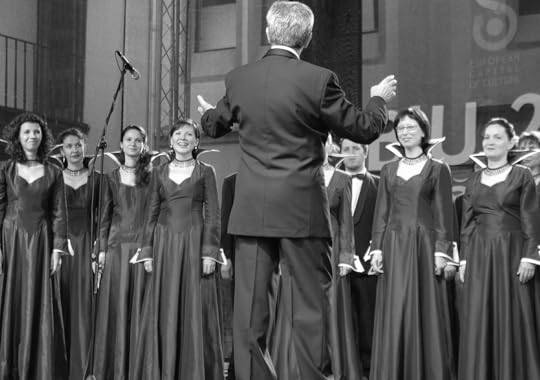 The terms alto, soprano, bass, and tenor are choral designations. And even in the setting of your choir or acapella group you may become a different voice type if your conductor is short on tenors. Those designations, in a decidedly more nuanced way, also apply to classical voice types. But none of my students sing classical music. The whole “voice type” thing gets a little squishy in CCM/Popular.Here’s the thing to remember about singers: they are essentially Bb instruments. Generalizations assume exceptions, and it’s generally true that vocal “breaks” (the point where the voice changes from one physiological behavior to another) fall between Bb and B, and between F and F#. All genders, all ages, all voice types. Interesting, right? Fun fact: it’s very normal for guitar players in Nashville tune to down to Eb. The reason is because Nashville is a singer’s town, and the singer will sound better if the key you’re in doesn’t put him/her on his/her vocal breaks throughout the song. In CCM it’s not about voice types. It’s about the key for particular song and how that works for an individual singer.With that in mind, here is what you need to know about voice designations for CCM/Popular.Soprano, or high femaleAriana Grande is one of these. I call these singers Disney Princess singers. (Not at all in a bad way. Love Disney.) Their sound is a head register mix. Their natural low notes are B or B♭ and high notes E or F. They tend to go to pure head tones at F♯ - and then are able to access more of their high range with relative ease. They can hit pitches down to G or even lower if they learn to access their pure chest register. Typically, though, they have to get the hang of smoothing out the inevitable “bump” that will happen when they sing lower than a B or B♭.
 Alto, or low femaleThere are two versions of this singer: trained or naturally good, and untrained or inappropriately trained.Trained or naturally goodThis singer can sing two octaves from F# or G below middle C (G3) in a chest register or chest mix. Often this singer also has access to her head register to sing even higher but with the lighter, less complex timbre of the the head register.Untrained or inappropriately trainedThe singer who loves popular music and is comfortable with her chest register but who studies classically typically ends up as two singers in the same body; the original, untrained chest-register singer alongside the head-register-trained singer. This definition applies to both her and to the untrained singer, since neither singer has learned to blend the chest register high in a healthy way. This singer can sing comfortably between G3 to C5. Most can sing slightly lower and/or higher than those pitches, but that range is safe. Higher than a D5 can’t be assumed. Even with a pro. Tenor, or high male For Tenors, the safe pop range is D3 to F4. An experienced or trained tenor can sing to an A4. A “money note” singer (the lead singer from Train, for instance, or Jon Bon Jovi) can sing to - or even past - C5. Tenors can often sing lower than the D or D♭ below middle C, but it typically becomes more difficult for them once they’re warmed up. D is safe.
 Baritones, or low maleFor Baritones, safe range is G♯2 to B♭3. An experienced or trained baritone, or a bass-baritone, can sing an E. “Money notes” are F♯-B♭. Like the lower voiced female, low-voice men tend not to lose their low notes as they warm up, but do gain more high notes.There you go. If you want to have a designation for yourself for your own peace of mind, or to write on audition sheets, you can use this handy-dandy guide. The better strategy, though, is to find your key for any given song. That’s the way to truly sound fabulous, which is, of course, what it’s all about.#singing #voice #vocal #voicetypes #auditioning
The terms alto, soprano, bass, and tenor are choral designations. And even in the setting of your choir or acapella group you may become a different voice type if your conductor is short on tenors. Those designations, in a decidedly more nuanced way, also apply to classical voice types. But none of my students sing classical music. The whole “voice type” thing gets a little squishy in CCM/Popular.Here’s the thing to remember about singers: they are essentially Bb instruments. Generalizations assume exceptions, and it’s generally true that vocal “breaks” (the point where the voice changes from one physiological behavior to another) fall between Bb and B, and between F and F#. All genders, all ages, all voice types. Interesting, right? Fun fact: it’s very normal for guitar players in Nashville tune to down to Eb. The reason is because Nashville is a singer’s town, and the singer will sound better if the key you’re in doesn’t put him/her on his/her vocal breaks throughout the song. In CCM it’s not about voice types. It’s about the key for particular song and how that works for an individual singer.With that in mind, here is what you need to know about voice designations for CCM/Popular.Soprano, or high femaleAriana Grande is one of these. I call these singers Disney Princess singers. (Not at all in a bad way. Love Disney.) Their sound is a head register mix. Their natural low notes are B or B♭ and high notes E or F. They tend to go to pure head tones at F♯ - and then are able to access more of their high range with relative ease. They can hit pitches down to G or even lower if they learn to access their pure chest register. Typically, though, they have to get the hang of smoothing out the inevitable “bump” that will happen when they sing lower than a B or B♭.Alto, or low femaleThere are two versions of this singer: trained or naturally good, and untrained or inappropriately trained.Trained or naturally goodThis singer can sing two octaves from F# or G below middle C (G3) in a chest register or chest mix. Often this singer also has access to her head register to sing even higher but with the lighter, less complex timbre of the the head register.Untrained or inappropriately trainedThe singer who loves popular music and is comfortable with her chest register but who studies classically typically ends up as two singers in the same body; the original, untrained chest-register singer alongside the head-register-trained singer. This definition applies to both her and to the untrained singer, since neither singer has learned to blend the chest register high in a healthy way. This singer can sing comfortably between G3 to C5. Most can sing slightly lower and/or higher than those pitches, but that range is safe. Higher than a D5 can’t be assumed. Even with a pro. Tenor, or high male For Tenors, the safe pop range is D3 to F4. An experienced or trained tenor can sing to an A4. A “money note” singer (the lead singer from Train, for instance, or Jon Bon Jovi) can sing to - or even past - C5. Tenors can often sing lower than the D or D♭ below middle C, but it typically becomes more difficult for them once they’re warmed up. D is safe.Baritones, or low maleFor Baritones, safe range is G♯2 to B♭3. An experienced or trained baritone, or a bass-baritone, can sing an E. “Money notes” are F♯-B♭. Like the lower voiced female, low-voice men tend not to lose their low notes as they warm up, but do gain more high notes.There you go. If you want to have a designation for yourself for your own peace of mind, or to write on audition sheets, you can use this handy-dandy guide. The better strategy, though, is to find your key for any given song. That’s the way to truly sound fabulous, which is, of course, what it’s all about.#singing #voice #vocal #voicetypes #auditioning
September 19, 2018
Why Singers are Stupid
Now that I have your attention, an alternative title would be:How to Feel Musically Confident in Any Situation, and Why You Sometimes Don'tSingers are not stupid. But instrumentalists often think singers are musically stupid. Singers often think singers are musically stupid. I believe the reality of the situation is that singers haven’t been taught how to listen.You can have the best hearing in the world, but if you can’t make sense of what you’re hearing, it doesn’t matter. The fact that I can’t speak Spanish doesn’t mean that I’m stupid, it means that when I hear Spanish my brain can’t make sense of what I’m hearing. Because I never learned to speak Spanish.Walking on marblesWhen a student tells me they don’t read music, or that they feel nervous about singing the wrong pitch or singing at the wrong time, I show them the model below. In thirty years there has never, ever been a student who has said, “Oh, yeah. I know that.” It has been new to every single one of them. It shouldn’t be, but it is.I show them the Music Pyramid. Now, there are a lot of Music Pyramids, and Google is happy to show them all to you. But I have never seen something as elemental as this, and I think it’s important. Especially for singers.Here’s the version I show them: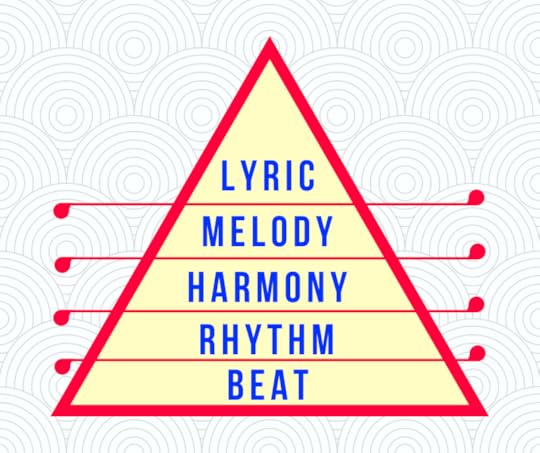 BEAT: The pulse of the song; how fast or slow the music is.RHYTHM: How the beat is divided to create the feel of the song. March or waltz, jazz or hip-hop.HARMONY: The harmonic information of the song. Usually supplied by a chordal instrument – piano or guitar – but can also be provided by a group of melody instruments such as a horn section or a choir.Here I demonstrate something simple such as major versus minor. I might show a simple chord progression, and then again with an unexpected or “wrong” chord inserted in the progression. I also tell them that they already intuit this stuff, so they're not learning from scratch, but learning "informed hearing".MELODY: The part of the song you can sing. The melody is typically - though not always - made up of the highest pitches in the song, and is presented by the melody instrument. The melody can be played by a chordal instrument – a piano or guitar – but is usually presented by a melody instrument or singer.LYRIC: The words. The part the singer presents. The part of the song that instrumentalists are (typically) least interested in and that audiences (typically) are most interested in. The lyric – being both music and spoken word - is the contact point for most non-musician listeners. Bottom-up ListeningInstrumentalists tend to listen to music this way:
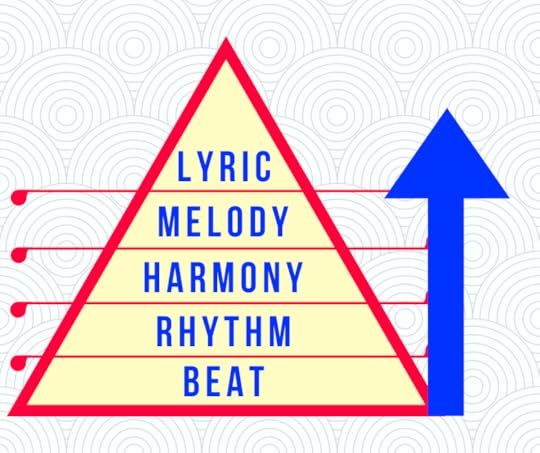 The reason I made this a triangle rather than a rectangle is because:listening to music this way feels more solid and grounded to any musicians,you can have music that doesn’t have lyrics (or even melody) but you cannot have music that doesn’t have a beat or rhythm. A singer who listens this way knows when the guitar solo ends, can make up background vocals on the fly, and feels confident about her melodic choices. Musicians who listen this way (all rhythm section players and most instrumentalists) probably don’t know they’re listening this way. They take is for granted.Top-down listeningSingers also take their listening default for granted. Singers tend to listen to music this way:
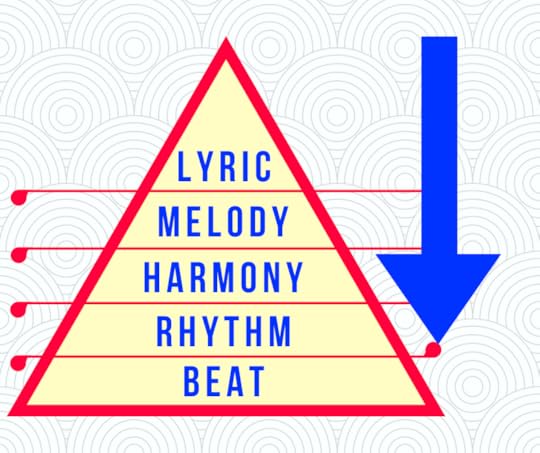 A singer can usually sing along with a chorus by the third or fourth pass, because they’ve been listening to the words. They often cannot, however, tell you what the form of the song is, or whether the key is major or minor. They may or may not be able to find harmony parts; a lot of singers find it impossible to sing anything other than the melody. In fact, that singer who can only sing the melody may well be listening as many, many singers do; like this:
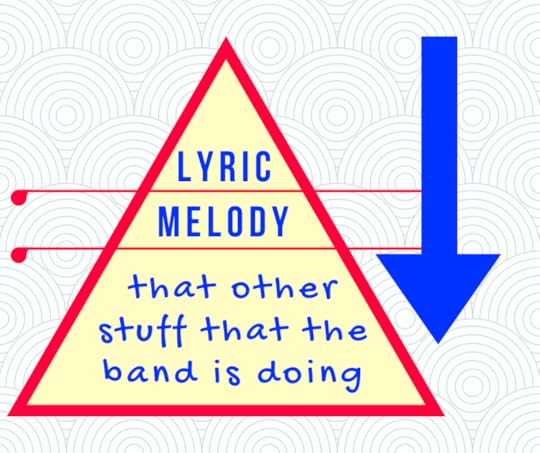 I think it’s fair to say that the majority of CCM singers listen to music in the way the two previous diagrams illustrate, from the point to the base, with or without knowing a little about what functions the instruments are serving. The singer who listens like that never feels totally secure and grounded in the music. In fact, it can be really scary. It can result in embarrassing situations. It can keep singers from having more expansive or challenging performance experiences. It can cost a singer their confidence.What’s the fix?The best fix, of course, is to learn to play an instrument from an actual human instructor. Guitar or piano, preferably, but anything can help. Short of that would be learning some basics on piano, or simply learning to listen. If every melody instrument (singer, violinist, whatever) spent a small but consistent portion of their music-listening time to deliberately focusing on the rhythm section instruments, they would, over time, become more conscious of what’s actually going on. They would start to notice patterns and form, and over time expand their ability to hear knowledgeably. Those skills will only improve a singer’s ability both to present music, and to enjoy it.
BEAT: The pulse of the song; how fast or slow the music is.RHYTHM: How the beat is divided to create the feel of the song. March or waltz, jazz or hip-hop.HARMONY: The harmonic information of the song. Usually supplied by a chordal instrument – piano or guitar – but can also be provided by a group of melody instruments such as a horn section or a choir.Here I demonstrate something simple such as major versus minor. I might show a simple chord progression, and then again with an unexpected or “wrong” chord inserted in the progression. I also tell them that they already intuit this stuff, so they're not learning from scratch, but learning "informed hearing".MELODY: The part of the song you can sing. The melody is typically - though not always - made up of the highest pitches in the song, and is presented by the melody instrument. The melody can be played by a chordal instrument – a piano or guitar – but is usually presented by a melody instrument or singer.LYRIC: The words. The part the singer presents. The part of the song that instrumentalists are (typically) least interested in and that audiences (typically) are most interested in. The lyric – being both music and spoken word - is the contact point for most non-musician listeners. Bottom-up ListeningInstrumentalists tend to listen to music this way:The reason I made this a triangle rather than a rectangle is because:listening to music this way feels more solid and grounded to any musicians,you can have music that doesn’t have lyrics (or even melody) but you cannot have music that doesn’t have a beat or rhythm. A singer who listens this way knows when the guitar solo ends, can make up background vocals on the fly, and feels confident about her melodic choices. Musicians who listen this way (all rhythm section players and most instrumentalists) probably don’t know they’re listening this way. They take is for granted.Top-down listeningSingers also take their listening default for granted. Singers tend to listen to music this way:A singer can usually sing along with a chorus by the third or fourth pass, because they’ve been listening to the words. They often cannot, however, tell you what the form of the song is, or whether the key is major or minor. They may or may not be able to find harmony parts; a lot of singers find it impossible to sing anything other than the melody. In fact, that singer who can only sing the melody may well be listening as many, many singers do; like this:I think it’s fair to say that the majority of CCM singers listen to music in the way the two previous diagrams illustrate, from the point to the base, with or without knowing a little about what functions the instruments are serving. The singer who listens like that never feels totally secure and grounded in the music. In fact, it can be really scary. It can result in embarrassing situations. It can keep singers from having more expansive or challenging performance experiences. It can cost a singer their confidence.What’s the fix?The best fix, of course, is to learn to play an instrument from an actual human instructor. Guitar or piano, preferably, but anything can help. Short of that would be learning some basics on piano, or simply learning to listen. If every melody instrument (singer, violinist, whatever) spent a small but consistent portion of their music-listening time to deliberately focusing on the rhythm section instruments, they would, over time, become more conscious of what’s actually going on. They would start to notice patterns and form, and over time expand their ability to hear knowledgeably. Those skills will only improve a singer’s ability both to present music, and to enjoy it.
August 31, 2018
5 Versions of Vocal Onset in CCM
In Popular Singing Styles, there's More Than One Right WayThis post is the written version of my video of the same title. If you’d prefer the video, click HERE. There are a great number of things that differentiate classical singing from CCM/Popular singing. One of those has to do with framework. Classical singing, like all classical art forms, enjoys an existing framework. In order to be true to the art form, the art is executed in a certain way. Students of the art form learn those certain ways. Therefore, skills needed for classical art “look” from the art form to the singer, if you will.Popular music, because of its nature, turns that way of doing things on its head. The artists generate the aesthetics as they go, and as other artists use those same skills, the skills become incorporated into a given genre. Then the teacher learns them in order to both be an expert and to be able to teach them to students wanting to acquire those skills. So the skills "look" from the singer to the art form.
 So it is with vocal onset, or, how one starts one’s sound on a vowel. As humans, we enjoy many ways in which we can initiate a sound on a vowel. In classical singing there’s only one correct way, but in CCM/Popular, there are many. Here are five. 1. The Glottal Fricative (or Aspirate Attack)This is a fancy way of saying that you start with an “h” sound. In CCM you can do that even when the song doesn’t start with an “h” if you want to. So you might sing the word “and” as though it’s “hand.” “But,” you may say “’and’ and ‘hand’ are have different meanings. Doesn’t that confuse the listener”? Like many words that are mispronounced or under-pronounced for the sake of a singer’s style, it’s all about context. It’s fair to assume that the word “hand” in “you hand me” is a stylistic mispronunciation rather than an accurate pronunciation.2. The Coordinated AttackThis is the way classical singers are trained to initiate vowel sounds. It’s a sound that is smoother than speech, and the aim is to bring the vocal folds together gently and beautifully. For the sake of simplicity I tell my students that it’s a glottal fricative in which the listener cannot hear the “h” sound. That’s not exactly right, but it’s really close.3. The Glottal Plosive (or Glottal Onset)You do this all day in your speech. With the glottal plosive, the vocal folds are held together until there is sufficient sub-glottal pressure to blow them open. Like, say the word “ice.” That was a glottal plosive.I read a number of articles and blogs about onsets to see if this post would be redundant. Many of the writers insisted that one should never, ever initiate sound with a glottal onset, and that to do so would inevitably lead to vocal damage.All I can say to that is, “Tell that to Sting.”There is one thing I’d warn singers about, though, as regards the glottal onset. Oftentimes singers will begin with a hard glottal plosive because they’re trying to be loud. It doesn’t work that way. It doesn’t make you any louder. 4. The Glottal Scrape (or Vocal Fry, Pulse Tone, Vocal Rattle)This is as loose as your vocal folds can be and still be making a sound. It’s the lowest pitch you can make. You probably use it in your speech when you’re speaking quietly, or when you’re at the end of a sentence and don’t have much air left. (If you need an example, click HERE.)This vowel initiation is used a lot in ballads, jazz, R&B, and Indie. Justin Bieber would be nothing without it. It can convey a sense of intimacy, or it can make the singer sound despairing. I love this sound because it doesn’t endanger one’s vocal health, but it sounds kind of tortured.P.S. Just because I can't help myself, I have to point something out. It has been very fashionable, in recent years, to focus personal distain for this vocal texture at young women. Seems that's just another manifestation of cultural misogyny that people accept because it's, well, cultural.This is from Time Magazine, 11/2/2017:Women aren’t the only ones who use vocal fry. In a forthcoming study of 18- to 22-year-olds, researchers at Centenary College of Louisiana found that young men not only fry, but they do so more than young women. “Our data showed that men spend about 25% of their time speaking using fry, while women use it about 10% of the time,” says Jessica Alexander, an assistant professor of psychology at the college.5. The GrowlA. R&B/Blues/Gospel GrowlThis growl is used to convey passion, and takes a TON of breath support. It’s a vocal distortion, and the gargling effect occurs as the arytenoid cartilages bounce off the lowered epiglottis. (Click HERE to see.)On one hand, and as a voice teacher, I warn against using this much at all due to the possibility of vocal trauma from overuse. On the other hand, as a singer and voice teacher, I know how much air a singer has to move to make this sound, and very few singers know how to do that. If you’re the kind of singer that routinely moves that much air, you probably have a really healthy default sound that allows you to growl from time to time without any threat to your vocal health.B. Death Metal GrowlThis growl is simply not optional in Death Metal. It’s become the very definition of the sound of the genre.The difference between this growl and the first is both register and tone. The Gospel growl is typically done to convey passion, and is thus occurring in a middle to high part of the singer’s range. The Death Metal growl is to convey menace or anguish, and thus is used in the lower parts of the range. It’s not as loud, and employs the microphone as an integral part of the sound.
 The Death Metal Growl is also more “covered.” In addition to the physiology described in the Gospel Growl, the Metal singer also pulls the tongue to the back of the mouth, drops the jaw, and brings the lips in. As you might imagine, this is not the most effective way to have one’s lyrics understood, but that’s not what it’s about.There are more ways to initiate a vowel sound in CCM singing , and more probably being created even as this blog post is being written. These five are basic, and will get you started.
There are a great number of things that differentiate classical singing from CCM/Popular singing. One of those has to do with framework. Classical singing, like all classical art forms, enjoys an existing framework. In order to be true to the art form, the art is executed in a certain way. Students of the art form learn those certain ways. Therefore, skills needed for classical art “look” from the art form to the singer, if you will.Popular music, because of its nature, turns that way of doing things on its head. The artists generate the aesthetics as they go, and as other artists use those same skills, the skills become incorporated into a given genre. Then the teacher learns them in order to both be an expert and to be able to teach them to students wanting to acquire those skills. So the skills "look" from the singer to the art form.So it is with vocal onset, or, how one starts one’s sound on a vowel. As humans, we enjoy many ways in which we can initiate a sound on a vowel. In classical singing there’s only one correct way, but in CCM/Popular, there are many. Here are five. 1. The Glottal Fricative (or Aspirate Attack)This is a fancy way of saying that you start with an “h” sound. In CCM you can do that even when the song doesn’t start with an “h” if you want to. So you might sing the word “and” as though it’s “hand.” “But,” you may say “’and’ and ‘hand’ are have different meanings. Doesn’t that confuse the listener”? Like many words that are mispronounced or under-pronounced for the sake of a singer’s style, it’s all about context. It’s fair to assume that the word “hand” in “you hand me” is a stylistic mispronunciation rather than an accurate pronunciation.2. The Coordinated AttackThis is the way classical singers are trained to initiate vowel sounds. It’s a sound that is smoother than speech, and the aim is to bring the vocal folds together gently and beautifully. For the sake of simplicity I tell my students that it’s a glottal fricative in which the listener cannot hear the “h” sound. That’s not exactly right, but it’s really close.3. The Glottal Plosive (or Glottal Onset)You do this all day in your speech. With the glottal plosive, the vocal folds are held together until there is sufficient sub-glottal pressure to blow them open. Like, say the word “ice.” That was a glottal plosive.I read a number of articles and blogs about onsets to see if this post would be redundant. Many of the writers insisted that one should never, ever initiate sound with a glottal onset, and that to do so would inevitably lead to vocal damage.All I can say to that is, “Tell that to Sting.”There is one thing I’d warn singers about, though, as regards the glottal onset. Oftentimes singers will begin with a hard glottal plosive because they’re trying to be loud. It doesn’t work that way. It doesn’t make you any louder. 4. The Glottal Scrape (or Vocal Fry, Pulse Tone, Vocal Rattle)This is as loose as your vocal folds can be and still be making a sound. It’s the lowest pitch you can make. You probably use it in your speech when you’re speaking quietly, or when you’re at the end of a sentence and don’t have much air left. (If you need an example, click HERE.)This vowel initiation is used a lot in ballads, jazz, R&B, and Indie. Justin Bieber would be nothing without it. It can convey a sense of intimacy, or it can make the singer sound despairing. I love this sound because it doesn’t endanger one’s vocal health, but it sounds kind of tortured.P.S. Just because I can't help myself, I have to point something out. It has been very fashionable, in recent years, to focus personal distain for this vocal texture at young women. Seems that's just another manifestation of cultural misogyny that people accept because it's, well, cultural.This is from Time Magazine, 11/2/2017:Women aren’t the only ones who use vocal fry. In a forthcoming study of 18- to 22-year-olds, researchers at Centenary College of Louisiana found that young men not only fry, but they do so more than young women. “Our data showed that men spend about 25% of their time speaking using fry, while women use it about 10% of the time,” says Jessica Alexander, an assistant professor of psychology at the college.5. The GrowlA. R&B/Blues/Gospel GrowlThis growl is used to convey passion, and takes a TON of breath support. It’s a vocal distortion, and the gargling effect occurs as the arytenoid cartilages bounce off the lowered epiglottis. (Click HERE to see.)On one hand, and as a voice teacher, I warn against using this much at all due to the possibility of vocal trauma from overuse. On the other hand, as a singer and voice teacher, I know how much air a singer has to move to make this sound, and very few singers know how to do that. If you’re the kind of singer that routinely moves that much air, you probably have a really healthy default sound that allows you to growl from time to time without any threat to your vocal health.B. Death Metal GrowlThis growl is simply not optional in Death Metal. It’s become the very definition of the sound of the genre.The difference between this growl and the first is both register and tone. The Gospel growl is typically done to convey passion, and is thus occurring in a middle to high part of the singer’s range. The Death Metal growl is to convey menace or anguish, and thus is used in the lower parts of the range. It’s not as loud, and employs the microphone as an integral part of the sound.The Death Metal Growl is also more “covered.” In addition to the physiology described in the Gospel Growl, the Metal singer also pulls the tongue to the back of the mouth, drops the jaw, and brings the lips in. As you might imagine, this is not the most effective way to have one’s lyrics understood, but that’s not what it’s about.There are more ways to initiate a vowel sound in CCM singing , and more probably being created even as this blog post is being written. These five are basic, and will get you started.
August 20, 2018
How to Take Time Off When the Wolf's at the Door
A Freelancer Music Teacher’s Journey An independent voice teacherin a Facebook group posted a query. She was experiencing a lot of cancellations in the month of August, and wondered if any of her compatriots had similar experiences, and perhaps some suggestions for remedying the situation.I don’t think she wanted to hear what I told her. I didn’t want to hear it when it was told to me.Years ago, I worked out of a studio in the Fine Arts Building in the Chicago Loop. The building was, and is, someplace that musicians can rent professional space and also make noise. The 6th floor was very quiet, though, during the month of August. I seldom made enough money to cover my rent and parking. I’d sometimes make the haul to the Loop just to teach one student.I was always broke. The idea of taking time off from teaching was very scary, financially. One September, my neighbor, and older and much more experienced independent teacher of piano, asked how my summer was. I complained about my students’ sparse attendance in August, and he gave me some advice that terrified me. But I took his advice and have never regretted it. Richard said, “You have to take time off in the summer. If you don’t you’ll burn out. You have to give your students an opportunity to quit, and you have to give yourself an opportunity to stop and start again. If you never start a new teaching year it’s really hard to implement any policy or price changes”.The bad news was that I was always broke. The idea of taking time off from teaching was very scary, financially. It shouldn't have been; August was a reliably good wedding month and my freelance singing calendar was pretty full. But you never know when a jobber is going to send the check, and the bills are due when the bills are due. The good news was that Richard had given me this advice in September, so I had the better part of a year to both consider whether I’d take time off the following summer, and if I did, how I could save enough during the year to cover my August expenses.I have many faults, but one of my strengths is that I’ll follow sensible advice from reliable sources. I do not have to learn everything the hard way. (I mean, most things, but not everything.) I considered Richard a reliable source, and his advice seemed sensible. In that year I started an “August Fund,” which I’ve recreated every year since then.
  My “August Fund” has allowed me to take two or three weeks off every August – my slowest teaching month - even back when I was single and it seemed the wolf was constantly at the door. Every year it makes me nervous to do it, and every year I’m glad I did. Richard was right. Sometimes there’s a student or two who don’t return after my August break. I always assume they’d been wanting to quit but probably didn’t know how. He was also right about using the “new start” as a time to introduce price increases and policy changes. I don’t do it every year, but when I need it I’m glad I’ve made a natural time for that to happen. Mostly, though, I’m grateful to have some time to decompress from teaching. My students – their needs, development, and goals – take up a lot of real estate in my head. I sometimes just feel internally frazzled because they’re all up there in my brain, demanding my attention. Teaching voice and running a voice studio are activities that are demanding both emotionally and intellectually. I’ve found that unplugging from my students and my studio isn’t a luxury, but is vital to my well-being. I can’t be there for them if I’m not there for me.
An independent voice teacherin a Facebook group posted a query. She was experiencing a lot of cancellations in the month of August, and wondered if any of her compatriots had similar experiences, and perhaps some suggestions for remedying the situation.I don’t think she wanted to hear what I told her. I didn’t want to hear it when it was told to me.Years ago, I worked out of a studio in the Fine Arts Building in the Chicago Loop. The building was, and is, someplace that musicians can rent professional space and also make noise. The 6th floor was very quiet, though, during the month of August. I seldom made enough money to cover my rent and parking. I’d sometimes make the haul to the Loop just to teach one student.I was always broke. The idea of taking time off from teaching was very scary, financially. One September, my neighbor, and older and much more experienced independent teacher of piano, asked how my summer was. I complained about my students’ sparse attendance in August, and he gave me some advice that terrified me. But I took his advice and have never regretted it. Richard said, “You have to take time off in the summer. If you don’t you’ll burn out. You have to give your students an opportunity to quit, and you have to give yourself an opportunity to stop and start again. If you never start a new teaching year it’s really hard to implement any policy or price changes”.The bad news was that I was always broke. The idea of taking time off from teaching was very scary, financially. It shouldn't have been; August was a reliably good wedding month and my freelance singing calendar was pretty full. But you never know when a jobber is going to send the check, and the bills are due when the bills are due. The good news was that Richard had given me this advice in September, so I had the better part of a year to both consider whether I’d take time off the following summer, and if I did, how I could save enough during the year to cover my August expenses.I have many faults, but one of my strengths is that I’ll follow sensible advice from reliable sources. I do not have to learn everything the hard way. (I mean, most things, but not everything.) I considered Richard a reliable source, and his advice seemed sensible. In that year I started an “August Fund,” which I’ve recreated every year since then. My “August Fund” has allowed me to take two or three weeks off every August – my slowest teaching month - even back when I was single and it seemed the wolf was constantly at the door. Every year it makes me nervous to do it, and every year I’m glad I did. Richard was right. Sometimes there’s a student or two who don’t return after my August break. I always assume they’d been wanting to quit but probably didn’t know how. He was also right about using the “new start” as a time to introduce price increases and policy changes. I don’t do it every year, but when I need it I’m glad I’ve made a natural time for that to happen. Mostly, though, I’m grateful to have some time to decompress from teaching. My students – their needs, development, and goals – take up a lot of real estate in my head. I sometimes just feel internally frazzled because they’re all up there in my brain, demanding my attention. Teaching voice and running a voice studio are activities that are demanding both emotionally and intellectually. I’ve found that unplugging from my students and my studio isn’t a luxury, but is vital to my well-being. I can’t be there for them if I’m not there for me.
August 9, 2018
You've Been Boondoggled: How Colleges Set Up Voice Majors for Pedagogical Failure
This article is reprinted from the VASTA Voice, May 2018 Many graduates of university programs in voice, notably those with degrees in vocal performance, voice and speech, and acting, become self-employed. We soldier forward into our area of interest with the intent to be professionals. We avoid the 9-to-5 so we can pursue our art. Often we cobble together a living from two or three (or more) different professional roles. Teaching is nearly always one of them. Winging ItTypically, we come to our self-employed status with little or no training on how to be self-employed professionals. We start taking private students in singing, speech, or acting because of the flexibility it affords us. We carry with us our own experiences as students, and the models our own teachers showed us. Our teaching is, however conscious of it we are, informed strongly by the teaching we received. We create an environment in our own studios based on the way we were, or were not, treated by our teachers. We carry forward the values and emphases we learned as students because we were taught that those are correct. Among the many subjects pertaining to being self-employed educators that are not addressed in our post-secondary education is that of the pedagogical differences between our situations as self-employed professionals and our college instructors’ situations as university employees. I believe that being conscious of those differences can make self-employed teachers more effective educators, as well as help us take full advantage of our unique position in the world of the arts.Top Down, Outside InPrivate lessons in college are created with a top-down, outside-in model. Top down, because the knowledge transfer is assumed to flow in one direction; from the teacher to the student. Outside in, because the knowledge being shared is defined and structured, and is meant to be understood within the framework presented.The college teacher is charged with educating a student on a particular subject, and by necessity, a limited version of that subject. A tiny sliver of the knowledge pie. Though the student is technically paying the teacher for her time, it was the university that made the sale, and it’s the program that the student has the relationship with. So, to get the credits, the student studies with the teacher whether she wants to or not. Whether or not she agrees with, likes, or feels respected by the teacher is of no consequence to the grading process. It’s a top-down model, and it’s up to the student to acquire the knowledge that the teacher is presenting in order to get a good grade. That knowledge may be strongly at odds with the student’s experience, so if she’s not cognizant of the framework within which she’s working, the student may struggle with cognitive dissonance, as well as with trusting her experience, her teacher, and the institution itself.A Typical SituationLet’s explore Sonya’s college private voice lesson experience, for example. Sonya sang in a band in high school. She was in the school musicals and the acapella ensemble. She’s a good singer who appreciates good singers. She loves Jesse Mueller, Sarah Bareilles, and Jennifer Hudson. She’s been accepted into a music theater degree program, and is taking private voice lessons as part of her degree requirement. Sonya’s applied voice teacher is classically trained, and teaches classical technique. She knows it as the correct way to sing, and has been teaching according to classical tenets, which inform her own methods, for her entire university career. Her belief that classical singing is both foundational and correct, along with the security of her job and the employment structure within which she works, has kept her from actively seeking to understand the differences between classical and contemporary voice methods and aesthetics. So she’s teaching Sonya classical voice, and Sonya is freaking out. Sonya is confused, she doesn’t like this repertoire, and for the first time in her young life she feels incompetent as a singer. Because she’s intimately familiar with the aesthetics of contemporary musical genres, she knows that much of what her voice teacher is presenting to her as absolute is not, in fact, applicable to the music she loves. Rather than growing from the experience of studying voice, she’s protecting herself against it and doing the absolute minimum that is required of her to get a passing grade. The best case is that she is wasting her time and her money; the worst that, in order to meet her teacher’s expectations, she’s creating compensatory vocal habits that could hurt her in the long run.The fact that university education is outside-in is largely inherent. The students must achieve grades to earn a degree, the teachers much present clear objectives to achieve those grades. University professors are experts in their fields. Their job as teachers is to impart that information as effectively as they can. They are neither expected nor required to alter their curricula or approaches based on differences between individual students.Lateral TeachingThe self-employed teacher, conversely, does not enjoy the luxuries of the university instructor. Her students are not on a degree track, but are studying for their own growth and self-improvement. They’re spending their own money and valuable time, and are often studying with a self-defined objective in mind. The teacher must attract each student, and will be paid only for the lessons she teaches. She must respond to the student’s objectives professionally and effectively, or that student will seek out a different teacher. These realities create a very different teaching environment. The self-employed teacher’s relationship with her students is primarily lateral, meaning that the student’s knowledge and desires are at least as important as the teacher’s. The teacher is in a position which requires her to be aware of, and responsive to, the students’ objectives for their study.The First Step’s a DoozyOf the many ways in which the new college grad is unprepared to be self-employed, pedagogy is one of them. Regardless of the objectives with which the young voice major entered college, she received classical voice training. That’s what she knows, and that’s what she thinks she’ll teach because, after all, good singing is good singing. But once among the self-employed, she realizes that the overwhelming number of people who come to her for private voice lessons have no interest in or aspirations for classical voice. They want to learn how to sing with a contemporary style. The teacher, both because she cannot sing that way and because she still believes that CCM technique is damaging to the voice, is unable to sell what her students want to buy. This scenario is repeated thousands of times each year, as young college grads, vocal performance degrees in hand, hang their shingle on their new voice studios. Often the road from having a very high student turnover to finding a way to teach what their students want to learn is very rocky. Many self-employed teachers survive because they become humble. They embrace the personal growth inherent in lateral teaching, and seek out teachers of healthy CCM pedagogy, learning to appreciate and enjoy the differences between it and classical. In a Dream WorldAlthough there’s little incentive for college and university arts departments and schools to consider the employment future of their applied voice (and music theater performance) students, it would be a boon to those students if they were to do so. The truth is that, save for a minuscule percentage of those that “make it,” those who make a living in the world of performing arts will teach. At least in part. Colleges and universities could easily serve their students by acknowledging this reality, and helping build applied arts curricula that incorporate some of the skills necessary for artists to pay their rent. At the very least, simply being armed with an awareness of some of the realities of being self-employed can help artists make the most of the advantages, and minimize the disadvantages, offered by the freelance life.
Many graduates of university programs in voice, notably those with degrees in vocal performance, voice and speech, and acting, become self-employed. We soldier forward into our area of interest with the intent to be professionals. We avoid the 9-to-5 so we can pursue our art. Often we cobble together a living from two or three (or more) different professional roles. Teaching is nearly always one of them. Winging ItTypically, we come to our self-employed status with little or no training on how to be self-employed professionals. We start taking private students in singing, speech, or acting because of the flexibility it affords us. We carry with us our own experiences as students, and the models our own teachers showed us. Our teaching is, however conscious of it we are, informed strongly by the teaching we received. We create an environment in our own studios based on the way we were, or were not, treated by our teachers. We carry forward the values and emphases we learned as students because we were taught that those are correct. Among the many subjects pertaining to being self-employed educators that are not addressed in our post-secondary education is that of the pedagogical differences between our situations as self-employed professionals and our college instructors’ situations as university employees. I believe that being conscious of those differences can make self-employed teachers more effective educators, as well as help us take full advantage of our unique position in the world of the arts.Top Down, Outside InPrivate lessons in college are created with a top-down, outside-in model. Top down, because the knowledge transfer is assumed to flow in one direction; from the teacher to the student. Outside in, because the knowledge being shared is defined and structured, and is meant to be understood within the framework presented.The college teacher is charged with educating a student on a particular subject, and by necessity, a limited version of that subject. A tiny sliver of the knowledge pie. Though the student is technically paying the teacher for her time, it was the university that made the sale, and it’s the program that the student has the relationship with. So, to get the credits, the student studies with the teacher whether she wants to or not. Whether or not she agrees with, likes, or feels respected by the teacher is of no consequence to the grading process. It’s a top-down model, and it’s up to the student to acquire the knowledge that the teacher is presenting in order to get a good grade. That knowledge may be strongly at odds with the student’s experience, so if she’s not cognizant of the framework within which she’s working, the student may struggle with cognitive dissonance, as well as with trusting her experience, her teacher, and the institution itself.A Typical SituationLet’s explore Sonya’s college private voice lesson experience, for example. Sonya sang in a band in high school. She was in the school musicals and the acapella ensemble. She’s a good singer who appreciates good singers. She loves Jesse Mueller, Sarah Bareilles, and Jennifer Hudson. She’s been accepted into a music theater degree program, and is taking private voice lessons as part of her degree requirement. Sonya’s applied voice teacher is classically trained, and teaches classical technique. She knows it as the correct way to sing, and has been teaching according to classical tenets, which inform her own methods, for her entire university career. Her belief that classical singing is both foundational and correct, along with the security of her job and the employment structure within which she works, has kept her from actively seeking to understand the differences between classical and contemporary voice methods and aesthetics. So she’s teaching Sonya classical voice, and Sonya is freaking out. Sonya is confused, she doesn’t like this repertoire, and for the first time in her young life she feels incompetent as a singer. Because she’s intimately familiar with the aesthetics of contemporary musical genres, she knows that much of what her voice teacher is presenting to her as absolute is not, in fact, applicable to the music she loves. Rather than growing from the experience of studying voice, she’s protecting herself against it and doing the absolute minimum that is required of her to get a passing grade. The best case is that she is wasting her time and her money; the worst that, in order to meet her teacher’s expectations, she’s creating compensatory vocal habits that could hurt her in the long run.The fact that university education is outside-in is largely inherent. The students must achieve grades to earn a degree, the teachers much present clear objectives to achieve those grades. University professors are experts in their fields. Their job as teachers is to impart that information as effectively as they can. They are neither expected nor required to alter their curricula or approaches based on differences between individual students.Lateral TeachingThe self-employed teacher, conversely, does not enjoy the luxuries of the university instructor. Her students are not on a degree track, but are studying for their own growth and self-improvement. They’re spending their own money and valuable time, and are often studying with a self-defined objective in mind. The teacher must attract each student, and will be paid only for the lessons she teaches. She must respond to the student’s objectives professionally and effectively, or that student will seek out a different teacher. These realities create a very different teaching environment. The self-employed teacher’s relationship with her students is primarily lateral, meaning that the student’s knowledge and desires are at least as important as the teacher’s. The teacher is in a position which requires her to be aware of, and responsive to, the students’ objectives for their study.The First Step’s a DoozyOf the many ways in which the new college grad is unprepared to be self-employed, pedagogy is one of them. Regardless of the objectives with which the young voice major entered college, she received classical voice training. That’s what she knows, and that’s what she thinks she’ll teach because, after all, good singing is good singing. But once among the self-employed, she realizes that the overwhelming number of people who come to her for private voice lessons have no interest in or aspirations for classical voice. They want to learn how to sing with a contemporary style. The teacher, both because she cannot sing that way and because she still believes that CCM technique is damaging to the voice, is unable to sell what her students want to buy. This scenario is repeated thousands of times each year, as young college grads, vocal performance degrees in hand, hang their shingle on their new voice studios. Often the road from having a very high student turnover to finding a way to teach what their students want to learn is very rocky. Many self-employed teachers survive because they become humble. They embrace the personal growth inherent in lateral teaching, and seek out teachers of healthy CCM pedagogy, learning to appreciate and enjoy the differences between it and classical. In a Dream WorldAlthough there’s little incentive for college and university arts departments and schools to consider the employment future of their applied voice (and music theater performance) students, it would be a boon to those students if they were to do so. The truth is that, save for a minuscule percentage of those that “make it,” those who make a living in the world of performing arts will teach. At least in part. Colleges and universities could easily serve their students by acknowledging this reality, and helping build applied arts curricula that incorporate some of the skills necessary for artists to pay their rent. At the very least, simply being armed with an awareness of some of the realities of being self-employed can help artists make the most of the advantages, and minimize the disadvantages, offered by the freelance life.
August 3, 2018
What is Muscle Tension Dysphonia, and Can it be Treated?
A Crib Sheet.
Muscle Tension Dysphonia, or MTD, is fairly common; in the vocal pathology sense of the word. A couple of new students told me they’ve been diagnosed with it, so I decided to spend some time reading up on the pathology. Luckily, now you don’t have to, because what follows is a 500-word crib sheet. I also included a few helpful links at the end. In general…MTD can happen to anyone.It can happen as a result of another pathology, or it can be a free-standing pathology.It’s almost impossible to tell where it came from once someone has it.It can be either MT – muscle tension – in which the muscles are over-contracting, orIt can be D – dysphonia – in which the muscles lack coordination, leading to a mis-timing of vocal fold vibrationsOnce a singer is warmed up, MTD seems to go away. That makes it easy to ignore, and that may be ok. Sometimes it doesn’t get any worse. But sometimes it does.There haven’t been any studies that show how people acquire MTD, but there are suspicions. For instance, teachers are the biggest group of people who get it. That makes voice people think that it’s either from overuse, because teachers talk a lot and often loudly, or from misuse, because teachers talk even when they shouldn’t (laryngitis, overuse, fatigue) or both.Here’s a list that will narrow it down for you. But not much.You can acquire MTD as a response to external stimulus, like excessive talking, second-hand smoke, or excessively dry conditions.You can acquire MTD as a response to internal situations, like acid reflux, stress, lack of sleep, or upper respiratory infections.MTD can be a response to an underlying vocal fold problem.
 Here’s a list of symptoms. This list makes me think that the reason MTD doesn’t get diagnosed early is that these symptoms could apply to many other things as well.A fluttery sound in your singing when you start to warm up or sing “cold.”Hoarse or raspy voiceWhispery or breathy voice“Holes” in your sound, where your voice cuts out for a secondFeeling you have to speak higher or lower than normalFeeling dry or scratchyFeeling your voice is tired or aching after you’ve been speaking or singingA feeling that you’re having to work hard to make soundMTD is especially bad for singers. We’ll only notice it when our voices are “cold.” Once we’re warmed up it seems to go away. That makes it easy to ignore, of course, and that may be ok. Sometimes it doesn’t get any worse. But sometimes it does. Better to get scoped by an ENT who specializes in singers if you even suspect anything.One thing health professionals in the World of Voice agree on; the sooner you can start treating MTD, the easier it will be to fix. Once it’s set in, it’s more difficult to change the behavior. They also agree that any other voice problem will very often result in a greater or lesser degree of MTD.Treatment for MTD, it seems, is the same for treatment of any other type of condition that cannot be fixed in the typical Western medicine way - with a pill or surgery - you have to try stuff until you find something that works.Voice TherapyPhysical TherapyBest Non-Science-y PaperBest Science-y Paper
In general…MTD can happen to anyone.It can happen as a result of another pathology, or it can be a free-standing pathology.It’s almost impossible to tell where it came from once someone has it.It can be either MT – muscle tension – in which the muscles are over-contracting, orIt can be D – dysphonia – in which the muscles lack coordination, leading to a mis-timing of vocal fold vibrationsOnce a singer is warmed up, MTD seems to go away. That makes it easy to ignore, and that may be ok. Sometimes it doesn’t get any worse. But sometimes it does.There haven’t been any studies that show how people acquire MTD, but there are suspicions. For instance, teachers are the biggest group of people who get it. That makes voice people think that it’s either from overuse, because teachers talk a lot and often loudly, or from misuse, because teachers talk even when they shouldn’t (laryngitis, overuse, fatigue) or both.Here’s a list that will narrow it down for you. But not much.You can acquire MTD as a response to external stimulus, like excessive talking, second-hand smoke, or excessively dry conditions.You can acquire MTD as a response to internal situations, like acid reflux, stress, lack of sleep, or upper respiratory infections.MTD can be a response to an underlying vocal fold problem.Here’s a list of symptoms. This list makes me think that the reason MTD doesn’t get diagnosed early is that these symptoms could apply to many other things as well.A fluttery sound in your singing when you start to warm up or sing “cold.”Hoarse or raspy voiceWhispery or breathy voice“Holes” in your sound, where your voice cuts out for a secondFeeling you have to speak higher or lower than normalFeeling dry or scratchyFeeling your voice is tired or aching after you’ve been speaking or singingA feeling that you’re having to work hard to make soundMTD is especially bad for singers. We’ll only notice it when our voices are “cold.” Once we’re warmed up it seems to go away. That makes it easy to ignore, of course, and that may be ok. Sometimes it doesn’t get any worse. But sometimes it does. Better to get scoped by an ENT who specializes in singers if you even suspect anything.One thing health professionals in the World of Voice agree on; the sooner you can start treating MTD, the easier it will be to fix. Once it’s set in, it’s more difficult to change the behavior. They also agree that any other voice problem will very often result in a greater or lesser degree of MTD.Treatment for MTD, it seems, is the same for treatment of any other type of condition that cannot be fixed in the typical Western medicine way - with a pill or surgery - you have to try stuff until you find something that works.Voice TherapyPhysical TherapyBest Non-Science-y PaperBest Science-y Paper
July 27, 2018
Self-Doubt & Creative Insecurity VS. Belief Representitives
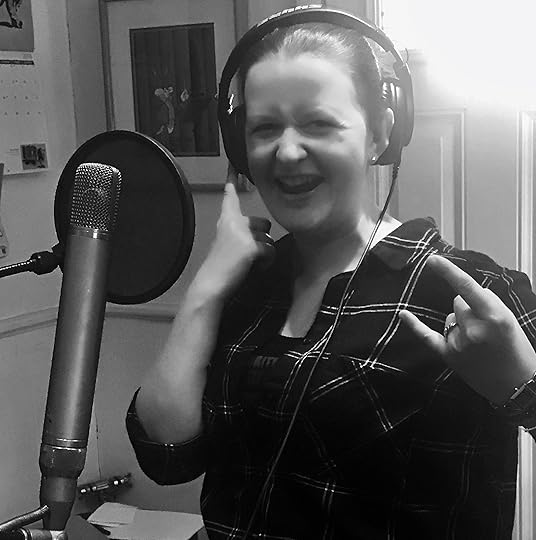
Jessica traveled 7,000 km to learn what I had to teach. She also came as a Representative of Belief, though it was unlikely she was aware of that part. She learned during her visit. A truckload, in fact. She had daily lessons with me for 12 days, and in that time was able to wrap her brain around both the science and art of neurology-based voice teaching. She also wrapped her voice around it. She showed up with a typical vocal break (the I-want-to-sing-popular-styles-but-my-training-is-classical break) and left with a healthy chest mix from F3-F5. She’s studied several other methods, but none of them worked in the way she needed them to. She left Chicago as a singer and voice teacher filled with enthusiasm.
 That’s the short version of the experience. Even from this, we can surmise that:Jessica is an exceptional personAssuming she is not the only one of her kind, there are people who will do anything to find their voiceThe results of Neuro-Vocal Method can manifest for a singer in as little as two weeks.Now let’s talk about me.Never underestimate the power of a Creative to undermine herself. It’s our other art form.I’m a Creative. If you’re reading this, it’s likely that you’re a Creative too. So you’ll understand what I’m talking about when I say that every step forward in my career has been hard won over doubt. I wrestle with Doubt until it’s temporarily exhausted, and then I get up from the mat and take a step or two forward. While I’m blithely focused on my next creative goal, Doubt is getting up from the mat and, before I know it, has wrapped its arms around my shins and brought me down again. It’s a never-ending match.
 As a Creative who has created a voice teaching method, you’d think I’d be immune to the leg-grab takedown. I actually witness the positive outcomes of my work on a regular basis. There’s proof. The work is based on a science I keep learning more about, and it keeps holding up. What’s to doubt?Yeah, well…never underestimate the power of a Creative to undermine herself. We’re really good at it, aren’t we? It’s our other art form.In the case of Jessica’s visit, though, I’ve decided to try something different. I’ve decided to try to let it in. Jessica is far too intelligent, educated, and talented to dismiss, and so I must observe and respect her process. She made an informed decision to travel from Germany to study with me. She was a model student and learned a lot. I watched the NVM process at work in a very condensed and satisfying way. I’ve decided to believe in Jessica, at least for the time being, and use that belief to take the next few steps forward.
  From time to time, every Creative is sent a Belief Representative; someone who demonstrates why your artistic expression matters. All we have to do is make the decision to believe in that person’s truth. In doing so, their truth can be shared to fuel us as we move forward.At least for a while.
She learned during her visit. A truckload, in fact. She had daily lessons with me for 12 days, and in that time was able to wrap her brain around both the science and art of neurology-based voice teaching. She also wrapped her voice around it. She showed up with a typical vocal break (the I-want-to-sing-popular-styles-but-my-training-is-classical break) and left with a healthy chest mix from F3-F5. She’s studied several other methods, but none of them worked in the way she needed them to. She left Chicago as a singer and voice teacher filled with enthusiasm.That’s the short version of the experience. Even from this, we can surmise that:Jessica is an exceptional personAssuming she is not the only one of her kind, there are people who will do anything to find their voiceThe results of Neuro-Vocal Method can manifest for a singer in as little as two weeks.Now let’s talk about me.Never underestimate the power of a Creative to undermine herself. It’s our other art form.I’m a Creative. If you’re reading this, it’s likely that you’re a Creative too. So you’ll understand what I’m talking about when I say that every step forward in my career has been hard won over doubt. I wrestle with Doubt until it’s temporarily exhausted, and then I get up from the mat and take a step or two forward. While I’m blithely focused on my next creative goal, Doubt is getting up from the mat and, before I know it, has wrapped its arms around my shins and brought me down again. It’s a never-ending match.As a Creative who has created a voice teaching method, you’d think I’d be immune to the leg-grab takedown. I actually witness the positive outcomes of my work on a regular basis. There’s proof. The work is based on a science I keep learning more about, and it keeps holding up. What’s to doubt?Yeah, well…never underestimate the power of a Creative to undermine herself. We’re really good at it, aren’t we? It’s our other art form.In the case of Jessica’s visit, though, I’ve decided to try something different. I’ve decided to try to let it in. Jessica is far too intelligent, educated, and talented to dismiss, and so I must observe and respect her process. She made an informed decision to travel from Germany to study with me. She was a model student and learned a lot. I watched the NVM process at work in a very condensed and satisfying way. I’ve decided to believe in Jessica, at least for the time being, and use that belief to take the next few steps forward. From time to time, every Creative is sent a Belief Representative; someone who demonstrates why your artistic expression matters. All we have to do is make the decision to believe in that person’s truth. In doing so, their truth can be shared to fuel us as we move forward.At least for a while.
May 31, 2018
How to Be a Singer; Part II
 There’s a TED talk by Reshma Saujani called Teach Girls Bravery, Not Perfection. Saujani is the founder of Girls Who Code, a national nonprofit working to close the gender gap in tech.In this talk, Saujani says:…at the fifth-grade level, girls routinely outperform boys in every subject, including math and science, so it's not a question of ability. The difference is in how boys and girls approach a challenge. And it doesn't just end in fifth grade. An HP report found that men will apply for a job if they meet only 60 percent of the qualifications, but women, women will apply only if they meet 100 percent of the qualifications. 100 percent. This study is usually invoked as evidence that, well, women need a little more confidence. But I think it's evidence that women have been socialized to aspire to perfection, and they're overly cautious.The need to be perfect before you begin, or to happen upon the perfect situation before you perform, might be so normal to you that you don’t even notice it.Today, on a walk with my doggy, I was thinking about some singers I’ve known, both students and colleagues, and I remembered this talk. Because yes…the singers who wait to be perfect before they begin are almost exclusively female. And their numbers are abundant.Sometimes they’re not only waiting for themselves to be perfect, they are also waiting for the world to become perfect. The perfect group of people or the perfect situation may someday present itself, and when it does the singer will feel safe. When she feels safe, she will sing.The need to be perfect before you begin, or to happen upon the perfect situation before you perform, might be so normal to you that you don’t even notice it. If reading this piece makes you notice it, don’t think you’re done. It’s everywhere, and in nearly everything you do.I notice it in myself all the time and it really pisses me off. I mean, really…does anyone care if my house is messy, or that I haven’t finished my second book and when I do it won’t be right, or if my high note was a tidge flat? Does anyone expect that kind of perfection from me, other than me? And do I notice that kind of lack-of-perfection in others?No, and no.Though my perfectionism didn’t stop me from pursuing being a professional singer (god knows!) I realize now that this absurd current runs beneath nearly everything I do and say. Knowing that means it’s up to me to become aware of that ridiculousness and implement some tools to combat it. If I don’t, it will win. My first line of defense against letting it limit and control me is awareness.This post, though, is for you. Not me.
  If you want to sing, and you’re not singing, or if you want to perform, and you’re not performing, then there’s something in your way. The thing that’s in your way lives in your head, and it might be perfectionism. You may be waiting to be perfect before you begin.I have two really good reasons for you to start singing.You don't get a lot better by practicing. It's a combination of practicing and performing that creates great singers.No matter how awesome you become, some people won't like your singing. They also won't like your hair, or outfits, or tattoos, or genre...just...whatever. You can't please everyone, despite what the Perfection Myth is telling you.You're already good enough to begin. So don't be perfect. Just begin.For more like this from Meredith, and other smart stuff for singers and voice teachers, subscribe to Money Notes Notebook! It's twice a month - one for written content and one for videos - and we never share your email! www.MoneyNotes.online#ReshmaSaujani #howtobeasinger #moneynotes
May 7, 2018
Please Share This with A Middle School Music Teacher
This video is posted a dozen times on YouTube (the picture is a link): 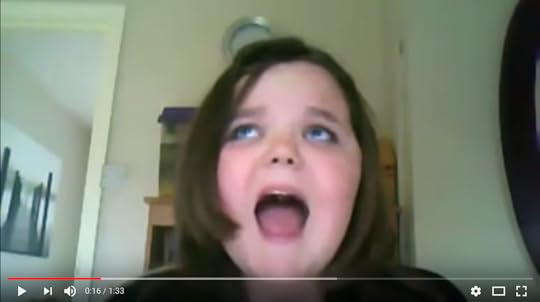 It’s a video of a little girl trying to sing I Will Always Love You by Dolly Parton. There are many reposts, and the captions say things like “Fail!” and “can’t sing the song worth her life,” and “can’t hit the right notes.” I know it’s supposed to be funny, but it breaks my heart.This little girl’s issue in the video elicits one of myQueen of the Worldthoughts. Do you ever have those If I Were Queen/King of the World thoughts? Those times when you identify something that’s obviously wrong and could be easily fixed? (Isn’t it nice that we all just have that out there?)In the world under my sovereignty, all middle school music teachers would have to know basic things about the voice, and would be expected to explain it to the children. The kids would learn a bit about vocal registers, their natural break, and that their voices change as they get older. They would learn that there’s nothing wrong with them, that it’s natural, and that they can work on their singing to build singing skills.
 Kids at that age are at a critical point in their developmental lives. They’re constantly comparing themselves to others, and deciding who they are. They feel very grown-up, but they’ve only been on the planet for 12 or 13 years, so they don’t really have much perspective.More often than not, when I first meet a tween student, I’m starting our relationship by reassuring them that that “break” in their voice is a natural thing that everybody has. There’s nothing wrong with them or their voices. It’s really concerning how much shame these students seem to carry about their inability to sing high in their chest register. They think they’re the only ones with this problem, and they’re embarrassed. Often, because they’re embarrassed about that “fake” voice that comes out when they hit higher notes, they avoid using it. Any time they sing - since most songs are more than an octave – they’re faced with the choice of singing in tune in the “fake” voice that sounds bad and feels funny, or remaining in their comfortable and familiar chest register and singing out of tune.
 More than one concerned parent has expressed concern that their child, who loves to sing, can’t. Then, 45 minutes in my studio, they’ve watched their child sing in tune after and thought I worked a miracle. But all I did was share some information with a perfectly intelligent young singer. For each one that I, or some other kind voice teacher, helps, there are a hundred who will stop singing because they’ve been criticized, or because they think something’s wrong with them. Every voice teacher knows this reality, because we’ve all taught the grown-up version of that wounded, shamed, or suppressed singer.So when I’m Queen of the World, all kids will know that their voices are just fine, that singing is for feeling good and finding joy, and that nobody has the right to offer unsolicited judgement.
 And my world will be a happy place.#youngvoices #vocalbreak #selfesteem #singingconfidence #tweenvoices #tweensinging #developingvoices #moneynotes
It’s a video of a little girl trying to sing I Will Always Love You by Dolly Parton. There are many reposts, and the captions say things like “Fail!” and “can’t sing the song worth her life,” and “can’t hit the right notes.” I know it’s supposed to be funny, but it breaks my heart.This little girl’s issue in the video elicits one of myQueen of the Worldthoughts. Do you ever have those If I Were Queen/King of the World thoughts? Those times when you identify something that’s obviously wrong and could be easily fixed? (Isn’t it nice that we all just have that out there?)In the world under my sovereignty, all middle school music teachers would have to know basic things about the voice, and would be expected to explain it to the children. The kids would learn a bit about vocal registers, their natural break, and that their voices change as they get older. They would learn that there’s nothing wrong with them, that it’s natural, and that they can work on their singing to build singing skills.Kids at that age are at a critical point in their developmental lives. They’re constantly comparing themselves to others, and deciding who they are. They feel very grown-up, but they’ve only been on the planet for 12 or 13 years, so they don’t really have much perspective.More often than not, when I first meet a tween student, I’m starting our relationship by reassuring them that that “break” in their voice is a natural thing that everybody has. There’s nothing wrong with them or their voices. It’s really concerning how much shame these students seem to carry about their inability to sing high in their chest register. They think they’re the only ones with this problem, and they’re embarrassed. Often, because they’re embarrassed about that “fake” voice that comes out when they hit higher notes, they avoid using it. Any time they sing - since most songs are more than an octave – they’re faced with the choice of singing in tune in the “fake” voice that sounds bad and feels funny, or remaining in their comfortable and familiar chest register and singing out of tune.More than one concerned parent has expressed concern that their child, who loves to sing, can’t. Then, 45 minutes in my studio, they’ve watched their child sing in tune after and thought I worked a miracle. But all I did was share some information with a perfectly intelligent young singer. For each one that I, or some other kind voice teacher, helps, there are a hundred who will stop singing because they’ve been criticized, or because they think something’s wrong with them. Every voice teacher knows this reality, because we’ve all taught the grown-up version of that wounded, shamed, or suppressed singer.So when I’m Queen of the World, all kids will know that their voices are just fine, that singing is for feeling good and finding joy, and that nobody has the right to offer unsolicited judgement.And my world will be a happy place.#youngvoices #vocalbreak #selfesteem #singingconfidence #tweenvoices #tweensinging #developingvoices #moneynotes