Meredith Colby's Blog, page 5
May 1, 2017
How to Beat Audition Nerves: The Real Answer
 Alanda wasfrom New York City.I don’t remember why she moved to Chicago, but she was confident. She’d been frustrated in New York - lots of auditioning and no getting cast - and was glad for a fresh start. She was also glad to be in a little podunk town like Chicago. She’d certainly be cast here. (Gotta love New Yorkers!)Alanda wasn’t unreasonable in expecting to be cast. She was beautiful and talented. She was also driven, which ishow she found me. Her mission: lose her break, be able to sound great belting. Find someone who could teach her that. Chop-chop. She was a committed student who got better very quickly.While she was working with me, she was also auditioning for shows; both straight theater and music theater. She wasn’t getting cast. She’dspend some of her lesson time venting about how unfair auditions were. What do the skills required for auditioning have to do with the skills required to be in a show? Nothing! Auditioning and acting are totally different skill sets! SO frustrating! SO stupid!And she was SO not getting cast.The skills for auditioning really are different, she said, and I need to get good at those skills.One day she comes to her lesson with an announcement: No more auditioning in order to be cast in a show. The skills for auditioning really are different, she said, and I need to get good at those skills. She declared that until she was really good at auditioning, she was going to use auditions for the sole purpose of getting good at auditions.She did. She auditioned like mad. She was auditioning for four or five shows a week. She auditioned for shows she’d never be cast in (a white girl auditioning forAin’t Misbehavin’? Seriously?) and didn’t care. She had a mission and she was using those auditions for her own purpose.After a coupla-few months of that, she came to a lesson announcing that she was ready.She was good at auditioning, she wasn’t scared, and a theater company was auditioning for a show she really wanted to be in. She was going for it.
 I was encouraging, but the odds were against her. The show wasQuilters. It had a cast of seven women, the show was being staged by a very popular theater, and the auditions times had been booked before they were even announced. Things were not boding well for our heroine.The end of the story is the end you hope for: Alanda was one of the seven women cast inQuilters. And she told me that, even though she was thrilled to be cast, she hadn’t had her hopes pinned on that show. She had several more auditions already on her calendar. She was ready to succeed as an actress.Watch for my white paper,How to Have a Great Music Theater Audition, coming Thursday, May 4


April 26, 2017
Why You Get Stage Fright and Five Stage Fright Hacks
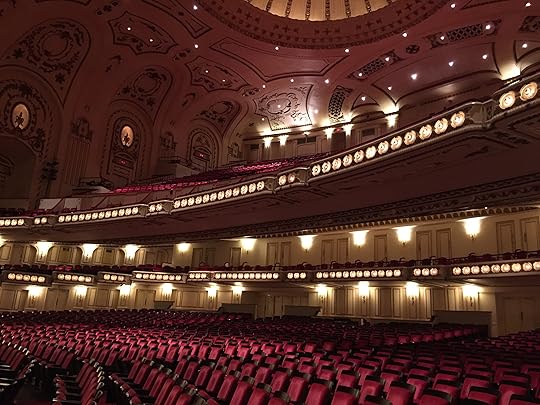 Stage fright sucks.Anybody who’s ever been paralyzed, or forced into a lame performance or presentation, because of stage fright will confirm that. It’s the worst. Your brain feels totally in control of what’s happening - it’s assessing the situation and trying to follow through with the plan – but your body didn’t get the memo. It’s shaking, flushing, nauseous, has dry mouth, is stuttering and sweating. Really not cool.Because stage fright is such a common experience, the explanation lies in evolution. Evolution theory says that individuals with traits that help them survive are then, because of surviving, able to pass those genes on to their progeny.Stage Fright Is A Survival Trait?For instance, babies are not intrinsically cute. They’re just babies. But the hominids who found babies cute were probably more attentive and responsive parents, and because of that, their babies survived into adulthood and passed along their genes. Do that for a few hundred generations and the number of babies-are-cute people start to strongly outnumber the babies-are-babies people.
 Onesensible theoryabout stage frights says that social anxiety was a survival response to “hostile dominants,” triggering escape, avoidance, or submissive behavior. So, from a monkey-brain perspective, you’re getting stage fright because you think your audience is going to kill you. That’s extreme, but not unnatural. Your monkey brain may just think they’re hostile, aggressors, or want your stuff.Stage fright becomes debilitating when your mind invests in or exaggerates that natural response. People with certain personality traits – perfectionism, control issues, fear of failure, the need to be liked – struggle more with stage fright than others. (If you want to know more,George Dvorskyhas a wonderful article about this.)Since I just described every singer I’ve ever met, let’s look at ways to deal with stage fright. You may never get over it, and you shouldn’t plan on it, but you can learn to manage it.HACKS FOR STAGE FRIGHTDiaphragm breathing: When you’re afraid or stressed, you take short, shallow, and irregular breaths. When you sleep, you take long, deep, and regular breaths. If you can make yourself take “sleeping breaths” it will be harder for your body to remember that it’s panicking.Choose your thoughts: People with stage fright tend to imagine the worst, and those thoughts increase the symptoms. Instead, think (or even say out loud) thoughts that will calm and reassure you.Visualize: This won’t help in the moment, but is your best investment in the long term. Long before your performance, regularly imagine the scene you anticipate triggering your stage fright. See yourself calm, cool, and kickin’ some audience ass.Therapy. There are many kinds of therapy, and you may find one that works for you. There’s talk therapy, bio-feedback, hypnonsis, and other options.Beta Blockers: Better living through chemistry, people. Beta blockers are a non-addicting, cheap drug that blocks the effects of adrenaline. They really work for musicians with stage fright. You’ll need an Rx.Watch for my white paper, How to Have a Great Music Theater Audition, coming Thursday, May 4.
April 24, 2017
Why You Couldn't Find Your Starting Note
The AuditionPenny auditioned for a band. The audition was at a gig. She was told to show up and sit in for a couple of songs. She told them she’d done very little “sitting in” in her singing career. They were ok with that. This was new to her, but she’s brave, knows she can sing, and she was game. So she emailed the leader the two songs she was going to sing, and showed up looking pretty. Penny loves Stevie Wonder, she knowsSigned, Sealed, Deliveredby heart, and it was on their list. Perfect. Normally Penny singsSigned, Sealed, Deliveredin Stevie’s key.The IncidentThe band played the very-familiar intro, Penny tried to come in, but found she couldn’t. She couldn’t discern the starting pitch. She was confused and panicky; that had never happened to her before. Luckily, one of the band’s regular singers got her started after a few beats, and she was fine.I asked Penny if the song felt a little low to her as she sang it, and she said it did.Here’s what happened to Penny. This may have happened to you.The Adrenaline FactorAdrenaline makes keys lower for singers. Here’s why.Stevie’s key was probably already too low, but Penny was used to it. Then, when her increased adrenaline levels made that key seem even lower, her brain couldn’t make sense of it. If she started where she knew she had to, it would feel too low; an octave up was definitely too high. So she couldn’t sing anything.Penny was in a situation that would make even a seasoned singer anxious and afraid. Your body produces adrenaline in response to anxiety and fear, and adrenaline creates a lot of physical responses. One of those responses is that your muscles release stored glycogen (energy). Glycogen causes muscle contractions to be stronger and last longer.
 Now,think about your experience as a singer. Higher notes take more muscle effort, right? You’re used to the amount of muscle effort it takes to produce, for instance, an A. Flood your system with glycogen, and all of a sudden your muscles are giving you extra strength for the same work. In other words, you’re putting forth your normal degree of effort for an A,but your muscles give you more than you were asking for – your muscles give you the amount of effort required for an A# or even a B.What to do?There’s no way to give a one-size-fits-all answer to this question, but I can suggest some insurance.If you think you’re going to be nervous, or will be singing in a high-anxiety situation, practice your song lower than normal. So, if you normally sing The Star Spangled banner in A, but if you feel reasonably certain you’ll be terrified when you’re at the stadium and 30,000 pairs of eyes are on you, practice your song in A♭or even G. You just might beat the Adrenaline Factor.Follow me on Facebook @MeredithColbyAuthorTwitter and Google+ @MeredithColby
Penny loves Stevie Wonder, she knowsSigned, Sealed, Deliveredby heart, and it was on their list. Perfect. Normally Penny singsSigned, Sealed, Deliveredin Stevie’s key.The IncidentThe band played the very-familiar intro, Penny tried to come in, but found she couldn’t. She couldn’t discern the starting pitch. She was confused and panicky; that had never happened to her before. Luckily, one of the band’s regular singers got her started after a few beats, and she was fine.I asked Penny if the song felt a little low to her as she sang it, and she said it did.Here’s what happened to Penny. This may have happened to you.The Adrenaline FactorAdrenaline makes keys lower for singers. Here’s why.Stevie’s key was probably already too low, but Penny was used to it. Then, when her increased adrenaline levels made that key seem even lower, her brain couldn’t make sense of it. If she started where she knew she had to, it would feel too low; an octave up was definitely too high. So she couldn’t sing anything.Penny was in a situation that would make even a seasoned singer anxious and afraid. Your body produces adrenaline in response to anxiety and fear, and adrenaline creates a lot of physical responses. One of those responses is that your muscles release stored glycogen (energy). Glycogen causes muscle contractions to be stronger and last longer.Now,think about your experience as a singer. Higher notes take more muscle effort, right? You’re used to the amount of muscle effort it takes to produce, for instance, an A. Flood your system with glycogen, and all of a sudden your muscles are giving you extra strength for the same work. In other words, you’re putting forth your normal degree of effort for an A,but your muscles give you more than you were asking for – your muscles give you the amount of effort required for an A# or even a B.What to do?There’s no way to give a one-size-fits-all answer to this question, but I can suggest some insurance.If you think you’re going to be nervous, or will be singing in a high-anxiety situation, practice your song lower than normal. So, if you normally sing The Star Spangled banner in A, but if you feel reasonably certain you’ll be terrified when you’re at the stadium and 30,000 pairs of eyes are on you, practice your song in A♭or even G. You just might beat the Adrenaline Factor.Follow me on Facebook @MeredithColbyAuthorTwitter and Google+ @MeredithColby
April 18, 2017
Why You Messed Up the Performance You Were Rockin’ at Home
The SituationYou’re performing or auditioning in a space that’s new to you. You’ve never been there before, you may not recognize some of all of the other people in the room. There may be a live band to accompany you, or perhaps you’re singing to karaoke. Doesn’t matter. You’ve never sung here before. The more factors of your environment that are new to you, the more your nervous system is working against you.Baking Bread We’ve all had the experience of walking into a house that was filled with the smell of something yummy being cooked. Bread, deserts, or a stew, perhaps. When you walked into that place, the smell of the delicious smell filled your being. You stopped, smiled and enjoyed, and probably commented. It was the only thing you were aware of just then.Ten minutes later you weren’t even conscience of the smell anymore.(Stay with me...we'll get back to your situation.) You are wired to pay attention to new things. You don’t decide to pay attention to new things, your brain does it for you. No doubt our predilection to hyper-focus on anything new in our environment was something that allowed us to survive at a time when changes in our environment often meant that our safety was threatened.Mental Real EstateThe fact is that you can only pay attention to so many things at one time (a concept explored in a fascinating way in Daniel Levitin’s book The Organized Mind). In other words, you have a limited amount of mental real estate. So, although you’d practiced your song and knew it by heart, although you’d talked to your contact person on the phone, or arrived super-early…although you thought you were in control, once you got on stage you were in Survival Mode.
 Your brain was paying attention to – and trying to make sense of – the way you sounded to yourself on mic in that room just then. It was listening to the instruments as a whole and individually, your eyes were no doubt focused on what was around you, and maybe you were looking at the person in charge or a friendly band member. Your senses were bombarded by new-ness, your brainwas trying to make sense of it all, and you simply didn’t have the mental real-estate to also pay attention to your performance. Even if you’d tried, it would have taken you between a minute and a few minutes for your brain to acclimate, and to decide that all was well. It takes a few minutes to shift out of Survival Mode.So, despite your intention and your best efforts, you were derailed by evolution. There was one way you might have been able to give the performance you had in mind; that would be if your performance was on auto-pilot. When you’ve practiced something so much that you can do it in your sleep, then your performance will probably override your Survival Mode. Probably.
We’ve all had the experience of walking into a house that was filled with the smell of something yummy being cooked. Bread, deserts, or a stew, perhaps. When you walked into that place, the smell of the delicious smell filled your being. You stopped, smiled and enjoyed, and probably commented. It was the only thing you were aware of just then.Ten minutes later you weren’t even conscience of the smell anymore.(Stay with me...we'll get back to your situation.) You are wired to pay attention to new things. You don’t decide to pay attention to new things, your brain does it for you. No doubt our predilection to hyper-focus on anything new in our environment was something that allowed us to survive at a time when changes in our environment often meant that our safety was threatened.Mental Real EstateThe fact is that you can only pay attention to so many things at one time (a concept explored in a fascinating way in Daniel Levitin’s book The Organized Mind). In other words, you have a limited amount of mental real estate. So, although you’d practiced your song and knew it by heart, although you’d talked to your contact person on the phone, or arrived super-early…although you thought you were in control, once you got on stage you were in Survival Mode.Your brain was paying attention to – and trying to make sense of – the way you sounded to yourself on mic in that room just then. It was listening to the instruments as a whole and individually, your eyes were no doubt focused on what was around you, and maybe you were looking at the person in charge or a friendly band member. Your senses were bombarded by new-ness, your brainwas trying to make sense of it all, and you simply didn’t have the mental real-estate to also pay attention to your performance. Even if you’d tried, it would have taken you between a minute and a few minutes for your brain to acclimate, and to decide that all was well. It takes a few minutes to shift out of Survival Mode.So, despite your intention and your best efforts, you were derailed by evolution. There was one way you might have been able to give the performance you had in mind; that would be if your performance was on auto-pilot. When you’ve practiced something so much that you can do it in your sleep, then your performance will probably override your Survival Mode. Probably.
Why You Messed Up the Performance of a Song You Were Killin’ in your Living Room
The SituationYou’re performing or auditioning in a space that’s new to you. You’ve never been there before, you may not recognize some of all of the other people in the room. There may be a live band to accompany you, or perhaps you’re singing to karaoke. Doesn’t matter. You’ve never sung here before. The more factors of your environment that are new to you, the more your nervous system is working against you.Baking BreadWe’ve all had the experience of walking into a house that was filled with the smell of something yummy being cooked. Bread, deserts, or a stew, perhaps. When you walked into that place, the smell of the delicious smell filled your being. You stopped, smiled and enjoyed, and probably commented. It was the only thing you were aware of just then.Ten minutes later you weren’t even conscience of the smell anymore.(Stay with me...we'll get back to your situation.) You are wired to pay attention to new things. You don’t decide to pay attention to new things, your brain does it for you. No doubt our predilection to hyper-focus on anything new in our environment was something that allowed us to survive at a time when changes in our environment often meant that our safety was threatened.Mental Real EstateThe fact is that you can only pay attention to so many things at one time (a concept explored in a fascinating way in Daniel Levitin’s book The Organized Mind). In other words, you have a limited amount of mental real estate. So, although you’d practiced your song and knew it by heart, although you’d talked to your contact person on the phone, or arrived super-early…although you thought you were in control, once you got on stage you were in Survival Mode.Your brain was paying attention to – and trying to make sense of – the way you sounded to yourself on mic in that room just then. It was listening to the instruments as a whole and individually, your eyes were no doubt focused on what was around you, and maybe you were looking at the person in charge or a friendly band member. Your senses were bombarded by new-ness, your brainwas trying to make sense of it all, and you simply didn’t have the mental real-estate to also pay attention to your performance. Even if you’d tried, it would have taken you between a minute and a few minutes for your brain to acclimate, and to decide that all was well. It takes a few minutes to shift out of Survival Mode.So, despite your intention and your best efforts, you were derailed by evolution. There was one way you might have been able to give the performance you had in mind; that would be if your performance was on auto-pilot. When you’ve practiced something so much that you can do it in your sleep, then your performance will probably override your Survival Mode. Probably.
We’ve all had the experience of walking into a house that was filled with the smell of something yummy being cooked. Bread, deserts, or a stew, perhaps. When you walked into that place, the smell of the delicious smell filled your being. You stopped, smiled and enjoyed, and probably commented. It was the only thing you were aware of just then.Ten minutes later you weren’t even conscience of the smell anymore.(Stay with me...we'll get back to your situation.) You are wired to pay attention to new things. You don’t decide to pay attention to new things, your brain does it for you. No doubt our predilection to hyper-focus on anything new in our environment was something that allowed us to survive at a time when changes in our environment often meant that our safety was threatened.Mental Real EstateThe fact is that you can only pay attention to so many things at one time (a concept explored in a fascinating way in Daniel Levitin’s book The Organized Mind). In other words, you have a limited amount of mental real estate. So, although you’d practiced your song and knew it by heart, although you’d talked to your contact person on the phone, or arrived super-early…although you thought you were in control, once you got on stage you were in Survival Mode.Your brain was paying attention to – and trying to make sense of – the way you sounded to yourself on mic in that room just then. It was listening to the instruments as a whole and individually, your eyes were no doubt focused on what was around you, and maybe you were looking at the person in charge or a friendly band member. Your senses were bombarded by new-ness, your brainwas trying to make sense of it all, and you simply didn’t have the mental real-estate to also pay attention to your performance. Even if you’d tried, it would have taken you between a minute and a few minutes for your brain to acclimate, and to decide that all was well. It takes a few minutes to shift out of Survival Mode.So, despite your intention and your best efforts, you were derailed by evolution. There was one way you might have been able to give the performance you had in mind; that would be if your performance was on auto-pilot. When you’ve practiced something so much that you can do it in your sleep, then your performance will probably override your Survival Mode. Probably.
April 16, 2017
WORLD VOICE DAY
WORLD VOICE DAY YOU SOUND GREAT!I’ve given you this tip, in my 30 Vocal Tips in 30 Days art, every day for a month. You may think it’s not a tip, but a statement of opinion. You’d be right, of course, but it’s an opinion I wish you would hold as your own.In honor of today, World Voice Day, take a moment to behold the miracle that is the human voice. It’s a valve in your respiratory system. But it also happens to be an organ of staggering intricacy in both form and function!You don’t have to know a lot about your voice to love it for what it can do. Your speaking voice can inspire, reassure, or educate another person; gifts with are beyond measure. Your singing voice can calm your baby to sleep, connect you with a group, or excite a multitude; profound contributions to the good in the world.Enjoy World Voice Day, and celebrate the small miracle that is your voice!
YOU SOUND GREAT!I’ve given you this tip, in my 30 Vocal Tips in 30 Days art, every day for a month. You may think it’s not a tip, but a statement of opinion. You’d be right, of course, but it’s an opinion I wish you would hold as your own.In honor of today, World Voice Day, take a moment to behold the miracle that is the human voice. It’s a valve in your respiratory system. But it also happens to be an organ of staggering intricacy in both form and function!You don’t have to know a lot about your voice to love it for what it can do. Your speaking voice can inspire, reassure, or educate another person; gifts with are beyond measure. Your singing voice can calm your baby to sleep, connect you with a group, or excite a multitude; profound contributions to the good in the world.Enjoy World Voice Day, and celebrate the small miracle that is your voice!
April 15, 2017
COUNTDOWN TO WORLD VOICE DAY: Day 1
30 Vocal Tips in 30 Days No. 1 LOWER THE BAROne of the great gifts of art is that it is impossible to achieve perfection. As soon as you climb to the next level of proficiency of your art form, you have the vision see the level beyond that. Art is both subjective and expansive by its nature. Therefore, you’re never finished, never perfect, and never bullet-proof.I’ve had a number of students, over the years, who have told me they plan to sing in public but who never took the leap. They’d sing in one of my recitals or group classes, get all jazzed with the thrill of performance, and then settle back into the safety of lessons and tell me they’re not ready to perform.You’ll never be perfect, but you can always begin. At some point, to get what you want, you’ll have to begin. If you want a little push, go out and listen to a local singer doing the sort of thing you want to do. As you watch and listen there will be a voice inside you saying, “I can do that”! You’ll think you’re as good as that singer, or that you could be as good with some experience, or that you’re better. Let that little voice push you into starting!TAKEAWAY:Don’t wait to be perfect to begin.
No. 1 LOWER THE BAROne of the great gifts of art is that it is impossible to achieve perfection. As soon as you climb to the next level of proficiency of your art form, you have the vision see the level beyond that. Art is both subjective and expansive by its nature. Therefore, you’re never finished, never perfect, and never bullet-proof.I’ve had a number of students, over the years, who have told me they plan to sing in public but who never took the leap. They’d sing in one of my recitals or group classes, get all jazzed with the thrill of performance, and then settle back into the safety of lessons and tell me they’re not ready to perform.You’ll never be perfect, but you can always begin. At some point, to get what you want, you’ll have to begin. If you want a little push, go out and listen to a local singer doing the sort of thing you want to do. As you watch and listen there will be a voice inside you saying, “I can do that”! You’ll think you’re as good as that singer, or that you could be as good with some experience, or that you’re better. Let that little voice push you into starting!TAKEAWAY:Don’t wait to be perfect to begin.
April 14, 2017
COUNTDOWN TO WORLD VOICE DAY: Day 2
30 Vocal Tips in 30 Days No. 2 NEVER LEARN AT YOUR OWN EXPENSEIf possible. I have to add “if possible” to that headline because it doesn’t always apply. But it often does.Want to start a band? Sing in someone else’s band first. Want to start singing out as a solo singer-songwriter? Hang out at open mics and songwriter nights and talk to (and by “talk” I mean “listen”) people who have been at it a while. Want to start a music school? Teach at someone else’s first.No matter what you want to do (unless it is truly groundbreaking) somebody else has already done it and written a book about it. Even if your perception is that the thing you’re planning to do seems easy, there are little mistakes you’ll make along the way that will create regrettable bumps in your road.If you can’t get direct experience, e.g., sing in someone else’s band or teach at someone else’s music school, you can learn indirectly from someone who’s made the mistakes already by reading their book (or blog) or listening to their podcast. Why learn at your own expense – of time, money, energy, and heartbreak – when you can learn at someone else’s? Why not avail yourself to abundance of help and knowledge for musicians and singers that is already out there? (Bob-Baker.com is a great resource for this.)TAKEAWAY:You’re not immune to failure, and failure is good. But if you can, do it on someone else’s time.
No. 2 NEVER LEARN AT YOUR OWN EXPENSEIf possible. I have to add “if possible” to that headline because it doesn’t always apply. But it often does.Want to start a band? Sing in someone else’s band first. Want to start singing out as a solo singer-songwriter? Hang out at open mics and songwriter nights and talk to (and by “talk” I mean “listen”) people who have been at it a while. Want to start a music school? Teach at someone else’s first.No matter what you want to do (unless it is truly groundbreaking) somebody else has already done it and written a book about it. Even if your perception is that the thing you’re planning to do seems easy, there are little mistakes you’ll make along the way that will create regrettable bumps in your road.If you can’t get direct experience, e.g., sing in someone else’s band or teach at someone else’s music school, you can learn indirectly from someone who’s made the mistakes already by reading their book (or blog) or listening to their podcast. Why learn at your own expense – of time, money, energy, and heartbreak – when you can learn at someone else’s? Why not avail yourself to abundance of help and knowledge for musicians and singers that is already out there? (Bob-Baker.com is a great resource for this.)TAKEAWAY:You’re not immune to failure, and failure is good. But if you can, do it on someone else’s time.
April 13, 2017
COUNTDOWN TO WORLD VOICE DAY: Day 3
30 Vocal Tips in 30 Days No. 3 A ROOM OF ONE’S OWNIn 1929 a number of Virginia Woolf’s essays were released as a book, called A Room of One’s Own. Her argument was that the dearth of female writers was due in great measure to the reality that women had no money or time of their own. She posited that if a woman had, “£500 (apx. $32,000 in today’s money) a year and room of her own” that she could write as well and as much as a man.I often think about that in terms of improving one’s singing. I’ve had many students, over the years, tell me that the reason they don’t practice is because they have no place to practice. Singing is loud. You have to have a place to practice. Here are some suggestions:Sing into your closet. Standing in front of your closet will muffle the sound tremendously as your clothes absorb the sound.Rent a practice space. Google “rehearsal space” and you’ll find places that rent rehearsal space to musicians. You can sublet if you don’t want it seven days.Stop caring. If you’re practicing during the normal, daytime hours when people make noise, then people who can hear, or object to, your noise can just get over themselves. It might turn out that your neighbors love it!Create a “sound booth” in a corner of your space with foam or acoustic ceiling tiles.TAKEAWAY:Find a way. There’s always someplace to practice.
No. 3 A ROOM OF ONE’S OWNIn 1929 a number of Virginia Woolf’s essays were released as a book, called A Room of One’s Own. Her argument was that the dearth of female writers was due in great measure to the reality that women had no money or time of their own. She posited that if a woman had, “£500 (apx. $32,000 in today’s money) a year and room of her own” that she could write as well and as much as a man.I often think about that in terms of improving one’s singing. I’ve had many students, over the years, tell me that the reason they don’t practice is because they have no place to practice. Singing is loud. You have to have a place to practice. Here are some suggestions:Sing into your closet. Standing in front of your closet will muffle the sound tremendously as your clothes absorb the sound.Rent a practice space. Google “rehearsal space” and you’ll find places that rent rehearsal space to musicians. You can sublet if you don’t want it seven days.Stop caring. If you’re practicing during the normal, daytime hours when people make noise, then people who can hear, or object to, your noise can just get over themselves. It might turn out that your neighbors love it!Create a “sound booth” in a corner of your space with foam or acoustic ceiling tiles.TAKEAWAY:Find a way. There’s always someplace to practice.
April 12, 2017
COUNTDOWN TO WORLD VOICE DAY: Day 4
30 Vocal Tips in 30 DaysNo. 4 JUST SAY YES (Your Brain Can Hear You) We’re worriers by nature. Humans have a predilection to negativity; even light-hearted people. We’re critical and judgmental of ourselves and our worlds. Positive thoughts seldom happen naturally, but rather need to be conjured up deliberately.Why do you care? Because a brain that’s engaged in negative thoughts – about one’s self or about one’s external world – is engaged with behavior inhibition, and (probably irrational) behavior processing, i.e., judging yourself. It is not being creative or compassionate, and it’s not open to learning.(O. Longe, NeuroImage Journal, No. 49.)Though that naturally-worried state of mind was probably a good thing back when humans were consumed with basic survival issues, it really gets in the way of being a productive, happy person here in the 21st century.If you want to get better at something – singing, for instance - you have to learn something new, and then practice it until it’s integrated and natural. Negatively criticizing oneself slows this process down tremendously.TAKEAWAY:Having an open and playful attitude toward making natural mistakes as you’re getting the hang of something new will allow the learning process to go as quickly as possible.
We’re worriers by nature. Humans have a predilection to negativity; even light-hearted people. We’re critical and judgmental of ourselves and our worlds. Positive thoughts seldom happen naturally, but rather need to be conjured up deliberately.Why do you care? Because a brain that’s engaged in negative thoughts – about one’s self or about one’s external world – is engaged with behavior inhibition, and (probably irrational) behavior processing, i.e., judging yourself. It is not being creative or compassionate, and it’s not open to learning.(O. Longe, NeuroImage Journal, No. 49.)Though that naturally-worried state of mind was probably a good thing back when humans were consumed with basic survival issues, it really gets in the way of being a productive, happy person here in the 21st century.If you want to get better at something – singing, for instance - you have to learn something new, and then practice it until it’s integrated and natural. Negatively criticizing oneself slows this process down tremendously.TAKEAWAY:Having an open and playful attitude toward making natural mistakes as you’re getting the hang of something new will allow the learning process to go as quickly as possible.