Meredith Colby's Blog, page 4
July 13, 2017
Why Don't Voice Teachers Cut The Bullshit?
Most singers who begin voice lessons know they’re signing on for a process of growth and learning. But every once in awhile, I (along with every other voice teacher in the world) see a new student who wants us to just cut the bullshit and tell them how to do this singing thing.As though we’re all secretly keeping that reliable WikiHow page, 5 Easy Steps to Awesome Singing, all to ourselves.It Looks So Easy When They Do It In any area of expertise, there are people who make it look easy. But for some reason we don’t feel like we should be able to do whatever they’re doing. We don’t watch great magicians, figure skaters, snowboarders, or guitarists and think, “Yeah…I could do that”. Or, perhaps, “I could do that if I watch some YouTube videos about it”. We give them their props; knowing they earned their command and fluency with time and dedication.But singing is different, somehow. And CCM singing (contemporary commercial, or pop) is really different. Maybe it’s because, unlike golf or violin, humans are natural singers. Nearly everyone can sing to some degree. Maybe it’s our imbedded sense of ourselves as musical beings, along with the instrument that’s imbedded in our bodies, that gives us the sense that we’re entitled to be natural singers. Really, we are natural singers. It’s our culture of experts, exacerbated by internet videos, that cause us to imagine that there’s no space between the shower and The Voice."It's true that some people are just naturally good singers. But they're the exception, not the rule".Here’s Your Problem, BuddySome common beliefs people hold about singing are:Some people are born talented, and some aren’t. You have it or you don’t.Being an okay singer, or a good singer, isn’t enough. If you want to share your singing with others, you have to be a great singer.If you’re not impressively good, you shouldn’t even try. Especially not in front of anyone else.Anybody who performs their singing regularly or professionally, but who isn’t wildly famous, didn’t “make it.” Or is “a loser.” (We do this to ourselves a lot.)Voice lessons are a waste of money. If you’re a good singer, you’re a good singer. There’s no need to take lessons.People who take voice lessons are admitting that they can’t really sing.Naturally Talented
 It’s true that some people are just born more talented than others. There are a rare few who arejust naturally good singers. But they’re the exception, not the rule. If you want to get command of your singing, you can. And like the magician or pianist, you can master your technique. When your technique is serving you, you’re free to create the singing that truly expresses you.So, when you get sick of trying to learn from YouTube videos, there’s a voice teacher out there who would love to help you master your art. There’s no magic bullet, it’s a process. But a teacher can help you, and it’s so worth it.
In any area of expertise, there are people who make it look easy. But for some reason we don’t feel like we should be able to do whatever they’re doing. We don’t watch great magicians, figure skaters, snowboarders, or guitarists and think, “Yeah…I could do that”. Or, perhaps, “I could do that if I watch some YouTube videos about it”. We give them their props; knowing they earned their command and fluency with time and dedication.But singing is different, somehow. And CCM singing (contemporary commercial, or pop) is really different. Maybe it’s because, unlike golf or violin, humans are natural singers. Nearly everyone can sing to some degree. Maybe it’s our imbedded sense of ourselves as musical beings, along with the instrument that’s imbedded in our bodies, that gives us the sense that we’re entitled to be natural singers. Really, we are natural singers. It’s our culture of experts, exacerbated by internet videos, that cause us to imagine that there’s no space between the shower and The Voice."It's true that some people are just naturally good singers. But they're the exception, not the rule".Here’s Your Problem, BuddySome common beliefs people hold about singing are:Some people are born talented, and some aren’t. You have it or you don’t.Being an okay singer, or a good singer, isn’t enough. If you want to share your singing with others, you have to be a great singer.If you’re not impressively good, you shouldn’t even try. Especially not in front of anyone else.Anybody who performs their singing regularly or professionally, but who isn’t wildly famous, didn’t “make it.” Or is “a loser.” (We do this to ourselves a lot.)Voice lessons are a waste of money. If you’re a good singer, you’re a good singer. There’s no need to take lessons.People who take voice lessons are admitting that they can’t really sing.Naturally TalentedIt’s true that some people are just born more talented than others. There are a rare few who arejust naturally good singers. But they’re the exception, not the rule. If you want to get command of your singing, you can. And like the magician or pianist, you can master your technique. When your technique is serving you, you’re free to create the singing that truly expresses you.So, when you get sick of trying to learn from YouTube videos, there’s a voice teacher out there who would love to help you master your art. There’s no magic bullet, it’s a process. But a teacher can help you, and it’s so worth it.


July 6, 2017
Pop Singing Will Ruin Your Voice
 There’s a moment in my presentation to singers and voice teachers, in my Neuro-Vocal seminars, that I have to ask: How many of you have been told that pop singing will ruin your voice?Hands always go up. Never less than a third of the participants, actually; both voice teachers and students.That indicates to me that some voice teachers and college voice departments:still adhere to the myth that classical singing is the only real singingstill believe singing with technique that is appropriate to CCM styles will actually damage the vocal foldsdon’t listen to music that features CCM vocal techniquedon’t consider that the overwhelming majority of singing opportunities are in CCM singingWith rare exceptions, voice teachers both love their students and want to help them improve. If a voice teacher believes that contemporary commercial music (CCM) styles will harm their students’ voices, then they cannot teach that style of singing. Even if that’s the music their students want to sing. Even if they knew how.The problem isn't CCM singingThere are scores of successful, professional singers of popular styles that have been singing the same way, with the same voice, with no vocal damage, for decades. It’s obviously not hurting them. Because, just like classical singing, when it’s done with healthy technique, you can do it for a lifetime.
 The problem is the education (or lack thereof) of voice teachers. People are often afraid of things they know nothing about. Experts can be guilty of adhering to old and negated “facts,” or uninformed opinions which they believe to be facts. Many experts in voice training, based on outdated or fear-based knowledge, still believe that singing with technique appropriate for popular styles will harm their students’ voices. Then, of course, they share those “facts” with their students, very few of whom (statistically) actually want to sing classical music.Joy and creativity do not thrive under oppression, suppression, or clothes that don’t fit. If a singer wants to learn to be great at country-western music, and she’s told by her voice teacher, whom she trusts, that singing her own heart’s song will ruin her voice, she’s either going to continue her study, feeling that she’s wearing someone else’s clothes (so to speak), or she’s going to quit lessons. Neither outcome is what a loving teacher would want for their student.So, a love note from me to all the caring and committed voice teachers:You are a teacher in the arts, on a sacred journey. You hold tender hearts in your hands. Learn to love all singing. Help them find their music.
June 30, 2017
Watching Death
“The more intimate and honest your lyric is, the more universal its appeal.”I’ve started and given up on three posts this week. All have been about what I think I should write. None have been what I feel compelled to share.Long ago I attended a songwriting seminar in which one of the clinicians shared the sentiment I quoted above. If you sugar coat your experience, or try to make it easy to understand, or describe it from a distance that safe for you, then your song isn’t worth didley. To write a song that’s worth anything, you have to wallow in muck of life and share your very human experience with the rest of us.I am in the muck of life. My dad is dying of dementia.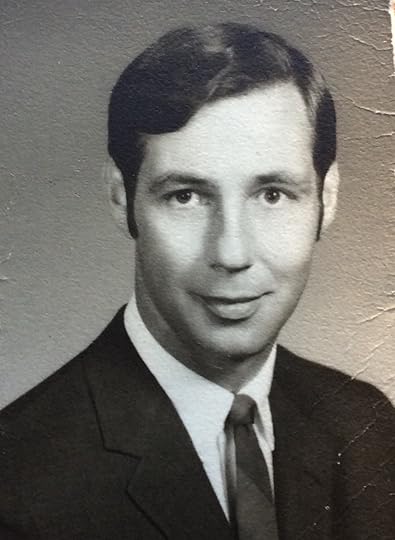 Until last weekend, I told people my dad had dementia. Even a couple of months ago when he was moved into a memory care facility, he had dementia. Now he is no longer my dad with a disease. He has become his disease.You know in Into the Woods, when Little Red shares her realization that “nice is different than good”? That’s my dad. He mostly wasn’t very nice to us. But he was mostly good; loyal to his family, steadfast, worked for social causes, and always showed up on time. He loved reading. He had a huge collection of books, and knew more about theology, the American Revolution, and the Puritans in North American than anyone I’ve ever known. He talked a lot, and typically steered the conversation so that he could be the smartest guy in the room.Now he can’t make a sentence.The sum of all he was – his knowledge and experiences – is no more. His childhood in Quincy and summers on Cape Cod, his 50 years of activist work, the family he grew from and the family he made, his righteous opinions and fierce work ethic are all gone.What are we without our own history? His disease has drained him of himself while he yet lives. It feels mean and iniquitous to me. And sad. Tragically sad.
 He was my dad. My dad who made things possible for me, who allowed me to know that if I took a risk and failed it would be okay, who scared me and comforted me; my dad who bought me my first bike when I was six and taught me to ride it. My dad who was ever distressed with my choice to be a musician, and supported me in it anyway. My dad who was always there.Now he barely knows me. He cannot feed or bathe himself, or put himself to bed. He is confined to the tiny world of his memory care place, and his ever-smaller interior world. To be with him breaks my heart. To abandon him is unthinkable.There are experiences that must be lived to be known - childbirth, divorce, loss of a loved one, and disease – and that are common in the telling but will rend your heart in the living of them.This is my honest lyric in the making. Thank you for reading the first verse.
Until last weekend, I told people my dad had dementia. Even a couple of months ago when he was moved into a memory care facility, he had dementia. Now he is no longer my dad with a disease. He has become his disease.You know in Into the Woods, when Little Red shares her realization that “nice is different than good”? That’s my dad. He mostly wasn’t very nice to us. But he was mostly good; loyal to his family, steadfast, worked for social causes, and always showed up on time. He loved reading. He had a huge collection of books, and knew more about theology, the American Revolution, and the Puritans in North American than anyone I’ve ever known. He talked a lot, and typically steered the conversation so that he could be the smartest guy in the room.Now he can’t make a sentence.The sum of all he was – his knowledge and experiences – is no more. His childhood in Quincy and summers on Cape Cod, his 50 years of activist work, the family he grew from and the family he made, his righteous opinions and fierce work ethic are all gone.What are we without our own history? His disease has drained him of himself while he yet lives. It feels mean and iniquitous to me. And sad. Tragically sad.He was my dad. My dad who made things possible for me, who allowed me to know that if I took a risk and failed it would be okay, who scared me and comforted me; my dad who bought me my first bike when I was six and taught me to ride it. My dad who was ever distressed with my choice to be a musician, and supported me in it anyway. My dad who was always there.Now he barely knows me. He cannot feed or bathe himself, or put himself to bed. He is confined to the tiny world of his memory care place, and his ever-smaller interior world. To be with him breaks my heart. To abandon him is unthinkable.There are experiences that must be lived to be known - childbirth, divorce, loss of a loved one, and disease – and that are common in the telling but will rend your heart in the living of them.This is my honest lyric in the making. Thank you for reading the first verse.
June 20, 2017
Should Anyone Pursue a Degree in Music Theater?
 A friend and fellow voice teacher and I were talking about a quandary that all teachers of the arts face: whether or not to encourage students to pursue their art.It’s a tough one.A few weeks ago, I posted a blog about the Dunning-Kruger Effect, an effect whereby we are very confident that we’re very good at things we know little about. The arts depend on the Dunning-Kruger Effect. If newbie artists really knew:how really hard it is to be successful in the artshow little they really knowhow much better they need to get to compete professionallythey would never even begin to walk the path that could take them to excellence. They would be defeated at the outset.Voice teachers (and I count myself among these) are often people who became good enough musicians to realize that they were either unable or unwilling to commit to living exclusively as performing artists. They are also, usually, really nice people who love teaching and find genuine fulfillment in helping others find their artistic voice. And there’s the rub.What do you do when your student asks you whether she’s “good enough to make it?” Or when your less-than-stellar teenage student announces that he’s going to go for a music-theater degree in college?...most of us are very ambivalent. Is it really our place to decide what this person’s potential is, or their future could hold?Many voice teachers will “level with” their students, but most of us are very ambivalent. Is it really our place to decide what this person’s potential is, or their future could hold? What should you say to these people?I’m going to tell you a true story that you can feel free to steal, embellish, and share as though it is your own.
 A friend of mine Invited me to a once-in-a-lifetime event. It was a 400th birthday party for William Shakespeare thrown by the 30-year-old Chicago Shakespeare Theater in their beautiful building on Lake Michigan in downtown Chicago. It was a swanky fundraiser. My generous friend had been invited by her sister, who works for Goldman-Sacks, and who had purchased a table. The after-dinner program included a speech from Barbara Gaines, the founder and executive director of Chicago Shakespeare, a speech from Anne R. Pramaggiore, the CEO of CommEd, an energy delivery company with 4 million customers, and delightful entertainment from Tony-and-Olivier-award-winning actor Alan Cumming.It was a posh and exciting event that raised over 1.4 million dollars. But that’s not the punch line. The punch line is that the Goldman-Sacks executive, the award-winning artistic director, the big kahoona corporate executive, and the award-winning actor all had something in common: an undergraduate degree in theater.That story, by the way, is what I now tell my students who are either contemplating acquiring, or lamenting the acquisition of, a music or theater degree. Your undergraduate degree is not a vocational certificate; it does not define you.Be open to your truth, to possibilities, and to change. Be willing to work for what you want. It’s all good.
June 13, 2017
YOU'RE WORTH IT: How to Set Your Fees as a Freelance Teacher
This article is featured in the current edition of the VASTA Voice, a publication of the Voice and Speech Trainers Association Voice teachers are singers, and it’s the rare singer who is business-minded by nature. We’re artists who have eschewed the straight and narrow to dance with our muse. Professionally, most of us started teaching voice because we knew how to sing, and teaching seemed like a better idea than waiting tables or temping. And then we discovered that we actually like a lot about teaching. We like the relationships, and helping others, and sharing in the process of growth and learning. All the other stuff, though? Not so much.Being a freelance voice teacher means you have your own studio. You have to market yourself, manage your schedule, keep track of each student’s progress and payments, and set up recitals. You also have to set your price and policies; two elements of teaching that can be hard to decide and even harder to enforce.If you teach through an institution the price for your lessons is set by someone else. You may get a little less than you’d like on a per-student basis, but you never have to be the bad guy. Someone else sets and enforces the policies, collects the tuition fees, and pays you in a timely manner. If you’re teaching on your own, you have to do all that, whether you want to or not.So how do you set your price?To finish the article, click the logo below for VASTA Voice, May 2017:
Voice teachers are singers, and it’s the rare singer who is business-minded by nature. We’re artists who have eschewed the straight and narrow to dance with our muse. Professionally, most of us started teaching voice because we knew how to sing, and teaching seemed like a better idea than waiting tables or temping. And then we discovered that we actually like a lot about teaching. We like the relationships, and helping others, and sharing in the process of growth and learning. All the other stuff, though? Not so much.Being a freelance voice teacher means you have your own studio. You have to market yourself, manage your schedule, keep track of each student’s progress and payments, and set up recitals. You also have to set your price and policies; two elements of teaching that can be hard to decide and even harder to enforce.If you teach through an institution the price for your lessons is set by someone else. You may get a little less than you’d like on a per-student basis, but you never have to be the bad guy. Someone else sets and enforces the policies, collects the tuition fees, and pays you in a timely manner. If you’re teaching on your own, you have to do all that, whether you want to or not.So how do you set your price?To finish the article, click the logo below for VASTA Voice, May 2017:
June 9, 2017
How to Make a Great Impression On Stage
A Step-by-Step Guide For Singers This post will be up through June 30. From now until then, you have access to my free White Paper, How to Make a Great Impression On Stage. It reveals both the secrets to an electrifying stage presence, and the process of creating that for yourself!Practical and accessible, these 6 Steps can make anyone a captivating presence on stage!For your free White Paper, copy and paste this link:https://docs.wixstatic.com/ugd/35d5f8...
This post will be up through June 30. From now until then, you have access to my free White Paper, How to Make a Great Impression On Stage. It reveals both the secrets to an electrifying stage presence, and the process of creating that for yourself!Practical and accessible, these 6 Steps can make anyone a captivating presence on stage!For your free White Paper, copy and paste this link:https://docs.wixstatic.com/ugd/35d5f8...
May 30, 2017
Getting The Gig: A Powerful First Impression (Part 2 of 2)
 Leading up to my free White Paper, How to Make an Unforgettable Impression on Stage, today’s VoCalling subject will be, well, that. Not to change who you are, but to utilize some of your own magic and magnetism to accomplish your goals.As promised in Part 1, here is the LOVE MEacronym for creating a likeable, lovable, magnetic, confident first impression!LLOOK GOODNot good meaning “fashionable,” “conservative,” or “sexy.” Look good in a way that will make YOU feel confident. Your clothes are clean, together, and fit well. Your hair looks good, your teeth are brushed, your shoes aren’t scuffed up. Take the time to look good in a way that makes you feel really comfortable in your own skin.OON TIMENot obnoxiously early. Five to ten minutes early. Or right on time. Unless it’s a social event, in which case being 10-15 minutes late is more considerate than being on time.VVOCALLY STUNNINGYour voice and how you use it can have a big impact. Be very aware of it in new situations where you’re uncomfortable or out of your element. That’s when you’re most likely to speak too loudly, too softly, too much, or too little. You have immense power to put someone at ease by using a voice that is relaxed and easily heard, and steering a conversation that is balanced in the other person’s favor. In other words, ask about them and listen as they talk. It puts people at ease and makes them like you.EEYE CONTACTGOOD: looking at someone’s face when they’re speaking, looking at their face (or faces) most of the time you’re speaking.BAD: boring into their skulls with your laser vision, looking away a lot, or darting eyes. You may need practice this.
  MMANNERSMeeting someone new is THE time you do all those things your mother taught you. Say please and thank-you, take what is offered (even if you don’t want it), ask about the other person, pull out the chair, open the door, remember their name, don’t interrupt; you know…all the stuff you probably already know but don’t always choose to implement. Showing that you have good manners goes a really long way toward making a good impression. I can personally guarantee that you’ll see the results of your efforts in this category immediately.EEMPATHYThis is the coolest point. Whenever you meet someone new and you make it your job to be responsible for their comfort level, you will be unflappable. Read their body language, try to assess what they’re feeling, figure out what kind of person you’re talking to. The more into yourself you are, the more nervous and unsure you’ll be. The more into the other person you are, the more confident you will be. Begin the interaction thinking, “it’s my job to make you comfortable.” Try it. Even imagining it help you understand the kind of power social empathy gives you. Think LOVE ME, and they will!
May 23, 2017
Getting the Gig: A Powerful First Impression (Part 1 of 2)
Leading up to my free White Paper, How to Make an Unforgettable  Impression on Stage, today’s VoCalling subject will be, well, that. Not to change who you are, but to utilize some of your own magic and magnetism to accomplish your goals.Before you get on stage, you have to get the gig. And since you’re probably a singer, you’re probably the one getting the gig for the band; or auditioning for other opportunities. Or, as a voice teacher, you’re meeting potential new students.Guess what? You’re in sales.I know. Eww. You did not get into music to be in sales. But think about it; anybody who’s ever interviewed for a job, or gone on a date, or met their potential in-laws is in sales. Making it easy for people to like you can help you smooth your path and accomplish your goals.EASY:Make a great first impression so people like you right away.HARD:Make them like you after they’ve already decided they don’t.Whether or not you like the idea, first impressions count for a lot. People make decisions – and will make decisions about you - based on how they feel, not what they think. If the feeling they have is one of not liking you, they won’t hire you. Or won’t hire you back. If they like you, they want to work with you."First impressions count for a lot."You know yourself really well, but the person meeting you doesn’t know you at all. If it matters to you that they like you enough to give you a chance, you have to help them like you.Once you set your mind to it, it’s really not difficult to make sure you’ve made a good first impression. It doesn’t mean you’re not being yourself. It just means you’re aware that how you look, your voice, the words you choose, and your conversational habits are going to have an effect on the person you’re meeting.Singers are stereotypically obsessed with whether or not people like them. However, taking charge of that situation is something singers seldom do.
 This isn’t the only thing involved in getting a gig, obviously. But it is the thing that is most often overlooked. Singers are stereotypically obsessed with whether or not people like them. However, taking charge of that, rather than imagining it’s entirely up to the other person (audience, auditioner, club owner, potential student) is something singers seldom do.I’d like to see you get conscious about creating a great first impression; because it will make you more confident. And, ironically, being confident is something that can make a great first impression!In Part 2 I’ll explain the LOVE ME acronym for creating a lovable, likeable, magnetic, confident first impression!
Impression on Stage, today’s VoCalling subject will be, well, that. Not to change who you are, but to utilize some of your own magic and magnetism to accomplish your goals.Before you get on stage, you have to get the gig. And since you’re probably a singer, you’re probably the one getting the gig for the band; or auditioning for other opportunities. Or, as a voice teacher, you’re meeting potential new students.Guess what? You’re in sales.I know. Eww. You did not get into music to be in sales. But think about it; anybody who’s ever interviewed for a job, or gone on a date, or met their potential in-laws is in sales. Making it easy for people to like you can help you smooth your path and accomplish your goals.EASY:Make a great first impression so people like you right away.HARD:Make them like you after they’ve already decided they don’t.Whether or not you like the idea, first impressions count for a lot. People make decisions – and will make decisions about you - based on how they feel, not what they think. If the feeling they have is one of not liking you, they won’t hire you. Or won’t hire you back. If they like you, they want to work with you."First impressions count for a lot."You know yourself really well, but the person meeting you doesn’t know you at all. If it matters to you that they like you enough to give you a chance, you have to help them like you.Once you set your mind to it, it’s really not difficult to make sure you’ve made a good first impression. It doesn’t mean you’re not being yourself. It just means you’re aware that how you look, your voice, the words you choose, and your conversational habits are going to have an effect on the person you’re meeting.Singers are stereotypically obsessed with whether or not people like them. However, taking charge of that situation is something singers seldom do.This isn’t the only thing involved in getting a gig, obviously. But it is the thing that is most often overlooked. Singers are stereotypically obsessed with whether or not people like them. However, taking charge of that, rather than imagining it’s entirely up to the other person (audience, auditioner, club owner, potential student) is something singers seldom do.I’d like to see you get conscious about creating a great first impression; because it will make you more confident. And, ironically, being confident is something that can make a great first impression!In Part 2 I’ll explain the LOVE ME acronym for creating a lovable, likeable, magnetic, confident first impression!
Getting a Gig: A Powerful First Impression (Part 1 of 2)
Leading up to my free White Paper, How to Make an Unforgettable Impression on Stage, today’s VoCalling subject will be, well, that. Not to change who you are, but to utilize some of your own magic and magnetism to accomplish your goals.Before you get on stage, you have to get the gig. And since you’re probably a singer, you’re probably the one getting the gig for the band; or auditioning for other opportunities. Or, as a voice teacher, you’re meeting potential new students.Guess what? You’re in sales.I know. Eww. You did not get into music to be in sales. But think about it; anybody who’s ever interviewed for a job, or gone on a date, or met their potential in-laws is in sales. Making it easy for people to like you can help you smooth your path and accomplish your goals."First impressions count for a lot."EASY:Make a great first impression so people like you right away.HARD:Make them like you after they’ve already decided they don’t.Whether or not you like the idea, first impressions count for a lot. People make decisions – and will make decisions about you - based on how they feel, not what they think. If the feeling they have is one of not liking you, they won’t hire you. Or won’t hire you back. If they like you, they want to work with you.You know yourself really well, but the person meeting you doesn’t know you at all. If it matters to you that they like you enough to give you a chance, you have to help them like you.Once you set your mind to it, it’s really not difficult to make sure you’ve made a good first impression. It doesn’t mean you’re not being yourself. It just means you’re aware that how you look, your voice, the words you choose, and your conversational habits are going to have an effect on the person you’re meeting.This isn’t the only thing involved in getting a gig, obviously. But it is the thing that is most often overlooked. Singers are stereotypically obsessed with whether or not people like them. However, taking charge of that, rather than imagining it’s entirely up to the other person (audience, auditioner, club owner, potential student) is something singers seldom do.I’d like to see you get conscious about creating a great first impression; because it will make you more confident. And, ironically, being confident is something that can make a great first impression!Remember the famous saying...."You never get a second chance to make a first impression."In Part 2 I’ll explain theLOVE MEacronym for creating a lovable, likeable, magnetic, confident first impression!
Once you set your mind to it, it’s really not difficult to make sure you’ve made a good first impression. It doesn’t mean you’re not being yourself. It just means you’re aware that how you look, your voice, the words you choose, and your conversational habits are going to have an effect on the person you’re meeting.This isn’t the only thing involved in getting a gig, obviously. But it is the thing that is most often overlooked. Singers are stereotypically obsessed with whether or not people like them. However, taking charge of that, rather than imagining it’s entirely up to the other person (audience, auditioner, club owner, potential student) is something singers seldom do.I’d like to see you get conscious about creating a great first impression; because it will make you more confident. And, ironically, being confident is something that can make a great first impression!Remember the famous saying...."You never get a second chance to make a first impression."In Part 2 I’ll explain theLOVE MEacronym for creating a lovable, likeable, magnetic, confident first impression!
May 15, 2017
Why Horrible Singers Audition for American Idol
 Turns outAmerican Idolis coming back to TV this year. Also, I’m music-directing a show and saw a lot of auditions. Both of these remind me of a discussion I know you’ve had. You know, the one about singers who are terrible and don’t seem to know it.Historically, I’ve taken a pass on that subject. It just seems too mean. I don’t like to laugh at anybody who’s trying, because at least they’re trying. But it does make you wonder, doesn’t it? I mean, it’s not like they’ve never seen themselves. We make videosevery day,on ourphones,for Pete’s sake! How can they watch themselves and not see how bad they are? How is that possible!?I figured it must be a thing. If it’s a thing it has a name. Found it:The Dunning-Kruger Effect."...not only do they fail to recognize their incompetence, they’re also likely to feel confident that they actually are competent."The name doesn’t exactly roll off the tongue, but definitely a thing as of 1999. Then-Cornell psychologist David Dunning and Justin Kruger administered tests on humor, grammar, and logic, asking participants to rate themselves on their performance before receiving the test results. It turned out that the worst performers consistently ranked themselves above the 2/3 mark, and often in the top 15% of performers.Anarticle in Forbessuccinctly defines it as “a cognitive bias whereby people who are incompetent at something are unable to recognize their own incompetence. And not only do they fail to recognize their incompetence, they’re also likely to feel confident that they actually are competent”.
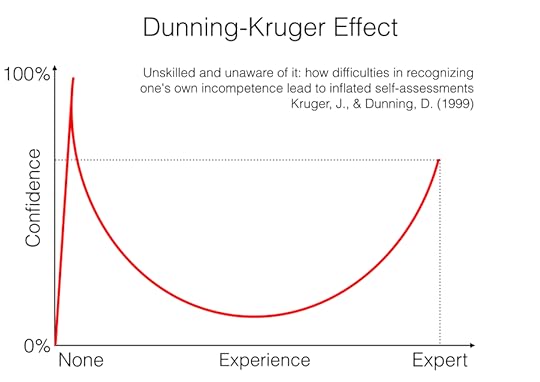 Check out the graph. Peaking, on the far left, are people who have virtually no experience and think they know it all. Then, as people gain more experience they become aware of their own ignorance and lack of skill. People who are true experts recognize their talent, but still lack the supreme confidence of the person who knows nothing.AuthorWilliam Poundstonewrites that The Dunning-Kruger Effect is “not a pathological condition. It is the human condition”.In other words, you have it, but because you’re ignorant, you don’t know you have it.Think back. You can probably remember really enjoying something and knowing you were good at it. Singing, for example. People may have complimented you on your singing, back then, which encouraged you to think you were great. Because you thought you were great, you may have decided to take lessons. Or maybe you joined a choir, entered a contest, or auditioned for something. At that point, or sometime after that, you probably began to get a clue. You began to realizehow much better you could be.Then you either gave up, because you realized that getting better would be a lot of work, or you decided to get better.If you’ve never realizedwhyyou never get cast,whyyou never win the contests, orwhypeople don’t enthusiastically agree when you’re expounding on your singing greatness, then you’re still at the far-left side of the graph. And you may always stay there.Remind you of anyone?