Syed Ahmad Fathi's Blog, page 30
October 4, 2017
Reason to be optimistic in this chaotic world

The book is not really ‘a book’ in my traditional definition of a book. It does not written by an author or an author with a co-author, but a compilation of people’s opinion on the question posed, which was “What are you optimistic about?” As I am a traditionalist when it comes to a book, it easily gets me disinterested, as it does not come with a central thesis, and supplied by continuous contents. It’s an anthology which compiled multiple opinions of multiple people.
In the introduction by Daniel Dennett, he pointed out that human species enjoyed a great power to determine the future for good or evil. The survival of other species, depend on the Homo sapiens, which possess ‘science’. Science is a process of constant reevaluation, re-engineering, and improvement. On the face of existential challenges we have today, science will determine the outcome.
The vast majority of opinions in the early part of the book grounded their optimism on the diminishing belief toward supernatural, dogmatic idea, and religion. They viewed many ideas such as nationalism which breed war and hatred, as an opposition toward a bright future. Their optimism were based on the proliferation of knowledge, the development of high-tech experimental infrastructure such as CERN and LIGO which would help to answer big question using rational and logical thinking.
One of the interesting write-ups I found was from Chris Anderson, which rightly pointed out that the un-ending bad news that we received today mostly exaggerated and dramatized which does not reflect the reality. Realizing this we can safely live our life optimistically. The dramatization of the news is to attract readers, who would read lame real news by the way? The digitalization and globalization of the news also made bad news proliferate at unprecedentedly, it does not mean that bad things increased, it just mean that things that did not received coverage before are now covered.
In the European Union, a new generation is now living the continent, they viewed the world not from the lens of nationalism which was the core idea of previous generation. They grow, learn, work and play beyond the national border, they developed multilingual skill and view themselves not as national, but citizen of the world. This new generation gave us new hope that wars due to national animosity will ceased, and everyone see each other as their human kind.
Climate was also the ground of optimism for many in the book. They ground their optimism on various political supports for climate cause, technological advances and also renewable energy. In the front of renewable energy, the economics also dictates that technological production was bound by ‘experience curve’, which means the more solar panel or batteries we produced, the better we at making them. Means that more quality with less cost, so the renewable energy revolution will take place sooner than we think. Another interesting point in the book is the optimism which comes from the advancement in the field of astronomy, cosmology and space faring. Which predict the future of human kind is beyond this tiny blue dot, the prophecy of Carl Sagan. As the technology advances, we might have a colony in Mars, which gives human a bigger chance to survive.
The current trend of decline in human population growth also the cause to be optimistic. Generations before us witnessed explosion in population growth, this trend continue with forecast predicted that the trend will continue, until recently we saw this growth slowing. Decrease in population means decrease in human consumption, which in turn will reduce the pressure on the environmental destruction. We will also see a new way to approach education. The old tradition of boring lectures may well be replaced by creative and inventive education. Where students learn by building things hands on. There are also opinion on the book on how we should study what object draw students to be interested in science. Children learn by observing, they much receptive to things which are physical rather than complex abstract theory. By giving the right toy, we may attract the right brains for the next scientific breakthrough.
The technology also will revolutionize what we perceived as knowledge. The control of knowledge like what can be publish, which subject can be taught in school is losing significance. More people can participate in what kind of knowledge which is important, and everyone can publish what they no. In some sense, you can say that technology democratize knowledge. Technology also creates a more transparent world. What happen on the ground can easily be seen through satellite images although some government may block access to certain area, so in places which is in crisis, we can see the burning villages although the authority gave different narrative, the ethnic cleansing of Rohingya people by the government of Myanmar in 2017 is one of such example.
Another ground for optimism is the fact that we tried to homogenized the world for a long stretch of time and failed. The fact that we failed might gave us a different approach, we will soon realize that diversity is not a problem. The fact that we have different races, skin color, language, culture, religion, belief, all of the diversity we have, is the one that made this world a wonderful and colorful place to live in, we should stop fighting with each other. People also will start getting boring when they repeat the same thought, belief and idea, which ultimately gave birth to a new idea and new way of thinking.
Among other interesting idea I found in the book is the concept of ‘Wunderkammer’ or chambers of wonders, where one have a collection of interesting things. I want to start collecting my own wonders!
This article is a review of ‘What are you optimistic about?’ edited by John Brockman.


September 26, 2017
Can we organize a bubble party in Teresa’s house?

It makes me wonder. If I ask for permission to Teresa Kok to organized a naked bubble party inside her house, and if she did not give me a green light, does that mean she’s denying my right?
In her statement she made on 18 September 2017, she said that the DBKL decision not to grant permission for ‘Better Beer Festival 2017’ as denying the right of non-muslim in Malaysia. The question is, since when organizing beer festival become a right? Like human right you mean? I never read Amnesty International or Human Right Watch published report suggesting they recognized ‘organizing beer festival’ as international human right. Sounds silly.
Leaving religion and race aside it look like Teresa and her gang live in a very different world, detached from reality. Many countries have law, prohibiting drinking in public places. Singapore, a country which DAP always sang their praises also have a specific law on alcohol.Under the The Liquor Control (Supply and Consumption) Act, drinking is banned in all public places from 10.30pm to 7am, while retail shops are also not allowed to sell takeaway alcohol from 10.30pm to 7am. So does this make Singapore an ultra-religious country which does not respect non-muslim ‘right’ (or maybe Teresa Kok’s right).
Glasgow also in 2016 refused a license to Oktoberfest Beer Festival. Among other things cited for concern was the drunk ‘pose a threat to pedestrians and a significant burden on the surrounding streets’. The police also said that they have to stand riot van because of ‘a number of fights broke out’. Such event do pose a threat to public disorder. If we use Teresa Kok’s logic, the the government in Glasgow does not respect the right of non-muslim, and like DBKL, the goverment in Glasgow is trying to be ‘jaguh agama’.
Have we forget the case in March 2017 where a drunk woman drove her car against traffic and caused an accident which killed an innocent man?
September 13, 2017
The New Anti-Semitism, Israel Occupation and Alan Dershowitz’s Misconduct
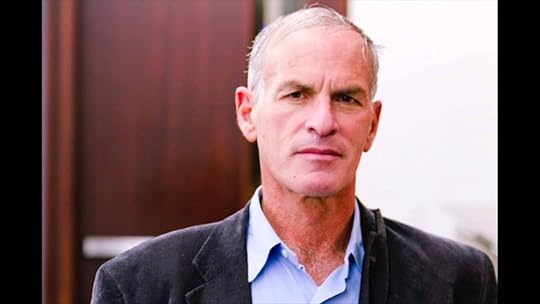
The main theme of the book is to exposed Israeli apologist tactics of using anti-Semitism to silence critics toward brutal Israeli occupation. In his preface, Finkelstein pointed out that, many of the solutions of the Israeli-Palestinian conflict, are highly uncontroversial. On settlement for example, World Court ruled that it “have no legal validity”, citing article 49 of the 4th Geneva Convention. The UN also in accordance to General Assembly Resolution 194 (1948) upheld Palestinian refugees “right of return”.
When Gazan moved to elect Hamas to power, they received harsh collective punishment. One cannot help but ask, what kind of democracy do the West is championing, does popular support means anything? Although Hamas support two-state solution, majority of Israeli, vehemently opposed a sovereign Palestinian state that control their own border, water and airspace. Yet, Israel suffers no punishment. Why the double standard?
Israeli apologist often suggested that the Israeli-Palestinian conflict is due to ‘Arab anti-Semitism’, ‘Arab fear of modernity’ or that the conflict is uniquely cosmic clashes which is not easy to understand. Finkelstein pointed out that, even Israeli historian, Benny Morris stated clearly that the animosity is due to “fear of territorial displacement”. As simple as that, easy to understand. Finkelstein made a reference to the case of Native American, historian will be mocked if they suggest that their struggle against European settler as anti-Christian or anti-Europeanism , its just a native population defending their right. Same with Palestinian Arab struggle.
Finkelstein also devoted large part of his book, criticizing Alan Dershowitz, Harvard professor turned Israel’s apologist. He went extra length exposing Dershowitz false argument and poor evidence. In his word, Finkelstein described Dershowitz’s book The Case for Israel as “complete nonsense” and “spectacular academic frauds ever published”.
Finkelstein, in exposing the use of ‘anti-semitism’ to silence critics of Israeli occupations aggression analyzed the work of Phyllis Chesler in her book ‘New Anti-Semitism’. He pointed out vast of Chesler’s claims which are not correct and contrary to serious scholarly account. For example she claimed that “Many Palestinians were actually born in Jordan, Egypt, Lebanon, and Syria”, which was a myth and in Finkelstein’s own word, a “Zionist fairy tale”.
Many of Israeli apologists such as Elie Wiesel claimed that everything about Jew is unique. These uniqueness includes anti-Semitism, the Holocaust, Israel were used as ideological function that “Israel shouldn’t be bound by normal moral standards”. In various events everything which has to do with Palestinian liberation was classified as anti-Semitism, in order to push forward the Zionist political agenda. Although in many study, hatred toward Jews were intensified during the peak of Israeli military aggression, the apologist never considered, that to put a stop to it can be done simply by ending the occupation.
Anti-Semitism also was fueled by Jewish organization themselves, when they lend uncritical support to every Israeli policy. By labeling every critic on Israeli violation of human right as ‘anti-Jewish’, doesn’t that equate Israel with Jew? As the line was made blurred, is it a mystery why International antagonist attitude toward Jew rises when Israel continue its brutal aggression? Indeed, Finkelstein noted that “anti-Semitism alongside ‘war against terrorism ‘serves as a cloak for a massive assault on international law and human rights”.
Many pages in the book from preface, chapters, right into appendices were devoted to expose Alan Dershowitz “threadbare hoax”, namely his book ‘The Case for Israel’ which Finkelstein compared to the work of Joan Peter ‘From Time Immemorial’ which he said “grossly distorts the documentary record”. Finkelstein destroyed many of Dershowitz false claims with vast documentary evidence from human right groups including Amnesty International, B’Tselem, Human Right Watch (HRW) and many others. According to Dershowitz, when it comes to house demolition, Israel is not a “racist state”. This claim however was destroyed by documentary evidence from various human right group which maintain that Israel specifically target Palestinian houses as a collective punishment. For example, Amnesty International in their report Killing The Future: Children In The Line Of Fire, London, October 2002. Pg. 7 wrote:
“Three children, Abdallah, Azam, Anas al-Shu’bi, aged four, seven, and nine years, their pregnant mother and four other relatives died under the rubble of their house which was demolished by the IDF on 6 April 2002 in the Qasbah (Old City) of Nablus during a period of strict curfew imposed by the IDF. Two survivors were eventually pulled from under the rubble, nearly one week after the house was demolished. Neighbours of the family interviewed by Amnesty International stated that the IDF had given no warning before beginning to destroy the house with bulldozers, and that they had been fired upon by the IDF when they defied the curfew in an attempt to search for survivors under the rubble of the destroyed house.”
In the appendices, Finkelstein continue his analysis and provide clear documentary proof that Dershowitz plagiarized his book, The Case For Israel from Peters. As you read further and further, you will find that Dershowitz did not even know his subject (or his book), he seems a little bit more like a joker than a Harvard Law Professor. Among other things Finkelstein help to clarify, is Dershowitz claim that the Mufti of Jerusalem, Haj Amin al-Husseini “was a full-fledged Nazi war criminal”. A scholarly consensus however proves otherwise.
To conclude, the saga between Finkelstein vs Dershowitz, its worth quoting in length, the conclusion drawn by Frank J. Menetrez, who study their feud as an independent investigator. His essay was included in the updated edition of 2008 Beyond Chutzpah, where he wrote:
“From these facts it appears reasonable to conclude that, with the possible exception of the plagiarism issue, Dershowitz has been unable to find a single false statement in Beyond Chutzpah. And its follows that, as far as Dershowitz himself can now determine, his own book The Case for Israel is full of falsehoods concerning Israel’s human rights record and the history of the Israel/Palestine conflict, while Finkelstein’s book contains none.”
This article is a review of ‘Beyond Chutzpah’ by Norman Finkelstein.
September 5, 2017
Adakah Rohingya terlalu busuk untuk Malaysia?
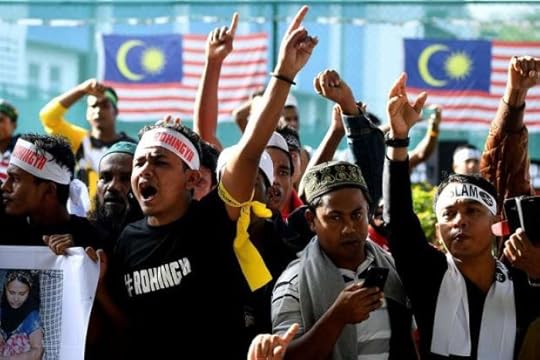
Malaysia merupakan negara yang terkenal dengan sikap toleransi merentasi bangsa. Pasca era kolonial, ketika negara serantau lain memperkenalkan satu identiti negara dengan satu bahasa, satu sistem pendidikan dan satu budaya, Malaysia mengambil jalan tengah dengan mengiktiraf kepelbagaian bangsa, menerima bangsa lain sebagai warga Malaysia, malah memelihara bahasa dan melindungi sistem pendidikan masing-masing. Walaupun ia bukanlah sistem yang sempurna, rakyat Malaysia mampu menerima perbezaan dan hidup bersama.
Di arena antarabangsa Malaysia juga memainkan peranannya dalam mempertahankan hak asasi manusia. Ketika konflik Balkan pada tahun 1992, Malaysia adalah antara negara yang aktif membantu di bawah naungan UN. Malah Malaysia dengan berani mengumumkan akan menghantar bantuan ketenteraan apabila krisis memuncak dimana bangsa Bosnia dibunuh dengan kejam oleh bangsa Serbia. Bahkan sehingga hari ini jasa Malaysia diperingati di Bosnia dengan penubuhan Masjid Malaysia di Nova Breka, Sarajevo.
Dalam hubungan serantau juga, Malaysia memainkan peranan aktif, antaranya dengan menjadi broker keamanan bagi menyelesaikan konflik bersenjata di Mindanao, Filipina dengan menggalakkan perjanjian keamanan ‘Bangsamoro’. Begitu juga komitmen Malaysia membantu krisis kemanusiaan di Palestin, Syria dan lain-lain negara.
Baru-baru ini kita dikejutkan dengan gelombang keganasan terbaru di Arakan, Myanmar. Video dan gamba-gambar kekejaman tentera Myanmar membanjiri ruangan media sosial. Semestinya Malaysia yang terkenal dengan toleransi kaum tidak dapat menahan diri dari bersimpati dengan keadaan disana. Walaupun, dalam sejarah, Malaysia telah lama membantu bangsa Rohingya melalui NGO seperti HALUAN Malaysia dan MAPIM. Namun, kemuncak krisis terbaru menyaksikan segolongan warga Malaysia yang mempersoalkan bantuan kepada kaum Rohingya.
Antara tulisan yang tersebar adalah tulisan oleh Saudara Mohd Faizal Zulkifly. , beliau juga menulis berkenaan dengan Rohingya sebagai “bangsa tak sedar diri”. Antara lain beliau menulis bahawa “konflik ini berlaku kerana keegoan kedua-dua pihak”. Beliau juga menyalahkan bangsa Rohingya yang gagal berasimilasi dengan konsep ‘Burmanization’ dan “keengganan mereka untuk keluar dari kelompok mereka sendiri”. Beliau juga memetik rasa patriotik dengan menulis bahawa isu Rohingya menyebabkan kita “tersepit dan serba salah antara kemanusiaan dan kedaulatan negara”. Persoalannya benarkah dakwaan ini?
Dakwaan ini dijawab secara panjang lebar oleh Setiausaha Serantau Muslim, Hakim Mohd Nor. Antaranya beliau menyebut bahawa “Hakikatnya, mereka sudah pernah berjaya integrasi dan menjadi sebahagian ahli parlimen kerajaan pun. Tapi mengapa tiba-tiba tarik balik kerakyatan mereka dan menafikan hak-hak asasi hidup, pendidikan, bergerak, memilik harta dan pelbagai lagi nikmat warganegara. Sangat tidak adil mengatakan Rohingya tidak boleh integrasi menyebabkan mereka tidak mendapat warganegara.” Oleh kerana dakwaan ini telah dijawab, saya lebih berminat untuk meneliti komen-komen oleh penyokong Saudara Mohd Faizal Zulkifly, dibawah ada beberapa komen untuk dibincangkan.

Komen Muhammad Hilmi, nama sedap tapi sayang, bahasa yang digunakan penuh kekesatan dan kebencian. Benarkah tiada bangsa yang pernah menolong bangsa kita? Mungkin beliau tidak pernah membaca berkenaan dengan bantuan tentera Ottoman semasa Melaka dikepung pada tahun 1568. Juga bantuan tentera Commonwealth dari Australia, Newzealand, Fiji dan lain-lain dalam perang guerilla melawan komunis dari tahun 1948 hingga 1960. Bahkan veteran ini dijemput oleh Malaysia semasa sambutan kemerdekaan baru-baru ini.
Ismail Idi Rtiga menulis 99% Rohingya di Pasar Borong Selayang kurang ajar. Sebelum menggunakan statistik ini, elok beliau ungkapkan kajian ini dari mana, berapa responden Rohingya yang telah di survey. Pengotor? Mungkin beliau tidak tahu bahawa mereka diberi perlindungan sebagai ‘refugee’ oleh UNHCR dan tidak boleh bekerja. Agak-agak kalau gaji mereka RM3000 sebulan hendak ke mereka tinggal di Pasar Borong? Jika benar pun ada segelintir yang bersikap tidak baik, wajarkah kita menghukum semuanya dan membiarkan mereka ditindas? Jika ada tiga orang warga Malaysia buang najis dalam shower di Osaka, bolehkah warga Jepun membuat kesimpulan bahawa 99% rakyat Malaysia suka buang najis merata-rata? Kita perlu lebih berhati-hati.
Nor Liya mengatakan mereka pengecut. Pernahkah Nor Liya melihat ibunya sendiri di bunuh di depan mata? Rumah dibakar? Xtvts Myheart mengatakan mereka mogok berdemonstrasi nak kerakyatan, mungkin beliau masih belum benar-benar pandai membaca. Sebenarnya mereka berdemonstrasi untuk menyampaikan nota bantahan kepada kedutaan Myanmar. Mahadzir Hashim pula menyamakan mereka sebagai anjing. Saya tertanya, jika pun tiada nilai kemanusiaan di dalam hatinya, tidakkah beliau pernah bersekolah dan belajar perbezaan antara manusia dan anjing?
Saya percaya, golongan-golongan simple minded dan rasis ini wujud di kalangan rakyat Malaysia, namun kita seharusnya tidak mencontohi mereka dan cuba sedaya upaya menasihati mereka. Seharusnya rakyat Malaysia bersama-sama menyokong persatuan yang membantu perjuangan Rohingya seperti HALUAN Malaysia dan MAPIM. Tekanan dari masyarakat international sememangnya mempunyai kesan dan mampu mengubah keadaan. Seperti mana Aparteid dapat ditumpaskan pada tahun 1990-1993 oleh tekanan masyarakat antarabangsa, tidak mustahil kita mampu memberi tekanan bagi mengakhiri kekejaman terhadap bangsa Rohingya.
Sumber foto: The Star
September 1, 2017
To Be A Debt Free In 6 Steps

Happy Merdeka day people!
Yesterday marked the 60th year of Malaysia’s Independence Day, a very meaningful and important celebration for every Malaysian.
We have been colonized for more than 400 years by the Portugese, Dutch, British and the Rising Sun country – Japan, until our first Prime Minister, Tunku Abdul Rahman and several other leaders successfully free our country from the colonial’s fist.
That’s the snippet of our history. Those days were gone and it’s been 60 years we live peacefully and independently among our harmonious multi-racial society. After all, we are all Malaysian.
How about your financial independency? Are you as freedom as our country? You know yourself better.
My parents decided to retire completely by end of this year – in December to be precised. They will move from JB to Melaka (my dad’s hometown) and the best thing is they’re completely free from debts. No work’s commitment, no debts, they can go whereever and whenever they want. I fancy that life but I still have a long way to go.
To be a debt-free is my main life goal so far. Debts are unavoidable but you need to differentiate the good debts and the bad debts.
So what I’ve done so far for this debt free plan?
1. Debt Planning
I listed down all my current debts, the amount, and the repayment plan. By doing this, it helps giving me a better picture on my financial commitment. I suggest you make a nice, simple straight forward charts or maps and put it in your laptop or anywhere that you could access frequently. I also made my future debt list so that I know much loan I want to commit. Take home loan for example. This will refrain me to buy an over budget house that will crush my financial health.
2. Increase Monthly Income
There’s a lot of ways on how to gain extra incomes. Driving Uber for example – I have several friends who drives Uber as a part timer and they earned pretty good. Or maybe if you’re good with numbers and charts, you can get into investment such as Forex or maybe stocks. Start with something small and something that you’re good at.
3. Plan Your Monthly Budget
This is a must for everyone. If you fail this step, there’s high possibility you will have financial problem at the end of the day. The main reason why you should do this is to let you know better on how much and where your money should go. For more tips, you can refer to my article – How To Start Your Monthly Expenses Plan
4. Set Your Limits
When I mentioned “limit” I’m referring to the lifestyle. I don’t have right to tell you on how to spend your money but the least I can tell is how I manage my lifestyle. I’ll give you an example : 5 years ago when I went shopping for a leather shoes, I told myself that I need to buy a high quality-in trend shoes and I don’t think twice spending RM 300-RM400 for a pair of shoes. Now, I wear leather shoes almost everyday to work and there are a lot of comfy, quality leather shoes under RM 200. Can you imagine how much money I could save? Again, if you can afford it by all means go for it. You know your money better.
5. Effective Communication
Well this one is for people in steady relationship especially married couple. You can’t just do it alone. Me and my wife shared the same goal and we always discuss on our financial, where we are and what we should do sort of things. Sometime you need other people to remind you of your goal. You can always cheat on yourself (like I bought the cigs roller, thinking that I could save more but its not), but its hard to cheat others.
6. No Perfect Plan
All you can do is plan. If you achieve your plan, it’s good for you. But most of the time, what you get is slightly different from what you’ve planned. Don’t ever give up. If plan A is not working for you, start your plan B. Ain’t no one can judge you. Your money, your plan.