Melanie Tomlin's Blog, page 7
August 31, 2016
Competition Time – Twisted Poems of a Warped Mind
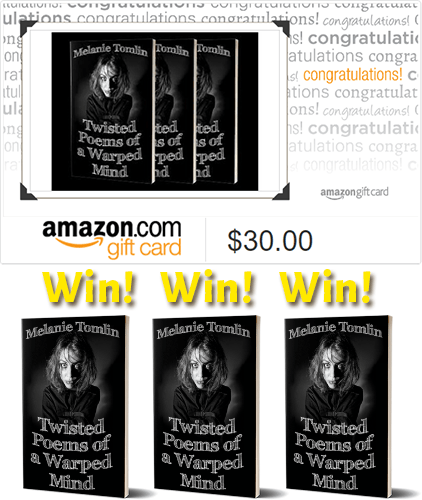
Another competition? Yes, it’s competition time again!
competition time
To celebrate the upcoming release of Twisted Poems of a Warped Mind on 07 October 2016 I’m having another giveaway! As I’ve previously mentioned, this is something I’d like to do for every one of my books, prior to it’s official release. This is my way of thanking you for being a loyal ‘angel follower’ (subscriber of my newsletter). competition time
Not sold on a book of poetry? At the risk of sounding like a used car salesman, trust me, this isn’t your usual book of poems. Still not sold? The ‘look inside’ feature will be available once the book is officially published and to whet your appetite, here’s a couple of examples:
Halloween: Witches Brew
Witches coven holds its meeting
To discuss the trick or treating
Need sweeties for the little ones
Lollipops and sticky buns
And for the pièce de résistance
If the witches can go the distance
A special homemade witches’ brew
The perfect touch for their little do
So witches set about the pot
Build the fire to make it hot
In the cauldron many things go
Lizard’s breath and ogre’s toe
Slimy frog and tail of rat
Rotten egg and wing of bat
Maggot mash and dead man’s hair
Homeless person’s underwear
Add some water from a stagnant pond
Stir it slow with a witch’s wand
When it smells you know it’s done
Serve it up and have some fun
Watch the kiddies choke and die
On witches brew you can rely.
… what do you mean you were after a love potion!
Pure Fun: Miss Temptation
Miss Temptation,
That is me.
More of a woman,
Than most will be.
Shake my booty,
To taunt and tease.
You’ll be eager,
And willing to please.
Wined and dined,
Each night of the week.
Waiting for those words,
I never will speak.
Why settle down,
When you’re having so much fun.
Miss Temptation’s reign,
Has only just begun!
Tell me more!
If you’re already an angel follower, you don’t need to do a thing, as you’re already in the draw. For those of you who aren’t angel followers simply join (and remain on) my mailing list before the closing date. It’s that simple!
1 x $30 (USD) Amazon Gift Card
3 x signed copies of Twisted Poems of a Warped Mind
6 x Twisted Poems of a Warped Mind eBooks
Entries close on 01 October 2016 11:59pm AEST. A random-picker website will be used to select the winners, and the winners will be announced on, or before, Friday 07 October 2016 — provided the winners’ eligibility to enter has been verified.
The Terms and Conditions can be found here. Please do take the time to have a read, as some of you may be ineligible to enter. (You are still most welcome to become an angel follower and receive news, freebies and updates though.)
Good luck! competition time
Become an angel follower to enter the competition
and receive a free ebook as welcome gift!
#mc_embed_signup{background:#fff; clear:left; font:13px Alegreya Sans,Arial,sans-serif;}
#mc-embedded-subscribe { background-color: #7c66a0 !important; }
#mc-embedded-subscribe:hover { background-color: #704a7a !important; box-shadow: 0 0.25em 0 0 #2a007a,0 4px 9px rgba(0,0,0,0.75); }
/* Add your own MailChimp form style overrides in your site stylesheet or in this style block.
We recommend moving this block and the preceding CSS link to the HEAD of your HTML file. */
What else are you interested in?
Guest blog spot
Sales and promotions
Email Format
HTML
Plain Text
competition time
The post Competition Time – Twisted Poems of a Warped Mind appeared first on Melanie Tomlin.


August 29, 2016
An Interview with Author Michael Barbato-Dunn
Fantasy baseball meets science fiction in my interview with author Michael Barbato-Dunn. Thank you, Michael, for taking the time to chat to me. Please sit down, get comfortable and let’s begin.
About Michael Barbato-Dunn
Michael Barbato-Dunn is an author and blogger who worked for many years as a city hall reporter for an all-news radio station. His passions include fantasy baseball and science fiction, and he has managed to combine both in his sprawling first novel, “Lord Bart and the Leagues of SIP and ALE.” He lives with his wife, daughter and their two dogs in Philadelphia.
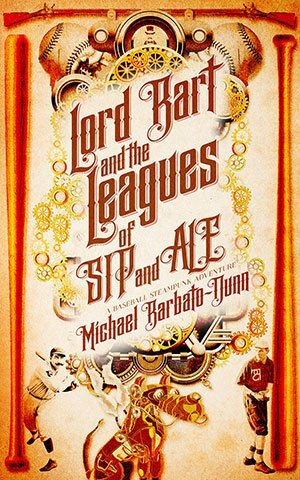
What’s the name of your new book?
Lord Bart and the Leagues of SIP and ALE
Tell us a bit about your book
An airship disaster disrupts the 30th anniversary celebration of the SIP and ALE baseball leagues, fueling tension between the once-warring Setherian and Helderan nations. As both sides prepare to lay down bats and balls in exchange for muskets and cannons, Andrew Naughton — aided by his robotic dog Crandy — rushes to unravel the conspiracy and preserve the cease-fire that brought three decades of peace to the continent. But then Naughton finds himself accused…
If there was a film or TV adaptation of your book, who would you like to see play your characters?
Bradley Cooper as Andrew Naughton, Ian Holm as Lord Bart, and Helen Mirren as Lady Vivian Lynam. Also, the late Alan Rickman would have been perfect as Phangorious Hood.
How important are character names to you in your books? Is there a special meaning to any of the names?
I actually spent quite a lot of time on the names of the characters in this novel. This is a steampunk novel, and while it is not set in Victorian England (the world of Setheridge is fictitious), I knew that using Anglo-sized names was essential. For major characters, I worked in reverse: I chose aspects of their personalities that were dominant, and researched names whose roots had those meanings. For minor characters, I used a historical British name generator to create a massive list of names, ported it to a spreadsheet, then chose from that list a name that felt appropriate as each new character arrived.
Give us an insight into your main character. What makes them unique?
Andrew Naughton was described by one reviewer as “tormented”, and I think that is quite appropriate. He is fiercely loyal, and trusting of those to whom he is loyal. Yet when the circumstances of the novel fracture that loyalty, the order of his world is shattered and Naughton finds himself uncertain in whom to place his trust.
Ultimately, he must decide whether to risk what matters most – his well-being and his family – in order to learn who is, in fact, worthy of his loyalty.
Where do your ideas come from?
For “Lord Bart”, I was inspired by H.G. Wells, a forefather of steampunk. Wells was very much a pacifist, and in his non-fiction book “Little Wars”, he proposed that games could serve as a far less bloody alternative to war. My novel embodies that theme, so setting the story in a fictional steampunk world seemed a natural homage to Wells. I imagined a world divided by years of civil war, in which the exhausted inhabitants turn to the sport of baseball as an alternative to bloodshed. I infused the book with a huge cast of memorable characters, political intrigue, bizarre science, a bit of romance, and an epic pennant-race. But Wells’ notion of games as little wars remains at its core.
What do you think of trailers for books? Do you have a trailer or do you intend to create one for your own book?
I used a trailer to promote my novel, and created it myself on a very small (>$100) budget. Here’s the nitty-gritty, for those who are interested.
The key was using the free trial version of Adobe After Effects I learned that folks make templates for AE that you can purchase, then adapt. As my book is steampunk, I simply googled “Adobe After Effects template steampunk”. I found a one was perfect for my trailer. I purchased a license for $33. This allowed me commercial use for one end product.
I then searched for music and found some great soundtrack material at independent composer Kevin Macleod’s website. I found one of his works, Ryno’s Theme that seemed perfect for the project and was a far better fit than the music that came with the video template. For about $6 I purchased his higher-quality .wav files for the project.
Then I downloaded the free 30-day trial for Adobe After Effects. I created 10 graphics for use in the template, with some of the art from the cover art of my book and some from Pond5 stock photo/video site. (They have a lot of free-for-use material). I created the graphics using the freeware paint.net. Creating the still graphic “cards” for the trailer took some time. For example, I adapted the airship on the back cover of the print edition of the book to make a graphic for the trailer.
When these were ready, I inserted the ten graphic images into the template then exported it to an .avi. I used Adobe Audition to edit the music, taking the final minute of the longer theme. Then I downloaded the free (30-day) trial of Adobe Premiere to actually render the full video, with audio and closing credits.
In all, it took about 20 hours of work for a 1-minute trailer. But the financial cost was low, and I believe it looks pretty professional. Here is the final result.
I will note that it was very important to me that the trailer be less than a minute, and I’d recommend anyone trying this to do the same. The dropoff in viewership beyond that is apparently tremendous.
There are tons of After Effects templates available at numerous sites, some even free. And there are folks, like on Fiverr, who will do the production for you.
Have you always liked to write?
I have wanted to write fiction for as long as I can recall, and in junior high school wrote my first ‘novel’, about an alien that crash lands in the Juan de Fuca Strait off the state of Washington, only to be pulled out of the waters by the crew of a fishing trawler. I have no idea why I chose that setting, since I grew up on the east coast. I also remember around that time getting my first electric typewriter as a birthday present, and writing a screenplay version of the Richard Matheson short story “Born of Man and Woman.” So yes, the desire was there quite early.
What writing advice do you have for aspiring authors?
My advice is for those of us who are older, who maybe have never tried fiction writing, or who have tried but never with the level of devotion that is necessary. When my real life got difficult and overwhelming, I gave up writing and walked away from the dream — only to discover, years later, the desire had never left me. So I sat down and started over, and now my first novel arrives at age 57.
That’s my advice: no matter what your age, no matter how real life has gotten in the way, don’t tell yourself it is too late to start. Or to come back. It is never too late.
What are you working on now?
I am now working on plotting out a 9-part young adult science fiction series, a space opera of sorts, about a small band of misfits who really don’t like one another, yet who find themselves banded together as they are chased across the galaxy by all sorts of evil forces.
“Lord Bart” became a bit of an unwieldy monster — 140-thousand words that took four years to complete. I’m hoping these novels will be about 50-thousand words each, and thus I’ll be able to bring each to completion in far less time.
“Lord Bart”, by the way, was completely ‘pantsed’, — I had no outline when I sat down to start writing. I had done a tremendous amount of world building before I sat down to write, but had no idea where the story would take me. For this next novel, and the series, This time, however, I am trying to outline. I have the first novel of my new series plotted out and have begun a first draft, and I’m pretty excited about it.
Where can readers go to discover more about you and your books?
Website | Facebook | Amazon Author Page | Goodreads
Lord Bart and the Leagues of SIP and ALE is out now!
Available formats: ebook and paperback
The post An Interview with Author Michael Barbato-Dunn appeared first on Melanie Tomlin.
August 22, 2016
An Interview with Author Margaret Brazear
Joining me today to talk about her books that are set in the time of England’s ‘Bloody Mary’, is author Margaret Brazear. Thank you, Margaret, for taking the time to chat to me. Please sit down, get comfortable and let’s begin.
About Margaret Brazear
Margaret Brazear was born in London, England in 1948 and has studied English history for over fifty years. She started to write stories almost as soon as she could write and her love of history naturally played a big part in her love of writing. She has three children and two grandchildren, all adults now. She is an ardent lover of animals, especially dogs, and would like to see animals given far more rights than they have at present.
What’s the name of your new book?
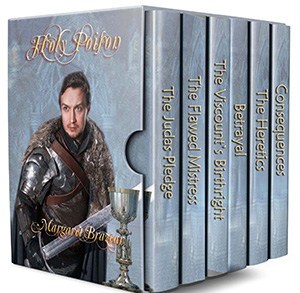
Holy Poison
Tell us a bit about your book
Holy Poison is a series of six books set in the time of Queen Mary I of England, also known as Bloody Mary, for her violent persecution of protestants in the sixteenth century. Her efforts to force England back to the Catholic church served to ensure that no Catholic would ever again sit securely on the throne of England.
The books are about some of the ordinary people who lived through her five year reign of terror.
The Judas Pledge: Meet Richard and Bethany, whose turbulent marriage almost ends in destruction for both.
The Flawed Mistress: Meet Rachel, Richard’s beautiful mistress.
The Viscount’s Birthright: Meet Robert and Antonia, whose marriage of convenience turned into a match of love and suspicion
Betrayal: Meet Adrian and Elizabeth, forced apart by the Queen’s suspicion and his own weakness for another woman
The Heretics: Meet Julia and Charles, the titled lady who gave up everything to help the man she loved fight the papist fanatic
Consequences: Meet the children of Richard and Bethany, as the consequences of their parents’ sins follow them into adulthood
If there was a film or TV adaptation of your book, who would you like to see play your characters?
When I wrote Lord Richard Summerville, the picture in my mind was of Anthony Valentine when he was a young man and playing Raffles. I don’t know any modern actors that are good looking or sexy.
How important are character names to you in your books? Is there a special meaning to any of the names?
As a child, I always had a weakness for Richard the Lionheart, the great warrior. Richard has always been a name that appeals to me as a hero figure.
Give us an insight into your main character. What makes them unique?
He is a strong man with ideas out of his time. I am not sure that he is unique, but he is a man who would appeal to me as a woman.
Where do your ideas come from?
Out of my head.
What do you think of book trailers? Do you have a trailer or do you intend to create one for your own book?
I have put together a video trailer for the Holy Poison series, but the videos clips are still watermarked. They are expensive to buy so it is a project I have put on hold for a while.
What do you consider to be your best accomplishment?
With regard to writing, my best accomplishments are the lovely comments I get from readers.
With regard to real life, my son is my greatest accomplishment. He was born with brain damage and many ‘experts’ told me he wouldn’t develop or learn past the age of eight or so. Now he is 42, lives in his own flat, does his own housework, washing, cooking, gets himself about by bus and got engaged at Christmas. He is definitely my greatest accomplishment.
Where do you see yourself in 10 years?
I shall be 78 so I don’t want to be too optimistic.
Have you always liked to write?
Yes, always.
What writing advice do you have for aspiring authors?
Agents and publishers are no longer the only show in town. If they don’t recognise your talent, go it alone. Readers are the ones you need to tell you if you have something good, not publishers.
If you didn’t like writing books, or weren’t any good at it, what would you like to do for a living?
I was a driving instructor for twenty years. I used to love it, but now I am retired so can give my time to my real love.
Do you read reviews of your book(s)? Do you respond to them, good or bad? How do you deal with the bad?
I only read the good ones. I am quite sensitive to rejection; I do not do well, so it is better not to read them. As to responding, it would depend on the content. I had a one star on one of my books because the woman said I had mentioned Newgate Prison in Henry VIII’s time and it wasn’t built until the 18th century. It was in fact built in 1180 and rebuilt in the 18th century. I couldn’t let that go. I am always very careful to be sure my history is accurate, so I took that as something of an insult. Now I just don’t read them.
What is your best marketing tip?
Write good books.
What is your least favourite part of the writing / publishing process?
That I can’t do as much as I did thirty years ago!
Is there one subject you would never write about as an author? What is it?
Any sort of animal abuse. One of my favourite authors is Stephen King, yet he often has something awful happening to an animal in his stories which I think is totally unnecessary. I stopped reading his books for a long time for that very reason.
Is there a certain type of scene that’s harder for you to write than others?
Not really. I have only one book that contains a fight scene (swordfight) and I tried to make it fairly short. I have read books where fight scenes go on for pages and it is so boring.
How long does it usually take you to write the first draft of a book?
A couple of weeks.
What are you working on now?
My work in progress is called Conquest and is a story set around the Norman Conquest of 1066.
Can you give us a few tasty morsels from your work-in-progress?
“Who are you?” She demanded. “This is my private bower. You are not welcome here.”
His smile broadened.
“There is nothing for you to fret about,” he said. “I have the consent of your guardian to be here.”
“My guardian? My guardian is King Harold and he is not here to give his consent.”
“No, but I have recently left him on the road. I wanted to make haste, could not wait to take advantage of his generosity.”
Rosalind felt the seeds of a raging fury growing. How dare he? He had taken the throne of England, he had decided that Rosalind should be under his command (he called it protection but she did not agree). He had disrupted her life and promised her to a stranger and now he was giving his consent to all and sundry to invade her privacy.
She wanted to stamp her foot, she was so angry, but she fought the urge, thought such a gesture would diminish her dignity.
“Well,” she said at last, “you might have the King’s consent to be here, but you do not have mine. Will you please leave.”
His smile grew even wider.
“Forgive me,” he said. “You have no need to fear me. I am Roland, your betrothed.”
Rosalind felt her eyes growing wide, then they swept this man from head to foot and she felt her mouth turning down. For that moment, she had no control whatsoever over any of these features, nor over her racing heart which beat so fast she thought it might burst out of her chest.
This was the man she was expected to marry tomorrow? This old man whose beard only barely covered his double chin, whose stomach leant over his belt and whose thighs were flabby and pushing against the soft leather of his breeches? He had apparently ridden hard to get here and the result was a sweaty neck and streaks of dirt along his face.
She swallowed in an effort to gather her courage and hide her distaste.
“You are impetuous, My Lord,” she said. “I see you did not even stop to bathe.”
A quick frown crossed his forehead; at last she had managed to get rid of that lascivious smile.
“No, I did not,” he answered. “I shall, however, be happy to take myself to the river if it is your wish. Is it your wish?”
“It is indeed. I would have thought you might want to do that yourself before you present yourself at the church porch as my bridegroom.”
Once more she saw the anger in his eyes.
“I think you and I should reach a better understanding, My Lady.”
“Why are you here?” She demanded, her own anger rising rapidly.
The smile returned, broader and more lecherous than ever and she shivered again. Was she really about to tie herself to this man for the rest of her life? She thought about sharing her bed with him, about his naked body lying beside her, about his rough hands touching her secret places and the shiver turned into a shudder. For the first time since the death of the Confessor, she began to think of a way out; there was none.
“I have come to claim what is mine,” he said. “It is common practice for a betrothed couple to lie together before the ceremony.”
Describe what your ideal writing space looks like.
I sit on the sofa with my laptop and the television on in the background.
Why should a potential reader buy your book(s)?
If a potential reader has a fondness for English history, they can be sure my books are historically accurate. My characters are purely fictional, but there is usually a King or Queen who is factual having a small part in the stories. I am told I have a talent for writing so if you love history and you love romance, you will like my books (I hope!)
What’s the strangest thing you have ever had to research for your book?
The use of lice and maggots in twelfth century medicine. Both these creatures are still used today in extreme cases, but back then lice were used for almost everything.
What’s something you’re really good at that few people know about?
I have an affinity with dogs which makes it easy for me to train them. Recently I visited a friend of a friend who owned a Rottweiler. Despite knowing my friend and of course his owner, the dog came straight to me, a total stranger, and proceeded to lick my hand and lie on his back for a tummy rub. I have the same affect on all canines.
What’s an interesting fact about your book?
It is a turbulent period regarding religion and how important it was in sixteenth century England. I hope I have conveyed a real impression of the lives of the people who lived through it.
Why did you choose to write in your genre? If you write in more than one, how do you balance them?
I have written one mystery and two satirical short stories. Apart from that, history chose me. There is so much happening, so much to write about and I like to think it might instil a love of history in people. My first temptation was a Jean Plaidy novel, the Thistle and the Rose, about Margaret Tudor’s marriage to the King of Scotland. After that I was hooked.
Where did your love of books come from?
No idea. I have always loved reading. As a child I read Norse mythology and the Tales of King Arthur.
How long have you been writing?
Seriously, about thirty years.
What advice would you give to your younger self?
Wait for the internet!
What would the main character in your book have to say about you?
I would hope he might fancy me, but I doubt it. My main character would appreciate my independence.
Who are your favourite authors, and why?
Stephen King (brilliant writer). I don’t write horror, but I love reading it. Stephen King is the only horror writer I can think of who doesn’t write to a theme, but each story is different. I also love Peter James when he is not writing Roy Grace detective stories and Agatha Christie and Ruth Rendell.
If you’re an indie author, what’s the best thing about being an indie author?
More control, more output, more money.
What do you find most challenging about writing?
Starting a new novel. It is always hard to let the last one go.
Where can readers go to discover more about you and your books?
Website | Blog | Facebook | Amazon Author Page
Holy Poison is out now!
Available formats: ebook and paperback
The post An Interview with Author Margaret Brazear appeared first on Melanie Tomlin.
August 20, 2016
AHS Reunion
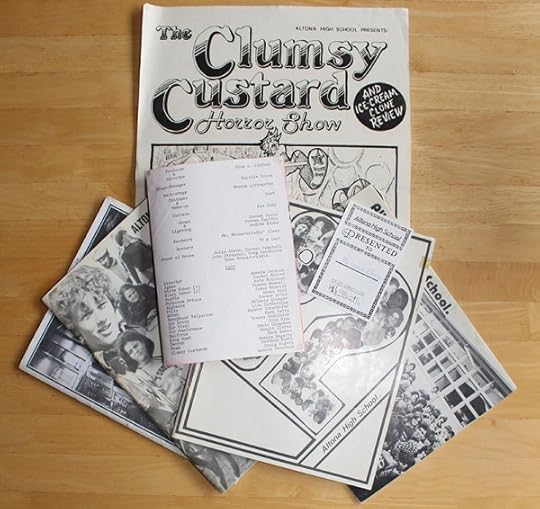
When my son first noticed AHS Reunion on the calendar, he looked at me and asked, “American Horror Story reunion?”
“Altona High School reunion,” I replied, though in the back of my mind I was wondering if the ‘horror story’ part might be right.
I had accepted the invitation early on. It was a small and easy step to click the ‘Yes’ button on Facebook to say I was going. As the event drew closer, my feet dragged and I found myself thinking, “I don’t want to go. I can’t face the people I went to school with all those years ago. I never really fit in. I always felt like the third wheel. I simply did not belong.”
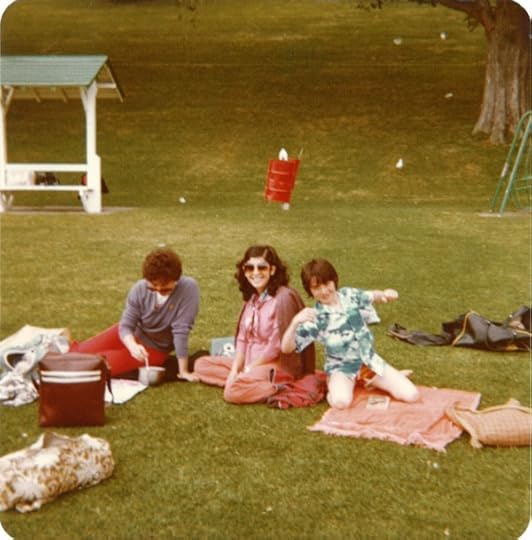
I found some photos I’d taken from school excursions and camps. They’d withstood the ravages of time as well as me, which means they didn’t look quite so bright and fresh anymore. Photoshop enabled me to clean them up a bit … if only there was a version for touching up ‘life’! I added the photos to our little Facebook group, tagging people I knew. (Scroll down to see the photos.) The reaction to them was great, and a good many of us had a laugh at what we were like back then. More photos from other people quickly followed, and some were saved for the night.
In early August I responded to a post about nerves, and outed myself as an introvert. This is what I said:
I’m going, but I’m such an introvert that I will probably hide in some corner. It took me years to realise what was supposedly ‘wrong’ with me. Social media makes it easier to connect with people, but face-to-face is a real nightmare. Hugs will be gratefully accepted to help me feel like I ‘belong’ and perhaps draw me out of my hiding place.
It would have been so easy to stay home and work on one of my books, or watch a movie with my son. I’m always challenging myself to try new things and push myself in situations that place me well and truly outside of my comfort zone. And so it was that I found myself walking along the path from the car park to the venue, my heart pounding and stomach lurching.
I was greeted by four familiar, smiling faces. Hugs were forthcoming, and even a little hand-holding, which was a great way to break the ice. A name tag was issued, forms were signed, and then it was time for the dreaded photo. I think I may have looked better if I’d worn my black wings. Perhaps next time.
There were candles in one corner of the room, for those friends who were no longer with us. I knew two of them had passed, the others were a shock. We may seem ancient to toddlers, yet in reality we are not that old … certainly not old enough that some of us should no longer be here. Dear, dear friends, you are remembered and sorely missed.
It was fantastic to catch-up with people I hadn’t seen in years, many of whom I haven’t seen since high school, 32–35 years ago. The girls mostly looked the same … “Didn’t we do work experience together? Do you remember calisthenics? You had long hair and glasses. You were so outgoing …” The list of questions and comments goes on and on and on.
Sorry guys, but physically you seem to have changed the most. If it weren’t for Facebook, I wouldn’t have recognised many of you. I’d be looking at a name tag and thinking to myself that the name was familiar, but the face didn’t belong to the person I remembered. The strange thing about catching up after all those years, is that after a few hours it’s as if no one has really changed at all. We’re older, hopefully wiser, and more tactful and tolerant than we were back in the day. I may be a grumpy old woman, but if you are respectful and courteous to me, I will be respectful and courteous to you. (If the pushy man who catches the same train as me in the morning, and said behind my back, “Let her on or she’ll complain,” is reading this, that last remark is really directed to you. The only time I complain quite loudly at the station is when people boarding the train won’t let those who are disembarking get off the train!)
There were a lot of hugs during the night. I was very grateful for every one of them. (Apologies to anyone I didn’t get a chance to hug, or say a brief hello to. I didn’t intentionally ‘ignore’ you.) A number of people confessed to feeling the same way I did. Many had partners with them, or came in small groups. I’m sure that made it somewhat easier. One person did offer to give me a ride there, which was a very kind thing to do. I declined though. I thought I might need to make a quick exit, if it was all too much for me.
I did make it through the night, and being the (midnight) pumpkin that I am, quietly slipped away while the others were making their way to another venue to party on. It’s now 2:00 am and I can’t sleep. My ears are ringing, my voice is non-existent, and so I find myself at the keyboard, writing this. (Note to self: proofread this later today before you click ‘Publish’.)
Thank you to the event organisers and everyone who attended. I can now crawl back under my rock, where I feel most at home. Perhaps my rock will shrink, the more often I go to this type of event. Only time will tell. Hopefully it won’t be another 32–35 years before we catch up again.
Take care, stay well and keep safe!
The post AHS Reunion appeared first on Melanie Tomlin.
August 15, 2016
An Interview with Author Timothy L. Cerepaka
Author Timothy L. Cerepaka joins me today to discuss ‘Kingdom of Magicians’ and writing in general. Thank you, Timothy, for taking the time to chat to me. Please sit down, get comfortable and let’s begin.
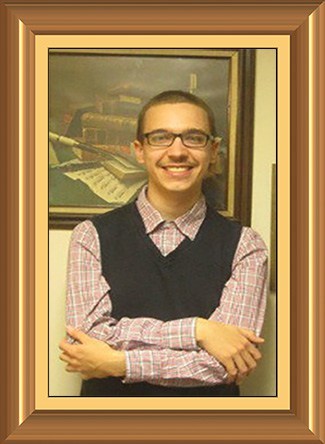 About Timothy L. Cerepaka
Timothy L. Cerepaka writes fantasy as an indie author. He is the author of the Mages of Martir fantasy novels, the Two Worlds science-fantasy series, and the Tournament of the Gods fantasy novels. He lives in Texas.
What’s the name of your new book?
Kingdom of Magicians
Tell us a bit about your book
A thousand years ago, the Good King rose and defeated the demons that had oppressed his people for centuries. After his final victory, he imprisoned the demons deep beneath the earth with a seal that will hold so long as his descendents hold the throne. Unfortunately, every dynasty comes to an end.
And as time went on, people forgot about the demons, treating them as nothing more than scary tales meant to frighten disobedient children. And when the last king was killed and left no heir to succeed him, the once-proud Kingdom of Lamaira splintered into three factions that have fought for decades in their attempt to conquer what is left of the kingdom.
Without a king on the throne, the demons will rise again and destroy the people of Lamaira. And when twenty-three-year-old swordsman Keo kills a demon in the woods, he realizes that the demons are returning. To prevent the demons’ return, Keo must travel to the capital of his country to show the country’s rulers the proof of the demons’ return so they can prepare for the ancient threat. Keo must fight robbers, demons, and other threats on his way to the capital, but little does he know that there exists a traitor among the leaders who threatens to destroy the country from the inside.
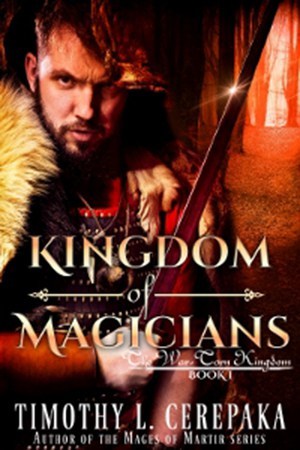
How important are character names to you in your books? Is there a special meaning to any of the names?
Character names are very important to me. As a fantasy author, I need to make them sound unique and foreign, but fitting for the world in which I am writing. Yet I can’t go too overboard with that, because if they are too complicated to spell or pronounce, it can get really annoying.
There usually isn’t any special meaning to my characters’ names. I usually just go with whatever looks and sounds good. I try to keep the names of major characters simple to spell and pronounce while giving minor characters slightly more complicated or obscure names.
A good example is the main character of “Kingdom of Magicians,” Keo. His name is short (three letters long), easy to spell, and easy to remember. Since he’s the main character, that’s good, because if his name was impossible to spell or pronounce or remember, I think the book would be significantly less enjoyable for readers, especially since its a fairly long read at 108,000 words.
What do you think of book trailers? Do you have a trailer or do you intend to create one for your own book?
I don’t do book trailers, mostly because they seem to be more work than they’re worth. Other authors I know have said they aren’t really worth it, so I don’t see any point in making them myself.
Does that mean I will NEVER make one or, more likely, pay someone to make one for me? No. It’s just that making a book trailer is very low on my list of things I want to do and probably won’t get done unless I write a book that I think would benefit from one. Right now I’m not sure that any of my books would benefit from having a book trailer, so I’m not going to make one or shell out the money to have one done for me.
What do you consider to be your best accomplishment?
Hitting the top ten bestselling superhero novels on Amazon with my superhero novel, “The Superhero’s Test,” under the pen name Lucas Flint. First time I ever hit the top ten of any paid category, so I consider it my best accomplishment at the moment.
Where do you see yourself in 10 years?
Being a full-time writer, married and with kids, using my writing to support me and my family.
Have you always liked to write?
Actually, I really hated reading and writing until I turned 12. I started reading the Bionicle books by Greg Farshtey, which really captured my imagination in a way other books hadn’t. Then I started writing my own Bionicle fanfiction and decided to become a full-time fiction writer sometime after that.
If you’re an indie author, what’s the best thing about being an indie author?
The best thing about being an indie writer is the flexibility. If necessary, I could drop everything I’m doing and focus on something else completely. I can write and publish as many books as I want, experiment with different marketing and promotional techniques, and never have to worry about a publisher dropping me because my sales didn’t match their expectations.
In my opinion, the best way for someone to make a living off their writing today is to go indie. That is why I am an indie, because I figured my best chances at making a full-time income with my books was this way, though I’d be willing to consider an offer from a traditional publisher if it was really good.
Where can readers go to discover more about you and your books?
Website | Facebook | Twitter | Amazon Author Page | Smashwords | Goodreads
Kingdom of Magicians is out now!
Available formats: ebook and paperback
The post An Interview with Author Timothy L. Cerepaka appeared first on Melanie Tomlin.
August 8, 2016
An Interview with Author Ted Cross
Author Ted Cross joins us today from Nassau in the Bahamas, and I must admit, on this cold winter day, that I’m a little envious! Thank you, Ted, for taking the time to chat to me. Please sit down, get comfortable and let’s begin.
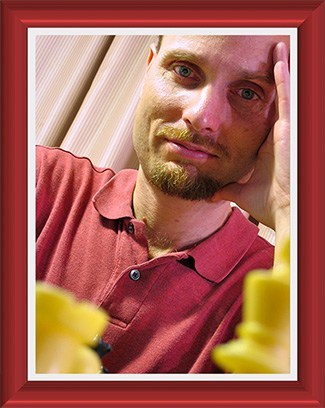 About Ted Cross
Ted Cross is from Arizona and has spent the past two decades traveling the world as a diplomat, all the time dreaming about writing fantasy and science fiction. He’s visited nearly forty countries and lived in seven, including the U.S., Russia, China, Croatia, Iceland, Hungary, and Azerbaijan. He’s witnessed coup attempts, mafia and terrorist attacks, played chess with several world champions, and had bit parts in a couple of movies. He currently lives in Nassau, Bahamas with his lovely wife and two teenage sons.
What’s the name of your new book?
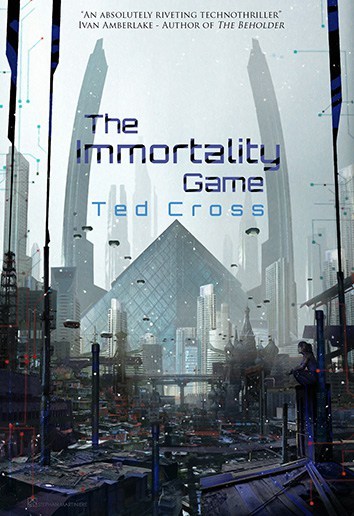
The Immortality Game
Tell us a bit about your book
Moscow, 2138. With the world only beginning to recover from the complete societal collapse of the late 21st Century, Zoya scrapes by prepping corpses for funerals and dreams of saving enough money to have a child. When her brother forces her to bring him a mysterious package, she witnesses his murder and finds herself on the run from ruthless mobsters. Frantically trying to stay alive and save her loved ones, Zoya opens the package and discovers two unusual data cards, one that allows her to fight back against the mafia and another which may hold the key to everlasting life.
How important are character names to you in your books? Is there a special meaning to any of the names?
I like a name to stand out in some fashion, but also be accessible to the reader. So no crazy names that the reader will struggle with. With all the Russian names in ‘The Immortality Game’, I wanted the lead characters to have names that were different than the standard Russian names but still easy to pronounce and remember. For my fantasy books I try to figure out names that sound good and fit well within the culture. I don’t have any special meaning for most of my character names, but I do have some place names that mean something to me. For example, I once lived in Hafnarfjordur, Iceland, so in my fantasy novel ‘The Shard’ I named one town Hafnar’s Ford. I have a lot of little things like that for place names within my books.
Give us an insight into your main character. What makes them unique?
In ‘The Immortality Game’ there are three primary point-of-view characters. I’ll just tell you about two of them. Zoya is a young Russian woman trying to make ends meet in the very difficult world of 2138 Moscow. She really loves old 20th century rock music. Her brother is a gangster and forces her to carry a package for him, and that leads to a whole world of trouble. I enjoyed putting an average, innocent young person into deadly, extraordinary circumstances and watching to see how she would cope.
Marcus is a young Mexican-American living in Phoenix. His father was the most famous man in the world, a super-genius who saved the Internet with his ‘sentry code’ that eliminated viruses and spam, though the newly cleaned Internet also led to virtual reality addiction, called Meshing. Marcus himself became a mesher, in part because he struggled to live beneath the shadow of his famous father. Unknown to anyone but Marcus, his father also wrote himself into the Internet as an AI just before he died. Now his AI father wants Marcus to go to Russia to track down the scientists who wrote code that could potentially allow Marcus’s father to become human again in a cloned body.
Where do your ideas come from?
I wrote my fantasy novel first, and those ideas evolved in my head over a period of about 25 years, starting back in my teens when I was heavily into Dungeons & Dragons. I never much liked the official D&D books, always wanting something that treated it more seriously. Finally I decided I just needed to write the story I wanted to read myself, since no one else was doing it. Ideas I had while developing the character background stories led me to the science fiction ideas that caused me to write ‘The Immortality Game’. Also, the Takeshi Kovacs novels by Richard K Morgan influenced me, especially his method of capturing mind data electronically and allowing a person to transfer to a new body. He did this in very advanced far future stories, but I wanted to know what life must have been like when such technology was in its infancy.
What do you consider to be your best accomplishment?
I think for a guy as shy as I am to break myself out of a typical American life was pretty bold and led to almost everything good that happened to me over the years. I left the US in 1993 to go work in Russia, where I met my wife, and since then I have worked all over the world as a diplomat. I’ve had amazing adventures, scary ones such as the mafia attacks in Moscow, and fun ones like getting bit parts in movies or playing chess against several world champions. And of course my wife and I are really proud to have raised two amazing young men. The eldest is going off to college this fall.
Where do you see yourself in 10 years?
I’d like to be retired from diplomacy and writing full time. We’re not sure yet where we’ll retire to, but most likely somewhere in America. I am from Arizona, but my wife thinks it is too hot there, so perhaps somewhere on the west coast, Oregon or Washington maybe. I write slowly when I have work commitments, so I hope to produce my books much quicker once I can write full time.
Have you always liked to write?
I’ve always been pretty good at writing, though I can’t say I ever loved it. Like they say, I love having written. Writing itself is hard work. I spent years dreaming of writing novels but never really believing I ever would. It wasn’t until I was living in China and read ‘A Game of Thrones’ that I got excited about trying to actually write a book. It wasn’t the story in ‘A Game of Thrones’ that made me want to write–it was the structure that George R.R. Martin used that made me think, “Ah ha, that’s the way I can structure my story to make it work for me.”
If you didn’t like writing books, or weren’t any good at it, what would you like to do for a living?
I’ve always wanted to be a musician and an actor, though I have to qualify that latter one to say that I have never had an interest in stage acting, so that dream is limited to acting on screen. I’m too shy to get up in front of an audience, but I’ve found that I am not at all shy in front of a movie camera. I feel very comfortable and excited filming scenes. I got into music late but still became pretty decent on guitar, until I shattered my fretting hand and now can’t make all the chords. My sons are both better than I am now at music, so I get to live this dream vicariously through them
Do you read reviews of your book(s)? Do you respond to them, good or bad? How do you deal with the bad?
I do read the reviews. Most have been great, and it’s exciting to get affirmation that your story has worked for most people. There are always going to be some people with different tastes that just won’t enjoy your work. I haven’t had many bad reviews. The ones I have gotten, I try to pick out any useful ideas of what I need to work on to continue to improve as a writer. Most bad reviews don’t give valuable feedback, unfortunately, though I had one that led me to think I need to consciously strive to improve my dialogue.
What is your best marketing tip?
I have tried a lot of different things, almost none of which has worked very well to get my name out there. The only one that did work was Bookbub. It’s expensive and hard to get selected for, but when I did last October, ‘The Immortality Game’ went to #1 in its categories on Amazon for three days and sold about 1400 copies. I wish there were other methods that worked that well.
What is your least favourite part of the writing / publishing process?
Overcoming procrastination and actually making myself sit down and write. Once I finish a chapter I feel great, but it is always a struggle for me to begin. Part of it is having so many other interests. I haven’t been writing much while living here in Baku, Azerbaijan, but we’re moving to The Bahamas this summer, and I hope I’ll be able to focus more on writing there.
How long does it usually take you to write the first draft of a book?
I work on my edits as I write, so my ‘first draft’ is usually fairly close to finished. I do then make several editing passes to tweak things. The whole process has taken me four years for each book so far. That’s why I want to retire so badly and write full time!
What are you working on now?
All of my stories are set within the same universe and share characters. The story I’m working on now is set to be a duology, much further into the future than my previous stories. It will have the AI father from ‘The Immortality Game’ in it, though all other characters will be new. The first story is titled ‘Penthesilea’ and is set on a colony planet, and I think it will be my best story yet.
Can you give us a few tasty morsels from your work-in-progress?
The morning of her thirteenth birthday, Keng entered the family room to accept the embraces and kisses of her mothers. She had bubbled with excitement for weeks, knowing something special would happen today, though no one, not even the habitual gossips, would do more than drop hints. Her oldest mother, Adanya, smelled faintly of cloves as she drew Keng close in her thin arms and whispered in her ear, “I’m so proud of you, first child of Themis. Always so many questions. Now today some can be answered.” Adanya kissed her cheek and held Keng out at arm’s length, eyes shiny with tears.
Keng was afraid to respond in case her voice broke. She took a deep breath and used the moment to scan the faces in the room. Naturally Mother Slade was not there. All twelve of her other mothers, but not her favorite. Keng had hoped that today would see a change in the way Slade treated her. If not when Keng was officially counted as a woman grown then when?
Mother Zahra looked at her with her lips quirked in a smirk. “Why so sad? It’s your special day.”
“I think you know,” Keng whispered.
“Oh, we all know, young lady,” Zahra said. “So much warmth and love in this family, and the one you miss is she who so rarely speaks a word to you or deigns to glance your way. Perhaps if I beat you I would be your favorite?” Keng didn’t need Zahra’s grin to know she was at least half joking.
“I’m sorry, Mothers,” Keng said to the gathering. “I only thought that today perhaps I could see my whole family together for once.”
She watched the smiles as her mothers passed glances around the room. Something was up. Keng wished they would just get on with it. She didn’t like surprises.
“We’re sorry to tease you so,” Mother Hasinah said. “It is only that we know today you will get something that you have long wanted, so we are happy. Go to the roof garden, love. Your gift is there.”
Keng suppressed the urge to immediately head for the stairs and completed her round of the room, accepting hugs and congratulations from the rest of her mothers. On her way out the door, she spotted one of the cats lazing near the bottom of the steps and scooped him up. “Come, Mouser. Let’s see what the big surprise is.”
The stairs to the roof garden rose only a single story since her family’s home lay near the edge of the great dome. Keng sometimes wished she were lucky enough to live near the center in one of tall buildings, and every so often she took the long trudge up the stairs of one of the tallest in order to stare out over the entire colony. She had read of doll houses during her studies, and if she lay on the edge fifteen stories up and looked down, she could pretend that all of Panthesilea was her own personal doll house.
Every building had rank upon rank of gardens, helping to feed the colonists, along with the farms that Keng had heard lay outside of the dome. Her own gardens were meagre, given that the home was a mere one story. It primarily consisted of hydroponic fruits and vegetables, though several of the mothers insisted on a few types of flowers as well. Keng reached the top of the stairs and fell quickly to her knees, for she saw Mother Slade performing her exercises near the central fountain and she knew the security chief disliked being disturbed. “Go on, cat,” she hissed, and dropped Mouser on the top step, where the gray furred beast scurried right back down the way they had come.
Keng liked to try to sneak up on Slade, but she had never once succeeded in catching her unawares. From her knees, Keng peered under a row of hanging grapes and watched as the slim but muscular figure flowed through a series of lunges and blocks and kicks. Except for eyelashes, Slade was hairless, which always made Keng think of her as looking both young and old at the same time. Keng wished to learn martial arts as well. They seemed far more interesting than the usual gardening and sewing performed by most of her mothers, or the Tai Chi most of the women did each morning out on the lawns. Usually by now Slade would have halted her routine and glared at Keng until she departed, but this time Slade went on punching and sliding as if she were unaware of Keng’s presence. Keng recalled that her present was supposed to be here. She looked at the benches near the fountain but could see no sign of a package. A moment later, Slade completed her routine and bowed to some invisible opponent before turning to Keng and crooking a finger at her.
Keng was surprised. It was the first time Slade had ever invited her to approach. Cautiously Keng rose to her feet and skirted the garden rows until she came to the patch of grass near the fountain. There she halted and remained silent.
Slade stood straight and still as a statue, remaining expressionless for so long that Keng wondered if she was meant to speak first. As she debated on what she might say, Slade spoke at last. “Thirteen.”
Keng nodded.
Slade had a deeper voice than most women, but she always spoke in a soft manner, even when angry. “I’ve been tasked with providing your birthday gift.”
Keng wasn’t sure how to respond to that, so she remained silent.
“Come,” Slade said, and stalked past Keng toward the stairs.
Keng scurried to catch up and fell into place a meter behind as they descended. Instead of turning into the house, Slade passed on, and Keng understood that they must be headed toward the security hut near the edge of the dome. That made Keng smile. She had always been forbidden from entering the ten meter protective zone circling the inner perimeter of the dome.
As they drew near the security hut, Slade motioned for Keng to stop, while she continued on. The hut’s door slid aside and Slade reached in and pulled forth two backpacks. Now Keng’s heartbeat raced and she gave a little hop in place. At last she was going to get to see the world outside the dome. Slade passed her a pack, and she felt the lumpy, hard-packed exterior with one hand before slipping it over her shoulders.
They stood near the edge of the dome, just off the paved road used by the auto-haulers that brought in supplies from the factories and farms outside. It was the nature of the dome that Keng could never catch a glimpse of the outside world, even when trucks were passing through. Her studies had taught her about the material used to create the dome, a synthetic substance that everyone called anaglass. Keng had never before been so close to it. She wanted to reach out and touch it, but she didn’t dare with Slade standing nearby.
“We’ll pass through in a moment,” Slade said, “but first prepare yourself.”
Keng wasn’t sure what Slade meant, so she took a moment to gather her thoughts. She knew what she should see beyond the dome, but studying something is far different from seeing the reality. The nearby surface of the dome shimmered and swirled with a deep blue that reminded her of Mother Magda’s tea cups. It looked solid, yet on a daily basis Keng watched auto-haulers pass in and out as if the wall were air. And when she looked up, the dome looked like a clear blue sky with fluffy white clouds. The afternoon sun was hidden beyond the buildings, but a pale sliver of moon showed overhead.
“How long is the day out there?”
Slade’s sudden question snapped Keng out of her reverie. “I don’t remember exactly. Less than eighteen hours.”
Slade nodded and said, “Let’s go.” She walked directly into and through the blue wall and vanished from sight.
Despite having watched so many people and vehicles pass through for years, Keng was nervous, as if touching the anaglass might shock her. She groped out with one hand and was surprised when she felt nothing at all upon passing it through the wall. Then she shrieked as a strong hand grasped her wrist and yanked her through.
Keng gasped. Everything looked wrong.
What’s the strangest thing you have ever had to research for your book?
I needed to find out if a certain metro station in Moscow had escalators or stairs. I used it all the time when I lived there, but I couldn’t remember which it had. I never did get an answer to that one, so I just took the liberty of putting escalators in. For the book I’m working on now I need to find out if it is possible for astronomers on Earth to not know about a star system that is relatively close to us, because it is ‘hidden’ behind another star or cluster of stars. It’s important to the story, so I need to track down an expert to answer this one for me!
What’s something you’re really good at that few people know about?
I’m pretty good at chess. It’s all relative, of course–when I play grandmasters they tend to beat me fairly easily. But I did tie for first place in the US Amateur Championship in 2001 (the last time I played in the US). I have a Master title in correspondence chess and an Expert title in classical chess.
Why did you choose to write in your genre? If you write in more than one, how do you balance them?
I always thought I would only write fantasy, so it’s funny that after my first fantasy novel I have turned more to science fiction. This happened because I decided one of my characters in the fantasy novel had originally been from Earth, so in order for his backstory to make sense, it had to have a pretty sci-fi basis. From there I kept having intriguing tech ideas that led to new stories. I do think I’ll return to fantasy at some point, especially since I have a whole new fantasy novel mapped out, but for now I’m trying to finish my next two sci-fi novels. What led me to these genres? Well, I just grew up loving fantasy and sci-fi far more than any other genre (with the exception of history books, which I always loved as well).
Where did your love of books come from?
I don’t remember ever not loving books. I learned to read very young, and I recall that when my mother asked me what present I wanted for my 5th birthday, I responded that I wanted ‘The Illustrated History of the World’. How many five year olds ask for that?
How long have you been writing?
About ten years now.
Do you have a day job in addition to being a writer? If so, what do you do during the day?
I’m a diplomat in the US Foreign Service. I’ve been doing this for twenty years now. I’m usually the chief of a section at an embassy, and my section is always in charge of communications. I always dreamed of getting to see the world while I was young enough to enjoy it, so I’m happy I got to live the dream.
Of all the characters you have created, which is your favourite and why?
My favorite is a character named Orcbait, from my fantasy novel ‘The Shard’. He doesn’t seem anything like a hero when you meet him–he’s elderly, ugly and a mute. Since he can’t speak, I tell his chapters from the point of view of his partner, a ranger named Edo, but Orcbait is really the primary character of that story arc. Everyone who reads that book tells me Orcbait is their favorite, which I think is a pretty nice accomplishment for a character that never says anything. His scene in the climax is one I get a lot of comments about, and it still gets to me every time I reread it.
When you’re writing, do you listen to music or do you need silence?
I need silence. I usually have the chapters mapped out in my mind, and I like to give the scenes a cinematic feel, so I prefer there be no distractions while I set my imagination loose to imagine how the scene would play if it were in a movie.
Who are your favourite authors, and why?
There are so many, but I suppose the major ones are J.R.R. Tolkien, George R.R. Martin, Ursula Le Guin, Colleen McCullough, and Stephen King. I could really go on and on about so many more, but I’ll leave it at that.
Where can readers go to discover more about you and your books?
Blog | Facebook | Twitter | Amazon Author Page | Goodreads
The Immortality Game is out now!
Available formats: ebook and paperback
The post An Interview with Author Ted Cross appeared first on Melanie Tomlin.
August 1, 2016
An Interview with Author Abigail Roselock
Author Abigail Roselock is joining me today, to try and tempt readers into sinking their teeth into her upcoming book, Prince of Fangs. Thank you, Abigail, for taking the time to chat to me. Please sit down, get comfortable and let’s begin.
About Abigail Roselock
Abigail Roselock is an author of paranormal romance, fantasy, and horror. She says ideas come to her through dreams, meditation, or when standing in line at the supermarket. Some of her favorite authors are C.J. Cherryh, Anne Rice, and J.R.R. Tolkien. She lives in the Pacific Northwest with three cats, two dogs, and one partner.
What’s the name of your upcoming book?
Prince of Fangs
Tell us a bit about your book
After he takes her mortality, what more can she give? How can she save her sire—how can she win the love of the Prince of Fangs?
Izzy is a grad student who tutors Karl Eibon, a handsome yet mysterious student. He’s rich, glorious, and out of her league. She’s content to leave it at that and get on with her busy life.
But then one night Karl’s mysterious world erupts during their lesson, dragging Izzy into the middle of an all-out war fought in the shadows, a conflict between the ancient houses of immortals known only as the Blooded…
How important are character names to you in your books? Is there a special meaning to any of the names?
Character names are fun to work on, think about, craft and polish. In my first book the lead is named Isadora “Izzy” Sharpe. She’s a smart gal, so the Sharpe bit reinforces that, but more important, is that she goes by her nickname “Izzy” instead of Isadora. Early in the book, she says something like:
“My mother gave me a lovely Regency name like Isadora and so what do I do? I call myself Izzy. Who does that? Nobody does that. Well, me and that one guy in that 90s hair metal band you pretend isn’t in your iTunes. Me and that guy. We’re the only ones who call ourselves Izzy. Only we would do that.”
So I hope she has a fun name with a little story behind it that shows a bit of personality.
Give us an insight into your main character. What makes them unique?
The first thing is she’s resourceful. Your survival chances aren’t too good in a paranormal situation if you don’t have it all together. So she keeps her wits about her, adapts to new situations and processes the world around her well. She might do okay in a Zombie Apocalypse, you never know.
But she’s not some leather-clad secret agent babe. This isn’t a thriller or a comic book movie, it’s a traditional romance within a vampire setting. So she’s human, an ordinary woman in her mid-20s, with no supernatural powers or paranormal abilities of her own. She’s thrust into this bizarre and at times frightening, at other times magical, situation and she does her best to cope and adapt.
Where do your ideas come from?
Anywhere and everywhere. Whenever one comes along, I make a note of it and later add it to a word document. Then when I need an idea, I go through the document and take something or rework something out of there. I do the same for characters, plots, names, settings, dialogue snippets, you name it. I have more ideas for stories and novels than I’ll ever have time to write…unless I really am an immortal vampire, writing through the ages…
What writing advice do you have for aspiring authors?
Just write. Don’t talk about writing, don’t introduce yourself as a writer, don’t even discuss it as a hobby until you start publishing. Otherwise it’s too easy to fall into a dilettante’s mindset wherever you’re tinkering and work-shopping and hanging around in coffee shops whittling away at another draft for the critique group instead of writing and publishing, gaining fans and earning income.
One route into publishing profitably to an actual audience is to write short erotica for Amazon. Short erotica has the advantage of being short and easy to write (five to seven thousand words or so, typically) yet still sells for a good price. Writing erotica exposes you to the perils, pitfalls and inevitable mistakes that you will make on your covers, blurbs, openings and everything else. But with the knowledge you gain, you’ll be ready to step into longer forms like romance, chick lit, or fantasy.
If you jump right into forty to fifty thousand word romance novel, you might fall flat on your face out of the gate, get discouraged, and end your dream. By working your way up by writing shorter works first, you’ll acquire necessary business, marketing, and other skills that will help you chase the dream, as well as feeling the sense of accomplishment of finishing something, releasing it, and getting paid for it.
If you didn’t like writing books, or weren’t any good at it, what would you like to do for a living?
I’d like to be a vampire.
Do you read reviews of your book(s)? Do you respond to them, good or bad? How do you deal with the bad?
I recently found a bunch of reviews for my erotica books on Goodreads that I didn’t know I had. So that was an entertaining surprise!
I read every single review. If somebody went to the trouble of leaving feedback, I take it to heart. I also read the reviews of other popular authors in my genre so I get a feeling of what readers want in that niche and what they don’t care for.
People who spend money on what I’ve written are my audience and I owe it to them to give them my best work possible and give them what they want. There are a billion other things they could be spending their time and money on, from Hello Kitty collections to Civil War re-enactments, so I appreciate their investment in me.
I don’t respond directly to the reviews, though. It just makes authors look unprofessional and argumentative if they are disputing with their audience. Bad reviews can hurt, but if you take them in the spirit they are given they can only help you improve.
What is your best marketing tip?
One word: branding.
What is your least favourite part of the writing / publishing process?
Copy-editing is a slog. I intend to use a pro copy-editor on my romance books in addition to my own eyes, but it’s always tough because at that point you’ve seen the same passages over and over so many times you can’t always see the mistakes.
What are you working on now?
After Prince of Fangs, I’m working on a horror romance called Dagon Summer. It’s unconventional in that it’s set in the 1920s and borrows heavily from the mythos of H.P. Lovecraft, particularly The Shadow Over Innsmouth and The Thing on the Doorstep.
Can you give us a few tasty morsels from your work-in-progress?
Absolutely!
From Prince of Fangs:
The man who doesn’t know I love him—Karl Eibon—is bleeding all over me.
I can’t do a damn thing about it either, because we’re locked in the trunk of a Mercedes-Benz S550, screaming down a dark highway to hell. At least I’m still intact. They shot Karl.
Why would you shoot the person you’re abducting? Why? Who does that? Even worse, they gagged me, bound us hand and foot, then shoved us feet-first into a sleeping bag. We ended crushed together like something out of a romantic comedy—minus the laugh track.
It’s night outside; it’s pitch black inside the trunk. I already tried popping the lid. It’s locked. An angry letter to Mercedes-Benz regarding trunk latches and kidnappings is on my bucket list, assuming I survive long enough to make one.
Regrets? Never finished my Master’s thesis. Never got past the first season of Buffy even though I’ve had the DVDs for, like, ten years now.
Never made a bucket list.
Never told Karl how I felt.
Goddamn it Karl, wake up!
From Dagon Summer:
She once told me that the oldest and strongest emotion of mankind is fear. I laughed and said lust is just as old and sometimes stronger. I cited Freud and demanded her source; she said not to argue about things I did not understand. Both maxims proved true, in the end.
If I learned anything from her, it is that everything springs from those two wells: everything flows from unfulfilled desire and the foreknowledge of our own demise. When love and death combines, as it did in her, the combination can warp a heart, it can alter the world.
I learned this when I visited her in Innsmouth, the decrepit old seaport where she was born. This was in the summer of 1924, during the height of the .:EoD:., when the cult’s grip on her town remained unbroken and their disquieting sigil hung everywhere in that decayed and wasted place.
By her, I mean of course the singular power that shaped my life: Asenath Waite.
I hope to release Prince of Fangs sometime in August. Currently, a free preview of the opening chapters is available by signing up for my newsletter. It’s also an opportunity to become an ARC reader for that book and for my future work. So those who sign up for the newsletter will receive the complete book for free in PDF or MOBI form as a thank you when it’s published—all I ask in return is an honest and open review on Amazon when you’re done.
Dagon Summer will come after that, and the sequel to Prince of Fangs.
What’s the strangest thing you have ever had to research for your book?
Did I mention I used to write erotica? Let’s just leave it at that.
What would the main character in your book have to say about you?
Since Izzy is a book aficionado and a graduate student in literature, we have some common interests and could be friends. She would try and convince me deconstructionism is worthwhile and that literary critics aren’t fraudulent beasts. However, she’s not a writer and I’m not a grad student in literature, so we’d just have to agree to disagree. Another key difference: I’ve never had a gorgeous vampire walk into my life and initiate me into a secret world of warring immortals…
Are your characters based on real people, are they imaginary or a combination of both?
I almost never consciously model a major character after a real world person. I might borrow a personality trait here and there, but for the most part my characters are passionate and supernatural and living lives beyond the ordinary. It’s rare to meet people like that in reality. Also, all fictional characters come from within the author herself, even if she thinks she’s basing it on a celebrity or someone she knows, because they are filtered through her consciousness and her experience.
Who are your favourite authors, and why?
Anne Rice because she writes vampires and erotica; C.J. Cherryh because she writes awesome alien minds; and H.P. Lovecraft for the creepy, cosmic horror.
What sort of research or world-building do you do for your book?
Since the story is set in contemporary northern California, the research is minimal—at least compared to say a Victorian or Regency story, where I’d have to do a lot of historic research. I still have to research random details like types of phones, how to get out of a locked car trunk, and so on. But I made it contemporary because I knew for a paranormal vampire book, I’d have to do some world-building: what are vampires, how are they made, are they organized, does the government know about them, etc.
It’s a big job and while you can just gloss over a lot of that, it’s going to be a better book if it’s thought-out and consistent. At the same time, I deplore reading backstory and background material in fiction, especially romance, so it’s pushed into the background as much as possible and only mentioned in the story when needed.
Where can readers go to discover more about you and your books?
Blog | Twitter | Goodreads
Prince of Fangs is out on 31 August 2016!
Available formats: ebook.
The post An Interview with Author Abigail Roselock appeared first on Melanie Tomlin.
July 25, 2016
An Interview with Author Jean Cross
Joining me today from beautiful Ireland is author Jean Cross, and she’s here to talk about ‘From Clare To Here’. Thank you, Jean, for taking the time to chat to me. Please sit down, get comfortable and let’s begin.
About Jean Cross
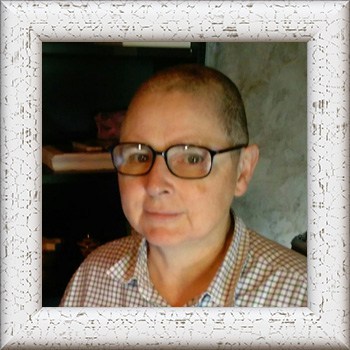
Jean Cross is from Dublin, Ireland. She lived and worked for many years in London and now resides in County Mayo in the rural and rugged west of her home country. Her first book The Jam Maker was written several years ago and is a pastoral adventure full of twists and mysteries. Lately she has collaborated with her partner of thirty years on From Clare to Here, a murder mystery which centres around a death at the magnificent Cliffs of Moher in County Clare.
When not writing, Jean tends to the two acres of land attached to the cottage she shares with Angela. Jean is also actively involved in the community and chaired the local campaign for Marriage Equality, which successfully brought same sex marriage to Ireland. She is a Trekki. She thinks Babylon 5 was one of the best things ever on television. Jean loves Dickens and Shakespeare and Tolkien because those are the authors who give her cause to pause on what she considers to be the most beautiful sentences written in the English language.
Jean is not sporty but she does have great balance and is one of life’s optimists.
What’s the name of your new book?
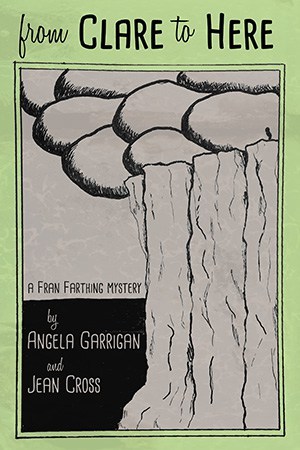
From Clare To Here
Tell us a bit about your book
Fran Farthing left the world of insurance investigating behind her. She thought that life in the west of Ireland would be pretty peaceful. Then her friend turned up dead. Was it an accident? Suicide? Or perhaps something more sinister? Detective Michelle Reynolds has already made up her mind. Can Fran uncover the truth before the tragedy unravels her life?
How important are character names to you in your books? Is there a special meaning to any of the names?
Names are important. They have to sit in the text naturally. In From Clare to Here, we used ordinary Irish names. We tried not to dwell on the naming as that can lead to far too much questioning and you can find yourself in a festival of doubt and uncertainty in no time. Of course you have to give some consideration to the process, especially for the main characters.
The book we are working on now is partly set in nineteen sixteen. Obviously the surnames won’t have changed much but we wanted the Christian names to sound authentic so we printed off a list of factory workers from Dublin in the early part of the last century and used some of them. It was a sobering exercise, picking a real person from the past. We tried to be gentle with them.
The Jam Maker, which is a quirky adventure mystery, called for something different. Charlie Milkeypockets, is a helpful archaeologist who is not great around other people. Elousese Turtlewine is a bit of a matron. Ranklin Scabbard is a villain. There I was able to exercise more imagination and, hopefully, help to draw the character with the name.
Give us an insight into your main character. What makes them unique?
Fran Farthing likes order. When the dinner is over, she clears the plates immediately and has been known to call the waitress over to do so while her friends are still picking at the leftover chips. If she finds a knot, she’ll unravel it. But she is not always as organised as she appears and more than once she has found herself with a garden fork in her hand, wondering where she was going with it. Fran can pass many happy hours with her own thoughts and only her dog, Lucy, for company. In fact when she was working in insurance, Fran credited Lucy with solving more than once tricky case.
Fran considers herself to be loyal and utterly committed to George, her long-time girlfriend. And she is loyal and committed, until she is not. Fran has her flaws and contradictions but when she fails she get up, goes on and makes it right.
Where do your ideas come from?
In the film, Bound, one of the characters is a robber. In one scene she is describing the process of planning the next job with her partner in crime. “Two people get in a room…” she says. She loves the process of planning the perfect heist. The rush of hitting on a great idea and then teasing it out.
It was kind of like that for Angela and I, (except for the heist bit). She was sitting at the table. I was pacing up and down. The ideas started to flow, we expanded on them. It was back and forth and somehow the creativity takes on its own energy and you know you have something good. That’s when it gets exciting. Of course you need some knowledge of the genre, in this case the lesbian detective novel. Also something has to spark to get the initial idea, there’s the imagination.
It a process, a litany of what ifs, rejections, speculations, additions, subtractions until, bingo! You both know you have it.
What do you think of book trailers? Do you have a trailer or do you intend to create one for your own book?
I think trailers can work for some authors. I see it as a personal choice. I prefer not to risk influencing the reader’s imaginative process with visual stimuli before they start the book. To me it is my job to stir that process with the words I have arranged on the page.
Have you always liked to write?
Yes. Forever. At school I loved composition and I was good at it. I wrote poems as a child and teenager, and sometimes, I still do. But these days the angst has mostly been replaced by humour! I have had lots of articles printed in the local paper. I can put an argument together in words and have done my share of public speaking too.
What writing advice do you have for aspiring authors?
The only advice I can give is to keep writing. I know it is a cliché but it the basis of everything for an author. I am not the best person to advise on how to target a market or how to work the Amazon algorithms. I haven’t got a clue about that stuff but I know how to write and I know how good it feels to express an idea or a point of view on a page. I know what it is to write a character you love and to build a world around them and if you can do that too, then you owe it to the world to do it. Put something out there, add something to the culture of the world. Do your thing. Hopefully, if you are lucky, you’ll get to make a living from it. For that you’ll need to talk to someone else!
If you didn’t like writing books, or weren’t any good at it, what would you like to do for a living?
Since coming to Mayo, I have taken to the cultivation of tomatoes. Now here in Mayo you need a polytunnel to grow stuff like that. But I love it. I grow all types and in over a decade I have not tired of it. I have, however, wondered where this exuberance for tomatoes has come from and I often ask myself, “Why tomatoes?” But mostly I just get on with growing them. I doubt very much if I could make a living from it, but I would certainly try.
Do you read reviews of your book(s)? Do you respond to them, good or bad? How do you deal with the bad?
Yes. I read the reviews. I don’t respond as I don’t feel the author should be part of the review process. Reviews are standalone comments, the expression of opinions, not the start of a conversation with the author and readers should feel free to express themselves without expecting a comeback from the writer. If a reader finds a mistake, I correct it. If they just didn’t like the book, I think I would feel a tad disappointed but I would consider their points. Thankfully that hasn’t happened yet.
What is your least favourite part of the writing / publishing process?
Absolutely, unequivocally and without a show of a doubt, proofreading. I hate it and I am crap at it. Angela is rather good at spotting mistakes and we try to clean up the MS as best we can before sending it out to our proofer. I find the whole thing so tedious that I would rather be staring at the wall, if not banging my head off it!
Is there one subject you would never write about as an author? What is it?
I would never write about banking. That includes anything to do with economics. I don’t understand it and I don’t want to. When the financial report comes on the news my face goes into an involuntary slump. Why do they insist on telling us about it? In any case it is not something I will ever write about.
Do you have a favourite conference / convention that you like to attend? What is it?
We don’t get many conventions here in Mayo, not like the themed ones we sometimes see in films and on TV. But I would be off to any Star Trek gathering that landed anywhere within striking distance. We do get historic re enactment, Vikings, the Rising of 1916, etc. and I get to these when I can.
Given the chance I would probably attend lots of conventions where people got together to celebrate fantasy and storytelling. I love to see the human spirit manifest in this way. It gives me hope.
Conferences, to me, are generally more serious affairs and I have helped to arrange and spoken at a few in my time. These days, actually, come to think of it, always, I would be more likely to attend a conference on Women’s Rights than anything else.
Is there a certain type of scene that’s harder for you to write than others?
Yes, sex is hard for me and I don’t write it. I don’t write much fighting but I can write action and I love the short bursts of back and forth as a crucial moment plays out.
How long does it usually take you to write the first draft of a book?
About three months. That’s with both of us writing. My first book took years but it is a long one and there were lots of breaks. With the Fran Farthing series we set out at the same time, in the same room, at the same table and we can be quite disciplined about it. If I feel like skiving off, I don’t, because Angela is there writing and I want to keep my word count up.
Can you give us a few tasty morsels from your work-in-progress?
Our next book in the Fran Farthing series is set in modern day Dublin and in nineteen sixteen. One hundred years ago we had what we call the Easter Rising in Ireland. That led to our separation from Britain and is a hugely significant event in our history.
It has recently come to light that there were many women involved in the Rising and that there were a fair smattering of lesbians among them. These women were inspirational and typically fought for the vote and for union rights too.
We wanted to acknowledge them and what they did for us and so our next story involves a lesbian couple from that time and, of course, our set of characters from today. We weave a tale of discovery, danger and courage between the two eras as Fran sets out to solve a century old death.
Describe what your ideal writing space looks like.
It is quiet. There is a table. There is chair. There is a laptop.
What advice would you give to your younger self?
Show your stuff to someone.
If you’re an indie author, what’s the best thing about being an indie author?
It is the direct connection with the reader. We meet over the written word. There is nobody between. I get to write what I want to. The reader can react directly to me if they want to. I love that.
Where can readers go to discover more about you and your books?
Facebook | Amazon
From Clare to Here is out now!
Available formats: ebook and paperback.
The post An Interview with Author Jean Cross appeared first on Melanie Tomlin.
July 18, 2016
1K Book Challenge Update One

1K book challenge update one: three months into the challenge …
As an independent author, I understand all too well the challenge of gaining recognition, and a following. (I refer to all of my followers as ‘angel followers’. It’s a phrase I’m using in book five — Angel’s Demon — of the Angel Series, and it relates to a number of characters appearing in that book.) It’s easy to self-publish, but much harder to have your voice heard in an ocean of constant chatter. And let’s face it, no one wants to read your posts or tweets if every single one of them is aimed at selling your books. It gets old very quickly. I try to bring other things to the table — author interviews, little titbits of information, funny things that are happening, artwork and photos.
I’m sure there’s more I could do, yet being an introvert makes even the smallest of things a challenge when you’re interacting with people, social media included. I don’t want to get to the point where I’m tell people what I had for breakfast — cereal, if you’re interested — or when my last bowel movement was — no, I’m not disclosing that piece of information, but if you’re interested in what colour it was, contact me and I’ll let you know!
Before I get down to the nitty-gritty stuff, if you happened to purchase one or more of my books, thank you. I really do appreciate it!
Figures as at day 102
Okay, so now it’s time to step off the soapbox and give you that 1K book challenge update. No laughter please. This is serious business, even if the figures aren’t quite what I was hoping for.
Book
Angel’s Kiss
Angel’s Curse
Angel’s Messiah
*Twisted Poems of a Warped Mind
Number Sold
194
39
33
8
* This hasn’t actually been published yet, but I had a number of advance copies printed off to take to Oz Comic-Con. I’m happy to report that some of them sold!
I have given away around 140 copies of Angel’s Kiss, close to 500 copies of Angel’s Curse, and roughly 30 copies of Angel’s Messiah. If I was going to combine the books and include the ‘freebies’, I would have almost reached my 1K book challenge goal.
Part of me is secretly happy that sales are on a slow simmer, and part of me is screaming and shouting, wondering what other marketing strategies I can employ to get me books moving … but if I struck gold, I’d have to get a tattoo!
Okay, you can stop laughing now. I need to go and have breakfast — a crust of stale bread and a glass of water …
The post 1K Book Challenge Update One appeared first on Melanie Tomlin.
An Interview with Author Ellie Keating
The author I’m interviewing today, Ellie Keating, is madly rushing around preparing for the launch of her new book “Cupid’s Contract”. Time is precious, as we all know, so thank you, Ellie, for taking the time to chat to me. Please sit down, get comfortable and let’s begin.
About interview Ellie Keating
A female with too many voices inside her head, she loves reading, writing and general procrastination. Ellie was born into a family of non-readers and was often packaged into the trunk of the car on long drives, where she would read by the streetlights on the highway. Now officially an adult, she does everything she can to avoid adult-ing, and hopes to achieve Peter Pan status before it becomes too late to prevent crows’ feet and dementia. In the meantime, she avoids the sun, reads everything from chick-lit to history, and desperately tries to win the lotto.
What’s the name of your new book?
Cupid’s Contract
Tell us a bit about your book
Eve is your average twenty-something female, determined to have it all. From the career to the guy, she needs to tick every box. But what happens when Cupid gets involved? A drunken contract with a mystery man results in Eve delivering messages of love and arranging meet-cutes, but will she ever escape the contract and find her own happily ever after? If Cupid has his way, it’s not likely! Between saving her career from a sexist, nepotism-practicing boss and his humour-less son, surviving her family hijinks and playing matchmaker, she hasn’t got a lot of time for boys, and she has yet to meet a man that has any time for her. Between a rock and a hard place, between a man and a boy, and between her mother and her grandmother, she’ll be lucky if she gets a date, never mind a soul mate! But Cupid doesn’t give up his indentured slaves so easily…
Sweet. Clean. A hint of magic and a whole lot of humour. If you like Sophie Kinsella, you’ll love this!
If there was a film or TV adaptation of your book, who would you like to see play your characters?
When I was writing the novel I pictured Rachel Bilson as the inspiration to Eve, and recently I fell in love with the tv show Containment, and the main character Jake Riley, who people may know as Kai from The Vampire Diaries. So if I had to cast characters, I would put Chris Wood as Drew Harper, because ‘damn, son!’ that boy is cute but he is also legitimately crazy. Maybe not in real life, but he certainly can straddle the border between insane and lovable.
Hmmm… I’ve not thought too much about this, but Marisa Tomei is the right vibe for Eve’s mom, especially if you curled her hair up. She’s fantastic at playing someone slightly unstable, vulnerable but strong, and attractive in a way that defies science. The woman get’s more beautiful with every line on her face.
How important are character names to you in your books? Is there a special meaning to any of the names?
Eve is a name I wanted to give my baby. That obviously isn’t happening anymore, because since I read Gone Girl, I’ve realised the danger in trying to create children from books, and vice versa.
I struggle with names because I may love a name, and love a character, but I won’t love the combination together, or they may seem perfect until the character does something out of my control, and then I realise that he isn’t a Stan, he’s a Carl, or something silly like that. Names are terribly important. I feel like an Ellie, but I’m sure people who know me would disagree… I’ve put too much thought into this question. Oh dear.
Have you always liked to write?
Since I was little, I have done nothing but read and write.
I have the strangest memory of a four/five year old me, coming down from my bedroom well after my bedtime, and my parents being angry with me for still being awake. I insisted that I was going back upstairs, but could they pleeeeease tell me how to spell rabbit. Was it two b’s or two t’s or both? I couldn’t go to bed until I finished telling my diary about our family pet escaping under the hedge that day.
My mom spelled it one way, my father another, and I remember being SO frustrated with them because FOR GOD’S SAKE they should know. So I stomped back up to bed, and being a total daddy’s girl I spelled it the way he told me, then decided it didn’t feel right and instead called the animal a ‘bunny’, and to this day I have never trusted either of them to spell anything for me again.
I was a real pain in the behind as a child. I still am today, as an adult, as well. Some people just don’t grow out of their horrible character traits.
What writing advice do you have for aspiring authors?
Just do it. I have no assurances that I won’t be rubbish and that I won’t fail, but at least I’ll have tried. I don’t want to be eighty years old, trying to pen an erotic novel about all the lovers I never had, despite carpal tunnel syndrome and arthritis. I want to be eighty years old and penning my eightieth novel about all the adventures I have had.
What is your least favourite part of the writing / publishing process?
Marketing, obviously. I cannot comprehend the sheer volume of words involved in learning how to market.
Putting myself out there at all. It’s very scary to put something out there for people to judge, be it writing or painting or a cake you baked. I’m nervous about being judged but I also have to believe that anyone who would judge me probably isn’t for me anyway.
Do you have a favourite conference / convention that you like to attend? What is it?
This isn’t an author convention, but Comic Con sounds great. I need to try that. Ideally the one in California because, hello, California.
What are you working on now?
Romantic Suspense novel, and planning the sequel to Cupid’s Contract. Working title is Little Boy Blue, but Lord knows if that will stick. Similarly to naming characters, I also struggle to name novels.
Can you give us a few tasty morsels from your work-in-progress?
There was something dying in this basement. It was wretched and it was cold and every single breath seemed to echo the fact, cloudy puffs of fetid air.
Dying.
Dead.
The smell was pungent, like years of grime and filth had caked to the walls to hold in every ounce of evil that had ever conspired here. Like the cellar itself was in on the secret.
She didn’t know how long she had been here. Days, at least. Probably a week, if not more. She had lost count when she had lost sight of the moon through the small, iron-clad window. He had seen her looking at the window. Looking at the small rays of celestial light that gave her some sort of hope that perhaps someone would find her.
He had not liked her looking at the light.
He had not liked her looking at anything but him.
He had grabbed at her hands, her blue tinged hands, and demanded she look at him. But when she did that, he had not liked what he saw. The fear in her eyes, the disgust on her lips and the sweet innocent tears that had welled up at the shadow of him.
He had liked that even less.
The window had been covered, boarded up somehow while she slept and wept, and no light came in now. No errant beams of life and no hope. She could see nothing now, not even his haunting grey eyes.
There was something dying in this basement.
Yes, she was dying in this basement.
Describe what your ideal writing space looks like.
Clean. So clean and empty that there isn’t a single edge out of place to distract me. I’m slightly OCD. Give me a smudge and I’ll polish the surface until it can’t shine, because it’s now rubble.
Why did you choose to write in your genre? If you write in more than one, how do you balance them?
I’m currently writing in genres I actually read, because those are the ones I enjoy the most. Writing them comes more naturally to me, but also I am at a point where I struggle to find books that I want to read in the genres I LOVE reading. I know I haven’t actually read them all, so feel free to recommend some to me, but I started reading books and would be disappointed by what I thought was excellent plot points that didn’t happen. I would enjoy the book, the characters, but get to the end and my brain would be reeling, just thinking “BUT THIS COULD’VE HAPPENED AND BEEN GREAT!!!” So I thought, let’s just try it. I love romance and I love humour, so Chick-Lit is natural, and if I’m not reading Chick-Lit I’m nose deep in thrillers, so that feels great too, though certainly more intricate. I love fantasy as well, but I’m not ready to create a world that is so elaborate. I hope that comes with time, as I didn’t think I had the attention span or creativity for a thriller either, but I’m finding it extremely satisfying.
Where did your love of books come from?
My older sister was two years above me in school, and when I was in kindergarten, desperate to keep up with her, I started reading her homework and books. She wasn’t too interested but I was enamoured. I had devoured her entire Babysitter’s Club collection by first grade. My mom maintains that it was her sitting me in front of the tv, with Zip-A-Dee-Doo-Dah playing all day long, subtitles on, that started the ball running, but I think perhaps my parents had an influence even in their bedtime stories that may have sparked the flame. I’ve always been very introspective though, so some of it is innate, I think.
When you’re writing, do you listen to music or do you need silence?
Oh my God, COMPLETE silence. If I hear a whisper I’m off, looking for the distraction.
Who are your favourite authors, and why?
Jane Austen, naturally. I love J.K. Rowling, because I’m human. Never complain if I get a bit of Gillian Flynn or Jeff Wheeler, either.
Sophie Kinsella has been a large part of my Chick-Lit inspiration, also.
I’m sure there are others, but I’m drawing a blank right now.
Anne McCaffrey, T.R. Ragan, Rob Dugoni.
What do you find most challenging about writing?
Finding time to do it, and the confidence to pursue it. I struggle with the former due to laziness and the latter due to insecurity. Hopefully both are not so totally ingrained in myself that I’ll never overcome them.
Where can readers go to discover more about you and your books?
Twitter
Cupid’s Contract is out on 31 July 2016!
Available formats: ebook and paperback.
The post An Interview with Author Ellie Keating appeared first on Melanie Tomlin.