Melanie Tomlin's Blog, page 6
October 17, 2016
Interview with Author C.E. Martin
Joining me today, after having to drag him away kicking and screaming from the comfy recliner in his basement, is author C.E. Martin. Thank you, C.E., for taking the time to chat to me. Please sit down, get comfortable and let’s begin.
About C.E. Martin
With real-world experience in law enforcement and a long-time interest in pulp adventure, C.E Martin delivers page-turning excitement, intrigue and plenty of battles with out-of-this-world creatures through his Stone Soldiers supernatural military thriller series. Inspired by classics like The Destroyer and Doc Savage, C.E. began writing in 1986 as a hobby and quickly gained momentum as a freelance writer. Today, he combines classic elements of men’s fiction with a satisfying dose of supernatural good-versus-evil storytelling.
What do you write?
Primarily, I’ve stayed in the Military Supernatural Thriller sub-genre–tales of supernatural warfare told in a pulp or men’s adventure fast-paced style. Emphasis is on good defeating evil and action, action, action: I’m not a big fan of the drama.
My first series, launched in 2012, is Stone Soldiers, about a small special ops unit mostly comprised of soldiers turned to living stone, making them impervious to most physical harm and leveling the playing field, so to speak, in the never-ending war against evil. The team fights giants, witches, demons, demi gods, vampires, etc. etc. This year I’ll be finishing up the first twelve book arc.
In 2015, I discovered the joy and ease of short stories. As a part-time, weekend writer, I can churn out shorts much quicker than my novels. I launched a line of prequels to my Stone Soldiers series, as monthly releases. Shadow Detachment begins in 1950 with the formation of the unit that will eventually be full of men turned to stone.
Most recently though, I’ve decided to try a new sub-genre: the Weird Western. I’ve just launched the first installment in a new series that takes place in 1881. Every 4 weeks, a new 10-15,000 word tale will be released, building on a growing story. Not sure if that will all fit into one compilation at the end, but we’ll see.
Outlaws of Olympus is Greece meets West as Hercules battles the gods and monsters of the old world in the Wild West… as a Catholic Priest. Cursed with immortality by Hera, Hercules has wandered the Earth for centuries, eventually embracing Christianity and hiding himself away in one monastery or mission after another. In this series, Hercules, or Father Ercole as he prefers to be called, is sent to the Utah Territory to investigate reports of a man who cannot die. He meets up with a peculiar cavalryman and helps track down a supernatural gunslinger who turns out to be Ercole’s half-brother, Hermes–the fastest gun in the West.
The first installment sets up the series, which will have priest and cowboy reliving the 12 Labors–a blend of Greek and Native American Mythology. If the series finds a readership, I’ll continue it, but for now it’s set for a fixed 13 weird tales.
Where do your ideas come from?
A variety of places. Mainly, I like to read fringe “news”–cryptids, UFOs, lost civilizations. These were the same tales passed around in print that inspired many a pulp novel, so I like to continue the tradition and work as much of this modern folklore in to my stuff as a I can.
As for my new project, Outlaws of Olympus, I always wondered if there was a way to tell a story where Hercules survived into the modern age and lived in seclusion. Then I saw Kevin Sorbo witnessing his own faith and incredible story online and it hit me: Hercules as a Christian. That’s actually in my own Stone Soldiers series (Book 5: Black Knight Down) but somewhere I started wondering about other centuries he might have lived in, and decided on something from the 1800s.

Where do you see yourself in 10 years?
Outlook not clear, ask again… Seriously, I don’t know. I would hope I’ve found an audience and am finally writing full-time. I definitely have enough ideas for that. As I’m nearing fifty, I’m trying not to think too far down the road right now and am concentrating on the here and now and turning my part-time writing into a full-time endeavor. But that all depends on not just an ample amount of elbow grease, but a healthy dose of luck–luck in finally finding a large enough readership.
Do you read reviews of your book(s)? Do you respond to them, good or bad? How do you deal with the bad?
I absolutely read the reviews. My aim as an author isn’t just to tell a story, but to sell my stories. To do that, I need to know what the reader wants, and reviews are the perfect way to find that out. I don’t think there’s such a thing as a bad review–all feedback is valuable. I do think there are troll reviews, where someone “reviews” a book because they don’t like the author, or something in the book, but I would hope most readers can see past that.
How do I deal with troll reviews? Well… sometimes I laugh and move on. Sometimes I vent on X-box, playing a game and forgetting all about it. Sometimes I take the reviewer’s name, change it and kill them off in a future installment. It depends how trollish their comments are.
Overall though, I aim to please the customer–the reader. What they like and want is very important. I listen to their feedback and do my best to accommodate. My goal is to make readers happy, not anxious or angry (say, by killing off favorite characters).
Is there a certain type of scene that’s harder for you to write than others?
Any scene that leads up to a big fight scene is hard for me to write. I want to get through it and get to the action, but I know the scene is important. It’s like eating a mediocre dinner when you know there’s cake afterward. The anticipation is frustrating.
How long does it usually take you to write the first draft of a book?
Somewhere around 40 hours. Sometimes those hours are in batches of five or six on a weekend morning. Sometimes I go crazy and write until my wrists hurt–I think twelve hours (with minimal food breaks) is my longest run. I think it’d go faster if I had multiple days in a row to write. Doing this on the side means I have to stop and lose my momentum. The next session is part rebuilding that momentum part pressing on.
Describe what your ideal writing space looks like.
I prefer to write in my recliner in my basement TV room. I’ve attached a tablet holding arm to the chair, and use a lapdesk with a wireless keyboard. It’s very comfortable, cool, dark, and quiet. Eventually, I plan to connect the TV to a small PC so I can use it to go online and research quick bits of information as I need them. About the only real improvement or change I’d make to this set up would be to put in a ceiling–our basement is only semi-finished, with emphasis on the semi, rather than the finished.
Why should a potential reader buy your book(s)?
While my first series, Stone Soldiers, is definitely for a niche market, I think Outlaws of Olympus will appeal to a broader market. Readers of these weird westerns won’t just be subjected to superhuman violence and killing, but rather problem solving mixed with some fun re-imagining of classic Greek and Native American mythology. After all, as a Priest, Hercules will be more interested in saving souls than cracking skulls.
Of all the characters you have created, which is your favourite and why?
That’s really a tough call. If you are going to insist, I’ll have to flip a coin between Max, my sentient artificial intelligence from the Stone Soldiers and Shadow Detachment series, and Laura Olson, the vampire MD from Stone Soldiers.
For Laura, she’s just a sassy, able-bodied female hero who gets things done without dressing or acting like a tramp. I based her a little bit on Alex Kingston’s amazing portrayal of River Song from the Doctor Who series. One thing I hate in fiction is waif-like femme fatales who haven’t digested any food in weeks. They’re ridiculous. I want to read about pioneer-like women who are real. I served in the USAF with women, and none of them were like the scrawny models we see in so much of TV and film today. Women can be capable and beautiful without being anorexic fantasies of 13 year old boys.
As for Max, I love the character because not only is he reminiscent of HAL 9000, but he’s a Christian A.I. So often we see AIs that are evil and mean. I thought it would be a kick to make an AI who reviewed all the facts (including the dark magic of the demons that built him–see Infernal Machine for more details there) then concluded that there could be no other logical choice. It’s a simplistic, child-like view of religion, from a machine, and I think it’s going to allow me to write some very interesting stories and situations.
When you’re writing, do you listen to music or do you need silence?
Absolutely I listen to music. I prefer scores from films, and my favorite composer is Michael Giacchino. I have a whole string of favorites logged into playlists on my phone–action lists, mystery lists, exploration lists… they really set the mood when I’m writing a sequence. And they drown out the noise from my kids and dog.
Who are your favourite authors, and why?
Lester Dent, Edgar Rice Burroughs, Piers Anthony, and Warren Murphy. There are many others I’ve enjoyed (Laumer, Zelazny, Asimov) but these four were the ones that most captured my imagination and drew me into their worlds. I also enjoyed the blend of humor and action all four put into their work and the lack of the tragedies so many authors seem fixated on. When I finish reading a book, I want to remember the good, not be dwelling on some horrible event.
What do you find most challenging about writing?
Finding the time to write. That’s the biggest challenge for me. I have children, a home, a dog, a wife and a day job. There’s not much time to write, and during the week, after sitting at a computer all day, I get home and just can’t do it anymore. My writing time has dwindled to weekend mornings and possibly the days. At that rate, it’s hard to get a lot done.
I suppose my lack of time is what aggravates me when I read people whining about writer’s block, or how long something is taking them. Oh, if only I had that time…
Where can readers go to discover more about you and your books?
Blog | Amazon Author Page | Stone Soldiers | Outlaws of Olympus
The post Interview with Author C.E. Martin appeared first on Melanie Tomlin.


October 10, 2016
An Interview with Author Cynthia E. Hurst
Joining me today to talk about the 7th book in her Zukie Merlino Mysteries is author Cynthia E. Hurst. Thank you, Cynthia, for taking the time to chat to me. Please sit down, get comfortable and let’s begin.
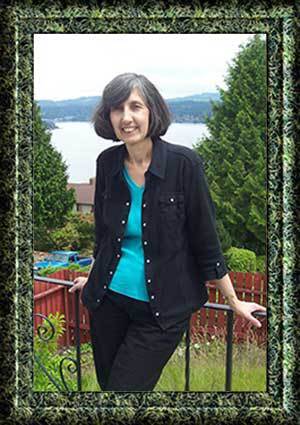 About Cynthia E. Hurst
Cynthia E. Hurst is the author of the R&P Labs Mysteries series, featuring Rob, Phil, Ellis, Virginia and Mitch — five scientists with a talent for solving murders matched only by their ability to stumble over them in the first place.
The Zukie Merlino mysteries are a spin-off of these. The main character first appeared in the R&P Labs short story “Halfbaked” and promptly insisted on being featured in her own series of full-length novels.
Like her characters, Cynthia grew up in Seattle, and then graduated from the University of Oregon with a journalism degree. She has been a reporter, copy editor and columnist at various newspapers, and also spent five years as a housing officer for British military families. She and her husband have two sons, two grandchildren and a grandcat, and divide their time between Seattle and the English Cotswolds.
What’s the name of your new book?
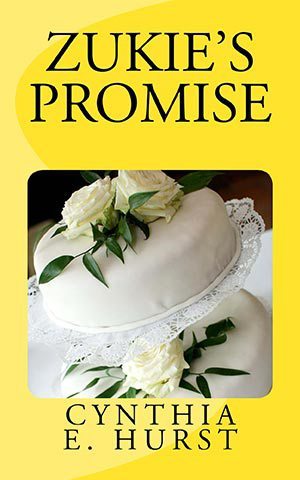
Zukie’s Promise (Zukie Merlino Mysteries 7)
Tell us a bit about your book
Zukie Merlino’s daughter Carol is (finally) getting married, and Zukie has been told in no uncertain terms that her role at the wedding is to show up, shut up and keep smiling. That’s hard enough, but when a body turns up at the rehearsal, Zukie faces an even tougher challenge. The wedding’s in two days, the bride and groom are suspected of murder and everyone involved seems to be hiding a secret. But Zukie has promised herself nothing will ruin Carol’s wedding, and Zukie always keeps her promises, no matter whose toes she has to step on along the way.
Give us an insight into your main character. What makes them unique?
I’m very fond of Zukie Merlino. She’s a widow in her late 50s, so she’s learned a lot about life, and although she’s not well-educated or sophisticated, she’s intelligent, curious and perceptive. She has a quick temper and is totally lacking in tact and diplomacy, but she’s also got a heart of gold.
Have you always liked to write?
I have loved to write for as long as I can remember. However, reality kicked in fairly early and I knew I probably wouldn’t make a living writing fiction, so I went with Plan B and earned a journalism degree so I could still write AND rely on a paycheck. I worked on newspapers and magazines in the Pacific Northwest and the UK and didn’t really turn to fiction until I took an early retirement in 2010. I soon found I had been right about not earning loads of money writing fiction, but I love it.
What writing advice do you have for aspiring authors?
I think you have to be a reader in order to write. Not just for pleasure, but to observe how other authors craft their books. The other thing is that you must know the basics of spelling, punctuation and grammar before you try to write anything, and certainly before you try to publish anything. If you don’t, it’s like trying to build a house from the roof downward. I don’t know how many aspiring authors’ works I have jettisoned because they couldn’t construct a simple sentence and hadn’t bothered to do even a basic editing job.
If you didn’t like writing books, or weren’t any good at it, what would you like to do for a living?
I’ve always liked history and once did volunteer work in a museum, which I enjoyed. Bringing the past alive is a fascinating job, so I might pursue that.
Is there a certain type of scene that’s harder for you to write than others?
I tend to be a little squeamish about writing sex scenes, so they’re normally the fade to black type. My characters have sex; they just don’t have anyone watching them and describing it. On the other hand, I like writing action scenes, even though I end up re-writing them half a dozen times before I’m satisfied.
How long does it usually take you to write the first draft of a book?
About two months for the first draft and then a couple of weeks tweaking and editing. I tend to check for typos as I go, a habit from my days as a journalist, so it’s more a case of smoothing out awkward sentences or adding more description before publishing. I also have a beta reader who does an excellent job of weeding out my British terminology. I’ve lived in the UK for more than 30 years and British phrases tend to sneak into my writing, but my characters are American, so they have to use appropriate language.
How has your environment or upbringing impacted your writing?
Both my series are set in my hometown of Seattle, so there are a lot of local references and locations. (I once had someone buy a book on the spot after he learned one of the scenes took place about 100 yards from where we were.) The idea for the R&P series came from the laboratory my parents worked in and Zukie and Lou come from my Italian-American background.
Describe what your ideal writing space looks like.
My ideal writing space would be a private office in Seattle overlooking Lake Washington or Puget Sound, furnished with a solid wall of books, a comfy chair to sit and write in and an endless supply of coffee. Reality is somewhat different.
Why should a potential reader buy your book(s)?
I think my books appeal to a broad spectrum of readers, basically anyone who likes a light-hearted, fast-paced whodunnit with interesting characters and a lot of humor. Besides, they’re cheap.
What’s the strangest thing you have ever had to research for your book?
How to make surgical dressings out of sphagnum moss, a big part of the plot in my first R&P book, ‘Mossfire’.
What’s an interesting fact about your book?
In my R&P Labs series, many of the staff’s projects are ones actually undertaken by the real lab that inspired the books.
Why did you choose to write in your genre? If you write in more than one, how do you balance them?
I have loved mysteries ever since my parents inherited several mystery anthologies from a friend. I was about 11 or 12 at the time and read my way through all of them – the complete Sherlock Holmes canon, Raymond Chandler, Ellery Queen, Ngaio Marsh, Agatha Christie, Rex Stout, Dorothy L. Sayers and many more. I was hooked and I still prefer a mystery to any other genre. In fact, one reason I started writing was that I couldn’t find any new books I liked. The hard-boiled ones were too graphic for my taste and the cozy mysteries were too insipid.
What advice would you give to your younger self?
When one door closes, another opens.
Of all the characters you have created, which is your favourite and why?
Mitch Okada in the R&P Labs books has to be my favorite. He was originally intended to be a minor character, someone who wouldn’t fit the stereotype of a quiet, studious Japanese-American, but he promptly elbowed his way into the spotlight and won’t leave. Mitch is described by another character as “a bad boy with a lot of good qualities,” which pretty much sums him up. He’s great fun to write.
Are your characters based on real people, are they imaginary or a combination of both?
The two main characters in my Zukie books are based on one of my Italian aunts and a male second cousin who moved in with her after they were both widowed. Like Zukie and Lou, they had a noisy, confrontational, platonic relationship, but they were there for each other when needed.
My R&P Labs characters are imaginary but the setting isn’t. My parents were scientists and for several years they both worked at a small, independent, financially insecure lab, which meant I spent a lot of time there on weekends and during school breaks. When I started my first mystery, I thought a lab like that would make a good setting and create potential for plots. Unfortunately I have no scientific ability myself, but I have been around scientists all my life, so I hope the R&P crew are believable characters.
Who are your favourite authors, and why?
I’d have to say Rex Stout and Carl Hiaasen. Stout’s Nero Wolfe/Archie Goodwin books are traditional mysteries and Hiaasen’s novels are modern and more anarchic, but they both make me laugh while delivering a good story and memorable characters. For sheer humor, I like Terry Pratchett, especially the Sam Vimes novels. Recently, I’ve also been reading my way through Laurie R. King’s Holmes/Russell books, which show Sherlock Holmes in an entirely different light.
What’s the best thing about being an indie author?
Having complete control over my content. I know a traditionally published author whose books sell very well, and yet she had to argue with her publisher to be allowed to kill off a character who richly deserved it. On the other hand, if things go wrong, there’s no one to blame but myself.
Where can readers go to discover more about you and your books?
Facebook | Amazon Author Page
Zukie’s Promise is out now!
Available formats: ebook and paperback
The post An Interview with Author Cynthia E. Hurst appeared first on Melanie Tomlin.
Interview with Author Cynthia E. Hurst
Joining me today to talk about the 7th book in her Zukie Merlino Mysteries is author Cynthia E. Hurst. Thank you, Cynthia, for taking the time to chat to me. Please sit down, get comfortable and let’s begin.
About Cynthia E. HurstCynthia E. Hurst is the author of the R&P Labs Mysteries series, featuring Rob, Phil, Ellis, Virginia and Mitch — five scientists with a talent for solving murders matched only by their ability to stumble over them in the first place.
The Zukie Merlino mysteries are a spin-off of these. The main character first appeared in the R&P Labs short story “Halfbaked” and promptly insisted on being featured in her own series of full-length novels.
Like her characters, Cynthia grew up in Seattle, and then graduated from the University of Oregon with a journalism degree. She has been a reporter, copy editor and columnist at various newspapers, and also spent five years as a housing officer for British military families. She and her husband have two sons, two grandchildren and a grandcat, and divide their time between Seattle and the English Cotswolds.
What’s the name of your new book?
Zukie’s Promise (Zukie Merlino Mysteries 7)
Tell us a bit about your book
Zukie Merlino’s daughter Carol is (finally) getting married, and Zukie has been told in no uncertain terms that her role at the wedding is to show up, shut up and keep smiling. That’s hard enough, but when a body turns up at the rehearsal, Zukie faces an even tougher challenge. The wedding’s in two days, the bride and groom are suspected of murder and everyone involved seems to be hiding a secret. But Zukie has promised herself nothing will ruin Carol’s wedding, and Zukie always keeps her promises, no matter whose toes she has to step on along the way.
Give us an insight into your main character. What makes them unique?
I’m very fond of Zukie Merlino. She’s a widow in her late 50s, so she’s learned a lot about life, and although she’s not well-educated or sophisticated, she’s intelligent, curious and perceptive. She has a quick temper and is totally lacking in tact and diplomacy, but she’s also got a heart of gold.
Have you always liked to write?
I have loved to write for as long as I can remember. However, reality kicked in fairly early and I knew I probably wouldn’t make a living writing fiction, so I went with Plan B and earned a journalism degree so I could still write AND rely on a paycheck. I worked on newspapers and magazines in the Pacific Northwest and the UK and didn’t really turn to fiction until I took an early retirement in 2010. I soon found I had been right about not earning loads of money writing fiction, but I love it.
What writing advice do you have for aspiring authors?
I think you have to be a reader in order to write. Not just for pleasure, but to observe how other authors craft their books. The other thing is that you must know the basics of spelling, punctuation and grammar before you try to write anything, and certainly before you try to publish anything. If you don’t, it’s like trying to build a house from the roof downward. I don’t know how many aspiring authors’ works I have jettisoned because they couldn’t construct a simple sentence and hadn’t bothered to do even a basic editing job.
If you didn’t like writing books, or weren’t any good at it, what would you like to do for a living?
I’ve always liked history and once did volunteer work in a museum, which I enjoyed. Bringing the past alive is a fascinating job, so I might pursue that.
Is there a certain type of scene that’s harder for you to write than others?
I tend to be a little squeamish about writing sex scenes, so they’re normally the fade to black type. My characters have sex; they just don’t have anyone watching them and describing it. On the other hand, I like writing action scenes, even though I end up re-writing them half a dozen times before I’m satisfied.
How long does it usually take you to write the first draft of a book?
About two months for the first draft and then a couple of weeks tweaking and editing. I tend to check for typos as I go, a habit from my days as a journalist, so it’s more a case of smoothing out awkward sentences or adding more description before publishing. I also have a beta reader who does an excellent job of weeding out my British terminology. I’ve lived in the UK for more than 30 years and British phrases tend to sneak into my writing, but my characters are American, so they have to use appropriate language.
How has your environment or upbringing impacted your writing?
Both my series are set in my hometown of Seattle, so there are a lot of local references and locations. (I once had someone buy a book on the spot after he learned one of the scenes took place about 100 yards from where we were.) The idea for the R&P series came from the laboratory my parents worked in and Zukie and Lou come from my Italian-American background.
Describe what your ideal writing space looks like.
My ideal writing space would be a private office in Seattle overlooking Lake Washington or Puget Sound, furnished with a solid wall of books, a comfy chair to sit and write in and an endless supply of coffee. Reality is somewhat different.
Why should a potential reader buy your book(s)?
I think my books appeal to a broad spectrum of readers, basically anyone who likes a light-hearted, fast-paced whodunnit with interesting characters and a lot of humor. Besides, they’re cheap.
What’s the strangest thing you have ever had to research for your book?
How to make surgical dressings out of sphagnum moss, a big part of the plot in my first R&P book, ‘Mossfire’.
What’s an interesting fact about your book?
In my R&P Labs series, many of the staff’s projects are ones actually undertaken by the real lab that inspired the books.
Why did you choose to write in your genre? If you write in more than one, how do you balance them?
I have loved mysteries ever since my parents inherited several mystery anthologies from a friend. I was about 11 or 12 at the time and read my way through all of them – the complete Sherlock Holmes canon, Raymond Chandler, Ellery Queen, Ngaio Marsh, Agatha Christie, Rex Stout, Dorothy L. Sayers and many more. I was hooked and I still prefer a mystery to any other genre. In fact, one reason I started writing was that I couldn’t find any new books I liked. The hard-boiled ones were too graphic for my taste and the cozy mysteries were too insipid.
What advice would you give to your younger self?
When one door closes, another opens.
Of all the characters you have created, which is your favourite and why?
Mitch Okada in the R&P Labs books has to be my favorite. He was originally intended to be a minor character, someone who wouldn’t fit the stereotype of a quiet, studious Japanese-American, but he promptly elbowed his way into the spotlight and won’t leave. Mitch is described by another character as “a bad boy with a lot of good qualities,” which pretty much sums him up. He’s great fun to write.
Are your characters based on real people, are they imaginary or a combination of both?
The two main characters in my Zukie books are based on one of my Italian aunts and a male second cousin who moved in with her after they were both widowed. Like Zukie and Lou, they had a noisy, confrontational, platonic relationship, but they were there for each other when needed.
My R&P Labs characters are imaginary but the setting isn’t. My parents were scientists and for several years they both worked at a small, independent, financially insecure lab, which meant I spent a lot of time there on weekends and during school breaks. When I started my first mystery, I thought a lab like that would make a good setting and create potential for plots. Unfortunately I have no scientific ability myself, but I have been around scientists all my life, so I hope the R&P crew are believable characters.
Who are your favourite authors, and why?
I’d have to say Rex Stout and Carl Hiaasen. Stout’s Nero Wolfe/Archie Goodwin books are traditional mysteries and Hiaasen’s novels are modern and more anarchic, but they both make me laugh while delivering a good story and memorable characters. For sheer humor, I like Terry Pratchett, especially the Sam Vimes novels. Recently, I’ve also been reading my way through Laurie R. King’s Holmes/Russell books, which show Sherlock Holmes in an entirely different light.
What’s the best thing about being an indie author?
Having complete control over my content. I know a traditionally published author whose books sell very well, and yet she had to argue with her publisher to be allowed to kill off a character who richly deserved it. On the other hand, if things go wrong, there’s no one to blame but myself.
Where can readers go to discover more about you and your books?
Facebook | Amazon Author Page
Zukie’s Promise is out now!
Available formats: ebook and paperback
The post Interview with Author Cynthia E. Hurst appeared first on Melanie Tomlin.
October 4, 2016
Winners are Grinners – How Poetic!

Twisted Poems of a Warped Mind — Competition Winners
As with my previous competitions, the email addresses for all potential winners were entered into a random list picker, courtesy of Random-ize.
After each winner was randomly chosen, they were removed from the list to ensure they couldn’t be randomly selected again. It’s a long and tedious process, but it’s a fair one. For those of you who didn’t win, but want to find out more about my unusual poetry, the ‘look inside’ feature should be available on Friday (Oct 07), via Amazon or here on my website.

Congratulations to the following winners!
Brenna, 1st prize — Amazon gift card ($30 USD)
Anastasia, 2nd prize — Signed copy of Twisted Poems of a Warped Mind
Yvonne, 3rd prize — Signed copy of Twisted Poems of a Warped Mind
Rushan, 4th prize — Signed copy of Twisted Poems of a Warped Mind
RaChelle, 5th prize — Twisted Poems of a Warped Mind ebook
Jennifer, 6th prize — Twisted Poems of a Warped Mind ebook
Dorothy, 7th prize — Twisted Poems of a Warped Mind ebook
Kim, 8th prize — Twisted Poems of a Warped Mind ebook
Jennifer, 9th prize — Twisted Poems of a Warped Mind ebook
A (I wonder if A is related to R from Warm Bodies), 10th prize — Twisted Poems of a Warped Mind ebook
All winners have been notified by email. (Ebook winners please note that the link in the email to download your ebook will expire on October 31.)
When’s the next competition?
There’s one running right now and there’ll be another one really soon to celebrate the upcoming release of Lucy Vampoosy: The Little Vampire Dog.
The current competition requires a little effort on your part. You can find further information on it here. The next competition (for Lucy Vampoosy) will only be open to ‘angel followers’ (subscribers). As long as you remain on my mailing list you’ll automatically be entered into the draw.
After that, it will be January, when I’m gearing up for the release of Book four in the Angel Series — Angel’s Body.
The post Winners are Grinners – How Poetic! appeared first on Melanie Tomlin.
October 3, 2016
An Interview with Author Hans Cummings
Author Hans Cummings, whose hobbies include (amongst other things) smoking meat and tabletop gaming, talks to me about the second book in the Scars of the Sundering trilogy — Lament. Thank you, Hans, for taking the time to chat to me. Please sit down, get comfortable and let’s begin.
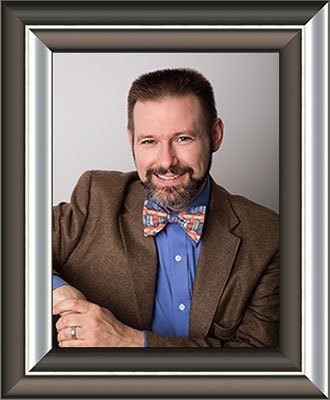
About Hans Cummings
The author of the Fantasy series: The Foundation of Drak-Anor and Scars of the Sundering, as well as the Zack Jackson science fiction series, Hans Cummings is Nuvo’s Best of Indy — Best Local Author 3rd place Honoree for 2014 and 2015. Two of his short stories appear in Fear the Boot’s Sojourn speculative fiction anthologies.
Hans is also a volunteer for the tabletop gaming industry ENnie Awards and maintains a gaming blog www.doctorstrangeroll.wordpress.com in addition to his writing blog www.vffpublishing.com.
Hans earned a Bachelor of Arts degree in English from Indiana University in 2006. He grew up in Indiana, Germany, and Virginia and returned to Indiana when he was 21. He currently lives in Indianapolis with his wife. His hobbies include tabletop and computer gaming, smoking meat, and igniting young people’s curiosity and passion for science and exploration.
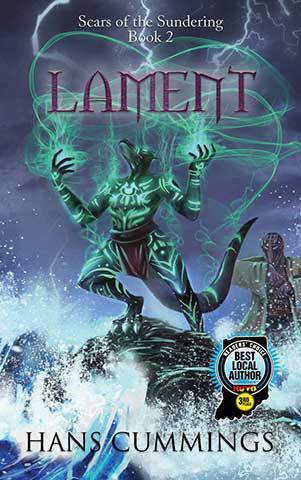
What’s the name of your new book?
Scars of the Sundering: Lament
Tell us a bit about your book
“The quality of our legacy is measured in the lives we touch”
Pancras and the drak twins reach Muncifer. The judgment of Archmage Vilkan Icebreaker was swift: Pancras is sent to the far side of the continent and Delilah remains the Arcane University. His penance takes him toward the far north, and is made only somewhat better by the companionship of The Golden Slayer and the fiendling Qaliah. Along the way, events drive Pancras to rekindle his faith in Aita.
Bound to the Arcane University, Delilah works to escape, while her brother uncovers an ancient Munciferian secret that will change the very nature of magic as they know it and shake the foundation upon which the Arcane University was built.
Lament is Book 2 in the Scars of the Sundering trilogy by award-winning author Hans Cummings.
If there was a film or TV adaptation of your book, who would you like to see play your characters?
For the purposes of this question, I’ll restrict myself to Scars of the Sundering. The main character, Pancras, is a minotaur, so he would be at least partially CGI. If there was any motion-capture or prosthetic work, whoever was cast would have to be really skilled at body language. The voice, however, would need gravitas and more than a little bit of that British poshness, so someone like Patrick Stewart or Ian McKellen would be my dream choice. Peter Capaldi would be pretty awesome, too, but I think I would like a bit less Scottish and a bit more Queen’s English.
The drak twins would almost certainly be 100% CGI. Kale could be voiced by someone who can be emotional and serious, but with a lot of irresponsible roguishness, like Ryan Reynolds. His sister, Delilah, is arrogant, confident, but with a prankster side. She’s probably the most difficult to cast. I’ll just go with Tress MacNeille since she did the voice of the animated character that inspired her.
Gisella the Golden Slayer is a blonde beauty from a region analogous to Scandanavia, so a tall blonde would be needed, or someone who can pull off the look. Maybe Gwendoline Christie. She has a sister, whom we meet in Scars of the Sundering: Salvation. Melissa Benoist would be good for her.
Qaliah the fiendling would have to be someone comfortable in make-up and prosthetics because humans have neither horns nor jet-black skin. I’m not a fan of Megan Fox, but she has the look. Taylor Swift has the right look, too, though she’s not technically an actress.
My favorite casting choices would be for Lady Aveline of Curton. She’s a Knight of Etrunia and Captain of the City Watch and Gina Torres would be perfect. She’s tall, beautiful, strong, and commanding. Princess Valene of Almeria. The only problem is I’d want her to be in it more. Princess Valene would be good for her, too, but she probably shouldn’t play both roles, since the characters aren’t related and don’t live anywhere near each other (though they’re both originally from the same region, so maybe separated at birth?)
How important are character names to you in your books? Is there a special meaning to any of the names?
Names are very important. In my fantasy novels, I select names for each character based on the world’s analogous culture and on the name’s meaning. I only make up names from scratch for characters that come from a fantasy culture that has no real-world analogue, and even then, I think carefully about the name so it has weight and carries a suggestion of what that character might be like.
Where do your ideas come from?
Like Athena, they spring fully-formed from my head!
That’s only half-joking. Most of my ideas just pop in there, though if I think about it (which I try not to do), I’m probably inspired by things I see in the media (whether TV shows, movies, other books, world news, etc). Plot ideas are pretty much my own creation, though there may be elements that pay homage to something I like from popular entertainment. Certainly, when I’m thinking up new technology for my sci-fi series, I’ll pay close attention to scientific advances and try to extrapolate practical applications for those technologies. I’ve read articles many times for devices people have invented based on certain technologies that I’ve already introduced in my Zack Jackson series (like the fabricators they use to make clothes and household items to order; basically 3D printers). Shortly after the first Zack Jackson novel was published, I read an article about adapting 3D printers to make clothing. It’s very gratifying when that happens.
How long does it usually take you to write the first draft of a book?
I can usually write a first draft in 30-60 days, depending on the length. Since I still have a day job, I have to be laser-focused when I write and when I’m in the groove, I can easily exceed 3,000 words a day. Thankfully, I have editors, or very little of that would be fit to publish.
What are you working on now?
Hot on the heels of Scars of the Sundering: Lament will be the conclusion to that series, Scars of the Sundering: Salvation. The first draft of that novel is already written; it’s just waiting its turn for editing and revisions. I’ve also begun work on the fourth Zack Jackson novel, Zack Jackson & The Secret of Venus. I hope to have that first draft completed prior to Gen Con.
Do you have a day job in addition to being a writer? If so, what do you do during the day?
I’m the Manager of Catalogs and Custom Publications for a trade organization supporting independent hardware retailers across the United States and Canada. We made business-to-business hardware catalogs, i.e. the catalogs hardware stores use to stock their inventory.
Are your characters based on real people, are they imaginary or a combination of both?
Most of my characters are my own original creations, though for some of them, I will take inspiration from either real life (as in the case of Zack Jackson’s school counselor, Fred McPheely; he is 100% homage to Fred Rogers) or from other fictional sources (Zack’s gym instructor is inspired by Tech Sergeant Zim in the Starships Troopers film and Delilah from my fantasy series was inspired by Dot Warner from Animaniacs!). No matter from whom my characters are inspired, they always take on a life of their own and often go in directions I never anticipated.
When you’re writing, do you listen to music or do you need silence?
I usually listen to music. Specifically, I listen to soundtracks from the genre in which I am writing. For the most part, there can be no lyrics, although I find if the lyrics are in a language with which I am completely unfamiliar (like Japanese), they fade into the background and become like just another instrument. When I write fantasy, I particularly like to listen to the soundtracks from World of Warcraft and The Elder Scrolls. When I write sci-fi, I’ll listen to Star Trek, Doctor Who, and Mass Effect soundtracks.
What do you find most challenging about writing?
Finding the time to write. I still have to work a full-time job to pay the bills, and since my wife is disabled and my step-daughter is now married and living on her own, most of the chores around the house fall to me. Still, I can usually find an hour or two each evening to sit down and write. If I’m able to find my focus quickly, I can accomplish quite a lot in that short time.
Where can readers go to discover more about you and your books?
Website | Blog | Facebook | Twitter | Amazon Author Page | Goodreads
Scars of the Sundering: Lament is out now!
Available formats: ebook and paperback
The post An Interview with Author Hans Cummings appeared first on Melanie Tomlin.
September 26, 2016
Have a Character Named after You in Angel’s Demon
My latest competition hasn’t ended yet and I’m already in competition mode again! character name competition
Imagine having your name immortalised in a book. How cool would that be, right? So, I thought why not give this opportunity to my fans. I’ve set aside six characters in the fifth book of the Angel Series — Angel’s Demon — for a character naming competition. These characters are very important in the scheme of things, and have ties back to Gina, so are very special … just like you!
The competition closes on December 01, 2016 at 11:59 pm (AEST). Terms and Conditions can be viewed at:
What do you need to do?
You need to answer three questions, and fill out a few basic details (name, email etc). I was going to include a ’25 words or less’ question as well, but decided against it, so hopefully your task is now that little bit easier. Only entries submitted during the promotional period will be accepted.
The answers can be found in the first three books of the Angel Series. You can use your ereader’s search function to help find the answers … of course, you need to have the books on your ereader in the first place, otherwise you’ll just be guessing.
character name competition
Loading…
character name competition
The post appeared first on Melanie Tomlin.
An Interview with Author Anna LaForge
Joining me today in the hot seat is author Anna LaForge. Thank you, Anna, for taking the time to chat to me. Please sit down, get comfortable and let’s begin.
 About Anna LaForge
Anna LaForge read Tolkien’s The Lord of the Rings at fourteen, Asimov’s Foundation Trilogy at sixteen, and LeGuin’s The Left Hand of Darkness at eighteen, at which time she decided that she, too, wanted to create new worlds.
Born in Philadelphia, her work as an actor, director, dramaturg, and professor has taken her to San Francisco, Washington D.C. and New York City. Once an executive director of two not for profit theater organizations, she now divides her time between teaching, writing, and seeing live performance.
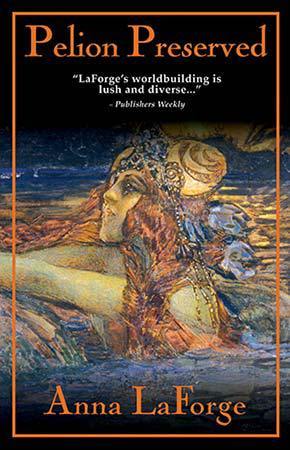
The Marcella Fragment, the first book in her Maze series was published in June 2012. The second book of the series, Agave Revealed, followed in June 2013. Book three of the series, Pelion Preserved was published in January, 2016.
What’s the name of the book you’re here to talk about?
Pelion Preserved, Book Three of the Maze trilogy
Tell us a bit about your book
For generations Pelion has been a city of rumour across the land, guarded and hidden behind its walls. Yet for the last hundred years, Pelion has opened its gates to seekers from foreign realms, returning those transformed by the Gift of the Sowers to use their new skills in towns, villages, and scattered settlements spread across a vast, empty continent. Not all transformations are successful ones. Still, the Nineteenth Mother of Pelion perseveres in keeping the promise of the Sowers—aliens who had seeded this world with the remnants of a ravaged and broken Earth—a promise of human enlightenment and a world reborn.
If the Mother’s design–-to bring together a scarred prince (Sandur of Endlin) and a blind bard (Alyssa of Cinthea)-–should succeed, it would prove that the Gift can be received by all and that out of tragedy and failure, hope can be reborn. For in that hope lies the critical balance of whether Pelion will turn from its path and preserve only the prejudice of the past or embrace the preservation of a promise for the rest of the undiscovered world …
How important are character names to you in your books? Is there a special meaning to any of the names?
Reddin, a healer of Pelion, has the most grounded name of all my characters since it comes from an old Quaker verb– “redd”– which means to clean or straighten up. It came to me because I knew his mate, Alyssa of Agave, was going to be a hellion, a little bit of chaos with whom he would have to cope in order for them to survive in Agave Revealed, Book Two of the Maze series.
Give us an insight into your main character. What makes them unique?
I suppose Alyssa, a bard of Cinthea, is unique in that she is blind, although not blind from birth. A childhood fever took away her sight, but she has a distinct skill, storytelling, and her training as a bard give her status in her homeland and other lands as well. Sandur has been abused by his father and has never experienced real friendship with anyone until he meets a blind woman in a cell in the Maze. That meeting begins their great adventure in Pelion Preserved.
What do you consider to be your best accomplishment?
My trilogy was designed as one complete entity, taking the reader over the course of a century, each book separate and standing on its own, but always working toward the thesis that the new Earth will not be destroyed as the old Earth was. Another accomplishment is that while two people, male and female, live at the centre of each book, neither one is the protagonist. All three books pass the Bechdel test–women have conversations that do not focus on their relationships with males. The women who serve as The Mothers of Pelion, are, in fact, the most active and powerful persons in the entire series–young, old, lame, thin, and well-padded, they move the story forward. There are wonderful male characters to be found here–mute Stanis and Tyre’s mentor, Beal–to name two characters from The Marcella Fragment, Book One of the Maze trilogy.
Do you have a favourite conference / convention that you like to attend? What is it?
Without a doubt, it is WisCon. I participated in 2014 and was fascinated by the number and quality of the authors they featured. I’ve been to others, LunaCon and Baycon, but WisCon is a memory that will never fade, including the excellence of those Wisconsin cheese curds!
Is there a certain type of scene that’s harder for you to write than others?
The big public scenes are the hardest to write. For me, nothing compares to the difficulty of portraying a large crowd in action. The Equerry Court scenes that come at the end of Pelion Preserved were especially difficult since they include actual legal procedures and points of law.
The first meetings of potential lovers are not difficult so much as they are challenging. How can I avoid cliché? How will the way the lovers begin determine the way their lives together will progress?
What are you working on now?
Funny that you ask. It’s about six months since Pelion Preserved was published and I’ve just started thinking about the next phase, which will include the return of the Sowers. It has to happen, I think, and another five hundred years must pass so we can see how things have progressed. (Or not.)
Do you have any unique or quirky writing habits?
I learned long ago to write, write, write, spewing words everywhere, not thinking about making perfect sentences, focusing on the five senses, until, finally, it’s time to take a break. After I’ve walked around a bit, sipped some tea, and changed the CD, I come back and begin by giving a thorough editing job to everything I’ve written. I could never write a perfect sentence first time out of the gate. But give me some time to reflect, and I just might be capable of writing one.
Describe what your ideal writing space looks like.
It’s midnight in the city. Traffic is quiet; people converse out on the street, but their words aren’t distinct. My desk is organized, the room is clean, and WQXR plays quietly in the background. The lamp is lit, the computer purrs, and I begin …
Where can readers go to discover more about you and your books?
Website | Blog | Facebook | Twitter | Amazon Author Page | Goodreads
Pelion Preserved is out now!
Available formats: ebook, paperback
The post An Interview with Author Anna LaForge appeared first on Melanie Tomlin.
September 19, 2016
An Interview with Author John Triptych
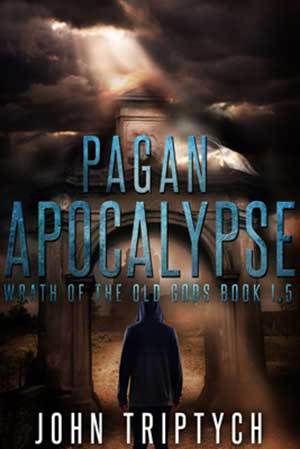
Author John Triptych, a man with a variety of interests, joins me today to talk about Pagan Apocalypse. Those are two words — Pagan Apocalypse — were certainly enough to pique my curiosity. Thank you, John, for taking the time to chat to me. Please sit down, get comfortable and let’s begin.
About John Triptych
A former fanfiction writer turned self-publishing novelist, John Triptych’s varied interests include: reading other people’s books, recreational diving, watching movies and TV, guns, internet, politics, computer and tabletop gaming, cooking, art, architecture, wines, spirits, beer, history and travel.
What’s the name of the book you’d like to tell us about?
Pagan Apocalypse
Tell us a bit about your book
Steve Symonds is just a typical 13-year old boy living in London. His main interests revolve around videogames, the internet, inline skating, and annoying his friends and family. But when the ancient gods of myth and legend suddenly appear out of nowhere and begin to cause havoc all over the world, Steve must find the strength and courage within himself in order to survive and ultimately prevail against a monstrous, supernatural tide of chaos that threatens all of humanity.
How important are character names to you in your books? Is there a special meaning to any of the names?
Many characters are names of people I knew in real life, but with a few tweaks here and there so that they don’t sue me!
Give us an insight into your main character. What makes them unique?
Well, Steve Symonds is a young boy from London. The story is really about his evolution from a self-centred lad to that of a hero who saves the world, so to speak. Steve doesn’t have any super powers, rather he uses his wits and iron determination to succeed against impossible odds. The fact that he has a good friend who helps him out is also helpful.
What writing advice do you have for aspiring authors?
It’s a marathon, not a race! If you want to be successful in this, you must not give up and be ready to constantly try new things to not just improve your writing, but you must also learn the craft of marketing. You need to treat it as a business, which means that you have to learn ways to sell your work in order for people to find out about it.
Do you read reviews of your book(s)? Do you respond to them, good or bad? How do you deal with the bad?
I do occasionally read reviews and I do get bad ones. The one thing an author must never do is to respond to reviews. If I get bad reviews, then I take it as a learning experience and hopefully find ways to improve when writing future novels. The one thing I truly believe is that not everyone will like my books, so I just let it go at that and move on.
What is your best marketing tip?
Have a mailing list. The best way to reach fans of your work is to email them directly on news of your latest releases. The best-selling indie authors have them and use them to drive their book sales up at the time of release.
What is your least favourite part of the writing / publishing process?
The editing phase. When you have to read through your work over and over again to make sure you correct any minor mistakes or typos in order to get everything right. I have a professional editor, but even top editors may miss a misspelling or a typo once in awhile.
Is there a certain type of scene that’s harder for you to write than others?
Death scenes of main characters. A number of important characters in my books do die, and it is important for me to make it as meaningful as possible. I don’t like to write death scenes, but they are an important part of the drama in the story. Without death and sacrifice, events in the plot lose their importance.
How long does it usually take you to write the first draft of a book?
An average of about two months. I’m currently a full-time writer so I can devote at least 3-4 hours per day on writing. I write an average of about 3,000 words per day and take weekends off to recharge my creative batteries. I don’t follow an outline so I tend to just wing it as I go along. The hardest part is writing the beginning, but once I’ve established the setting and the main character, they begin to write themselves.
What are you working on now?
A brand new series set millions of years in the future. It’s a dystopian science fiction trilogy that focuses on a very powerful female character. The story is a complete world building exercise, right from the start. I’ve created new species of animals, places, myths and cultures from scratch. I am very excited for it and I hope it sells well so I can write more books on it. Think Star Wars, but with no spaceships!
Do you have any unique or quirky writing habits?
I’m a two-finger typist! I never learned how to type properly so I have to look at the keyboard every time I write. I make plenty of mistakes so I use the delete and backspace key all the time! Unlike most other authors I keep the internet on when I write because I tend to stop in the middle of a writing session in order to do some research. Yes, I’m weird!
Why should a potential reader buy your book(s)?
If readers are tired of the usual genre books and would like to try something different, then please check out my catalogue! My works are an unusual mix of genres. For example, my post-apocalyptic books deal with pagan gods returning to earth- while the usual books in that genre deal with zombies, vampires, pandemics, natural and man-made disasters and preppers. I try to make my stories as entertaining as possible, yet filled with information that readers would learn about. I have had a few fans email me that they were able to learn something new just from reading my books.
What’s the strangest thing you have ever had to research for your book?
Whether a harpoon gun could be mounted on a riverboat and what type!
What’s the best thing about being an indie author?
Being able to get up in the morning and doing what you love to do, which is writing. I love the freedom of being able to write about what I want, without someone telling me whether it’s going to be sellable or not. I have absolute control over how my book is published as well as choosing the cover art for it. So the two best aspects is really the freedom and the control that you have over not just your work, but your life.
Where can readers go to discover more about you and your books?
Blog | Facebook | Twitter | Pinterest | Amazon Author Page | Smashwords | Goodreads
Pagan Apocalypse is out now!
Available formats: ebook and paperback
The post An Interview with Author John Triptych appeared first on Melanie Tomlin.
September 12, 2016
An Interview with Author Percival Constantine
Joining me today from Kagoshima Prefecture in Japan is author Percival Constantine, and he’s here to talk about The Lost Continent. Thank you, Percival, for taking the time to chat to me. Please sit down, get comfortable and let’s begin.
 About Percival Constantine
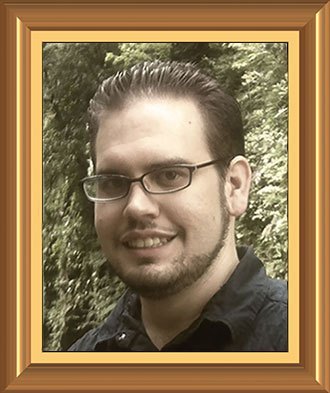
Born and raised in the Chicagoland area, Percival Constantine grew up on a fairly consistent diet of superhero comics, action movies, video games, and TV shows. At the age of ten, he first began writing and has never really stopped.
Percival has been working in publishing since 2005 in various capacities—author, editor, formatter, letterer—and has written books, short stories, comics, and more. He has a Bachelor of Arts in English and Mass Media from Northeastern Illinois University and a Master of Arts in English and Screenwriting from Southern New Hampshire University.
Currently, Percival lives in Japan’s Kagoshima prefecture, where he works as a literature and writing instructor at the Minami Academy. He is also a contributing writer for WhatCulture, Taiken Japan, and Creators.co.
What’s the name of the book you’d like to talk about?
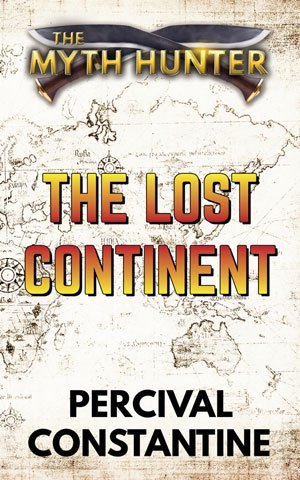
The Lost Continent
Tell us a bit about your book
Elisa Hill is a myth hunter, an adventurer who seeks out the truth behind the legends of the past, and it’s a job she was born into. Her parents were myth hunters as well and the one legend they could never prove was the myth of the lost continent of Lemuria. Now Elisa has the opportunity to finish the work her parents began. But the secrets of this lost civilization hold great value for a sinister secret society and a ruthless assassin, and both will stop at nothing—not even murder—to gain their prize. Elisa must rely on friends and unlikely allies in order to make it to the lost continent. Because if she fails, those same secrets could spell doom for mankind!
If there was a film or TV adaptation of your book, who would you like to see play your characters?
That’s a good question. For Elisa, I often thought about who might be able to play her in a movie or TV show, but I couldn’t really settle on anyone who I felt really fit the character. Then I watched a TV series called Dark Matter and I think Melissa O’Neil would be perfect in the role. Asami, who is a major character throughout the series, was inspired by Japanese actress Eihi Shiina. So she’s still who I’d want to see in the role. Max Finch, Elisa’s mentor, is Morgan Freeman all over. Lucas Davalos, who’s a scoundrel in the series and is a sometimes-enemy, sometimes-ally, I see as sort of a Matthew McConaughey-type. Wade, who is the representative we meet of the organization called The Order, would probably fit Danny DeVito like a glove. And as for Seth, the main villain of the first book, probably Benedict Cumberbatch.
How important are character names to you in your books? Is there a special meaning to any of the names?
It depends on the character. Sometimes there’s an important reason why I pick a name, other times I’ll just choose something from a name generator. In the case of Elisa, I took her first name from a friend of mine from high school. I just really liked the way the name rolled off the tongue and thought it would be great for a character.
Give us an insight into your main character. What makes them unique?
Elisa is kind of a walking contradiction. She was raised by myth hunters who tried to instill the importance of their work into her, but then she took all that training and education and used it for personal profit when she was a young woman. Now she’s come around to her parents’ way of thinking, their deaths having shocked her into realization. But she still has that adrenaline junkie inside of her and she still has a bit of that rash attitude that she had before. There’s a part of her that still desires that life she used to have, a time when her and Lucas were partners and indebted to no one but themselves. And whenever their paths cross, Elisa’s reminded of those feelings like a punch in the gut.
Where do your ideas come from?
No specific place. I get ideas from all over the place. Books and movies—both fiction and non-fiction—are big sources of ideas for me. Other times it will be things I see around me or just going down the rabbit hole on Wikipedia.
What do you think about trailers for books? Do you have a trailer or do you intend to create one for your own book?
I think they look pretty snazzy, but I’m not sure if they’re actually useful for selling books. If you don’t mind the high price-tag, or if you have the equipment and skill to create one yourself, then go for it. I’ve seen some that look really great but I’ve seen others that look really amateurish. But I haven’t seen any proof that they’re anything other than a large investment of time and/or money that doesn’t really pay off in the end. It seems they could be useful with ads. Facebook allows video ads and you can post ads on your Amazon author page. YouTube advertising might change the game with these completely.
I don’t have any trailers, but I have done some film editing work and have played around with Adobe After Effects some. I’ve considered doing a trailer, but it’s hard to find the right way to convert your book into a trailer.
What do you consider to be your best accomplishment?
Sticking with this writing thing, I guess. I was always told writing was a pipe dream, but now I’ve been writing and publishing for almost ten years. And each year, I get a little bit better at it. I’ve gone from making one figure a month to two to three, so that’s something. I’m still not where I want to be, but I think I’ll get there.
Where do you see yourself in 10 years?
Ideally, my wife and I would be living in Hawaii and I’d be able to work completely from home. Maybe not making all my income solely from writing, but at the very least a good chunk of it. I’m a teacher as well and I’d love to continue teaching, hopefully adjunct courses online, preferably in film or creative writing.
Have you always liked to write?
Absolutely, for as long as I can remember. When I was in elementary school, I used to fill up spiral-bound notebooks from cover to cover with awful stories and bad fanfic. That shifted to computer and the Internet in junior high and high school, where I joined up with a fanfic community and wrote like a madman.
What writing advice do you have for aspiring authors?
There are two types of aspiring writers—those who talk about writing and those who write. If you’re someone who just likes talking about writing, then maybe take stock of what you’re doing. But if you’re someone who actually writes, then keep at it. Finish that first book, put it aside, and start the next book. If you haven’t decided on traditional or self-publishing, really study the two routes and make a decision that’s right for you. Do your research (something I didn’t do when I got started and caused me to miss out on a lot of opportunities) and keep at it.
If you didn’t like writing books, or weren’t any good at it, what would you like to do for a living?
My current day job is teaching literature and I enjoy that. So I would probably just focus on that.
Do you read reviews of your book(s)? Do you respond to them, good or bad? How do you deal with the bad?
Oh yeah, I read them. If a reader personally emails me a review of a book, I’ll respond with a simple thanks. But reviews on Amazon or Goodreads? I don’t respond to those. Regardless of the tone of my response, I don’t think any benefit can come from it. When I read a bad review, it depends on what they’re saying. If the review shows that the reader doesn’t like the genre, then I’m not going to worry about those (although I’ll double-check to make sure I’m not miscategorized somewhere). If a review is just pure spite, then I definitely don’t worry about those. Where a reviewer has some legitimate criticism about the book, then I’ll think about it. I won’t go back and alter the book because I don’t believe in changing past books (with the exception of fixing technical issues). But I will keep that in mind going forward when I write my next book.
What is your best marketing tip?
Yikes, I wish I knew. When it comes to marketing, I feel like I’m drunk and stumbling through a dark room. But I guess I’d say have a good website. Not Facebook, not your Amazon page, not yourname.freehostingsite.com, but yourname.com. Make sure it’s clean and easy to use. Your website should make it clear who you are, what books you have out (and where those books can be purchased), and have an easy sign-up process for your mailing list.
What is your least favourite part of the writing / publishing process?
The middle part of the book. That’s when I start to get second thoughts about it every single time and want to pull my hair out.
Is there one subject you would never write about as an author? What is it?
I always say never say never. But I don’t see myself writing anything in romance or erotica. They’re just not genres that appeal to me as a reader so I doubt I could do them justice as a writer.
Do you have a favourite conference / convention that you like to attend? What is it?
I’ve only been to the Japan Writers Conference and it’s been fun, but there’s an extremely small genre fiction presence and an even smaller self-publishing presence. I’m planning to move back to America in the near future so once I’m settled in, I plan to start attending some other conferences. I’d really like to go to the Smarter Artist Summit and the Windy City Pulp and Paper Convention. And some other ones, too.
Is there a certain type of scene that’s harder for you to write than others?
I don’t think I’ve ever written a sex scene, but I imagine that’d be the one that’s difficult for me to write.
How long does it usually take you to write the first draft of a book?
Depends on the length, usually about a month or so.
What are you working on now?
I am planning a new series and hopefully I’ll be writing it by the time this interview goes live. It’s a mystery/crime series focused on a female private investigator operating in modern-day Japan. The first book will be called Idol Threat. I’m pretty excited about this book.
Do you have any unique or quirky writing habits?
Nothing too quirky. My schedule is to wake up, putz around on the Internet checking email for half an hour to an hour, then I shower, pour some coffee, and get started. I write in twenty-minute sprints so I’ll turn on an 8tracks.com playlist that fits the genre I’m writing in, turn on Freedom for twenty minutes to block social media and email, and then go until the timer rings. I’ll take a 5-10 minute break, then start my next sprint. I do three sprints a day and that gets me about 2000 words, give or take.
How has your environment or upbringing impacted your writing?
My childhood home was a bit secluded. There weren’t other kids around us so I spent a lot of time in my room. I watched a lot of movies, TV shows, played a lot of video games, and read a lot of comic books. All that contributed to my desire to create stories, I think.
Describe what your ideal writing space looks like.
I’d really like an L-shaped desk. Right now I struggle for real estate on my desk and I’d like to have two separate areas. Computer on one side, paper on the other. I also want to get a desktop computer once I settle down in the States, something like the Mac Pro that has a lot more power than my little MacBook Air.
Why should a potential reader buy your book(s)?
If you enjoy action-packed stories with great characters and a fun read, you’d be a fool not to give them a shot. You can even get the first book in each of my series free if you sign up for my mailing list.
What’s the strangest thing you have ever had to research for your book?
Three words: Nazi death cult.
What’s something you’re really good at that few people know about?
I’ve been told I’m a really good cook.
What’s an interesting fact about your book?
Lemuria, the lost continent featured in the book, is based on a mixture of legends. A big focus of the plot is James Churchward and tablets that explain the existence of Lemuria. There’s a scene later on in the book that takes place at the Yonaguni Monument, which are underwater ruins. All of this is based on fact…well, sort of. James Churchward was a real person who talked about being shown tablets in India that explain the history of an ancient society that lived on a continent called Mu and he wrote down his findings in a book called Mu, The Motherhood of Man. And the Yonaguni Monument is a real thing off the coast of Japan. There are structures beneath the water there that some believe are too precise to be natural and so they must be remnants of Lemuria/Mu.
Of course, all that’s pseudo-science without much basis in reality. But for the stuff of fiction, it’s perfect.
Why did you choose to write in your genre? If you write in more than one, how do you balance them?
I wanted to write something pulpy along the lines of Indiana Jones or Tomb Raider. At the moment I write in more than one and how I balance them is I alternate series. So if I write a Myth Hunter book this month then next month, I’ll do Vanguard.
Where did your love of books come from?
It started with comic books. From there, I eventually branched into reading prose and I love both.
How long have you been writing?
For as long as I can remember.
What advice would you give to your younger self?
Do your research, write more often, and start a mailing list earlier.
What would the main character in your book have to say about you?
She’d probably cut my throat for all the crap I’ve put her through.
Do you have a day job in addition to being a writer? If so, what do you do during the day?
Yeah, I do a few different things. My main day job is teaching Japanese literature at an English-language academy here in Kagoshima. I also teach some business English classes at a nearby company. And I provide author services. I do editing and design work through Larks and Katydids and I do some freelance design for Pro Se Productions, too.
Of all the characters you have created, which is your favourite and why?
That’s kind of like asking a parent to pick their favorite child, isn’t it? I don’t know I could do it. Elisa’s always got a soft spot for me. She was one of the first characters I created (albeit in a very different form originally).
Are your characters based on real people, are they imaginary or a combination of both?
Combination. I take aspects of people I’ve met in real life or characters in movies or TV shows and mix and match them together.
When you’re writing, do you listen to music or do you need silence?
I have to have something in the background. I save playlists on 8tracks.com that are composed of movie soundtracks focused around genres I write in and I’ll queue up one of those before I get started.
Who are your favourite authors, and why?
Grant Morrison is definitely up there. He’s got the love of the classic superhero stuff that I do and he also adds in so much originality and creativity to it. Kurt Vonnegut I love for his humor and satire, although his stuff is very different from what I write. Elmore Leonard is a master of dialogue.
If you’re an indie author, what’s the best thing about being an indie author?
Freedom. I can work on what I want when I want. If I want to schedule a price promotion or a giveaway for one of my books, I can just do it. I don’t need to ask for permission. If I’m not happy with my covers, I can change them, it doesn’t have to go through approval. If I want to try and get my books in another format, I don’t need to check with my agent to see if I still have those rights.
What do you find most challenging about writing?
Marketing, hands down. It changes so much and it’s really tough to keep up, especially when there are so many people who clearly know what they’re doing and I’m fumbling around.
Where can readers go to discover more about you and your books?
Website | Facebook | Twitter | Amazon Author Page | Goodreads
The Lost Continent is out now!
Available formats: ebook, paperback and audiobook
The post An Interview with Author Percival Constantine appeared first on Melanie Tomlin.
September 5, 2016
An Interview with Author Michael Chatfield
Author and Infanteer Michael Chatfield joins me to talk about ‘Sacremon’, the first book in his ‘Harmony War’ series. Thank you, Michael, for taking the time to chat to me. Please sit down, get comfortable and let’s begin.
About Michael Chatfield
Having spent the majority of his childhood jumping from country to country with his mother, Michael Chatfield now travels the world searching for inspiration. He calls Canada home, for now, but regularly bounces across the pond to his true home, the UK. Michael pays the bills as an Infanteer in the Canadian military.
What’s the name of your new book?
Sacremon The Harmony War Series
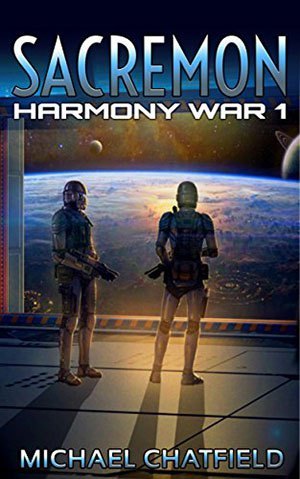
Tell us a bit about your book
The corporations control everything—from Earth’s government, to the colonies they use as factories.
Though not everything runs as smoothly as the corporations want. People will always want to rebel against low wages and poor conditions.
The corporations turned to the slum dwellers of Earth that lay beneath their mega-towers and stations to restore their order to the colonies. These slum dwellers made up Earth’s Military Forces or EMF.
Mark Victor and his brother Tyler’s recorded birth say that they are now old enough to join the EMF, leaving the slums and their gang behind. The EMF offers education, medical care, food whenever they want it and real pay. There’s even a chance they might get a pension at 40 years service!
So what if they have to put down a few rebellions, they survived the slums of Earth. Nothing could be as bad as the slums, right?
They’ll find out when they get to their first colony—Sacremon.
How important are character names to you in your books? Is there a special meaning to any of the names?
With most, there’s not really any special meaning. Code names used by Mark and Tyler are a fun little play on their appearances and actions.
I think the only character that has a special connection to their name is Salchar in the Free Fleet.
While he’s the commander of the Free Fleet, he’s Salchar – he’s a leader, and the man who will take anything on to deal with the threats against his people.
In private, he’s James Cook – a dude that’s scared about what his actions will do. Earth always attacks Salchar to demean him. On Asul, they name the lake after his real name. They care about the man, not just the legend.
Salchar is more than a man, he’s a symbol. Yet behind it is James Cook. It’s an interesting cross-over between the two.
Where do your ideas come from?
Good question. My best answer would be, I don’t really know. Some have come from dreams. Others were inspired by other books, some by video games, movies and television. In the end, some character pops into my head. I start to understand their motivations, and what they would do in certain situations. Then I start testing them.
I never have all my ideas nailed down as I start a book – I just have characters in my head, and some kind of situation going on. The situation might change, characters might crop up, and I test my character. I see what happens as they grow. They might do something really unexpected.
Situations and scenes can come from a variety of places. But as for the characters, I honestly don’t know how or where they got into my head.
Do you read reviews of your book(s)? Do you respond to them, good or bad? How do you deal with the bad?
Yes! The first thing and last thing I do in the day (and quite a few times during the day) I check the various sites where people can leave reviews on . I don’t respond to them directly, but I’ll leave with a big smile on my face and a thought in my head, most times.
Bad reviews aren’t necessary bad, they’re showing how I can improve, or what they want to read. ANY reviews are good in my mind, and I know how that sounds cliche. The thing is that art, any art always has room for improvement, otherwise there would just be one book on every subject. Bad reviews can lead me to new ideas, or remind me of what I messed up.
I ask all readers to review. I want to know what they thought of the book, what scenes were the favorite, why? Because I want to make a good book that they enjoy, if only I like it then I messed up somewhere.
Do you have a favourite conference / convention that you like to attend? What is it?
NanoWrimo, also known as National November Writing Month. It was the thing that started my writing, and kicked my ass to not only start a book – but to finish it.
I write in every November, April and July when they hold writing contests. I find it’s great for all writers – whether they’re writing for themselves, others or the market. The community is great fun, and everyone pushes one another to reach their goals.
Is there a certain type of scene that’s harder for you to write than others?
The death of a character is definitely the hardest. I have to write the entire scene in one go, or else I’m going to try and keep them alive.
When someone who I have created, watched grow – and knew better than themselves – passes away, it is one of the most draining scenes to write. In military science fiction, people die a lot. It’s unfortunate, but if they didn’t, then I wouldn’t be doing the work justice. With writing Sacremon, I finished the book and took the night off thinking about the characters that had died. I really liked those characters, and now they were gone.
What are you working on now?
Right now I’m working on The Harmony War Series. It follows Mark Victor and his brother, Tyler. Born and raised in the slums of Earth, they learned how to look out for one another from an early age. The only way to get out of the slums is to die, or become a trooper for Earth’s Military Forces. They didn’t die in the slums, and nothing could be as hard as that, right?
Why should a potential reader buy your book(s)?
The characters, ‘cause I sure as heck ain’t controlling them! I like the stories for the characters. There is a lot of action, and the situations the characters get into are hectic. There is a lot that happens in the book, and it makes sense because I don’t honestly know what’s going to happen until it does. Now this is hard science fiction, as the action is realistic. So are the mechanics I use in my stories. All of the machinery, weapons, space-drives, and distances are based on fact or theories. So this stuff could actually be reality one day – which I find mind boggling, and awesome!
What’s the strangest thing you have ever had to research for your book?
I’ve gone from waste disposal systems, to railguns, to space drives, to bugging my more mathematically-inclined friends to figure out how long it would take to travel between various star-systems. Then, I wrap my head around time-dilation… I’m always looking for new information as I work.
My latest thing is looking at anti-matter theories and playing around with an anti-matter calculator. Edward Muller has a very nice calculator which weighs anti-matter and converts it into the correlating yields if it became unstable. It’s scary as all hell – especially when they’re compared to nuclear bombs and natural disasters.
What’s an interesting fact about your book?
The series I’m currently working on (The Harmony War Series) originally started six years ago. We were supposed to meet Mark at a much later time in his life. It was going to be my debut series, but then I accidentally put my fingers to the keyboard and the Free Fleet series was born. As Free Fleet came to a close, I went back and looked at my project document and good ole Mark asked me, “So we gonna get this thing started or what?” He was sitting there in a lounge chair, Sex on the Beach in hand, cigar in his mouth and catching a tan. Bugger didn’t even look up. I couldn’t very well let him hang out on that lounge chair. So I thought about re-writing his story later in life, and dismissed the idea. I wanted to see how Mark got to that point, and I thought people would like to see too. So Sacremon was born. Also, the star systems used in the Harmony War Series are all real, and they’re possibly habitable. Maybe one day, someone will visit system Lacaille 8760 and if they were to name it Sacremon… well that would be pretty cool!
When you’re writing, do you listen to music or do you need silence?
Music – a lot of it. The two things I never close are YouTube, and my emails. If by some chance the music and the scene match up, magic happens. There’s nothing quite like having an action scene going on, and there’s a powerful orchestra going on in the background.
What do you find most challenging about writing?
Starting those first few words, sentence or paragraph is always the hardest. If it’s the sequel of another book, it’s even harder. It’s like I’ve had a really good meal, and the next day all I want is to go back to that really good meal. But instead, I’m stuck with a sandwich. Though once I get writing, well, there’s nothing quite like it. The characters stretch themselves out, crack their knuckles, and cross their arms – as if they’re asking me what the hell I’m going to put them through now. After that first day I don’t feel like sitting back, drinking my coffee, and looking at the page with pride. I’m already thinking of the next scene, what’s going on with both sides, and what my characters might do. I think that’s the most exciting thing – when you sit back from the page, big ole grin on your face, and look to your characters. They’re smiling as well – as if asking what the hell took me so long to get over that first book, and get on with the second one already. They need a new adventure dammit!
Where can readers go to discover more about you and your books?
Website | Facebook | Twitter | Amazon Author Page | Goodreads
Sacremon The Harmony War Series is out now!
Available formats: ebook and paperback
The post An Interview with Author Michael Chatfield appeared first on Melanie Tomlin.