
Emily Conrad's Blog, page 8
August 31, 2017
Overcoming Perfectionism One Blog Post at a Time
by Emily Conrad

I killed a blog post today, and not in a good way.
I had a first draft written before 10 AM, but then the self-doubt kicked in. I talked the post through with someone and then tried to apply some ideas from our conversation. And then I tweaked some more. And then some more.
The post fell apart, a mess of disconnected parts. I no longer have the initial version of it, which I think may have been the strongest of any of them. With some reconstructive surgery, the post could be presentable in the future, but in the meantime, I thought I'd take this as an opportunity to talk about something I've been thinking about anyway: self-doubt.
Read more »

I killed a blog post today, and not in a good way.
I had a first draft written before 10 AM, but then the self-doubt kicked in. I talked the post through with someone and then tried to apply some ideas from our conversation. And then I tweaked some more. And then some more.
The post fell apart, a mess of disconnected parts. I no longer have the initial version of it, which I think may have been the strongest of any of them. With some reconstructive surgery, the post could be presentable in the future, but in the meantime, I thought I'd take this as an opportunity to talk about something I've been thinking about anyway: self-doubt.
Read more »


August 29, 2017
Sparrows and Hope in Sorrow
by Emily Conrad
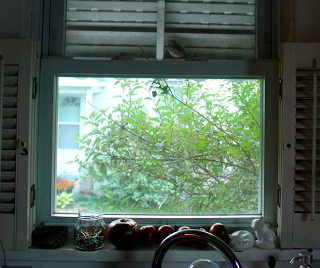
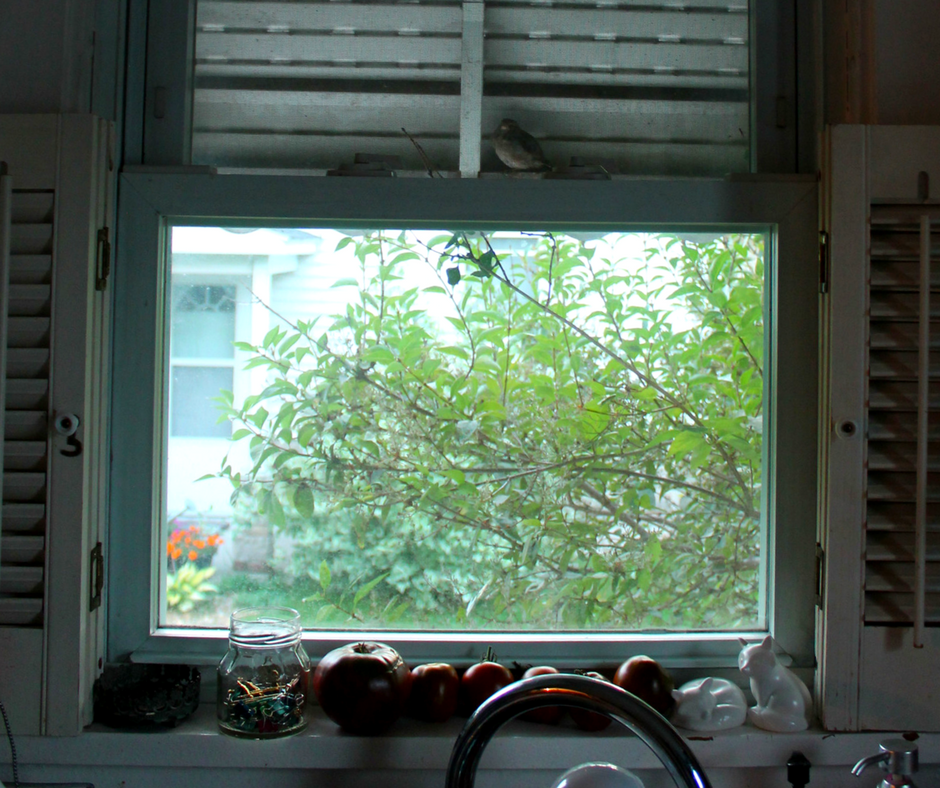
One of my kitchen windows is shaded by a metal awning. Birds have been interested in that awning before—some almost made a nest there, in fact—but only recently have we had a regular trio of sparrows bed down there each night.
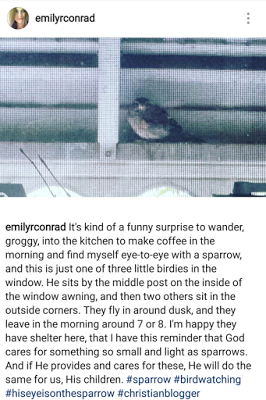
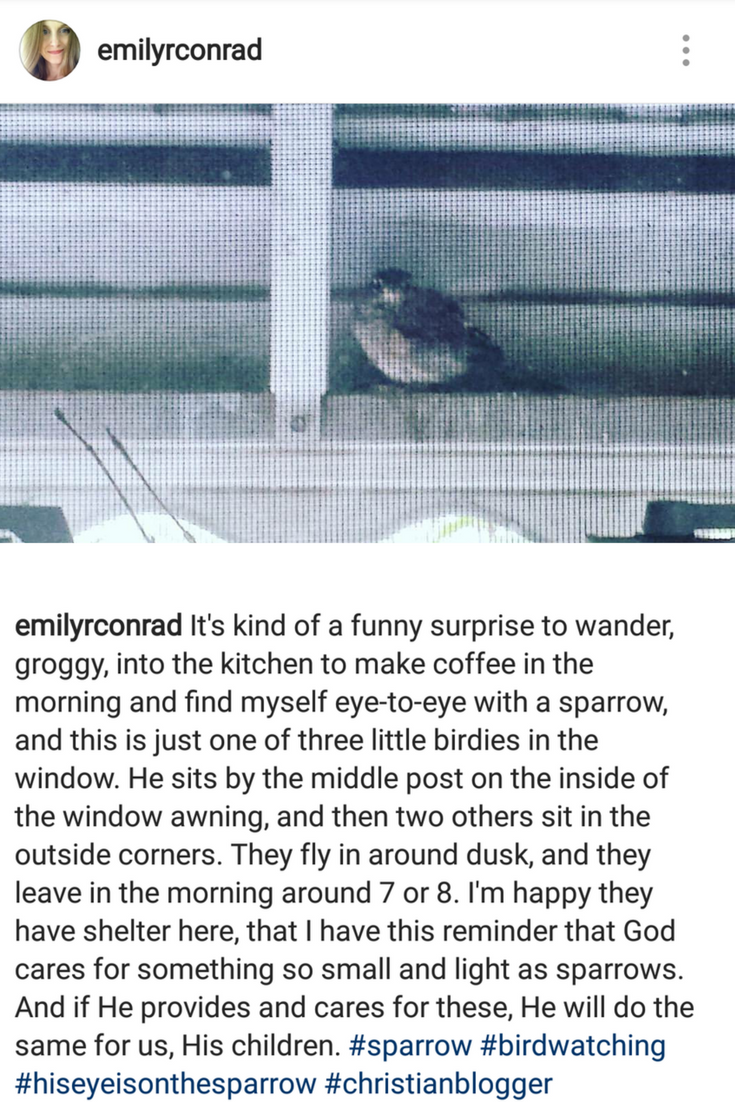
I like birds, and it’s kind of cool to see them tucked in for the night up close, so I posted a picture of one of the sparrows to Instagram and Facebook. For the sake of encouragement and trying to offer some comfort to anyone who might need it, I made a vague reference to Matthew 10:29-31, and said the sparrows were a reminder that God cares for us.
At that point, I knew I needed to write a blog post for you, but I didn’t think that should be it. I didn’t have other ideas though, so I let my current work-in-progress distract me from writing to you.
It was after five PM when I resorted to my document of blog post scraps, and half an hour later, a post shaped up to share with you. Perfect? No, but none of my posts are. At least I had a plan now.
And then I got a call with bad news about someone close to me with cancer. Not the worst news. As of yet, bout describes the situation better than battle.
And yet.
I walked away from the post I had planned. I went to the grocery store for some brownie mix, not the answer to all of life’s problems, but a stalling tactic as I processed the news and wondered what to do (if anything) about the blog.
I’m sad but not devastated. I want to tell people about it, but there are some roadblocks to that, such as this person’s desire for privacy. Also, I wonder if my urge to tell people is a plea for pity. Am I just feeling sorry for myself when I’m not even the one with cancer, and the one with it is expected to be healed with surgery?
(Ironically—or perhaps Providentially—I typed that last sentence as “is expected to be healed with prayer” before catching my error. Is that an error? No. Not really. Please pray.)
I pray as I drive home from the grocery store.
I’m sad, God. I know you’re good, but I’m sad.
I’m looking for an answer to a question I haven’t asked: Is it okay for me to be sad?
The Lord is near the brokenhearted;
he delivers those who are discouraged. Psalm 34:18, NET
“Blessed are the poor in spirit, for the kingdom of heaven belongs to them.
“Blessed are those who mourn, for they will be comforted.” (Words of Jesus in Matthew 5:3-4, NET)
And so, the reply to my unasked question?
It’s okay to be sad.
I got home from the grocery store and slid my bag of groceries on the counter, no less inspired to write a blog post.
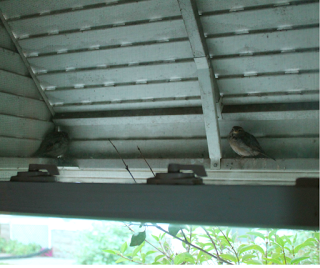
And then I lifted my eyes. The sparrows were back, nestled into the corners of the awning just five feet away from where I stood and right at eye level.
The message was clear: God cares for the sparrows, and He cares for me.
The post I did this morning with that little line of hope tacked on the end wasn’t for any of you. It was for me.
I abandoned the brownie mix. I’m throwing occasional glances into the kitchen and to the milk from my spot at the dining table. I should really put that away, but suddenly, I have something pressing to tell you:
God is near to the brokenhearted.
God answers me when I call.
Cancer, death, and everything else that stems from sin was never what He wanted for us. On our own, we’re helpless against such things.
But where we’re helpless, God has already offered a solution. He sent His son to die in our place so that, when faced with cancer, death, and the host of consequences and evil sin ushered in, we wouldn’t have to mourn like those who have no hope.
And that’s why those Bible verses that acknowledge broken hearts and mourning also speak about deliverance and comfort.
To remind me of this, God tucks in a trio of sparrows for the night right outside my window. He wants me to know—He wants you to know—He’s watching and listening.
He's active and involved.
He cares.
We are not alone in this.
Aren’t two sparrows sold for a penny? Yet not one of them falls to the ground apart from your Father’s will. Even all the hairs on your head are numbered. So do not be afraid; you are more valuable than many sparrows. Matthew 10:29-31, NET

I have something pressing to tell you: God is near to the brokenhearted. via @emilyrconrad
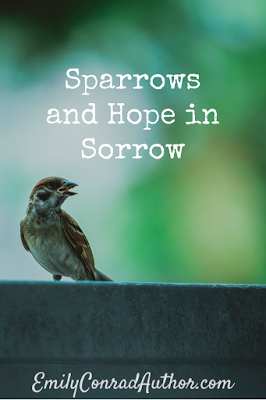
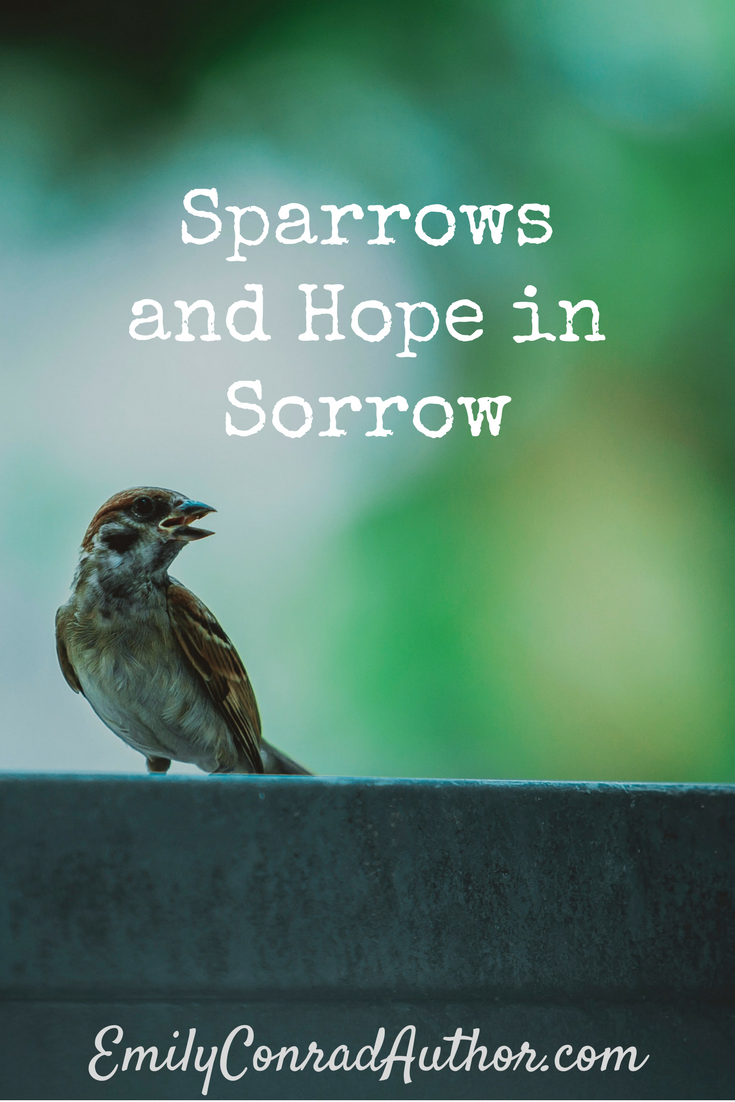
Title image: Photo by Linh Pham on Unsplash, graphic created on Canva.com
One of my kitchen windows is shaded by a metal awning. Birds have been interested in that awning before—some almost made a nest there, in fact—but only recently have we had a regular trio of sparrows bed down there each night.
I like birds, and it’s kind of cool to see them tucked in for the night up close, so I posted a picture of one of the sparrows to Instagram and Facebook. For the sake of encouragement and trying to offer some comfort to anyone who might need it, I made a vague reference to Matthew 10:29-31, and said the sparrows were a reminder that God cares for us.
At that point, I knew I needed to write a blog post for you, but I didn’t think that should be it. I didn’t have other ideas though, so I let my current work-in-progress distract me from writing to you.
It was after five PM when I resorted to my document of blog post scraps, and half an hour later, a post shaped up to share with you. Perfect? No, but none of my posts are. At least I had a plan now.
And then I got a call with bad news about someone close to me with cancer. Not the worst news. As of yet, bout describes the situation better than battle.
And yet.
I walked away from the post I had planned. I went to the grocery store for some brownie mix, not the answer to all of life’s problems, but a stalling tactic as I processed the news and wondered what to do (if anything) about the blog.
I’m sad but not devastated. I want to tell people about it, but there are some roadblocks to that, such as this person’s desire for privacy. Also, I wonder if my urge to tell people is a plea for pity. Am I just feeling sorry for myself when I’m not even the one with cancer, and the one with it is expected to be healed with surgery?
(Ironically—or perhaps Providentially—I typed that last sentence as “is expected to be healed with prayer” before catching my error. Is that an error? No. Not really. Please pray.)
I pray as I drive home from the grocery store.
I’m sad, God. I know you’re good, but I’m sad.
I’m looking for an answer to a question I haven’t asked: Is it okay for me to be sad?
The Lord is near the brokenhearted;
he delivers those who are discouraged. Psalm 34:18, NET
“Blessed are the poor in spirit, for the kingdom of heaven belongs to them.
“Blessed are those who mourn, for they will be comforted.” (Words of Jesus in Matthew 5:3-4, NET)
And so, the reply to my unasked question?
It’s okay to be sad.
I got home from the grocery store and slid my bag of groceries on the counter, no less inspired to write a blog post.
And then I lifted my eyes. The sparrows were back, nestled into the corners of the awning just five feet away from where I stood and right at eye level.
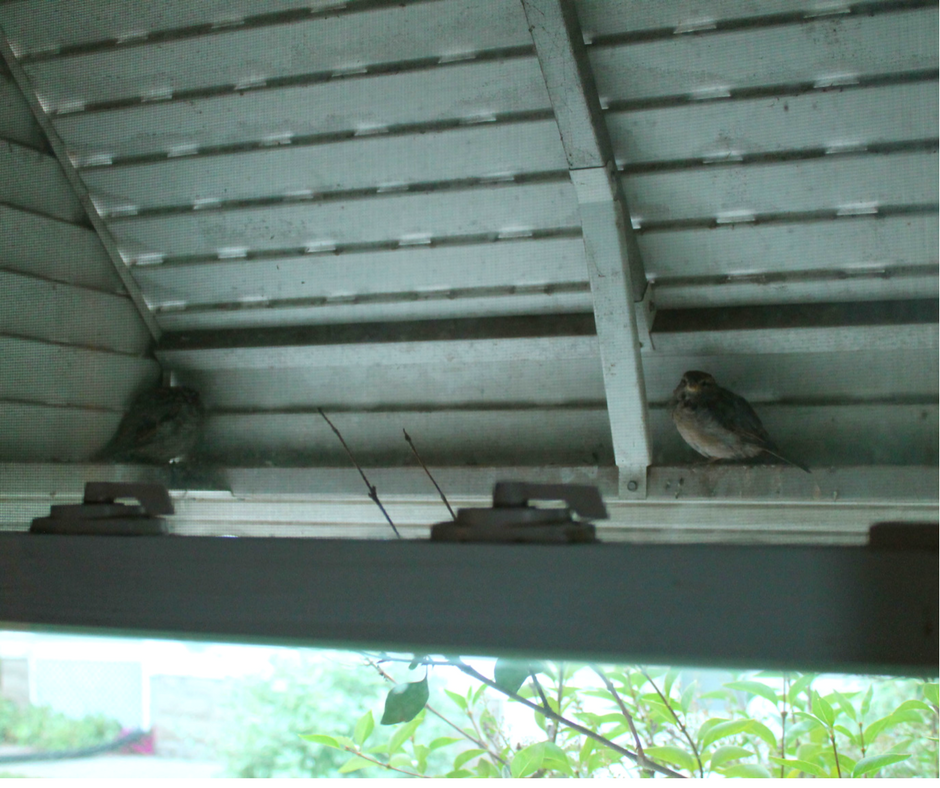
The message was clear: God cares for the sparrows, and He cares for me.
The post I did this morning with that little line of hope tacked on the end wasn’t for any of you. It was for me.
I abandoned the brownie mix. I’m throwing occasional glances into the kitchen and to the milk from my spot at the dining table. I should really put that away, but suddenly, I have something pressing to tell you:
God is near to the brokenhearted.
God answers me when I call.
Cancer, death, and everything else that stems from sin was never what He wanted for us. On our own, we’re helpless against such things.
But where we’re helpless, God has already offered a solution. He sent His son to die in our place so that, when faced with cancer, death, and the host of consequences and evil sin ushered in, we wouldn’t have to mourn like those who have no hope.
And that’s why those Bible verses that acknowledge broken hearts and mourning also speak about deliverance and comfort.
To remind me of this, God tucks in a trio of sparrows for the night right outside my window. He wants me to know—He wants you to know—He’s watching and listening.
He's active and involved.
He cares.
We are not alone in this.
Aren’t two sparrows sold for a penny? Yet not one of them falls to the ground apart from your Father’s will. Even all the hairs on your head are numbered. So do not be afraid; you are more valuable than many sparrows. Matthew 10:29-31, NET

I have something pressing to tell you: God is near to the brokenhearted. via @emilyrconrad
Title image: Photo by Linh Pham on Unsplash, graphic created on Canva.com
August 24, 2017
Learning to Hear Soul Noise
by Emily Conrad
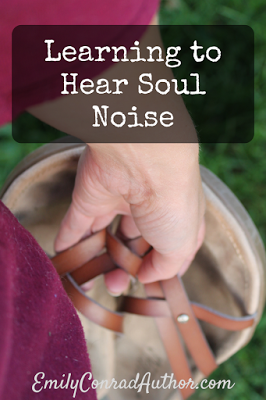
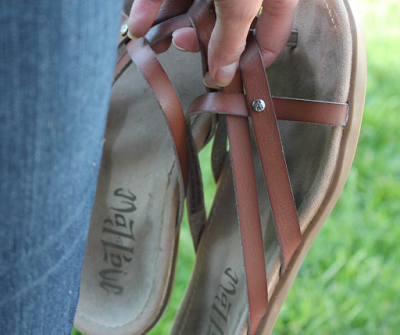
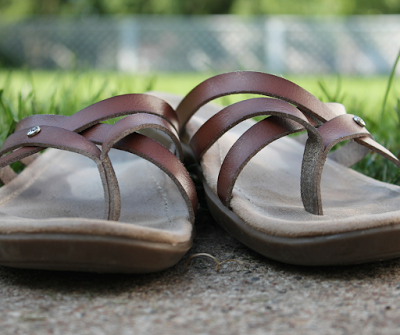
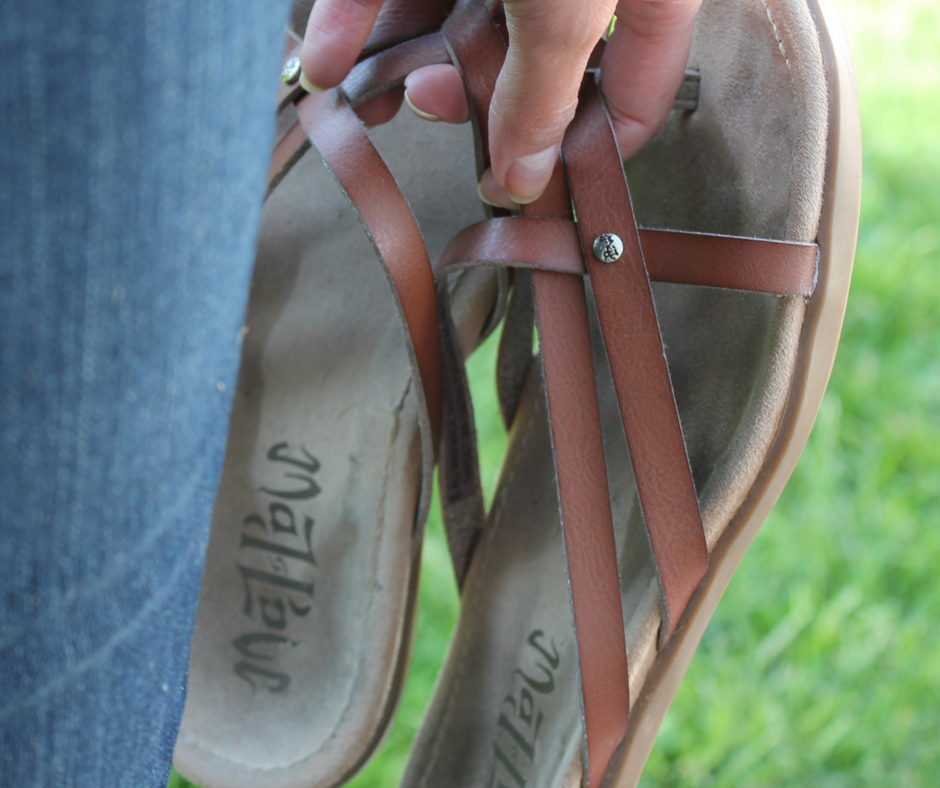
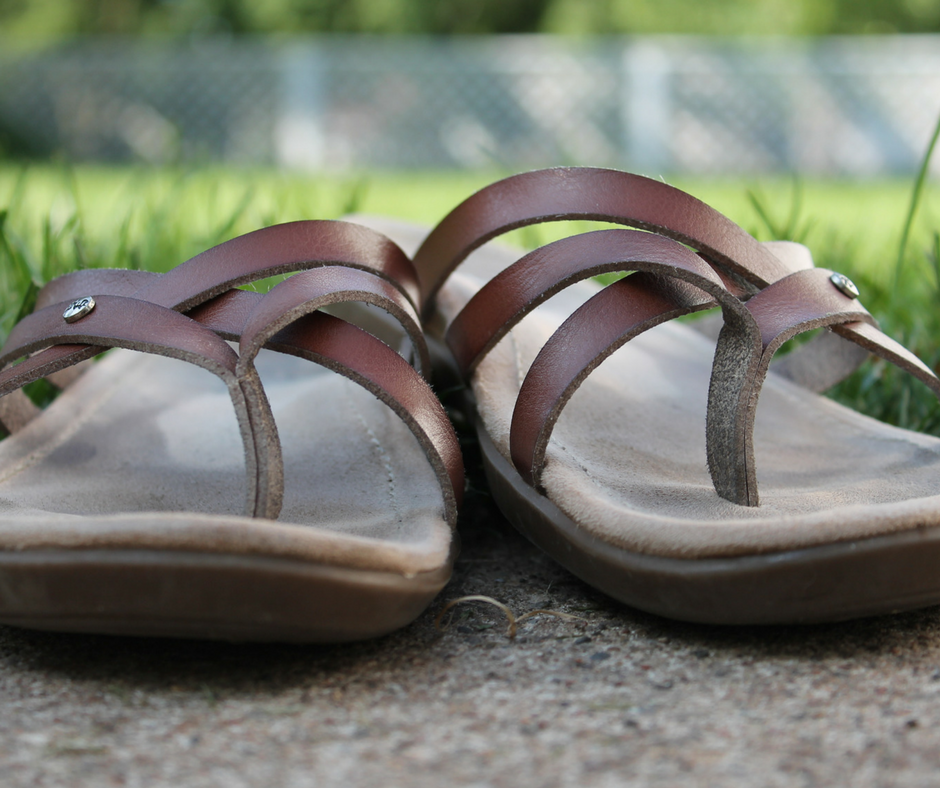
When my husband complained that my sandal was squeaking as I walked, I called him crazy.
"It's a pffft, pffft, pffft every time you step," he said. "You don't hear that?"
"No." I paced in circles around him, straining to hear. I heard the sandals hit my heel, I heard my clothes rustle. Nothing unusual. "You're hearing me walk, that's all."
"Give me your right shoe." Adam held out his hand, and I plopped the sandal into it, one hundred percent confident he would find no fault in it.
He pressed his thumbs into the bed of the sandal where my heel falls, and air hissed out.
Air! Audible air! Out of my trusted traitorous sandal!
Later that night we walked through the grocery store, and he heard it again. "You really can't hear that? It's echoing off of those boxes."
He went ahead to get what we'd come for while I paced by the boxes. Still nothing. If I could just hear it once, I thought, then I'd learn to pick out the noise. I'd start to recognize it. But my pacing was to no avail. I still can't hear it.
Adam, however, is an automotive technician. He makes a living off detecting noises and isolating their location and cause so he can fix them.
Thankfully, I can live without discerning the subtle noise of my sole. I don't need to hear it, and I don't need to fix it.
But what about the subtle noise of my soul?
As I move through life, I experience distraction, uneasiness, dissatisfaction, loneliness, guilt.
Jesus, walking next to me, says, "Can't you hear that? That's the noise of needing me."
"But, Jesus, I already have you. We spent time together this morning, remember? What you hear is just the sound of moving through life. Just part of walking in a modern world."
"No, listen," he says. "Can't you hear it echoing?"
A few weeks ago, I read a post by Betsy St Amant Haddox on ibelieve.com in which she talked about how only one thing can fulfill us: Jesus. At a breakthrough point in her struggle against trying to find fulfillment elsewhere, she determined to meet the need she heard in her emotions by going home and spending time with Jesus in prayer and reading her Bible.
At night.
That shouldn't have struck me, but it did because I read my Bible in the morning. Why had I let that habit dull my hearing to my need for Jesus at other times of day?
I was also struck by her desire to so purposefully go home and spend time with Him. Because even when I notice a need, I'll likely try quieting that noise with people or things instead of with Jesus. Yet only Jesus can quiet a soul.
And so, her example was like finally hearing a noise so I could recognize it moving forward; I had new ears to hear my own neediness.
Sure enough. My need started to echo back at me, audible when I considered my aimless social media scrolling, my habit of constantly checking email, the way I long for attention and connection.
Like when my husband pressed on my sandal, I was forced to admit Jesus was right; something was hissing. Unlike the sandal, this must be fixed.
On a night when I'd planned to read or write, I heard the noise and changed my plans. I spent time in my Bible instead, and came away with a much quieter, settled soul.
This isn't once-and-done. We must always keep our ears open to hear the sound of our soul's need, but the better trained we are to hear disquieting emotions and recognize them as our soul's plea for time with Jesus, the faster we'll set aside everything else and run to Him.
When we do that, it's like handing our car over to a master mechanic; we entrust what we could never fix on our own to the one who can hear the noise, determine exactly where it's coming from, and is willing and able to fix it.
We must always keep our ears open to hear the sound of our soul's need - via @emilyrconrad

When my husband complained that my sandal was squeaking as I walked, I called him crazy.
"It's a pffft, pffft, pffft every time you step," he said. "You don't hear that?"
"No." I paced in circles around him, straining to hear. I heard the sandals hit my heel, I heard my clothes rustle. Nothing unusual. "You're hearing me walk, that's all."
"Give me your right shoe." Adam held out his hand, and I plopped the sandal into it, one hundred percent confident he would find no fault in it.
He pressed his thumbs into the bed of the sandal where my heel falls, and air hissed out.
Air! Audible air! Out of my trusted traitorous sandal!
Later that night we walked through the grocery store, and he heard it again. "You really can't hear that? It's echoing off of those boxes."
He went ahead to get what we'd come for while I paced by the boxes. Still nothing. If I could just hear it once, I thought, then I'd learn to pick out the noise. I'd start to recognize it. But my pacing was to no avail. I still can't hear it.
Adam, however, is an automotive technician. He makes a living off detecting noises and isolating their location and cause so he can fix them.
Thankfully, I can live without discerning the subtle noise of my sole. I don't need to hear it, and I don't need to fix it.
But what about the subtle noise of my soul?
As I move through life, I experience distraction, uneasiness, dissatisfaction, loneliness, guilt.
Jesus, walking next to me, says, "Can't you hear that? That's the noise of needing me."
"But, Jesus, I already have you. We spent time together this morning, remember? What you hear is just the sound of moving through life. Just part of walking in a modern world."
"No, listen," he says. "Can't you hear it echoing?"
A few weeks ago, I read a post by Betsy St Amant Haddox on ibelieve.com in which she talked about how only one thing can fulfill us: Jesus. At a breakthrough point in her struggle against trying to find fulfillment elsewhere, she determined to meet the need she heard in her emotions by going home and spending time with Jesus in prayer and reading her Bible.
At night.
That shouldn't have struck me, but it did because I read my Bible in the morning. Why had I let that habit dull my hearing to my need for Jesus at other times of day?
I was also struck by her desire to so purposefully go home and spend time with Him. Because even when I notice a need, I'll likely try quieting that noise with people or things instead of with Jesus. Yet only Jesus can quiet a soul.
And so, her example was like finally hearing a noise so I could recognize it moving forward; I had new ears to hear my own neediness.
Sure enough. My need started to echo back at me, audible when I considered my aimless social media scrolling, my habit of constantly checking email, the way I long for attention and connection.
Like when my husband pressed on my sandal, I was forced to admit Jesus was right; something was hissing. Unlike the sandal, this must be fixed.
On a night when I'd planned to read or write, I heard the noise and changed my plans. I spent time in my Bible instead, and came away with a much quieter, settled soul.
This isn't once-and-done. We must always keep our ears open to hear the sound of our soul's need, but the better trained we are to hear disquieting emotions and recognize them as our soul's plea for time with Jesus, the faster we'll set aside everything else and run to Him.
When we do that, it's like handing our car over to a master mechanic; we entrust what we could never fix on our own to the one who can hear the noise, determine exactly where it's coming from, and is willing and able to fix it.
We must always keep our ears open to hear the sound of our soul's need - via @emilyrconrad
August 22, 2017
Snail Mail Encouragement From Me to You
by Emily Conrad

Reading my Bible this morning, Psalm 118 drew my attention. It wasn't even the Psalm I was there to read, but verse after verse jumped out at me. I want to claim them, live them, share them.
And that--sharing--brings me to the point of today's post.
When I attended the American Christian Fiction Writers Conference in 2016, I traveled with a stack of note cards. One morning, I sat in the hotel coffee shop and copied out a verse or two or three onto each note card. I stuffed them in their envelopes and then I took a step of faith: I nervously handed them out randomly to people I crossed paths with because I felt like God was saying he would use the action to encourage other attendees.
Though excited at the thought of being used to bolster other writers in what I know can be an overwhelming experience, I wasn't sure if this was my idea or God's. I wondered if I'd copied down "good" verses. You know, the one God would use to shoot the receiver up out of a pit of discouragement. Would God match each verse to someone who would specifically need or want it?
Who am I to encourage a stranger? I guess the point is that they aren't my words, they're God's, and no one is a stranger to him. He's been faithful to handpick who gets which verse. As one recipient assured me, "They're all 'good'; they're Scripture."

It's addictive, how awesome it is to see God smile on a step of faith. How awesome it is to see someone look up from a randomly chosen card and say, "This is why this fits me and my situation." That is God's doing, not mine. This is about him and not me.
I've been to the conference a couple of times now. I've been the one with tears pressing my eyes and sadness a pressure in my lungs as I sat in the back of a class and hoped to hear an encouraging word. I've also been the one so giddy she couldn't contain a smile, and so relieved to be surrounded by writing friends who understand the journey that stories and experience just slipped from my normally quiet mouth. In both cases, I've longed for a quiet time to experience relationship with Jesus during the noise and hustle and pressure of a conference.
I've also longed for the same in my everyday life.
I won't be attending the ACFW conference this year, but I would still like to encourage those who are. In fact, whether you're a writer or not, whether you're going to the conference or not, whether I know you or not, I would love for you to give me this opportunity to step out in faith, to jot down a verse, and to mail it to you. After all, there's something about snail mail. You can hold it in your hands, pin it on a board, use it as a bookmark.
Perhaps it's a step of faith to be on the receiving end of this, too. But what do we have to lose?
Read more »

Reading my Bible this morning, Psalm 118 drew my attention. It wasn't even the Psalm I was there to read, but verse after verse jumped out at me. I want to claim them, live them, share them.
And that--sharing--brings me to the point of today's post.
When I attended the American Christian Fiction Writers Conference in 2016, I traveled with a stack of note cards. One morning, I sat in the hotel coffee shop and copied out a verse or two or three onto each note card. I stuffed them in their envelopes and then I took a step of faith: I nervously handed them out randomly to people I crossed paths with because I felt like God was saying he would use the action to encourage other attendees.
Though excited at the thought of being used to bolster other writers in what I know can be an overwhelming experience, I wasn't sure if this was my idea or God's. I wondered if I'd copied down "good" verses. You know, the one God would use to shoot the receiver up out of a pit of discouragement. Would God match each verse to someone who would specifically need or want it?
Who am I to encourage a stranger? I guess the point is that they aren't my words, they're God's, and no one is a stranger to him. He's been faithful to handpick who gets which verse. As one recipient assured me, "They're all 'good'; they're Scripture."

It's addictive, how awesome it is to see God smile on a step of faith. How awesome it is to see someone look up from a randomly chosen card and say, "This is why this fits me and my situation." That is God's doing, not mine. This is about him and not me.
I've been to the conference a couple of times now. I've been the one with tears pressing my eyes and sadness a pressure in my lungs as I sat in the back of a class and hoped to hear an encouraging word. I've also been the one so giddy she couldn't contain a smile, and so relieved to be surrounded by writing friends who understand the journey that stories and experience just slipped from my normally quiet mouth. In both cases, I've longed for a quiet time to experience relationship with Jesus during the noise and hustle and pressure of a conference.
I've also longed for the same in my everyday life.
I won't be attending the ACFW conference this year, but I would still like to encourage those who are. In fact, whether you're a writer or not, whether you're going to the conference or not, whether I know you or not, I would love for you to give me this opportunity to step out in faith, to jot down a verse, and to mail it to you. After all, there's something about snail mail. You can hold it in your hands, pin it on a board, use it as a bookmark.
Perhaps it's a step of faith to be on the receiving end of this, too. But what do we have to lose?
Read more »
August 17, 2017
When a Writer Tries to Help God with Math
by Emily Conrad

I peered around a room of more than five hundred people. Most of us were at that writing conference because we believed God called us to write, and the majority of us believed publication was the way to fulfill that calling. But what I also heard at that conference? An editor I respected told me her imprint would only publish one debut author the following year.
One out of all the aspiring authors out there.
Lord, maybe not all 500 of us are looking to get published right now, and I know there are other publishing options than that one editor, but still, this is way too many writers. I hear so much bad news about how Christian fiction is doing. Surely some of us must’ve misheard You, because this is impossible.
Whether you’re a writer or not, don’t you have seemingly impossible dreams, too? In some area, don’t the odds seem stacked against you and the numbers overwhelmingly not in your favor?
We're in good company.
Read more »

I peered around a room of more than five hundred people. Most of us were at that writing conference because we believed God called us to write, and the majority of us believed publication was the way to fulfill that calling. But what I also heard at that conference? An editor I respected told me her imprint would only publish one debut author the following year.
One out of all the aspiring authors out there.
Lord, maybe not all 500 of us are looking to get published right now, and I know there are other publishing options than that one editor, but still, this is way too many writers. I hear so much bad news about how Christian fiction is doing. Surely some of us must’ve misheard You, because this is impossible.
Whether you’re a writer or not, don’t you have seemingly impossible dreams, too? In some area, don’t the odds seem stacked against you and the numbers overwhelmingly not in your favor?
We're in good company.
Read more »
August 15, 2017
Living Aware and In Love
by Emily Conrad
What if Jesus returns in September? This coming one, to be exact?
The question captivates me. September is soon but not too soon. I can get some work done before then, talk to some people, make a final difference. But it’s not years and years. It’s not after what I would hope/expect to be my natural lifespan. It’s not even after the release of my debut novel.
But, of course, the question is also hypothetical. It occurred to me as I read a post fellow author Linda Thompson about a sign from Revelation that appears to be occurring in our sky in September. I don’t know much about end times prophecy, and the Bible warns us that we do not know the day or the hour when Jesus will return. So, I (and Linda, by the way) by no means mean to predict when Jesus will come back.
We can’t say.
But we can read the Bible. 1 Peter 4:7 warns, “For the culmination of all things is near” and James 5:8 says, “the Lord’s return is near” (NET).
Because the Bible has been around for a long time, it’s easy to live as though the Lord’s return will be sometime after the end of my natural life. But even if the Second Coming is still one hundred years or more in the future, our natural lives are fleeting, too.
The days of our lives add up to seventy years,
or eighty, if one is especially strong.
But even one’s best years are marred by trouble and oppression.
Yes, they pass quickly and we fly away.
So teach us to consider our mortality,
so that we might live wisely.
– Psalm 90:10 and 12, NET
So, not to be morbid, but time for each of us is shorter now than ever before, and it’s important to treat it that way.

Considering the brevity of this opportunity at life suspends me between a sense of urgency and a deep need to trust something--Someone--greater than myself.
The urgency moves me to act on the tasks God has pressed on my heart to do and share and say. I want to minister in the ways I’m called to minister. I want to be faithful. But as I start to strive, questions pop up: Will my work have the impact I intend it to have? Do I have time to dream big? Is there any point in continuing the work—especially the bigger, long-term work?
I'm forced to admit I can do nothing by my own power. I'm forced by my limitations to resort to trust. Praise God for that.
Jesus holds the future and completes the work. Not me. Thank you, Jesus.
If I lose sight of Him in favor of the tasks in front of me, I've missed the point. My work becomes panicky and desperate. I forget it's not all my responsibility and that only by His power can I show up to those tasks He’s called me to and work while He allows me the opportunity.
So, despite any work I think needs to be done, my priority must be my relationship with Jesus. He is the ultimate good and knowing Him, the ultimate privilege.
Whether it’s the outcome of a conversation or of a novel or of a lifelong endeavor, the results are completely in His loving, trustworthy hands.
When our time is spent and the end comes in whatever time or way it comes, those who are clothed in the righteousness of Christ will be accepted by our Heavenly Father, who is faithful and just to complete the good work He began in us when He called us to Himself.

By following Christ, we can rest assured that we will be right where He wants us when He wants us there whether that’s in September or eighty years from now.
He is God. He is good. He is trustworthy. He is the Savior.
And He’s inviting us to live our numbered days with Him, aware that time is both limited and passing, but more in love with Him than with this world. Because this world? It isn't our home, as Hebrews 13:14 reminds us.
So while we're here, let's live aware and in love, praying along with Moses, who closed his psalm this way:
Satisfy us in the morning with your loyal love!
Then we will shout for joy and be happy all our days!
Make us happy in proportion to the days you have afflicted us,
in proportion to the years we have experienced trouble!
May your servants see your work!
May their sons see your majesty!
May our sovereign God extend his favor to us!
Make our endeavors successful!
Yes, make them successful!
Psalm 90:14-17, NET
By following Christ we can rest assured we will be right where He wants us when He wants us there - @emilyrconrad
Photo credits:
Dining room with clock photo by Erick Lee Hodge on Unsplash
Watch photo by AJ Garcia on Unsplash
Title image is my own, designed on Canva
What if Jesus returns in September? This coming one, to be exact?
The question captivates me. September is soon but not too soon. I can get some work done before then, talk to some people, make a final difference. But it’s not years and years. It’s not after what I would hope/expect to be my natural lifespan. It’s not even after the release of my debut novel.
But, of course, the question is also hypothetical. It occurred to me as I read a post fellow author Linda Thompson about a sign from Revelation that appears to be occurring in our sky in September. I don’t know much about end times prophecy, and the Bible warns us that we do not know the day or the hour when Jesus will return. So, I (and Linda, by the way) by no means mean to predict when Jesus will come back.
We can’t say.
But we can read the Bible. 1 Peter 4:7 warns, “For the culmination of all things is near” and James 5:8 says, “the Lord’s return is near” (NET).
Because the Bible has been around for a long time, it’s easy to live as though the Lord’s return will be sometime after the end of my natural life. But even if the Second Coming is still one hundred years or more in the future, our natural lives are fleeting, too.
The days of our lives add up to seventy years,
or eighty, if one is especially strong.
But even one’s best years are marred by trouble and oppression.
Yes, they pass quickly and we fly away.
So teach us to consider our mortality,
so that we might live wisely.
– Psalm 90:10 and 12, NET
So, not to be morbid, but time for each of us is shorter now than ever before, and it’s important to treat it that way.

Considering the brevity of this opportunity at life suspends me between a sense of urgency and a deep need to trust something--Someone--greater than myself.
The urgency moves me to act on the tasks God has pressed on my heart to do and share and say. I want to minister in the ways I’m called to minister. I want to be faithful. But as I start to strive, questions pop up: Will my work have the impact I intend it to have? Do I have time to dream big? Is there any point in continuing the work—especially the bigger, long-term work?
I'm forced to admit I can do nothing by my own power. I'm forced by my limitations to resort to trust. Praise God for that.
Jesus holds the future and completes the work. Not me. Thank you, Jesus.
If I lose sight of Him in favor of the tasks in front of me, I've missed the point. My work becomes panicky and desperate. I forget it's not all my responsibility and that only by His power can I show up to those tasks He’s called me to and work while He allows me the opportunity.
So, despite any work I think needs to be done, my priority must be my relationship with Jesus. He is the ultimate good and knowing Him, the ultimate privilege.
Whether it’s the outcome of a conversation or of a novel or of a lifelong endeavor, the results are completely in His loving, trustworthy hands.
When our time is spent and the end comes in whatever time or way it comes, those who are clothed in the righteousness of Christ will be accepted by our Heavenly Father, who is faithful and just to complete the good work He began in us when He called us to Himself.

By following Christ, we can rest assured that we will be right where He wants us when He wants us there whether that’s in September or eighty years from now.
He is God. He is good. He is trustworthy. He is the Savior.
And He’s inviting us to live our numbered days with Him, aware that time is both limited and passing, but more in love with Him than with this world. Because this world? It isn't our home, as Hebrews 13:14 reminds us.
So while we're here, let's live aware and in love, praying along with Moses, who closed his psalm this way:
Satisfy us in the morning with your loyal love!
Then we will shout for joy and be happy all our days!
Make us happy in proportion to the days you have afflicted us,
in proportion to the years we have experienced trouble!
May your servants see your work!
May their sons see your majesty!
May our sovereign God extend his favor to us!
Make our endeavors successful!
Yes, make them successful!
Psalm 90:14-17, NET
By following Christ we can rest assured we will be right where He wants us when He wants us there - @emilyrconrad
Photo credits:
Dining room with clock photo by Erick Lee Hodge on Unsplash
Watch photo by AJ Garcia on Unsplash
Title image is my own, designed on Canva
August 10, 2017
6 Dream-Growing Tips from the Garden
 There's a reason I post about gardening here pretty often in summer, and it's not that I'm good at it, though it occurs to me that I may give the impression that I am because I tend to tell the success stories.
 The truth is, I post about gardening because I'm fumbling my way through, learning as I go, taking risks, and I'm thrilled when something actually grows. If it flourishes? That wonder probably warrants two blog posts!
But there have been failures, too.
Months ago, I posted about the tomato plants I started from seed. I was so excited as they broke the soil and began to stretch upward. When they were a couple of inches tall and the days had grown warm, I decided it was time to let the little plants get some sunshine to help sturdy up their lanky legs.
I set them in the light and left them to soak it up to their little hearts' content.
When I retrieved their tiny pot hours later, the small plants had turned from bright green to translucent yellow. The sun had baked them through, and not one survived.
Nothing like murdering a baby plant you'd spent weeks tending.
Going a little further back, at our last house, much of the backyard was dominated by a black walnut tree. Though I chose a sunny spot for my vegetable garden, very little grew because particles that wash off a black walnut tree stunt the growth of many other plants. My watermelon plant that year produced one, two-inch round melon. When it was clear it wouldn't develop any further, I cut it open hoping that it was the world's cutest little watermelon, but it was green all the way through.
Probably my worst plant kill? I had a cactus. I watered it so little that it started to die, so I decided to water it a lot to try to save it. But then it started to turn yellow. I must've had it outside or something, because the soil was wet (maybe from rain?) when I noticed it yellowing.
This is going to sound terrible, but I thought I ought to dry the soil out a bit, so I placed it in a warm spot. Figuring it was a cactus, I thought it could handle a little heat. I put it on top of the oven--not in it, not on a burner, but in the same spot my mom puts the dinner rolls to keep them warm while the turkey cooks, you know?
Well, it wasn't long before that cactus was one cooked turkey.
Even now, a few plants are on the premises that may or may not make it.
 As I was smiling to myself over my garden failures, it occurred to me that despite them, I still enjoy trying.
 This is not how I operate. Not in other areas of life. Smile over a spectacular failure? Um, no.
So what is it about my gardening mentality that makes it so enjoyable win or lose, and can I please, please apply it to other things I'm trying to grow--like my dreams?
Here are 6 tenets of my gardening mindset that I'm determined to use to better the way I look at life and my dreams:
Read more »
August 8, 2017
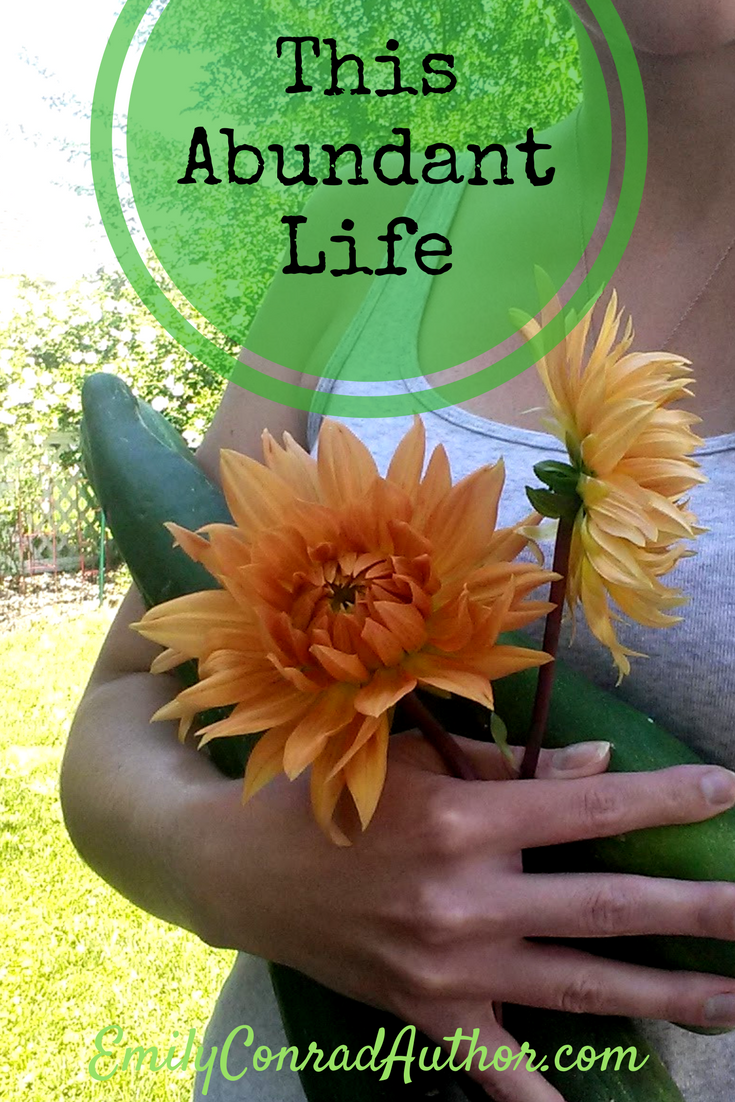
This Abundant Life
by Emily Conrad
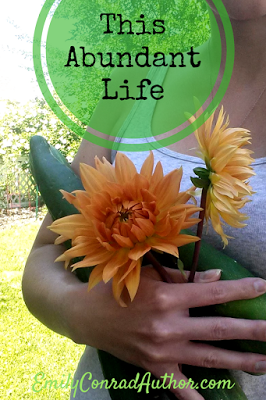
Another cucumber stretches downward from where it first budded near the top of the lattice fence, gravity elongating what the seed packet promised would be a “whopper” into something that looks like those seedless cukes that come wrapped in plastic at the grocery store.
I saw it days ago but forgot to check on it. It’s now over a foot long.
I catch another cucumber turning into a pumpkin. This one, too, was growing downward, but after about eight inches, it touched bottom. Supported, its bulk pooled against the mulch like a water balloon, stretching away from the faucet as it fills.
It’s barely August, and already my vegetable garden of seven plants—only one of which is bearing fruit so far—is producing more than I can eat.
Read more »
Another cucumber stretches downward from where it first budded near the top of the lattice fence, gravity elongating what the seed packet promised would be a “whopper” into something that looks like those seedless cukes that come wrapped in plastic at the grocery store.
I saw it days ago but forgot to check on it. It’s now over a foot long.
I catch another cucumber turning into a pumpkin. This one, too, was growing downward, but after about eight inches, it touched bottom. Supported, its bulk pooled against the mulch like a water balloon, stretching away from the faucet as it fills.
It’s barely August, and already my vegetable garden of seven plants—only one of which is bearing fruit so far—is producing more than I can eat.
Read more »
August 3, 2017
Cold Brew Coffee and Dreams Come True
by Emily Conrad

I’ve enjoyed coffee long enough that I should know by now how much each little tweak to the brewing process matters.
I appreciate my Ninja coffee maker and it’s “specialty brew” capabilities, but I love the depth of flavor I get from my Aeropress (affiliate links). I know that adding a scoop more or less of coffee makes a big difference. I know that if I get a caramel macchiato made at one particular coffee shop, it’ll be better than if I get it at the closer place. I know fresh roasted coffee is better than the stuff that’s been sitting on the shelf at the grocery store.
Each little variation makes a difference.
Yet, when I saw a recipe for cold brew coffee, I dismissed it.
That sounds like a lot of hassle. You have to let it steep how long? I’ve got more than enough waiting in my writing life. I’d rather not carry that over into my coffee drinking.
Read more »

I’ve enjoyed coffee long enough that I should know by now how much each little tweak to the brewing process matters.
I appreciate my Ninja coffee maker and it’s “specialty brew” capabilities, but I love the depth of flavor I get from my Aeropress (affiliate links). I know that adding a scoop more or less of coffee makes a big difference. I know that if I get a caramel macchiato made at one particular coffee shop, it’ll be better than if I get it at the closer place. I know fresh roasted coffee is better than the stuff that’s been sitting on the shelf at the grocery store.
Each little variation makes a difference.
Yet, when I saw a recipe for cold brew coffee, I dismissed it.
That sounds like a lot of hassle. You have to let it steep how long? I’ve got more than enough waiting in my writing life. I’d rather not carry that over into my coffee drinking.
Read more »
August 1, 2017
Rejection Comes With the Territory and That's Okay
by Emily Conrad

Rejection comes with the territory of trying.
I've known this in my writing life for years--since I started submitting my work to literary agents as a high school senior who still had a long, long way to go. Over fifteen years later, I still get writing rejections.
I've been rejected professionally, too. I haven't gotten every job I interviewed for. I've sent networking emails that didn't receive a response. I've even tried to negotiate positions and failed. Twice.
Rejection is just part of the process.
In the world of relationships, I suppose I've should've known this even longer, given the difficulty I experienced in elementary school friendships, but instead of acknowledging that not every friendship I pursue is going the blossom, I tend to turn against myself when one fails to take root.
Why aren't I likeable? What's wrong with me?

Earlier this year, I read the book Uninvited: Living Loved When You Feel Less Than, Left Out and Lonely by Lysa TerKeurst. As I read, I noticed just how many different stories of being rejected TerKeurst shared—friendships and other relationships that soured for reasons that seemed understandable enough based on what I read in the book.
I’ve noticed that at times when I’m facing a little more friction in relationships, it’s because I’m involved with more people. And the reason I suspect TerKeurst could share so many rejection stories? Because she’s involved with a lot of people.
As a perfectionist, it’s tempting to believe there’s no correlation. It’s tempting to believe all rejection is avoidable. But if I manage to avoid rejection, it’s only by secluding myself or compromising myself. One leaves me lonely, the other tramples my convictions.
If I work hard to avoid being rejected, I’ll be true to others and not myself.
If I work hard to avoid being the rejecter, I’ll compromise there, too.
The truth is, not everyone will like me. Sadly, not everyone will like you, either. Not everyone should like you.
Dare I say, some rejections are not only inevitable, they are healthy.
The people-pleaser in me cringes to write that, but it’s true.
Rejection comes with the territory of trying.
It may provide the needed (albeit painful) catalyst for growth (if we’re brave enough to look for it), or it may simply free us to pursue a new relationship or more fitting opportunity.
Whatever the case, rejection is not a reason to pull back into ourselves. Instead, we can let rejection serve as an invitation to anchor our identity on something solid that will not reject us. On Someone solid.
My value—and yours—comes from nothing and no one less than the God who formed us.

Jesus Himself is an example of not finding his worth in the acceptance of people.
Now while Jesus was in Jerusalem at the feast of the Passover, many people believed in his name because they saw the miraculous signs he was doing. But Jesus would not entrust himself to them, because he knew all people. John 2:23-24, NET, emphasis mine
The King James Version uses the word "commit" instead of "entrust." When I look up that instance of "commit" in my Strong's Concordance, the definition talks about entrusting one's spiritual well-being to another, such as entrusting ourselves to Christ.
What a dangerous thing it would've been for Jesus to entrust himself to people. People would soon reject Him--not with a dreaded rejection letter, not with an unreturned email, not with an explosive fight between friends, but with a cross.
From the cross, He revealed to whom He had entrusted Himself:
Then Jesus, calling out with a loud voice, said, “Father, into your hands I commit my spirit!” And after he said this he breathed his last. Luke 23:46, NET
In the same way, we cannot entrust ourselves to others. We cannot judge our worth by our latest acceptance or rejection. We cannot strive to please people as though our spiritual well-being depends on it. We cannot avoid all rejection. And that's okay.
Rejection comes with the territory of trying, but Jesus suffered the ultimate rejection so we would never have to. Regardless of anything else that happens, we can entrust ourselves to Him.
#Jesus suffered the ultimate #rejection so we would never have to-via @emilyrconrad

Rejection comes with the territory of trying.
I've known this in my writing life for years--since I started submitting my work to literary agents as a high school senior who still had a long, long way to go. Over fifteen years later, I still get writing rejections.
I've been rejected professionally, too. I haven't gotten every job I interviewed for. I've sent networking emails that didn't receive a response. I've even tried to negotiate positions and failed. Twice.
Rejection is just part of the process.
In the world of relationships, I suppose I've should've known this even longer, given the difficulty I experienced in elementary school friendships, but instead of acknowledging that not every friendship I pursue is going the blossom, I tend to turn against myself when one fails to take root.
Why aren't I likeable? What's wrong with me?

Earlier this year, I read the book Uninvited: Living Loved When You Feel Less Than, Left Out and Lonely by Lysa TerKeurst. As I read, I noticed just how many different stories of being rejected TerKeurst shared—friendships and other relationships that soured for reasons that seemed understandable enough based on what I read in the book.
I’ve noticed that at times when I’m facing a little more friction in relationships, it’s because I’m involved with more people. And the reason I suspect TerKeurst could share so many rejection stories? Because she’s involved with a lot of people.
As a perfectionist, it’s tempting to believe there’s no correlation. It’s tempting to believe all rejection is avoidable. But if I manage to avoid rejection, it’s only by secluding myself or compromising myself. One leaves me lonely, the other tramples my convictions.
If I work hard to avoid being rejected, I’ll be true to others and not myself.
If I work hard to avoid being the rejecter, I’ll compromise there, too.
The truth is, not everyone will like me. Sadly, not everyone will like you, either. Not everyone should like you.
Dare I say, some rejections are not only inevitable, they are healthy.
The people-pleaser in me cringes to write that, but it’s true.
Rejection comes with the territory of trying.
It may provide the needed (albeit painful) catalyst for growth (if we’re brave enough to look for it), or it may simply free us to pursue a new relationship or more fitting opportunity.
Whatever the case, rejection is not a reason to pull back into ourselves. Instead, we can let rejection serve as an invitation to anchor our identity on something solid that will not reject us. On Someone solid.
My value—and yours—comes from nothing and no one less than the God who formed us.

Jesus Himself is an example of not finding his worth in the acceptance of people.
Now while Jesus was in Jerusalem at the feast of the Passover, many people believed in his name because they saw the miraculous signs he was doing. But Jesus would not entrust himself to them, because he knew all people. John 2:23-24, NET, emphasis mine
The King James Version uses the word "commit" instead of "entrust." When I look up that instance of "commit" in my Strong's Concordance, the definition talks about entrusting one's spiritual well-being to another, such as entrusting ourselves to Christ.
What a dangerous thing it would've been for Jesus to entrust himself to people. People would soon reject Him--not with a dreaded rejection letter, not with an unreturned email, not with an explosive fight between friends, but with a cross.
From the cross, He revealed to whom He had entrusted Himself:
Then Jesus, calling out with a loud voice, said, “Father, into your hands I commit my spirit!” And after he said this he breathed his last. Luke 23:46, NET
In the same way, we cannot entrust ourselves to others. We cannot judge our worth by our latest acceptance or rejection. We cannot strive to please people as though our spiritual well-being depends on it. We cannot avoid all rejection. And that's okay.
Rejection comes with the territory of trying, but Jesus suffered the ultimate rejection so we would never have to. Regardless of anything else that happens, we can entrust ourselves to Him.
#Jesus suffered the ultimate #rejection so we would never have to-via @emilyrconrad


