
Emily Conrad's Blog, page 6
November 9, 2017
Too Deep for Words
by Emily Conrad

“Do you understand any of what he’s saying?”
I’m a high school junior seated at a dining table in Nice, France, with two girls near my own age and their mother. I’m staying with their family for a week.
The question is posed in French. The subject of the question, the radio show that has been playing in the background. I’ve done well enough at understanding my host family, but I can’t pick out a single word spoken by the man on the radio.
Now, at age 34, I'm not sure I'd understand the question, posed in French, if I were to hear it again.
Even when I could understand conversations in French, it wasn’t perfectly. I remember thinking that exchange students to my high school seemed like children, and how I must’ve seemed like one to my host family, too. Were we immature? Not more so than the average teenager, but due to the language barrier, we communicated like kindergartners. Or younger.
I’m experiencing this again with the exchange student in our home. I’ve had to slow down to explain the words “thick” and “thin,” so you can imagine the obstacles we battled to discuss a question from her history textbook about Patrick Henry’s “liberty or death” speech.
Despite enjoying our hours of conversation, we don’t know each other deeply. We speak in simplistic language to communicate simple ideas. Our true selves are more complex than the words we trade.
And this isn’t true only of me and someone learning English as a second language.
I write, sure. I have loved ones I talk to. However, much of my day goes unshared with others. The walks I take, the ebb and flow of emotions, the experiences and their effect on me. I have language with which to describe myself and my experiences. Sometimes I don't use it. But even when I do, the person to whom I speak or write still hasn’t felt what I felt or experienced what I experienced.
Language has its limits, even in our native tongues. We all walk alone in literal and figurative ways. Our souls have depth we don’t understand ourselves. How much less can we understand the depths of another’s soul?
There are barriers between us all.
 Likewise, there are barriers of understanding and comprehension between us and God. In the case of speaking with other people, the difficulty in understanding each other lies in both our openness and in the limitations of language.
But in the case of God, the difficulty is not in God’s ability to speak; it’s in our ability to comprehend. His ways are higher than our ways. Yet He goes to great lengths to break down the barriers and show us His heart.
The tension to communicate the incomprehensible fills our Bible with beautiful passages like the one praying that we would understand how high and how deep and how wide the love of God is for us (see Ephesians 3:16-19). It powers the list that goes on and on naming everything that cannot separate us from the love of God (see Romans 8:35-39).
This is the way I speak when I’m trying to describe something to my student that she’s struggling to understand. I give examples. I spell things out. I gesture with my hands. I mime actions. I prompt her to remember things she saw and learned earlier. I pull out the dictionary.

As I think about the God of the universe being condensed down into human language for human minds, it’s no wonder the Bible is full of so many different kinds of writing—poetry, history, firsthand accounts, letters, laws. It’s no wonder the book is long, and some passages are hard. And it’s no wonder we can’t fully understand or know all truth while we’re in this life.
The wonder is that the inexpressible, uncontainable Word would become flesh and act out His love for us. For once, the exchange student wasn’t the student at all. He was and still is a teacher who knows us better than we know ourselves, a speaker who uses our language so boldly His utterance calms storms and His petitions receive responses from the Heavenly Father.
Jesus showed us the God who cannot be fully described in our language. Human, we still struggle and study to understand, but through Jesus, we can know God—not in full yet, but in growing knowledge that will one day be satisfied face to face.
In the meantime, we are travelers. This world is not our home. Even without language barriers, we don’t know each other fully. It’s sometimes as lonely as being an exchange student.
But, though we fail in any attempt to know another human through and through, this Word knows us fully.
For we know in part, and we prophesy in part, but when what is perfect comes, the partial will be set aside. When I was a child, I talked like a child, I thought like a child, I reasoned like a child. But when I became an adult, I set aside childish ways. For now we see in a mirror indirectly, but then we will see face to face. Now I know in part, but then I will know fully, just as I have been fully known. (1 Corinthians 13:9-12, NET)
Though I wrestle against confines of my ability to express ideas to write this to you, even in my heart language, I am fully known by a Spirit who intercedes on my behalf in groans that, unsurprisingly, are too deep for words.
Awe over this leaves me longing to stare into the Word, to listen more closely, to glean everything I can about this God who sees and knows and loves me. I want to know the cadence of His love, the timbre of His voice, and every word of the lullaby of His peace.
As much as I love words, they fail, but the Word, the Word become flesh—Jesus—never will.
May His name be praised now and forever more.

I love words, but they fail. The Word, the Word become flesh—#Jesus—never will. via @emilyrconrad
Photo credits
Title image designed on Canva.com, photo by Chad Madden on Unsplash
Walking against the crowd photo by Christopher Burns on Unsplash
Couple talking by columns photo by Loic Djim on Unsplash
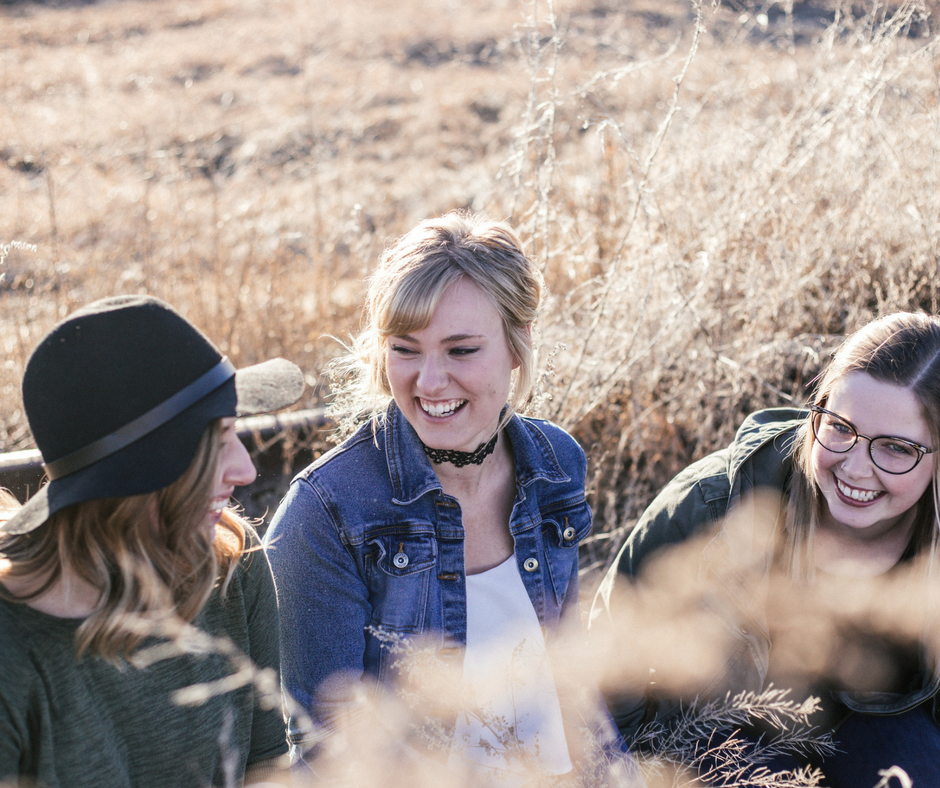
Women talking photo by Priscilla Du Preez on Unsplash

“Do you understand any of what he’s saying?”
I’m a high school junior seated at a dining table in Nice, France, with two girls near my own age and their mother. I’m staying with their family for a week.
The question is posed in French. The subject of the question, the radio show that has been playing in the background. I’ve done well enough at understanding my host family, but I can’t pick out a single word spoken by the man on the radio.
Now, at age 34, I'm not sure I'd understand the question, posed in French, if I were to hear it again.
Even when I could understand conversations in French, it wasn’t perfectly. I remember thinking that exchange students to my high school seemed like children, and how I must’ve seemed like one to my host family, too. Were we immature? Not more so than the average teenager, but due to the language barrier, we communicated like kindergartners. Or younger.
I’m experiencing this again with the exchange student in our home. I’ve had to slow down to explain the words “thick” and “thin,” so you can imagine the obstacles we battled to discuss a question from her history textbook about Patrick Henry’s “liberty or death” speech.
Despite enjoying our hours of conversation, we don’t know each other deeply. We speak in simplistic language to communicate simple ideas. Our true selves are more complex than the words we trade.
And this isn’t true only of me and someone learning English as a second language.
I write, sure. I have loved ones I talk to. However, much of my day goes unshared with others. The walks I take, the ebb and flow of emotions, the experiences and their effect on me. I have language with which to describe myself and my experiences. Sometimes I don't use it. But even when I do, the person to whom I speak or write still hasn’t felt what I felt or experienced what I experienced.
Language has its limits, even in our native tongues. We all walk alone in literal and figurative ways. Our souls have depth we don’t understand ourselves. How much less can we understand the depths of another’s soul?
There are barriers between us all.
 Likewise, there are barriers of understanding and comprehension between us and God. In the case of speaking with other people, the difficulty in understanding each other lies in both our openness and in the limitations of language.
But in the case of God, the difficulty is not in God’s ability to speak; it’s in our ability to comprehend. His ways are higher than our ways. Yet He goes to great lengths to break down the barriers and show us His heart.
The tension to communicate the incomprehensible fills our Bible with beautiful passages like the one praying that we would understand how high and how deep and how wide the love of God is for us (see Ephesians 3:16-19). It powers the list that goes on and on naming everything that cannot separate us from the love of God (see Romans 8:35-39).
This is the way I speak when I’m trying to describe something to my student that she’s struggling to understand. I give examples. I spell things out. I gesture with my hands. I mime actions. I prompt her to remember things she saw and learned earlier. I pull out the dictionary.

As I think about the God of the universe being condensed down into human language for human minds, it’s no wonder the Bible is full of so many different kinds of writing—poetry, history, firsthand accounts, letters, laws. It’s no wonder the book is long, and some passages are hard. And it’s no wonder we can’t fully understand or know all truth while we’re in this life.
The wonder is that the inexpressible, uncontainable Word would become flesh and act out His love for us. For once, the exchange student wasn’t the student at all. He was and still is a teacher who knows us better than we know ourselves, a speaker who uses our language so boldly His utterance calms storms and His petitions receive responses from the Heavenly Father.
Jesus showed us the God who cannot be fully described in our language. Human, we still struggle and study to understand, but through Jesus, we can know God—not in full yet, but in growing knowledge that will one day be satisfied face to face.
In the meantime, we are travelers. This world is not our home. Even without language barriers, we don’t know each other fully. It’s sometimes as lonely as being an exchange student.
But, though we fail in any attempt to know another human through and through, this Word knows us fully.
For we know in part, and we prophesy in part, but when what is perfect comes, the partial will be set aside. When I was a child, I talked like a child, I thought like a child, I reasoned like a child. But when I became an adult, I set aside childish ways. For now we see in a mirror indirectly, but then we will see face to face. Now I know in part, but then I will know fully, just as I have been fully known. (1 Corinthians 13:9-12, NET)
Though I wrestle against confines of my ability to express ideas to write this to you, even in my heart language, I am fully known by a Spirit who intercedes on my behalf in groans that, unsurprisingly, are too deep for words.
Awe over this leaves me longing to stare into the Word, to listen more closely, to glean everything I can about this God who sees and knows and loves me. I want to know the cadence of His love, the timbre of His voice, and every word of the lullaby of His peace.
As much as I love words, they fail, but the Word, the Word become flesh—Jesus—never will.
May His name be praised now and forever more.

I love words, but they fail. The Word, the Word become flesh—#Jesus—never will. via @emilyrconrad
Photo credits
Title image designed on Canva.com, photo by Chad Madden on Unsplash
Walking against the crowd photo by Christopher Burns on Unsplash
Couple talking by columns photo by Loic Djim on Unsplash
Women talking photo by Priscilla Du Preez on Unsplash


November 7, 2017
The Secret to a Clean (Emotional) Closet
by Emily Conrad

I mentioned in a previous post that to make room for our exchange student, I moved our filing cabinet out of the closet where I’d stuffed it away. What I conveniently didn’t tell you is that our filing system has been a growing mess since April, 2017.
When I mentioned moving the filing cabinet, what I actually pulled out of the closet was a giant to-be-filed pile a year and a half tall, a shred pile about a year tall, two boxes of files that need to be reviewed and thinned out, and one mostly-empty filing cabinet.
It’s a mess, and it’s now in plain sight.
I started working on it within a day. I’d let the filing fall behind by about a year, but after shredding, consolidating, sorting, and filing, the mess is already half gone, and this work started a week ago.
As I sat at the table, feeding paper into the shredder, I was struck by how getting the mess out in the open forced me to deal with it.
I like my closets, physical and emotional. I err on the side of quiet 9 times out of 10, and I’ve taken it too far, waiting until the closet door bulges before I consider opening the door.
Read more »

I mentioned in a previous post that to make room for our exchange student, I moved our filing cabinet out of the closet where I’d stuffed it away. What I conveniently didn’t tell you is that our filing system has been a growing mess since April, 2017.
When I mentioned moving the filing cabinet, what I actually pulled out of the closet was a giant to-be-filed pile a year and a half tall, a shred pile about a year tall, two boxes of files that need to be reviewed and thinned out, and one mostly-empty filing cabinet.
It’s a mess, and it’s now in plain sight.
I started working on it within a day. I’d let the filing fall behind by about a year, but after shredding, consolidating, sorting, and filing, the mess is already half gone, and this work started a week ago.
As I sat at the table, feeding paper into the shredder, I was struck by how getting the mess out in the open forced me to deal with it.
I like my closets, physical and emotional. I err on the side of quiet 9 times out of 10, and I’ve taken it too far, waiting until the closet door bulges before I consider opening the door.
Read more »
November 2, 2017
Making Room to Say Yes to God
by Emily Conrad

Last Thursday, I skimmed an email from my church. Between other announcements was a request from the local Christian school for a home to host a foreign exchange student. That's the kind of thing other people do, not us. That's for people who are parents. I deleted it.
On Friday, I retrieved the email from my trash folder and called the number listed with uncharacteristic bravery. With some encouragement, I’d gotten it in my head that it would be a good idea for my husband and I to take in this student, and my husband had been receptive of the idea.
With that phone call, plans were set in motion.
Over the weekend, Adam and I read some verses on hospitality that confirmed our intended course. We talked about the practical side of how things would go. We filled out the application and got the necessary references. We scheduled a time for a representative from the program to see our house.
My first thought was, "Not us." My second thought was, "Yes!"
My third thought? "What are we doing?"
As I prepared for the home tour, the reality of the magnitude of the change we were making began to set in.
To make way for the student, I moved everything but decorations and necessities out of the bedroom.
This was surprisingly hard for me, perhaps because it was the first concrete sign that our lives are going to be different for the next seven months.
I kept both our vacuum and our filing cabinet in the closet in the guest bedroom. There are no other roomy closets on our first floor, so giving up the one in the guest room means our vacuum will have to stay on the second floor (where I use it less), and the filing cabinet will have to stay in our dining room (camouflaged under a tablecloth).
These arrangements are not my first choice, and I found myself asking, Don’t I have a right to some of the closet space?
Maybe, but even if I do, I know why I shouldn't claim it.
We’re reading in 1 Corinthians right now, and Paul’s big on not insisting on his own rights. There’s a whole little insert in my study Bible about it based on 1 Corinthians 9. Paul wouldn’t insist on exercising his own rights when those rights would potentially cause someone else to sin.
Keeping my vacuum in the closet of the spare room probably wouldn’t do that, but I’ve stayed with a host family, and I know how awkward it can feel.
I remember my relief when my host mom showed me my room and called it my “domain.” And I remember how displaced I felt when I walked in one day and found someone watching TV in my domain.
So I know this is a time to sacrifice a minuscule little right in love. For me, the vacuum and file cabinet are really not a big deal. For the student, having uninterrupted space will be.
Besides, if going to a second-floor closet for the vacuum is too much for me, how am I going to handle the tougher aspects of the next seven months?
So, I prepared the room and completed the tour. I handed in the paperwork and listened to an experienced host mom explain more about what hosting a student would entail.

I'd be lying if I said we're not nervous. I can see all the ways my husband and I are unprepared for this. We’re not parents and don't have experience navigating school lunch, homework, and house rules regarding Internet use.
Things are going to be changing around here, us first and foremost, if my experience thus far is any indication.
And yet I don’t feel that God is telling me to pull the plug on this.
This temporary change of inviting someone in will result in permanent growth. The experiences of the next seven months will shape our perspectives and those of the student. My leadership skills will be tuned in a whole new—even in a needed—way. My faith will be, too—making space has already started the process. And I pray this will impact the life of a teenager in a positive way.
Focusing on all I have to gain and the potential for God to work mightily puts this leap of faith in perspective. Making room to say yes to God with our home and time and lives is absolutely worth it.
God is good. Opening our home is an act of faith, and that’s how the righteous are called to live. Instead of a spirit of fear, God has given us a spirit of love, power, and self-control, and that means he’s given us everything we need to do this. Plus, he’s given us a lot of other resources that ought to make us just the right people for this job.
So, here’s to restoring a deleted email and to saying yes to God even when it doesn’t come naturally at first. Here’s to considering that God is bigger than my shortcomings and will show himself strong in my weakness. Here’s to living in faith. Here’s to saying yes to hospitality. Here’s to trusting God in the unknown. Here's to making room.
I would appreciate your prayers along the way!
What leap of faith can I pray for in your life?
When #Jesus asks us to say yes, we can be sure the rewards will outweigh the risk-via @emilyrconrad
Photo credits
Title image designed on Canva.com, photo by Glenn Carstens-Peters on Unsplash
Room with desk photo by Raphael Schaller on Unsplash
Studying at table photo by Alexis Brown on Unsplash

Last Thursday, I skimmed an email from my church. Between other announcements was a request from the local Christian school for a home to host a foreign exchange student. That's the kind of thing other people do, not us. That's for people who are parents. I deleted it.
On Friday, I retrieved the email from my trash folder and called the number listed with uncharacteristic bravery. With some encouragement, I’d gotten it in my head that it would be a good idea for my husband and I to take in this student, and my husband had been receptive of the idea.
With that phone call, plans were set in motion.
Over the weekend, Adam and I read some verses on hospitality that confirmed our intended course. We talked about the practical side of how things would go. We filled out the application and got the necessary references. We scheduled a time for a representative from the program to see our house.
My first thought was, "Not us." My second thought was, "Yes!"
My third thought? "What are we doing?"
As I prepared for the home tour, the reality of the magnitude of the change we were making began to set in.

To make way for the student, I moved everything but decorations and necessities out of the bedroom.
This was surprisingly hard for me, perhaps because it was the first concrete sign that our lives are going to be different for the next seven months.
I kept both our vacuum and our filing cabinet in the closet in the guest bedroom. There are no other roomy closets on our first floor, so giving up the one in the guest room means our vacuum will have to stay on the second floor (where I use it less), and the filing cabinet will have to stay in our dining room (camouflaged under a tablecloth).
These arrangements are not my first choice, and I found myself asking, Don’t I have a right to some of the closet space?
Maybe, but even if I do, I know why I shouldn't claim it.
We’re reading in 1 Corinthians right now, and Paul’s big on not insisting on his own rights. There’s a whole little insert in my study Bible about it based on 1 Corinthians 9. Paul wouldn’t insist on exercising his own rights when those rights would potentially cause someone else to sin.
Keeping my vacuum in the closet of the spare room probably wouldn’t do that, but I’ve stayed with a host family, and I know how awkward it can feel.
I remember my relief when my host mom showed me my room and called it my “domain.” And I remember how displaced I felt when I walked in one day and found someone watching TV in my domain.
So I know this is a time to sacrifice a minuscule little right in love. For me, the vacuum and file cabinet are really not a big deal. For the student, having uninterrupted space will be.
Besides, if going to a second-floor closet for the vacuum is too much for me, how am I going to handle the tougher aspects of the next seven months?
So, I prepared the room and completed the tour. I handed in the paperwork and listened to an experienced host mom explain more about what hosting a student would entail.

I'd be lying if I said we're not nervous. I can see all the ways my husband and I are unprepared for this. We’re not parents and don't have experience navigating school lunch, homework, and house rules regarding Internet use.
Things are going to be changing around here, us first and foremost, if my experience thus far is any indication.
And yet I don’t feel that God is telling me to pull the plug on this.
This temporary change of inviting someone in will result in permanent growth. The experiences of the next seven months will shape our perspectives and those of the student. My leadership skills will be tuned in a whole new—even in a needed—way. My faith will be, too—making space has already started the process. And I pray this will impact the life of a teenager in a positive way.
Focusing on all I have to gain and the potential for God to work mightily puts this leap of faith in perspective. Making room to say yes to God with our home and time and lives is absolutely worth it.
God is good. Opening our home is an act of faith, and that’s how the righteous are called to live. Instead of a spirit of fear, God has given us a spirit of love, power, and self-control, and that means he’s given us everything we need to do this. Plus, he’s given us a lot of other resources that ought to make us just the right people for this job.
So, here’s to restoring a deleted email and to saying yes to God even when it doesn’t come naturally at first. Here’s to considering that God is bigger than my shortcomings and will show himself strong in my weakness. Here’s to living in faith. Here’s to saying yes to hospitality. Here’s to trusting God in the unknown. Here's to making room.
I would appreciate your prayers along the way!
What leap of faith can I pray for in your life?
When #Jesus asks us to say yes, we can be sure the rewards will outweigh the risk-via @emilyrconrad
Photo credits
Title image designed on Canva.com, photo by Glenn Carstens-Peters on Unsplash
Room with desk photo by Raphael Schaller on Unsplash
Studying at table photo by Alexis Brown on Unsplash
October 31, 2017
A Photograph of Faith in God's Goodness
by Emily Conrad
One of my tender childhood memories comes from a field trip I took with my class to a natural, wooded area. My mom came along as a chaperone, and I had a camera--real film back then. Toward the end of the day, my mom and I separated from the group and explored a little creek with a bridge going over it.
I longed to take a picture of it, but the bus was leaving, and I'd left the camera with my things.
Looking back, I believe the desperation to take the picture was about a lot more than the scenery. I was there with my mom, just me and her. I have three siblings, so that didn't happen a lot. And it was peaceful there, something, to be honest, our house wasn't always. There was a secret, tucked-away feel to that place.
In the eyes of my childhood self, the area by the bridge was a beautiful, wonderful place.
I climbed aboard the bus to leave, in tears because I couldn't take the picture
Maybe my interest in photography now stems back to that memory, a desire to not miss another opportunity like that.
I have multiple cameras these days. I must be emotional this afternoon, because I'm tearing up at the thought of how grateful I am my DSLR arrived just days before we got our black lab's terminal cancer diagnosis. Snapping photos, especially nice ones, is a privilege I don't always get, and the pictures I took of her then are precious to me.
But, to be blunt, my dog still died. I still ache on seeing those pictures. Moments don't last whether I get a shot of something or not, and sometimes the effort of capturing a snapshot of a moment keeps me from really seeing the experience with my own eyes.
We saw a bear in Banff National Park in Canada a couple of years ago. Or at least, my husband saw one. I couldn't really make it out. I tried snapping a picture anyway, and all the image reveals is a forest. The camera and I both missed out, me, in part, due to the camera.
I've also taken pictures of things I considered interesting or beautiful only to look back at the photo and wonder what the draw was. Why did I take this?
And, of course, there are times when the good shot was obvious, but I missed it, as in the case of the moose photobombing this detailed picture of a bush.
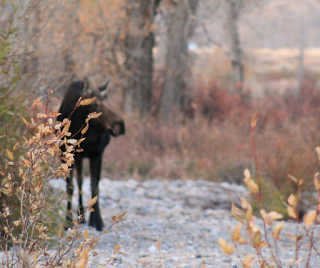
Knowing the limitations on my photography skill and considering how much younger I was back then, I suspect that if I'd gotten that shot of the creek on my field trip, I'd have a picture that would look like an uninteresting cement road crossing a trickling stream. Perhaps the embankment was full of weeds, not just the golden grass I remember. Would I have even gotten my mom in the shot?
But focused on taking a picture instead of on remembering, I wouldn't have the mental picture of it that I have. I remember golden grass, shade beneath the bridge, that I was there with my mom.
Of course, the memory I have of it is tinged by regret and longing because I wanted that picture so badly.
So why did that little girl--why do I still--want that photo so badly? Because beauty is fleeting, and rest is precious.
We don't get to stare into beauty 24-7. We don't experience awe, wonder, and rest in every place our days carry us. And so, I would still love to stockpile these things--beauty, awe, wonder, peace, all stored safely away for moments when I need escape, rest, and reassurance.
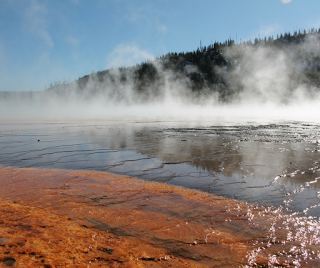
Perhaps you're a stockpiler, too. Picture-taking isn't our only strategy, is it?
Our fear of missing out can lead us to rush through experiences we should savor; we experience more, but shallowly. Our fear of forgetting or losing a moment can leads us to spend unwisely on mementos that collect dust. Our desire to remember can lead us to hang onto clutter. Any of these can become compulsions that interfere with the memories we make/otherwise would've made.
The root of this stockpiling is based in fear. Fear compels us to see and do and save it all.
Refusing to do more than enjoy a moment is an act of faith.
In faith, we believe God is good and He does good (Psalm 119:68), and the eyes of His people will see His goodness (Psalm 27:13). There's plenty of time and ample opportunity to taste and see that the Lord is good (Psalm 34:8). Whether it's natural beauty or emotional refuge, goodness is in bountiful supply with Jesus.
Beauty may be fleeting, but because of Jesus, it is not rare.
We can live in trust that the memory will hold, and if it doesn't, new beauty will replace it.
We can stop losing on the gamble, stop scrambling to do and see and capture it all when we have no way to truly hold onto something that can't be touched to begin with.
We can capture in our memories moments that would spoil on camera. We can see the beauty in the most glorious way--firsthand. We can enjoy and live adventures untainted by desperation.
I don't want to be desperate in the middle of my life's best experiences. I want to see. I want to form a new memory untinged by regret.
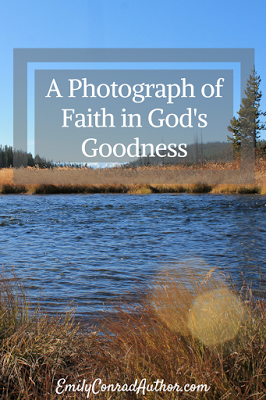
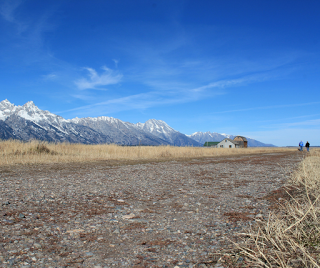
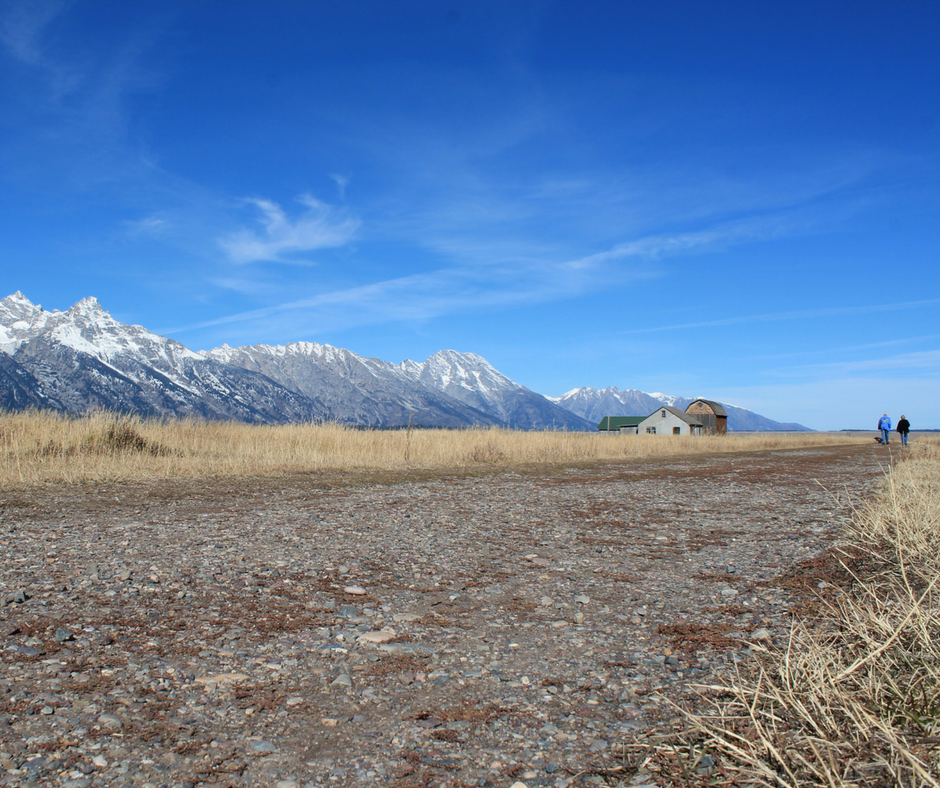
Yes, I still take a lot of photographs. All the photos in this post are from our recent trip to Yellowstone and the Grand Tetons. But I'm learning to choose faith over desperation.
Over fifteen years ago, when I stood in a clearing the woods with my youth group, observing the Milky Way, taking a picture was out of the question. Instead, I tilted my head back in awe and formed a memory that stuck with me for over fifteen years.
When we set out to see the night sky in all its glory in Grand Teton National park this month, part of me wanted to bring my camera. I don't have much nighttime photography experience, and I've never successfully captured stars on film, but that little girl in me wanted to try.
Faith said, leave the camera behind. See with your eyes tonight. Don't be that desperate little girl, tainting memories with a futile desire to capture and preserve what you're meant to enjoy.
I listened this time. The camera stayed in the hotel.
It's by faith that I don't not have a picture of my own to show you of the stars I saw that night. As I type to you now, I don't even have to close my eyes to see them again. I still see the clear path of light etched in the navy sky by a shooting star.
Steeped in this new memory, I reach for my childhood self, crying on the bus. I wrap her up in the knowledge and faith the Lord has grown in me since I was her.
I say for us both, The view doesn't need to be captured. The moment doesn't need to be frozen. You'll see beauty and feel peace and awe and wonder. Just you wait. You'll see and feel it again and again, because your God is good, and today, like each day that is to come, is an invitation to only enjoy.
What does living in faith, believing in God's goodness, look like for you today?
Beauty may be fleeting, but because of Jesus, it is not rare. via @emilyrconrad
One of my tender childhood memories comes from a field trip I took with my class to a natural, wooded area. My mom came along as a chaperone, and I had a camera--real film back then. Toward the end of the day, my mom and I separated from the group and explored a little creek with a bridge going over it.
I longed to take a picture of it, but the bus was leaving, and I'd left the camera with my things.
Looking back, I believe the desperation to take the picture was about a lot more than the scenery. I was there with my mom, just me and her. I have three siblings, so that didn't happen a lot. And it was peaceful there, something, to be honest, our house wasn't always. There was a secret, tucked-away feel to that place.
In the eyes of my childhood self, the area by the bridge was a beautiful, wonderful place.
I climbed aboard the bus to leave, in tears because I couldn't take the picture
Maybe my interest in photography now stems back to that memory, a desire to not miss another opportunity like that.
I have multiple cameras these days. I must be emotional this afternoon, because I'm tearing up at the thought of how grateful I am my DSLR arrived just days before we got our black lab's terminal cancer diagnosis. Snapping photos, especially nice ones, is a privilege I don't always get, and the pictures I took of her then are precious to me.
But, to be blunt, my dog still died. I still ache on seeing those pictures. Moments don't last whether I get a shot of something or not, and sometimes the effort of capturing a snapshot of a moment keeps me from really seeing the experience with my own eyes.
We saw a bear in Banff National Park in Canada a couple of years ago. Or at least, my husband saw one. I couldn't really make it out. I tried snapping a picture anyway, and all the image reveals is a forest. The camera and I both missed out, me, in part, due to the camera.
I've also taken pictures of things I considered interesting or beautiful only to look back at the photo and wonder what the draw was. Why did I take this?
And, of course, there are times when the good shot was obvious, but I missed it, as in the case of the moose photobombing this detailed picture of a bush.
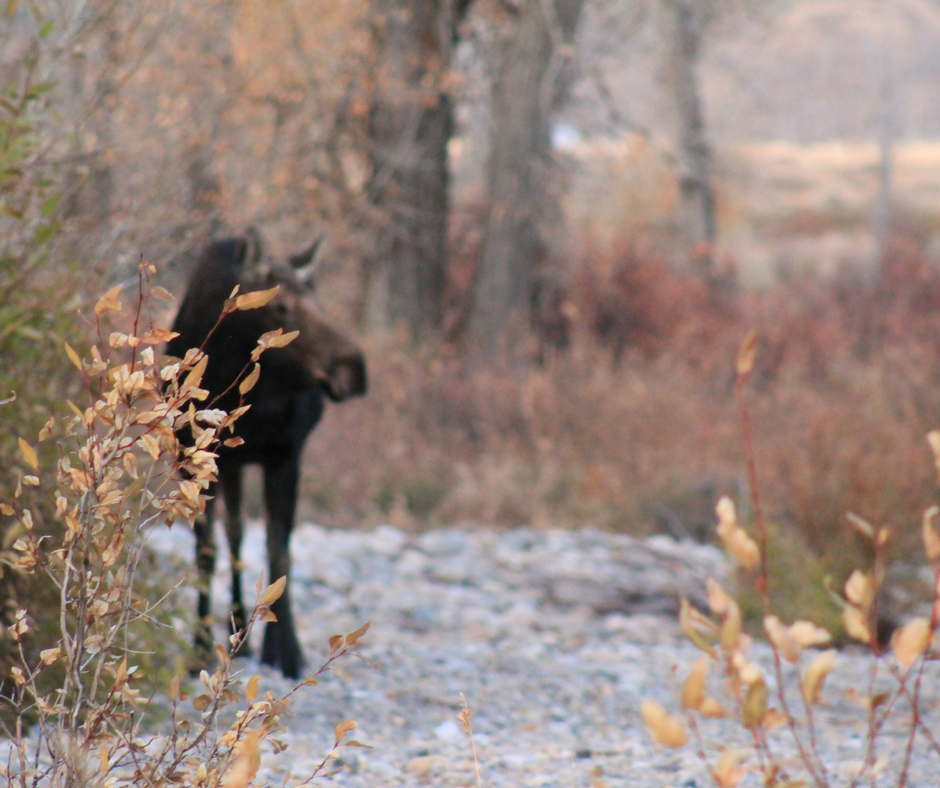
Knowing the limitations on my photography skill and considering how much younger I was back then, I suspect that if I'd gotten that shot of the creek on my field trip, I'd have a picture that would look like an uninteresting cement road crossing a trickling stream. Perhaps the embankment was full of weeds, not just the golden grass I remember. Would I have even gotten my mom in the shot?
But focused on taking a picture instead of on remembering, I wouldn't have the mental picture of it that I have. I remember golden grass, shade beneath the bridge, that I was there with my mom.
Of course, the memory I have of it is tinged by regret and longing because I wanted that picture so badly.
So why did that little girl--why do I still--want that photo so badly? Because beauty is fleeting, and rest is precious.
We don't get to stare into beauty 24-7. We don't experience awe, wonder, and rest in every place our days carry us. And so, I would still love to stockpile these things--beauty, awe, wonder, peace, all stored safely away for moments when I need escape, rest, and reassurance.
Perhaps you're a stockpiler, too. Picture-taking isn't our only strategy, is it?
Our fear of missing out can lead us to rush through experiences we should savor; we experience more, but shallowly. Our fear of forgetting or losing a moment can leads us to spend unwisely on mementos that collect dust. Our desire to remember can lead us to hang onto clutter. Any of these can become compulsions that interfere with the memories we make/otherwise would've made.
The root of this stockpiling is based in fear. Fear compels us to see and do and save it all.
Refusing to do more than enjoy a moment is an act of faith.
In faith, we believe God is good and He does good (Psalm 119:68), and the eyes of His people will see His goodness (Psalm 27:13). There's plenty of time and ample opportunity to taste and see that the Lord is good (Psalm 34:8). Whether it's natural beauty or emotional refuge, goodness is in bountiful supply with Jesus.
Beauty may be fleeting, but because of Jesus, it is not rare.
We can live in trust that the memory will hold, and if it doesn't, new beauty will replace it.
We can stop losing on the gamble, stop scrambling to do and see and capture it all when we have no way to truly hold onto something that can't be touched to begin with.
We can capture in our memories moments that would spoil on camera. We can see the beauty in the most glorious way--firsthand. We can enjoy and live adventures untainted by desperation.
I don't want to be desperate in the middle of my life's best experiences. I want to see. I want to form a new memory untinged by regret.
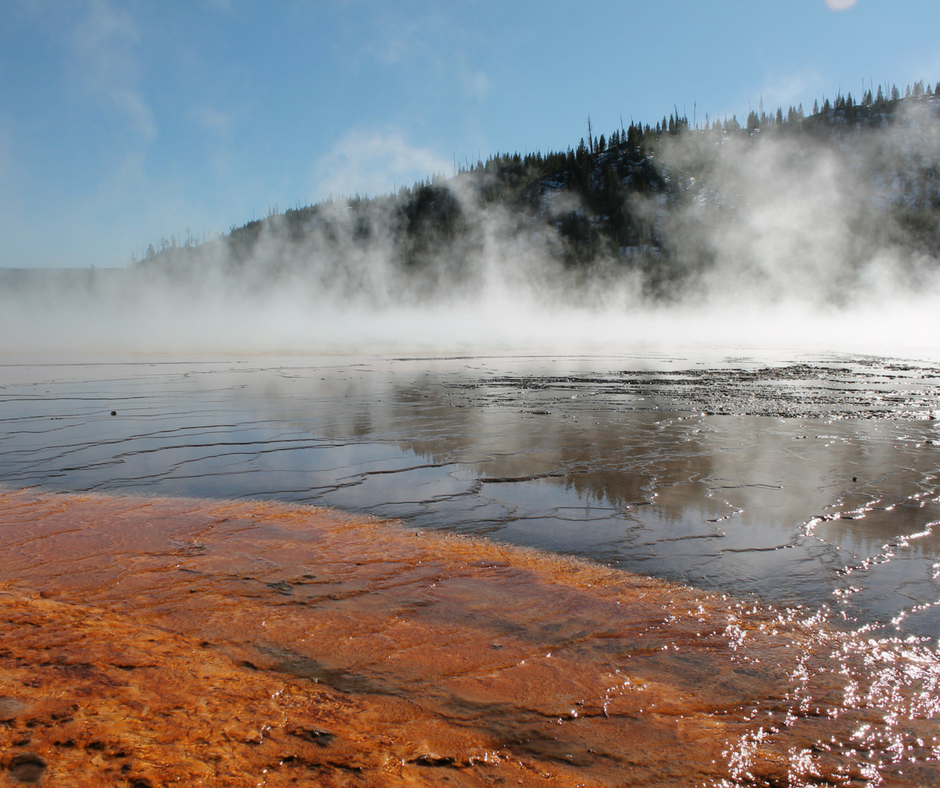
Yes, I still take a lot of photographs. All the photos in this post are from our recent trip to Yellowstone and the Grand Tetons. But I'm learning to choose faith over desperation.
Over fifteen years ago, when I stood in a clearing the woods with my youth group, observing the Milky Way, taking a picture was out of the question. Instead, I tilted my head back in awe and formed a memory that stuck with me for over fifteen years.
When we set out to see the night sky in all its glory in Grand Teton National park this month, part of me wanted to bring my camera. I don't have much nighttime photography experience, and I've never successfully captured stars on film, but that little girl in me wanted to try.
Faith said, leave the camera behind. See with your eyes tonight. Don't be that desperate little girl, tainting memories with a futile desire to capture and preserve what you're meant to enjoy.
I listened this time. The camera stayed in the hotel.
It's by faith that I don't not have a picture of my own to show you of the stars I saw that night. As I type to you now, I don't even have to close my eyes to see them again. I still see the clear path of light etched in the navy sky by a shooting star.
Steeped in this new memory, I reach for my childhood self, crying on the bus. I wrap her up in the knowledge and faith the Lord has grown in me since I was her.
I say for us both, The view doesn't need to be captured. The moment doesn't need to be frozen. You'll see beauty and feel peace and awe and wonder. Just you wait. You'll see and feel it again and again, because your God is good, and today, like each day that is to come, is an invitation to only enjoy.
What does living in faith, believing in God's goodness, look like for you today?
Beauty may be fleeting, but because of Jesus, it is not rare. via @emilyrconrad
October 26, 2017
Navigating Toward Jesus by the Night Sky
by Emily Conrad

More than fifteen years ago, I stood in a clearing the woods in Wisconsin with my youth group. We were cold, and it was dark, but the view was more than worth it. I tilted my head to scan a sky more full of stars than I ever remember observing in my life to that point.
We were told the extra-dense band of stars stretching from one side of the sky to the other was the Milky Way. How had I lived on the earth, under this glory, for so long without seeing it sooner?
In the following years, I remembered that there were more stars than I could see from home, but the exact image of what I'd seen faded.
I occasionally tried to seek it out again. I don't live in a major metropolitan area, and I'm sometimes driving through national parks after dark, but I could never see as many stars as my memory said were out there, visible under the right conditions.
Was it just a childhood memory that I'd enhanced? Or were they were there, waiting to be seen again?
Read more »

More than fifteen years ago, I stood in a clearing the woods in Wisconsin with my youth group. We were cold, and it was dark, but the view was more than worth it. I tilted my head to scan a sky more full of stars than I ever remember observing in my life to that point.
We were told the extra-dense band of stars stretching from one side of the sky to the other was the Milky Way. How had I lived on the earth, under this glory, for so long without seeing it sooner?
In the following years, I remembered that there were more stars than I could see from home, but the exact image of what I'd seen faded.
I occasionally tried to seek it out again. I don't live in a major metropolitan area, and I'm sometimes driving through national parks after dark, but I could never see as many stars as my memory said were out there, visible under the right conditions.
Was it just a childhood memory that I'd enhanced? Or were they were there, waiting to be seen again?
Read more »
October 24, 2017
When We Can't Stay on the Mountaintop
by Emily Conrad

It is no easy thing to leave the mountaintop.
Usually, by the time our vacations are over, I'm ready to come home. I'm sick of the car (we usually drive), hotel pillows, and I've thought "it's just another mountain view; we don't need to pull over" too many times.
Not so this time.
As we drove out of Grand Teton National Park on Saturday, I craned my neck and wished we had time for a nice, long photography session. It had snowed the night before, changing the appearance of the landscape to a Christmasy white complete with snow-packed pines. A moose and her calf grazed beside the highway in the sagebrush. The dark brown of their fur and the black and white world around them was exquisite.
But, the road wasn't plowed, and the going was tough. We couldn't stop the car on the highway, and even pulling into a turnout and using a trail to go back and get some pics sounded like an icy hassle. We had hours and hours to travel before we could stop for the night.
We drove on.
My reluctance to leave wasn't limited to scenery. Some of that scenery, the night sky especially, made me feel like God was saying, "I'm bigger. I'm constant. I'm here. I see you."
My response? Thank you, God. And while You're here, I have a few questions. I need some rest. Oh, and please carry this load and sort this all out for me?
I had to return to normal life before I felt that those things had happened.
When we walked in our house, we were met by an odd smell. Some detective work led us to a dead mouse inside the inner workings of the refrigerator.
This morning, the dentist found that I have a cracked molar and two cavities. I glimpsed my patient care sheet just long enough to see they'd noted I need the dental work ASAP.
I locked myself out of the house. I tripped on the stairs. My oven has gone off three times with an error code. None of it has been a big deal, but vacation is definitely over.
As I thought about my reluctance to leave the mountains, I was reminded of Peter offering to make tents on the mountaintop where Jesus was transfigured. I've heard that passage used to talk about our reluctance to leave the best experiences of life and get back to the day-to-day, so I decided it was worth studying today.
I read in Matthew 17, Luke 9, and Mark 9. I got out my study Bible and read the notes. I also looked at the notes on the online NET Bible. After all that, I'm not seeing the application I expected.
Jesus took Peter, James, and John to a mountaintop to pray. Jesus was transfigured, and Elijah and Moses appeared and talked with Him. Peter goes down in history suggesting they make three shelters.
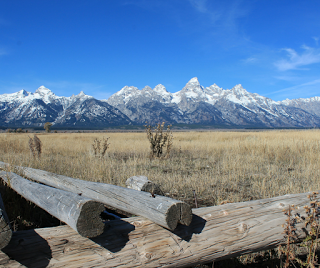
What I've heard in the past is that he suggested this because he wanted to stay on the mountain. Maybe he did. But what I see emphasized more in the notes I've read is that the shelters were a way to honor Jesus. The problem was, by building three shelters, one for Jesus, one for Elijah, and one for Moses, Peter was honoring them all more or less equivalently. He wasn't giving Jesus the honor due Him.
Blame it on the fact that he was sleepy (Luke 9:32) and terrified (Mark 9:6), but the gaffe was serious.
Enter a voice from heaven.
Then a voice came from the cloud, saying, “This is my Son, my Chosen One. Listen to him!” Luke 9:35, NET
Jesus is special, and in theory, we know this today just like Peter knew it one chapter before the transfiguration in Luke 8:29.
He asked them, “But who do you say that I am?” Peter answered him, “You are the Christ.” (NET)
Peter shows us it's as easy to forget who Jesus is during the mountaintop experiences as it is to forget in the day-to-day.
It turns out that on the mountaintops, the disciples are the same flawed humans they are everywhere else. They're still prone to sleepiness during prayer time. They still have much to learn from and about Jesus. They still have a lot of unanswered questions, and they don't understand what Jesus means, even when--with the advantage of retrospect--Jesus speaks quite clearly.
Being on a mountaintop didn't transform the disciples, and it hasn't transformed me.
Equally flawed, I left vacation with some unanswered questions. I wanted to stay longer not just to experience the beauty of a snowy mountain landscape, but to rest and to think. To figure out some things.
Unfortunately, vacation ended.
In the mountains, I was essentially the same person, and that same person is now back in the daily grind, navigating the same old problems.
The secret isn't camping out on mountaintops.
The secret is in recognizing Jesus for who He is.
The Beloved, the Chosen One, the Founder and Perfecter, the One who goes with us up the mountains and back down again, teaching us, revealing Himself to us, and drawing us closer.
The secret is in listening to Him and to the Voice we hear on the mountaintops.
Jesus is enough. He is our Savior. He is bigger than our problems and questions, and He is here. He is constant, with us to the end of the age.
God sees us whether we're on the mountaintop or in the valley, whether we're photographing moose in a meadow 6000+ feet above sea-level or crouched on the floor between the cabinets figuring out how to get a dead mouse out of the refrigerator.
Wherever we are, we always can cry out to Him and draw close to Him. He's made Himself available to us. What a wonder that is, that God would be interested in us at all, let alone interested in our everyday.
So, bring on everyday life. Bring on the dentist appointments and the homeowner responsibilities. I may not be on the mountaintop anymore, but my mountaintop God is with me.
He is bigger. He is constant. He is here. He sees me. He sees you.
The secret isn't camping out on mountaintops. The secret is in recognizing #Jesus for who He is. via @emilyrconrad

It is no easy thing to leave the mountaintop.
Usually, by the time our vacations are over, I'm ready to come home. I'm sick of the car (we usually drive), hotel pillows, and I've thought "it's just another mountain view; we don't need to pull over" too many times.
Not so this time.
As we drove out of Grand Teton National Park on Saturday, I craned my neck and wished we had time for a nice, long photography session. It had snowed the night before, changing the appearance of the landscape to a Christmasy white complete with snow-packed pines. A moose and her calf grazed beside the highway in the sagebrush. The dark brown of their fur and the black and white world around them was exquisite.
But, the road wasn't plowed, and the going was tough. We couldn't stop the car on the highway, and even pulling into a turnout and using a trail to go back and get some pics sounded like an icy hassle. We had hours and hours to travel before we could stop for the night.
We drove on.
My reluctance to leave wasn't limited to scenery. Some of that scenery, the night sky especially, made me feel like God was saying, "I'm bigger. I'm constant. I'm here. I see you."
My response? Thank you, God. And while You're here, I have a few questions. I need some rest. Oh, and please carry this load and sort this all out for me?
I had to return to normal life before I felt that those things had happened.
When we walked in our house, we were met by an odd smell. Some detective work led us to a dead mouse inside the inner workings of the refrigerator.
This morning, the dentist found that I have a cracked molar and two cavities. I glimpsed my patient care sheet just long enough to see they'd noted I need the dental work ASAP.
I locked myself out of the house. I tripped on the stairs. My oven has gone off three times with an error code. None of it has been a big deal, but vacation is definitely over.
As I thought about my reluctance to leave the mountains, I was reminded of Peter offering to make tents on the mountaintop where Jesus was transfigured. I've heard that passage used to talk about our reluctance to leave the best experiences of life and get back to the day-to-day, so I decided it was worth studying today.
I read in Matthew 17, Luke 9, and Mark 9. I got out my study Bible and read the notes. I also looked at the notes on the online NET Bible. After all that, I'm not seeing the application I expected.
Jesus took Peter, James, and John to a mountaintop to pray. Jesus was transfigured, and Elijah and Moses appeared and talked with Him. Peter goes down in history suggesting they make three shelters.
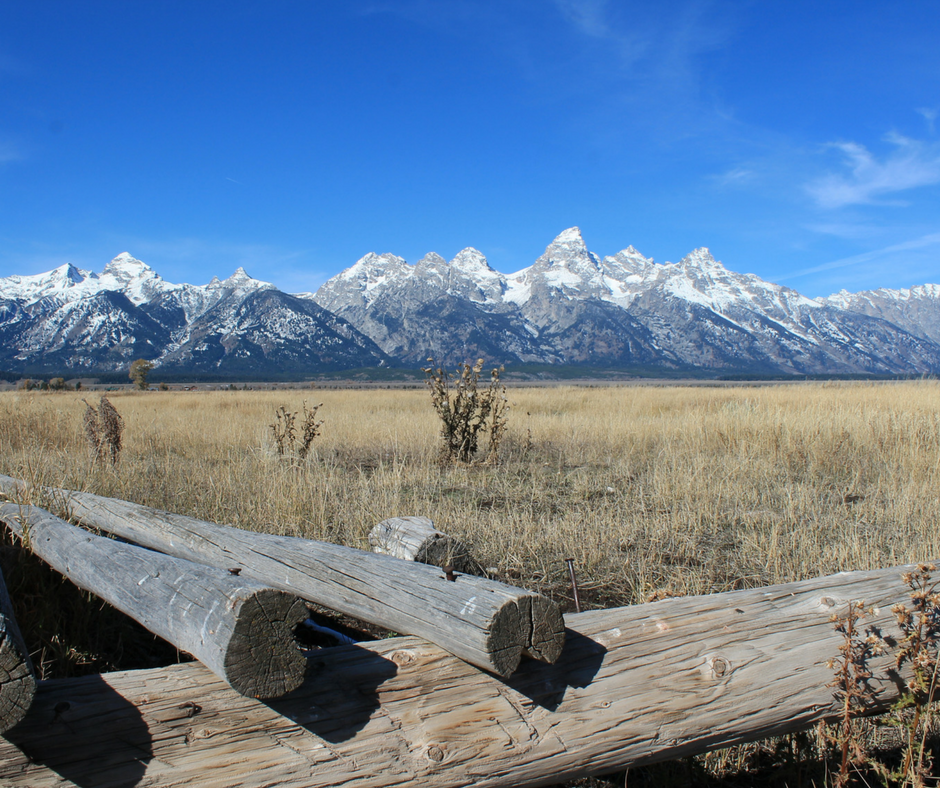
What I've heard in the past is that he suggested this because he wanted to stay on the mountain. Maybe he did. But what I see emphasized more in the notes I've read is that the shelters were a way to honor Jesus. The problem was, by building three shelters, one for Jesus, one for Elijah, and one for Moses, Peter was honoring them all more or less equivalently. He wasn't giving Jesus the honor due Him.
Blame it on the fact that he was sleepy (Luke 9:32) and terrified (Mark 9:6), but the gaffe was serious.
Enter a voice from heaven.
Then a voice came from the cloud, saying, “This is my Son, my Chosen One. Listen to him!” Luke 9:35, NET
Jesus is special, and in theory, we know this today just like Peter knew it one chapter before the transfiguration in Luke 8:29.
He asked them, “But who do you say that I am?” Peter answered him, “You are the Christ.” (NET)
Peter shows us it's as easy to forget who Jesus is during the mountaintop experiences as it is to forget in the day-to-day.
It turns out that on the mountaintops, the disciples are the same flawed humans they are everywhere else. They're still prone to sleepiness during prayer time. They still have much to learn from and about Jesus. They still have a lot of unanswered questions, and they don't understand what Jesus means, even when--with the advantage of retrospect--Jesus speaks quite clearly.
Being on a mountaintop didn't transform the disciples, and it hasn't transformed me.
Equally flawed, I left vacation with some unanswered questions. I wanted to stay longer not just to experience the beauty of a snowy mountain landscape, but to rest and to think. To figure out some things.
Unfortunately, vacation ended.
In the mountains, I was essentially the same person, and that same person is now back in the daily grind, navigating the same old problems.
The secret isn't camping out on mountaintops.
The secret is in recognizing Jesus for who He is.
The Beloved, the Chosen One, the Founder and Perfecter, the One who goes with us up the mountains and back down again, teaching us, revealing Himself to us, and drawing us closer.
The secret is in listening to Him and to the Voice we hear on the mountaintops.
Jesus is enough. He is our Savior. He is bigger than our problems and questions, and He is here. He is constant, with us to the end of the age.
God sees us whether we're on the mountaintop or in the valley, whether we're photographing moose in a meadow 6000+ feet above sea-level or crouched on the floor between the cabinets figuring out how to get a dead mouse out of the refrigerator.

Wherever we are, we always can cry out to Him and draw close to Him. He's made Himself available to us. What a wonder that is, that God would be interested in us at all, let alone interested in our everyday.
So, bring on everyday life. Bring on the dentist appointments and the homeowner responsibilities. I may not be on the mountaintop anymore, but my mountaintop God is with me.
He is bigger. He is constant. He is here. He sees me. He sees you.
The secret isn't camping out on mountaintops. The secret is in recognizing #Jesus for who He is. via @emilyrconrad
October 19, 2017
Silencing Debilitating Voices of Discouragement
by Emily Conrad

When I was in training for my first call center job, I had a bully of a customer. His voice came through my headset, straight into my ear, and ordered me around. All it took was that voice, demanding I not put him on hold, and I suddenly couldn’t ask for the help I so desperately needed.
In the call center, we had two different buttons to keep a customer from hearing what was happening on our side of the phone. The first was the hold button, which would stop me and the customer from hearing each other, and we’d both know it because I’d hit the button and the customer would hear hold music.
The second button was subtler. Mute was there for when we had to cough or sneeze mid-conversation. We could hear the customer, but the customer couldn’t hear anything.
Eventually, to avoid displeasing this angry caller while still being able to ask for help, I used the mute button. He could no longer hear me, but his voice continued in my ear—and it got angrier once he realized he could no longer hear me.
He kept berating me until, as I remember it, the trainer, once he learned what was going on, reached across my desk and hit the hold button for me, silencing the voice.
My husband (and others, he says) call catchy songs “ear worms.” Um, well, when we're talking about a song, that seems like an unduly gross visual. But when we're talking about a voice you can’t shut off that keeps spewing debilitating negativity in your ear? Now, that deserves the title.
You can read the rest of the story about that caller (and the aftermath) here, but today I want to focus on something else. On ear worms. On silencing that voice of discouragement that freezes and isolates you.
Read more »

When I was in training for my first call center job, I had a bully of a customer. His voice came through my headset, straight into my ear, and ordered me around. All it took was that voice, demanding I not put him on hold, and I suddenly couldn’t ask for the help I so desperately needed.
In the call center, we had two different buttons to keep a customer from hearing what was happening on our side of the phone. The first was the hold button, which would stop me and the customer from hearing each other, and we’d both know it because I’d hit the button and the customer would hear hold music.
The second button was subtler. Mute was there for when we had to cough or sneeze mid-conversation. We could hear the customer, but the customer couldn’t hear anything.
Eventually, to avoid displeasing this angry caller while still being able to ask for help, I used the mute button. He could no longer hear me, but his voice continued in my ear—and it got angrier once he realized he could no longer hear me.
He kept berating me until, as I remember it, the trainer, once he learned what was going on, reached across my desk and hit the hold button for me, silencing the voice.
My husband (and others, he says) call catchy songs “ear worms.” Um, well, when we're talking about a song, that seems like an unduly gross visual. But when we're talking about a voice you can’t shut off that keeps spewing debilitating negativity in your ear? Now, that deserves the title.
You can read the rest of the story about that caller (and the aftermath) here, but today I want to focus on something else. On ear worms. On silencing that voice of discouragement that freezes and isolates you.
Read more »
October 17, 2017
Patience, Trust and a Very Special Delivery
A guest post by Sally Poyzer

Today is a very special day.
It’s a day I’ve been looking forward to for three years. It’s taken many prayers, much hoping and a lot of patience, but today my dream has finally been realized.
This morning, at 9:35 am, my precious package was delivered.
Right here in my lounge room.
My much longed for…new couch.
Okay, so it’s not as exciting as the delivery of a baby or anything, but I’ve been wanting this couch for a long time.
Read more »

Today is a very special day.
It’s a day I’ve been looking forward to for three years. It’s taken many prayers, much hoping and a lot of patience, but today my dream has finally been realized.
This morning, at 9:35 am, my precious package was delivered.
Right here in my lounge room.
My much longed for…new couch.
Okay, so it’s not as exciting as the delivery of a baby or anything, but I’ve been wanting this couch for a long time.
Read more »
October 12, 2017
Choose the Best of What a Busy Day Offers You
by Emily Conrad

I spoke at a conference last weekend. My Justice galley is due tomorrow. A house guest is coming for the weekend. I need to prep blog posts. I need to clean. I have had a busy couple of weeks, and the fun isn't over yet.
As I think about the to-do list that daunts me, I remember Martha and her bustling work, and Mary, who sat and listened and whose choice was defended by none other than Jesus Himself.
We've all heard the story many times, and, to be honest, it's a little frustrating.
There is so much work to be done. The same Bible that contains Mary and Martha admonishes us to serve. Wouldn't doing what Mary did be the equivalent of reading our Bibles all day and finishing none of our other responsibilities? Wouldn't that be irresponsible?
Yet this attitude puts me on the opposite side of the situation from Jesus, and that's a dangerous place to be.
So, I look again at the familiar story.
She had a sister named Mary, who sat at the Lord’s feet and listened to what he said. But Martha was distracted with all the preparations she had to make (Matthew 10:39-40a, NET)
Distracted. Martha was distracted. That implies to me that she knew she was supposed to focus on Jesus's teaching the way Mary did. She meant to listen to Him, to spend time with Him. She really did.
But, oh, she'd forgotten to baste the chicken. And oh, look at that cobweb. And the dog tracked what into the house?
Read more »

I spoke at a conference last weekend. My Justice galley is due tomorrow. A house guest is coming for the weekend. I need to prep blog posts. I need to clean. I have had a busy couple of weeks, and the fun isn't over yet.
As I think about the to-do list that daunts me, I remember Martha and her bustling work, and Mary, who sat and listened and whose choice was defended by none other than Jesus Himself.
We've all heard the story many times, and, to be honest, it's a little frustrating.
There is so much work to be done. The same Bible that contains Mary and Martha admonishes us to serve. Wouldn't doing what Mary did be the equivalent of reading our Bibles all day and finishing none of our other responsibilities? Wouldn't that be irresponsible?
Yet this attitude puts me on the opposite side of the situation from Jesus, and that's a dangerous place to be.
So, I look again at the familiar story.
She had a sister named Mary, who sat at the Lord’s feet and listened to what he said. But Martha was distracted with all the preparations she had to make (Matthew 10:39-40a, NET)
Distracted. Martha was distracted. That implies to me that she knew she was supposed to focus on Jesus's teaching the way Mary did. She meant to listen to Him, to spend time with Him. She really did.
But, oh, she'd forgotten to baste the chicken. And oh, look at that cobweb. And the dog tracked what into the house?
Read more »
October 10, 2017
Wielding Power Well
by Emily Conrad
The word power gets my attention, probably because I sometimes feel weak rather than powerful. Don't even consider the areas of money, politics, and fame. I'm talking about feeling and acting weak in even more pervasive, everyday ways.
I'm talking about weakness in conversations and in relationships, weakness when it comes to speaking truth and sharing light.
Yes, when we’re weak, Jesus is strong—and it’s our very weakness that leads us to rely on Him. And then, in Him, we're strong. We should have a certain amount of power. Not apart from Christ--understand that--but in and through Him. Yet, sometimes, I let weakness have the final say.
In 1 Corinthians 4, Paul mentions sending Timothy to the church in Corinth and a little later writes, But I will come to you soon, if the Lord is willing, and I will find out not only the talk of these arrogant people, but also their power. For the kingdom of God is demonstrated not in idle talk but with power. (vs 19-20, NET)
What a thing it would be to watch Paul demonstrate the kingdom of God with power.
As a believer today, I wonder where my power is sometimes, why I shrink back, weak and shy, when I ought to speak up or step out.
Read more »
The word power gets my attention, probably because I sometimes feel weak rather than powerful. Don't even consider the areas of money, politics, and fame. I'm talking about feeling and acting weak in even more pervasive, everyday ways.
I'm talking about weakness in conversations and in relationships, weakness when it comes to speaking truth and sharing light.
Yes, when we’re weak, Jesus is strong—and it’s our very weakness that leads us to rely on Him. And then, in Him, we're strong. We should have a certain amount of power. Not apart from Christ--understand that--but in and through Him. Yet, sometimes, I let weakness have the final say.
In 1 Corinthians 4, Paul mentions sending Timothy to the church in Corinth and a little later writes, But I will come to you soon, if the Lord is willing, and I will find out not only the talk of these arrogant people, but also their power. For the kingdom of God is demonstrated not in idle talk but with power. (vs 19-20, NET)
What a thing it would be to watch Paul demonstrate the kingdom of God with power.
As a believer today, I wonder where my power is sometimes, why I shrink back, weak and shy, when I ought to speak up or step out.
Read more »


